The right preparation can turn an interview into an opportunity to showcase your expertise. This guide to Pouring molten brass into molds interview questions is your ultimate resource, providing key insights and tips to help you ace your responses and stand out as a top candidate.
Questions Asked in Pouring molten brass into molds Interview
Q 1. Describe the different types of molds used in brass casting.
Brass casting utilizes various mold types, each suited for different applications and production scales. The choice depends on factors like casting complexity, desired surface finish, and production volume.
- Sand Molds: These are the most common and cost-effective, created by packing sand around a pattern. They offer great flexibility for complex shapes but produce a relatively rough surface finish. Think of creating a sandcastle – the mold is temporary and disposable.
- Permanent Molds: Made from metal (steel, cast iron, or graphite), these molds are reusable, leading to higher production rates and better surface finishes. They are ideal for mass production but are more expensive upfront. Imagine a cookie cutter – you can use it repeatedly to create the same shape.
- Investment Casting (Lost-Wax): A highly precise method where a wax pattern is created, coated in ceramic slurry, and then the wax is melted out, leaving a cavity for molten brass. This yields intricate details and excellent surface finish, but it’s a more complex and expensive process. Think of a finely detailed sculpture – the mold is created specifically for that one piece.
- Die Casting: This high-speed, high-volume process uses metal dies (molds) under high pressure. It’s excellent for mass producing simple shapes with thin walls, resulting in very precise castings. Think of mass-produced car parts – consistency and speed are key.
Q 2. Explain the process of preparing a mold for molten brass pouring.
Mold preparation is critical for a successful pour. Neglecting this stage can lead to defects like misruns, cold shuts, or surface imperfections.
- Cleaning: The mold must be thoroughly cleaned of any debris, dust, or release agents from previous castings. This ensures a clean interface between the mold and the molten brass.
- Preheating (for some molds): For certain mold types, especially metal molds, preheating is essential to prevent thermal shock and ensure even solidification. This prevents cracking and improves surface quality.
- Coating (for sand molds): Sand molds often require a refractory coating to improve surface finish and prevent the molten brass from reacting with the sand. This reduces surface defects.
- Venting: Adequate venting is crucial to allow gases to escape during pouring, preventing blowholes and porosity in the final casting. Small channels are incorporated into the mold design to facilitate this.
- Gating and Risering System: A carefully designed gating system controls the flow of molten metal into the mold cavity. Risers (reservoirs of molten metal) compensate for shrinkage during cooling, preventing porosity.
Q 3. What safety precautions are crucial when handling molten brass?
Molten brass is extremely hot (around 2000°F or 1093°C) and poses significant risks. Safety is paramount.
- PPE: Full protective equipment is mandatory, including heat-resistant gloves, apron, face shield, and safety shoes. No exposed skin should be allowed.
- Ventilation: Adequate ventilation is crucial to remove fumes and avoid inhaling potentially harmful gases.
- Fire Safety: A fire extinguisher rated for metal fires should be readily available, and personnel should be trained in its use. The area should be free of flammable materials.
- Emergency Procedures: Establish clear emergency procedures for spills or burns, including the location of emergency showers and eye wash stations.
- Training: All personnel involved in the pouring process should receive comprehensive safety training.
Remember, molten brass burns intensely and causes severe injuries. Safety is not just a guideline, it’s a necessity.
Q 4. How do you ensure the proper temperature of molten brass before pouring?
The proper temperature of molten brass is crucial for achieving sound castings. Too low, and the metal won’t flow properly; too high, and it can cause burning or excessive oxidation.
Temperature is typically monitored using a thermocouple or pyrometer, immersed into the molten metal. The ideal pouring temperature varies slightly depending on the alloy composition and casting process. However, a range of 2100-2250°F (1149-1232°C) is common.
Maintaining a consistent temperature often involves using a holding furnace to keep the brass molten while awaiting the pouring stage. Proper insulation of the crucible and pouring ladles also helps maintain temperature.
Q 5. What are the signs of a defective mold and how do you address them?
Defective molds lead to flawed castings. Recognizing the signs is crucial for corrective action.
- Cracks or Breakage: These are easily visible and render the mold unusable.
- Pitting or Erosion: These imperfections can cause surface defects on the casting. They might indicate a problem with the mold material or inadequate coating.
- Misaligned Mold Parts: This leads to dimensional inaccuracies in the casting. Careful assembly and checking are essential.
- Poor Venting: This causes blowholes or gas porosity. Improper venting design is the root cause, requiring mold redesign.
Addressing these defects involves repair (if possible), replacement of the mold, or modification of the mold design and/or casting process. A thorough post-pour inspection of castings is also necessary to identify and track problems back to their source.
Q 6. Describe the pouring techniques used for different mold types.
Pouring techniques vary depending on the mold type and complexity of the casting.
- Sand Molds: A smooth, controlled pour is necessary to prevent turbulence that could create surface defects. Pouring directly into the sprue (main channel leading to the mold cavity) is common.
- Permanent Molds: Often involve specialized pouring equipment, like a tilting furnace or ladle, for faster and more precise filling of the mold cavity.
- Investment Casting: Usually requires a careful, controlled pour to ensure complete filling of the complex mold cavity without creating air pockets.
- Die Casting: High-pressure injection of molten metal under precise control is crucial in this high-speed process.
Each process requires specialized knowledge and skill to execute properly. Consistent practice and attention to detail are crucial for success.
Q 7. How do you control the flow rate of molten brass during pouring?
Controlling the flow rate of molten brass is essential for preventing defects and ensuring complete filling of the mold. Several methods are employed.
- Sprues and Runners: The size and shape of these channels dictate the flow rate. A smaller sprue will result in a slower pour.
- Pouring Ladle Size and Design: The size and shape of the ladle influence how quickly the molten metal is dispensed. A smaller ladle enables better control.
- Pouring Height: Higher pouring heights lead to a faster flow rate.
- Pouring Speed and Technique: The speed and smoothness of the pour are controlled by the operator’s skill and precision.
- Automated Pouring Systems: Advanced processes utilize automated pouring systems that precisely control flow rate, temperature, and volume.
Careful consideration of these factors allows for a consistent and controlled pour, ultimately leading to high-quality castings.
Q 8. Explain the importance of degassing molten brass before pouring.
Degassing molten brass is crucial for producing high-quality castings free from defects. Dissolved gases, like hydrogen and oxygen, can cause porosity (tiny holes) in the final product, significantly weakening it and making it unsuitable for many applications. Think of it like baking a cake – if you don’t let the air out of the batter, you’ll end up with a cake full of holes. Similarly, gases in molten brass create imperfections.
Degassing is typically achieved using various methods such as vacuum degassing, where the molten metal is placed under a vacuum to draw out the gases, or using inert gases like Argon to purge the dissolved gases. The choice of method depends on factors like the scale of operation and the desired level of quality.
For example, in a small foundry producing intricate brass components, vacuum degassing might be too expensive, so they might opt for a simpler method such as using a flux to help release gases.
Q 9. What are common defects found in brass castings and their causes?
Several common defects plague brass castings. These can range from minor surface imperfections to major structural flaws rendering the casting unusable.
- Porosity: Tiny holes throughout the casting, often caused by dissolved gases in the molten metal (as discussed above) or improper pouring techniques.
- Shrinkage: Cavities or voids formed as the metal cools and contracts. This is more common in larger castings and can be minimized with proper gating design and riser placement.
- Cold Shut: A discontinuity caused when two streams of molten metal fail to fuse completely during pouring. This usually results from insufficient fluidity of the molten metal or improper mold design. Imagine two rivers not merging properly—the boundary between them is a cold shut.
- Misruns: Incomplete filling of the mold cavity, often due to low fluidity or insufficient molten metal volume. This is similar to baking a cake and the batter not fully filling the baking tin.
- Surface Defects: These include scabs (surface irregularities due to mold defects or gas entrapment), cold laps (folds on the surface of the casting), and inclusions (foreign material trapped in the casting).
Addressing these defects requires careful control over the pouring process, proper mold preparation, and appropriate alloy selection.
Q 10. How do you inspect a casting for defects after pouring?
Post-pouring inspection is crucial to ensure the quality of the casting. This typically involves a multi-stage process:
- Visual Inspection: A careful examination of the casting’s surface for any obvious defects like cracks, porosity, or misruns. Good lighting is essential here.
- Dimensional Inspection: Measuring the casting’s dimensions to verify they meet the required specifications. This usually employs tools like calipers, micrometers, or coordinate measuring machines (CMMs).
- Non-Destructive Testing (NDT): Techniques like radiography (X-ray inspection) or ultrasonic testing can detect internal flaws such as porosity or cracks that are not visible on the surface. Imagine using an X-ray machine to see inside the body, here we are looking inside the casting for flaws.
- Hardness Testing: To ensure the casting meets the specified hardness requirements, a hardness test is performed. This gives indication of strength and ductility.
The choice of inspection methods will depend on the criticality of the casting and the level of quality required.
Q 11. Explain the process of cleaning and finishing a brass casting.
Cleaning and finishing brass castings involves several steps to remove any remaining mold material, surface imperfections, and achieve the desired surface finish.
- Shot Blasting/Tumbling: Abrasive blasting or tumbling removes surface irregularities and improves the surface finish. Think of it like sanding a piece of wood to smooth it out.
- Grinding and Polishing: For a higher-quality finish, grinding and polishing are often employed to remove any remaining imperfections and create a smooth, shiny surface.
- Pickling: A chemical treatment to remove oxide layers and improve surface quality. This is like washing the surface with a special solution.
- Electroplating/Coating: This may be applied to improve corrosion resistance or enhance the aesthetic appearance.
The specific cleaning and finishing methods used will depend on the desired surface finish and the intended application of the casting.
Q 12. What are the different types of brass alloys and their properties?
Brass alloys are primarily composed of copper and zinc, with varying amounts of other elements (like lead, tin, or manganese) to modify properties. Some common types include:
- Low Brass (Red Brass): High copper content (85% or more), resulting in good corrosion resistance, ductility, and machinability. Often used in plumbing and decorative applications.
- High Brass (Yellow Brass): Higher zinc content (typically around 30%), giving it a brighter yellow color and higher strength. Common in electrical connectors and hardware.
- Free-Cutting Brass: Contains lead, which significantly improves machinability. Often used in applications requiring high-speed machining, like screws and fasteners.
- Naval Brass: Contains tin and zinc and exhibits excellent corrosion resistance, particularly in saltwater environments. Frequently used in marine hardware.
The choice of brass alloy depends heavily on the application’s specific requirements for strength, corrosion resistance, machinability, and cost.
Q 13. How does the alloy composition affect the pouring process?
Alloy composition significantly impacts the pouring process. Different brass alloys have different melting points, fluidity, and solidification characteristics.
- Melting Point: Higher zinc content generally leads to a lower melting point. This affects the furnace temperature and the energy needed for melting.
- Fluidity: The ability of the molten metal to flow smoothly into the mold cavity. Alloys with higher zinc content often have higher fluidity but may be prone to more shrinkage.
- Solidification Rate: This impacts the cooling time and the risk of defects like shrinkage. Some alloy compositions solidify more slowly than others.
For example, high-zinc brass alloys require careful control of the pouring temperature to avoid premature solidification in the mold, which can lead to incomplete filling or misruns. Conversely, lower zinc content brasses may require higher temperatures for proper fluidity. Understanding these effects is key to optimizing the pouring parameters for each alloy.
Q 14. Describe the role of flux in molten brass pouring.
Flux plays a vital role in molten brass pouring by protecting the molten metal from oxidation and preventing the formation of dross (a layer of impurities on the surface). It acts as a protective barrier. Think of it as a shield preventing unwanted reactions between the molten brass and the surrounding atmosphere.
Flux also aids in the removal of dissolved gases from the molten metal, further improving the quality of the castings. This helps in degassing as mentioned previously. It helps to float impurities up to the surface allowing for cleaner molten metal.
Common fluxes for brass include borax-based mixtures and other proprietary formulations. The choice of flux depends on the specific brass alloy and the foundry’s practices.
Q 15. What are the limitations of different casting methods for brass?
Different brass casting methods each have their own set of limitations. Sand casting, for example, is relatively inexpensive and versatile, but it produces castings with lower dimensional accuracy and surface finish compared to investment casting or die casting. Investment casting, while offering excellent detail and surface quality, is more expensive and slower. Die casting provides high production rates and precision, but it requires significant upfront investment in tooling and is limited to simpler geometries. Let’s explore this further:
- Sand Casting: Limited dimensional accuracy, rough surface finish, potential for porosity, not suitable for high-volume production.
- Investment Casting (Lost-Wax): High cost, complex geometries possible, excellent detail, but slower production rates.
- Die Casting: High production rates, good dimensional accuracy, smooth surface finish, but high initial tooling cost, limited design complexity.
- Centrifugal Casting: Produces dense, sound castings with uniform wall thickness, ideal for cylindrical parts, but limited in shape versatility.
The choice of method always depends on the specific application, balancing cost, production volume, required tolerances, and design complexity.
Career Expert Tips:
- Ace those interviews! Prepare effectively by reviewing the Top 50 Most Common Interview Questions on ResumeGemini.
- Navigate your job search with confidence! Explore a wide range of Career Tips on ResumeGemini. Learn about common challenges and recommendations to overcome them.
- Craft the perfect resume! Master the Art of Resume Writing with ResumeGemini’s guide. Showcase your unique qualifications and achievements effectively.
- Don’t miss out on holiday savings! Build your dream resume with ResumeGemini’s ATS optimized templates.
Q 16. How do you handle spills or accidents involving molten brass?
Molten brass spills are extremely dangerous due to its high temperature and potential for serious burns. A swift and methodical response is crucial. First and foremost, safety is paramount. Ensure all personnel are a safe distance away from the spill. Then:
- Contain the spill: Use appropriate safety equipment like fire-resistant blankets or sand to prevent further spread. Never use water – it will cause a violent reaction with the hot metal.
- Allow it to cool completely: Molten brass retains significant heat for a considerable time. Do not attempt to move or touch the spill until it has cooled down entirely.
- Clean-up: Once cooled, the solidified brass can be carefully collected and disposed of following all relevant safety and environmental regulations. This may involve specialized equipment for larger spills.
- Investigate the cause: Thoroughly investigate the cause of the spill to prevent recurrence. This might involve reviewing procedures, equipment maintenance, or operator training.
Regular safety training and the implementation of strict safety protocols are essential in preventing and handling molten brass spills effectively. We always practice ‘if in doubt, stay out’ and use proper protective equipment.
Q 17. Explain the importance of maintaining proper crucible temperature.
Maintaining the correct crucible temperature is critical for several reasons. Brass has a narrow pouring temperature range; too low and it will be viscous, leading to incomplete mold filling and surface defects; too high and it can oxidize, causing weakness and inclusion in the casting. Think of it like baking a cake – you need the right temperature for it to rise properly.
- Optimal Flow and Filling: The right temperature ensures the molten brass flows smoothly and completely fills the mold cavity, preventing shrinkage and porosity.
- Preventing Oxidation: High temperatures increase the risk of oxidation, which weakens the metal and introduces impurities. This can also lead to a less aesthetically pleasing finished product.
- Reducing Gas Entrapment: Excessive temperature can lead to gas entrapment, forming bubbles and defects in the final casting.
- Consistent Properties: Proper temperature control ensures consistent mechanical properties and reduces variation between castings.
We use thermocouples and pyrometers for precise temperature monitoring and adjust the heating source accordingly. It’s a continuous monitoring and adjustment process for optimum results.
Q 18. How do you calculate the required amount of molten brass for a specific mold?
Calculating the required molten brass is crucial to avoid waste and ensure complete mold filling. This involves determining the mold’s volume and applying a ‘casting factor’ to account for shrinkage during cooling. We usually do this in two stages:
- Mold Volume Calculation: This depends on the mold’s geometry. Simple shapes can be calculated using standard geometric formulas (e.g., volume of a cylinder = πr²h). For complex shapes, we use CAD software to determine the volume precisely.
- Casting Factor Application: Brass shrinks as it cools, so you need to add extra metal to compensate. The casting factor depends on the alloy composition and the casting method. Typical brass casting factors range from 1.05 to 1.15. Therefore,
Required molten brass volume = Mold volume × Casting factor
For example, if a mold has a volume of 100 cubic centimeters and the casting factor for our specific brass alloy is 1.1, we would need 110 cubic centimeters of molten brass.
Q 19. What are the environmental considerations in brass casting?
Brass casting has environmental considerations that need careful management. Primarily, these involve:
- Air Emissions: Melting brass releases fumes containing zinc and other metals. These fumes can be harmful if inhaled and must be controlled through appropriate ventilation and filtration systems.
- Waste Management: Spent fluxes, refractory materials, and any spillage must be handled responsibly and disposed of according to local environmental regulations. Proper waste segregation and recycling are crucial.
- Water Usage: Brass casting processes, especially those involving quenching, can use considerable amounts of water. Minimizing water consumption and proper wastewater treatment are important.
- Energy Consumption: The melting process consumes significant energy. Employing energy-efficient furnaces and optimized casting techniques can reduce the environmental impact.
We always adhere to the strictest environmental regulations and strive to minimize our footprint through continuous improvements in our processes and equipment.
Q 20. Describe the use of different pouring ladles and their applications.
Different pouring ladles are used depending on the size and complexity of the casting and the desired pouring rate. Here are some common types:
- Hand Ladles: These are smaller ladles used for manual pouring of smaller castings. They come in various sizes and materials (e.g., graphite or ceramic coated steel).
- Bottom-Pour Ladles: These ladles have a tap at the bottom that allows for controlled pouring of molten metal. This is beneficial for larger castings requiring a consistent flow rate.
- Shanks or Spouts: Extensions attached to ladles to direct the flow of molten brass into the mold, allowing for more precise control and minimizing splashing.
- Automatic Pouring Systems: For high-volume production, automated pouring systems use precise controls to pour a consistent amount of molten metal into molds with high accuracy and speed.
The selection of the appropriate ladle depends largely on the specific casting requirements. For intricate castings, a smaller hand ladle with a long shank might be needed for fine control, whereas a large bottom-pour ladle would be more suitable for large castings requiring a substantial pour.
Q 21. How do you troubleshoot common pouring problems, such as air entrapment?
Troubleshooting pouring problems requires a systematic approach. Let’s take air entrapment as an example. Air bubbles in the casting result in porosity, weakening the metal and affecting its appearance. Here’s how we address it:
- Proper Degassing: Use fluxes or other degassing agents during melting to reduce dissolved gases in the molten brass. This helps to reduce the occurrence of bubbles.
- Controlled Pouring: Pour the molten brass steadily and smoothly into the mold to minimize turbulence. Avoid splashing or rapid pouring that can trap air.
- Mold Design: Ensure proper venting in the mold to allow air to escape during pouring. Strategically placed vents or risers can help.
- Preheating Molds: Warming the mold reduces the temperature difference between the mold and the molten metal, leading to slower solidification and less air entrapment.
- Vacuum Degassing: For critical castings, vacuum degassing can be used before pouring to remove dissolved gases more effectively.
Other common pouring problems like misruns (incomplete filling) or cold shuts (incomplete fusion) are often tackled by optimizing pouring temperature, mold design, and pouring techniques. Careful observation and systematic troubleshooting are key to identifying and resolving these issues.
Q 22. Explain the difference between gating and risering systems.
Gating and risering systems are crucial components of the mold design in metal casting, working together to ensure proper filling and solidification of the molten brass. Think of them as the circulatory system of your casting.
The gating system directs the flow of molten metal from the pouring basin into the mold cavity. It’s like a network of channels, guiding the metal to fill every corner of the mold efficiently and prevent turbulence that might cause defects. A well-designed gating system minimizes air entrapment and ensures a consistent flow rate. It typically consists of a sprue (the main vertical channel), runners (horizontal channels distributing the metal), and ingates (smaller channels leading into the mold cavity itself).
The risering system, on the other hand, compensates for shrinkage that occurs as the brass cools and solidifies. Imagine a balloon slowly deflating – that’s the shrinkage. Risers are reservoirs of molten metal connected to the casting. As the casting cools, the metal in the riser feeds the shrinking casting, preventing voids and ensuring a sound, defect-free part. Proper riser placement and size are critical for successful casting.
For example, a poorly designed gating system might lead to cold shuts (where two streams of metal fail to fuse), while an inadequate risering system would result in shrinkage porosity or cavities within the final casting.
Q 23. How do you ensure the consistency of castings across multiple pours?
Consistency in brass castings across multiple pours is paramount for quality and repeatability. It relies on meticulous control over several factors.
- Precise temperature control: Maintaining a consistent pouring temperature is essential. Variations in temperature affect the fluidity of the metal, influencing the filling of the mold and the final casting properties. We use thermocouples and advanced furnace controls to monitor and maintain the ideal temperature.
- Consistent metal composition: Using the same alloy composition every time is critical. Even slight variations can dramatically change the mechanical properties of the final casting. We rigorously test our brass alloys to ensure consistent composition.
- Controlled pouring rate: The speed at which the molten brass is poured affects the flow dynamics within the mold. A controlled pouring rate minimizes turbulence and air entrapment. We use automated pouring systems whenever possible to ensure precision and consistency.
- Mold preparation: The condition of the mold – its cleanliness, temperature, and overall integrity – directly impacts the quality of the casting. Thorough cleaning and preheating of the molds are standard practice.
In my experience, implementing a robust quality control system with regular checks and documentation at each stage, from raw material inspection to the final inspection of the castings, is vital for achieving consistent results across multiple pours.
Q 24. What are the maintenance requirements for pouring equipment?
The maintenance requirements for pouring equipment depend heavily on the type of equipment used (e.g., crucibles, ladles, automated pouring systems). However, several general principles apply.
- Regular cleaning: Crucibles and ladles must be cleaned thoroughly after each use to remove any residual brass and prevent contamination in subsequent pours. We use specialized cleaning agents and tools for this task.
- Inspection for damage: Regular inspection is crucial to identify cracks, wear, or other damage to pouring equipment. Any damaged equipment should be repaired or replaced immediately to avoid accidents and ensure consistent pours.
- Lubrication: Moving parts of automated pouring systems require regular lubrication to ensure smooth operation and prevent premature wear. We follow the manufacturer’s recommendations for lubrication schedules and types of lubricants.
- Calibration: Automated pouring systems often require regular calibration to ensure accurate temperature and flow rate control. This typically involves specialized tools and procedures.
Preventive maintenance is key to extending the lifespan of pouring equipment and minimizing downtime. A well-maintained system contributes directly to the efficiency and quality of the casting process.
Q 25. What are the quality control standards for brass castings?
Quality control standards for brass castings are stringent and depend on the intended application of the casting. Key aspects include:
- Dimensional accuracy: Castings must conform to specified dimensions within tight tolerances. This is checked using precision measuring tools such as calipers and coordinate measuring machines (CMMs).
- Surface finish: The surface smoothness and appearance are crucial. Defects such as pitting, scabs, or porosity are carefully inspected.
- Mechanical properties: Tensile strength, yield strength, elongation, and hardness are tested to ensure the casting meets the required performance specifications. We use destructive and non-destructive testing methods.
- Chemical composition: The chemical composition of the brass is verified to ensure it conforms to the specified alloy standards. This is done through spectral analysis.
- Visual inspection: A thorough visual inspection for defects such as cracks, cold shuts, or inclusions is essential.
Documentation and traceability are also vital. We maintain detailed records of each stage of the process, ensuring that any issues can be traced back to their root cause.
Q 26. How do you identify and address issues with mold venting?
Mold venting is essential to allow trapped air and gases to escape during the pouring process. Inadequate venting can lead to porosity, blowholes, or even mold explosions.
Identifying venting issues typically involves careful examination of the castings for defects indicative of trapped gases. Blowholes – small, gas-filled cavities – are a clear sign of insufficient venting. Porosity, a more widespread distribution of small gas bubbles, can also point to venting problems.
Addressing these issues involves:
- Improving vent design: This might involve adding more vents, changing their size or location, or using different venting techniques (e.g., porous inserts).
- Adjusting the pouring technique: A slower, more controlled pour can allow more time for gases to escape.
- Mold modification: If the mold design itself is inherently problematic, it may need to be redesigned. This might involve changing the mold material or adjusting the parting line.
- Using venting agents: Specialized venting agents can be added to the mold to help facilitate gas escape.
Through careful observation and analysis, we identify the root cause of venting problems and implement appropriate corrective actions.
Q 27. Describe your experience with different types of furnaces used in brass melting.
My experience encompasses various furnace types used in brass melting, each with its own advantages and limitations.
- Crucible furnaces: These are versatile and relatively inexpensive, suitable for smaller-scale operations. They offer good temperature control but are limited in capacity and can be labor-intensive.
- Induction furnaces: These furnaces offer precise temperature control and rapid heating rates, making them ideal for larger-scale operations requiring high production rates. They are efficient and can melt brass quickly.
- Electric resistance furnaces: These furnaces are simple and reliable, offering good temperature uniformity. However, they are less efficient than induction furnaces and have slower heating rates.
The choice of furnace depends on factors like production volume, required temperature precision, and budget. I have successfully operated and maintained all three types, adapting my techniques to maximize efficiency and minimize issues like metal oxidation or contamination.
Q 28. What is your experience with automated pouring systems?
I have significant experience with automated pouring systems, which offer significant advantages over manual pouring in terms of consistency, precision, and efficiency. These systems typically involve robotic arms or automated ladles that precisely dispense molten metal into the molds.
My experience includes:
- Programming and operation: I’m proficient in programming and operating various automated pouring systems, adjusting parameters like pouring rate, temperature, and mold placement to optimize the casting process.
- Maintenance and troubleshooting: I’m familiar with the maintenance procedures and troubleshooting techniques for these systems, enabling rapid identification and resolution of any operational problems.
- Integration with other systems: I have experience integrating automated pouring systems with other automated processes in the foundry, such as mold making and robotic handling, to create a highly efficient and streamlined production line.
Automated pouring systems are crucial for high-volume production, ensuring consistently high-quality castings and minimizing labor costs. My expertise allows me to leverage the full potential of these advanced technologies.
Key Topics to Learn for Pouring Molten Brass into Molds Interview
- Safety Procedures and Protocols: Understanding and adhering to all safety regulations regarding molten metal handling, personal protective equipment (PPE), and emergency procedures is paramount. This includes understanding the risks of burns, splashes, and fumes.
- Metallurgy of Brass: Knowledge of brass composition, melting points, fluidity, and its behavior during the casting process is crucial for successful pouring. Understanding how impurities affect the final product is also important.
- Mold Preparation and Design: This includes understanding different mold types (e.g., sand casting, investment casting), their preparation (e.g., venting, gating systems), and the impact of mold design on the final casting quality. Knowing how to identify and prevent defects like cold shuts or porosity is vital.
- Pouring Techniques and Equipment: Mastering the techniques of ladling, pouring, and controlling the flow of molten brass into the mold is a critical skill. Familiarity with different pouring equipment and their operation is essential.
- Quality Control and Inspection: Understanding how to inspect castings for defects (visual inspection, dimensional checks), and the importance of documenting the process and identifying root causes of defects. This also includes understanding different quality control standards.
- Troubleshooting and Problem Solving: The ability to diagnose and solve problems related to pouring, mold defects, and metal properties is highly valued. This requires a strong understanding of the entire casting process.
- Maintenance and Upkeep of Equipment: Understanding the routine maintenance required for furnaces, ladles, and other equipment used in the pouring process. This ensures safety and efficiency.
Next Steps
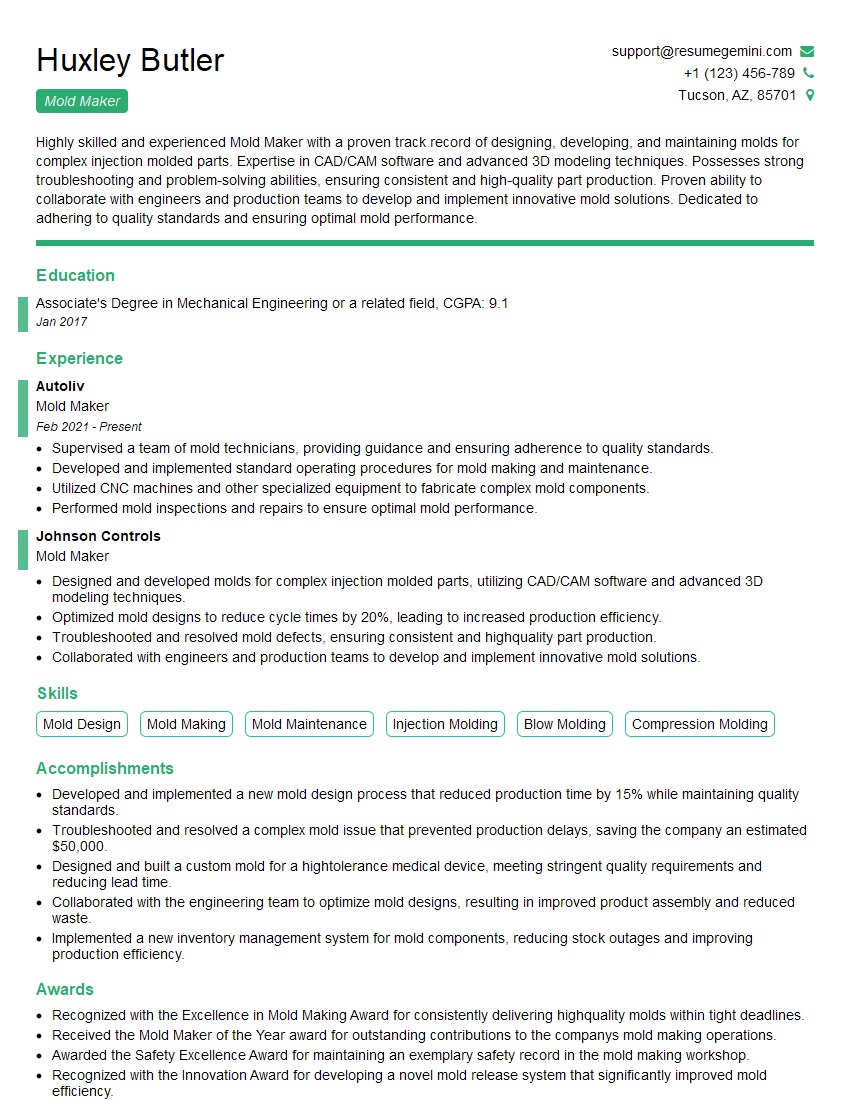
Mastering the art of pouring molten brass into molds is a valuable skill that opens doors to rewarding careers in manufacturing, metalworking, and related industries. It demonstrates precision, technical skill, and a commitment to safety. To significantly boost your job prospects, create a resume that is easily parsed by Applicant Tracking Systems (ATS). ResumeGemini is a trusted resource to help you build a professional and effective resume that highlights your skills and experience in this specialized field. Examples of resumes tailored to pouring molten brass into molds are available to help you craft your perfect application.




Explore more articles
Users Rating of Our Blogs
Share Your Experience
We value your feedback! Please rate our content and share your thoughts (optional).
What Readers Say About Our Blog
I Redesigned Spongebob Squarepants and his main characters of my artwork.
https://www.deviantart.com/reimaginesponge/art/Redesigned-Spongebob-characters-1223583608
IT gave me an insight and words to use and be able to think of examples
Hi, I’m Jay, we have a few potential clients that are interested in your services, thought you might be a good fit. I’d love to talk about the details, when do you have time to talk?
Best,
Jay
Founder | CEO