Interviews are more than just a Q&A session—they’re a chance to prove your worth. This blog dives into essential Permanent Mold Casting interview questions and expert tips to help you align your answers with what hiring managers are looking for. Start preparing to shine!
Questions Asked in Permanent Mold Casting Interview
Q 1. Explain the process of permanent mold casting.
Permanent mold casting, also known as gravity die casting, is a metal casting process characterized by the use of reusable metal molds. Unlike sand casting, which uses expendable molds, permanent molds offer the advantage of higher production rates and improved surface finish. The process involves melting the metal, pouring it into the preheated mold, allowing it to solidify, and then ejecting the solidified casting. This cycle is repeated many times, leading to high production volumes.
Here’s a step-by-step breakdown:
- Melting: The metal alloy is melted in a furnace to the appropriate temperature.
- Pouring: The molten metal is carefully poured into the preheated permanent mold. The mold’s design ensures the metal flows smoothly to fill the cavity completely and accurately.
- Solidification: The molten metal cools and solidifies within the mold cavity. The cooling rate is a critical factor influencing the final properties of the casting.
- Ejection: Once solidified, the casting is ejected from the mold. This might involve mechanical ejection mechanisms or other techniques depending on the mold design.
- Finishing: The casting often undergoes secondary operations like trimming, machining, or heat treatment to achieve the desired final dimensions and properties.
Q 2. What are the advantages and disadvantages of permanent mold casting compared to other casting methods?
Permanent mold casting offers several advantages over other casting methods like sand casting and investment casting:
- Higher Production Rates: Reusable molds allow for faster cycle times compared to methods requiring mold creation for each casting.
- Improved Surface Finish: The smooth metal mold produces castings with a better surface finish, reducing the need for extensive machining.
- Better Dimensional Accuracy: The consistent nature of permanent molds results in castings with closer tolerances.
- Greater Mechanical Properties: Controlled cooling often leads to improved mechanical properties of the final casting compared to sand casting.
However, it also has disadvantages:
- Higher Initial Investment: The cost of creating permanent molds is significantly higher than making sand molds.
- Limited Complexity: Complex shapes might be difficult or impossible to cast using permanent molds due to limitations in mold design and metal flow.
- Lower Casting Weight Range: Compared to other methods, it generally is restricted to certain weight ranges due to mold handling and filling issues.
The choice of casting method depends on factors like production volume, desired quality, casting complexity, and budget.
Q 3. Describe different types of permanent molds used in casting.
Permanent molds are made from various materials, each offering different properties and suitability for specific applications:
- Metallic Molds (Steel, Cast Iron): Most common, offering good durability and heat transfer properties. Steel molds are used for higher production runs due to their resistance to wear and tear.
- Graphite Molds: Used for casting metals with high melting points, offering good thermal shock resistance but lower durability compared to steel molds.
- Ceramic Shell Molds: Offer high temperature resistance and superior surface finish, typically used for high-performance alloys.
Mold design considerations include gating systems, venting, and ejection mechanisms, which significantly impact casting quality and production efficiency.
Q 4. What are the common alloys used in permanent mold casting?
Many alloys are suitable for permanent mold casting, depending on the application’s specific requirements. Some common examples include:
- Aluminum Alloys: Widely used due to their excellent castability, lightweight properties, and corrosion resistance. Examples include AlSi7Mg0.6 and AlSi9Cu3.
- Magnesium Alloys: Even lighter than aluminum, offering high strength-to-weight ratios, often used in aerospace and automotive applications. Examples include AZ91D and AM60B.
- Zinc Alloys: Excellent for low-cost, high-volume production, good die castability, and relatively high strength. Examples include ZA8 and ZAMAK.
- Copper Alloys (Brass, Bronze): Used for applications requiring high conductivity, corrosion resistance, and strength. Examples include various brass and bronze compositions.
The choice of alloy depends on factors such as strength requirements, corrosion resistance, cost, and the specific application.
Q 5. How do you control the cooling rate in permanent mold casting?
Controlling the cooling rate is crucial in permanent mold casting, as it directly impacts the microstructure and, consequently, the mechanical properties of the casting. Several techniques are employed:
- Mold Material Selection: The mold’s thermal conductivity influences the cooling rate. High conductivity materials lead to faster cooling, while materials with lower conductivity lead to slower cooling.
- Mold Preheating: Preheating the mold to a specific temperature minimizes thermal shock and can affect the cooling rate in the casting. A higher preheating temperature generally slows the cooling rate.
- Mold Design: The design of the mold, including the thickness of the mold walls and the presence of cooling channels, significantly impacts the cooling rate. Thicker walls result in slower cooling.
- Chill Inserts: These inserts, made from high thermal conductivity materials, are strategically placed within the mold to accelerate cooling in specific areas, promoting uniform cooling and reducing defects.
- Mold Coatings: Specialized coatings can be applied to the mold surface to modify the cooling rate. These coatings can enhance heat transfer or act as insulators.
Careful control of cooling is essential to avoid defects like porosity, shrinkage cavities, and hot tears.
Q 6. Explain the importance of mold design in permanent mold casting.
Mold design plays a pivotal role in the success of permanent mold casting. A well-designed mold ensures proper metal flow, efficient cooling, and easy casting ejection. Key considerations include:
- Gating System: This system directs molten metal into the mold cavity, minimizing turbulence and ensuring complete filling. Properly designed gates prevent air entrapment and ensure consistent metal flow.
- Venting System: This system allows trapped air to escape during filling, preventing porosity and defects in the casting. Vents must be strategically placed to allow for efficient air removal.
- Ejection System: Mechanisms are needed to remove the solidified casting from the mold easily without damaging either the casting or the mold. These mechanisms can include pins, slides, or other mechanical components.
- Cooling Channels: Incorporated into the mold to control the cooling rate, ensuring uniform solidification and reducing thermal stresses. The number and placement of these channels are carefully considered.
- Draft Angle: This is the slight taper on the walls of the mold cavity that facilitates the ejection of the casting. Insufficient draft angles can lead to difficulties in removing the part.
Experienced mold designers use simulation software (like ANSYS or Abaqus) to optimize mold design for specific alloys and casting geometries to minimize defects and maximize efficiency.
Q 7. What are the common defects found in permanent mold castings and their causes?
Several defects can occur during permanent mold casting. Understanding their causes is crucial for process optimization and quality control.
- Shrinkage Porosity: Caused by insufficient molten metal to fill the mold cavity completely, leading to voids within the casting. This can be due to inadequate feeding, improper gating design, or insufficient metal temperature.
- Hot Tears: Cracks that form during solidification due to internal stresses caused by uneven cooling or high thermal gradients. Slowing the cooling rate or modifying the mold design can help reduce this.
- Cold Shut: A discontinuity caused by incomplete fusion of two streams of molten metal meeting in the mold cavity. This results from insufficient metal temperature or poor mold design.
- Gas Porosity: Caused by trapped gases within the molten metal. This can result from insufficient venting in the mold design, excessive pouring speed, or improper degassing of the metal.
- Surface Defects (Scabs, Misruns): Surface imperfections caused by mold surface irregularities, insufficient metal flow, or premature solidification. Proper mold maintenance and improved gating design are key solutions.
Careful control of the casting parameters, proper mold design and maintenance, and thorough quality inspection are vital in minimizing defects and ensuring high-quality castings.
Q 8. How do you prevent porosity and shrinkage in permanent mold castings?
Porosity and shrinkage are common defects in permanent mold castings stemming from gas entrapment and solidification shrinkage, respectively. Preventing them requires a multi-pronged approach focusing on mold design, casting parameters, and alloy selection.
Mold Design: Proper venting in the mold is crucial to allow trapped gases to escape. Think of it like poking holes in a cake tin to let steam escape – otherwise, you’ll have a lumpy cake! Careful design of the gating system can also minimize turbulence and gas entrapment during pouring.
Casting Parameters: Controlling the pouring temperature is essential. Too hot, and you’ll get more gas entrapment; too cold, and you risk incomplete filling. Mold preheating is also important to ensure even heat distribution and reduce thermal shock. We usually monitor this with thermocouples embedded in the mold itself.
Alloy Selection: Choosing an alloy with low shrinkage characteristics, such as those with a high fluidity, helps minimize shrinkage porosity. For instance, certain aluminum alloys are preferred for their superior fluidity compared to others.
Vacuum Assisted Casting: Employing vacuum technology can significantly reduce porosity by drawing out dissolved gases before solidification. This helps create denser castings and improved mechanical properties.
Q 9. Describe the role of gating and risering systems in permanent mold casting.
The gating and risering system is the circulatory system of the permanent mold casting process. It dictates how molten metal flows into the mold cavity and where excess metal collects to compensate for shrinkage. A poorly designed system can lead to defects like cold shuts, misruns, and shrinkage cavities.
Gating System: This directs the flow of molten metal from the pouring basin into the mold cavity. A well-designed gating system ensures a smooth, controlled flow, minimizing turbulence and preventing gas entrapment. It’s akin to a carefully planned irrigation system for a field – you want even distribution of water to every part.
Riser System: This provides a reservoir of molten metal to feed the casting as it solidifies and shrinks. Think of it as a blood bank for the casting – providing extra material to compensate for the shrinking metal. Risers are strategically placed to compensate for shrinkage, ensuring complete filling of the mold cavity.
The design of both systems depends on factors such as casting geometry, alloy properties, and pouring parameters. Simulation software is often employed to optimize gating and risering designs before physical casting to minimize defects and reduce waste.
Q 10. What are the safety precautions you would take in a permanent mold casting facility?
Safety is paramount in a permanent mold casting facility. The high temperatures, molten metal, and heavy machinery demand stringent safety protocols.
Personal Protective Equipment (PPE): Mandatory PPE includes heat-resistant clothing, safety glasses, gloves, and hearing protection. Employees should be provided with regular training on correct PPE usage.
Emergency Procedures: Clear emergency procedures for spills, fires, and injuries must be established and regularly practiced. Fire extinguishers and emergency showers should be readily available.
Machine Guarding: All machinery should be equipped with appropriate safety guards and interlocks to prevent accidental contact. Regular maintenance and inspections are crucial to ensuring their effectiveness.
Environmental Controls: Ventilation systems are essential to control fumes and dust produced during the casting process. Proper disposal of waste materials is also vital to minimize environmental impact.
Training and Supervision: Comprehensive training on safe operating procedures is a must for all employees. Experienced supervisors should provide ongoing oversight to ensure safe work practices are followed.
Q 11. Explain the process of mold maintenance and repair.
Mold maintenance and repair are crucial for extending mold life and maintaining casting quality. Neglecting this can lead to defects, increased downtime, and higher production costs.
Cleaning: After each casting cycle, molds must be thoroughly cleaned to remove residual metal, sand, and other debris. Specialized cleaning equipment such as shot blasting machines or high pressure water jets can be used. Think of it as giving your molds a good bath after a long day’s work!
Inspection: Regular inspection for cracks, erosion, and other damage is essential. This can involve visual inspection, dye penetrant testing, or ultrasonic inspection to detect hidden flaws. Early detection allows for timely repair or replacement, preventing major issues.
Repair: Minor repairs like patching small cracks or surface damage can be done using specialized welding or patching materials. Significant damage might necessitate more extensive repair or even mold replacement.
Coating Application: Regular application of mold coatings helps protect the mold surfaces from erosion and improve the quality of the castings. Coating application involves preparing the mold surface and applying the coating material by spraying or dipping, followed by proper curing.
Q 12. How do you ensure the dimensional accuracy of permanent mold castings?
Dimensional accuracy in permanent mold castings is achieved through careful control of various factors throughout the process.
Mold Design: Precise mold design, using Computer-Aided Design (CAD) and Computer-Aided Manufacturing (CAM) is crucial for ensuring the final casting meets the required dimensions. This involves accurate modeling of the part, including allowances for shrinkage and machining.
Mold Material and Machining: High-quality mold materials with stable dimensions and precise machining are crucial. We need to ensure that the mold itself doesn’t deform during the casting process.
Casting Parameters: Controlling the pouring temperature, metal flow rate, and cooling rate helps minimize thermal stresses which can lead to dimensional variations. Monitoring the process closely through data acquisition systems contributes to accuracy.
Mold Coatings: The proper selection and application of mold coatings help prevent sticking and erosion, thereby preserving mold dimensions and maintaining the integrity of the final product.
Post-Processing: In some instances, minimal machining or finishing operations may be necessary to achieve the final dimensional requirements. This might involve trimming, grinding or other surface finishing techniques.
Q 13. What are the different types of coatings used in permanent mold casting and their purpose?
Various coatings are employed in permanent mold casting to enhance mold life, improve casting surface finish, and prevent sticking.
Ceramic Coatings: These provide excellent thermal insulation and resistance to erosion, extending mold life. They can also improve the surface finish of the castings.
Graphite Coatings: These reduce friction between the molten metal and the mold, facilitating smoother metal flow and preventing sticking. They’re also effective in reducing wear and tear on mold surfaces.
Silicone-Based Coatings: These offer excellent release properties, minimizing sticking and simplifying part removal. They often enhance the surface finish as well.
Wash Coatings: These are applied as a thin layer between the main coating and the mold material. They promote adhesion of the main coating and facilitate smoother metal flow.
The selection of the appropriate coating depends on factors such as the casting alloy, casting design, and desired surface finish. Careful application of the coating is also important to ensure even coverage and optimal performance.
Q 14. How do you select the appropriate casting alloy for a specific application?
Selecting the right casting alloy is critical for ensuring the final product meets the required performance characteristics for a given application.
Mechanical Properties: Consider the required strength, ductility, hardness, and fatigue resistance. Different alloys offer varying combinations of these properties.
Corrosion Resistance: If the casting will be exposed to corrosive environments, the alloy must offer sufficient resistance to corrosion and degradation. Stainless steels or specialized aluminum alloys are examples of materials that provide excellent corrosion resistance.
Thermal Properties: For applications involving high temperatures, the alloy’s thermal conductivity and melting point should be carefully considered. For instance, superalloys are used in high-temperature applications such as gas turbines.
Castability: The alloy’s fluidity, shrinkage characteristics, and tendency towards gas porosity influence the ease of casting and the quality of the final product. High fluidity alloys are generally preferred to avoid defects.
Cost: The cost of the alloy is another critical factor. The choice often involves balancing cost with the required performance characteristics. A cost-benefit analysis should be part of the selection process.
Often, a combination of these factors guides alloy selection, and in some cases, more sophisticated simulations are used to optimize the performance of the final part.
Q 15. Describe the process of quality control in permanent mold casting.
Quality control in permanent mold casting is crucial for producing parts that meet the required specifications. It’s a multifaceted process starting even before the casting process begins and continuing until the final inspection. Think of it as a series of checkpoints ensuring the final product is exactly as intended.
Raw Material Inspection: We meticulously check the chemical composition and physical properties of the molten metal to ensure it aligns with the specifications. Inconsistencies here can lead to defects. For example, if the aluminum alloy has too much silicon, it might lead to increased porosity in the casting.
Mold Inspection: The permanent mold itself undergoes regular inspection for wear and tear, cracks, or any damage that could compromise the casting’s integrity. Regular cleaning and maintenance are vital. A flawed mold will result in consistently flawed castings, wasting material and time.
Process Monitoring: During the casting process, parameters like metal temperature, injection pressure, and cooling rate are closely monitored using automated systems and sensors. Deviations from the set points are immediately flagged, and corrective actions are taken. This is like a heart monitor for the casting process, ensuring everything runs smoothly.
Dimensional Inspection: Once the castings are cooled and ejected, they undergo rigorous dimensional checks using tools like CMMs (Coordinate Measuring Machines) or calipers to ensure they are within the tolerance specified in the design. This is where we make sure everything is exactly the right size and shape.
Visual Inspection: A visual inspection is performed to identify surface imperfections such as cracks, porosity, or cold shuts. This is often supplemented by non-destructive testing methods.
Non-Destructive Testing (NDT): Techniques like radiography, ultrasonic testing, or dye penetrant testing are employed to detect internal flaws that are invisible to the naked eye. This is like having an X-ray vision for castings.
A robust QC system minimizes defects, improves efficiency, and ensures customer satisfaction. Think of it as building a quality product from the ground up, not just fixing problems at the end.
Career Expert Tips:
- Ace those interviews! Prepare effectively by reviewing the Top 50 Most Common Interview Questions on ResumeGemini.
- Navigate your job search with confidence! Explore a wide range of Career Tips on ResumeGemini. Learn about common challenges and recommendations to overcome them.
- Craft the perfect resume! Master the Art of Resume Writing with ResumeGemini’s guide. Showcase your unique qualifications and achievements effectively.
- Don’t miss out on holiday savings! Build your dream resume with ResumeGemini’s ATS optimized templates.
Q 16. What are the common methods for surface finishing of permanent mold castings?
Surface finishing of permanent mold castings aims to improve the aesthetic appeal, dimensional accuracy, and corrosion resistance of the castings. Several methods are commonly used:
Tumbling: Castings are tumbled in a rotating drum with abrasive media to remove surface irregularities and improve surface finish. It’s like polishing stones in a riverbed, but more controlled.
Shot Blasting: Similar to tumbling, but uses a high-velocity stream of abrasive media to achieve a more aggressive surface finish. Ideal for removing imperfections and creating a textured surface.
Grinding and Machining: For precise dimensional control and surface finish, grinding and machining operations are used. This method allows for very precise finishing of complex shapes.
Polishing: Provides a highly smooth and reflective surface finish. Commonly used for decorative or high-precision parts.
Electroplating: A layer of metal is deposited onto the surface to improve corrosion resistance and aesthetics. This enhances the life and appearance of the part.
Painting and Powder Coating: Provide a protective layer and improve the appearance of the casting, commonly used for protecting the casting from corrosion.
The choice of method depends on the required surface finish, the material of the casting, and the cost considerations. It’s like choosing the right tool for the job – each method has its strength and application.
Q 17. Explain the role of automation in permanent mold casting.
Automation plays a vital role in modern permanent mold casting, significantly improving efficiency, consistency, and safety. Think of it as having a sophisticated robotic assistant that works tirelessly and precisely.
Automated Mold Handling: Robots are used to automatically open and close molds, reducing cycle time and minimizing human error. This reduces the risk of injury associated with manually handling hot molds.
Automated Metal Delivery: Automated systems ensure a consistent flow of molten metal to the mold, maintaining the required temperature and pressure. Consistent metal flow leads to consistent castings.
Automated Part Ejection: Robots efficiently eject the castings from the mold once they have cooled, preventing damage and improving productivity.
Process Monitoring and Control: Automated systems monitor various process parameters (temperature, pressure, etc.) and adjust them automatically, maintaining optimal conditions and minimizing defects. This keeps the entire process running at peak efficiency and quality.
Automated Inspection Systems: Vision systems and other automated inspection tools detect defects in real-time, allowing for prompt corrective actions and reducing waste.
Automation not only boosts productivity but also enhances product quality and worker safety, ensuring a smooth, consistent, and safe manufacturing process.
Q 18. How do you troubleshoot common problems encountered during the casting process?
Troubleshooting in permanent mold casting requires a systematic approach. It’s like detective work – you need to find the root cause, not just treat the symptoms.
Surface Defects (Porosity, Cold Shuts): These often indicate problems with metal temperature, mold temperature, injection pressure, or venting. We’d systematically check each parameter and adjust accordingly. Sometimes a faulty mold needs to be repaired or replaced.
Dimensional Inaccuracies: This can arise from mold wear, improper mold design, or inconsistent cooling. Precision measurements and mold analysis are critical to pinpoint the issue and adjust the process parameters.
Casting Breakage: This can occur due to internal stress in the casting, often caused by improper cooling or poor metal quality. Careful analysis of the metal and the cooling process helps to identify the cause.
Metal Leaks: Leaks usually stem from mold defects, sealing issues, or excessive pressure. Mold maintenance and repair along with careful pressure control are crucial.
A thorough understanding of the casting process and the ability to analyze data from various sources are essential for effective troubleshooting. It is a combination of experience and systematic approach that helps to resolve issues quickly and effectively.
Q 19. What is the significance of pressure die casting in permanent mold casting?
Pressure die casting is a specialized and high-speed form of permanent mold casting. It uses high pressure to inject molten metal into the mold, resulting in superior surface finish, tighter tolerances, and increased production rates compared to gravity-fed permanent mold casting. Think of it as a powerful injection to quickly fill the mold completely.
The significance lies in its ability to produce complex parts with intricate details and high dimensional accuracy. It’s particularly suitable for high-volume production runs of small to medium-sized components in various metals such as aluminum, zinc, and magnesium. Industries like automotive, electronics, and hardware heavily rely on pressure die casting for components demanding high precision and durability.
While requiring significant capital investment, the high production rates and superior quality often justify the cost, especially for mass production of intricate parts.
Q 20. Describe your experience with different types of permanent mold casting machines.
My experience encompasses a range of permanent mold casting machines, from simpler gravity-fed systems to sophisticated, fully automated pressure die casting machines. I have worked with both cold chamber and hot chamber die casting machines.
Cold Chamber Machines: These are particularly useful for casting high-melting point metals where the molten metal is ladled into the injection cylinder, resulting in good control over the amount of metal injected into the mold.
Hot Chamber Machines: These are more suitable for low melting point metals, where the molten metal is directly in contact with the injection plunger reducing material waste and resulting in increased casting speed.
Gravity Die Casting Machines: I’ve worked with various sizes and configurations of gravity die casting machines, understanding their limitations in terms of casting complexity and production rate. This experience provided a good understanding of the basics of permanent mold casting.
High-Pressure Die Casting Machines: These machines, being more automated, allow for higher production rates and better surface finish. They require a good understanding of the pressure and speed parameters involved in the casting process.
This varied experience allows me to select the most suitable machine for specific casting requirements, optimizing the process for efficiency and quality. Each machine has its strengths and weaknesses, and choosing the right one is critical for project success.
Q 21. How do you interpret casting specifications and drawings?
Interpreting casting specifications and drawings is fundamental to successful permanent mold casting. It’s like reading a blueprint for constructing a building – the details are critical for the final product.
I start by thoroughly reviewing the drawings to understand the part geometry, tolerances, and surface finish requirements. This includes identifying critical dimensions, features, and any special instructions. Then, I check the specifications for the material, mechanical properties, and any specific quality control requirements. The specifications are like the guidelines which help create the parts with the desired quality.
For instance, a drawing might specify a tolerance of ±0.1mm for a critical dimension. This means the final casting must fall within this range. Any deviation from this tolerance might render the part unusable. Understanding material properties like tensile strength and elongation is critical to ensure the casting meets the application requirements.
My experience allows me to identify potential challenges during the design phase, suggesting modifications or alternative approaches to improve manufacturability and reduce costs. It’s all about understanding the design intent and translating it into a robust and efficient casting process.
Q 22. Explain the importance of material selection in permanent mold casting.
Material selection in permanent mold casting is paramount because it directly impacts the final product’s quality, cost, and performance. The chosen material must possess the right combination of properties to meet the design specifications while being castable within the process limitations. This involves considering several crucial factors:
- Mechanical Properties: Tensile strength, yield strength, elongation, hardness, and fatigue resistance are key for ensuring the part’s durability and functionality. For instance, a high-strength aluminum alloy might be chosen for automotive parts demanding structural integrity.
- Thermal Properties: Melting point, thermal conductivity, and thermal expansion coefficient influence the casting process and the final part’s behavior. A material with appropriate thermal conductivity facilitates uniform solidification, minimizing defects.
- Castability: This refers to a material’s ability to flow smoothly into the mold cavity without excessive oxidation or gas entrapment. The fluidity, viscosity, and tendency to form oxides are vital considerations. For example, magnesium alloys can be more challenging to cast than aluminum due to their higher reactivity.
- Cost: The raw material cost significantly affects the overall production cost. A balance must be struck between performance requirements and economic viability.
- Machinability: If secondary machining is required, the material’s machinability needs to be considered. Some alloys might be more difficult and expensive to machine than others.
In practice, I often use material selection charts and databases that list the properties of various casting alloys, along with their suitability for different applications. Then, I carefully compare the requirements of the specific casting with the properties of the candidate materials to make the optimal choice.
Q 23. How do you calculate the required casting parameters, such as pouring temperature and pressure?
Calculating optimal pouring temperature and pressure in permanent mold casting requires a thorough understanding of the alloy being used and the mold design. It’s not a simple calculation but rather an iterative process often refined through experimentation and data analysis. Here’s a breakdown:
- Pouring Temperature: This needs to be sufficiently high to ensure proper fluidity for filling the mold cavity completely, but not so high as to cause excessive mold erosion or degrade the mechanical properties of the casting. It’s determined using metallurgical handbooks and experience. Factors include the alloy’s melting point, superheat (temperature above the melting point), and the mold material’s thermal properties. A rule of thumb is to add a superheat of 50-150°C above the liquidus temperature.
- Pouring Pressure: The pressure assists in filling the mold cavity fully and uniformly, especially in complex geometries. Too low a pressure might result in incomplete filling or porosity, while excessive pressure could damage the mold. The required pressure is influenced by the mold design (especially its gating system), alloy viscosity, and desired surface finish. Pressure is often maintained using a controlled head of molten metal, or more sophisticated systems involving pressure pumps.
We often utilize specialized software that models the flow of molten metal within the mold to simulate pouring conditions. This software considers factors like gating geometry, alloy properties, and mold temperature to predict the filling behavior and identify potential issues. The results of these simulations guide adjustments to the pouring parameters to optimize the casting process. In addition to simulations, real-world trials with careful monitoring and adjustment are necessary for fine-tuning these parameters.
Q 24. What is your experience with statistical process control (SPC) in permanent mold casting?
Statistical Process Control (SPC) is fundamental to maintaining consistent quality in permanent mold casting. My experience involves implementing and managing control charts (X-bar and R charts, for example) to monitor key process parameters such as pouring temperature, pressure, cycle time, and defect rates. These charts allow us to identify trends and variations in the process, enabling early detection of problems before they become major issues.
Specifically, we track critical dimensions of castings, surface finish characteristics, and mechanical properties. By analyzing data from SPC charts, we can identify assignable causes of variation (special cause variation) and differentiate them from common cause variation. Assignable causes might include tool wear, changes in raw material composition, or equipment malfunctions, each requiring investigation and corrective action.
I’ve used SPC to improve the consistency of aluminum alloy castings, reducing the rejection rate by 15% within six months by identifying and addressing specific issues with the pouring process. The consistent use of SPC has proven invaluable in establishing process capability and maintaining a high level of quality in the production of permanent mold castings.
Q 25. Describe your experience with root cause analysis in a foundry environment.
Root cause analysis is a critical skill in a foundry environment. When a casting defect occurs, I employ structured methodologies like the ‘5 Whys’ technique or fishbone diagrams (Ishikawa diagrams) to systematically investigate the underlying causes. My approach involves:
- Data Collection: Thoroughly documenting the defect, including its type, location, and frequency.
- Teamwork: Assembling a cross-functional team consisting of foundry personnel, quality control inspectors, and engineers to brainstorm potential causes.
- Brainstorming: Using techniques like the 5 Whys to progressively drill down to the root cause. For example, if a casting has porosity, the 5 Whys might lead to identifying inadequate degassing of the molten metal as the root cause.
- Verification: Implementing corrective actions based on the identified root cause and monitoring the effectiveness of these actions through data analysis.
In one instance, we experienced a significant increase in surface defects on a specific type of zinc die casting. By using the ‘5 Whys’ and analyzing process parameters data, we found the root cause to be excessive mold wear, which was solved by implementing a new mold maintenance program.
Q 26. How do you handle non-conformances and implement corrective actions in casting production?
Handling non-conformances in casting production requires a systematic approach that incorporates immediate corrective actions and preventative measures. The process typically involves:
- Immediate Containment: Isolating non-conforming castings to prevent further processing or shipping.
- Defect Classification and Analysis: Categorizing the defect type (e.g., porosity, shrinkage, cracks) and conducting a root cause analysis (as described previously).
- Corrective Actions: Implementing solutions based on the root cause analysis, such as adjusting process parameters, improving raw materials, or upgrading equipment.
- Preventive Actions: Implementing measures to prevent similar non-conformances from recurring. This might include improved operator training, enhanced quality control procedures, or preventative maintenance schedules.
- Documentation: Maintaining detailed records of the non-conformance, investigation, corrective, and preventive actions taken. This documentation is crucial for continuous improvement.
For example, if we find excessive surface roughness on a batch of castings, we would first isolate the defective castings, then investigate the mold condition, pouring temperature, and other process parameters. Based on the findings, we might decide to repair or replace the mold, adjust the pouring parameters, or improve the mold release agent.
Q 27. What is your understanding of Lean Manufacturing principles and its application to permanent mold casting?
Lean Manufacturing principles are highly applicable to permanent mold casting to minimize waste and maximize efficiency. My understanding of and experience with Lean in this context include:
- Value Stream Mapping: Identifying and eliminating non-value-added steps in the casting process. This might involve streamlining material handling, reducing lead times, and optimizing the flow of materials and information.
- 5S Methodology: Implementing a system of organization and workplace cleanliness (Sort, Set in Order, Shine, Standardize, Sustain) to improve efficiency and reduce errors.
- Kaizen Events: Conducting focused improvement workshops to address specific areas of waste and inefficiency. These events involve cross-functional teams collaboratively identifying and implementing improvements.
- Kanban Systems: Using visual signals to manage material flow and inventory levels, minimizing waste from excessive inventory and improving responsiveness to changing demand.
- Poka-Yoke (Error-Proofing): Designing processes and equipment to prevent errors from occurring in the first place. This might involve using jigs and fixtures to ensure consistent casting dimensions and incorporating sensors to detect process deviations.
I’ve successfully implemented Lean principles in a permanent mold casting facility, leading to a 20% reduction in lead time and a 10% reduction in production costs. Key to success was engaging the workforce, promoting a culture of continuous improvement, and focusing on data-driven decision making. The implementation of these Lean principles not only increased efficiency but also improved product quality and worker morale.
Key Topics to Learn for Permanent Mold Casting Interview
- Mold Design and Materials: Understanding the intricacies of die design, including gating systems, venting, and cooling channels. Explore various mold materials and their properties (e.g., steel alloys, graphite).
- Casting Processes and Parameters: Mastering the practical aspects of metal pouring, including temperature control, pressure management, and cycle time optimization. Understand the impact of these parameters on casting quality.
- Metallurgy and Alloy Selection: Gain a solid understanding of the properties of various casting alloys and their suitability for different applications. Know how alloy selection influences the casting process and final product.
- Quality Control and Inspection: Familiarize yourself with common casting defects (e.g., porosity, shrinkage, hot tears) and the methods used to detect and prevent them. Understand quality control procedures and statistical process control (SPC).
- Safety Procedures and Practices: Demonstrate awareness of the safety protocols associated with molten metal handling, machinery operation, and personal protective equipment (PPE).
- Troubleshooting and Problem-Solving: Develop your ability to diagnose and resolve common casting issues. Practice analyzing process data to identify root causes and implement corrective actions.
- Automation and Robotics in Permanent Mold Casting: Explore the integration of automated systems in modern permanent mold casting operations, including robotic handling and automated pouring systems.
- Economic Considerations and Production Efficiency: Understand the cost factors involved in permanent mold casting and strategies for optimizing production efficiency and minimizing waste.
Next Steps
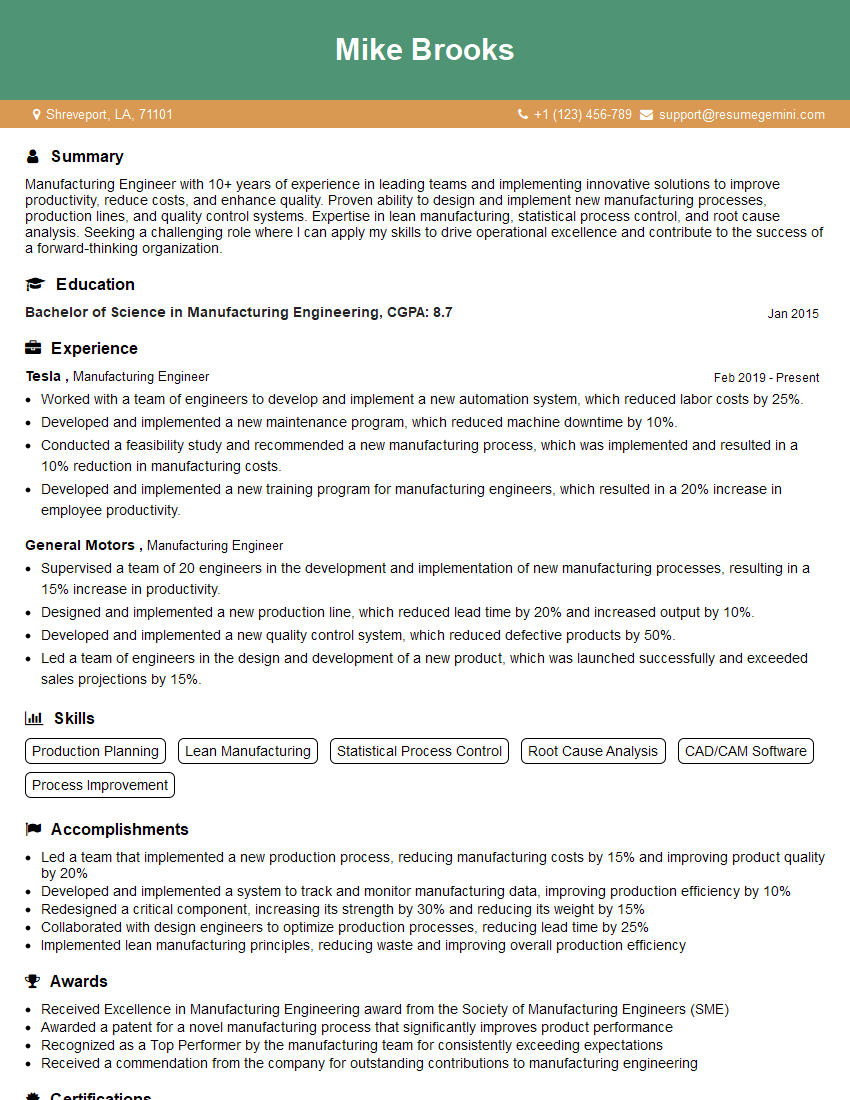
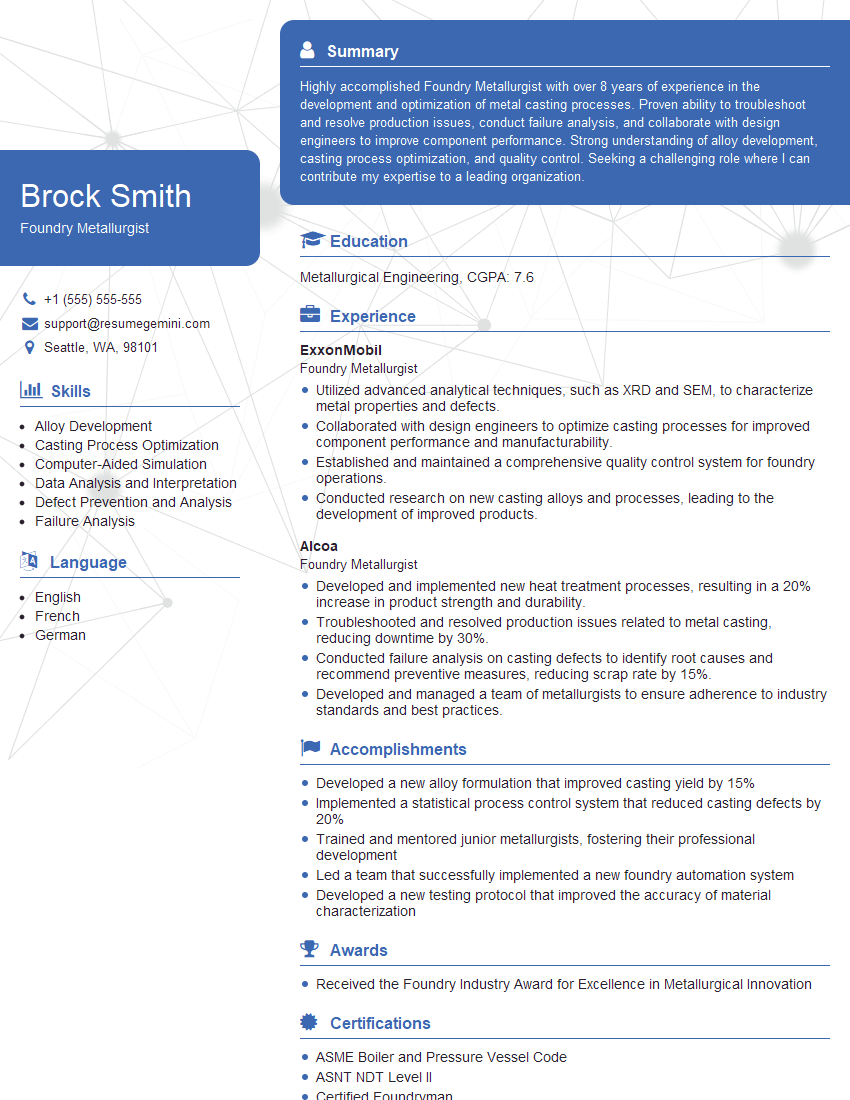
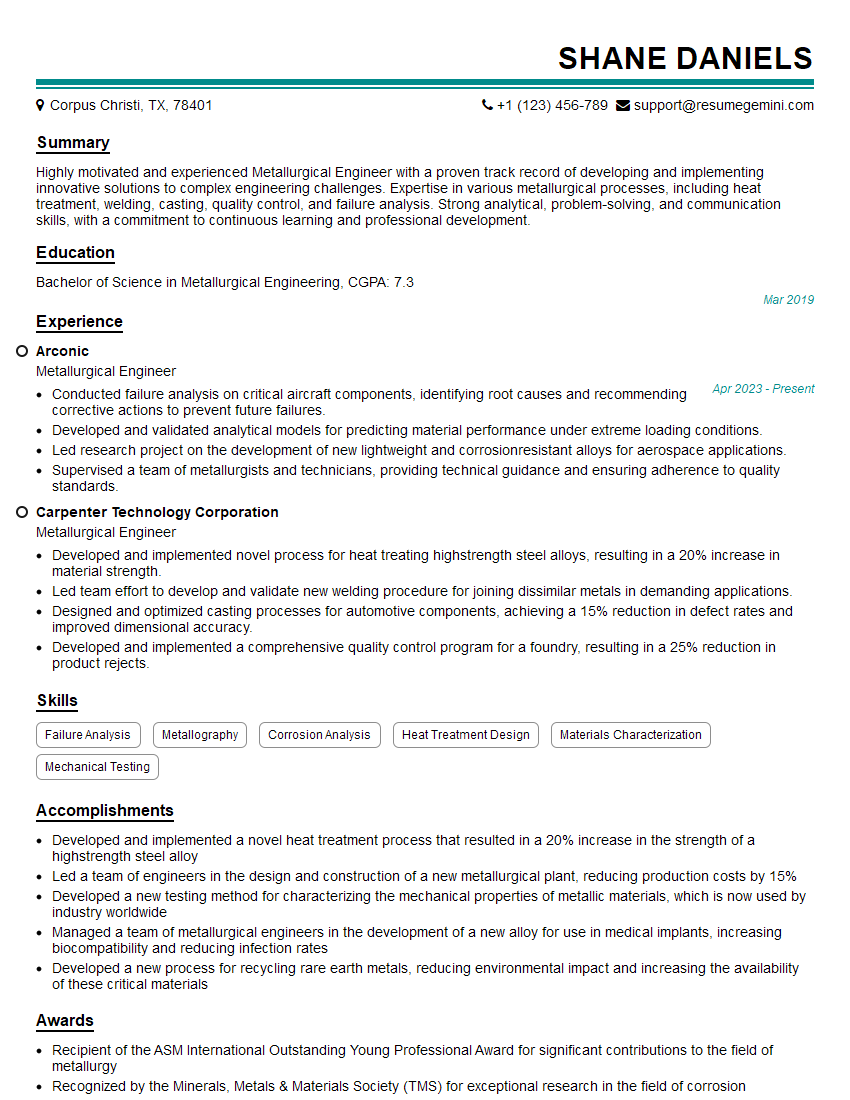
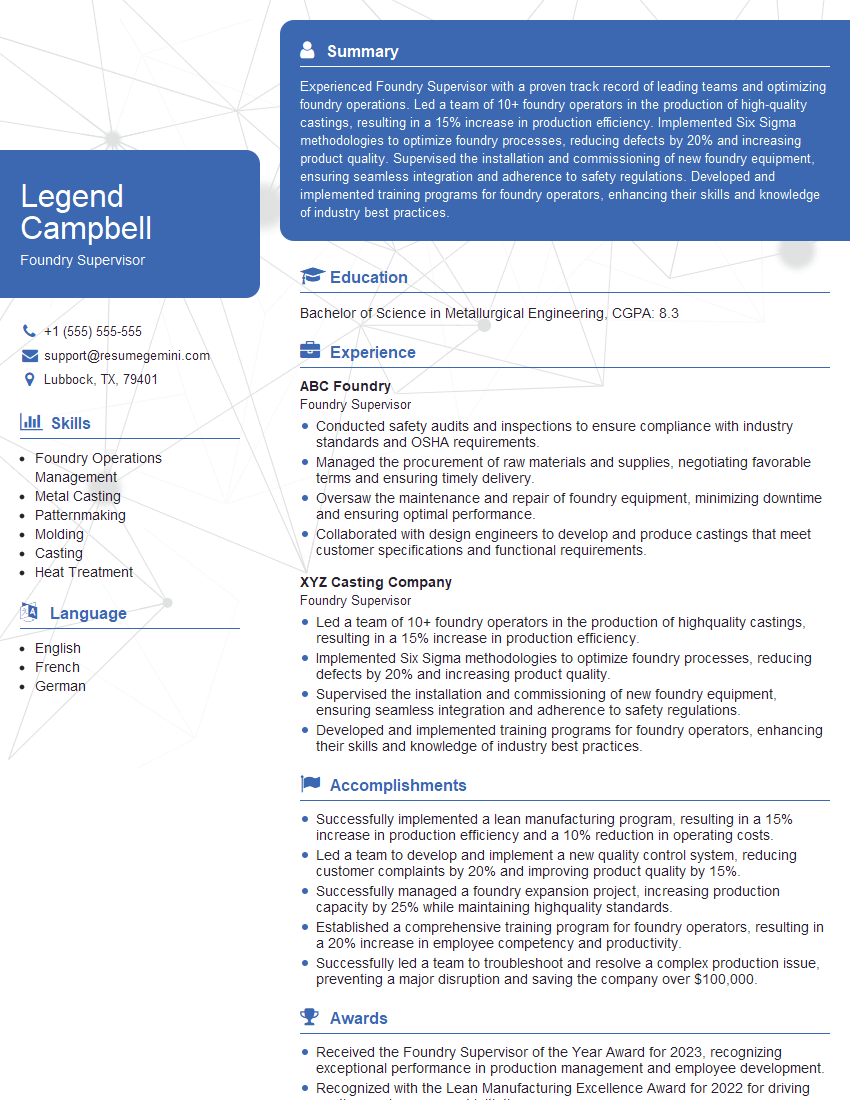
Mastering Permanent Mold Casting opens doors to exciting career opportunities in a vital manufacturing sector. A strong understanding of these processes significantly enhances your value to potential employers. To increase your chances of landing your dream job, focus on creating a compelling and ATS-friendly resume that highlights your skills and experience effectively. ResumeGemini is a trusted resource that can help you build a professional resume tailored to the specific requirements of the Permanent Mold Casting industry. We provide examples of resumes tailored to Permanent Mold Casting to help you get started.
Explore more articles
Users Rating of Our Blogs
Share Your Experience
We value your feedback! Please rate our content and share your thoughts (optional).
What Readers Say About Our Blog
I Redesigned Spongebob Squarepants and his main characters of my artwork.
https://www.deviantart.com/reimaginesponge/art/Redesigned-Spongebob-characters-1223583608
IT gave me an insight and words to use and be able to think of examples
Hi, I’m Jay, we have a few potential clients that are interested in your services, thought you might be a good fit. I’d love to talk about the details, when do you have time to talk?
Best,
Jay
Founder | CEO