Interviews are opportunities to demonstrate your expertise, and this guide is here to help you shine. Explore the essential GeoEcology interview questions that employers frequently ask, paired with strategies for crafting responses that set you apart from the competition.
Questions Asked in GeoEcology Interview
Q 1. Explain the concept of landscape connectivity and its importance in GeoEcology.
Landscape connectivity refers to the degree to which the landscape facilitates or impedes movement of organisms among habitat patches. In GeoEcology, it’s crucial because it directly impacts species dispersal, gene flow, and ultimately, the persistence of populations. Think of it like a road network: well-connected landscapes are like well-developed highways, allowing for easy movement; poorly connected landscapes are like a maze of dead-end roads, restricting movement and isolating populations.
High connectivity promotes biodiversity by allowing species to access resources, mates, and refuge areas across the landscape. Low connectivity can lead to inbreeding, reduced genetic diversity, increased vulnerability to disturbances, and even local extinctions. For example, a fragmented forest with isolated patches limits the movement of animals like squirrels, affecting their gene pool and resilience.
Assessing connectivity involves analyzing factors like habitat patch size, shape, quality, and the presence of barriers (roads, rivers, human development). Connectivity analysis uses tools like graph theory and circuit theory to model species movement and identify crucial linkages within the landscape.
Q 2. Describe different spatial scales used in GeoEcological research.
GeoEcological research spans a wide range of spatial scales, each offering unique insights. These scales are interconnected and often investigated in a nested approach.
- Alpha scale: This focuses on a single, relatively homogeneous habitat patch. For instance, studying the biodiversity within a single meadow. It’s about local-scale processes.
- Beta scale: This compares biodiversity between different habitat patches within a larger region. For example, comparing the bird species richness of two adjacent forests. It focuses on turnover and variation across habitats.
- Gamma scale: This addresses biodiversity at the largest scale, encompassing a whole region or even a continent. For example, studying the overall mammal diversity of the Amazon rainforest. It represents regional or global patterns.
- Landscape scale: This sits between beta and gamma, focusing on the spatial arrangement of heterogeneous habitats and its impact on biodiversity. For example, examining the impact of forest fragmentation on regional amphibian populations. It considers the spatial configuration of habitats.
The choice of scale depends on the research question. Studying individual species interactions might require a fine-grained alpha-scale approach, while investigating the impact of climate change on biodiversity might necessitate a broad gamma-scale perspective.
Q 3. How does remote sensing contribute to GeoEcological studies?
Remote sensing plays a vital role in GeoEcological studies by providing large-scale, synoptic views of the Earth’s surface. It employs sensors on satellites or aircraft to collect data about the Earth’s surface without direct contact. This data is then used to map and monitor various GeoEcological aspects.
- Habitat Mapping: Satellite imagery allows researchers to map different habitat types (forests, grasslands, wetlands) across vast areas, identifying key habitats for specific species or communities. Spectral signatures can distinguish vegetation types and even monitor habitat changes over time.
- Fragmentation Analysis: Remote sensing can quantify habitat fragmentation by measuring patch size, shape, and isolation. This information is crucial for assessing landscape connectivity.
- Biodiversity Monitoring: Techniques like hyperspectral imaging can be used to estimate vegetation biomass and species diversity from spectral characteristics. Additionally, imagery from drones can be used for species identification and population counts.
- Environmental Monitoring: Remote sensing data is instrumental in monitoring environmental changes like deforestation, wildfires, and sea-level rise, which all have significant impacts on biodiversity.
For example, Landsat imagery has been extensively used to track deforestation rates in the Amazon rainforest, providing crucial information for conservation efforts.
Q 4. What are the key applications of GIS in GeoEcology?
Geographic Information Systems (GIS) are indispensable tools in GeoEcology, offering a powerful platform for spatial analysis and data visualization. Key applications include:
- Spatial Data Integration: GIS allows researchers to integrate various spatial datasets (e.g., climate data, species distribution maps, land cover maps) into a common framework for analysis. This allows for examining the interplay of various factors affecting biodiversity.
- Habitat Suitability Modeling: GIS facilitates the creation of habitat suitability models predicting the likelihood of species occurrence based on environmental variables. This is often done using techniques like MaxEnt or other niche-modeling approaches.
- Connectivity Analysis: GIS can be used to quantify landscape connectivity, identifying corridors and barriers to species movement using algorithms like least-cost path analysis.
- Conservation Planning: GIS helps in prioritizing areas for conservation, identifying crucial habitats, and designing protected area networks. This is achieved using spatial prioritization techniques and multi-criteria decision analysis.
- Change Detection: GIS allows researchers to detect changes in land cover, habitat fragmentation, and species distributions over time, which is crucial for understanding the impacts of human activities and climate change on ecosystems.
Imagine trying to manage a national park’s resources without GIS – the task would be immensely complicated. GIS provides a clear, visual, and easily analyzed view of all spatial information, enabling more efficient and effective management.
Q 5. Explain the difference between habitat fragmentation and habitat loss.
While both habitat fragmentation and habitat loss negatively impact biodiversity, they are distinct processes.
- Habitat Loss: This refers to the complete destruction or conversion of a habitat to another land use. For example, converting a forest into agricultural land completely removes the forest habitat.
- Habitat Fragmentation: This involves the breaking up of a continuous habitat into smaller, isolated patches. The total amount of habitat might remain the same, but the connectivity is reduced. Imagine a large forest being divided into smaller patches by roads or agricultural fields; the forest area remains, but the patches are isolated.
Habitat loss directly reduces the amount of available habitat, leading to population declines. Habitat fragmentation, while not eliminating the habitat itself, diminishes its quality by decreasing connectivity, increasing edge effects (e.g., increased predation at forest edges), and isolating populations, making them more vulnerable to extinction.
Often, habitat loss and fragmentation occur simultaneously. For example, deforestation can both reduce the total forest area (loss) and break up remaining forests into fragmented patches.
Q 6. Describe various methods for assessing biodiversity in a given area.
Assessing biodiversity in a given area involves employing a variety of methods tailored to the specific organisms and questions being addressed. There’s no single ‘best’ method.
- Species Counts and Inventories: This involves conducting surveys to identify and count the number of different species present. This is often done using visual observations, traps, or other sampling techniques. This provides a simple measure of species richness.
- Species Abundance and Distribution: Measuring not just the presence but also the abundance of each species gives a more complete picture of community structure. This can involve quadrats, transects, or mark-recapture techniques.
- Community Composition Analysis: This involves analyzing the overall composition of the community, assessing the relative abundance of different species and their interactions. This gives insights into the relative importance of different species within the community.
- Functional Diversity: This method assesses the range of functional traits (e.g., body size, feeding strategy, dispersal ability) within a community, which can reveal how species contribute to ecosystem processes.
- Genetic Diversity: Analyzing genetic variation within and between populations can provide insights into evolutionary processes and adaptation to environmental changes. DNA barcoding and other molecular techniques are used here.
- Environmental DNA (eDNA): This method involves detecting the DNA of organisms in environmental samples (e.g., water, soil) which offers a less invasive way of detecting species presence than traditional surveying methods.
The choice of method depends on the resources, time constraints, and the specifics of the ecosystem and research questions. Often, multiple methods are combined for a more comprehensive assessment.
Q 7. How do you model species distribution using GeoEcological data?
Modeling species distribution using GeoEcological data involves predicting the probability of a species occurrence across a geographical area based on environmental variables. Several approaches exist, and the choice depends on the available data and research goals.
- Niche-based modeling: This approach uses presence-only data (locations where a species has been observed) and environmental variables (climate, topography, land cover) to define the species’ ecological niche. Popular algorithms include MaxEnt, which uses machine learning to predict the probability of species occurrence based on environmental conditions.
# Example MaxEnt code (conceptual): maxent_model = MaxEnt(presence_data, environmental_variables) predictions = maxent_model.predict(new_environmental_variables) - Regression models: These statistical models use presence-absence or abundance data to relate species occurrence to environmental predictors. Generalized Linear Models (GLMs) and Generalized Additive Models (GAMs) are commonly used here.
- Spatial point process models: These models are particularly useful for analyzing the spatial patterns of species occurrences, accounting for spatial autocorrelation (the tendency for nearby locations to be similar). Incorporates both presence and absence of data.
The process generally involves data preparation (acquiring and cleaning environmental and species occurrence data), model selection, model fitting (parameter estimation), model evaluation (assessing the accuracy of predictions), and finally, visualization and interpretation of the resulting species distribution map. The map shows the probability of occurrence across the study area based on the environmental factors that influence the species’ presence or absence.
Q 8. Explain the concept of ecological niche modeling.
Ecological niche modeling (ENM) is a powerful set of techniques used to predict the geographic distribution of species based on their environmental requirements. Think of it like creating a species’ ideal ‘habitat recipe’. We identify the environmental factors (temperature, rainfall, elevation, etc.) where a species is currently found and use statistical methods to create a model that predicts where those conditions are likely to exist elsewhere.
This involves gathering occurrence data (locations where the species has been observed), selecting relevant environmental variables from sources like climate data, remotely sensed imagery, and soil maps, and then using algorithms (like MaxEnt, BIOCLIM, or GLM) to build a model. The model outputs a probability map showing the likelihood of finding the species at any given location.
For example, ENM can be used to predict the potential range expansion of an invasive species under climate change scenarios, helping resource managers prioritize areas for early detection and control. It’s also crucial for identifying potential areas for species reintroduction or habitat restoration.
Q 9. Discuss the role of GeoEcology in climate change adaptation and mitigation.
GeoEcology plays a pivotal role in addressing climate change. By integrating geographic information with ecological data, we can better understand how climate change impacts species distributions, ecosystem functioning, and the provision of ecosystem services.
Mitigation involves reducing greenhouse gas emissions. GeoEcology helps identify carbon sinks (like forests or wetlands) and assess their vulnerability to climate change, informing conservation priorities. For example, mapping areas with high carbon storage capacity and analyzing their susceptibility to deforestation or wildfires can guide strategies to protect these crucial ecosystems.
Adaptation focuses on adjusting to the effects of climate change. GeoEcology can help identify areas suitable for species relocation or assisted migration, anticipating shifts in climate envelopes. For instance, by predicting future suitable habitats for a threatened species facing range contraction, we can guide conservation efforts to ensure its survival.
Q 10. How can GeoEcology inform conservation planning?
GeoEcology is essential for effective conservation planning because it provides a spatial framework for understanding biodiversity patterns and threats. It allows us to prioritize areas for conservation based on factors like species richness, endemism (species found nowhere else), habitat quality, and vulnerability to threats.
For example, by overlaying maps of species distributions with habitat suitability models and protected area boundaries, we can identify gaps in the protected area network and prioritize areas for expansion or creation of new reserves. Similarly, GeoEcology helps design effective corridors that connect fragmented habitats, enabling species to move and adapt to changing conditions.
Further, it facilitates analysis of human impacts, enabling the identification of areas most at risk from habitat loss, pollution, or climate change, allowing for proactive conservation measures.
Q 11. What are the challenges in integrating spatial and temporal data in GeoEcological studies?
Integrating spatial and temporal data in GeoEcological studies presents significant challenges. Spatial data often comes from various sources with differing resolutions, projections, and accuracies, requiring careful harmonization. Temporal data also presents problems: datasets may have varying time intervals, leading to gaps or inconsistencies.
Another challenge is the inherent complexity of ecological systems. Ecological processes unfold across multiple scales, both spatially and temporally, making it difficult to capture the full picture. For example, analyzing long-term vegetation changes requires consistent data over decades, which can be difficult to acquire. Similarly, modelling species migration requires high-resolution spatial data integrated with climate models that accurately predict future conditions.
Overcoming these challenges requires careful data management, employing advanced statistical techniques that can handle uncertainty, and using innovative approaches such as remote sensing and citizen science to fill data gaps.
Q 12. Explain the concept of ecosystem services and their valuation.
Ecosystem services are the benefits that humans derive from ecosystems. These include provisioning services (like food and water), regulating services (like climate regulation and disease control), supporting services (like nutrient cycling and pollination), and cultural services (like recreation and spiritual enrichment).
Valuing ecosystem services is crucial for making informed decisions about land use and conservation. This can involve various approaches, including market-based methods (e.g., valuing timber from a forest), revealed preference methods (e.g., analyzing housing prices near parks), stated preference methods (e.g., conducting surveys to estimate willingness to pay for clean water), and replacement cost methods (e.g., calculating the cost of building a water treatment plant instead of relying on natural filtration).
GeoEcology plays a critical role in mapping and quantifying ecosystem services, providing a spatial context for understanding their distribution and value. This allows for cost-benefit analyses of different land-use scenarios and helps to inform policies that protect and enhance the provision of these services.
Q 13. Discuss the application of GeoEcology in environmental impact assessment.
GeoEcology is vital in environmental impact assessments (EIAs) by providing a spatial framework for evaluating the potential effects of projects or policies on the environment. It helps to identify areas potentially impacted, predict the magnitude and extent of these impacts, and assess the cumulative effects of multiple stressors.
For example, an EIA for a new highway might use GeoEcology to map potential impacts on wildlife corridors, water quality, and air quality. This would involve overlaying the highway route on maps of sensitive habitats, pollution dispersal models, and other relevant spatial datasets. The results would inform mitigation measures to minimize negative impacts.
GeoEcology also assists in identifying areas for compensatory mitigation—for example, recommending the creation of new habitats or restoration of degraded areas to offset the loss of ecosystem services caused by a development project.
Q 14. How do you handle uncertainty and error in GeoEcological data?
Uncertainty and error are inherent in GeoEcological data due to limitations in data availability, measurement accuracy, and model assumptions. Handling these issues requires a multi-pronged approach.
Firstly, it is crucial to carefully assess the quality and limitations of all data sources. This includes understanding the spatial and temporal resolution of data, the accuracy of measurements, and potential biases. Secondly, using robust statistical methods that explicitly account for uncertainty is crucial. This may involve techniques like error propagation, Bayesian inference, or ensemble modeling. Finally, sensitivity analysis is vital to determine how sensitive model predictions are to changes in input data or assumptions. This helps to identify critical uncertainties and prioritize efforts to reduce them.
Transparency is key; reporting uncertainties clearly and acknowledging limitations in the data and methods builds trust and allows for better decision-making. Presenting results as probability ranges instead of single point estimates is a valuable way to communicate uncertainty effectively.
Q 15. Describe your experience with specific GeoEcological software (e.g., ArcGIS, QGIS).
My GeoEcological work extensively utilizes Geographic Information Systems (GIS) software. I’m highly proficient in both ArcGIS and QGIS, leveraging their capabilities for diverse tasks. In ArcGIS, I’ve employed spatial analysis tools like overlay analysis to model habitat suitability for endangered species, incorporating factors such as elevation, vegetation cover, and proximity to human settlements. This involved creating raster layers from satellite imagery and vector layers from shapefiles representing protected areas. My QGIS experience includes processing large datasets of climate data, creating beautiful and informative visualizations, and performing geostatistical analysis to understand spatial patterns in soil erosion. For example, I used QGIS to interpolate soil moisture data from point measurements to create continuous surfaces, revealing patterns of drought stress across a landscape. The open-source nature of QGIS makes it ideal for collaborative projects and exploring new plugins for specialized analysis.
Career Expert Tips:
- Ace those interviews! Prepare effectively by reviewing the Top 50 Most Common Interview Questions on ResumeGemini.
- Navigate your job search with confidence! Explore a wide range of Career Tips on ResumeGemini. Learn about common challenges and recommendations to overcome them.
- Craft the perfect resume! Master the Art of Resume Writing with ResumeGemini’s guide. Showcase your unique qualifications and achievements effectively.
- Don’t miss out on holiday savings! Build your dream resume with ResumeGemini’s ATS optimized templates.
Q 16. Explain your understanding of different types of spatial data (raster, vector).
Spatial data comes in two primary forms: raster and vector. Think of raster data as a grid of pixels, each containing a value representing a specific attribute. Satellite imagery, elevation models (DEMs), and remotely sensed data are classic examples. Each pixel’s value could represent temperature, elevation, or land cover. Vector data, on the other hand, represents geographic features as points, lines, or polygons. Points could be locations of trees, lines could depict rivers, and polygons could represent land parcels or forest patches. Each feature possesses attributes describing its characteristics. The choice between raster and vector depends on the specific application. For example, analyzing continuous phenomena like temperature change across a region favors raster data, while mapping discrete features like buildings or roads benefits from vector data. Many analyses require integrating both types. For instance, overlaying a vector layer of roads onto a raster layer of population density could help reveal traffic congestion hotspots.
Q 17. How do you interpret and visualize GeoEcological data?
Interpreting and visualizing GeoEcological data requires a multifaceted approach. I begin by exploring the data’s structure, understanding its spatial resolution and attributes. For instance, if working with species distribution data, I’d assess the accuracy of the species locations and identify potential biases in the sampling. Visualization is crucial for communicating findings. I use a variety of methods, including maps (choropleth, point density), graphs (scatter plots, time series), and 3D visualizations, selecting the most appropriate method to highlight key patterns. For example, to show the impact of climate change on species ranges, I might use an animation showing the shifting distribution boundaries over time. Tools like ArcGIS Pro and QGIS offer extensive visualization capabilities. I often generate interactive maps allowing users to explore the data dynamically and discover patterns on their own. The key is to ensure visualizations are clear, accurate, and communicate the underlying science effectively to both technical and non-technical audiences.
Q 18. Describe your experience with statistical analysis methods relevant to GeoEcology.
My GeoEcological research regularly employs various statistical analysis methods. Spatial autocorrelation analysis, using tools like Moran’s I, helps determine whether spatial patterns are random or clustered. This is vital for understanding the spread of diseases, invasive species, or habitat fragmentation. Geostatistical techniques, such as kriging, enable interpolation of point data to create continuous surfaces of variables like soil nutrients or pollution levels. Regression analysis, including geographically weighted regression (GWR), helps model the relationships between environmental variables and ecological responses. For example, I have used GWR to model the influence of elevation, slope, and aspect on plant species richness, acknowledging the varying influence of these factors across the landscape. Multivariate analysis, like Principal Component Analysis (PCA), helps reduce the dimensionality of large datasets and identify key environmental gradients influencing species composition. All analyses are done with careful consideration of spatial dependencies to avoid spurious correlations and ensure robust interpretations.
Q 19. How can you use GeoEcological principles to address issues of land degradation?
GeoEcological principles are crucial for addressing land degradation. By integrating spatial data on soil erosion, vegetation cover, and land use, we can identify areas most vulnerable to degradation. For example, combining remote sensing data with soil maps can help pinpoint areas with depleted soil nutrients or high erosion risk. This spatial information then informs targeted interventions. Restoration projects can focus on areas with the highest potential for successful revegetation, improving water infiltration, and reducing soil erosion. GeoEcological modeling can simulate the impact of different management strategies, aiding in decision-making. For example, we could model the effects of different afforestation schemes on reducing runoff and improving soil health. This provides quantitative evidence to support policy recommendations and prioritize resource allocation for effective land management practices.
Q 20. Discuss the importance of incorporating human dimensions in GeoEcological research.
Incorporating human dimensions is absolutely critical for impactful GeoEcological research. Ecological processes are rarely independent of human activities. Land use change, pollution, resource extraction, and climate change mitigation policies all significantly shape ecosystems. Ignoring human influences leads to incomplete understanding and ineffective solutions. GeoEcological studies should incorporate socioeconomic data, such as population density, land ownership patterns, and stakeholder perceptions. For example, researching the impact of deforestation involves understanding the drivers behind it – economic incentives, land tenure systems, and community needs. Participatory approaches, involving local communities in data collection and decision-making, ensure relevance and increase the likelihood of successful conservation outcomes. Quantitative methods like agent-based modeling can simulate the interactions between ecological processes and human behavior, providing insights into the complex dynamics of coupled human-natural systems.
Q 21. Explain the concept of ecological networks and their analysis.
Ecological networks represent the interactions among species within an ecosystem. These interactions include predation, competition, mutualism, and other relationships. Analyzing these networks helps uncover ecosystem structure and stability. Different types of networks, such as food webs or pollination networks, illustrate various interactions. Network analysis techniques quantify metrics like connectivity, centrality, and modularity, providing insights into the key species and pathways that maintain ecosystem functioning. For example, identifying keystone species – those with disproportionately large effects on network structure – is essential for conservation planning. Network analysis allows us to understand how changes in one part of the network can cascade through the entire system. For instance, the loss of a key pollinator can dramatically impact plant communities. By integrating network analysis with spatial data (e.g., species distributions), we can get a more complete picture of the dynamics of interconnected ecosystems across landscapes.
Q 22. What are the ethical considerations in GeoEcological research?
Ethical considerations in GeoEcological research are paramount, ensuring responsible data collection, analysis, and application. We must prioritize the well-being of ecosystems and communities affected by our work. This encompasses several key areas:
- Indigenous knowledge and rights: GeoEcological studies often involve areas with indigenous populations possessing valuable traditional ecological knowledge (TEK). It’s crucial to obtain their Free, Prior, and Informed Consent (FPIC) before conducting research and to collaborate respectfully, integrating TEK into our analyses.
- Data privacy and security: We handle sensitive geographical and environmental data that may be linked to personal information. Robust protocols for data anonymization and secure storage are essential to protect privacy and prevent misuse.
- Environmental impact of research: The very act of conducting fieldwork can disturb ecosystems. We must minimize our footprint through careful planning, adhering to strict environmental guidelines, and employing non-invasive methodologies.
- Bias and fairness: We strive to avoid biases in data collection, analysis, and interpretation, ensuring our research is fair and equitable. This includes acknowledging and addressing potential power imbalances in research collaborations.
- Transparency and open access: Openly sharing our data, methods, and findings fosters reproducibility, scrutiny, and wider benefit. This promotes trust and encourages collaborative efforts.
For example, in a project assessing the impact of a dam on downstream biodiversity, we would ensure engagement with local communities, obtain informed consent, and mitigate environmental impacts during fieldwork.
Q 23. How do you ensure the reproducibility of your GeoEcological work?
Reproducibility is crucial for the credibility of GeoEcological research. We ensure reproducibility by following a rigorous methodology, meticulously documenting every step, and making our data and code publicly accessible. Key steps include:
- Detailed methodology: Publishing comprehensive methods sections detailing data acquisition, processing techniques, and statistical analysis. This includes specifying software versions and parameters used.
- Data management: Using version control systems (e.g., Git) to manage code and data, and employing standardized data formats (e.g., NetCDF, GeoTIFF) to ensure interoperability. We also maintain detailed metadata.
- Open data policy: Depositing raw and processed data in publicly accessible repositories (e.g., Dryad, Figshare), alongside documentation facilitating reuse and validation. This allows others to replicate our analyses independently.
- Code availability: Sharing our analysis scripts (e.g., R, Python) via repositories like GitHub, enabling others to understand and reproduce our calculations. This should include comprehensive comments.
- Transparency in reporting: Clearly communicating any limitations or uncertainties in our data and analysis to promote a balanced understanding of our findings.
For instance, in a study of deforestation patterns, we would meticulously record GPS coordinates, dates, and methods used for image classification, making both the raw imagery and the processed data readily available.
Q 24. Describe a past project where you applied GeoEcological principles to solve a problem.
In a past project, we investigated the impact of agricultural runoff on coastal wetland ecosystems. Using a combination of GIS analysis, remote sensing data (satellite imagery), and field measurements of water quality and vegetation, we mapped the spatial extent of nutrient pollution and its effect on plant communities. We found that nutrient-rich runoff from agricultural fields significantly increased algal growth in the wetlands, leading to reduced biodiversity and oxygen depletion. This finding informed the development of sustainable agricultural practices in the region, such as buffer strips and improved fertilizer management, reducing the environmental impacts of agriculture.
The project involved several key GeoEcological principles:
- Spatial analysis: GIS was used to overlay agricultural land use maps with wetland boundaries and water quality data to identify the sources and extent of pollution.
- Remote sensing: Satellite imagery provided a large-scale view of vegetation health and water quality parameters.
- Ecosystem services: We assessed the value of wetland ecosystems in terms of nutrient filtering and biodiversity support, emphasizing the economic and ecological costs of pollution.
Our findings were successfully communicated to local stakeholders, leading to the implementation of improved agricultural practices.
Q 25. Explain your experience with data management and curation in GeoEcological projects.
Data management and curation are critical aspects of GeoEcological research. We employ best practices to ensure data integrity, accessibility, and reproducibility. This includes:
- Standardized data formats: Using formats like NetCDF, GeoTIFF, and shapefiles for geospatial data, and CSV or database systems for tabular data. This ensures interoperability and ease of access.
- Metadata creation: Developing comprehensive metadata for all data sets, including information about data source, collection methods, processing steps, and limitations. This metadata is essential for understanding and interpreting the data.
- Version control: Using Git for tracking changes to data and code, enabling collaboration and allowing for easy reversion to previous versions if necessary.
- Data backup and archiving: Maintaining multiple backups of all data in secure locations to prevent data loss. Data is also archived in accordance with institutional and funding agency requirements.
- Data cleaning and validation: Implementing quality control checks to identify and correct errors in data sets. This includes consistency checks, outlier detection, and spatial validation.
For instance, in a large-scale biodiversity study, we would use a database system to manage species occurrence data, linking this to environmental variables, and maintaining a detailed metadata catalogue for every data source.
Q 26. How do you communicate complex GeoEcological findings to a non-technical audience?
Communicating complex GeoEcological findings to non-technical audiences requires clear, concise, and engaging communication. We use various approaches:
- Visualizations: Maps, charts, and graphs are crucial for conveying spatial patterns and relationships. We avoid overly complex visualizations and focus on highlighting key trends.
- Analogies and metaphors: Using relatable examples and analogies to explain technical concepts. For example, comparing ecosystem services to the services provided by a city’s infrastructure.
- Storytelling: Presenting findings within a narrative framework, linking scientific information to real-world impacts and consequences.
- Simplified language: Avoiding jargon and technical terms whenever possible, using plain language to explain complex concepts.
- Interactive tools: Developing interactive maps and web applications to allow audiences to explore data and findings at their own pace.
For example, when communicating findings about climate change impacts on coastal erosion, we might use a map showing projected sea level rise superimposed on coastal communities, along with a simple explanation of the underlying scientific processes. We would also discuss the implications for human populations and infrastructure.
Q 27. Discuss the future trends and challenges in the field of GeoEcology.
GeoEcology is a rapidly evolving field facing several exciting trends and challenges:
- Integration of big data: The increasing availability of high-resolution remote sensing data, environmental sensors, and citizen science observations is transforming GeoEcological research. This allows for a more comprehensive understanding of complex systems, but also raises challenges in data management and analysis.
- Climate change impacts: Investigating the impacts of climate change on ecosystems, species distributions, and ecosystem services is a critical priority. This requires sophisticated modelling and predictions, incorporating climate projections into ecological analysis.
- Human-environment interactions: Understanding the complex interactions between human activities and ecological processes, and managing these interactions sustainably, is crucial. This often involves integrating social science perspectives into GeoEcological research.
- Technological advancements: New technologies, such as drones, advanced sensors, and machine learning algorithms, are providing novel ways to collect and analyze data, pushing the boundaries of our understanding of ecological processes.
- Conservation and restoration: GeoEcological principles are increasingly being applied to conservation planning and restoration efforts, optimizing strategies for biodiversity protection and ecosystem management.
Challenges include developing methods to handle big data efficiently, refining climate change impact models, and incorporating social and economic considerations into conservation decisions. Collaboration across disciplines and international cooperation will be essential to address these challenges.
Key Topics to Learn for GeoEcology Interview
- Biogeochemical Cycles: Understand the cycling of carbon, nitrogen, phosphorus, and other essential elements through the Earth’s systems. Consider the impact of human activities on these cycles.
- Landscape Ecology: Explore spatial patterns and processes in ecological systems. Be prepared to discuss applications such as habitat fragmentation, connectivity, and conservation planning.
- Remote Sensing and GIS: Master the use of geospatial technologies for data acquisition, analysis, and visualization in ecological studies. Practice interpreting satellite imagery and spatial data.
- Climate Change Impacts on Ecosystems: Discuss the effects of climate change on biodiversity, ecosystem services, and biogeochemical cycles. Be ready to explain adaptation and mitigation strategies.
- Ecosystem Modeling: Understand different modeling approaches used to predict ecosystem responses to environmental change. Familiarize yourself with common modeling software and techniques.
- Conservation Biology and Biodiversity: Discuss the principles of conservation biology and their application to the management of biodiversity in the context of Earth’s systems.
- Data Analysis and Interpretation: Develop strong skills in statistical analysis and data visualization to effectively communicate findings from GeoEcology research.
- Environmental Policy and Management: Understand the role of GeoEcology in informing environmental policy and management decisions. Be ready to discuss the interplay between science and policy.
Next Steps
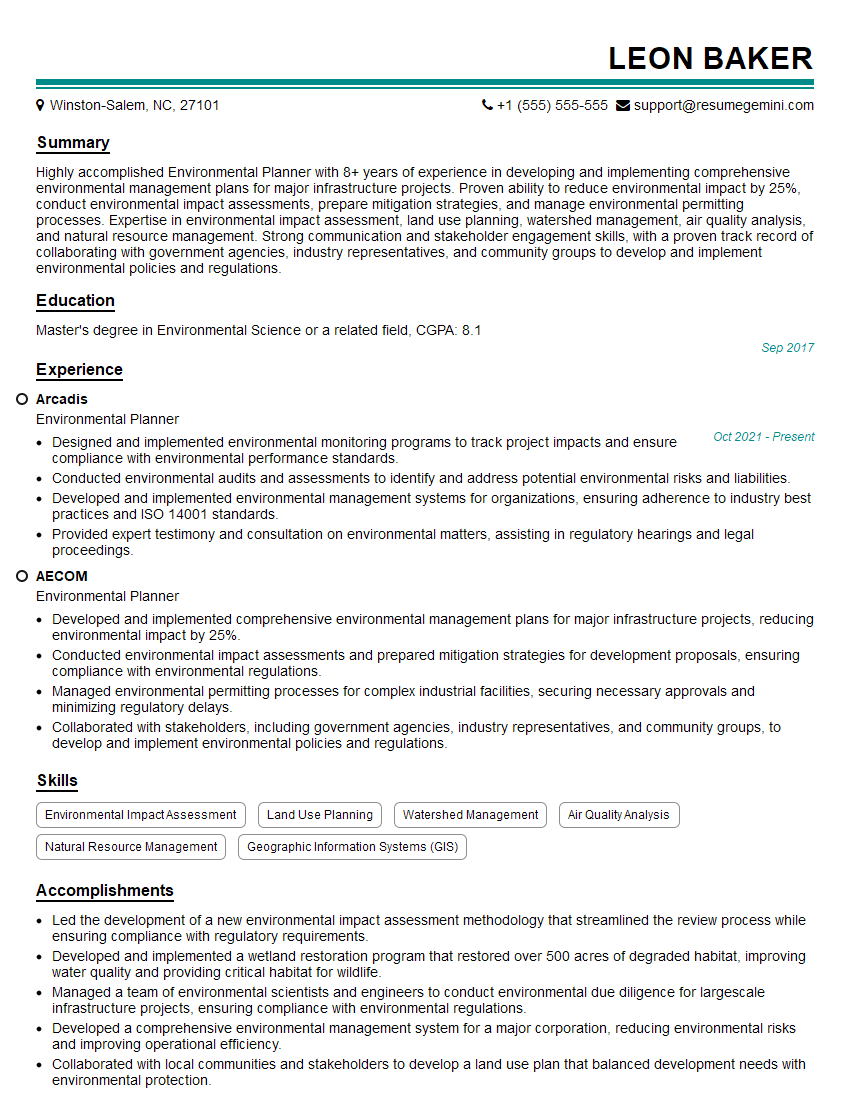
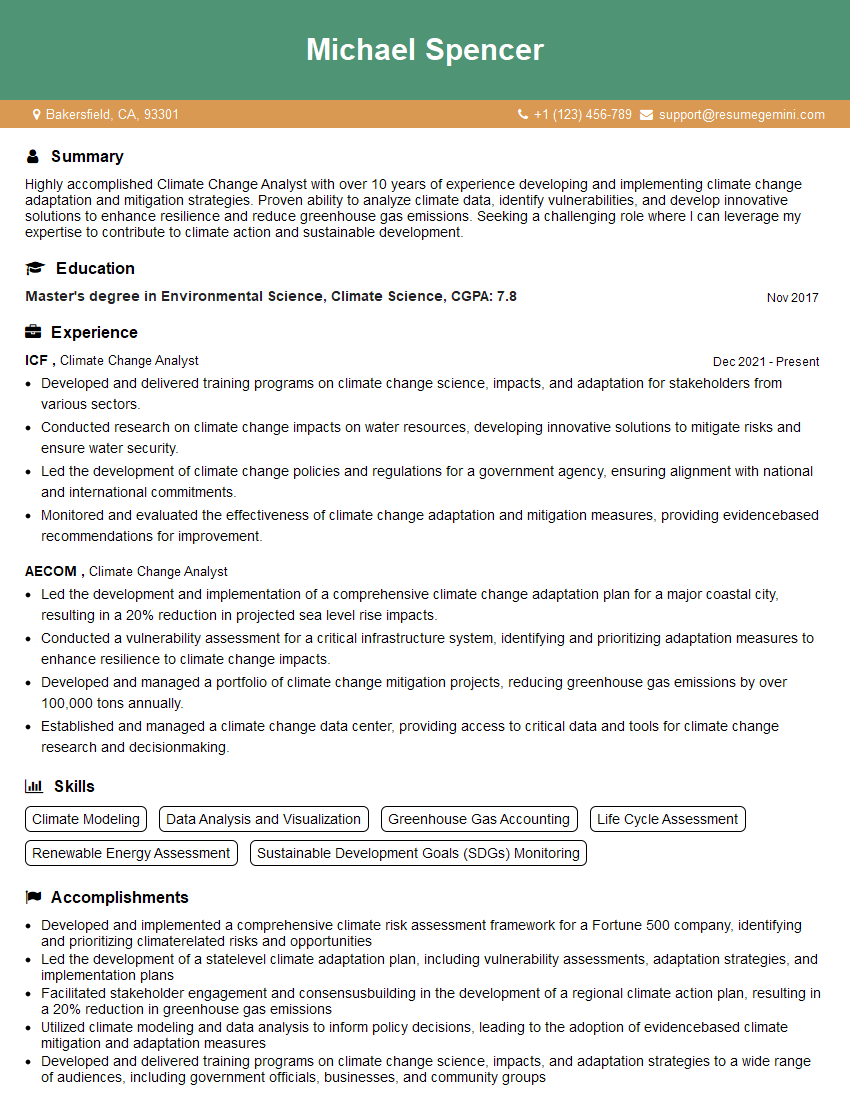
Mastering GeoEcology opens doors to exciting and impactful careers in environmental science, conservation, and resource management. A strong foundation in these principles is crucial for success. To significantly boost your job prospects, create a compelling and ATS-friendly resume that highlights your skills and experience. ResumeGemini is a trusted resource to help you build a professional resume that stands out. Examples of resumes tailored to GeoEcology are available to help guide you. Invest time in crafting a powerful resume – it’s your first impression on potential employers.



Explore more articles
Users Rating of Our Blogs
Share Your Experience
We value your feedback! Please rate our content and share your thoughts (optional).
What Readers Say About Our Blog
I Redesigned Spongebob Squarepants and his main characters of my artwork.
https://www.deviantart.com/reimaginesponge/art/Redesigned-Spongebob-characters-1223583608
IT gave me an insight and words to use and be able to think of examples
Hi, I’m Jay, we have a few potential clients that are interested in your services, thought you might be a good fit. I’d love to talk about the details, when do you have time to talk?
Best,
Jay
Founder | CEO