Interviews are more than just a Q&A session—they’re a chance to prove your worth. This blog dives into essential Curatorial Research and Writing interview questions and expert tips to help you align your answers with what hiring managers are looking for. Start preparing to shine!
Questions Asked in Curatorial Research and Writing Interview
Q 1. Describe your experience conducting archival research.
Archival research is the cornerstone of my work. It involves meticulously examining original documents and artifacts – anything from letters and diaries to photographs and maps – to gain a firsthand understanding of the past. My experience spans diverse archives, including university libraries, historical societies, and private collections. For example, while researching the impact of the Industrial Revolution on a specific town, I spent weeks immersed in local newspaper archives, poring over birth, death, and marriage records, and examining factory payroll ledgers to reconstruct a detailed picture of daily life. This involved not only finding relevant materials but also understanding the context in which they were created, including potential biases or limitations.
I’m adept at navigating complex cataloging systems, utilizing advanced search techniques, and interpreting metadata to locate relevant documents efficiently. My experience also includes working with fragile materials, handling them with care and adhering to strict preservation protocols.
Q 2. Explain your process for identifying and evaluating primary sources.
Identifying and evaluating primary sources is a multi-step process requiring critical thinking and historical awareness. It starts with formulating a clear research question. This guides the search and allows for focused evaluation. For instance, if my research question was “How did women’s roles change in the workforce during World War II?”, I’d focus on materials created during that era, such as personal letters, government documents, and wartime propaganda.
- Provenance: I carefully examine the source’s origin – who created it, when, and why? Understanding the creator’s background, potential biases, and intended audience is crucial.
- Content Analysis: I analyze the content itself, assessing its accuracy, consistency, and reliability. I look for corroborating evidence from other sources.
- Authenticity: I examine the physical characteristics of the document (watermarks, handwriting style, etc.) to ascertain authenticity, often consulting with archival experts.
- Bias Detection: I actively identify potential biases inherent in the source and consider how these might shape its information.
For example, a personal diary might offer intimate details but also reflects the author’s subjective perspective. Triangulating information from multiple sources helps mitigate biases and build a more comprehensive picture.
Q 3. How do you synthesize diverse research materials into a cohesive narrative?
Synthesizing diverse research materials into a cohesive narrative is like assembling a complex puzzle. It’s about finding the connections between seemingly disparate pieces of information. I begin by organizing my research materials thematically or chronologically, creating a framework that logically presents the information. Then I develop a narrative arc that captures the essence of the research, using evidence from my various sources to support the argument.
I use outlining and note-taking methods to structure my thoughts. For instance, I might create timelines, concept maps, or thematic grids to visualize the relationships between different elements of the research. Once the framework is in place, I draft the narrative, carefully integrating evidence, quotations, and contextual details to create a compelling story that is both historically accurate and engaging for the reader.
Q 4. What methods do you use to verify the authenticity and accuracy of information?
Verifying authenticity and accuracy is paramount in curatorial research. It’s a continuous process throughout the research, not just a final step. My methods include:
- Cross-referencing: I compare information from multiple sources to check for consistency and identify discrepancies. Finding supporting evidence from several independent sources strengthens the credibility of the information.
- Expert Consultation: I consult with subject matter experts or other researchers to validate my findings, especially when dealing with complex or specialized topics.
- Material Analysis: When working with physical artifacts, I might use techniques like carbon dating or provenance research to verify their age and origin.
- Fact-checking: I meticulously fact-check all information, paying close attention to dates, names, and specific details.
For example, when researching a historical photograph, I would consult photographic experts to determine its age and authenticity, and then cross-reference the image with other historical records to confirm its context and details.
Q 5. How do you manage competing narratives or conflicting interpretations of historical events?
Competing narratives and conflicting interpretations are common in historical research. Instead of attempting to suppress conflicting viewpoints, I acknowledge their existence and present them objectively. This involves:
- Presenting Multiple Perspectives: I include all significant viewpoints, giving due weight to each. This requires careful consideration of different perspectives and acknowledging their sources.
- Analyzing Sources Critically: I critically analyze the sources that support each narrative, examining their biases and limitations. I will not only present the differing narratives but analyze why they exist.
- Contextualizing Information: I place conflicting interpretations within their historical context, showing how the events might have been perceived differently depending on the observer’s social, political, or cultural background.
- Acknowledging Uncertainty: If definitive conclusions cannot be drawn, I acknowledge the uncertainty and ongoing debate, demonstrating intellectual honesty.
Ultimately, the goal is to present a nuanced and balanced account, allowing readers to draw their own informed conclusions.
Q 6. Discuss your experience with cataloging and database management.
Cataloging and database management are essential for organizing and accessing research materials efficiently. My experience encompasses various database systems, including relational databases like MySQL and specialized archival management systems. I’m proficient in creating metadata records that accurately reflect the content and context of each item, ensuring effective retrieval. This includes employing standardized vocabularies and controlled terms to improve searchability and interoperability.
For example, when cataloging a collection of letters, I would create individual records for each letter, including fields such as author, recipient, date, subject, and a brief abstract of the content. These records would then be linked to the overall collection record. I’m also experienced in cleaning and migrating data between systems, ensuring data integrity and long-term accessibility. My work frequently involves creating custom database schemas or adapting existing ones to meet the specific needs of a research project.
Q 7. Describe your familiarity with various citation styles (Chicago, MLA, etc.).
I am proficient in several citation styles, including Chicago, MLA, and APA, and can adapt my style to meet the requirements of any publication or institution. Understanding these styles goes beyond simply formatting citations; it involves grasping the underlying principles of academic integrity and intellectual property. Each style has its own conventions for formatting in-text citations, footnotes, bibliographies, and endnotes. I understand the differences between these conventions and can consistently and accurately apply the appropriate style throughout my research and writing.
For example, the Chicago style emphasizes footnotes and endnotes, while MLA prefers in-text parenthetical citations. My familiarity with these nuances ensures that my work is consistently formatted and adheres to the highest academic standards. I also utilize citation management software such as Zotero or Mendeley to assist in creating and maintaining accurate bibliographies.
Q 8. How do you adapt your writing style to different audiences (academic, public, etc.)?
Adapting my writing style hinges on understanding the intended audience. Academic writing demands precision, rigorous citation, and a formal tone; it’s about contributing to scholarly discourse. Public writing, conversely, prioritizes clarity, accessibility, and engaging storytelling. It aims to connect with a broader audience, often sparking interest and understanding rather than rigorous academic debate.
For example, when writing a catalogue essay for a museum exhibition (public audience), I might use vivid descriptions, anecdotal evidence, and a more conversational tone. I’d focus on the narrative and broader cultural significance of the objects. In contrast, a scholarly article (academic audience) would demand detailed analysis, thorough methodology, and a comprehensive bibliography, prioritizing accuracy and rigorous argumentation. I might incorporate complex theoretical frameworks and engage in nuanced interpretations, often citing peer-reviewed journals and books.
- Academic: Formal tone, precise language, thorough citations, focus on analysis and argumentation.
- Public: Conversational tone, vivid descriptions, storytelling approach, focus on engagement and accessibility.
Q 9. How do you ensure the accessibility and inclusivity of your research and writing?
Ensuring accessibility and inclusivity is paramount. It means considering diverse learning styles, cultural backgrounds, and potential physical limitations when crafting research and writing. This involves using plain language, avoiding jargon, providing alternative formats (like audio descriptions or transcripts), and critically examining the representation of different groups within my research.
For instance, I actively strive to use inclusive language, avoiding gendered or culturally biased terms. If I’m writing about a historical figure, I research diverse perspectives to ensure a balanced and nuanced portrayal. I also consider the physical accessibility of my work; ensuring that digital content is screen reader compatible and printed materials use appropriate font sizes and contrast. Using captions for images and videos is also critical.
Furthermore, I actively seek feedback from diverse reviewers to identify potential biases and improve accessibility. This collaborative approach ensures a more inclusive and representative final product.
Q 10. Explain your understanding of copyright and intellectual property issues in curatorial work.
Copyright and intellectual property (IP) are crucial in curatorial work. It’s about understanding the legal rights associated with creative works, including images, texts, and objects. Failing to properly acknowledge and obtain permissions can lead to legal ramifications and ethical breaches.
My process begins with thorough research into the ownership and licensing of any material I use. I always strive to obtain proper permissions for reproduction and use, meticulously documenting this process. For example, if I use a photograph in a publication, I must get permission from the copyright holder, often paying a licensing fee. For objects, understanding provenance – the history of ownership – is key to ensuring that I’m not handling stolen or illegally acquired artifacts. It’s about respecting the rights of creators and institutions and acting with transparency and integrity.
Furthermore, I am knowledgeable about different types of licenses, such as Creative Commons licenses, which offer varying degrees of usage permission. Understanding these nuances is critical for responsible and legal curatorial practice.
Q 11. Describe your experience with grant writing or fundraising for research projects.
I have extensive experience in grant writing and fundraising. The process typically begins with identifying funding opportunities that align with my research project’s goals. This involves researching potential funders, understanding their priorities, and tailoring the grant proposal accordingly.
Crafting a compelling grant proposal requires a clear articulation of the project’s significance, methodology, budget, and anticipated outcomes. It necessitates strong writing skills, persuasive arguments, and a realistic understanding of the funding landscape. I often involve a team in this process, leveraging their expertise in different areas to strengthen the proposal. For example, I’ve collaborated with project managers to create realistic timelines and budgets, and with specialists to highlight the scientific merit of my projects.
I’ve successfully secured funding from various sources, including national and international foundations, government agencies, and private donors. Following up with regular reports and updates is crucial to maintaining positive relationships with funders and to ensure accountability.
Q 12. How do you handle unexpected challenges or setbacks during a research project?
Research projects rarely proceed without encountering unexpected challenges. My approach to setbacks involves a structured problem-solving process.
First, I assess the nature and scope of the problem. Is it a logistical issue (e.g., access to archives), methodological difficulty (e.g., interpreting complex data), or a resource constraint (e.g., lack of funding)? Then, I explore potential solutions, considering alternative approaches, collaborating with colleagues, or seeking additional resources. For instance, if an archive is inaccessible, I might explore alternative sources of information or use digital humanities tools to analyze available data. Documentation of these challenges and solutions becomes integral to the final research report, adding to the project’s transparency and credibility.
Finally, adapting to unexpected situations is crucial. Sometimes, revising the research question or scope might be necessary to address unforeseen limitations. Open communication with collaborators and supervisors is essential throughout this problem-solving process.
Q 13. How do you prioritize research tasks and manage your time effectively?
Effective time management and task prioritization are essential for successful research. I utilize a combination of methods to manage my workload.
First, I break down large projects into smaller, manageable tasks, creating detailed timelines with realistic deadlines. Tools like project management software help me visualize the overall project and track progress on individual tasks. I also prioritize tasks based on urgency and importance using methods like the Eisenhower Matrix (urgent/important). High-priority tasks, such as grant deadlines or crucial data analysis, get immediate attention, while less urgent tasks are scheduled appropriately.
Regularly reviewing my schedule and adjusting priorities as needed is key. This dynamic approach helps to accommodate unexpected delays or changes in project scope. Setting aside dedicated time for research, writing, and administration helps to maintain focus and prevent burnout. Finally, regular breaks and self-care are crucial to sustaining productivity.
Q 14. Describe your experience working collaboratively with other researchers or curators.
Collaboration is fundamental to curatorial research. My experience working with other researchers and curators involves a strong emphasis on communication, shared goals, and mutual respect.
Before embarking on a collaborative project, we establish clear roles, responsibilities, and communication protocols. Regular meetings, shared online platforms (like project management tools or shared document spaces), and open communication are vital for maintaining project momentum and resolving any conflicts. For example, I recently collaborated on an exhibition catalog, where each curator specialized in a particular aspect of the collection. We divided responsibilities clearly, regularly shared drafts, and provided constructive feedback to ensure a cohesive and unified product. Respecting each other’s expertise and providing credit for individual contributions are paramount for fostering successful collaborations.
I find that diverse perspectives enrich the research process and lead to more insightful outcomes. Constructive feedback from colleagues is invaluable in improving the quality and accessibility of the work.
Q 15. Explain your understanding of museum best practices and ethical considerations.
Museum best practices and ethical considerations are intertwined and essential for responsible curation. Best practices encompass all aspects of museum operations, from collection management and preservation to public engagement and accessibility. Ethical considerations, however, guide these practices, ensuring fairness, transparency, and respect for the objects, their creators, and the communities they represent.
- Collection Management: This includes proper cataloging, documentation, storage, and handling of artifacts to prevent deterioration. Best practice dictates detailed provenance research to understand an object’s history and any ethical concerns surrounding its acquisition.
- Representation & Interpretation: Presenting diverse narratives and avoiding biased interpretations is crucial. We must acknowledge the colonial history of many museum collections and actively work to decolonize narratives.
- Repatriation & Stewardship: Museums should address claims for repatriation of cultural heritage objects and collaborate with Indigenous communities on stewardship of their cultural heritage.
- Accessibility & Inclusivity: Museums must ensure their collections and programs are accessible to all members of society, regardless of physical abilities, cultural background, or socioeconomic status. This includes multilingual labeling, accessible facilities, and community engagement initiatives.
- Transparency & Accountability: Openness about collection histories, acquisition practices, and decision-making processes builds trust with stakeholders. This includes clear policies on ethical collecting, loan agreements, and conflict resolution.
For example, a museum might implement a robust provenance research program to ensure that all acquisitions align with ethical guidelines, addressing concerns about looting or illicit trafficking. Another example might be collaborating with Indigenous communities to co-curate exhibitions reflecting their perspectives and ensuring proper representation of their cultural heritage.
Career Expert Tips:
- Ace those interviews! Prepare effectively by reviewing the Top 50 Most Common Interview Questions on ResumeGemini.
- Navigate your job search with confidence! Explore a wide range of Career Tips on ResumeGemini. Learn about common challenges and recommendations to overcome them.
- Craft the perfect resume! Master the Art of Resume Writing with ResumeGemini’s guide. Showcase your unique qualifications and achievements effectively.
- Don’t miss out on holiday savings! Build your dream resume with ResumeGemini’s ATS optimized templates.
Q 16. How do you ensure the preservation and conservation of archival materials?
Preservation and conservation of archival materials is paramount to ensuring their longevity and continued accessibility. This involves a multi-faceted approach that combines preventative measures with active interventions.
- Environmental Control: Maintaining stable temperature and humidity levels is crucial. Fluctuations can cause damage such as warping, cracking, and mold growth. This involves utilizing climate-controlled storage spaces and employing environmental monitoring systems.
- Proper Handling & Storage: Archival materials should be handled with clean, acid-free gloves and stored in archival-quality boxes and folders. Heavy or fragile items require special supports.
- Pest Control: Regular inspections and preventative pest control measures are crucial to protect against insect and rodent damage. This may involve integrated pest management techniques and the use of appropriate insecticides.
- Digital Preservation: Digitizing archival materials helps to mitigate the risk of physical damage while also enhancing accessibility. This involves selecting appropriate digital formats, metadata creation, and long-term storage strategies, such as migrating data to newer formats to avoid obsolescence.
- Regular Inspection & Monitoring: Archival materials should be regularly inspected for signs of damage or deterioration. This allows for timely intervention and preventative measures.
Imagine a delicate 18th-century manuscript. Its preservation requires not only storing it in a climate-controlled vault but also in a custom-made acid-free box with supports to prevent crushing. Regular monitoring for signs of deterioration, such as foxing (brown spots), is essential for timely conservation treatments.
Q 17. Describe your experience with digital archiving and online collections management.
Digital archiving and online collections management are increasingly vital for museums. My experience encompasses various aspects of this field, from metadata creation to database management and the creation of engaging online exhibitions.
- Metadata Creation: Detailed and accurate metadata is critical for discoverability and searchability. This includes descriptive metadata (title, creator, date), structural metadata (file formats), and administrative metadata (rights management).
- Database Management: I’m proficient in using various database management systems (DBMS) to organize and manage large quantities of digital assets. This allows for efficient searching, retrieval, and analysis of data.
- Digital Asset Management (DAM): Experience in using DAM systems to organize, preserve, and manage digital assets, ensuring their long-term accessibility and integrity.
- Online Exhibitions & Virtual Tours: I have created engaging online exhibitions using content management systems (CMS) and other platforms. This includes incorporating interactive elements, multimedia content, and virtual tours to enhance the user experience.
- Digital Rights Management (DRM): I understand the importance of managing digital rights and permissions, ensuring compliance with copyright laws.
For instance, in a recent project, I used a combination of Omeka and a custom-built database to create an online exhibition of historical photographs. The project involved not only digitizing the images but also creating rich metadata, including geographic information and historical context, making the collection easily searchable and engaging for online users.
Q 18. How do you engage with diverse communities in your research and presentation of artifacts?
Engaging with diverse communities is foundational to ethical curatorial practice. It involves actively seeking diverse voices and perspectives in research, interpretation, and presentation of artifacts.
- Community Partnerships: Collaborating with community groups and stakeholders throughout the research and exhibition development process ensures that diverse viewpoints are represented and that the narratives presented are accurate and inclusive.
- Oral Histories: Collecting oral histories from individuals with lived experience can provide valuable insights and context, enriching the understanding of artifacts.
- Community Consultations: Holding public consultations and workshops provides opportunities to gather feedback and ensure that exhibitions resonate with the communities they represent.
- Multilingual Resources: Providing materials in multiple languages ensures that exhibitions are accessible to diverse audiences.
- Accessibility Considerations: Designing exhibitions that are accessible to individuals with disabilities, such as visually impaired or hearing-impaired individuals, is crucial for inclusivity.
For example, when working on an exhibition about local immigrant history, we partnered with various immigrant organizations to co-curate the exhibition. We held workshops with community members, incorporated oral histories into the exhibition text, and translated the exhibition labels into several different languages. This ensured that the exhibition was not only accurate but also resonant and engaging for the communities being represented.
Q 19. What are your strategies for presenting complex research findings in an accessible format?
Presenting complex research findings in an accessible format requires careful consideration of the audience and the medium of communication.
- Storytelling: Framing research findings within a compelling narrative makes information easier to digest and remember. This could involve structuring the exhibition around key themes or narratives.
- Visual Aids: Images, maps, charts, and graphs can effectively communicate complex data in a visually appealing way. This allows the viewer to process information quickly and effectively.
- Interactive Elements: Interactive displays, such as touchscreens and multimedia presentations, can enhance engagement and understanding. They allow viewers to explore the information at their own pace.
- Simplified Language: Using clear and concise language, avoiding jargon, and employing plain language principles makes information accessible to a wider audience.
- Multiple Formats: Offering information in different formats, such as printed guides, audio tours, and online resources, caters to varied learning styles and preferences.
For example, instead of presenting raw statistical data about migration patterns, one might visualize this information through a dynamic map showing migration flows over time, paired with personal anecdotes from oral histories.
Q 20. How familiar are you with object-based learning and its application in museum settings?
Object-based learning utilizes artifacts as primary sources for learning and inquiry. In museum settings, this approach fosters deeper engagement and understanding.
- Inquiry-Based Learning: Object-based learning encourages inquiry-driven exploration, where learners formulate questions and investigate answers using artifacts as evidence.
- Multi-Sensory Experience: Direct engagement with objects allows for multi-sensory learning; learners can touch, examine, and even smell objects, making the learning experience more immersive and memorable.
- Authentic Learning Experiences: Learning through authentic materials enhances understanding and provides a more concrete and tangible connection to the past.
- Differentiated Instruction: Object-based learning lends itself to differentiated instruction, catering to various learning styles and needs. Some learners might benefit from hands-on exploration, while others prefer textual information or audio guides.
For example, a lesson on the Civil War might begin with an examination of a soldier’s uniform, leading students to inquire about his life, the conditions of battle, or the social impact of the war. The object itself becomes a springboard for discussion and investigation.
Q 21. Describe your experience writing exhibition labels or interpretive texts.
Writing exhibition labels and interpretive texts requires a delicate balance between accuracy, brevity, and engaging storytelling. My experience includes drafting text for various museum exhibitions and educational programs.
- Concise and Engaging Language: Labels need to be concise and engaging, capturing the essence of the artifact while avoiding jargon. This means writing in active voice and using strong verbs.
- Contextual Information: Providing relevant contextual information, such as the date, origin, creator, and historical significance of the artifact, enriches the visitor’s experience.
- Accessibility: Labels need to be written in plain language and consider accessibility needs, such as font size and contrasting colors for visitors with visual impairments.
- Collaboration with Curators: Close collaboration with curators ensures that the labels are accurate and align with the exhibition’s overall narrative and themes.
For a recent exhibition on ancient Greek pottery, I worked with the curator to develop labels that not only described the technical aspects of the pottery but also provided insight into the social and cultural context in which it was made and used. The result was informative and engaging, fostering a deeper appreciation for these artifacts.
Q 22. How do you evaluate the impact and effectiveness of your research and writing?
Evaluating the impact and effectiveness of my research and writing is a multi-faceted process. It’s not just about the number of publications or citations, but rather a holistic assessment of how my work contributes to the field and impacts its audience.
- Audience Engagement: I assess the reach and reception of my work by analyzing website traffic, social media engagement, and feedback from readers and colleagues. For example, a high number of downloads of a digital publication, coupled with positive reviews, indicates a significant impact.
- Scholarly Impact: I track citations and mentions in other publications or academic discussions to gauge the influence my work has on subsequent research. A significant number of citations shows that my findings are contributing to ongoing conversations and shaping the field.
- Curatorial Application: Perhaps the most important measure is the practical application of my research within curatorial practice. If my research informs exhibition development, cataloging decisions, or conservation strategies, then it has demonstrably achieved its goal. For instance, research on the provenance of a particular artwork directly influencing its display and interpretation in a museum exhibition is a powerful indicator of success.
- Qualitative Feedback: Gathering feedback from museum professionals, educators, or the general public through surveys, reviews, or focus groups provides valuable qualitative data about the effectiveness and understanding of my work.
By combining quantitative and qualitative methods, I can create a comprehensive picture of my work’s overall impact and effectiveness.
Q 23. Describe your experience with public speaking or presenting your research findings.
Public speaking and presenting research findings are crucial aspects of my work. I’ve presented at numerous conferences, workshops, and museum events, both nationally and internationally. My approach emphasizes clarity, visual aids, and audience engagement.
I begin by crafting a compelling narrative that connects my research to broader themes. I utilize visuals – images, charts, graphs – to support my arguments and make the data more accessible. I also incorporate interactive elements, like Q&A sessions or small group discussions, to encourage participation and foster a dynamic learning environment. For example, when presenting research on a specific artist, I might incorporate video clips of their work or show photographs of archival materials to create a more immersive experience for the audience. I find that actively seeking audience feedback and adapting my presentation style based on their responses ensures the information is effectively communicated and received.
Q 24. How do you stay up-to-date with current research and trends in your field?
Staying current in this ever-evolving field requires a multi-pronged approach.
- Academic Journals and Publications: I subscribe to key journals in museology, art history, and archival studies, regularly reviewing articles and new publications.
- Conferences and Workshops: Attending professional conferences and workshops provides opportunities to network with colleagues and learn about cutting-edge research.
- Online Resources and Databases: I actively use online databases like JSTOR, Artstor, and various museum digital archives to access scholarly articles and primary source materials.
- Professional Organizations: Membership in professional organizations such as the American Alliance of Museums (AAM) provides access to newsletters, webinars, and other resources that keep me abreast of current trends.
- Social Media and Online Communities: Following relevant accounts and participating in online discussions helps me stay informed about new discoveries, debates, and methodologies.
This combination ensures I am constantly engaging with the latest research and innovations within the field.
Q 25. Explain your experience working with diverse collections (art, artifacts, archives, etc.)
My experience working with diverse collections is extensive and central to my work. I’ve worked with everything from ancient artifacts and ethnographic materials to contemporary art installations and extensive archival collections of personal papers and photographs.
Each collection presents unique challenges and opportunities. Working with fragile artifacts, for example, requires a careful and methodical approach, adhering strictly to conservation guidelines. Researching archival materials involves developing strategies to navigate complex filing systems and understand various forms of documentation. My experience has taught me the importance of context, proper handling, and rigorous documentation. For instance, in one project researching a local artist’s work, I carefully examined not only their finished artworks but also their sketchbooks, correspondence, and photographs to gain a holistic understanding of their creative process and artistic development. This contextual approach is critical for interpreting any collection fully.
Q 26. Describe your proficiency in relevant software (e.g., database software, content management systems)
Proficiency in relevant software is essential for curatorial research and writing.
- Database Software: I’m proficient in various database management systems, including
FileMaker ProandAccess, using them to organize and manage large datasets of information related to collections, provenance, and research findings. - Content Management Systems (CMS): I have experience working with various CMS platforms, such as
WordPressandDrupal, to create and manage online exhibitions, museum websites, and digital archives. - Digital Imaging Software: My skills include using software such as
Adobe PhotoshopandIllustratorfor image editing and preparation for publication or online display. - Bibliographic Management Software: I use
ZoteroandEndNotefor managing and citing research sources effectively.
These tools are critical to my workflow, ensuring efficiency, accuracy, and accessibility of information.
Q 27. How do you handle sensitive or controversial topics in your research and writing?
Handling sensitive or controversial topics requires a nuanced and ethical approach.
- Contextualization: Presenting information within its historical and social context is crucial. This prevents misinterpretations and promotes a deeper understanding of the complexities involved.
- Multiple Perspectives: I strive to incorporate diverse perspectives and voices, acknowledging multiple interpretations and avoiding biased representations.
- Sensitivity and Respect: Respect for individuals and communities affected by the subject matter is paramount. I ensure that my work does not cause further harm or perpetuate harmful stereotypes.
- Transparency and Acknowledgements: Openly acknowledging the limitations of the research and potential biases is essential for building trust and promoting critical engagement.
For example, when dealing with colonial-era artifacts, it is vital to acknowledge the historical injustices involved and provide context from various perspectives. This approach ensures a balanced and responsible treatment of potentially controversial subjects.
Q 28. What are your career goals related to curatorial research and writing?
My career goals center around making significant contributions to the field of curatorial research and writing.
- Leadership Roles: I aspire to leadership positions within museums or cultural institutions, where I can leverage my expertise to shape research agendas and enhance curatorial practices.
- Mentorship and Training: I am committed to mentoring emerging professionals and sharing my knowledge through workshops and training programs.
- Publication and Dissemination: I aim to continue publishing scholarly work and contribute to the ongoing development of curatorial theory and methodology.
- Community Engagement: I seek opportunities to engage with broader audiences, making my research accessible and impactful beyond the academic community.
Ultimately, I want to use my skills to promote greater understanding and appreciation of cultural heritage and contribute to a more inclusive and equitable museum sector.
Key Topics to Learn for Curatorial Research and Writing Interview
- Source Evaluation & Critical Analysis: Understanding methodologies for assessing the reliability and validity of primary and secondary sources; applying critical thinking to interpret and contextualize historical and artistic information.
- Research Methodologies: Applying research strategies relevant to curatorial work, including archival research, oral histories, object analysis, and digital humanities tools. Practical application: Describe a research project you designed and executed, highlighting your methodology and findings.
- Exhibition Development & Narrative Construction: Crafting compelling narratives through exhibition design and object selection; understanding the relationship between research, interpretation, and audience engagement. Consider the ethical implications of your curatorial choices.
- Object-Based Research: Analyzing artworks and artifacts using various analytical frameworks; understanding material culture and its historical context. Practical application: Discuss your experience analyzing a specific object and formulating a research question around it.
- Writing Styles for Curatorial Contexts: Mastering different writing styles for exhibition labels, catalogue essays, grant proposals, and scholarly articles; adapting your voice and approach to diverse audiences.
- Copyright and Intellectual Property: Understanding copyright laws and ethical considerations related to image use, attribution, and intellectual property rights in curatorial practice.
- Cataloging and Database Management: Familiarity with museum collections management systems and best practices for cataloging and organizing information.
- Collaboration and Communication: Working effectively with diverse teams, including conservators, registrars, educators, and designers; communicating complex information clearly and concisely.
Next Steps
Mastering Curatorial Research and Writing is crucial for career advancement in the museum and arts sector, opening doors to diverse and exciting opportunities. A strong resume is your first impression – ensure yours is ATS-friendly to maximize its visibility to potential employers. ResumeGemini is a trusted resource that can help you build a professional and impactful resume tailored to highlight your unique skills and experience. Examples of resumes specifically tailored to Curatorial Research and Writing positions are available to help guide your process.
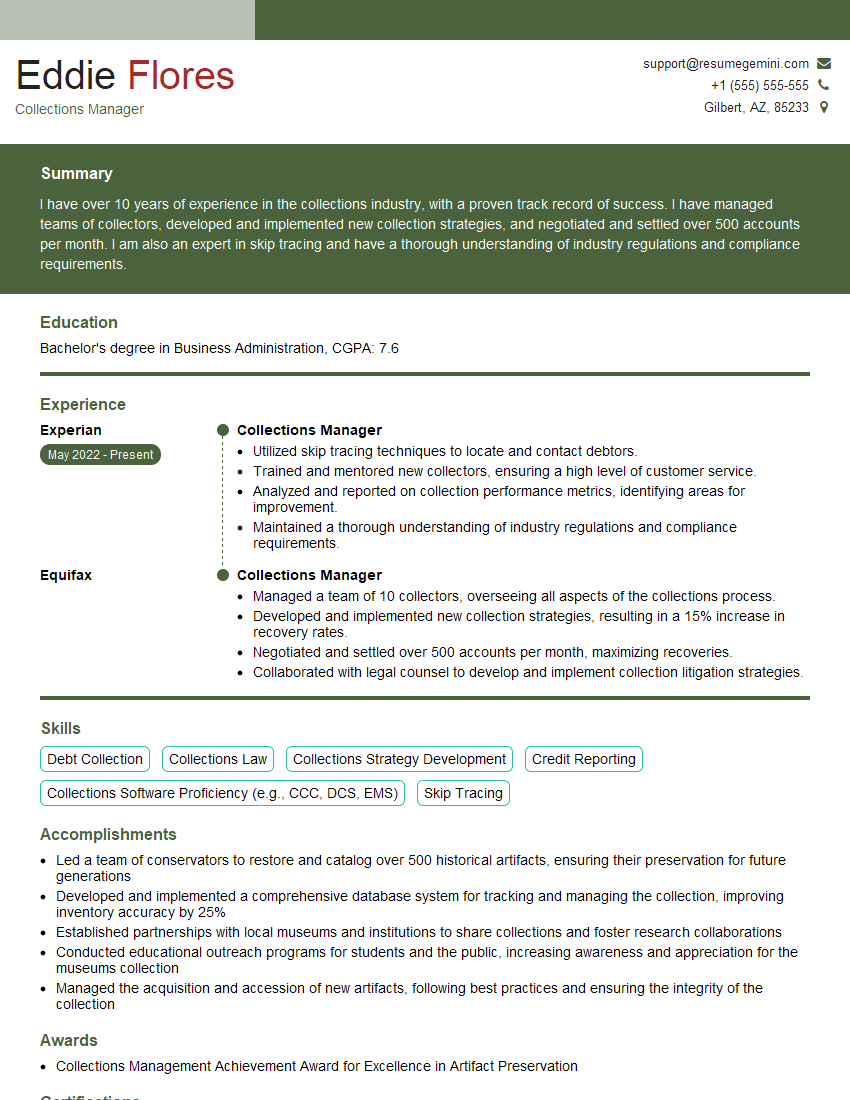
Collections Manager Resume Sample
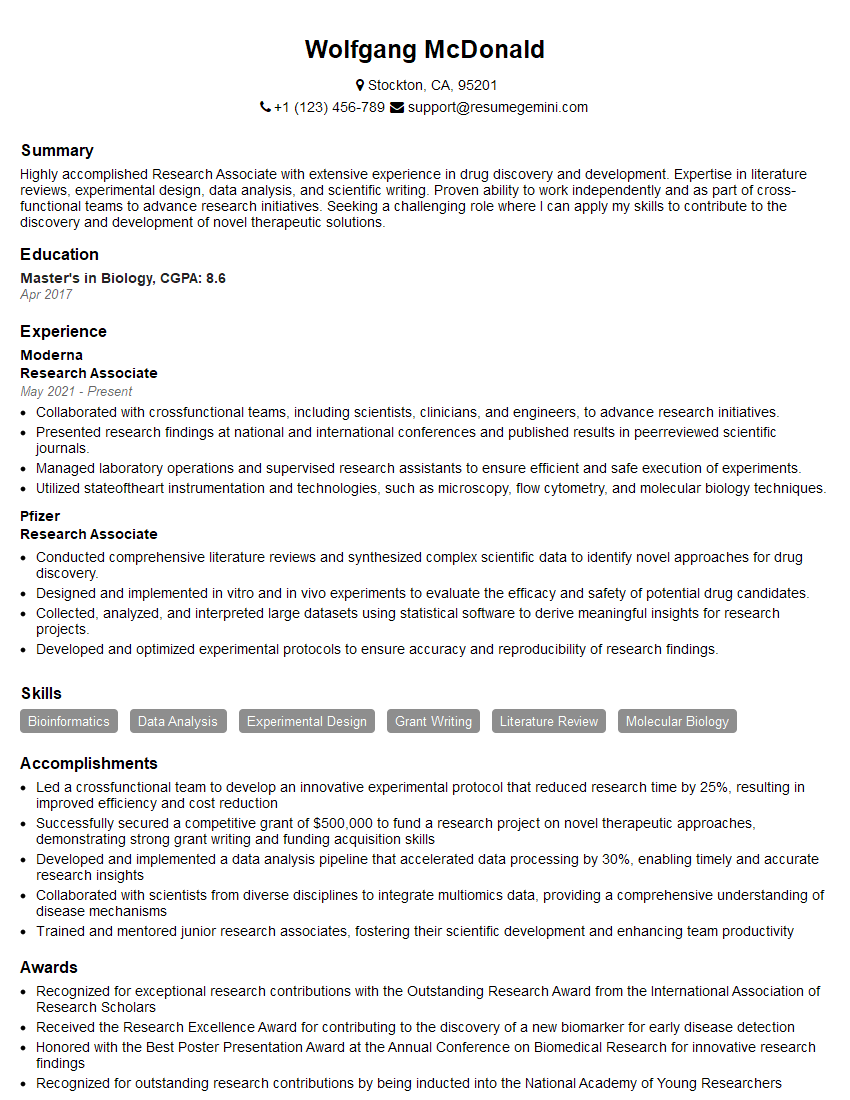
Research Associate Resume Sample
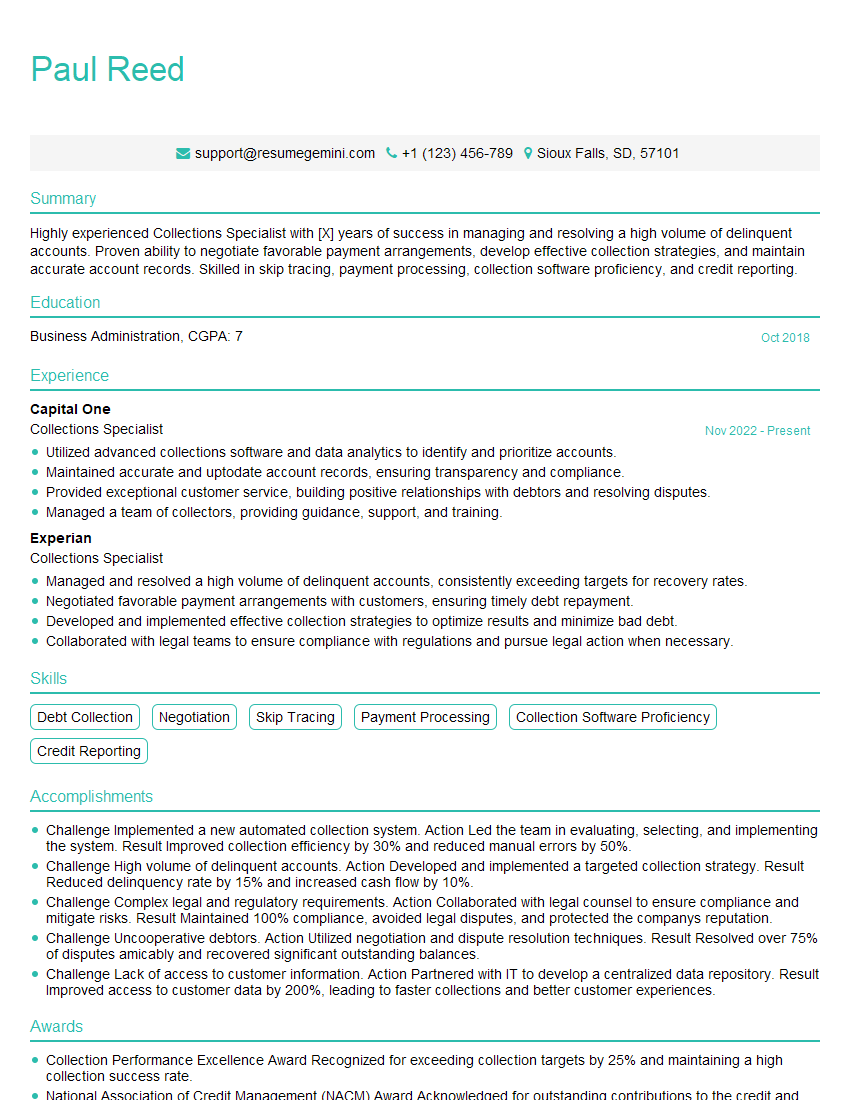
Collections Specialist Resume Sample
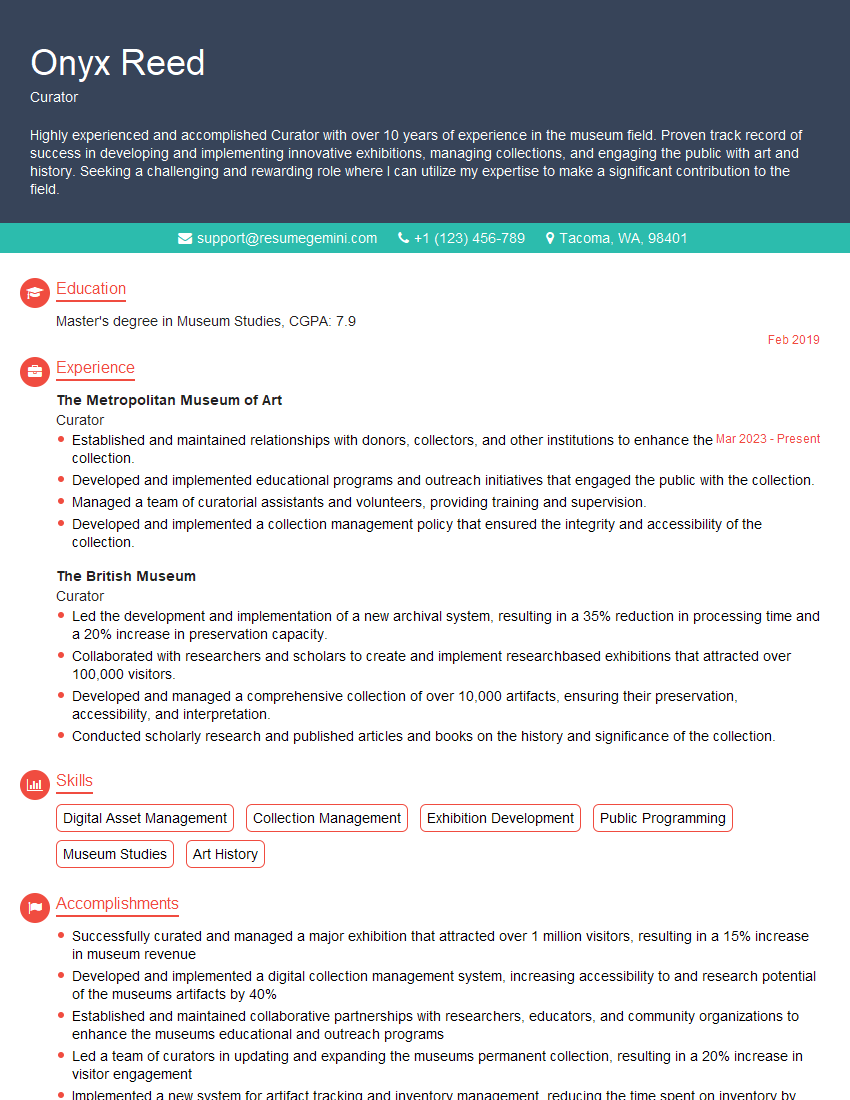
Curator Resume Sample
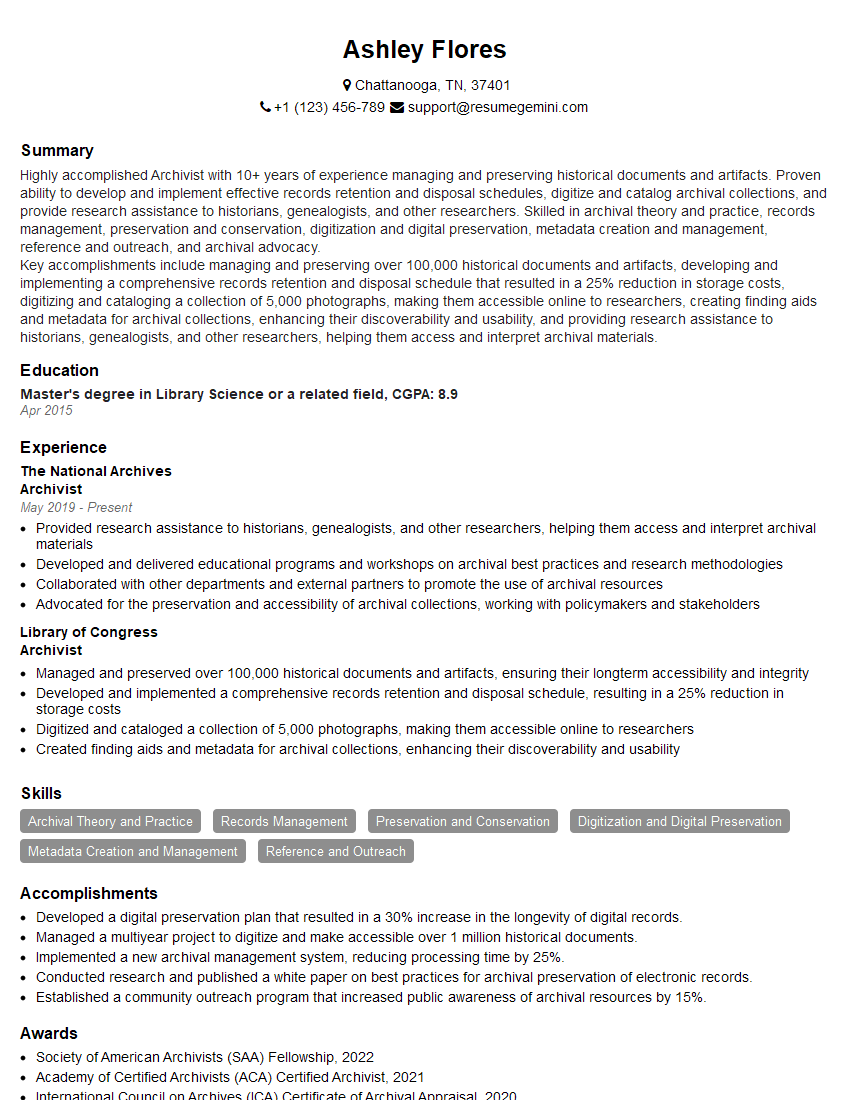
Archivist Resume Sample
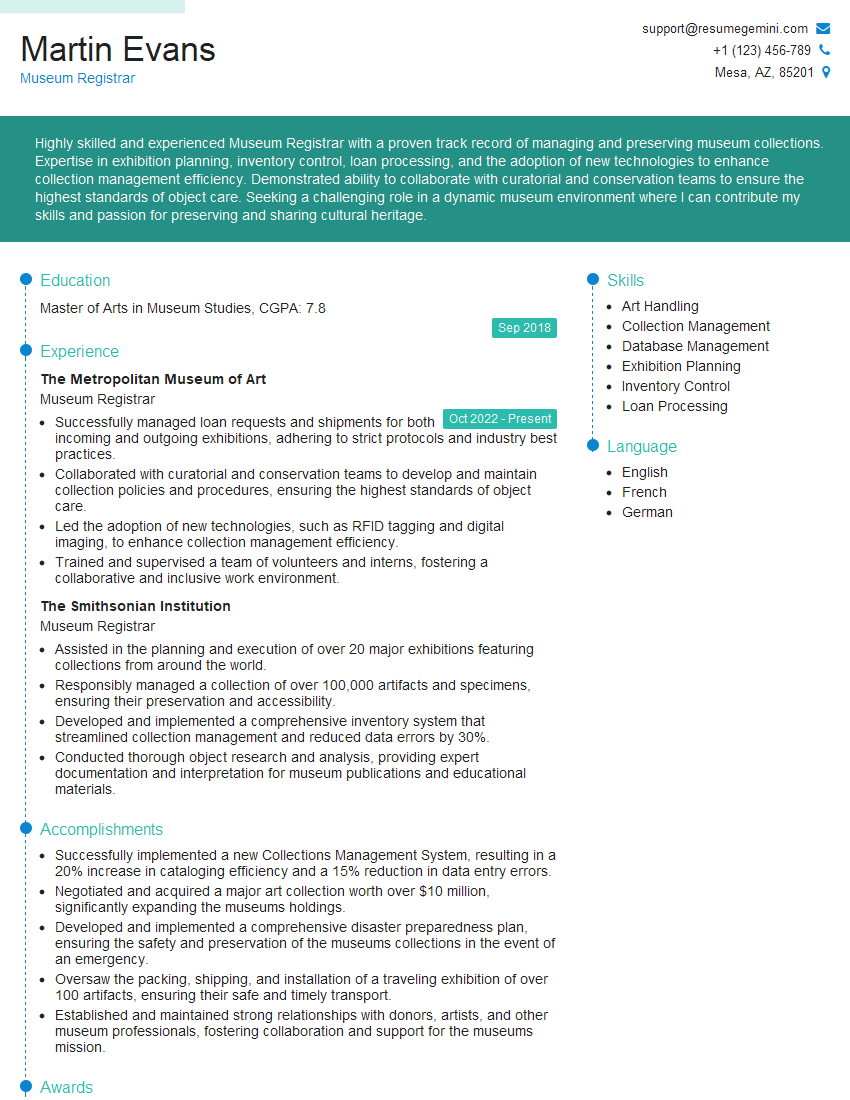
Museum Registrar Resume Sample
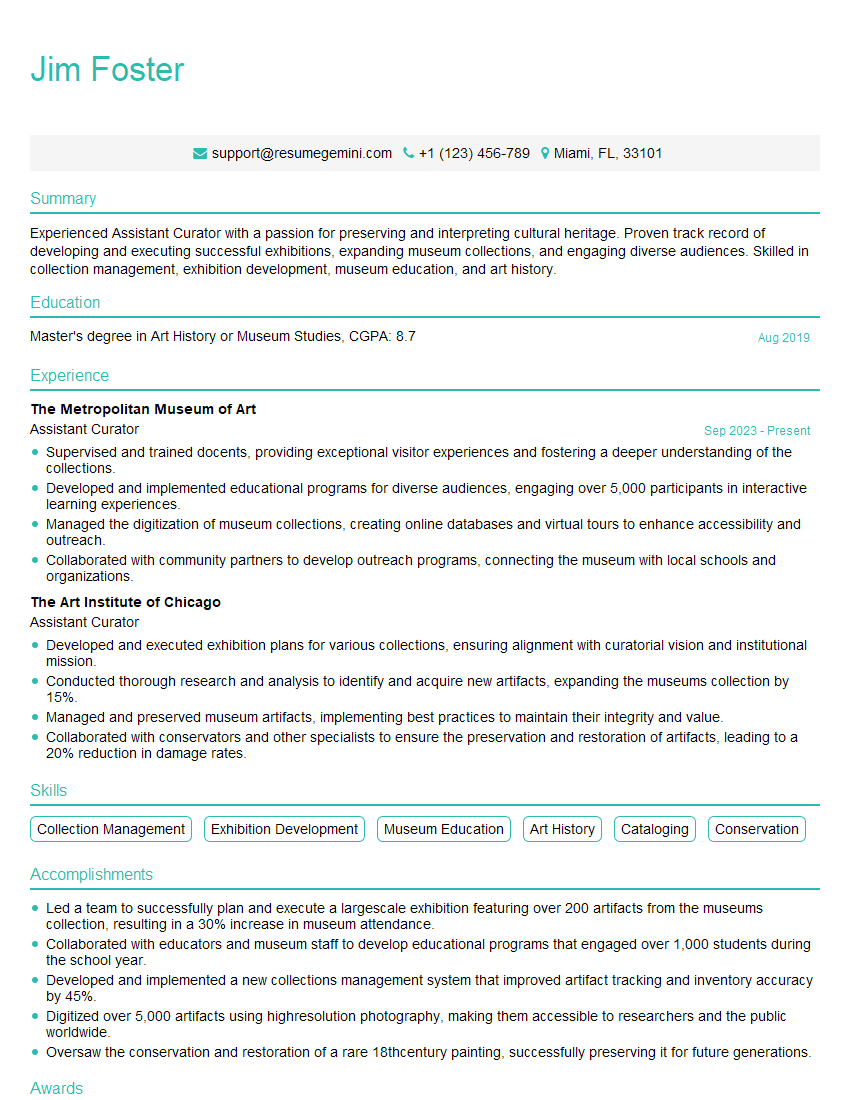
Assistant Curator Resume Sample
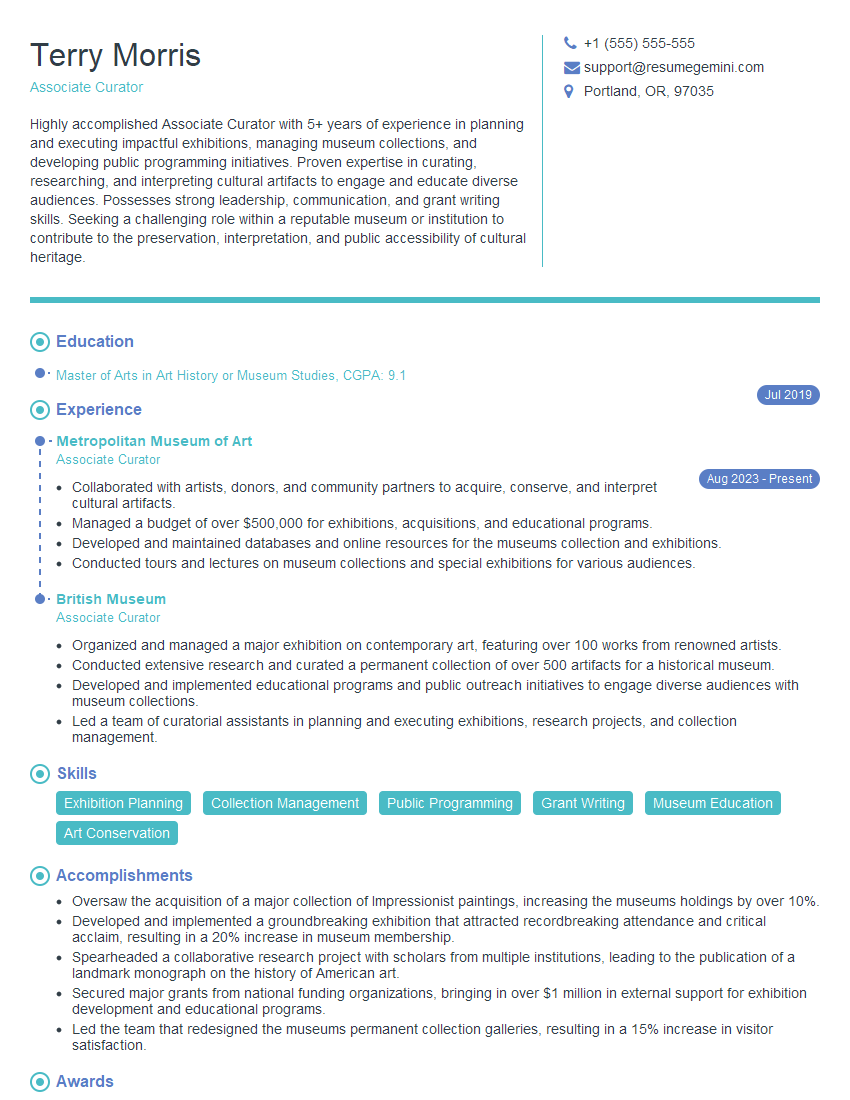
Associate Curator Resume Sample
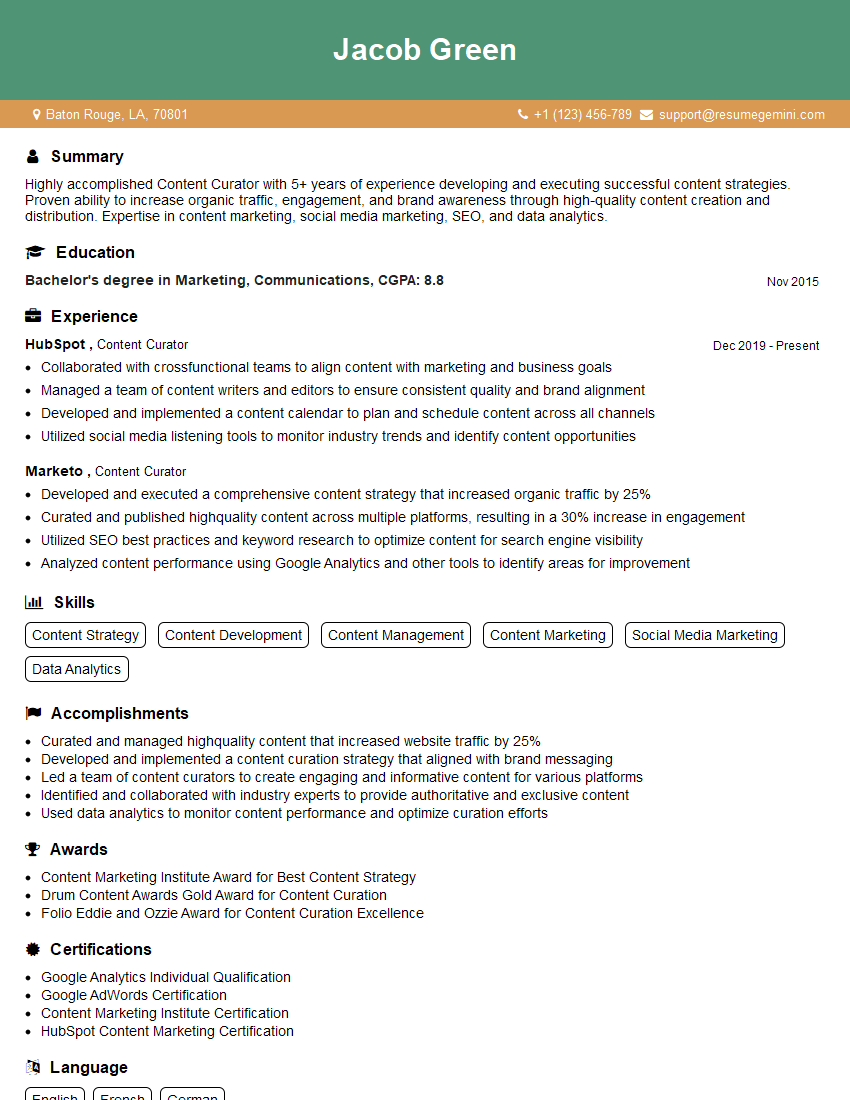
Content Curator Resume Sample
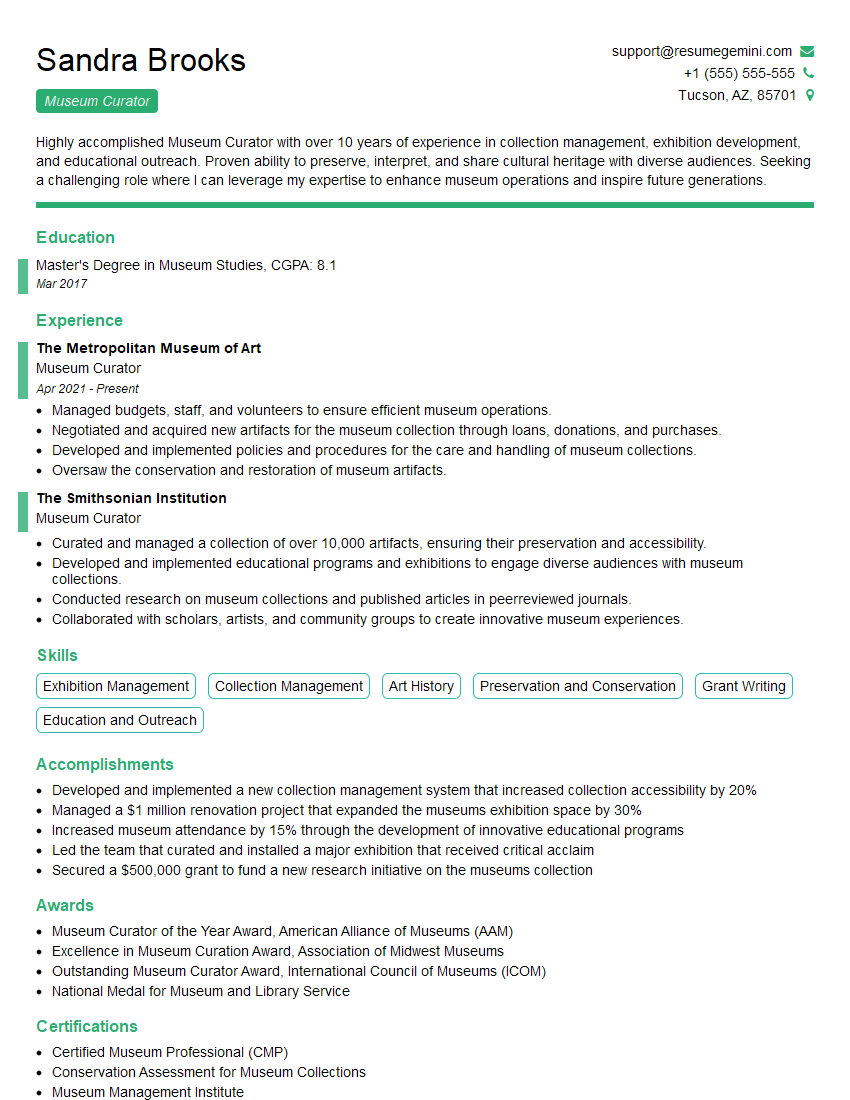
Museum Curator Resume Sample
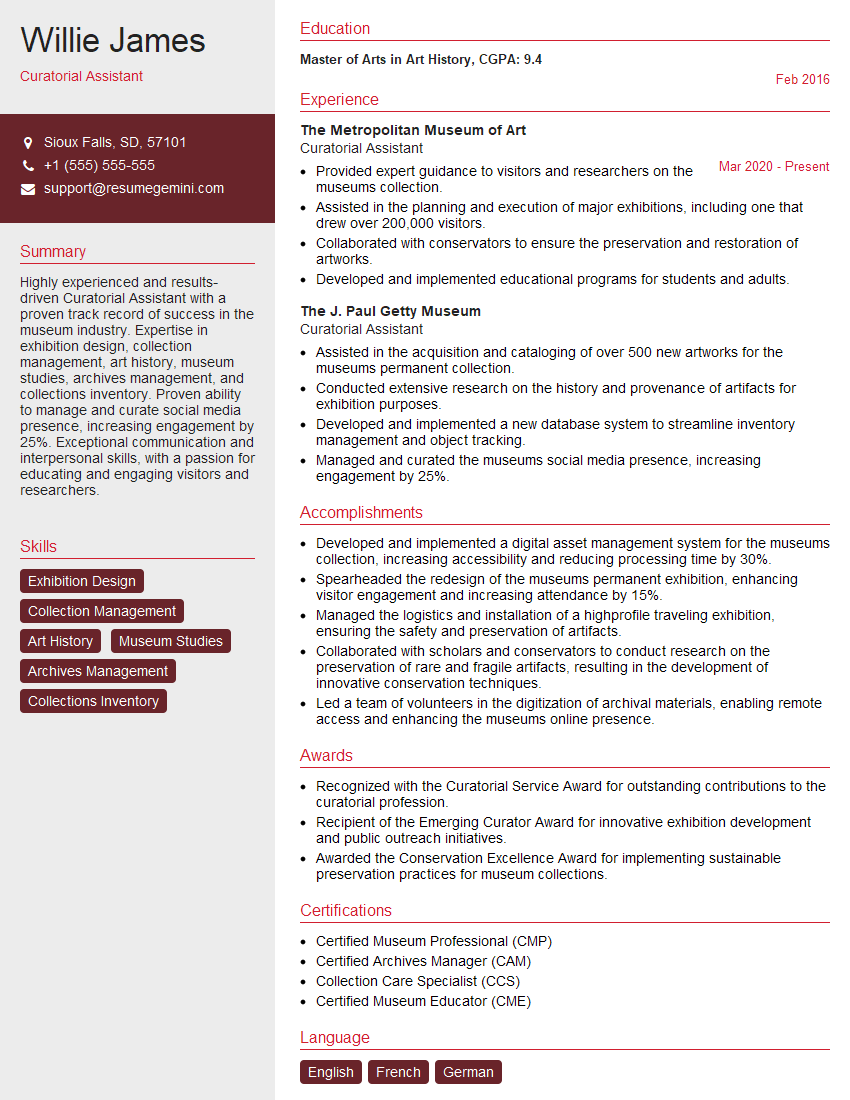
Curatorial Assistant Resume Sample
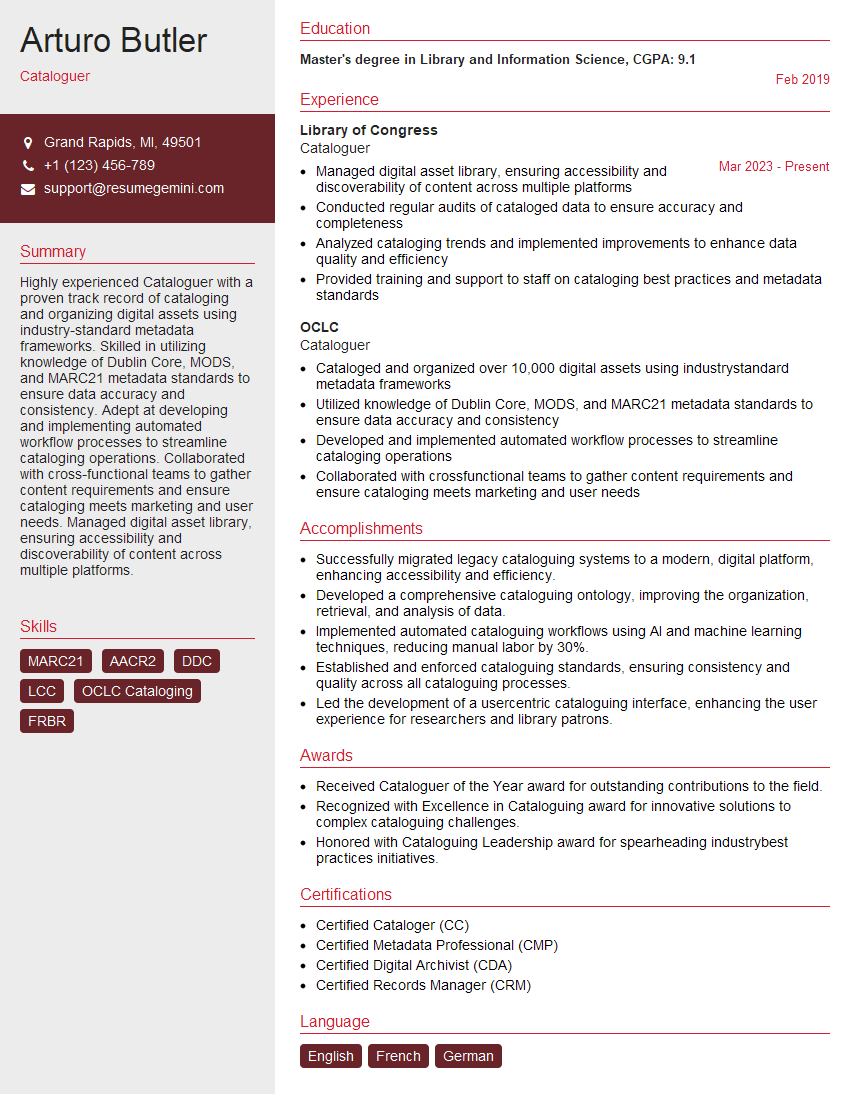
Cataloguer Resume Sample
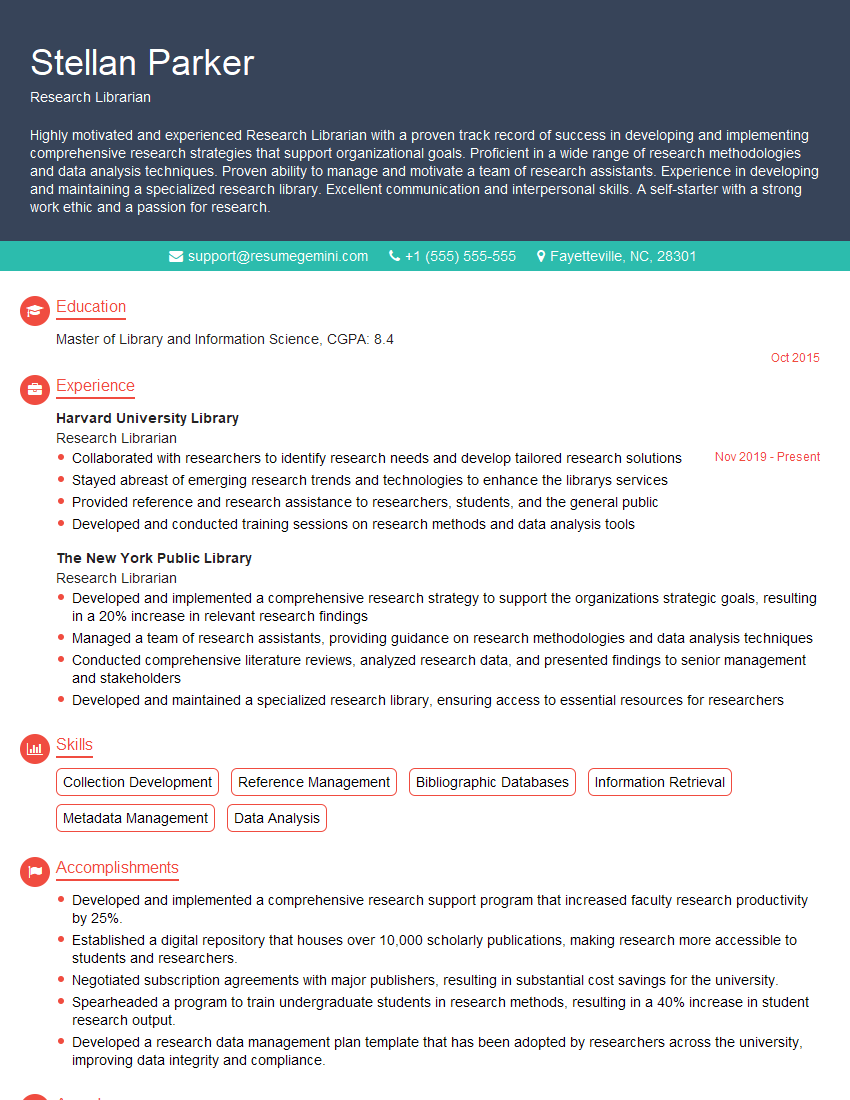
Research Librarian Resume Sample
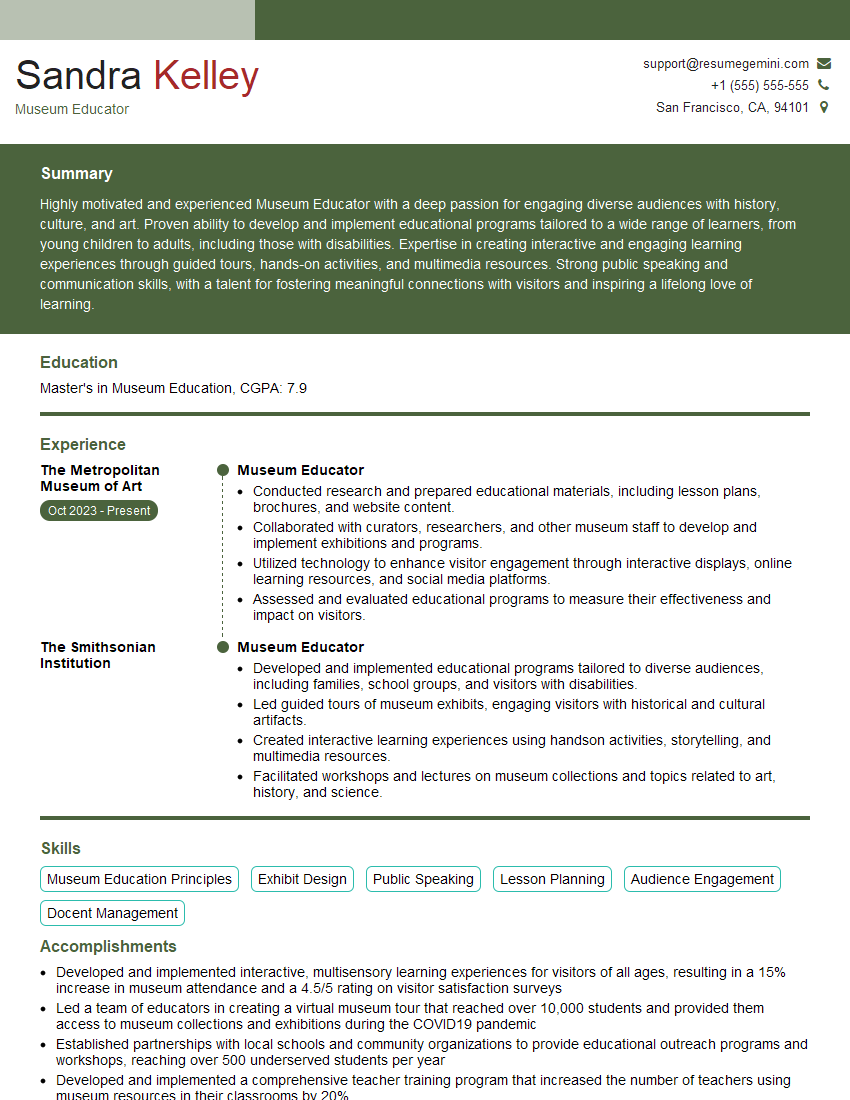
Museum Educator Resume Sample
Explore more articles
Users Rating of Our Blogs
Share Your Experience
We value your feedback! Please rate our content and share your thoughts (optional).
What Readers Say About Our Blog
Really detailed insights and content, thank you for writing this detailed article.
IT gave me an insight and words to use and be able to think of examples