The thought of an interview can be nerve-wracking, but the right preparation can make all the difference. Explore this comprehensive guide to Editorial Calendar interview questions and gain the confidence you need to showcase your abilities and secure the role.
Questions Asked in Editorial Calendar Interview
Q 1. Explain the importance of an editorial calendar.
An editorial calendar is the backbone of any successful content strategy. Think of it as a roadmap for your content creation and distribution. It’s a centralized plan that outlines all your planned content, including the type of content (blog posts, videos, social media updates, etc.), its publication date, assigned author or team, and key performance indicators (KPIs). Its importance lies in its ability to:
- Improve Content Consistency: Ensuring a regular flow of high-quality content keeps your audience engaged and coming back for more.
- Enhance Content Planning and Organization: It prevents last-minute rushes and ensures a cohesive content strategy.
- Streamline Workflow and Collaboration: It facilitates seamless collaboration among different teams (writers, editors, designers, marketers).
- Maximize Content Impact: By strategically scheduling content around relevant events or trends, you can amplify its reach and effectiveness.
- Track Progress and Measure Success: It allows for easy monitoring of content performance against set goals.
For example, a company launching a new product might use its editorial calendar to schedule a series of blog posts, social media campaigns, and email newsletters leading up to and after the launch date, ensuring a coordinated marketing effort.
Q 2. Describe your experience using different editorial calendar software.
Throughout my career, I’ve had the opportunity to work with several editorial calendar software solutions. Each has its strengths and weaknesses. I’ve used simpler tools like Google Sheets for smaller-scale projects where collaboration was primarily through shared documents. This worked well for basic scheduling and tracking, but lacked sophisticated features for larger teams or more complex content strategies. I’ve also utilized more robust platforms like CoSchedule and Trello, which offer features like content ideation boards, workflow automation, and detailed analytics. These were invaluable for managing larger content calendars with multiple contributors and intricate publishing schedules. My experience with ContentCal has been particularly positive for its visual calendar view and social media scheduling capabilities, making it ideal for integrated content marketing. Ultimately, the best software depends on the specific needs and scale of the project.
Q 3. How do you ensure alignment between the editorial calendar and overall marketing strategy?
Alignment between the editorial calendar and the overall marketing strategy is paramount. It’s not enough to simply create content; it must contribute to broader business objectives. I achieve this alignment by:
- Starting with Marketing Goals: The editorial calendar should always begin with clearly defined marketing goals. What are we trying to achieve? Increased brand awareness? Lead generation? Driving sales? These goals dictate the content themes and topics.
- Identifying Target Audience: Understanding our target audience’s needs, interests, and preferences is crucial to creating relevant and engaging content. The calendar must cater specifically to their preferences and communication style.
- Keyword Research Integration: Keyword research informs the content creation process, ensuring alignment with search engine optimization (SEO) strategies. This is crucial for organic reach and driving traffic to the content.
- Regular Review and Adjustments: The editorial calendar is a living document, not a static plan. Regular review and adjustments based on performance data and market trends are vital for ensuring ongoing alignment.
For instance, if the overarching marketing goal is to increase brand awareness, the editorial calendar might focus on creating thought-leadership articles, engaging infographics, and interactive social media content designed to increase brand visibility and positive perception.
Q 4. How do you prioritize content for the editorial calendar?
Prioritizing content for the editorial calendar involves a strategic approach considering several factors. I typically use a combination of methods, including:
- Urgency and Importance: Time-sensitive content related to current events or seasonal promotions takes precedence.
- Business Objectives Alignment: Content that directly supports key business objectives (e.g., lead generation, sales) is prioritized.
- Audience Engagement Potential: Content that has a high likelihood of engaging the target audience (based on past performance data and insights) is given higher priority.
- Resource Availability: Considering the availability of resources (writers, designers, editors) helps to ensure realistic scheduling.
- Content Pillars: Prioritize content that reinforces key content pillars and messaging.
I often employ a simple scoring system to rank content ideas based on these factors, making prioritization objective and transparent.
Q 5. How do you handle last-minute content changes or cancellations?
Last-minute content changes or cancellations are inevitable. To handle them effectively, I employ a structured approach:
- Flexibility Built-In: The editorial calendar should have built-in flexibility. Leaving some buffer time between scheduled pieces allows for adjustments.
- Communication is Key: Immediately inform all stakeholders involved (writers, editors, marketing team, etc.) about any changes or cancellations.
- Rapid Replanning: Quickly identify alternative content that can fill the gap. This might involve repurposing existing content or adjusting the schedule to accommodate new content.
- Documentation: Update the editorial calendar immediately to reflect the changes and document the reasons for the change.
- Risk Mitigation: Regularly review the calendar to identify potential risks and develop contingency plans to minimize disruption.
For example, if a key interviewee becomes unavailable, we might repurpose a previously recorded interview, or quickly create a shorter, alternative piece. Transparency with the team and proactive communication are key to minimizing disruptions.
Q 6. How do you measure the success of your editorial calendar?
Measuring the success of an editorial calendar isn’t just about vanity metrics like views or likes. I focus on aligning metrics with business objectives. This involves:
- Website Traffic Analysis: Monitoring website traffic from various content pieces to gauge the effectiveness of different content formats and promotion strategies.
- Conversion Rate Tracking: Measuring how effectively content converts leads into customers or drives sales.
- Engagement Metrics: Analyzing metrics like shares, comments, likes, and time spent on page to assess audience engagement.
- Social Media Performance: Monitoring social media engagement and reach to evaluate the effectiveness of social media promotion.
- Brand Awareness Monitoring: Tracking brand mentions and sentiment in social media and other online platforms.
By regularly analyzing these metrics, I can identify which content performs best and adapt the editorial calendar to optimize future performance. This data-driven approach ensures that content creation remains aligned with business goals.
Q 7. Describe your process for creating an editorial calendar.
My process for creating an editorial calendar is iterative and involves several key stages:
- Define Goals and Objectives: Clearly define the marketing goals and objectives the calendar will support.
- Audience Research and Persona Development: Thoroughly understand the target audience to tailor content accordingly.
- Keyword Research and Topic Ideation: Conduct keyword research to identify relevant topics and create content that resonates with the audience and search engines.
- Content Pillars Definition: Create a few core content pillars which focus on key subject areas and reinforce your brand message.
- Content Format Selection: Choose appropriate content formats (blog posts, videos, infographics, etc.) to achieve the desired impact.
- Content Planning and Scheduling: Schedule content strategically, considering seasonal trends, events, and holidays.
- Workflow and Team Assignment: Assign responsibilities to team members and outline a clear workflow.
- Content Creation and Review: Create and review content to ensure high quality and consistency.
- Publication and Promotion: Publish content and promote it through various channels.
- Performance Monitoring and Analysis: Regularly monitor performance and make adjustments as needed.
This structured approach ensures a collaborative, efficient, and data-driven content creation process.
Q 8. How do you involve stakeholders in the editorial calendar process?
Stakeholder involvement is crucial for a successful editorial calendar. It ensures alignment on content goals, priorities, and resources. I employ a multi-faceted approach:
- Regular meetings: Scheduled meetings with key stakeholders (marketing, sales, product, etc.) to discuss upcoming content themes, review drafts, and gather feedback. These meetings are crucial for aligning everyone on the overall vision.
- Collaborative tools: Utilizing shared editorial calendars (like Asana, Trello, or Google Sheets) allows for real-time collaboration, feedback, and updates. This fosters transparency and facilitates easy communication.
- Surveys and feedback forms: Gathering input through surveys helps understand audience preferences and pain points which informs content strategy. Feedback forms on published content provide insights into engagement and effectiveness.
- Content briefs: I create detailed content briefs for each piece, outlining the purpose, target audience, key messages, and desired outcomes. Sharing these briefs beforehand ensures everyone is informed and aligned before the writing or creation process begins.
- Early drafts and reviews: Sharing early drafts with relevant stakeholders allows for constructive criticism and ensures the content meets their needs and expectations.
For example, in a previous role, I used Asana to manage our editorial calendar and invited stakeholders from different departments. This allowed everyone to see the upcoming content schedule, comment on drafts, and request changes in real time. It significantly improved collaboration and ensured everyone was on the same page.
Q 9. How do you manage content across multiple platforms using an editorial calendar?
Managing content across multiple platforms requires a strategic approach within the editorial calendar. I ensure consistency of message while tailoring content for each platform’s specific audience and format. This involves:
- Platform-specific columns: The editorial calendar includes separate columns for each platform (e.g., blog, social media, email newsletter). This allows for a clear overview of content distribution.
- Content repurposing: A single piece of content can be repurposed for different platforms. For example, a blog post can be summarized for social media, or a webinar can be turned into a series of short videos or blog excerpts.
- Tailored content formats: Content needs to be formatted appropriately for each platform. For example, long-form blog posts are suitable for a company blog, while short, snappy captions work well for Instagram.
- Scheduled posting: Utilizing scheduling tools to automatically post content to each platform at the optimal time, maximizing reach and engagement. This ensures consistency and efficiency.
- Performance tracking: Different platforms require unique analytics tools. Monitoring performance on each platform is vital to understand what works and what doesn’t, allowing refinement of future content strategies.
For instance, I once managed a calendar where a single whitepaper was repurposed into blog posts, social media updates, email newsletters, and even short video snippets. This approach maximizes content value and reduces workload.
Q 10. What are some common challenges you face when managing an editorial calendar?
Managing an editorial calendar presents several challenges. These include:
- Resource constraints: Limited time, budget, and personnel can hinder content creation and scheduling.
- Conflicting priorities: Multiple stakeholders may have competing priorities, making it difficult to prioritize content. This often requires careful negotiation and prioritization based on business objectives.
- Content quality inconsistencies: Maintaining consistent quality across all content pieces can be challenging, especially with multiple authors or contributors.
- Keeping the calendar up-to-date: Changes in business priorities or unexpected events can necessitate frequent updates, requiring agility and adaptability.
- Measuring and reporting on success: Tracking the effectiveness of the editorial calendar requires implementing and regularly reviewing relevant KPIs (key performance indicators).
One common challenge is unexpected breaking news or urgent content requests. In such cases, I employ agile methodologies, adapting the calendar to accommodate these changes while minimizing disruption to the overall schedule.
Q 11. How do you forecast content needs for the editorial calendar?
Forecasting content needs requires a blend of data analysis, market research, and strategic thinking. My approach involves:
- Analyzing past performance: Examining past content performance (engagement, traffic, conversion rates) to identify successful themes and content formats. This provides a baseline for future planning.
- Market research: Staying abreast of industry trends, competitor activity, and audience interests. This informs content strategy and ensures relevance.
- Keyword research: Identifying relevant keywords with high search volume to guide topic selection. This helps increase organic visibility.
- Sales and marketing input: Collaborating with sales and marketing teams to understand current campaigns, product launches, and business objectives. Content should support these objectives.
- Content pillars: Defining core content pillars—broad themes that guide content creation and ensure consistency and strategic alignment.
For example, I once analyzed past blog post performance and identified a series of articles on a specific topic that consistently performed well. This information informed future content planning, enabling us to allocate more resources to that particular area.
Q 12. How do you handle conflicting content priorities?
Conflicting content priorities are inevitable. I address these through a structured prioritization process:
- Prioritization matrix: Using a prioritization matrix (e.g., urgency/importance matrix) to rank content based on various factors including business impact, audience relevance, and resource requirements.
- Stakeholder alignment: Facilitating discussions between stakeholders to resolve conflicts through compromise and collaboration. This may involve adjusting deadlines or re-evaluating resource allocation.
- Data-driven decisions: Using data (website analytics, social media engagement) to inform decisions and justify prioritization choices.
- Flexible scheduling: Building flexibility into the calendar to accommodate changes and unexpected priorities. This often requires creating buffer time and allowing for adjustments.
- Clear communication: Clearly communicating the rationale behind prioritization decisions to all stakeholders to ensure transparency and buy-in.
In a past situation, two teams had competing priorities for content slots. By using a prioritization matrix based on business objectives and anticipated impact, we reached a consensus on which content should take precedence.
Q 13. Describe your experience with content repurposing and its role in the editorial calendar.
Content repurposing is a highly effective strategy for maximizing content value and increasing efficiency. It involves transforming existing content into new formats for different platforms or audiences. This is integrated into the editorial calendar by:
- Identifying repurposing opportunities: Reviewing existing content (blog posts, webinars, videos) to identify elements that can be adapted for other formats (social media posts, email newsletters, infographics).
- Scheduling repurposed content: Including repurposed content in the editorial calendar, ensuring it aligns with the overall content strategy and schedule.
- Tracking performance: Monitoring the performance of repurposed content to measure its effectiveness and identify opportunities for improvement.
- Utilizing different formats: Repurposing content into various formats—blog posts into social media snippets, webinars into blog excerpts, etc.— to maximize reach and impact.
For instance, a long-form blog post can be summarized into several short social media posts, or key takeaways from a webinar can be transformed into an infographic. This reduces the overall workload while extending the reach of existing content.
Q 14. How do you integrate SEO best practices into your editorial calendar?
SEO best practices are essential for maximizing the visibility and effectiveness of content. I integrate SEO into the editorial calendar through:
- Keyword research: Identifying relevant keywords with high search volume and low competition during the content planning phase.
- Topic selection: Choosing topics that align with the identified keywords and address audience needs and interests.
- On-page optimization: Optimizing content for on-page SEO factors, including title tags, meta descriptions, header tags, and image alt text.
- Content promotion: Planning promotional activities (social media sharing, email marketing) to increase content visibility and improve search rankings.
- Link building: Strategically incorporating links to relevant internal and external resources to enhance credibility and improve search ranking.
- Content calendar alignment: Ensuring the editorial calendar aligns with SEO strategies and keyword targets.
For example, by incorporating keyword research into the content planning stage, I can ensure that the chosen topics are relevant to the target audience’s search queries, improving organic reach and website traffic.
Q 15. How do you ensure brand consistency across all content in the editorial calendar?
Maintaining brand consistency across all content is paramount. It’s like having a signature style – recognizable and trustworthy. I achieve this through a multi-pronged approach.
Style Guide Enforcement: A comprehensive style guide, covering everything from voice and tone to visual elements (logo usage, color palettes, font choices), is essential. The editorial calendar should explicitly reference this guide, ensuring all content creators adhere to it.
Template Usage: Utilizing pre-designed templates for various content types (blog posts, social media updates, email newsletters) ensures visual consistency. This reduces the chances of individual creators deviating from the brand aesthetic.
Regular Audits & Reviews: Periodic reviews of published content against the brand guidelines are crucial. This catches inconsistencies early and allows for corrective action.
Centralized Asset Library: A central repository for brand assets (logos, images, fonts) ensures everyone uses the correct, up-to-date versions, preventing visual discrepancies.
For instance, if our brand voice is playful and informative, I ensure all content, from blog posts to social media captions, reflects that tone. Similarly, all visuals must align with our approved color palette.
Career Expert Tips:
- Ace those interviews! Prepare effectively by reviewing the Top 50 Most Common Interview Questions on ResumeGemini.
- Navigate your job search with confidence! Explore a wide range of Career Tips on ResumeGemini. Learn about common challenges and recommendations to overcome them.
- Craft the perfect resume! Master the Art of Resume Writing with ResumeGemini’s guide. Showcase your unique qualifications and achievements effectively.
- Don’t miss out on holiday savings! Build your dream resume with ResumeGemini’s ATS optimized templates.
Q 16. How do you track deadlines and ensure timely content publishing?
Tracking deadlines and ensuring timely publishing requires a robust system. Think of it as orchestrating a complex symphony – every instrument needs to play its part at the right time.
Calendar Software: We utilize project management software like Asana or Trello, integrating it with the editorial calendar. This allows for clear assignment of tasks, setting deadlines, and monitoring progress visually.
Automated Reminders & Notifications: The system automatically sends reminders to content creators and editors about upcoming deadlines, ensuring no tasks are overlooked.
Gantt Charts: For large-scale projects or campaigns, Gantt charts offer a visual representation of the timeline, dependencies between tasks, and potential bottlenecks.
Regular Check-ins & Status Meetings: Regular meetings with the team allow for open communication regarding progress, challenges, and potential delays. This proactive approach helps prevent last-minute rushes.
For example, if a blog post is scheduled for publication on October 26th, the system will automatically send reminders to the writer, editor, and graphic designer several days before the deadline, ensuring everything is completed on time.
Q 17. Explain how you use data analytics to inform editorial calendar decisions.
Data analytics is the compass guiding our editorial strategy. We use it to understand what resonates with our audience and refine our content accordingly.
Website Analytics (Google Analytics): We track website traffic, bounce rates, time on page, and popular content to identify high-performing topics and content formats.
Social Media Analytics: Monitoring engagement metrics (likes, shares, comments) on various platforms helps us understand which content types and messaging strategies are most effective.
Search Engine Optimization (SEO) Data: Keyword research and analysis of search rankings provide insights into audience search intent and help us optimize content for better discoverability.
A/B Testing: We use A/B testing to compare different versions of headlines, images, and calls-to-action, identifying the most impactful elements.
For example, if analytics show a significant spike in engagement on social media posts with video content, we might adjust the editorial calendar to include more videos in future content plans.
Q 18. Describe your experience with using content briefs.
Content briefs are the blueprints for our content. They provide a clear direction for content creators, ensuring consistency and quality.
Clear Objectives: Each brief outlines the specific goals for the piece of content – increase brand awareness, drive traffic to a landing page, generate leads etc.
Target Audience Definition: The brief clearly defines the target audience, their needs, pain points, and preferred content formats.
Keyword Research & SEO Guidelines: Relevant keywords and SEO best practices are outlined to ensure optimal search engine visibility.
Tone & Style Guidelines: The brief specifies the desired tone and style, ensuring consistency with the overall brand voice.
Call to Action (CTA): Clear and concise CTAs are defined to guide the reader towards the desired outcome.
For instance, a content brief for a blog post might specify the target audience (marketing professionals), the objective (generating leads), the keywords (content marketing strategy), and the desired tone (informative and authoritative).
Q 19. How do you delegate tasks effectively within an editorial calendar workflow?
Effective delegation is key to a smoothly functioning editorial workflow. It’s about assigning the right tasks to the right people, leveraging individual strengths.
Clear Roles & Responsibilities: Defining roles and responsibilities within the team helps avoid confusion and duplication of effort.
Skill-Based Assignment: Matching tasks to individual team members’ skills and expertise is crucial for efficiency and quality.
Transparent Workflow: Utilizing project management software ensures transparency, enabling team members to track progress and identify potential roadblocks.
Regular Communication: Open communication and regular check-ins help keep everyone informed and aligned.
Delegation Training: Providing team members with training on effective time management and task prioritization helps them manage their workload effectively.
For example, I might delegate the writing of a blog post to a skilled writer, the editing to a copyeditor, and the graphic design to a visual designer.
Q 20. How do you handle feedback and revisions on content scheduled in the editorial calendar?
Handling feedback and revisions is a collaborative process. It’s about constructive criticism that leads to content improvement.
Clear Feedback Mechanisms: Establishing a clear system for providing and receiving feedback is crucial (e.g., using commenting tools within the project management software).
Constructive Feedback Guidelines: Encouraging constructive, specific feedback ensures that revisions are targeted and effective.
Version Control: Using version control (e.g., Google Docs) helps track changes and revert to previous versions if needed.
Timely Feedback: Providing feedback promptly helps avoid delays in the publishing process.
Open Communication: Open dialogue between content creators and editors fosters a collaborative environment where feedback is embraced as a means of improvement.
For example, if an editor suggests changes to a blog post, the writer incorporates those changes, and the revised version is reviewed again before final approval.
Q 21. What strategies do you use to maintain an up-to-date and accurate editorial calendar?
Maintaining an up-to-date editorial calendar is an ongoing process, like tending a garden – constant attention ensures growth and vibrancy.
Regular Updates: The calendar should be updated regularly, reflecting any changes in deadlines, content assignments, or priorities.
Collaboration Tools: Using shared calendars and collaborative platforms ensures everyone has access to the most current version of the calendar.
Content Promotion Schedule Integration: The editorial calendar should integrate with the content promotion schedule to ensure content is effectively promoted across various channels.
Contingency Planning: Building in some flexibility to handle unexpected events (e.g., changes in news cycles, last-minute content opportunities) helps maintain accuracy.
Automated Reporting: Setting up automated reports tracks key metrics and identifies potential issues, ensuring proactive adjustments.
For instance, if a breaking news story emerges that requires immediate attention, we would adjust the editorial calendar to accommodate this urgent content, ensuring we stay relevant and timely.
Q 22. How do you incorporate user feedback into the editorial calendar planning?
Incorporating user feedback into editorial calendar planning is crucial for creating content that resonates with your audience. I approach this in a multi-faceted way. Firstly, I actively monitor social media channels, online forums, and customer reviews to identify trending topics, pain points, and unmet needs. This provides valuable insights into what our audience wants to see. Secondly, I use analytics data from website traffic, email open rates, and content performance to understand which types of content perform best and which fall flat. This quantitative data complements the qualitative feedback from direct interaction. Finally, I regularly conduct surveys and polls, both short and long-form, to directly ask our audience for their preferences and suggestions. For example, if a recent survey reveals a high level of interest in a specific topic, I’ll prioritize that topic and allocate appropriate resources in the editorial calendar.
This feedback loop ensures the editorial calendar is not just a content schedule, but a dynamic reflection of audience needs and preferences, leading to higher engagement and better results.
Q 23. Describe your experience with different content formats and their placement on an editorial calendar.
My experience spans a wide range of content formats, each with its optimal placement within an editorial calendar. For example, evergreen content, such as comprehensive guides or how-to articles, are planned for consistent visibility and long-term value, often placed strategically throughout the calendar. Time-sensitive content, like news articles or event announcements, are scheduled to coincide with their relevance. Blog posts, being more flexible, can fill in gaps or address emerging trends as needed.
Visual content, such as infographics and videos, are often used to break up text-heavy content and enhance engagement. Interactive content like quizzes or polls can further boost audience participation. I use a matrix to visualize this, considering the content type, audience appeal, and overall business objective. For example, a product launch would require a significant volume of promotional content scheduled closely together, while evergreen guides could be spread out to maximize visibility throughout the year.
Q 24. How do you ensure the editorial calendar supports overall business goals?
Aligning the editorial calendar with overall business goals is paramount. This requires a collaborative approach, working closely with sales, marketing, and product teams to understand their priorities and initiatives. For example, if the company is launching a new product, the editorial calendar would feature content that supports the launch, including product reviews, how-to guides, and case studies. If a key business goal is lead generation, the calendar would emphasize content designed to attract and convert potential customers, such as white papers and webinars. I use a system where key performance indicators (KPIs) linked to business goals are tracked for each piece of content, allowing for regular review and adjustment of the calendar to maximize impact.
Essentially, the editorial calendar becomes a roadmap, charting the course to achieving our business objectives through strategic content creation.
Q 25. How do you manage content contributors and their deadlines within an editorial calendar?
Managing content contributors and deadlines requires meticulous organization and clear communication. I utilize project management software to assign tasks, set deadlines, and track progress. Regular check-ins, either individual or group meetings, are essential to address challenges and maintain momentum. I build in buffer time for unexpected delays. A clear briefing document is provided to each contributor outlining the scope of work, target audience, desired tone, and key performance indicators. This minimizes misunderstandings and ensures everyone is on the same page.
Furthermore, a robust feedback system is established so that contributors can easily ask questions, share progress, and receive prompt feedback. By fostering open communication and clear expectations, I ensure the timely delivery of high-quality content.
Q 26. How do you optimize the editorial calendar for different audiences?
Optimizing the editorial calendar for different audiences requires segmenting the audience and tailoring content accordingly. This involves creating audience personas, defining their needs, interests, and pain points, and then aligning content creation to address those specific needs. For instance, a business-to-business (B2B) audience might respond well to in-depth case studies and white papers, while a business-to-consumer (B2C) audience may prefer shorter, more engaging blog posts and social media updates. The calendar should reflect this differentiation by scheduling content targeted at different segments at optimal times and on relevant platforms.
I would use data from analytics and customer relationship management (CRM) systems to further refine targeting and ensure the editorial calendar is effectively reaching each segment with relevant and engaging content.
Q 27. Describe your experience with editorial calendar reporting and analysis.
Editorial calendar reporting and analysis are vital for measuring success and making data-driven improvements. I track key metrics such as website traffic, engagement rates, social media shares, and lead generation to assess the effectiveness of the calendar. This involves creating regular reports that highlight key performance indicators (KPIs) and identify areas for improvement. For example, if a particular type of content consistently underperforms, we analyze the reasons and adapt our strategy accordingly. This could involve tweaking the content format, targeting a different audience, or adjusting the promotion strategy. I use data visualization tools to present findings in a clear and concise manner, making it easy to identify trends and make informed decisions.
This iterative process of analysis and refinement is essential for continuous improvement and ensures that the editorial calendar remains a valuable tool for achieving our content marketing objectives.
Q 28. What software or tools have you used to manage editorial calendars, and which do you prefer?
I have experience using several editorial calendar management tools, including Trello, Asana, and Contentful. My preference, however, leans towards specialized content calendar platforms like CoSchedule or HubSpot because they integrate seamlessly with analytics dashboards and other marketing tools. These platforms offer a more streamlined workflow and provide richer features specifically designed for content planning and management, such as social media scheduling, workflow automation, and team collaboration tools. The ability to visualize the content calendar with drag-and-drop functionality is a crucial feature I look for. The specific tool selected depends on the size of the team, the complexity of the content strategy, and the budget available.
Key Topics to Learn for Editorial Calendar Interview
- Understanding the Purpose: Grasp the core function of an editorial calendar – planning and scheduling content for optimal impact across various platforms.
- Content Strategy Integration: Explore how the editorial calendar aligns with overall content strategy, brand voice, and target audience goals.
- Workflow & Collaboration: Understand the collaborative aspects; how different teams (writers, editors, designers, marketers) interact and contribute to the calendar’s success.
- Content Types & Formats: Familiarize yourself with the diverse content formats used (blog posts, social media updates, videos, etc.) and how they’re strategically placed within the calendar.
- SEO & Keyword Optimization: Learn how to incorporate SEO best practices into calendar planning to improve content visibility and organic reach.
- Analytics & Measurement: Understand how to track and measure the effectiveness of content scheduled via the editorial calendar. Know key metrics and reporting techniques.
- Content Repurposing & Promotion: Explore strategies for extending the life of content by repurposing it for different channels and promoting it effectively.
- Adaptability & Flexibility: Discuss how to manage unexpected changes and maintain flexibility within the editorial calendar to react to current events or trending topics.
- Software & Tools: Be prepared to discuss your familiarity with various editorial calendar software and tools (mention specific ones if you have experience, otherwise focus on general functionality).
- Problem-Solving Scenarios: Consider potential challenges like content delays, conflicting priorities, or resource constraints, and how you’d approach solving them.
Next Steps
Mastering the intricacies of editorial calendar management is crucial for career advancement in content strategy, marketing, and publishing. A strong understanding demonstrates organizational skills, strategic thinking, and the ability to contribute significantly to a team’s success. To maximize your job prospects, crafting an ATS-friendly resume is essential. ResumeGemini is a trusted resource to help you build a professional and impactful resume that highlights your relevant skills and experience. Examples of resumes tailored to Editorial Calendar roles are available to further guide your preparation.
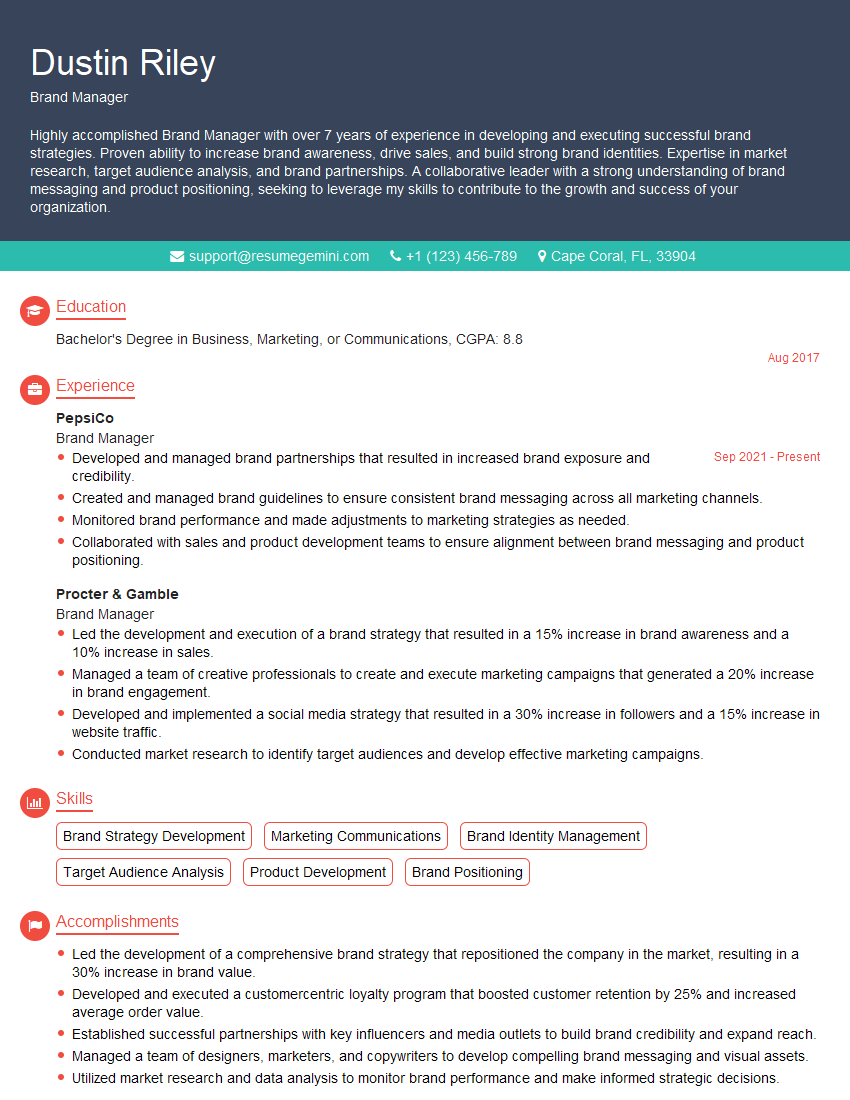
Brand Manager Resume Sample
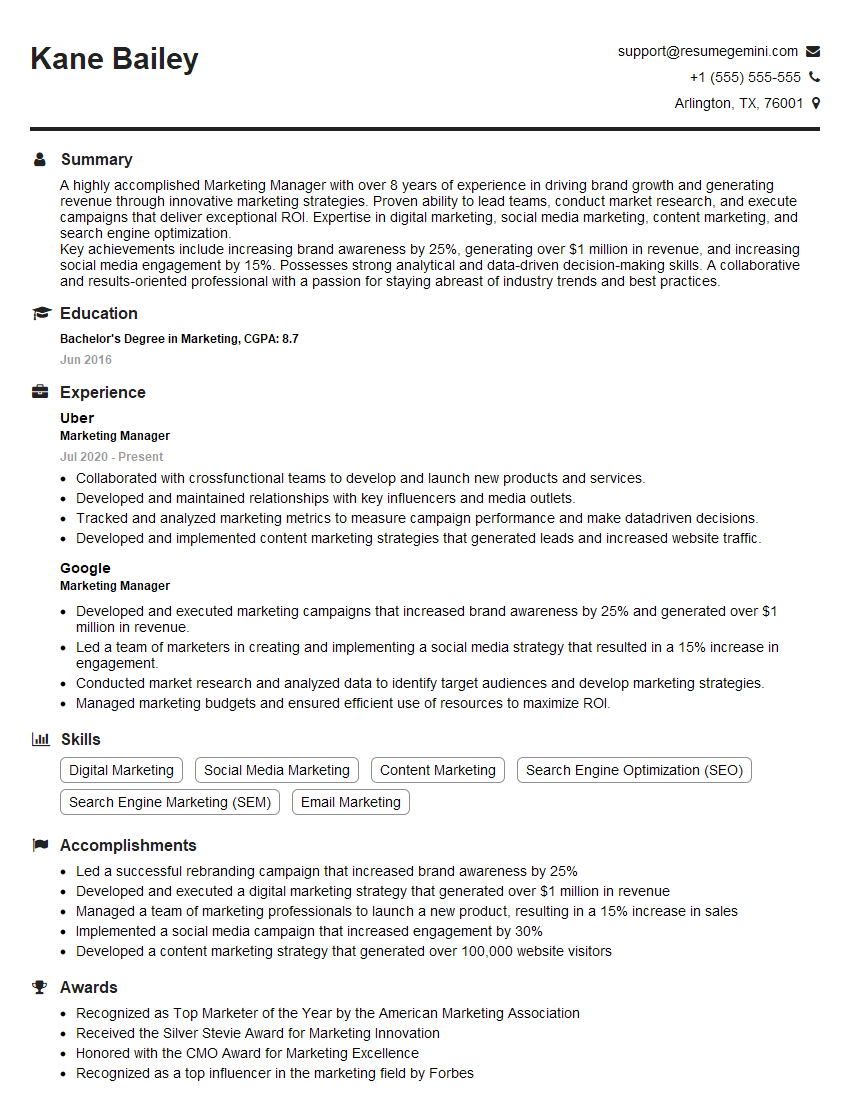
Marketing Manager Resume Sample
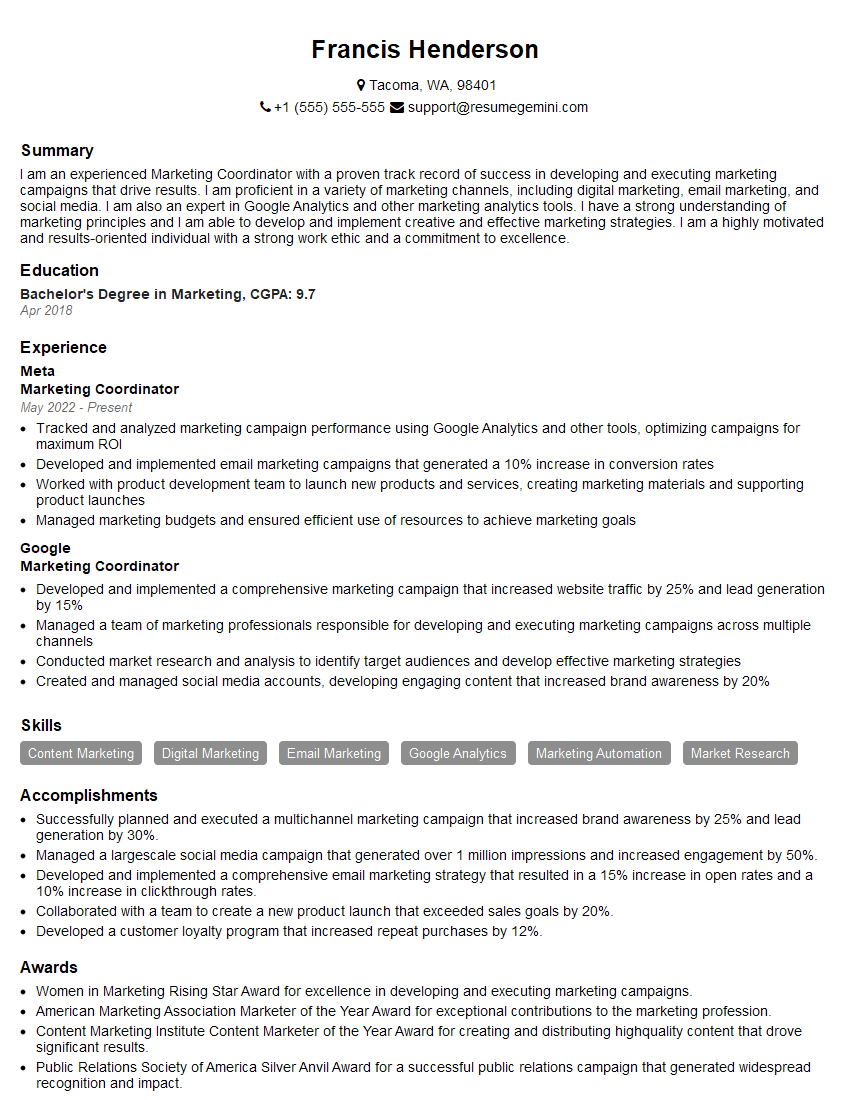
Marketing Coordinator Resume Sample

Communications Manager Resume Sample

Social Media Manager Resume Sample
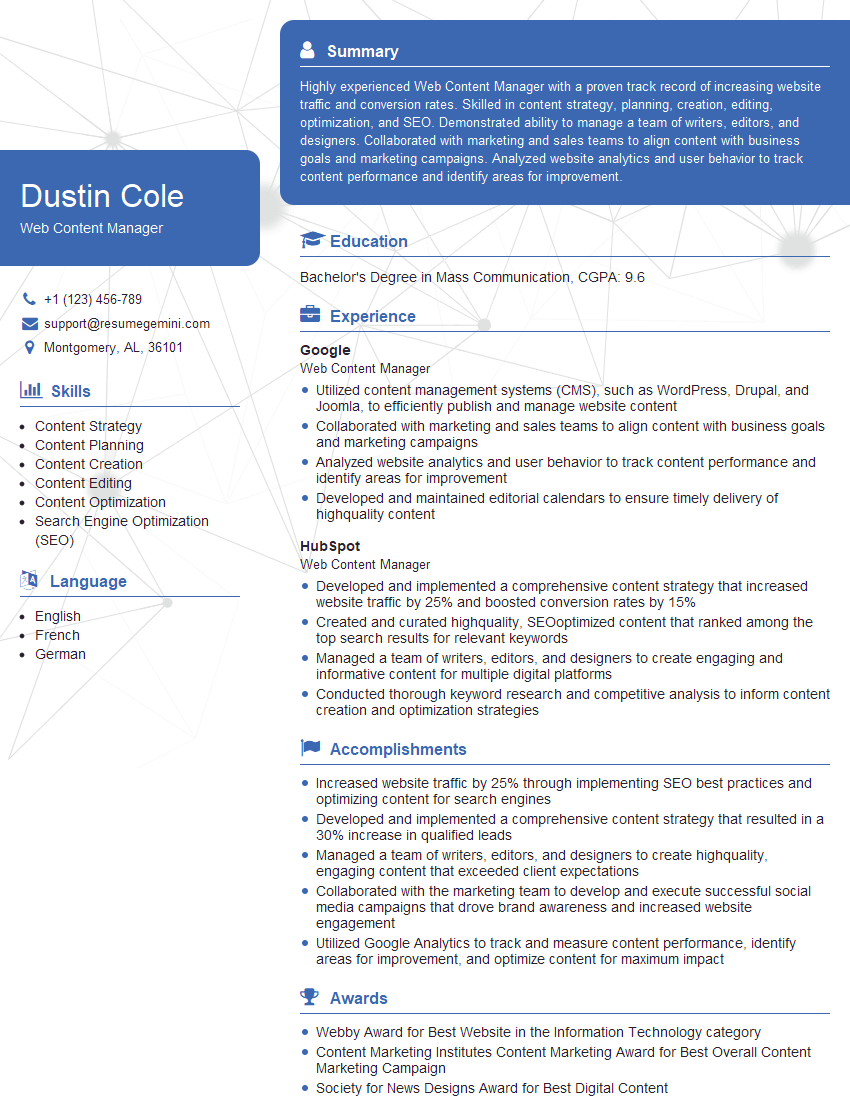
Web Content Manager Resume Sample
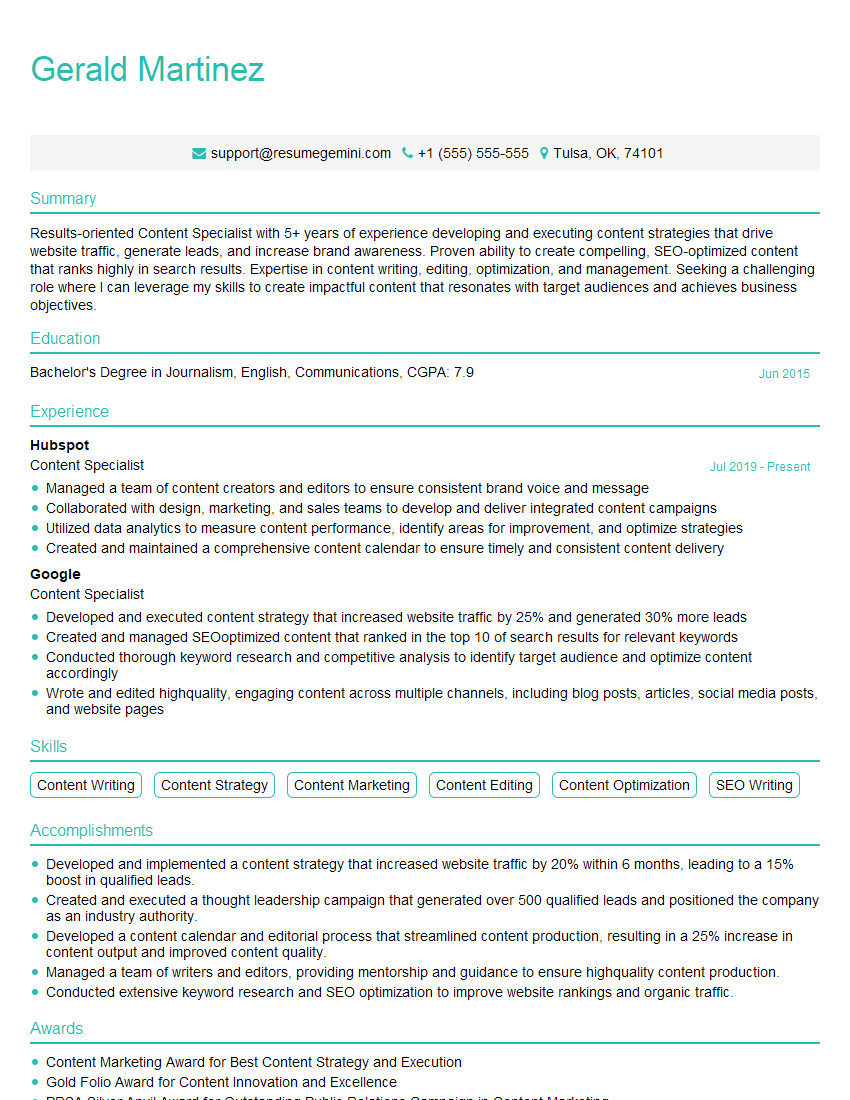
Content Specialist Resume Sample

Content Strategist Resume Sample
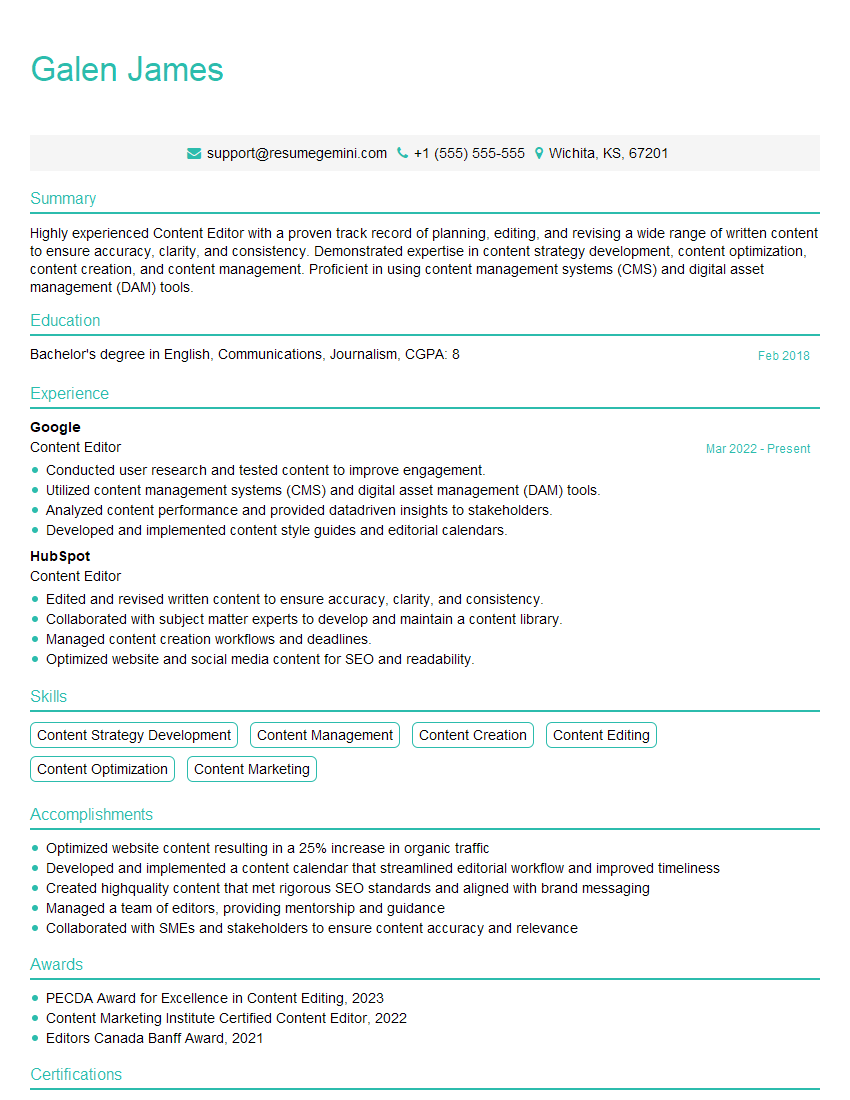
Content Editor Resume Sample
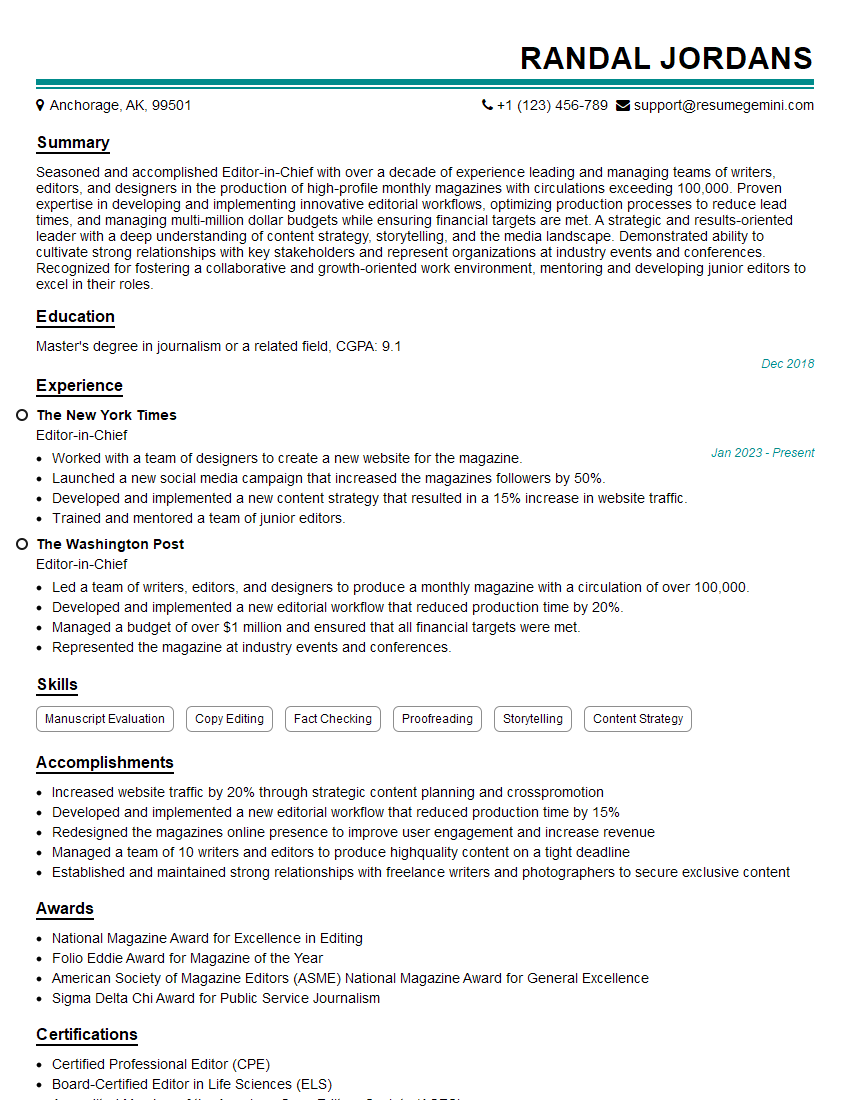
Editor-in-Chief Resume Sample
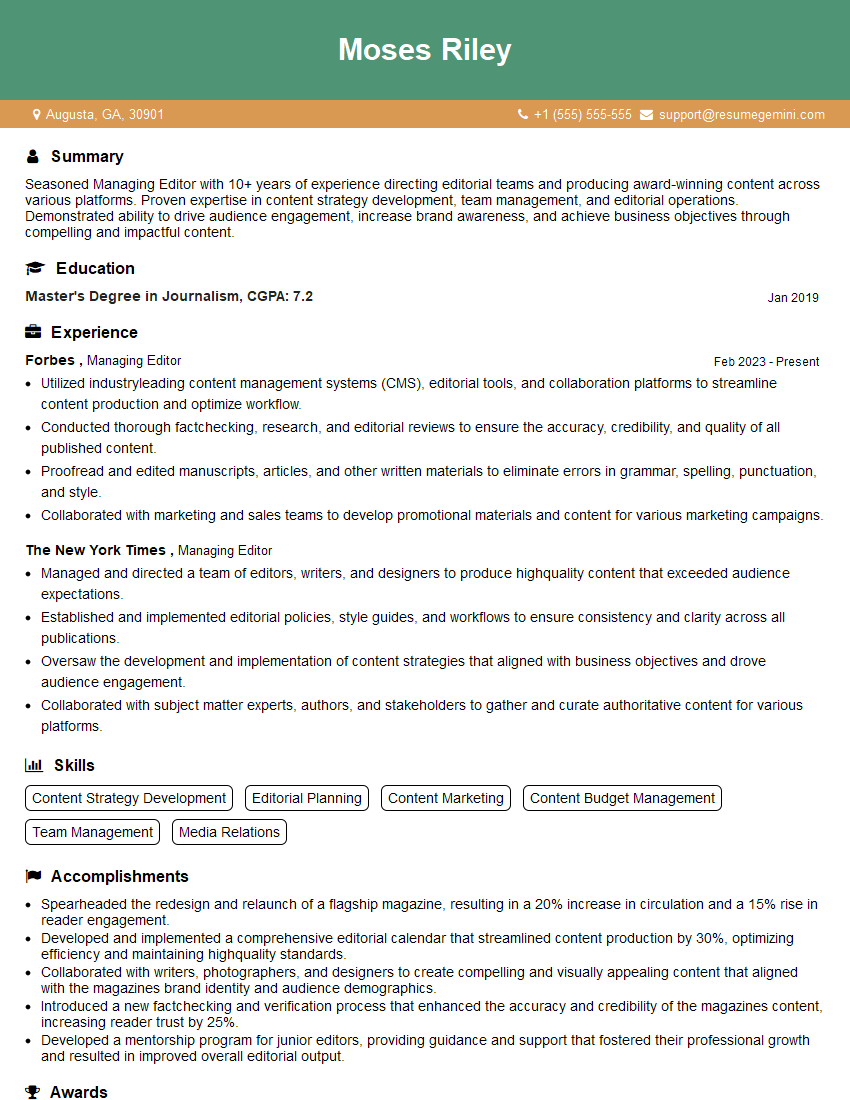
Managing Editor Resume Sample

Copywriter Resume Sample
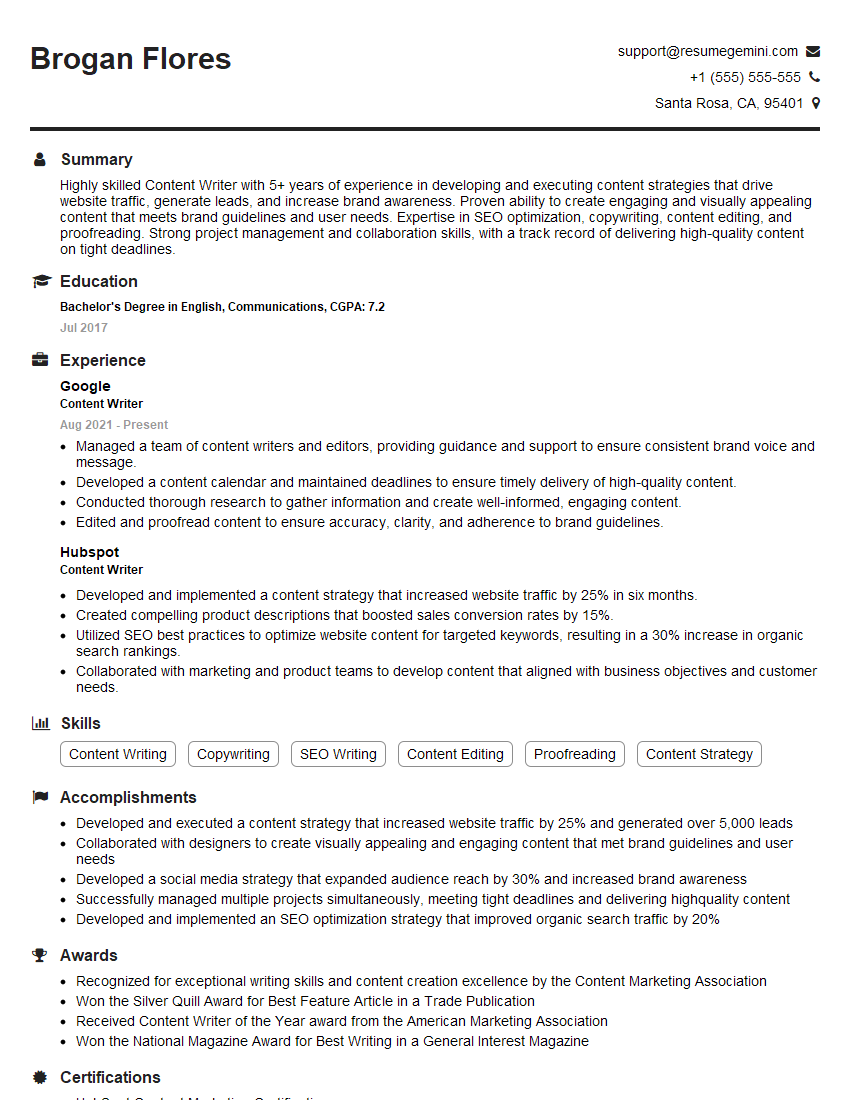
Content Writer Resume Sample
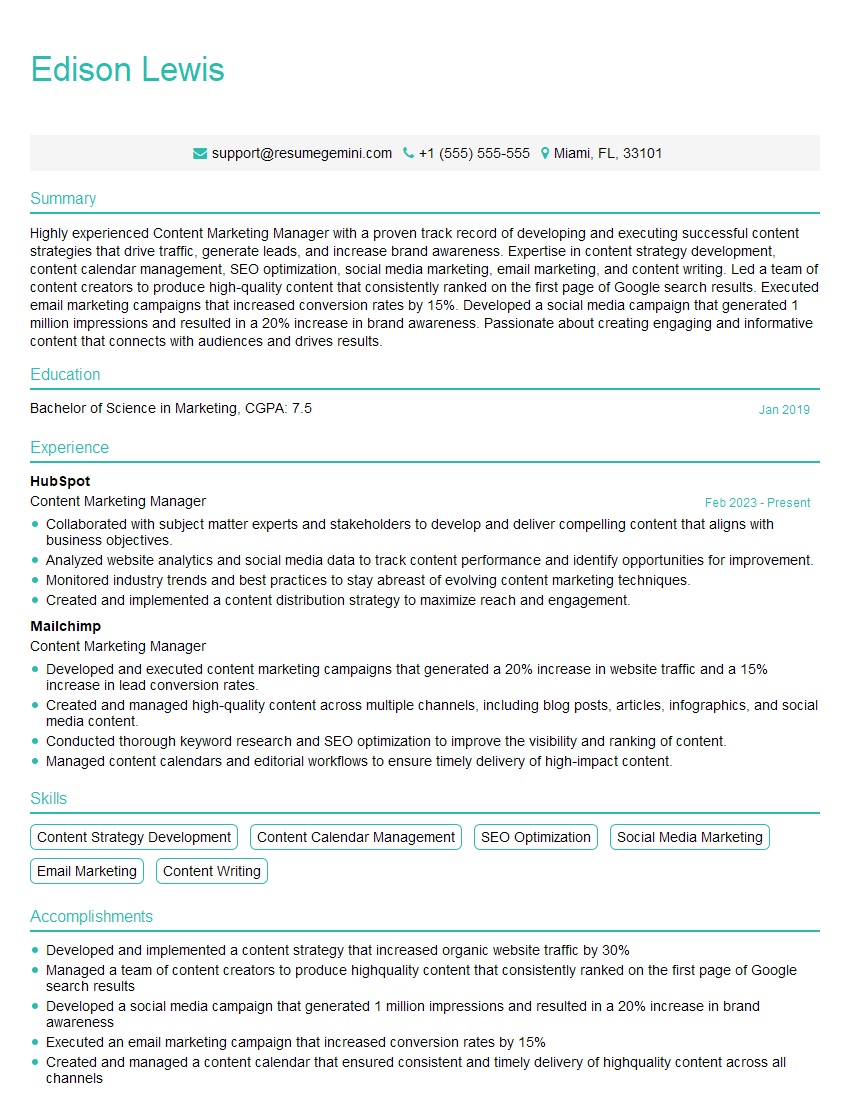
Content Marketing Manager Resume Sample
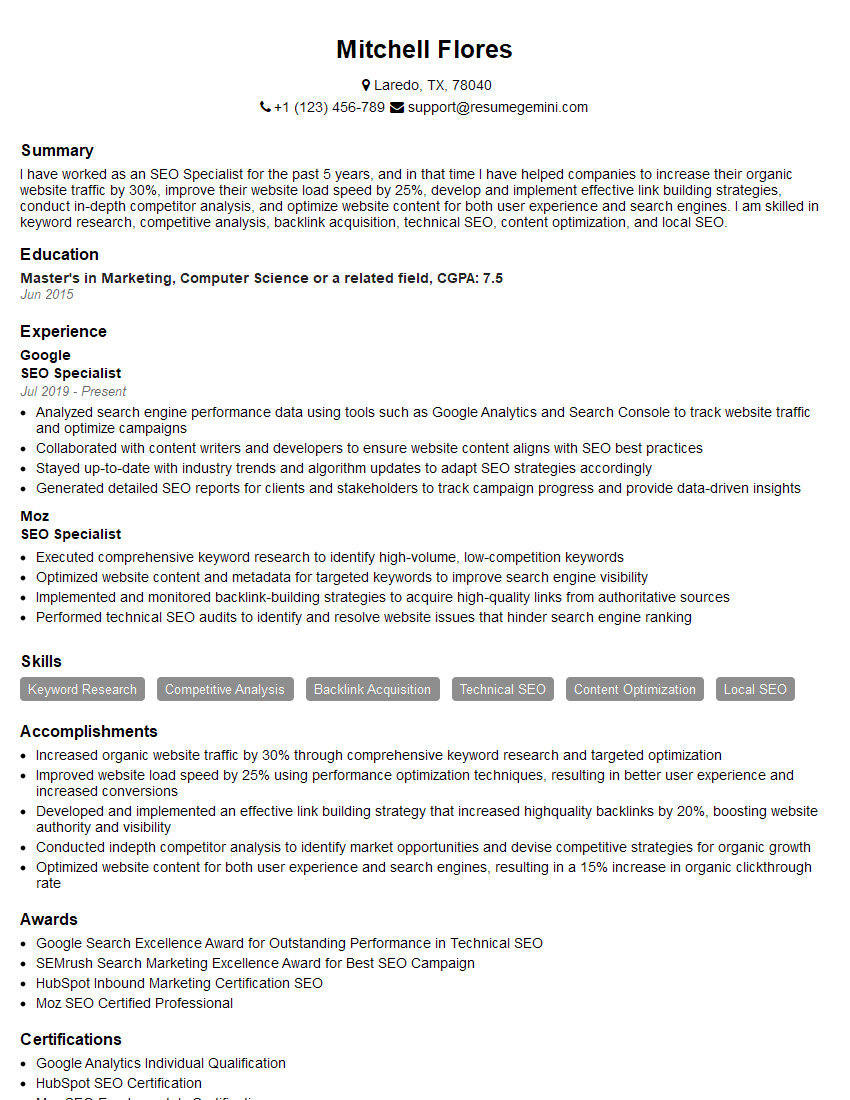
SEO Specialist Resume Sample
Explore more articles
Users Rating of Our Blogs
Share Your Experience
We value your feedback! Please rate our content and share your thoughts (optional).
What Readers Say About Our Blog
I Redesigned Spongebob Squarepants and his main characters of my artwork.
https://www.deviantart.com/reimaginesponge/art/Redesigned-Spongebob-characters-1223583608
IT gave me an insight and words to use and be able to think of examples
Hi, I’m Jay, we have a few potential clients that are interested in your services, thought you might be a good fit. I’d love to talk about the details, when do you have time to talk?
Best,
Jay
Founder | CEO