The thought of an interview can be nerve-wracking, but the right preparation can make all the difference. Explore this comprehensive guide to AP Stylebook interview questions and gain the confidence you need to showcase your abilities and secure the role.
Questions Asked in AP Stylebook Interview
Q 1. What is the difference between ‘affect’ and ‘effect’?
The difference between “affect” and “effect” is a common source of confusion, even for experienced writers. Generally, affect is a verb meaning to influence or produce a change, while effect is usually a noun meaning a result. Think of it this way: Affect is what you do; effect is what you get.
Examples:
The rain affected the game.(Rain influenced the game)The effect of the rain was a delay.(The result of the rain was a delay)
However, there are exceptions. Effect can be used as a verb meaning to bring about or cause, though it’s less common than affect as a verb. And, rarely, affect can be a noun referring to emotional expression. Always carefully consider the context.
Q 2. How do you handle numerals in AP style?
AP style generally prefers spelling out numbers zero through nine and using figures for 10 and above. There are several exceptions to this rule, however, making it crucial to understand the nuances.
Exceptions:
- Ages: Always use figures.
- Dimensions: Always use figures (e.g.,
5-foot-tall). - Measurements: Use figures (e.g.,
2 miles). - Money: Always use figures ($10, $100, etc.).
- Percentages: Always use figures (
10%). - Series of numbers: For consistency, use figures even if some are below 10 if other numbers in the series are above 10 (e.g.,
8, 12, and 15 apples). - Beginning of sentence: Spell out numbers that begin sentences; if a large number is unavoidable, it is better to restructure the sentence.
Remembering these exceptions will ensure consistency and clarity in your writing.
Q 3. Explain the AP style guidelines for capitalization.
AP style capitalization is relatively straightforward but requires careful attention to detail. Generally, AP style favors downplaying capitalization, using it sparingly.
Key Rules:
- Proper Nouns: Capitalize proper nouns (names of people, places, organizations, etc.):
John Smith, New York City, United Nations. - Titles: Capitalize formal titles when used before a person’s name but lowercase when used after the name or alone:
President Biden, butJoe Biden, the president. - Directions: Lowercase compass points (north, south, east, west) unless they are part of a proper noun:
Southern Californiabutdrive north. - Seasons: Lowercase seasons unless part of a proper noun or holiday name:
winterbutthe Winter Olympics. - Titles of Works: Capitalize the principal words in titles of books, articles, and other works, excluding articles, prepositions, and conjunctions unless they begin or end the title.
Consistency is paramount in applying these rules across your entire piece of writing.
Q 4. What are the AP style rules for using commas?
Commas are essential for clarity and readability. AP style emphasizes using commas to prevent misreading and improve sentence flow.
Key Uses:
- Series: Use commas to separate items in a series (
apples, bananas, and oranges). Note the serial comma before ‘and’. - Coordinate adjectives: Use commas to separate coordinate adjectives (adjectives that equally modify the same noun):
a long, winding road. - Clauses: Use commas to separate independent clauses joined by a coordinating conjunction (
and, but, or, nor, for, so, yet):The sun was shining, and the birds were singing. - Nonrestrictive phrases/clauses: Use commas to set off nonrestrictive phrases and clauses (phrases that add extra information but aren’t essential to the sentence’s meaning):
My brother, who is a doctor, lives in London.
Mastering comma usage ensures grammatical accuracy and clarity of your writing.
Q 5. How do you handle abbreviations and acronyms in AP style?
AP style guidelines for abbreviations and acronyms aim for clarity and consistency. Generally, avoid unnecessary abbreviations.
Rules:
- Spell out on first reference: Spell out an abbreviation or acronym on its first use, followed by the abbreviation in parentheses. Subsequent uses can employ the abbreviation. (e.g.,
National Aeronautics and Space Administration (NASA)… later use:NASA) - Common abbreviations: Some commonly understood abbreviations like
U.S.,U.K., anda.m./p.m.are acceptable without spelling them out first. - Acronyms: Follow the same rule for common acronyms, but avoid using obscure or less common ones.
- Avoid excessive abbreviations: Strive for clarity; excessive use of abbreviations can make the text difficult to understand.
Choosing between abbreviation and spelling out depends largely on the context and your target audience.
Q 6. What is the correct AP style for state names?
AP style generally uses the abbreviated form of state names when they follow a city name. However, there are a few exceptions.
Rule: Use the two-letter Postal Service abbreviations in datelines and addresses, but spell out state names when they stand alone.
Examples:
Sacramento, Calif.California is a beautiful state.
The exceptions include states like Alaska, Hawaii, Idaho, Iowa, Maine, Ohio, Texas, and Utah.
A complete list of state abbreviations can be found in the AP Stylebook.
Q 7. Explain the AP style guidelines for datelines.
Datelines in AP style provide essential context by indicating the location from where a news story originates.
Format: Datelines are concise and follow a specific format: CITY, STATE — (Note the em dash). The city is always capitalized. If a city is well-known and the state is easily understood, the state name may be omitted. International datelines follow a similar format, with the country name replacing the state name.
Example:
LONDON, England —NEW YORK —(State omitted because it’s widely understood)
Accuracy in datelines ensures the reader can readily understand the origin of the story’s information.
Q 8. How do you handle titles of books, movies, and articles in AP style?
In AP style, titles of books, movies, and articles are treated differently depending on their length and context. Generally, titles of longer works like books and movies are italicized. Titles of shorter works like articles, chapters, and poems are put in quotation marks.
- Books and Movies: To Kill a Mockingbird, The Godfather
- Articles, Chapters, Poems: “The Impact of Social Media,” “Chapter 3: The Turning Point,” “Ode to a Nightingale”
Think of it this way: italicize the big stuff, quote the smaller parts. This helps the reader quickly distinguish between different types of works. This consistent styling makes reading easier and contributes to a polished professional piece.
Q 9. What are the rules for using hyphens and en dashes in AP style?
Hyphens and en dashes serve distinct purposes in AP style. Hyphens connect words to create compound adjectives or to avoid ambiguity. En dashes, longer than hyphens, are typically used to indicate ranges or connections between things.
- Hyphens: Used to combine words to modify a noun (e.g.,
long-term effects), with compound numbers (e.g.,twenty-one), and in some compound words (e.g.,mother-in-law). - En Dashes: Show a range of numbers (e.g.,
pages 10–20), indicate connections (e.g.,the Washington-Baltimore corridor), or show a relationship between two words or ideas (e.g.,the pro-choice-pro-life debate).
Remember, a hyphen is short and connects words closely, while an en dash shows a broader connection or range. Using them correctly significantly improves clarity and professionalism.
Q 10. How do you handle numbers and numerals in headlines?
AP style for headlines generally favors spelling out numbers one through nine and using numerals for 10 and above. However, there are exceptions. For consistency and brevity, sometimes smaller numbers are written as numerals, especially if space is limited in the headline.
For instance, a headline might read “Nine Injured in Accident” but “100,000 Fans Attend Game.” The key is to be consistent within a single headline and to prioritize clarity.
Consider the overall aesthetic and readability. If using numerals for smaller numbers improves the headline’s flow and readability, it’s acceptable, especially in shorter headlines. Ultimately, the goal is a clear and impactful message.
Q 11. What is the difference between a semicolon and a colon in AP style?
Semicolons and colons, while both punctuation marks that connect independent clauses, have distinct functions. A semicolon links closely related independent clauses that could stand alone as sentences. A colon introduces an explanation, list, or example.
- Semicolon:
The storm raged; the power went out.(Two independent clauses, closely related.) - Colon:
There's only one thing I need: coffee.(The colon introduces what the single thing is.)
Think of a semicolon as a stronger pause than a comma but less dramatic than a period— suitable for connecting closely linked thoughts. The colon signals a continuation or clarification— the second part elaborates on or explains the first.
Q 12. How do you handle addresses in AP style?
AP style addresses use numerals for numbered addresses (e.g., 1600 Pennsylvania Ave.). Street names are typically abbreviated (e.g., Ave., St., Rd.) except when the abbreviation would create confusion or when it’s a proper noun (e.g., El Camino Real). No commas are used between the street number, street name, and city. State names are usually abbreviated in addresses unless the state name is only one word (e.g., Maine or Texas). Always be consistent and prioritize clarity.
For example: 10 Downing St., London, England and 123 Main St., Anytown, ME
Q 13. Explain the AP style guidelines for using quotation marks.
Quotation marks in AP style enclose direct quotes. Periods and commas always go inside closing quotation marks. Other punctuation marks (colons, semicolons, question marks, exclamation points) go inside if they’re part of the quote; otherwise, they go outside.
- Correct:
He said, "The game is over." - Correct:
She asked, "Where are we going?" - Correct:
He yelled, "Stop!" - Correct:
Did he say, "The meeting is canceled"?
Single quotes are used to enclose a quote within a quote. Always maintain consistent usage throughout a piece.
Q 14. How do you handle time designations according to AP style?
AP style uses lowercase a.m. and p.m. with periods and without spaces between the time and a.m./p.m. Numbers are always used for time designations (e.g., 11:30 a.m.). Noon and midnight are typically spelled out rather than using 12 a.m. or 12 p.m.
Using a consistent, precise format for time ensures clarity and professionalism in all communications.
Q 15. What are the AP style rules for using percent signs?
The AP Stylebook dictates that the percent sign (%) should be used only with numerals. Avoid spelling out “percent.” Always place a space between the number and the percent sign.
Correct: 10%Correct: 10.5%Incorrect: 10 percentIncorrect: 10%increase(Should be10% increase)
Think of it like this: the percent sign is treated like an abbreviation, requiring that space for clarity and proper formatting.
Career Expert Tips:
- Ace those interviews! Prepare effectively by reviewing the Top 50 Most Common Interview Questions on ResumeGemini.
- Navigate your job search with confidence! Explore a wide range of Career Tips on ResumeGemini. Learn about common challenges and recommendations to overcome them.
- Craft the perfect resume! Master the Art of Resume Writing with ResumeGemini’s guide. Showcase your unique qualifications and achievements effectively.
- Don’t miss out on holiday savings! Build your dream resume with ResumeGemini’s ATS optimized templates.
Q 16. Explain the AP style guidelines for handling weights and measures.
AP style prefers the metric system (grams, liters, meters, etc.) when possible, especially in international contexts. However, it acknowledges the prevalence of the U.S. customary system (pounds, gallons, feet, etc.) and permits its use when appropriate for the audience. The key is consistency within a piece. Don’t switch systems haphazardly. Spell out units the first time they’re used in a sentence and abbreviate thereafter. Use figures for all numbers except those beginning a sentence.
Correct: He lifted 10 kilograms (22 pounds). The weight was 10 kg.Correct: The car traveled 100 miles per hour (mph). The speed was 100 mph.Incorrect: The package weighed five pounds.(Should be: The package weighed 5 pounds.)
When dealing with both systems, always use parentheses for the conversion, favoring the metric system when appropriate. A practical consideration here is the readability for the target audience. If your audience is primarily American, it might make more sense to stick to customary units to avoid unnecessary confusion.
Q 17. What are the AP style rules for using italics?
In AP style, italics are used sparingly. Their primary function is for titles of books, magazines, newspapers, and long musical works (but not shorter works such as songs or poems). They’re also used for foreign words and phrases (unless they’re widely integrated into English), and sometimes for emphasis, but this should be done cautiously.
Correct: I just finished reading *To Kill a Mockingbird*.Correct: The term *de facto* describes a situation in practice.Incorrect: The *really* important point is this.(Overuse of italics for emphasis)
Remember, overuse of italics can diminish their effectiveness and make the text harder to read. Consider alternatives like boldface or stronger word choice for emphasis whenever possible.
Q 18. How do you handle the use of ‘that’ and ‘which’?
This is a common point of confusion. The simple rule of thumb is: ‘that’ introduces essential clauses (clauses necessary to understand the sentence’s meaning), while ‘which’ introduces nonessential clauses (clauses that add extra information but aren’t crucial to understanding the main idea). Nonessential clauses are set off by commas.
Correct: The book that I borrowed is overdue.(‘that’ clause is essential)Correct: The book, which I borrowed, is overdue.(‘which’ clause is nonessential)
Imagine removing the clause. If the sentence still makes sense, ‘which’ is likely appropriate. If removing the clause makes the sentence nonsensical, then ‘that’ is the correct choice. This distinction ensures clarity and grammatical precision in your writing.
Q 19. What are some common mistakes to avoid when applying AP style?
Common AP style mistakes often stem from inconsistent application of rules. Some frequent pitfalls include:
- Inconsistent use of numerals vs. spelling out numbers: Always use figures for numbers 10 and above, except at the beginning of a sentence.
- Improper use of commas: Pay close attention to comma usage in compound sentences, lists, and introductory clauses.
- Incorrect capitalization: Avoid unnecessary capitalization; only capitalize proper nouns and the first word of sentences.
- Overuse of adjectives and adverbs: Strive for concise and precise language.
- Ignoring the dateline: In news writing, the dateline is crucial and should accurately reflect the location of the event.
Regularly consulting the AP Stylebook and practicing consistent application of its rules are key to avoiding these errors.
Q 20. How would you handle a potential conflict between AP style and a specific publication’s style guide?
When AP style clashes with a publication’s style guide, prioritize the publication’s guide. The publication’s style guide is the ultimate authority for that specific publication. Consistency within a single publication is paramount. You must always defer to the publication’s preferences even if they seem to contradict AP guidelines.
However, if there’s no direct conflict, you can generally follow AP style for consistency across different writing projects and publications. It’s always a good idea to discuss any significant style discrepancies with an editor to ensure clarity and consistency.
Q 21. Explain the proper AP style for citing sources.
AP style favors concise attribution. Generally, you should cite sources in the sentence itself using a concise phrase, avoiding phrases like “according to a source.” Avoid interrupting the natural flow of the sentence with overly long citations. In news writing, accuracy and immediacy are prioritized.
Correct: Jones said the sky was blue.Correct: The sky was blue, according to Jones.Incorrect: According to a source, Jones said the sky was blue.(Too vague)
The specific format may vary depending on the context (news story, feature article, etc.), but the core principle remains—clear, concise, and timely attribution, giving the reader enough information to verify the information.
Q 22. How do you determine whether to use ‘said’ or a stronger verb in attribution?
The choice between ‘said’ and a stronger verb in attribution hinges on context and desired impact. ‘Said’ is preferred for its neutrality; it allows the reader to focus on the information being conveyed, not the way it’s being conveyed. However, stronger verbs can add nuance and liveliness, but only when they accurately reflect the speaker’s tone and mannerism. Overusing stronger verbs can sound artificial or even manipulative.
- Use ‘said’ when: The quote is straightforward and the speaker’s emotion or tone isn’t crucial to the story’s impact. Example:
"The budget has been approved," said the CFO. - Use a stronger verb when: The verb accurately reflects the speaker’s manner of delivery and adds meaning. Examples:
"We're thrilled with the results," exclaimed the CEO.or"The project is doomed," grumbled the engineer.Avoid verbs that are clichés or don’t match the tone. A verb like ‘declared’ might be appropriate in a formal setting, but not for casual conversation.
Think of it like this: ‘said’ is your reliable everyday car; it gets you where you need to go. Stronger verbs are like a sports car – great for certain occasions, but impractical for daily use. Choose the verb that best suits the situation, prioritizing accuracy and clarity.
Q 23. Describe your experience editing content to AP Style standards.
Throughout my career, I’ve extensively edited content to AP Style standards, working on everything from news articles and press releases to blog posts and marketing materials. My experience includes meticulously checking for consistency in punctuation, capitalization, number style, and date formatting. I’ve also worked extensively on ensuring accuracy in titles, names, and addresses, frequently cross-referencing sources to maintain journalistic integrity. I’m highly proficient in using AP style’s guidelines on attribution, headline writing, and proper use of numerals and abbreviations. One particularly challenging but rewarding project involved editing a lengthy manuscript for a biography, ensuring consistency in style and eliminating any potential errors or discrepancies. It required careful attention to detail and a deep understanding of AP Style’s nuances.
For example, I’ve transformed articles riddled with inconsistencies, like inconsistent use of serial commas or incorrect capitalization of titles, into polished pieces adhering strictly to AP style. This includes correcting common errors such as the misuse of commas, em dashes and hyphens, and ensuring correct formatting of numbers, dates, and times.
Q 24. How do you handle multiple style guides for different publications simultaneously?
Handling multiple style guides simultaneously requires a flexible yet organized approach. I start by creating a clear style sheet that outlines the key differences between the guides for easy reference. I use a color-coded system or different tabs in my word processor to keep track of which style guide applies to which section of the project. It’s essential to pay close attention to details, such as the preferred formatting for numbers, dates, and capitalization, and ensure that each section reflects the specific requirements of its associated style guide. For instance, one publication might use the Oxford comma, while another might not. I maintain a meticulous record of the choices made to ensure consistency throughout.
I also employ effective project management techniques – breaking down projects into smaller, manageable tasks, which greatly improves accuracy and reduces the risk of errors due to style guide discrepancies.
Q 25. Explain your proficiency in using style guides and style checkers.
My proficiency with style guides and style checkers extends beyond simply knowing the rules. I understand the underlying principles of style and consistency that inform those rules. I’m adept at using both the AP Stylebook itself and digital style checkers such as Grammarly (while always keeping in mind that no automated tool replaces a thorough human review). I leverage these tools to identify potential errors and inconsistencies, but I always conduct a thorough manual review to ensure accuracy and to catch nuances that automated systems may miss. My experience includes using style checkers to identify potential conflicts in style across different sections of a document, allowing for proactive corrections before publication.
For instance, I’ve become highly efficient at using a style checker to flag inconsistent hyphenation or number style, allowing me to rectify such inconsistencies quickly, thereby ensuring a clean and consistent final product.
Q 26. How do you ensure consistency in applying AP style across large documents?
Consistency in applying AP style across large documents requires a structured approach. I begin by creating a style sheet, a concise document outlining key style decisions specific to that particular project. This acts as a reference throughout the editing process, ensuring everyone involved is on the same page. For particularly large projects, I may use collaborative editing tools to allow multiple editors to work simultaneously, and these tools often have built-in style check features. Regular check-ins and consistent communication with the writing team are crucial to maintain uniformity. I often use ‘Find and Replace’ functions strategically, but always double check to avoid unintended consequences.
For example, a comprehensive style guide for a book-length manuscript could cover style choices for titles, capitalization, hyphenation, and numerical style. Such a document is a crucial tool to ensure all editors use a consistent style.
Q 27. What resources do you use to stay up-to-date with AP style updates?
Staying current with AP Style updates is paramount. I subscribe to the AP Stylebook online updates, which provides immediate access to the latest changes and revisions. I also regularly check the AP Stylebook website for announcements, webinars, and new resources. Participating in relevant professional development workshops and conferences further enhances my understanding of current best practices. Staying abreast of these updates is not just about memorizing new rules; it’s about understanding the underlying rationale for changes and applying those changes consistently and appropriately. The goal is to uphold accuracy and clarity in my writing and editing.
Q 28. How would you handle a situation where a writer consistently disregards AP style guidelines?
Addressing a writer’s persistent disregard for AP style guidelines requires a tactful, yet firm approach. I would begin by providing constructive feedback, highlighting specific examples of style inconsistencies and explaining why those changes are necessary. A collaborative approach, where I offer guidance and demonstrate the preferred style, is more effective than simply issuing corrections. I might offer tailored training or access to relevant AP Style resources. If the issue persists, then escalating the matter to a supervisor is necessary to ensure quality control and project deadlines are met.
Ultimately, my aim is to help the writer improve their skills and produce high-quality work that adheres to professional standards, rather than simply fixing errors. A combination of education and clear communication is key to resolving the situation effectively.
Key Topics to Learn for AP Stylebook Interview
- Numbers and Numerals: Understanding when to spell out numbers versus using numerals is crucial. Practice applying these rules consistently in different contexts.
- Capitalization: Mastering proper noun capitalization and title capitalization is essential for clear and professional writing. Focus on common exceptions and nuances.
- Punctuation: Pay close attention to comma usage, semicolon use, and the proper application of dashes and hyphens. Practice editing sentences with various punctuation challenges.
- Abbreviations and Acronyms: Learn when to use abbreviations and acronyms and when to spell things out. Familiarize yourself with common journalistic abbreviations.
- Dates, Times, and Addresses: Consistent and accurate formatting of dates, times, and addresses is critical. Practice writing these elements correctly in various styles.
- Style and Tone: Develop a clear understanding of AP Style’s emphasis on conciseness, accuracy, and objectivity. Practice writing in a clear and unbiased tone.
- Data Visualization and Presentation: Consider how you’d use AP Style to present data clearly and concisely, whether in written or visual formats.
Next Steps
Mastering the AP Stylebook is paramount for success in journalism and many related fields. A strong understanding demonstrates attention to detail, accuracy, and professionalism – qualities highly valued by employers. To significantly boost your job prospects, create an ATS-friendly resume that highlights your skills and experience effectively. ResumeGemini is a trusted resource to help you build a professional and impactful resume. We offer examples of resumes tailored to showcase AP Stylebook proficiency, helping you present yourself in the best possible light to potential employers.
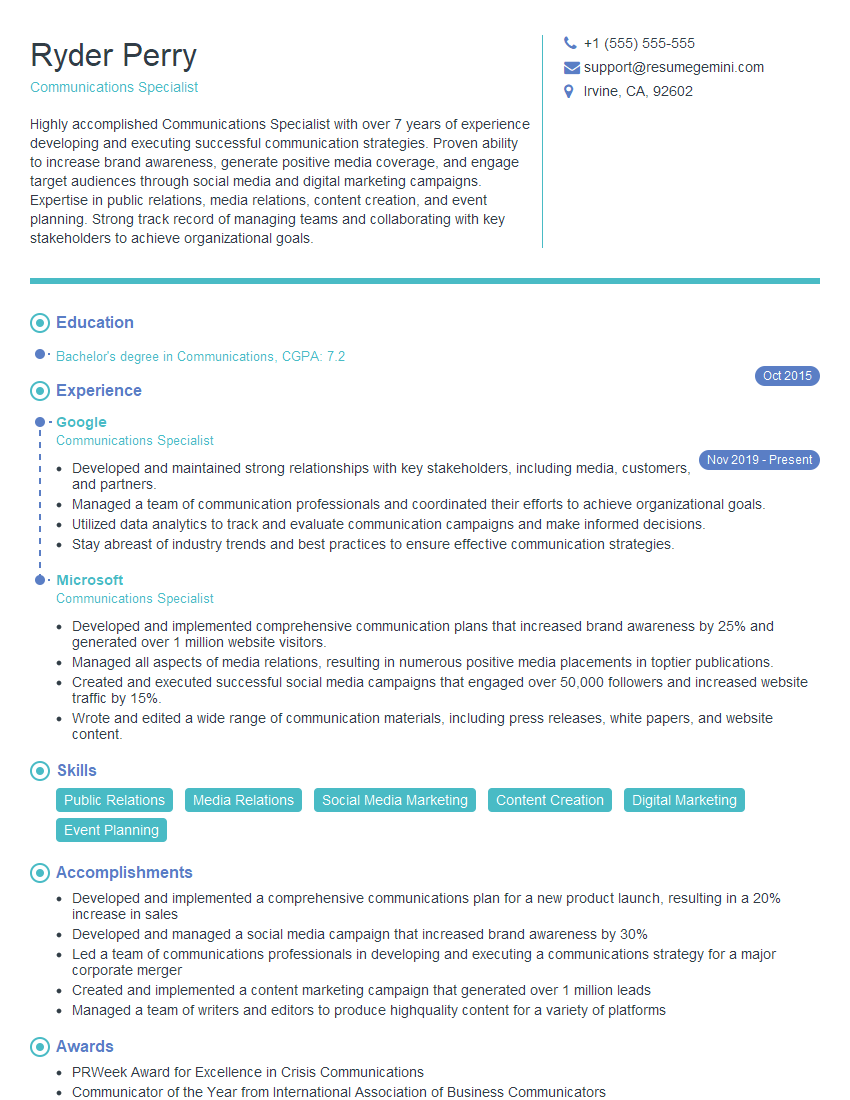
Communications Specialist Resume Sample

Social Media Manager Resume Sample

Web Editor Resume Sample

Content Strategist Resume Sample
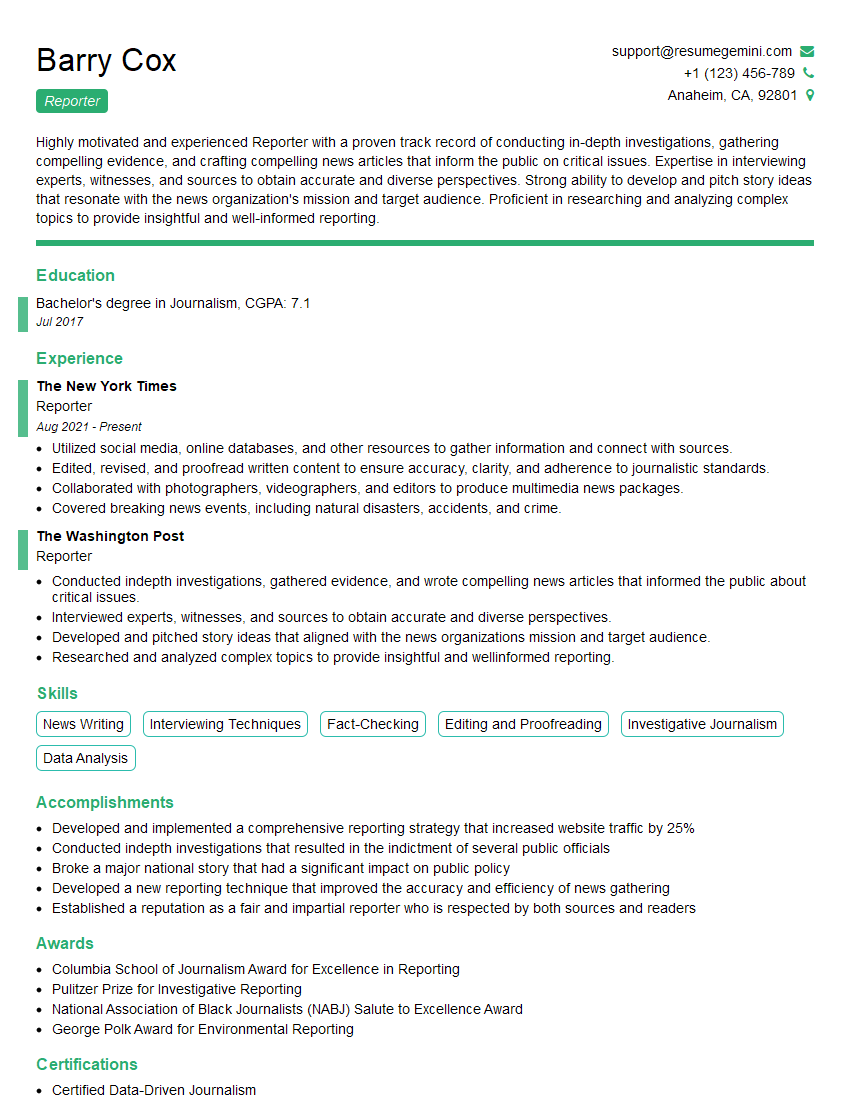
Reporter Resume Sample
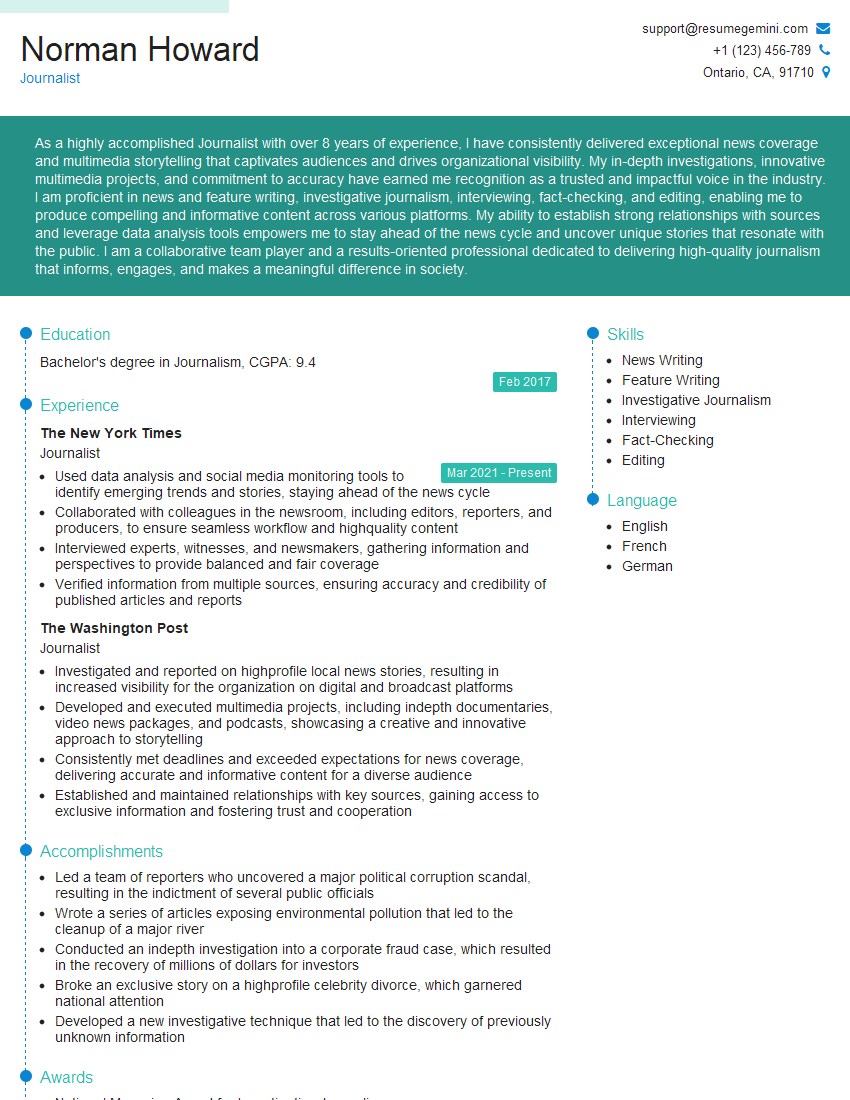
Journalist Resume Sample
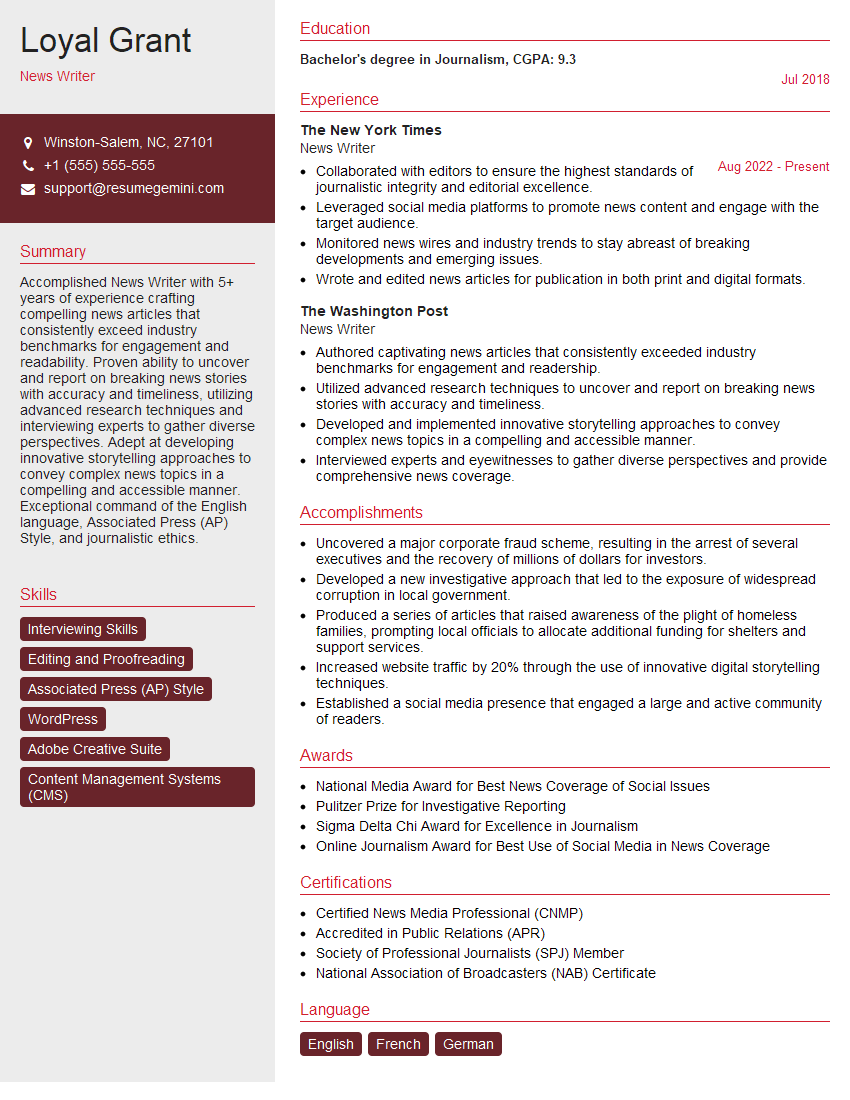
News Writer Resume Sample
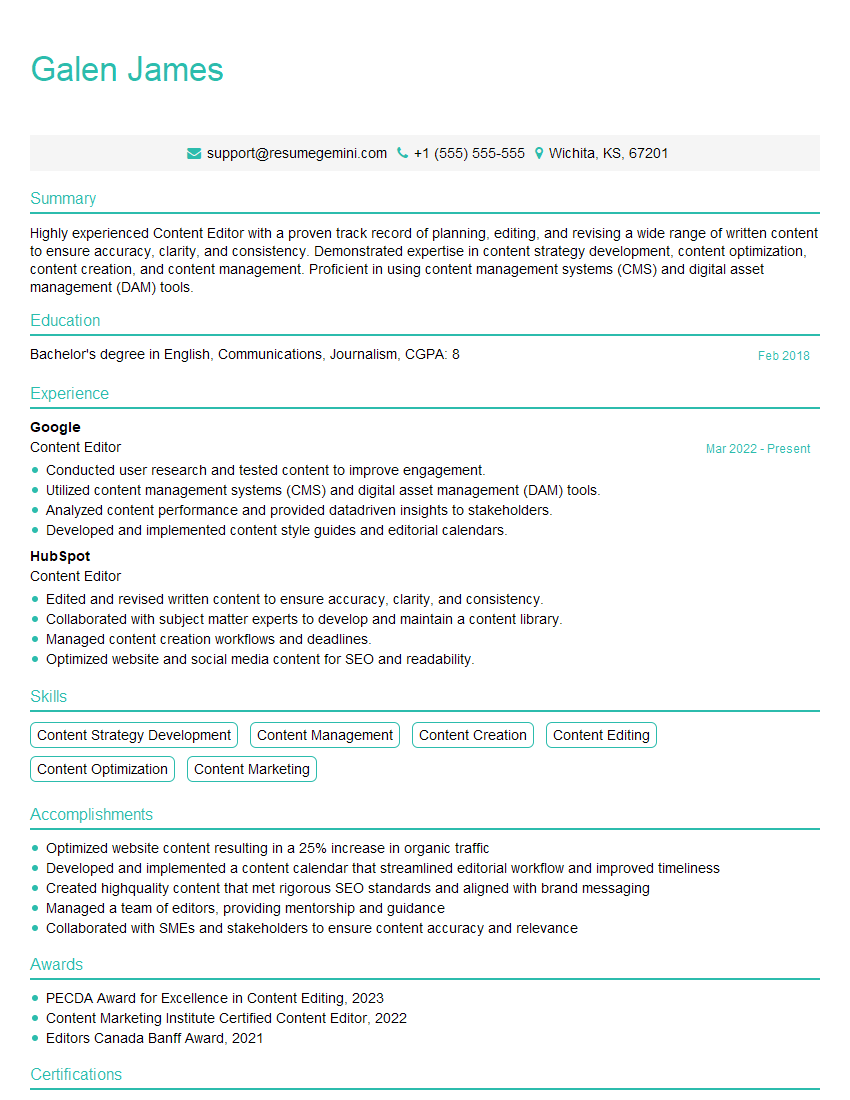
Content Editor Resume Sample
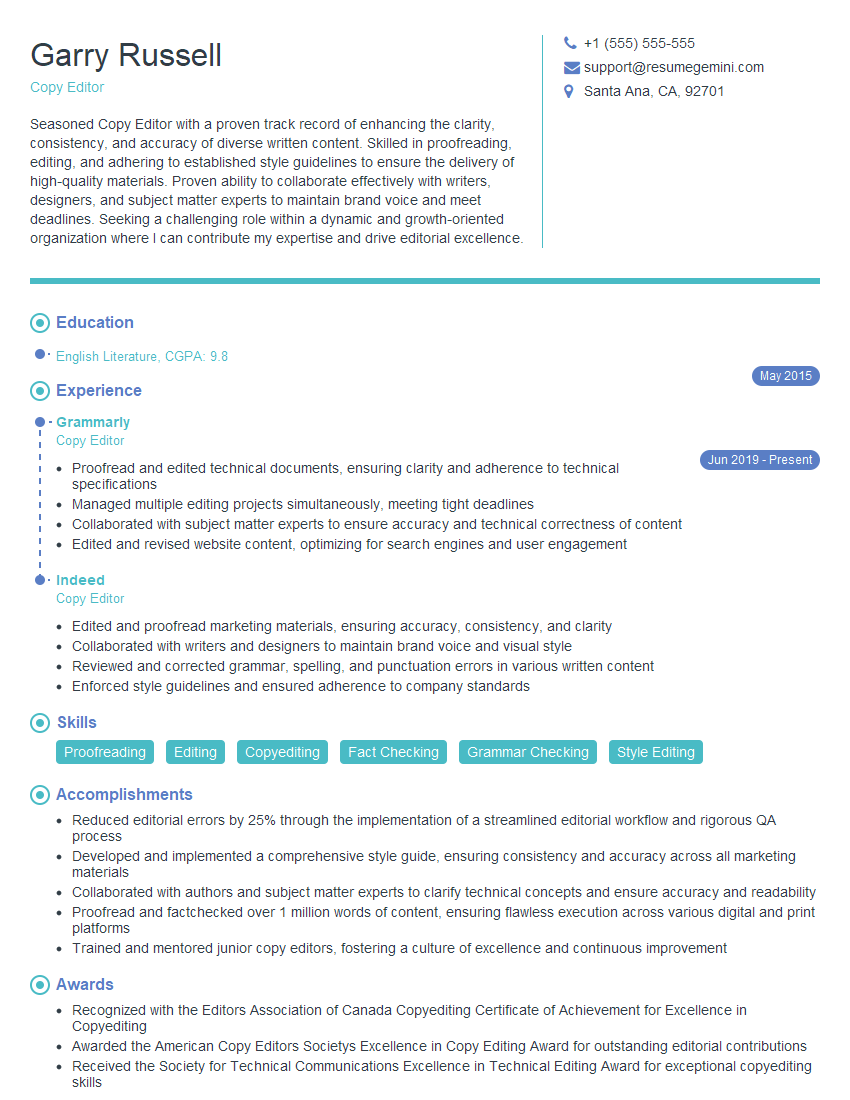
Copy Editor Resume Sample
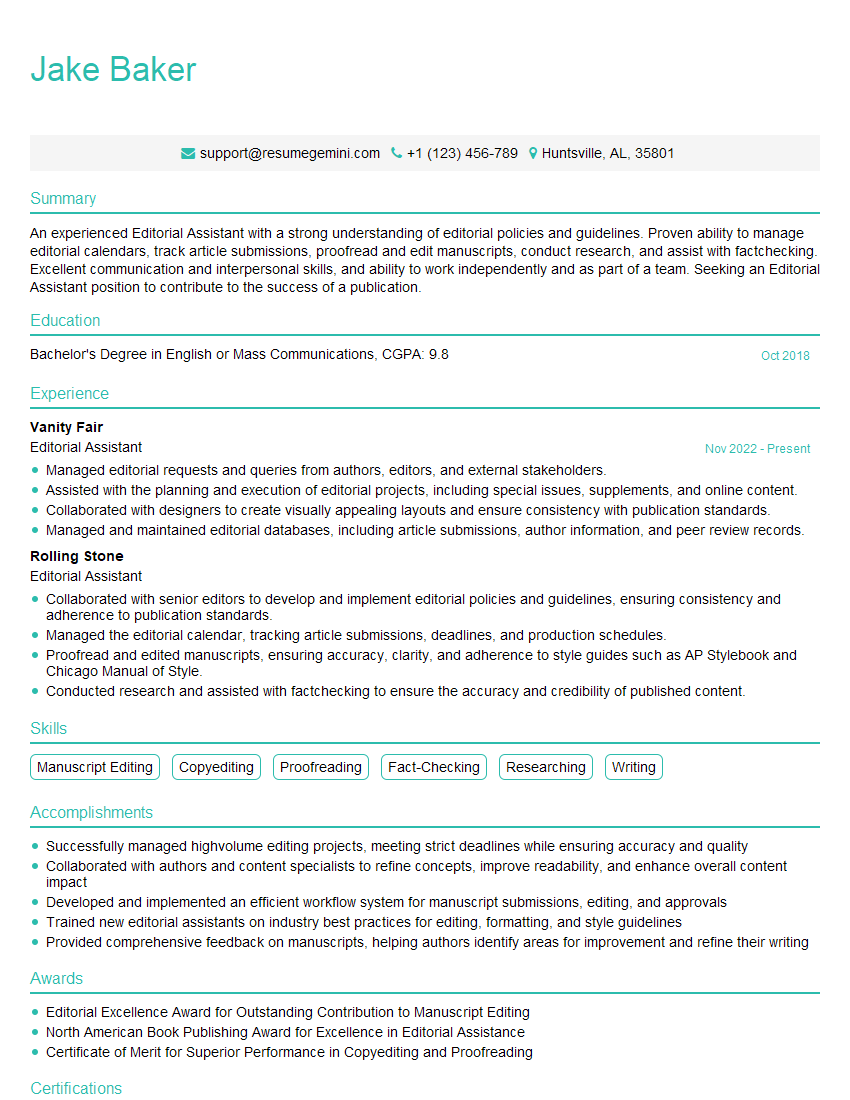
Editorial Assistant Resume Sample
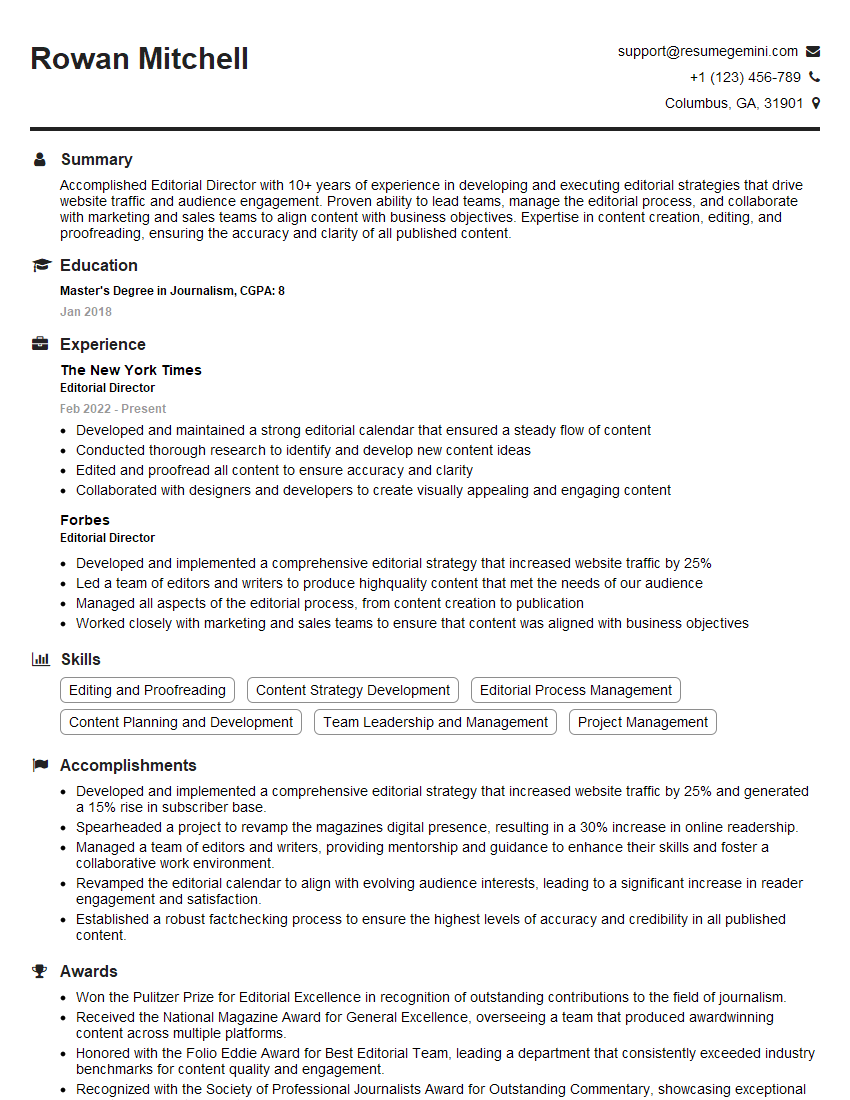
Editorial Director Resume Sample
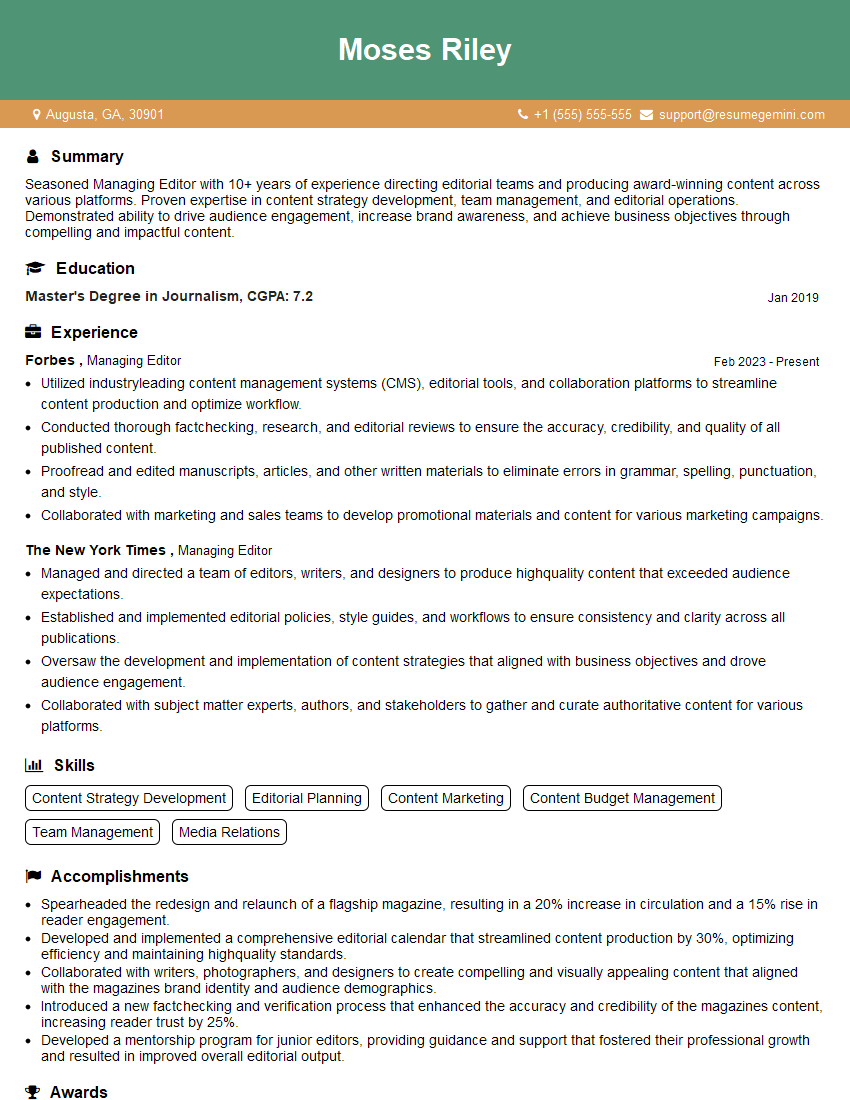
Managing Editor Resume Sample
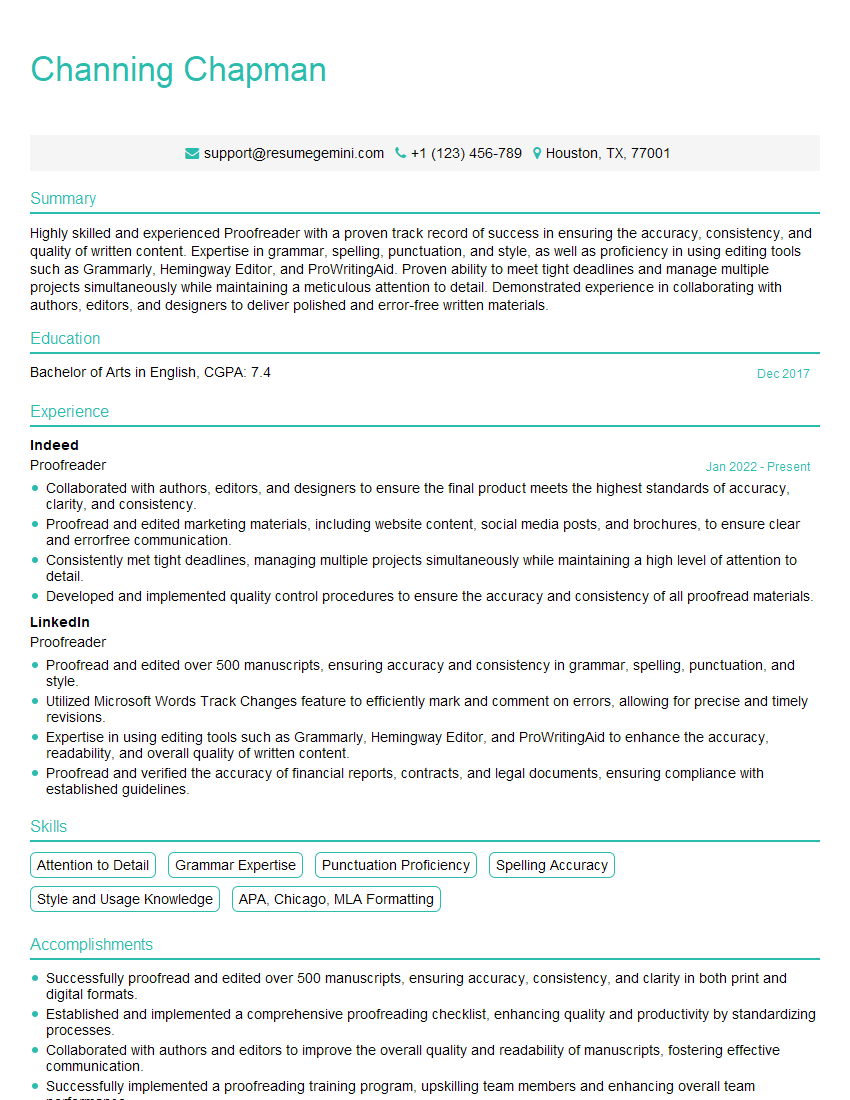
Proofreader Resume Sample
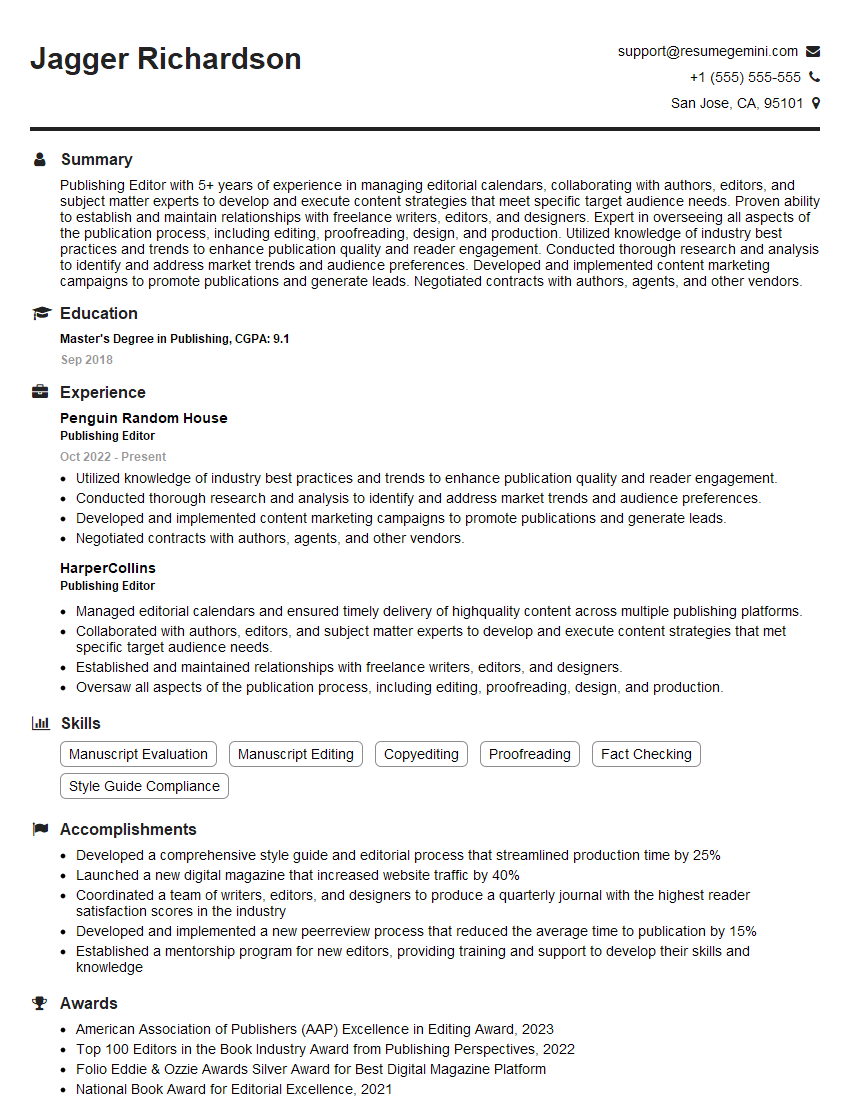
Publishing Editor Resume Sample

Technical Writer Resume Sample
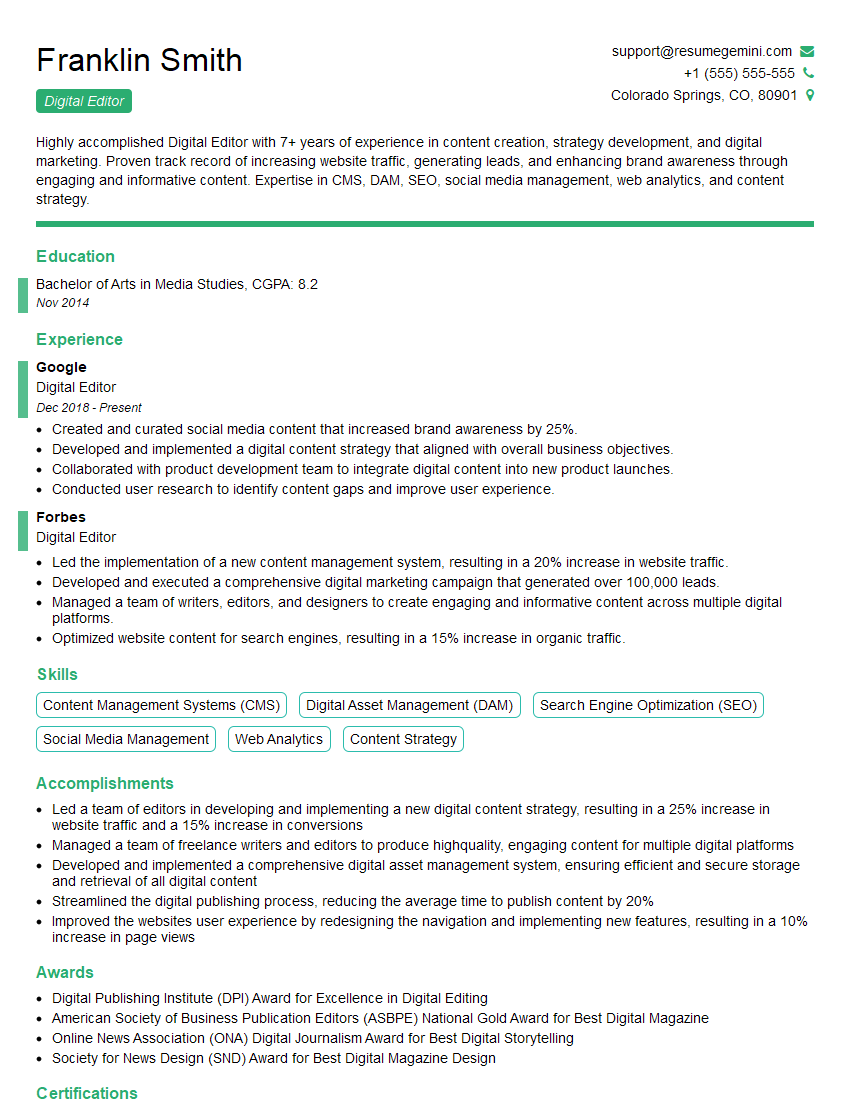
Digital Editor Resume Sample
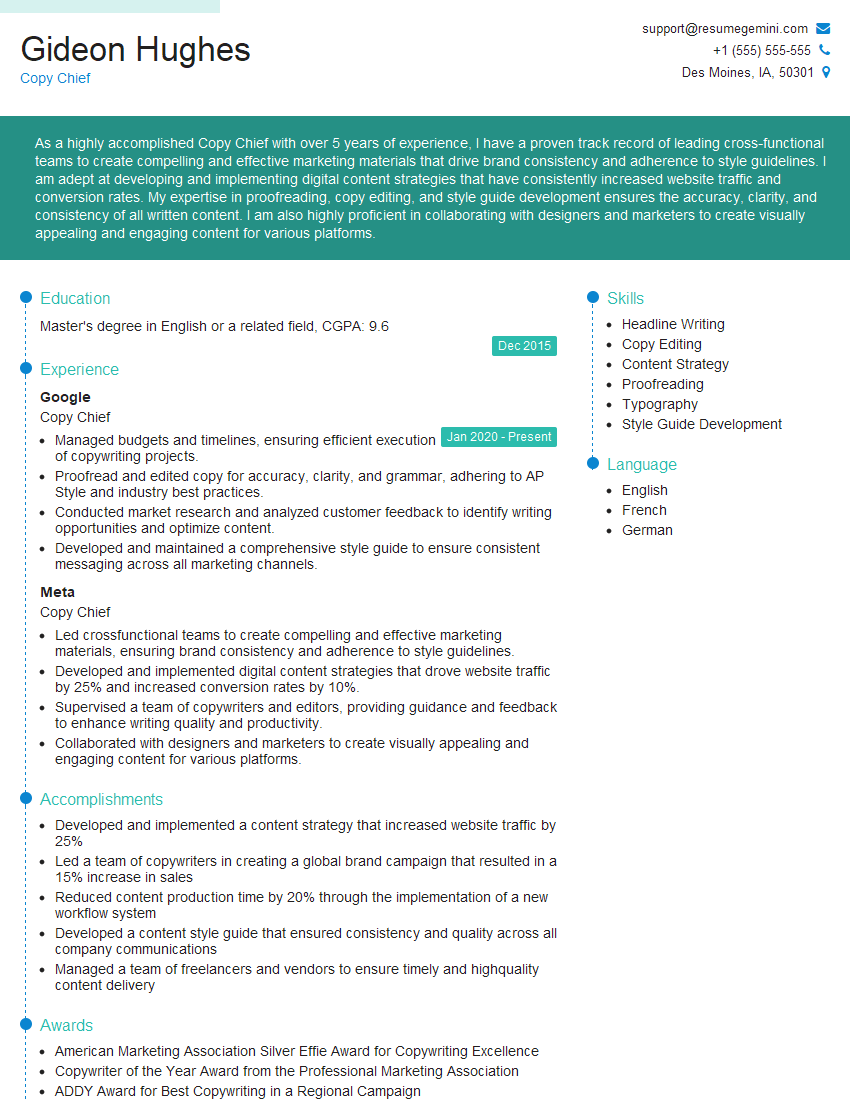
Copy Chief Resume Sample
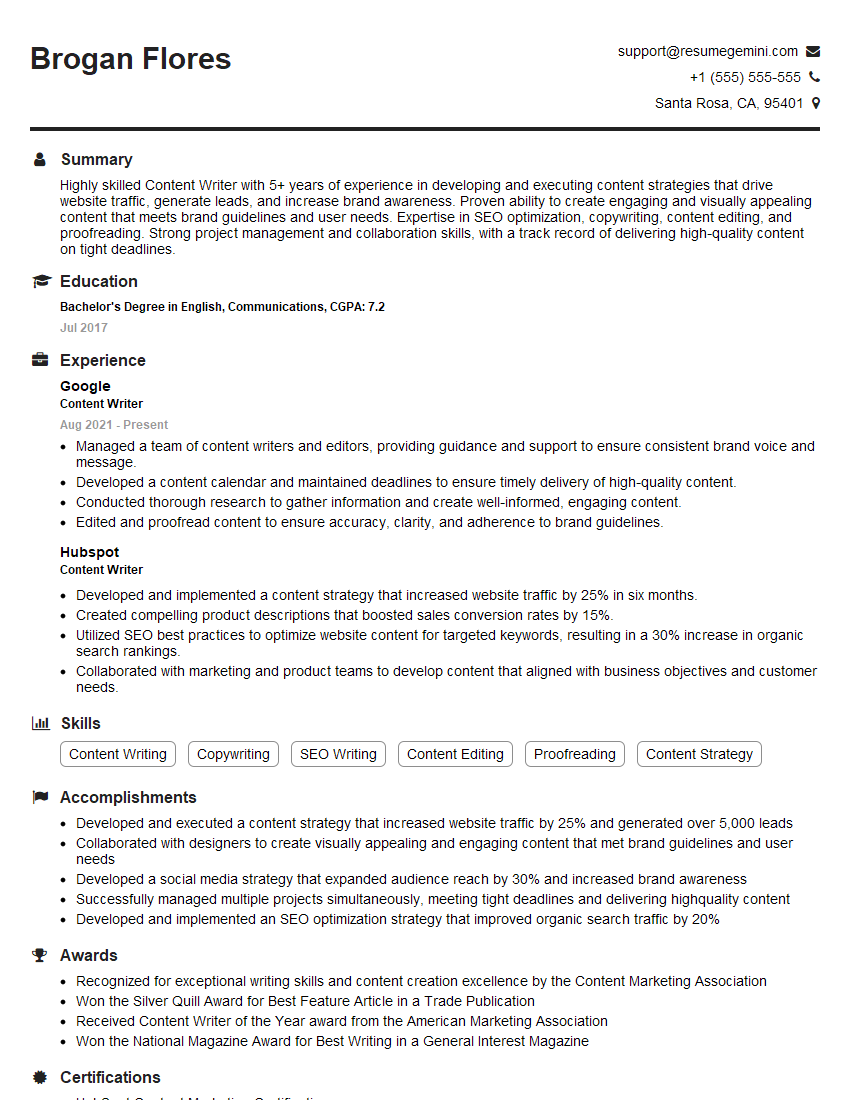
Content Writer Resume Sample
Explore more articles
Users Rating of Our Blogs
Share Your Experience
We value your feedback! Please rate our content and share your thoughts (optional).
What Readers Say About Our Blog
I Redesigned Spongebob Squarepants and his main characters of my artwork.
https://www.deviantart.com/reimaginesponge/art/Redesigned-Spongebob-characters-1223583608
IT gave me an insight and words to use and be able to think of examples
Hi, I’m Jay, we have a few potential clients that are interested in your services, thought you might be a good fit. I’d love to talk about the details, when do you have time to talk?
Best,
Jay
Founder | CEO