Interviews are opportunities to demonstrate your expertise, and this guide is here to help you shine. Explore the essential Drilling Operations Support interview questions that employers frequently ask, paired with strategies for crafting responses that set you apart from the competition.
Questions Asked in Drilling Operations Support Interview
Q 1. Describe your experience with different types of drilling rigs.
My experience encompasses a wide range of drilling rigs, from land-based rigs like top drives and conventional rotary rigs to offshore platforms including jack-up rigs, semi-submersibles, and drillships. Each type presents unique operational challenges and requires specialized expertise. For instance, land rigs are more adaptable to varied terrain but face logistical constraints, whereas offshore rigs offer greater stability and reach for deeper waters but require intricate planning and safety protocols due to the marine environment. I’ve worked extensively with both, understanding the intricacies of their respective mechanical systems, safety procedures, and operational limitations. I’ve specifically handled issues related to rig maintenance, optimization, and troubleshooting on various rig types, contributing to improved efficiency and reduced downtime.
- Top Drive Rigs: Experienced in managing the automated functions of top drives, optimizing drilling parameters for maximum efficiency and minimizing pipe wear.
- Jack-up Rigs: Proficient in understanding the leg positioning and jacking systems critical for stable operations in shallow waters. This includes familiarity with the safety protocols needed to ensure stability during storms.
- Semi-submersible Rigs: Experienced in managing the dynamic positioning systems and associated risks involved in deepwater drilling operations.
Q 2. Explain the process of well planning and its importance in drilling operations.
Well planning is the crucial, upfront process of designing a safe and efficient drilling operation. It’s like creating a detailed roadmap before embarking on a journey. It involves geological studies to identify reservoir characteristics, engineering calculations to determine the appropriate well trajectory and casing design, and risk assessments to mitigate potential hazards. The process typically includes defining the wellbore trajectory, selecting appropriate drilling fluids, planning for casing and cementing operations, and outlining contingency plans for potential challenges. The importance of well planning cannot be overstated; a well-planned operation reduces non-productive time (NPT), minimizes environmental risks, and ensures the safe and cost-effective completion of the well. A poorly planned operation, on the other hand, can lead to significant cost overruns, safety incidents, and environmental damage. For example, inadequate casing design can lead to wellbore instability and potential blowouts, while an improper well trajectory can result in unexpected geological formations or interference with existing wells.
Q 3. How do you manage well control incidents and what safety measures do you implement?
Well control incidents, such as kicks (inflow of formation fluids) or blowouts, require immediate and decisive action. My approach is based on the well-established procedures outlined in the American Petroleum Institute (API) standards. This involves quickly assessing the situation, initiating emergency shut-down procedures, and activating the well control team. Safety measures, including the immediate evacuation of non-essential personnel and the implementation of emergency response plans, are paramount. The primary focus is to regain control of the well, using techniques like weighted mud, shut-in valves, and other well control equipment to stop the flow of formation fluids. Regular well control drills and training are crucial for maintaining proficiency and readiness in such situations. Post-incident investigations are conducted to identify the root cause and implement corrective actions to prevent recurrence. I vividly recall an incident where a minor kick was successfully handled swiftly thanks to the team’s preparedness and adherence to established procedures.
Q 4. What are the key performance indicators (KPIs) you monitor in drilling operations?
Key Performance Indicators (KPIs) in drilling operations are vital for monitoring efficiency and safety. I focus on a range of KPIs, including:
- Drilling Rate: Meters drilled per day (or hour), reflecting drilling efficiency.
- Trip Time: Time taken to run and pull drilling tools, highlighting operational smoothness.
- Non-Productive Time (NPT): Downtime due to equipment failure, operational issues, or delays. Minimizing NPT is crucial for cost optimization.
- Safety Performance: Tracking incident rates, lost-time injuries (LTIs), and near misses, showing the effectiveness of safety protocols.
- Cost per Meter: A crucial indicator of cost-effectiveness across the entire operation.
- Rate of Penetration (ROP): A measure of the speed at which the drill bit penetrates the formation, reflecting bit performance and geological conditions.
Regular monitoring and analysis of these KPIs allow for prompt identification of potential problems and adjustments to improve performance and ensure safety.
Q 5. Describe your experience with mud logging and its role in drilling optimization.
Mud logging is the continuous process of analyzing the drilling mud returning to the surface to gain insights into the formation being drilled. It plays a critical role in drilling optimization by providing real-time information about the geology, pore pressure, and potential hydrocarbon shows. The mud logger monitors cuttings (rock fragments) and the mud itself for indicators of potential reservoirs. This data is crucial for making informed decisions about drilling parameters, casing points, and completion strategies. For instance, identifying a sudden increase in gas content in the mud can indicate a potential hydrocarbon reservoir, prompting modifications to drilling parameters to prevent well control incidents. I have substantial experience interpreting mud logs, integrating the data with other geological and engineering information to improve the overall efficiency and safety of drilling operations. Accurate mud logging greatly reduces risks and improves the accuracy of well planning.
Q 6. Explain the different types of drilling fluids and their applications.
Drilling fluids, commonly called mud, serve multiple crucial functions in drilling operations. They include:
- Water-based muds: The most common type, offering good lubricity and carrying capacity. They are often modified with polymers to enhance viscosity and other properties.
- Oil-based muds: Used in challenging geological formations, providing better stability and preventing wellbore collapse. However, they pose greater environmental concerns.
- Synthetic-based muds: Offer a balance between the performance of oil-based muds and the environmental friendliness of water-based muds. They are more expensive but reduce environmental impact.
The choice of drilling fluid depends heavily on the specific geological conditions, the target depth, and the environmental regulations. For example, in shale formations prone to swelling, an oil-based or synthetic-based mud might be necessary to prevent wellbore instability. Conversely, in environmentally sensitive areas, water-based muds with minimal environmental impact are preferred.
Q 7. How do you manage risks associated with directional drilling?
Directional drilling, while offering significant advantages in accessing multiple reservoirs from a single location, introduces specific risks. These include:
- Wellbore instability: Deviations from the planned trajectory can lead to instability and potential wellbore collapse.
- Lost circulation: Drilling fluid can be lost into porous formations, hindering drilling progress and causing environmental concerns.
- Equipment failure: The specialized tools used in directional drilling are complex and prone to failure if not maintained properly.
- Formation Evaluation challenges: Accurately predicting formation properties along the deviated wellbore can be complex.
Risk mitigation involves careful well planning, utilizing advanced technologies such as measurement while drilling (MWD) and logging while drilling (LWD) for real-time monitoring of the wellbore trajectory and formation properties, and selecting appropriate drilling parameters and fluids. Rigorous pre-job planning, including the use of advanced simulations, is crucial. Regular equipment maintenance and a skilled directional drilling crew are paramount to preventing and handling any issues.
Q 8. What is your experience with Measurement While Drilling (MWD) and Logging While Drilling (LWD)?
Measurement While Drilling (MWD) and Logging While Drilling (LWD) are crucial technologies that provide real-time data during drilling operations. MWD primarily focuses on directional surveying, providing information about the wellbore’s trajectory, inclination, and azimuth. This helps ensure the well is drilled to the planned location. LWD, on the other hand, goes further, providing a range of geological and formation data, including porosity, permeability, and lithology. Think of MWD as giving you directions while driving, while LWD is like having a detailed map of the terrain unfolding as you travel.
In my experience, I’ve extensively used both MWD and LWD systems in various drilling projects, from onshore to offshore environments. For instance, in a recent offshore project, the real-time data from LWD was vital in identifying a potential reservoir zone that wasn’t apparent from pre-drill surveys. This led to significant cost savings by optimizing drilling and completion strategies. I’m proficient in interpreting data from various MWD and LWD tools, including gamma ray, resistivity, and density tools, and in utilizing this data to make informed drilling decisions. I am also experienced in troubleshooting issues with these systems and coordinating with service companies to ensure optimal data acquisition.
Q 9. How do you ensure compliance with HSE regulations in drilling operations?
Ensuring compliance with HSE (Health, Safety, and Environment) regulations is paramount in drilling operations. It’s not just about following rules; it’s about fostering a safety culture. My approach is multi-faceted. First, I meticulously review all relevant regulations before commencement of any operation, ensuring the drilling plan aligns perfectly. This includes thorough risk assessments that identify potential hazards and mitigation strategies. We don’t just identify risks, we actively engage in preventative measures.
Secondly, I emphasize proactive communication and training. Regular toolbox talks, safety briefings, and emergency response drills are crucial. I’ve found that involving the entire team in the safety process fosters ownership and responsibility. We utilize various training programs, from basic safety training to specialized training on specific equipment or procedures. Furthermore, we maintain detailed records of all safety-related activities, inspections, and incidents, and conduct thorough incident investigations to identify root causes and prevent recurrence. This detailed record-keeping is essential for continuous improvement and regulatory compliance. A strong emphasis on reporting near misses, without fear of reprimand, helps identify and address potential hazards before they escalate into accidents. Finally, we conduct regular audits to ensure consistent compliance with all applicable HSE standards.
Q 10. Describe your experience with hydraulic fracturing (fracking) operations.
Hydraulic fracturing, or fracking, is a crucial technique for enhancing hydrocarbon production from unconventional reservoirs. My experience encompasses various aspects of fracking operations, from pre-job planning to post-job analysis. I’ve been involved in designing and executing fracturing programs, selecting appropriate proppants and fluids, and optimizing pumping schedules to maximize stimulated reservoir volume (SRV). It’s not just about pumping fluids; it’s about understanding the rock properties and selecting the right fluids and pressures to create optimal fracture networks.
I’ve worked on both horizontal and vertical well fracking projects, using different techniques such as sliding sleeve completions and multi-stage fracturing. One specific project involved optimizing the proppant concentration to improve fracture conductivity, which resulted in a significant increase in production rates. A key aspect of my experience involves interpreting microseismic data to understand fracture geometry and propagation during the fracturing process, allowing for real-time adjustments to maximize treatment effectiveness. I am also experienced in managing the logistics of fracking operations, including managing equipment, personnel, and materials and ensuring adherence to environmental regulations.
Q 11. How do you optimize drilling parameters to maximize efficiency and minimize costs?
Optimizing drilling parameters is essential for maximizing efficiency and minimizing costs. This involves a multifaceted approach involving careful monitoring and analysis of various data points. It’s like fine-tuning a complex machine – small adjustments can lead to significant improvements. We start with a well-planned drilling program, considering the geological formation, well trajectory, and operational constraints. Key parameters to monitor and adjust include weight on bit (WOB), rotary speed (RPM), and flow rate. These parameters affect the rate of penetration (ROP) – a critical indicator of drilling efficiency.
I use advanced drilling optimization software to analyze data in real-time and make informed decisions about adjusting parameters to achieve the optimal balance between ROP and bit life. For example, increasing WOB can improve ROP, but excessively high WOB can lead to premature bit failure, increasing NPT. Similarly, adjusting RPM can influence the drilling efficiency and the effectiveness of cutting removal. We also incorporate mud properties, including density and viscosity, which directly impact wellbore stability and cutting transport. Through continuous monitoring and adjustments, we strive for consistent high ROP while minimizing equipment wear and tear, leading to significant cost savings. Predictive modeling plays a crucial role allowing us to forecast likely problems and take preventative action.
Q 12. What are the common causes of Non-Productive Time (NPT) in drilling operations, and how do you mitigate them?
Non-Productive Time (NPT) is the bane of any drilling operation, representing lost time and increased costs. Common causes are varied and often interconnected. Equipment failures, such as a stuck pipe or pump issues, are significant contributors. Other factors include the time needed for connections, tripping operations (running and pulling drill string), and unforeseen geological challenges such as unexpected formations or wellbore instability. Operational inefficiencies, such as poor planning or communication breakdowns, also lead to NPT.
Mitigating NPT requires a proactive approach. Regular equipment maintenance and inspections, robust preventative maintenance schedules, and ensuring high-quality equipment are crucial. Effective pre-job planning, including detailed geological assessments and risk assessments, is essential. Clear communication protocols and teamwork among all crew members helps avoid delays. Utilizing data analytics to identify recurring NPT causes helps pinpoint areas for process improvements. In one project, by meticulously analyzing NPT data, we identified a recurring issue with a specific type of drill bit in certain geological formations. Switching to a more suitable bit type significantly reduced NPT associated with bit failures.
Q 13. Explain your understanding of casing design and its impact on well integrity.
Casing design is critical for ensuring well integrity throughout the well’s life cycle. It’s like building a strong foundation for a building. The casing string is a series of steel pipes cemented into the wellbore to provide pressure containment, prevent formation collapse, and isolate different zones. Proper casing design requires considering several factors, including the expected formation pressures, temperature gradients, and the presence of corrosive fluids.
The process begins with a thorough analysis of the geological formation, using data from wireline logs and pressure testing. The casing design must consider the strength of the casing, the cement properties, and the interaction between the casing, cement, and formation. Improper casing design can lead to wellbore instability, casing collapse, or fluid leaks, resulting in environmental damage, operational delays, and significant financial losses. Using specialized software, we design casing strings that meet the specific requirements of the well, considering safety factors and potential scenarios. Furthermore, we implement strict quality control procedures during the casing running and cementing operations to ensure that the casing is properly installed and cemented.
Q 14. Describe your experience with well testing and its interpretation.
Well testing is crucial for evaluating the productivity of a well and characterizing the reservoir. It involves systematically flowing the well to determine its flow capacity, pressure characteristics, and fluid properties. The data obtained is invaluable for optimizing production strategies and estimating reservoir reserves. My experience involves various testing methods, such as production tests, pressure buildup tests, and drillstem tests.
After a well test, the interpretation of the data is equally critical. I use specialized software and established analytical techniques to interpret the test results. This includes analyzing pressure and flow rate data to determine reservoir permeability, skin factor (a measure of near-wellbore damage), and other key reservoir properties. For instance, analyzing a pressure buildup test provides vital information on reservoir drainage radius and pressure gradients. Accurate well test interpretation is crucial for making informed decisions regarding reservoir management, production optimization, and future development plans. Incorrect interpretation can lead to flawed production strategies and suboptimal economic outcomes.
Q 15. How do you manage communication and collaboration within a drilling team?
Effective communication and collaboration are paramount in drilling operations, where teamwork is crucial for safety and efficiency. We employ a multi-pronged approach. Firstly, we utilize daily pre-job meetings, where the entire team, including engineers, supervisors, and rig crew, reviews the day’s plan, identifies potential hazards, and clarifies roles and responsibilities. This ensures everyone is on the same page. Secondly, we leverage clear and concise communication channels. This includes using standardized reporting formats, real-time data dashboards for monitoring key performance indicators (KPIs), and readily available communication tools like radios and dedicated communication platforms for instant updates and issue escalation. Open communication is actively encouraged, fostering a safe environment where individuals can raise concerns without fear of reprisal. Finally, we implement regular feedback sessions and debriefs after significant events or operational shifts, allowing us to learn from both successes and failures and refine our collaborative practices. For example, during a recent well intervention, a potential issue with the wellbore integrity was detected early due to open communication between the mudlogger and drilling engineer, which allowed us to adapt our plans and mitigate risks.
Career Expert Tips:
- Ace those interviews! Prepare effectively by reviewing the Top 50 Most Common Interview Questions on ResumeGemini.
- Navigate your job search with confidence! Explore a wide range of Career Tips on ResumeGemini. Learn about common challenges and recommendations to overcome them.
- Craft the perfect resume! Master the Art of Resume Writing with ResumeGemini’s guide. Showcase your unique qualifications and achievements effectively.
- Don’t miss out on holiday savings! Build your dream resume with ResumeGemini’s ATS optimized templates.
Q 16. Explain your problem-solving approach when facing unexpected challenges during drilling operations.
My problem-solving approach during unexpected drilling challenges is systematic and data-driven. First, I prioritize safety. If a problem poses an immediate safety risk, all operations are immediately halted until the situation is secured. Secondly, I gather information – this involves assessing the situation, reviewing available data (logs, mud reports, etc.), and consulting with experts. Then, I generate possible solutions, weighing their risks and benefits. This often involves brainstorming sessions with the team. Once a solution is chosen, I implement it, carefully monitoring its effectiveness. Finally, I conduct a thorough post-incident analysis. This involves documenting the problem, the chosen solution, its outcome, and lessons learned. For instance, we once encountered an unexpected influx of water into the wellbore. Instead of panicking, we immediately secured the well, consulted geological data, and collaboratively decided on the best course of action, which involved adjusting the mud weight and implementing a bridging technique. After the situation was resolved, our post-incident analysis revealed areas for improvement in our wellbore stability monitoring processes.
Q 17. How do you utilize drilling data to improve operational efficiency?
Drilling data is the cornerstone of operational efficiency improvements. We use data analytics to optimize various aspects of drilling operations. For example, we analyze real-time drilling parameters like rate of penetration (ROP), torque, and weight on bit (WOB) to identify areas for optimization. Anomalously low ROP might indicate the need for a bit change or adjustments to drilling parameters. Similarly, excessive torque could highlight potential problems with the bottomhole assembly. We use this data to fine-tune drilling parameters, predict potential issues, and make data-driven decisions that minimize non-productive time (NPT) and maximize efficiency. Furthermore, we employ advanced analytics, including machine learning algorithms, to predict potential issues like stuck pipe or wellbore instability, which allows for preventative measures and reduces the chances of costly interventions. In a recent project, using real-time data analysis identified a pattern correlating high torque and formation pressure, thus avoiding a potential stuck pipe event and significantly reducing NPT.
Q 18. What software and tools are you familiar with in drilling operations?
My experience encompasses a wide range of software and tools used in drilling operations. I’m proficient in well planning software like Petrel and WellPlan, which aids in designing optimal well trajectories and predicting formation challenges. I’m also experienced with drilling automation and monitoring systems such as those offered by Schlumberger and Baker Hughes, which provide real-time data analysis and control. Furthermore, I’m familiar with data management and analysis tools such as Spotfire and Power BI for creating visualizations and dashboards from the large amounts of drilling data. My skills also extend to specialized software for mud logging and formation evaluation interpretation. For instance, I often use specialized software to interpret wireline logs and plan efficient well testing operations.
Q 19. Describe your experience with different types of drilling bits and their applications.
I have extensive experience with various drilling bits, each suited to different formation types and drilling challenges. For instance, roller cone bits are effective in hard, abrasive formations, while polycrystalline diamond compact (PDC) bits excel in softer, less abrasive formations. The choice of bit depends on several factors, including formation hardness, abrasiveness, and the desired rate of penetration (ROP). We might use tri-cone bits for harder formations and PDC bits for softer, more brittle formations to maximize efficiency and minimize bit wear. Furthermore, specialized bits like those with jet nozzles or extended nozzles are sometimes needed for specific applications, like cleaning the wellbore and removing cuttings effectively. The selection process takes into account the geological data, drilling parameters, and operational objectives, balancing ROP against bit wear and overall cost-effectiveness. For example, during a recent project in a hard shale formation, the use of a specialized roller cone bit with a specific tooth design was critical to achieving the desired ROP while managing bit wear.
Q 20. How do you ensure the quality of drilling operations?
Ensuring the quality of drilling operations is achieved through a comprehensive quality management system (QMS) which includes several key elements. Firstly, meticulous planning is essential; this involves selecting appropriate equipment, personnel, and procedures. Secondly, strict adherence to safety protocols and regulatory compliance is paramount, achieved through regular safety audits and training programs. Thirdly, real-time monitoring and data analysis are utilized to track KPIs and proactively identify potential issues. Regular quality checks throughout the drilling process, including mud logging, drilling fluid analysis, and regular inspections of the drilling equipment, are critical. Finally, continuous improvement through regular debriefs and root cause analysis of incidents or near misses, enabling us to identify and rectify operational weaknesses and enhance our efficiency. We continually review our processes using industry best practices, aiming to eliminate unnecessary downtime and risks to safety and environment. For example, through routine inspections and quality checks of our BOP (Blowout Preventer) system, we prevented a potentially disastrous event.
Q 21. Explain your understanding of formation evaluation.
Formation evaluation is the process of determining the physical and chemical properties of geological formations penetrated by a wellbore. It’s crucial for understanding reservoir characteristics, like porosity, permeability, and hydrocarbon saturation. This information is essential for accurate reservoir modeling, production forecasting, and optimal well completion design. Techniques used include wireline logging (measuring various parameters as tools are pulled out of the hole), mud logging (analyzing drilling mud cuttings), and core analysis (physical examination of rock samples). Interpreting the data from these techniques involves integrating multiple data sets to build a comprehensive picture of the formation’s properties. For instance, a combination of gamma-ray, porosity, and resistivity logs helps assess the presence of hydrocarbons and their producibility. The accuracy of formation evaluation significantly impacts the success of an exploration or production project. Therefore, selecting the right methods and interpreting the acquired data correctly is vital for informed decision-making throughout the entire lifecycle of a well.
Q 22. How do you deal with equipment failures during drilling operations?
Dealing with equipment failures during drilling operations requires a swift, systematic approach prioritizing safety and minimizing downtime. My strategy involves a three-pronged attack: prevention, detection, and remediation.
Prevention: This starts with rigorous preventative maintenance schedules, thorough inspections, and operator training. For example, regularly checking mud pumps for wear and tear prevents catastrophic failures. We also use predictive maintenance techniques like vibration analysis to identify potential problems before they occur.
Detection: Real-time monitoring systems, such as downhole pressure and temperature sensors, are crucial for early detection. Any deviation from the expected parameters triggers an immediate investigation. Imagine a sudden increase in downhole pressure – this could signal a potential kick (influx of formation fluids) and requires immediate action.
Remediation: Having a well-defined emergency response plan is vital. This plan outlines procedures for specific equipment failures, including who to contact, the steps to isolate the failed component, and the process for repair or replacement. For instance, if a top drive malfunctions, the plan dictates shutting down the rig, securing the wellbore, and contacting the appropriate specialist team for repair or a top drive swap. We also maintain a readily available inventory of critical spare parts to minimize downtime.
Effective communication across the drilling team is essential throughout this process. A clear understanding of roles and responsibilities ensures a coordinated response to equipment failures.
Q 23. What are your strategies for cost control in drilling operations?
Cost control in drilling operations is a multifaceted challenge that requires a holistic approach. My strategies focus on optimizing resource allocation, improving operational efficiency, and proactive risk management.
Optimized Resource Allocation: This involves careful planning and scheduling, ensuring that the right equipment and personnel are available when needed. We utilize advanced drilling simulation software to optimize drilling parameters like weight on bit and rotary speed, minimizing non-productive time and reducing the risk of costly complications.
Improved Operational Efficiency: This includes streamlining processes, reducing waste, and improving the utilization of equipment and personnel. Examples include implementing efficient mud management systems to minimize mud usage and waste, optimizing the logistics of supplies delivery, and employing data analytics to identify opportunities for efficiency gains.
Proactive Risk Management: Identifying and mitigating potential risks early on can drastically reduce costs. This might involve using advanced geomechanical models to better understand formation properties and predict potential issues, thus avoiding costly complications like wellbore instability.
Regular cost tracking and analysis are essential. Comparing actual costs against the budget allows for timely adjustments and identification of cost-saving opportunities. Transparent communication about cost performance among the team promotes shared responsibility and accountability.
Q 24. Describe your experience with well completion processes.
My experience encompasses various well completion techniques, including both conventional and unconventional methods. I’ve worked on projects involving different well architectures and completion strategies, adapting to various reservoir conditions.
Conventional Completion: I have extensive experience with the design and execution of cemented casing completions, including setting and cementing various casing strings, running packers, and installing downhole equipment like gravel packs.
Unconventional Completion: I have also been involved in more advanced completion methods such as hydraulic fracturing (fracking) operations, understanding the stages involved, including perforation, stimulation design, and proppant selection. In horizontal wells, for instance, we’d carefully choose the optimal perforation density and proppant type based on geological data to maximize production.
Safety is paramount in well completion. I strictly adhere to all relevant regulations and safety procedures, ensuring a thorough risk assessment is conducted and appropriate safety measures implemented. This includes rigorous quality control checks throughout the process.
Q 25. Explain your experience with cementing operations.
Cementing operations are critical for well integrity and safety. My expertise extends to all aspects of cementing, from pre-job planning and slurry design to post-job evaluation.
Slurry Design: Proper cement slurry design is crucial for achieving a successful cement job. This involves selecting the right cement type, additives, and water content to achieve the desired rheological properties, density, and setting time. The design is often tailored to the specific well conditions, including temperature, pressure, and formation characteristics.
Cement Placement and Monitoring: Ensuring efficient and complete cement placement is key. This involves monitoring the cementing process using various tools, including pressure and temperature sensors, and adjusting the operation as needed to ensure proper placement and zonal isolation. Techniques like centralizers are used to ensure even cement distribution around the casing string.
Post-Job Evaluation: Post-job evaluation is critical to confirm the success of the cement job. This may involve analyzing cement bond logs to assess the quality of the cement bond and identify any potential issues. Identifying and addressing issues early minimizes potential complications during drilling and production.
I am proficient in using various cementing equipment and software, and I am familiar with different cementing techniques, including displacement methods and pressure monitoring systems. I am committed to continuous improvement and strive to stay updated on the latest advancements in cementing technology.
Q 26. How do you ensure the accuracy of drilling reports and data?
Ensuring the accuracy of drilling reports and data is paramount for informed decision-making and efficient operations. My approach involves a multi-layered strategy.
Real-Time Data Acquisition: We utilize advanced drilling data management systems that automatically record and store data from various sensors and instruments. This minimizes manual data entry and reduces the potential for human error.
Data Validation and Verification: A robust quality control process is implemented to validate and verify the data’s accuracy. This might include comparing data from multiple sources, cross-checking readings, and using automated algorithms to identify potential inconsistencies.
Standardized Reporting Procedures: We adhere to strict reporting procedures and standardized formats to ensure consistency and clarity. The reports include detailed information about all aspects of the drilling operation, including the equipment used, personnel involved, and any incidents that occurred.
Regular Audits and Reviews: Regular audits and reviews of the data and reporting processes are conducted to identify any areas for improvement. This ensures that the system remains robust and accurate over time.
Maintaining data integrity and transparency builds trust and strengthens decision-making throughout the organization. Using a well-defined data management system improves traceability and accountability.
Q 27. What is your experience with different types of drilling programs?
My experience spans a wide range of drilling programs, including:
Vertical Drilling: This is the most common type of drilling, used for wells with relatively simple geometry. My experience includes optimizing drilling parameters to minimize time and cost.
Directional Drilling: This involves drilling wells at an angle to reach targets that are not directly beneath the drilling location. I’ve worked on projects requiring precise directional control using measurement-while-drilling (MWD) and logging-while-drilling (LWD) tools. We use sophisticated software to plan and execute these complex wells.
Horizontal Drilling: This technique involves drilling a horizontal section to maximize contact with the reservoir, particularly important in unconventional resources. My experience includes designing and executing horizontal drilling programs, considering aspects like well placement, trajectory design, and hydraulic fracturing optimization.
Extended Reach Drilling (ERD): This involves drilling long, horizontal sections to reach distant targets. This demands careful consideration of wellbore stability and torque and drag management to avoid costly complications.
My understanding of different drilling programs extends to the specific challenges and opportunities each presents, from well planning and execution to well control and completion.
Q 28. Describe your understanding of pressure management in drilling operations.
Pressure management in drilling operations is crucial for wellbore stability and safety. It involves understanding and controlling the pressures within the wellbore to prevent unwanted fluid influx (kicks) or loss of circulation.
Pressure Monitoring: Continuous monitoring of wellbore pressure, using downhole pressure gauges and surface indicators, is essential. Any deviations from the expected pressure profile require immediate attention.
Mud Weight Control: Maintaining the appropriate mud weight (density) is vital for preventing formation fluids from entering the wellbore (kicks) and for providing sufficient pressure to prevent wellbore collapse. This involves careful mud weight calculations and adjustments throughout the drilling process.
Well Control Procedures: Having well-defined well control procedures is essential for handling unexpected pressure changes. This includes detailed emergency response plans and training for personnel on well control techniques. Techniques such as using the blowout preventer (BOP) to seal the wellbore are critical during emergencies.
Formation Pressure Prediction: Accurate prediction of formation pressures is essential for effective pressure management. This involves analyzing geological data and using pressure prediction models to estimate the expected pressure profiles during drilling.
Effective pressure management is a continuous process requiring constant vigilance and a thorough understanding of wellbore dynamics. It is critical for both safety and operational efficiency.
Key Topics to Learn for Drilling Operations Support Interview
- Wellsite Operations: Understanding the day-to-day activities on a drilling rig, including safety procedures, equipment operation, and communication protocols.
- Drilling Fluids Management: Knowledge of mud properties, their function in drilling, and troubleshooting issues related to mud weight, viscosity, and contamination. Practical application includes analyzing mud reports and identifying potential problems.
- Directional Drilling: Familiarity with the principles of directional drilling, including well planning, surveying techniques, and the role of the drilling support team in maintaining well trajectory.
- Data Acquisition and Analysis: Experience with collecting and interpreting data from various drilling sensors and software. This includes understanding the significance of parameters like rate of penetration (ROP), torque, and drag.
- HSE (Health, Safety, and Environment): Demonstrating a strong understanding of safety regulations and procedures specific to drilling operations, including risk assessment and hazard mitigation.
- Logistics and Supply Chain Management: Knowledge of the complexities involved in managing the supply of equipment, materials, and personnel to a remote drilling site. This includes understanding inventory management and procurement processes.
- Problem-Solving and Decision-Making: Ability to analyze situations quickly, identify potential problems, and propose effective solutions in high-pressure environments. This includes demonstrating experience with troubleshooting equipment malfunctions and addressing safety concerns.
- Teamwork and Communication: Highlighting experience working effectively in a team, communicating technical information clearly, and collaborating with diverse groups of professionals.
Next Steps
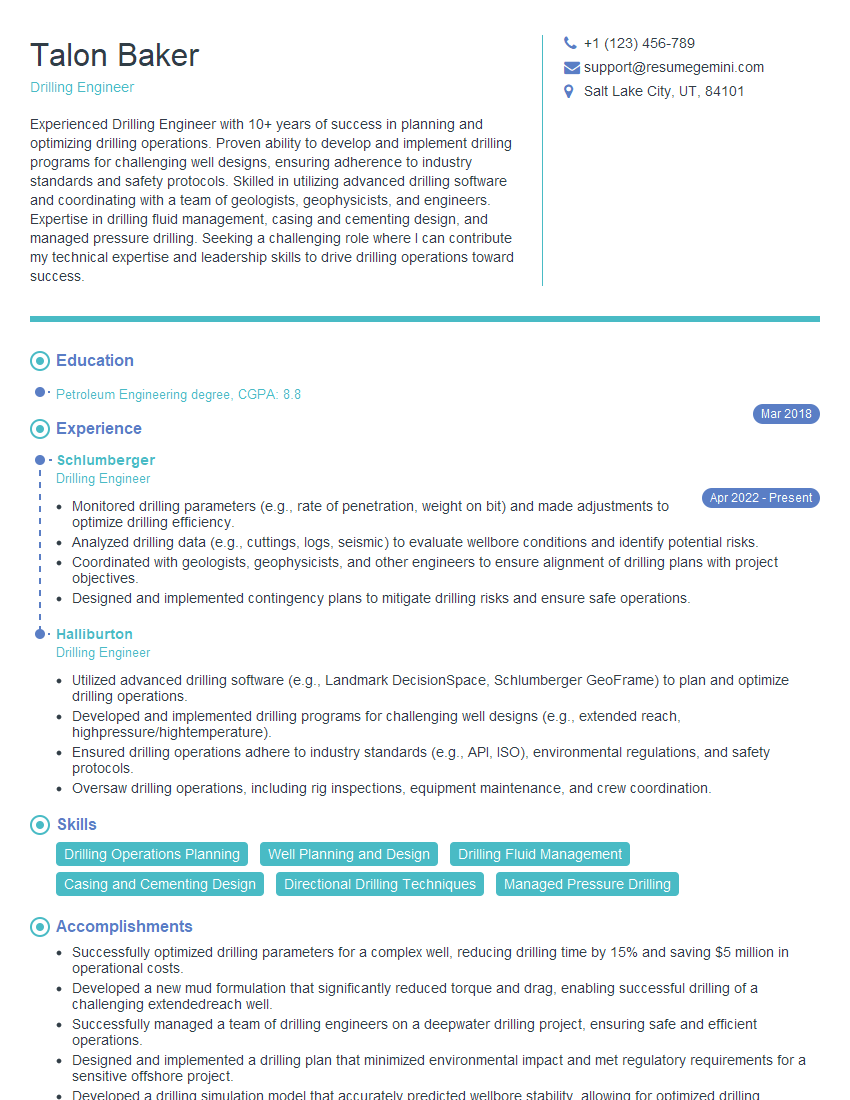
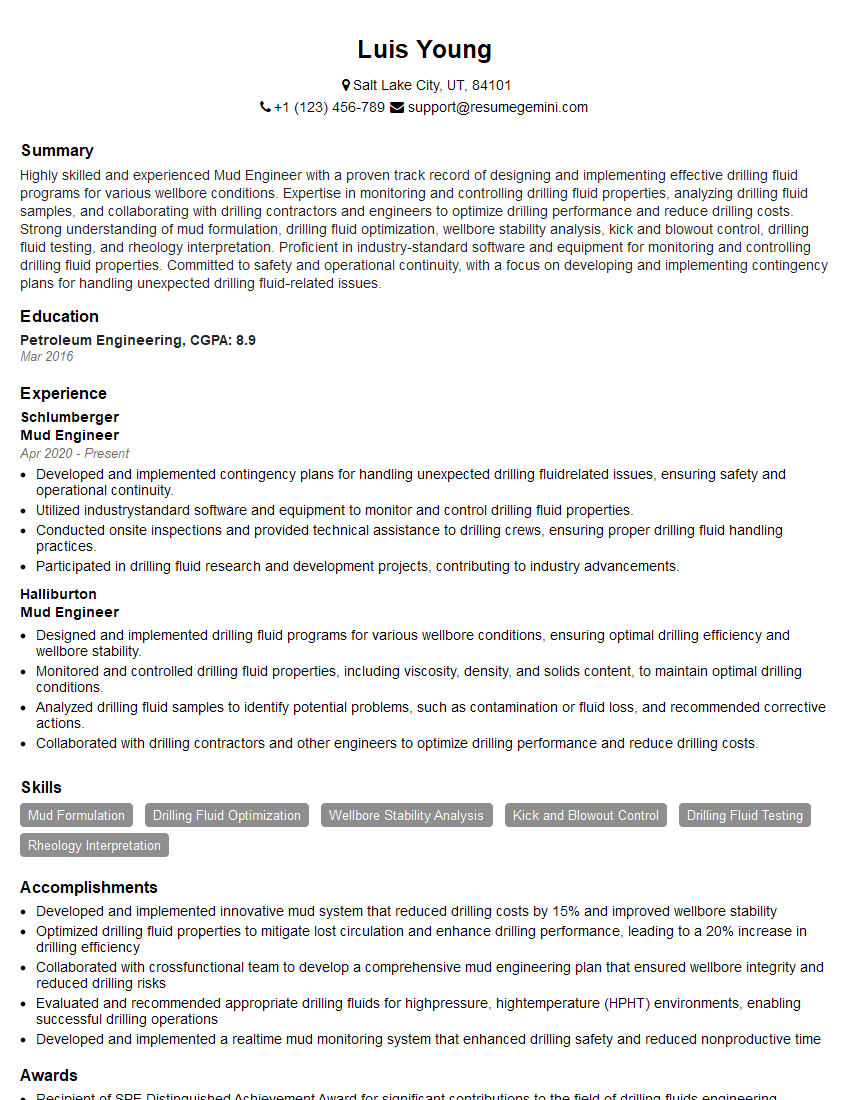
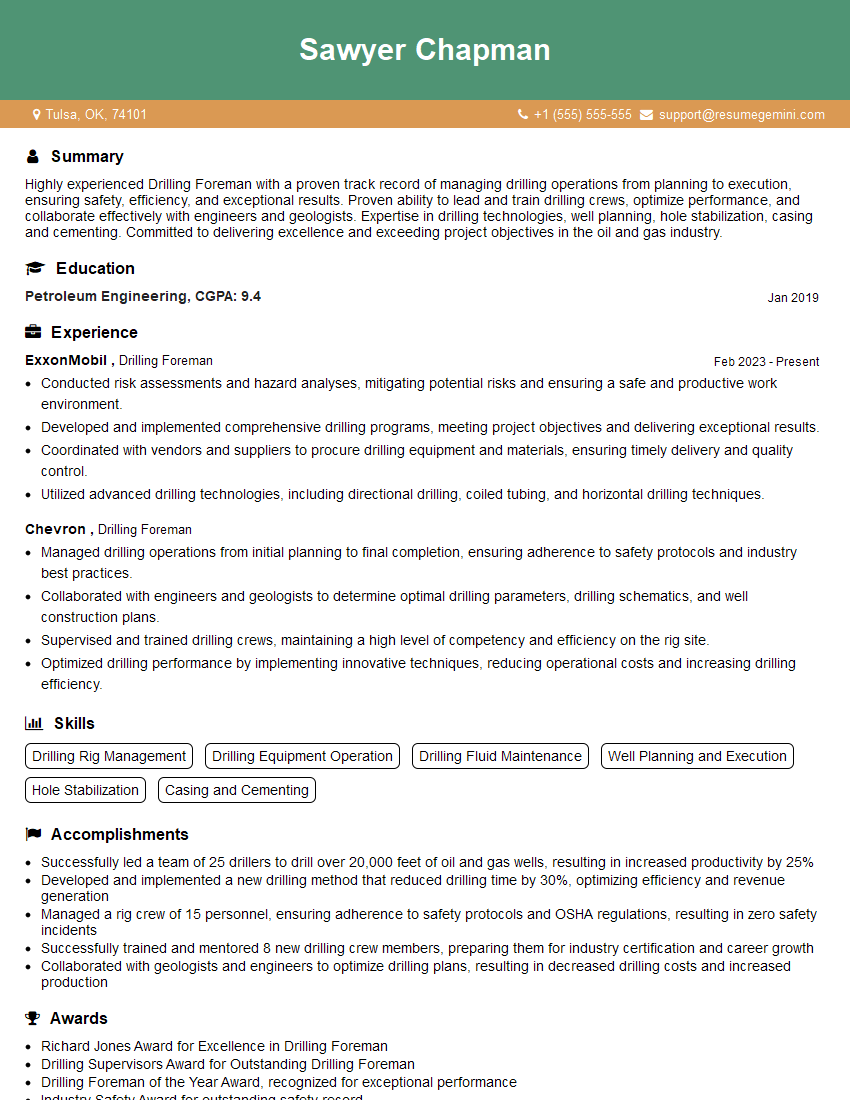
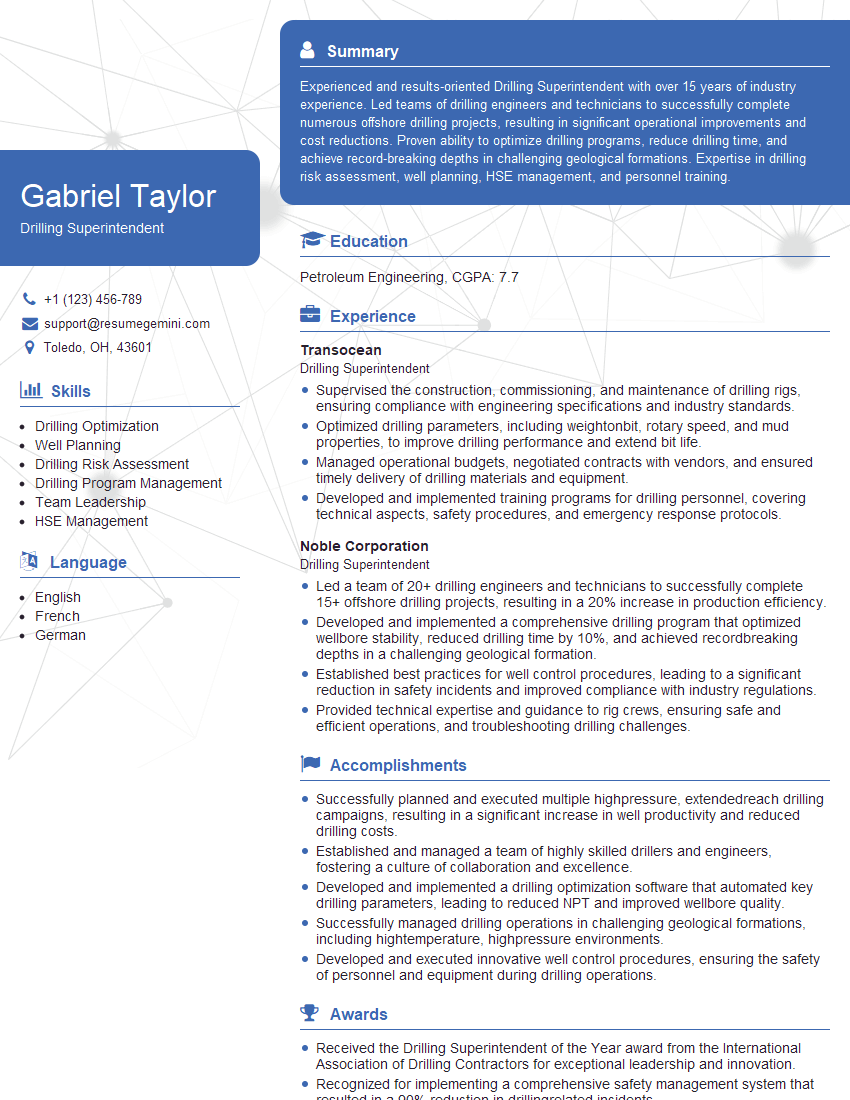
Mastering Drilling Operations Support opens doors to exciting career advancements, from senior support roles to specialized technical positions. A strong resume is crucial for showcasing your skills and experience to potential employers. Creating an ATS-friendly resume significantly increases your chances of getting your application noticed. We highly recommend using ResumeGemini to build a professional and impactful resume that highlights your qualifications effectively. ResumeGemini offers examples of resumes tailored to Drilling Operations Support, guiding you to create a document that truly reflects your expertise and sets you apart from other candidates.



Explore more articles
Users Rating of Our Blogs
Share Your Experience
We value your feedback! Please rate our content and share your thoughts (optional).
What Readers Say About Our Blog
I Redesigned Spongebob Squarepants and his main characters of my artwork.
https://www.deviantart.com/reimaginesponge/art/Redesigned-Spongebob-characters-1223583608
IT gave me an insight and words to use and be able to think of examples
Hi, I’m Jay, we have a few potential clients that are interested in your services, thought you might be a good fit. I’d love to talk about the details, when do you have time to talk?
Best,
Jay
Founder | CEO