The thought of an interview can be nerve-wracking, but the right preparation can make all the difference. Explore this comprehensive guide to Operation and Maintenance of Foundry Equipment interview questions and gain the confidence you need to showcase your abilities and secure the role.
Questions Asked in Operation and Maintenance of Foundry Equipment Interview
Q 1. Describe your experience with preventative maintenance on foundry equipment.
Preventative maintenance (PM) on foundry equipment is crucial for maximizing uptime, minimizing costly repairs, and ensuring worker safety. My approach involves a structured program encompassing scheduled inspections, lubrication, cleaning, and component replacements based on manufacturer recommendations and historical equipment performance data. This isn’t a ‘one-size-fits-all’ approach; I tailor the PM schedule to the specific equipment, considering its operating intensity and the criticality of its function within the overall foundry process.
For example, a high-frequency induction furnace requires more frequent checks of the lining and coil cooling systems than a less intensive molding machine. I meticulously document all PM activities, including date, technician, actions taken, and any observations. This detailed record-keeping helps to identify emerging issues and predict potential failures before they become major problems, enabling proactive maintenance.
- Example: On a specific line of core-making machines, we noticed a pattern of premature wear on a particular bearing. By analyzing the PM logs and working with the supplier, we discovered the cause – a slight misalignment – and implemented a correction resulting in a 30% reduction in bearing failures.
Q 2. Explain the process of troubleshooting a malfunctioning induction furnace.
Troubleshooting a malfunctioning induction furnace involves a systematic approach, prioritizing safety. First, I would ensure the power is isolated and the furnace is completely cool before commencing any diagnostic work. Safety is paramount.
My process typically follows these steps:
- Visual Inspection: Check for any obvious signs of damage, such as leaks, overheating, or loose connections.
- Review Operating Logs: Examine recent furnace logs for any unusual readings or error codes. This might indicate a problem with the power supply, cooling system, or control system.
- Check Power Supply: Verify the voltage, current, and frequency are within acceptable ranges. Inspect the power cables and connections for any defects.
- Inspect Cooling System: Evaluate the cooling water flow rate and temperature. Check for blockages, leaks, or corrosion in the cooling system.
- Examine Crucible/Coil: Inspect the crucible for cracks or damage. Check the inductor coil for any signs of wear or overheating. This may involve specialized non-destructive testing (NDT).
- Verify Control System: Check the control system for proper operation. This could involve checking sensors, relays, and other electronic components. Sometimes, a simple software reset can resolve issues.
- Consult Maintenance Manuals and Experts: If the problem persists, consult the manufacturer’s maintenance manuals and/or specialized technicians. They often possess specialized knowledge and tools for advanced troubleshooting.
Example: In one instance, a furnace showed consistently high energy consumption. Through systematic troubleshooting, we found a leak in the cooling jacket. The leak compromised the cooling efficiency, requiring higher energy input to reach the desired temperature. Repairing the leak resolved the issue and normalized energy consumption.
Q 3. What are the common causes of mold defects in sand casting and how are they addressed?
Mold defects in sand casting can stem from various sources, all impacting the quality and integrity of the final casting. Addressing these defects requires a thorough understanding of the casting process and the potential failure points.
- Mold Material Issues: Poor sand quality (wrong grain size, moisture content, insufficient binder) leads to weak molds prone to cracks, gas porosity, and surface roughness. Solution: Implement rigorous sand testing and control procedures, adjust moisture content and binder levels as needed.
- Molding Process Defects: Improper ramming, venting, or gating can create voids, cold shuts, and misruns. Solution: Careful training and monitoring of molding personnel, improved gating design, proper compaction techniques.
- Pouring Problems: High pouring temperatures, excessive turbulence during pouring, or insufficient metal flow can cause surface defects, inclusions, and shrinkage cavities. Solution: Controlling metal temperature, using appropriate pouring techniques, optimizing sprue and runner design.
- Pattern Design Issues: Improper pattern design can lead to drafts (angle of the pattern wall to facilitate removal from the mold) that are too steep or shallow causing broken cores or difficult mold removal. Solution: Improve pattern design and review the manufacturing process.
Example: We encountered significant surface roughness in our castings. Root cause analysis revealed inconsistent sand moisture content. By implementing a new moisture control system and tightening quality control checks, we significantly reduced the defect rate.
Q 4. How do you ensure the safety of workers during foundry operations and maintenance?
Worker safety is paramount in foundry operations. My approach is proactive and multi-faceted, incorporating engineering controls, administrative controls, and personal protective equipment (PPE).
- Engineering Controls: This focuses on modifying the workplace to minimize hazards. Examples include: enclosing noisy equipment, installing proper ventilation systems to control fumes and dust, implementing robust lockout/tagout procedures for machinery maintenance, and using automated systems where possible.
- Administrative Controls: These involve implementing safe work practices, including training programs on hazard recognition and safe operating procedures, establishing clear lines of communication and reporting mechanisms, implementing regular safety audits, and ensuring compliance with all relevant safety regulations.
- Personal Protective Equipment (PPE): Providing and enforcing the use of appropriate PPE is critical, including heat-resistant clothing, safety glasses, respirators, hearing protection, and safety shoes. Regular inspections and maintenance of PPE are crucial.
Example: To mitigate the risk of molten metal splashes, we implemented a new pouring system with improved shielding and implemented mandatory training on safe pouring techniques. This resulted in a significant reduction in burn injuries.
Q 5. What are your experiences with different types of casting processes (sand casting, die casting, investment casting)?
My experience encompasses various casting processes, each with its own unique challenges and advantages:
- Sand Casting: This is a versatile process well-suited for large, complex castings. I’m experienced in managing sand quality, mold making, pouring, and cleaning. Challenges include controlling surface finish and dimensional accuracy.
- Die Casting: This process delivers high-volume production of intricate, high-precision parts. My experience includes maintaining die-casting machines, managing die life, and ensuring consistent part quality. Challenges include die maintenance and metal selection.
- Investment Casting (Lost-Wax Casting): Ideal for producing highly detailed and complex parts with superior surface finish. My experience includes managing the wax injection process, mold making, and ceramic shell creation. Challenges include process control and cost management.
I understand the nuances of each process and can effectively troubleshoot issues specific to each method, adapting my approach based on the specific materials and part requirements.
Q 6. Describe your experience with different types of foundry equipment (furnaces, molding machines, pouring equipment)?
My experience with foundry equipment is extensive, covering various types:
- Furnaces: I’m proficient in maintaining induction furnaces, resistance furnaces, and crucible furnaces. This includes understanding their operating principles, troubleshooting malfunctions, and performing preventative maintenance.
- Molding Machines: I’m familiar with various molding machines, including automated and manual systems. My experience encompasses maintenance, troubleshooting, and optimization of these systems.
- Pouring Equipment: I have experience with different pouring methods, including hand pouring and automated pouring systems. My expertise includes maintenance, safety procedures, and optimizing pouring techniques.
This broad equipment familiarity enables me to seamlessly integrate my knowledge across different foundry operations, ensuring the smooth and efficient functioning of the entire production process.
Q 7. How do you perform root cause analysis for equipment failures?
Performing root cause analysis (RCA) for equipment failures is critical for preventing recurrences. I employ a structured approach like the ‘5 Whys’ technique or a more formal Fishbone diagram (Ishikawa diagram) to systematically identify the root cause.
The process typically involves:
- Data Gathering: Collect all available data related to the failure, including maintenance logs, operational data, and witness accounts.
- Problem Definition: Clearly define the problem, specifying what failed, when it failed, and the consequences.
- Cause Identification: Using a chosen RCA method (5 Whys, Fishbone diagram, Fault Tree Analysis), systematically drill down to uncover the underlying cause. Each ‘why’ question reveals a new level of causation.
- Verification: Once a root cause is identified, verify its validity through further investigation and analysis. This may involve conducting experiments or simulations.
- Corrective Action: Develop and implement corrective actions to prevent the same issue from recurring. This might involve equipment repairs, process improvements, or operator training.
- Follow-up: Monitor the effectiveness of the implemented corrective actions and make adjustments as needed.
Example: A repeated failure of a specific component in a molding machine prompted a root cause analysis. The ‘5 Whys’ method revealed the root cause was a vibration issue stemming from a worn-out motor mounting. Replacing the mount and balancing the motor solved the issue permanently.
Q 8. What are your skills in reading and interpreting technical drawings and schematics?
Reading and interpreting technical drawings and schematics is fundamental to my role. I’m proficient in understanding various types of drawings, including isometric, orthographic, and exploded views. This involves not just recognizing individual components but also comprehending the relationships between them, understanding assembly procedures, and identifying potential issues. For instance, I can readily interpret a schematic of a core-making machine to troubleshoot a malfunctioning part by identifying its position and connectivity within the overall system. My experience extends to using software like AutoCAD and SolidWorks to review and sometimes even modify these drawings, making me exceptionally well-versed in this crucial aspect of foundry maintenance.
For example, I once identified a potential safety hazard by carefully reviewing the hydraulic system schematic of our molding machine. The drawing revealed a missing pressure relief valve which, had it gone undetected, could have led to a catastrophic system failure. My ability to interpret the schematic allowed for proactive intervention and prevented a costly and potentially dangerous incident.
Q 9. How familiar are you with different types of metals used in foundry operations?
My familiarity with metals used in foundry operations is extensive. I have hands-on experience with ferrous metals like cast iron (grey, ductile, malleable), steel (various grades and compositions), and non-ferrous metals such as aluminum alloys (various series like 3000, 4000, 6000), copper alloys (brass, bronze), and zinc alloys. I understand the metallurgical properties of each, including melting points, fluidity, casting characteristics, and susceptibility to defects. This knowledge is crucial for troubleshooting casting issues, selecting appropriate molding materials, and optimizing the casting process for each metal type. I also have knowledge of the various alloying elements used to achieve desired properties in these metals.
For instance, understanding the difference between grey and ductile iron is essential for determining the appropriate pouring temperature and mold design. Grey iron, with its graphite flakes, is more brittle but easier to cast, whereas ductile iron, with its spheroidal graphite, offers improved strength and ductility but requires careful control of the casting process.
Q 10. Explain your understanding of safety regulations and procedures specific to foundry environments.
Safety is paramount in foundry environments. My understanding of foundry safety regulations and procedures is comprehensive, covering areas like molten metal handling, personal protective equipment (PPE) use, lockout/tagout procedures, machine guarding, and emergency response protocols. I’m familiar with OSHA regulations and industry best practices to mitigate risks associated with high temperatures, hazardous chemicals, and heavy machinery. I’m also trained in incident investigation and reporting, ensuring that lessons are learned from past incidents to prevent future accidents.
For example, I regularly conduct safety inspections of our equipment, ensuring that all safety guards are in place and functioning correctly, and that all personnel are using appropriate PPE. We hold regular safety meetings to reinforce the importance of safe work practices, and I actively participate in the development and implementation of our company’s safety management system.
Q 11. Describe your experience with implementing and managing a preventative maintenance program.
I have extensive experience implementing and managing preventative maintenance (PM) programs. This involves developing detailed PM schedules based on equipment criticality, manufacturer recommendations, and historical data. The process includes identifying all key equipment components, establishing inspection frequencies, and defining required maintenance tasks (lubrication, cleaning, adjustments, inspections). I also oversee the execution of these tasks, track their completion, and manage spare parts inventory to ensure timely repairs. My goal is to prevent catastrophic failures and extend the lifespan of our equipment.
In my previous role, I developed and implemented a computerized maintenance management system (CMMS) which helped us reduce downtime by 15% within a year. The new system allowed for better tracking of PM activities, ensuring that no scheduled task was missed, and also improved our ability to quickly identify and address emerging issues before they escalate into major problems. It facilitated better communication between maintenance staff and other departments, creating a more efficient workflow.
Q 12. How do you prioritize maintenance tasks to minimize downtime?
Prioritizing maintenance tasks is critical for minimizing downtime. I utilize a risk-based approach, considering factors such as the criticality of the equipment, the potential impact of failure, the probability of failure, and the cost of repair. This involves creating a prioritized list of maintenance tasks, focusing on those with the highest risk potential first. I also use techniques like Pareto analysis (80/20 rule) to identify the 20% of tasks that contribute to 80% of downtime, enabling efficient allocation of resources.
For instance, a critical component of our molding line, like the hydraulic pump, would always be prioritized over less critical components. Regular preventative maintenance ensures the reliability of the pump, while deferred maintenance on less critical components would only be undertaken during planned maintenance shutdowns, thus optimizing downtime without compromising productivity.
Q 13. What are your experiences with using CMMS software?
My experience with CMMS software includes both its implementation and daily use. I’m proficient in using various CMMS platforms to schedule and track PM activities, manage work orders, control inventory, and generate reports. I understand the importance of data integrity and the role of CMMS in optimizing maintenance operations, reducing downtime, and improving overall equipment effectiveness (OEE). I’m comfortable with data entry, report generation, and system configuration, making me a highly effective user.
For example, in my previous role, I successfully transitioned our maintenance department from a paper-based system to a CMMS. This involved training the team on the use of the new software, migrating existing data, and customizing the system to fit our specific needs. The result was a significant improvement in our ability to track maintenance activities, manage parts inventory, and generate reports.
Q 14. How do you handle emergency repairs and breakdowns?
Handling emergency repairs and breakdowns requires a systematic approach. My response involves a rapid assessment of the situation to identify the problem’s root cause, prioritizing safety, and implementing immediate corrective actions to restore operations as quickly and safely as possible. This includes coordinating with relevant teams, obtaining necessary parts, and documenting the repair process for future reference and preventative measures. Post-repair analysis is vital for identifying contributing factors and preventing similar breakdowns in the future.
For instance, when a critical furnace experienced a burner malfunction, I immediately initiated emergency protocols, ensuring the safety of personnel and the controlled shutdown of the furnace. I then led a team in diagnosing the problem, which turned out to be a faulty igniter. After replacing the part and successfully restarting the furnace, I documented the incident and recommended preventative maintenance to monitor the condition of other igniters to prevent future failures.
Q 15. Describe your experience with hydraulic and pneumatic systems in foundry equipment.
Hydraulic and pneumatic systems are crucial in foundry operations, powering everything from core making machines to die-casting machines and even automated material handling. My experience spans over 10 years, encompassing preventative maintenance, troubleshooting, and repair of these systems. I’m proficient in identifying leaks, understanding pressure dynamics, and replacing components such as hydraulic pumps, cylinders, valves, and pneumatic actuators. For instance, I once diagnosed a recurring leak in a hydraulic press used for forging, tracing it to a faulty seal in the high-pressure cylinder. Replacing this seal, rather than the entire cylinder, saved the company significant costs and downtime. I also have experience with the safety protocols surrounding high-pressure systems and have a thorough understanding of system schematics and operation manuals.
Specifically, I’m familiar with various types of hydraulic fluids, their properties and selection based on the application and operating environment. For pneumatic systems, I’m experienced in troubleshooting air leaks using methods like listening for hissing sounds, checking pressure drops across components, and using compressed air leak detectors. I also have experience in diagnosing and repairing issues with air filters, regulators, and lubricators to ensure efficient and clean air supply.
Career Expert Tips:
- Ace those interviews! Prepare effectively by reviewing the Top 50 Most Common Interview Questions on ResumeGemini.
- Navigate your job search with confidence! Explore a wide range of Career Tips on ResumeGemini. Learn about common challenges and recommendations to overcome them.
- Craft the perfect resume! Master the Art of Resume Writing with ResumeGemini’s guide. Showcase your unique qualifications and achievements effectively.
- Don’t miss out on holiday savings! Build your dream resume with ResumeGemini’s ATS optimized templates.
Q 16. What are your skills in welding and fabrication?
Welding and fabrication are essential skills for maintaining foundry equipment. My expertise extends to various welding processes, including MIG, TIG, and stick welding, with experience in working with different metals commonly found in foundry settings such as cast iron, steel, and aluminum. I can fabricate custom parts and fixtures when needed, from designing simple brackets to more complex molds and tooling. I can read and interpret blueprints and technical drawings, and can apply this knowledge to fabricate parts that meet exacting specifications.
For example, during a recent repair of a broken conveyor belt support structure, I used MIG welding to repair the fractured section efficiently and safely, ensuring the conveyor was back in operation within a short timeframe. My skills also include the use of cutting tools like plasma cutters and grinders to prepare materials for welding and fabrication. Safety is always my top priority, and I strictly adhere to all safety protocols while performing these tasks.
Q 17. How do you ensure the accuracy and precision of measurements in foundry operations?
Accuracy and precision are paramount in foundry operations. We use a range of measuring instruments, from simple rulers and calipers to more sophisticated tools like laser measuring devices and coordinate measuring machines (CMMs). The choice of tool depends on the specific measurement requirement and the tolerance needed. For instance, when measuring the dimensions of a newly cast part, a CMM ensures high accuracy and provides detailed reports that can identify even minor deviations from the design specifications.
Regular calibration of these measuring instruments is crucial to maintaining their accuracy. We follow a strict calibration schedule using traceable standards. We also employ statistical process control (SPC) techniques to monitor the consistency of measurements and identify any potential drifts or sources of error. By utilizing these methods, we ensure the quality of our castings remains consistently high and within the desired tolerances, ultimately minimizing scrap and rework.
Q 18. Explain your understanding of different types of lubricants and their applications.
Lubricants are vital to the longevity and efficiency of foundry equipment. Different types of lubricants have unique properties making them suitable for specific applications. We use a variety of lubricants, including greases, oils (mineral and synthetic), and specialized high-temperature lubricants. The selection criteria include operating temperature, load, speed, and the type of metal components being lubricated.
For instance, high-temperature greases are used in components exposed to intense heat, like bearings in induction furnaces. Synthetic oils often offer better performance at high temperatures and extended service life. Proper lubrication practices, including regular lubrication schedules and using the correct lubricant type, help prevent premature wear and tear, reduce friction, and minimize equipment downtime. We maintain detailed records of lubrication schedules and lubricant types used for each piece of equipment.
Q 19. Describe your experience working with automated foundry systems.
I have extensive experience with automated foundry systems, including robotic pouring systems, automated core-making lines, and automated casting cleaning and handling systems. My experience includes preventative maintenance, troubleshooting, and repair of these systems, focusing on both mechanical and electrical components.
For example, I’ve worked on troubleshooting PLC (Programmable Logic Controller) issues in a robotic pouring system, utilizing diagnostic software to pinpoint faulty sensors or logic errors. I’m also familiar with the safety protocols surrounding automated systems, including emergency stop mechanisms and light curtains. Understanding the intricate interplay between mechanical, electrical, and software aspects is crucial for effectively maintaining these sophisticated systems. My approach emphasizes a systematic troubleshooting process, using diagnostic tools and schematics to pinpoint the root cause of malfunctions and execute efficient repairs.
Q 20. What are your skills in using diagnostic tools to identify equipment problems?
Diagnostic tools are essential for efficient troubleshooting. My skillset includes the use of various diagnostic instruments such as multimeters, oscilloscopes, infrared thermometers, vibration analyzers, and specialized software for PLCs and other automated systems. For example, using an infrared thermometer, I can quickly identify overheating components in electrical motors or hydraulic systems, often pinpointing the source of a problem before it escalates to a major failure.
Vibration analysis can help diagnose bearing problems or imbalances in rotating machinery, preventing catastrophic failure. For electrical faults, multimeters and oscilloscopes assist in finding short circuits, open circuits, and other electrical issues. The use of these tools, coupled with my understanding of the foundry equipment’s operation, allows me to pinpoint problems quickly and accurately, minimizing downtime and repair costs. I also rely heavily on the equipment’s maintenance manuals and historical data to inform my diagnostic efforts.
Q 21. How do you manage and document maintenance activities?
Effective maintenance management and documentation are critical for maintaining equipment reliability. We utilize a Computerized Maintenance Management System (CMMS) to schedule preventative maintenance tasks, track repairs, and manage spare parts inventory. This system allows us to track maintenance history for each piece of equipment, facilitating trend analysis and predictive maintenance.
All maintenance activities are meticulously documented, including the date, time, technician, work performed, parts used, and any observations. This documentation is essential for regulatory compliance and also helps us to continuously improve our maintenance processes. By analyzing historical data, we can identify recurring issues and implement preventative measures to avoid future problems. This proactive approach reduces downtime, extends equipment lifespan, and enhances overall operational efficiency.
Q 22. What are your experience with different types of refractory materials?
My experience with refractory materials is extensive, encompassing various types used in different foundry processes. I’ve worked extensively with materials like fireclay bricks, high-alumina bricks, zircon bricks, and monolithic refractories. Each material has specific properties making it suitable for certain applications. For example, fireclay bricks are cost-effective and commonly used in less demanding areas of the furnace, while high-alumina bricks provide superior resistance to high temperatures and slag erosion, ideal for the furnace hearth and critical areas. My experience includes not only the selection of the appropriate refractory based on the application (e.g., melting aluminum vs. casting steel) but also understanding their installation, maintenance, and inspection, which includes recognizing signs of wear and tear like spalling, erosion, and cracking, to schedule timely repairs and prevent catastrophic failure. I’ve also been involved in the evaluation of new refractory materials for improved lifespan and performance. One project involved comparing the thermal shock resistance of different zircon-based materials, leading to a 15% increase in the lifespan of our crucible furnace.
Q 23. How familiar are you with environmental regulations related to foundry emissions?
I am very familiar with environmental regulations concerning foundry emissions. This includes a deep understanding of the Clean Air Act and relevant state and local regulations pertaining to particulate matter (PM), sulfur dioxide (SO2), nitrogen oxides (NOx), and hazardous air pollutants (HAPs). My experience includes working with emission monitoring systems, conducting stack testing, and ensuring compliance with permit requirements. I understand the importance of implementing best management practices (BMPs) such as proper ventilation, dust collection systems (e.g., baghouses, electrostatic precipitators), and efficient melting practices to minimize emissions. Furthermore, I’m knowledgeable about reporting procedures and interacting with regulatory agencies. In a previous role, we implemented a new baghouse system that reduced PM emissions by 25%, exceeding regulatory requirements and earning us an environmental award.
Q 24. Explain your understanding of quality control procedures in a foundry setting.
Quality control in a foundry is paramount, ensuring the final product meets specified dimensions, mechanical properties, and surface finish. This starts with raw material inspection – verifying the chemical composition and physical properties of metals, fluxes, and other consumables. Throughout the casting process, rigorous checks are performed including: temperature monitoring during melting, mold inspection for defects, and visual inspection of castings for surface flaws. Dimensional checks are made using tools like calipers and CMMs (Coordinate Measuring Machines). Further, destructive and non-destructive testing methods like tensile testing, impact testing, radiography, and ultrasonic testing are used to ensure the integrity and quality of the final product. Data is meticulously documented and analyzed to identify areas for improvement and prevent defects. My experience includes implementing statistical process control (SPC) techniques to monitor key process parameters and reduce variability, leading to a significant decrease in scrap rate and an improvement in overall product quality.
Q 25. How do you stay up-to-date on the latest technologies and best practices in foundry maintenance?
Staying current with the latest technologies and best practices is crucial in this rapidly evolving field. I actively participate in professional organizations like the AFS (American Foundry Society), attending conferences and workshops. I subscribe to industry publications and journals, and I regularly review technical papers and case studies published in peer-reviewed literature. Online resources, vendor training programs, and networking with colleagues at industry events all play a significant role in my continued learning. I also actively seek out opportunities to evaluate and implement new maintenance technologies such as predictive maintenance software and advanced sensor systems for equipment monitoring. For example, I recently implemented a condition-based maintenance program using vibration analysis on our large-scale molding machines, predicting potential failures and preventing costly downtime.
Q 26. Describe your experience with training and mentoring junior technicians.
I have extensive experience in training and mentoring junior technicians. My approach is hands-on and focuses on both theoretical knowledge and practical skills. I create structured training programs covering safety protocols, equipment operation, maintenance procedures, and troubleshooting techniques. I use a combination of classroom instruction, on-the-job training, and shadowing opportunities to provide a comprehensive learning experience. I emphasize the importance of problem-solving skills, encouraging technicians to analyze issues systematically and develop solutions. Regular feedback and performance reviews ensure they are progressing effectively. I find that mentoring is most effective through a combination of structured learning and building a supportive environment where questions are encouraged and mistakes are seen as learning opportunities. I’ve mentored several technicians who have gone on to take on more senior roles within the company.
Q 27. How do you handle conflicting priorities in maintenance scheduling?
Handling conflicting priorities in maintenance scheduling requires a systematic approach. I use a combination of methods including prioritizing tasks based on criticality (e.g., safety concerns, production impact), urgency, and cost of failure. A computerized maintenance management system (CMMS) is essential for tracking work orders, assigning resources, and scheduling maintenance activities efficiently. I employ techniques such as risk assessment and root cause analysis to identify potential problems and implement proactive maintenance strategies. Communication is key – I work closely with production management to balance maintenance needs with production schedules. Prioritization is often a negotiation process involving understanding the consequences of delaying a particular task versus others. I often use a weighted scoring system that allows for a clear and unbiased prioritization of conflicting maintenance demands.
Q 28. What are your salary expectations?
My salary expectations are commensurate with my experience and skills, and the specifics would depend on the complete compensation package, including benefits and opportunities for professional development. I am open to discussing this further based on the details of the position and the company’s compensation structure. I am more interested in a role that provides opportunities for growth and utilizes my extensive experience to its fullest potential.
Key Topics to Learn for Operation and Maintenance of Foundry Equipment Interview
- Foundry Processes: Understanding the entire casting process, from pattern making to finishing, including different casting methods (sand casting, die casting, investment casting, etc.). This includes theoretical knowledge of metallurgy and material science relevant to foundry operations.
- Equipment Operation: Practical experience operating and troubleshooting various foundry equipment such as furnaces (induction, electric arc, etc.), melting units, molding machines, core making machines, cleaning and finishing equipment. Be prepared to discuss specific equipment you’ve worked with and your troubleshooting methodology.
- Preventive Maintenance (PM): Knowledge of scheduled maintenance procedures, lubrication techniques, and inspection methods for various foundry equipment. Discuss your experience with creating and following PM schedules and documenting maintenance activities.
- Troubleshooting and Repair: Demonstrate your ability to diagnose and resolve equipment malfunctions. Be prepared to discuss examples of complex problems you’ve solved, highlighting your problem-solving approach and technical skills.
- Safety Procedures and Regulations: Thorough understanding of foundry safety regulations, including OSHA compliance, personal protective equipment (PPE) usage, and hazard identification and control. Showcasing your commitment to a safe work environment is crucial.
- Quality Control: Familiarity with quality control procedures and metrics in a foundry setting. Be ready to discuss your experience with inspecting castings for defects and ensuring adherence to quality standards.
- Data Analysis and Reporting: Understanding how to collect, analyze, and interpret data related to equipment performance, maintenance costs, and production efficiency. Highlight your experience with data-driven decision-making in maintenance planning.
- Automation and Control Systems (if applicable): Knowledge of Programmable Logic Controllers (PLCs), SCADA systems, or other automated control systems used in modern foundries. This is particularly relevant if your experience includes working with automated equipment.
Next Steps
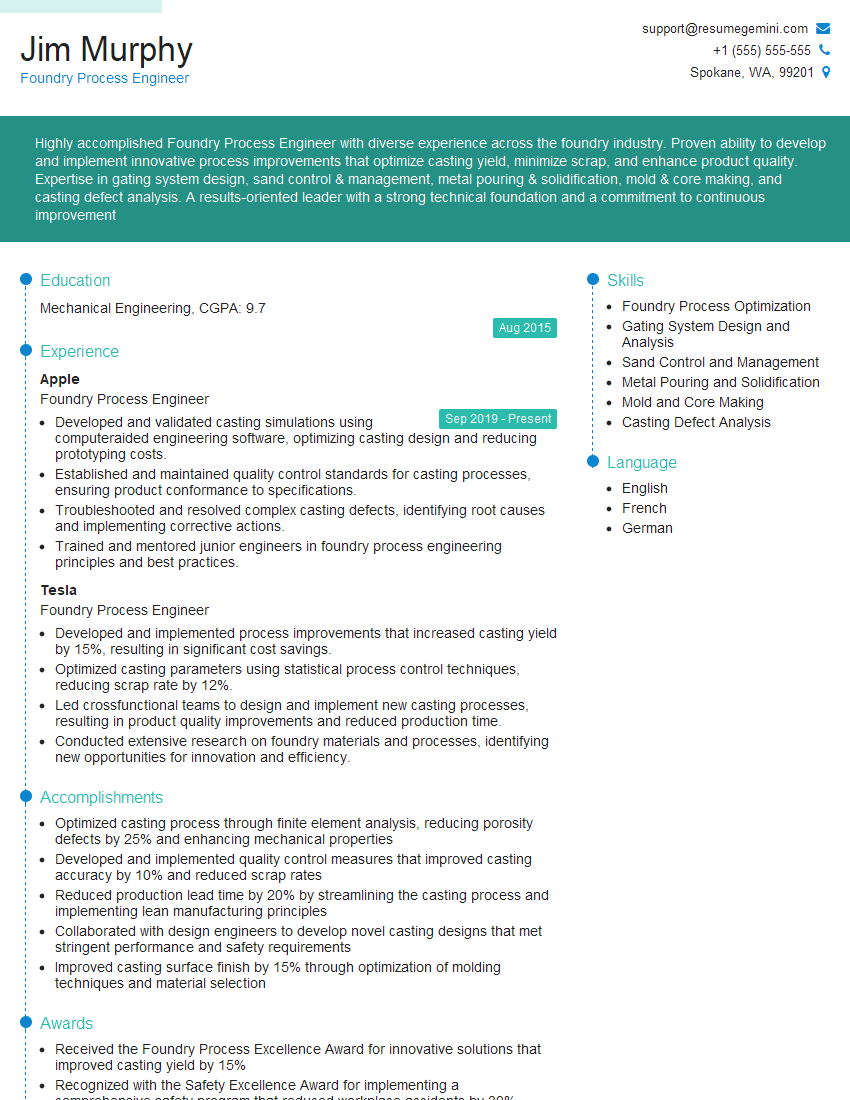
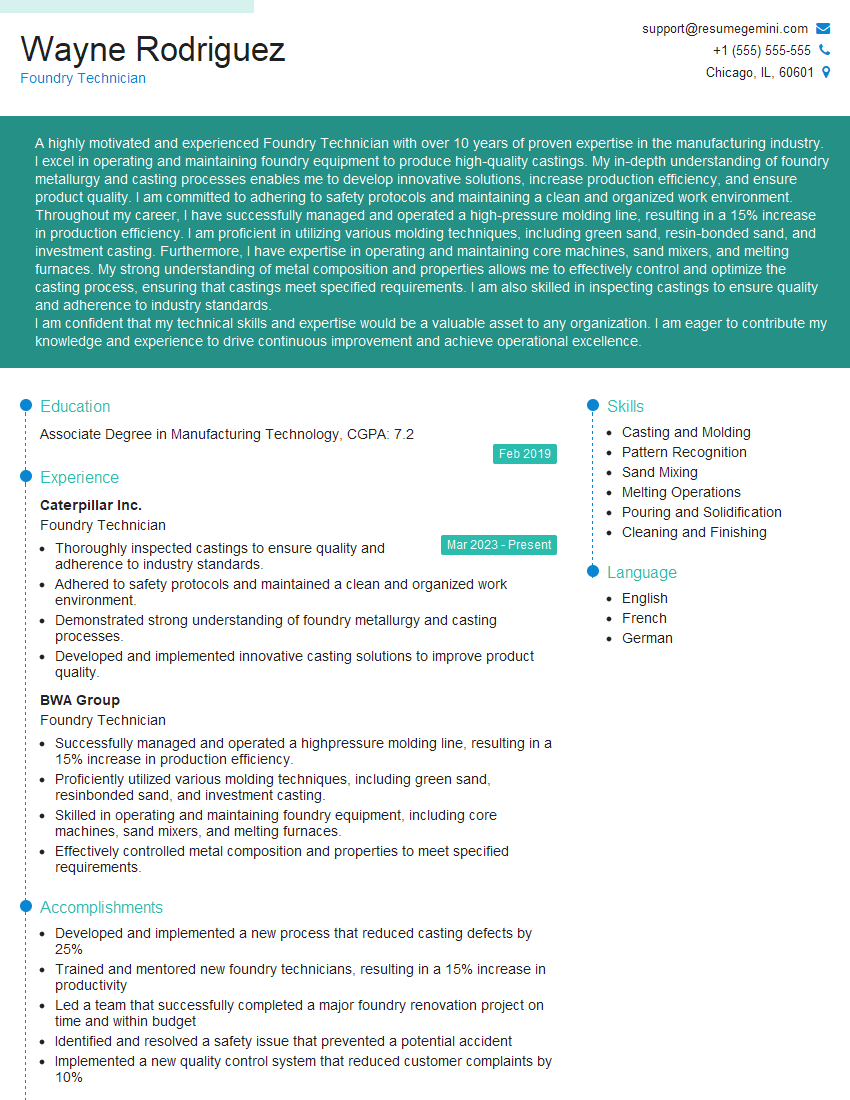
Mastering the operation and maintenance of foundry equipment is crucial for a successful and rewarding career in this field. It opens doors to advanced roles, increased responsibility, and higher earning potential. To maximize your job prospects, it’s vital to create a professional and ATS-friendly resume that showcases your skills and experience effectively. ResumeGemini is a trusted resource that can help you build a compelling resume that highlights your expertise in Operation and Maintenance of Foundry Equipment. We provide examples of resumes tailored to this specific field to help you craft the perfect application. Invest time in building a strong resume – it’s your first impression on potential employers.
Explore more articles
Users Rating of Our Blogs
Share Your Experience
We value your feedback! Please rate our content and share your thoughts (optional).
What Readers Say About Our Blog
I Redesigned Spongebob Squarepants and his main characters of my artwork.
https://www.deviantart.com/reimaginesponge/art/Redesigned-Spongebob-characters-1223583608
IT gave me an insight and words to use and be able to think of examples
Hi, I’m Jay, we have a few potential clients that are interested in your services, thought you might be a good fit. I’d love to talk about the details, when do you have time to talk?
Best,
Jay
Founder | CEO