The thought of an interview can be nerve-wracking, but the right preparation can make all the difference. Explore this comprehensive guide to Welding Certification interview questions and gain the confidence you need to showcase your abilities and secure the role.
Questions Asked in Welding Certification Interview
Q 1. Explain the different types of welding processes you are certified in.
My welding certifications cover a range of processes, reflecting the diverse needs of modern fabrication. I’m proficient in Shielded Metal Arc Welding (SMAW), commonly known as stick welding, a versatile process ideal for various materials and environments. I’m also certified in Gas Metal Arc Welding (GMAW), or MIG welding, known for its speed and efficiency, particularly useful in high-volume production. My expertise extends to Gas Tungsten Arc Welding (GTAW), or TIG welding, which offers superior control and precision for applications requiring high-quality welds, often on thinner materials. Finally, I’m certified in Flux-Cored Arc Welding (FCAW), a process suitable for outdoor work and situations where shielding gas isn’t readily available.
Each process has its strengths and weaknesses. For instance, SMAW is robust but can be slower than GMAW. GTAW provides excellent control but requires more skill and time. Understanding these nuances allows me to select the most appropriate process for any given project, ensuring both efficiency and quality.
Q 2. Describe your experience with different welding codes and standards (e.g., AWS D1.1).
My experience with welding codes and standards is extensive, focusing primarily on the American Welding Society (AWS) D1.1, the structural welding code. I’m familiar with its requirements for weld preparation, procedures, and inspections, ensuring compliance in projects involving structural steel. I understand the importance of adhering to specific weld symbols, which dictate aspects like weld type, size, and location. For example, a specific symbol might indicate a fillet weld of a particular size, leg length and location on the joint. I’ve also worked with other codes like ASME Section IX for pressure vessels and API standards for pipeline construction, adapting my techniques and documentation to meet the unique requirements of each project.
Understanding and applying these codes is paramount. A simple oversight, like failing to properly document a welding procedure, can have serious consequences in terms of safety and structural integrity. My experience allows me to navigate these complexities and ensure adherence to all relevant codes and standards.
Q 3. How do you ensure weld quality and consistency?
Ensuring weld quality and consistency is a multifaceted process that starts before the welding torch even turns on. It involves meticulous attention to detail at every stage: from proper material selection and preparation to adherence to pre-determined welding parameters and rigorous post-weld inspection. I consistently monitor factors such as current, voltage, travel speed, and shielding gas flow, adjusting them as needed to maintain a stable arc and consistent weld bead profile.
Furthermore, I employ visual inspection techniques to identify any visible flaws immediately. Regular calibration and maintenance of my welding equipment are non-negotiable. By meticulously following established procedures and employing regular quality control checks, I consistently achieve high-quality welds that meet or exceed industry standards.
Q 4. What are the common defects found in welds, and how do you identify and correct them?
Common weld defects include porosity (small holes caused by gas entrapment), undercutting (a groove melted into the base material adjacent to the weld), cracking (fractures in the weld metal), incomplete fusion (lack of bonding between the weld and base material), and slag inclusions (embedded pieces of slag). Identifying these defects requires careful visual inspection often supplemented by non-destructive testing (NDT) methods like radiography or ultrasonic testing.
Correction methods vary depending on the defect and its severity. Minor porosity might be acceptable depending on the application and code requirements. However, severe cracking or incomplete fusion necessitate rework, often involving grinding out the defective area and re-welding. My experience allows me to accurately identify, assess and correct these flaws, ensuring the final product meets quality standards.
Q 5. Explain the importance of pre-weld inspection.
Pre-weld inspection is critical for preventing costly rework and ensuring a high-quality weld. It involves a thorough examination of the base materials and joint preparation to identify any potential problems before welding begins. This includes checking for cleanliness, proper fit-up, surface defects, and compliance with the specified welding procedure.
For example, if the base material contains excessive surface contamination, cleaning it thoroughly before welding is paramount. Ignoring this could lead to porosity or other weld defects. Similarly, if the joint fit-up is poor, it can result in incomplete fusion. By identifying and addressing these issues proactively, pre-weld inspection prevents costly errors and contributes significantly to overall project success.
Q 6. What safety precautions do you follow during welding?
Safety is my top priority. I always follow established safety procedures, including wearing appropriate Personal Protective Equipment (PPE) such as a welding helmet with appropriate shade, gloves, protective clothing, and safety footwear. I ensure adequate ventilation to prevent exposure to harmful fumes. I carefully manage the risks associated with working with electricity, hot materials, and intense UV radiation.
Furthermore, I maintain a clean and organized workspace to minimize trip hazards, and I always follow fire safety procedures. Before beginning any welding project, I assess the potential hazards and take necessary precautions to prevent accidents. Safety isn’t just a checklist; it’s an ingrained part of my welding practice.
Q 7. Describe your experience with different types of welding equipment.
My experience encompasses a variety of welding equipment, from traditional stick welders to modern, digitally controlled MIG and TIG machines. I’m comfortable using different power sources, including constant current and constant voltage machines, understanding the impact of each on the welding process. I’m familiar with various torch types and sizes, selecting the appropriate one based on the material thickness and welding process.
Beyond the core equipment, I’m experienced with auxiliary equipment such as wire feeders, gas regulators, and specialized clamping devices. I’m also proficient in using various non-destructive testing equipment, such as ultrasonic flaw detectors, to verify weld quality after completion. My hands-on experience with this diverse range of equipment allows me to adapt readily to different project needs and environments.
Q 8. How do you interpret welding symbols?
Welding symbols are a standardized graphical language used on engineering drawings to communicate all the necessary information about a weld to the welder. Think of them as a shorthand instruction manual for each weld joint. They convey crucial details such as the type of weld, its size, length, location, and the necessary finishing requirements. Understanding them is paramount for accurate and safe welding.
A typical symbol includes a reference line, an arrow, and various elements that provide specific details. The arrow indicates the weld’s location relative to the reference line. The symbol itself (placed on the arrow side or the other side of the reference line) details the weld type (e.g., fillet, groove, plug, etc.). Additional elements, such as dimensions, can be added to specify the weld size (leg length for fillet welds, throat thickness for groove welds). For example, a small square on the arrow side might indicate a particular weld preparation technique.
Interpreting these symbols requires careful attention to detail and a good understanding of welding standards such as the American Welding Society (AWS) standards. Misinterpretation can lead to serious consequences, including weld failure and safety hazards. Consistent practice and familiarity with the various symbols are essential for proper interpretation.
Q 9. Explain the concept of weld penetration and its importance.
Weld penetration refers to the depth of fusion of the weld metal into the base materials being joined. Imagine it like this: You’re gluing two pieces of wood together. Good penetration means the glue has thoroughly soaked into both pieces, creating a strong bond. Poor penetration means only a superficial layer is glued, resulting in a weak joint. In welding, sufficient penetration ensures a strong, reliable weld capable of withstanding the intended loads and stresses.
The importance of proper penetration cannot be overstated. Insufficient penetration creates a weak point in the weld, susceptible to failure. This can lead to catastrophic consequences, especially in structures or components where safety is critical, such as bridges, pipelines, and pressure vessels. On the other hand, excessive penetration can lead to weld cracking or burn-through, also compromising structural integrity.
Achieving optimal penetration depends on factors like welding process, amperage, voltage, travel speed, and filler metal selection. It is critical to use the appropriate techniques and parameters to ensure a weld with sufficient penetration but without defects.
Q 10. What are the factors that affect weld strength?
Weld strength is a multifaceted aspect influenced by numerous factors. Think of it like building a strong house—you need strong materials, a sound design, and proper construction techniques. Similarly, several elements contribute to a weld’s overall strength.
- Base Metal Properties: The strength and composition of the base materials being welded directly affect the resulting weld strength. A weaker base metal will naturally result in a weaker weld.
- Filler Metal Properties: The choice of filler metal is crucial. The filler metal’s chemical composition, tensile strength, and compatibility with the base metal directly impact the weld’s strength.
- Welding Process: Different welding processes produce welds with varying strength characteristics. For instance, Gas Metal Arc Welding (GMAW) and Gas Tungsten Arc Welding (GTAW) often produce higher-strength welds compared to Shielded Metal Arc Welding (SMAW).
- Weld Joint Design: The geometry of the weld joint influences its strength. A well-designed joint distributes stress effectively and enhances overall strength.
- Welding Parameters: Incorrect welding parameters (voltage, amperage, travel speed) can result in defects such as porosity, lack of fusion, and undercutting which weaken the weld significantly.
- Post-Weld Heat Treatment: In some cases, post-weld heat treatment can significantly improve the weld’s mechanical properties, including its strength and toughness.
- Weld Cooling Rate: The rate at which the weld cools can affect its microstructure and consequently its strength. Rapid cooling can sometimes lead to brittleness.
Q 11. How do you determine the appropriate welding parameters (voltage, amperage, etc.)?
Determining the appropriate welding parameters is a crucial aspect of ensuring a quality weld. This involves understanding the relationship between voltage, amperage, travel speed, and the specific welding process and materials being used. It’s not just about throwing numbers at the machine; it’s about scientific precision.
The process usually begins with referring to the manufacturer’s guidelines for the specific filler metal and base materials. These guidelines provide a starting point for the parameters. However, fine-tuning is often required based on practical experience and observations. Factors such as joint design, material thickness, and desired penetration depth must be considered. For example, thicker materials generally require higher amperage, while thinner materials may necessitate lower amperage to prevent burn-through.
Experienced welders often rely on their knowledge, combined with monitoring visual cues (weld bead appearance, penetration depth) and occasionally destructive or non-destructive testing to adjust parameters and optimize weld quality. It’s a continuous feedback loop – observe, adjust, and test until the optimal settings are achieved for a consistent, high-quality weld.
Q 12. What is your experience with non-destructive testing (NDT) methods used in welding?
My experience with Non-Destructive Testing (NDT) methods in welding encompasses several widely used techniques. NDT is essential for ensuring the structural integrity and quality of welds without damaging the component itself. I’ve worked extensively with:
- Visual Inspection (VT): This is the most fundamental NDT method, involving a thorough visual examination of the weld for any surface defects like cracks, porosity, or undercutting.
- Ultrasonic Testing (UT): UT uses high-frequency sound waves to detect internal flaws like cracks, lack of fusion, or inclusions within the weld. This is especially useful for thick sections or complex geometries.
- Radiographic Testing (RT): RT utilizes X-rays or gamma rays to create images of the weld’s internal structure, revealing internal defects similar to UT. It’s particularly useful for detecting porosity and cracks.
- Magnetic Particle Inspection (MPI): MPI is a technique used to detect surface and near-surface cracks in ferromagnetic materials. It’s a quick and relatively inexpensive method.
- Dye Penetrant Testing (PT): PT is used to detect surface-breaking flaws in a wide range of materials. A penetrant is applied to the surface, followed by a developer that draws out the penetrant from any cracks, making them visible.
I’m proficient in interpreting the results from these NDT methods and understanding their limitations. My experience includes both performing NDT and reviewing the reports generated from third-party inspection agencies. A solid understanding of NDT is vital for ensuring the quality and safety of welded structures.
Q 13. Describe your experience with different types of filler metals.
My experience with filler metals covers a broad spectrum of materials, each chosen based on the specific requirements of the base material, welding process, and intended application. The choice of filler metal is critical as it directly impacts the weld’s properties, such as strength, toughness, and corrosion resistance.
I have worked with various filler metals, including:
- Mild Steel Filler Metals: Used extensively for joining carbon steels, these offer good weldability and strength.
- Stainless Steel Filler Metals: Used for welding stainless steel components where corrosion resistance is paramount. Different grades are chosen based on the specific type of stainless steel being welded.
- Aluminum Filler Metals: Welding aluminum requires specialized filler metals and techniques due to aluminum’s high thermal conductivity and tendency to oxidize.
- High-strength Low-alloy (HSLA) Steel Filler Metals: These are used for high-strength steel applications, demanding excellent weld strength and toughness.
In each case, I carefully consider the base metal’s chemical composition and ensure the filler metal is compatible to achieve optimal weld quality and prevent issues such as porosity or cracking. The AWS classification system helps to guide the selection process, ensuring the right filler metal is used for the job.
Q 14. How do you manage welding projects and deadlines?
Managing welding projects and deadlines effectively requires a structured approach. I typically follow a detailed project management plan that includes:
- Thorough Project Review: A comprehensive review of the project specifications, including drawings, material lists, and client requirements. This allows for accurate estimation of time and resource needs.
- Resource Allocation: Determining the necessary personnel, equipment, and materials, ensuring availability and scheduling them efficiently.
- Work Breakdown Structure (WBS): Dividing the project into smaller, manageable tasks, allowing for better tracking of progress and easier identification of potential delays.
- Regular Monitoring and Progress Reporting: Closely monitoring progress against the planned schedule and regularly reporting to clients, highlighting any potential issues or delays early on.
- Risk Management: Identifying and proactively addressing potential risks that could impact the project’s timeline or quality. This could involve contingency planning for material shortages or equipment failure.
- Quality Control: Implementing a robust quality control system throughout the project to ensure consistent compliance with specifications and standards.
I use various project management tools, including Gantt charts and spreadsheets to track progress and manage resources effectively. Open communication with clients and the welding team is essential for a successful project execution, ensuring deadlines are met without compromising quality or safety.
Q 15. Explain your understanding of different joint designs in welding.
Joint design in welding is crucial for ensuring the strength and integrity of a weld. It involves carefully considering the geometry of the parts being joined to optimize the weld’s ability to withstand anticipated stresses. A poorly designed joint can lead to weld failure and compromise the overall structure.
- Butt Joints: These are the simplest, where two pieces are butted together end-to-end. They’re strong but require precise preparation for full penetration. Think of two railroad tracks seamlessly joined together. Variations include square butt, bevel butt, and double bevel butt, each offering different levels of weld access and penetration.
- Lap Joints: One piece overlaps the other, providing a larger surface area for welding. Easy to weld but less strong than butt joints, as they rely on shear strength rather than pure tensile strength. Think of two metal sheets overlapped and welded along the edge.
- T-Joints: One piece joins another perpendicularly, like the letter ‘T’. Often used in structural framing and require careful consideration of penetration and potential stress concentrations at the intersection.
- Corner Joints: Two pieces are joined at a 90-degree angle, forming a corner. Commonly seen in box structures. Effective but require attention to preventing weld cracking at the corner itself.
- Edge Joints: Similar to lap joints, but the edges are butted together and welded along the edge. The main difference is the thinner weld than a full lap joint. This joint provides a strong and reliable connection.
Choosing the right joint design depends on factors like material thickness, the type of stress the weld will endure (tension, shear, torsion), and the accessibility of the joint for welding.
Career Expert Tips:
- Ace those interviews! Prepare effectively by reviewing the Top 50 Most Common Interview Questions on ResumeGemini.
- Navigate your job search with confidence! Explore a wide range of Career Tips on ResumeGemini. Learn about common challenges and recommendations to overcome them.
- Craft the perfect resume! Master the Art of Resume Writing with ResumeGemini’s guide. Showcase your unique qualifications and achievements effectively.
- Don’t miss out on holiday savings! Build your dream resume with ResumeGemini’s ATS optimized templates.
Q 16. How do you handle welding in different positions (e.g., overhead, vertical)?
Welding in different positions demands specific techniques and skills. Maintaining proper posture and weld pool control is paramount for quality and safety. Each position presents unique challenges to gravity and weld bead formation.
- Flat Position: The easiest; gravity helps the molten metal flow smoothly. Ideal for practice and developing fundamental skills.
- Horizontal Position: Requires some control to prevent sagging. The weld bead needs to be built-up evenly to prevent undercutting or poor penetration.
- Vertical Position (Upward): More challenging; requires fast travel speed and consistent welding to prevent weld bead sagging.
- Vertical Position (Downward): Somewhat easier than upward, as gravity aids the weld bead. Careful control is still needed to prevent excessive penetration.
- Overhead Position: The most difficult; requires excellent technique, control, and a strong understanding of the arc characteristics. Maintaining proper posture and eye protection is critical, as the welder is looking upwards.
My experience encompasses all these positions. I’ve developed strategies for each, such as using different welding parameters (current, voltage, travel speed) and adjusting my hand and body position to counter gravity and maintain a consistent weld bead. For example, in overhead welding, I use a shorter arc length and slightly faster travel speed to avoid excessive dripping.
Q 17. What is your experience with troubleshooting welding problems?
Troubleshooting welding problems requires a systematic approach. It often involves identifying the root cause of the defect to prevent recurrence.
- Porosity: Small holes in the weld caused by trapped gases. This is often addressed by adjusting the shielding gas flow rate, ensuring proper joint cleaning before welding, and using appropriate electrode type or filler material.
- Undercutting: A groove melted into the base metal at the edge of the weld. This indicates incorrect travel speed, amperage, or shielding gas flow. Slowing travel speed or slightly reducing the amperage usually resolves this issue.
- Lack of Fusion: The weld does not fully join with the base material, indicating insufficient heat input or contamination on the joint faces. Proper joint preparation is crucial.
- Cracking: This can result from several factors including improper preheating, cooling rates, incorrect filler metal, or hydrogen embrittlement. Proper preheating is critical.
- Spatter: Excessive spatter indicates incorrect welding parameters, improper technique, or poor shielding gas coverage. Adjusting parameters or improving technique can minimize spatter.
My approach involves visual inspection, often supplemented by metallurgical analysis when necessary. I meticulously document the problem, the steps taken to rectify it, and the results to refine my future work and prevent similar problems.
Q 18. Describe your experience with maintaining welding equipment.
Maintaining welding equipment is critical for safety and consistent weld quality. Regular maintenance prevents costly repairs and downtime.
- Regular Cleaning: Removing spatter, slag, and other debris from the welding gun, torch, and surrounding areas is essential to prevent issues like nozzle clogging.
- Gas Flow Check: Regularly check the shielding gas pressure and flow to ensure proper gas coverage, crucial for preventing weld defects.
- Electrode/Wire Feed Check: Regularly inspect for wire kinks and ensure smooth feeding mechanism operation. The welding wire feeding smoothly is critical for consistent welding.
- Cable Inspection: Checking for cracks, abrasions, and insulation damage on welding cables is vital for electrical safety.
- Regular Service and Calibration: Schedule routine professional servicing of equipment (e.g., annual checks for MIG welders) as per manufacturer’s guidelines.
In my experience, proactive maintenance significantly reduces unexpected downtime and ensures the longevity of the equipment. I follow a detailed checklist and keep meticulous records of all maintenance activities to maintain a history of the equipment.
Q 19. How do you ensure compliance with regulatory requirements in welding?
Compliance with welding regulations is non-negotiable, ensuring safety and quality. This involves adhering to both local and national standards like OSHA and AWS (American Welding Society) guidelines.
- Safety Procedures: Following all safety protocols including the use of appropriate PPE (Personal Protective Equipment), such as welding helmets, gloves, and clothing.
- Welding Codes and Standards: Understanding and complying with relevant welding codes like ASME Section IX for pressure vessels ensures the welds meet required strength and quality standards.
- Documentation: Maintaining thorough records of welding procedures, parameters used, welder qualifications, and inspection results. These records are critical in case of audits or investigations.
- Regular Inspections: Undergoing regular inspections of welding equipment and processes to ensure adherence to safety and quality standards. This will help to prevent accidents and ensure a good level of quality of the end-product.
- Training and Certification: Maintaining valid certifications that demonstrate compliance with all applicable regulatory standards.
My work always prioritizes safety and regulatory compliance. I’m familiar with relevant codes and standards and consistently update my knowledge to stay abreast of any changes or new regulations. I take an active role in ensuring all my work adheres to these standards, safeguarding both myself and the project.
Q 20. Explain your understanding of different types of weld joints (e.g., butt, fillet, lap).
Weld joints are classified based on their geometry and how the parts are joined. Understanding these different types is crucial for selecting appropriate welding techniques and ensuring weld strength.
- Butt Joints: These join two pieces end-to-end, creating a continuous surface. They are commonly used in structures requiring high strength. A good example would be joining two pipes to continue a pipeline.
- Fillet Joints: These form a triangular weld joining two pieces at an angle. They are mainly used for connecting plates and are suitable for situations where high tensile strength is not the primary concern.
- Lap Joints: These are formed by overlapping two pieces and welding along the overlapping edges. This is easy to weld but can be less strong than a butt joint. It is best suited for smaller load bearing structural elements.
- T-Joints: This joint occurs when one piece joins another perpendicularly, forming a ‘T’. These joints are versatile and widely used in many applications.
- Corner Joints: Two parts joined at a 90-degree angle, forming a corner. Commonly seen in box structures. This joint can be strong but needs careful welding to avoid cracking.
- Edge Joints: This joint joins two pieces along their edges. This joint is less strong than butt joints and is more likely to have a lack of fusion or porosity.
Selecting the right type of weld joint depends on the application, the materials being joined, and the type of stress the weld will experience.
Q 21. What is your experience with different types of base materials?
Experience with various base materials is essential for a skilled welder. Different materials require different welding techniques, parameters, and filler metals to achieve quality welds.
- Mild Steel: The most common base material. Relatively easy to weld using various techniques, such as shielded metal arc welding (SMAW), gas metal arc welding (GMAW), and gas tungsten arc welding (GTAW).
- Stainless Steel: Requires special attention due to its susceptibility to oxidation and cracking. Often requires specialized filler metals and techniques to prevent these issues. GTAW and GMAW (with appropriate shielding gas) are common methods.
- Aluminum: Difficult to weld due to its high thermal conductivity and tendency to form oxides. Cleanliness is paramount, and usually GTAW is used for optimum results. GMAW is also used, with specific equipment that allows a pulsed welding process.
- Cast Iron: Challenging due to its high carbon content and potential for cracking. Requires specific preheating and post-heating procedures. GTAW and SMAW (with pre-heating) may be used.
- High-Strength Low-Alloy Steels (HSLA): These materials require pre-heating to ensure proper fusion and avoid cracking. The specific process depends on the exact composition of the HSLA steel.
My experience includes welding a wide range of base materials, and I always adjust my technique and parameters to suit the specific material’s characteristics. For instance, preheating is common when working with high-strength steels or cast iron to prevent cracking and ensure complete penetration. Cleaning the surface of aluminum prior to welding is crucial to achieve a high-quality joint.
Q 22. How do you address and prevent weld spatter?
Weld spatter, those pesky molten metal droplets that fly off during welding, is a common issue. Addressing it involves a multi-pronged approach focusing on prevention and mitigation. Prevention starts with proper technique: maintaining the correct arc length, using the appropriate welding parameters (current, voltage, travel speed), and selecting the right consumables for the job. For example, using a pulsed current setting often reduces spatter in Gas Metal Arc Welding (GMAW).
Beyond technique, the cleanliness of the workpieces and the use of appropriate spatter-reducing agents play a vital role. These agents, often applied as a spray or coating, can significantly decrease spatter adherence. Furthermore, adjusting the shielding gas flow rate can sometimes help minimize spatter. Finally, regular maintenance of the welding equipment, including cleaning the contact tip and ensuring proper gas flow, ensures optimal performance and reduced spatter. If despite these measures spatter persists, post-weld cleaning methods like wire brushing or chipping may be necessary.
Q 23. Describe your experience with preparing weld surfaces.
Preparing weld surfaces is crucial for ensuring a strong, high-quality weld. This involves several steps, starting with thorough cleaning. This could involve anything from wire brushing and grinding to solvent cleaning, depending on the material and the level of contamination. The goal is to remove any rust, scale, paint, oil, or grease that could compromise the weld integrity. For example, on stainless steel, you would need a more careful approach to avoid contaminating the weld pool. After cleaning, the surfaces need to be properly prepared for the welding process itself. This might involve beveling the edges of the metal to create a proper weld joint configuration, as specified by the welding procedure specification (WPS). Proper surface preparation prevents porosity and ensures proper fusion, leading to a stronger, more reliable weld.
Q 24. Explain your understanding of heat-affected zones (HAZ).
The Heat Affected Zone (HAZ) is the area of base material that is not melted but has had its microstructure and properties altered by the heat of the welding process. The extent and characteristics of the HAZ depend on factors like the welding process, the base material, the heat input, and the preheat temperature. Understanding the HAZ is critical because it can significantly affect the weld’s overall strength and toughness. For instance, in some materials, the HAZ might become brittle, increasing the risk of cracking. Therefore, careful selection of materials, proper welding parameters, and sometimes post-weld heat treatments are employed to control the HAZ and minimize the potential for problems. Imagine it like this: the HAZ is the area around a campfire – it’s not directly burnt, but it’s still noticeably affected by the heat.
Q 25. How do you manage and document welding procedures?
Managing and documenting welding procedures is essential for quality control and compliance. This typically involves creating and following a Welding Procedure Specification (WPS), a document that outlines all the parameters for a specific welding operation, including the welding process, materials, preheat temperature, post-weld heat treatment, and quality control testing requirements. After qualification of the WPS, a Welding Procedure Qualification Record (WPQR) is created and documents the successful testing of the process. Every weld produced under a WPS must have a corresponding Welding Procedure Qualification Record (WPQR). Each weld must also be documented using a Welding Control Record which tracks the process parameters used for each specific weld. Maintaining these documents is crucial for traceability and ensures that welds meet the required standards. This is especially important in industries with stringent safety and quality regulations like aerospace or construction.
Q 26. Describe your experience with working in a team environment.
Throughout my career, I’ve consistently worked in team environments, contributing my expertise and collaborating effectively with others. I’ve participated in projects requiring coordination with welders, inspectors, engineers, and other support staff. My experience involves seamless communication, mutual respect, and a focus on shared goals. For example, in one project, our team faced a challenging deadline and a complex weld joint design. By leveraging each team member’s strengths—some excelling in specific welding techniques, others in quality control—we successfully completed the project on time and to the required standards. Teamwork ensures efficiency and the creation of higher quality welds.
Q 27. What are your salary expectations?
My salary expectations are in line with my experience and the industry standards for a certified welder with my qualifications and skillset in this region. I am open to discussing a competitive salary range based on the specifics of this position and its associated responsibilities. I’m more interested in finding the right fit than focusing solely on a specific number.
Q 28. What are your career goals?
My career goals center around continuous professional development and taking on increasingly challenging roles within the welding industry. I am eager to enhance my skills through additional certifications and training, particularly in specialized welding techniques or management roles. Long-term, I aspire to be a leader in the field, mentoring others and contributing to advancements in welding technology and safety. Ultimately, I want to make a significant contribution to the industry and see the positive impact of my work on projects that matter.
Key Topics to Learn for Your Welding Certification Interview
- Welding Processes: Understand the principles and applications of various welding processes (e.g., SMAW, GMAW, GTAW, FCAW). Be prepared to discuss their strengths, weaknesses, and suitability for different materials and applications.
- Weld Joint Design & Preparation: Demonstrate knowledge of different weld joint types, their strengths and limitations, and the proper techniques for preparing materials before welding. This includes understanding the importance of fit-up and joint design for optimal weld quality.
- Material Science & Metallurgy: Familiarize yourself with the properties of common weldable metals (steel, aluminum, stainless steel), their behavior during welding, and the potential for defects. Understanding heat-affected zones (HAZ) is crucial.
- Welding Codes & Standards: Be prepared to discuss relevant welding codes and standards (e.g., AWS D1.1) and how they ensure consistent weld quality and safety. Understanding code requirements for specific applications will be beneficial.
- Safety Procedures & Practices: Highlight your understanding of safety regulations and practices in welding environments. This includes PPE, hazard identification, and emergency procedures. Demonstrate your commitment to safety.
- Quality Control & Inspection: Discuss different methods of weld inspection (visual, non-destructive testing) and how to identify and address common weld defects. Understanding the importance of quality control in welding is paramount.
- Troubleshooting & Problem Solving: Be ready to discuss how you approach troubleshooting welding problems, considering factors such as process parameters, material properties, and equipment malfunctions. Showcase your analytical skills.
Next Steps
Mastering your Welding Certification opens doors to exciting career advancements and higher earning potential. A strong resume is crucial to showcasing your skills and experience effectively. An ATS-friendly resume, optimized for Applicant Tracking Systems used by many employers, is essential for getting your application noticed. To build a compelling and effective resume that highlights your welding expertise, we recommend using ResumeGemini. ResumeGemini provides a user-friendly platform and offers examples of resumes specifically tailored to Welding Certification to help guide you. This resource will significantly improve your chances of securing your dream welding job.

Welding Engineer Resume Sample
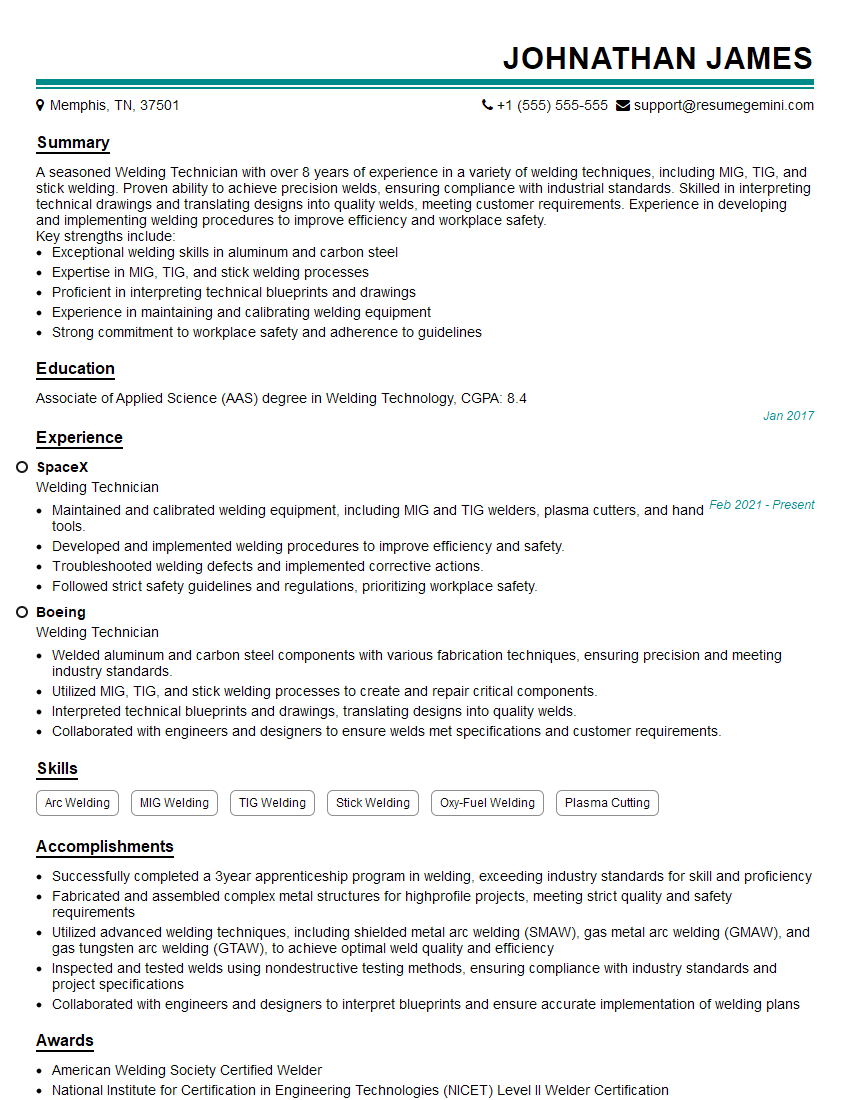
Welding Technician Resume Sample
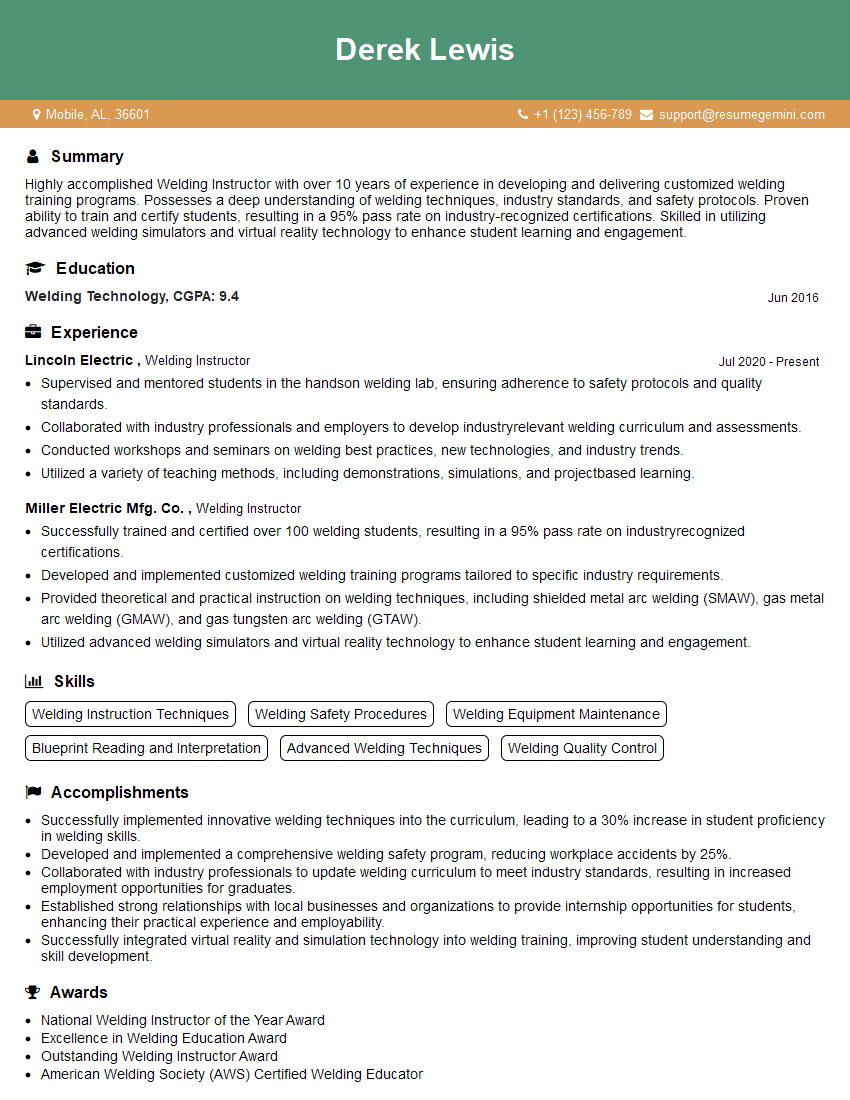
Welding Instructor Resume Sample
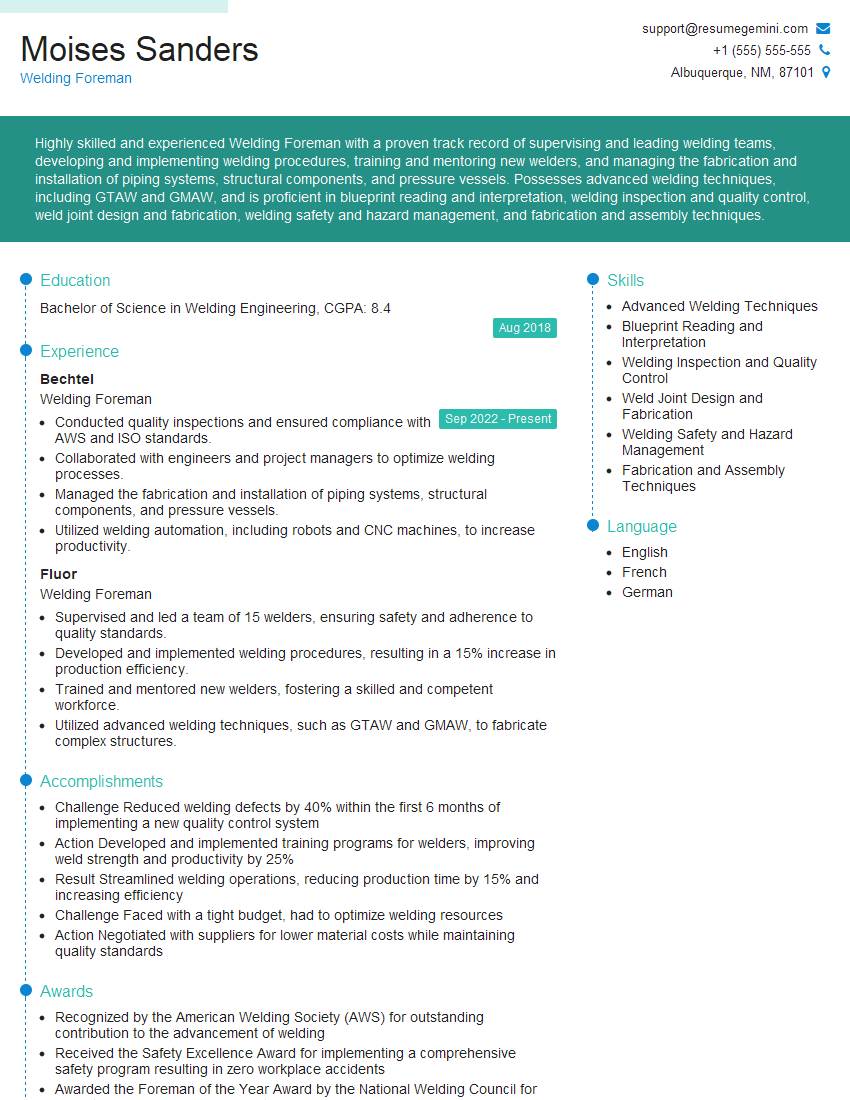
Welding Foreman Resume Sample
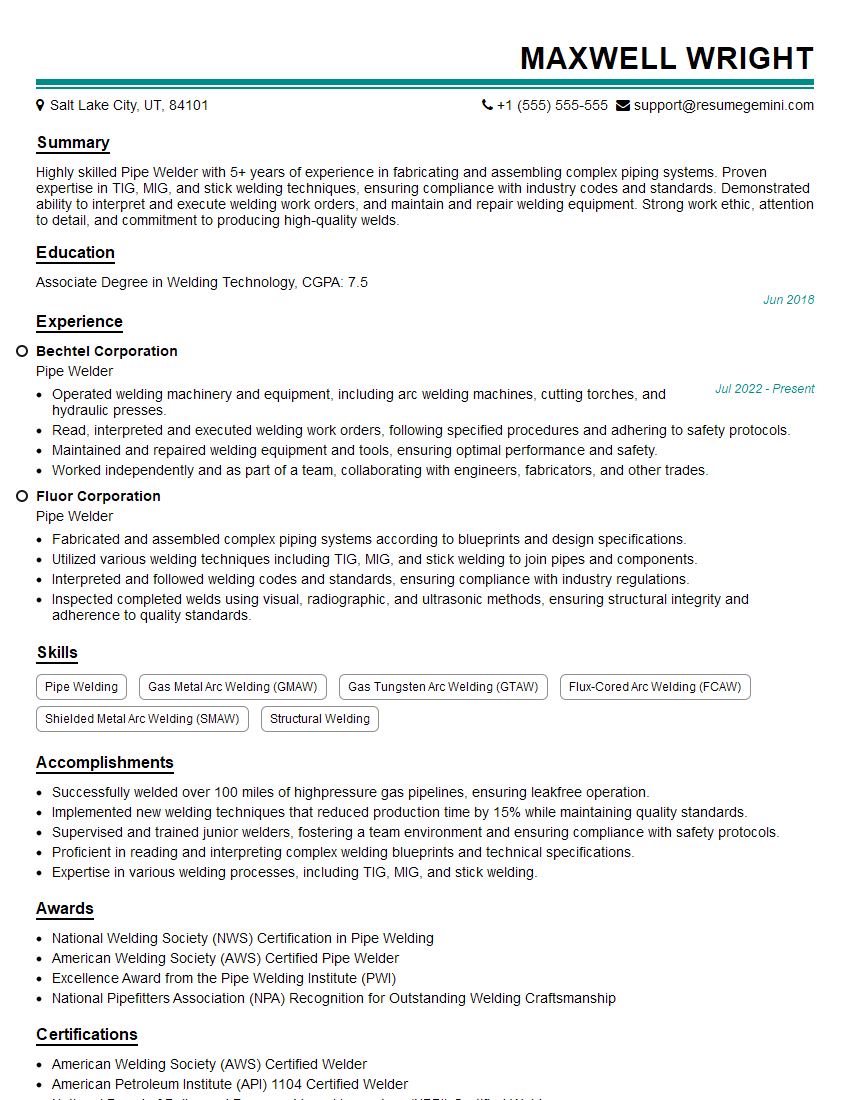
Pipe Welder Resume Sample
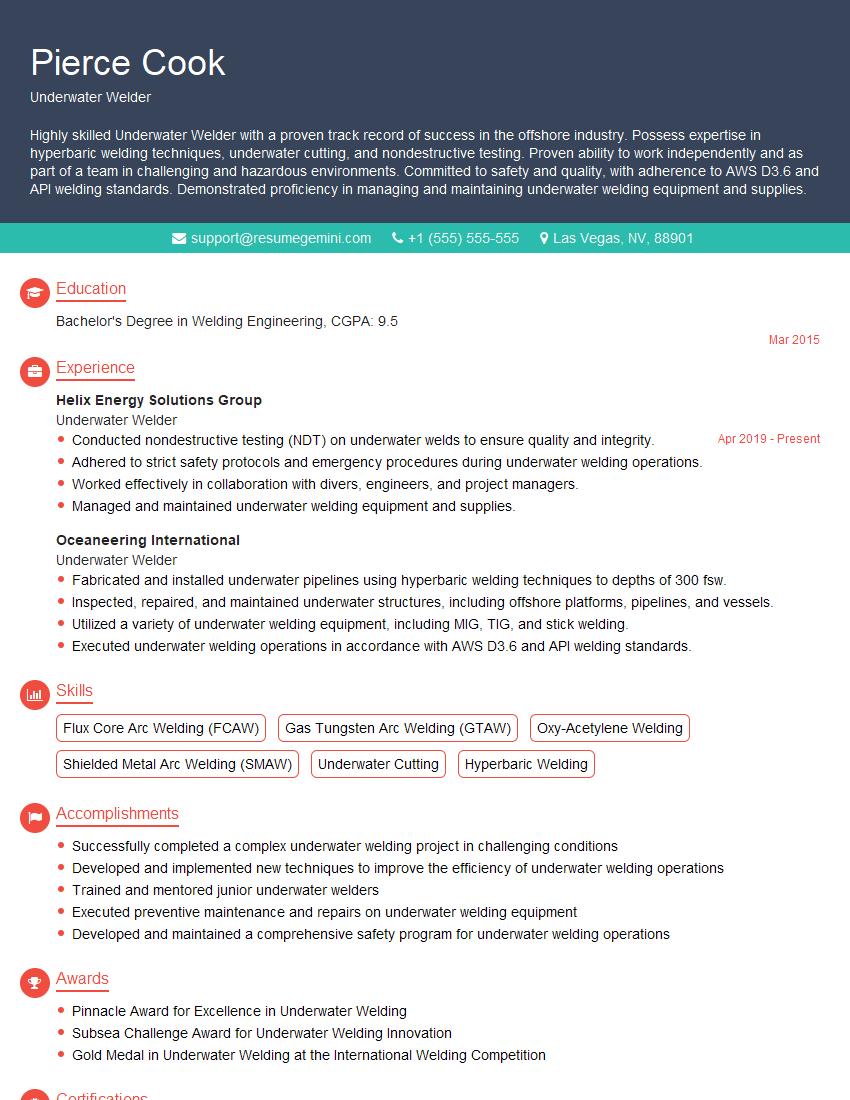
Underwater Welder Resume Sample
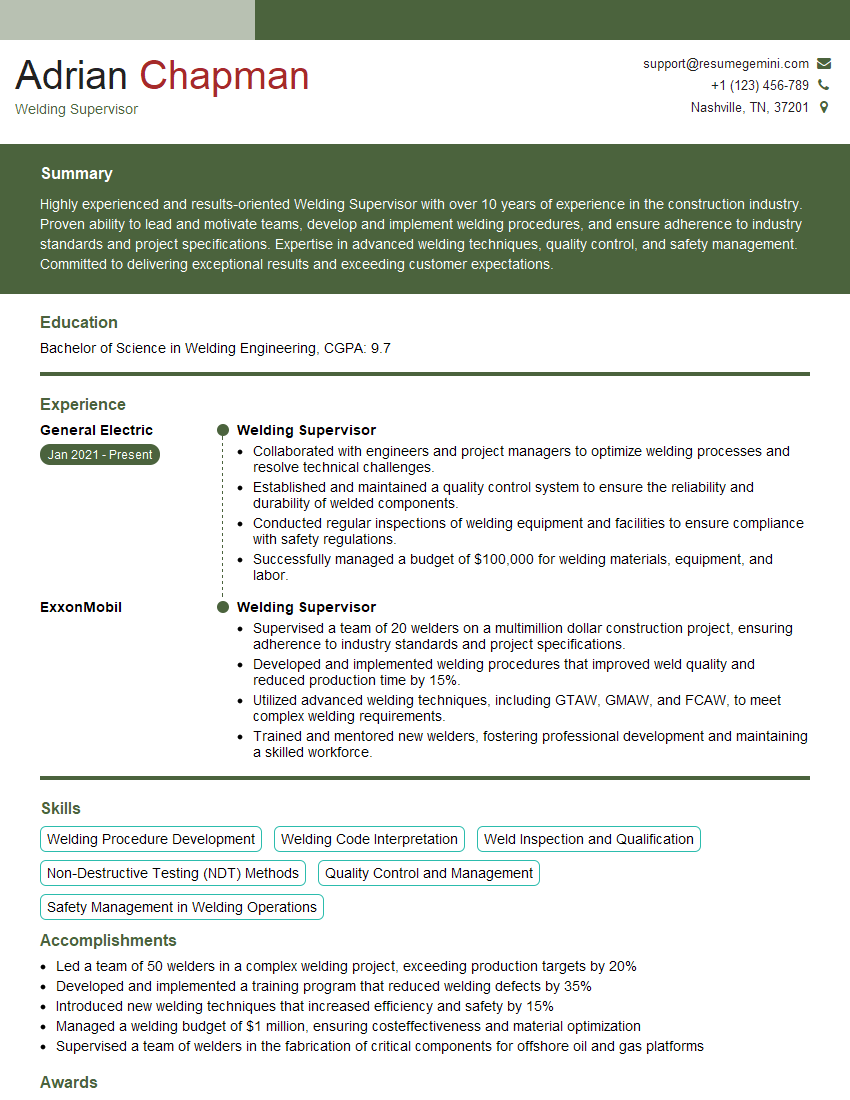
Welding Supervisor Resume Sample
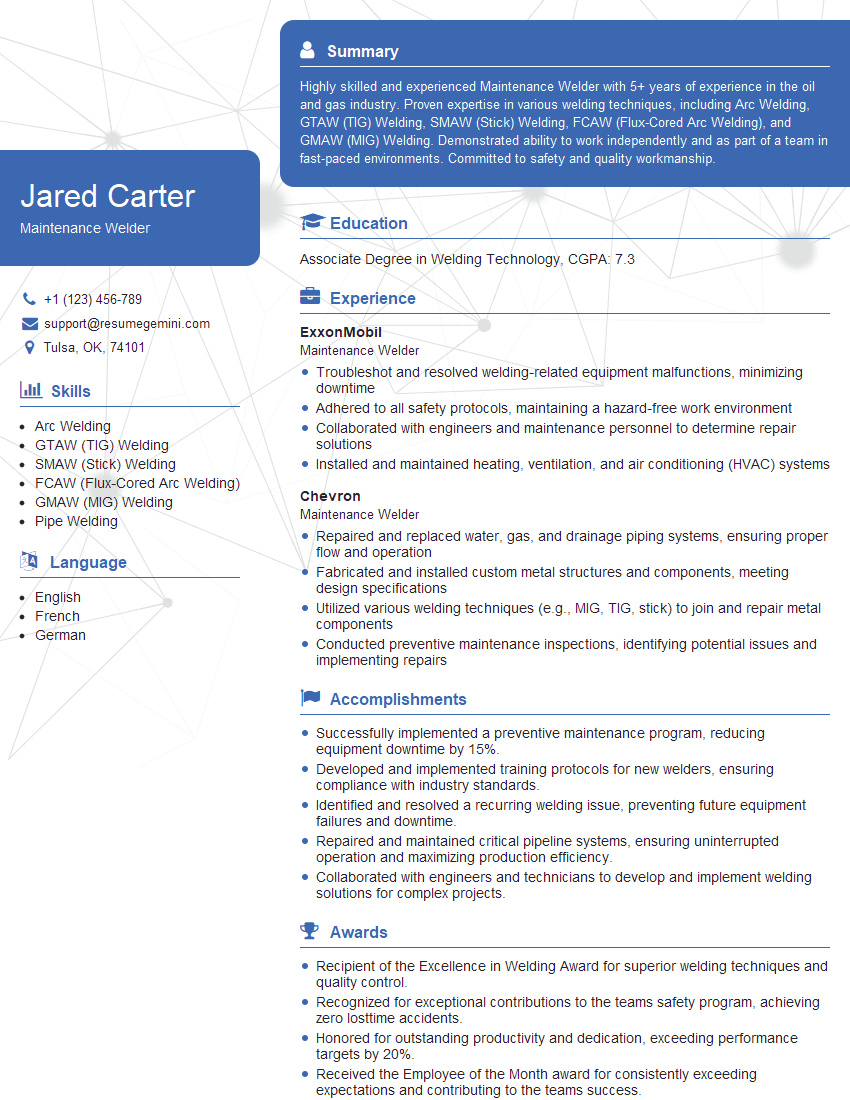
Maintenance Welder Resume Sample
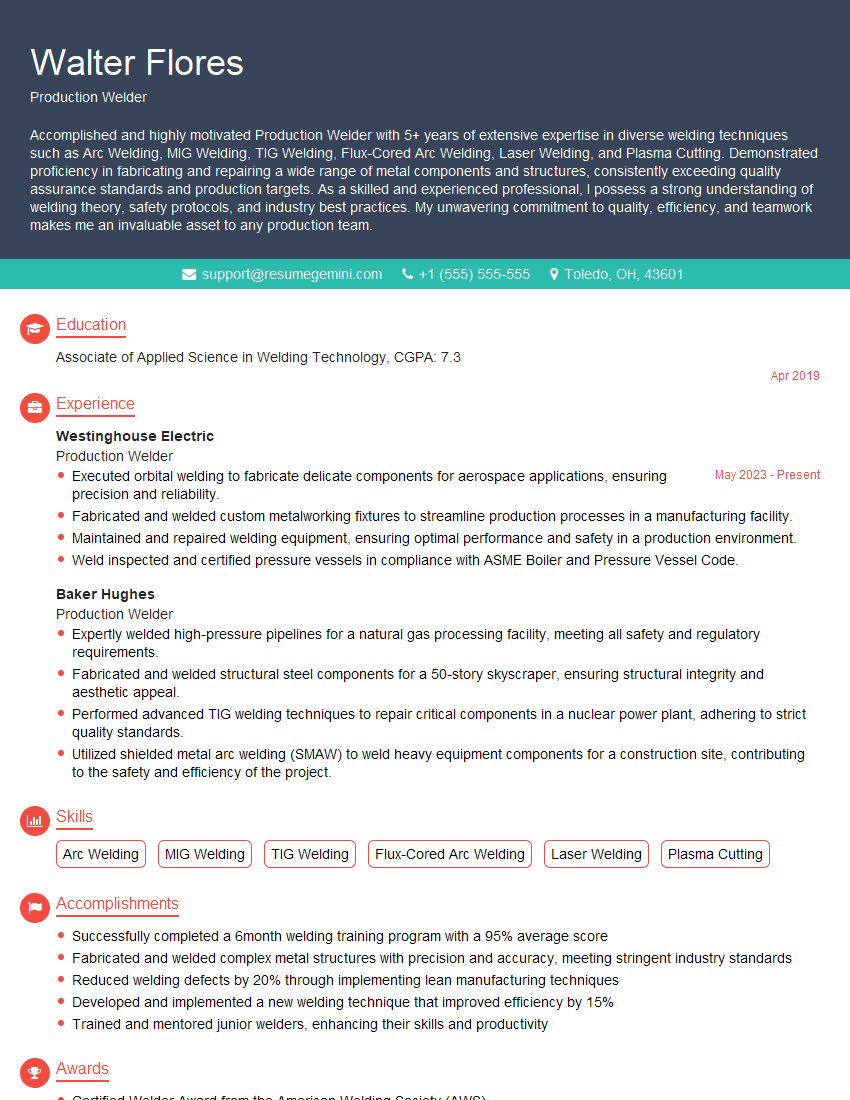
Production Welder Resume Sample
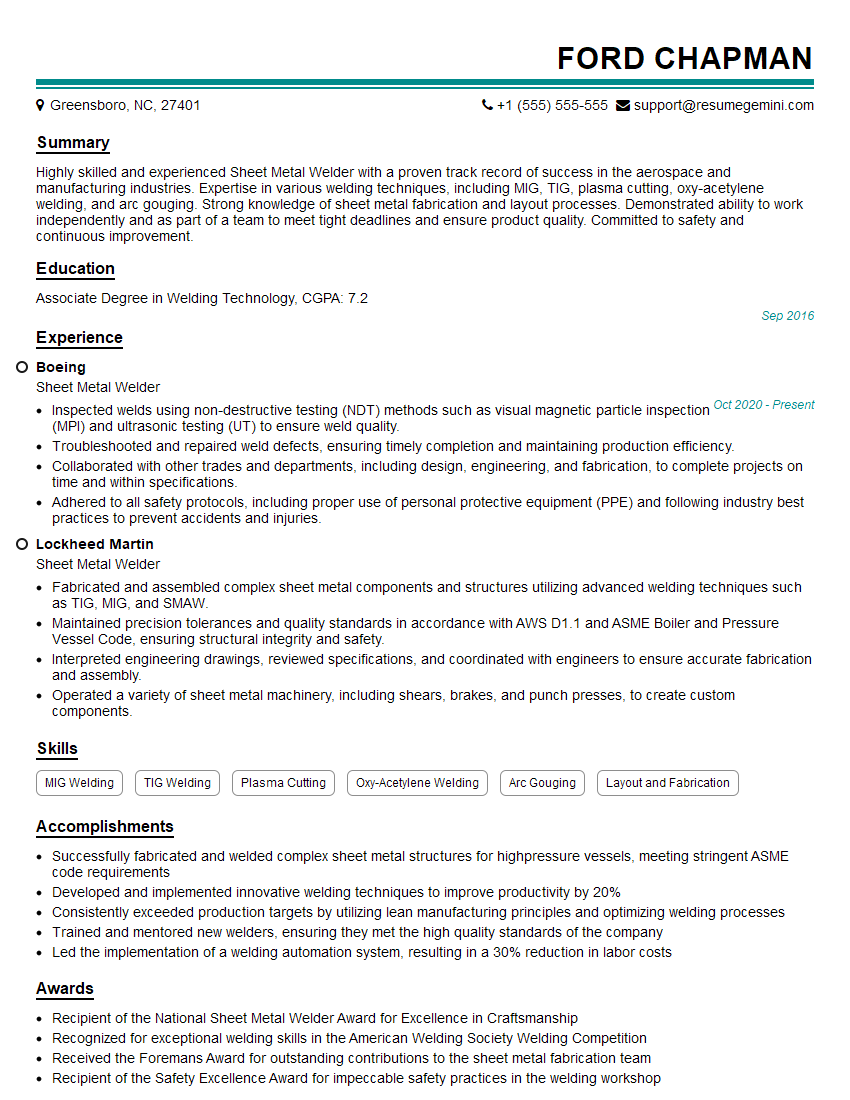
Sheet Metal Welder Resume Sample
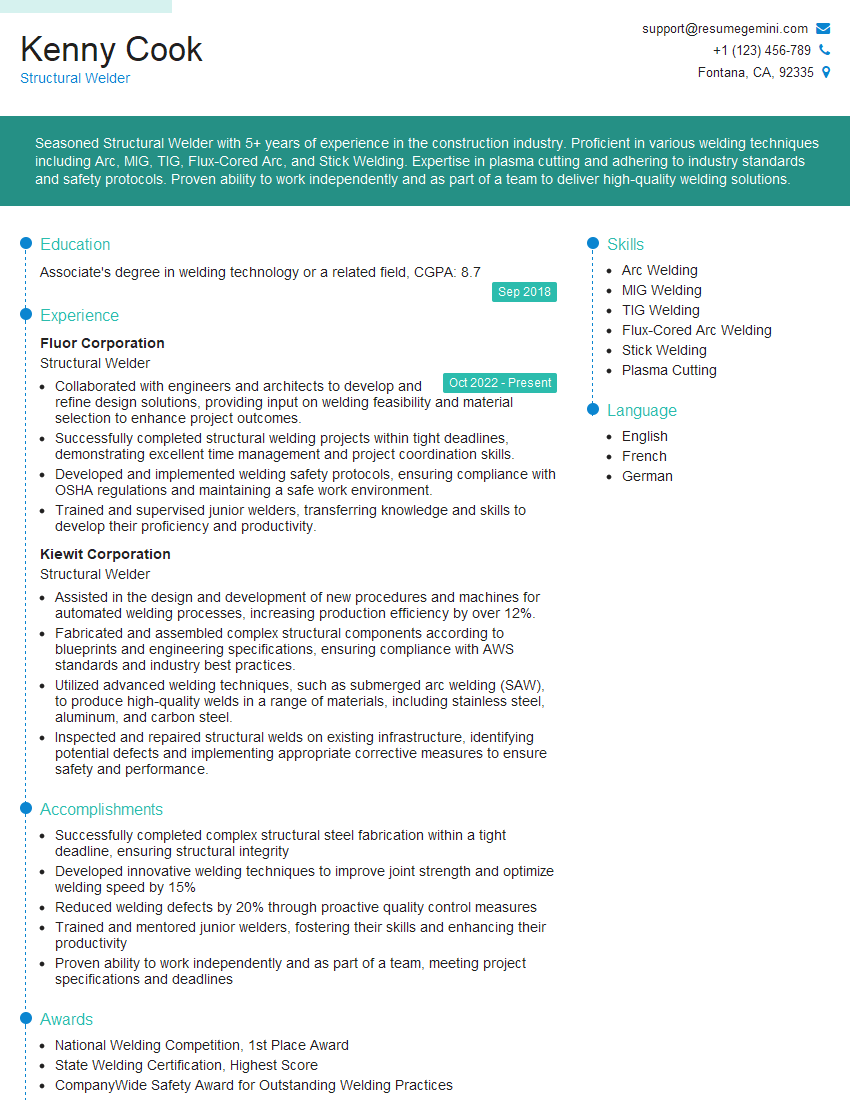
Structural Welder Resume Sample
Explore more articles
Users Rating of Our Blogs
Share Your Experience
We value your feedback! Please rate our content and share your thoughts (optional).
What Readers Say About Our Blog
I Redesigned Spongebob Squarepants and his main characters of my artwork.
https://www.deviantart.com/reimaginesponge/art/Redesigned-Spongebob-characters-1223583608
IT gave me an insight and words to use and be able to think of examples
Hi, I’m Jay, we have a few potential clients that are interested in your services, thought you might be a good fit. I’d love to talk about the details, when do you have time to talk?
Best,
Jay
Founder | CEO