Unlock your full potential by mastering the most common Load Dynamics and Physics interview questions. This blog offers a deep dive into the critical topics, ensuring you’re not only prepared to answer but to excel. With these insights, you’ll approach your interview with clarity and confidence.
Questions Asked in Load Dynamics and Physics Interview
Q 1. Explain the concept of modal analysis and its application in load dynamics.
Modal analysis is a powerful technique used to understand how a structure will vibrate under dynamic loading. Imagine plucking a guitar string – it vibrates at specific frequencies, its natural frequencies. Modal analysis identifies these natural frequencies and the corresponding mode shapes, which describe the pattern of the structure’s deformation at each frequency. In load dynamics, this is crucial because if the excitation frequency (from a load) matches a natural frequency, we get resonance, leading to potentially catastrophic amplification of vibrations.
In practical terms, we use modal analysis to predict the dynamic response of structures like bridges, buildings, and aircraft to wind, earthquakes, or machinery vibrations. By understanding the modes, we can design structures to avoid resonance and ensure stability and safety. For instance, we might adjust the structural design to shift natural frequencies away from expected excitation frequencies.
A simple analogy is a child on a swing. The swing has a natural frequency—the rhythm at which it swings most easily. If you push the swing at that frequency, it goes higher; if you push at a different frequency, it’s less effective. Modal analysis is like finding the ‘sweet spot’ (natural frequency) for a structure’s vibration.
Q 2. Describe different types of damping and their effects on system response.
Damping is the dissipation of energy in a vibrating system. Think of a pendulum gradually slowing down; that’s damping in action. Different types exist, each affecting the system’s response differently:
- Viscous Damping: This is the most common type, proportional to velocity. Imagine a shock absorber in a car; the faster the car hits a bump, the stronger the resistance. It’s represented mathematically as a damping force proportional to velocity (
F = c*v, wherecis the damping coefficient andvis the velocity). - Hysteresis Damping: This is energy loss due to internal friction within the material. Think of repeatedly bending a piece of metal; some energy is lost as heat. This is frequency-dependent and harder to model precisely.
- Coulomb Damping: This is a constant damping force, independent of velocity. Imagine dry friction between two surfaces – the frictional force is roughly constant regardless of how fast they’re sliding.
- Structural Damping: This is a complex phenomenon encompassing various energy dissipation mechanisms within a structure, often represented as a fraction of critical damping.
The effect of damping is to reduce the amplitude of vibrations over time. Higher damping means vibrations decay faster, leading to a more stable system. However, excessive damping can hinder the system’s performance, for example, by significantly reducing the effectiveness of a vibration absorber.
Q 3. How do you determine the natural frequencies and mode shapes of a structure?
Determining the natural frequencies and mode shapes requires solving the structure’s equations of motion. This can be done analytically for simple structures, but for complex ones, Finite Element Analysis (FEA) is essential. The process generally involves these steps:
- Model Creation: Creating a mathematical model of the structure, breaking it down into smaller elements (FEA) or using simplified analytical approaches.
- Defining Material Properties: Assigning material properties like Young’s modulus, density, and Poisson’s ratio to each element in the FEA model.
- Applying Boundary Conditions: Specifying how the structure is supported (fixed, pinned, etc.).
- Solving the Eigenvalue Problem: This step finds the natural frequencies (eigenvalues) and mode shapes (eigenvectors). Software packages efficiently handle this complex computation. This essentially solves a matrix equation of the form
[K]{u} = ω²[M]{u}, where[K]is the stiffness matrix,[M]is the mass matrix,{u}is the mode shape vector, andωis the natural frequency. - Mode Shape Visualization: Examining the resulting mode shapes to understand how the structure deforms at each natural frequency. This often involves visualizing the deformation using FEA software.
The result is a set of natural frequencies and their corresponding mode shapes. Each mode shape represents a distinct pattern of vibration. For example, a simple beam might have a first mode shape showing a simple bending, and a second mode shape showing a more complex bending pattern with an additional node.
Q 4. Explain the difference between static and dynamic analysis.
Static analysis considers the effects of loads that are applied slowly and do not cause significant acceleration. Think of a heavy book placed on a table; the table deforms slightly under the load but doesn’t vibrate. The forces are considered to be in equilibrium at each instant.
Dynamic analysis, on the other hand, considers the effects of loads that change with time, causing the structure to accelerate and vibrate. This includes loads like wind gusts, earthquakes, or the impact of a falling object. It considers both inertia and damping effects, leading to a more complex analysis.
In essence, static analysis is a snapshot in time, while dynamic analysis considers the evolution of the system over time. The choice between static and dynamic analysis depends on the nature of the loading and the importance of dynamic effects. A simple example would be a bridge under its own weight (static) versus a bridge under a moving truck (dynamic).
Q 5. What are the limitations of linear analysis in load dynamics?
Linear analysis simplifies the problem by assuming a linear relationship between load and response. This means that doubling the load doubles the response. However, this assumption breaks down in many real-world situations:
- Large Deformations: When a structure deforms significantly, the linear assumption is no longer valid. The geometry changes affect the stiffness, leading to nonlinear behavior.
- Material Nonlinearity: Many materials exhibit nonlinear stress-strain relationships (e.g., plasticity). Linear analysis cannot capture this behavior.
- Geometric Nonlinearity: Large displacements and rotations can cause significant changes in the stiffness matrix and therefore cause nonlinear behaviour.
- Contact Problems: The interaction between two bodies in contact is inherently nonlinear.
In such cases, nonlinear analysis is necessary to accurately predict the structure’s behavior. For example, a thin beam subjected to a large load will likely exhibit geometric nonlinearity, while a steel structure reaching its yield strength shows material nonlinearity. The limitations of linear analysis emphasize the importance of selecting an appropriate analysis type based on the specific application.
Q 6. Describe your experience with Finite Element Analysis (FEA) software.
I have extensive experience using various FEA software packages, including ANSYS, Abaqus, and Nastran. My expertise spans model creation, mesh generation, material property definition, boundary condition application, solution execution, and post-processing of results. I’m proficient in setting up and running both linear and nonlinear analyses, modal analyses, and harmonic response analyses. In past projects, I’ve used FEA to analyze complex structural systems, predicting their response under various loading scenarios and optimising designs for improved performance and safety. A recent project involved using ANSYS to model the dynamic response of a wind turbine tower under turbulent wind conditions, leading to design modifications that reduced fatigue loading.
Q 7. How do you validate FEA results?
Validating FEA results is crucial to ensure their accuracy and reliability. This involves several steps:
- Mesh Sensitivity Study: Checking if the results are sensitive to mesh refinement. A well-refined mesh is essential for accurate results, but excessively fine meshes are computationally expensive.
- Comparison with Analytical Solutions: For simple structures, comparing FEA results with analytical solutions provides a benchmark for accuracy.
- Experimental Validation: The most robust method is to compare FEA predictions with experimental data. This might involve physical testing of a prototype or a scaled model. This process requires careful planning and execution, ensuring the experimental setup accurately reflects the FEA model.
- Code Verification: Ensuring the FEA software is correctly used and that the input data is accurate. This often involves peer review of the model and the analysis procedure.
- Convergence Checks: Verifying that the solver converges to a solution, indicated by the residual forces decreasing below a tolerance.
These validation steps build confidence in the FEA results and ensure they are reliable for decision-making. Without validation, the results are just numbers without engineering meaning.
Q 8. Explain the concept of fatigue and its significance in load dynamics.
Fatigue in load dynamics refers to the progressive and localized structural damage that occurs when a material is subjected to cyclic loading. Imagine repeatedly bending a paperclip back and forth – eventually, it’ll break, even if the force applied in each bend is less than the force needed to break it instantly. This is fatigue. The significance lies in the fact that structures can fail unexpectedly under loads far below their ultimate strength if subjected to enough cycles of stress. This is a crucial consideration in designing anything from aircraft wings to bridges, where components experience repeated loading during operation.
The process involves three main stages: crack initiation, crack propagation, and final fracture. The number of cycles to failure is highly dependent on the material’s properties, the magnitude of the load, and the presence of any stress concentrations (like notches or holes). Engineers use S-N curves (stress vs. number of cycles to failure) and fatigue life prediction methods to account for fatigue in design, ensuring a structure’s lifespan is far longer than the expected number of load cycles.
Q 9. What are the different types of loading conditions considered in structural analysis?
Structural analysis considers various loading conditions, broadly categorized as:
- Static Loads: These are constant or slowly varying loads, like the weight of a structure itself (dead load) or permanent fixtures (live load). Think of the constant pressure a bridge deck experiences from its own weight.
- Dynamic Loads: These are loads that change with time, such as wind pressure on a tall building, seismic forces during an earthquake, or the impact load of a car crash. The rate of change is crucial here; a quick impact is drastically different from a gradual increase in load.
- Impact Loads: These are short-duration, high-magnitude loads, like a dropped weight hitting a surface or the force from a collision. The energy dissipation and resulting stresses are significant factors.
- Thermal Loads: These loads arise from temperature changes causing expansion or contraction within a structure, leading to internal stresses. Imagine a metal bridge expanding in summer heat; the expansion must be accounted for in the design.
- Cyclic Loads: Loads that repeatedly vary, leading to fatigue as described earlier. This is common in rotating machinery or structures subjected to vibrating equipment.
Accurate assessment of all relevant loading conditions is critical for safe and reliable structural design.
Q 10. How do you account for material nonlinearities in your analysis?
Material nonlinearities, where the stress-strain relationship isn’t linear, significantly complicate analysis. Unlike linear elastic materials obeying Hooke’s Law, nonlinear materials exhibit complex behaviors like plasticity (permanent deformation), creep (time-dependent deformation under constant load), and strain hardening (increasing resistance to deformation with increasing strain). Accounting for these requires advanced techniques.
Common approaches include:
- Nonlinear Finite Element Analysis (FEA): FEA software utilizes sophisticated algorithms to solve nonlinear equations describing the material behavior. This allows for simulating plastic deformation, creep, and other nonlinear phenomena accurately.
- Material Models: Choosing appropriate constitutive models (mathematical representations of material behavior) is crucial. These models incorporate parameters reflecting the specific nonlinear characteristics of the material, like yield strength, hardening parameters, and creep coefficients. Examples include the von Mises yield criterion for plasticity and Norton’s law for creep.
- Experimental Data: Material testing provides crucial data on nonlinear behavior. Stress-strain curves obtained from experiments are often incorporated directly into FEA simulations to enhance accuracy.
The selection of the appropriate method depends on the complexity of the structure and material properties, as well as the desired level of accuracy.
Q 11. Explain the concept of resonance and its implications for structural design.
Resonance occurs when the frequency of an external excitation force matches the natural frequency of a structure. Imagine pushing a child on a swing – pushing at the right moment (matching the swing’s natural frequency) leads to large amplitude oscillations. Similarly, if a structure is subjected to a dynamic load with a frequency close to its natural frequency, large and potentially destructive vibrations can result.
The implications for structural design are significant. Resonance can lead to:
- Excessive vibrations: Causing damage, discomfort, or even collapse of the structure.
- Fatigue failure: Repeated large-amplitude vibrations significantly accelerate fatigue damage.
To mitigate resonance, engineers determine a structure’s natural frequencies through modal analysis (e.g., FEA) and ensure that the operating frequencies of any equipment or external forces are significantly different. Design modifications, like adding damping or changing the structure’s stiffness, are often implemented to shift natural frequencies away from excitation frequencies.
Q 12. Describe different methods for reducing vibrations in a mechanical system.
Reducing vibrations in mechanical systems is vital for ensuring their longevity and performance. Several methods are employed:
- Damping: Introducing materials or mechanisms that dissipate vibrational energy. Examples include using viscous dampers (like shock absorbers in cars), adding damping materials (like rubber or polymers), or incorporating friction dampers.
- Isolation: Decoupling the vibrating component from the rest of the system using vibration isolators, which effectively reduce the transmission of vibrations. Think of the rubber mounts used under machinery.
- Tuning: Adjusting the system’s natural frequency away from excitation frequencies through changes in stiffness or mass. This might involve modifying the geometry or material properties of the structure.
- Active Vibration Control: Employing sensors and actuators to actively counteract vibrations. This involves sophisticated feedback control systems to detect and suppress unwanted vibrations. Examples include using inertial dampers in skyscrapers.
- Passive Vibration Control: Using passive elements to dissipate or absorb energy. This can include tuned mass dampers, which counteract structural vibrations by employing a counterweight.
The best approach depends on the specific system and the desired level of vibration reduction.
Q 13. How do you handle uncertainties and tolerances in your load calculations?
Uncertainties and tolerances in load calculations are inevitable. These arise from variations in material properties, manufacturing tolerances, and the imprecise nature of load estimations. Handling these uncertainties is crucial for safe design.
Methods include:
- Factor of Safety: Applying a safety factor to the calculated loads. This multiplies the estimated load by a factor (e.g., 1.5 or 2), ensuring the structure can withstand loads exceeding the estimated values.
- Probabilistic Analysis: Modeling uncertainties using probabilistic methods, considering the statistical distribution of loads and material properties. This allows engineers to estimate the probability of failure, rather than relying on deterministic calculations.
- Sensitivity Analysis: Assessing the impact of variations in individual parameters on the overall structural response. This helps identify critical parameters where uncertainties have the greatest influence, allowing for focused efforts to reduce uncertainty in those areas.
- Load Combinations: Considering different load combinations to account for various scenarios and potential worst-case scenarios. Building codes often specify load combinations to ensure the structure is adequate under various conditions.
A combination of these methods is generally employed to ensure reliable and safe designs, addressing the inherent uncertainties in load calculations.
Q 14. Explain the concept of shock and its effect on structures.
Shock is a sudden, high-magnitude impact load causing rapid acceleration or deceleration of a structure. Imagine a heavy object dropped onto a table – the table experiences shock. The effect on structures depends heavily on the shock’s magnitude, duration, and the structure’s ability to absorb the energy.
Shock can lead to:
- Fractures: Brittle materials are especially susceptible to cracking or shattering under shock loading.
- Permanent Deformation: Ductile materials might experience plastic deformation.
- Vibrations: Shock can excite vibrations within the structure, potentially leading to resonance and further damage.
Designing for shock involves understanding the shock pulse characteristics (magnitude, duration, shape) and selecting materials and designs capable of absorbing the impact energy. Techniques like energy-absorbing elements, shock mounts, and robust structural design can significantly mitigate the negative effects of shock.
Q 15. What is the difference between transient and steady-state analysis?
Transient and steady-state analyses are two fundamental approaches in analyzing the response of systems to dynamic loading. Transient analysis examines the system’s behavior over time, focusing on the initial response to a sudden change or excitation – think of the vibrations of a bridge immediately after a truck drives over it. This response often involves short-lived, rapidly changing forces and displacements. The analysis considers the entire time history of the system’s response until it settles down or reaches a new equilibrium.
Steady-state analysis, conversely, focuses on the long-term response of a system after the initial transient effects have decayed. This approach assumes the system’s response has reached a stable, repetitive pattern, often sinusoidal. For example, analyzing the long-term vibrations of a building due to sustained wind loads would involve a steady-state approach. Steady-state analysis is often simplified by considering only the frequency content of the excitation and the system’s response at those frequencies.
The key difference lies in the timescale of the analysis. Transient analysis deals with short-term, time-dependent behavior, while steady-state analysis examines the long-term, often periodic, behavior after transient effects have subsided. The choice between the two depends on the specific engineering problem and the aspects of the system’s behavior of interest.
Career Expert Tips:
- Ace those interviews! Prepare effectively by reviewing the Top 50 Most Common Interview Questions on ResumeGemini.
- Navigate your job search with confidence! Explore a wide range of Career Tips on ResumeGemini. Learn about common challenges and recommendations to overcome them.
- Craft the perfect resume! Master the Art of Resume Writing with ResumeGemini’s guide. Showcase your unique qualifications and achievements effectively.
- Don’t miss out on holiday savings! Build your dream resume with ResumeGemini’s ATS optimized templates.
Q 16. Describe your experience with experimental modal analysis.
My experience with experimental modal analysis (EMA) is extensive. I’ve conducted numerous EMA tests on various structures, ranging from small-scale components to large-scale industrial equipment. My work typically involves using impact hammers or shakers to excite the structure, followed by measuring its response using accelerometers. I’m proficient in selecting appropriate excitation methods, sensor placement, and signal processing techniques to achieve high-quality data. I utilize advanced signal processing techniques like spectral analysis (FFT) and curve fitting to identify natural frequencies, damping ratios, and mode shapes. For instance, in one project involving a large industrial robotic arm, EMA helped us identify resonance frequencies which were crucial for optimizing the control system and avoiding potential failures during operation. Another application involved a bridge deck where EMA helped us assess the structural health and detect any potential damage early on.
I’m familiar with various software packages used for EMA data acquisition and analysis such as LMS Test.Lab, and I understand the importance of proper data validation and error analysis in obtaining reliable modal parameters.
Q 17. How do you interpret experimental results and compare them with simulations?
Interpreting experimental results and comparing them with simulations requires a systematic approach. First, I thoroughly review the experimental data, checking for any anomalies or inconsistencies. This includes examining the frequency response functions (FRFs) for noise, spurious peaks, and other artifacts. I then use established modal parameter estimation techniques to extract the natural frequencies, damping ratios, and mode shapes from the FRFs. These experimental modal parameters are then compared to those predicted by finite element analysis (FEA) or other numerical simulations.
The comparison involves quantitative analysis – calculating the differences in natural frequencies and mode shapes – and qualitative assessment – visually comparing the mode shapes to check for consistency in the deformation patterns. Differences between experimental and simulated results often highlight discrepancies in the modelling assumptions, material properties, or boundary conditions. For example, a significant difference in a natural frequency might point to an error in the material properties used in the FEA model, whereas a discrepancy in mode shape could suggest an inaccuracy in the geometric representation of the structure. Addressing these discrepancies often involves iteratively refining the model until the experimental and simulation results converge to an acceptable level of agreement.
This iterative process of model refinement is essential for ensuring the accuracy and reliability of the simulation, making it a valuable tool for design optimization and failure prediction.
Q 18. What are the common failure modes in structures subjected to dynamic loading?
Structures subjected to dynamic loading can fail through several mechanisms. The most common failure modes include:
- Fatigue failure: This occurs due to repeated cyclic loading, causing crack initiation and propagation at stress concentrations until eventual fracture. This is common in structures experiencing resonance or repeated impact loads.
- Resonance failure: If the frequency of the dynamic excitation matches a natural frequency of the structure, large amplitude vibrations can develop, leading to excessive stresses and potential failure. Examples include bridge collapses due to wind-induced vibrations.
- Buckling: Dynamic loads can induce compressive stresses that cause slender structural members to buckle, resulting in sudden collapse. This is particularly relevant for columns and beams under impact or impulsive loads.
- Fracture: This refers to the sudden separation of a structure into two or more pieces due to high stress concentrations, often at defects or flaws in the material. Impact loading is a common cause of fracture.
- Yielding: If the dynamic stress exceeds the yield strength of the material, permanent deformation occurs. This can lead to structural weakening and eventually failure.
The specific failure mode depends on the material properties, geometry of the structure, the nature of the dynamic load (frequency, amplitude, duration), and the presence of any defects or imperfections.
Q 19. Explain the concept of impact loading and its effects.
Impact loading refers to the application of a large force over a very short duration. This sudden application of energy causes high stress waves to propagate through the structure. Unlike static loading, which allows the structure to gradually adjust to the applied force, impact loading can lead to significantly higher stress concentrations and potentially catastrophic failure.
The effects of impact loading depend on several factors, including the magnitude and duration of the impact force, the mass and stiffness of the structure, and the material properties. High-speed collisions, such as those in car crashes or in manufacturing processes, are classic examples of impact loading. The consequences can range from minor dents to complete fracture, depending on the severity of the impact. Impact loads can also induce vibrations that may cause resonance in the structure, potentially leading to fatigue failure over time.
Analyzing structures subjected to impact loading usually involves specialized techniques, such as using explicit finite element analysis, to accurately capture the transient nature of the stress waves propagation and their interaction with the structural geometry.
Q 20. How do you account for the effects of temperature changes on structural behavior?
Temperature changes affect structural behavior primarily through thermal expansion and contraction. As temperature rises, materials expand, leading to increased stresses within the structure if expansion is restrained. Conversely, temperature decreases cause contraction, potentially leading to compressive stresses. These thermally induced stresses can significantly alter the structural response, even causing failure in extreme cases.
Accounting for temperature effects typically involves using coupled thermo-mechanical analyses. This involves solving the heat transfer equation alongside the equations of structural mechanics. The temperature distribution within the structure is determined from the heat transfer analysis, and this temperature field is then used as input to the structural analysis to account for thermal expansion and contraction. Material properties such as the coefficient of thermal expansion and Young’s modulus are temperature-dependent and should be considered in the analysis. For example, designing a bridge requires accounting for temperature fluctuations across the seasons, ensuring the bridge’s structural integrity remains unaffected by thermal expansion and contraction. In such cases, expansion joints and appropriate material selection are crucial considerations.
In FEA, specialized elements and material models are employed to accurately model the coupled thermo-mechanical behavior. These analyses are critical for designing structures operating in environments with significant temperature variations, such as aerospace applications or nuclear reactors.
Q 21. Describe your experience with different numerical integration techniques.
I have extensive experience with various numerical integration techniques used in solving the equations of motion in structural dynamics. The choice of integration technique depends on factors such as accuracy requirements, computational cost, and the characteristics of the dynamic system.
Some of the commonly used methods include:
- Explicit methods (e.g., central difference method): These methods are well-suited for problems involving high-frequency vibrations, large deformations, or impact loading. They are computationally efficient but can be conditionally stable, requiring small time steps for accurate results.
- Implicit methods (e.g., Newmark method, Hilber-Hughes-Taylor method): These methods are unconditionally stable, allowing for larger time steps and thus reducing computational time, particularly for low-frequency responses. They provide good accuracy but can be more computationally expensive per time step compared to explicit methods.
- Mode superposition method: This method uses the modal properties of the system to reduce the number of equations that need to be solved, greatly improving computational efficiency. It’s ideal for linear systems with well-defined modes of vibration.
The selection of the appropriate integration method often involves a trade-off between accuracy, stability, and computational efficiency. Understanding the strengths and weaknesses of each method is crucial for obtaining accurate and reliable results. In my experience, I’ve frequently used the Newmark method for its stability and accuracy in a wide range of applications.
Q 22. How do you model fluid-structure interaction?
Fluid-structure interaction (FSI) modeling involves simulating the dynamic interplay between a fluid and a deformable structure. It’s crucial in many engineering applications, from designing aircraft wings to analyzing blood flow in arteries. We typically use a coupled approach, solving the fluid dynamics equations (often using Computational Fluid Dynamics or CFD) and the structural mechanics equations (usually Finite Element Analysis or FEA) iteratively.
Imagine a bridge pier in a river. The flowing water (fluid) exerts pressure on the pier (structure), causing it to deform. This deformation alters the flow pattern, affecting the pressure distribution further. This cyclical interaction needs to be captured accurately. Methods for coupling include partitioned approaches (where the fluid and structure solvers are separate but exchange data) and monolithic approaches (where both are solved simultaneously). The choice depends on the complexity and specific characteristics of the problem. For instance, a partitioned approach is suitable for weakly coupled systems, while a monolithic approach is better for strongly coupled systems where the fluid and structure heavily influence each other.
A common example would be simulating the flutter of an aircraft wing. The airflow over the wing generates aerodynamic forces that cause the wing to deform. This deformation changes the airflow, leading to a potentially unstable feedback loop. Accurate FSI modeling is critical to predict and prevent such phenomena.
Q 23. What are the advantages and disadvantages of different element types in FEA?
Finite Element Analysis (FEA) employs various element types, each with strengths and weaknesses. The choice depends on the problem’s geometry, material properties, and desired accuracy.
Linear elements: Simpler, computationally efficient, suitable for problems with low strain and linear material behavior. However, they can be inaccurate for problems with significant bending or distortion.
Quadratic elements: More accurate than linear elements, especially for bending and curved geometries. They require more computational resources.
Tetrahedral elements: Versatile for complex 3D geometries but less accurate than hexahedral elements for the same mesh density. They are computationally cheaper than hexahedral elements in complex geometries, offering a good balance between accuracy and computational time.
Hexahedral elements: Most accurate for problems with smooth geometries, providing better results for a given mesh size. They are, however, challenging to mesh complex geometries.
For example, analyzing a simple beam under bending might use linear beam elements efficiently. Conversely, modeling a complex turbine blade might demand the accuracy of quadratic hexahedral elements, despite the increased computational cost. The selection is often an optimization process balancing accuracy and computational feasibility.
Q 24. Describe your experience with optimization techniques in load dynamics.
Optimization techniques play a crucial role in load dynamics to find the best design parameters for a structure or system while satisfying constraints. I have extensive experience employing several methods.
Topology optimization: This method identifies the optimal material distribution within a given design space to minimize weight while meeting strength requirements. I’ve used this for designing lightweight yet robust components in automotive and aerospace applications.
Shape optimization: This focuses on adjusting the shape of a component to improve its performance under dynamic loads. An example is optimizing the shape of a car chassis to minimize vibrations at specific frequencies.
Size optimization: This involves adjusting the dimensions of structural members to improve performance, often used to reduce material usage while maintaining load-carrying capacity. A practical application is optimizing the cross-section of a bridge beam.
I’m proficient in using both gradient-based methods (like steepest descent and Newton-Raphson) and gradient-free methods (like genetic algorithms) depending on the complexity of the problem and the nature of the objective function.
Q 25. How do you ensure the accuracy and reliability of your analysis results?
Ensuring accuracy and reliability is paramount. My approach involves a multi-pronged strategy:
Mesh refinement studies: I systematically refine the mesh until the results converge, indicating that the solution is independent of the mesh size. This helps identify potential discretization errors.
Validation against experimental data: Whenever possible, I validate the simulation results against experimental data from physical tests. This ensures that the model accurately represents the real-world behavior of the system.
Verification against analytical solutions: For simpler problems, I verify the results against known analytical solutions to ensure the accuracy of the numerical method and implementation.
Sensitivity analysis: I perform sensitivity analysis to assess the influence of input parameters on the output results. This helps quantify uncertainties and identify critical parameters requiring greater attention.
Code verification: I use established methods and best practices for coding and use validation cases to ensure the accuracy of the computational code itself.
A rigorous approach combining these techniques greatly increases confidence in the final results.
Q 26. What are some common challenges you’ve faced in load dynamics projects?
Common challenges in load dynamics projects often stem from the complexity of real-world systems. These include:
Non-linear material behavior: Many materials exhibit non-linear behavior under large deformations or high stresses, requiring sophisticated constitutive models and potentially computationally intensive simulations.
Contact problems: Modeling contact between components is complex, especially with frictional effects, and necessitates specialized algorithms and careful meshing.
High computational cost: Simulations involving large models or complex physics can be computationally expensive, requiring significant computing resources and optimization strategies.
Uncertainty quantification: Input parameters often have associated uncertainties, making it crucial to quantify the impact of these uncertainties on the output results.
Experimental data acquisition and validation: Obtaining accurate and reliable experimental data for validation can be time-consuming and expensive.
Addressing these challenges requires careful planning, efficient numerical techniques, and a deep understanding of the underlying physics.
Q 27. Describe your approach to solving a complex load dynamics problem.
My approach to a complex load dynamics problem is systematic and iterative. It typically involves:
Problem definition and simplification: Clearly defining the problem scope, objectives, and simplifying assumptions. This involves identifying the critical aspects of the system and neglecting less significant ones, to improve efficiency while maintaining accuracy.
Model development: Choosing appropriate numerical methods (FEA, CFD, or a combination), element types, and material models. This step incorporates the expertise and understanding of the specific problem.
Mesh generation and validation: Creating a high-quality mesh that accurately represents the geometry and ensuring the mesh is adequate for the chosen element type. Mesh refinement studies are crucial here.
Solution and post-processing: Running the simulation and analyzing the results using appropriate visualization and data analysis tools. Careful examination of the results is essential.
Validation and verification: Comparing the simulation results against experimental data or analytical solutions to ensure accuracy and reliability. This iterative process involves adjustments to the model or parameters.
Reporting and communication: Clearly presenting the findings in a comprehensive report with appropriate visualizations and documentation.
This iterative process allows for refinement and improvement at each step, leading to a more accurate and reliable solution.
Q 28. How do you stay updated on the latest advancements in load dynamics and related fields?
Staying updated in this rapidly evolving field requires a multi-faceted approach:
Regularly attending conferences and workshops: Participating in conferences such as the ASME International Mechanical Engineering Congress and Exposition allows access to the latest research and networking opportunities.
Reading specialized journals and publications: Keeping abreast of the latest research papers published in journals like the International Journal for Numerical Methods in Engineering and the Journal of Applied Mechanics.
Participating in professional organizations: Membership in professional organizations like ASME or AIAA offers access to resources, publications, and networking opportunities.
Online courses and tutorials: Utilizing online platforms offering courses and tutorials on advanced numerical methods and simulation techniques.
Collaboration and networking: Engaging in collaborations with researchers and engineers in the field to share knowledge and insights.
This continuous learning process is essential to remain at the forefront of advancements in load dynamics.
Key Topics to Learn for Load Dynamics and Physics Interview
- Statics and Dynamics of Rigid Bodies: Understanding equilibrium, forces, moments, and their applications in structural analysis and mechanical systems.
- Stress and Strain Analysis: Comprehending stress-strain relationships, material properties (elasticity, plasticity), and failure theories. Practical application includes designing components to withstand anticipated loads.
- Structural Analysis Techniques: Familiarity with methods like Finite Element Analysis (FEA), and their application in predicting structural behavior under various loading conditions.
- Vibration Analysis: Understanding natural frequencies, resonance, damping, and their impact on system stability and design. Practical applications include minimizing vibrations in machines and structures.
- Fluid Mechanics Principles (as applicable): Understanding pressure, buoyancy, fluid flow, and their relevance to load dynamics in specific applications (e.g., hydrodynamics, aerodynamics).
- Material Selection and Failure Modes: Knowledge of different materials and their suitability for specific applications, and understanding common failure modes (fatigue, creep, fracture).
- Experimental Techniques and Data Analysis: Understanding how to design and interpret experiments related to load dynamics, and proficiency in data analysis and interpretation.
- Problem-solving approaches: Develop your ability to break down complex problems into manageable parts, apply relevant theoretical concepts, and effectively communicate your solutions.
Next Steps
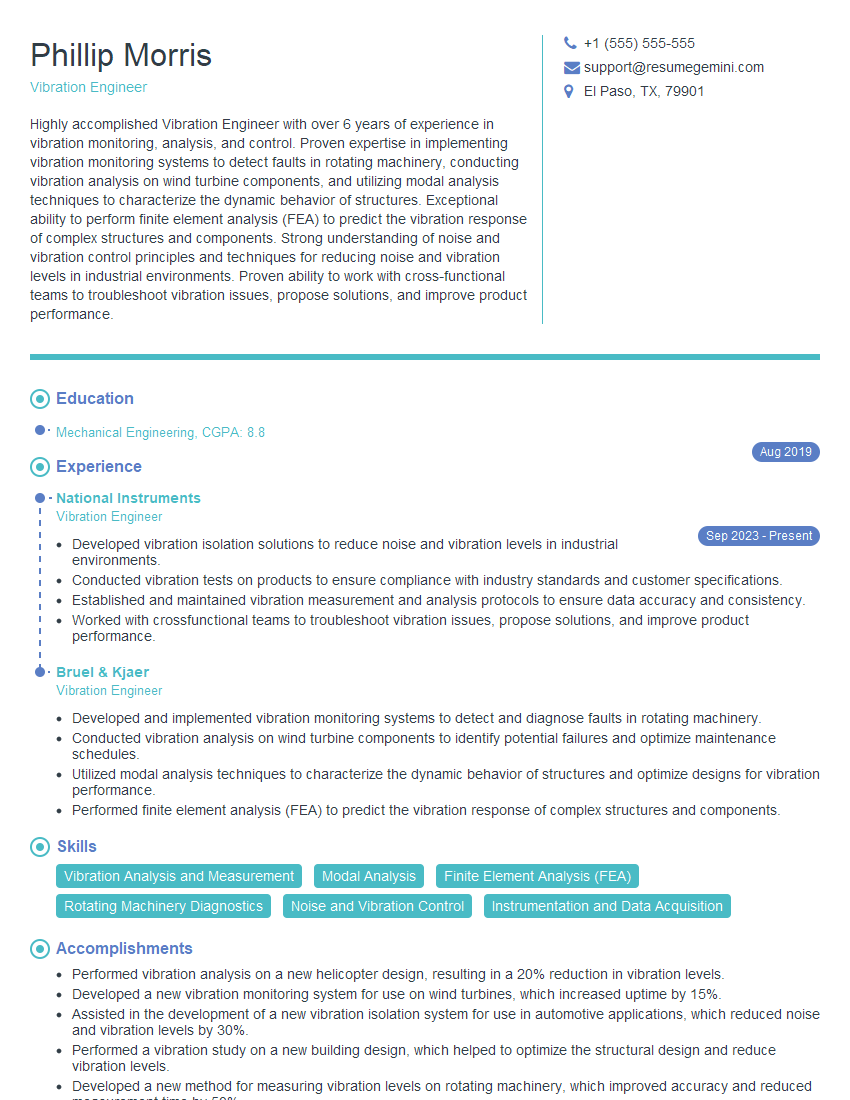
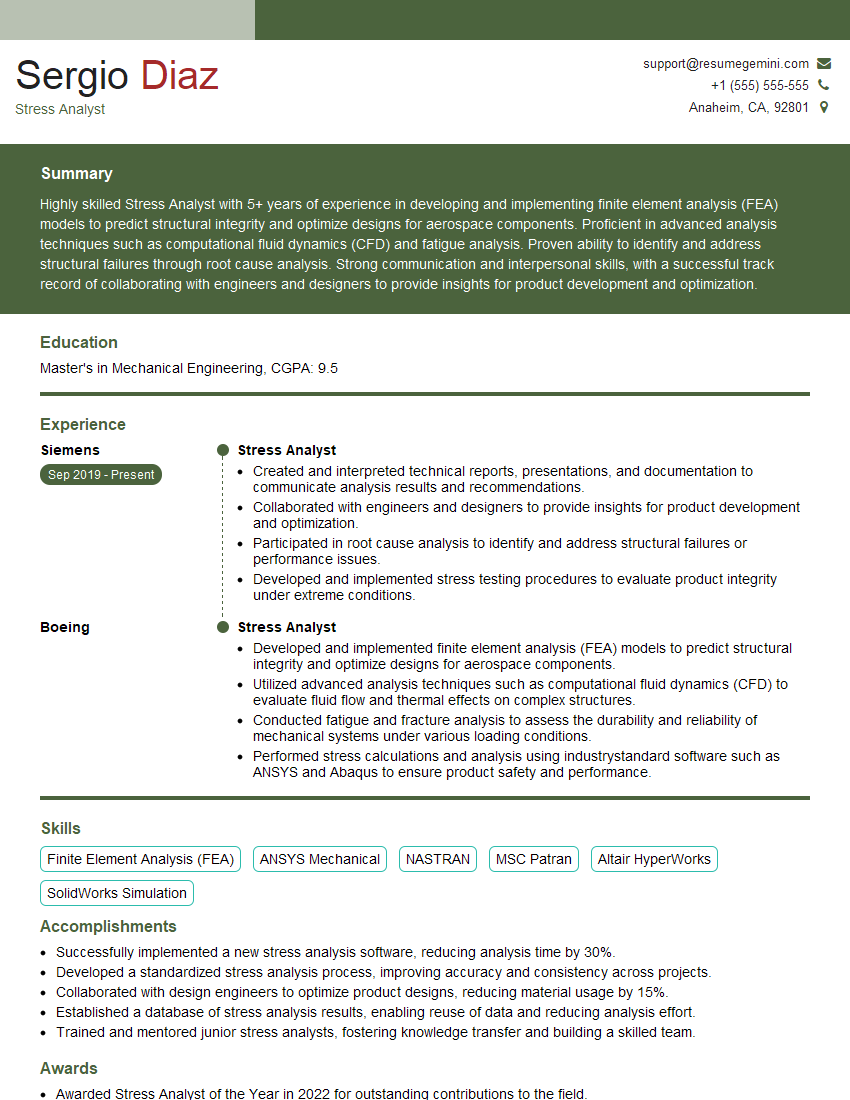
Mastering Load Dynamics and Physics opens doors to exciting and rewarding careers in various engineering fields, offering opportunities for innovation and problem-solving. A strong understanding of these principles is highly valued by employers. To significantly boost your job prospects, it’s crucial to present your skills and experience effectively through a well-crafted resume. An ATS-friendly resume is key to getting past applicant tracking systems and landing interviews. We strongly recommend using ResumeGemini to build a professional and impactful resume tailored to your specific skills and experience in Load Dynamics and Physics. ResumeGemini provides examples of resumes specifically designed for this field to help you get started.
Explore more articles
Users Rating of Our Blogs
Share Your Experience
We value your feedback! Please rate our content and share your thoughts (optional).
What Readers Say About Our Blog
Really detailed insights and content, thank you for writing this detailed article.
IT gave me an insight and words to use and be able to think of examples