Are you ready to stand out in your next interview? Understanding and preparing for Knowledge of Advanced Machining Techniques interview questions is a game-changer. In this blog, we’ve compiled key questions and expert advice to help you showcase your skills with confidence and precision. Let’s get started on your journey to acing the interview.
Questions Asked in Knowledge of Advanced Machining Techniques Interview
Q 1. Explain the difference between subtractive and additive manufacturing processes.
Subtractive and additive manufacturing represent fundamentally different approaches to creating parts. Subtractive manufacturing, like traditional machining, starts with a larger block of material and removes material to achieve the desired shape. Think of sculpting a statue from a block of marble – you’re subtracting material to reveal the form. Additive manufacturing, or 3D printing, builds the part layer by layer from a digital design, adding material until the final shape is complete. Imagine building a LEGO castle – you’re adding pieces to create the structure.
- Subtractive Manufacturing: Examples include milling, turning, drilling, and grinding. It’s precise for complex geometries but can generate waste material and be less efficient for intricate designs.
- Additive Manufacturing: Examples include Fused Deposition Modeling (FDM), Stereolithography (SLA), and Selective Laser Melting (SLM). It’s ideal for complex shapes and prototyping but can be slower and have limitations in material selection and surface finish.
The choice between these methods depends heavily on factors like part complexity, material properties, production volume, and cost.
Q 2. Describe your experience with various CNC machining centers (e.g., milling, turning, grinding).
My experience encompasses a wide range of CNC machining centers. I’ve extensively worked with 3-axis and 5-axis vertical milling machines, performing operations such as roughing, finishing, pocketing, and contouring on various materials including aluminum, steel, and plastics. I’m also proficient with CNC turning centers, including live tooling capabilities, for producing cylindrical parts with complex features. Furthermore, I have experience with CNC grinding machines for achieving high precision and surface finishes on intricate components. In one project, I programmed a 5-axis milling machine to create a highly complex impeller blade, requiring precise control of tool orientation and trajectory. In another instance, I utilized a CNC lathe with live tooling to efficiently machine a series of stepped shafts, minimizing setup time and maximizing throughput.
Q 3. What are the common types of cutting tools used in advanced machining, and when would you choose each?
The choice of cutting tool depends heavily on the material being machined, the desired surface finish, and the machining operation. Common types include:
- End Mills: Used for milling operations, available in various geometries (ball nose, flat end, etc.) for different applications. A ball nose end mill is excellent for creating smooth curves, while a flat end mill is better for creating sharp corners.
- Drills: Used for creating holes. Twist drills are common for general-purpose drilling, while specialized drills exist for specific materials or hole types (e.g., countersinks).
- Turning Tools: Used in lathe operations, including cutting tools (for facing, turning, grooving) and boring tools. The specific geometry (e.g., insert shape, cutting edge angle) is chosen based on the desired cut and material.
- Grinding Wheels: Used in grinding operations to achieve extremely fine surface finishes and high precision. Different abrasive materials and bond types cater to specific material removal rates and surface quality requirements.
For example, when machining hardened steel, I would choose carbide inserts with a high wear resistance. When machining aluminum, a high-speed steel tool with a sharp cutting edge could be suitable for smoother cuts and better surface finishes.
Q 4. How do you select the appropriate cutting parameters (speed, feed, depth of cut) for a given material and operation?
Selecting appropriate cutting parameters is crucial for efficiency, accuracy, and tool life. The process involves considering the material being machined, the cutting tool geometry, and the desired surface finish. I typically follow these steps:
- Consult Machinability Data Handbooks: These provide recommended cutting speeds, feeds, and depths of cut for various material-tool combinations.
- Consider Tool Geometry: The tool’s geometry affects its ability to cut effectively. For example, a smaller radius end mill needs lower feed rates to avoid excessive stress.
- Start Conservatively: Begin with parameters slightly lower than the recommended values and gradually increase them while monitoring for tool wear, surface finish, and dimensional accuracy.
- Monitor Tool Life: Regularly inspect the tool for signs of wear. Excessive wear indicates the need to adjust parameters or replace the tool.
- Utilize CAM Software: Modern CAM software can help optimize cutting parameters based on the toolpath and material properties, further enhancing efficiency and reducing risks.
For instance, when machining a titanium alloy, the recommended speed and feed rates would be significantly lower compared to machining aluminum due to titanium’s higher strength and tendency to work-harden. It’s crucial to experiment to find the sweet spot for optimal performance and tool lifespan.
Q 5. Explain the concept of tool wear and how it impacts machining accuracy and efficiency.
Tool wear is the gradual degradation of the cutting tool’s edge during machining. This occurs due to friction, heat, and abrasive wear from the workpiece material. It has a significant impact on machining accuracy and efficiency.
- Impact on Accuracy: As the tool wears, its cutting edge becomes dull, leading to dimensional inaccuracies, poor surface finish, and potentially, tool breakage.
- Impact on Efficiency: A worn tool requires more power and time to remove material, reducing productivity. Increased cutting forces can also lead to vibrations and chatter, further deteriorating surface quality and dimensional accuracy.
Regular tool monitoring and timely replacement are crucial. Indicators of tool wear include changes in cutting forces, increased surface roughness, and visual inspection of the cutting edge for chipping, cracks, or excessive wear.
Q 6. Describe your experience with different types of CNC programming languages (e.g., G-code, M-code).
My experience with CNC programming languages is extensive. I’m proficient in G-code, the fundamental language for CNC machines, as well as M-code, which is used for auxiliary functions (like coolant control, tool changes, etc.). I am also familiar with post-processors to customize G-code output based on specific machine control systems.
I frequently use CAM software to generate G-code from 3D models, allowing for precise and efficient toolpaths. However, I also have the ability to manually write G-code for simple or specialized operations, demonstrating a deep understanding of the underlying principles of CNC programming. For example, I have created macros for repetitive operations to streamline the programming process. A solid understanding of both G-code and M-code ensures I can address complex machining requirements.
Q 7. How do you troubleshoot common CNC machining problems (e.g., tool breakage, dimensional inaccuracies, surface finish issues)?
Troubleshooting CNC machining problems requires a systematic approach. I typically follow these steps:
- Identify the Problem: Precisely define the issue (e.g., tool breakage, dimensional inaccuracy, surface finish problems).
- Analyze the Program: Review the CNC program for errors in toolpaths, feed rates, speeds, or other parameters. Simulate the program if possible to identify potential issues before machining.
- Check Machine Setup: Ensure that the machine is properly calibrated, the workpiece is securely clamped, and the cutting tools are correctly installed and sharp.
- Examine Workpiece Material: Verify that the workpiece material is suitable for the selected cutting parameters and tool. Unexpected material properties could contribute to problems.
- Inspect the Tooling: Check for tool wear, damage, or improper clamping. Replace worn or damaged tools.
- Monitor Cutting Conditions: Pay close attention to vibration, chatter, and unusual noises during machining.
For example, if experiencing dimensional inaccuracies, I would first check the tool length compensation settings in the CNC program. If the issue persists, I would carefully examine the work holding setup to ensure the workpiece is not moving during machining. If the problem is poor surface finish, I might investigate the cutting parameters, consider adjusting the feed rate, or try a different cutting tool. Experience and a structured approach are key to quickly diagnosing and solving CNC machining problems.
Q 8. What are your experiences with CAD/CAM software? Name specific software and your proficiency level.
Throughout my career, I’ve extensively used various CAD/CAM software packages. My proficiency spans from basic part modeling to advanced CNC programming. I’m highly proficient in Mastercam, having used it for over eight years to design tooling, create CNC programs for complex parts, and simulate machining processes to identify potential collisions or inefficiencies before actual machining. I’m also proficient in Fusion 360, which I utilize for its collaborative capabilities and its integrated design and manufacturing workflow. I have experience with SolidWorks CAM, primarily for its excellent surfacing capabilities and its user-friendly interface for less intricate projects. My experience level with each package ranges from expert (Mastercam) to intermediate (Fusion 360 and SolidWorks CAM). I can confidently adapt to new CAD/CAM software as needed, given my solid foundation in design principles and machining practices.
Q 9. Explain the importance of workholding and fixturing in advanced machining.
Workholding and fixturing are absolutely critical in advanced machining. Think of it like this: you can have the most precise machine tool in the world, but if the workpiece isn’t securely held, you’ll get inaccurate and potentially dangerous results. Effective workholding ensures the part remains stable throughout the machining process, preventing vibrations, chatter (unwanted vibrations during machining), and deflection (bending of the part under load), all of which compromise precision and surface finish. Fixturing, on the other hand, involves designing and building custom setups to hold parts in the desired orientation for specific operations. It’s particularly crucial for complex shapes or mass production runs. A poorly designed fixture can lead to inaccurate machining, damaged parts, or even machine damage. For example, in high-speed milling, robust fixturing is paramount to avoid workpiece movement resulting in tool breakage or part failure. I’ve worked extensively with various workholding techniques, from simple vises and chucks to complex, multi-axis fixtures designed using CAD software for optimal clamping forces and part accessibility.
Q 10. How do you ensure the quality and precision of machined parts?
Ensuring quality and precision involves a multi-faceted approach that begins even before the machining process itself. This begins with meticulous planning, employing rigorous quality control measures at each step. It starts with careful part design and tolerance analysis (discussed further in a later question), then selecting the appropriate machining strategy. During the machining process, regular checks using calibrated measuring instruments like CMM (Coordinate Measuring Machine) or micrometers are essential to detect any deviations from specifications. In-process inspection allows for immediate correction of errors, preventing the production of scrap parts. Post-processing includes thorough cleaning and inspection of the finished parts, often utilizing advanced techniques such as surface roughness measurements or optical inspections for micro-level imperfections. Statistical Process Control (SPC) charts are used to monitor key parameters and identify potential issues before they escalate. Finally, documentation of the entire process is crucial for traceability and continuous improvement. I’ve consistently implemented these procedures to deliver parts that meet or exceed customer expectations.
Q 11. Describe your understanding of tolerance analysis and its relevance to machining.
Tolerance analysis is the process of determining the allowable variation in the dimensions and geometry of a machined part. It’s crucial because it bridges the gap between the design intent and the manufacturing process, specifying the acceptable range of variation. In machining, tolerances dictate the accuracy and precision required. Without a clear understanding of tolerances, it’s impossible to determine the appropriate machining parameters, tooling, and inspection methods. For instance, a part with tight tolerances might require advanced machining techniques like ultra-precision grinding and high-precision tooling, while a part with looser tolerances could be produced using standard milling or turning processes. I use Geometric Dimensioning and Tolerancing (GD&T) standards to accurately interpret tolerance specifications on engineering drawings and apply them in the programming and machining phases. Misinterpreting tolerances can lead to costly rework or even scrap parts, so a thorough understanding is critical.
Q 12. Explain the principles of different machining processes, such as turning, milling, drilling, and grinding.
Let’s break down the principles of these common machining processes:
- Turning: This subtractive process uses a rotating workpiece and a cutting tool that moves along the workpiece’s axis. It’s primarily used to create cylindrical shapes. Think of shaping a wooden dowel with a lathe; the wood rotates, and the tool removes material.
- Milling: This involves a rotating cutting tool that removes material from a stationary workpiece. It’s versatile and can create a wide variety of shapes, from simple planar surfaces to complex three-dimensional features. Imagine a drill bit carving a flat surface into a block of wood – that’s essentially milling.
- Drilling: This process utilizes a rotating drill bit to create holes in a workpiece. It’s relatively straightforward, but precision and hole quality depend heavily on the drill bit sharpness, feed rate, and machine stability.
- Grinding: Grinding uses an abrasive wheel to remove very small amounts of material from a workpiece, achieving high surface finish and precision. It’s ideal for creating precise dimensions and smooth surfaces. Think of sharpening a knife using a whetstone – that’s a form of grinding.
Understanding the principles of each process is essential for selecting the most efficient and cost-effective method for a given part.
Q 13. How do you interpret engineering drawings and technical specifications related to machining?
Interpreting engineering drawings and technical specifications is fundamental to my work. I’m proficient in reading and understanding various drawing standards, including ANSI (American National Standards Institute) and ISO (International Organization for Standardization). I start by thoroughly reviewing the drawing to understand the part’s geometry, dimensions, tolerances, surface finishes, and material specifications. I pay close attention to GD&T symbols to ensure that I meet the design intent accurately. Any ambiguities or unclear specifications are clarified with the design engineers to prevent errors. Technical specifications provide details on machining parameters, such as cutting speeds, feed rates, and depth of cut, that are crucial for generating efficient and accurate CNC programs. I have experience with a variety of material specifications (e.g., aluminum alloys, titanium, stainless steel, plastics) and their implications on the appropriate machining techniques.
Q 14. Describe your experience with different types of machine tool accessories (e.g., chucks, collets, tooling systems).
My experience encompasses a wide range of machine tool accessories. I’m familiar with different types of chucks (e.g., 3-jaw, 4-jaw, collet chucks), each suited for specific workpiece shapes and holding requirements. I understand the importance of selecting the right chuck jaws for optimal concentricity and grip. Collets provide precise and repeatable clamping for smaller diameter workpieces, offering high accuracy. My experience extends to various tooling systems, including those with quick-change capabilities for increased efficiency. I am also familiar with work-holding devices like vises, magnetic chucks, and specialized fixtures for various applications. The choice of accessories significantly impacts the machining process’s accuracy, efficiency, and safety. For example, using a worn chuck can lead to inaccurate machining, while improper collet selection can damage the workpiece. I prioritize proper selection and maintenance of all accessories to guarantee optimum machining performance.
Q 15. What safety precautions do you take while operating CNC machines?
Safety is paramount when operating CNC machines. My approach is layered, starting with a thorough pre-operation check of the machine and tooling. This includes verifying that all guards are in place and functioning correctly, checking for loose components, and ensuring the proper tooling is securely mounted. I always wear appropriate personal protective equipment (PPE), including safety glasses, hearing protection, and steel-toed boots. Before starting any machining operation, I carefully review the program to verify that the toolpaths are correct and safe, checking for potential collisions. During operation, I maintain a safe distance from the moving parts of the machine, and I never reach into the machine while it’s running. Finally, regular maintenance is crucial to prevent unexpected malfunctions, which could lead to accidents. For instance, I meticulously inspect the coolant system to ensure it’s functioning correctly, preventing overheating and unexpected leaks. In essence, my approach to safety is proactive, preventative, and consistently adheres to strict safety protocols.
Career Expert Tips:
- Ace those interviews! Prepare effectively by reviewing the Top 50 Most Common Interview Questions on ResumeGemini.
- Navigate your job search with confidence! Explore a wide range of Career Tips on ResumeGemini. Learn about common challenges and recommendations to overcome them.
- Craft the perfect resume! Master the Art of Resume Writing with ResumeGemini’s guide. Showcase your unique qualifications and achievements effectively.
- Don’t miss out on holiday savings! Build your dream resume with ResumeGemini’s ATS optimized templates.
Q 16. How do you maintain and care for CNC machine tools?
Maintaining CNC machine tools is essential for ensuring their longevity, accuracy, and safety. My routine involves daily checks of coolant levels, lubrication points, and the overall cleanliness of the machine. This includes removing chips and debris to prevent clogging and damage. Weekly maintenance includes a more thorough inspection of the machine’s components, such as the spindle, bearings, and guideways. I also check for any signs of wear or damage. Regular calibration and alignment of the machine are also vital for maintaining accuracy. I use precision measuring tools to check the alignment of the axes and make adjustments as needed. For instance, I’ll use a dial indicator to measure any runout in the spindle. Preventive maintenance, such as replacing worn parts, is critical to avoid costly downtime and potential safety hazards. For example, replacing worn-out tool holders before they fail prevents costly damage to the machine and the workpiece. Furthermore, I meticulously maintain detailed records of all maintenance activities, tracking component replacements and service intervals to allow for predictive maintenance and prevent unexpected breakdowns.
Q 17. What are your experiences with different types of materials used in advanced machining?
My experience spans a wide range of materials commonly used in advanced machining, including various steels (stainless, tool steels, high-speed steels), aluminum alloys, titanium alloys, and even some exotic materials like Inconel and Hastelloy. Each material presents unique challenges and requires a tailored approach. For example, machining titanium alloys demands specialized tooling due to their high strength and tendency to work-harden. I have extensive experience selecting the appropriate cutting tools, feeds, speeds, and coolants for optimal results and surface finish, while minimizing tool wear. Working with stainless steel often necessitates specific coolants to prevent galling, while aluminum alloys require different strategies to manage chip evacuation and prevent built-up edge on the cutting tools. My knowledge extends to understanding the material properties – yield strength, ductility, thermal conductivity – and how they impact machining parameters and the resultant surface integrity of the final product. I’ve also worked with composite materials, requiring careful consideration of the individual component properties and their interaction during machining.
Q 18. Describe your experience with automated machining systems.
I have significant experience with automated machining systems, including robotic cells and automated loading/unloading systems. This includes programming and troubleshooting robots for material handling and machine tending. My experience extends to integrating various automated systems to create a cohesive and efficient manufacturing process. For example, I worked on a project where we implemented a robotic system to automate the loading and unloading of parts from a CNC milling machine. This significantly increased productivity and reduced cycle times. I’m proficient in using various software packages for robotic programming and simulation, allowing for virtual testing and optimization before implementing changes in the physical system. Understanding the limitations of each system and troubleshooting any malfunctions are also crucial skills I’ve developed. This often involves analyzing error messages, reviewing system logs, and applying problem-solving techniques to identify and resolve issues quickly. I also have experience in setting up and maintaining automated quality control systems integrated into these automated machining processes, allowing for real-time monitoring and feedback.
Q 19. Explain your understanding of statistical process control (SPC) in machining.
Statistical Process Control (SPC) is a crucial aspect of maintaining consistent quality in machining. It involves using statistical methods to monitor and control the variation in a manufacturing process. In my experience, I use SPC charts, like control charts (X-bar and R charts, for example), to track key process parameters like surface roughness, dimensional tolerances, and tool wear. These charts help identify trends and patterns in the data, allowing me to detect and correct any deviations from the desired specifications before they lead to significant defects. For example, an upward trend in the R-chart (range chart) may signal increasing tool wear, prompting a tool change. By continuously monitoring these parameters, we can minimize scrap, reduce rework, and ultimately improve the overall efficiency and quality of the machining process. I understand the importance of establishing control limits and interpreting the data to distinguish between common cause and special cause variations. Understanding these variations allows for efficient root cause analysis, a critical step in resolving process issues and avoiding future errors. This includes using techniques like Pareto analysis to prioritize areas needing immediate attention.
Q 20. How do you manage and optimize machining processes for increased productivity and efficiency?
Optimizing machining processes for increased productivity and efficiency is a multifaceted task. My approach starts with a thorough understanding of the process requirements, including the desired tolerances, surface finish, and material properties. I then use a combination of techniques to enhance productivity. This includes optimizing cutting parameters such as feed rate, spindle speed, and depth of cut based on the chosen tooling and material. I often utilize simulation software to predict machining times and optimize toolpaths, minimizing non-cutting moves and ensuring efficient material removal. Additionally, I focus on reducing setup times by using efficient fixturing techniques and implementing lean manufacturing principles to streamline the workflow. For example, I’ve implemented 5S methodology (Sort, Set in Order, Shine, Standardize, Sustain) in my workspace to improve organization and reduce wasted time searching for tools or materials. Moreover, implementing preventative maintenance procedures, as previously discussed, reduces machine downtime and boosts overall productivity. Continuous monitoring of process parameters and using data analysis (such as SPC) allows for identifying bottlenecks and implementing corrective measures to improve overall efficiency.
Q 21. Explain your experience with different types of surface treatments for machined components.
My experience with surface treatments for machined components encompasses a range of techniques aimed at enhancing various properties, such as corrosion resistance, wear resistance, and surface aesthetics. These treatments include anodizing for aluminum components, which provides excellent corrosion resistance and can improve wear resistance. For steel components, I’ve utilized processes like plating (e.g., chrome, nickel, zinc) to enhance corrosion resistance and improve surface hardness. Hard coatings, such as TiN (Titanium Nitride) or DLC (Diamond-like Carbon), are often applied to cutting tools and other components to improve wear resistance and reduce friction. I have also worked with processes like shot peening to induce compressive residual stresses in the surface, thus improving fatigue life. The choice of surface treatment depends heavily on the application requirements of the final component. For example, a highly corrosion-resistant coating is essential for components exposed to harsh environments, while a hard coating might be preferred for components subjected to high wear and tear. The selection process also involves considerations of cost-effectiveness and environmental impact.
Q 22. Describe your problem-solving approach when encountering unexpected issues during machining operations.
My approach to unexpected machining issues is systematic and data-driven. I begin by meticulously documenting the problem: what happened, when it happened, machine settings, tool condition, and material properties. Then, I employ a structured troubleshooting method, often following a ‘5 Whys’ approach to get to the root cause. This involves repeatedly asking ‘Why?’ until the fundamental issue is identified. For instance, if a part is consistently undersized, I might ask: Why is it undersized? Because the tool is worn. Why is the tool worn? Because the cutting speed was too high. Why was the cutting speed too high? Because the program wasn’t correctly set up. Why wasn’t the program correctly set up? Because the initial setup was rushed. This process highlights the true problem: insufficient planning, not simply a worn tool. After identifying the root cause, I implement corrective actions, verify the solution, and update documentation to prevent recurrence. Finally, a post-mortem analysis helps refine my processes for future projects.
Q 23. What is your experience with measuring and inspection tools (e.g., calipers, micrometers, CMM)?
I’m proficient in using a wide range of measuring and inspection tools. My experience includes using dial calipers for precise linear measurements, micrometers for even finer tolerances (down to 0.001mm), and Coordinate Measuring Machines (CMMs) for complex three-dimensional inspections of intricate parts. I understand the importance of proper calibration and the inherent limitations of each tool. For example, while calipers offer quick measurements, micrometers provide greater accuracy. CMMs, on the other hand, are ideal for complex geometries and statistical process control (SPC) analysis, providing detailed data on dimensional accuracy and surface finish. I’m also familiar with various software packages used to interface with CMMs and interpret the collected data. One project involved using a CMM to identify minute variations in a batch of injection-molded components – ultimately preventing a costly recall.
Q 24. Describe your familiarity with different types of machining fluids and their functions.
Machining fluids serve several critical functions, primarily cooling and lubrication. Different fluids are chosen depending on the material being machined, the machining process, and the desired surface finish. I’m familiar with various types including:
- Water-soluble fluids: These are environmentally friendly and offer good cooling capabilities. They are commonly used in many operations due to their cost-effectiveness.
- Oil-based fluids: Provide excellent lubrication, especially for difficult-to-machine materials like titanium alloys, but their environmental impact needs to be considered.
- Synthetic fluids: Offer a balance between cooling and lubrication, often boasting improved performance compared to traditional options, especially in high-speed machining.
- Specialty fluids: These fluids might include additives to improve specific properties such as corrosion inhibition, biodegradability, or enhanced lubricity.
Selecting the wrong fluid can lead to poor surface finish, reduced tool life, or even damage to the machine. For instance, using a water-soluble fluid with a high concentration of chlorine can cause corrosion on certain metals.
Q 25. How do you ensure the dimensional accuracy and surface finish of machined parts meet the required specifications?
Ensuring dimensional accuracy and surface finish requires a multi-faceted approach. It begins with proper process planning. This includes selecting the correct cutting tools, determining optimal machining parameters (speeds, feeds, depths of cut), and employing appropriate workholding techniques to prevent vibration and deflection. Precise machine setup is critical; this involves careful tool presetting and alignment, as well as regular machine calibration. In-process monitoring using tools like dial indicators or online measurement systems helps detect deviations early. Post-machining inspection using the measurement tools previously discussed (calipers, micrometers, CMM) ensures conformance to specifications. Furthermore, techniques like automated tool changing, adaptive control, and the use of high-precision machine tools significantly enhance accuracy. For example, in a recent project, employing adaptive control reduced part variation by 30%.
Q 26. Explain your experience with different types of cutting fluids (e.g., oil-based, water-soluble).
My experience encompasses both oil-based and water-soluble cutting fluids. Oil-based fluids, generally mineral oils or synthetics, offer superior lubrication but can be messy, less environmentally friendly, and pose fire hazards. I use these primarily on tougher materials where lubrication is paramount, like stainless steel or titanium. Conversely, water-soluble fluids, often emulsions of oil and water with additives, provide good cooling and are more environmentally friendly. They’re more commonly used on materials like aluminum or mild steel, where cooling is a major concern. The choice depends on many factors: the material’s properties, the machining operation, environmental considerations, and the specific requirements of the project. For example, high-speed machining often favors synthetic fluids with enhanced properties for superior performance and extended tool life.
Q 27. Explain your understanding of the different types of CNC machine control systems (e.g., Fanuc, Siemens, Heidenhain).
I have hands-on experience with several CNC machine control systems, including Fanuc, Siemens, and Heidenhain. Each system has its own programming language (G-code) and user interface, but the underlying principles of CNC programming remain consistent. Fanuc systems are known for their robustness and widespread use, often found in industrial applications; Siemens systems are known for their integrated automation capabilities; and Heidenhain systems offer advanced features for high-precision machining. I can comfortably create, edit, and troubleshoot programs on any of these systems, adapting to the nuances of each. Understanding the control system’s capabilities and limitations is essential for efficient and accurate machining. For instance, understanding the different interpolation methods within each system is crucial for optimizing surface finish and reducing machining time.
Q 28. Describe your experience working with different types of materials and their specific machining challenges.
My experience spans various materials, each presenting its own unique machining challenges:
- Aluminum: Machining aluminum requires high speeds and feeds to avoid work hardening and achieve a good surface finish. It’s also prone to chip welding, so proper coolant selection is critical.
- Steel: Steel presents a wide range of machinability depending on the alloy content and heat treatment. High-strength steels require specialized tooling and optimized cutting parameters to avoid tool breakage.
- Titanium: Machining titanium is notoriously difficult due to its high strength and tendency to gall. Special tooling, such as coated carbide inserts, and optimal cutting fluids are essential to prevent tool wear and achieve the desired surface finish. It also requires robust machine tools to handle the forces involved.
- Plastics: Plastics require lower speeds and feeds to prevent melting and distortion, and often benefit from specialized cutting tools to avoid chipping or tearing.
Each material requires a tailored approach. Understanding material properties and their influence on the cutting process is crucial for optimal machining results and efficient production.
Key Topics to Learn for a Knowledge of Advanced Machining Techniques Interview
- CNC Programming & Operation: Understand G-code, CAM software, and the practical application of various CNC machining centers (e.g., milling, turning, lathe operations). Be prepared to discuss different programming strategies and troubleshooting techniques.
- Advanced Machining Processes: Demonstrate familiarity with techniques beyond basic milling and turning, such as EDM (Electrical Discharge Machining), Wire EDM, Laser Machining, and other specialized processes. Be ready to discuss their applications and limitations.
- Material Science & Selection: Showcase your understanding of various workpiece materials (metals, plastics, composites) and their machinability characteristics. Explain how material properties influence machining parameters and tool selection.
- Tooling & Tool Management: Discuss different cutting tools (end mills, drills, inserts), their geometries, and proper selection based on material and application. Explain concepts like tool wear, tool life, and effective tool management strategies.
- Precision Measurement & Quality Control: Understand various inspection methods (e.g., CMM, calipers, micrometers) and their applications in ensuring dimensional accuracy and surface finish. Explain your approach to quality control and troubleshooting dimensional discrepancies.
- Fixture Design & Workholding: Demonstrate your understanding of designing and selecting appropriate workholding devices to ensure accurate and efficient machining operations. Be prepared to discuss various clamping methods and their suitability for different parts.
- Process Optimization & Lean Manufacturing: Discuss strategies for improving machining efficiency, reducing waste, and optimizing production processes. Show your understanding of Lean Manufacturing principles and their application in a machining environment.
- Safety Procedures & Regulations: Highlight your understanding of safety protocols and regulations related to advanced machining equipment and processes. This demonstrates a commitment to a safe working environment.
Next Steps
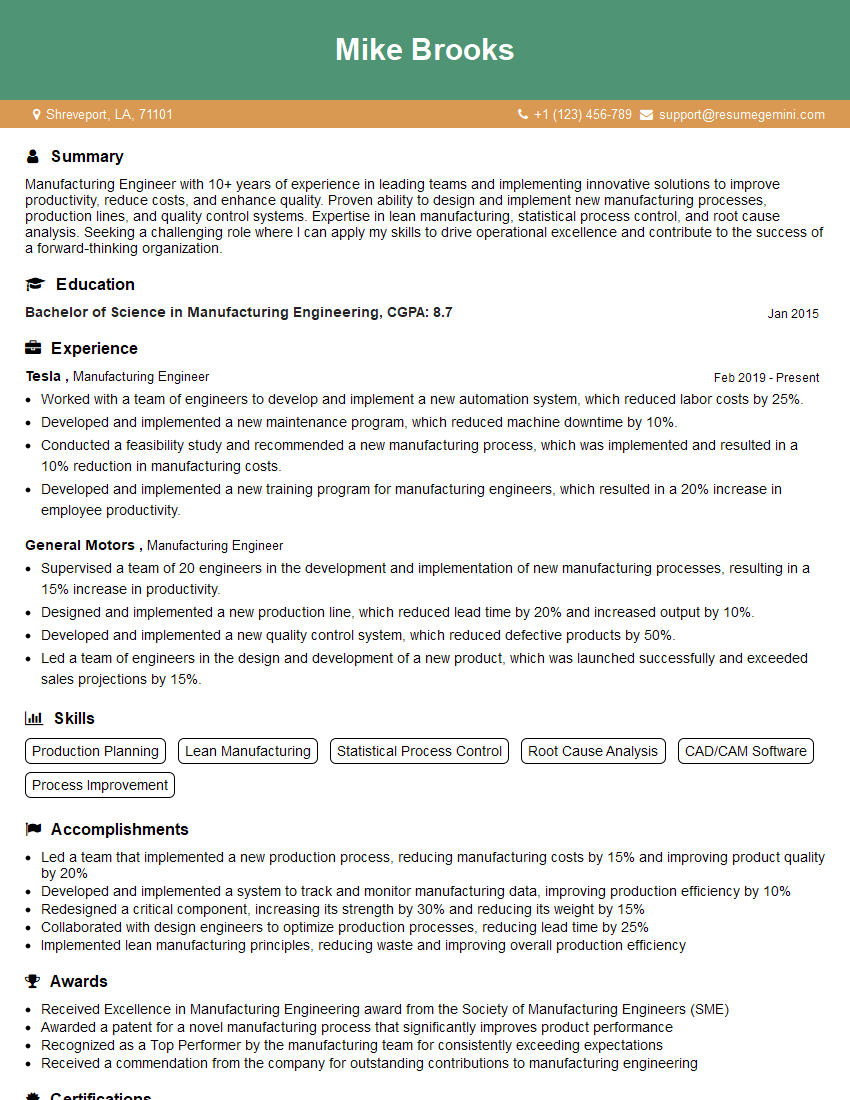
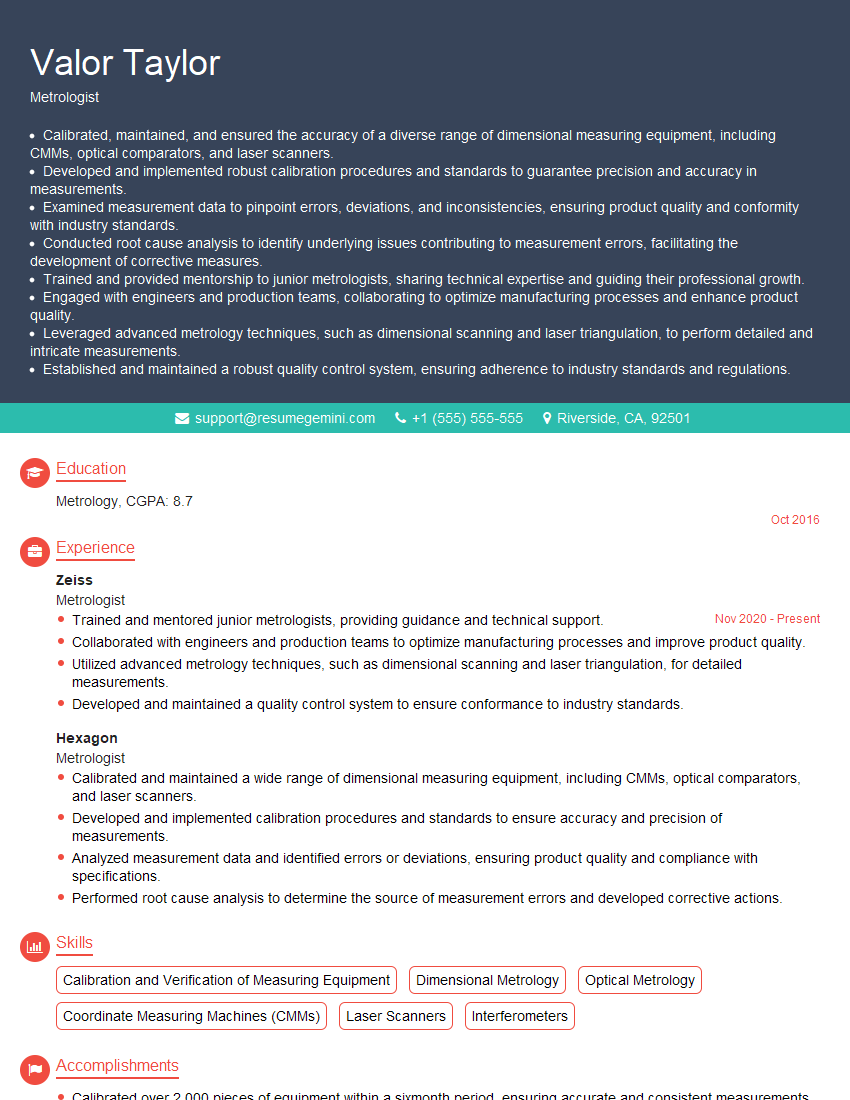
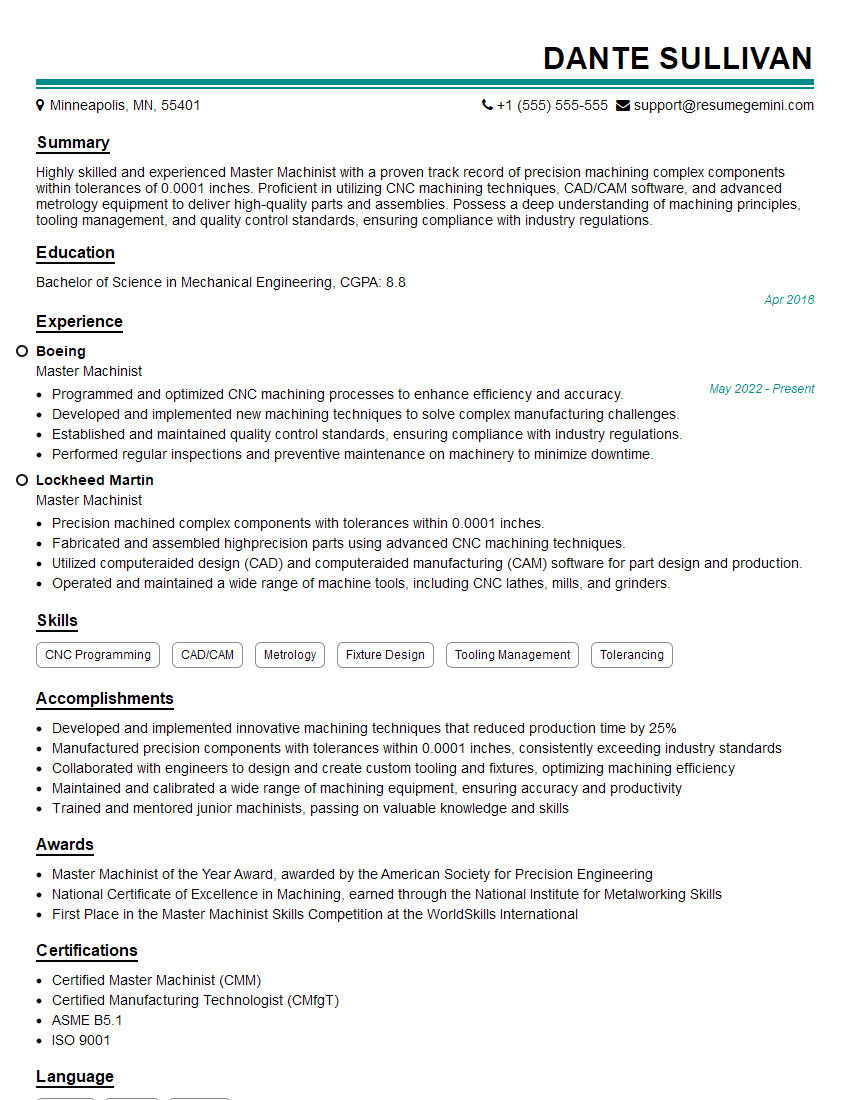
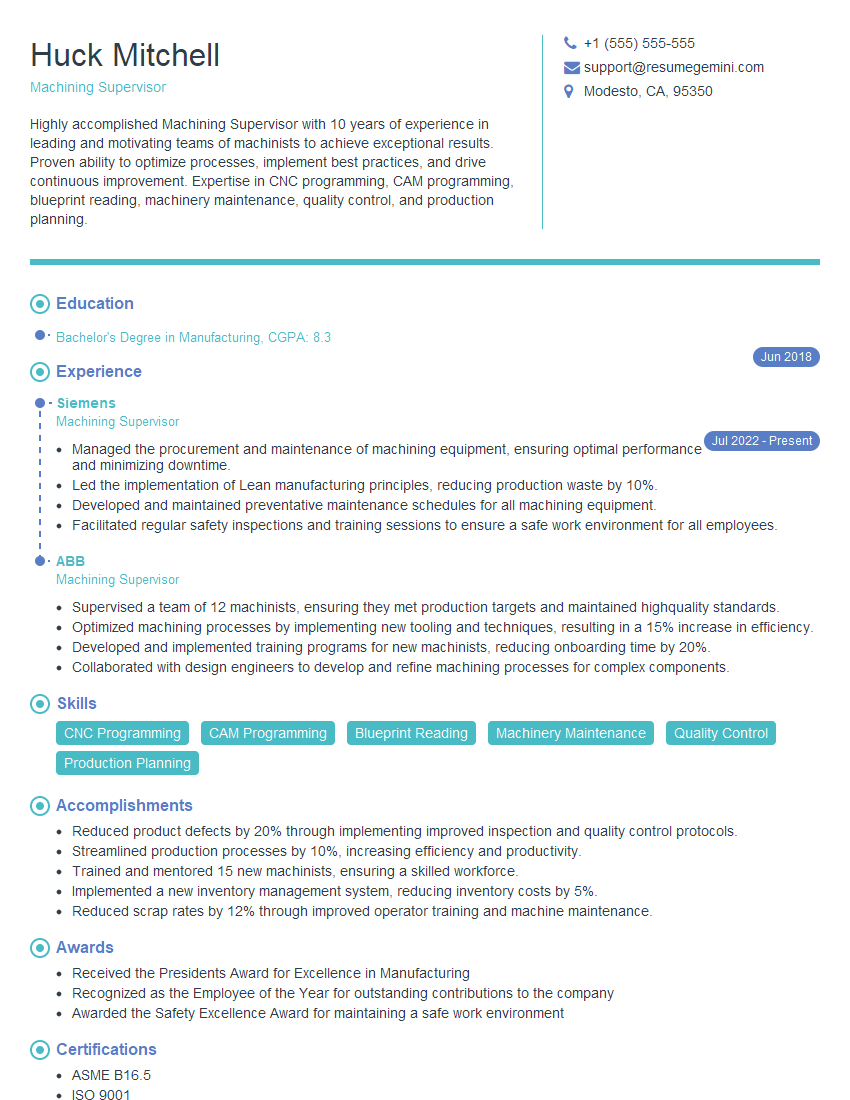
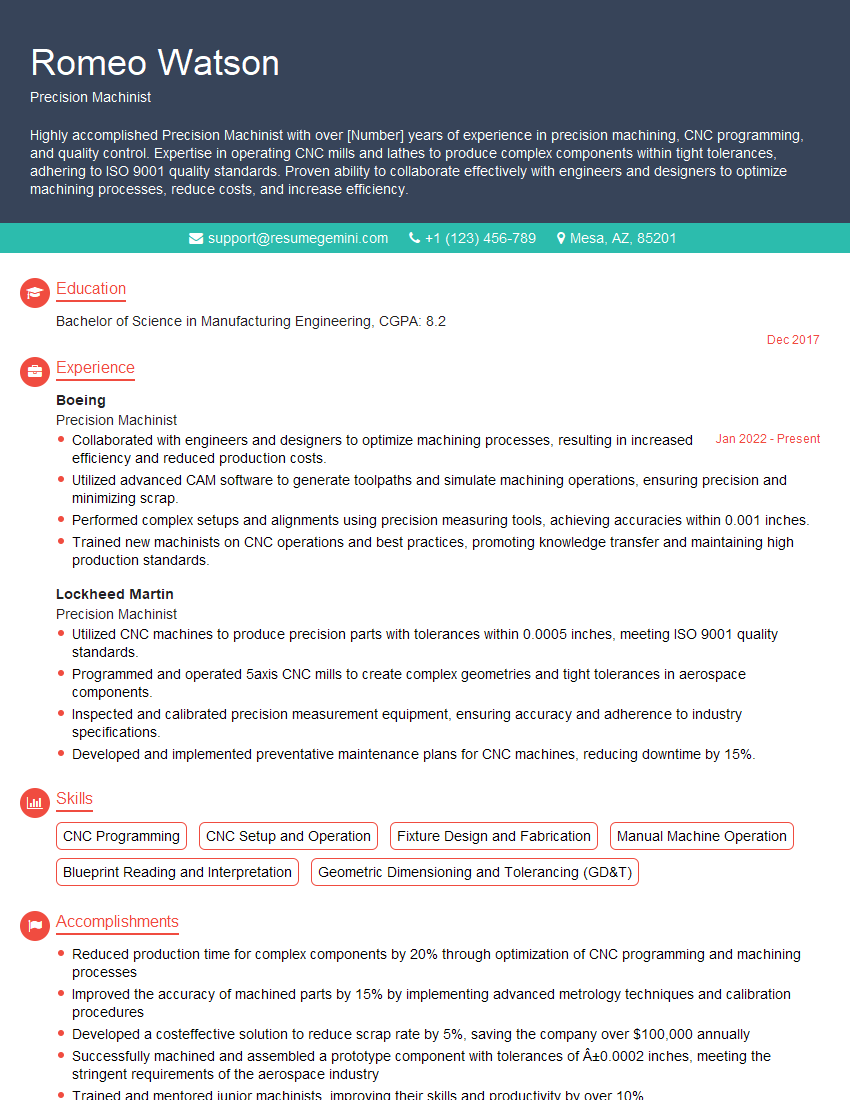
Mastering advanced machining techniques is crucial for career advancement in this highly skilled field. It opens doors to more challenging and rewarding roles with higher earning potential. To maximize your job prospects, it’s essential to create an ATS-friendly resume that effectively highlights your skills and experience. ResumeGemini is a trusted resource that can help you build a professional and impactful resume. Examples of resumes tailored to showcasing expertise in Knowledge of Advanced Machining Techniques are available to guide you through the process.


Explore more articles
Users Rating of Our Blogs
Share Your Experience
We value your feedback! Please rate our content and share your thoughts (optional).
What Readers Say About Our Blog
Really detailed insights and content, thank you for writing this detailed article.
IT gave me an insight and words to use and be able to think of examples