Interviews are more than just a Q&A session—they’re a chance to prove your worth. This blog dives into essential Gagné’s Nine Events of Instruction interview questions and expert tips to help you align your answers with what hiring managers are looking for. Start preparing to shine!
Questions Asked in Gagné’s Nine Events of Instruction Interview
Q 1. Explain Gagné’s Nine Events of Instruction.
Gagné’s Nine Events of Instruction is a widely recognized instructional design model that outlines nine distinct steps crucial for effective learning. It’s not just a list of steps; it’s a framework for ensuring learners acquire and retain knowledge and skills. Each event builds upon the previous one, creating a structured and efficient learning experience. Think of it like building a house – you can’t put the roof on before the foundation is laid.
- Gaining Attention: Capturing the learner’s interest and focus.
- Informing Learners of Objectives: Clearly stating what learners will be able to do after completing the instruction.
- Stimulating Recall of Prior Learning: Connecting new information to existing knowledge.
- Presenting the Stimulus: Delivering the learning content in a clear, concise, and engaging manner.
- Providing Learning Guidance: Offering strategies, examples, and feedback to aid understanding.
- Eliciting Performance: Actively engaging learners through practice and application.
- Providing Feedback: Giving learners information about their performance to enhance learning.
- Assessing Performance: Evaluating learner mastery of the objectives.
- Enhancing Retention and Transfer: Facilitating the long-term retention and application of learned material in new contexts.
Q 2. Describe the role of gaining attention in the instructional process.
Gaining attention is the crucial first step in any instructional process. Without it, the remaining events are less likely to be effective. It’s about creating a hook, sparking curiosity, and making learners want to learn. Think of it as the ‘opening scene’ of a movie – it needs to grab the audience’s attention and make them want to see more.
Effective strategies include using surprising facts, posing thought-provoking questions, showing a relevant video, starting with a real-world problem, or incorporating interactive elements. For example, beginning a training on fire safety with a brief but impactful video demonstrating the rapid spread of a fire is far more engaging than simply stating the facts.
Q 3. How do you inform learners of objectives in accordance with Gagné’s model?
Informing learners of objectives is about clearly and concisely stating what they will be able to do after completing the instruction. This isn’t about simply listing topics; it’s about specifying measurable outcomes. The objectives should be stated using action verbs (e.g., identify, analyze, create) and clearly define the level of performance expected. This allows learners to understand what success looks like and focus their learning efforts effectively.
For example, instead of saying “Learn about marketing,” a more effective objective would be: “Given a case study, students will be able to identify three key marketing strategies and justify their selection with evidence from the case study.” This clear, specific objective gives learners a clear target to aim for.
Q 4. What are some effective strategies for stimulating recall of prior learning?
Stimulating recall of prior learning involves connecting new information to what learners already know. This helps learners build upon existing knowledge and makes new information more meaningful and easier to understand. Think of it as building a new floor onto an existing structure – the new floor needs to be properly connected to the existing foundation.
Effective strategies include using advance organizers (overviews, outlines), asking relevant questions to activate prior knowledge, using analogies and metaphors, and providing real-world examples that relate to learners’ experiences. For instance, when teaching a new software, you could relate its functions to a familiar process, like filing paperwork. This aids understanding and retention.
Q 5. Explain the importance of presenting the stimulus in an effective manner.
Presenting the stimulus effectively involves delivering the learning content in a way that is clear, concise, and engaging. This means using a variety of methods, including text, visuals, audio, and interactive elements. The information should be organized logically, presented in manageable chunks, and tailored to the learners’ needs and learning styles.
For example, instead of presenting a lengthy text-only lesson, you might use a combination of short videos, interactive simulations, and concise summaries to make the content more accessible and engaging. A well-designed presentation with visuals, clear headings and short paragraphs is far more effective than a wall of text.
Q 6. How do you provide learning guidance in line with Gagné’s principles?
Providing learning guidance means offering learners support and direction as they learn. This includes providing examples, analogies, and feedback. It also means explaining complex concepts in simpler terms and providing opportunities for learners to practice and apply their new knowledge. Think of a teacher guiding a student through a challenging problem; the teacher doesn’t just give the answer, but helps the student understand the process.
Effective strategies include providing clear explanations, modeling the desired behavior, offering step-by-step instructions, and providing opportunities for learners to ask questions and receive feedback. Using worked examples and providing prompts for practice significantly improves learning.
Q 7. Describe how you elicit performance during training.
Eliciting performance involves actively engaging learners through practice and application. This is where learners demonstrate their understanding and skills. It’s not just about passive listening or reading; it’s about actively doing. This is where the learning truly sticks.
Effective strategies include using various activities such as quizzes, case studies, simulations, role-playing, and projects. The more opportunities learners have to apply their knowledge and skills, the more likely they are to retain and transfer their learning to new situations. For example, after explaining a new technique, asking learners to complete a practice exercise immediately tests understanding and allows for corrective feedback.
Q 8. What techniques do you use to provide feedback during training?
Effective feedback is crucial for learning, and within Gagné’s framework, it’s intrinsically linked to the event of providing performance feedback. I employ several techniques, tailoring them to the specific learning objective and learner needs. For instance, I use immediate feedback, providing learners with information about their performance right after they complete a task or activity. This could be a simple ‘correct’ or ‘incorrect’ indication, or more detailed commentary on their response. I also leverage constructive feedback, offering suggestions for improvement rather than solely focusing on errors. This approach is especially helpful for complex tasks where learners need guidance on refining their skills. Additionally, I incorporate self-assessment tools allowing learners to check their understanding and identify areas needing further practice before receiving formal feedback from me. This promotes metacognition and fosters a sense of self-directed learning. Finally, I prioritize personalized feedback, adapting the style and level of detail based on each learner’s individual progress and understanding. A learner who’s consistently struggling may require more explicit guidance, while a more advanced learner may benefit from more open-ended feedback promoting deeper reflection.
Q 9. Explain how you assess performance using Gagné’s model.
Assessing performance within Gagné’s model is directly related to the final event: enhancing retention and transfer. It’s not just about a final test; it’s about a holistic evaluation of how well learners have mastered the material and can apply it in new contexts. I begin by clearly defining the learning outcomes – what should learners be able to *do* after the instruction? Then, I design assessment methods that directly measure those outcomes. This might involve various assessment types; for example, using multiple-choice questions to test factual recall, practical exercises to assess application of knowledge, and case studies to evaluate problem-solving skills. The assessment isn’t just about assigning grades; it’s about identifying areas of strength and weakness. I use the results to inform future instruction, refining the events of instruction to address areas where learners struggled. For example, if learners are consistently missing specific concepts in a practical exercise, it indicates the need for reinforcing those concepts through additional examples, more guided practice or alternative teaching strategies within the initial learning stages. The goal is to ensure that learners not only understand the information but also demonstrate proficiency in applying it effectively.
Q 10. How would you apply Gagné’s Nine Events to design online training?
Applying Gagné’s Nine Events to online training requires careful consideration of the unique affordances of the digital environment. Let’s take each event:
- Gaining attention: Using interactive elements like videos, animations, or gamification to capture learners’ attention at the start.
- Informing learners of objectives: Clearly stating learning goals and expectations at the outset, preferably in a concise and easily scannable format.
- Stimulating recall of prior learning: Incorporating pre-tests or quizzes to activate learners’ existing knowledge and highlight connections to new material.
- Presenting the stimulus: Utilizing a variety of multimedia resources such as videos, interactive simulations, and text, ensuring content is broken into smaller, manageable chunks.
- Providing learning guidance: Offering clear instructions, hints, and feedback throughout the learning process through embedded prompts, tooltips or progress indicators.
- Eliciting performance: Designing interactive exercises, quizzes, and simulations that require learners to actively apply their knowledge.
- Providing feedback: Giving immediate, personalized feedback through automated systems or instructor reviews. This could use AI powered feedback or personalized hints based on learners’ attempts.
- Assessing performance: Employing formative and summative assessments (like quizzes and final exams) to measure learner achievement and inform instructional improvements.
- Enhancing retention and transfer: Designing activities that encourage learners to apply their new knowledge and skills in real-world scenarios through case studies, simulations, and collaborative projects.
The key is to use the digital medium to enhance engagement and provide personalized feedback, features often harder to achieve in traditional settings.
Q 11. How would you adapt Gagné’s model for a diverse learner audience?
Adapting Gagné’s model for a diverse learner audience requires acknowledging and accommodating different learning styles, preferences, and needs. This means diversifying how each event is implemented. For example, providing multiple formats for presenting stimuli – visual, auditory, kinesthetic – caters to learners with varying learning preferences. Chunking information into smaller, digestible pieces accommodates learners with shorter attention spans or those who process information more slowly. Incorporating multilingual support and alternative formats for learners with disabilities is vital. Assessment methods should also be diverse, going beyond traditional testing to include projects, portfolios, and presentations. Providing clear and consistent communication in a way that’s accessible to everyone across different language and cognitive abilities is key. Lastly, making sure there is ample opportunity for peer-to-peer learning creates support and allows learners to learn from each others’ strengths.
Q 12. How does Gagné’s model differ from other instructional design models?
Gagné’s model differs from other instructional design models in its emphasis on learning outcomes and the specific events of instruction. Unlike some models that focus on broad principles, Gagné provides a very specific, step-by-step approach. For example, compared to ADDIE (Analysis, Design, Development, Implementation, Evaluation), which is a more general framework, Gagné’s model digs deeper into the *how* of instruction. Similarly, models like the Dick and Carey model focus on a systematic instructional development process but don’t emphasize specific events in the same way Gagné does. Gagné’s focus on nine distinct events makes it particularly useful for designing highly structured and targeted training programs, especially for complex skills. While other models provide overall design frameworks, Gagné’s offers a more granular, instructional approach.
Q 13. What are the limitations of Gagné’s Nine Events of Instruction?
While powerful, Gagné’s model does have limitations. One is its linearity; it assumes a sequential progression through the nine events. However, learning rarely proceeds so linearly; learners may need to revisit previous events, especially in complex domains. Another limitation is its simplicity. It doesn’t fully address the complexities of individual learner differences, learning contexts, or the nuanced processes of knowledge construction. It might be overly structured for some learning scenarios, neglecting the benefits of learner autonomy and discovery-based learning. Furthermore, the model can be rigid, making it challenging to adapt to rapidly evolving learning environments or highly creative, less structured training goals. It may be overly prescriptive for certain types of learning, particularly those involving creativity, problem-solving, or critical thinking. A final limitation is its focus on behavioral outcomes, potentially overshadowing the cognitive and affective aspects of learning.
Q 14. Give an example of a time you used Gagné’s model to improve learning outcomes.
I recently used Gagné’s model to revamp a training program for customer service representatives. Initially, the training lacked structure and resulted in inconsistent performance. Applying Gagné’s model, I began by clearly defining learning objectives – what specific skills and knowledge should the representatives possess? I then restructured the training, paying close attention to each event. I used engaging videos to gain attention, clearly stated objectives, stimulated recall of prior experience, provided clear guidance and examples during the training session, incorporated numerous role-playing exercises to elicit performance, provided immediate feedback using a scoring system during each role play, and finally assessed performance via a comprehensive simulation exercise. The result? A significant improvement in customer satisfaction scores and employee confidence. The structured approach facilitated better knowledge retention and more effective skill transfer. By meticulously following the nine events, I created a more effective and impactful training experience that addressed the shortcomings of the previous program.
Q 15. How do you ensure learners achieve mastery using Gagné’s framework?
Gagné’s Nine Events of Instruction provide a robust framework for ensuring learner mastery. It’s not just about covering content; it’s about strategically guiding learners through a process that promotes deep understanding and retention. The key lies in meticulously planning and executing each event. For example, gaining attention (Event 1) isn’t just about flashy visuals; it’s about connecting with learners’ prior knowledge and establishing relevance. Similarly, providing feedback (Event 8) isn’t simply about telling learners if they’re right or wrong, but about providing specific, actionable guidance for improvement. Consistent application of all nine events, with careful consideration for each learner’s needs and progress, significantly improves mastery. To achieve mastery, I would focus on:
- Formative Assessment Throughout: Regularly assess understanding during the learning process, not just at the end. This allows for timely adjustments and targeted support for struggling learners.
- Adaptive Learning Strategies: Implement strategies that adjust the pace and complexity of the learning based on individual learner progress. This might involve branching scenarios, personalized feedback, or differentiated assignments.
- Opportunities for Practice and Feedback: Incorporate ample opportunities for learners to practice applying what they’ve learned, with immediate and detailed feedback. This strengthens their understanding and identifies areas needing further attention.
- Clear Learning Objectives: Ensure learners clearly understand what they are expected to know and be able to do by the end of the instruction. This provides a clear target and promotes focused learning.
Imagine teaching someone to ride a bike. Each event would be crucial: gaining attention (showing a cool bike trick), informing learners of objectives (explaining the basics of balance and pedaling), stimulating recall (asking about their previous experience with bicycles), presenting the stimulus (demonstrating proper technique), providing learning guidance (step-by-step instructions), eliciting performance (practicing riding), providing feedback (correcting posture and pedaling), assessing performance (evaluating their riding ability), and enhancing retention and transfer (encouraging regular practice and suggesting different terrains). Each step contributes to mastery.
Career Expert Tips:
- Ace those interviews! Prepare effectively by reviewing the Top 50 Most Common Interview Questions on ResumeGemini.
- Navigate your job search with confidence! Explore a wide range of Career Tips on ResumeGemini. Learn about common challenges and recommendations to overcome them.
- Craft the perfect resume! Master the Art of Resume Writing with ResumeGemini’s guide. Showcase your unique qualifications and achievements effectively.
- Don’t miss out on holiday savings! Build your dream resume with ResumeGemini’s ATS optimized templates.
Q 16. Describe a situation where you had to adjust your instructional design based on learner feedback.
I was designing an online course on project management. Initial feedback from learners indicated that the module on risk management was too theoretical and lacked practical application. Learners felt overwhelmed by the sheer volume of information and lacked opportunities to apply the concepts. In response, I redesigned the module. I incorporated:
- Case studies: Real-world examples of risk management scenarios to make the concepts more relatable and practical.
- Interactive exercises: Short, engaging activities that allowed learners to apply their knowledge in simulated situations.
- Shorter, more focused content chunks: Breaking the information into smaller, digestible units, accompanied by frequent quizzes to reinforce understanding.
- More visual aids: Using diagrams, flowcharts, and infographics to present complex information more clearly.
This revision dramatically improved learner engagement and satisfaction. Post-revision feedback showed significantly improved understanding and application of risk management principles.
Q 17. How do you ensure the transfer of learning in your design using Gagné’s model?
Transfer of learning, applying knowledge and skills in new contexts, is crucial. Gagné’s model facilitates this by focusing on the application of learned material in realistic situations. This is primarily achieved through Events 6 (Eliciting Performance) and 9 (Enhancing Retention and Transfer). In Event 6, learners actively apply what they’ve learned. Event 9 reinforces this through:
- Stimulating Recall: Regularly revisiting the learned material in various contexts helps solidify understanding and enhances recall.
- Generalization Activities: Providing opportunities for learners to apply their knowledge and skills in different settings. This helps them understand the broader applications of what they’ve learned.
- Varied Practice: Offering diverse practice opportunities, utilizing different formats and scenarios, ensures the concepts are internalized and adaptable.
- Real-world Applications: Connecting the learned material to real-world scenarios and problems makes the knowledge more relevant and applicable.
For example, if teaching problem-solving, I would not only present problems in a classroom setting (Event 6), but also incorporate case studies from different fields, or assign a project that requires learners to apply their problem-solving skills to a real-world situation (Event 9). This bridges the gap between theoretical knowledge and practical application, enhancing the transfer of learning.
Q 18. What are some common mistakes made when applying Gagné’s Nine Events?
Common mistakes when applying Gagné’s Nine Events include:
- Ignoring Learner Analysis: Failing to adequately understand learner characteristics, prior knowledge, and learning styles leads to ineffective instruction.
- Neglecting the Importance of Feedback: Providing minimal or generic feedback hinders learner progress and mastery. Immediate and specific feedback is crucial.
- Rushing the Process: Not allowing sufficient time for each event and rushing learners through the learning process reduces comprehension and retention.
- Overlooking the Importance of Practice: Insufficient practice opportunities prevent learners from fully internalizing the material and developing proficiency.
- Failing to Promote Transfer: Not explicitly linking the learned material to real-world applications limits the practical use of the knowledge.
It’s like baking a cake; you need all the ingredients (Events) and the right procedure (sequence of Events) to get a successful outcome (learner mastery). Skipping steps or using the wrong ingredients will result in a flawed end product.
Q 19. Compare and contrast Gagné’s model with ADDIE model.
Both Gagné’s Nine Events and the ADDIE model are instructional design frameworks, but they differ in their focus and application. ADDIE (Analysis, Design, Development, Implementation, Evaluation) is a broader, more cyclical model that encompasses the entire instructional design process, from initial needs analysis to post-implementation evaluation. Gagné’s model is more focused, providing a specific sequence of nine events that guide the instructional process itself. ADDIE is a macro-level framework while Gagné’s model operates at a micro-level within the instructional design itself.
Similarities: Both emphasize systematic planning and clear objectives. Both aim for effective and efficient learning.
Differences: ADDIE is a five-stage process covering all aspects of instructional development. Gagné’s Nine Events are a specific sequence of events within the instructional phase (the ‘Development’ stage of ADDIE). ADDIE is more general and can be applied to different instructional methodologies, while Gagné’s model is more specific and prescriptive, focusing on the cognitive processes involved in learning.
Q 20. How would you incorporate technology to enhance each event of Gagné’s model?
Technology can significantly enhance each event of Gagné’s model:
- Gaining Attention: Interactive simulations, videos, and gamified elements.
- Informing Learners of Objectives: Clear, concise online learning objectives, visually presented.
- Stimulating Recall: Pre-tests, knowledge checks, and interactive quizzes.
- Presenting the Stimulus: eLearning modules, videos, interactive tutorials, and virtual labs.
- Providing Learning Guidance: Interactive exercises, hints, and feedback mechanisms within online learning platforms.
- Eliciting Performance: Online assessments, simulations, and collaborative projects.
- Providing Feedback: Automated feedback mechanisms, personalized learning dashboards, and instructor comments.
- Assessing Performance: Online quizzes, exams, and performance-based assessments.
- Enhancing Retention and Transfer: Microlearning modules, spaced repetition software, and collaborative learning tools.
For example, using a learning management system (LMS) allows for personalized feedback, tracking of progress, and efficient delivery of learning materials, encompassing several events seamlessly. Interactive simulations, widely available online, provide engaging ways to elicit performance (Event 6) and provide immediate feedback (Event 8).
Q 21. How does Gagné’s model address different learning styles?
Gagné’s model doesn’t directly address specific learning styles (like visual, auditory, kinesthetic) in its core framework. However, the flexibility of the model allows for adaptation to accommodate diverse learning preferences. The key is in the creative implementation of each event. For example:
- Visual Learners: Incorporate many visuals (charts, diagrams, videos) in the presentation of stimulus (Event 4).
- Auditory Learners: Use audio explanations, discussions, and podcasts to present information (Event 4) and provide feedback (Event 8).
- Kinesthetic Learners: Include hands-on activities, simulations, and real-world applications (Event 6) to reinforce learning.
The focus should be on offering varied modalities of instruction and providing options for learners to engage with the material in ways that best suit their learning style. For example, by providing both video lectures and textual material for the same concept, the learning experience caters to a wider range of preferences, maximizing accessibility and comprehension.
Q 22. Explain the importance of each event in the overall learning process.
Gagné’s Nine Events of Instruction provide a framework for designing effective instruction. Each event plays a crucial role in the learning process, building upon the previous one to ensure knowledge acquisition and retention. Think of it like building a house – you need a solid foundation before you can build the walls and roof. Similarly, each event in Gagné’s model contributes to a strong learning structure.
Gaining Attention: This initial step is vital to pique learners’ interest and focus their attention on the upcoming material. Without it, the rest of the events are less likely to be effective.
Informing Learners of Objectives: Clearly stating learning goals sets expectations and allows learners to focus their efforts effectively. Knowing what they’re aiming for helps learners self-regulate their learning.
Stimulating Recall of Prior Learning: Connecting new information to existing knowledge enhances comprehension and retention. This activates prior schema, creating a framework for new learning.
Presenting the Stimulus: This involves delivering the new information in a clear, concise, and engaging manner. The method used depends on the learning objective and the learners’ characteristics.
Providing Learning Guidance: This event facilitates understanding and application of the new material through techniques such as examples, analogies, and guided practice. It bridges the gap between information and understanding.
Eliciting Performance: Active engagement through practice and application reinforces learning and allows learners to assess their understanding. This is where learners actively demonstrate their knowledge.
Providing Feedback: Constructive feedback helps learners identify areas for improvement and strengthens their understanding. It’s crucial for self-correction and skill refinement.
Assessing Performance: Formal evaluation determines whether learners have achieved the learning objectives. This step ensures the effectiveness of the instruction.
Enhancing Retention and Transfer: Strategies are employed to help learners retain the information and apply it in new situations. This involves reviewing, summarizing, and providing opportunities for application in different contexts.
Q 23. Provide a specific example of how you would use each of Gagné’s nine events in a training program.
Let’s imagine a training program on using a new software application. Here’s how I’d apply Gagné’s Nine Events:
Gaining Attention: Start with a captivating video showcasing the software’s benefits and how it simplifies tasks.
Informing Learners of Objectives: Clearly state that participants will learn to navigate the interface, create documents, and utilize key features by the end of the training.
Stimulating Recall of Prior Learning: Begin by asking participants about their experience with similar software, activating their existing knowledge base.
Presenting the Stimulus: A series of short, focused modules covering each aspect of the software, using visual aids and screen recordings.
Providing Learning Guidance: Include practical examples, step-by-step instructions, and frequent check-ins during the modules to ensure understanding.
Eliciting Performance: Incorporate hands-on exercises and small group activities requiring participants to apply what they’ve learned.
Providing Feedback: Offer immediate feedback on exercises, providing both positive reinforcement and constructive criticism.
Assessing Performance: A final quiz or a practical project that assesses proficiency in using the software’s core functionalities.
Enhancing Retention and Transfer: Provide a cheat sheet, access to online resources, and suggest real-world scenarios where they can apply the software.
Q 24. What are the key differences between the cognitive and behavioral aspects of Gagné’s model?
Gagné’s model encompasses both cognitive and behavioral aspects, but they are intertwined. The cognitive aspects focus on mental processes involved in learning – understanding, remembering, problem-solving. The behavioral aspects emphasize observable actions and performance – the application of learned knowledge and skills. While distinct, they are inseparable; cognitive processes drive behavioral outcomes, and successful behaviors reinforce cognitive understanding.
For instance, understanding the principles of accounting (cognitive) leads to correctly preparing financial statements (behavioral). Conversely, the repeated practice of preparing statements (behavioral) reinforces understanding of accounting principles (cognitive).
Q 25. How does Gagné’s model support the development of higher-order thinking skills?
Gagné’s model strongly supports higher-order thinking skills by emphasizing application, analysis, and problem-solving. The events of providing learning guidance, eliciting performance, and assessing performance are particularly crucial. By presenting complex scenarios and encouraging learners to actively solve problems, Gagné’s framework promotes critical thinking, creativity, and decision-making. For example, instead of simply memorizing facts, learners might be challenged to analyze case studies, create solutions, and defend their reasoning, thereby cultivating higher-level cognitive skills.
Q 26. How do you evaluate the effectiveness of your training based on Gagné’s model?
Evaluating training effectiveness using Gagné’s model involves assessing the learners’ achievement of the stated objectives at each stage. This involves a multi-faceted approach:
Pre-test/Post-test comparisons: Measuring knowledge and skills before and after training provides a quantitative measure of learning gain.
Observation of learner performance during practice exercises and assessments: Qualitative assessment of learners’ application of knowledge and skills.
Feedback analysis: Examining the types and frequency of feedback required indicates areas where instruction may need improvement.
Post-training surveys and interviews: Gathering learner feedback on the clarity, engagement, and relevance of the training.
On-the-job performance observation (where applicable): Assessing whether learners can effectively transfer their newly acquired skills to their work environment.
By combining quantitative and qualitative data, a comprehensive evaluation of the training’s effectiveness based on Gagné’s model is achieved. This iterative process allows for continuous improvement and refinement of the instructional design.
Q 27. What modifications would you make to Gagné’s model in the context of microlearning?
Adapting Gagné’s model for microlearning necessitates a focus on brevity and targeted learning objectives. Instead of lengthy modules, microlearning focuses on short, focused bursts of content. This requires modifications:
Condensing content: Each event must be streamlined to deliver information efficiently. For example, the “presenting the stimulus” event might employ short videos or interactive infographics.
Increased emphasis on active recall and spaced repetition: Regular reinforcement through short quizzes and spaced repetition aids retention in shorter learning segments.
Prioritizing immediate feedback: Quick and targeted feedback becomes even more critical to ensure learners remain engaged and understand the material immediately.
Focus on a single learning objective per microlearning module: Avoid cognitive overload by targeting a very specific learning outcome in each module.
Essentially, the nine events remain relevant, but their implementation is adapted to suit the constraints and characteristics of microlearning.
Q 28. How does Gagné’s model influence your choice of instructional strategies and methods?
Gagné’s model significantly influences my choice of instructional strategies and methods. It guides me to select methods that best support each event. For example:
Gaining attention: Storytelling, real-world examples, or simulations.
Presenting the stimulus: Videos, animations, interactive simulations, or gamified learning experiences.
Eliciting performance: Hands-on activities, case studies, or problem-solving scenarios.
Providing feedback: Automated feedback systems, peer review, or instructor-led feedback sessions.
By carefully considering the specific learning objectives and learners’ characteristics, I can tailor the instructional strategies and methods to optimize the learning process at each stage, maximizing effectiveness and engagement according to Gagné’s framework.
Key Topics to Learn for Gagné’s Nine Events of Instruction Interview
- Gaining Attention: Understanding how to effectively capture the learner’s attention and create a strong first impression, crucial for any successful learning experience and applicable to impactful interview presentations.
- Informing Learners of Objectives: Clearly stating learning goals and aligning them with interview expectations. This shows preparedness and understanding of the role’s requirements.
- Stimulating Recall of Prior Learning: Connecting your past experiences and skills to the job description. This demonstrates relevant knowledge and experience.
- Presenting the Stimulus: Structuring your responses and experiences in a clear, concise, and compelling manner. This showcases effective communication skills.
- Providing Learning Guidance: Highlighting key skills and achievements using the STAR method (Situation, Task, Action, Result) to illustrate your capabilities.
- Eliciting Performance: Demonstrating your problem-solving abilities and critical thinking skills through thoughtful answers and insightful questions.
- Providing Feedback: Actively listening to the interviewer and responding thoughtfully to their questions and comments. This shows engagement and adaptability.
- Assessing Performance: Self-assessing your interview performance to identify areas for improvement and adjust your approach for future opportunities.
- Enhancing Retention and Transfer: Connecting your experiences and skills to the long-term goals of the organization. This demonstrates foresight and commitment.
Next Steps
Mastering Gagné’s Nine Events of Instruction is vital for career advancement. It equips you with the skills to present yourself effectively, learn quickly, and adapt to new situations – all highly valued in today’s competitive job market. To maximize your chances, creating an ATS-friendly resume is essential. ResumeGemini can help you build a professional resume that highlights your skills and achievements, showcasing your understanding of effective learning principles. Examples of resumes tailored to Gagné’s Nine Events of Instruction are available to guide you. Leverage these resources to craft a compelling narrative that demonstrates your value and sets you apart.
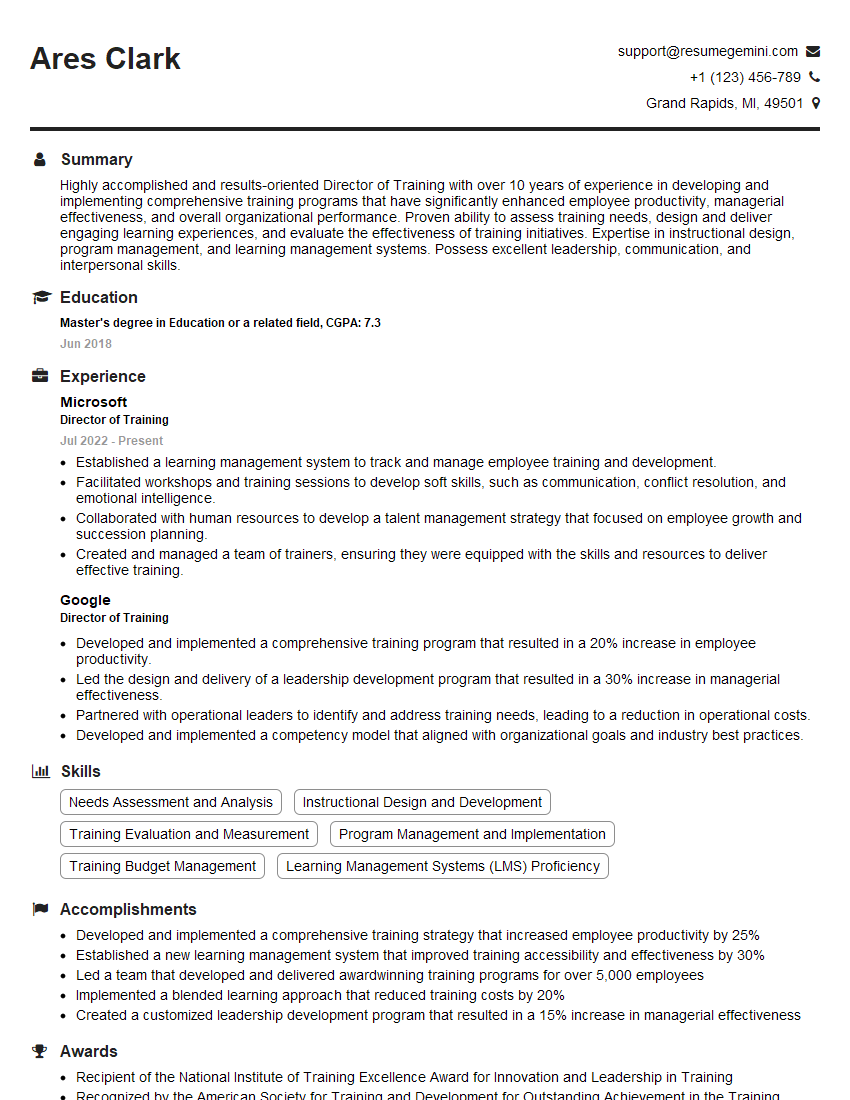
Director of Training Resume Sample
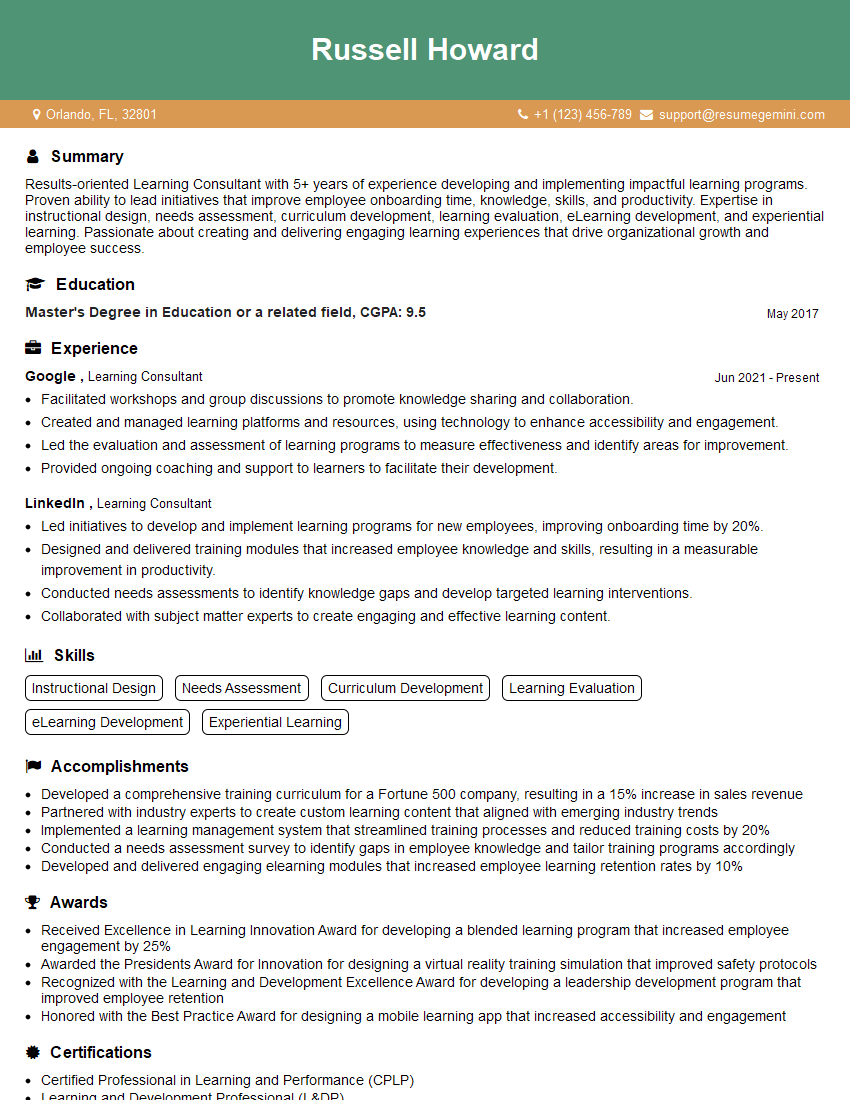
Learning Consultant Resume Sample
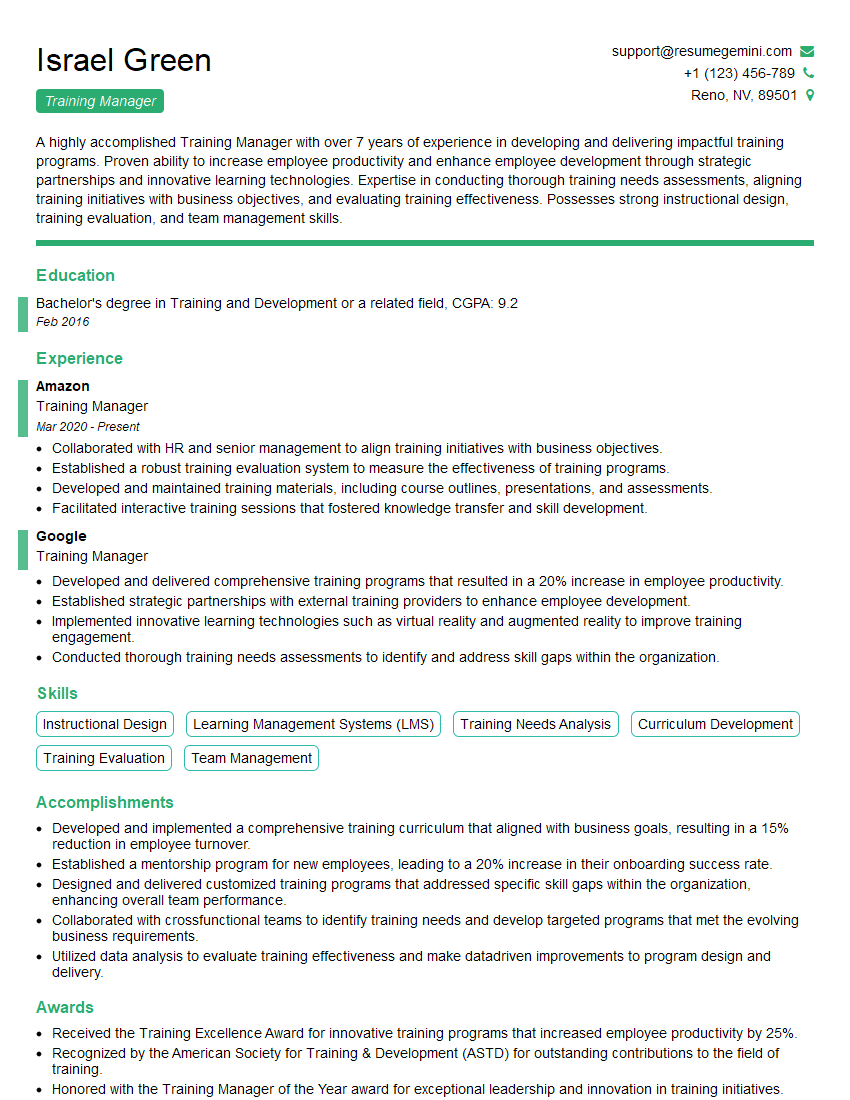
Training Manager Resume Sample
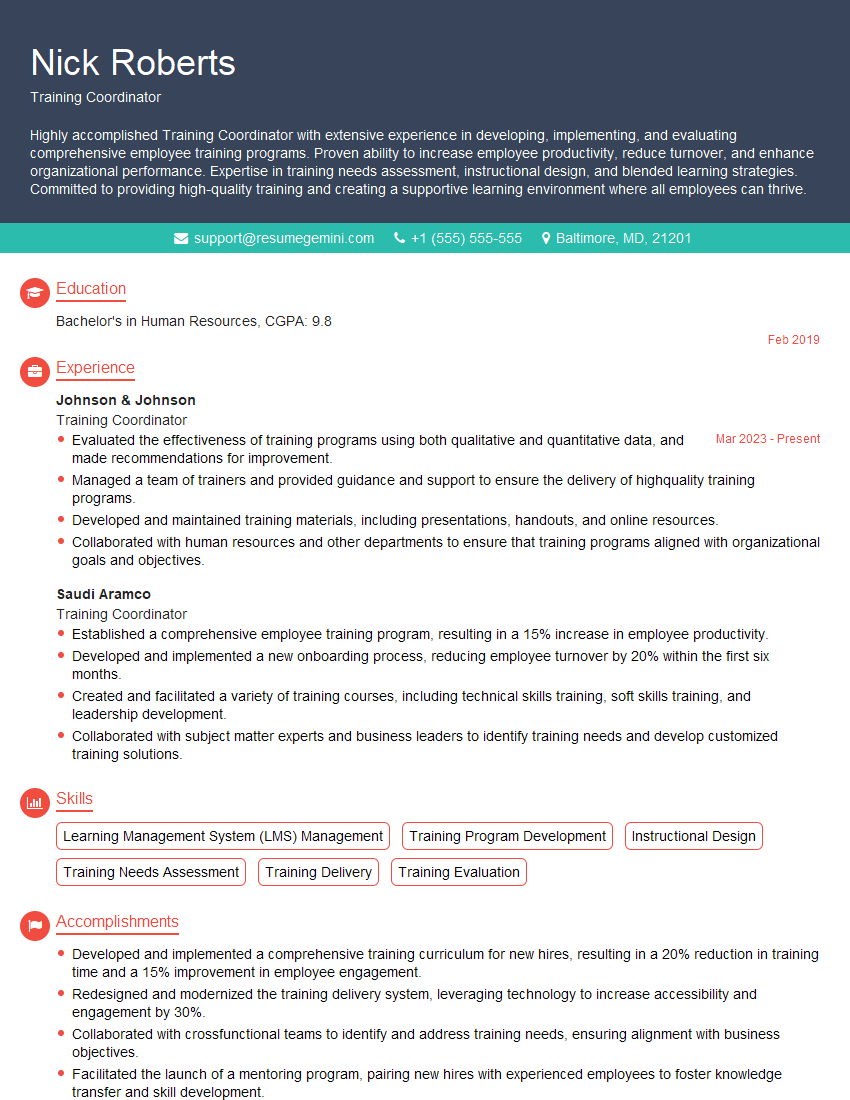
Training Coordinator Resume Sample
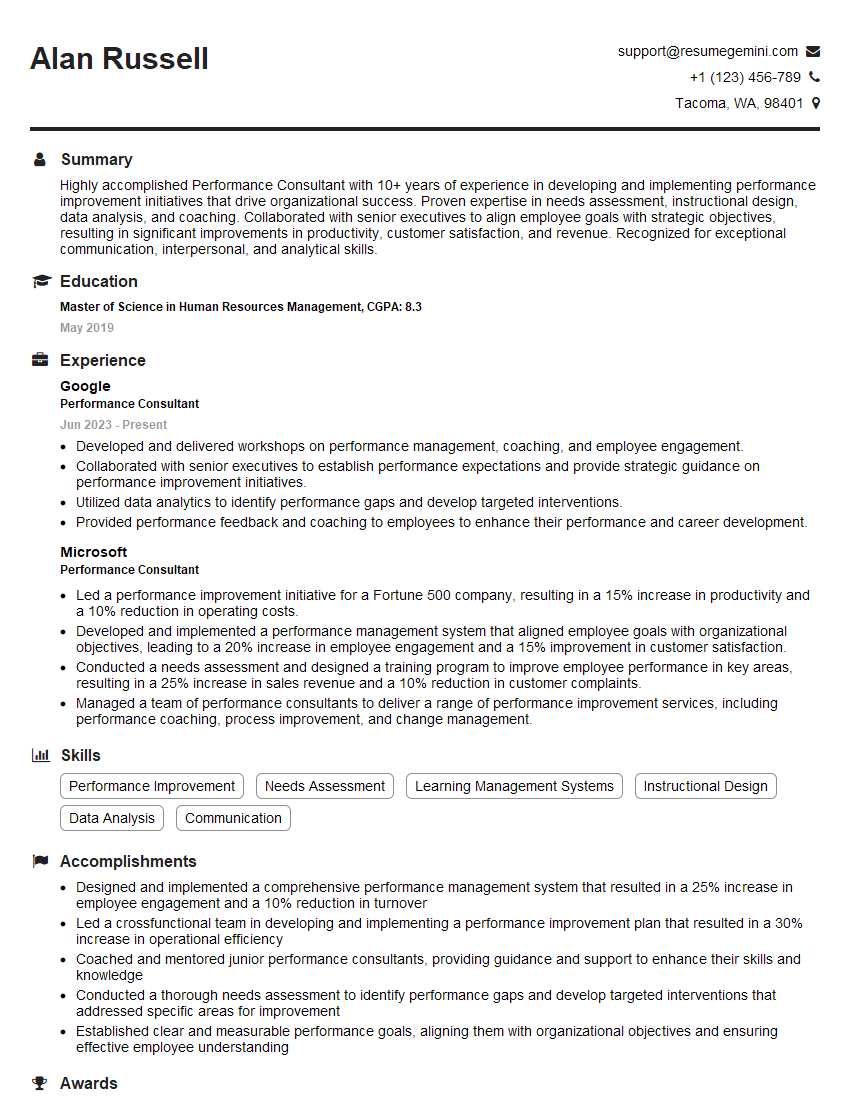
Performance Consultant Resume Sample
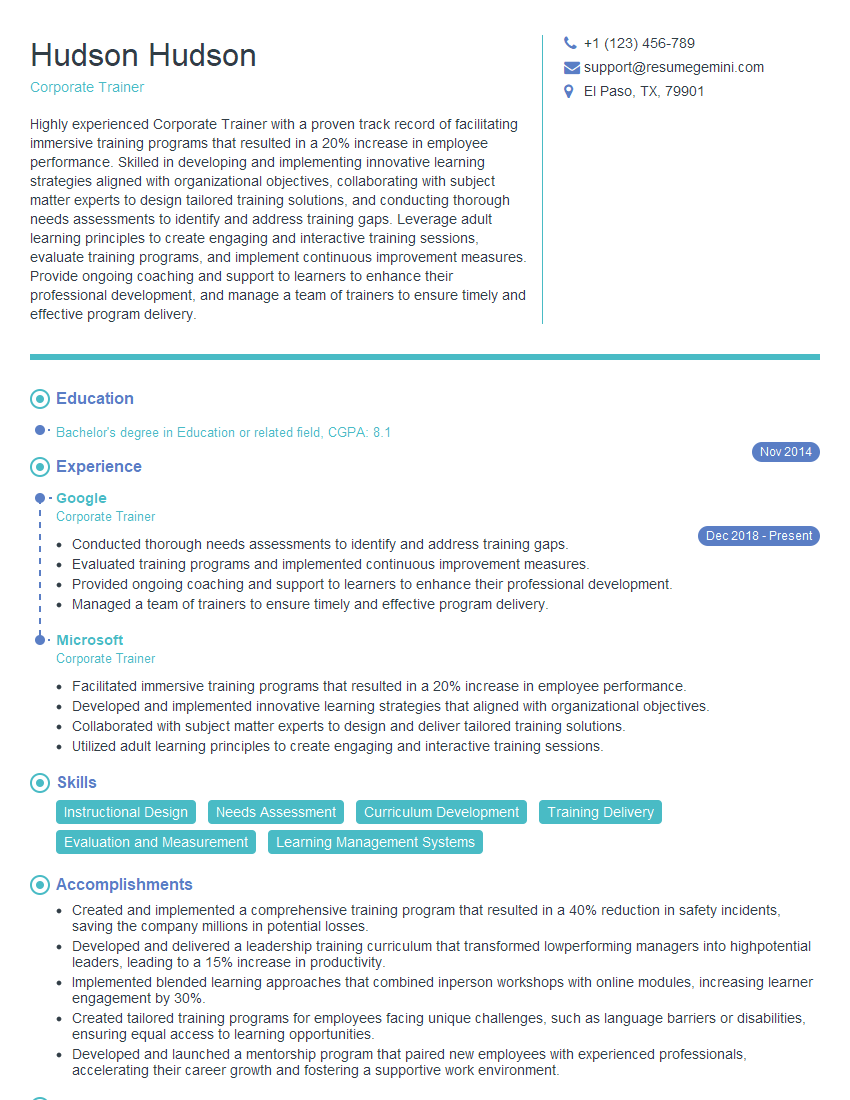
Corporate Trainer Resume Sample

Curriculum Developer Resume Sample
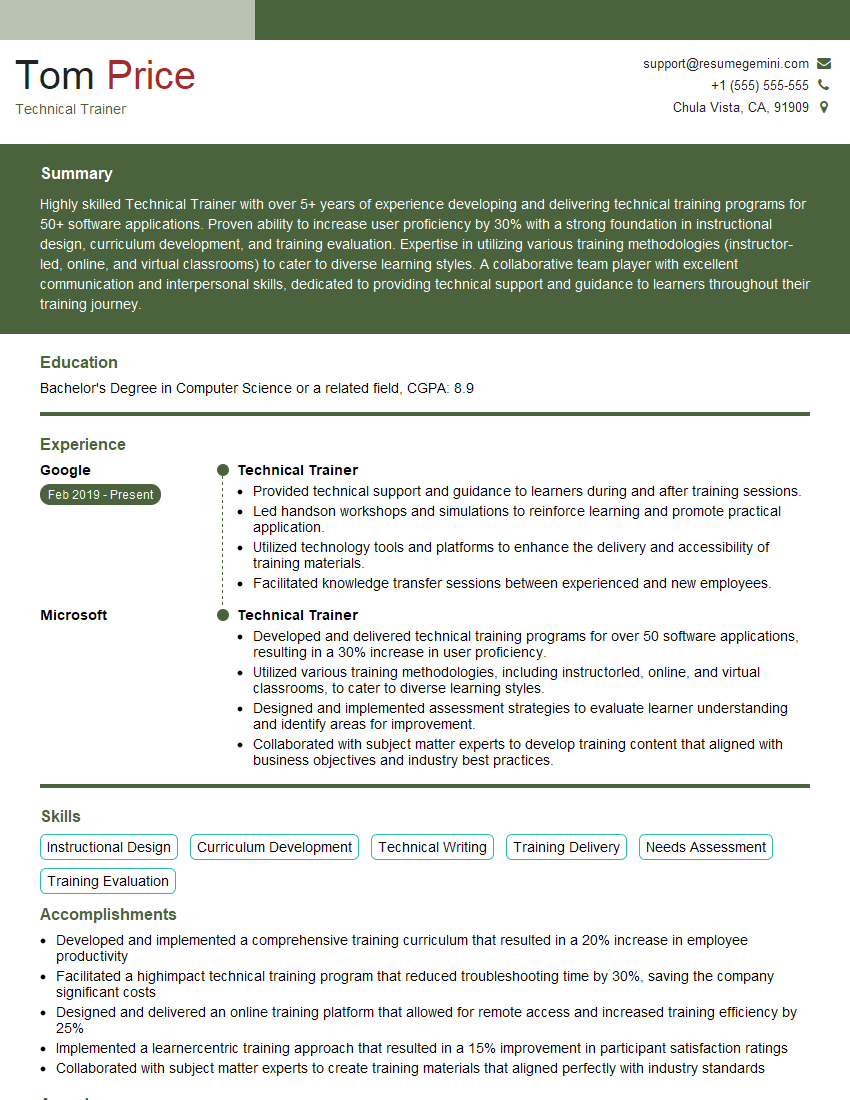
Technical Trainer Resume Sample

Training Specialist Resume Sample
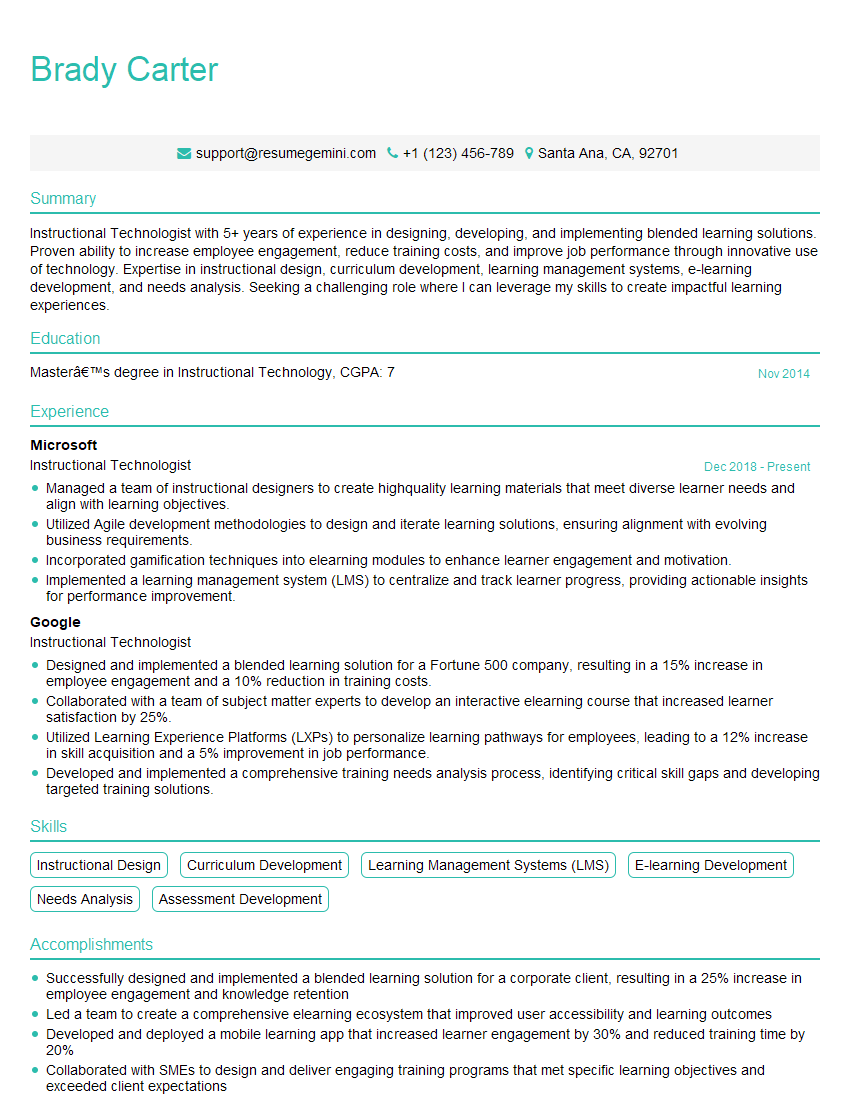
Instructional Technologist Resume Sample
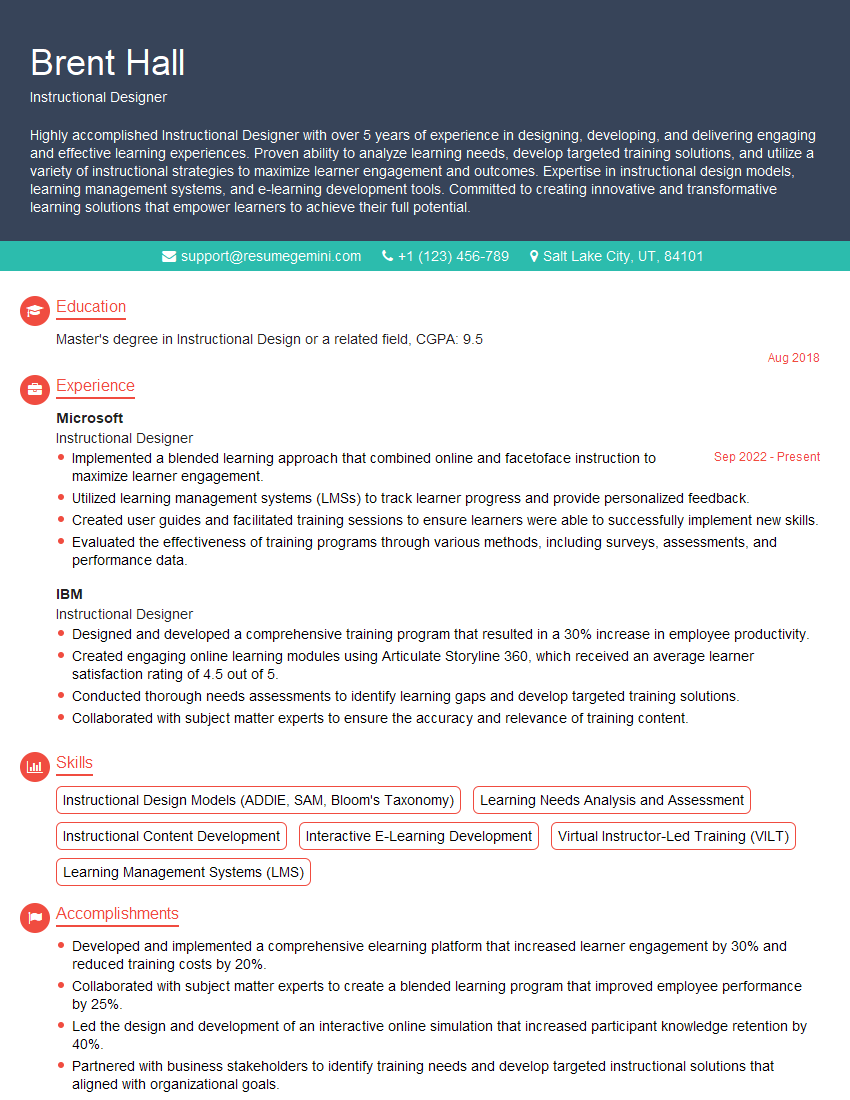
Instructional Designer Resume Sample

Educational Technologist Resume Sample
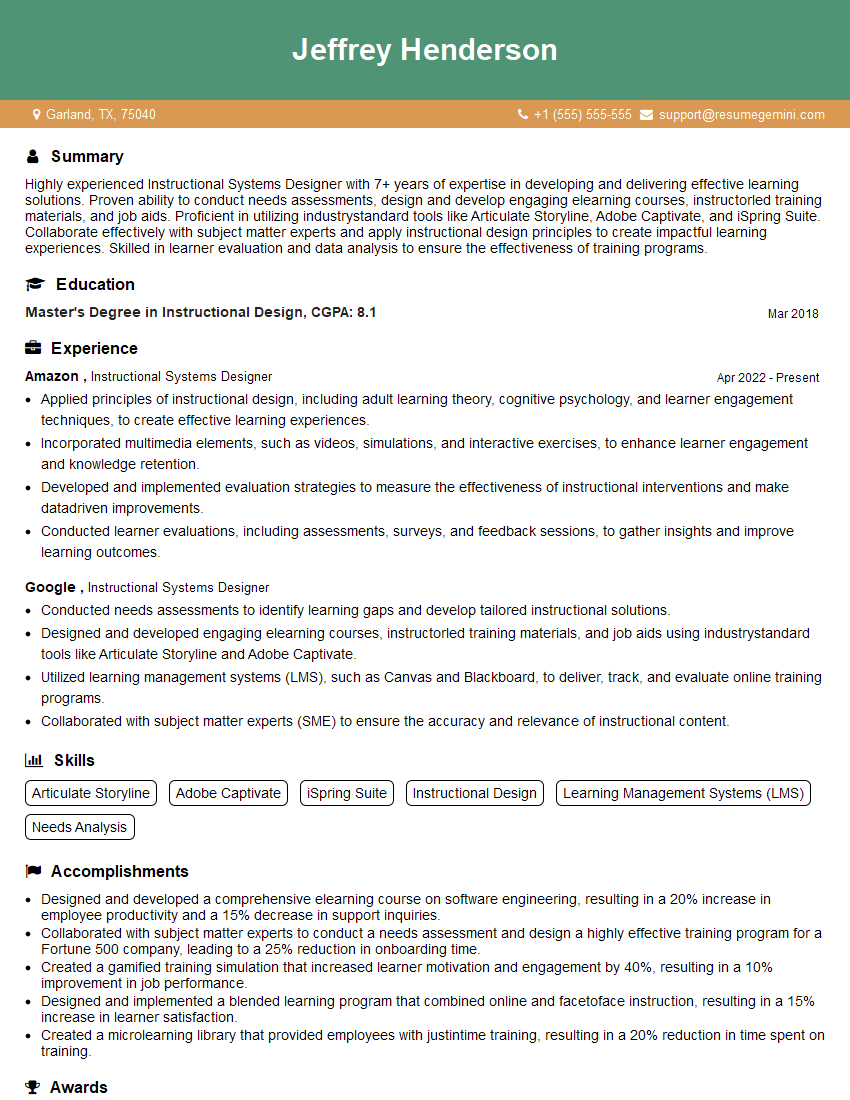
Instructional Systems Designer Resume Sample
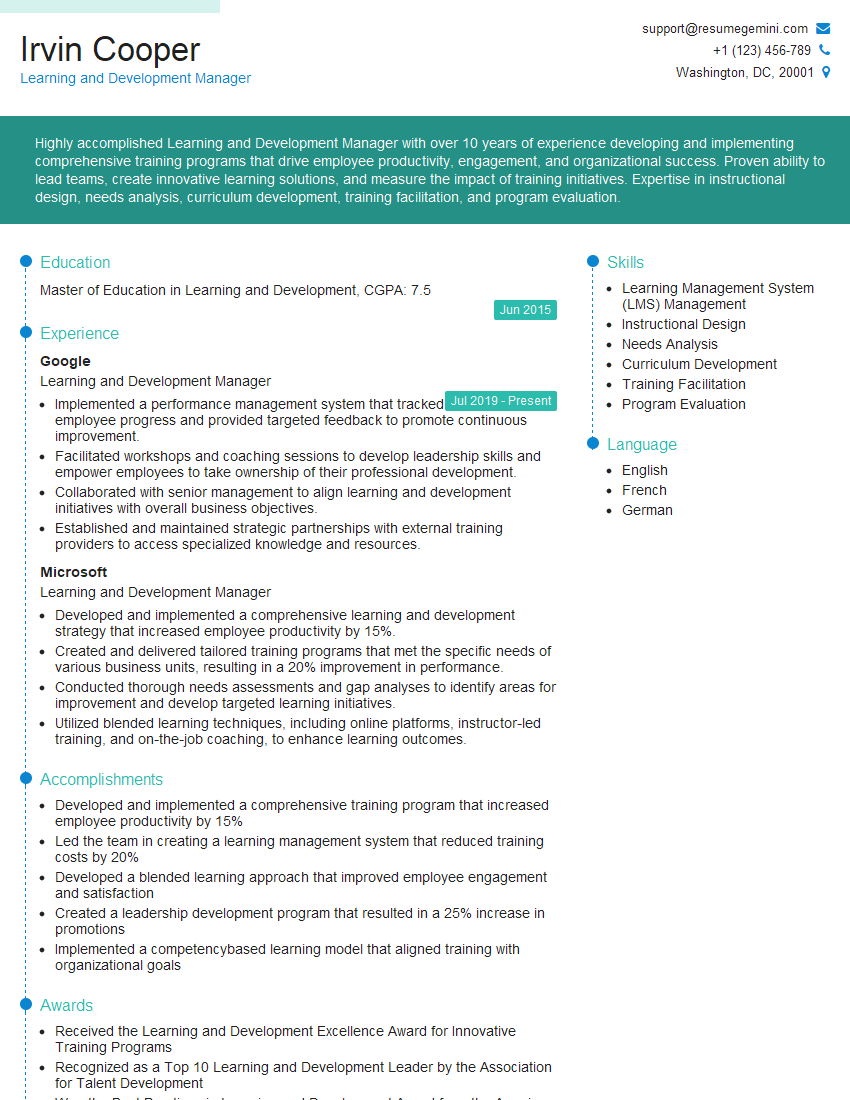
Learning and Development Manager Resume Sample
- Director of Training
- Learning Consultant
- Training Manager
- Training Coordinator
- Performance Consultant
- Corporate Trainer
- Curriculum Developer
- Technical Trainer
- Training Specialist
- Instructional Technologist
- Instructional Designer
- Educational Technologist
- Instructional Systems Designer
- Learning and Development Manager
Explore more articles
Users Rating of Our Blogs
Share Your Experience
We value your feedback! Please rate our content and share your thoughts (optional).
What Readers Say About Our Blog
I Redesigned Spongebob Squarepants and his main characters of my artwork.
https://www.deviantart.com/reimaginesponge/art/Redesigned-Spongebob-characters-1223583608
IT gave me an insight and words to use and be able to think of examples
Hi, I’m Jay, we have a few potential clients that are interested in your services, thought you might be a good fit. I’d love to talk about the details, when do you have time to talk?
Best,
Jay
Founder | CEO