Unlock your full potential by mastering the most common Furniture Planning interview questions. This blog offers a deep dive into the critical topics, ensuring you’re not only prepared to answer but to excel. With these insights, you’ll approach your interview with clarity and confidence.
Questions Asked in Furniture Planning Interview
Q 1. Explain your experience with various furniture planning software (e.g., AutoCAD, Revit, SketchUp).
My experience with furniture planning software spans several leading platforms. I’m highly proficient in AutoCAD, utilizing its precision tools for detailed 2D and 3D drawings, including precise measurements and annotations crucial for manufacturing and installation. Revit’s BIM (Building Information Modeling) capabilities are invaluable for large-scale projects, allowing for collaborative design and accurate cost estimations. I also leverage SketchUp for its intuitive interface and quick prototyping, particularly helpful in the initial conceptualization and client presentation phases. For example, in a recent restaurant project, I used AutoCAD for precise technical drawings of custom-built booths, Revit to model the entire space’s layout integrating the HVAC and electrical systems, and SketchUp to quickly show clients different furniture arrangement options before finalizing the AutoCAD plans.
Each software serves a distinct purpose. AutoCAD provides technical accuracy, Revit manages building information and collaboration, and SketchUp facilitates rapid visualization and client interaction. My selection of software depends on the project’s complexity, budget, and client requirements.
Q 2. Describe your process for creating a furniture layout for a small retail space.
Designing a furniture layout for a small retail space requires a strategic approach to maximize both functionality and customer experience. My process typically begins with a thorough site survey, meticulously documenting dimensions, existing fixtures, and access points. Then, I analyze the retail concept – understanding the product range, customer flow, and desired atmosphere. I sketch several initial layouts, digitally refining them in a program like SketchUp. This allows for easy experimentation with furniture placement, considering factors like sightlines, traffic patterns, and creating distinct zones (e.g., browsing, checkout, fitting rooms).
Crucial to this phase is considering the balance between display space and customer movement. Too much furniture can overcrowd a small space, while too little might create a barren feel. I use a combination of quantitative analysis (measuring traffic flow, calculating square footage per item) and qualitative assessment (observing customer behavior in similar spaces). The final layout is presented to the client with detailed renderings, allowing them to visualize the finished space before implementation.
Q 3. How do you handle conflicting design requirements from different stakeholders?
Handling conflicting design requirements requires effective communication and a collaborative approach. I start by actively listening to each stakeholder’s needs and concerns, documenting them clearly. I then facilitate a discussion, emphasizing the project’s overall goals and exploring potential compromises. For example, if a client wants a certain aesthetic and the architect has structural limitations, I’ll explore alternative furniture designs or materials that meet both criteria. It’s about finding creative solutions that balance everyone’s priorities, often involving generating multiple design options for comparative analysis.
Visual aids, like 3D renderings or mood boards, can significantly aid in resolving disputes by allowing stakeholders to visualize the impact of various choices. I believe transparency and open communication are key; clearly articulating the implications of different choices allows informed decision-making. Sometimes, prioritizing certain aspects based on feasibility and budget constraints becomes necessary, but this is always discussed openly with all involved parties.
Q 4. What are the key considerations when planning furniture for accessibility?
Accessibility is paramount in furniture planning. Key considerations include ensuring compliance with ADA (Americans with Disabilities Act) guidelines or equivalent international standards. This involves providing ample maneuvering space (minimum 36 inches wide pathways), appropriately sized furniture and fixtures, and accessible features for individuals with disabilities. For example, appropriate clearances around tables and counters are crucial for wheelchair users. Seating should offer a range of heights and armrests for various needs. Consideration should also be given to providing adequate lighting and tactile signage where needed.
Furthermore, I integrate tactile elements (like contrasting colors for visual impairment) and ensure clear pathways free from obstructions. Careful selection of furniture materials, considering durability and easy cleaning, further enhances accessibility. Ultimately, the goal is to create an inclusive and welcoming environment for all users, regardless of their physical capabilities.
Q 5. How familiar are you with building codes and regulations relevant to furniture placement?
I’m very familiar with building codes and regulations concerning furniture placement. My understanding covers fire safety regulations (e.g., appropriate spacing between furniture pieces to allow for safe evacuation), egress requirements (ensuring furniture doesn’t obstruct exits), and occupancy limits (considering the number of people a space can safely accommodate based on furniture arrangement). Furthermore, I’m aware of structural load limitations, ensuring the selected furniture doesn’t exceed the floor’s weight capacity. I regularly consult relevant building codes and work closely with architects and engineers to confirm compliance with all applicable regulations.
For instance, in a high-density office environment, I’d meticulously plan furniture placement to meet fire safety standards, ensuring adequate space between desks for easy escape routes. I also take into account the load-bearing capacity of floors to avoid structural issues, especially when dealing with heavy, custom-made furniture.
Q 6. Explain your experience with space planning and maximizing efficiency.
Space planning and maximizing efficiency are fundamental aspects of my work. My approach begins with a deep understanding of the space’s purpose and intended use. This might involve analyzing workflow patterns in an office setting or maximizing product display in retail. I then use a combination of quantitative methods (measuring, analyzing space utilization) and qualitative observations (understanding human behavior within the environment). For example, using space planning software and diagramming tools helps visualize workflow and identify potential bottlenecks. This allows me to strategically place furniture to optimize movement, minimize wasted space, and ensure smooth operation.
In a warehouse setting, I’d focus on optimizing storage and maximizing accessibility to goods. This might involve implementing efficient shelving systems and strategic placement of loading docks. In a residential project, understanding the lifestyle and needs of the occupants is crucial, creating functional and aesthetically pleasing layouts that enhance their daily living.
Q 7. How do you incorporate ergonomic principles into your furniture plans?
Ergonomic principles are integral to my furniture plans. I ensure that furniture is appropriately sized and positioned to promote comfort and prevent musculoskeletal issues. This involves selecting chairs with adjustable heights and lumbar support, ensuring appropriate desk heights for seated work, and placing monitors at eye level to avoid neck strain. I also consider the placement of lighting and other environmental factors that can impact comfort and productivity.
In an office environment, I pay close attention to workstation ergonomics, ensuring chairs are adjustable, and work surfaces are at a comfortable height. For collaborative spaces, I might incorporate flexible furniture that can adapt to different needs and activity levels. Proper lighting, and minimizing glare, are also critical elements considered in designing for user well-being and efficiency.
Q 8. Describe your process for creating detailed furniture specifications.
Creating detailed furniture specifications involves a meticulous process that ensures clarity and accuracy throughout the project lifecycle. It starts with a thorough understanding of the client’s needs and preferences, which is achieved through detailed discussions and potentially site visits. From there, I move through these key steps:
- Initial Design & Concept: Sketching, mood boards, and initial 2D layouts to visualize the overall design and space planning.
- Detailed Drawings: Producing precise 2D technical drawings using CAD software. These include dimensions, material specifications, joinery details, and any special features. This phase considers ergonomics and functionality. For instance, I ensure chair heights are appropriate for table heights, and that storage solutions are optimally accessible.
- Material Specifications: Choosing materials based on durability, aesthetics, budget, and environmental impact. This involves specifying wood types (e.g., oak, walnut, maple), fabrics (e.g., linen, velvet, leather), finishes, and hardware. I’ll provide detailed samples to clients for approval.
- Bill of Materials (BOM): Creating a comprehensive BOM that lists all components, quantities, and suppliers. This is crucial for accurate costing and procurement.
- Assembly Instructions (if applicable): For custom designs, I’ll prepare detailed assembly instructions for the manufacturing team to ensure consistency and ease of construction.
For example, specifying a custom dining table might involve drawings detailing the exact dimensions of the tabletop, leg design, type of wood (e.g., solid walnut with a clear finish), and the hardware used for assembly. The BOM would then list the exact quantity of lumber, screws, finish, and any other necessary components.
Q 9. How do you manage project timelines and budgets for furniture planning projects?
Managing project timelines and budgets requires a proactive and organized approach. I utilize project management software to track progress, milestones, and deadlines. Key steps include:
- Detailed Project Scope: A clearly defined scope that outlines all tasks, deliverables, and responsibilities prevents scope creep and ensures everyone is on the same page.
- Realistic Scheduling: I create a detailed project schedule with realistic timelines for each phase, considering potential delays and allocating buffer time. This is usually presented as a Gantt chart.
- Budget Allocation: I develop a comprehensive budget that includes material costs, labor costs, manufacturing costs, and contingency funds for unexpected expenses. Regular budget tracking helps identify any potential overruns early on.
- Regular Communication: Frequent communication with the client and all stakeholders keeps everyone informed of the project’s progress, potential issues, and any necessary adjustments.
- Risk Management: Identifying potential risks (e.g., material delays, skilled labor shortages) and developing mitigation strategies.
For example, in a recent project involving a bespoke library, I used a Gantt chart to visualize the timeline, from initial design to final installation. This allowed for clear tracking of milestones like material selection, manufacturing, and on-site assembly. Regular client updates minimized surprises and ensured the project stayed within the agreed-upon budget and schedule.
Q 10. What is your experience with material selection for furniture projects?
Material selection is a critical aspect of furniture planning, impacting both the aesthetic appeal and the longevity of the piece. My experience encompasses a wide range of materials, including various wood types, metals, fabrics, and stones. I consider several factors:
- Durability and Longevity: Choosing materials that can withstand daily use and maintain their quality over time.
- Aesthetics: Selecting materials that complement the overall design and achieve the desired visual effect.
- Sustainability: Prioritizing eco-friendly materials whenever possible, considering recycled content, responsible sourcing, and low environmental impact.
- Budget: Balancing cost-effectiveness with quality and desired aesthetics.
- Maintenance: Considering the ease of cleaning and maintenance for different materials.
For example, for a client’s modern living room, I might recommend sustainably sourced oak for its durability and natural beauty. For a high-traffic area like a hotel lobby, I might opt for a durable, easy-to-clean fabric like Crypton.
Q 11. How do you handle changes and revisions during the furniture planning process?
Handling changes and revisions is a normal part of the design process. I approach them systematically to ensure smooth project execution:
- Formal Change Request Process: Establishing a clear process for documenting and approving any changes, including impact assessments on timeline and budget.
- Client Communication: Open and proactive communication with the client to discuss the implications of any changes and manage expectations.
- Revised Documentation: Updating all relevant drawings, specifications, and the BOM to reflect the approved changes.
- Cost and Schedule Adjustments: Accurately calculating the impact of changes on the project budget and schedule and communicating these adjustments to the client.
For example, if a client decides to change the fabric of a sofa mid-project, I’d create a formal change request, discuss the cost implications, update the BOM and fabric samples, and adjust the project schedule accordingly. Transparency is key to maintaining a positive client relationship.
Q 12. Describe your approach to resolving space constraints during furniture planning.
Resolving space constraints requires creative problem-solving and a deep understanding of spatial relationships. My approach involves:
- Space Analysis: Thoroughly analyzing the available space, considering dimensions, doorways, windows, and any existing furniture.
- Multifunctional Furniture: Incorporating multifunctional furniture pieces (e.g., sofa beds, ottomans with storage) to maximize space efficiency.
- Modular Furniture: Utilizing modular furniture systems that can be customized to fit the space and easily reconfigured as needs change.
- Custom Design: Designing custom furniture pieces to precisely fit the available space.
- Strategic Placement: Carefully planning the placement of furniture to optimize flow and create a sense of spaciousness.
For instance, in a small apartment, I might design a custom-built Murphy bed that folds away during the day, maximizing floor space. I also prioritize using lighter colors and strategically placed mirrors to enhance the feeling of openness.
Q 13. How familiar are you with different furniture styles and their applications?
I possess extensive familiarity with various furniture styles and their applications. My knowledge spans from classic styles like:
- Traditional: Characterized by ornate details, rich materials, and symmetrical designs (e.g., Victorian, Queen Anne).
- Mid-Century Modern: Defined by clean lines, organic shapes, and functionality (e.g., Danish Modern, Eames).
- Contemporary: Embracing minimalism, simple forms, and innovative materials.
- Industrial: Incorporating exposed metal, raw wood, and a utilitarian aesthetic.
- Transitional: Blending elements of traditional and contemporary styles.
Understanding these styles allows me to select the most appropriate furniture for a specific space, considering the client’s taste, architectural style, and desired ambiance. For example, I might recommend a traditional style for a historic home or a contemporary style for a modern loft apartment. The application of these styles requires understanding their core principles and adapting them to the client’s specific needs and context.
Q 14. What software do you use to create 3D renderings of furniture layouts?
I utilize several software programs to create 3D renderings of furniture layouts, including:
- SketchUp: A powerful and user-friendly 3D modeling software ideal for creating realistic visualizations of furniture and spaces.
- Autodesk Revit: A comprehensive Building Information Modeling (BIM) software used for creating detailed 3D models and documentation for larger-scale projects.
- Twinmotion: A real-time rendering engine that produces photorealistic images and animations, allowing clients to visualize their furniture layout in a highly engaging manner.
- Lumion: Similar to Twinmotion, Lumion produces high-quality renderings and animations, aiding in client communication and visualization.
The choice of software depends on the project’s complexity and the level of detail required. For smaller projects, SketchUp may be sufficient. For larger, more complex projects requiring detailed documentation, Revit might be more appropriate. The final renderings are crucial for client approval, as they bridge the gap between the 2D plans and the final product, offering a more tangible visualization.
Q 15. Explain your experience working with clients to understand their furniture needs.
Understanding a client’s furniture needs goes beyond simply asking what they want. It’s about delving into their lifestyle, aspirations, and how they envision using the space. I start with a thorough consultation, employing active listening techniques to uncover their unspoken needs. This involves asking open-ended questions like, “Tell me about how you typically use your living room,” or “Describe your ideal work-from-home setup.”
I then use visual aids, such as mood boards and space planning software, to collaborate on design concepts. For example, for a family with young children, I might incorporate durable, easy-to-clean materials and child-safe furniture designs. For a busy professional, I’d prioritize efficient storage solutions and ergonomic seating. Ultimately, the goal is to create a space that reflects their personality and meets their functional requirements. This collaborative approach ensures client satisfaction and a successful project.
Career Expert Tips:
- Ace those interviews! Prepare effectively by reviewing the Top 50 Most Common Interview Questions on ResumeGemini.
- Navigate your job search with confidence! Explore a wide range of Career Tips on ResumeGemini. Learn about common challenges and recommendations to overcome them.
- Craft the perfect resume! Master the Art of Resume Writing with ResumeGemini’s guide. Showcase your unique qualifications and achievements effectively.
- Don’t miss out on holiday savings! Build your dream resume with ResumeGemini’s ATS optimized templates.
Q 16. How do you ensure the safety and functionality of your furniture plans?
Safety and functionality are paramount in furniture planning. I ensure safety through meticulous adherence to relevant building codes and safety standards. This includes considering factors like material flammability, structural integrity of furniture pieces, and appropriate spacing to prevent falls or accidents, especially in high-traffic areas or spaces with children. I specify materials that meet rigorous standards for durability and longevity.
Functionality is addressed through careful space planning, ensuring furniture is properly sized and arranged for ease of use and access. For instance, a kitchen island needs sufficient counter space and appropriate placement for cooking and socializing. I also consider ergonomics, incorporating elements like adjustable desks and chairs to promote comfort and posture. Regular review of the plans with the client ensures that functionality aligns with their use-case scenarios.
Q 17. Describe your experience with furniture procurement and vendor management.
My experience in furniture procurement involves a multifaceted approach. I’ve worked with a range of vendors, from small, local artisans to large international manufacturers. I thoroughly research vendors, comparing their quality, pricing, lead times, and sustainability practices. I develop detailed specifications for each furniture piece, outlining materials, dimensions, finishes, and any custom requirements. This comprehensive approach helps me negotiate favorable terms and ensure the project stays on schedule and within budget.
Vendor management involves maintaining clear communication, tracking orders, and ensuring timely delivery. I regularly check on production progress and address any potential issues proactively. For example, if a material becomes unavailable, I’ll promptly source an acceptable alternative while keeping the client informed. This proactive and detailed approach is crucial in maintaining a positive vendor relationship and project success.
Q 18. What are your strategies for optimizing workflow during the furniture planning process?
Optimizing workflow is key to efficient furniture planning. I use project management software to track tasks, deadlines, and communication. I break down the project into manageable phases, assigning specific responsibilities and timelines. This includes initial consultations, space planning, design development, procurement, installation, and post-project evaluation.
I employ various strategies like creating detailed schedules, holding regular team meetings, and utilizing digital collaboration tools. For instance, using cloud-based storage for project documents allows for real-time access and seamless collaboration. Regular progress checks and proactive communication with clients prevent unforeseen delays and ensure project adherence to the schedule.
Q 19. How do you incorporate sustainable design principles into your furniture plans?
Sustainable design principles are integrated throughout my furniture planning process. I prioritize the use of eco-friendly materials such as reclaimed wood, bamboo, and recycled metals. I specify furniture with low volatile organic compound (VOC) emissions to ensure indoor air quality. I collaborate with vendors who demonstrate commitment to sustainable practices, sourcing materials responsibly and minimizing waste.
Beyond material selection, sustainable design considers the lifecycle of the furniture. I design pieces that are durable and easily repairable, extending their lifespan and reducing the need for frequent replacements. I also explore modular furniture designs, allowing for adaptation and reconfiguration as needs evolve, reducing the environmental impact of disposal. For instance, opting for furniture with easily replaceable parts ensures that the entire piece doesn’t need replacement when a single component breaks.
Q 20. Describe your experience working on large-scale furniture planning projects.
My experience with large-scale projects involves managing multiple teams, coordinating complex logistics, and overseeing substantial budgets. This requires robust project management skills, including meticulous planning, risk assessment, and effective communication. I break down large projects into smaller, manageable tasks, delegating responsibilities and setting clear expectations for each team member.
For instance, when working on the furnishing of a large office building, I would manage separate teams responsible for different areas like reception, meeting rooms, and individual offices. Detailed scheduling, meticulous tracking of deliveries, and proactive communication are crucial for keeping such large projects on time and within budget. Successful completion requires meticulous attention to detail and a collaborative team approach.
Q 21. How do you measure the success of a furniture planning project?
Measuring the success of a furniture planning project involves a multi-pronged approach. Client satisfaction is a primary indicator, gauged through feedback surveys and post-project reviews. Functionality and aesthetics are assessed through on-site inspections and client testimonials.
I also analyze the project’s adherence to the budget and timeline. Furthermore, I evaluate the project’s sustainability impact by assessing the selection of eco-friendly materials and minimizing waste. A successful project not only meets the client’s needs aesthetically and functionally but also adheres to budget and timeline constraints while promoting sustainability. A well-executed project leaves a lasting positive impact on the client and the environment.
Q 22. Explain your experience with different types of furniture (residential, commercial, etc.).
My experience spans a wide range of furniture planning, encompassing both residential and commercial projects. In residential settings, I’ve worked on everything from designing custom built-in cabinetry for cozy cottages to creating sophisticated furniture layouts for expansive modern homes. This includes understanding the nuances of individual client styles, integrating existing furniture pieces, and optimizing space for maximum functionality and aesthetic appeal. Commercial projects have presented different challenges, requiring a focus on durability, ergonomics, and adherence to building codes and accessibility standards. For example, I’ve designed furniture for restaurants, focusing on space optimization for efficient service and customer flow, or office spaces prioritizing collaborative work environments and employee comfort. The key difference lies in the scale, the durability requirements, and the client’s priorities – a residential client might prioritize personal style, while a commercial client might focus on ROI and long-term practicality.
Q 23. How do you balance aesthetics with functionality in furniture planning?
Balancing aesthetics and functionality is paramount in furniture planning. It’s not a simple trade-off, but rather an iterative process of integration. I begin by deeply understanding the client’s needs and the space’s constraints. For instance, a visually stunning, oversized sofa might look amazing in a rendering, but it could render a room cramped and unusable. I use a combination of design principles and practical considerations. This includes considering factors such as traffic flow, lighting, and the intended use of each space. I often use mood boards and 3D modeling software to visualize the interplay between different furniture pieces and the overall design. The process involves creating multiple design iterations, constantly evaluating whether the proposed furniture achieves both aesthetic goals and practical needs. Think of it like building with LEGOs – you might have a great idea for a castle, but it needs to be structurally sound and proportionally balanced to function effectively.
Q 24. Describe your experience with creating detailed construction documents for furniture.
Creating detailed construction documents is crucial for ensuring the successful execution of furniture plans. My experience includes generating comprehensive drawings that clearly communicate the design intent to manufacturers and craftspeople. This typically involves detailed orthographic projections (top, front, side views), precise dimensions, material specifications, hardware details, and assembly instructions. I use CAD software, such as AutoCAD or SketchUp, to create these documents, ensuring accuracy and clarity. For instance, for a custom-made dining table, my construction documents would specify the wood type, finish, dimensions of the table top and legs, joinery details, and the type of hardware used. These documents are vital for quality control and efficient production, minimizing errors and delays in the manufacturing process. Moreover, detailed specifications also aid in accurate costing and material procurement.
Q 25. How do you use technology to enhance efficiency in furniture planning?
Technology plays a significant role in enhancing efficiency in furniture planning. I utilize various software and tools to streamline my workflow. 3D modeling software (SketchUp, Revit) allows me to create realistic visualizations, aiding client communication and design exploration. CAD software (AutoCAD) is essential for producing precise construction documents. Project management software helps track tasks, deadlines, and budgets effectively. Virtual reality (VR) and augmented reality (AR) are increasingly important for showcasing designs to clients, allowing them to experience the space and furniture virtually before committing. For example, using VR, a client can ‘walk’ through a room with their new furniture, experiencing the scale and layout in a realistic manner. This significantly reduces misunderstandings and ensures client satisfaction.
Q 26. What is your experience with presenting furniture plans to clients or stakeholders?
Presenting furniture plans effectively requires strong communication and presentation skills. I typically start with a thorough explanation of the design concept, highlighting the key features and benefits. I then use visuals – renderings, 3D models, and detailed drawings – to illustrate the design and its functionality. I incorporate client feedback throughout the process, actively listening to their concerns and incorporating their preferences. I tailor my presentations to the audience, using clear and concise language, avoiding technical jargon whenever possible. For instance, when presenting to a commercial client, I would focus on ROI and efficiency, whereas with a residential client, the emphasis would be on aesthetics and personal style. Following the presentation, I provide a detailed summary of next steps and timelines for project completion.
Q 27. How do you stay up-to-date with the latest trends and technologies in furniture planning?
Staying current in furniture planning requires continuous learning and engagement with the industry. I regularly attend industry conferences and workshops, subscribe to relevant design publications and online resources, and actively participate in online design communities. I also explore new software and technologies, experimenting with different tools and techniques to improve my workflow. Following key design influencers and industry leaders on social media platforms like Instagram and Pinterest provides valuable insights into emerging trends. Furthermore, regularly reviewing design awards and exhibitions helps identify innovative approaches and cutting-edge solutions within the field. This commitment to ongoing professional development ensures I’m equipped with the latest knowledge and skills.
Q 28. How do you manage conflicts between design aesthetics and budgetary constraints?
Managing conflicts between design aesthetics and budgetary constraints requires a strategic approach. I begin by establishing a clear budget with the client at the outset of the project. Then, I develop several design options, ranging from high-end to budget-friendly. This allows the client to see the trade-offs between cost and aesthetics. For example, if a client desires a specific type of expensive wood, we might explore more affordable alternatives with a similar aesthetic appeal or adjust the scale of the furniture to reduce material costs. I work collaboratively with clients, finding creative solutions that balance design aspirations with financial realities. This might involve substituting materials, adjusting the design complexity, or prioritizing certain features over others. The key is transparent communication and a willingness to explore various options to reach a mutually agreeable solution.
Key Topics to Learn for Furniture Planning Interview
- Space Planning & Layout Design: Understanding principles of spatial organization, traffic flow, and furniture arrangement to maximize functionality and aesthetics. Practical application includes creating floor plans and 3D models using specialized software.
- Ergonomics & Functionality: Designing furniture arrangements that prioritize user comfort, accessibility, and efficient workflow. This includes considering anthropometric data and the specific needs of the end-users.
- Materials & Finishes: Knowledge of various furniture materials (wood, metal, fabric, etc.), their properties, and appropriate finishes for different applications and design styles. Practical application includes material selection based on durability, cost, and aesthetic requirements.
- Code Compliance & Regulations: Familiarity with building codes, safety standards, and accessibility guidelines relevant to furniture placement and design. This includes understanding fire safety regulations and ADA compliance.
- Technical Drawings & Specifications: Ability to interpret and create detailed technical drawings, specifications, and construction documents for furniture and related installations. This involves proficiency in CAD software and understanding of industry standards.
- Project Management & Budgeting: Understanding project timelines, resource allocation, and cost management within the context of furniture planning. This includes experience with estimating material costs and labor expenses.
- Client Communication & Collaboration: Effectively communicating design concepts, addressing client needs, and managing expectations throughout the project lifecycle. This involves strong presentation skills and active listening.
- Sustainability & Environmental Considerations: Incorporating sustainable practices and environmentally friendly materials into furniture planning and design. This includes understanding the lifecycle impact of materials and design choices.
Next Steps
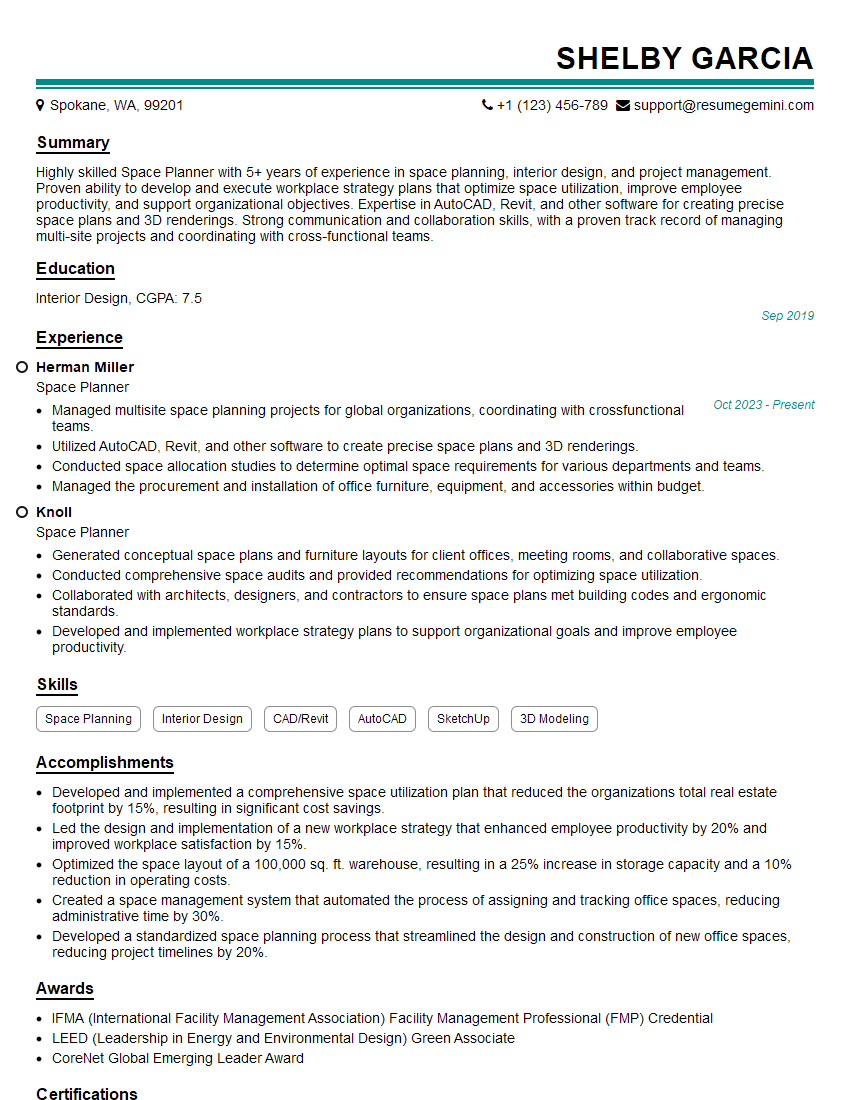
Mastering Furniture Planning opens doors to exciting career opportunities in interior design, architecture, and the furniture industry itself. A strong understanding of these concepts will significantly enhance your interview performance and set you apart from other candidates. To maximize your job prospects, create an ATS-friendly resume that highlights your skills and experience effectively. ResumeGemini is a trusted resource for building professional, impactful resumes. We provide examples of resumes tailored to Furniture Planning to help you get started. Invest time in crafting a compelling resume – it’s your first impression with potential employers.
Explore more articles
Users Rating of Our Blogs
Share Your Experience
We value your feedback! Please rate our content and share your thoughts (optional).
What Readers Say About Our Blog
I Redesigned Spongebob Squarepants and his main characters of my artwork.
https://www.deviantart.com/reimaginesponge/art/Redesigned-Spongebob-characters-1223583608
IT gave me an insight and words to use and be able to think of examples
Hi, I’m Jay, we have a few potential clients that are interested in your services, thought you might be a good fit. I’d love to talk about the details, when do you have time to talk?
Best,
Jay
Founder | CEO