Every successful interview starts with knowing what to expect. In this blog, we’ll take you through the top Technology-Enhanced Curriculum Development interview questions, breaking them down with expert tips to help you deliver impactful answers. Step into your next interview fully prepared and ready to succeed.
Questions Asked in Technology-Enhanced Curriculum Development Interview
Q 1. Explain your experience designing and developing technology-enhanced learning experiences.
Designing and developing technology-enhanced learning experiences involves crafting engaging and effective educational materials that leverage technology to enhance student learning. This goes beyond simply adding technology; it’s about thoughtfully integrating it to support specific learning objectives and address diverse learning styles.
In my experience, I’ve led the development of numerous online courses, incorporating various multimedia elements like interactive simulations, gamified assessments, and collaborative virtual environments. For instance, I designed a virtual lab for a biology course, replacing traditional dissection with an interactive 3D model allowing students to manipulate organs and observe their functions. This significantly improved engagement and reduced ethical concerns.
Another example involves creating a blended learning program for a history course. This integrated online lectures, interactive timelines, primary source analysis tools, and online discussion forums. The result was increased student participation and deeper understanding of historical events compared to the traditional lecture-based model.
My approach involves a thorough needs analysis, identifying specific learning gaps and aligning technology tools with specific learning outcomes. I always focus on user experience (UX) and user interface (UI) design, ensuring the technology is intuitive and easy to navigate, minimizing the technical barrier for both instructors and learners.
Q 2. Describe your familiarity with various Learning Management Systems (LMS).
My familiarity with Learning Management Systems (LMS) encompasses a wide range of platforms, including Moodle, Canvas, Blackboard, and Brightspace. I’m proficient not only in using these systems but also in customizing them to meet specific educational needs. This includes designing course structures, managing user roles, integrating various third-party tools, and leveraging assessment features.
For example, while working on a project for a large university, I integrated a third-party assessment tool with Canvas to enable automated grading of complex assignments, freeing up instructors’ time for more personalized feedback. I’ve also developed custom modules in Moodle to deliver specific learning content tailored to the curriculum’s needs. This experience extends to adapting LMS functionality to address diverse accessibility requirements, ensuring inclusive learning environments.
Beyond simply using the platforms, I understand their underlying architectures and capabilities. This allows me to effectively integrate various technologies within the LMS environment, creating a seamless and effective learning ecosystem. This deep understanding is critical for maximizing the potential of the LMS and achieving desired learning outcomes.
Q 3. How do you assess the effectiveness of technology-enhanced curriculum?
Assessing the effectiveness of technology-enhanced curriculum requires a multi-faceted approach, going beyond simply looking at student grades. A robust evaluation strategy should incorporate qualitative and quantitative data to provide a comprehensive understanding of the impact.
- Quantitative Data: This includes analyzing student performance on assessments, tracking engagement metrics (time spent on activities, completion rates), and measuring changes in knowledge and skills through pre- and post-tests. Tools like LMS analytics dashboards provide valuable insights here.
- Qualitative Data: This involves gathering feedback through surveys, interviews, focus groups, and observations. This allows for a deeper understanding of student experiences, their perceptions of the effectiveness of technology tools, and the overall learning experience. Analyzing student comments on discussion boards and assignment submissions can also provide rich qualitative data.
I often employ a mixed-methods approach, combining quantitative and qualitative data analysis to paint a holistic picture of the curriculum’s effectiveness. For example, I might analyze completion rates of interactive simulations alongside student feedback on their usability and learning value. This triangulation of data allows for a more reliable and nuanced evaluation.
Q 4. What instructional design models are you proficient in?
My expertise in instructional design models encompasses several prominent frameworks. I’m highly proficient in ADDIE (Analysis, Design, Development, Implementation, Evaluation), a linear model that provides a structured approach to curriculum development. This model works well for well-defined learning objectives and a structured learning environment.
However, I also utilize more agile and iterative models like SAM (Successive Approximation Model) and the Agile model, which are better suited for projects requiring flexibility and adaptation throughout the development process. These models allow for incorporating user feedback and iteratively improving the learning experience.
Furthermore, I’m familiar with the constructivist approach to instructional design, emphasizing learner-centered activities and collaborative learning experiences. This often involves incorporating technologies that support peer interaction and knowledge construction. The choice of model depends on the project’s specific requirements and context.
Q 5. Explain your experience with creating interactive learning content.
Creating interactive learning content is central to my work. I strive to move beyond passive consumption of information and create experiences that actively engage learners. This involves employing a variety of techniques and technologies.
For instance, I’ve developed interactive simulations using software like Articulate Storyline and Adobe Captivate, creating engaging scenarios that allow learners to practice real-world skills in a safe virtual environment. I’ve also designed branching scenarios, providing learners with personalized learning paths based on their choices and responses.
In addition, I’ve incorporated gamification elements like points, badges, and leaderboards to motivate learners and foster a sense of accomplishment. I also use interactive videos, incorporating quizzes and embedded activities to check for understanding throughout the content.
My approach always prioritizes learner engagement and clear learning objectives. The interactivity isn’t just for the sake of it; it’s strategically designed to support deeper learning and knowledge retention.
Q 6. Describe your process for selecting appropriate technology tools for a specific learning objective.
Selecting appropriate technology tools is a crucial step in effective technology-enhanced curriculum design. It’s not about using the latest technology; it’s about choosing tools that effectively support the learning objectives and cater to learners’ needs.
My process begins with a thorough analysis of the learning objectives. What specific skills or knowledge do learners need to acquire? What type of learning activities will best facilitate this acquisition? Once this is clear, I explore different technology tools that can support these activities.
I consider factors like the learners’ technological proficiency, the accessibility of the tool, the cost, and the ease of integration with existing systems. I often create prototypes and test them with a small group of learners to gather feedback and iterate on the design before full-scale implementation. This iterative process ensures the final selection is both effective and user-friendly.
For example, if the objective is to foster collaboration, I might choose a collaborative platform like Google Workspace, whereas for skill-based practice, I might opt for an interactive simulation or gamified learning platform. The key is alignment between the technology and the pedagogical goals.
Q 7. How do you ensure accessibility in your technology-enhanced curriculum?
Ensuring accessibility is paramount in creating inclusive technology-enhanced curricula. This means designing materials that are usable by learners with a wide range of abilities and disabilities. My approach involves proactively incorporating accessibility considerations throughout the design and development process.
This includes using WCAG (Web Content Accessibility Guidelines) as a framework, ensuring that all content meets accessibility standards. Specific considerations include providing alternative text for images, using appropriate color contrast, providing transcripts for videos, and using keyboard navigation for all interactive elements.
I also focus on creating content that is adaptable to different learning styles and needs. This might include providing multiple formats for content (e.g., text, audio, video), offering adjustable font sizes and colors, and providing assistive technology compatibility.
Furthermore, I collaborate with accessibility specialists and involve learners with disabilities in the design and testing process to ensure the materials are truly inclusive and meet their needs. Regular accessibility audits are crucial in maintaining the high standards of accessibility throughout the life-cycle of the curriculum.
Q 8. What are your preferred authoring tools for creating eLearning modules?
My preferred authoring tools depend on the project’s specific needs and budget, but I’m proficient in several. For simpler eLearning modules with a focus on interactive content, I often use Articulate Storyline 360. Its drag-and-drop interface and robust features make it efficient for creating engaging scenarios and quizzes. For more complex projects requiring advanced branching and simulations, I might utilize Adobe Captivate, which provides a more comprehensive authoring environment. Finally, for open-source and collaborative projects, I’m comfortable working with tools like Lectora Online.
The choice is never arbitrary. For instance, if a client needs SCORM-compliant modules for their LMS, compatibility is a primary factor in selecting an authoring tool. Each tool offers a different strength: Storyline for rapid prototyping, Captivate for advanced simulations, and Lectora for collaborative workflows.
Q 9. Explain your experience with blended learning models.
My experience with blended learning is extensive. I believe it’s the most effective approach for many educational contexts. I’ve designed and implemented numerous blended learning models, combining online and face-to-face instruction in various configurations. For example, I worked on a project where we used online modules to deliver theoretical content, freeing up valuable classroom time for hands-on activities, group projects, and personalized feedback sessions. This flipped classroom model proved highly successful. In another project, I integrated online assessments and collaborative tools into a traditional classroom setting to enhance student engagement and provide immediate feedback.
The key to a successful blended learning model is thoughtful integration. It’s not just about throwing online content into an existing curriculum; it involves a careful consideration of learning objectives, student needs, and available resources. A well-designed blended learning program leverages the strengths of both online and offline instruction, creating a richer and more personalized learning experience.
Q 10. How do you incorporate gamification into your curriculum design?
Gamification is a powerful tool for enhancing engagement and motivation in eLearning. I incorporate it strategically, focusing on elements that align with learning objectives. Instead of simply adding random games, I design gamified elements that are integral to the learning process. For example, I might use points and badges to reward progress through a course, or incorporate leaderboards to foster healthy competition. I’ve found that narrative-driven scenarios where learners make decisions that affect the story are incredibly engaging, much more so than simple multiple-choice quizzes.
A recent project involved creating a gamified module on cybersecurity awareness. Learners took on the role of IT security analysts, facing various simulated threats and challenges. Successful mitigation of these threats earned them points and badges, progressing them through the game and reinforcing key concepts.
- Points and Badges: Rewarding progress and achievement.
- Leaderboards: Fostering friendly competition.
- Narrative-driven Scenarios: Engaging learners in interactive stories.
- Challenges and Puzzles: Testing knowledge and problem-solving skills.
The key is to make the gamification feel natural and relevant, rather than forced or gimmicky. It should enhance the learning process, not distract from it.
Q 11. How do you address the challenges of integrating technology into the classroom?
Integrating technology effectively requires addressing several key challenges. One major obstacle is ensuring equitable access to technology and reliable internet connectivity for all students. This often necessitates bridging the digital divide through initiatives like providing devices and internet access to disadvantaged students. Another challenge lies in teacher training and support. Educators need adequate professional development to effectively integrate technology into their teaching practices and confidently use new tools and platforms. Furthermore, integrating technology requires careful curriculum design and assessment strategies. Learning objectives should be aligned with technology use, and appropriate assessment methods should be used to measure learning outcomes in a technology-enhanced environment.
Addressing these challenges involves a multifaceted approach. This includes collaborating with stakeholders, providing resources, and establishing a culture of ongoing professional development for educators. It’s about a collaborative, evolving process, not a one-time fix.
Q 12. Describe your experience with user experience (UX) design in the context of eLearning.
UX design is crucial for creating effective eLearning experiences. My approach centers on user-centered design principles, beginning with thorough user research to understand the learners’ needs, backgrounds, and technical skills. This helps inform design choices that ensure accessibility and usability. I prioritize intuitive navigation, clear instructions, and concise content. Visually appealing design elements, such as color palettes, typography, and imagery are carefully selected to maintain learner engagement without being overwhelming.
For example, I always conduct usability testing during development. This helps identify any friction points in the learning journey and allows me to make improvements before the final launch. It’s akin to building a house—you want to identify and correct structural problems early on, rather than after it’s already built. Through iterative testing and refinement, I strive to create learning experiences that are not only informative but also enjoyable and efficient for learners.
Q 13. How do you manage the technical aspects of a technology-enhanced learning environment?
Managing the technical aspects of a technology-enhanced learning environment requires a proactive and comprehensive approach. This includes selecting reliable hardware and software, ensuring network infrastructure can handle the demands of online learning, and establishing robust technical support mechanisms to address any issues promptly. Proactive maintenance, regular software updates, and contingency planning are crucial for minimizing disruptions and ensuring a smooth learning experience.
I also advocate for a collaborative approach, working closely with IT departments and other technical staff to ensure seamless integration of technology. For example, understanding the limitations and capabilities of the chosen Learning Management System (LMS) is paramount. I need to ensure the eLearning modules I develop are compatible and function optimally within that LMS environment. Clear communication and documentation are key components of this process.
Q 14. What strategies do you use to ensure learner engagement with technology-enhanced content?
Learner engagement is paramount in technology-enhanced learning. I use various strategies to ensure that learners remain actively involved in the learning process. These strategies include incorporating interactive elements such as simulations, quizzes, and collaborative activities. I also utilize adaptive learning technologies that personalize the learning experience to the individual learner’s pace and style. Furthermore, providing regular feedback and opportunities for interaction with instructors and peers helps to build a sense of community and support.
For instance, I’ve incorporated discussion forums into online courses to stimulate interaction and collaboration among learners. This allows for peer-to-peer learning and provides opportunities for learners to receive immediate feedback on their ideas. The design of the learning environment itself influences engagement; creating a visually appealing and user-friendly interface is just as important as the content itself. It’s all about creating an environment that welcomes and supports learners’ exploration and understanding.
Q 15. How do you assess learners’ understanding and progress in a technology-enhanced environment?
Assessing learner understanding in a technology-enhanced environment goes beyond traditional methods. It leverages the power of technology to provide richer, more nuanced data. We use a blended approach, combining formative and summative assessments.
Formative Assessments: These are ongoing checks for understanding. Examples include:
- Interactive exercises within learning platforms: Tools like quizzes, polls, and drag-and-drop activities embedded directly into the learning modules provide immediate feedback and identify knowledge gaps.
- Real-time data analysis from learning management systems (LMS): LMS platforms track student activity, such as time spent on modules, completion rates, and scores on embedded assessments, offering insights into engagement and learning progress.
- Discussion forums and collaborative projects: Observing student participation in online discussions and collaborative projects provides qualitative data on their understanding and ability to apply knowledge.
Summative Assessments: These evaluate learning at the end of a unit or course. Examples include:
- Online exams and tests: Platforms allow for various question types (multiple choice, essay, etc.) with automated grading and detailed performance reports.
- Portfolio assessments: Students showcase their work through digital portfolios, demonstrating their skills and knowledge accumulation over time.
- Simulations and virtual projects: These assess application of knowledge in realistic scenarios.
By combining formative and summative assessments, we gain a comprehensive picture of each learner’s progress, allowing for personalized interventions and adjustments to the curriculum.
Career Expert Tips:
- Ace those interviews! Prepare effectively by reviewing the Top 50 Most Common Interview Questions on ResumeGemini.
- Navigate your job search with confidence! Explore a wide range of Career Tips on ResumeGemini. Learn about common challenges and recommendations to overcome them.
- Craft the perfect resume! Master the Art of Resume Writing with ResumeGemini’s guide. Showcase your unique qualifications and achievements effectively.
- Don’t miss out on holiday savings! Build your dream resume with ResumeGemini’s ATS optimized templates.
Q 16. How do you stay current with the latest trends in educational technology?
Staying current in educational technology is crucial. I employ a multi-pronged strategy:
Professional Development: I actively participate in webinars, online courses, and conferences focusing on educational technology trends. Recently, I completed a course on the applications of AI in personalized learning.
Networking: Engaging with other educators and technology specialists through professional organizations and online communities (like EdTech communities on Twitter and LinkedIn) allows for the exchange of best practices and insights into emerging technologies.
Journal Articles and Research: Regularly reviewing educational technology journals and research papers keeps me informed about the latest research findings and their implications for curriculum development.
Experimentation: I dedicate time to experimenting with new educational technologies and tools in my own practice. This allows me to understand their capabilities and limitations firsthand.
Industry News and Blogs: I follow leading educational technology companies and blogs to stay updated on new product releases and industry trends.
This multifaceted approach ensures I am well-versed in both the theoretical underpinnings and practical applications of educational technology.
Q 17. Explain your experience with developing mobile-learning applications or content.
I have extensive experience in developing mobile-learning applications and content. In a recent project, I led the design and development of a mobile app for teaching basic coding concepts to elementary school students. This involved:
Needs Assessment: Identifying the specific learning objectives and the target audience’s needs and preferences (e.g., age appropriateness, engagement levels).
Content Creation: Developing engaging and interactive content suitable for a mobile platform, incorporating gamification elements to increase motivation.
App Development: Collaborating with a development team to translate the content into a user-friendly app, ensuring accessibility and compatibility across various mobile devices.
Testing and Iteration: Conducting thorough testing with the target audience to identify and address usability issues and improve the learning experience.
The app incorporated drag-and-drop programming exercises, interactive simulations, and progress tracking features, resulting in significantly improved student engagement and learning outcomes compared to traditional teaching methods.
Q 18. Describe your familiarity with different types of educational software and applications.
My familiarity with educational software and applications spans various categories:
Learning Management Systems (LMS): I’m proficient in using platforms like Moodle, Canvas, and Blackboard for course management, assessment delivery, and communication.
Interactive Whiteboards: Experienced in utilizing interactive whiteboards like SMART Board for collaborative learning and engaging presentations.
Educational Games and Simulations: I have experience integrating educational games and simulations to enhance engagement and knowledge retention. For example, I’ve used Minecraft: Education Edition for collaborative world-building projects in history classes.
Authoring Tools: I’m skilled in using authoring tools like Articulate Storyline and Adobe Captivate to create interactive e-learning modules.
Assessment Tools: I’m familiar with various assessment tools, both automated and manual, for formative and summative evaluations. Examples include Google Forms, quizzes within LMS platforms, and online rubrics.
My understanding extends to the pedagogical considerations of using these tools effectively to achieve specific learning goals.
Q 19. How do you collaborate with subject matter experts (SMEs) in the curriculum development process?
Collaboration with Subject Matter Experts (SMEs) is paramount in curriculum development. My approach involves:
Initial Consultation: Beginning with a detailed discussion to understand the SME’s expertise, the course objectives, and the target audience’s needs.
Content Review and Feedback: Sharing draft curriculum materials with the SME for review and feedback, incorporating their input to ensure accuracy and alignment with subject matter standards.
Iterative Process: Embracing an iterative approach to refine the curriculum based on the SME’s feedback and ongoing discussions.
Technology Integration: Collaborating to determine the most appropriate technology to support the learning objectives, leveraging the SME’s understanding of how technology can enhance teaching and learning in their subject area.
Open Communication: Maintaining open and consistent communication throughout the development process to address any questions or concerns.
This collaborative process ensures the curriculum is both pedagogically sound and reflects current subject matter expertise.
Q 20. What are the key considerations for designing effective microlearning modules?
Designing effective microlearning modules requires a focus on brevity, clarity, and engagement. Key considerations include:
Clear Learning Objectives: Each module should have a specific, measurable, achievable, relevant, and time-bound (SMART) learning objective.
Concise Content: Modules should be short and focused, delivering only essential information in easily digestible chunks. Think 5-10 minutes of focused learning.
Engaging Content: Employing various multimedia formats (videos, images, interactive exercises) to keep learners engaged and motivated.
Immediate Feedback: Providing learners with immediate feedback on their progress to reinforce learning and identify knowledge gaps.
Mobile-Friendly Design: Optimizing modules for mobile devices to ensure accessibility and convenience.
Assessment Integration: Incorporating short quizzes or assessments to evaluate learner understanding and track progress.
For example, a microlearning module on a specific grammar rule might include a short video explaining the rule, followed by interactive exercises and a short quiz to test comprehension.
Q 21. Describe your experience with creating and using assessments within a technology-enhanced curriculum.
My experience with creating and using assessments within technology-enhanced curricula involves a wide range of tools and strategies. I design assessments that are aligned with learning objectives and leverage technology to provide efficient and effective evaluation. Examples include:
Automated Quizzes and Tests: Using LMS platforms to create and deliver automated quizzes and tests, providing immediate feedback to students and detailed reports for instructors. I often employ adaptive testing strategies, adjusting the difficulty of questions based on student performance.
Performance-Based Assessments: Designing assessments that require students to demonstrate their skills and knowledge through practical application, such as simulations or virtual projects, evaluated using automated scoring systems or rubrics.
Collaborative Assessments: Creating group projects or assignments that involve the use of collaborative tools, assessing both individual contributions and the overall group performance. This allows me to evaluate their communication and teamwork skills within a digital environment.
Data Analysis and Reporting: Utilizing data from assessments to inform instructional decisions and personalize learning experiences. I use data analytics to identify areas where students struggle and tailor interventions accordingly.
Through careful design and utilization of technology, assessments become integral parts of the learning process, providing valuable insights into student understanding and guiding instructional practices.
Q 22. How do you ensure the security and privacy of learner data in an online learning environment?
Ensuring the security and privacy of learner data in online learning environments is paramount. It’s not just about compliance; it’s about building trust and protecting vulnerable individuals. My approach is multifaceted and involves several key strategies:
Data Minimization and Purpose Limitation: We only collect the data absolutely necessary for the learning process and specific functionalities. For example, we wouldn’t collect location data unless it’s essential for a geo-location based activity. Each data point collected has a defined purpose and we avoid over-collection.
Robust Security Measures: This includes implementing strong encryption (both in transit and at rest), using secure protocols like HTTPS, and employing multi-factor authentication for all user accounts, including administrative access. Regular security audits and penetration testing are crucial for identifying and mitigating vulnerabilities.
Privacy by Design: Privacy considerations are integrated into every stage of the curriculum development process, from the initial design phase to deployment and ongoing maintenance. This ensures that privacy is not an afterthought but a core element of the system.
Compliance with Regulations: We adhere strictly to relevant data protection regulations such as GDPR, FERPA (in the US), and CCPA, ensuring all data handling practices are compliant. This includes providing learners with clear and accessible privacy policies and giving them control over their data.
Data Anonymization and Pseudonymization: When possible, we use anonymization or pseudonymization techniques to protect learner identities. This involves replacing identifying information with pseudonyms or removing identifying information altogether where it doesn’t impact the educational value.
Incident Response Plan: We have a detailed incident response plan in place to address potential data breaches or security incidents. This plan outlines clear steps to be taken to minimize damage, notify affected individuals, and comply with regulatory requirements.
For example, in a project involving a personalized learning platform, we implemented end-to-end encryption for all communication between the learners and the platform, and utilized a robust access control system to restrict access to sensitive data based on roles and permissions. This ensured that only authorized personnel could access learner data.
Q 23. Explain your experience with using data analytics to improve learning outcomes.
Data analytics plays a crucial role in improving learning outcomes. My experience involves leveraging learning analytics to understand learner behavior, identify areas of struggle, and personalize the learning experience. This isn’t just about collecting data; it’s about translating insights into actionable strategies.
Identifying at-risk learners: By analyzing learner engagement metrics such as time spent on tasks, completion rates, and quiz scores, we can identify learners who are falling behind and provide timely interventions. For example, if a student consistently scores poorly on a particular module’s quizzes, we can provide targeted support such as personalized tutoring or additional learning materials.
Optimizing curriculum design: Analyzing learner performance data helps us identify areas where the curriculum may need improvement. If many students struggle with a particular concept, it suggests a need for more engaging explanations, additional examples, or a revised teaching approach. This feedback loop allows for continuous improvement of the curriculum’s effectiveness.
Personalizing the learning experience: Data analytics can inform adaptive learning systems that tailor the learning path and content to individual learner needs. This can involve adjusting the difficulty level of assignments, recommending relevant resources, or providing customized feedback. For example, a platform might offer different levels of practice problems based on a student’s performance.
Measuring the effectiveness of interventions: By tracking learner progress before and after interventions, we can evaluate their impact and refine our strategies. This data-driven approach ensures that our interventions are evidence-based and effective.
In a recent project, we used a learning analytics dashboard to track student progress in real-time. This allowed us to identify students who were struggling early on, allowing us to provide timely support and improve their overall learning outcomes. The dashboard also highlighted areas of the curriculum that needed improvement, leading to more effective instruction.
Q 24. How do you handle unexpected technical issues during the implementation of technology-enhanced curriculum?
Handling unexpected technical issues is an inevitable part of implementing technology-enhanced curriculum. A proactive and well-defined approach is crucial. My strategy focuses on prevention, detection, and swift resolution:
Proactive Measures: Thorough testing and piloting of the technology and curriculum before full implementation is vital. This identifies and addresses potential problems early on. This includes usability testing and checking for compatibility across various devices and browsers.
Robust Infrastructure and Monitoring: Choosing reliable technology providers and implementing robust infrastructure (including backups and redundancy) is essential. Continuous monitoring of system performance and learner access helps us detect issues early. Alerting systems provide immediate notification of problems.
Incident Response Plan: Having a detailed incident response plan ensures a coordinated and efficient response to technical issues. This includes defining roles and responsibilities, communication protocols, and escalation procedures. The plan outlines a process for diagnosis, resolution, and communication to affected parties.
Communication and Support: Open communication with learners and instructors is vital during any technical difficulties. Providing timely updates and support channels (e.g., help desk, online forums) demonstrates responsiveness and minimizes frustration. Clear communication management helps keep everyone informed.
Contingency Planning: Having backup plans (e.g., alternative learning materials or platforms) in place minimizes disruption when issues arise. Alternative methods of delivering content should be planned for in case of technology failure.
For example, during the implementation of a new online learning platform, we encountered an unexpected server issue that affected learner access. Our incident response plan immediately kicked in. We deployed our backup server within minutes, minimizing downtime and keeping learners informed through email and the platform’s announcement feature. The root cause of the server issue was quickly identified and resolved.
Q 25. Describe your approach to evaluating the ROI of technology-enhanced learning initiatives.
Evaluating the ROI of technology-enhanced learning initiatives requires a multifaceted approach that goes beyond simply measuring cost savings. It’s about assessing the impact on learning outcomes, efficiency, and other key metrics.
Defining Key Performance Indicators (KPIs): Before implementation, clearly define KPIs that align with the learning objectives. These could include improved student performance (measured by grades, test scores, or skills assessments), increased engagement, reduced dropout rates, improved teaching efficiency, and cost savings.
Data Collection and Analysis: Collect quantitative data (e.g., student performance data, completion rates, time-on-task) and qualitative data (e.g., learner feedback, instructor feedback, observations). Analyze this data to determine the impact of the technology-enhanced learning initiatives on the defined KPIs.
Cost-Benefit Analysis: Calculate the total cost of the technology-enhanced learning initiative (including software, hardware, training, and support) and compare it to the benefits derived (e.g., improved student outcomes, increased efficiency). This may involve analyzing long-term impacts on student success and career prospects.
Long-Term Evaluation: Conduct a long-term evaluation to assess the sustained impact of the initiative. The initial effects may not reflect the true long-term impact.
In one project, we tracked student performance on traditional and technology-enhanced modules. We found that students in the technology-enhanced groups showed significantly higher engagement and better performance on assessments. This data, combined with a cost-benefit analysis, demonstrated a positive ROI, highlighting the value of the technology investment.
Q 26. What strategies do you employ for ensuring the long-term sustainability of technology-enhanced curriculum?
Ensuring the long-term sustainability of technology-enhanced curriculum requires a strategic approach that considers technical, pedagogical, and organizational factors:
Choosing Sustainable Technologies: Select technologies that are widely supported, have a proven track record, and are likely to remain relevant for an extended period. Avoid relying on proprietary systems or technologies that are likely to become obsolete.
Developing Institutional Capacity: Provide ongoing professional development for instructors to ensure they have the skills and confidence to effectively use the technology. Integrate the technology into existing institutional structures and workflows, rather than introducing a siloed system.
Establishing a Maintenance Plan: Develop a comprehensive maintenance plan that includes regular updates, backups, troubleshooting, and system upgrades. This plan is crucial for ensuring that the technology functions correctly over time.
Building Community and Collaboration: Foster a community of practice among instructors who use the technology-enhanced curriculum. Encourage collaboration and knowledge sharing to support continuous improvement and sustainability.
Securing Ongoing Funding: Develop a clear funding model to ensure that resources are available for maintaining and updating the technology over the long term. Secure ongoing support from institutional leadership and stakeholders.
For instance, we developed a technology-enhanced curriculum using open-source software and created a detailed maintenance plan outlining responsibilities and budget allocations. This ensured the long-term viability of the curriculum, making it less reliant on specific vendors or platforms.
Q 27. How do you adapt your curriculum design to meet the needs of diverse learners?
Adapting curriculum design to meet the needs of diverse learners is essential for effective technology-enhanced learning. My approach involves:
Universal Design for Learning (UDL): Applying UDL principles ensures that the curriculum is accessible and engaging for all learners, regardless of their learning styles, abilities, or disabilities. This involves providing multiple means of representation, action, and engagement.
Personalized Learning Pathways: Utilizing technology to create personalized learning pathways that cater to individual learner needs and paces. Adaptive learning platforms can adjust the difficulty level and content based on learner performance.
Multilingual Support: Providing curriculum materials in multiple languages to support learners who speak languages other than the primary language of instruction.
Accessibility Features: Incorporating accessibility features into the technology and curriculum materials to support learners with disabilities. This might include features such as screen readers, keyboard navigation, and alternative text for images.
Culturally Relevant Content: Developing curriculum materials that are culturally relevant and responsive to the diverse backgrounds and experiences of learners. This promotes inclusivity and engagement.
Differentiated Instruction: Using technology to support differentiated instruction, providing various learning activities and resources to cater to learners’ different learning styles and needs.
For example, in a science curriculum, we incorporated interactive simulations and videos with audio descriptions, providing multiple means of representation for visual and auditory learners. We also offered different levels of difficulty for assignments, catering to learners with varying levels of prior knowledge.
Q 28. Describe your experience with project management in the context of technology-enhanced curriculum development.
Project management is integral to successful technology-enhanced curriculum development. My approach relies on a structured framework that incorporates best practices:
Clearly Defined Scope and Objectives: Begin with a clear definition of the project’s scope, goals, and objectives, outlining specific, measurable, achievable, relevant, and time-bound (SMART) goals.
Detailed Project Plan: Develop a comprehensive project plan that outlines tasks, timelines, responsibilities, and resources. Use project management tools (e.g., Gantt charts, Trello) to track progress and manage dependencies.
Stakeholder Management: Engage with key stakeholders (e.g., instructors, learners, administrators, technology specialists) throughout the project lifecycle to ensure their needs and expectations are met. This involves regular communication and feedback mechanisms.
Risk Management: Identify and assess potential risks (e.g., technical issues, budget constraints, time delays) and develop mitigation strategies. Proactive risk management helps to prevent issues from escalating.
Agile Methodology: Employ an agile methodology that allows for flexibility and iterative development. This enables adjustments based on feedback and changing circumstances.
Quality Assurance: Implement quality assurance measures throughout the project lifecycle to ensure the quality of the curriculum and technology. This involves testing, reviewing, and refining the curriculum and technology at various stages.
In a recent project, we utilized an agile approach, breaking down the development process into sprints. This allowed for iterative feedback from instructors and learners, enabling adjustments to the curriculum based on real-time feedback. This iterative process improved the overall quality and effectiveness of the final product.
Key Topics to Learn for Technology-Enhanced Curriculum Development Interview
- Learning Theories and Instructional Design: Understanding how people learn best in digital environments (e.g., constructivism, connectivism) and applying this knowledge to curriculum design.
- Technology Integration Strategies: Exploring various ways to effectively integrate technology into teaching and learning, considering pedagogical approaches and accessibility.
- Curriculum Development Models: Familiarity with different models (e.g., ADDIE, SAM) and their application in a technology-rich context.
- Assessment and Evaluation in Digital Environments: Designing authentic assessments that accurately measure student learning using technology tools.
- Digital Content Creation and Curation: Skills in creating engaging and accessible learning materials using various digital tools and platforms.
- Accessibility and Inclusivity: Designing curricula that are accessible to all learners, considering diverse needs and learning styles.
- Emerging Technologies in Education: Understanding the potential of new technologies (e.g., AI, VR/AR) and their ethical implications in curriculum design.
- Project Management and Collaboration: Experience in managing projects, collaborating with stakeholders, and working effectively in teams.
- Data Analysis and Interpretation: Using data from learning analytics to inform instructional decisions and improve curriculum effectiveness.
- Professional Development and Continuous Learning: Demonstrating a commitment to staying current with advancements in educational technology.
Next Steps
Mastering Technology-Enhanced Curriculum Development opens doors to exciting and impactful careers, allowing you to shape the future of education. To maximize your job prospects, crafting a strong, ATS-friendly resume is crucial. This is where ResumeGemini can be invaluable. ResumeGemini provides a trusted platform for building professional resumes, and we offer examples of resumes specifically tailored to Technology-Enhanced Curriculum Development to help you showcase your skills effectively. Take the next step towards your dream career – build your resume with ResumeGemini today!

Curriculum Developer Resume Sample
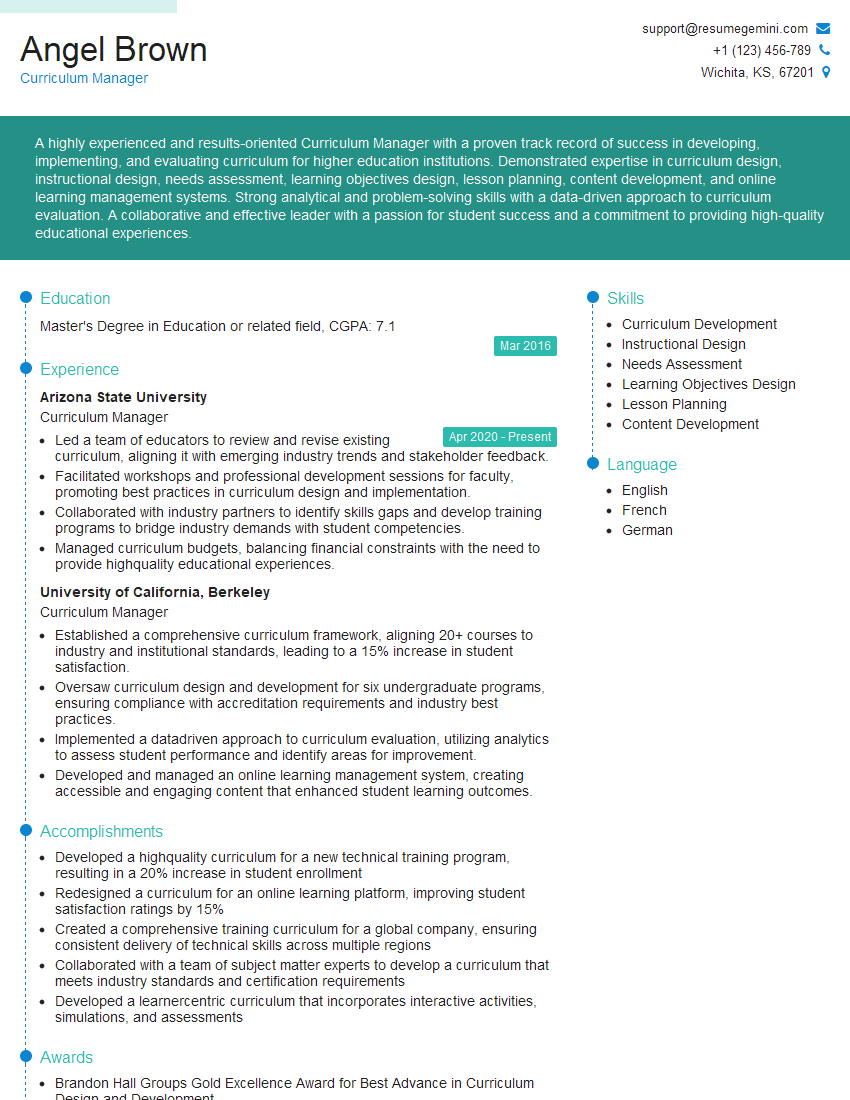
Curriculum Manager Resume Sample
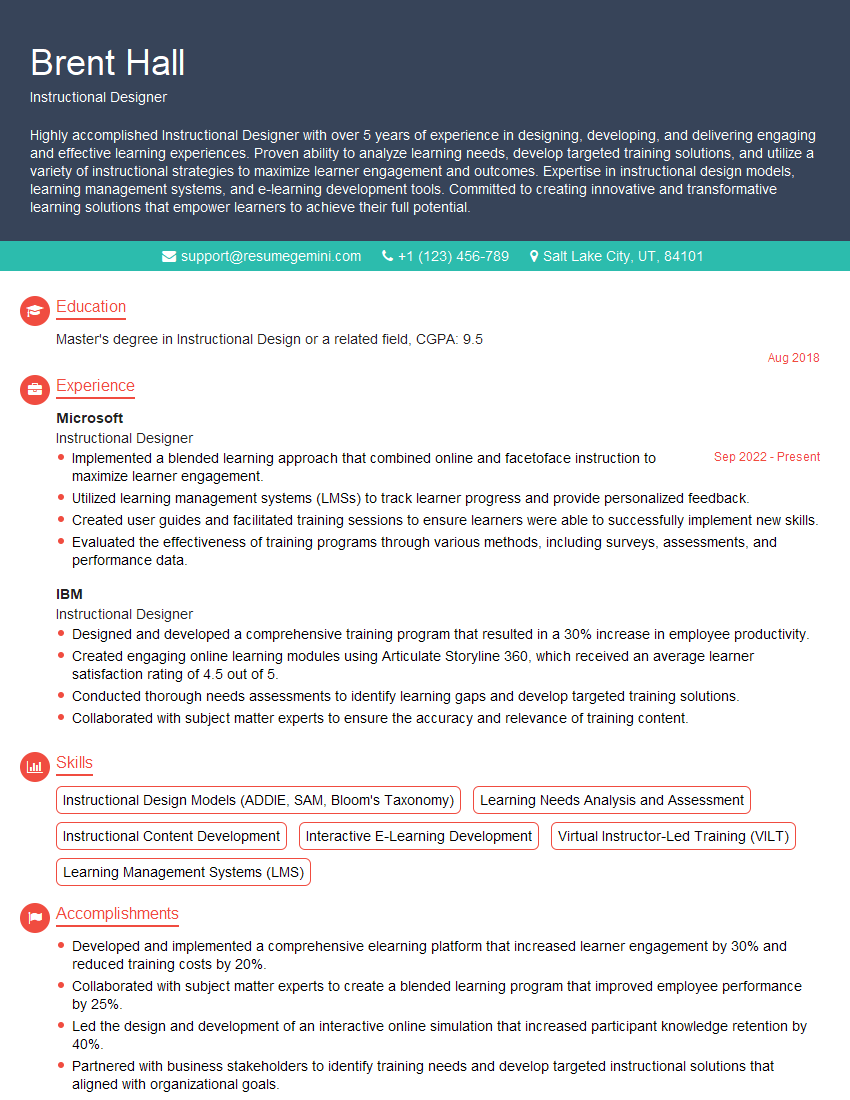
Instructional Designer Resume Sample

Educational Technologist Resume Sample
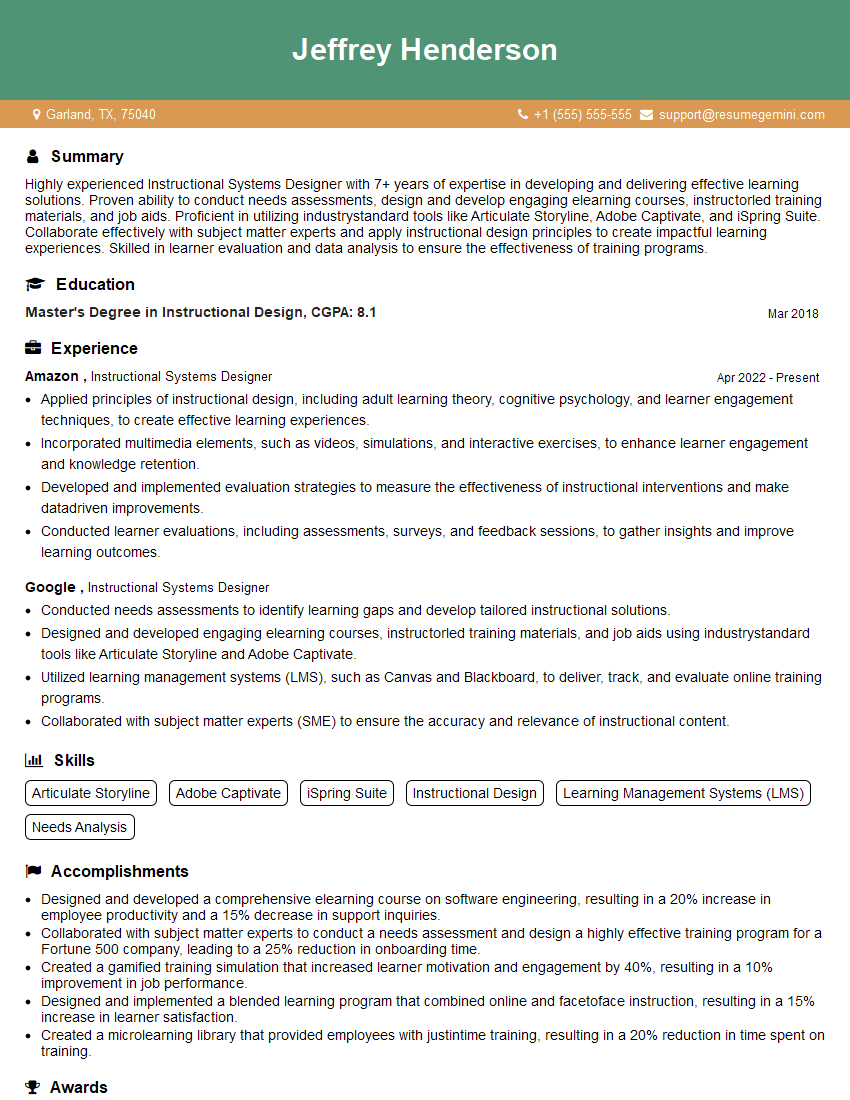
Instructional Systems Designer Resume Sample
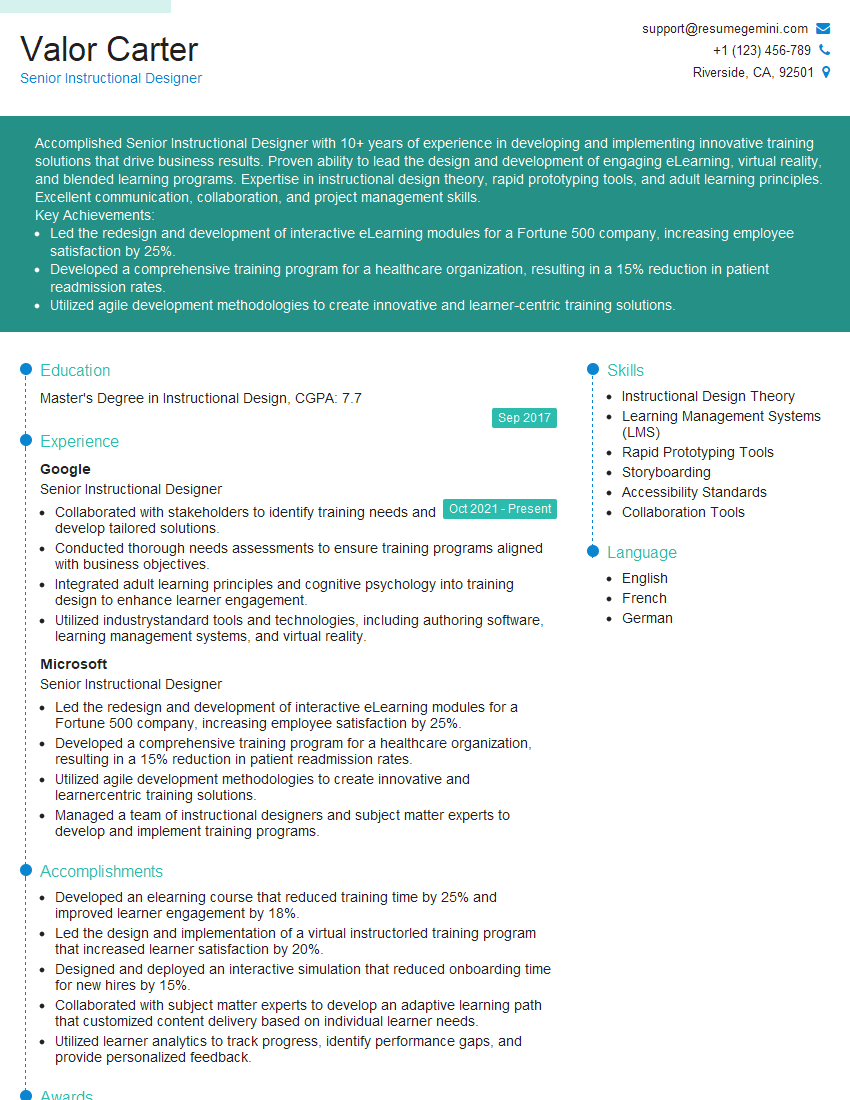
Senior Instructional Designer Resume Sample
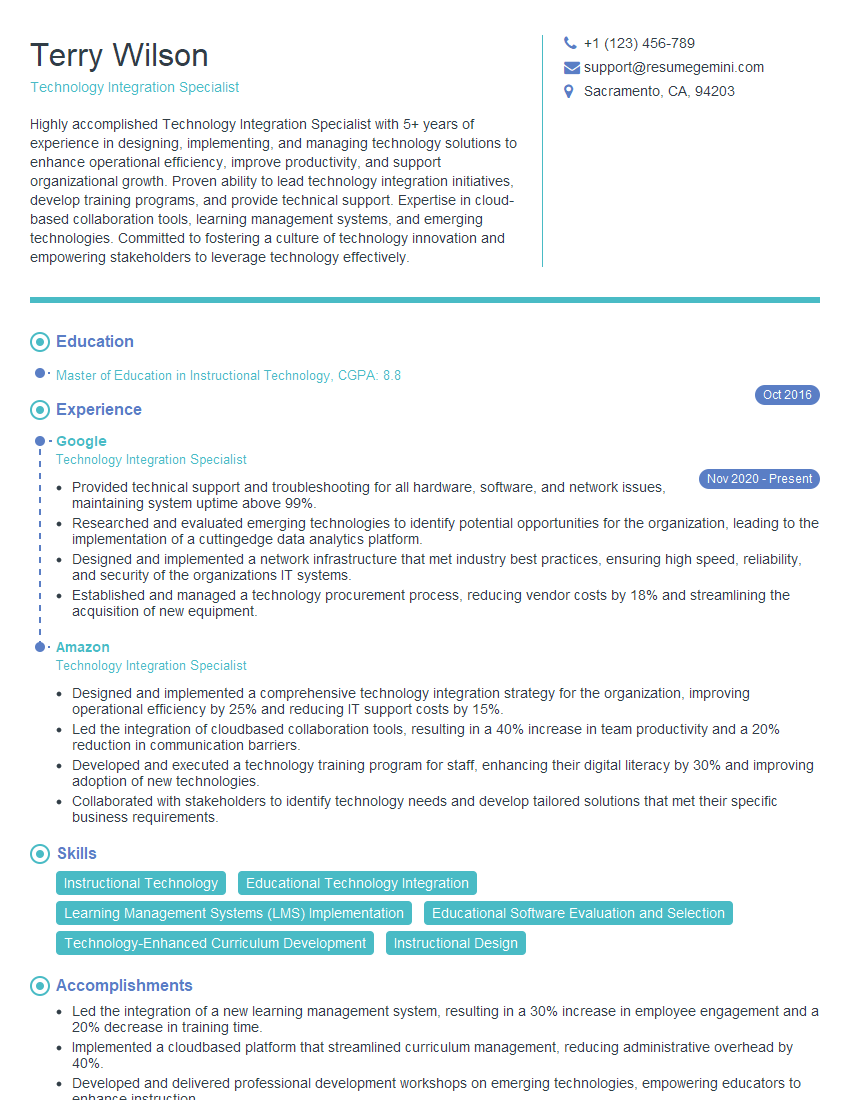
Technology Integration Specialist Resume Sample
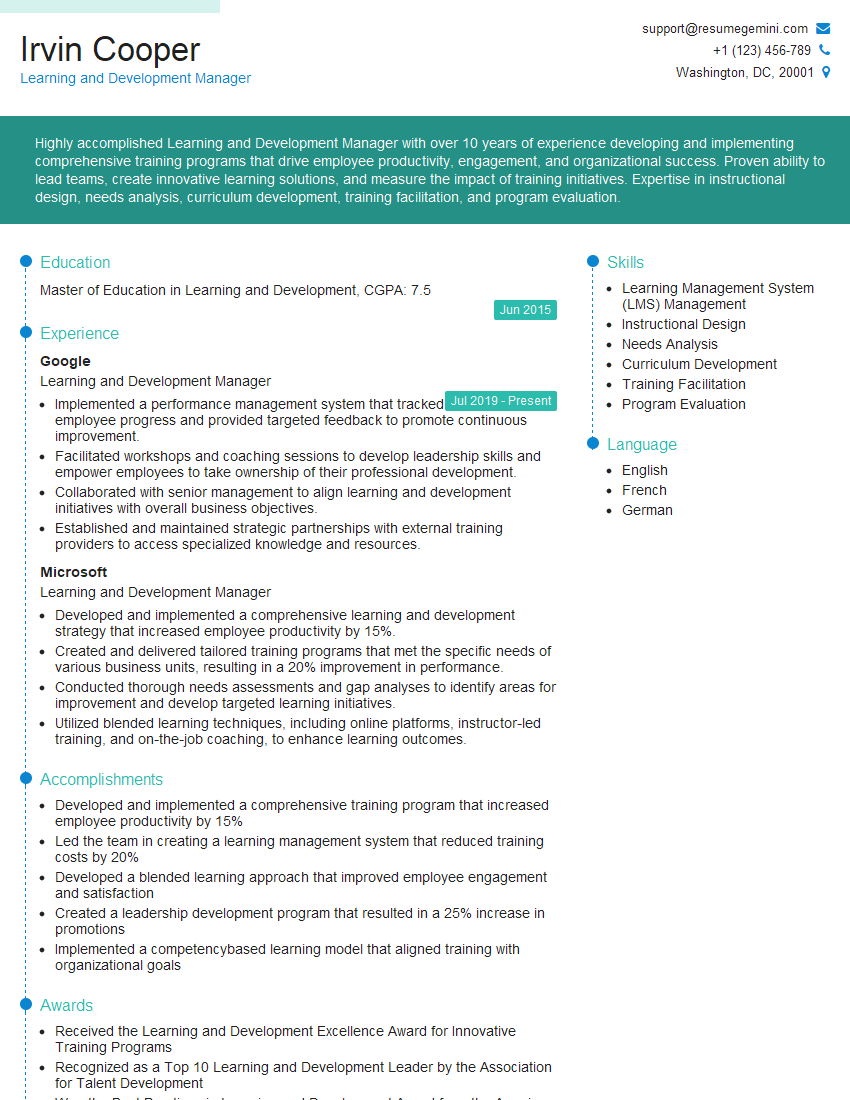
Learning and Development Manager Resume Sample
Explore more articles
Users Rating of Our Blogs
Share Your Experience
We value your feedback! Please rate our content and share your thoughts (optional).
What Readers Say About Our Blog
I Redesigned Spongebob Squarepants and his main characters of my artwork.
https://www.deviantart.com/reimaginesponge/art/Redesigned-Spongebob-characters-1223583608
IT gave me an insight and words to use and be able to think of examples
Hi, I’m Jay, we have a few potential clients that are interested in your services, thought you might be a good fit. I’d love to talk about the details, when do you have time to talk?
Best,
Jay
Founder | CEO