The thought of an interview can be nerve-wracking, but the right preparation can make all the difference. Explore this comprehensive guide to Knowledge of Sustainable Design interview questions and gain the confidence you need to showcase your abilities and secure the role.
Questions Asked in Knowledge of Sustainable Design Interview
Q 1. Explain the principles of sustainable design.
Sustainable design centers around creating built environments that minimize negative environmental impact and enhance human well-being throughout a structure’s entire lifecycle. It’s about balancing ecological, social, and economic considerations.
- Environmental Stewardship: Minimizing resource consumption (water, energy, materials), reducing waste and pollution, and protecting ecosystems.
- Social Equity: Designing spaces that are accessible, healthy, and promote community well-being. This includes considering affordability and promoting social interaction.
- Economic Viability: Creating designs that are cost-effective to build and operate over their lifespan, while fostering sustainable economic activity in the community.
- Resilience: Designing structures that can withstand environmental changes and adapt to future needs.
For example, a sustainable building might incorporate rainwater harvesting for irrigation, use locally-sourced materials to reduce transportation emissions, and feature passive design elements to minimize energy consumption.
Q 2. Describe your experience with LEED certification.
I have extensive experience with LEED (Leadership in Energy and Environmental Design) certification. I’ve been involved in numerous projects, from initial concept to final certification, achieving various LEED ratings, including LEED Gold and Platinum. My involvement typically includes:
- LEED Strategy Development: Identifying opportunities to maximize LEED points early in the design process.
- Documentation and Submission: Preparing and submitting all necessary documentation for LEED certification.
- Team Coordination: Working closely with architects, engineers, contractors, and clients to ensure compliance with LEED requirements.
- Innovation and Optimization: Seeking creative solutions to optimize energy performance, water efficiency, and material selection for enhanced LEED scores.
One memorable project involved designing a net-zero energy office building, where we implemented innovative strategies for energy generation and conservation, ultimately resulting in LEED Platinum certification. This involved meticulous attention to detail, precise calculations, and consistent collaboration across disciplines.
Q 3. How do you incorporate Life Cycle Assessment (LCA) into your design process?
Life Cycle Assessment (LCA) is crucial to sustainable design. It’s a comprehensive analysis of a product or building’s environmental impacts from cradle to grave (or ideally, cradle to cradle). I integrate LCA into my design process in several key ways:
- Material Selection: Using LCA data to compare the environmental impacts of different building materials, favoring those with lower embodied carbon and reduced overall environmental burden.
- Design Optimization: Analyzing the impact of design decisions (e.g., building orientation, material quantities) on the overall LCA, allowing for informed choices to minimize environmental footprint.
- Waste Management: Assessing the amount of construction and demolition waste generated and designing strategies for minimizing waste and maximizing recycling and reuse.
- Operational Phase Analysis: Considering the energy consumption, water usage, and emissions during the operational lifespan of the building, and designing for efficiency to reduce ongoing impacts.
For instance, when selecting flooring, we might compare the LCA of various options – bamboo, recycled content carpet, or locally sourced hardwood – to determine the most environmentally preferable choice.
Q 4. What are the key differences between cradle-to-grave and cradle-to-cradle design?
Cradle-to-grave and cradle-to-cradle are contrasting approaches to product and building design. ‘Cradle-to-grave’ focuses on managing environmental impacts from the extraction of raw materials to the disposal of the product at the end of its life. ‘Cradle-to-cradle’ takes a more holistic view, aiming to eliminate waste and pollution by designing products to be perpetually cycled through biological or technical nutrient loops.
- Cradle-to-Grave: This linear approach prioritizes waste minimization and responsible disposal, such as recycling or landfill diversion. It seeks to mitigate negative impacts but does not inherently focus on material reuse or continuous cycles.
- Cradle-to-Cradle: This circular approach views materials as nutrients within closed-loop systems. Materials are designed to be reused, composted, or recycled without compromising their quality. It aims for complete material recovery and elimination of waste.
Imagine a plastic bottle: cradle-to-grave would focus on responsible recycling; cradle-to-cradle would envision a system where the bottle is designed to be completely broken down and reused as a new bottle without losing material quality.
Q 5. Discuss strategies for reducing embodied carbon in building materials.
Reducing embodied carbon – the greenhouse gas emissions associated with manufacturing, transporting, and installing building materials – is critical for sustainable design. Strategies include:
- Material Selection: Choosing low-carbon materials such as timber from sustainably managed forests, recycled steel, or low-cement concrete.
- Material Optimization: Reducing material quantities through efficient design and construction methods. Minimizing waste during construction is also key.
- Local Sourcing: Using materials sourced from nearby locations to minimize transportation emissions.
- Carbon Offsetting: Investing in carbon offset projects to compensate for unavoidable embodied carbon.
- Embodied Carbon Accounting: Accurately quantifying the embodied carbon in various design options to make informed decisions and optimize designs.
For example, opting for cross-laminated timber (CLT) instead of steel can significantly reduce embodied carbon. CLT is a renewable, low-carbon material, and its fabrication processes often generate less pollution than steel production.
Q 6. Explain your understanding of passive design strategies.
Passive design strategies leverage natural forces like sunlight, wind, and thermal mass to minimize reliance on mechanical systems for heating, cooling, and lighting. This results in increased energy efficiency and reduced operating costs.
- Building Orientation: Optimizing building orientation to maximize solar gain in winter and minimize it in summer.
- Thermal Mass: Utilizing materials with high thermal mass to absorb and release heat slowly, moderating indoor temperatures.
- Natural Ventilation: Designing for natural ventilation to reduce reliance on mechanical ventilation systems.
- Shading Devices: Employing overhangs, awnings, or vegetation to shade windows and reduce solar heat gain in summer.
- Insulation: Using high-performance insulation to minimize heat loss in winter and heat gain in summer.
A simple example is designing a building with south-facing windows (in the Northern Hemisphere) to maximize passive solar heating in winter while using overhangs to shade the windows from the high summer sun.
Q 7. How do you integrate renewable energy sources into sustainable design projects?
Integrating renewable energy sources is a core component of sustainable design. This involves careful consideration of various technologies and site conditions:
- Photovoltaic (PV) Systems: Installing solar panels on rooftops or building facades to generate electricity from sunlight.
- Solar Thermal Systems: Utilizing solar collectors to heat water for domestic use or space heating.
- Wind Turbines: Employing wind turbines in locations with consistent wind resources to generate electricity.
- Geothermal Energy: Harnessing geothermal energy for heating and cooling through ground source heat pumps.
- Building-Integrated Photovoltaics (BIPV): Integrating PV cells directly into building materials like roofing tiles or facades to improve aesthetics and energy production efficiency.
For instance, in a multi-family residential project, we might install solar panels on the roof to generate clean energy while simultaneously using solar thermal collectors for water heating and implementing a geothermal system for heating and cooling. The specific renewable sources chosen would be influenced by site-specific conditions, energy needs, and economic feasibility.
Q 8. Describe your experience with sustainable material selection.
Sustainable material selection is the cornerstone of eco-conscious design. It involves choosing materials based not only on their aesthetic and functional properties but also on their environmental impact throughout their entire lifecycle – from extraction and manufacturing to use and disposal. This includes considering factors like embodied carbon (the carbon emissions associated with a material’s production), recyclability, renewability, durability, and the potential for sourcing from local or responsibly managed sources.
In my experience, I’ve worked on projects where we replaced traditional concrete with a bio-based alternative like hempcrete, significantly reducing the carbon footprint. Another project involved utilizing reclaimed timber for structural elements, diverting waste from landfills and reducing the demand for newly harvested wood. The selection process always involves a thorough Life Cycle Assessment (LCA) to compare the environmental performance of different materials.
- Embodied Carbon Analysis: We use software to calculate the carbon emissions associated with different materials.
- Material Sourcing: We prioritize materials with transparent supply chains and certifications like FSC (Forest Stewardship Council) for timber.
- Material Durability: Selecting durable materials reduces the need for frequent replacements, extending the lifespan of the building and minimizing waste.
Q 9. How do you assess the environmental impact of a design project?
Assessing the environmental impact of a design project requires a holistic approach. We employ various tools and methodologies, most prominently Life Cycle Assessment (LCA). LCA is a standardized framework for quantifying the environmental burdens associated with a product or system throughout its entire lifecycle. This includes material extraction, manufacturing, transportation, use, and end-of-life disposal.
Beyond LCA, we consider other factors like water usage, energy consumption during construction and operation, and the project’s contribution to pollution. We also use tools like embodied carbon calculators to estimate the carbon footprint of materials and construction processes. For example, we might use software to model the building’s energy performance and identify opportunities for optimization. We also analyze the project’s site context, examining its impact on local ecosystems and biodiversity.
The results of these assessments inform design decisions and allow us to identify areas for improvement and prioritize sustainable solutions.
Q 10. What are the main challenges in achieving sustainable design goals?
Achieving sustainable design goals presents numerous challenges. One major hurdle is the often higher upfront costs associated with sustainable materials and technologies. Many clients are hesitant to invest in sustainable solutions due to perceived increased expense, even though lifecycle cost analysis frequently demonstrates long-term savings. Another challenge is the lack of readily available information on the environmental impacts of many construction materials. Inconsistent standards and certifications can also make it difficult to compare different materials objectively.
Furthermore, there can be challenges in integrating sustainable design principles within existing regulatory frameworks and building codes. Finally, a significant obstacle is changing ingrained practices and mindsets within the construction industry. A collaborative approach, involving architects, engineers, contractors, and clients, is crucial to overcome these hurdles and successfully implement sustainable design solutions.
Q 11. Explain your understanding of circular economy principles.
The circular economy is a regenerative system that aims to eliminate waste and pollution, keep products and materials in use, and regenerate natural systems. It operates on three core principles: reduce, reuse, recycle. This contrasts with the traditional linear economy’s ‘take-make-dispose’ model.
In sustainable design, applying circular economy principles means designing buildings and products that are easily deconstructed, with materials that can be reused, repurposed, or recycled at the end of their useful life. This involves careful material selection, modular design to enable easy disassembly, and the use of durable, repairable components. For instance, a building designed with a circular economy approach would prioritize using easily disassembled components, reducing demolition waste. Materials would be chosen for their recyclability and ease of reuse.
Implementing a circular economy approach can lead to significant reductions in environmental impact and resource consumption.
Q 12. How do you measure the success of a sustainable design project?
Measuring the success of a sustainable design project requires a multifaceted approach, going beyond simply meeting initial sustainability targets. We use a combination of quantitative and qualitative metrics. Quantitative metrics could include reduced energy consumption, lower water usage, decreased waste generation (measured in tons of material diverted from landfills), and a reduction in embodied carbon. We may also track the project’s performance against established sustainability benchmarks, like LEED or BREEAM.
Qualitative metrics focus on assessing the project’s impact on occupants’ well-being, satisfaction with the building’s performance, and contribution to broader sustainability goals. Post-occupancy evaluations (POE) help us gather data about user satisfaction and building performance over time. Furthermore, we evaluate the project’s contribution to community engagement, social equity, and environmental justice. Long-term monitoring is crucial to understand the ongoing environmental and social impacts of the project.
Q 13. Describe your experience with water conservation strategies in design.
Water conservation is critical in sustainable design. My experience encompasses various strategies, including the implementation of water-efficient fixtures (low-flow toilets, showerheads, and faucets), rainwater harvesting systems for irrigation and non-potable water uses, and the use of greywater recycling for toilet flushing or landscape irrigation. We also incorporate permeable paving to allow rainwater to infiltrate the ground, reducing runoff and replenishing groundwater.
In one project, we designed a rainwater harvesting system that significantly reduced the building’s reliance on municipal water. This not only conserved water resources but also reduced the building’s operational costs. Careful site analysis is key to selecting appropriate water conservation strategies. This includes considering local climate conditions, soil types, and water availability.
Q 14. What software or tools do you use for sustainable design analysis?
Several software and tools are indispensable for sustainable design analysis. For Life Cycle Assessment (LCA), we utilize specialized software like SimaPro or GaBi. These programs allow us to model the environmental impacts of different design options and materials. For energy modeling and performance simulation, we use tools like EnergyPlus or IES VE. These help assess a building’s energy efficiency and optimize its design for minimal energy consumption.
Furthermore, we use Building Information Modeling (BIM) software, such as Revit or Archicad, integrated with sustainability plugins to enhance the analysis and tracking of environmental performance throughout the design process. Embodied carbon calculators are also frequently employed to evaluate the carbon footprint of materials.
Q 15. Explain your experience with energy modeling software.
Energy modeling software is crucial for predicting and optimizing a building’s energy performance. My experience encompasses several leading software packages, including EnergyPlus, IESVE, and DesignBuilder. I’m proficient in creating detailed building models, inputting climate data, defining building materials and systems, and running simulations to analyze energy consumption for heating, cooling, lighting, and other systems. This allows me to identify areas for improvement and explore various design options to minimize energy waste. For example, on a recent project, using EnergyPlus, I was able to demonstrate that shifting the building orientation by 15 degrees and incorporating high-performance glazing resulted in a 20% reduction in annual energy use compared to the initial design. This wasn’t just about the software; it involved understanding the underlying principles of energy transfer and applying them effectively within the software environment.
Career Expert Tips:
- Ace those interviews! Prepare effectively by reviewing the Top 50 Most Common Interview Questions on ResumeGemini.
- Navigate your job search with confidence! Explore a wide range of Career Tips on ResumeGemini. Learn about common challenges and recommendations to overcome them.
- Craft the perfect resume! Master the Art of Resume Writing with ResumeGemini’s guide. Showcase your unique qualifications and achievements effectively.
- Don’t miss out on holiday savings! Build your dream resume with ResumeGemini’s ATS optimized templates.
Q 16. How do you incorporate user behavior into your sustainable design considerations?
Incorporating user behavior is paramount in sustainable design. A building, no matter how efficiently designed, will fail to meet its sustainability goals if its occupants don’t adopt sustainable practices. I integrate this through several approaches: first, by conducting thorough user needs analysis. This involves understanding how people will interact with the building, including their routines, preferences, and potential impacts on energy and water consumption. Secondly, I design intuitive and user-friendly systems. For instance, incorporating clear visual cues to encourage energy conservation, such as smart meters that display real-time energy usage. Thirdly, I promote occupant engagement through educational programs and feedback mechanisms. This might include workshops on energy-efficient practices or integrating smart technology that provides personalized feedback on individual energy consumption. Essentially, it’s about designing the building and its systems to work *with* the users, not against them.
Q 17. Describe a time you had to compromise on a sustainable design element due to budget constraints. How did you approach the situation?
On a recent project, we initially planned to use locally sourced, reclaimed timber for the structural framework—a highly sustainable choice. However, due to budget constraints, this material proved too expensive. Instead of abandoning the sustainable goal entirely, we explored alternative, cost-effective options. We opted for sustainably harvested timber from a certified forest, ensuring responsible sourcing. While not as locally sourced as originally intended, this compromise still significantly reduced the carbon footprint compared to using traditional materials. The key was transparency and open communication with the client. We presented different options, clearly outlining the trade-offs between cost and sustainability, and collaboratively chose the most viable solution. This ensured the client understood the value of sustainable choices even within budget limitations.
Q 18. What are the key performance indicators (KPIs) for measuring sustainable design success?
Key Performance Indicators (KPIs) for sustainable design success are multifaceted and depend on the specific project goals. However, common KPIs include:
- Energy consumption (kWh/m²/year): Measures the building’s energy efficiency.
- Water consumption (liters/m²/year): Assesses water usage efficiency.
- Carbon emissions (kg CO2e/m²/year): Tracks the building’s overall carbon footprint.
- Embodied carbon (kg CO2e): Measures carbon emissions associated with building materials.
- Waste diversion rate (%): Indicates the amount of construction waste diverted from landfills.
- Indoor environmental quality (IEQ) metrics: Such as thermal comfort, air quality, and daylight access, reflecting occupant well-being.
- LEED/BREEAM/Green Globes score: Provides a standardized measure of sustainability performance based on established rating systems.
Q 19. Explain your understanding of green building standards (e.g., BREEAM, Green Globes).
Green building standards such as BREEAM (Building Research Establishment Environmental Assessment Method), LEED (Leadership in Energy and Environmental Design), and Green Globes provide frameworks for evaluating and certifying the environmental performance of buildings. BREEAM, prevalent in Europe, focuses on a wide range of sustainability aspects, including energy, water, materials, waste, ecology, and pollution. Green Globes offers a more flexible and customizable approach with a focus on holistic sustainability, while LEED is widely recognized in North America and emphasizes energy efficiency, water conservation, and material selection. My experience involves applying these standards to various projects, understanding their specific requirements, and guiding design decisions to achieve certification. This involves navigating the complex criteria, ensuring compliance, and ultimately achieving a higher level of environmental performance. Each standard offers a unique path to achieving sustainability, and understanding their nuances is crucial for effective application.
Q 20. How do you integrate biodiversity considerations into your design projects?
Integrating biodiversity considerations starts with understanding the existing ecology of the site. This involves conducting thorough ecological surveys to identify native plant and animal species and assessing potential impacts of the project. Design strategies then focus on minimizing negative impacts and maximizing positive ones. Examples include: incorporating green roofs and walls to create habitat for wildlife, using native landscaping to support local ecosystems, creating permeable surfaces to manage stormwater runoff and protect water quality, and minimizing light pollution to preserve nocturnal habitats. On one project, we designed a rainwater harvesting system that not only reduced water consumption but also created a small wetland area on the site, providing a vital habitat for amphibians and birds. It’s about designing buildings that coexist harmoniously with their environment rather than disrupting it.
Q 21. Describe your experience with sustainable transportation strategies in design.
Sustainable transportation strategies are integral to minimizing a building’s environmental footprint. My experience includes incorporating various strategies into designs, including:
- Promoting public transit accessibility: Designing buildings near public transit hubs and providing bicycle storage and shower facilities.
- Encouraging cycling and walking: Creating pedestrian-friendly environments with safe walkways and bike lanes.
- Providing electric vehicle charging stations: Supporting the transition to cleaner transportation modes.
- Optimizing parking design: Minimizing parking spaces to discourage car use and incorporating car-sharing programs.
- Optimizing building layout and design: Clustering spaces to minimize travel distances and improving pedestrian navigation.
Q 22. How do you communicate the benefits of sustainable design to clients or stakeholders?
Communicating the benefits of sustainable design hinges on tailoring the message to the specific client or stakeholder. I begin by understanding their priorities – are they primarily concerned with cost savings, brand reputation, environmental responsibility, or regulatory compliance? Once I have this understanding, I can present the benefits in a compelling and relevant way.
For cost-conscious clients: I highlight the long-term cost savings associated with reduced energy consumption, lower water bills, and potentially increased property value due to higher energy efficiency ratings.
For environmentally conscious clients: I emphasize the reduced carbon footprint, the conservation of resources, and the positive impact on biodiversity. I might present lifecycle assessments comparing the environmental impact of different design choices.
For stakeholders interested in brand reputation: I showcase how sustainable design aligns with corporate social responsibility goals, enhances brand image, and attracts environmentally aware customers or tenants.
Visual aids like infographics, comparative charts, and building performance simulations are incredibly effective in showcasing the tangible benefits of sustainable design decisions.
Q 23. What are some innovative sustainable design solutions you’ve encountered?
I’ve encountered several innovative sustainable design solutions recently. One example is the use of bio-based materials like mycelium composites – grown from mushroom roots – as building insulation and structural components. These materials offer excellent thermal performance, are carbon-negative, and are fully compostable at the end of their life.
Another impressive solution is the integration of building-integrated photovoltaics (BIPV). Instead of installing solar panels on the roof, BIPVs are incorporated directly into the building’s facade, creating aesthetically pleasing and energy-generating surfaces. This approach maximizes energy production while minimizing visual impact.
Finally, I’ve seen impressive progress in the use of passive design strategies. This includes optimized building orientation, natural ventilation systems, and shading devices to reduce reliance on active mechanical systems for heating and cooling.
Q 24. Explain your understanding of building codes and regulations related to sustainable design.
Building codes and regulations concerning sustainable design are constantly evolving, varying by jurisdiction. However, common themes include energy efficiency standards (often expressed through energy codes like ASHRAE 90.1), water conservation requirements, and the use of recycled or regionally sourced materials. These codes often incorporate rating systems like LEED (Leadership in Energy and Environmental Design) or BREEAM (Building Research Establishment Environmental Assessment Method), which provide frameworks for achieving sustainable design goals.
Understanding these regulations is critical to ensuring a project’s compliance. My process involves thoroughly researching the specific codes and regulations applicable to the project’s location and then incorporating these requirements into the design process from the outset. This often involves collaborating with building officials and sustainability consultants to navigate complex regulations and optimize designs for compliance and performance.
Q 25. How do you balance the cost and effectiveness of different sustainable design strategies?
Balancing cost and effectiveness is a crucial aspect of sustainable design. It’s not about choosing the most expensive ‘green’ option; it’s about optimizing the design to achieve the best environmental performance within a reasonable budget. This is an iterative process involving:
Life-cycle cost analysis (LCCA): This compares the initial costs of different design options against their long-term operational costs (energy, water, maintenance).
Prioritization of strategies: Identifying the most impactful sustainable design elements based on their return on investment (ROI). For example, improving building envelope performance often yields significant energy savings compared to some niche sustainable technologies.
Value engineering: Exploring alternative materials or construction methods that achieve similar performance at a lower cost. This might involve using locally sourced materials, optimizing material quantities, or adopting simpler design solutions.
Incentives and rebates: Exploring available government incentives, tax credits, and utility rebates that can offset the upfront cost of sustainable features.
This holistic approach ensures that sustainable design strategies are both cost-effective and impactful.
Q 26. Describe your experience in developing sustainable design strategies for specific building typologies (e.g., residential, commercial, industrial).
My experience spans various building typologies. In residential design, I’ve focused on passive solar design, efficient water fixtures, and the use of low-embodied carbon materials. A recent project involved designing a net-zero energy home using high-performance insulation and solar panels, exceeding local energy codes significantly.
For commercial projects, I’ve incorporated green roofs, rainwater harvesting systems, and efficient HVAC systems. For instance, I worked on a LEED Platinum office building that utilized natural daylighting and optimized building orientation to minimize energy consumption.
In industrial settings, the focus shifts towards reducing waste generation, improving energy efficiency of manufacturing processes, and utilizing renewable energy sources. For example, a recent project included designing a warehouse with high-efficiency lighting and implementing a system for recovering and reusing waste heat.
Q 27. How do you stay updated on the latest trends and technologies in sustainable design?
Staying updated in the rapidly evolving field of sustainable design requires a multi-pronged approach. I regularly attend industry conferences and workshops, subscribe to relevant journals and publications (like the Journal of Green Building), and actively participate in online communities and professional organizations.
I also follow leading researchers, industry experts, and organizations on social media platforms. Utilizing online learning platforms offers access to the latest design software and tools. This continuous learning keeps my skills and knowledge relevant.
Q 28. What are your career goals in the field of sustainable design?
My career goals involve combining my passion for sustainable design with leadership roles. I aim to contribute to the development of innovative design solutions that address the growing environmental challenges while simultaneously improving human well-being. Specifically, I aspire to lead teams on large-scale sustainable projects, mentor younger professionals, and contribute to research and development in the field. I also envision using my expertise to advocate for stronger building codes and policies that support sustainable design practices.
Key Topics to Learn for a Sustainable Design Interview
- Life Cycle Assessment (LCA): Understanding the environmental impact of a product or building from cradle to grave, including material extraction, manufacturing, use, and disposal. Practical application: Analyzing the LCA of different building materials to select the most sustainable option for a project.
- Sustainable Materials: Knowledge of eco-friendly materials, their properties, sourcing, and limitations. Practical application: Specifying reclaimed wood or recycled content materials in a design project, considering their performance and cost-effectiveness.
- Energy Efficiency & Renewable Energy: Principles of passive and active design strategies to minimize energy consumption and integrate renewable sources (solar, wind). Practical application: Designing a building to maximize natural light and minimize heat gain/loss.
- Water Conservation & Management: Strategies for reducing water usage in buildings and landscapes through efficient fixtures, rainwater harvesting, and greywater recycling. Practical application: Designing a landscape using drought-tolerant plants and minimizing irrigation needs.
- Indoor Environmental Quality (IEQ): Understanding the impact of building design on occupant health and well-being, including air quality, lighting, and acoustics. Practical application: Specifying low-VOC paints and selecting appropriate ventilation systems to improve indoor air quality.
- Circular Economy Principles: Applying design for disassembly, reuse, and recycling to minimize waste and maximize resource utilization. Practical application: Designing a product with easily replaceable components to extend its lifespan and reduce landfill waste.
- Sustainable Site Planning & Development: Minimizing the environmental impact of construction through careful site selection, land use planning, and erosion control. Practical application: Designing a development that minimizes its footprint and protects natural habitats.
- Environmental Regulations & Standards: Familiarity with relevant building codes, certifications (LEED, BREEAM), and sustainability standards. Practical application: Ensuring a design meets the requirements of local environmental regulations and sustainability certifications.
- Sustainable Design Software & Tools: Proficiency in relevant software for LCA, energy modeling, and other sustainable design calculations. Practical application: Using software to analyze the energy performance of a building design and optimize it for efficiency.
Next Steps
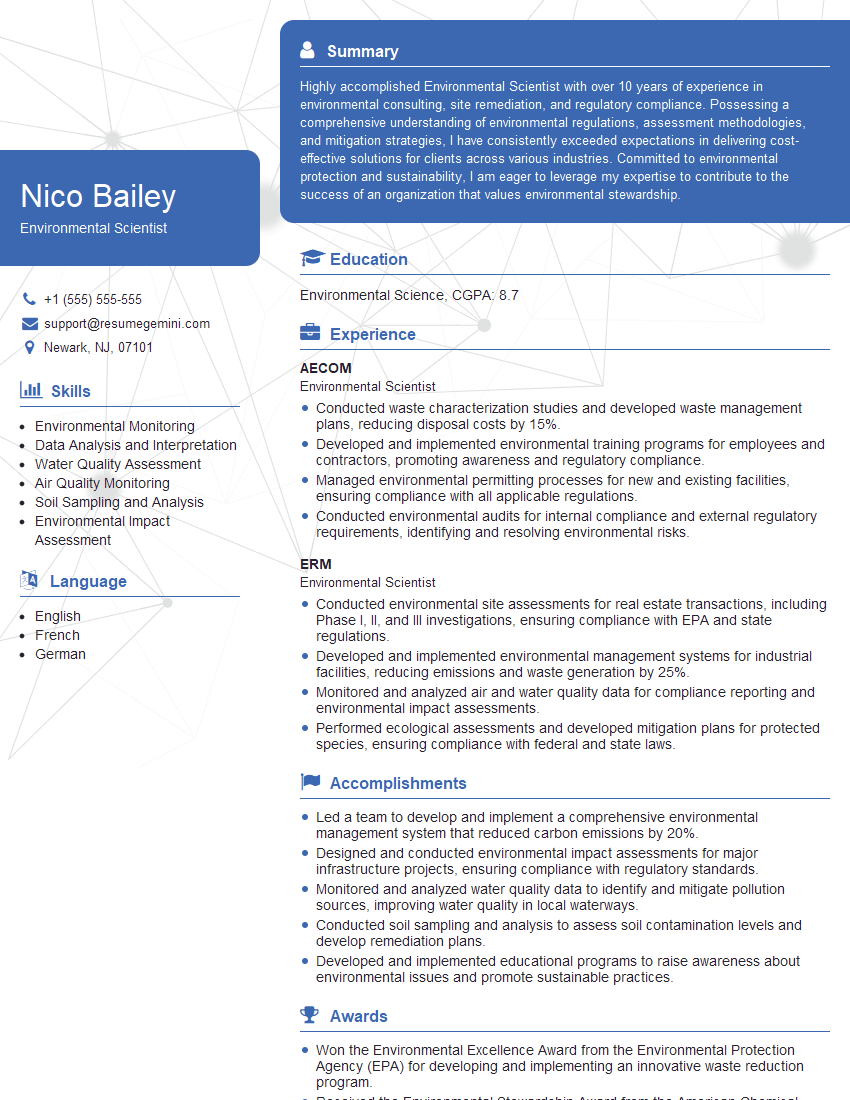
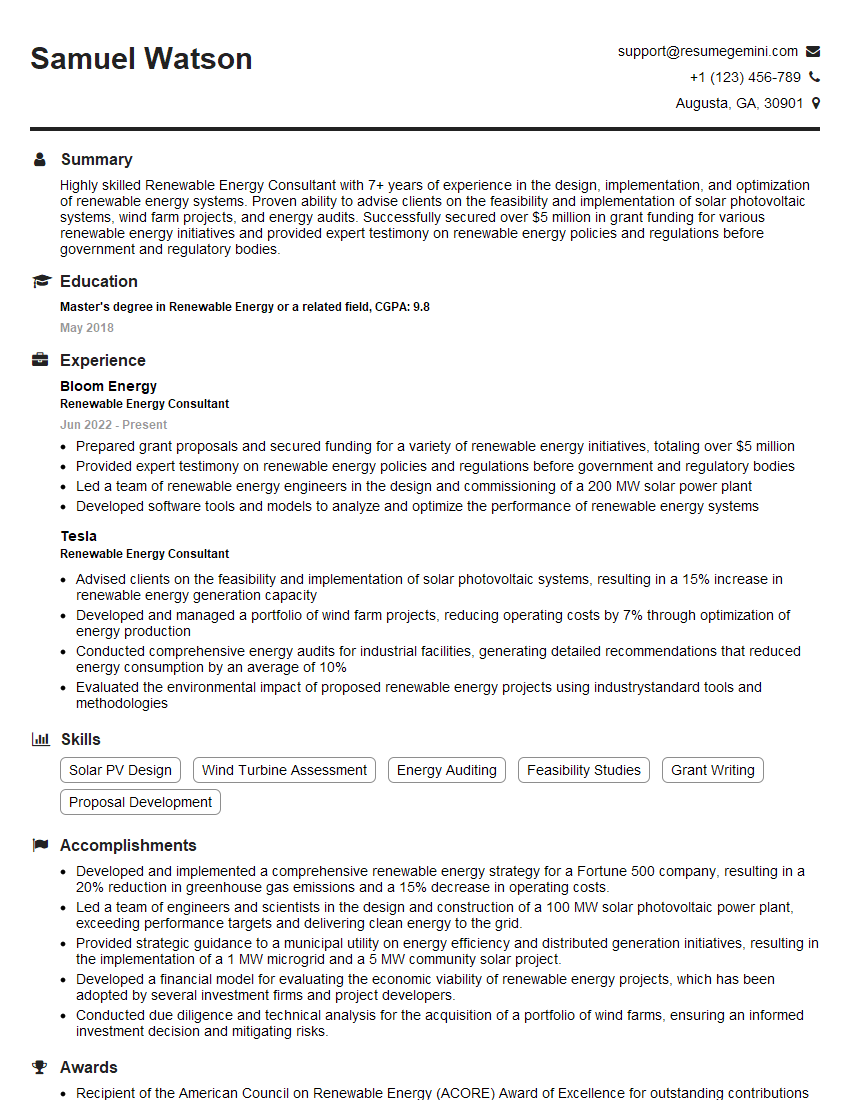
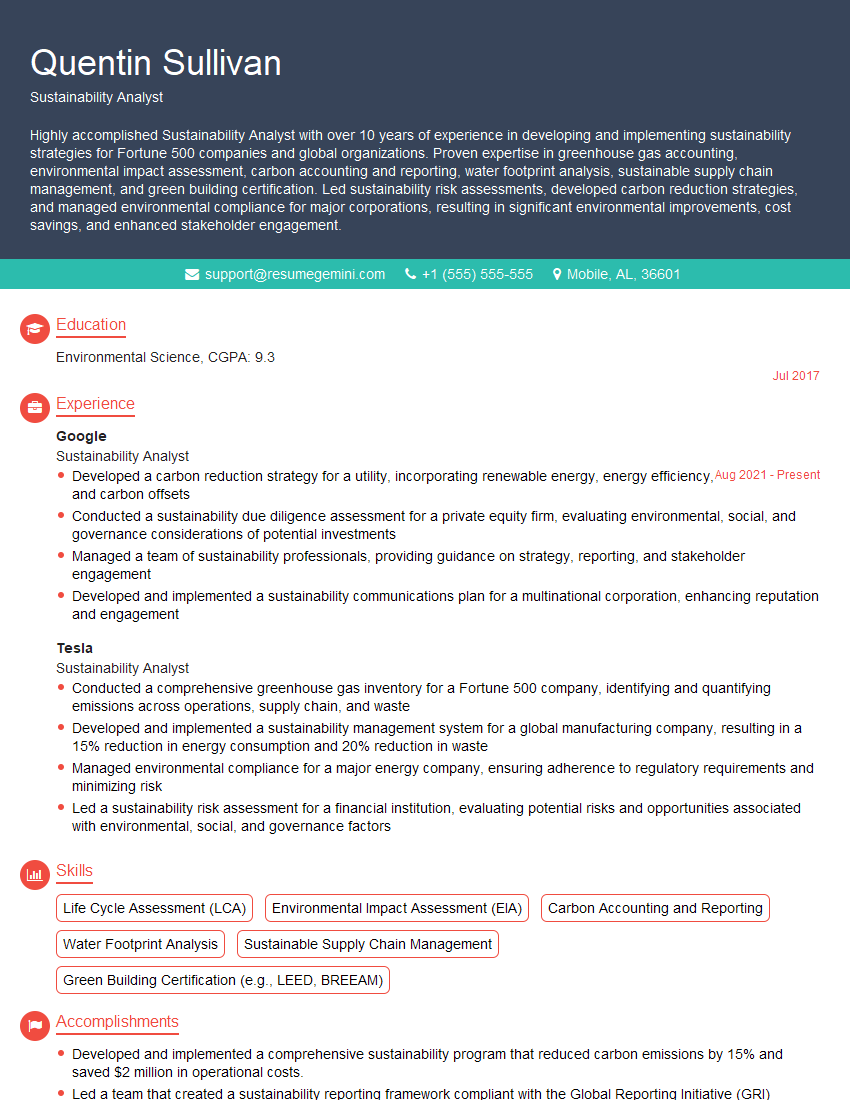
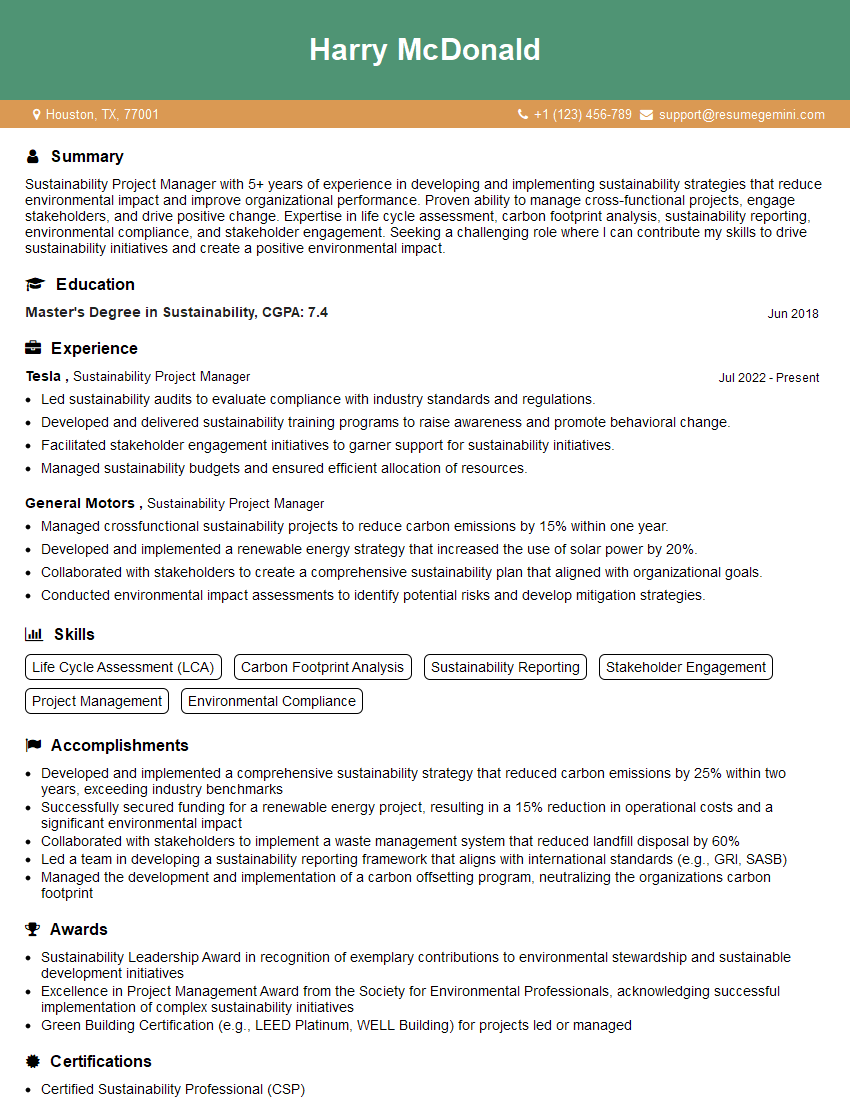
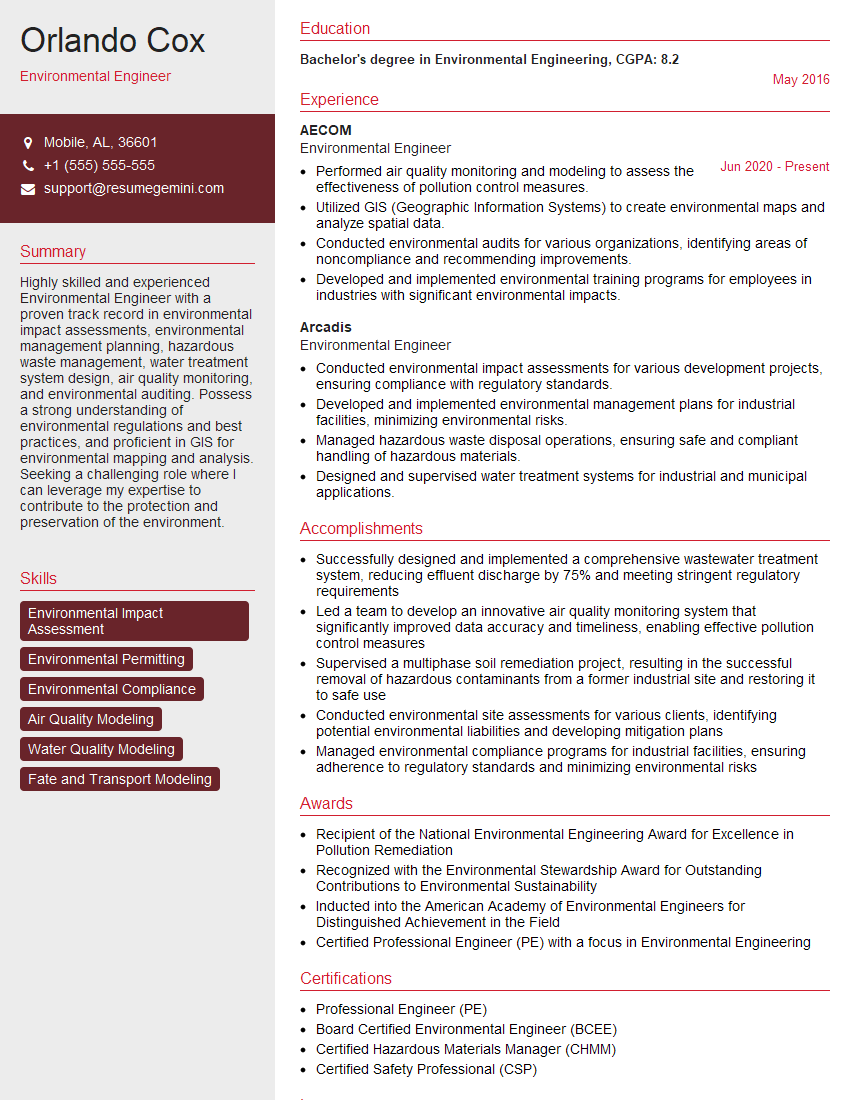
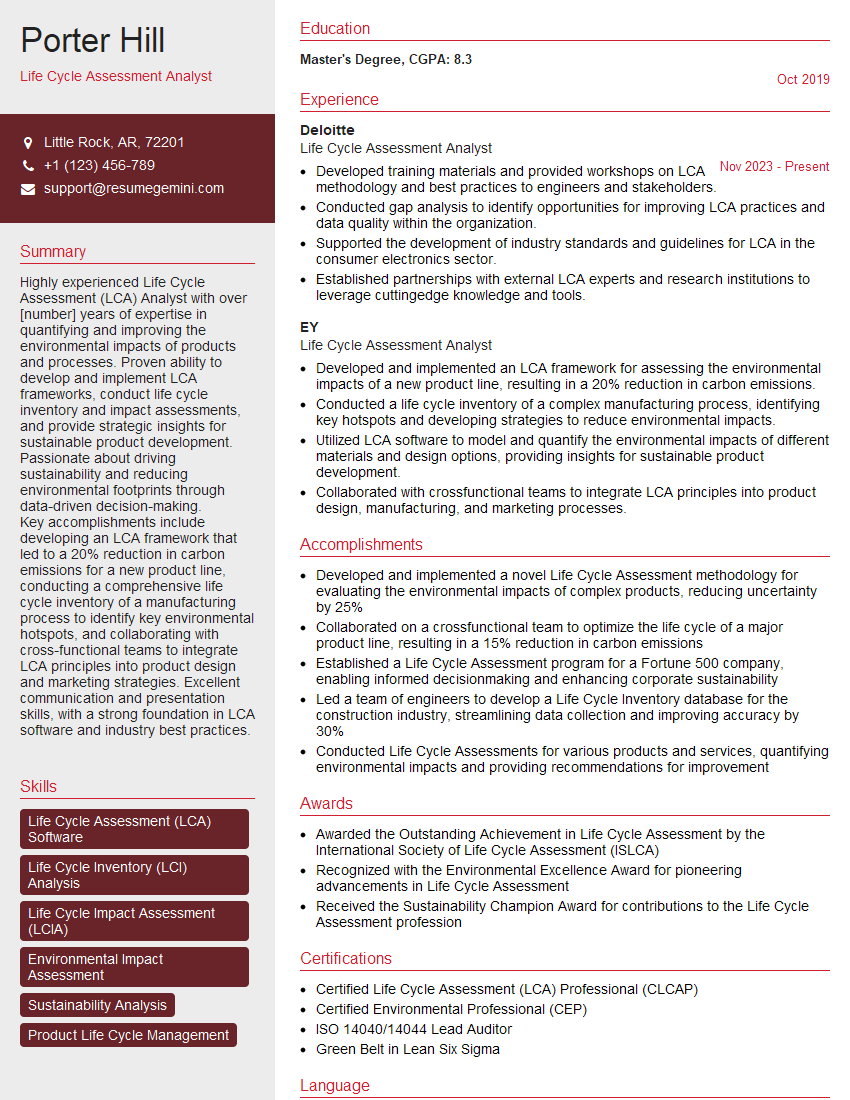
Mastering sustainable design principles is crucial for a thriving career in architecture, engineering, and related fields. It demonstrates a commitment to environmental responsibility and opens doors to exciting opportunities in a growing sector. To maximize your job prospects, create an ATS-friendly resume that showcases your skills and experience effectively. ResumeGemini is a trusted resource to help you build a professional and impactful resume. We provide examples of resumes tailored to Knowledge of Sustainable Design to help you get started.

Explore more articles
Users Rating of Our Blogs
Share Your Experience
We value your feedback! Please rate our content and share your thoughts (optional).
What Readers Say About Our Blog
I Redesigned Spongebob Squarepants and his main characters of my artwork.
https://www.deviantart.com/reimaginesponge/art/Redesigned-Spongebob-characters-1223583608
IT gave me an insight and words to use and be able to think of examples
Hi, I’m Jay, we have a few potential clients that are interested in your services, thought you might be a good fit. I’d love to talk about the details, when do you have time to talk?
Best,
Jay
Founder | CEO