Interviews are more than just a Q&A session—they’re a chance to prove your worth. This blog dives into essential Zones of Regulation interview questions and expert tips to help you align your answers with what hiring managers are looking for. Start preparing to shine!
Questions Asked in Zones of Regulation Interview
Q 1. Explain the four Zones of Regulation.
The Zones of Regulation is a self-regulation framework that helps individuals understand and manage their emotional and sensory states. It categorizes levels of alertness and self-control into four distinct zones: Blue, Green, Yellow, and Red.
- Blue Zone: This represents low alertness and energy levels. Students might feel tired, sad, or bored. Think of it as feeling sluggish like a sleepy sloth.
- Green Zone: This is the optimal zone for learning and social interaction. Students are calm, focused, and in control. Imagine a calm, happy frog, ready to learn.
- Yellow Zone: This indicates elevated alertness and energy levels. Students might feel frustrated, anxious, or silly. Think of a playful monkey, full of energy, but potentially easily frustrated.
- Red Zone: This represents a heightened state of arousal, often involving loss of control. Students might experience anger, rage, or panic. Imagine a roaring lion, completely overwhelmed.
Understanding these zones allows students to identify their current state and develop strategies to manage their emotions and behaviors, ultimately improving their ability to learn and interact positively with others.
Q 2. Describe how you would introduce the Zones of Regulation to a new student.
Introducing the Zones of Regulation to a new student requires a playful and engaging approach. I’d start by using age-appropriate language and visual aids, like the color-coded zone posters. I’d explain each zone using relatable examples and scenarios:
- Blue: “Imagine you’re feeling really sleepy and tired, like after a long day of playing. That’s like being in the Blue Zone.”
- Green: “This is the best zone! You’re calm, focused, and ready to learn, like a superhero ready for action!”
- Yellow: “Sometimes we get a little too excited or frustrated, like when you’re waiting for a long time. That’s the Yellow Zone. We still have control, but we need to be careful.”
- Red: “This zone is when things feel really overwhelming. Imagine if you were really angry or scared. That’s the Red Zone. We need to take a break and calm down.”
I would then encourage the student to identify their own feelings and place themselves in a zone, building a vocabulary around emotional experiences. Interactive activities, like role-playing or drawing, can reinforce understanding.
Q 3. How do you use the Zones of Regulation to support students with emotional regulation challenges?
For students with emotional regulation challenges, the Zones of Regulation provides a powerful framework for self-awareness and coping. We use it to help them understand their emotional state, predict triggers, and develop personalized strategies to manage their responses. This involves:
- Identifying Triggers: We collaboratively identify situations or sensory inputs that tend to push students into the Yellow or Red Zones.
- Teaching Coping Strategies: We equip students with a toolbox of techniques specific to each zone. For example, deep breathing for Yellow/Red, quiet time for Blue, and movement breaks for Yellow.
- Regular Check-ins: Frequent check-ins help students monitor their zone throughout the day, promoting self-awareness and proactive regulation.
- Creating Visual Schedules: Visual schedules provide predictability and reduce anxiety, keeping students in the Green Zone as much as possible.
- Collaboration with Parents/Guardians: Consistency is key. Working with families to maintain the use of the Zones at home strengthens the learning and application.
By consistently using the Zones, students learn to self-advocate, recognizing their emotional needs and communicating them effectively.
Q 4. What strategies do you employ to help students identify their own zone?
Helping students identify their own zone involves a multi-faceted approach that combines direct instruction, visual cues, and reflective activities:
- Using a Feelings Chart or Thermometer: Visual aids like color-coded charts or thermometers, help students map their emotional intensity to the corresponding zone.
- Role-Playing: Acting out scenarios in different zones helps them connect feelings with the visual representation.
- Journaling or Drawing: Encouraging students to express their emotions through writing or drawing provides an outlet for self-expression and reflection.
- Mindfulness Exercises: Practicing mindfulness techniques improves self-awareness, making it easier to identify emotional shifts.
- Body Scan Activities: These activities help students notice physical sensations associated with different zones, such as increased heart rate in Yellow or tense muscles in Red.
The goal is to make self-identification a natural process, empowering students to take ownership of their emotional well-being.
Q 5. How would you differentiate instruction using Zones of Regulation for students with varying needs?
Differentiation with Zones of Regulation is crucial. For students with significant needs, simplification and individualized support are paramount:
- Simplified Visuals: Students might benefit from simpler visual aids, such as single-color cards representing each zone instead of detailed charts.
- Individualized Strategies: Coping strategies must be tailored to each student’s specific needs and challenges. Some might need more structured support, while others may respond better to less direct intervention.
- Sensory Supports: Students with sensory processing difficulties may require additional sensory input, such as weighted blankets or fidget toys to manage their arousal levels.
- Frequent Check-ins: More frequent check-ins may be necessary for students who struggle with self-monitoring.
- Collaboration with Specialists: Close collaboration with occupational therapists, speech therapists, or other specialists ensures holistic support.
The key is to adapt the framework to meet individual learning styles and needs, ensuring that all students can benefit from this powerful tool for self-regulation.
Q 6. Explain how you use visual supports within the Zones of Regulation framework.
Visual supports are fundamental to the Zones of Regulation. We use them to enhance understanding and provide students with readily available tools for self-regulation:
- Zone Posters: Large, colorful posters displaying the four zones with clear descriptions and visuals are prominently displayed in the classroom.
- Individual Zone Cards: Students can have smaller cards they can use for self-monitoring or to communicate their current emotional state to teachers or peers.
- Sensory Tools: Visual timers, calming objects, or fidget toys are associated with specific zones and strategies to help students regulate.
- Social Stories: Visual stories that depict various scenarios and appropriate responses in different zones.
- Check-in Charts: Students can track their zones throughout the day, highlighting patterns and triggers.
By consistently integrating these visuals, we build a shared understanding and create a predictable, supportive environment conducive to self-regulation.
Q 7. Describe a time you used the Zones of Regulation to de-escalate a challenging situation.
Recently, a student, let’s call him Alex, became increasingly agitated during a group project, entering the Yellow Zone and moving towards Red. He was visibly frustrated, muttering to himself and becoming disruptive.
Instead of directly confronting him, I calmly approached him and asked, “Alex, what zone do you think you’re in right now?” He mumbled something about feeling frustrated and overwhelmed. I then used a calm and reassuring tone and pointed to the Yellow Zone poster, validating his feelings: “It sounds like you’re in the Yellow Zone, and that’s okay. We all get there sometimes.”
We discussed some strategies listed on his individual Zone card. He chose to take a short break, using a calming fidget toy. After a few minutes, he returned calmer and more focused, able to re-engage with the group project successfully. Using the Zones language and validating his feelings allowed me to de-escalate the situation and support Alex in regulating his emotions.
Q 8. How do you incorporate Zones of Regulation into classroom management?
Incorporating Zones of Regulation into classroom management is about proactively building a classroom culture of self-awareness and self-regulation. It’s not just about reacting to challenging behaviors but preventing them. We start by teaching students to identify their emotional and physiological states, matching them to the four Zones: Blue (low energy), Green (calm and focused), Yellow (slightly heightened energy, frustration), and Red (out of control).
Practical Application: Imagine a student starting to fidget and whisper. Instead of immediately reprimanding, I’d use a quiet check-in: “Hey, [student’s name], I notice you’re fidgeting a bit. Are you in the Green Zone today, or do you feel like you might be heading into Yellow?” This opens a dialogue. If they’re in Yellow, we collaboratively brainstorm strategies they can use to move back to Green, like taking deep breaths or a quick walk.
We also use visual cues: zone posters are displayed prominently, and we incorporate zone-related language consistently throughout the day. For example, “Let’s all try to stay in the Green Zone during this activity.” This creates a shared language for emotional regulation.
- Setting expectations: Explicitly teaching zone-related behaviors and expectations for each zone helps establish classroom routines and procedures.
- Transition strategies: Implementing transition activities and routines to help students shift between activities smoothly and avoid moving into higher zones.
- Sensory tools: Providing a selection of sensory tools to help regulate emotions as needed.
Q 9. How do you collaborate with parents/guardians using the Zones of Regulation?
Collaboration with parents/guardians is crucial for consistent application of Zones of Regulation. We establish open communication channels – newsletters, parent-teacher conferences, and informal check-ins – to share student progress and strategies. I would aim to use consistent language and terminology at home and at school to reinforce learning.
Practical Application: I’d send home a short explanation of the Zones, including how they apply to their child’s behavior. If a child frequently struggles in the Red Zone at school, I might suggest a parent-child activity to practice calming techniques like deep breathing. We can use a shared digital calendar or app to track daily zones at home and school. By having consistent language, it fosters mutual understanding and support at home. For example, we might share that “During homework time, [child’s name] sometimes ends up in the Yellow Zone due to frustration, and we’re working on strategies together like taking a short break or visualizing success.”
Sharing resources such as workbooks or videos with parents can aid in the implementation at home. Regular communication helps foster a unified approach, leading to better outcomes for the child.
Q 10. What tools or resources do you find most helpful when implementing the Zones of Regulation?
The Zones of Regulation system itself provides numerous helpful resources: the books, the posters, the social stories, and the worksheets. Beyond that, I find visual timers, sensory tools (like fidget toys, stress balls, weighted blankets), and social-emotional learning apps immensely valuable.
Practical Application: The visual timer helps students anticipate transitions and manage expectations, preventing unexpected shifts into higher zones. Sensory tools allow students to self-regulate as needed. Apps can be useful for tracking daily zones and providing guided self-regulation strategies. For example, a calm-down corner with a variety of sensory tools is very useful for a child who needs a safe place to regulate their emotions. I also find that using graphic organizers to track daily zones and helping students reflect on successful strategies can promote self-awareness.
Q 11. Explain how the Zones of Regulation can be used to promote self-awareness.
The Zones of Regulation directly promotes self-awareness by providing a structured framework for students to understand and label their internal states. It moves beyond simple emotional identification to encompass physical sensations and energy levels.
Practical Application: We use check-in activities where students reflect on their current zone and explain why they feel that way. For example, I might ask: “What is your energy level right now? How does your body feel? What emotions are you experiencing? Which zone do you think best describes how you feel right now?” This prompts them to connect their internal experience with a corresponding zone. Over time, this repeated process builds their ability to self-assess accurately.
Through journaling or drawing, students can further explore their experiences in different zones, deepening their self-understanding and emotional literacy.
Q 12. Describe how to teach students self-regulation strategies using the Zones of Regulation.
Teaching self-regulation strategies within the Zones framework involves explicitly teaching skills associated with each zone. It’s not just about identifying the zones but about equipping students with tools to manage their emotional and physiological states.
Practical Application: For the Yellow Zone (frustration), we teach coping mechanisms such as deep breathing, taking a break, talking to an adult, or using a calming sensory tool. For the Red Zone (out of control), we focus on strategies to de-escalate, such as calming techniques (like counting breaths), physical activity, and having a quiet space to recover. We explicitly model these strategies and provide guided practice.
Role-playing scenarios and using social stories are effective ways to help students visualize these strategies and practice them in different contexts. Through repeated practice and reinforcement, they learn to apply these skills independently.
Q 13. How do you assess student understanding and progress with the Zones of Regulation?
Assessing student understanding and progress is a multifaceted process involving both formal and informal methods.
Practical Application: We use daily check-ins (verbal or written) where students identify their zone and describe their strategies. Observations of their behavior throughout the day provide valuable insights into their ability to self-regulate. Formal assessments might involve questionnaires, role-playing, or completing worksheets related to zone identification and coping mechanisms. Data gathered from these assessments can help to tailor support for individual students.
Analyzing trends in zone identification and the effectiveness of self-regulation strategies helps to evaluate overall progress. This ongoing assessment provides valuable feedback for refining instructional approaches and providing targeted support to individual students’ needs. This could include a tracking sheet, either digital or paper, that includes daily self-reports from students, teacher observations, and parental input if appropriate.
Q 14. How would you adapt the Zones of Regulation for different age groups?
Adapting the Zones of Regulation for different age groups involves modifying language, activities, and expectations based on developmental abilities.
Practical Application: With younger students (preschool and early elementary), we use simpler language, visual supports (pictures), and hands-on activities. For example, we might use a color-coded chart of the zones with corresponding pictures. Older students can engage in more complex discussions about their emotions, use more advanced self-regulation strategies, and participate in self-reflection exercises. They might write journal entries or develop individualized plans to manage specific situations. The level of abstraction and self-reflection increases with age.
For adolescents, we might introduce more nuanced coping skills, such as mindfulness techniques, stress management strategies, and emotional expression exercises. The core concepts of the Zones remain consistent, but the strategies and methods used to teach them adapt to the students’ developmental level. For instance, while younger students might engage in simple breathing exercises, older students might learn more advanced mindfulness meditation.
Q 15. How do you use data to inform your implementation of the Zones of Regulation?
Data is crucial for effectively implementing the Zones of Regulation. We don’t just assume what’s working; we track it. This involves collecting both quantitative and qualitative data. Quantitative data might include frequency counts of student self-reported zones, number of behavioral incidents, or scores on social-emotional assessments. Qualitative data comes from observations, teacher anecdotal notes, and student interviews. For example, we might track how often a student reports being in the ‘blue’ zone (calm) versus the ‘red’ zone (angry/agitated). A significant increase in red zone reports might signal a need to adjust the student’s support plan. We also analyze patterns: Does the student enter the red zone more frequently at certain times of day or after specific activities? This data-driven approach allows for continuous improvement and personalization of strategies. We use this information to modify interventions, adjust classroom routines, or even refer students for additional support if needed.
Career Expert Tips:
- Ace those interviews! Prepare effectively by reviewing the Top 50 Most Common Interview Questions on ResumeGemini.
- Navigate your job search with confidence! Explore a wide range of Career Tips on ResumeGemini. Learn about common challenges and recommendations to overcome them.
- Craft the perfect resume! Master the Art of Resume Writing with ResumeGemini’s guide. Showcase your unique qualifications and achievements effectively.
- Don’t miss out on holiday savings! Build your dream resume with ResumeGemini’s ATS optimized templates.
Q 16. What are some common challenges encountered when implementing the Zones of Regulation, and how do you address them?
Implementing the Zones of Regulation successfully can present challenges. One common hurdle is teacher buy-in. Some educators may find the framework overwhelming initially or may struggle to integrate it into their existing teaching practices. We address this through comprehensive training, ongoing support, and collaborative planning. Another challenge is student engagement. Some students, especially those with significant social-emotional challenges, may require more direct instruction and consistent reinforcement to understand and use the Zones effectively. We overcome this by using visual aids, role-playing, and individualized support plans. Consistency across the school is also important. If the Zones aren’t uniformly implemented across different classrooms and grade levels, it can confuse students. School-wide professional development and consistent messaging address this. Finally, measuring success can be complex. Defining clear, measurable goals and using consistent data collection methods is essential for evaluating impact.
Q 17. Describe how you would modify the Zones of Regulation for students with specific learning disabilities.
Modifying the Zones of Regulation for students with specific learning disabilities (SLDs) requires careful consideration of their individual needs. For instance, a student with ADHD might benefit from simplified visual supports, explicit teaching of self-regulation strategies, and frequent check-ins. A student with dyslexia might need the zone language and materials presented in a visually accessible format, perhaps with fewer words and more visual cues. We use visual timers, simplified language, and adapted activities. For example, instead of asking a student to ‘calm down’, we might provide a specific sensory strategy – such as squeezing a stress ball – and visually represent it. We also incorporate their IEPs (Individualized Education Programs) into our Zones of Regulation approach. The key is to tailor the framework to meet their unique learning style and cognitive strengths and challenges, always prioritizing clear communication and individualized support.
Q 18. Explain how you would support a student who is consistently in the red zone.
A student consistently in the red zone requires a multi-faceted approach. First, we would conduct a thorough functional behavior assessment (FBA) to identify the triggers leading to this state. Is it specific tasks, social interactions, or sensory overload? Once we understand the underlying cause, we can develop a targeted intervention plan. This plan might include teaching coping skills (like deep breathing or progressive muscle relaxation), providing sensory breaks (a quiet space, a weighted blanket), adjusting the student’s schedule to reduce stressors, or offering preemptive strategies to prevent red zone escalation. We also work closely with parents and other support staff, creating a consistent approach at home and school. It is critical to remember that red zone behavior is often a symptom of underlying challenges. A referral to a counselor or other specialist might be needed to address deeper emotional or behavioral issues.
Q 19. How do you promote a positive classroom environment using the Zones of Regulation?
The Zones of Regulation promotes a positive classroom environment by establishing a common language for discussing feelings and self-regulation. When everyone understands the zones, it creates a shared understanding and fosters empathy. We use clear visuals of the zones throughout the classroom, making them readily accessible to students. We explicitly teach students how to identify their own zones and use appropriate coping strategies. Regular check-ins, even brief ones, allow students to communicate their current state without judgment. We praise and reinforce positive self-regulation behaviors, providing positive feedback when a student successfully uses a strategy to move from a less regulated to a more regulated zone. This creates a classroom culture of self-awareness, emotional intelligence, and mutual respect.
Q 20. Describe the role of the Zones of Regulation in supporting social-emotional learning.
The Zones of Regulation significantly supports social-emotional learning (SEL) by providing a structured framework for understanding and managing emotions. It helps students develop self-awareness by recognizing their emotional state and its impact on their behavior. By teaching coping strategies, it fosters self-management skills. The shared language and visual aids help students develop empathy by understanding how others might be feeling and responding accordingly. The Zones framework also facilitates responsible decision-making by equipping students with tools to consider the consequences of their actions and select appropriate responses. Through consistent practice and reinforcement, it builds the essential social-emotional skills that help children navigate interpersonal relationships and thrive academically.
Q 21. How do you integrate Zones of Regulation into other school-wide initiatives?
The Zones of Regulation can be seamlessly integrated into other school-wide initiatives. For instance, it complements positive behavior interventions and supports (PBIS) by providing a proactive framework for preventing behavioral challenges. It can be integrated into school-wide counseling programs to provide a consistent language and approach for addressing social-emotional needs. It can support restorative justice practices by helping students understand and repair harm caused by their actions. The consistent language and visual supports across the school make it a unifying tool across different programs. When implemented comprehensively, it creates a cohesive and supportive school environment that fosters student well-being and academic success.
Q 22. What are some alternative strategies to use when Zones of Regulation aren’t effective for a particular student?
If Zones of Regulation isn’t working for a particular student, it’s crucial to understand why. It’s not a one-size-fits-all solution. We need to delve deeper into the student’s individual needs and challenges. Alternative strategies depend on the root cause of the ineffectiveness.
Underlying Sensory Needs: If sensory sensitivities are impacting their ability to regulate, we might explore strategies like sensory breaks (weighted blankets, calming activities), adjustments to the classroom environment (reducing noise or visual clutter), or collaborating with an occupational therapist.
Communication Challenges: If the student struggles to understand or express their zone, we might incorporate visual supports like a visual schedule or social stories. We could also teach alternative communication methods or use simpler language to explain the zones.
Cognitive Limitations: For students with cognitive disabilities, we might adapt the Zones by using fewer zones or simplifying the language. We might focus on teaching specific self-regulation skills rather than the entire Zones framework.
Behavioral Interventions: If behavioral issues are interfering with the Zones’ effectiveness, we might need to incorporate a functional behavior assessment (FBA) to identify the function of the behavior and develop a behavior intervention plan (BIP). This could involve positive reinforcement strategies, antecedent modifications, and consistent consequences.
Alternative Self-Regulation Strategies: We might introduce other self-regulation techniques like mindfulness exercises, deep breathing, progressive muscle relaxation, or yoga, which could complement or replace the Zones entirely, depending on the student’s response.
Ultimately, a multi-faceted approach often yields the best results. We might try a combination of strategies to find what works best for that individual student. Regular monitoring and data collection are essential to track progress and adjust strategies accordingly.
Q 23. How do you differentiate your instruction based on students’ Zones of Regulation?
My instruction is deeply informed by students’ Zones. Recognizing a child’s current emotional state is paramount to effective teaching. For example:
Blue Zone (Sad/Tired): For a student in the blue zone, I’d offer quiet activities, proximity support, and check-ins. I might adjust my teaching style to be more patient and understanding, allowing for breaks or adjusted assignments. I might also offer positive reinforcement for participation, even small efforts.
Green Zone (Calm/Focused): Students in the green zone are ideal learners; this is when I can deliver complex instruction and challenging tasks. I can foster collaboration and group work.
Yellow Zone (Frustrated/Anxious): If a student is in the yellow zone, I offer immediate support and implement pre-planned strategies – such as a calming corner or a quick sensory break. I modify tasks or offer choices to reduce their frustration. My instructions might be more direct and simplified.
Red Zone (Angry/Out of Control): If a student is in the red zone, I prioritize safety for everyone involved. This includes providing a safe space, implementing de-escalation techniques from the student’s individualized plan, and collaborating with school support staff. Formal instruction is put on hold until the student has calmed down.
By consistently observing students and adjusting my teaching based on their zone, I create a more supportive and inclusive learning environment. It’s about flexibility and responding to the student’s immediate needs while maintaining a focus on learning.
Q 24. How do you ensure that the Zones of Regulation are consistently used across various settings (classroom, playground, etc.)?
Consistency across settings is vital for Zones of Regulation to be effective. This involves a multi-pronged approach:
Training and Collaboration: All staff members interacting with the student (teachers, aides, playground supervisors, bus drivers) must be trained on the Zones and how to consistently use the language and strategies. This requires ongoing professional development and collaborative planning sessions.
Visual Supports: Consistent visual cues (posters, cards) showing the zones are crucial across all locations. These visual reminders help students and staff members to identify and communicate zones easily.
Communication and Documentation: Regular communication between staff members (through notes, meetings, or digital platforms) ensures everyone is aware of the student’s current zone and any needed adjustments. Documenting incidents and strategies used helps identify patterns and improve interventions.
Parent/Guardian Involvement: Parents/guardians need to be involved and trained on the Zones. This ensures consistency between school and home environments, improving the student’s ability to self-regulate across different settings.
Regular Review and Adjustment: We need to consistently monitor the effectiveness of the Zones across different settings and make adjustments as needed. What works in the classroom may not work on the playground, so adaptability is key.
Creating a cohesive and supportive network around the student makes the Zones a shared language that helps everyone to understand and respond to their needs.
Q 25. Explain your experience using the Zones of Regulation with students from diverse backgrounds.
My experience with students from diverse backgrounds underscores the importance of cultural sensitivity when implementing Zones of Regulation. While the core concepts remain the same, the expression and understanding of emotions vary significantly across cultures.
Cultural Nuances: Some cultures may express emotions more openly or subtly than others. It’s vital to understand these cultural differences and avoid misinterpreting a student’s behavior. This requires getting to know students individually and respecting their cultural backgrounds.
Language Barriers: For students with limited English proficiency, we need to provide the Zones materials in their native language or use visual aids and gestures to ensure comprehension. We may also need to adapt the language to be more accessible.
Family Involvement: Collaboration with families is crucial. Understanding the family’s cultural practices and beliefs around emotions and self-regulation is critical for effective implementation. Family involvement also helps to ensure consistent application of strategies at home.
Trauma-Informed Practices: Many students from diverse backgrounds might have experienced trauma, impacting their ability to regulate emotions. It’s crucial to approach the implementation of Zones with a trauma-informed lens, providing a safe and supportive environment that prioritizes the student’s well-being.
By adapting the Zones to the specific cultural and linguistic needs of each student, we can make it a more inclusive and effective framework for all.
Q 26. Describe a time you had to adapt the Zones of Regulation to meet the specific needs of a student.
I once worked with a student, let’s call him Alex, who struggled significantly with the traditional Zones of Regulation. While he understood the concepts, his autism spectrum disorder made it challenging for him to transition between zones smoothly. He often experienced sensory overload, leading to unpredictable meltdowns.
To adapt, we created a personalized visual support system that incorporated his specific sensory sensitivities. Instead of the standard four zones, we simplified it to three: Calm, Alert, and Overwhelmed. For each zone, we included visual cues (pictures and objects) that he found calming or helpful, and we designed a strategy for each zone. For ‘Overwhelmed,’ we created a sensory bin with items he found grounding, like kinetic sand. This allowed for a more predictable and manageable approach to managing his emotional state. The focus was less on labeling the ‘zone’ and more on implementing sensory and coping strategies that he could access and understand.
This tailored approach allowed Alex to better understand and manage his emotional regulation, significantly reducing the frequency and intensity of his meltdowns. This experience reinforced the importance of flexibility and individualization when applying the Zones of Regulation.
Q 27. How do you monitor and evaluate the effectiveness of the Zones of Regulation within your classroom or setting?
Monitoring and evaluating the effectiveness of the Zones is an ongoing process. We use a combination of methods:
Data Collection: We track the frequency of students using each zone and the effectiveness of the strategies associated with each zone. This data can be collected through various methods, such as anecdotal notes, checklists, or data sheets.
Direct Observation: Regular observation of students in different settings helps to assess their ability to identify and manage their emotions. We look for changes in behavior, communication, and self-regulation skills.
Student Self-Reporting: We encourage students to reflect on their use of the Zones and identify situations where the strategies are helpful or need adjustments. This might involve simple self-rating scales or brief journaling prompts.
Teacher Reflection: I regularly reflect on my own use of the Zones and how I can improve my teaching and support strategies based on students’ responses.
Parent/Guardian Feedback: Regular communication with parents/guardians allows for a shared understanding of the student’s progress and challenges. This collaboration is vital for consistent implementation at home.
Review Meetings: We conduct regular review meetings with support staff and related professionals to discuss student progress and adjust strategies as needed.
By utilizing these various data sources, we obtain a holistic view of the Zones’ impact and make data-driven adjustments to optimize its effectiveness.
Key Topics to Learn for Zones of Regulation Interview
- Understanding the Four Zones: Deeply understand the characteristics of each zone (Blue, Green, Yellow, Red) and how they manifest in different situations.
- Self-Regulation Strategies: Explore practical techniques for managing emotions and behaviors within each zone. This includes identifying personal triggers and developing coping mechanisms.
- Applying Zones to Workplace Scenarios: Practice applying the Zones of Regulation framework to common workplace challenges, such as conflict resolution, stress management, and teamwork.
- Communication and Collaboration: Examine how understanding the Zones can improve communication and collaboration with colleagues and clients who may be experiencing different emotional states.
- Identifying and Addressing Sensory Needs: Discuss how sensory sensitivities impact an individual’s regulation and how to create supportive environments.
- Zone Transitions and Flexibility: Understand how to smoothly transition between zones and adapt strategies as needed. This includes proactive planning and mindful responses to unexpected challenges.
- Long-Term Self-Regulation Strategies: Discuss the importance of developing sustainable strategies for long-term self-management and emotional wellbeing.
Next Steps
Mastering the Zones of Regulation demonstrates valuable self-awareness and emotional intelligence – highly sought-after skills that significantly enhance your career prospects. To maximize your job search success, creating an ATS-friendly resume is crucial. This ensures your application gets noticed by recruiters and hiring managers. We strongly encourage you to leverage ResumeGemini to build a compelling and professional resume that showcases your abilities effectively. Examples of resumes tailored to highlight experience with Zones of Regulation are available to help guide you.
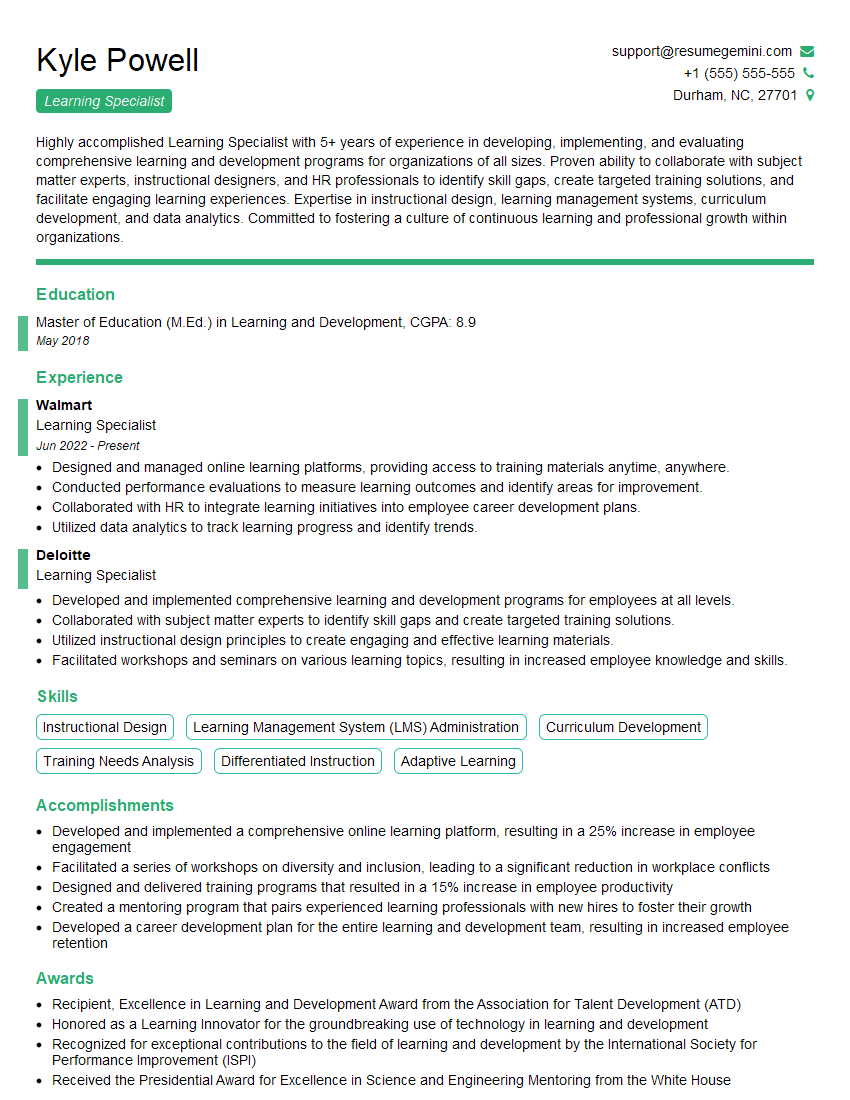
Learning Specialist Resume Sample
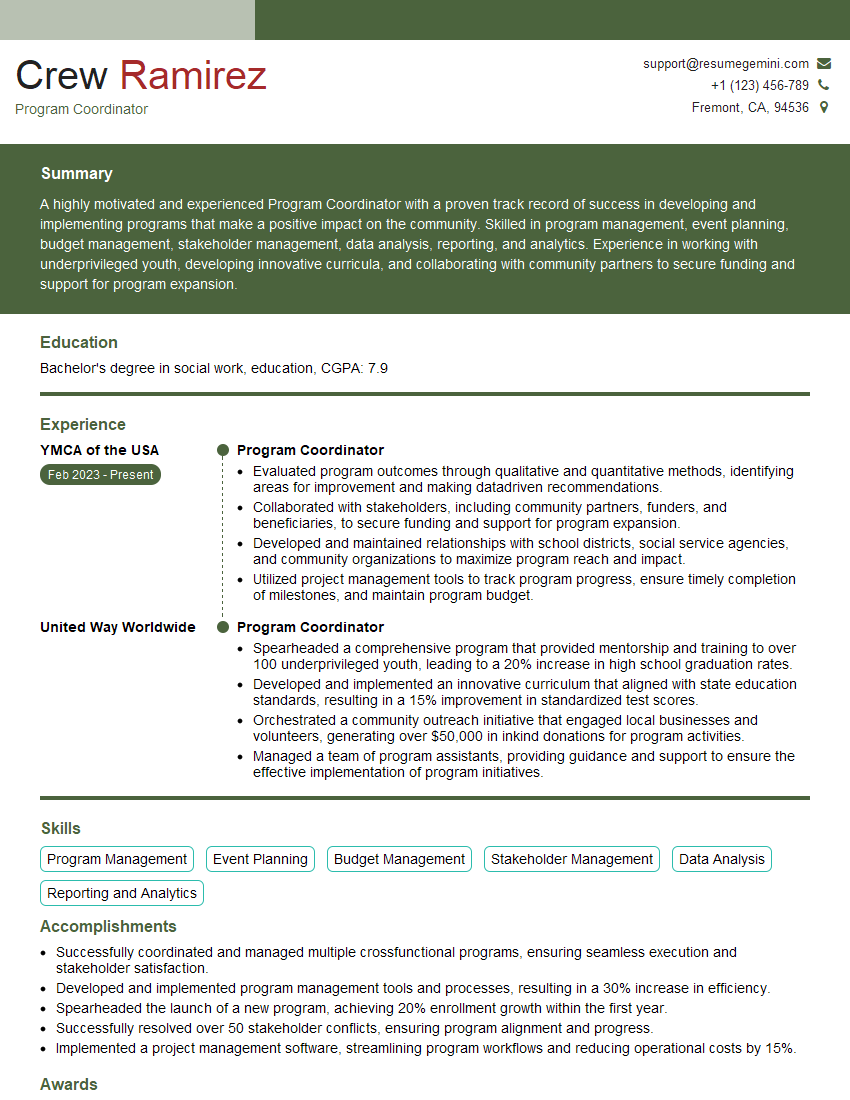
Program Coordinator Resume Sample
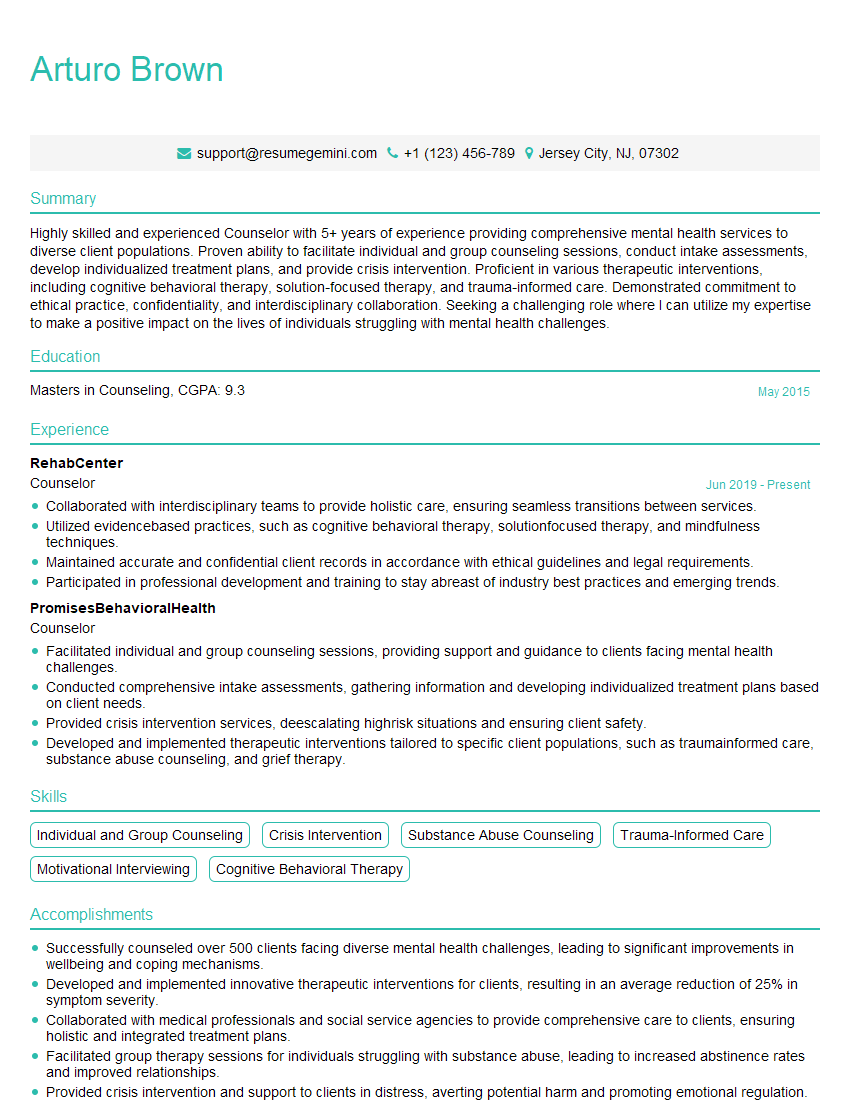
Counselor Resume Sample
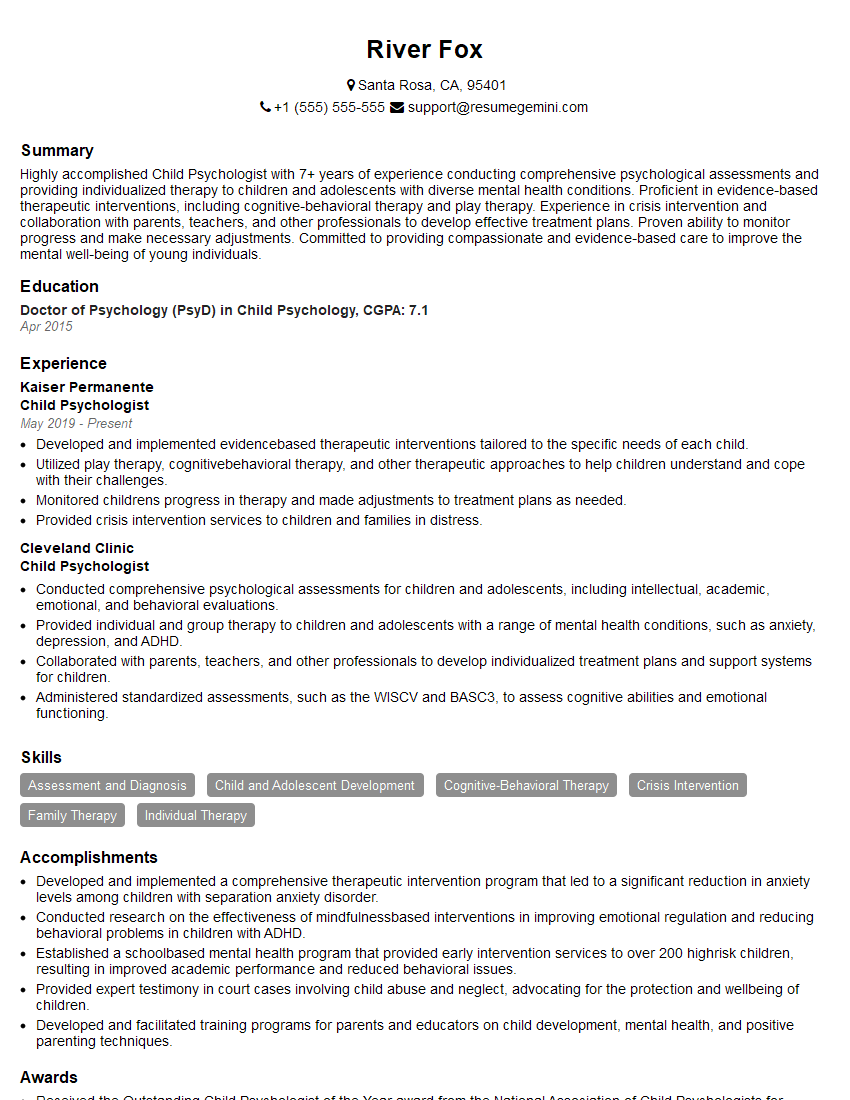
Child Psychologist Resume Sample
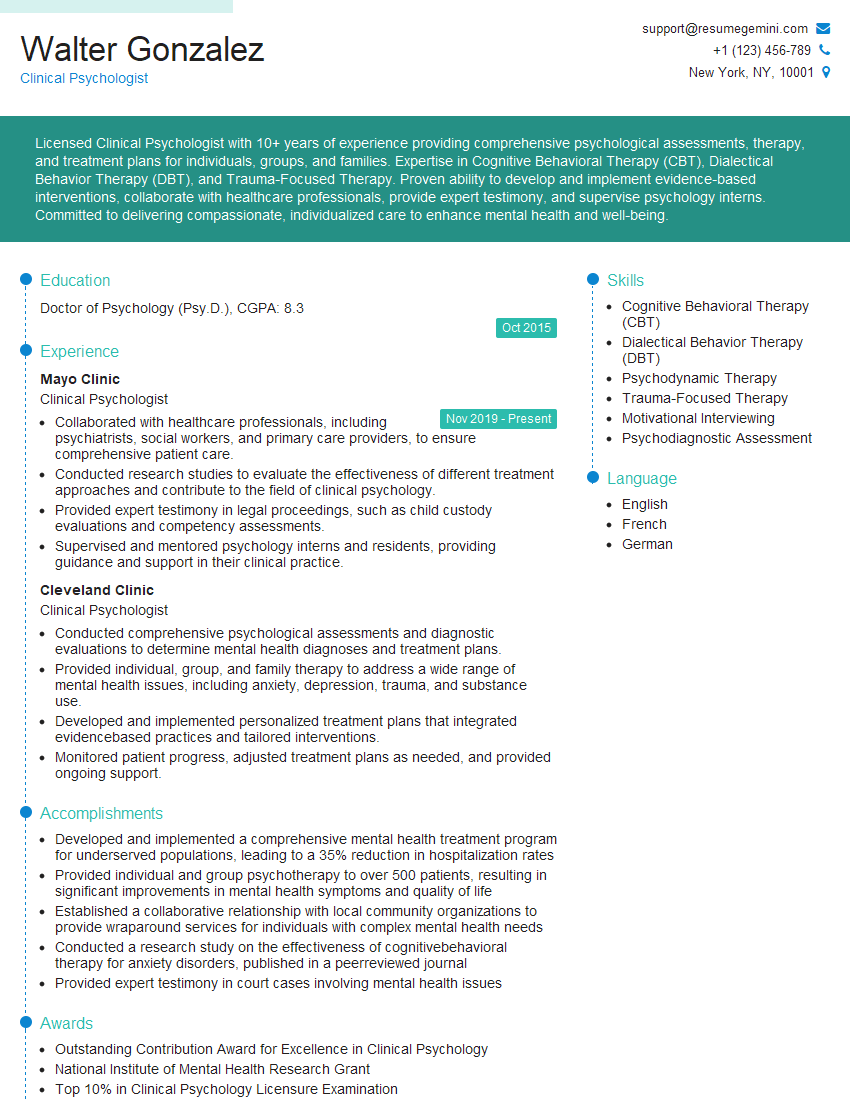
Clinical Psychologist Resume Sample
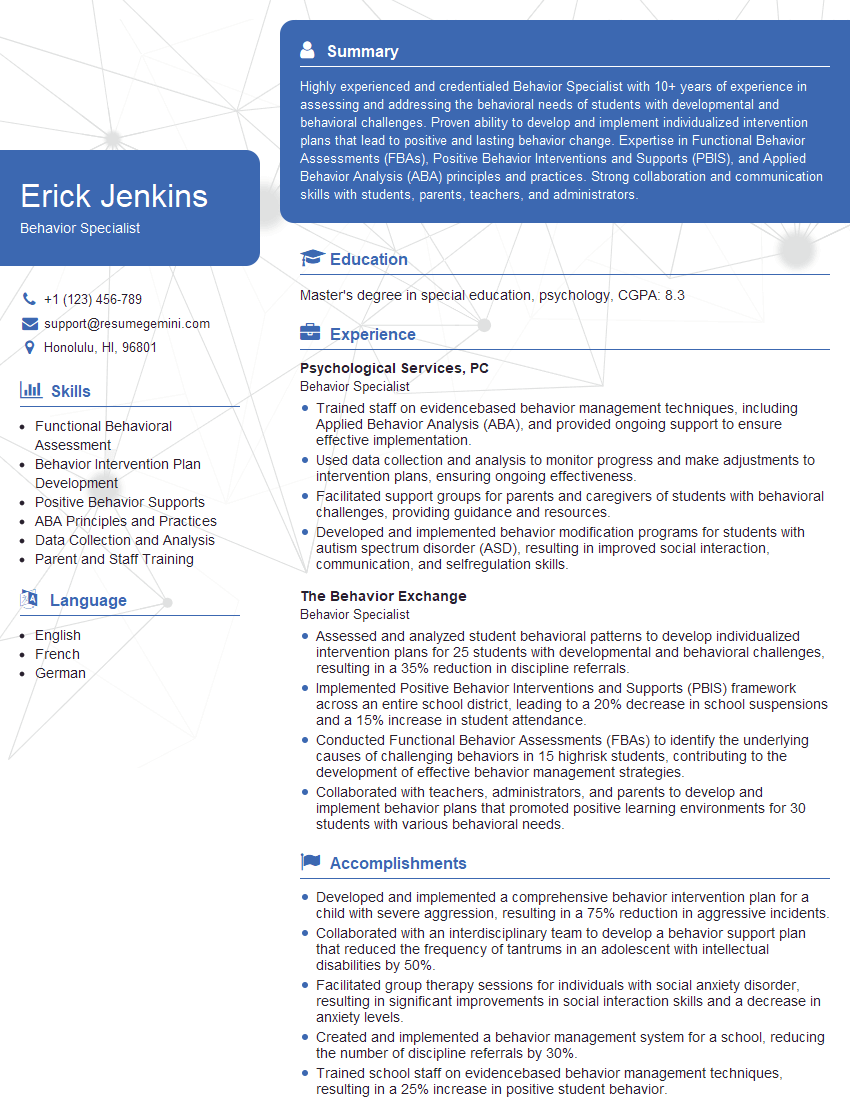
Behavior Specialist Resume Sample
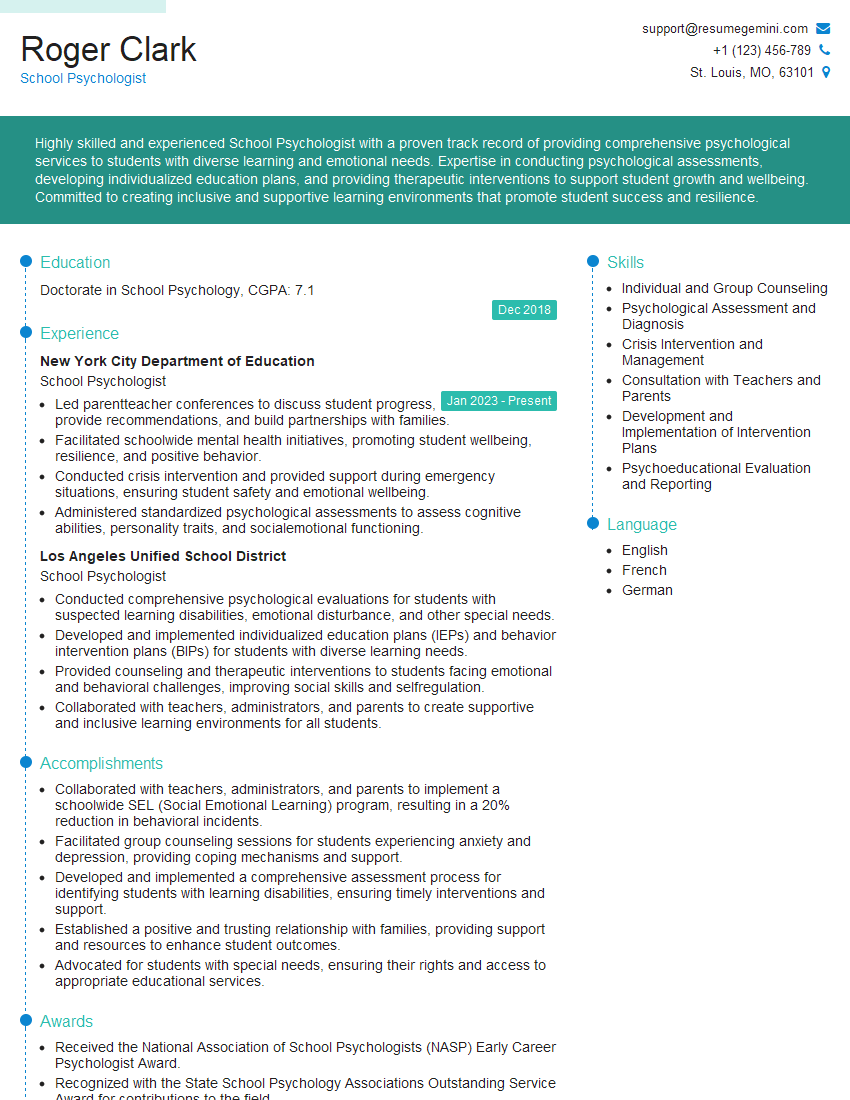
School Psychologist Resume Sample
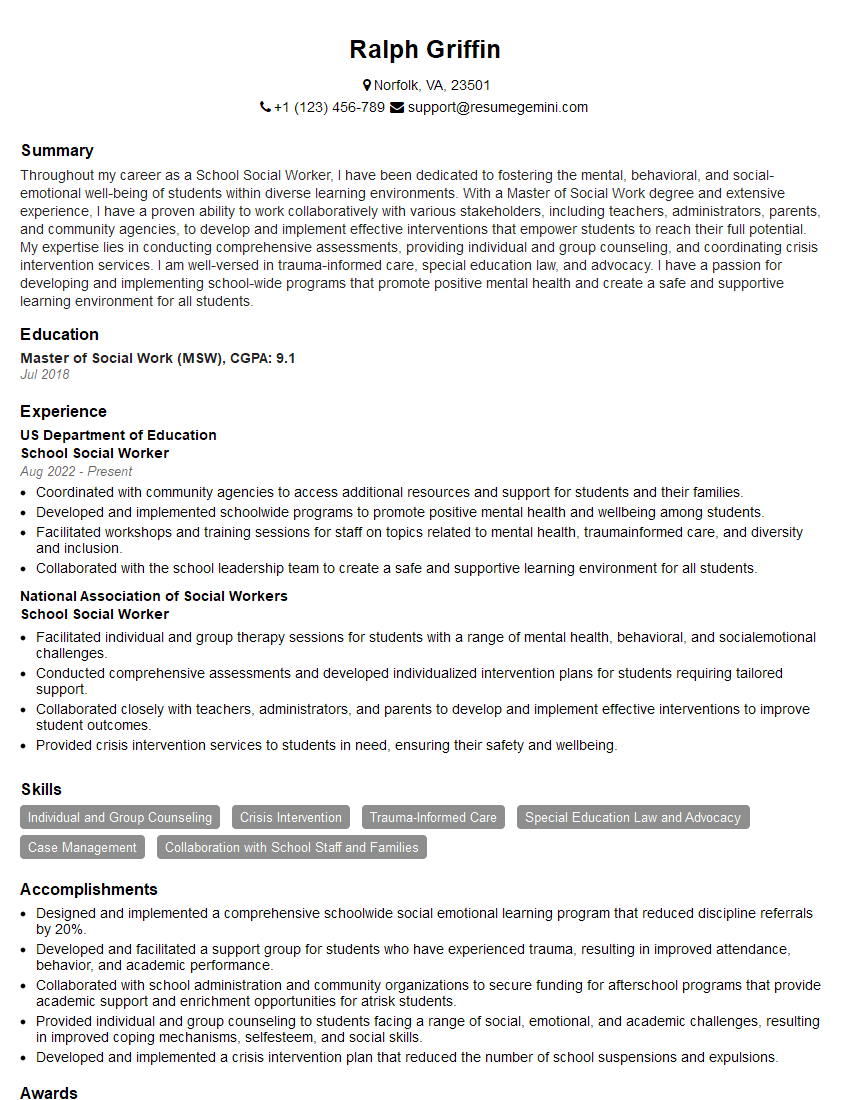
School Social Worker Resume Sample
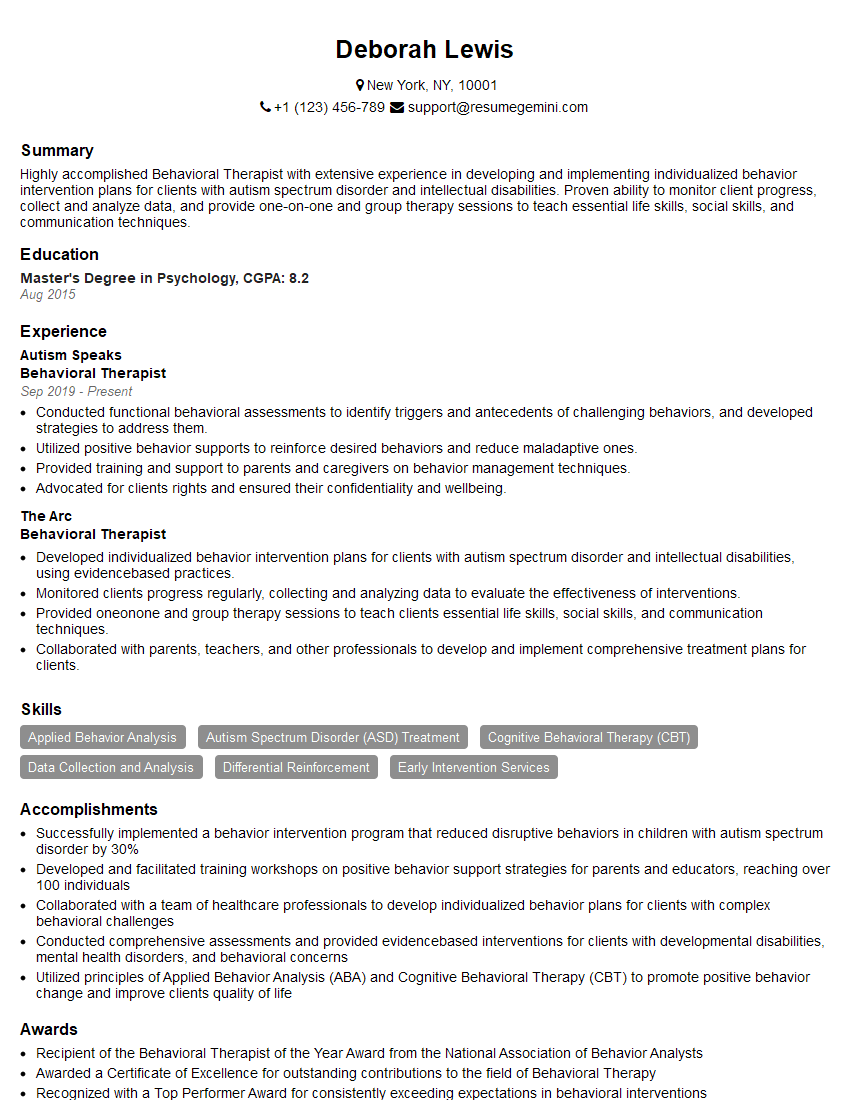
Behavioral Therapist Resume Sample

Mental Health Counselor Resume Sample
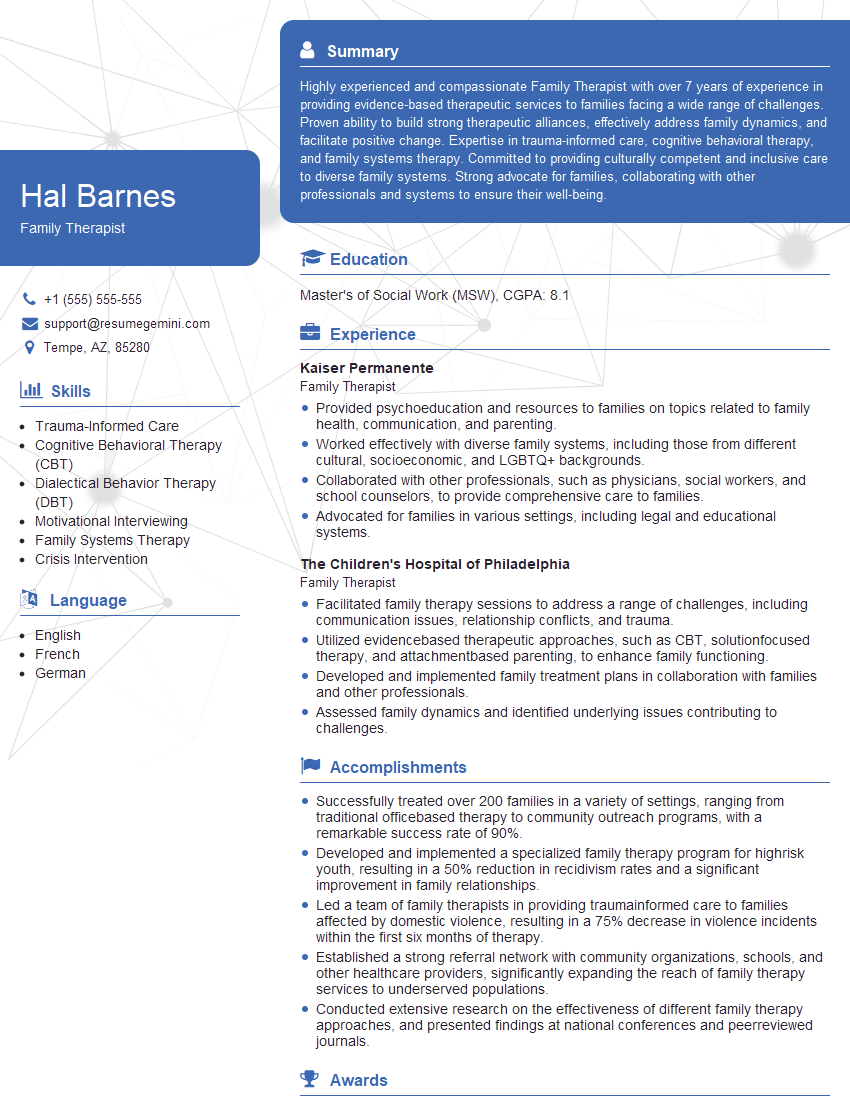
Family Therapist Resume Sample
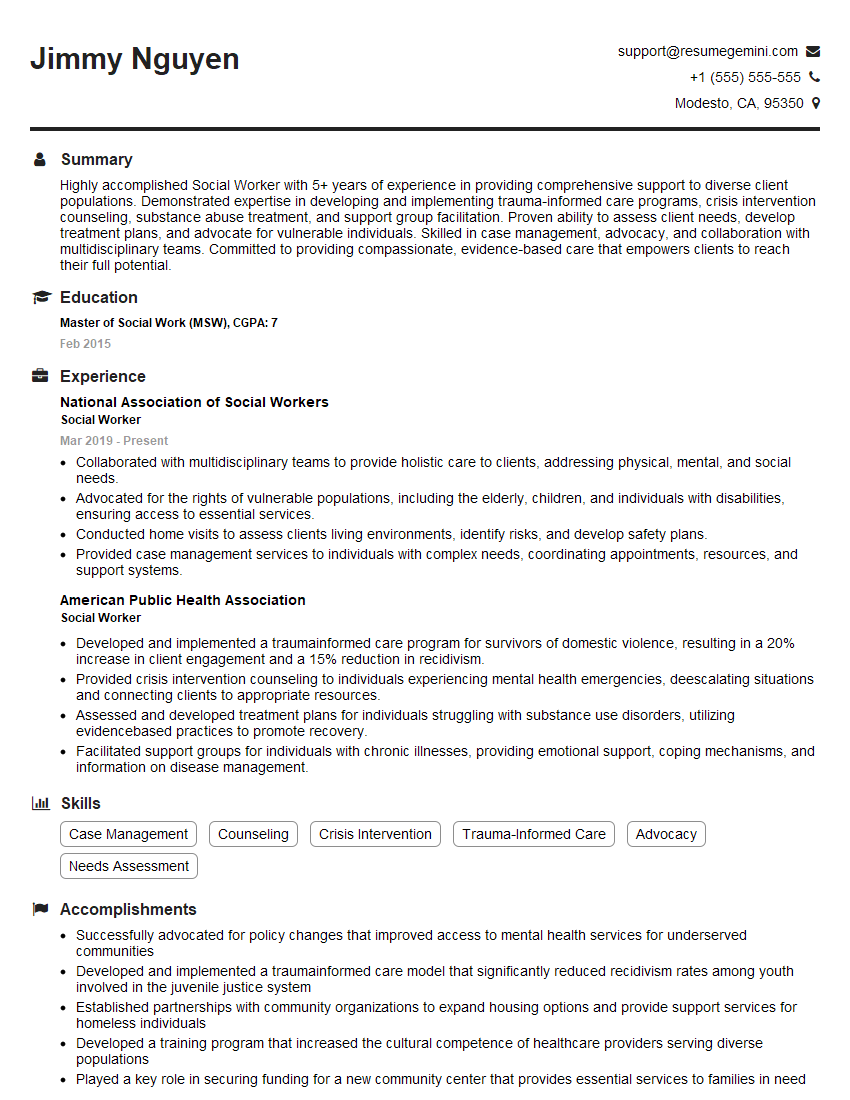
Social Worker Resume Sample
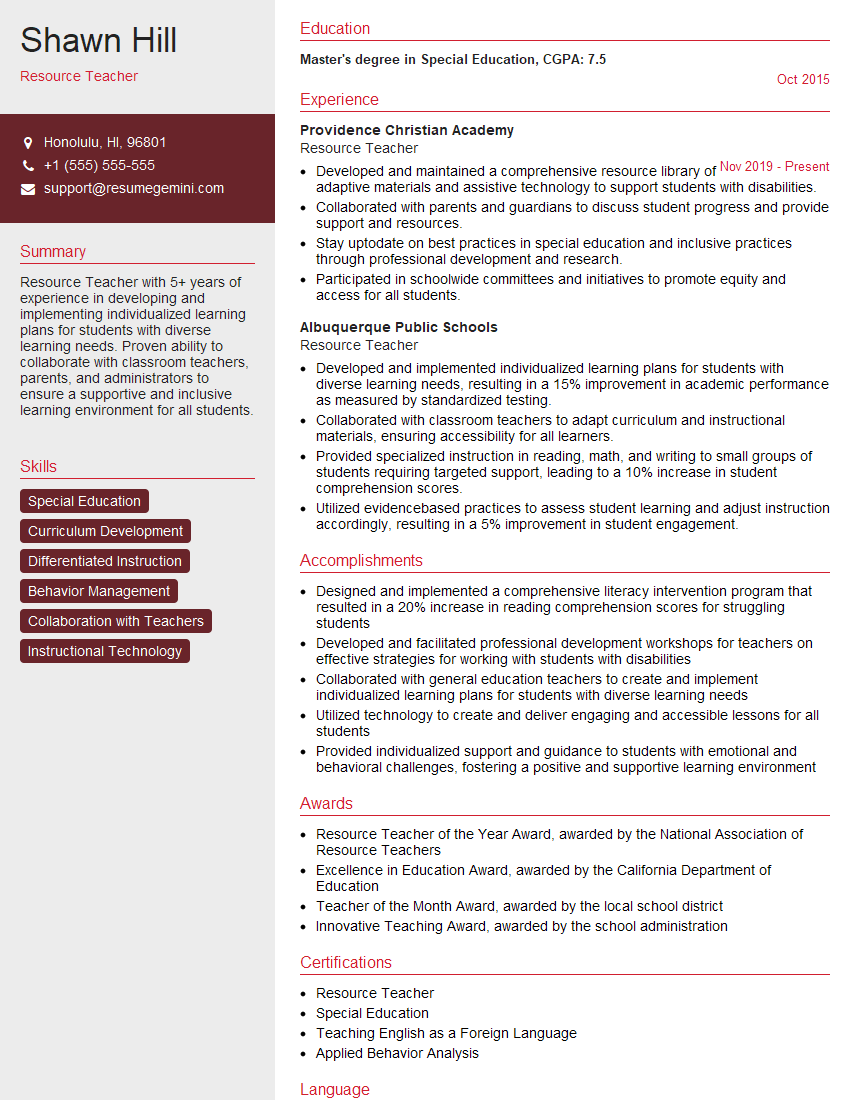
Resource Teacher Resume Sample
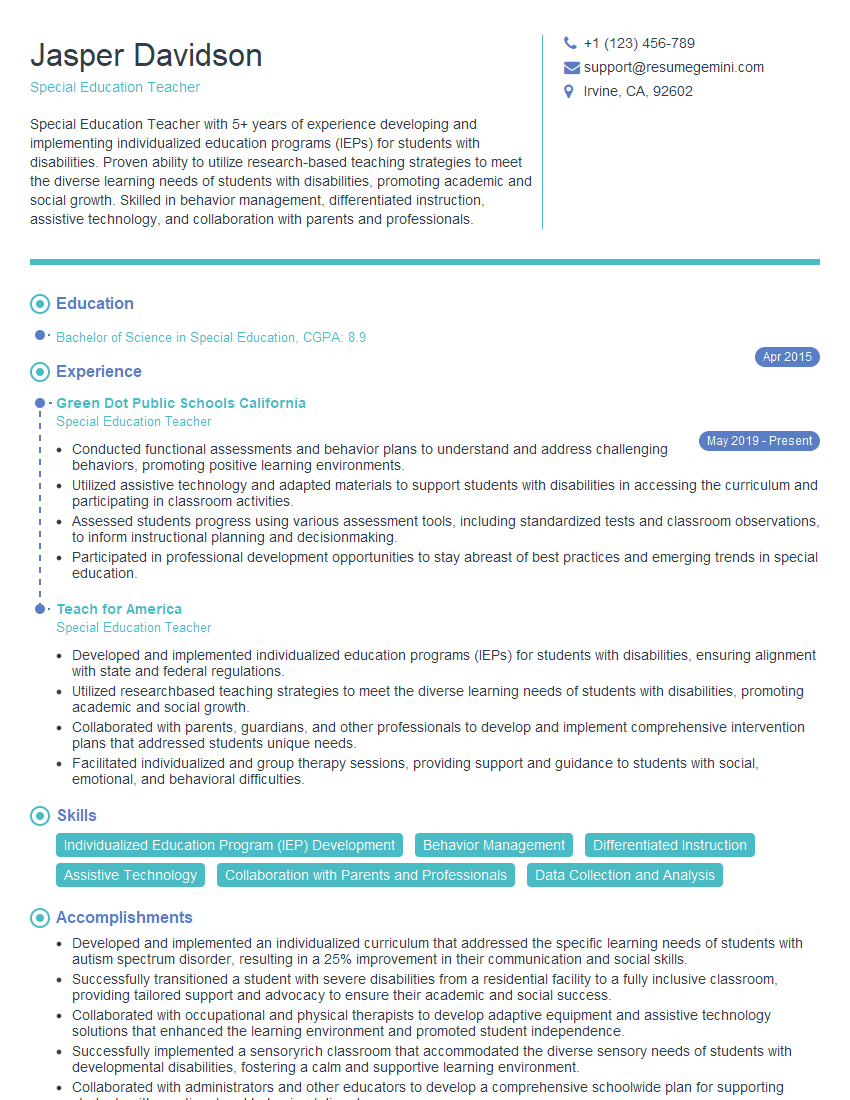
Special Education Teacher Resume Sample
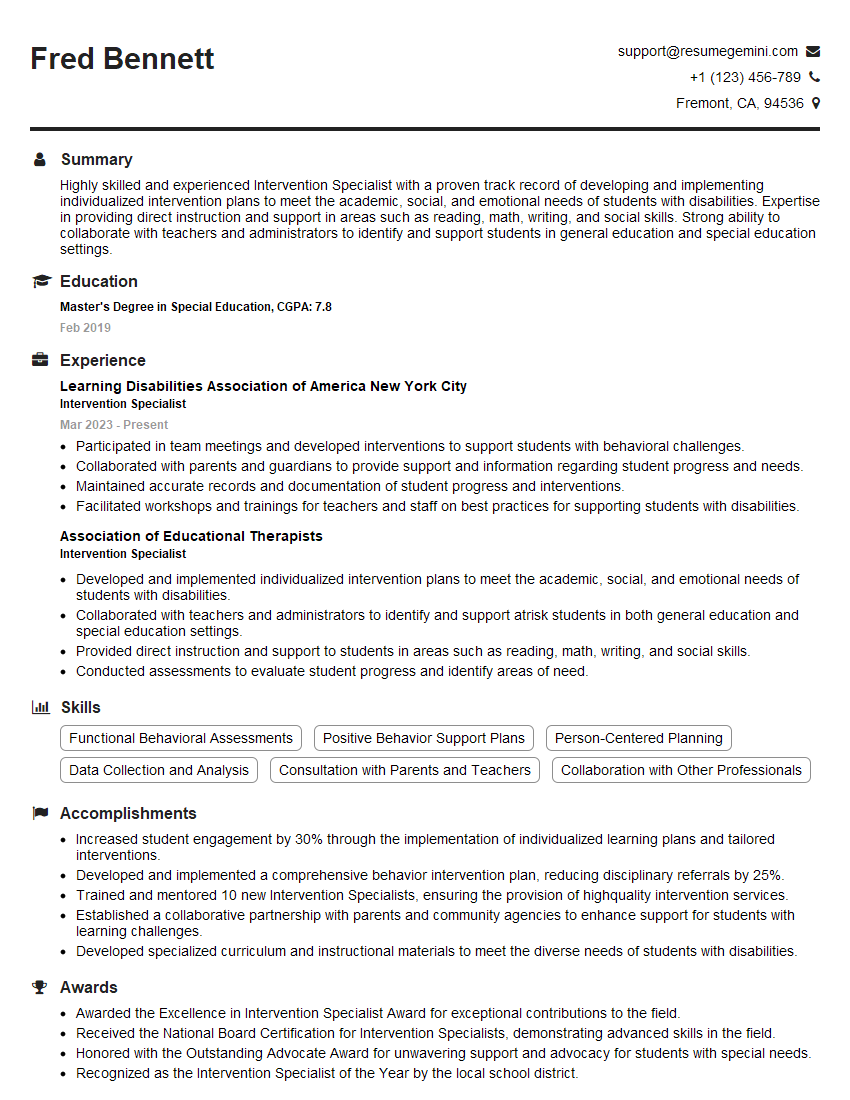
Intervention Specialist Resume Sample
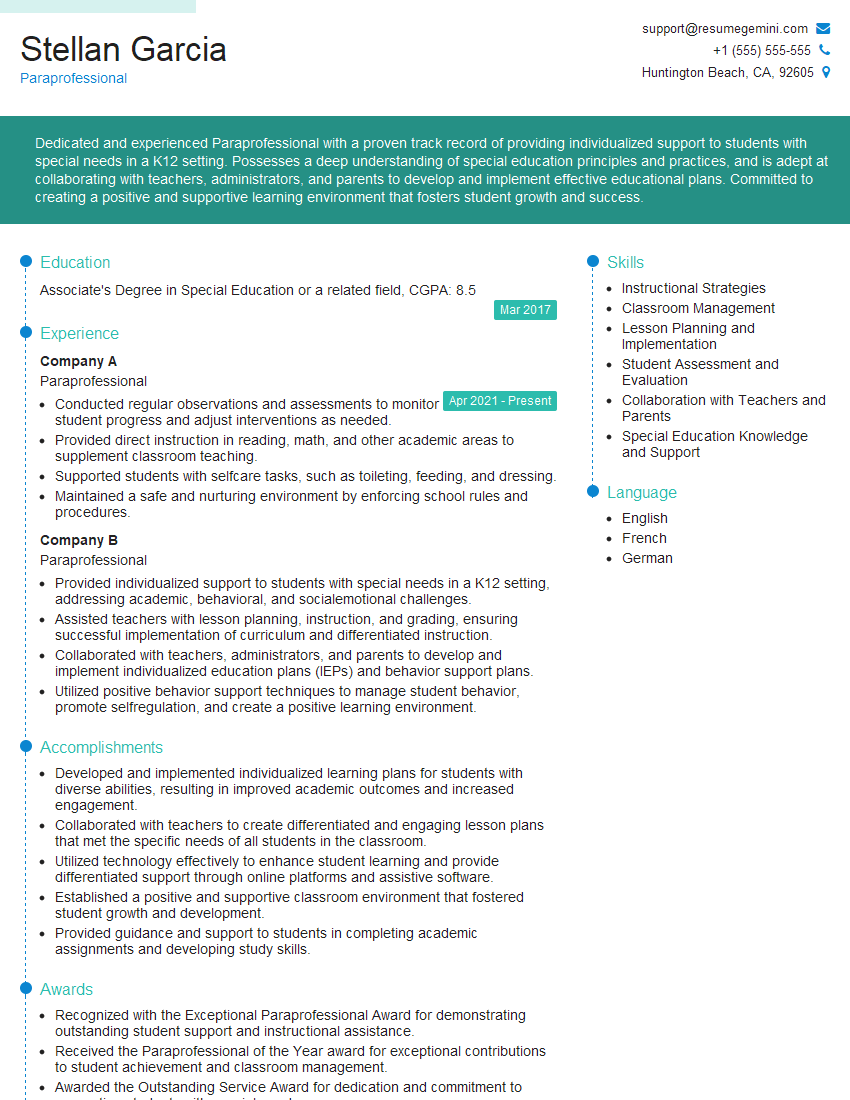
Paraprofessional Resume Sample
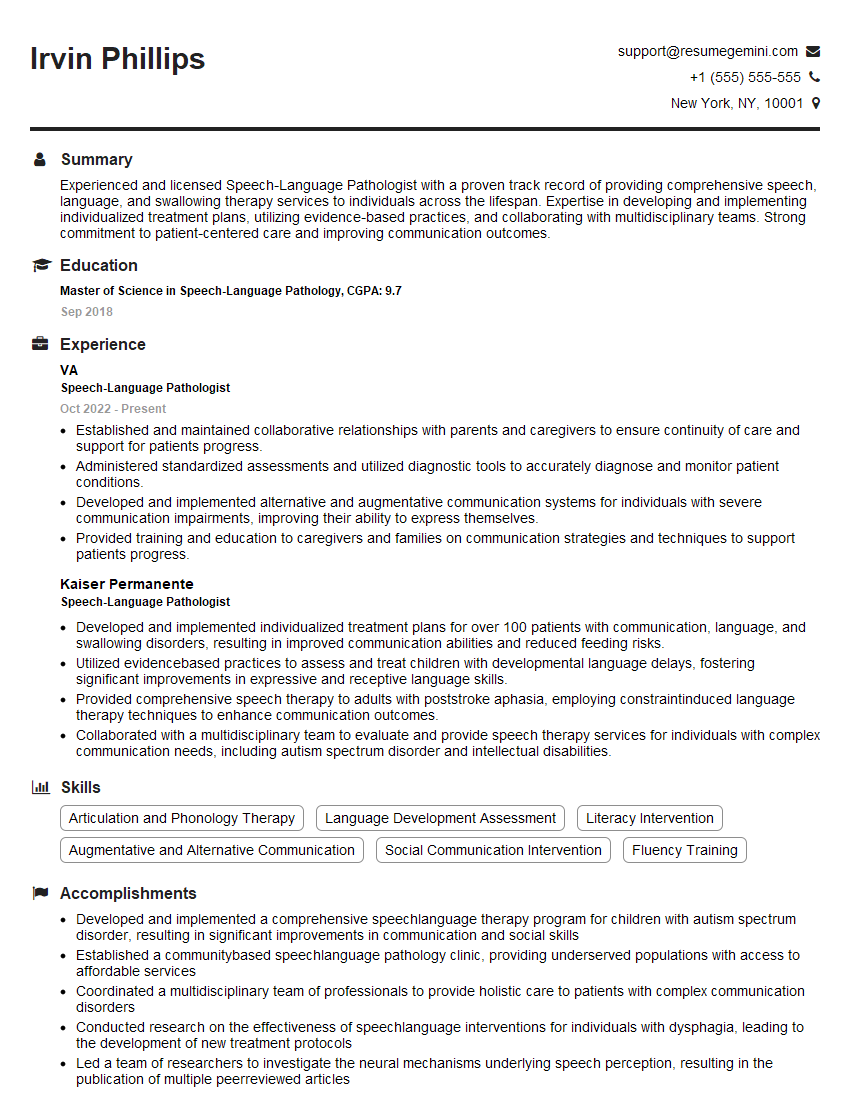
Speech-Language Pathologist Resume Sample
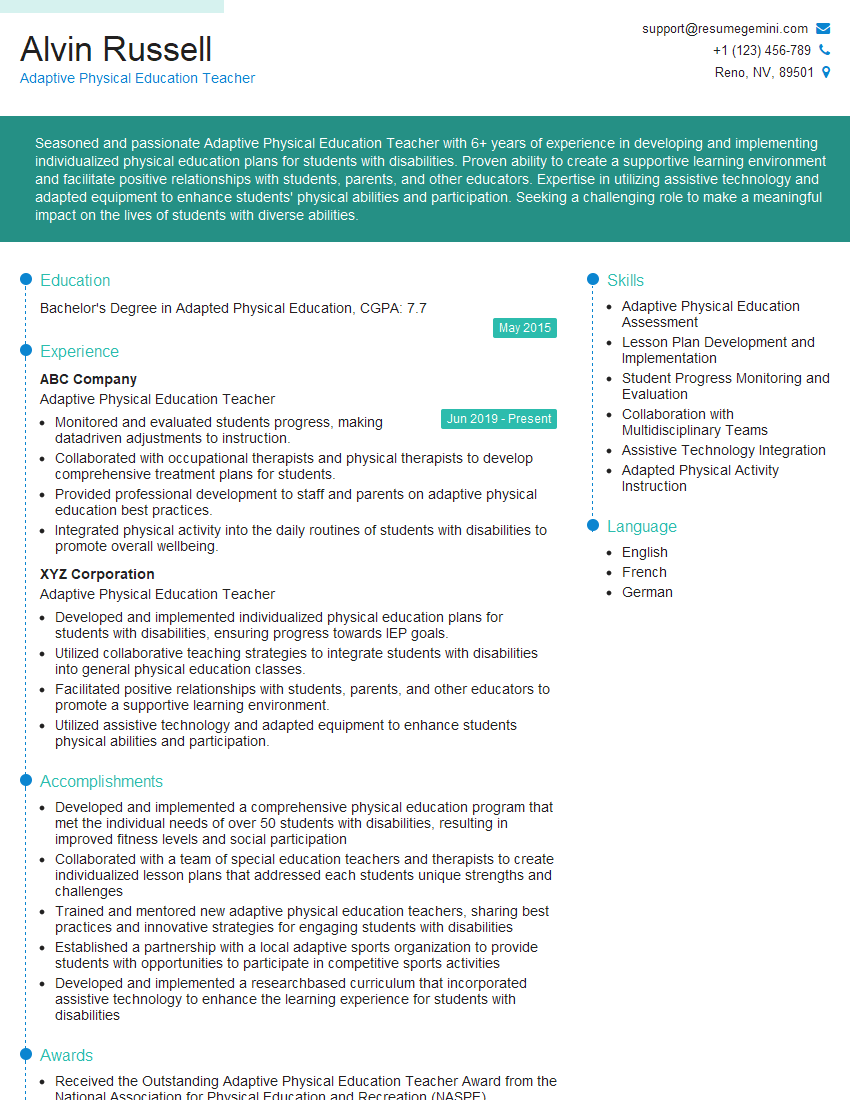
Adaptive Physical Education Teacher Resume Sample
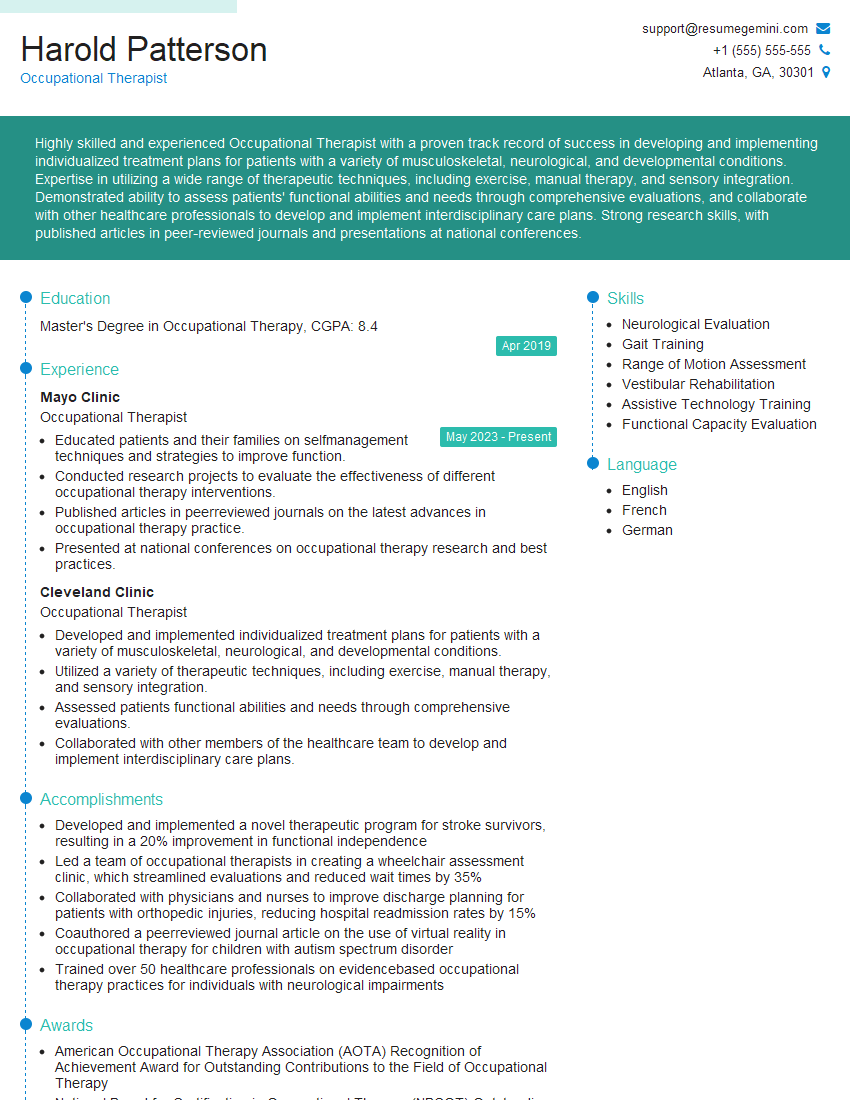
Occupational Therapist Resume Sample
- Learning Specialist
- Program Coordinator
- Counselor
- Child Psychologist
- Clinical Psychologist
- Behavior Specialist
- School Psychologist
- School Social Worker
- Behavioral Therapist
- Mental Health Counselor
- Family Therapist
- Social Worker
- Resource Teacher
- Special Education Teacher
- Intervention Specialist
- Paraprofessional
- Speech-Language Pathologist
- Adaptive Physical Education Teacher
- Occupational Therapist
Explore more articles
Users Rating of Our Blogs
Share Your Experience
We value your feedback! Please rate our content and share your thoughts (optional).
What Readers Say About Our Blog
I Redesigned Spongebob Squarepants and his main characters of my artwork.
https://www.deviantart.com/reimaginesponge/art/Redesigned-Spongebob-characters-1223583608
IT gave me an insight and words to use and be able to think of examples
Hi, I’m Jay, we have a few potential clients that are interested in your services, thought you might be a good fit. I’d love to talk about the details, when do you have time to talk?
Best,
Jay
Founder | CEO