The right preparation can turn an interview into an opportunity to showcase your expertise. This guide to Chick Hatching Management interview questions is your ultimate resource, providing key insights and tips to help you ace your responses and stand out as a top candidate.
Questions Asked in Chick Hatching Management Interview
Q 1. What are the optimal temperature and humidity levels for chick incubation?
Maintaining the correct temperature and humidity is crucial for successful chick hatching. Think of it like creating the perfect nest environment for the developing embryos. The optimal temperature range for most poultry species during incubation is around 99.5-100°F (37.5-37.8°C). This is precisely controlled throughout the incubation period, with slight variations depending on the stage of embryonic development and the species of bird.
Humidity plays a vital role in preventing excessive moisture loss from the eggs. Too low humidity leads to dehydration and embryo death, while too high humidity can result in bacterial growth and increased risk of disease. The ideal humidity level usually sits between 50-60%, again with slight variations based on the stage of incubation. Digital hygrometers and thermometers are essential tools for monitoring and controlling these critical parameters.
Imagine baking a cake: if the temperature or humidity in the oven is incorrect, the cake will not turn out as it should. Similarly, precise temperature and humidity control in the incubator is essential for healthy chick development.
Q 2. Describe the process of egg candling and its importance in chick hatching.
Egg candling is a simple yet essential process for assessing egg fertility and embryonic development. It involves holding a bright light source behind the egg to illuminate the interior. A strong light source, either a purpose-built egg candler or a bright flashlight, is used for this. By carefully rotating the egg, you can observe the developing embryo (or lack thereof).
Importance:
- Detecting Infertile Eggs: Infertile eggs will appear translucent, with no visible vascular network or embryo.
- Identifying Dead Embryos: Dead embryos often appear dark and opaque, often with blood vessel abnormalities.
- Assessing Embryonic Development: Candling allows you to monitor the growth and development of the embryo, ensuring it’s progressing as expected.
- Early Detection of Problems: Identifying problems early allows for quicker intervention, minimizing losses.
For example, a translucent egg might indicate that the egg was not properly fertilized, and removing it frees up space and prevents contamination of the incubator. This practice improves hatching efficiency and overall hatchery health. Candling is typically performed at several points during the incubation period to get a good overall idea of embryo viability.
Q 3. Explain the different types of incubators used in commercial hatcheries.
Commercial hatcheries utilize various incubator types to meet their production needs and scale of operation. The most common types include:
- Still-air Incubators: These are simpler, smaller incubators that rely on natural convection for air circulation. They are often used for smaller-scale operations or as backup systems.
- Forced-air Incubators: These are more sophisticated incubators using fans to circulate air, ensuring uniform temperature and humidity throughout the incubation chamber. These are most common in commercial hatcheries due to their efficiency and ability to accommodate large numbers of eggs.
- Multi-stage Incubators: These large-scale systems often comprise multiple chambers, each designed for a specific stage of incubation. Eggs are moved between chambers as they develop, optimizing environmental control for each phase.
- Automated Incubators: These are highly automated systems that monitor and control temperature, humidity, and egg turning automatically. They often include features like computer-controlled systems for precise adjustments and data logging.
The choice of incubator depends largely on factors such as scale of operation, budget, and desired level of automation. Many large commercial operations use a combination of incubator types.
Q 4. How do you identify and address issues like egg breakage or embryonic mortality?
Identifying and addressing issues like egg breakage or embryonic mortality are critical for maintaining high hatching rates. Regular monitoring and proactive measures are essential.
Egg Breakage: This is often due to rough handling, improper storage, or defective eggs. Careful egg handling throughout the process is crucial. Broken eggs should be immediately removed to prevent contamination.
Embryonic Mortality: This can stem from various factors, including genetic issues, infectious diseases, improper incubation conditions (temperature, humidity), or nutritional deficiencies in the parent birds. Candling allows for early detection of dead embryos, which need to be promptly removed to maintain the incubator’s sanitary conditions. Post-mortem examination of dead embryos can sometimes help determine the cause of mortality, improving future practices.
Addressing Issues: A systematic approach involves regular inspections, candling, maintaining optimal environmental conditions, and implementing robust biosecurity measures. Record-keeping is also critical for identifying patterns and potential problems. For instance, an increase in embryonic mortality may indicate a problem with the incubator’s temperature or humidity control.
Q 5. What are the key biosecurity measures to prevent disease outbreaks in a hatchery?
Biosecurity is paramount in preventing disease outbreaks in a hatchery, which can cause catastrophic losses. It’s about creating a barrier against pathogens entering and spreading within the facility. Key measures include:
- Strict Hygiene Protocols: Regular disinfection of surfaces, equipment, and footwear is essential. Handwashing and personal protective equipment (PPE) are crucial for staff.
- Rodent and Pest Control: Rodents and insects can carry pathogens. Effective control measures, including physical barriers and traps, are necessary.
- Air Quality Control: Proper ventilation systems help prevent the build-up of airborne pathogens. Air filtration can also be implemented.
- Waste Management: Proper disposal of waste materials, including dead embryos and shells, prevents the spread of pathogens.
- Quarantine Procedures: New batches of eggs should be quarantined before being introduced to the main incubation area. This minimizes the risk of introducing pathogens from external sources.
- Employee Training: Regular training and education for staff on biosecurity protocols are important to maintain consistent best practices.
Implementing these measures creates a protective environment for the developing embryos and minimizes the risk of disease outbreaks that can decimate a hatching population.
Q 6. How do you monitor and control the hatchery environment for optimal hatching rates?
Continuous monitoring and control of the hatchery environment are vital for optimal hatching rates. This involves meticulous monitoring of several key parameters.
- Temperature: Precise temperature control is maintained throughout the incubation period using accurate thermometers and automated systems (where available).
- Humidity: Humidity levels are closely monitored and adjusted using humidifiers or dehumidifiers to ensure optimal moisture levels.
- Airflow: Proper airflow is essential for uniform distribution of heat and humidity within the incubator. Fans ensure proper air circulation and prevent dead zones.
- Egg Turning: Regular egg turning prevents embryo adhesion to the eggshell and promotes healthy development. Automated turning systems are common in commercial hatcheries.
- Data Logging: Modern systems record temperature, humidity, and other parameters over time. This provides valuable data for analysis and troubleshooting.
Deviations from optimal conditions should be promptly addressed through system adjustments or intervention to ensure the health and viability of the embryos. Regular calibration of monitoring equipment also adds to the accuracy and reliability of the control measures.
Q 7. Explain the importance of proper egg handling and storage prior to incubation.
Proper egg handling and storage before incubation are crucial for maximizing hatching success. It’s a bit like preparing the ground before planting seeds – the better the preparation, the better the outcome.
Handling: Eggs should be handled with care to avoid cracking or damage. Gently collect eggs, avoid dropping them, and store them in a clean, cool location. Eggs should be clean and free from any contamination.
Storage: The ideal storage temperature is between 55-60°F (13-15°C) with a relative humidity of approximately 75-80%. Eggs should be stored with the large end up, minimizing the risk of yolk displacement and promoting better embryonic development. Storage should be in a well-ventilated area to minimize the risk of bacterial growth and fungal contamination.
Duration: The length of storage time impacts hatching rates. Eggs should ideally be incubated as soon as possible after laying, as extended storage can reduce hatch rates and increase embryonic mortality. Storage time should always be documented. Delaying incubation significantly increases the risk of reduced hatch rates.
Q 8. What are the common causes of poor hatchability, and how can they be prevented?
Poor hatchability, meaning a low percentage of fertile eggs hatching successfully, can stem from several factors. Think of it like baking a cake – if any ingredient is off, the final product suffers. In this case, the ‘cake’ is a healthy chick, and the ingredients are optimal egg quality, incubation conditions, and disease prevention.
- Egg Quality Issues: Infertile eggs, eggs with cracks or thin shells, or eggs stored improperly (temperature, humidity) are major culprits. Think of it as using stale or damaged flour in your cake. Prevention involves careful selection of breeder stock, proper egg handling, and optimal storage conditions.
- Incubation Problems: Incorrect temperature, humidity, and egg turning are critical. Imagine baking a cake at the wrong temperature – it’ll be a disaster! Maintaining the correct parameters throughout the incubation period is crucial. Automated incubators with precise controls help prevent this. Regular monitoring and calibration of equipment is key.
- Disease: Bacterial, viral, or fungal infections in the hen or within the egg can significantly impact hatchability. This is akin to contaminating your cake batter. Biosecurity measures, like strict hygiene practices in the hatchery and breeder farm, vaccinations, and disease monitoring, are essential.
- Genetic Factors: Some genetic lines simply have lower hatchability rates than others. This is like using a recipe that’s inherently flawed. Selecting breeder stock with high hatchability records is crucial for long-term success.
Preventing these issues involves a multifaceted approach: careful egg handling, precise incubation parameter control, robust biosecurity measures, and strategic selection of breeder stock. Regular monitoring and record-keeping are essential for identifying and addressing emerging problems.
Q 9. Describe your experience with different types of egg turning systems.
I’ve worked extensively with various egg turning systems, from the simplest manual methods to sophisticated automated systems. Each has its advantages and disadvantages.
- Manual Turning: This involves turning eggs by hand several times a day. It’s labor-intensive but allows for close observation of each egg. However, it’s prone to inconsistencies and is impractical for large-scale hatcheries.
- Automated Turning: These systems use motorized rollers, trays, or other mechanisms to turn eggs automatically at set intervals. They are far more efficient and consistent than manual turning, reducing labor costs and improving hatchability. However, they require regular maintenance and calibration to ensure accurate and reliable operation. I have personal experience with both the
'Multi-tiered Roller System'and the'Automated Tray Turning System', each offering different levels of automation and capacity. - Air Cell Positioning Systems: These systems help ensure the air cell stays in the correct position, which is crucial for proper chick development. These are often integrated into more advanced automated systems. The consistent air cell positioning minimizes the chance of malpositioned chicks.
The best system depends on the scale of the operation and the budget. For small-scale hatcheries, manual turning might suffice, while large-scale commercial operations necessitate automated systems. Regardless of the system, regular checks and maintenance are paramount to ensure optimal performance.
Q 10. How do you ensure the accuracy of hatch data and record-keeping?
Accurate hatch data and record-keeping are the foundation of effective hatchery management. Think of it as a detailed recipe book for your hatching success. Without precise records, you’re flying blind!
- Detailed Egg Records: Every egg should be tracked from its laying date to its hatching status, including breeder flock details, egg weight, and any visible defects. This can be done with manual logbooks or, more commonly today, specialized hatchery management software.
- Incubation Parameters Logging: Temperature, humidity, and turning frequency should be continuously monitored and recorded, often using automated data loggers integrated into the incubation system. This provides a comprehensive picture of the incubation environment.
- Hatching Data Recording: The number of fertile eggs, the number of hatched chicks, and the number of dead-in-shell (DIS) embryos should be meticulously recorded. This information is crucial for calculating hatchability percentages and identifying areas for improvement.
- Regular Audits and Cross-Checking: Periodic audits and cross-checking of records are essential to ensure accuracy and identify any inconsistencies. This can be done manually or by using automation tools for comparing data.
By implementing a robust record-keeping system and employing regular quality control checks, I ensure the accuracy and reliability of our hatch data. This data is essential for making informed decisions regarding breeder flock management, incubation parameters optimization, and overall hatchery efficiency.
Q 11. What are the signs of a healthy chick versus a chick with developmental issues?
Distinguishing a healthy chick from one with developmental issues requires careful observation. Think of it like comparing a perfectly baked cake to one that’s fallen or burnt.
- Healthy Chick: A healthy chick will be active, alert, and have a clean, dry down. Its beak will be strong and its navel will be completely healed. Its body will be well-proportioned. It will react to stimuli like touch or sound.
- Chick with Developmental Issues: These chicks might exhibit weakness, lethargy, deformities (e.g., crooked beak, twisted legs), or abnormalities in their down (e.g., patchy, wet). Their navel might be open and inflamed, indicating an infection. They might exhibit abnormal respiratory patterns. Internal defects often are not evident until after hatching. Often chicks with internal problems will die before day 7.
Regular monitoring, particularly during the last few days of incubation and immediately after hatching, is essential for early detection of developmental issues. Early identification can guide decisions regarding culling or specialized care, minimizing losses.
Q 12. Explain your understanding of chick sexing techniques.
Chick sexing is the process of determining the sex of a chick shortly after hatching. It’s a crucial aspect of poultry farming, especially in meat production, as male and female chicks often have different market values. There are primarily two methods.
- Visual Sexing: This is a manual method that relies on identifying subtle differences in plumage, body shape, or cloacal characteristics (the vent). It requires trained personnel with experience and a sharp eye. Accuracy depends heavily on the expertise and the breed of chicken. Some breeds are easier to sex than others.
- Genetic Sexing: This method involves DNA analysis of the chick’s blood or feathers. This modern technique is more accurate than visual sexing, but it is more expensive and requires specialized equipment and expertise.
My experience encompasses both methods. I prefer a combination, with genetic sexing for high-value breeds and visual sexing for larger-scale operations where cost-effectiveness is more important. Training staff in accurate visual sexing techniques is crucial for minimizing errors and improving efficiency in larger-scale operations. Consistent and accurate sexing is essential for efficient management of the flock.
Q 13. How do you manage hatchery waste and maintain a clean and sanitary environment?
Managing hatchery waste and maintaining a clean and sanitary environment are paramount for preventing disease outbreaks and ensuring high hatchability rates. Think of it as keeping your kitchen spotless – you wouldn’t want to bake a cake in a dirty environment!
- Waste Disposal: Waste includes eggshells, dead embryos, used litter, and other materials. Proper disposal methods are crucial to prevent the spread of disease. Many hatcheries use composting systems to manage organic waste. Incineration may be used for smaller-scale operations.
- Sanitation Protocols: Regular disinfection of incubators, hatching cabinets, and other equipment using approved disinfectants is crucial. Strict hygiene practices must be followed by all hatchery personnel.
- Pest Control: Rodents, insects, and other pests can contaminate the hatchery environment and spread disease. Implementing effective pest control measures is essential.
- Wastewater Management: Wastewater from cleaning operations should be treated properly to prevent environmental contamination.
We employ a rigorous sanitation program, including regular cleaning and disinfection, pest control measures, and proper waste disposal, to maintain a clean and sanitary environment. This reduces the risk of disease outbreaks and ensures a high-quality product.
Q 14. What is your experience with hatchery automation and its impact on efficiency?
Hatchery automation has revolutionized the industry, significantly improving efficiency and reducing labor costs. It’s akin to upgrading from a manual typewriter to a computer – a huge leap in productivity and precision.
- Automated Incubation Systems: These systems control temperature, humidity, and egg turning automatically, ensuring consistent and optimal conditions. This eliminates manual labor and reduces human error.
- Automated Egg Handling: Automated egg handling systems reduce the risk of damage during the transfer and sorting processes.
- Automated Data Acquisition and Analysis: Automated data logging and analysis systems provide real-time insights into incubation parameters and hatching performance. This information can be used to optimize processes and improve efficiency.
- Robotics in Hatchery operations: Robotics are becoming increasingly common in larger hatcheries, automating tasks like egg candling, chick sexing, and chick handling. This helps to improve accuracy and reduce labor costs.
My experience with automation includes implementing and managing automated incubation systems, egg handling equipment, and data logging systems. The result has been a significant improvement in hatchability rates, reduction in labor costs, and enhanced overall efficiency. Automation plays a critical role in modern hatchery operations, enabling higher production levels and superior quality control.
Q 15. Describe your troubleshooting skills related to incubator malfunctions.
Troubleshooting incubator malfunctions requires a systematic approach. Think of it like diagnosing a car problem – you need to identify the symptoms before you can find the cause. I start by observing the incubator’s readings: temperature, humidity, and air circulation. Are they within the optimal range for the specific stage of incubation? Deviations point towards potential issues.
- Temperature Issues: A consistently low temperature could indicate a faulty heating element, a malfunctioning thermostat, or poor insulation. I’d check the element’s continuity, calibrate the thermostat, and inspect the incubator’s seals for air leaks. A high temperature might suggest a thermostat malfunction or a problem with the ventilation system, needing similar investigation.
- Humidity Problems: Low humidity can lead to dehydration of the eggs, while high humidity increases the risk of bacterial growth. I’d check the water trays, ensure proper water levels, and inspect the humidifier for any blockages or malfunctions.
- Air Circulation: Poor air circulation leads to uneven temperature and humidity distribution, potentially impacting hatching rates. I’d examine the fan for proper functioning, clean any debris obstructing airflow, and ensure the fan is properly positioned.
- Alarm Systems: Modern incubators have alarm systems; understanding and responding promptly to these alerts is crucial. I’d check the alarm system’s functionality and ensure it’s correctly configured.
Beyond these common issues, I’ve encountered problems with faulty sensors, power supply issues, and even mechanical problems with the incubator’s turning mechanism. Each requires a different diagnostic approach and solution, often involving replacement parts or professional servicing.
Career Expert Tips:
- Ace those interviews! Prepare effectively by reviewing the Top 50 Most Common Interview Questions on ResumeGemini.
- Navigate your job search with confidence! Explore a wide range of Career Tips on ResumeGemini. Learn about common challenges and recommendations to overcome them.
- Craft the perfect resume! Master the Art of Resume Writing with ResumeGemini’s guide. Showcase your unique qualifications and achievements effectively.
- Don’t miss out on holiday savings! Build your dream resume with ResumeGemini’s ATS optimized templates.
Q 16. How do you ensure the quality and uniformity of chicks produced?
Ensuring the quality and uniformity of chicks requires meticulous attention to detail throughout the entire process, starting with egg selection. We use only high-quality eggs, ensuring they are clean, properly sized, and from healthy parent stock. Consistent incubation conditions are vital – temperature, humidity, and turning are precisely monitored and controlled. We also employ strict biosecurity measures to prevent contamination.
Regular monitoring during incubation is crucial. Candling (illuminating the eggs to check embryo development) allows for the identification of infertile eggs or those with developmental problems. These are removed to prevent contamination and optimize space. Post-hatch, we carefully monitor chick health, ensuring proper hydration and warmth. Uniformity is further enhanced through a standardized chick processing procedure that includes sexing, vaccination, and packing.
Think of it like baking a cake: you need the right ingredients (eggs), the correct recipe (incubation parameters), and meticulous execution (monitoring and processing) to get a consistent, high-quality result.
Q 17. How do you manage hatchery staff and ensure adherence to safety protocols?
Managing hatchery staff effectively requires clear communication, training, and fostering a strong safety culture. I lead by example, consistently demonstrating safe practices. We have regular safety meetings to address potential hazards, review protocols, and discuss near-miss incidents. Each staff member receives comprehensive training on operating machinery, handling eggs and chicks, and adhering to hygiene and biosecurity protocols.
- Personal Protective Equipment (PPE): Proper use of PPE, including gloves, masks, and protective footwear, is mandatory. We ensure adequate supply and regular training on its correct usage.
- Emergency Procedures: We have well-defined emergency procedures for various scenarios, including equipment malfunctions, chemical spills, and medical emergencies. Regular drills reinforce preparedness.
- Hygiene and Sanitation: Strict adherence to hygiene protocols is crucial in preventing disease outbreaks. Regular cleaning and disinfection of equipment and the work environment are non-negotiable.
- Performance Management: Clear expectations, regular feedback, and performance evaluations ensure accountability and continuous improvement in both productivity and safety.
Our goal is a safe and productive work environment where everyone feels valued and empowered to contribute to the hatchery’s success while maintaining the highest safety standards.
Q 18. What is your experience with different breeds of poultry and their specific incubation requirements?
My experience encompasses various poultry breeds, each with unique incubation needs. For instance, broiler breeds generally require slightly higher temperatures and humidity compared to layer breeds. Similarly, the incubation period varies across breeds; some breeds have shorter incubation periods than others. Specific breed requirements often extend to post-hatch care as well.
I’ve worked extensively with breeds like White Leghorn (layers), Cornish Cross (broilers), and Rhode Island Reds. Understanding these differences is critical for optimizing hatching rates and chick quality. I consult breed-specific incubation guidelines and adjust parameters accordingly. Precise temperature, humidity, and turning schedules are critical in ensuring successful hatching across different breeds.
For example, while a specific temperature might be ideal for broiler chicks, it might be detrimental to layer chicks, highlighting the need for tailored incubation strategies based on breed.
Q 19. Describe your experience with hatchery ventilation systems and their importance.
Hatchery ventilation systems are crucial for maintaining optimal environmental conditions – temperature, humidity, and air quality – within the incubator. Think of it as the lungs of the hatchery. Proper ventilation removes excess moisture, carbon dioxide, and other potentially harmful gases, preventing the buildup of ammonia which is toxic to developing embryos. It also ensures even temperature distribution within the incubators, minimizing temperature variations that can harm egg development.
I have extensive experience with different ventilation system designs, from simple natural ventilation systems to sophisticated computer-controlled systems. My expertise includes understanding airflow dynamics, filter maintenance, and troubleshooting ventilation problems. Regular maintenance of ventilation systems, including filter changes and fan checks, is crucial to prevent equipment failure and ensure optimal hatching results.
A malfunctioning ventilation system can lead to increased mortality rates, compromised chick quality, and even equipment damage.
Q 20. How do you perform routine maintenance on hatchery equipment?
Routine maintenance is essential for preventing equipment failures and ensuring optimal hatchery performance. We follow a comprehensive maintenance schedule, performing daily, weekly, and monthly checks. This includes:
- Daily Checks: Temperature and humidity readings, water levels in humidifiers, observation for any unusual noises or vibrations in equipment, and general cleanliness.
- Weekly Checks: Thorough cleaning and sanitization of incubators and hatchers, filter inspections in ventilation systems, and checking the functionality of alarm systems.
- Monthly Checks: More comprehensive checks on electrical systems, mechanical parts (like turning mechanisms), and calibration of sensors and control systems.
- Preventative Maintenance: Scheduled maintenance includes lubrication of moving parts, replacement of worn components, and professional servicing of critical equipment.
We maintain detailed maintenance logs, recording all procedures and any repairs or replacements. This allows us to track equipment performance, predict potential failures, and make informed decisions about equipment upgrades or replacements.
Q 21. What are your strategies for managing energy consumption in a hatchery?
Managing energy consumption in a hatchery is crucial for both economic and environmental reasons. We employ several strategies to minimize energy usage without compromising incubation quality:
- Energy-Efficient Equipment: We prioritize the use of energy-efficient incubators and hatchers, choosing models with advanced control systems and excellent insulation.
- Optimized Incubation Parameters: Precise control of temperature and humidity reduces the energy needed to maintain optimal conditions. We carefully monitor and adjust parameters to optimize energy use without sacrificing hatch rates.
- Improved Insulation: We ensure proper insulation of the hatchery building to minimize heat loss during colder months.
- Demand-Side Management: We carefully plan our incubation cycles to avoid peak energy demand periods.
- Regular Maintenance: Proper maintenance of equipment, including regular cleaning of cooling coils and filters, improves efficiency and reduces energy consumption.
- Data Monitoring and Analysis: We continuously monitor energy usage to identify areas for improvement and track the effectiveness of our energy-saving measures.
By combining these strategies, we significantly reduce our carbon footprint and operational costs, making the hatchery more sustainable and profitable.
Q 22. How do you handle unexpected issues such as power outages or equipment failures?
Power outages and equipment failures are serious threats in a hatchery, as they can lead to significant chick mortality and economic losses. Our protocols prioritize immediate action and minimizing downtime. We have a comprehensive emergency plan that includes:
- Backup power generators: These automatically switch on within seconds of a power outage, ensuring uninterrupted incubation conditions. Regular testing and maintenance are crucial, and we keep a detailed log of these activities.
- Redundant equipment: Critical systems like temperature and humidity controllers have backups. This ensures that even if one system fails, the other can maintain optimal conditions.
- Emergency contact list: We have a readily accessible list of technicians and suppliers who can provide immediate repair services. This list is regularly updated.
- Manual procedures: We train staff on manual operation of essential equipment, such as emergency ventilation systems, should automatic systems fail. This training includes simulated failure scenarios.
- Regular maintenance: Preventative maintenance significantly reduces the likelihood of equipment failure. Our rigorous schedule includes inspections, cleaning, and timely repairs.
For example, during a recent power surge, our backup generator seamlessly took over, preventing any significant temperature fluctuations in the incubators. The swift response minimized the impact on the hatching cycle.
Q 23. Explain your understanding of chick vaccination procedures.
Chick vaccination is paramount to protect flocks from devastating diseases. The procedure varies depending on the vaccine type (live or inactivated) and the age of the chicks. We typically use in-ovo vaccination – injecting vaccines into the eggs before incubation – for certain key diseases. This method is efficient, cost-effective, and minimizes stress on the chicks. Post-hatch vaccination, administered through drinking water or spray, is used for other diseases.
In-ovo vaccination requires precision equipment and skilled personnel to ensure accurate dosage and avoid egg damage. Post-hatch vaccination requires careful monitoring of chick hydration and health to ensure optimal vaccine uptake. We adhere strictly to the vaccine manufacturer’s instructions and maintain detailed records of vaccination batches, dosages, and dates.
For example, we routinely use in-ovo vaccination for Marek’s disease, a highly contagious viral disease with devastating effects on poultry. The efficacy of this approach has resulted in a significantly healthier and more productive flock over the years.
Q 24. Describe your experience with hatchery record-keeping systems and data analysis.
Our hatchery utilizes a sophisticated, computerized record-keeping system that tracks every aspect of the hatching process, from egg intake to chick delivery. The system integrates data from various sources, including incubator sensors, egg weighers, and chick counters. This comprehensive data allows for detailed analysis of hatchery performance.
We use statistical methods to identify trends and areas for improvement. For instance, we track hatch rates, chick quality scores, and mortality rates across different batches and incubation cycles. Identifying patterns helps us optimize our processes and minimize losses. Data analysis enables predictive modelling, allowing us to anticipate potential problems and proactively address them.
Our record-keeping system complies with all relevant industry standards and regulatory requirements, ensuring traceability and transparency across the entire process. Regular data audits ensure accuracy and integrity.
Q 25. What are the key performance indicators you monitor to assess hatchery efficiency?
Key performance indicators (KPIs) are essential for evaluating hatchery efficiency and identifying areas for improvement. We meticulously monitor several KPIs, including:
- Hatch rate: The percentage of fertile eggs that successfully hatch. This is a fundamental indicator of overall hatchery performance.
- Chick quality: Assessed through factors like chick weight, down quality, and vigor. High-quality chicks are crucial for achieving good growth and production in the broiler or layer houses.
- Mortality rate: The percentage of chicks that die during the incubation and hatching process. High mortality rates indicate potential issues with incubation conditions or egg quality.
- Egg fertility: The percentage of eggs that are successfully fertilized. Low fertility directly impacts the overall hatch rate.
- Production cost per chick: This KPI considers all operational expenses involved in the hatching process. Minimizing this cost is crucial for profitability.
- Time to hatch: The duration between the start of incubation and the hatch. Variations in this can indicate problems within the incubator or egg quality.
Regularly reviewing these KPIs allows us to identify bottlenecks, implement corrective measures, and continuously improve hatchery efficiency.
Q 26. How do you comply with relevant regulations and standards in a hatchery setting?
Compliance with regulations is paramount in hatchery operations. We rigorously adhere to all relevant national and international standards related to biosecurity, animal welfare, and environmental protection. These include:
- Biosecurity protocols: Strict hygiene and disinfection procedures are implemented to prevent the introduction and spread of diseases. This includes controlled access to the facility, staff hygiene measures, and regular disinfection of equipment.
- Animal welfare standards: We provide optimal incubation conditions to minimize chick stress and ensure their well-being. Our protocols adhere to industry best practices for chick handling and transportation.
- Environmental regulations: We comply with all regulations concerning waste disposal, energy consumption, and water usage, striving for environmentally responsible operations.
- Record-keeping requirements: Detailed and accurate records are kept to ensure traceability of all aspects of the hatching process, as required by regulatory bodies.
Regular audits and inspections by relevant authorities ensure our continued compliance and uphold our commitment to industry best practices.
Q 27. Describe your experience with different chick transportation and delivery methods.
Chick transportation and delivery are critical steps, affecting chick health and survival. We offer various options tailored to customer needs and distances:
- Specialized transport vehicles: Climate-controlled trucks maintain optimal temperature and humidity during transport, ensuring chick comfort and survival.
- Appropriate packaging: Chicks are carefully packed in boxes with sufficient ventilation to prevent overheating or suffocation. The packaging design minimizes stress during transport.
- Delivery routes and schedules: We plan delivery routes and schedules to minimize transport time, reducing stress on chicks and ensuring timely arrival at farms.
- Monitoring during transport: Temperature and humidity sensors monitor conditions during transport, providing real-time data for proactive issue management. This allows for rapid intervention if needed.
We work closely with reliable transportation providers to ensure the safe and efficient delivery of chicks, prioritizing animal welfare and minimizing losses.
Q 28. How do you prioritize tasks and manage your time effectively in a fast-paced hatchery environment?
Effective time management is crucial in a fast-paced hatchery. We utilize several strategies:
- Prioritization: We use a combination of urgency and importance matrices to prioritize tasks. Critical tasks with immediate deadlines are tackled first. For example, addressing a malfunctioning incubator takes precedence over routine cleaning.
- Scheduling: A detailed daily schedule is created, allocating time blocks for specific tasks. This ensures that key activities are addressed in a timely manner.
- Teamwork: Tasks are delegated effectively amongst the team members, ensuring appropriate expertise and workload distribution. Good communication and collaboration enhance efficiency.
- Automation: We leverage automation wherever possible to streamline operations and free up time for more complex tasks. For instance, automated egg turners and ventilation systems reduce manual labor.
- Regular review: Our daily schedule is reviewed and adjusted as necessary, considering unforeseen events or changing priorities.
Regular meetings and communication help to ensure that everyone is on the same page and that tasks are completed efficiently and effectively. The goal is to optimize workflow and minimize delays.
Key Topics to Learn for Chick Hatching Management Interview
- Egg Incubation and Hatching Processes: Understanding the intricacies of incubation, including temperature, humidity, and turning schedules, and their impact on hatch rates and chick health.
- Embryonic Development and Chick Physiology: Knowledge of the various stages of embryonic development, common embryonic abnormalities, and the physiological needs of newly hatched chicks.
- Hatchery Sanitation and Biosecurity: Implementing and maintaining strict sanitation protocols to prevent disease outbreaks and ensure optimal chick health. Understanding and applying biosecurity measures to minimize contamination.
- Hatchery Equipment and Technology: Familiarity with various hatchery equipment (incubators, hatchers, climate control systems) and their operation, maintenance, and troubleshooting.
- Data Management and Record Keeping: Maintaining accurate and detailed records of incubation parameters, hatch rates, chick quality, and any issues encountered. Analyzing this data to improve efficiency and identify areas for improvement.
- Chick Handling and Transportation: Proper techniques for handling newly hatched chicks to minimize stress and injury, along with understanding safe and efficient transportation methods.
- Quality Control and Chick Grading: Assessing chick health and quality using established standards, identifying and addressing any abnormalities, and implementing quality control measures throughout the hatching process.
- Troubleshooting and Problem-Solving: Identifying and resolving common problems related to incubation, hatching, and chick health. Utilizing problem-solving skills to analyze issues and implement effective solutions.
- Health and Safety Regulations: Understanding and adhering to all relevant health and safety regulations in a hatchery environment.
- Sustainability and Environmental Considerations: Exploring environmentally friendly practices within the hatchery, such as energy efficiency and waste management.
Next Steps
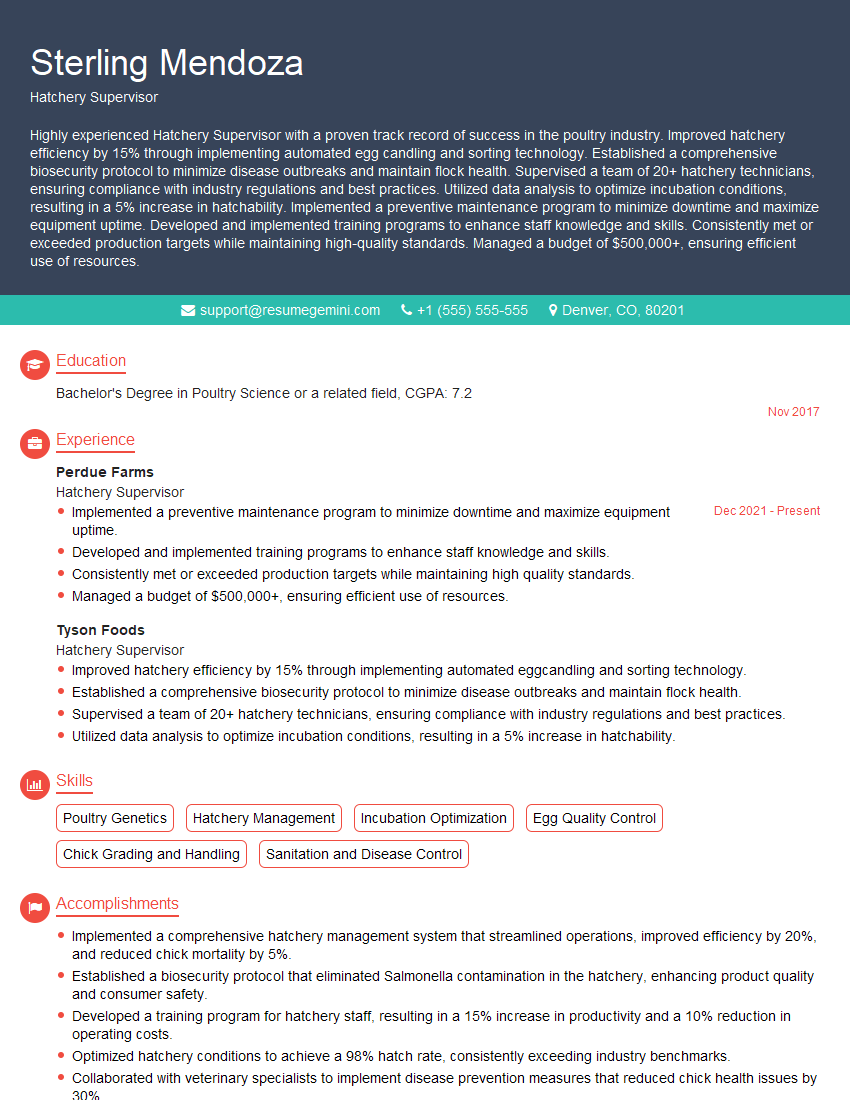
Mastering Chick Hatching Management opens doors to exciting career opportunities in the poultry industry, offering growth potential and a rewarding role in food production. To maximize your job prospects, focus on building an ATS-friendly resume that showcases your skills and experience effectively. ResumeGemini is a trusted resource to help you craft a professional and impactful resume. Examples of resumes tailored to Chick Hatching Management are available to guide you in creating your own compelling application.

Explore more articles
Users Rating of Our Blogs
Share Your Experience
We value your feedback! Please rate our content and share your thoughts (optional).
What Readers Say About Our Blog
I Redesigned Spongebob Squarepants and his main characters of my artwork.
https://www.deviantart.com/reimaginesponge/art/Redesigned-Spongebob-characters-1223583608
IT gave me an insight and words to use and be able to think of examples
Hi, I’m Jay, we have a few potential clients that are interested in your services, thought you might be a good fit. I’d love to talk about the details, when do you have time to talk?
Best,
Jay
Founder | CEO