Interviews are opportunities to demonstrate your expertise, and this guide is here to help you shine. Explore the essential Communicate with Warehouse Personnel interview questions that employers frequently ask, paired with strategies for crafting responses that set you apart from the competition.
Questions Asked in Communicate with Warehouse Personnel Interview
Q 1. Describe your experience communicating with warehouse staff at different levels.
My experience spans communicating with warehouse personnel across various roles, from entry-level associates to supervisors and managers. I’ve found that tailoring my communication style to the audience is crucial. With entry-level staff, clear, concise instructions are key, often reinforced visually. For example, I might use diagrams or checklists alongside verbal instructions for picking and packing. With supervisors, communication involves more strategic discussions about workflow improvements or problem-solving. I’ve presented data-driven proposals to managers, backed by metrics demonstrating the impact of implemented changes. Finally, with executive-level personnel, communication focuses on high-level summaries and key performance indicators (KPIs) regarding warehouse operations.
- Example: When training new pickers, I use a combination of written step-by-step guides and on-the-job shadowing to ensure proper understanding.
- Example: When discussing productivity challenges with a supervisor, I use data from our warehouse management system (WMS) to illustrate the bottlenecks and propose solutions.
Q 2. How do you handle miscommunication or conflicting information within the warehouse?
Miscommunication and conflicting information are inevitable in a fast-paced warehouse. My approach involves several steps. First, I identify the source of the conflict. This often requires talking to the individuals involved to understand their perspectives. Then, I clarify the information, using visual aids or written documentation when necessary. Next, I facilitate a discussion to find a mutually agreeable solution. This might involve adjusting workflows or clarifying responsibilities. Finally, I implement the solution and ensure everyone understands the revised process. If the issue is systemic, I will escalate it to management for process improvement suggestions.
Example: If two team members have conflicting information on a shipment’s destination, I would consult the order details, verify the address in our WMS, and then inform both team members of the correct information in a group meeting, ensuring both acknowledge understanding.
Q 3. Explain your approach to delivering urgent or critical information to warehouse personnel.
Delivering urgent or critical information requires immediate and effective communication. I utilize a multi-pronged approach. This typically involves a combination of direct, face-to-face communication, alongside a supporting system, for example, a company-wide notification system like email or SMS messaging. If the information is time-sensitive, a direct phone call or even a brief meeting would be appropriate to ensure immediate action. I always confirm receipt and understanding through verbal confirmation, or written acknowledgement.
Example: If there’s a recall on a specific product, I would immediately notify the relevant teams, potentially using a combination of a live announcement over the warehouse PA system and broadcast emails to ensure everyone gets the message. This might be accompanied by visual aids such as posters displaying the recalled items.
Q 4. How do you ensure clear and concise communication in a fast-paced warehouse environment?
Maintaining clear and concise communication in a noisy warehouse environment demands a strategic approach. I use several techniques: Firstly, I keep messages brief and focused, avoiding jargon. I use simple, direct language. Secondly, I use multiple communication channels, such as visual aids (signs, checklists, labels), verbal instructions, and written confirmations. Thirdly, I actively seek confirmation of understanding. Finally, I use technology to my advantage, for instance, a warehouse management system (WMS) with integrated communication features.
Example: Instead of saying, “Expedite the manifest for the outbound shipment,” I might say, “Please finish preparing the shipping documents for the trucks leaving at 2 pm.”
Q 5. What methods do you use to confirm understanding when communicating instructions?
Confirming understanding is crucial. I employ several methods: First, I ask open-ended questions, such as “Can you explain the process back to me?” or “What are the next steps according to these instructions?” Second, I use visual confirmation, like having someone show me the completed task or point to the relevant item. Thirdly, I use written confirmations (signatures on delivery receipts, completion checklists). Fourthly, I utilize technology where possible, for example, asking for a thumbs up on a communication app once the task is understood.
Example: After explaining a new packing procedure, I ask the team to perform a sample packing using the new method and then I review their work to ensure comprehension.
Q 6. Describe a time you had to resolve a conflict through effective communication in a warehouse setting.
During a peak season rush, two teams had a dispute about responsibility for a critical shipment. One team claimed they had already loaded it, while the other insisted it was still awaiting processing. This threatened to delay a major client order. I intervened by first calming both teams, then systematically investigating the situation. I reviewed the WMS data, checked security camera footage, and spoke to each team member individually. It turned out that a labeling error had caused the confusion. The shipment had been loaded but mislabeled. I corrected the label, resolved the dispute, and prevented a significant delay for the client. This highlighted the importance of clear labeling and effective communication in avoiding future conflicts. The whole situation served as a valuable training opportunity for improved error detection and communication protocols.
Q 7. How do you adapt your communication style to different personalities and communication preferences?
Adapting my communication style is vital. I recognize that individuals have different communication preferences and learning styles. Some people prefer visual aids, while others respond better to verbal instructions. Some are detail-oriented, while others need a broad overview. I actively listen to gauge their preferred style. If someone appears hesitant, I’ll simplify my language and use more visuals. For those who are more confident and independent, I can use less detailed instructions and give them more autonomy. I also make sure to actively consider their preferred mode of communication (email, text, face-to-face).
Example: With a visually-oriented individual, I might use flowcharts or diagrams. With someone who prefers hands-on learning, I’ll focus on demonstrations and guided practice. With more experienced workers who may simply require updates, I might use concise email or text messages.
Q 8. How do you use technology to improve communication and collaboration within the warehouse?
Technology is crucial for efficient warehouse communication and collaboration. We leverage a multi-faceted approach, integrating various systems to streamline information flow. This includes Warehouse Management Systems (WMS), which provide real-time updates on inventory, order status, and location of goods. These systems often integrate with handheld scanners and mobile devices, allowing workers to instantly update information and receive task assignments directly. We also use enterprise communication platforms that facilitate quick messaging, file sharing, and task management among teams and individuals. For instance, a system might alert pickers of a new order requiring immediate attention, while simultaneously updating the system’s inventory. This eliminates delays caused by manual processes and ensures everyone is on the same page.
Beyond WMS, we utilize collaborative tools like project management software to coordinate larger tasks, such as large-scale inventory adjustments or the implementation of new procedures. Visual management tools, such as digital dashboards displaying key performance indicators (KPIs), also greatly improve transparency and accountability, enabling immediate identification of bottlenecks or areas needing attention.
Q 9. How do you communicate safety procedures and regulations to warehouse staff?
Safety is paramount. We communicate safety procedures and regulations through multiple channels to ensure maximum reach and comprehension. This starts with comprehensive training during onboarding, including both classroom instruction and hands-on demonstrations. We use visual aids like posters, videos, and interactive modules to make the information engaging and accessible. Regular refresher training is crucial, emphasizing best practices and addressing recent incidents (if any). We also leverage digital signage strategically placed throughout the warehouse to display key safety reminders, emergency procedures, and important announcements. Furthermore, we use regular team meetings, safety huddles, and email communications to reiterate key points and reinforce safe work habits. Finally, we actively encourage feedback and questions from staff, ensuring everyone feels comfortable voicing safety concerns.
Q 10. How do you provide constructive feedback to warehouse employees?
Providing constructive feedback is a critical aspect of my role. I focus on a ‘sandwich’ approach: start with positive reinforcement, then address areas for improvement, and conclude with encouragement and a clear path forward. For example, if an employee’s picking speed is lagging, I might begin by acknowledging their consistent attention to detail, then offer suggestions for optimizing their picking route, and conclude by expressing confidence in their ability to improve and offering support. I always focus on specific behaviors and observable actions, avoiding generalizations or personal attacks. The feedback is delivered privately, in a calm and respectful manner, creating a safe environment for the employee to absorb and react constructively. Regular one-on-one meetings offer ongoing opportunities to discuss progress and address any challenges.
Q 11. How do you handle complaints or concerns from warehouse personnel?
Addressing complaints and concerns is vital for maintaining a positive work environment. My approach involves active listening, empathy, and a focus on finding solutions. I always ensure the employee feels heard and understood before attempting to address their concern. If the issue involves a process or a system, I document the complaint and escalate it to the appropriate department for resolution, keeping the employee informed of the progress. If it’s a more personal issue, I work collaboratively with the employee to identify a solution, ensuring that all actions are aligned with company policy and procedures. Confidentiality is paramount; I treat all concerns with the utmost discretion. Following resolution, I follow up to ensure the issue is resolved to the employee’s satisfaction.
Q 12. How do you ensure all team members receive and understand critical information?
Ensuring all team members receive and understand critical information requires a multi-pronged approach. We utilize a combination of methods, recognizing that different employees have different learning styles and communication preferences. Critical information, such as schedule changes, emergency procedures, or new company policies, is communicated through multiple channels. This might include email announcements, posters in high-traffic areas, announcements during team meetings, and in some cases, text messages if urgency is involved. We use clear, concise language, avoiding jargon. We also actively encourage questions and provide opportunities for clarification. Following the dissemination of crucial information, we may conduct a brief quiz or poll to gauge understanding and address any lingering questions or concerns.
Q 13. Describe your experience using different communication channels (e.g., email, radio, walkie-talkie).
My experience spans various communication channels, each serving a unique purpose. Email is ideal for formal communication, such as policy updates or scheduling changes. Walkie-talkies are indispensable for real-time communication on the warehouse floor, coordinating tasks and resolving immediate issues. For instance, a picker might use a walkie-talkie to request assistance with a heavy pallet. Two-way radios provide longer range communication and are particularly useful for coordinating activities across different warehouse zones. In recent years, the use of instant messaging platforms within a dedicated warehouse app has become increasingly important, enabling rapid dissemination of information among teams and individuals, providing a more flexible communication pathway than traditional methods.
Q 14. How do you prioritize communication tasks in a high-pressure environment?
Prioritizing communication in high-pressure environments requires a structured approach. I use a triage system, assessing the urgency and impact of each communication task. Safety-related issues always take precedence. For example, a report of a spill or equipment malfunction demands immediate attention. Time-sensitive operational needs, such as urgent order fulfillment or addressing a critical inventory discrepancy, also rank high. Less urgent tasks, such as routine updates or non-critical administrative matters, are scheduled accordingly. Effective delegation is crucial; I assign tasks to the appropriate individuals based on their expertise and availability, ensuring that no task falls through the cracks. Regular communication updates during stressful times are necessary to keep everyone informed and coordinated.
Q 15. How do you maintain open communication lines with your warehouse team?
Maintaining open communication with a warehouse team requires a multi-pronged approach. It’s not just about *having* communication channels, but actively fostering a culture where communication is valued and encouraged.
- Regular Team Meetings: I hold daily briefings at the start of each shift to discuss priorities, address any urgent issues, and answer questions. Weekly meetings are used for longer-term planning and feedback.
- Open-Door Policy: I make myself readily available to team members. This builds trust and encourages them to approach me with concerns or questions without hesitation. My door is literally open (unless I’m in a meeting!)
- Two-Way Communication Tools: Utilizing a combination of methods ensures everyone feels comfortable sharing information. This includes daily email updates summarizing key performance indicators (KPIs), a shared digital whiteboard for real-time task updates, and a dedicated communication app for quick questions and announcements.
- Feedback Mechanisms: I regularly solicit feedback through anonymous surveys, one-on-one conversations, and team suggestion boxes. This helps identify communication breakdowns and areas for improvement.
For example, during a recent inventory discrepancy, the open-door policy allowed a team member to privately express their concerns about a new scanning system, leading to a quick adjustment in training and ultimately resolving the issue.
Career Expert Tips:
- Ace those interviews! Prepare effectively by reviewing the Top 50 Most Common Interview Questions on ResumeGemini.
- Navigate your job search with confidence! Explore a wide range of Career Tips on ResumeGemini. Learn about common challenges and recommendations to overcome them.
- Craft the perfect resume! Master the Art of Resume Writing with ResumeGemini’s guide. Showcase your unique qualifications and achievements effectively.
- Don’t miss out on holiday savings! Build your dream resume with ResumeGemini’s ATS optimized templates.
Q 16. What strategies do you use to promote teamwork and collaboration through effective communication?
Promoting teamwork and collaboration requires creating a supportive environment where information flows freely and everyone feels valued.
- Cross-Training: Cross-training ensures that team members understand each other’s roles and responsibilities, fostering empathy and collaboration. It also creates redundancy and improves efficiency.
- Shared Goals and KPIs: Clearly defining shared goals and tracking progress through common KPIs ensures everyone is working towards the same objectives. This creates a sense of shared purpose.
- Team-Based Problem Solving: I encourage team members to collaborate on solving problems. Brainstorming sessions and open discussions facilitate idea sharing and empower employees to actively participate in improvement efforts.
- Recognition and Appreciation: Publicly acknowledging achievements and contributions boosts morale and fosters a positive team spirit. This can be done through informal praise, team awards, or even a simple thank-you note.
For instance, during a particularly busy holiday season, we used a team-based problem-solving approach to optimize our picking and packing process. This led to a significant improvement in efficiency and reduced errors.
Q 17. How would you handle a situation where a team member misunderstands instructions and makes a mistake?
When a team member misunderstands instructions and makes a mistake, it’s crucial to address the situation calmly and constructively. The goal isn’t to place blame but to understand the root cause and prevent future occurrences.
- Listen and Understand: First, I listen empathetically to the team member’s explanation of what happened. Asking open-ended questions helps uncover the source of the misunderstanding.
- Identify the Root Cause: Was the instruction unclear? Were there insufficient training materials? Was there a lack of available support? Understanding the cause is crucial for finding a solution.
- Collaborate on a Solution: We work together to find a solution, perhaps by clarifying the instructions, providing additional training, or adjusting the workflow. This collaborative approach shows the team member that their input is valued.
- Implement Preventative Measures: To avoid future similar mistakes, we update training materials, refine the instruction process, or implement new checks and balances. Documentation of these steps is crucial for consistency.
- Positive Reinforcement: Even after addressing the mistake, I reinforce positive aspects of the team member’s work and encourage future performance. A supportive approach helps maintain morale.
For example, one time a new team member misread a product code, leading to incorrect shipping. We revised the product code format to be more intuitive and provided extra training on using the new system.
Q 18. How do you effectively communicate changes in procedures or workflows to warehouse staff?
Communicating changes in procedures or workflows effectively requires a systematic approach that ensures everyone is informed and understands the new processes.
- Pre-announcement: Before implementing changes, I announce them in advance, providing ample time for questions and concerns. This reduces uncertainty and allows for a smooth transition.
- Clear and Concise Communication: I use multiple channels to communicate the changes – team meetings, email announcements, posters on the warehouse floor, and even short training videos. The information should be clear, concise, and easy to understand.
- Hands-on Training: Whenever possible, I provide hands-on training and demonstrations of the new procedures. This is especially effective for tasks involving physical processes or equipment.
- Feedback and Questions: I encourage questions and feedback throughout the process. This allows me to address any confusion or resistance and adjust the changes if necessary.
- Ongoing Support: After implementing the changes, I provide ongoing support and answer any questions. This ensures the team feels comfortable with the new workflows.
For example, when we implemented a new warehouse management system (WMS), we provided multiple days of hands-on training to ensure that each team member was comfortable using the system before going live.
Q 19. Describe your experience with using communication tools for tracking inventory and shipments.
My experience with communication tools for tracking inventory and shipments involves a variety of technologies working in concert. These tools are vital for efficient warehouse operation and real-time visibility into inventory levels and shipment status.
- WMS (Warehouse Management System): I’ve extensively used WMS software to track inventory, manage orders, optimize storage, and automate processes. These systems typically integrate with other software for seamless data flow.
- RF Scanning Devices: I’m proficient in using RF scanners to record inventory movements, update stock levels, and verify shipments. This real-time data entry ensures accurate inventory records.
- Transportation Management Systems (TMS): I’ve utilized TMS to schedule shipments, track packages in transit, and communicate with carriers. This provides crucial visibility into the delivery process.
- Enterprise Resource Planning (ERP) Systems: I have experience integrating warehouse data with broader ERP systems for a holistic view of the supply chain, from procurement to delivery. This allows for comprehensive analysis and better decision-making.
Example of a WMS data entry: 'SKU12345, Location A12, Qty: 10, Received'
The integration of these tools provides a complete picture of our inventory and shipment status, leading to improved efficiency and reduced errors.
Q 20. How do you address language barriers or cultural differences in warehouse communication?
Addressing language barriers and cultural differences is crucial for effective warehouse communication. It’s about creating an inclusive environment where everyone feels respected and understood.
- Translation Services: If necessary, I utilize translation services for documents, announcements, and training materials. This ensures that all team members have access to the necessary information in their native language.
- Visual Aids: Visual aids, such as diagrams, pictures, and videos, can be particularly effective in conveying instructions and procedures, overcoming language barriers.
- Multilingual Team Members: Leveraging the language skills of multilingual team members to act as interpreters or translators provides immediate support and builds camaraderie.
- Cultural Sensitivity Training: Providing cultural sensitivity training helps team members understand and appreciate cultural differences, building stronger working relationships.
- Simple and Clear Communication: Regardless of language, communication should be simple, clear, and direct, avoiding jargon and complex sentence structures.
In one instance, we used visual aids and a bilingual team member to train a new group of workers who had limited English proficiency. This ensured they understood safety procedures and warehouse protocols efficiently.
Q 21. How do you ensure efficient communication across different shifts?
Ensuring efficient communication across different shifts requires a structured handover process and clear communication channels.
- Shift Handover Meetings: I establish a mandatory shift handover meeting where the outgoing and incoming shift leaders discuss outstanding tasks, any urgent issues, and significant events that occurred during the previous shift. This ensures continuity and prevents critical information from being lost.
- Dedicated Communication Logs: A detailed communication log is maintained to record important information, including any issues encountered, changes made, and planned activities. This log is accessible to all shifts.
- Digital Communication Platforms: Using digital communication platforms (e.g., dedicated messaging apps or shared digital whiteboards) allows for real-time communication across different shifts. Urgent information can be communicated quickly and efficiently.
- Clear Documentation: All procedures, protocols, and emergency contact information are clearly documented and readily available to all shifts. This reduces reliance on informal communication and improves consistency.
- Regular Feedback and Review: I regularly review the communication process to identify any inefficiencies and implement improvements. This iterative approach ensures continuous optimization.
For example, during a night shift, a critical issue was discovered and documented in the communication log. This allowed the day shift to quickly address it, preventing any significant disruptions.
Q 22. How do you maintain clear and organized communication records?
Maintaining clear and organized communication records in a warehouse environment is crucial for efficiency and accountability. I employ a multi-pronged approach. First, I utilize a centralized communication system, such as a shared digital platform (like a dedicated team channel on Slack or Microsoft Teams) where all important announcements, directives, and updates are documented. This ensures easy access and searchability for all staff.
Second, I maintain detailed logs of all significant interactions, including meetings, phone calls, and email exchanges. This includes noting the date, time, participants, key discussion points, and agreed-upon actions. These logs serve as an invaluable reference point for tracking progress, resolving disputes, and improving future communication strategies. For instance, if a delivery issue arises, I can quickly refer back to the communication record to identify who was responsible for what and when.
Finally, I ensure all documented information is properly indexed and filed for easy retrieval. Using a consistent naming convention for files and folders greatly simplifies the organization and reduces the time spent searching for relevant information.
Q 23. How do you deal with difficult conversations or confrontations with warehouse staff?
Difficult conversations are inevitable in a fast-paced warehouse setting. My approach emphasizes active listening, empathy, and a focus on finding solutions. I begin by ensuring a private setting where the individual feels comfortable speaking openly. I use open-ended questions to encourage them to express their concerns and perspectives without interruption. I listen attentively, seeking to understand their point of view before formulating a response.
If a conflict arises, I remain calm and avoid accusatory language. I focus on addressing the specific issue at hand, rather than personal attacks. For example, if an employee is consistently late, instead of blaming them, I would explore the underlying reasons for their tardiness. This might uncover logistical problems or personal challenges that we can work together to solve. My goal is not to win an argument, but to collaboratively find a resolution that benefits both the individual and the warehouse as a whole.
I always strive to end the conversation on a positive note, reiterating the importance of their contributions and reinforcing our shared goals. Following the conversation, I document the key points and agreed-upon actions to ensure clarity and accountability.
Q 24. Describe a time when your communication skills prevented a warehouse issue or improved efficiency.
During a particularly busy holiday season, we experienced a significant backlog in order fulfillment. Initial communication from the shipping department to the picking and packing teams was unclear, leading to confusion and delays. Recognizing the problem, I initiated a series of short, daily briefings using a visual whiteboard system to show everyone the daily targets and the current progress. I then implemented a simple color-coded system – green for on-track, yellow for caution, red for critical – to easily indicate the status of each order.
This straightforward, visual communication approach dramatically improved clarity and coordination across teams. By making the workflow transparent and easily understood by everyone, we were able to streamline the process, reduce errors, and ultimately fulfill all orders on time. This demonstrates how effective communication not only prevents problems but also significantly enhances efficiency and team morale.
Q 25. How do you facilitate effective communication between different warehouse departments?
Facilitating communication between different warehouse departments requires establishing clear communication channels and fostering a collaborative environment. I achieve this by implementing regular cross-departmental meetings, utilizing collaborative software tools, and promoting open dialogue. Weekly meetings involving representatives from receiving, picking & packing, shipping, and inventory management allow us to discuss shared concerns, challenges, and potential improvements.
Utilizing project management software, where each team can update their progress in real-time, allows for seamless sharing of information and proactive identification of potential bottlenecks. Additionally, I actively encourage a culture of open communication, where employees from different departments feel comfortable raising issues or suggesting improvements. This ensures that information flows freely across the warehouse and promotes a sense of shared responsibility for overall success.
Q 26. How do you measure the effectiveness of your communication strategies within the warehouse?
Measuring the effectiveness of communication strategies is essential for continuous improvement. I use several key performance indicators (KPIs) to gauge the impact of my communication efforts. These include:
- Order fulfillment rate: Improvements in this metric indicate better communication and coordination between departments.
- Error rate: A reduction in errors demonstrates clearer and more effective communication instructions.
- Employee satisfaction surveys: These provide valuable feedback on clarity, frequency, and overall effectiveness of communication channels.
- Time taken to resolve issues: A shorter resolution time signifies improved communication and problem-solving capabilities.
By regularly tracking and analyzing these KPIs, I can identify areas where communication can be improved and adjust my strategies accordingly. For example, consistently high error rates in a particular department might indicate a need for more detailed training or a redesign of communication protocols.
Q 27. What steps do you take to prevent miscommunication of sensitive information in the warehouse?
Protecting sensitive information is paramount in a warehouse environment. I implement several measures to prevent miscommunication and maintain data security. Firstly, I adhere to strict access control policies, ensuring only authorized personnel have access to sensitive data. Access to information is granted based on the individual’s role and responsibilities, and access logs are maintained to track all activities.
Secondly, I utilize secure communication channels for transmitting confidential information, such as encrypted email or secure messaging platforms. I avoid sharing sensitive data through less secure channels such as open email chains or public forums. I regularly reinforce the importance of data security through training and awareness programs, emphasizing the need to protect customer information, inventory data, and financial records.
Finally, I conduct regular security audits to identify potential vulnerabilities and ensure that our policies and procedures are effective and up-to-date. These audits ensure we’re proactively mitigating potential risks associated with handling sensitive information.
Q 28. How do you ensure that your communication is both clear and respectful?
Ensuring clear and respectful communication is a cornerstone of effective warehouse management. Clarity is achieved through using simple, concise language, avoiding jargon and technical terms that might confuse those without specialized knowledge. I strive to present information in a logical and organized manner, using visual aids where appropriate (diagrams, flowcharts, checklists) to enhance understanding.
Respect is demonstrated through active listening, empathy, and a focus on building positive relationships with warehouse personnel. I value each individual’s contribution and acknowledge their efforts. I use inclusive language, avoiding any terms or expressions that might be perceived as discriminatory or offensive. I consistently treat every team member with courtesy and professionalism, regardless of their position or role within the warehouse.
By combining clarity with respect, I foster an environment of trust and collaboration, resulting in a more engaged and productive workforce.
Key Topics to Learn for Communicate with Warehouse Personnel Interview
- Effective Communication Styles: Understanding and adapting your communication style to different personalities and situations within a warehouse environment. This includes written, verbal, and non-verbal communication.
- Active Listening Techniques: Mastering active listening to ensure clear understanding of instructions, concerns, and requests from warehouse personnel. Practical application: demonstrating your ability to paraphrase and confirm understanding in simulated scenarios.
- Conflict Resolution Strategies: Developing and applying strategies to effectively resolve conflicts that may arise between warehouse personnel, or between personnel and management. Consider role-playing scenarios.
- Giving and Receiving Feedback: Providing constructive feedback to improve team performance and effectively receiving feedback to enhance your own communication skills. Think about examples of both positive and critical feedback.
- Clear and Concise Instruction Delivery: Practicing clear and concise instructions to ensure warehouse tasks are understood and completed accurately and efficiently. This includes considering different communication methods for varying tasks and skill levels.
- Teamwork and Collaboration: Highlighting your understanding of how effective communication fosters teamwork and collaboration in a fast-paced warehouse environment. Focus on examples showcasing your collaborative skills.
- Using Technology for Communication: Familiarity with warehouse management systems (WMS) and other technologies used for communication and data sharing within the warehouse. This might include scanners, radios, or internal messaging systems.
- Safety Communication Protocols: Understanding and adhering to safety protocols regarding communication, including reporting hazards and accidents. Discuss your approach to ensuring safety through communication.
Next Steps
Mastering effective communication with warehouse personnel is crucial for career advancement. Strong communication skills are essential for building positive working relationships, improving team efficiency, and ensuring a safe and productive work environment. This leads to greater responsibility, increased job satisfaction, and better career prospects. To maximize your chances, create an ATS-friendly resume that highlights your communication skills. ResumeGemini is a trusted resource to help you build a professional and impactful resume that showcases your abilities effectively. Examples of resumes tailored to “Communicate with Warehouse Personnel” roles are available to further guide your preparation.

Operations Manager Resume Sample
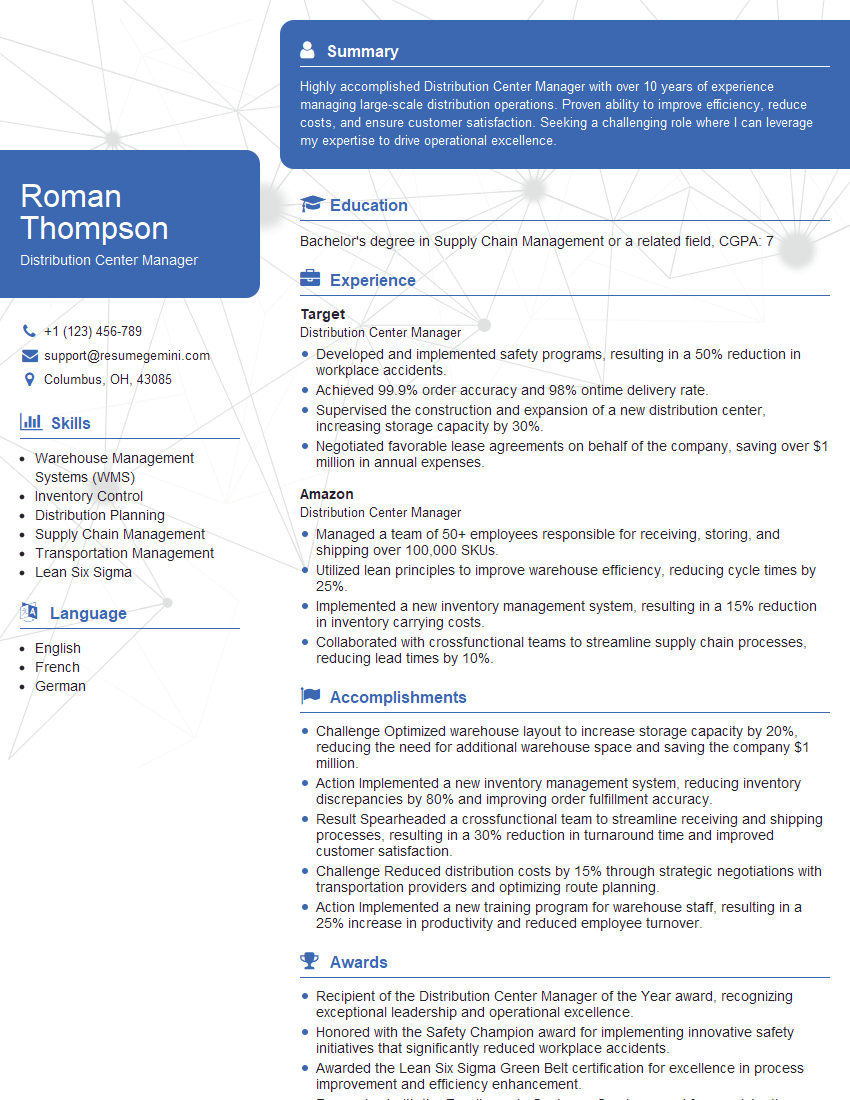
Distribution Center Manager Resume Sample
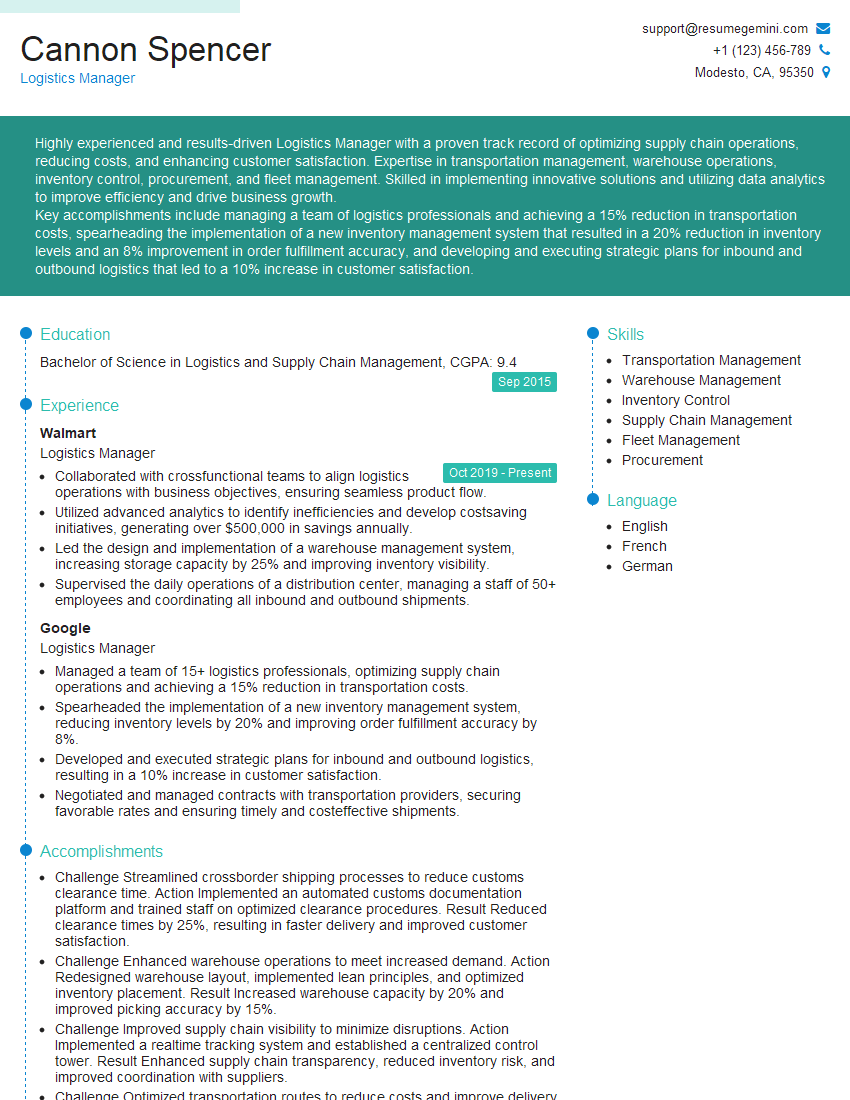
Logistics Manager Resume Sample
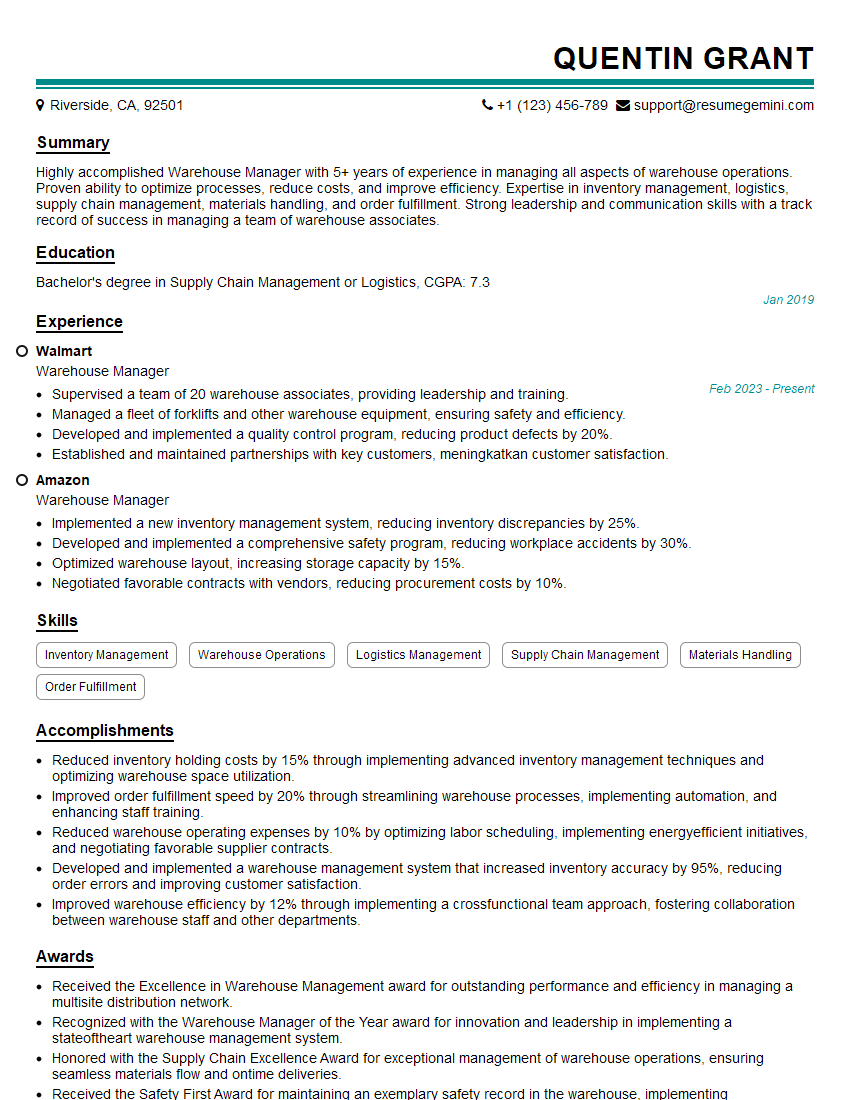
Warehouse Manager Resume Sample
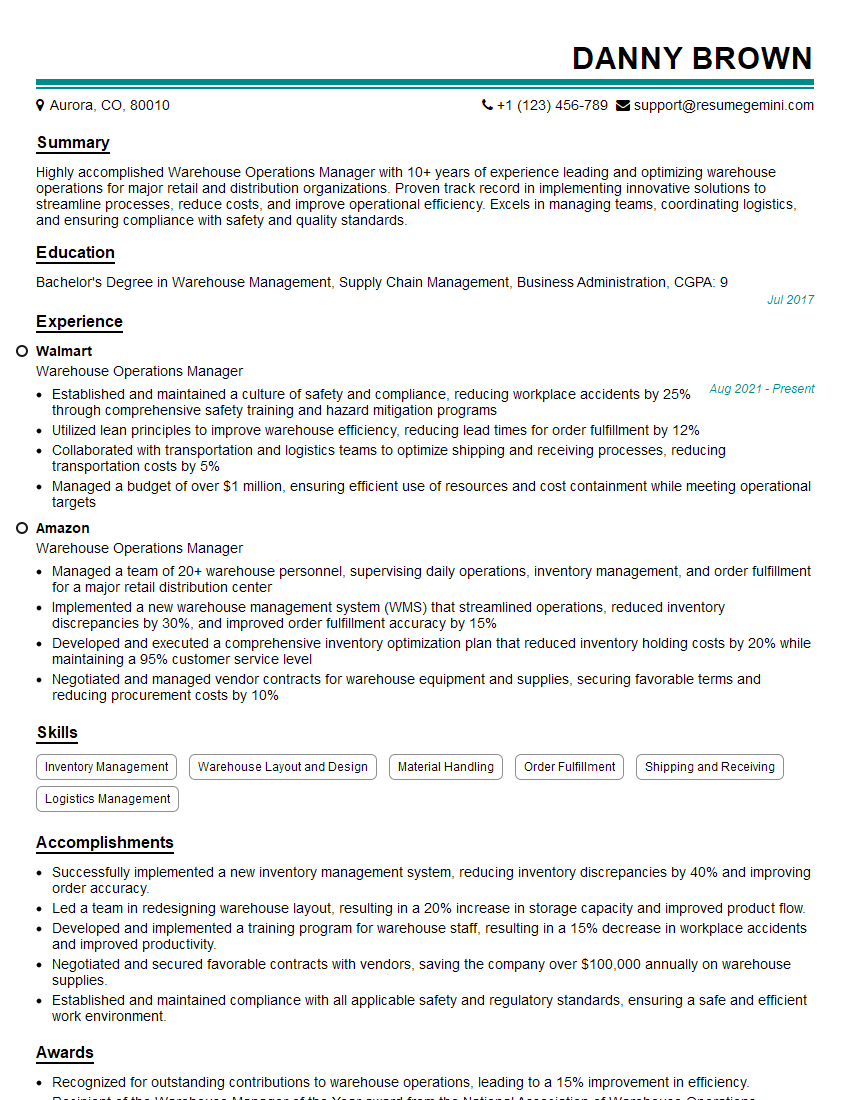
Warehouse Operations Manager Resume Sample
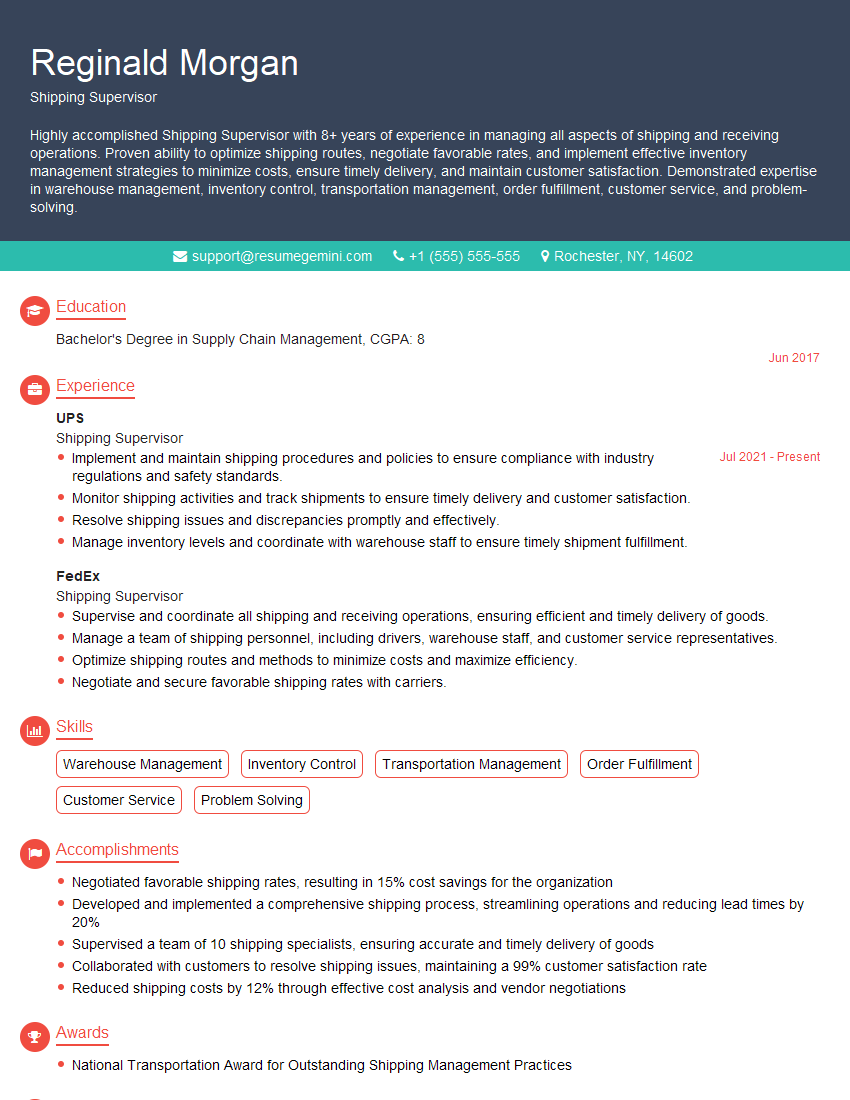
Shipping Supervisor Resume Sample
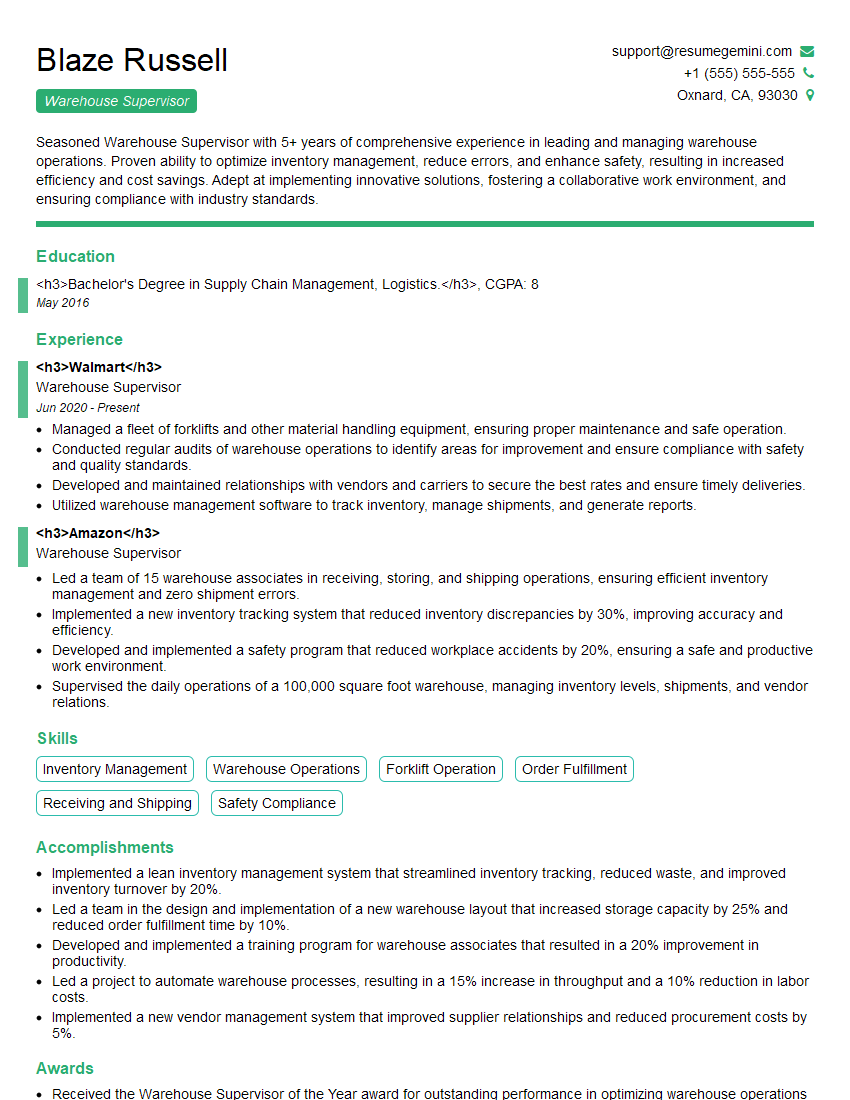
Warehouse Supervisor Resume Sample
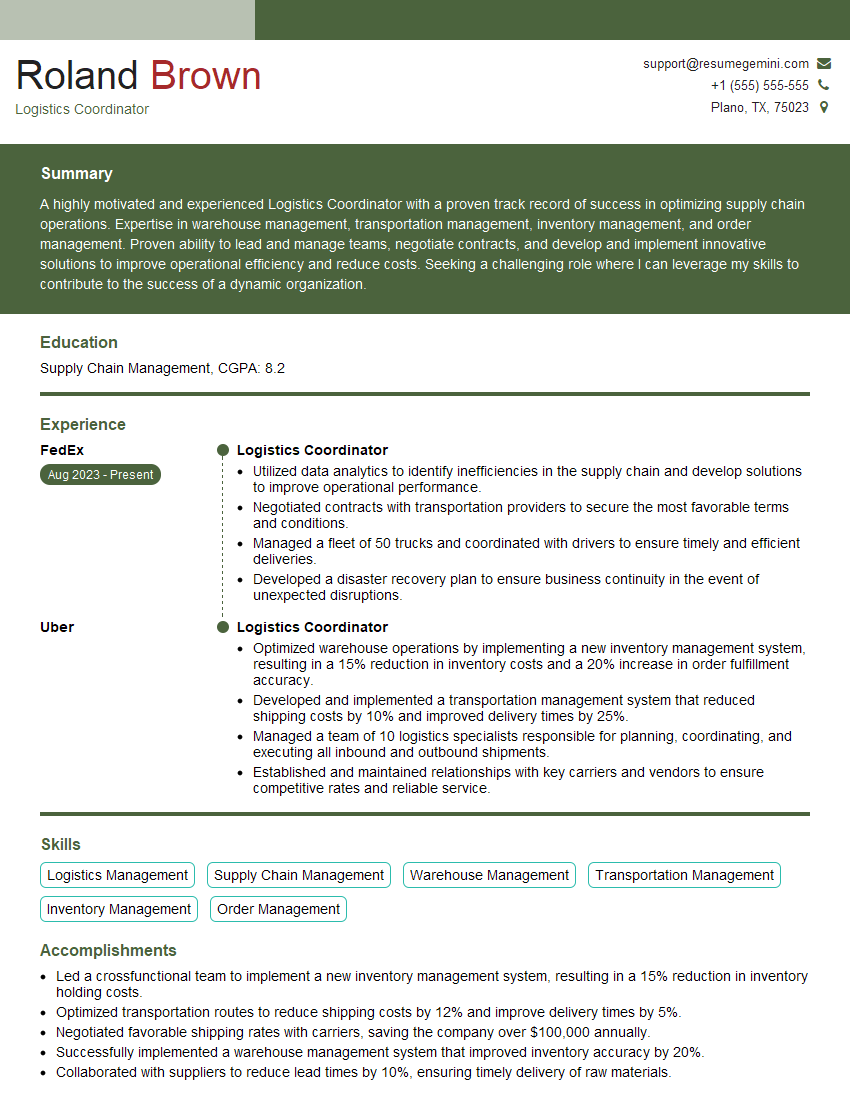
Logistics Coordinator Resume Sample
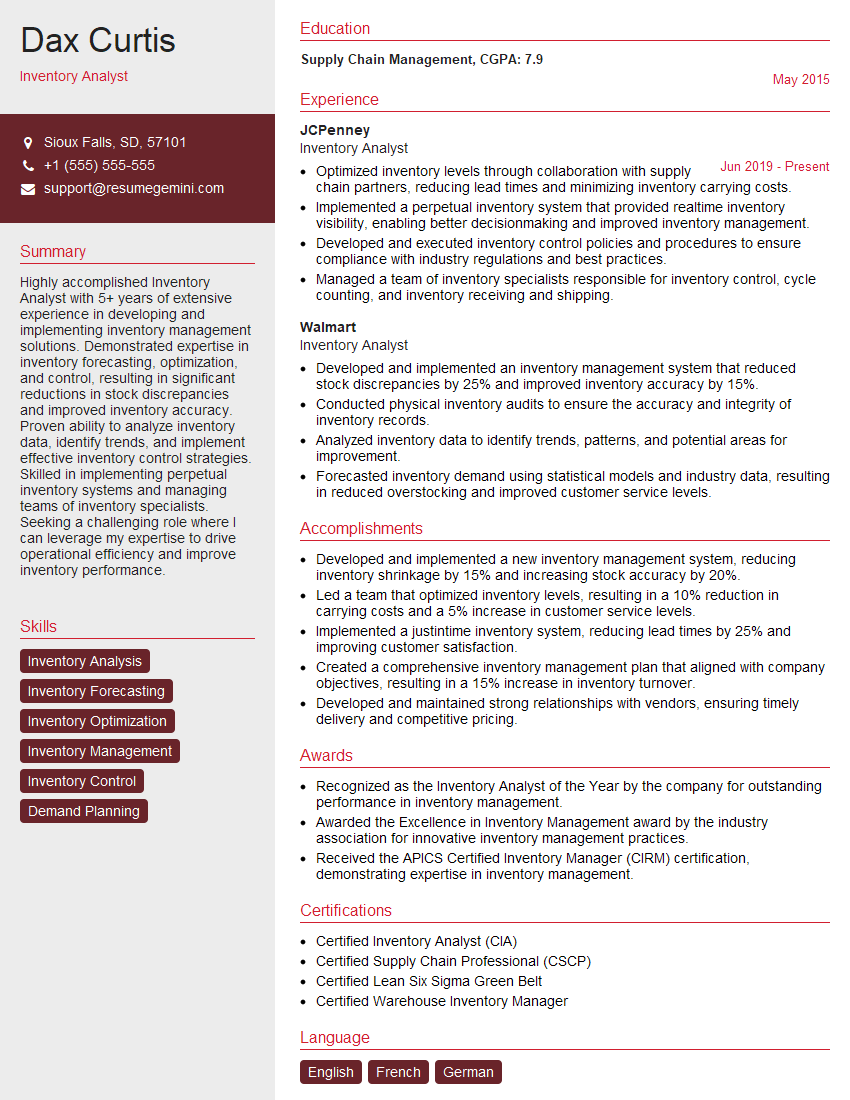
Inventory Analyst Resume Sample
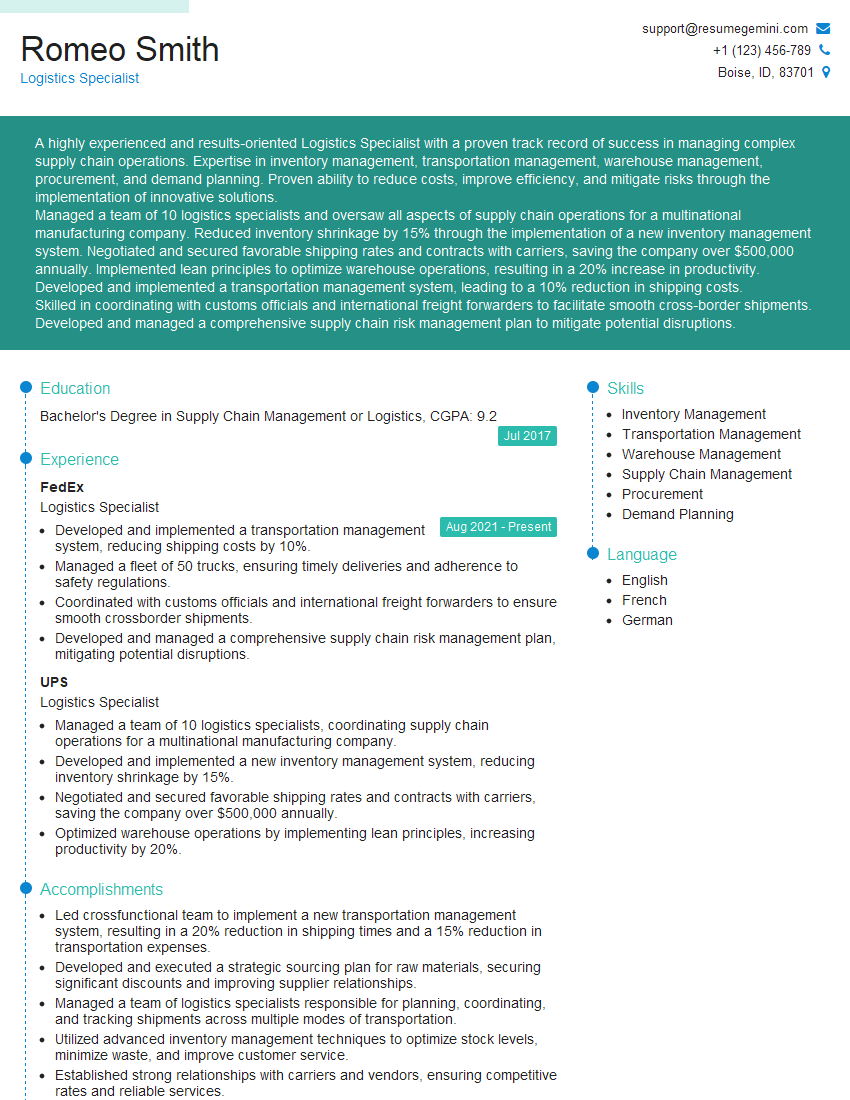
Logistics Specialist Resume Sample

Inventory Manager Resume Sample
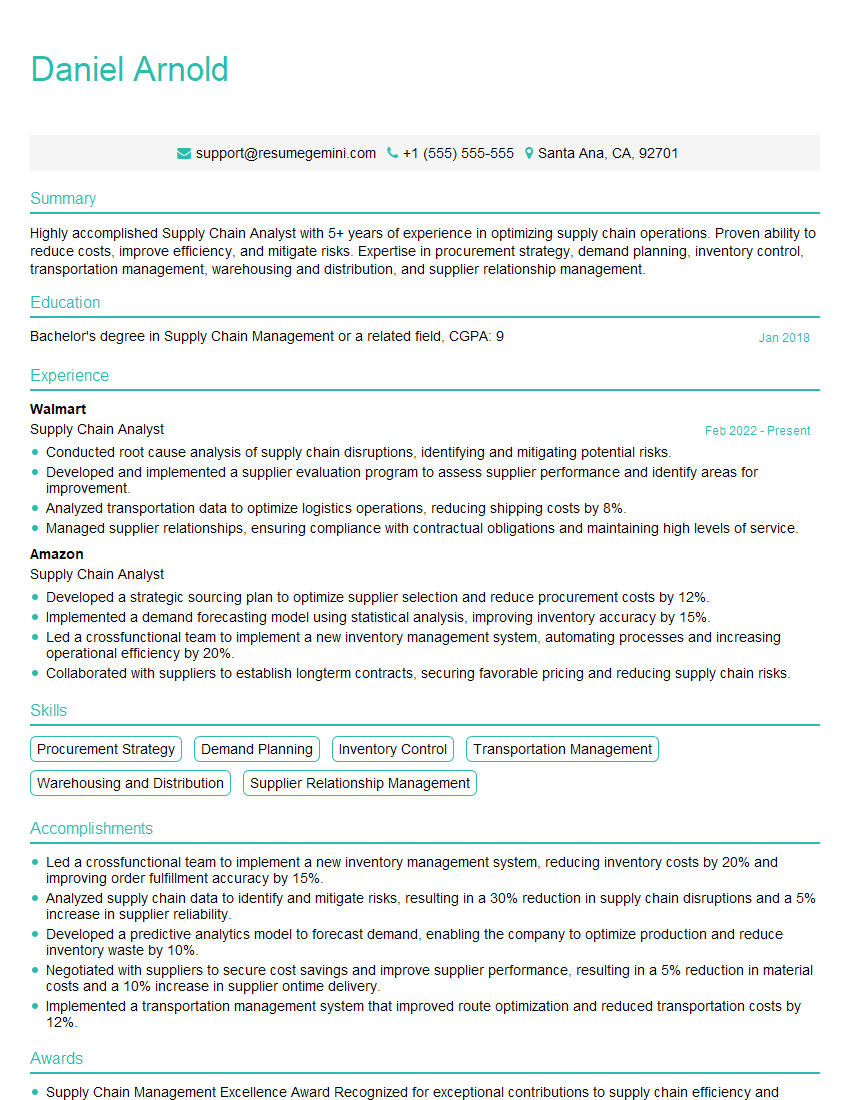
Supply Chain Analyst Resume Sample
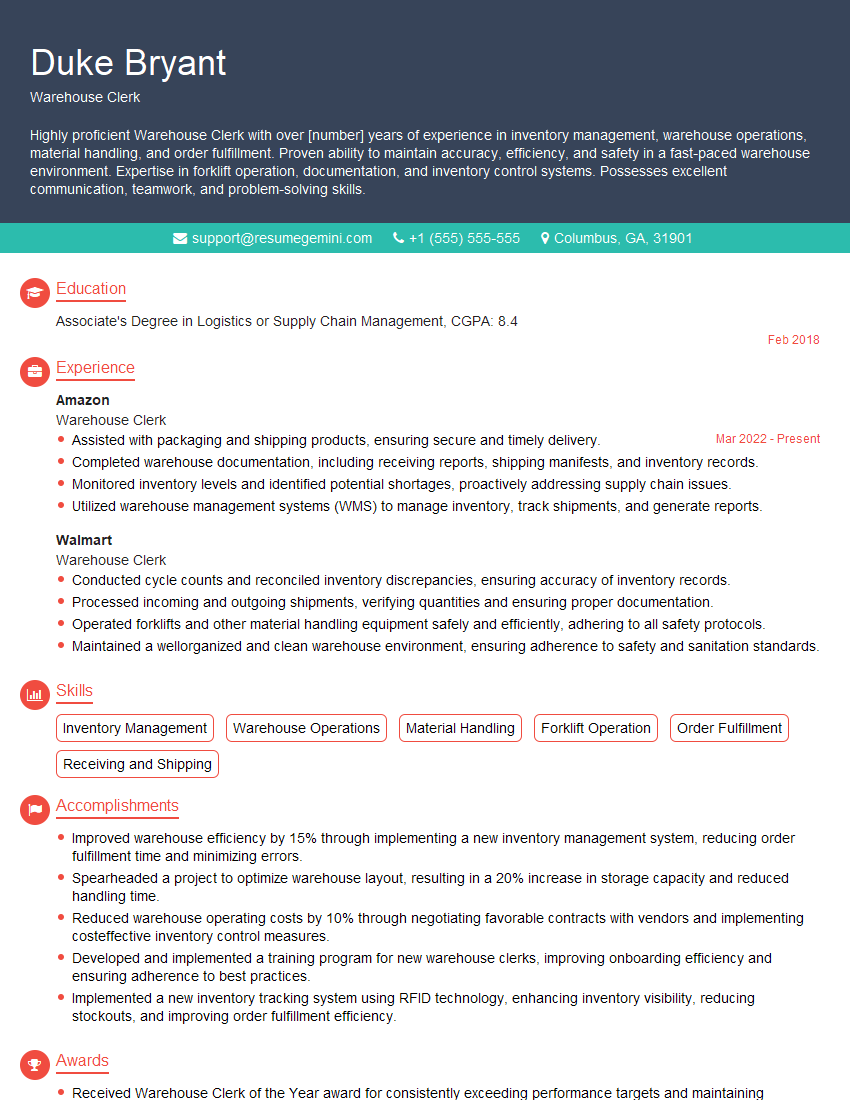
Warehouse Clerk Resume Sample
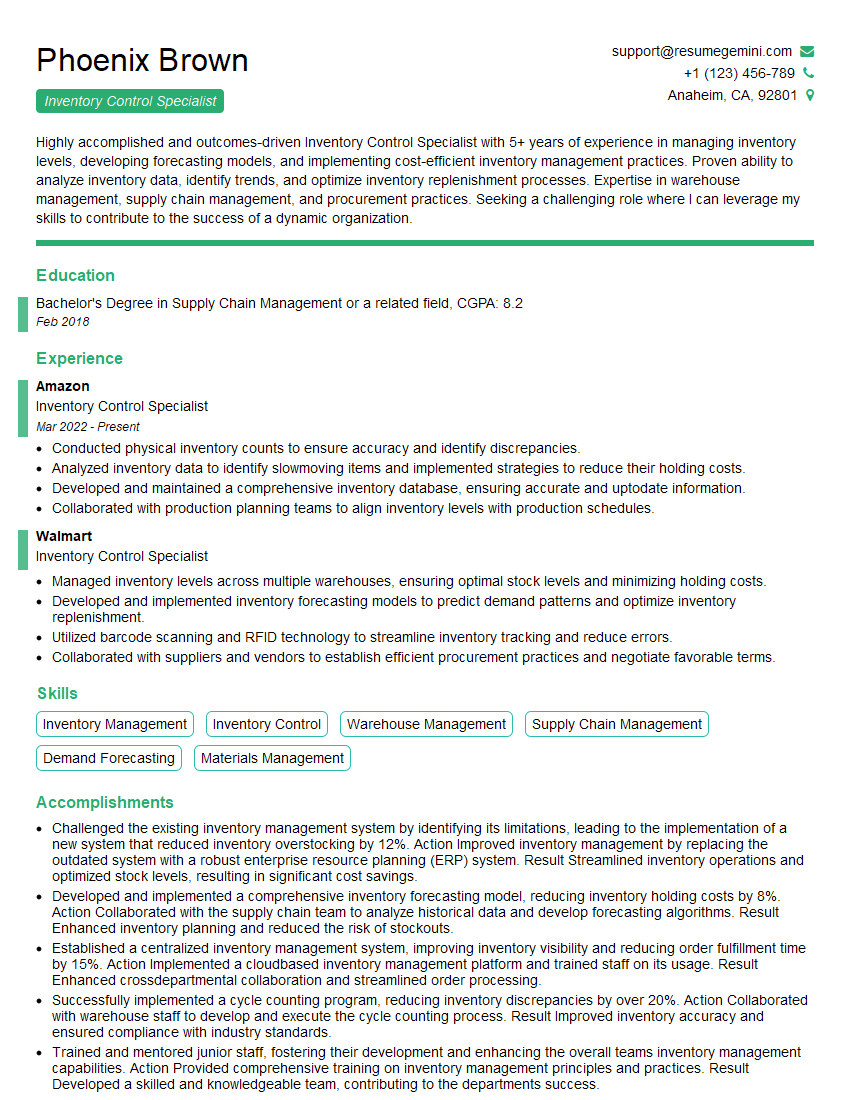
Inventory Control Specialist Resume Sample
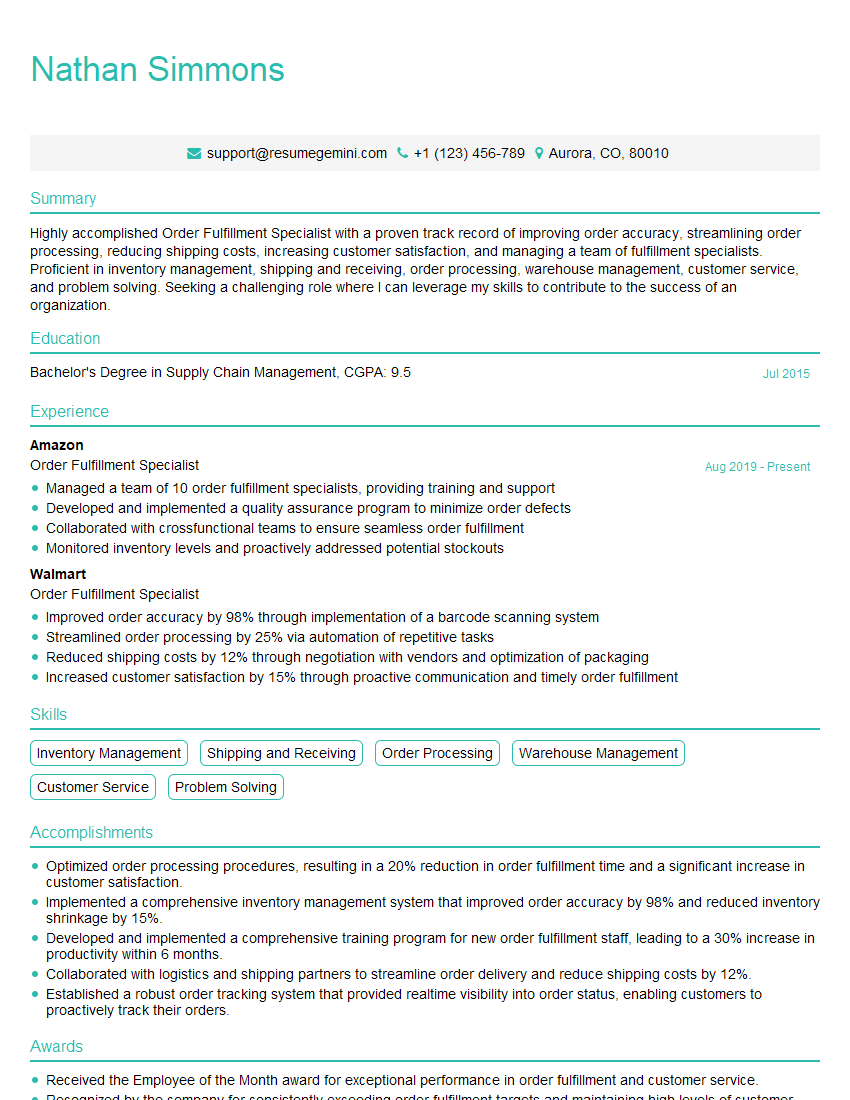
Order Fulfillment Specialist Resume Sample
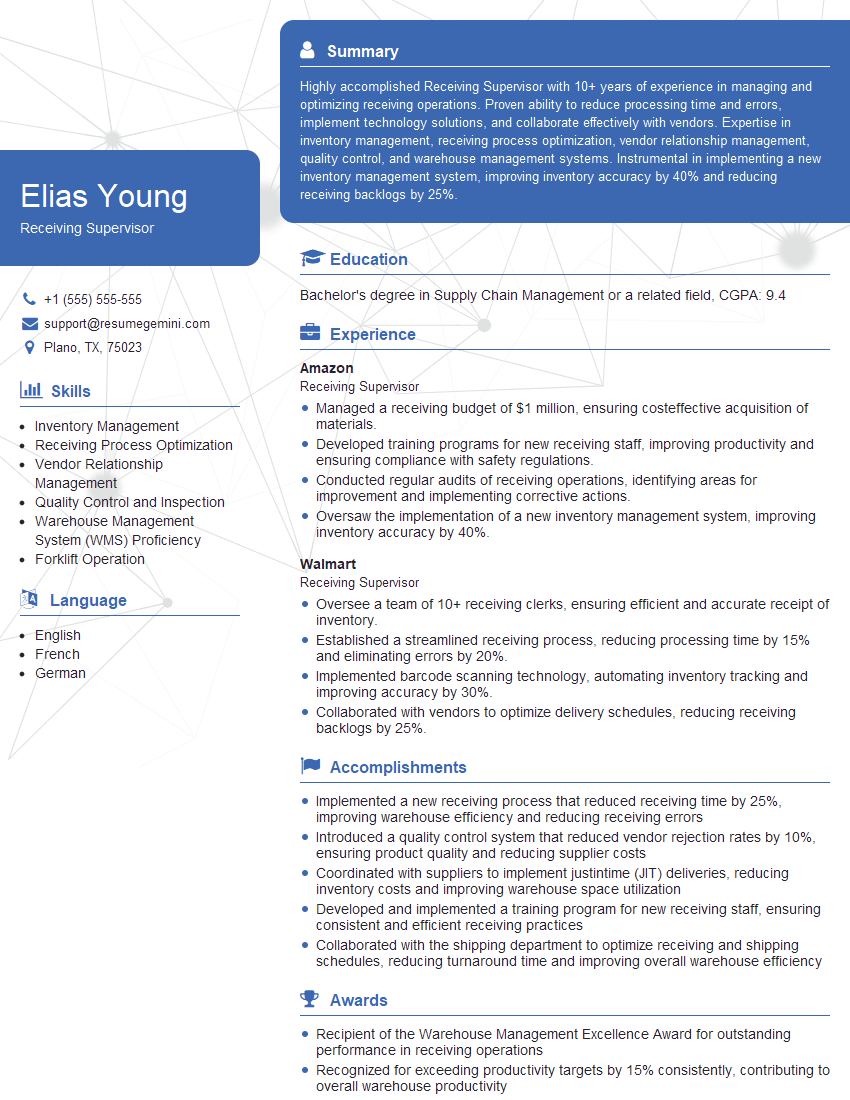
Receiving Supervisor Resume Sample

Shipping and Receiving Clerk Resume Sample
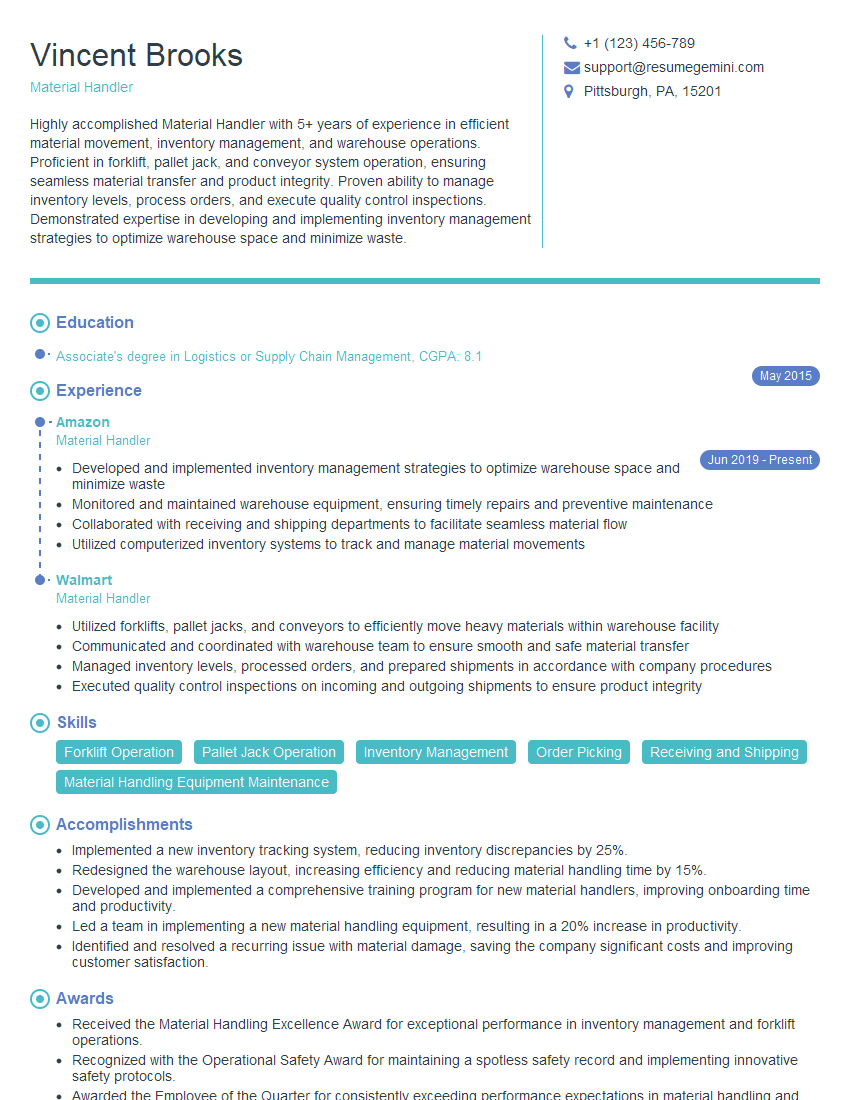
Material Handler Resume Sample
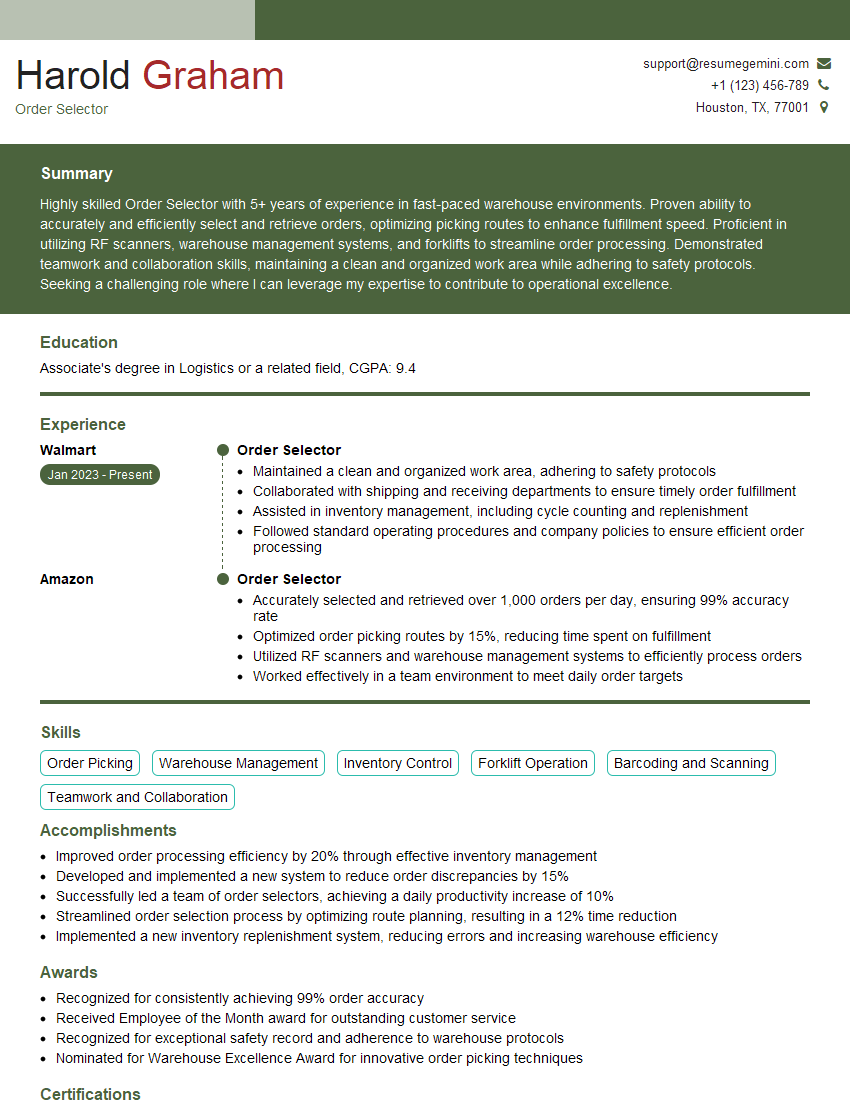
Order Selector Resume Sample
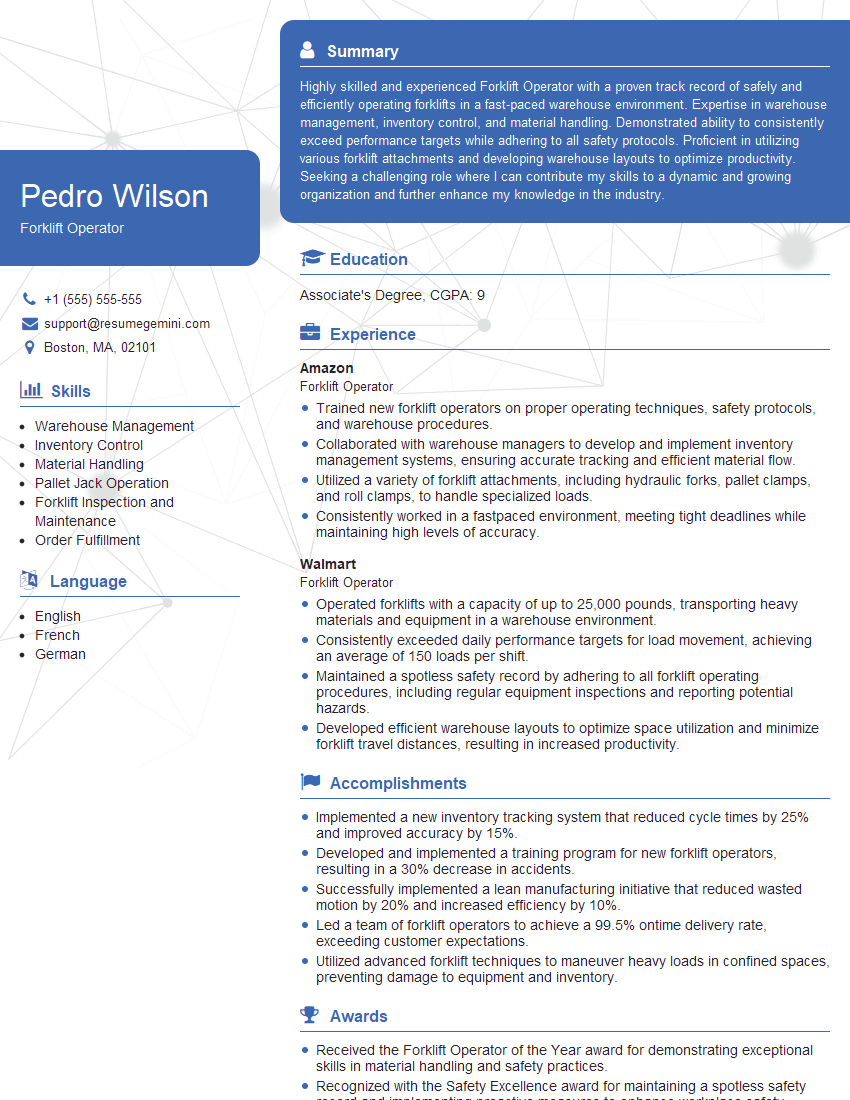
Forklift Operator Resume Sample
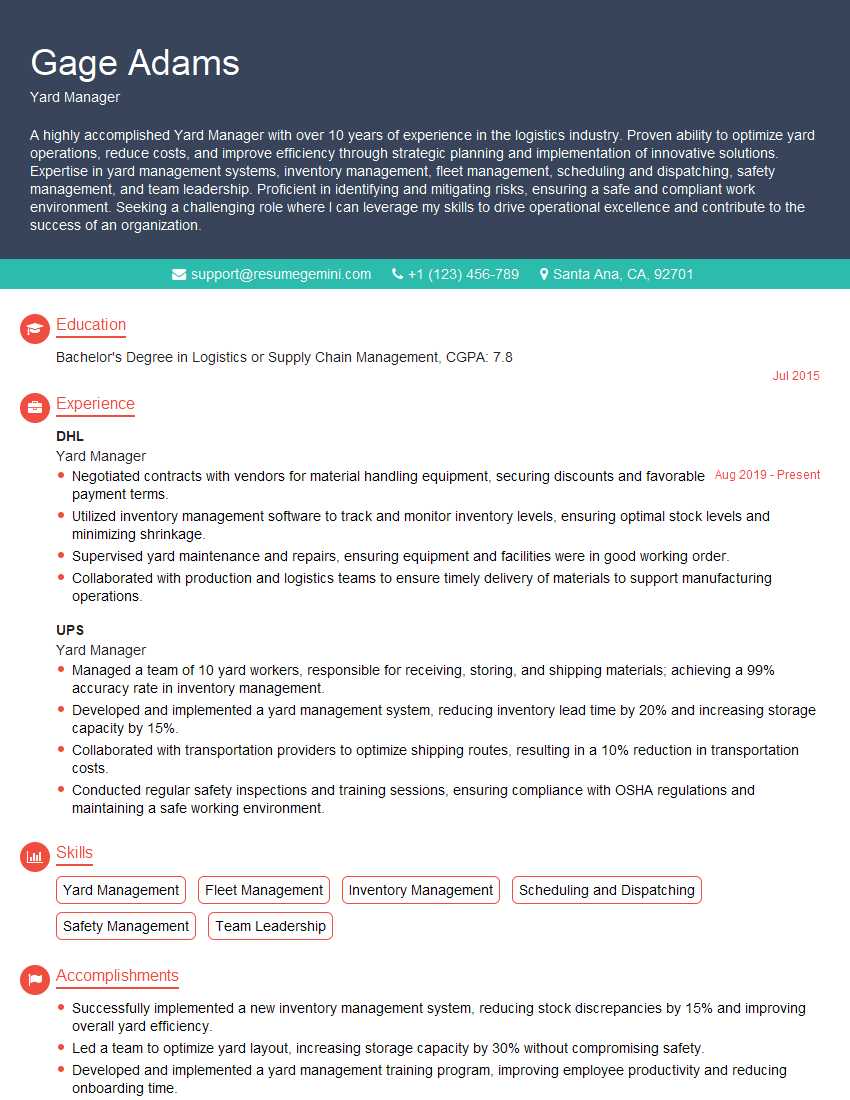
Yard Manager Resume Sample
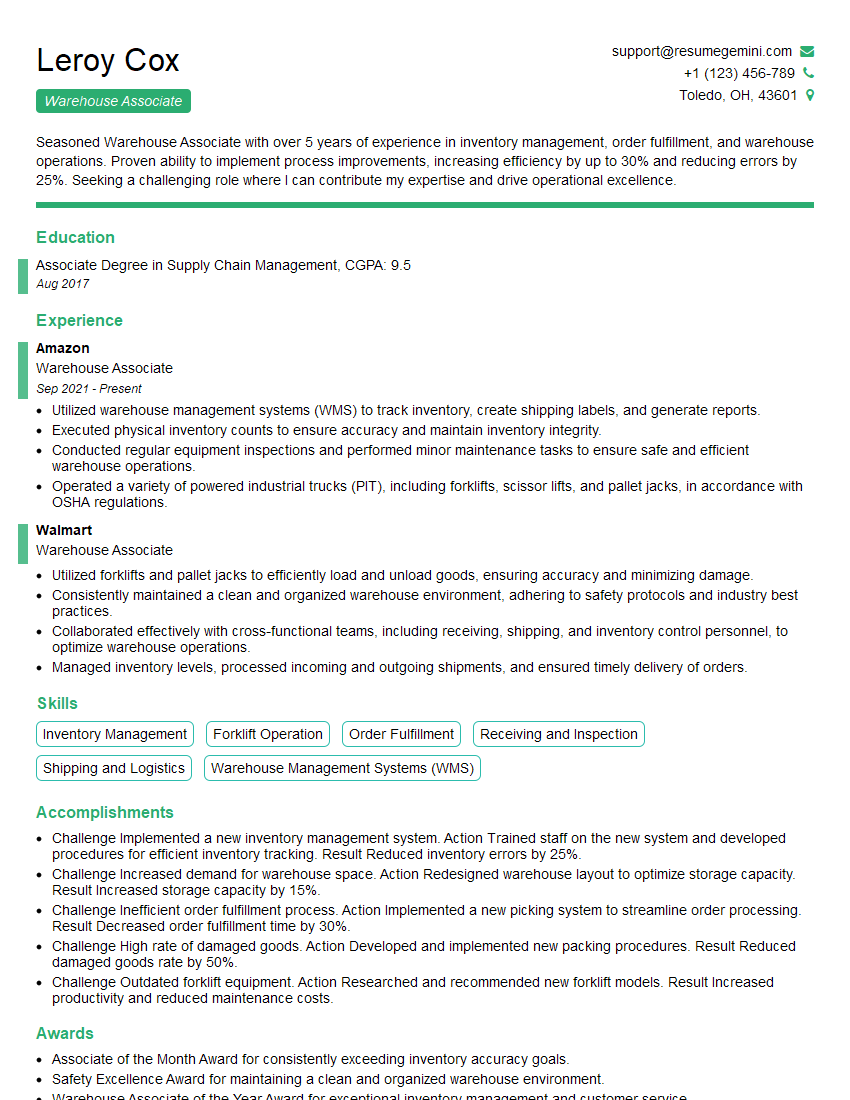
Warehouse Associate Resume Sample
- Operations Manager
- Distribution Center Manager
- Logistics Manager
- Warehouse Manager
- Warehouse Operations Manager
- Shipping Supervisor
- Warehouse Supervisor
- Logistics Coordinator
- Inventory Analyst
- Logistics Specialist
- Inventory Manager
- Supply Chain Analyst
- Warehouse Clerk
- Inventory Control Specialist
- Order Fulfillment Specialist
- Receiving Supervisor
- Shipping and Receiving Clerk
- Material Handler
- Order Selector
- Forklift Operator
- Yard Manager
- Warehouse Associate
Explore more articles
Users Rating of Our Blogs
Share Your Experience
We value your feedback! Please rate our content and share your thoughts (optional).
What Readers Say About Our Blog
I Redesigned Spongebob Squarepants and his main characters of my artwork.
https://www.deviantart.com/reimaginesponge/art/Redesigned-Spongebob-characters-1223583608
IT gave me an insight and words to use and be able to think of examples
Hi, I’m Jay, we have a few potential clients that are interested in your services, thought you might be a good fit. I’d love to talk about the details, when do you have time to talk?
Best,
Jay
Founder | CEO