Preparation is the key to success in any interview. In this post, we’ll explore crucial Ability to Create and Implement Lesson Plans interview questions and equip you with strategies to craft impactful answers. Whether you’re a beginner or a pro, these tips will elevate your preparation.
Questions Asked in Ability to Create and Implement Lesson Plans Interview
Q 1. Describe your process for creating a lesson plan.
Creating a lesson plan is a systematic process that ensures effective teaching and learning. My approach involves several key stages: First, I clearly define the learning objectives, specifying what students should know and be able to do by the end of the lesson. This involves using measurable verbs like ‘identify,’ ‘analyze,’ or ‘evaluate.’ Next, I select appropriate content and materials aligned with those objectives, considering the students’ prior knowledge and the curriculum standards. I then design engaging learning activities, incorporating a variety of methods to cater to diverse learning styles. This could include lectures, discussions, group work, hands-on activities, or technology-based simulations. Crucially, I plan for assessment strategies throughout the lesson – formative assessments to check for understanding along the way and summative assessments to gauge overall learning at the end. Finally, I create a detailed timeline and allocate appropriate time for each activity, ensuring a smooth flow and efficient use of class time. I always review and refine the plan before implementation, anticipating potential challenges and adjusting as needed.
For example, if teaching about photosynthesis, my learning objectives might be: Students will be able to (1) define photosynthesis, (2) describe the process of photosynthesis, and (3) explain the importance of photosynthesis for life on Earth. My activities might include a short lecture, a hands-on experiment simulating photosynthesis, and a group discussion comparing different types of plants.
Q 2. How do you adapt lesson plans to meet diverse learning styles?
Adapting lesson plans for diverse learning styles is crucial for inclusive education. I use a variety of strategies to ensure all students can access and engage with the material. This begins with understanding different learning preferences – visual, auditory, kinesthetic, and reading/writing. For visual learners, I incorporate diagrams, charts, videos, and multimedia presentations. Auditory learners benefit from discussions, lectures, and audio recordings. Kinesthetic learners require hands-on activities, experiments, role-playing, and movement-based learning. For reading/writing learners, I use worksheets, essays, and research projects. I also differentiate instruction by providing various levels of support and challenge. This might involve offering tiered assignments, providing different levels of scaffolding, or using flexible grouping strategies. For instance, I might create different versions of a worksheet – one with more support and simpler questions, another with more challenging, open-ended questions.
Q 3. What strategies do you use to assess student learning?
Assessing student learning is an ongoing process, not just a one-time event. I utilize a variety of formative and summative assessment strategies. Formative assessments, which occur throughout the lesson, help me gauge student understanding and adjust my instruction accordingly. These might include quick checks for understanding (exit tickets), think-pair-share activities, informal observations, or quizzes. Summative assessments evaluate overall learning at the end of a lesson or unit. These could be formal tests, projects, presentations, or essays. It’s important to use a variety of assessment methods to get a comprehensive picture of student learning. For example, a student might struggle on a written test but excel in a presentation. By combining different assessment types, I can get a more accurate and nuanced view of their understanding. I also provide clear feedback to students on their assessments, focusing on both their strengths and areas for improvement. This feedback is vital for helping students learn and grow.
Q 4. Explain your approach to differentiating instruction.
Differentiating instruction involves tailoring teaching methods and materials to meet the individual needs of each student. This requires understanding students’ strengths, weaknesses, learning styles, and readiness levels. I differentiate instruction in several ways: I provide choices in assignments, allowing students to select tasks that align with their interests and learning styles. I offer varying levels of support and challenge, using scaffolding to help struggling learners and providing extensions for advanced students. I use flexible grouping strategies, sometimes grouping students by ability, sometimes by interest, and sometimes in heterogeneous groups to foster collaboration and peer learning. For instance, when teaching a complex topic, I might provide a simplified version of the text for some students, while providing advanced readings or extension activities for others. I also regularly monitor student progress and adjust my instruction based on their needs, employing ongoing formative assessment to inform my decisions.
Q 5. How do you incorporate technology into your lesson plans?
Technology plays a significant role in enhancing my lesson plans. I use interactive whiteboards to create engaging presentations and facilitate collaborative learning. Educational software and apps can provide interactive simulations, games, and virtual field trips. Online platforms allow for collaborative projects, peer feedback, and easy access to information. For example, I might use a virtual lab simulation to allow students to conduct experiments without the need for physical materials. Or I might use a collaborative online document to allow students to work together on a writing assignment. However, I always carefully consider the appropriateness of technology and ensure it enhances, rather than distracts from, the learning experience. Furthermore, I teach students the responsible and ethical use of technology in learning and research.
Q 6. How do you ensure your lesson plans align with learning objectives?
Alignment of lesson plans with learning objectives is paramount. I ensure this alignment by starting with clear, measurable learning objectives that specify exactly what students should know and be able to do by the end of the lesson. Every activity, assessment, and material included in the lesson plan should directly contribute to achieving these objectives. I use a backward design approach, starting with the desired learning outcomes and then working backward to plan the activities and assessments that will help students reach those outcomes. Regularly reviewing the lesson plan and ensuring that each element directly supports the learning objectives is crucial for maintaining this alignment and ensuring effective teaching. This involves critically evaluating the activities, questioning whether they effectively contribute to the attainment of the objectives, and modifying the plan as needed.
Q 7. Describe a time you had to revise a lesson plan mid-implementation. What was the reason and how did you handle it?
During a lesson on fractions, I noticed students struggled to grasp the concept of equivalent fractions. My initial plan focused heavily on abstract explanations and visual representations, but the students were not grasping the practical application. Mid-lesson, I recognized the need for revision. I decided to incorporate a hands-on activity using fraction bars and real-world examples. I immediately adapted the plan, setting aside the planned worksheet and replacing it with the hands-on activity. This involved quickly creating simple fraction bars from construction paper and guiding students through comparing and manipulating the bars to visually demonstrate equivalent fractions. This adjustment greatly improved student engagement and understanding, and the subsequent quiz scores reflected the success of the revised plan. The lesson illustrated the importance of flexibility and responsiveness in teaching. Even the most well-planned lesson can benefit from mid-course adjustments based on student understanding.
Q 8. How do you manage classroom behavior and maintain student engagement?
Managing classroom behavior and maintaining student engagement are intertwined. My approach is proactive, focusing on creating a positive and respectful learning environment from day one. This starts with clearly established classroom rules and expectations, co-created with students whenever possible, fostering a sense of ownership.
- Positive Reinforcement: I frequently use positive reinforcement, praising effort and achievement, both individually and as a class. A simple ‘well done’ or acknowledging a student’s helpful contribution can go a long way.
- Non-Verbal Cues: I utilize non-verbal cues like proximity control (moving closer to a disruptive student) or eye contact to redirect behavior subtly. This avoids interrupting the flow of the lesson.
- Relationship Building: Building strong relationships with students is crucial. I make an effort to learn about their interests and connect with them on a personal level, creating a supportive classroom atmosphere.
- Differentiated Instruction: Addressing diverse learning styles and needs through differentiated instruction keeps students engaged and prevents boredom, a major cause of disruptive behavior. This could involve offering varied activities, flexible grouping, or choice boards.
- Clear Consequences: While I emphasize positive reinforcement, a clear system of consequences for disruptive behavior is essential and consistently applied. This is communicated upfront to avoid ambiguity.
For example, in one class, I noticed a student consistently interrupting. Instead of immediate reprimand, I approached them individually, understanding their need for attention. We worked together to find ways for them to contribute positively to class discussions, leading to improved behavior and engagement.
Q 9. What methods do you use to provide feedback to students?
Providing effective feedback is key to student learning. My approach is multifaceted and focuses on both the process and the product. It’s not just about grades, but about guiding students towards improvement.
- Specific and Actionable Feedback: I avoid vague comments like ‘good job.’ Instead, I offer specific feedback related to the learning objectives, highlighting strengths and suggesting areas for improvement with concrete steps for improvement. For instance, instead of saying ‘Your essay is good,’ I might say, ‘Your introduction is strong, but consider adding a more compelling hook to grab the reader’s attention.’
- Multiple Methods: I use various methods to provide feedback, including written comments on assignments, verbal feedback during class discussions, and peer feedback activities. This caters to different learning preferences.
- Self and Peer Assessment: I incorporate self and peer assessment activities to encourage students to reflect on their work and provide feedback to one another. This promotes metacognition and collaborative learning.
- Timely Feedback: Providing feedback promptly is vital. Students are more receptive when they can apply the feedback directly to their learning.
- Focus on Effort and Growth: I emphasize effort and improvement, promoting a growth mindset. Even if a student doesn’t achieve a perfect score, I focus on their progress and encourage continued effort.
For example, after a science experiment, I provided written feedback on each student’s lab report, highlighting correct data analysis while suggesting improvements to their methodology and conclusion.
Q 10. How do you incorporate formative and summative assessments into your lesson plans?
Formative and summative assessments are both crucial for effective teaching. Formative assessments are ongoing checks for understanding, while summative assessments provide a final evaluation of learning.
- Formative Assessment Examples: I integrate formative assessments throughout my lessons using methods like exit tickets (brief questions at the end of a lesson), quick quizzes, think-pair-share activities, and informal observation of student work during class. This allows me to adjust my teaching in real-time based on student understanding.
- Summative Assessment Examples: Summative assessments provide a comprehensive overview of student learning at the end of a unit or course. These might include tests, projects, presentations, or essays. They are used to gauge overall achievement of learning objectives.
- Alignment: Both formative and summative assessments are aligned with the learning objectives outlined in my lesson plans, ensuring they accurately reflect student progress towards the intended learning outcomes.
For instance, after teaching a unit on fractions, I used an exit ticket to assess understanding of basic concepts. Then, a summative assessment in the form of a project allowed students to apply their knowledge to real-world problem-solving.
Q 11. What resources do you utilize to create engaging and effective lesson plans?
Creating engaging and effective lesson plans requires leveraging a variety of resources.
- Curriculum Standards: I always begin by aligning my lesson plans with relevant curriculum standards and learning objectives to ensure they are relevant and rigorous.
- Educational Websites and Databases: I utilize websites like Common Core State Standards, educational journals, and professional development resources to access up-to-date research and teaching strategies.
- Textbooks and Supplementary Materials: Textbooks serve as a foundation, but I supplement them with articles, videos, interactive simulations, and real-world case studies to make learning more engaging.
- Technology: I incorporate technology effectively, using interactive whiteboards, educational software, and online learning platforms to enhance student engagement and provide diverse learning experiences.
- Student Input: I value student input when designing lessons, considering their interests and learning preferences to create more relevant and motivating learning experiences.
For example, when teaching about the American Revolution, I used primary source documents, video clips of historical reenactments, and a class debate to foster deeper understanding and engagement.
Q 12. How do you stay current with best practices in education and training?
Staying current with best practices in education is an ongoing commitment. I actively engage in professional development activities to enhance my teaching skills and knowledge.
- Professional Development Workshops and Conferences: I attend workshops and conferences focusing on areas like differentiated instruction, assessment strategies, and technology integration. These provide valuable insights and networking opportunities.
- Educational Journals and Publications: I regularly read educational journals and research articles to stay updated on current research and best practices in teaching.
- Online Courses and Webinars: I participate in online professional development courses and webinars, offering convenient and flexible learning options.
- Mentorship and Collaboration: I engage in mentorship and collaborative activities with colleagues, sharing best practices and learning from each other’s experiences.
- Reflection and Self-Assessment: I regularly reflect on my teaching practices, identifying areas for improvement and adapting my strategies accordingly.
For instance, recently I completed a course on incorporating Universal Design for Learning (UDL) principles into my lesson plans, resulting in improved accessibility for all learners.
Q 13. Describe your experience using different instructional methods (e.g., lecture, discussion, project-based learning).
I am proficient in a variety of instructional methods, adapting my approach based on the learning objectives, student needs, and subject matter.
- Lectures: Lectures are used strategically to introduce key concepts and provide background information, but they are always supplemented with interactive activities to maintain student engagement.
- Discussions: I regularly facilitate class discussions, encouraging student participation and critical thinking. Discussions can be structured or more open-ended, depending on the learning objective.
- Project-Based Learning (PBL): I frequently use PBL, where students engage in in-depth investigation of a real-world problem or challenge. This approach promotes collaboration, problem-solving, and deeper understanding.
- Cooperative Learning: Cooperative learning activities, such as group work and peer teaching, encourage collaboration and peer learning.
- Inquiry-Based Learning: I utilize inquiry-based learning, where students actively explore questions and develop their own understanding through investigation.
For example, when teaching about ecosystems, I used a project-based approach where students designed and built a miniature ecosystem, researching the necessary components and presenting their findings to the class.
Q 14. How do you measure the effectiveness of your lesson plans?
Measuring the effectiveness of lesson plans is crucial for continuous improvement. My approach involves a combination of qualitative and quantitative methods.
- Student Performance on Assessments: Analyzing student performance on formative and summative assessments is a key indicator of lesson effectiveness. This includes looking at overall scores, identifying common areas of difficulty, and understanding individual student progress.
- Student Feedback: Gathering student feedback through surveys, class discussions, or individual interviews provides valuable insights into their learning experience and identifies areas for improvement.
- Observation and Reflection: Regularly observing student engagement during lessons and reflecting on my teaching practices allows me to identify areas where I can improve instruction.
- Data Analysis: Using data from assessments and feedback, I analyze trends and patterns to inform future lesson planning.
- Peer Observation and Feedback: Seeking feedback from colleagues through peer observations allows for external perspectives on teaching effectiveness.
For example, after teaching a unit on algebra, I analyzed student test scores and noticed many struggled with solving equations. This highlighted the need for more focused practice and differentiated instruction in future lessons.
Q 15. How do you incorporate real-world examples and applications into your lesson plans?
Incorporating real-world examples and applications is crucial for making learning relevant and engaging. I believe that abstract concepts become much clearer when students can connect them to their own experiences or to situations they encounter in everyday life. I achieve this in several ways:
- Connecting to Current Events: For example, when teaching about economics, I might discuss recent news stories about inflation or the stock market, showing how the concepts we’re learning directly impact the world around them.
- Using Case Studies: I frequently use case studies—real-life scenarios where students analyze a problem and apply the concepts we’ve learned to find a solution. This is particularly effective in subjects like science, history, and business.
- Field Trips and Guest Speakers: Whenever possible, I incorporate field trips to relevant locations or invite guest speakers who can share their professional experiences, providing first-hand accounts of how the material is applied in the real world.
- Project-Based Learning: I design projects that require students to apply their knowledge to solve a real-world problem, such as designing a marketing campaign for a hypothetical product or creating a sustainable solution to an environmental issue.
By consistently connecting learning to real-world applications, I foster a deeper understanding and a stronger appreciation for the value of education.
Career Expert Tips:
- Ace those interviews! Prepare effectively by reviewing the Top 50 Most Common Interview Questions on ResumeGemini.
- Navigate your job search with confidence! Explore a wide range of Career Tips on ResumeGemini. Learn about common challenges and recommendations to overcome them.
- Craft the perfect resume! Master the Art of Resume Writing with ResumeGemini’s guide. Showcase your unique qualifications and achievements effectively.
- Don’t miss out on holiday savings! Build your dream resume with ResumeGemini’s ATS optimized templates.
Q 16. Describe your experience with curriculum mapping.
Curriculum mapping is a cornerstone of effective teaching. It ensures that all learning objectives are clearly defined, sequenced logically, and assessed effectively across all grade levels or subject areas. My experience involves:
- Developing Scope and Sequence Documents: I’m proficient in creating detailed scope and sequence documents that outline the specific topics, concepts, and skills to be covered throughout the year, ensuring a coherent and progressive learning journey.
- Analyzing Curriculum Standards: I thoroughly analyze state or national curriculum standards to ensure that my lesson plans fully align with the expected learning outcomes.
- Backward Design: I utilize backward design, starting with the desired learning outcomes and then working backward to create assessment tasks and learning activities that directly address those outcomes.
- Collaboration with Colleagues: I actively collaborate with colleagues to ensure vertical and horizontal alignment across grade levels and subjects, avoiding redundancy and creating a seamless educational experience.
Through meticulous curriculum mapping, I create a structured and purposeful learning environment where students can confidently progress towards mastery.
Q 17. What is your experience with creating assessments aligned with learning objectives?
Assessment is not merely about testing; it’s about providing valuable feedback and measuring the effectiveness of instruction. I firmly believe that assessments should be aligned directly with the learning objectives. My approach involves:
- Varied Assessment Methods: I use a variety of assessment methods, including formative assessments (like quizzes, exit tickets, and class discussions) and summative assessments (like tests, projects, and presentations) to get a comprehensive understanding of student learning.
- Authentic Assessment Tasks: I often incorporate authentic assessment tasks that mirror real-world applications of the concepts being learned. For example, students might create a presentation, solve a case study, or design a solution to a problem.
- Clear Rubrics and Criteria: I provide students with clear rubrics and criteria that explain how their work will be evaluated, ensuring transparency and promoting student self-assessment.
- Data-Driven Instruction: I analyze assessment data to identify areas where students are struggling and adjust my instruction accordingly. This iterative approach ensures that all students are able to reach their learning goals.
By employing a variety of assessment methods and using data to inform instruction, I ensure that my teaching is both effective and responsive to the individual needs of my students.
Q 18. How do you collaborate with other educators or stakeholders in the development of lesson plans?
Collaboration is essential for creating effective lesson plans. I actively seek input from various stakeholders, including:
- Other Teachers: I regularly collaborate with colleagues, sharing best practices, lesson ideas, and resources. This peer-to-peer support is invaluable for improving the quality of my teaching.
- Special Education Teachers: I work closely with special education teachers to ensure that my lessons are accessible and meet the needs of students with IEPs or 504 plans.
- Administrators: I communicate with administrators to ensure alignment with school-wide goals and initiatives.
- Parents: I maintain open communication with parents to keep them informed about their child’s progress and to solicit their input on how to better support their learning.
By engaging in open and collaborative planning, I ensure that my lesson plans meet the diverse needs of all students and are aligned with the school’s overall goals.
Q 19. How do you address the needs of students with diverse learning needs (e.g., IEPs, 504 plans)?
Addressing the diverse learning needs of students is paramount. My experience in accommodating students with IEPs and 504 plans involves:
- Individualized Instruction: I differentiate instruction to meet the unique needs of each student. This might involve providing modified assignments, extra support, or different learning materials.
- Collaboration with Support Staff: I work closely with special education teachers, counselors, and other support staff to create and implement effective interventions.
- Utilizing Assistive Technology: I’m familiar with various assistive technologies and incorporate them into my lessons when appropriate to support students with specific learning disabilities.
- Flexible Learning Environments: I create a flexible learning environment that caters to different learning styles and preferences, ensuring that all students feel supported and challenged.
- Frequent Check-ins: I conduct regular check-ins with students with IEPs and 504 plans to monitor their progress and make any necessary adjustments to my instruction.
Providing individualized support ensures that all students have the opportunity to succeed, regardless of their learning differences.
Q 20. How do you ensure accessibility in your lesson plans?
Accessibility is crucial in lesson plan design. My approach encompasses:
- Multi-Modal Learning Materials: I provide learning materials in various formats—text, audio, visual, and interactive—to cater to different learning preferences and abilities.
- Clear and Concise Language: I use clear, concise language and avoid jargon whenever possible.
- Visual Aids and Graphic Organizers: I use visual aids and graphic organizers to support comprehension and provide alternative ways of accessing information.
- Accessible Technology: I ensure that any technology used in my lessons is accessible to students with disabilities. This includes using screen readers, alternative input devices, and captioning or transcription services.
- Universal Design for Learning (UDL) Principles: I apply the principles of Universal Design for Learning (UDL) to create lessons that are flexible and accessible to all students.
By considering accessibility from the outset, I create a learning environment that is inclusive and equitable for all.
Q 21. How do you maintain student motivation and engagement throughout a lesson?
Maintaining student motivation and engagement is a constant priority. My strategies include:
- Relatable Content: I connect the lesson content to students’ lives and interests, making it relevant and meaningful.
- Active Learning Strategies: I utilize active learning strategies like group work, discussions, hands-on activities, and games to keep students actively involved in the learning process.
- Variety of Instructional Methods: I incorporate a variety of instructional methods to cater to different learning styles and preferences. This might include lectures, demonstrations, discussions, and technology-based activities.
- Positive Reinforcement: I provide positive reinforcement and celebrate student successes to encourage participation and build confidence.
- Student Choice and Autonomy: Whenever possible, I give students some choice and autonomy in their learning, allowing them to personalize their educational experiences.
- Clear Expectations and Goals: I establish clear expectations and goals for each lesson, ensuring students understand what is expected of them and how their progress will be assessed.
By creating a supportive and engaging learning environment, I aim to foster a love of learning that extends beyond the classroom.
Q 22. Explain your process for evaluating the effectiveness of different teaching strategies.
Evaluating the effectiveness of teaching strategies is crucial for continuous improvement. My process involves a multi-faceted approach that combines formative and summative assessment methods. Formative assessment, which happens *during* the learning process, uses techniques like quick quizzes, observation of student engagement, and informal feedback sessions to gauge understanding and adjust my approach in real-time. For example, if I notice students struggling with a particular concept during a lecture, I might pause and provide further explanation or use a different example. Summative assessment, conducted *after* the learning unit, employs methods such as tests, projects, and essays. Analyzing student performance on these assessments provides quantitative data on learning outcomes. I also supplement this quantitative data with qualitative information. This might include student surveys focusing on clarity, engagement, and perceived learning gains, or even individual student interviews to get a better understanding of their learning journey. By combining these various methods, I gain a holistic view of the effectiveness of my strategies, allowing me to refine my teaching approaches for optimal student learning.
For instance, in a recent lesson on fractions, I initially used a purely lecture-based approach. Formative assessment—observing student confusion during practice problems—showed this wasn’t effective. I then implemented a hands-on activity using manipulatives, followed by peer teaching, and saw a significant improvement in student understanding as reflected in the summative assessment scores. This highlighted the value of adjusting my approach based on ongoing formative feedback.
Q 23. What is your experience with using learning management systems (LMS)?
I have extensive experience using Learning Management Systems (LMS), including Canvas, Blackboard, and Moodle. My proficiency extends beyond simply uploading documents; I’m adept at leveraging their full potential for creating engaging and interactive learning experiences. This includes designing online courses with structured modules, integrating multimedia resources (videos, audio, interactive simulations), utilizing assessment tools (quizzes, assignments, discussion forums), and tracking student progress. I’m comfortable utilizing the LMS for communication, providing announcements, and offering timely feedback to students. I’m also familiar with using the LMS’s gradebook functions for efficient record-keeping and reporting. Moreover, I’m experienced in customizing LMS settings to meet the specific needs of a course or a group of learners. For example, I’ve created different modules in Canvas tailored to students with varying learning styles and paces. My experience isn’t just limited to implementation; I can also assist in selecting the right LMS based on the organization’s needs and budget.
Q 24. How familiar are you with different instructional design models (e.g., ADDIE, SAM)?
I’m very familiar with various instructional design models, most notably ADDIE and SAM. The ADDIE model (Analysis, Design, Development, Implementation, Evaluation) provides a structured and systematic approach to creating instructional materials. I use this model to ensure a thorough needs analysis before designing, developing, and implementing the lesson. The SAM model (Successive Approximation Model) is useful for iterative development, particularly in situations where we might need to adapt the materials based on student feedback or emerging needs. I find the SAM model particularly helpful for online learning, where continuous iteration and improvement are necessary. I often use a blended approach combining elements of both, drawing upon the strengths of each model to design effective learning experiences. For instance, in a recent project, I started with the ADDIE model’s structured approach to map out a complex online course. However, as the development process progressed and based on student feedback during pilot testing (a SAM element), I iteratively refined specific modules, incorporating additional interactive elements to address identified gaps in understanding.
Q 25. Describe your experience with developing online or blended learning experiences.
I have significant experience in developing both online and blended learning experiences. I’ve designed and delivered fully online courses using various technologies, including video lectures, interactive simulations, virtual labs, and online discussion forums. My approach emphasizes creating a sense of community among online learners through active participation in discussions, peer-to-peer learning activities, and regular instructor feedback. In blended learning environments, I’ve successfully integrated online components like pre-class readings and online quizzes with in-person activities such as hands-on experiments and group projects. My aim is always to leverage the strengths of both online and offline learning to create a rich and engaging learning experience. For example, in a recent blended course on environmental science, we used online modules to introduce key concepts, followed by in-person field trips to local ecosystems, where students applied their knowledge and collected data for their final projects. This blending of online and offline activities enhanced the learning experience and promoted deeper understanding.
Q 26. How do you handle unexpected challenges or disruptions during a lesson?
Handling unexpected challenges or disruptions during a lesson requires flexibility and resourcefulness. My approach involves a combination of preemptive planning and adaptable strategies. Preemptively, I ensure that I have backup plans for technological failures, such as having printed materials readily available if technology malfunctions. I also build in flexibility into my lesson plans, allowing for adjustments based on student needs or unexpected questions. During the lesson, if a disruption occurs, I address it calmly and directly. For example, if a student is struggling with a concept, I offer individualized support or re-explain the concept using a different method. If technology malfunctions, I seamlessly transition to a backup plan, perhaps leading a discussion or engaging in a different type of activity. The key is to maintain a positive learning environment and redirect the focus back to the learning objectives. My experience in managing various classrooms and unexpected events has equipped me with the ability to remain calm under pressure and maintain student focus on learning objectives.
Q 27. What are your strategies for promoting critical thinking and problem-solving skills in your lessons?
Promoting critical thinking and problem-solving skills is a core aspect of my teaching philosophy. I employ various strategies to foster these skills in my lessons. One effective method is to incorporate open-ended questions that encourage students to analyze information, evaluate different perspectives, and synthesize their understanding. I also utilize case studies, simulations, and real-world problems to allow students to apply their knowledge in practical contexts. Furthermore, I encourage collaborative learning through group projects and discussions, where students can learn from each other, challenge assumptions, and collectively solve problems. Providing opportunities for debate and discussion further stimulates critical thinking. I also regularly incorporate feedback mechanisms such as peer review and self-reflection prompts to encourage students to evaluate their own thinking processes and identify areas for improvement. For example, in a history class, I used a historical simulation where students took on the roles of different historical figures and had to navigate a complex political situation. This activity fostered critical thinking by requiring them to analyze information, consider multiple perspectives, and make strategic decisions based on incomplete information.
Key Topics to Learn for Ability to Create and Implement Lesson Plans Interview
- Understanding Learning Objectives: Defining clear, measurable, achievable, relevant, and time-bound (SMART) learning objectives for each lesson. Practical application: Demonstrate how you translate broad curriculum goals into specific, student-centered objectives.
- Curriculum Alignment: Connecting lesson plans to broader curriculum standards and frameworks. Practical application: Explain how your lesson plans contribute to overall student learning and address specific learning gaps.
- Instructional Strategies & Methods: Selecting appropriate teaching methods (e.g., direct instruction, inquiry-based learning, collaborative projects) based on learning objectives and student needs. Practical application: Describe your experience using diverse teaching strategies and adapting them to different learning styles.
- Assessment & Evaluation: Designing formative and summative assessments to measure student understanding and progress. Practical application: Explain how you use various assessment methods (e.g., quizzes, projects, presentations) to gauge student learning and inform future instruction.
- Differentiation & Inclusion: Adapting lesson plans to meet the diverse needs of all learners, including students with disabilities and those from diverse backgrounds. Practical application: Describe strategies you employ to ensure all students have access to and succeed in your lessons.
- Lesson Plan Structure & Design: Creating well-organized and engaging lesson plans that include clear learning objectives, activities, materials, and assessment strategies. Practical application: Discuss your preferred lesson plan format and explain why it is effective.
- Classroom Management & Engagement: Strategies for creating a positive and productive learning environment. Practical application: Share examples of how you maintain classroom discipline and engage students actively in learning.
- Technology Integration: Incorporating technology effectively to enhance learning. Practical application: Describe your experience using technology in your lesson plans and explain its impact on student learning.
- Reflection & Improvement: Regularly reviewing and refining lesson plans based on student feedback and performance data. Practical application: Discuss your process for analyzing student work and adjusting your instruction accordingly.
Next Steps
Mastering the ability to create and implement effective lesson plans is crucial for career advancement in education. A strong understanding of these concepts will significantly enhance your interview performance and demonstrate your commitment to student success. To further strengthen your job application, focus on building an ATS-friendly resume that highlights your skills and experience. ResumeGemini is a trusted resource that can help you craft a professional and impactful resume. Examples of resumes tailored to showcasing expertise in creating and implementing lesson plans are available to help guide your resume creation process.
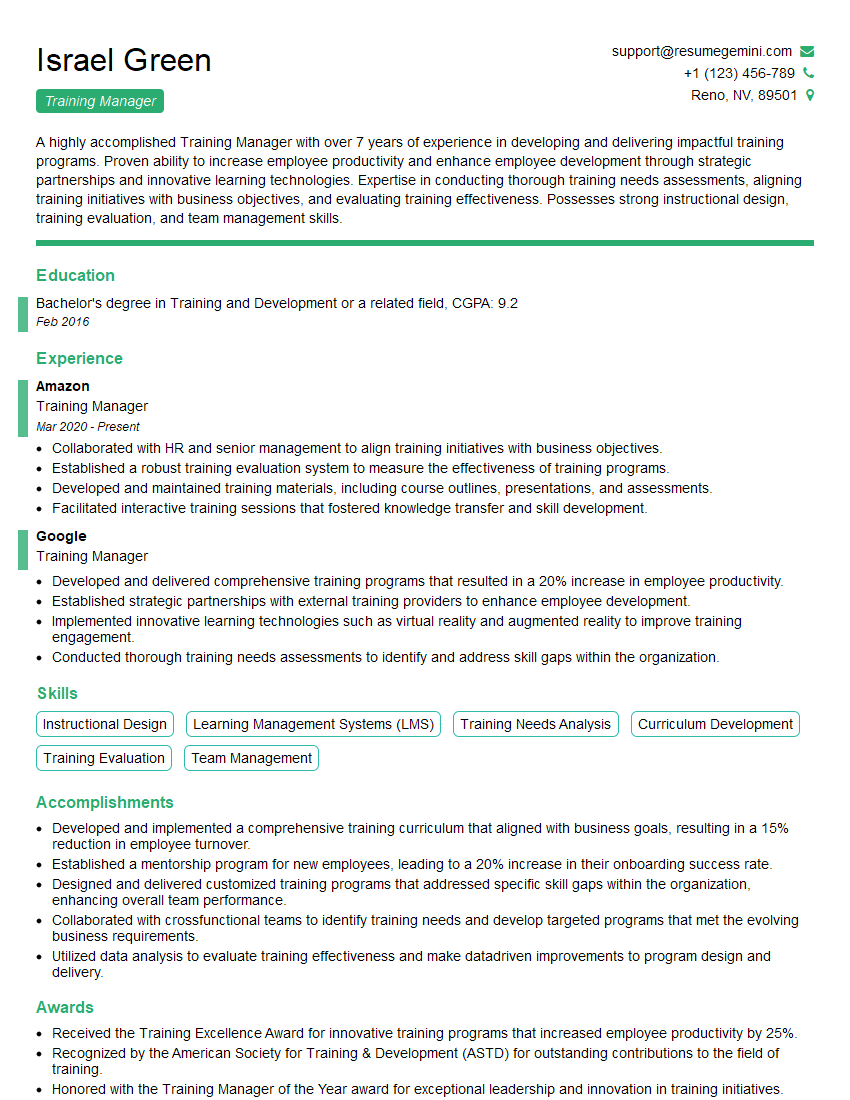
Training Manager Resume Sample
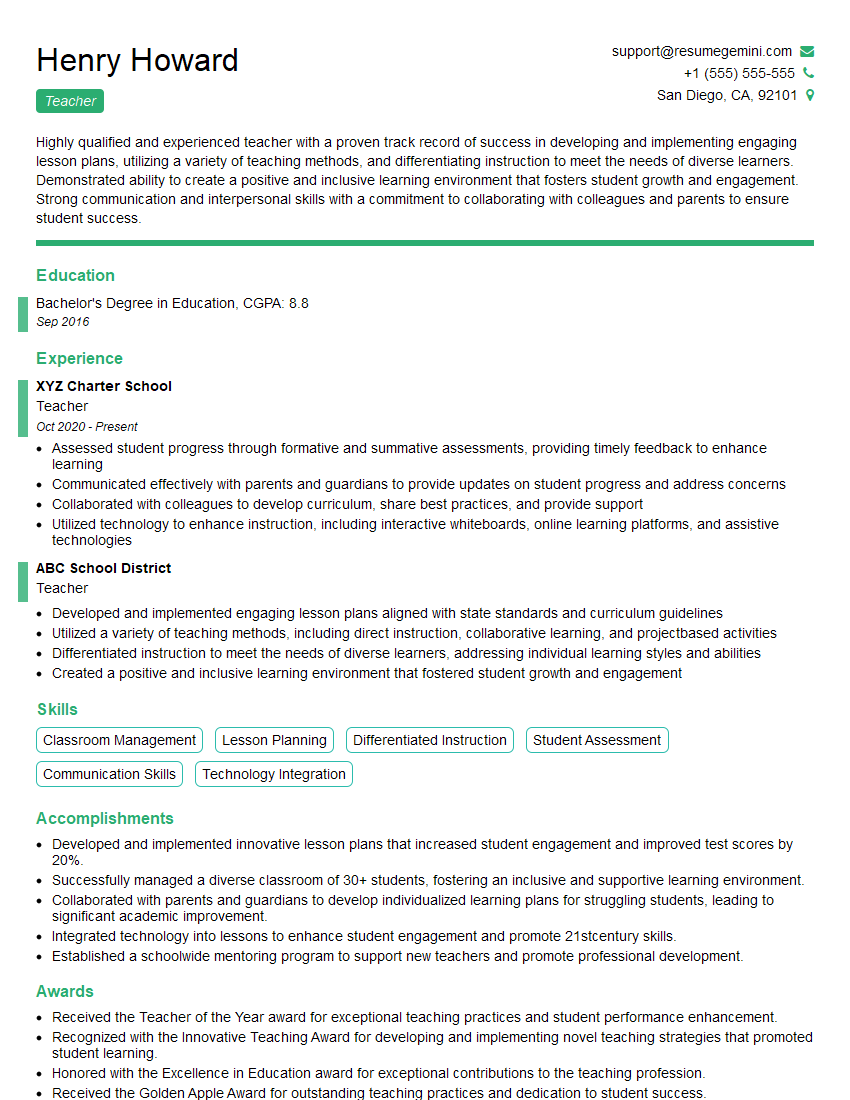
Teacher Resume Sample

Faculty Member Resume Sample

Instructor Resume Sample

Professor Resume Sample
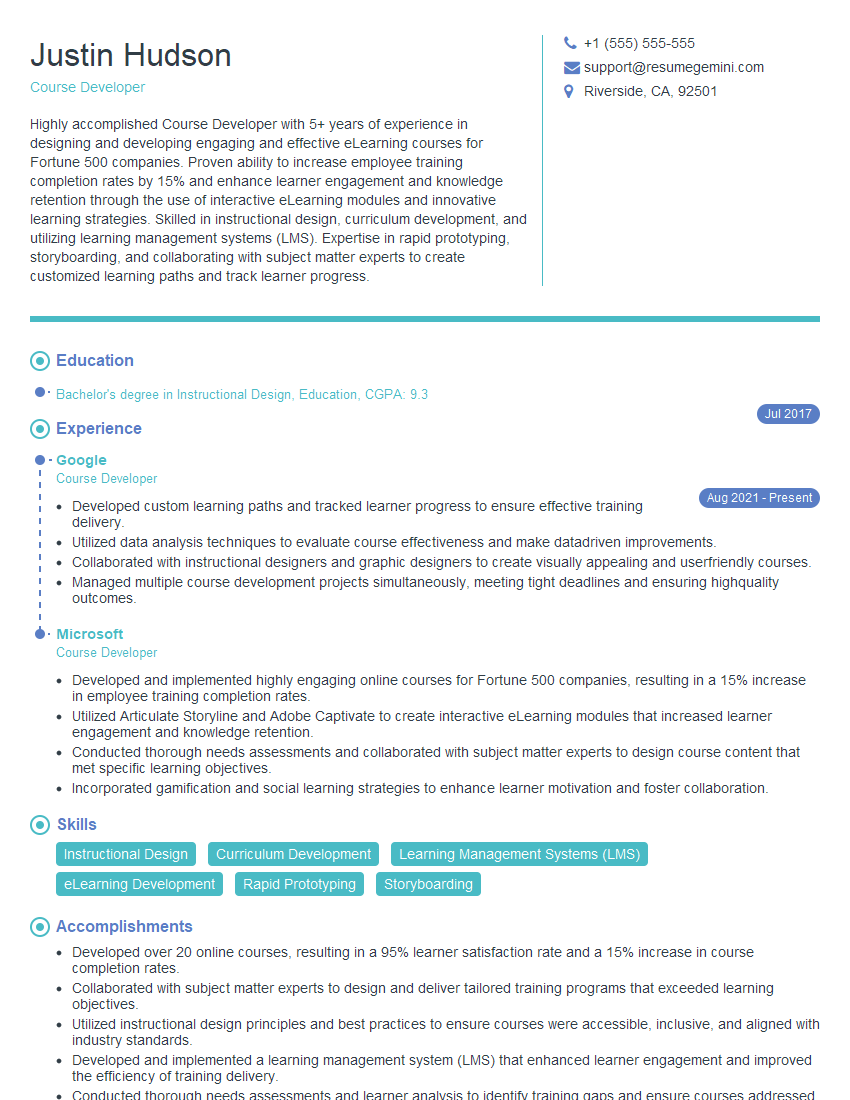
Course Developer Resume Sample

Curriculum Developer Resume Sample
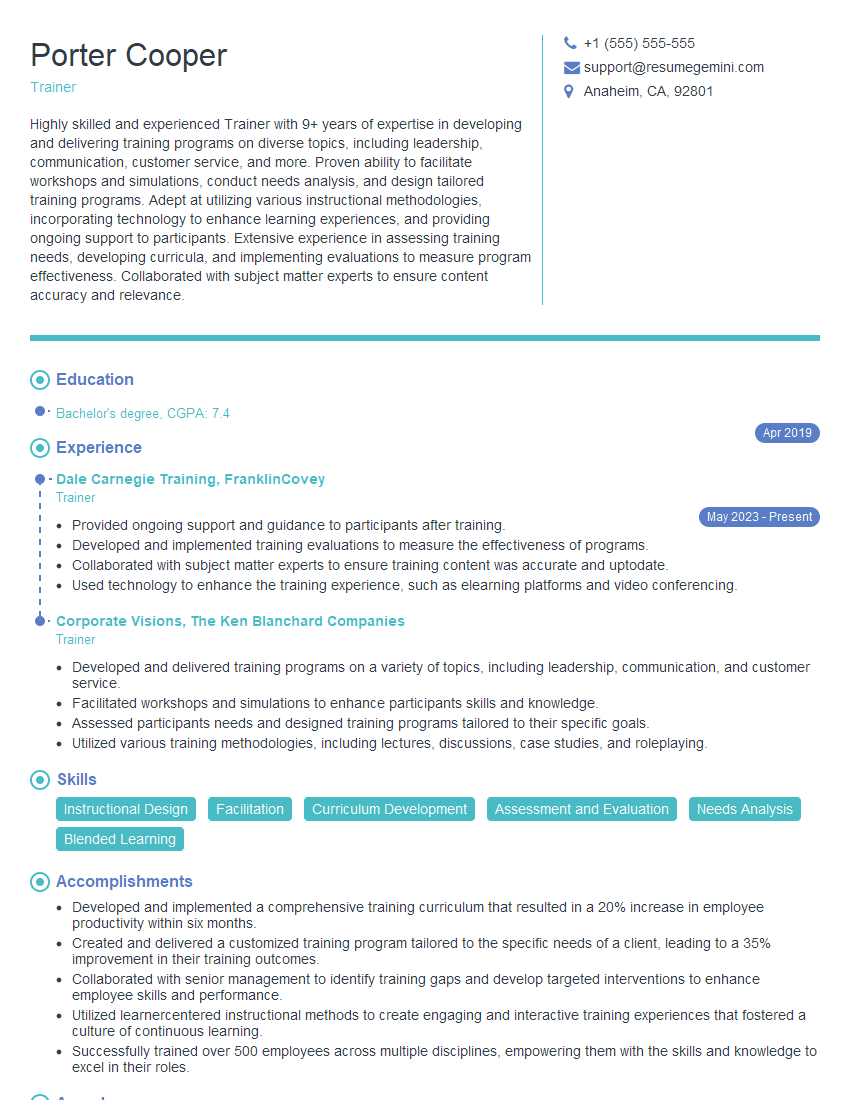
Trainer Resume Sample

Training Specialist Resume Sample
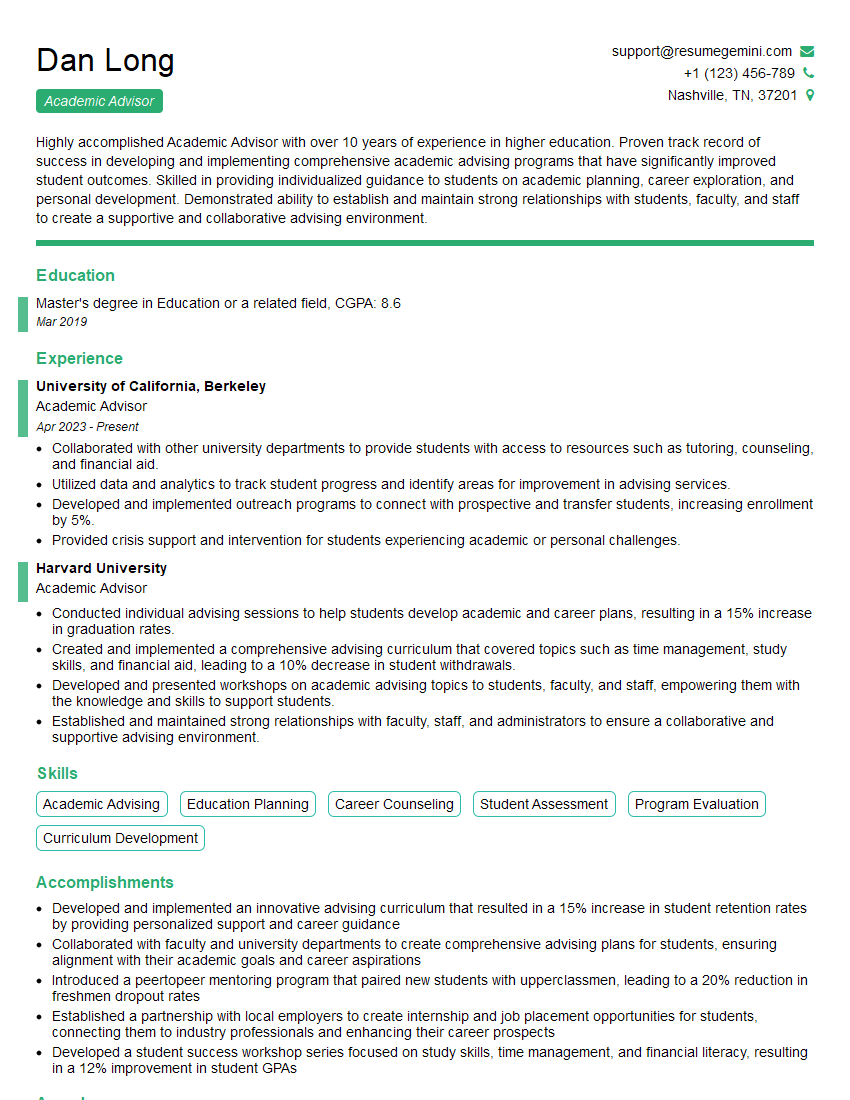
Academic Advisor Resume Sample

Tutor Resume Sample
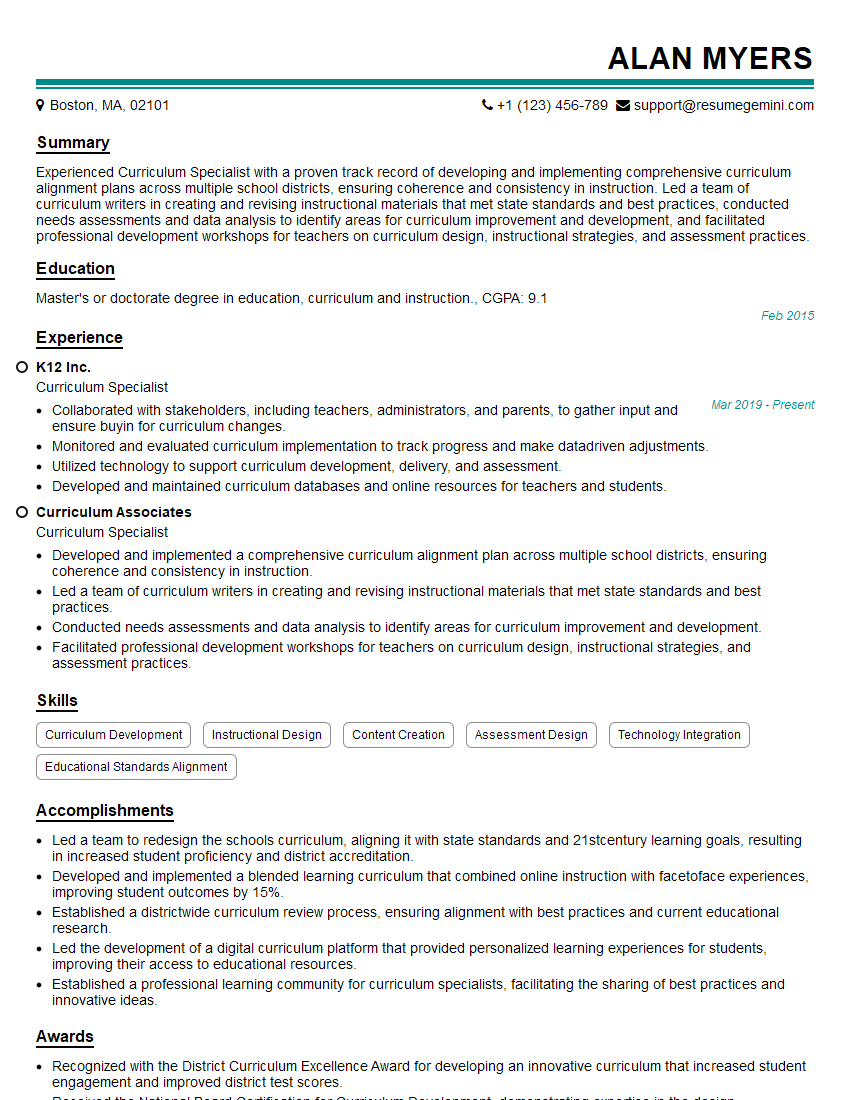
Curriculum Specialist Resume Sample
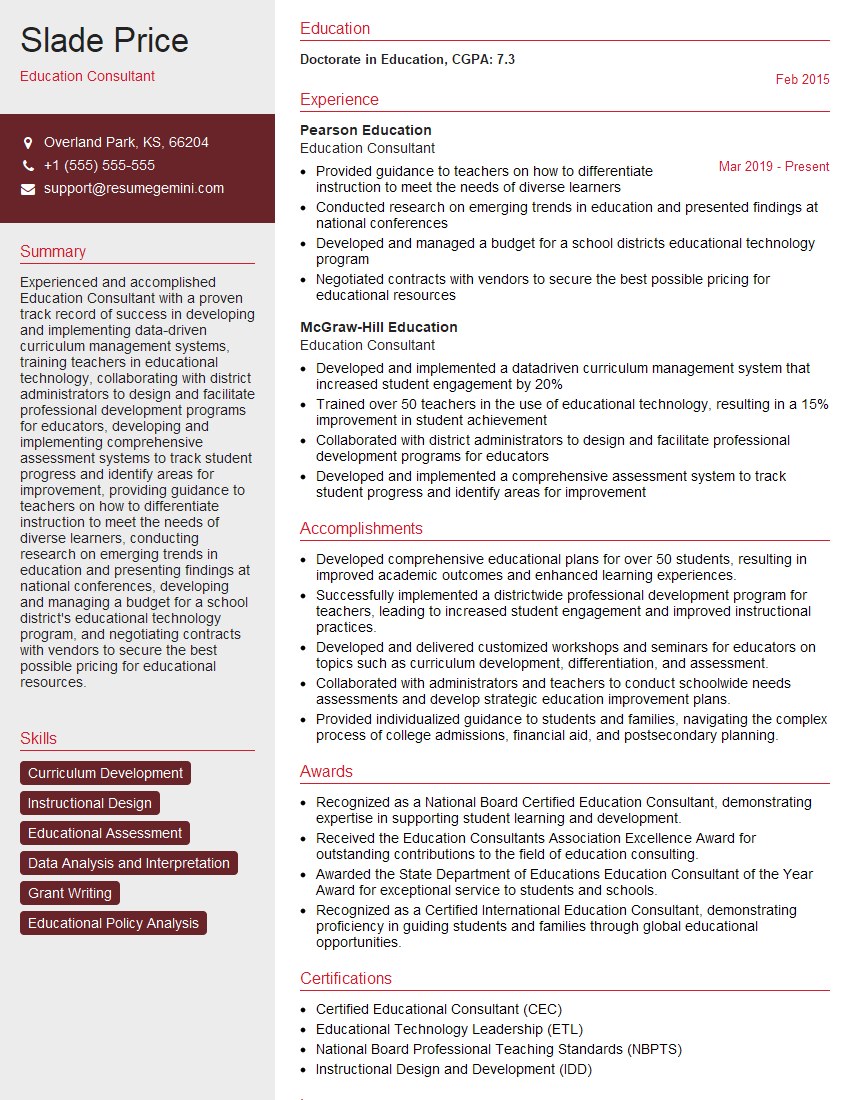
Education Consultant Resume Sample
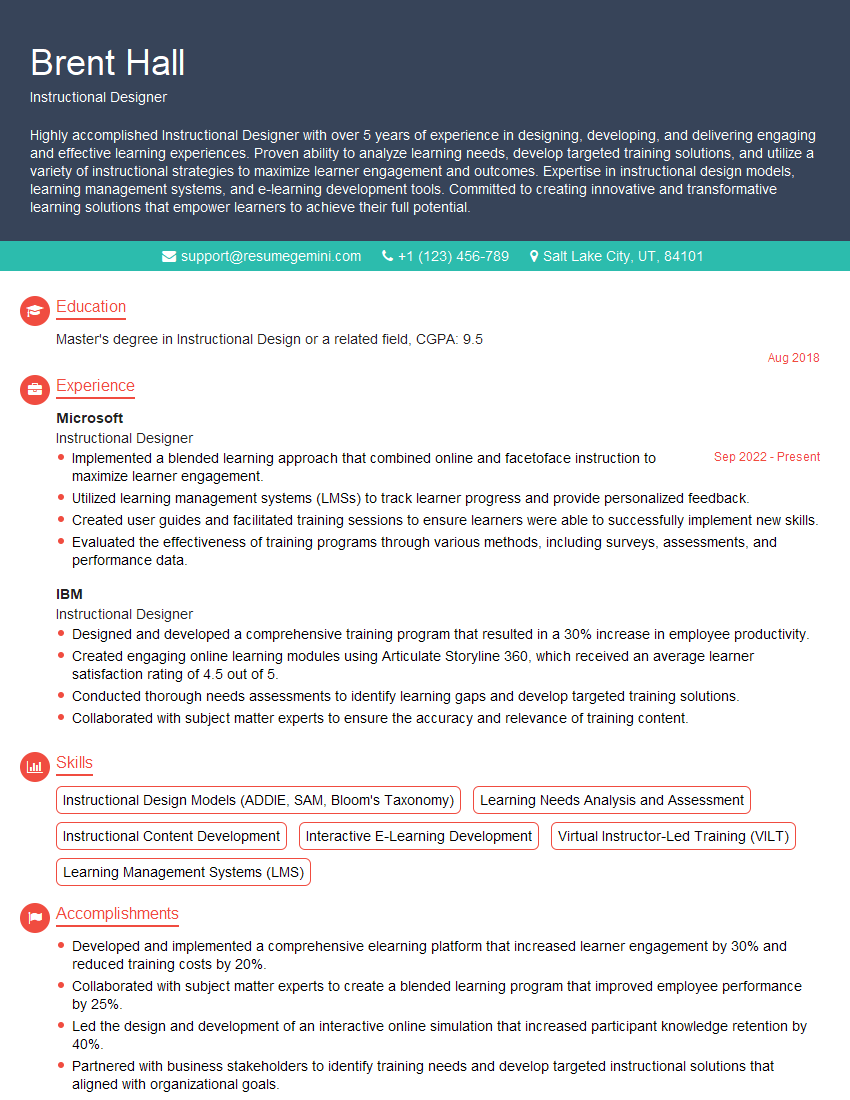
Instructional Designer Resume Sample

Educational Technologist Resume Sample
Explore more articles
Users Rating of Our Blogs
Share Your Experience
We value your feedback! Please rate our content and share your thoughts (optional).
What Readers Say About Our Blog
I Redesigned Spongebob Squarepants and his main characters of my artwork.
https://www.deviantart.com/reimaginesponge/art/Redesigned-Spongebob-characters-1223583608
IT gave me an insight and words to use and be able to think of examples
Hi, I’m Jay, we have a few potential clients that are interested in your services, thought you might be a good fit. I’d love to talk about the details, when do you have time to talk?
Best,
Jay
Founder | CEO