Cracking a skill-specific interview, like one for Project Phasing, requires understanding the nuances of the role. In this blog, we present the questions you’re most likely to encounter, along with insights into how to answer them effectively. Let’s ensure you’re ready to make a strong impression.
Questions Asked in Project Phasing Interview
Q 1. Define project phasing and its significance in project success.
Project phasing is the process of breaking down a large project into smaller, manageable phases. Think of it like building a house – you wouldn’t just start laying bricks; you’d first plan the foundation, then the framing, then the roof, and so on. Each phase has specific objectives, deliverables, and a timeline. Its significance in project success is paramount because it improves control, reduces risk, enhances communication, and allows for more effective resource allocation. By segmenting a project, we can identify potential problems early, adjust plans proactively, and celebrate smaller wins along the way, boosting team morale and overall project success.
Q 2. Explain the typical phases of a project lifecycle.
While the specific names and number of phases can vary depending on the project methodology (e.g., Agile, Waterfall), a typical project lifecycle encompasses these phases:
- Initiation: Defining the project’s scope, objectives, and feasibility. This involves creating a project charter and securing necessary approvals.
- Planning: Developing a detailed project plan, including tasks, timelines, resources, and budget. Risk assessment and mitigation strategies are crucial here.
- Execution: Implementing the project plan, carrying out tasks, and managing resources. Regular monitoring and progress tracking are vital.
- Monitoring and Controlling: Tracking progress against the plan, identifying deviations, and implementing corrective actions. This phase involves regular status meetings and progress reports.
- Closure: Finalizing the project, documenting lessons learned, and conducting a post-project review. This includes handing over the project deliverables and formally closing the project.
Some methodologies may further subdivide these phases, or combine certain aspects. For example, Agile projects emphasize iterative development and continuous feedback within shorter ‘sprints’ which could be considered sub-phases within the execution phase.
Q 3. How do you determine the optimal number of phases for a project?
Determining the optimal number of phases involves a balance. Too few phases can lead to a lack of control and increased risk, while too many can create excessive overhead and complexity. I consider several factors:
- Project Complexity: Highly complex projects might require more phases for better manageability.
- Project Size: Larger projects naturally necessitate a more granular breakdown into phases.
- Stakeholder Needs: Frequent reporting and feedback requirements might influence the number of phases.
- Resource Availability: The availability of resources can influence the length and number of phases.
- Risk Profile: Projects with higher risks might benefit from more phases to allow for frequent risk mitigation checkpoints.
I often use a combination of top-down and bottom-up approaches, starting with a high-level breakdown and then progressively refining it based on the factors mentioned above. The goal is to create phases that are meaningful, manageable, and provide clear milestones for tracking progress.
Q 4. What are the key deliverables and milestones for each project phase?
The key deliverables and milestones for each phase vary depending on the project, but here are some examples:
- Initiation: Project charter, feasibility study, stakeholder register.
- Planning: Detailed project plan, budget, risk register, communication plan.
- Execution: Completed tasks, progress reports, regular updates to stakeholders.
- Monitoring and Controlling: Variance reports, corrective action plans, risk response reports.
- Closure: Final project report, lessons learned document, project sign-off.
Milestones are key achievements that mark the completion of a significant phase or portion of a phase. For example, a milestone could be the successful completion of a design review, the release of a beta version of a software product, or the procurement of essential equipment. These milestones act as checkpoints to assess progress and ensure the project remains on track.
Q 5. Describe your experience in defining project phases and their associated tasks.
In my previous role at [Previous Company Name], I was responsible for leading the development of a new customer relationship management (CRM) system. We defined the project into five phases: Inception, Design, Development, Testing, and Deployment. For the Design phase, for example, I worked closely with the UI/UX team, business analysts, and developers to specify the system’s functionality and user interface, leading to the delivery of detailed design specifications as the key deliverable. In the Development phase, I managed a team of developers, ensuring they adhered to coding standards and met deadlines. The key deliverables were code modules and regular build releases. Throughout, I used agile methodologies, with short iterative cycles and frequent feedback loops, adapting the phasing and tasks as needed based on emerging information and stakeholder feedback. This approach ensured a highly effective and timely project completion.
Q 6. How do you manage dependencies between different project phases?
Managing dependencies between phases is crucial. I use a variety of techniques, including:
- Dependency Mapping: Creating a visual representation of the dependencies using tools like Gantt charts or network diagrams. This helps identify critical paths and potential bottlenecks.
- Sequencing: Carefully sequencing phases to minimize dependencies. For example, the design phase must be completed before the development phase can begin.
- Buffer Time: Incorporating buffer time into the schedule to account for potential delays in preceding phases. This mitigates the impact of dependencies.
- Communication & Collaboration: Establishing clear communication channels between teams working on different phases ensures everyone is aware of dependencies and potential challenges.
For example, in a construction project, the foundation phase needs to be completed before the framing can begin. Failing to manage this dependency could lead to significant delays and cost overruns.
Q 7. How do you handle scope creep across multiple project phases?
Scope creep, the uncontrolled expansion of project scope, is a major threat. My approach to managing it across multiple phases involves:
- Formal Change Management Process: Establishing a well-defined process for evaluating and approving any changes to the project scope. This involves documenting the change request, assessing its impact, and obtaining stakeholder approval.
- Regular Scope Reviews: Conducting regular reviews of the project scope at the end of each phase. This helps identify any deviations and address them proactively.
- Clear Communication and Documentation: Ensuring clear communication with all stakeholders about the agreed-upon scope and any changes. Maintaining meticulous documentation helps avoid misunderstandings.
- Early Detection and Mitigation: Actively monitoring for potential scope creep throughout the project. Addressing any issues promptly minimizes the impact.
A key aspect is proactive communication. Engaging stakeholders early and frequently helps prevent misunderstandings and keeps expectations aligned. Using a change control board for evaluating proposals for additional work is a best practice. It adds a layer of accountability and ensures that any changes are carefully considered and managed.
Q 8. How do you ensure effective communication and collaboration across phases?
Effective communication and collaboration are the cornerstones of successful project phasing. Think of a relay race: each team member (phase) needs to seamlessly pass the baton (project deliverables) to the next. To ensure this smooth transition, I employ a multi-pronged approach.
- Regular Meetings: Scheduled stand-up meetings, progress reviews, and phase handover meetings keep everyone informed and aligned. These meetings aren’t just for reporting; they’re for proactive problem-solving and collaborative decision-making.
- Centralized Communication Hub: A shared platform (e.g., project management software, shared drive) serves as a central repository for all documents, updates, and communication. This eliminates information silos and ensures transparency.
- Clearly Defined Roles and Responsibilities: Each team member and stakeholder understands their role in each phase, preventing overlap and confusion. A well-defined RACI matrix (Responsible, Accountable, Consulted, Informed) is crucial here.
- Open and Honest Communication Channels: I foster an environment where team members feel comfortable raising concerns and providing feedback. Regular feedback sessions are essential to address any communication breakdowns proactively.
For example, in a software development project, regular sprint reviews (Agile methodology) would be incorporated to ensure seamless transition between development sprints, each representing a phase in the larger project lifecycle.
Q 9. What are the common risks associated with project phasing, and how do you mitigate them?
Project phasing, while offering benefits like better control and risk management, introduces its own set of risks. These can be broadly categorized into scope creep, resource constraints, and communication failures.
- Scope Creep: Uncontrolled expansion of project scope across phases is a major threat. Mitigation involves rigorously defining the scope at the outset of each phase, using change management processes, and regularly reviewing the scope against the original plan.
- Resource Constraints: Inadequate resources (budget, personnel, time) can derail a project. Mitigation involves careful resource planning and allocation across phases, considering potential bottlenecks and dependencies, and building buffer time into the schedule.
- Communication Failures: Breakdown in communication between phases can lead to delays and rework. Mitigation includes the strategies discussed in the previous question—regular meetings, a central communication hub, and clearly defined roles.
- Dependency Issues: Delays in one phase can have cascading effects on subsequent phases. Mitigation involves careful identification and management of inter-phase dependencies, using techniques like critical path analysis and dependency mapping.
For instance, a construction project might face risks like weather delays affecting the timeline of foundation work (a phase), thus impacting subsequent phases like framing and roofing. Careful planning, contingency measures (e.g., backup plans for inclement weather), and transparent communication are crucial.
Q 10. Describe your process for planning and managing resources across different phases.
Resource planning and management across phases are critical for project success. I approach this strategically, using a combination of techniques.
- Resource Inventory: Begin by identifying all available resources—human resources, tools, equipment, budget—and their respective capabilities and limitations.
- Work Breakdown Structure (WBS): Decompose the project into smaller, manageable tasks within each phase. This provides a granular view of resource needs for each activity.
- Resource Allocation Matrix: Create a matrix that visually maps resources to tasks within each phase. This helps identify potential conflicts and resource over-allocation.
- Resource Leveling: Optimize resource allocation to minimize peaks and valleys in resource demand, ensuring a more stable and efficient workflow.
- Contingency Planning: Account for potential resource shortages or unavailability. Develop backup plans and alternative resource options.
Example: In a marketing campaign, resource allocation might involve assigning specific team members (writers, designers, social media managers) to different phases (content creation, design, social media rollout) while ensuring enough budget for advertising in each phase.
Q 11. How do you monitor and control project progress within each phase?
Monitoring and controlling project progress within each phase requires a proactive and systematic approach. This involves employing several techniques:
- Progress Tracking: Regularly monitor the progress of each task within a phase against the planned schedule and budget. Tools like Gantt charts and project management software are indispensable here.
- Performance Measurement: Use Key Performance Indicators (KPIs) to track progress, identify deviations, and assess performance against targets. Examples of KPIs include task completion rate, budget adherence, and quality metrics.
- Variance Analysis: Regularly analyze the difference between planned and actual progress. Investigate any significant variances to identify root causes and implement corrective actions.
- Issue Log: Maintain a centralized log to record, track, and resolve any issues or risks identified during the phase.
- Progress Reports: Generate regular reports to stakeholders, highlighting key achievements, challenges, and next steps. Visual dashboards can aid communication.
Imagine a software development phase. Monitoring would involve tracking sprint velocity, bug fixes, and code quality, with regular sprint reviews to address any issues and adjust plans accordingly.
Q 12. How do you measure the success of each project phase?
Measuring the success of each project phase goes beyond simply completing tasks on time and within budget. It involves assessing whether the phase delivered the intended value and contributed to the overall project objectives. This requires a multi-faceted approach.
- Defined Deliverables: Each phase should have clearly defined deliverables that serve as measurable outputs. Meeting these deliverables is a key success criterion.
- Quality Metrics: Assess the quality of deliverables using relevant metrics. This might involve code quality testing in software development or customer satisfaction surveys in a marketing campaign.
- Milestone Achievement: Track the achievement of key milestones within the phase. Reaching these milestones demonstrates progress and adherence to the plan.
- Stakeholder Feedback: Gather feedback from stakeholders on the deliverables and the overall process. This feedback provides insights into areas of strength and areas for improvement.
- Post-Phase Review: Conduct a thorough review at the end of each phase to assess its success, identify lessons learned, and inform future planning.
In a construction project, the success of the foundation phase might be measured by the quality of the foundation, adherence to building codes, and timely completion within the allocated budget.
Q 13. How do you handle changes in requirements during the project phases?
Changes in requirements are inevitable in most projects. A robust change management process is crucial to handle these changes effectively while minimizing their impact on the project schedule and budget.
- Change Control Process: Establish a formal process for evaluating, approving, and implementing changes. This usually involves submitting a change request, assessing its impact, getting approval from relevant stakeholders, and updating the project plan accordingly.
- Impact Assessment: Before approving any change, thoroughly assess its impact on the project scope, schedule, budget, and resources. This often involves re-planning affected phases.
- Documentation: Meticulously document all changes, including the rationale, impact assessment, and approval process. This ensures transparency and accountability.
- Communication: Keep stakeholders informed of any changes and their potential consequences. This fosters trust and helps manage expectations.
- Negotiation and Prioritization: If multiple changes are requested, prioritize them based on their business value and impact. Negotiate with stakeholders to find solutions that balance competing interests.
For example, a software development project might encounter changes in user requirements during the design phase. A formal change request would be submitted, reviewed, and approved before modifying the design and updating the project schedule.
Q 14. How do you integrate project phasing with Agile methodologies?
Integrating project phasing with Agile methodologies requires a nuanced approach, combining the iterative nature of Agile with the structured approach of phasing.
- Agile within Phases: Each phase can be implemented using an Agile framework (e.g., Scrum, Kanban). This allows for iterative development and frequent feedback within the phase.
- Phased Releases: Deliverables can be released incrementally at the end of each phase, aligning with the Agile principle of delivering value early and often. This allows for early user feedback and validation.
- Adaptive Planning: Agile’s adaptive planning approach can enhance the flexibility of project phasing, accommodating changes and uncertainties more effectively.
- Continuous Integration and Continuous Delivery (CI/CD): CI/CD pipelines can automate the build, test, and deployment processes, supporting faster iterations and quicker releases within phases.
- Cross-Functional Teams: Agile’s emphasis on cross-functional teams can promote collaboration and communication across phases, facilitating smooth transitions.
Consider a website development project. Each phase (design, development, testing) could utilize Scrum, with sprints delivering incremental website functionality. This allows for iterative improvements based on user feedback, while the overall project remains structured within the defined phases.
Q 15. What techniques do you use to ensure a smooth transition between project phases?
Smooth transitions between project phases are crucial for maintaining momentum and minimizing disruptions. I employ several techniques to achieve this. Firstly, thorough planning is paramount. This involves clearly defining deliverables, milestones, and handoff criteria for each phase. We create a detailed phase-end report that summarizes achievements, identifies lessons learned, and clearly articulates any issues or risks that need to be addressed in the subsequent phase. Secondly, I facilitate robust communication and collaboration between teams working across different phases. This includes regular meetings, shared documentation (often using collaborative tools like SharePoint or Google Workspace), and clear communication channels to address questions and concerns promptly. Finally, I implement a formal handover process, which ensures a seamless transfer of knowledge, responsibilities, and resources between teams. This often involves a documented process with checklists and sign-off procedures to ensure nothing is overlooked.
For example, in a software development project, the transition from the design phase to the development phase would involve a completed design specification document, signed off by stakeholders, that serves as the foundation for the development team. This ensures everyone is on the same page and minimizes misunderstandings.
Career Expert Tips:
- Ace those interviews! Prepare effectively by reviewing the Top 50 Most Common Interview Questions on ResumeGemini.
- Navigate your job search with confidence! Explore a wide range of Career Tips on ResumeGemini. Learn about common challenges and recommendations to overcome them.
- Craft the perfect resume! Master the Art of Resume Writing with ResumeGemini’s guide. Showcase your unique qualifications and achievements effectively.
- Don’t miss out on holiday savings! Build your dream resume with ResumeGemini’s ATS optimized templates.
Q 16. How do you manage risks associated with phase transitions?
Managing risks associated with phase transitions is critical. I utilize a proactive approach, starting with identifying potential risks during the planning phase. This involves brainstorming sessions with team members and stakeholders to anticipate potential problems, such as resource constraints, scope creep, or communication breakdowns. Once identified, we assess the likelihood and impact of each risk. This helps us prioritize mitigation strategies. These strategies can include allocating contingency buffers (time and resources), developing contingency plans (alternative solutions if a risk materializes), and implementing risk monitoring mechanisms to track progress and adjust mitigation efforts as needed.
For instance, if a key resource is needed for the transition between phases, we might identify the risk of that resource being unavailable. Mitigation could involve securing a backup resource, building in extra time to account for potential delays, or creating a detailed training plan to enable others to fill the gap if necessary.
Q 17. What are the critical success factors for effective project phasing?
Effective project phasing hinges on several critical success factors. Clear objectives and scope definition for each phase are fundamental. Each phase should have measurable goals and deliverables, preventing scope creep and ensuring everyone understands their contribution. Realistic timelines and resource allocation are also essential. Overly ambitious schedules or insufficient resources can lead to delays and hinder progress. Furthermore, strong leadership and communication are vital to ensure team alignment, coordinate efforts, and address challenges proactively. Lastly, consistent monitoring and control throughout each phase allow for early identification of potential issues, enabling timely corrective actions.
Think of it like building a house. Each phase (foundation, framing, roofing, etc.) needs a clear plan, adequate resources (materials, workers), and effective communication among the different construction teams to ensure the project is completed on time and to the desired standard.
Q 18. Describe a situation where you had to adjust project phasing due to unforeseen circumstances.
During a large-scale website redesign project, we encountered unexpected delays in securing necessary third-party integrations. This impacted the planned transition from the design phase to the development phase. Initially, the project plan assumed a smooth integration process. However, unforeseen technical challenges and communication issues with the third-party vendor caused significant delays. To adapt, we held emergency meetings with stakeholders and the vendor to re-evaluate the timeline. We identified alternative solutions, including using a temporary workaround for the initial launch and allocating additional resources to the integration process. This required adjusting the project phasing, delaying some non-critical features to the second phase and prioritizing the core functionality for launch. Through transparent communication and proactive problem-solving, we successfully navigated this challenge, albeit with a revised timeline.
Q 19. Explain how you would develop a detailed project phasing plan.
Developing a detailed project phasing plan involves a structured approach. I typically start with a work breakdown structure (WBS), breaking the project down into smaller, manageable components. Each component is then assigned to a specific phase, considering dependencies and logical sequencing. Next, I define clear deliverables and milestones for each phase, outlining what needs to be accomplished and by when. This is often represented visually using a Gantt chart or similar project scheduling tool. Then, I allocate resources (people, budget, materials) to each phase, ensuring sufficient capacity and availability. Finally, I outline communication plans and risk mitigation strategies, addressing potential challenges that might arise during each phase transition.
Example of a simplified phase plan:Phase 1: Inception (Deliverable: Project Charter)Phase 2: Design (Deliverable: Design Specification)Phase 3: Development (Deliverable: Functional Prototype)Phase 4: Testing (Deliverable: Test Results Report)Phase 5: Deployment (Deliverable: Launched System)
Q 20. How do you involve stakeholders in the project phasing process?
Stakeholder involvement is crucial for successful project phasing. I employ various techniques to ensure their participation. Firstly, I initiate early and frequent communication, keeping stakeholders informed about the project’s progress, potential risks, and any changes to the phasing plan. This can involve regular meetings, email updates, or progress reports. Secondly, I facilitate active participation through workshops, surveys, and feedback sessions to gather input on the phasing plan and ensure alignment with stakeholder expectations. Finally, I establish a transparent decision-making process, involving stakeholders in critical decisions regarding phase transitions, ensuring they feel heard and understood. This collaborative approach fosters trust and buy-in, enhancing the likelihood of project success.
Q 21. How do you utilize project management software to manage phasing?
Project management software plays a vital role in managing project phasing. Tools like Microsoft Project, Jira, or Asana allow for visual representation of project phases using Gantt charts, Kanban boards, or other visualization techniques. These tools facilitate task assignment and tracking within each phase, providing clear visibility into progress and resource allocation. They also enable risk management by allowing the tracking of identified risks, the development of mitigation plans, and the monitoring of their status. Furthermore, these platforms often provide reporting and communication features, streamlining the process of sharing updates with stakeholders and tracking key metrics related to phase completion.
For example, in Jira, we can create different sprints (representing phases) and assign tasks within each sprint. This allows for real-time tracking of progress, identification of bottlenecks, and effective communication among team members.
Q 22. Explain your approach to identifying and managing phase-specific risks.
Identifying and managing phase-specific risks is crucial for project success. My approach involves a proactive, multi-stage process. First, I conduct a thorough risk assessment at the beginning of each phase, considering factors unique to that stage. This includes reviewing project documentation, consulting with stakeholders, and leveraging past experience. I categorize risks by likelihood and impact, prioritizing those with the highest potential to derail the project. For each identified risk, I develop a mitigation strategy, including contingency plans and risk response measures. This might involve assigning responsibility for risk management to specific team members, setting up monitoring mechanisms, and building buffer time into the schedule. Regularly reviewing and updating the risk register throughout each phase is vital, adapting strategies as new information emerges. Think of it like navigating a ship – anticipating storms (risks) and having plans (mitigations) for each potential weather pattern (project phase) is vital for reaching the destination (project completion).
Q 23. How do you create a realistic schedule for each project phase?
Creating a realistic schedule requires a detailed understanding of each phase’s tasks, dependencies, and resource availability. I start by breaking down each phase into smaller, manageable tasks, estimating the time required for each. This often involves using work breakdown structures (WBS) to visualize task dependencies. Then, I factor in potential delays, considering historical data and expert judgment. Resource allocation is key – I determine who is needed for each task and ensure they’re available. Tools like Gantt charts help visualize the schedule and dependencies between tasks across phases. Regular progress monitoring and adjustments are also essential. This iterative process ensures the schedule remains aligned with the project’s actual progress. A realistic schedule isn’t just about setting deadlines, it’s about creating a road map with checkpoints and contingency plans that anticipate potential roadblocks.
Q 24. What are some common challenges you’ve faced with project phasing, and how did you overcome them?
One common challenge is scope creep – unexpected changes in requirements that emerge during a project. To combat this, I emphasize clear communication and a robust change management process, ensuring any modifications are properly evaluated for impact on time, cost, and resources before implementation. Another challenge is resource conflicts. This is addressed through careful planning and resource allocation at the outset of each phase. Communication is key here, ensuring that team members understand their roles and responsibilities and any potential conflicts are identified and addressed proactively. Finally, unforeseen technical issues can arise. Building in buffer time and contingency plans for such scenarios is crucial. Effective problem-solving and collaboration within the team become essential when dealing with unexpected challenges. In one project, we faced a sudden supplier delay. By proactively communicating with stakeholders and exploring alternative suppliers, we successfully minimized the impact and avoided a significant project delay.
Q 25. How do you ensure consistent quality throughout all project phases?
Maintaining consistent quality across all phases requires a multi-pronged approach. First, define clear quality standards at the project outset, outlining metrics and acceptance criteria for deliverables at each stage. Then, build quality checks into each phase, ensuring deliverables meet these predefined standards. This involves implementing processes like regular code reviews, testing, and inspections. Utilizing tools for automated testing can improve efficiency and consistency. Further, training and development of team members are vital to ensure everyone is aware of and adheres to the quality standards. Finally, regular feedback loops and communication channels facilitate issue identification and resolution. Think of it like baking a cake – maintaining consistent quality involves precise measurements (standards), regular checks (inspections), and skillful technique (team expertise) throughout the whole process.
Q 26. How do you use project phasing to improve project predictability and control?
Project phasing significantly enhances predictability and control by breaking down large, complex projects into smaller, more manageable segments. This allows for better risk management, as risks are identified and addressed on a phase-by-phase basis. Each phase provides a milestone, making it easier to track progress and identify potential deviations early on. With clear deliverables defined for each phase, monitoring and control become much more effective. The iterative nature of phasing allows for adjustments based on feedback and lessons learned in previous phases. It also simplifies communication and stakeholder management by providing regular updates on progress and achievements, leading to increased transparency and trust. This approach is analogous to building a skyscraper – by focusing on one floor at a time, you can better manage resources, materials, and potential problems, ultimately leading to a smoother and more predictable construction process.
Q 27. Describe a project where effective phasing was crucial to its success.
In a recent software development project, we adopted a phased approach. The project involved building a large-scale e-commerce platform. We divided it into phases: requirements gathering and design, development of the core platform, integration of third-party payment gateways, and finally, testing and deployment. Each phase had clear objectives, deliverables, and timelines. This allowed us to focus resources effectively, manage risks more efficiently, and deliver functional increments regularly, ensuring stakeholder satisfaction and gaining valuable feedback early on. This phased approach allowed us to address issues promptly and adapt to changing requirements without jeopardizing the project’s overall success. The staged release also allowed for continuous user feedback and refinement, resulting in a more robust and user-friendly final product.
Q 28. How do you adapt project phasing approaches to different project methodologies (e.g., Waterfall, Agile)?
Project phasing adapts well to different methodologies. In Waterfall, phases are sequential and strictly defined, with deliverables completed before moving to the next stage. In Agile, phasing can be used to break down the project into iterations or sprints. However, Agile emphasizes flexibility and iterative development, allowing for adjustments based on feedback received during each sprint. The core principles of phasing, such as breaking down large tasks into smaller, manageable chunks, remain applicable. For example, in a Waterfall project, we might have distinct design, development, testing, and deployment phases. In Agile, we might break down the project into two-week sprints, each addressing a specific set of features or functionalities. The choice of approach depends on project needs, team expertise, and client preferences. In both cases, phased approach improves organization, trackability, and reduces the overall risk.
Key Topics to Learn for Project Phasing Interview
- Defining Project Phases: Understand the standard project lifecycle phases (initiation, planning, execution, monitoring & controlling, closure) and their interdependencies. Be prepared to discuss variations and tailoring these phases to different project methodologies.
- Work Breakdown Structures (WBS): Explain how to create and utilize a WBS to effectively decompose a project into manageable tasks. Discuss the importance of a well-defined WBS for accurate planning and resource allocation.
- Scheduling & Resource Allocation: Demonstrate your understanding of critical path analysis and resource leveling techniques. Be ready to discuss practical scenarios involving resource constraints and scheduling optimization.
- Risk Management in Project Phasing: Explain the process of identifying, analyzing, and mitigating risks throughout each phase of a project. Discuss strategies for proactive risk management and contingency planning.
- Project Communication & Reporting: Highlight your skills in effectively communicating project status and progress to stakeholders. Discuss various reporting methods and the importance of clear, concise communication.
- Agile and Waterfall Methodologies: Compare and contrast these methodologies, understanding when each is appropriate and how project phasing adapts to each approach. Be ready to discuss the advantages and disadvantages of each.
- Project Closure & Post-Project Review: Explain the importance of formal project closure and conducting a post-project review to capture lessons learned and improve future projects. Discuss key metrics for evaluating project success.
Next Steps
Mastering Project Phasing is crucial for career advancement in project management. A strong understanding of these concepts demonstrates your ability to plan, execute, and deliver successful projects, making you a highly valuable asset to any organization. To significantly boost your job prospects, it’s essential to create an ATS-friendly resume that showcases your skills and experience effectively. We strongly encourage you to use ResumeGemini, a trusted resource for building professional resumes. ResumeGemini provides examples of resumes tailored to Project Phasing, helping you present your qualifications in the best possible light.
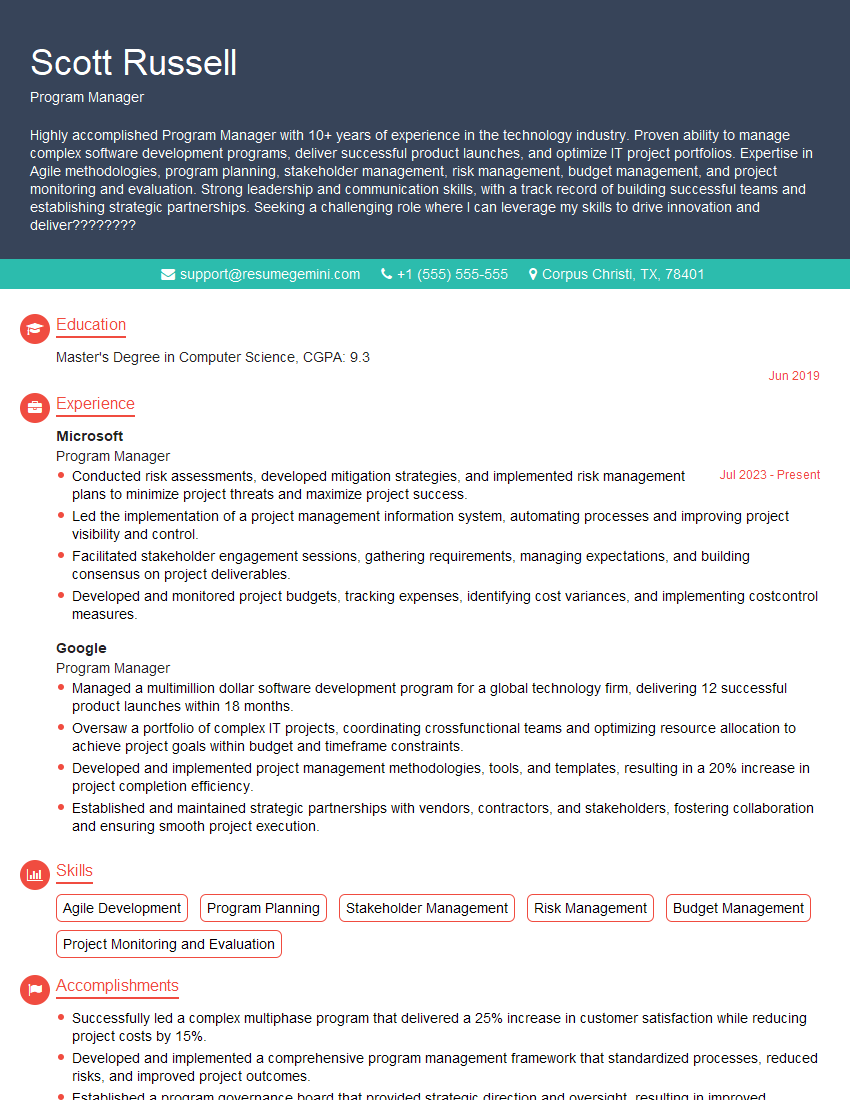
Program Manager Resume Sample

Operations Manager Resume Sample
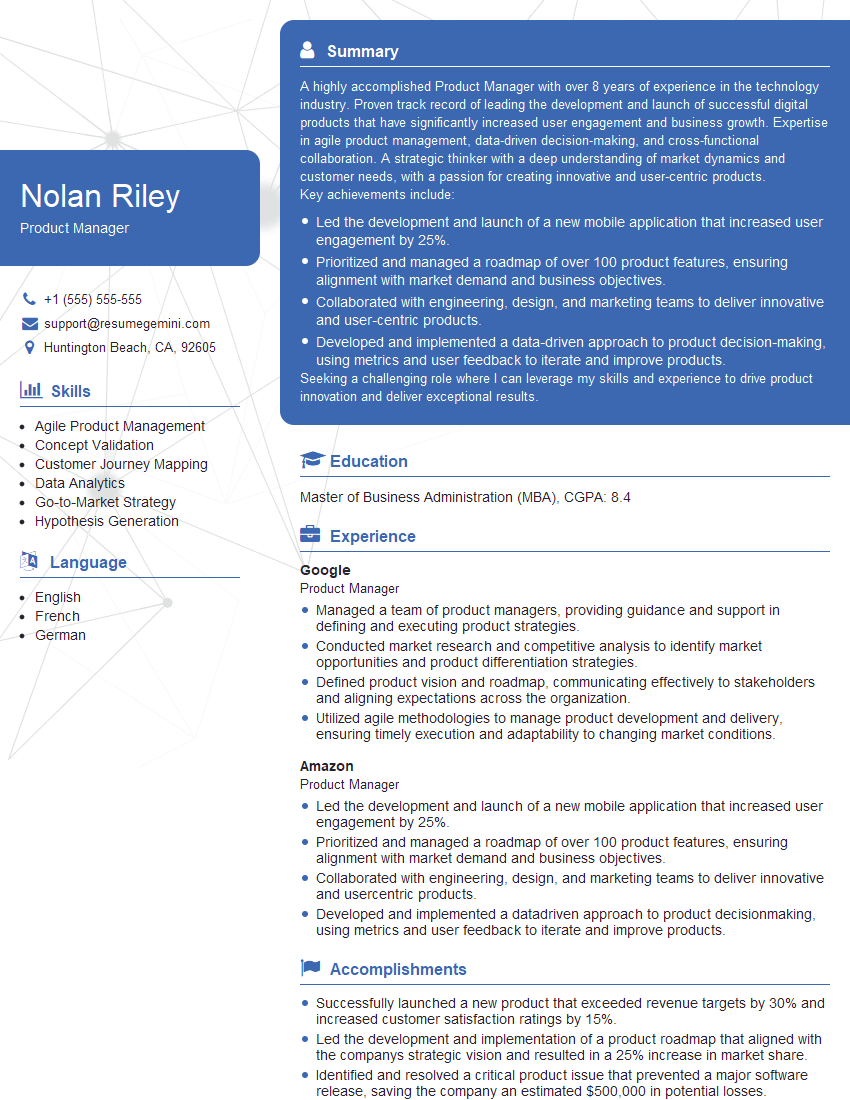
Product Manager Resume Sample
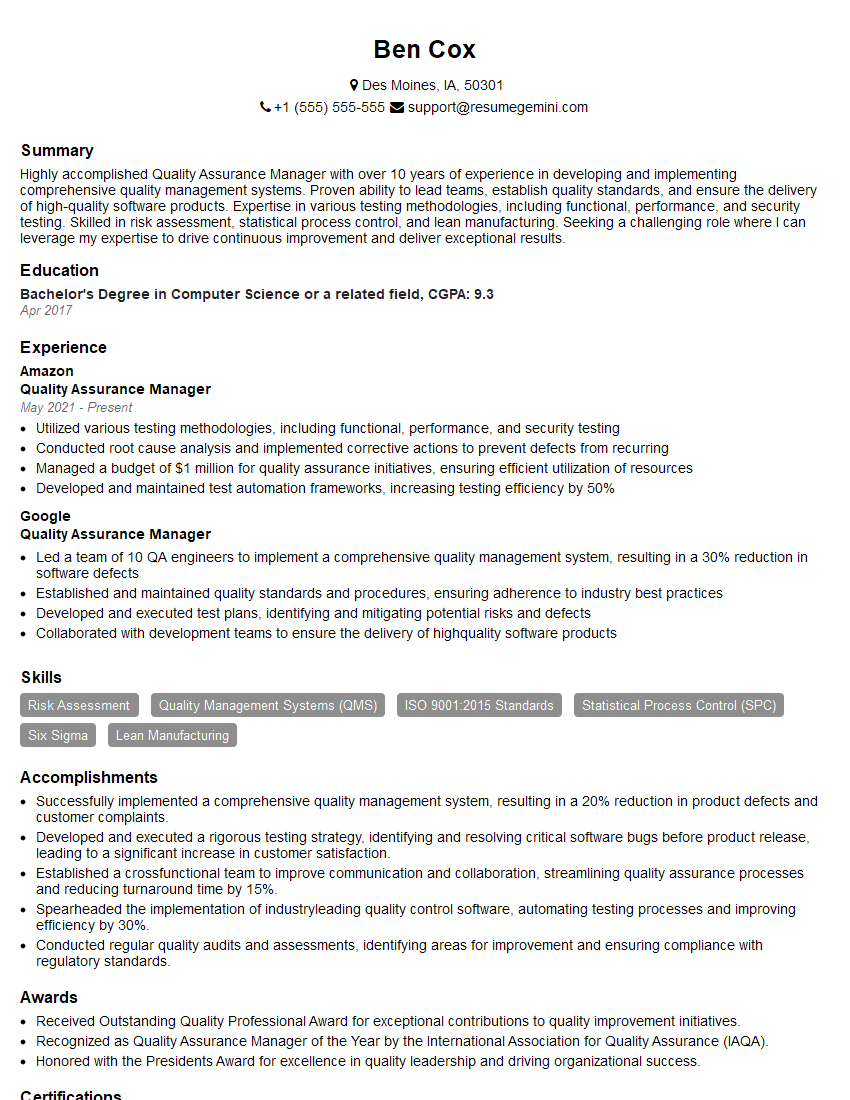
Quality Assurance Manager Resume Sample
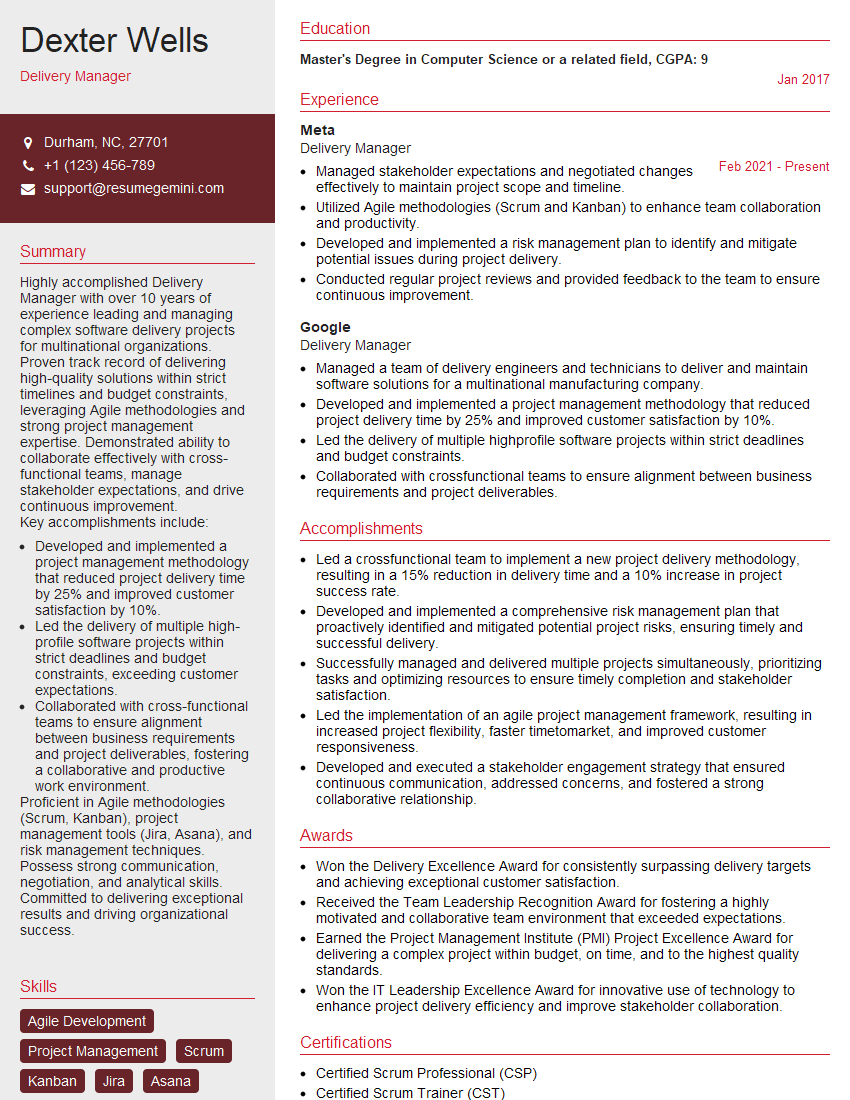
Delivery Manager Resume Sample
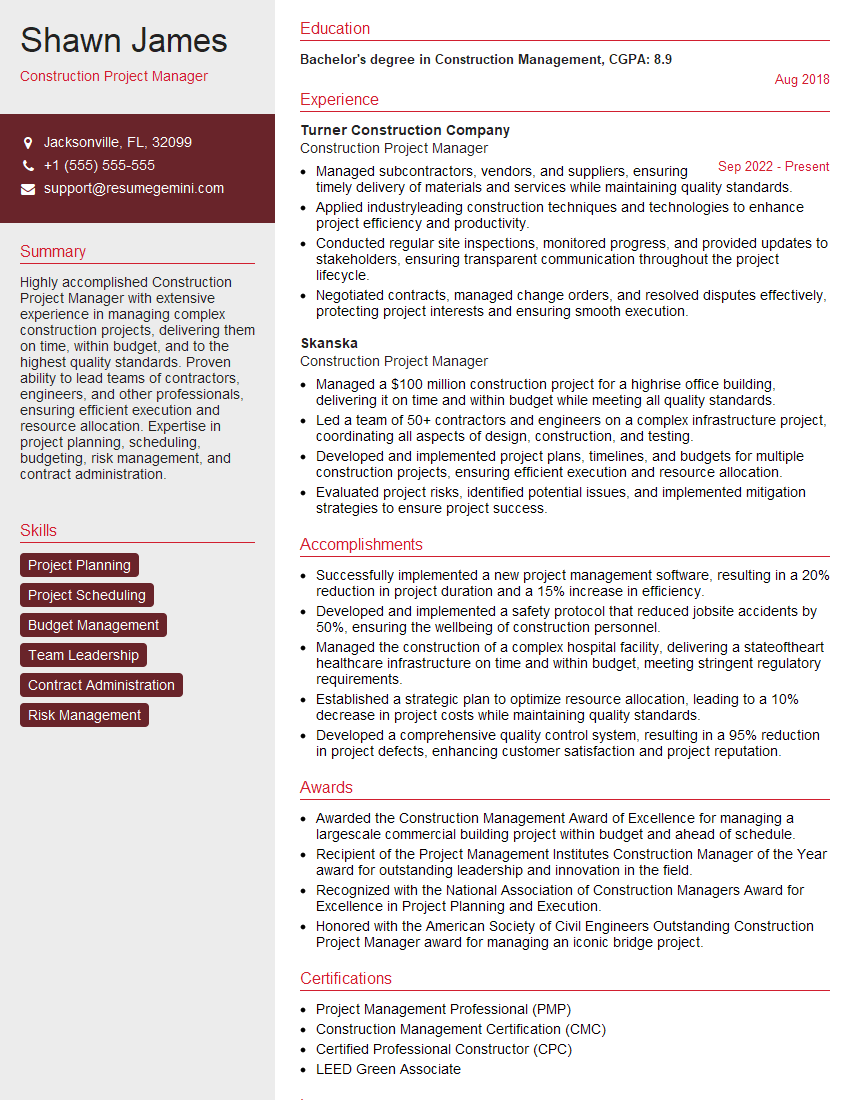
Construction Project Manager Resume Sample
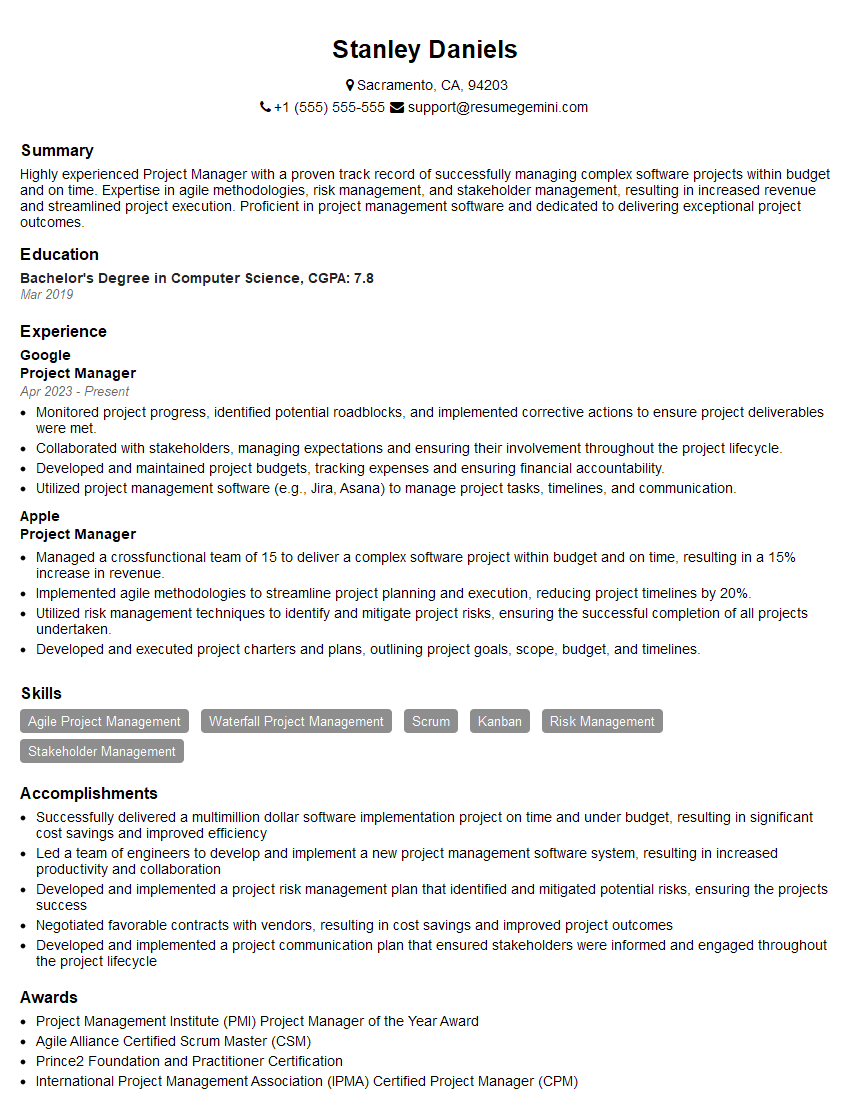
Project Manager Resume Sample
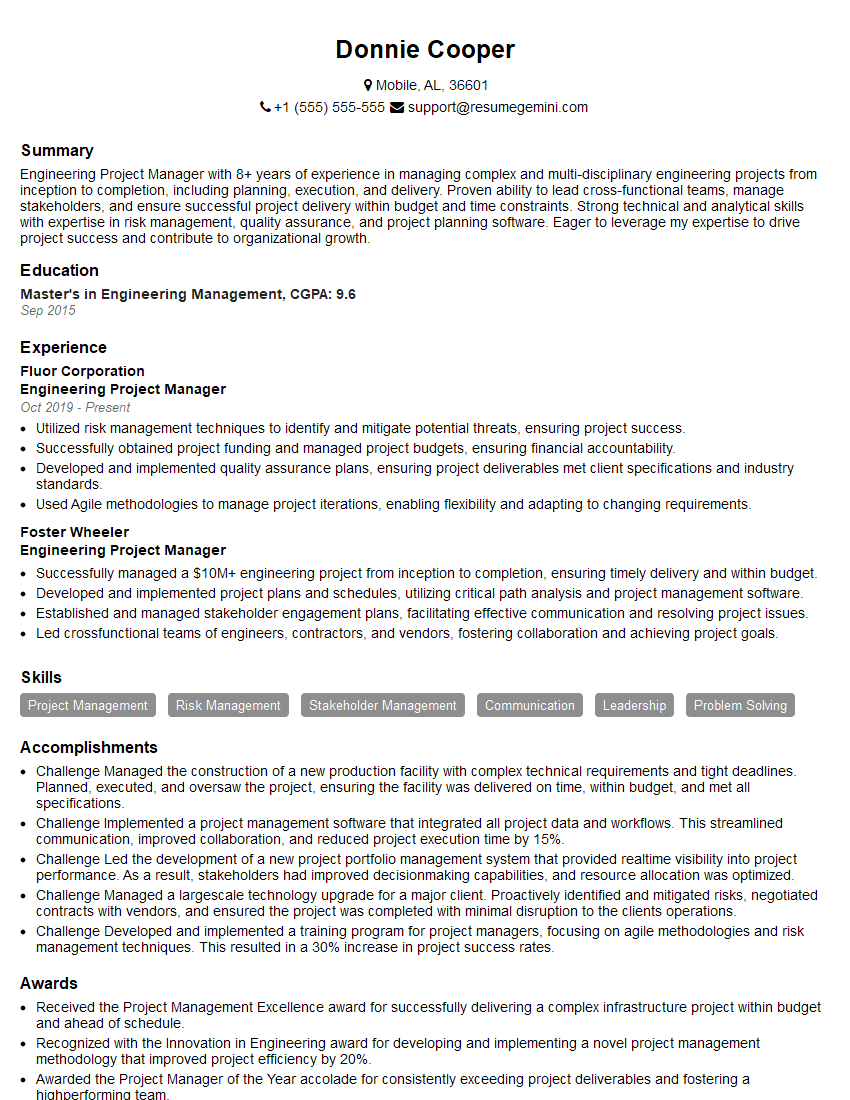
Engineering Project Manager Resume Sample
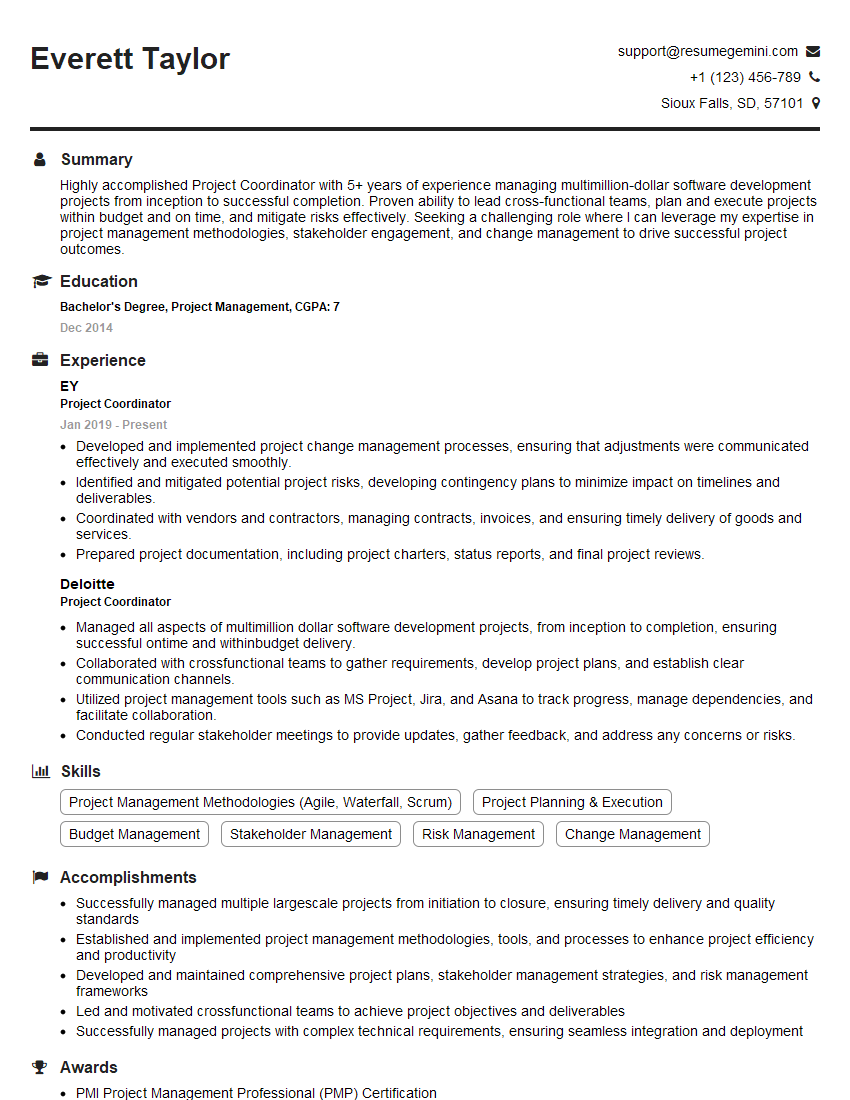
Project Coordinator Resume Sample
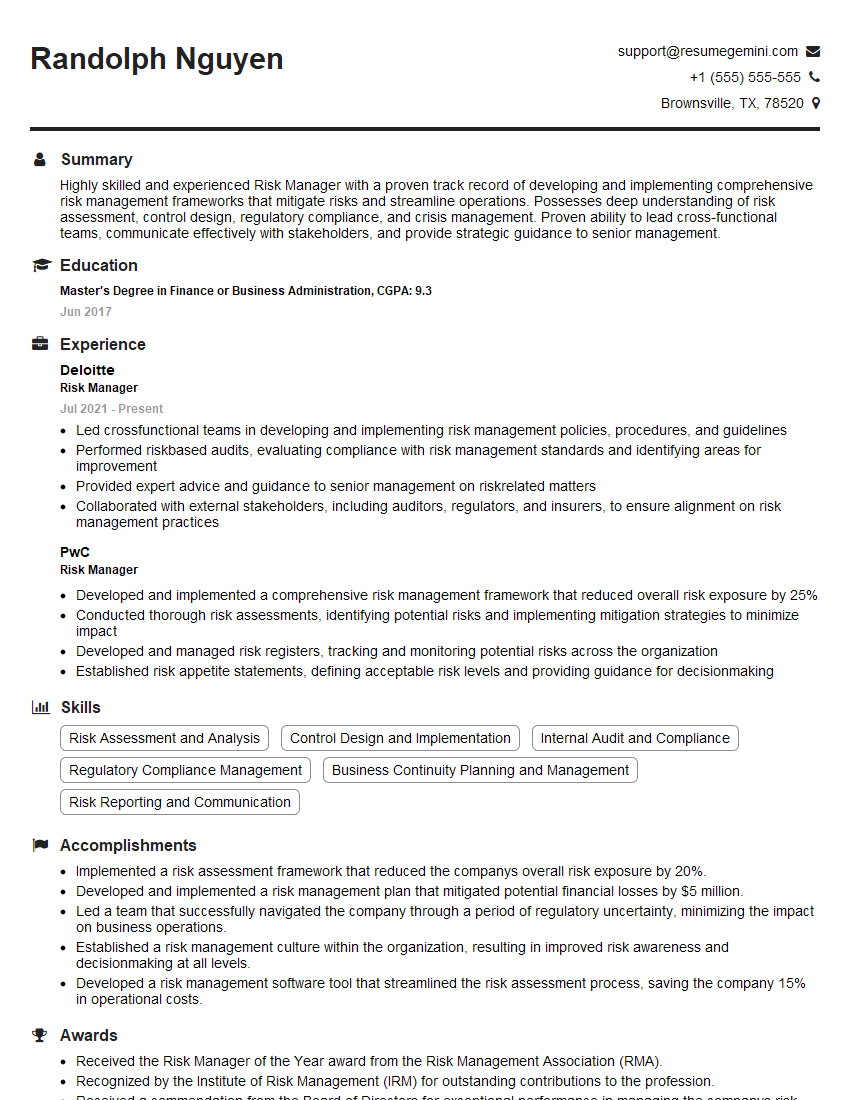
Risk Manager Resume Sample
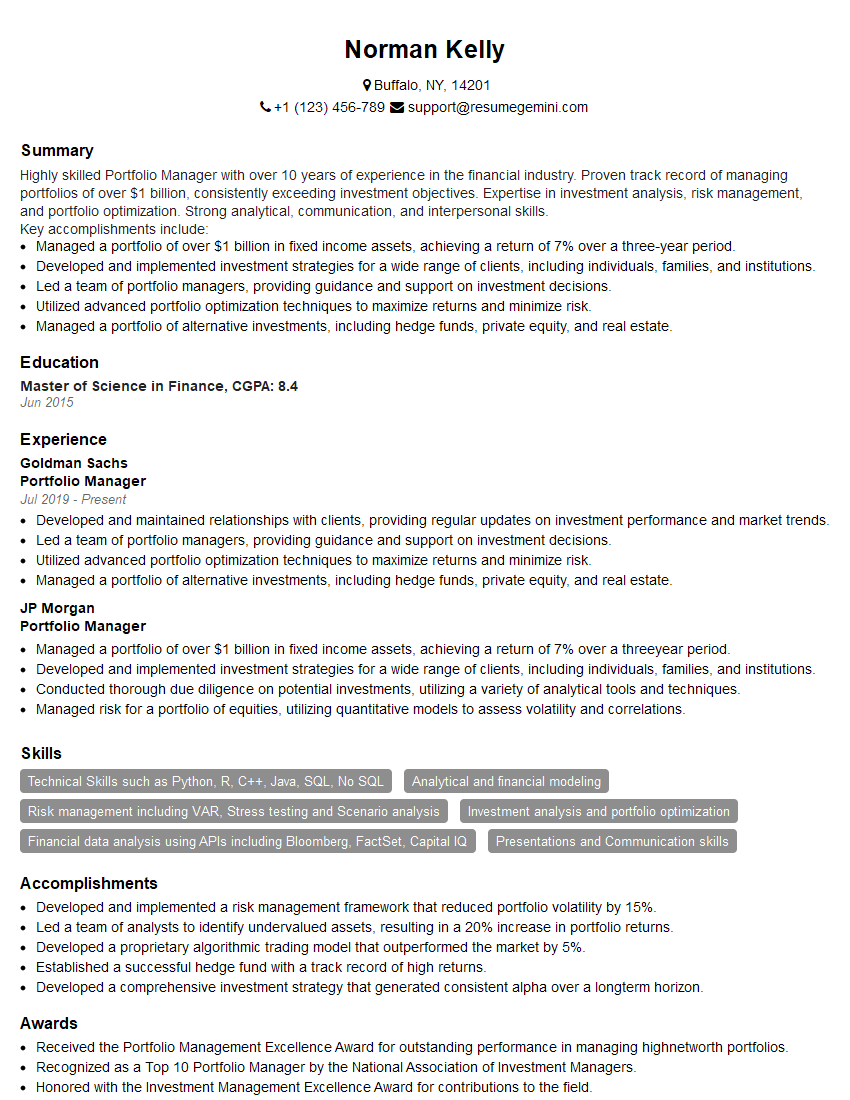
Portfolio Manager Resume Sample
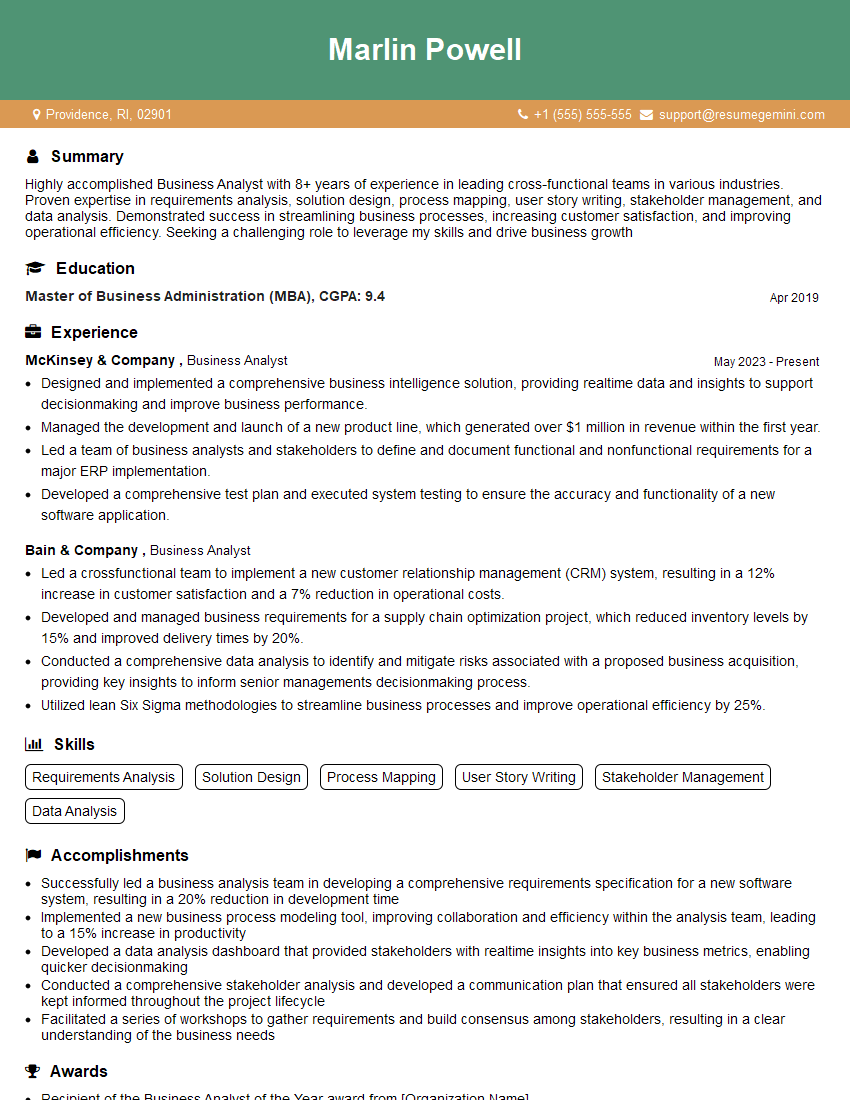
Business Analyst Resume Sample
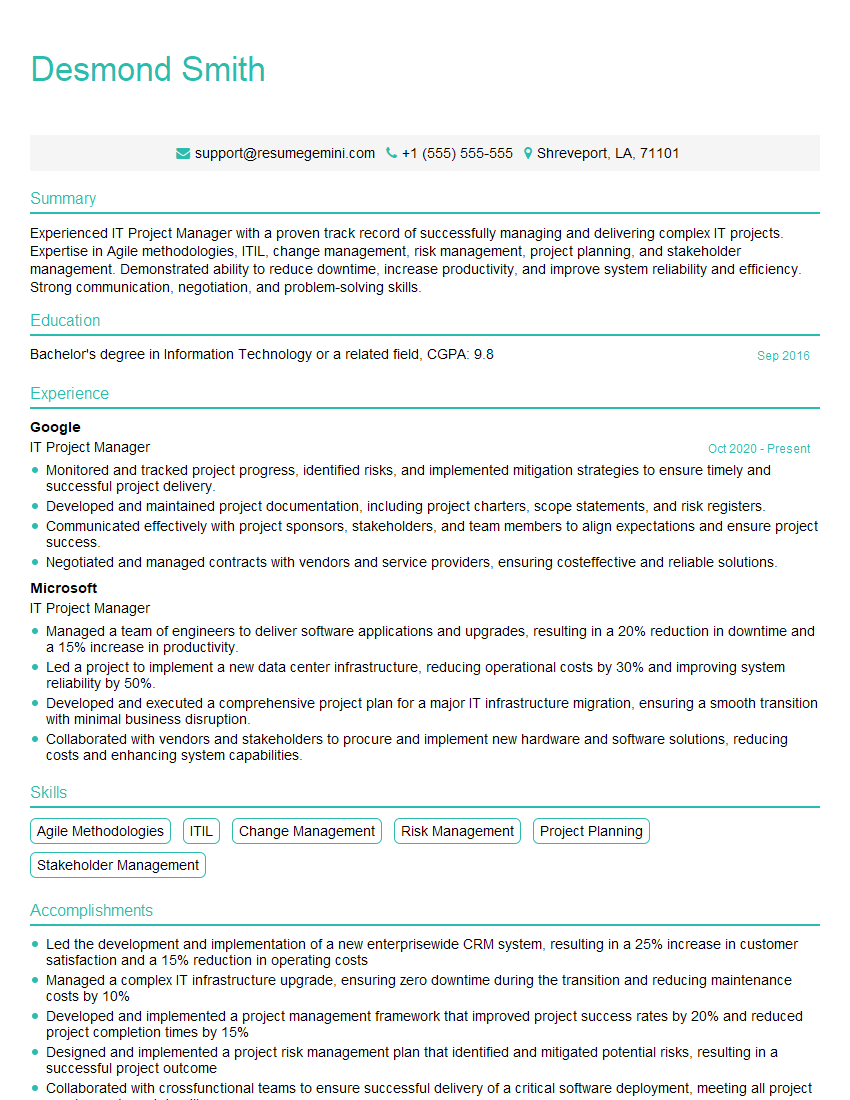
IT Project Manager Resume Sample
Scrum Master Resume Sample
Senior Project Manager Resume Sample
Explore more articles
Users Rating of Our Blogs
Share Your Experience
We value your feedback! Please rate our content and share your thoughts (optional).
What Readers Say About Our Blog
I Redesigned Spongebob Squarepants and his main characters of my artwork.
https://www.deviantart.com/reimaginesponge/art/Redesigned-Spongebob-characters-1223583608
IT gave me an insight and words to use and be able to think of examples
Hi, I’m Jay, we have a few potential clients that are interested in your services, thought you might be a good fit. I’d love to talk about the details, when do you have time to talk?
Best,
Jay
Founder | CEO