Feeling uncertain about what to expect in your upcoming interview? We’ve got you covered! This blog highlights the most important Participate in Safety Training Programs interview questions and provides actionable advice to help you stand out as the ideal candidate. Let’s pave the way for your success.
Questions Asked in Participate in Safety Training Programs Interview
Q 1. Describe your experience developing and delivering safety training programs.
My experience in developing and delivering safety training programs spans over ten years, encompassing various industries including manufacturing, construction, and healthcare. I’ve been involved in the entire lifecycle, from needs analysis and curriculum design to program implementation and evaluation. For instance, at Acme Manufacturing, I spearheaded the development of a comprehensive lockout/tagout (LOTO) training program, which resulted in a 30% reduction in near-miss incidents within the first year. This involved conducting a thorough risk assessment to identify potential hazards, designing engaging training materials, and delivering interactive workshops that included hands-on practice with LOTO procedures. Another example is the development of a safety awareness program for a large construction firm, emphasizing fall protection and heavy machinery safety, where we integrated gamification elements and simulation exercises to enhance learning and retention.
Q 2. What safety training methodologies are you familiar with?
I’m proficient in a range of safety training methodologies, including:
- Instructor-led training (ILT): This traditional approach allows for interactive learning and immediate feedback. I often incorporate real-world case studies and interactive discussions.
- Computer-based training (CBT): CBT offers flexibility and scalability, allowing employees to learn at their own pace. I utilize authoring tools to create engaging and effective CBT modules.
- Blended learning: This approach combines ILT and CBT, leveraging the strengths of both. It can increase engagement and knowledge retention by providing a variety of learning experiences.
- On-the-job training (OJT): Mentorship and practical application are crucial. I ensure proper supervision and documentation of OJT to maintain consistency and effectiveness.
- Gamification: Incorporating game mechanics like points, badges, and leaderboards can significantly boost engagement and motivation.
- Simulation training: Simulating real-world scenarios allows trainees to practice skills and decision-making in a safe environment. This is especially useful for high-risk activities.
Q 3. How do you assess the effectiveness of a safety training program?
Assessing the effectiveness of a safety training program is critical to ensuring its impact. My approach involves a multi-faceted evaluation strategy that includes:
- Pre- and post-training assessments: These measure knowledge gain and skill development. I design assessments that directly reflect the training content.
- Observations and on-site evaluations: Observing trainees in their work environment allows for the evaluation of practical application of learned skills. I use checklists to ensure consistency.
- Near-miss and incident reports: A reduction in near-miss incidents and accidents is a key indicator of training effectiveness. I analyze these reports to identify areas for improvement.
- Employee feedback surveys: Gathering feedback provides valuable insights into the effectiveness of training delivery and content. I often use anonymous surveys to encourage honest responses.
- Return on investment (ROI) analysis: Quantifying the cost savings resulting from reduced accidents and improved safety performance helps demonstrate the value of the program.
Q 4. Explain your experience in creating safety training materials.
Creating effective safety training materials is key to successful program implementation. I leverage various tools and techniques to ensure materials are engaging, informative, and accessible. I often use:
- Visual aids: Including images, videos, and infographics to improve understanding and retention.
- Interactive elements: Quizzes, games, and simulations to enhance engagement and knowledge assessment.
- Plain language: Avoiding jargon and using clear, concise language to ensure all employees can understand the information.
- Multilingual support: Providing materials in multiple languages as needed to ensure inclusivity.
- Accessibility features: Incorporating features like alt text for images and screen reader compatibility to ensure accessibility for all employees.
For example, I developed a series of short videos for a client demonstrating proper use of personal protective equipment (PPE), which significantly improved compliance rates. I also created interactive e-learning modules using Articulate Storyline, allowing for personalized learning experiences.
Q 5. How do you handle resistance to safety training participation?
Resistance to safety training participation can stem from various factors, including time constraints, perceived irrelevance, or fear of highlighting shortcomings. To address this, I employ a multi-pronged approach:
- Emphasize the benefits: Highlighting how the training protects employees, improves productivity, and reduces risks can increase buy-in.
- Make it relevant: Tailoring the training to specific job roles and highlighting real-world examples can increase engagement.
- Provide flexibility: Offering various training formats (ILT, CBT, OJT) and scheduling options caters to different learning styles and time constraints.
- Address concerns: Actively listen to employees’ concerns and address them in a respectful and constructive manner.
- Incentivize participation: Offering incentives like recognition or rewards can motivate participation.
- Lead by example: Management actively participating in and promoting the importance of safety training fosters a culture of safety.
Q 6. Describe a time you had to adapt a safety training program to a specific audience.
At a previous construction site, I had to adapt a fall protection training program for a team of experienced but aging workers. The initial program, designed for younger, physically fitter individuals, focused heavily on physically demanding exercises. Realizing this wasn’t suitable, I adapted the program by:
- Reducing physical demands: Replacing strenuous activities with demonstrations and simulations.
- Incorporating ergonomic considerations: Suggesting modifications to harnesses and equipment to reduce strain.
- Using more visual aids and hands-on demonstrations: Adapting to different learning styles and accommodating age-related visual impairments.
- Addressing concerns about potential injuries: Addressing fears and concerns about age-related limitations openly and assuring them of support and modification options.
This adaptation led to significantly improved participation rates and a higher level of comfort and understanding amongst the older workers.
Q 7. What are some common safety hazards you’ve addressed in training?
Throughout my career, I’ve addressed a wide range of safety hazards in my training programs, including:
- Fall protection: Addressing risks associated with working at heights, including proper harness use, anchor point selection, and rescue procedures.
- Lockout/Tagout (LOTO): Training on safe procedures for controlling hazardous energy sources during maintenance and repairs.
- Heavy machinery operation: Training on safe operating procedures, pre-operational checks, and emergency procedures.
- Hazardous materials handling: Training on proper handling, storage, and disposal of hazardous materials, including personal protective equipment (PPE) requirements.
- Fire safety: Training on fire prevention, evacuation procedures, and the use of fire extinguishers.
- Ergonomics: Training on proper posture, lifting techniques, and workplace adjustments to prevent musculoskeletal disorders.
The specific hazards addressed always depend on the industry, workplace, and job roles. A thorough risk assessment is crucial in identifying specific hazards and tailoring training accordingly.
Q 8. How do you ensure compliance with safety regulations in your training programs?
Ensuring compliance with safety regulations in training is paramount. My approach is multi-faceted and begins with a thorough understanding of all applicable OSHA (or equivalent international) standards, industry-specific regulations, and company policies. I meticulously incorporate these regulations into the training curriculum, ensuring that every module aligns directly with the legal requirements. This isn’t just about ticking boxes; it’s about translating complex legal language into practical, understandable actions for the trainees.
For example, if we’re developing training for lockout/tagout procedures, I’d consult the relevant OSHA standard (29 CFR 1910.147), ensure all steps are clearly outlined, and include realistic scenarios and practice exercises. Regular audits of the training materials and processes are crucial to maintaining compliance. We also keep a detailed record of training, including participant attendance, completion dates, and assessment results, ensuring traceability and accountability.
Finally, I continuously monitor updates to regulations. Subscription to relevant safety organizations’ bulletins and newsletters, along with participation in professional development opportunities, ensures we remain up-to-date and our training reflects the latest best practices and legal mandates. This proactive approach minimizes risk and ensures our training consistently meets and exceeds compliance requirements.
Q 9. How do you incorporate adult learning principles into your training?
Adult learning principles are fundamental to effective safety training. I apply several key principles: First, relevance – trainees must see the direct connection between the training and their jobs. Instead of generic lectures, I focus on real-world examples and case studies specific to their workplace.
Secondly, active participation is essential. Lectures alone are insufficient. I utilize interactive methods such as simulations, group discussions, hands-on activities, and problem-solving exercises to keep trainees engaged and allow them to apply their learning immediately. Think of a simulated emergency response drill instead of just reading about procedures.
Thirdly, I embrace self-directed learning. Providing various learning resources, including online modules, videos, and handouts, allows trainees to learn at their own pace and revisit materials as needed. Finally, immediate feedback is vital; quizzes, practical assessments, and regular check-ins provide opportunities to reinforce learning and identify knowledge gaps immediately.
Consider this example: instead of just explaining hazard communication, we’d have participants identify hazards in a mock workplace setting, interpreting Safety Data Sheets and practicing proper labeling procedures. This active engagement strengthens knowledge retention.
Q 10. What are the key elements of a successful safety training program?
A successful safety training program hinges on several key elements:
- Needs Assessment: Understanding the specific safety risks and the knowledge/skill gaps of the target audience is paramount. This forms the foundation for a targeted and effective program.
- Clear Objectives: The training must have well-defined, measurable learning objectives. What should trainees be able to do after completing the training?
- Engaging Content: Using various methods (visual aids, storytelling, interactive exercises) keeps trainees engaged and enhances knowledge retention. Avoid lengthy lectures.
- Practical Application: The training should translate theory into practice through simulations, real-world scenarios, and hands-on exercises.
- Regular Evaluation and Feedback: Continuously assess the effectiveness of the program through quizzes, observations, and feedback from participants. This allows for improvement and ensures the training remains relevant and impactful.
- Documentation and Record-Keeping: Maintain detailed records of training attendance, assessment results, and any modifications made to the program.
For instance, a program for forklift operators wouldn’t just cover theory; it would include hands-on operation, pre-trip inspections, and simulated emergency scenarios.
Q 11. How do you measure the return on investment (ROI) of safety training?
Measuring the ROI of safety training isn’t straightforward, but it’s crucial. It goes beyond simply calculating the cost of training. Instead, we focus on quantifiable results demonstrating the program’s impact on safety performance. This includes:
- Reduction in accidents and incidents: A decrease in the number of workplace accidents, near misses, and injuries directly reflects the program’s success.
- Improved safety behaviors: Observation of improved adherence to safety procedures and protocols through regular workplace checks.
- Lower workers’ compensation costs: A reduction in claims and associated costs demonstrates the program’s positive financial impact.
- Increased employee engagement and morale: A safer work environment often leads to higher employee satisfaction and reduced turnover.
- Enhanced compliance with regulations: A higher level of compliance with safety regulations minimizes the risk of penalties and legal issues.
For example, if a training program led to a 20% reduction in accidents and a 15% decrease in workers’ compensation costs within a year, we can confidently demonstrate a significant positive ROI.
Q 12. Explain your understanding of different learning styles and how you cater to them.
I understand that people learn in different ways. I cater to diverse learning styles by incorporating a variety of methods into my training programs. For example:
- Visual Learners: I use diagrams, charts, videos, and presentations to convey information visually.
- Auditory Learners: I incorporate lectures, discussions, and audio-based learning materials.
- Kinesthetic Learners: I emphasize hands-on activities, simulations, and role-playing to allow trainees to actively engage with the material.
- Read/Write Learners: I provide comprehensive written materials, including handouts, manuals, and online resources.
I also use a blended learning approach, combining different methods to cater to all learning preferences. For example, a safety training program on fire prevention might include a video demonstrating extinguisher usage, a lecture explaining fire safety regulations, and a hands-on session practicing extinguisher operation. This multi-sensory approach maximizes knowledge retention and ensures that everyone can actively participate and learn effectively.
Q 13. Describe your experience using various training delivery methods (e.g., online, in-person).
I have extensive experience delivering safety training using various methods, both online and in-person. In-person training allows for direct interaction and hands-on activities, fostering a collaborative learning environment. It’s particularly effective for practical skills training, such as using specific equipment or performing emergency procedures.
Online training offers flexibility and scalability. I’ve developed and delivered online modules using platforms like [mention specific platforms if you have experience with them, e.g., Moodle, Articulate Storyline], incorporating interactive elements like quizzes, videos, and simulations to maintain engagement. This approach is cost-effective and allows trainees to learn at their own pace, ideal for large groups or geographically dispersed teams. A blended approach, combining in-person sessions with online modules, often provides the best outcome.
For example, a complex piece of equipment’s operation might be best demonstrated in-person, but pre-training modules covering theory and safety procedures could be delivered online. This hybrid approach optimizes efficiency and learning effectiveness.
Q 14. How do you stay updated on current safety regulations and best practices?
Staying current on safety regulations and best practices is critical. My approach involves several strategies:
- Subscription to professional organizations: I subscribe to newsletters and publications from organizations like OSHA (or equivalent international bodies) and relevant industry associations to receive updates on regulations, best practices, and emerging safety concerns.
- Participation in conferences and workshops: Attending industry conferences and workshops allows me to learn from leading experts and network with other professionals in the field.
- Continuous professional development: I actively seek out professional development opportunities, such as online courses and certifications, to enhance my knowledge and skills.
- Monitoring industry news and research: I regularly follow industry news and research to stay abreast of emerging trends and best practices. Staying up-to-date with new technologies and their safety implications is a key focus.
This multi-pronged approach ensures my training is not only compliant but also reflects the latest advancements and best practices in workplace safety, making it highly relevant and effective.
Q 15. How do you handle safety incidents or near misses after safety training?
Handling safety incidents and near misses involves a structured approach focusing on investigation, corrective action, and prevention. After a safety training program, employees are better equipped to identify and report these events correctly. My process begins with immediate response, ensuring the safety of everyone involved. This is followed by a thorough investigation to understand the root cause, using methods such as 5 Whys or Fishbone diagrams. We document all findings meticulously, interview witnesses, and review any relevant video footage or data logs. Next, corrective actions are implemented to prevent recurrence. This might involve modifying equipment, changing procedures, or providing additional training. Finally, we review the incident to identify trends and incorporate lessons learned into future training and safety protocols. For instance, if a near miss involved improper use of machinery, we’d review the training materials for clarity, potentially adding hands-on practice and reinforcing safe operating procedures.
Career Expert Tips:
- Ace those interviews! Prepare effectively by reviewing the Top 50 Most Common Interview Questions on ResumeGemini.
- Navigate your job search with confidence! Explore a wide range of Career Tips on ResumeGemini. Learn about common challenges and recommendations to overcome them.
- Craft the perfect resume! Master the Art of Resume Writing with ResumeGemini’s guide. Showcase your unique qualifications and achievements effectively.
- Don’t miss out on holiday savings! Build your dream resume with ResumeGemini’s ATS optimized templates.
Q 16. What is your experience with safety auditing and reporting?
My experience with safety auditing and reporting is extensive. I’ve conducted numerous audits, both internal and external, using standardized checklists and observation techniques. These audits assess compliance with safety regulations, identify potential hazards, and evaluate the effectiveness of existing safety programs. My reports detail findings, including both positive aspects and areas needing improvement. I leverage data analysis to identify trends and patterns in incidents, highlighting recurring issues that require focused attention. Crucially, the reports always include specific, measurable, achievable, relevant, and time-bound (SMART) recommendations for improvement. For example, a report might recommend adding emergency eyewash stations in a specific area based on a risk assessment, and specify a deadline for installation and employee training on their proper use.
Q 17. Describe your experience with risk assessments and hazard identification.
Risk assessments and hazard identification are fundamental to a proactive safety approach. My experience encompasses using various methodologies, including Job Safety Analyses (JSAs), hazard and operability studies (HAZOPs), and bow-tie analyses. I’m skilled in identifying potential hazards across diverse workplace environments, from construction sites to office settings. The process involves systematically examining tasks and processes, identifying potential dangers, evaluating their likelihood and severity, and developing control measures to mitigate risks. For instance, in a construction project, a risk assessment might identify the risk of falls from heights, leading to the implementation of safety harnesses, scaffolding inspections, and rigorous training on fall protection protocols. We prioritize risks based on their likelihood and severity, allocating resources effectively to address the most critical hazards first.
Q 18. How do you integrate safety training into the overall workplace culture?
Integrating safety training into workplace culture requires a multi-faceted approach. It’s not just about ticking boxes; it’s about fostering a mindset where safety is a shared value. This begins with leadership commitment, ensuring that senior management actively champions safety and visibly demonstrates their support. We use various techniques, including regular safety meetings, toolbox talks, gamification of training programs, and promoting open communication. Incentivizing safe behavior through recognition programs and celebrating safety achievements also helps. Importantly, we create a culture where employees feel empowered to identify and report hazards without fear of reprisal. This includes providing clear reporting mechanisms and ensuring prompt investigation of all incidents and near misses. A strong safety culture is built over time through consistent reinforcement and engagement.
Q 19. Explain your understanding of OSHA regulations (or relevant local regulations).
My understanding of OSHA regulations (or equivalent local regulations) is comprehensive. I am familiar with the general duty clause, which mandates employers to provide a safe and healthy workplace. I understand specific standards related to hazard communication, personal protective equipment (PPE), lockout/tagout procedures, machine guarding, and emergency response planning. I stay up-to-date on regulatory changes and ensure that our company’s practices remain compliant. My knowledge extends to record-keeping requirements, including incident reporting and employee training documentation. Understanding these regulations is crucial in preventing accidents, protecting employees, and avoiding potential penalties. For example, knowing the requirements for hazard communication ensures that employees are properly informed about chemical hazards in their work area, using Safety Data Sheets (SDS) and appropriate labeling.
Q 20. How do you ensure that safety training is engaging and memorable?
Engaging and memorable safety training goes beyond lectures and manuals. We incorporate various methods to cater to different learning styles. This includes interactive simulations, real-world case studies, videos, and hands-on activities. Using storytelling and relatable scenarios, we connect theoretical knowledge to practical situations that employees can easily understand and remember. We also employ gamification techniques, incorporating quizzes, competitions, and rewards to encourage active participation. Regular refresher training and reinforcement activities are critical to maintaining engagement and knowledge retention over time. For example, a training module on fire safety might include a simulated fire evacuation scenario, reinforcing the steps involved and making the learning experience both fun and practical.
Q 21. How do you track employee participation and completion of safety training?
Tracking employee participation and completion of safety training is essential for demonstrating compliance and evaluating program effectiveness. We use a combination of methods, including a Learning Management System (LMS), spreadsheets, and physical sign-off sheets. The LMS allows us to track online training completion, assigning modules, monitoring progress, and generating reports. For hands-on training, we use sign-off sheets to confirm attendance and successful demonstration of skills. Data is regularly reviewed to identify gaps in training completion and to address any issues promptly. This data informs our ongoing training efforts and helps us tailor future programs to meet specific needs. Regular reporting on training completion rates is crucial in demonstrating compliance with regulatory requirements and internal policies.
Q 22. What are some common challenges you face when delivering safety training?
One of the biggest challenges in delivering safety training is maintaining engagement. Safety training can often feel dry or irrelevant to participants, leading to disinterest and poor knowledge retention. Another significant hurdle is ensuring consistent training across multiple sites or departments with varying levels of understanding. Finally, keeping training up-to-date with the latest regulations and best practices requires ongoing effort and resources. For example, I once had to deliver a training on new lockout/tagout procedures, and the initial resistance from long-term employees who were used to their old methods was palpable. Overcoming this required a patient and collaborative approach, focusing on the safety improvements the new procedures provided and providing hands-on practice.
Q 23. How do you address diverse learning needs in a safety training environment?
Addressing diverse learning needs requires a multifaceted approach. I use a variety of methods including visual aids (videos, diagrams), hands-on activities, interactive simulations, and written materials to cater to visual, kinesthetic, and auditory learners. I also provide different levels of complexity to accommodate differing skill levels. For individuals with language barriers, I utilize translated materials and visual aids, and I incorporate peer learning or buddy systems to encourage participation and understanding. I also tailor the pace and delivery methods to the specific group’s needs. For instance, a group of experienced technicians may benefit from a more advanced, problem-solving approach compared to new hires who would benefit from more basic demonstrations.
Q 24. Describe your experience creating and managing safety training budgets.
I have extensive experience creating and managing safety training budgets. This involves a thorough needs assessment to identify necessary training, followed by researching and comparing vendor quotes, selecting cost-effective training materials and resources (e.g., software licenses, online courses, physical materials), and tracking expenditures throughout the training cycle. I always seek opportunities to leverage free or low-cost resources, such as online modules or internal expertise, while ensuring quality remains high. A recent example involved securing a grant to update our outdated first aid training program, which enabled us to purchase new equipment and implement interactive training scenarios without exceeding our allocated budget.
Q 25. What software or tools have you used to support safety training delivery?
I’ve utilized various software and tools to enhance safety training. Learning Management Systems (LMS) such as Moodle and Canvas are vital for organizing, delivering, and tracking online training. For creating engaging content, I utilize tools like Articulate Storyline and Adobe Captivate to develop interactive e-learning modules. Video conferencing platforms like Zoom and Microsoft Teams facilitate virtual training sessions. Furthermore, I use various mobile apps for safety inspections and incident reporting, integrating them with the LMS to provide a seamless workflow. For example, using an LMS allowed me to easily track completion rates and identify areas where additional training or support was needed.
Q 26. How do you ensure that safety training is relevant to the workplace?
Ensuring relevance is crucial. I accomplish this by actively involving employees and supervisors in the training design and development. Job hazard analyses (JHAs) are conducted to identify specific workplace hazards and integrate them directly into training content. Real-life case studies and examples from the workplace are frequently used to demonstrate the practical application of safety procedures. Regular updates to training materials ensure they remain current with evolving workplace practices and regulations. In one instance, I incorporated feedback from employees working on a new assembly line to tailor training materials, resulting in a significant reduction in near-miss incidents.
Q 27. How do you evaluate and improve the effectiveness of existing safety training programs?
Evaluating training effectiveness is an iterative process. I employ various methods including pre- and post-training assessments to measure knowledge gained, observation of employee performance on the job, and analysis of safety incident reports. Feedback is collected through surveys, focus groups, and one-on-one interviews with trainees. This data informs revisions to the training content, methods, and delivery mechanisms. For instance, low scores on a post-training quiz about fire safety procedures led me to redesign that section of the training, incorporating more interactive elements and real-life scenarios.
Q 28. Describe your experience in using technology to enhance safety training effectiveness.
Technology significantly enhances training effectiveness. Virtual reality (VR) simulations allow trainees to experience hazardous situations in a safe environment, fostering better understanding and retention. Interactive e-learning modules offer flexibility and convenience, accommodating diverse schedules and learning styles. Gamification techniques, such as points, badges, and leaderboards, motivate participation and increase engagement. Data analytics from the LMS provide insights into training completion rates, knowledge gaps, and areas for improvement. For example, using VR simulations to train employees on operating heavy machinery resulted in a demonstrable improvement in their performance and a noticeable reduction in accidents.
Key Topics to Learn for Participate in Safety Training Programs Interview
- Understanding Safety Regulations and Compliance: Know the legal framework surrounding workplace safety, including relevant acts, regulations, and standards. Be prepared to discuss how these regulations apply to different work environments.
- Hazard Identification and Risk Assessment: Demonstrate your ability to identify potential hazards in a workplace setting, analyze the associated risks, and propose practical control measures. Consider examples from past experiences or hypothetical scenarios.
- Safety Training Methods and Delivery: Discuss different approaches to delivering safety training, such as classroom instruction, on-the-job training, e-learning modules, and simulations. Consider the advantages and disadvantages of each method.
- Effective Communication and Training Techniques: Highlight your understanding of how to communicate safety information clearly and effectively to diverse audiences, including tailoring your approach based on the learners’ background and understanding.
- Incident Reporting and Investigation: Explain the process of reporting safety incidents, conducting thorough investigations, and implementing corrective actions to prevent future occurrences. Understanding root cause analysis is crucial.
- Personal Protective Equipment (PPE): Showcase your knowledge of various types of PPE, their appropriate use, and limitations. Discuss the importance of selecting the right PPE for different tasks and hazards.
- Emergency Response Procedures: Demonstrate your understanding of emergency response protocols, including evacuation procedures, first aid, and the use of emergency equipment. Be prepared to discuss your role in such situations.
- Safety Culture and Behavioral-Based Safety: Explain the concept of a strong safety culture and how to promote safe behaviors within a team. Discuss the importance of leading by example and fostering a culture of accountability.
Next Steps
Mastering the skills and knowledge related to Participate in Safety Training Programs is vital for career advancement in many industries. Demonstrating your expertise in this area will significantly increase your job prospects and open doors to challenging and rewarding roles. To stand out to potential employers, create an ATS-friendly resume that highlights your skills and experience effectively. ResumeGemini is a trusted resource that can help you build a professional and impactful resume. They even provide examples of resumes tailored to roles involving Participate in Safety Training Programs, ensuring your resume is perfectly optimized for your target jobs.

Training Manager Resume Sample
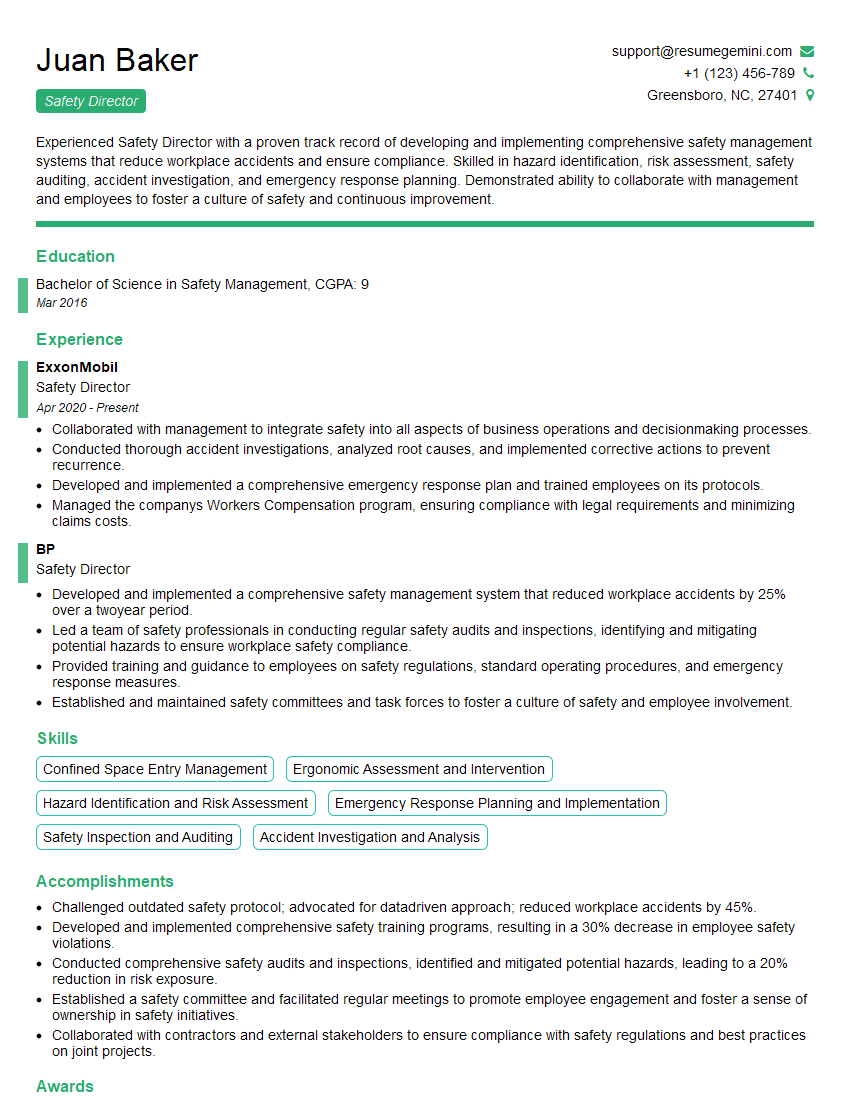
Safety Director Resume Sample

Compliance Manager Resume Sample

Compliance Officer Resume Sample
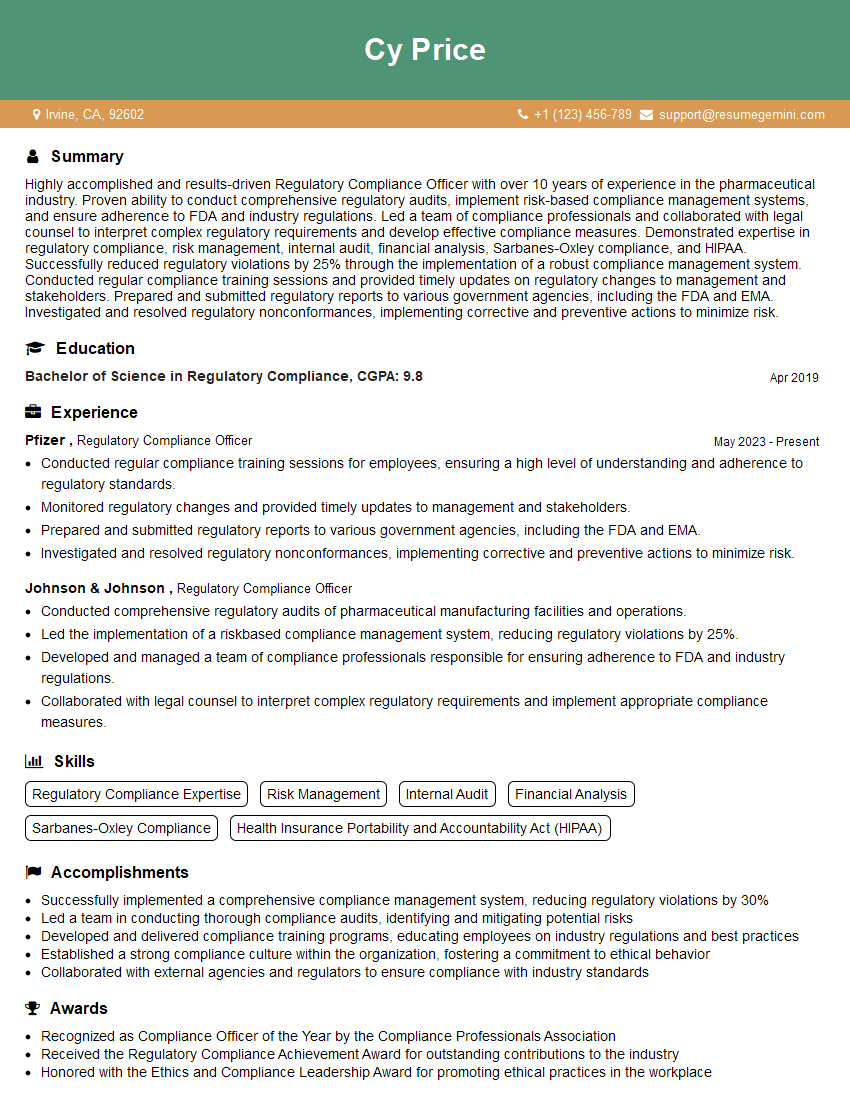
Regulatory Compliance Officer Resume Sample

Risk Manager Resume Sample

Loss Prevention Specialist Resume Sample

Health and Safety Manager Resume Sample
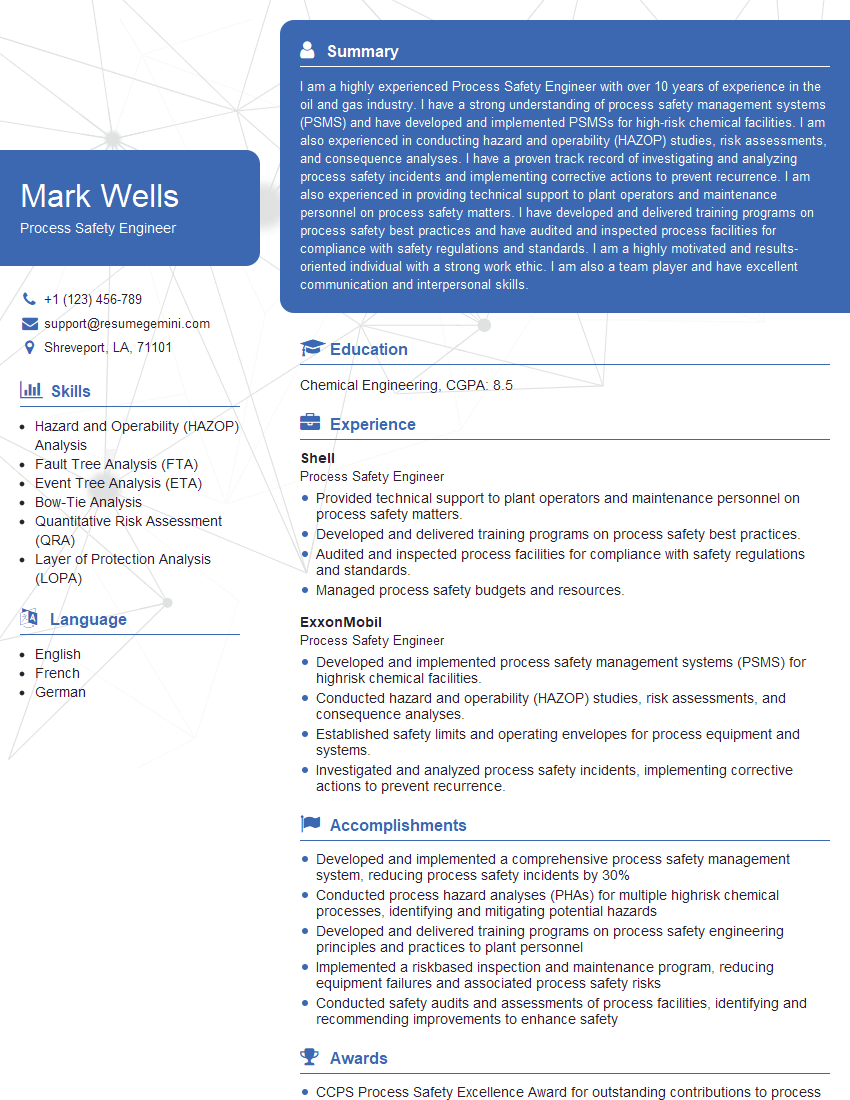
Process Safety Engineer Resume Sample
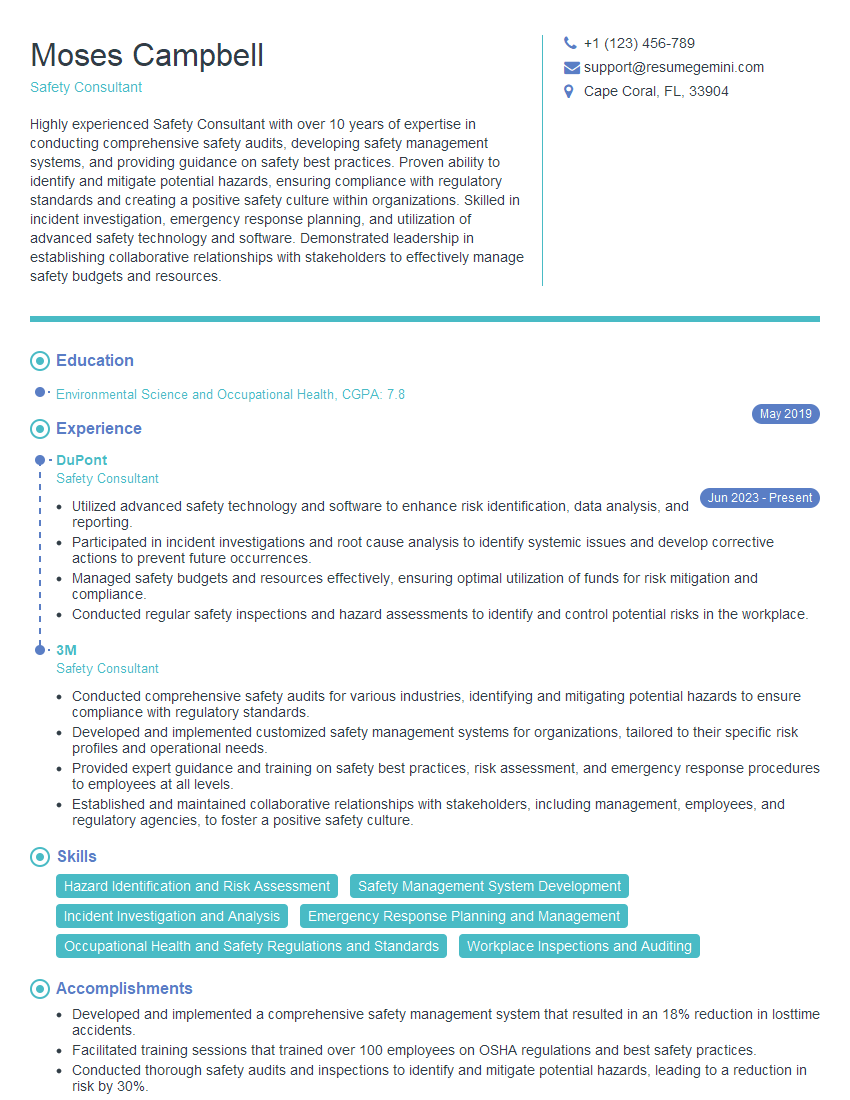
Safety Consultant Resume Sample

Safety Engineer Resume Sample
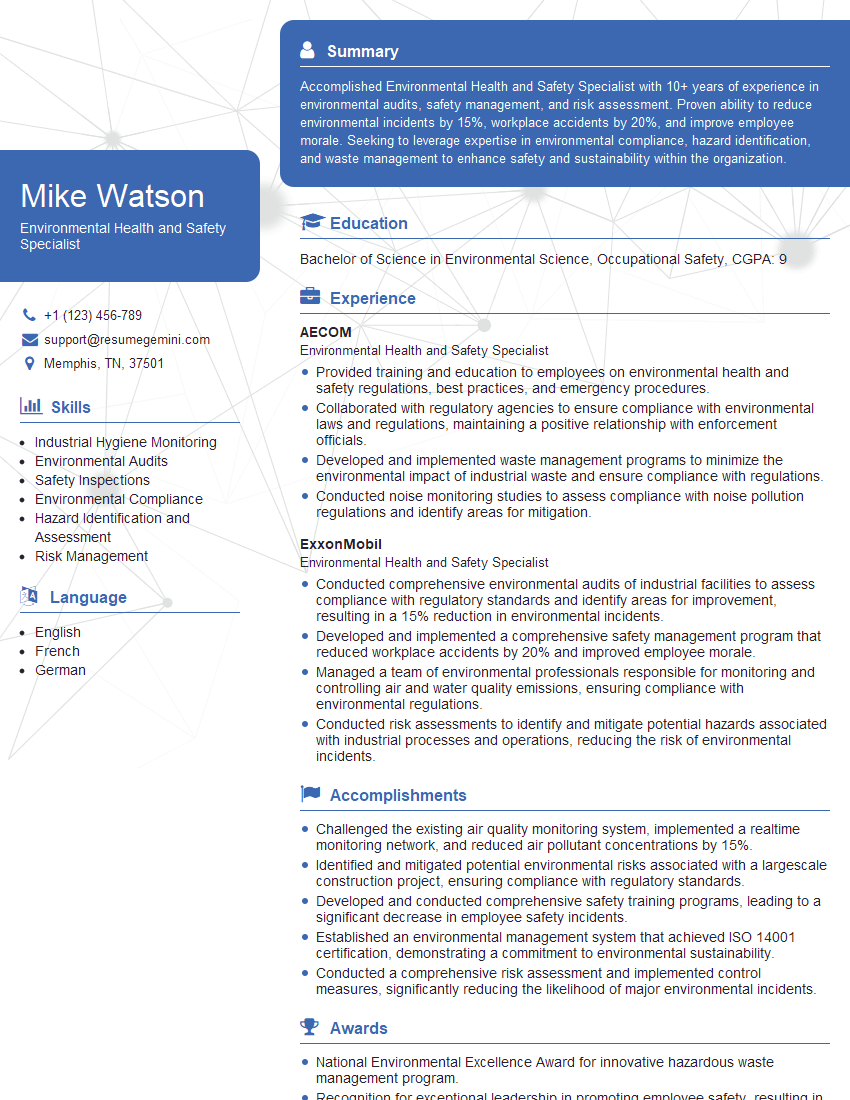
Environmental Health and Safety Specialist Resume Sample

Industrial Hygienist Resume Sample

Safety Officer Resume Sample
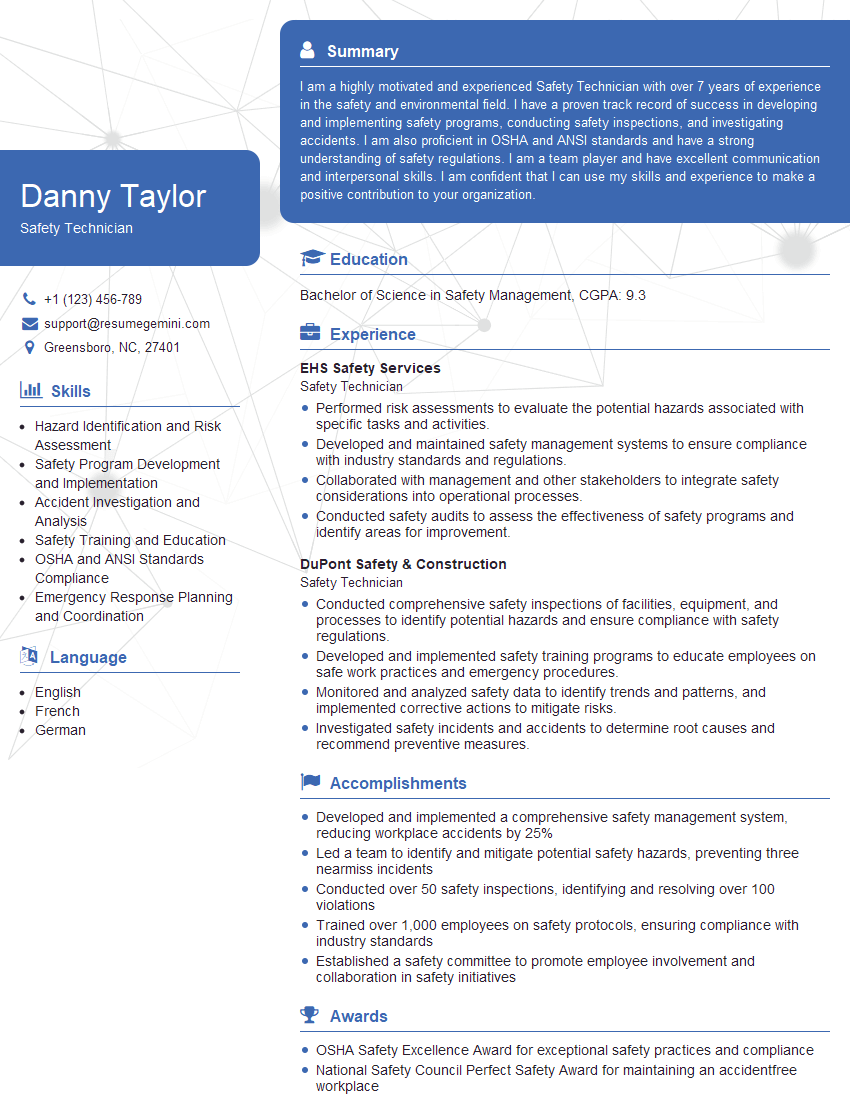
Safety Technician Resume Sample
- Training Manager
- Safety Director
- Compliance Manager
- Compliance Officer
- Regulatory Compliance Officer
- Risk Manager
- Loss Prevention Specialist
- Health and Safety Manager
- Process Safety Engineer
- Safety Consultant
- Safety Engineer
- Environmental Health and Safety Specialist
- Industrial Hygienist
- Safety Officer
- Safety Technician
Explore more articles
Users Rating of Our Blogs
Share Your Experience
We value your feedback! Please rate our content and share your thoughts (optional).
What Readers Say About Our Blog
I Redesigned Spongebob Squarepants and his main characters of my artwork.
https://www.deviantart.com/reimaginesponge/art/Redesigned-Spongebob-characters-1223583608
IT gave me an insight and words to use and be able to think of examples
Hi, I’m Jay, we have a few potential clients that are interested in your services, thought you might be a good fit. I’d love to talk about the details, when do you have time to talk?
Best,
Jay
Founder | CEO