The thought of an interview can be nerve-wracking, but the right preparation can make all the difference. Explore this comprehensive guide to Experience with Struggling Readers interview questions and gain the confidence you need to showcase your abilities and secure the role.
Questions Asked in Experience with Struggling Readers Interview
Q 1. Describe your experience implementing evidence-based reading interventions.
My experience with evidence-based reading interventions is extensive. I’ve successfully implemented programs like Orton-Gillingham, Wilson Reading System, and Lexia Learning, tailoring their application to individual student needs. For example, with a student struggling with phonemic awareness, I started with Orton-Gillingham’s multisensory approach, focusing on explicit instruction in phoneme manipulation and blending. We used manipulatives like letter tiles and practiced activities like rhyming and segmenting words. The structured, systematic nature of these programs allowed me to track progress effectively and adjust the instruction as needed. Another student benefited greatly from Lexia Learning’s adaptive software, which provided personalized instruction and practice in phonics, fluency, and vocabulary. The key to success is regular assessment and flexible implementation – adjusting the pace and activities based on the student’s response and progress.
Q 2. What assessment tools do you utilize to identify struggling readers?
Identifying struggling readers involves a multi-faceted approach using a combination of assessments. I utilize screening tools like DIBELS (Dynamic Indicators of Basic Early Literacy Skills) for early identification of at-risk students, focusing on key areas like phonological awareness, phonemic awareness, and fluency. For a deeper understanding of reading difficulties, I employ diagnostic assessments such as the Woodcock-Johnson Tests of Achievement (WJ-IV) or the Wechsler Individual Achievement Test (WIAT-III). These comprehensive tests provide detailed information on specific reading sub-skills, like word reading, reading fluency, and reading comprehension. In addition to standardized tests, I also use informal assessments such as running records, miscue analysis, and oral reading fluency measures. These help in observing student reading behaviors in real-time and adjusting instruction accordingly. By combining these different methods, I create a comprehensive picture of a student’s reading strengths and weaknesses.
Q 3. How do you differentiate instruction to meet the needs of diverse learners with reading difficulties?
Differentiated instruction is crucial for supporting diverse learners. I adapt instruction based on individual student needs, focusing on their specific strengths and weaknesses. For instance, a student struggling with decoding might receive explicit phonics instruction, while a student with strong decoding skills but weak comprehension could benefit from activities like graphic organizers and think-alouds. I use flexible grouping strategies, employing small group instruction for targeted skill development and whole-class instruction for shared reading experiences. Technology also plays a significant role; I use adaptive learning software that caters to individual learning styles and paces. For example, some students might benefit from kinesthetic learning activities, while others might respond better to visual aids or auditory input. Continuous monitoring of progress, through frequent informal assessments, ensures that my instruction remains responsive to each student’s progress.
Q 4. Explain your approach to collaborating with parents and other professionals regarding struggling readers.
Collaboration is paramount in supporting struggling readers. I regularly communicate with parents through newsletters, emails, and parent-teacher conferences, sharing assessment data and strategies for home support. I provide parents with clear explanations of their child’s reading progress and offer practical suggestions for home-based activities, such as shared reading, engaging in playful language activities, and providing access to age-appropriate books. I also work closely with other professionals, such as special education teachers, school psychologists, and administrators, to create a cohesive support system for each student. For example, I collaborate with special education teachers to develop and implement Individualized Education Programs (IEPs) and modify classroom assignments to better suit the needs of students. This collaborative approach ensures that the student receives consistent and effective support across all educational settings.
Q 5. What strategies do you employ to build students’ reading fluency and comprehension?
Building reading fluency and comprehension involves a multifaceted approach. To improve fluency, I incorporate repeated readings of texts at the student’s instructional level, using various techniques like choral reading, echo reading, and partner reading. I also utilize fluency building software and activities. To enhance comprehension, I emphasize explicit instruction in comprehension strategies such as predicting, questioning, visualizing, summarizing, and making inferences. I model these strategies using think-alouds and encourage students to actively engage with texts through activities like graphic organizers, discussions, and writing responses. I also incorporate a wide variety of reading materials to cater to diverse interests, ensuring that students are engaged and motivated. The emphasis is always on fostering a love of reading.
Q 6. How do you address the emotional and social needs of struggling readers?
Addressing the emotional and social needs of struggling readers is crucial for their overall academic success. Many students experience frustration and low self-esteem due to reading difficulties. I create a positive and supportive classroom environment that celebrates effort and progress. I provide opportunities for students to experience success through appropriately challenging activities. I also engage in positive reinforcement and encourage students to focus on their strengths. I also teach students self-advocacy skills to help them communicate their needs and request assistance when needed. When necessary, I collaborate with school counselors or other support staff to address any underlying emotional or social issues that might be impacting a student’s reading performance. Building confidence and resilience is a key component of my approach.
Q 7. Describe your experience with IEP development and implementation for students with reading disabilities.
I have significant experience in IEP development and implementation for students with reading disabilities. I actively participate in IEP meetings, contributing to the development of individualized goals and objectives aligned with the student’s needs. I am familiar with the legal requirements and procedures involved in creating and maintaining IEPs. The goals are specific, measurable, achievable, relevant, and time-bound (SMART). We regularly review the IEP to ensure that goals are being met and make adjustments as needed, using data from ongoing assessments. The implementation involves coordinating with special education teachers, paraprofessionals, and other relevant stakeholders to ensure that the support outlined in the IEP is consistently provided. I believe in a collaborative approach, involving the student and their family in the process. This ensures the IEP is responsive to the student’s unique learning style and preferences and creates a supportive environment for their academic success.
Q 8. What is your experience with various assistive technologies for struggling readers?
My experience with assistive technologies for struggling readers is extensive. I’ve worked with a wide range of tools, from simple text-to-speech software to sophisticated programs that offer personalized learning pathways. For example, I’ve used text-to-speech software like NaturalReader and Read&Write Gold to support students with decoding difficulties, allowing them to hear the words while they read along. For students who struggle with writing, I’ve utilized programs like Grammarly and Quill.org, which provide grammar and spelling support and guide students through the writing process. Furthermore, I’m familiar with graphic organizers, concept mapping software, and visual aids, which can greatly benefit students with organizational challenges or those who are visual learners. I believe in selecting the technology that best addresses the student’s specific needs, rather than a one-size-fits-all approach. My approach always emphasizes the importance of integrating technology to enhance, not replace, direct instruction and interaction.
Q 9. How do you monitor student progress and adjust interventions as needed?
Monitoring student progress is crucial. I use a multifaceted approach combining formative and summative assessments. Formative assessments, like quick checks, exit tickets, and observations during reading activities, provide ongoing feedback and allow for immediate adjustments. I use running records to track accuracy, fluency, and comprehension during oral reading. Summative assessments, such as benchmark tests and unit assessments, give a broader picture of student progress over time. I analyze these data points to identify areas of strength and weakness and inform instructional decisions. If a student isn’t making sufficient progress, I’ll adjust interventions by modifying the intensity, duration, or type of support. For instance, if a student struggles with phonics, I might increase the frequency of phonics instruction or try a different approach. If a student is overwhelmed by lengthier texts, I might start with shorter passages or provide graphic organizers to support comprehension. This iterative process allows me to personalize instruction and ensure each student makes steady progress.
Q 10. Explain your understanding of phonological awareness and its role in reading acquisition.
Phonological awareness is the ability to hear and manipulate the sounds of spoken language. It’s a foundational skill for reading acquisition. It involves understanding that words are made up of individual sounds (phonemes), being able to identify and manipulate these sounds (rhyming, segmenting, blending), and recognizing the relationship between sounds and letters. For example, a child with strong phonological awareness can easily identify the rhyming sounds in ‘cat,’ ‘hat,’ and ‘sat.’ They can also segment the word ‘dog’ into its individual sounds /d/-/o/-/g/. This understanding is crucial because it helps children decode written words by connecting the sounds they hear with the letters they see. Without strong phonological awareness, children struggle to break down words into manageable units, making reading a daunting task. I explicitly teach phonological awareness through activities like rhyming games, sound manipulation exercises, and syllable clapping.
Q 11. Describe your experience working with students who have dyslexia or other specific learning disabilities related to reading.
I have significant experience working with students who have dyslexia and other specific learning disabilities that impact reading. My approach is rooted in differentiated instruction and individualized support. For students with dyslexia, I focus on explicit and systematic phonics instruction, multi-sensory learning techniques (like using visual, auditory, and kinesthetic activities), and providing ample opportunities for practice in a low-pressure environment. I utilize Orton-Gillingham based approaches, which are highly effective in teaching students with dyslexia. For other learning disabilities, such as auditory processing disorder or ADHD, I adapt my instruction to address their specific needs. This might involve incorporating movement breaks, using visual aids, and providing structured support with organizational tasks. Collaboration with specialists, such as educational psychologists and occupational therapists, is essential to ensure a holistic approach. I believe in celebrating each student’s progress and building their confidence in their ability to learn, regardless of their challenges.
Q 12. How do you create a positive and supportive learning environment for struggling readers?
Creating a positive and supportive learning environment for struggling readers is paramount. This involves building strong relationships with students, fostering a sense of community, and promoting a growth mindset. I strive to make reading fun and engaging by using a variety of materials, incorporating interactive activities, and providing choices whenever possible. I celebrate small victories, emphasizing effort and progress over perfection. I also ensure that all students feel safe taking risks and making mistakes, creating a culture where it’s okay to not know and ask questions. Positive reinforcement and encouragement are key components, and I always strive to create a classroom where students feel confident and empowered to learn. I make sure to provide positive feedback focusing on their efforts and strategies used rather than only the outcome.
Q 13. What are some common challenges faced by struggling readers, and how do you address them?
Struggling readers face a multitude of challenges. These can include difficulties with phonological awareness, phonics decoding, fluency, vocabulary, and comprehension. Some students may struggle with processing speed, working memory, or attention, impacting their ability to read effectively. Addressing these challenges requires a multi-pronged approach. For example, if a student struggles with decoding, I’ll provide explicit phonics instruction, focusing on letter-sound relationships and decoding strategies. If comprehension is the issue, I’ll use graphic organizers, pre-reading activities, and collaborative discussions to improve understanding. Addressing underlying difficulties, such as attention or processing speed, may require collaboration with other professionals or the use of assistive technology. The key is to identify the specific challenges, tailor interventions to meet those needs, and monitor progress closely.
Q 14. What are your preferred methods for teaching decoding and encoding skills?
My preferred methods for teaching decoding and encoding skills involve a multi-sensory, systematic approach. I begin with explicit instruction on letter-sound relationships, using a variety of methods, such as phonics charts, flashcards, and interactive games. I then move on to blending and segmenting activities, helping students to break down words into their component sounds and then put them back together. I utilize multi-sensory techniques, engaging students visually, auditorily, and kinesthetically. For example, I might have students write letters in sand or trace them with their fingers while saying the sounds aloud. I incorporate decodable texts, which allow students to practice reading words they’ve learned to decode. Encoding, or writing, is taught alongside decoding, allowing students to apply their knowledge in a meaningful way. Regular assessments and progress monitoring help me identify areas needing further attention, allowing for continuous adjustment and refinement of my instruction.
Q 15. How do you incorporate technology into your reading instruction for struggling readers?
Technology offers powerful tools to support struggling readers. I integrate it thoughtfully, focusing on its ability to personalize learning and provide immediate feedback. For example, I use digital reading platforms like Lexia Learning or Reading Plus, which adapt to individual student needs and provide targeted instruction. These platforms offer differentiated text levels, built-in assessments, and engaging interactive activities that keep students motivated. I also utilize audiobooks paired with text to support struggling decoders. This allows students to access the content while hearing the pronunciation, strengthening their phonics skills. Finally, educational apps like Starfall and ABCya! offer fun and interactive games that reinforce early literacy skills. The key is careful selection and integration – technology should supplement, not replace, direct instruction and human interaction.
Career Expert Tips:
- Ace those interviews! Prepare effectively by reviewing the Top 50 Most Common Interview Questions on ResumeGemini.
- Navigate your job search with confidence! Explore a wide range of Career Tips on ResumeGemini. Learn about common challenges and recommendations to overcome them.
- Craft the perfect resume! Master the Art of Resume Writing with ResumeGemini’s guide. Showcase your unique qualifications and achievements effectively.
- Don’t miss out on holiday savings! Build your dream resume with ResumeGemini’s ATS optimized templates.
Q 16. Describe your experience with progress monitoring and data-based decision making in reading instruction.
Progress monitoring and data-based decision-making are crucial for effective reading intervention. I regularly assess students using a combination of formal and informal measures. Formal assessments might include standardized tests like the DIBELS (Dynamic Indicators of Basic Early Literacy Skills) or the Aimsweb assessment system. Informal measures include running records, fluency checks, and observation of students’ reading behaviors in class. I meticulously track student performance over time, charting their progress in key areas like phonics, fluency, and comprehension. This data guides my instructional decisions. If a student is struggling with a particular skill (like decoding multisyllabic words), I adjust my instruction to provide targeted support in that specific area. For instance, if fluency data shows a student needs more practice with oral reading, I implement strategies like repeated reading or partner reading. The iterative process of assessment, analysis, and adjustment ensures that my instruction remains responsive to student needs.
Q 17. How do you use formative and summative assessments to inform your instruction for struggling readers?
Formative and summative assessments work in tandem to paint a complete picture of student learning. Formative assessments, like quick checks for understanding during a lesson or exit tickets, provide ongoing feedback and allow me to adjust instruction in real time. For example, if a majority of students miss a question on a quick check, it signals I need to re-teach the concept using a different approach. Summative assessments, such as unit tests or benchmark assessments, provide a broader overview of student learning at the end of a unit or term. This data helps me gauge the overall effectiveness of my instruction and identify areas where students as a group need additional support. Both types of assessments inform my instruction and allow me to differentiate my approach based on student needs. I use data from both types of assessments to modify my teaching, tailor lesson plans, and provide appropriate interventions.
Q 18. What strategies do you use to foster a love of reading in students who struggle with reading?
Cultivating a love of reading in struggling readers requires a multifaceted approach that moves beyond the purely academic. I prioritize providing access to a wide variety of engaging texts at appropriate reading levels. This might involve graphic novels, age-appropriate magazines, or even non-fiction books on topics of student interest. I also build a classroom culture that values reading. This includes creating a cozy reading nook, incorporating read-alouds of engaging books, and modeling my own love of reading. Book talks and student sharing sessions help students discover their own passions and connect with other readers. Allowing student choice in reading material is fundamental; I also encourage independent reading time, book clubs, and even creative projects based on their reading. When a child connects with a book they can successfully read, it is magic; this experience needs to be fostered.
Q 19. Describe your experience working with diverse populations of struggling readers.
My experience working with diverse populations of struggling readers highlights the importance of culturally responsive teaching. I recognize that students bring diverse backgrounds, experiences, and learning styles to the classroom, and instruction must reflect this. I ensure that my classroom library contains a wide range of books that represent different cultures and perspectives. I also adapt my teaching strategies to meet the unique needs of individual students. For example, I might provide additional support to English language learners by incorporating visual aids, bilingual dictionaries, or peer tutoring. Similarly, I work closely with special education teachers to provide appropriate accommodations and modifications for students with learning disabilities. By creating an inclusive and supportive learning environment, I empower all students to succeed. Understanding a student’s background is critical, and when necessary, I involve family whenever possible.
Q 20. How do you adapt your instruction to meet the needs of students with different learning styles and preferences?
I believe in differentiated instruction, tailoring my approach to meet the diverse learning styles and preferences of my students. Some students learn best through visual aids, others through kinesthetic activities, and others through auditory input. I incorporate a variety of instructional methods to cater to these diverse learners. For example, I might use graphic organizers to help visual learners understand complex concepts, have students act out scenes from books for kinesthetic learners, or use audiobooks and read-alouds for auditory learners. I also utilize flexible grouping strategies, allowing students to work independently, in pairs, or in small groups, depending on their learning needs and preferences. Constant observation and communication with my students help me adapt instruction efficiently. The needs of students must remain the core of all that I do.
Q 21. What professional development have you pursued to enhance your skills in working with struggling readers?
Throughout my career, I have actively sought professional development opportunities to enhance my skills in working with struggling readers. I have completed several courses and workshops focused on effective reading instruction, including specific methodologies such as Orton-Gillingham and Wilson Reading System. I’ve participated in professional learning communities (PLCs) focused on data-driven decision making and differentiation. Furthermore, I regularly attend conferences and workshops to stay current on the latest research and best practices in reading intervention. Ongoing professional development is essential for ensuring that my instruction remains evidence-based and effective for all my students. Collaboration with colleagues is a vital part of my professional journey.
Q 22. Explain your knowledge of different reading theories and their application in practice.
My understanding of reading theories is multifaceted, encompassing various approaches to comprehension and decoding. I utilize a combination of these theories in practice, adapting them to the unique needs of each student.
Phonics-based instruction: This approach emphasizes the systematic relationship between letters and sounds. I employ explicit, systematic phonics instruction, teaching students to decode words accurately and efficiently. For instance, I might use multisensory activities like blending sounds with manipulatives to help struggling readers connect letters to sounds kinesthetically.
Balanced Literacy: This approach integrates phonics instruction with other crucial reading skills like fluency, vocabulary, and comprehension. It is my preferred method as it provides a holistic approach. In practice, this means I incorporate activities such as shared reading, guided reading, and independent reading alongside explicit phonics instruction.
Sociocultural Theory: This framework recognizes the vital role of social interaction and cultural context in reading development. I create a collaborative classroom environment where students can share their reading experiences and learn from one another. Think-pair-share activities and book clubs are excellent examples of this.
Schema Theory: This theory highlights the importance of prior knowledge in comprehension. I actively build background knowledge through discussions, pre-reading activities, and the use of graphic organizers to help students connect new information to what they already know. For instance, before reading a text about the Amazon rainforest, we might discuss different types of forests and animals students already know.
I regularly assess student progress using various methods, including running records, informal reading inventories, and observation, to determine which strategies are most effective and to adjust my instruction accordingly.
Q 23. How do you ensure that your instruction aligns with state and national standards for reading?
Aligning my instruction with state and national standards is crucial. I regularly review the relevant standards for reading – both my state’s and the national Common Core State Standards (or equivalent) – to ensure my curriculum comprehensively addresses all essential skills. This includes paying close attention to the grade-level expectations for phonics, fluency, vocabulary, and comprehension.
I utilize various resources to stay updated and ensure alignment. This includes professional development opportunities, curriculum materials aligned with standards, and state-specific assessments. I also use data from these assessments to inform my instruction and make adjustments as needed. For example, if the state assessment highlights a deficiency in a specific area like comprehension strategies, I will adjust my lesson plans to focus on this, incorporating appropriate teaching methods and resources.
Q 24. What are your strategies for working with reluctant readers?
Reluctant readers require a tailored approach. My strategies focus on fostering intrinsic motivation and making reading enjoyable. I begin by identifying their interests and incorporating them into reading activities. If a student loves video games, for example, I might introduce graphic novels or books related to gaming.
Choice: Offering choices in reading materials empowers students and increases engagement. I create a classroom library with a diverse collection, including different genres and formats.
Personalized Reading Goals: Collaboratively setting achievable reading goals makes reading less daunting. This might involve setting a goal of reading for 15 minutes daily, rather than a large number of pages.
Positive Reinforcement: Frequent, positive feedback and encouragement go a long way. I celebrate small wins and focus on progress, not just perfection.
Variety of Texts & Activities: I move beyond traditional textbooks. This might include incorporating audiobooks, graphic novels, magazines, or even interactive online reading platforms tailored to different learning styles and interests.
Ultimately, the goal is to help them discover the joy of reading and build confidence in their abilities.
Q 25. Describe a time you had to adapt your teaching methods due to a student’s unique needs.
I once had a student, Liam, who struggled significantly with reading due to dyslexia. He exhibited symptoms such as difficulty with phonological awareness and letter recognition. My initial phonics-based approach wasn’t effective.
I adapted my teaching by incorporating multisensory techniques. I used manipulatives like letter tiles and colored blocks, tracing letters in sand, and using kinesthetic activities like acting out words. I also utilized assistive technology such as text-to-speech software and audiobooks to support his reading comprehension. We worked collaboratively, setting small, achievable goals, and celebrating every milestone. The change was remarkable; Liam’s confidence and reading skills noticeably improved with this individualized, multisensory approach.
Q 26. How do you address the needs of students with limited English proficiency who are struggling with reading?
Supporting students with limited English proficiency (LEP) who struggle with reading requires a multifaceted approach that considers both their language acquisition and reading development. It is critical to leverage their native language proficiency while simultaneously teaching English reading skills.
Bilingual Resources: Providing access to bilingual books and materials bridges the gap between their native language and English. It aids in understanding the concepts and skills transferable across languages.
Differentiated Instruction: This means adjusting the level of complexity, the pace, and the types of activities based on individual student needs. This may include providing more time for assignments and adapting instructional strategies to reflect their linguistic background.
Emphasis on Vocabulary Development: I use visual aids, real-world objects, and repeated exposure to new vocabulary words, adapting to their linguistic background, ensuring a thorough understanding of the word’s meaning and usage in context.
Collaborative Learning: Grouping students with diverse linguistic backgrounds encourages peer learning and mutual support, allowing them to learn from one another’s strengths.
Regular assessment is crucial to track progress and adapt strategies as needed. I utilize informal assessments like oral reading fluency checks and comprehension checks in both languages to monitor their growth.
Q 27. What resources do you recommend for parents to support their child’s reading development?
Parents are vital partners in a child’s reading development. I recommend several resources:
Reading aloud together: This fosters a love for reading and strengthens vocabulary and comprehension. Encourage parents to choose age-appropriate books and engage in discussions about the stories.
Interactive reading activities: Suggest activities like making predictions, drawing pictures about the story, or acting out scenes to make reading fun and engaging.
Visit the library regularly: Exploring different genres and authors exposes children to a wide variety of reading materials.
Utilize online resources: Many free online reading programs and apps offer engaging activities and games. I often provide parents with links to age-appropriate and reliable online reading resources.
Connect with the school: Attending parent-teacher conferences and communication with the teacher ensures consistent support and a shared understanding of the child’s progress.
It is important to emphasize the importance of making reading a positive and enjoyable experience rather than a chore.
Q 28. How do you build positive relationships with students who struggle with reading?
Building positive relationships with struggling readers is paramount to their success. I foster a supportive and encouraging classroom environment where students feel safe to take risks and make mistakes. I show genuine interest in their lives, their interests, and their strengths beyond reading.
One-on-one time: I regularly schedule individual conferences to discuss their reading progress, their goals, and any challenges they are facing. This helps build rapport and trust.
Positive feedback and encouragement: I celebrate their efforts and progress, focusing on their strengths and improvements rather than only their weaknesses. This builds confidence.
Collaboration and choice: I encourage student involvement in selecting reading materials and activities, ensuring they have a sense of ownership and control over their learning. This shows I value their preferences and opinions.
Modeling positive reading habits: I openly share my own love for reading and demonstrate various reading strategies in my classroom.
By creating a positive and supportive classroom culture, I help students feel empowered and motivated to improve their reading skills.
Key Topics to Learn for Experience with Struggling Readers Interview
- Assessment and Identification: Understanding the various methods for identifying struggling readers, including diagnostic assessments and observation techniques. Practical application: Discuss your experience administering and interpreting assessment results to inform instructional decisions.
- Differentiated Instruction: Designing and implementing individualized learning plans tailored to the specific needs of struggling readers. Practical application: Describe a time you differentiated instruction to meet the diverse needs of students within a classroom setting. Consider mentioning specific strategies used (e.g., small group instruction, tiered assignments).
- Reading Interventions: Familiarity with evidence-based reading interventions, such as phonics instruction, fluency building activities, and comprehension strategies. Practical application: Explain your experience implementing a specific intervention and the positive outcomes observed.
- Collaboration and Communication: Working effectively with parents, colleagues, and specialists to support struggling readers. Practical application: Describe how you’ve collaborated with others to create a supportive learning environment for students.
- Data-Driven Instruction: Using assessment data to monitor student progress, adjust instruction, and demonstrate student growth. Practical application: Detail your experience using data to inform your instructional decisions and demonstrate student learning gains.
- Technology Integration: Utilizing technology tools and resources to support struggling readers (e.g., assistive technology, online reading programs). Practical application: Describe your experience using technology to enhance reading instruction for struggling readers.
- Understanding Learning Disabilities: Knowledge of common learning disabilities that affect reading and their impact on student learning. Practical application: Discuss how you’ve adapted your instruction to meet the needs of students with specific learning disabilities.
Next Steps
Mastering the complexities of working with struggling readers is crucial for career advancement in education. Demonstrating your expertise through a well-crafted resume is essential. An ATS-friendly resume significantly increases your chances of getting noticed by potential employers. To create a compelling and effective resume, we highly recommend using ResumeGemini, a trusted resource designed to help you build professional resumes. Examples of resumes tailored to highlight experience with struggling readers are available within ResumeGemini to guide your resume building process.
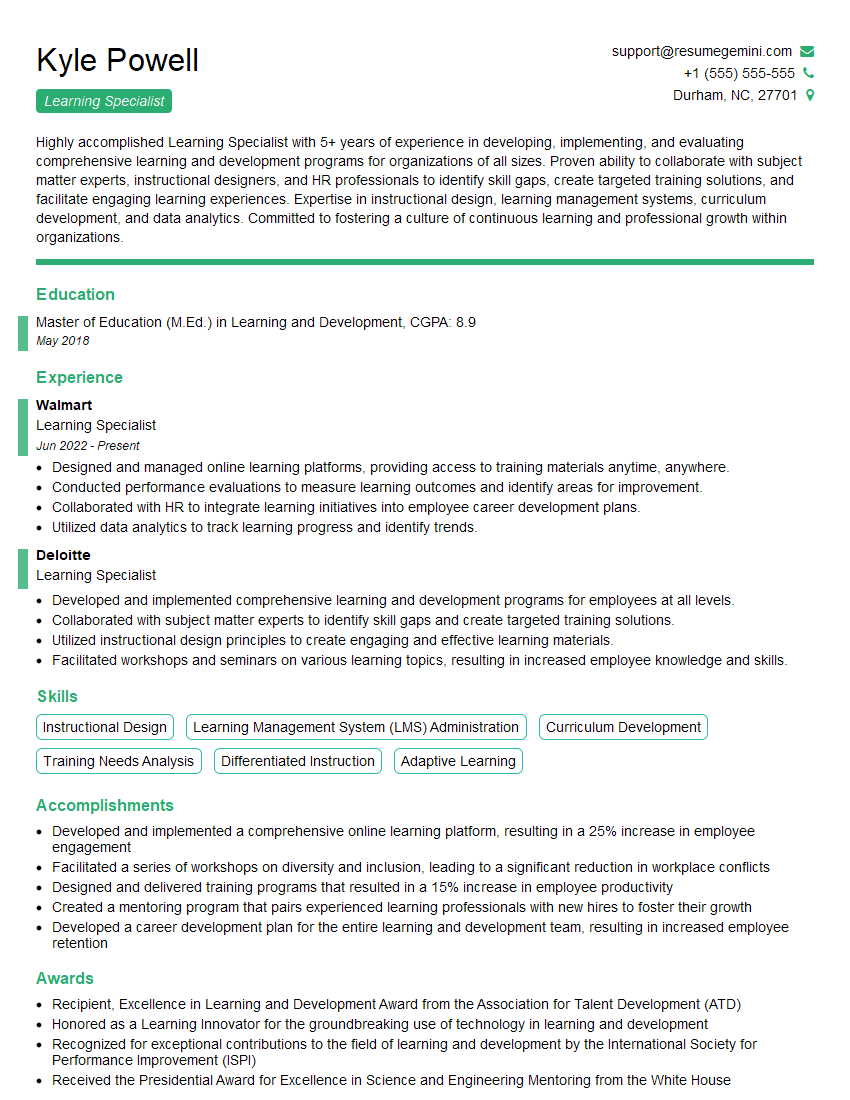
Learning Specialist Resume Sample
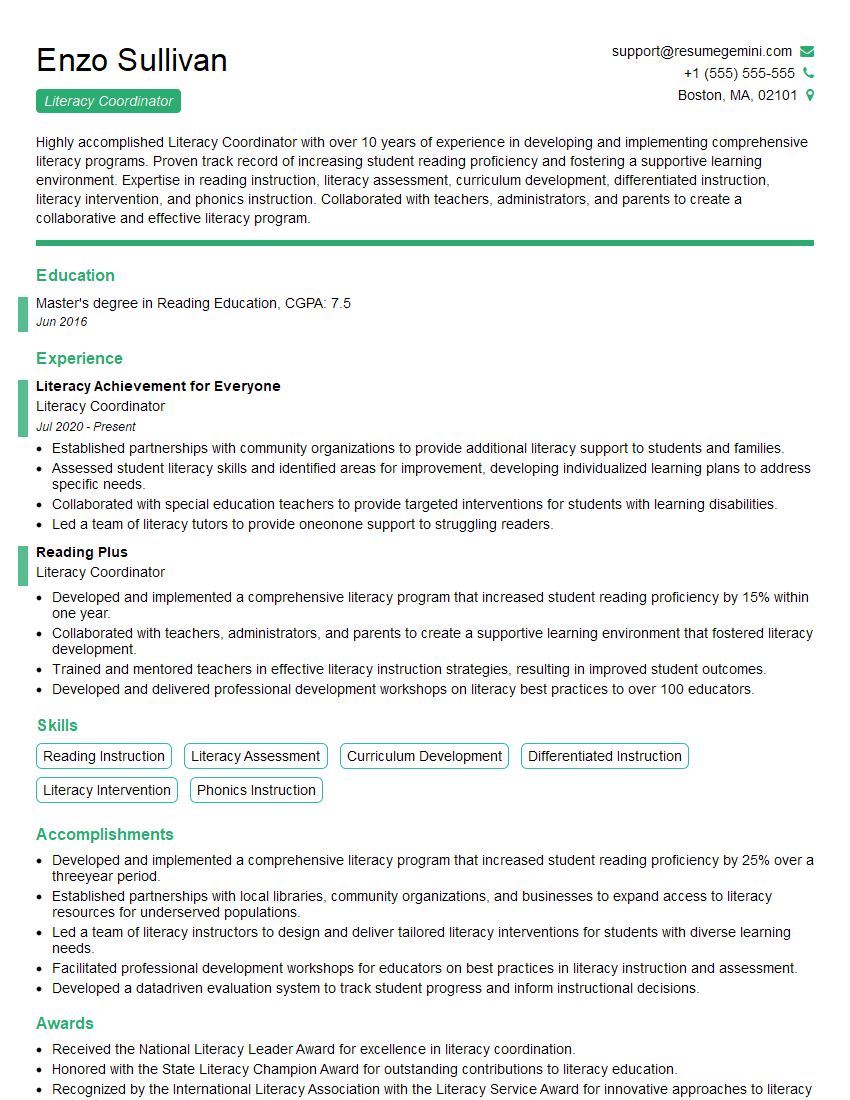
Literacy Coordinator Resume Sample
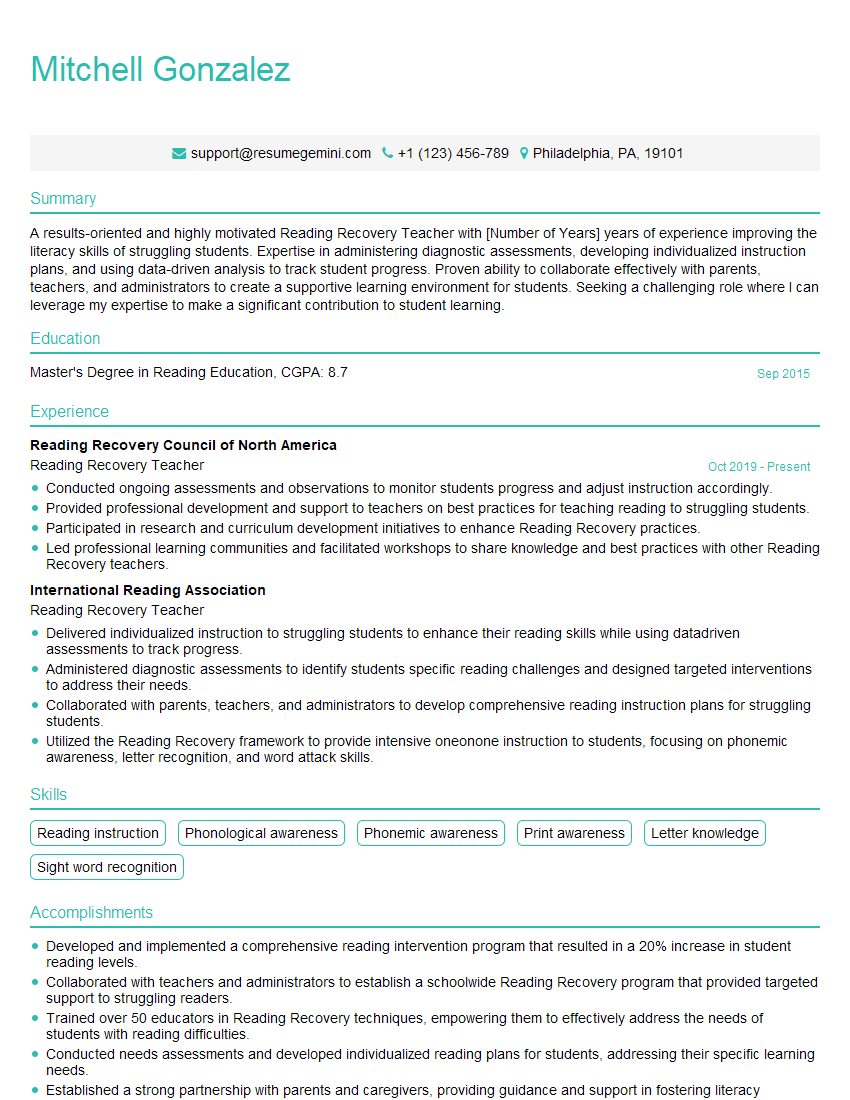
Reading Recovery Teacher Resume Sample
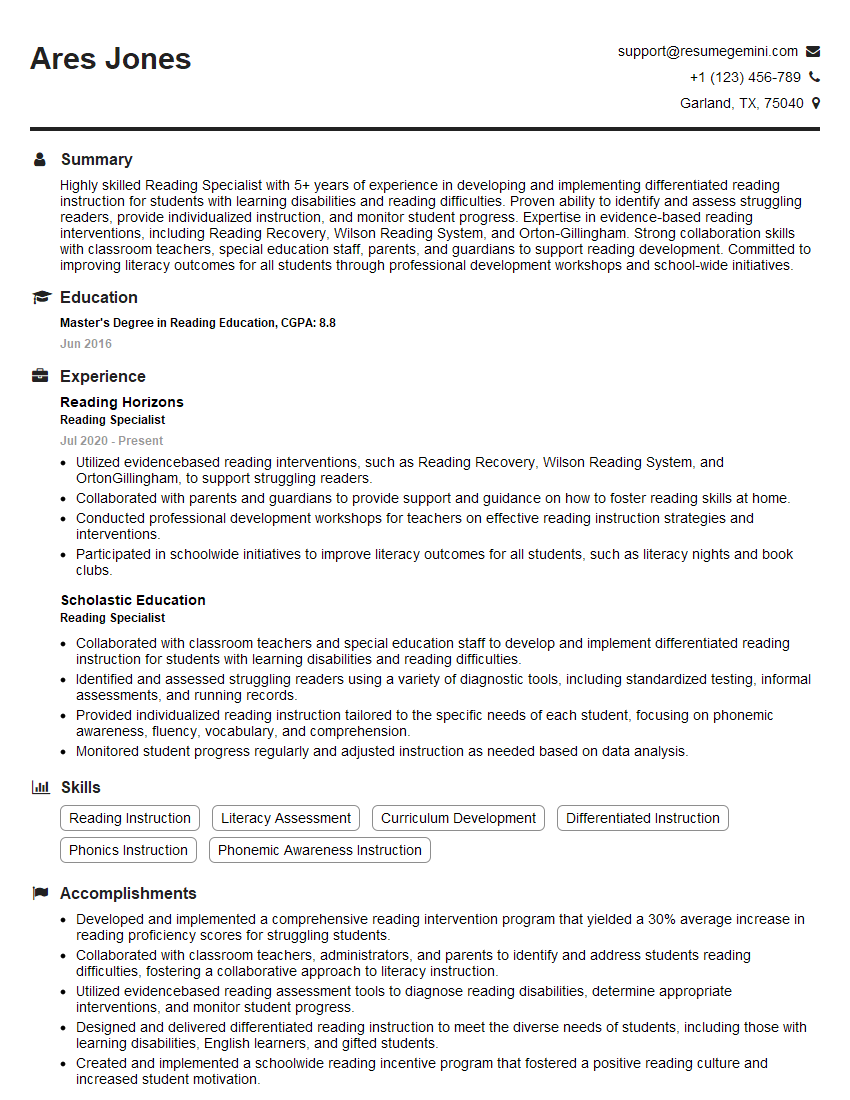
Reading Specialist Resume Sample
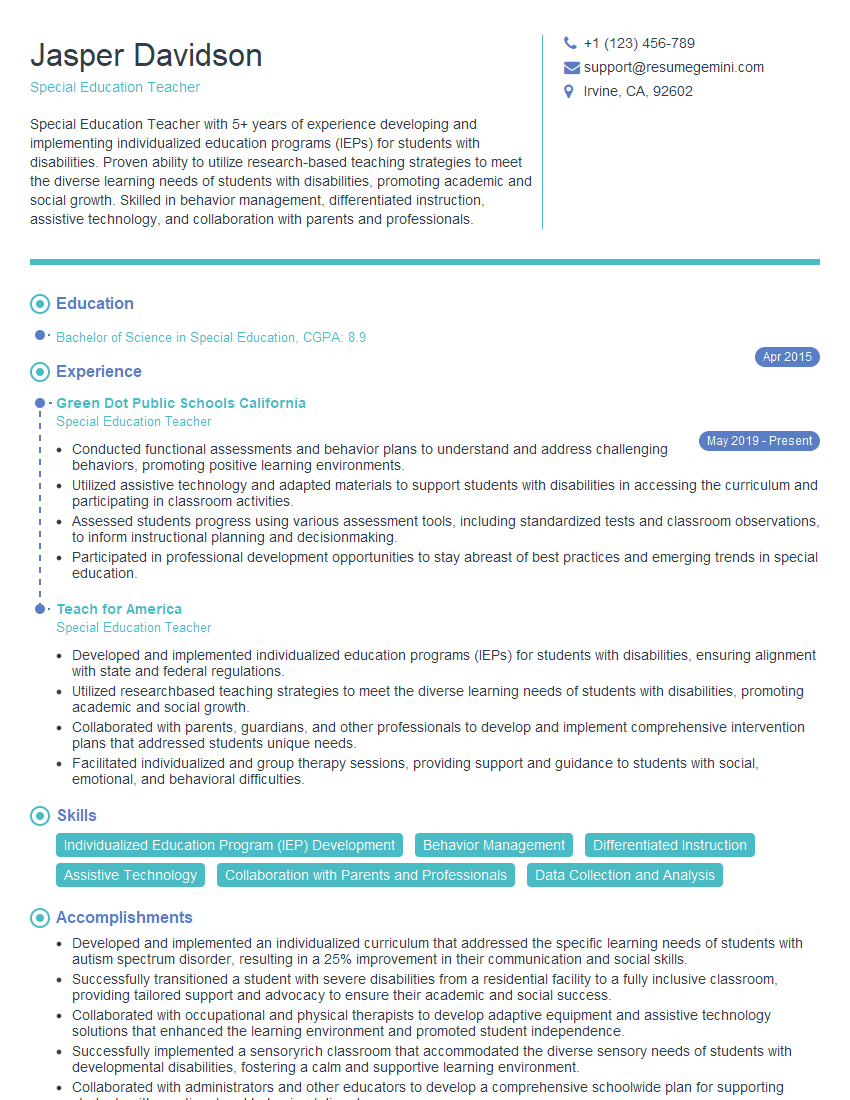
Special Education Teacher Resume Sample
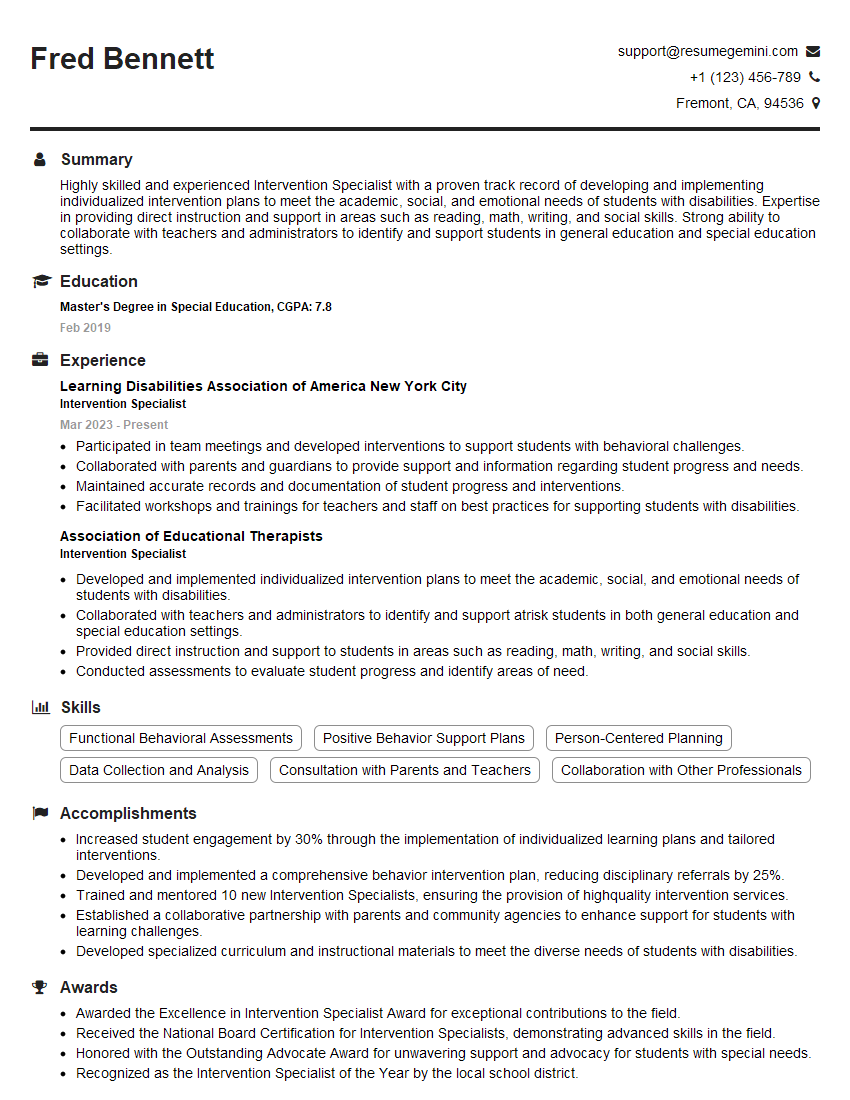
Intervention Specialist Resume Sample
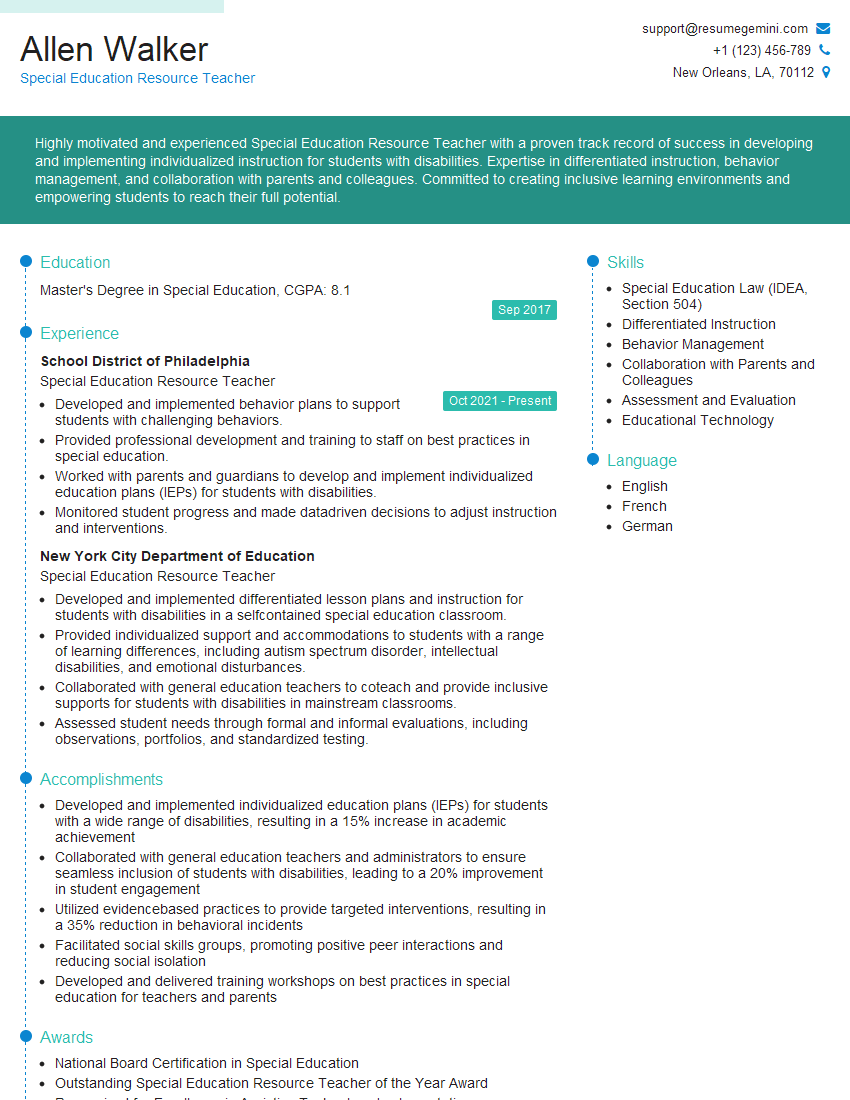
Special Education Resource Teacher Resume Sample
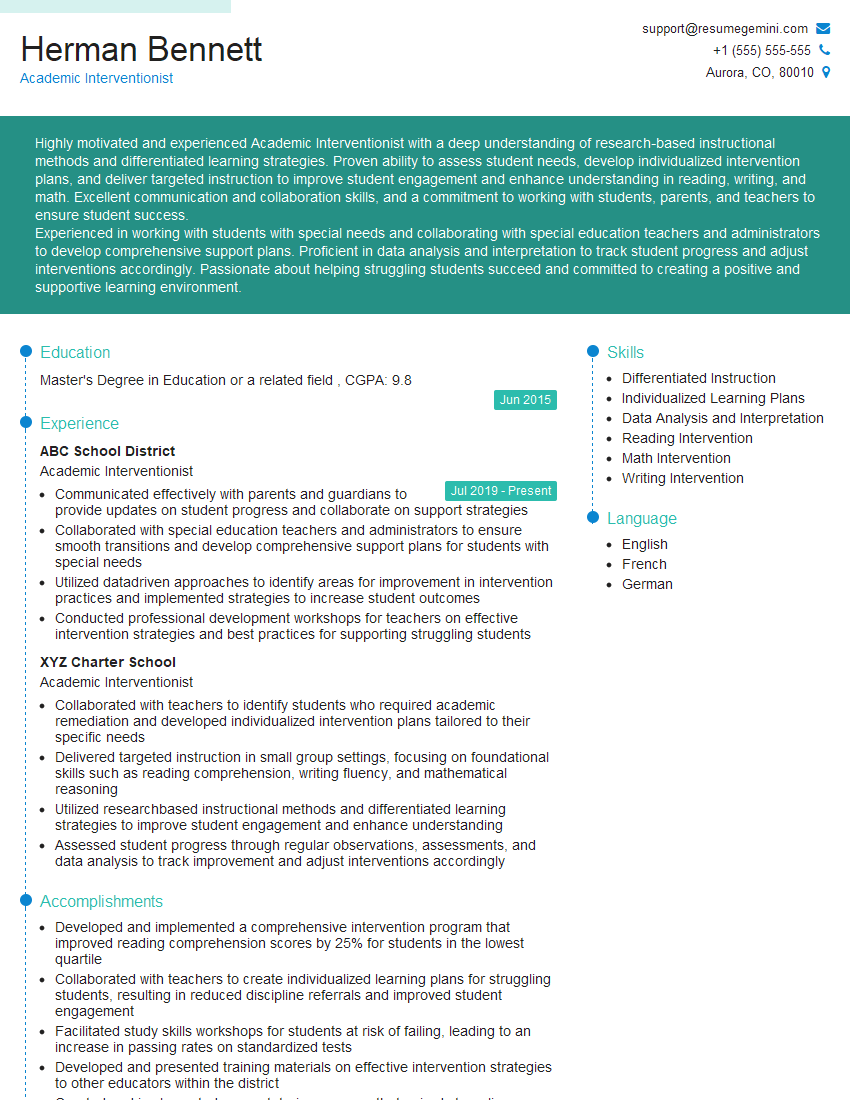
Academic Interventionist Resume Sample
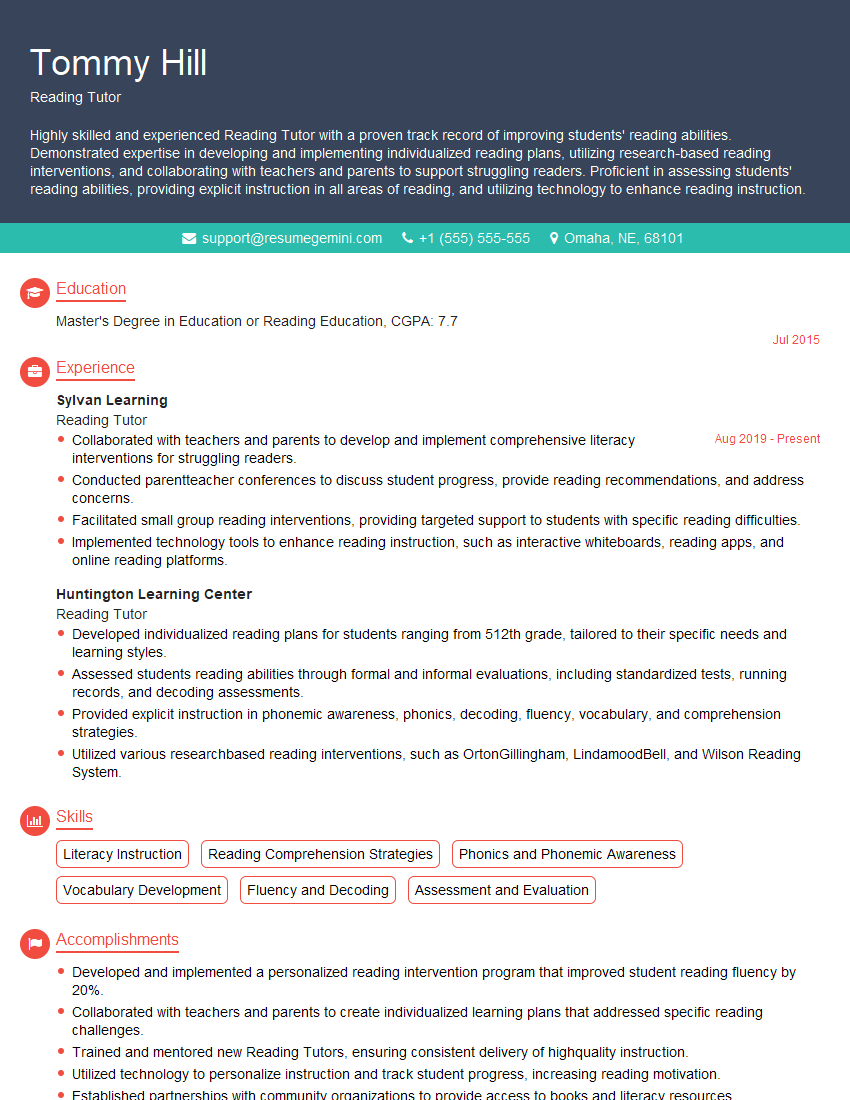
Reading Tutor Resume Sample
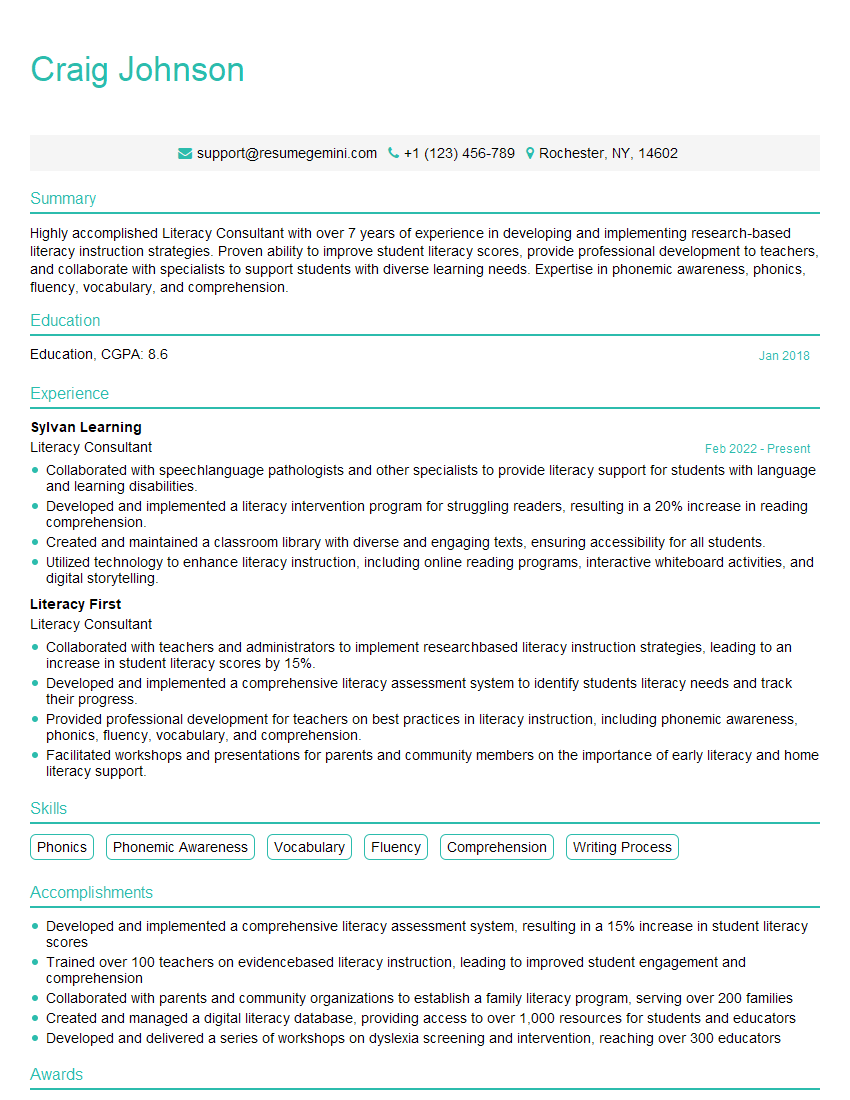
Literacy Consultant Resume Sample
Explore more articles
Users Rating of Our Blogs
Share Your Experience
We value your feedback! Please rate our content and share your thoughts (optional).
What Readers Say About Our Blog
I Redesigned Spongebob Squarepants and his main characters of my artwork.
https://www.deviantart.com/reimaginesponge/art/Redesigned-Spongebob-characters-1223583608
IT gave me an insight and words to use and be able to think of examples
Hi, I’m Jay, we have a few potential clients that are interested in your services, thought you might be a good fit. I’d love to talk about the details, when do you have time to talk?
Best,
Jay
Founder | CEO