Interviews are more than just a Q&A session—they’re a chance to prove your worth. This blog dives into essential Experience with Early Literacy Intervention interview questions and expert tips to help you align your answers with what hiring managers are looking for. Start preparing to shine!
Questions Asked in Experience with Early Literacy Intervention Interview
Q 1. Describe your experience with various early literacy assessments (e.g., DIBELS, AIMSweb).
I have extensive experience administering and interpreting various early literacy assessments, including DIBELS (Dynamic Indicators of Basic Early Literacy Skills) and AIMSweb (Assessment, Intervention, and Management System). DIBELS offers a suite of measures assessing phonological awareness, phonemic awareness, and fluency, providing a comprehensive picture of a child’s reading skills. For example, the DIBELS Oral Reading Fluency (ORF) measures the number of words read correctly per minute, a key indicator of reading proficiency. AIMSweb, on the other hand, provides a broader range of assessments covering various academic areas, including reading comprehension and vocabulary. I use these assessments to identify students’ strengths and weaknesses, track their progress over time, and inform the development of individualized intervention plans. The data from these assessments isn’t just a number; it’s a window into a child’s learning journey, allowing me to tailor my approach and optimize their learning experience.
For example, I once had a student who scored low on the DIBELS Phonemic Segmentation fluency measure. This indicated difficulty breaking down words into individual sounds. Based on this, I implemented targeted interventions focusing on phonemic awareness activities, such as rhyming games and sound manipulation exercises, resulting in significant improvement over several weeks.
Q 2. Explain your understanding of the stages of reading development.
Reading development unfolds in stages, each building upon the previous one. It’s not a linear progression; children may exhibit variations in their pace and mastery of different skills. Generally, we see these key stages:
- Pre-reading (Emergent Literacy): This stage focuses on foundational skills like print awareness (understanding that print carries meaning), phonological awareness (understanding the sounds of language), and oral language development. Children begin to recognize familiar words and show interest in books.
- Beginning Reading: Children start to decode words, using phonics knowledge to sound out words. Sight word recognition (quickly recognizing words without sounding them out) also develops. Comprehension at this stage is often literal.
- Transitional Reading: Students become more proficient decoders, reading with greater fluency and accuracy. They begin to utilize reading strategies like rereading and predicting. Comprehension skills become more sophisticated, encompassing inference and drawing conclusions.
- Fluent Reading: Readers at this stage read with automaticity and accuracy, focusing on comprehension. They can independently handle a variety of text types and read with expression and enjoyment. They can engage with complex texts and synthesize information from multiple sources.
Understanding these stages is crucial for tailoring instruction to the child’s current developmental level. Providing appropriate challenges and support at each stage is essential for success.
Q 3. What are some common early literacy challenges you’ve encountered and how did you address them?
Common early literacy challenges include difficulties with phonological awareness (e.g., struggling to rhyme or identify beginning sounds), weak letter-sound knowledge (e.g., confusing similar-sounding letters like ‘b’ and ‘d’), limited vocabulary, and poor reading fluency. I’ve addressed these challenges using a multi-faceted approach:
- Phonological Awareness Difficulties: I utilize explicit instruction in phonological awareness skills, incorporating engaging activities like rhyming games, syllable segmentation exercises, and blending and segmenting sounds.
- Weak Letter-Sound Knowledge: I employ systematic phonics instruction, teaching letter-sound relationships through multi-sensory activities, such as using letter tiles, building words with manipulatives, and explicit phonics lessons.
- Limited Vocabulary: I introduce new vocabulary through rich, interactive reading experiences, explicit vocabulary instruction, and using visuals and contextual clues.
- Poor Reading Fluency: I work on fluency through repeated readings of familiar texts, partner reading, and providing opportunities for independent reading. I also emphasize prosody (expression in reading).
For instance, a student struggling with letter recognition benefited significantly from using tactile letter shapes and tracing letters in sand. This multi-sensory approach made learning more engaging and effective.
Q 4. How do you differentiate instruction to meet the diverse needs of learners in early literacy?
Differentiated instruction is key to meeting diverse learners’ needs. I use a variety of strategies to tailor my instruction, considering each child’s strengths, weaknesses, learning styles, and cultural background. This includes:
- Small group instruction: Allows me to target specific skills and provide individualized support.
- Differentiated activities: Offering various activities with varying levels of difficulty ensures all students are challenged appropriately. For example, some students might work on basic phonics while others tackle more complex comprehension tasks.
- Flexible grouping: Grouping students based on their needs, whether it’s homogenous (students with similar needs) or heterogeneous (students with diverse needs), allowing for peer learning and support.
- Technology integration: Using educational apps and software can personalize learning and provide immediate feedback.
- Assistive technology: Employing tools like text-to-speech software or audiobooks for students with specific learning needs.
For example, I might provide one student with a simplified version of a reading passage, while another receives a more challenging version with accompanying comprehension questions tailored to their skill level.
Q 5. What evidence-based reading intervention programs are you familiar with?
I’m familiar with several evidence-based reading intervention programs, including:
- Reading Recovery: A one-on-one intervention program for first graders who are struggling with reading.
- Letters and Sounds: A systematic synthetic phonics program focusing on teaching letter-sound correspondences.
- Fast ForWord: A computer-based program designed to improve language processing skills.
- Wilson Reading System: A multisensory structured language program that addresses decoding difficulties.
The selection of a specific program depends on the student’s individual needs and the resources available. The effectiveness of these programs is supported by research demonstrating positive impacts on reading achievement.
Q 6. Describe your experience using data to inform instruction in early literacy.
Data-driven instruction is crucial in early literacy. I regularly use assessment data to inform my instructional decisions. This involves:
- Regular monitoring of student progress: Using formative assessments (e.g., quick checks, observations) to track student learning and adjust instruction as needed.
- Analyzing assessment data: Identifying patterns in student performance to pinpoint areas needing additional support.
- Adjusting instruction based on data: Modifying teaching strategies, activities, or materials based on student needs revealed through data analysis.
- Using data to inform goal setting: Setting individualized learning goals based on a student’s current performance and potential.
For example, if a student consistently struggles with a particular phonics skill, I’ll dedicate more time and resources to that specific area, using different teaching strategies until the student demonstrates mastery. This iterative process, guided by data, ensures that instruction remains effective and responsive to student progress.
Q 7. How do you collaborate with parents and families to support early literacy development?
Collaboration with parents and families is essential for supporting early literacy development. I maintain open communication with parents through:
- Regular communication: Providing updates on student progress, sharing strategies for supporting literacy at home, and addressing any concerns.
- Parent-teacher conferences: Discussing student progress in detail, collaboratively setting goals, and developing home-school connections.
- Workshops and presentations: Providing parents with information about early literacy development and effective strategies for supporting their child’s reading.
- Home-school communication tools: Using platforms like email, apps, or newsletters to share information and resources regularly.
- Sharing resources and activities: Suggesting books, games, and websites that parents can use to support their child’s reading at home.
I believe that a strong home-school partnership is crucial for creating a supportive and consistent learning environment, maximizing a child’s potential. For example, I might recommend a specific set of books that align with the student’s current reading level and interests, along with activities that encourage their engagement with those books.
Q 8. What strategies do you employ to build phonemic awareness in young children?
Phonemic awareness is the ability to hear and manipulate the individual sounds (phonemes) in spoken words. Building this crucial skill in young children involves a multi-sensory approach. I use a variety of engaging activities to help children develop this skill.
- Rhyming activities: We play games like rhyming word matching, generating rhyming words for a given word (e.g., cat, hat, bat), and identifying rhyming words in songs and stories. This helps children hear the sounds at the end of words.
- Sound isolation: I ask children to identify the beginning, middle, or ending sound in a word. For example, “What sound do you hear at the beginning of ‘dog’?” We might use picture cards to help visualize the sounds.
- Sound blending: Children learn to combine individual sounds to form words. For example, I might say “/c/-/a/-/t/” and ask them to blend the sounds to say ‘cat’.
- Sound segmentation: This involves breaking down a word into its individual sounds. For example, we would segment ‘cat’ into /c/-/a/-/t/.
- Sound substitution: This involves changing one sound in a word to create a new word. For instance, changing the /c/ in ‘cat’ to /h/ to make ‘hat’.
I always ensure the activities are fun and playful, using manipulatives, games, and songs to keep children engaged and motivated. For example, I might use blocks to represent sounds, or play a sound-matching game with flashcards.
Q 9. Explain your approach to teaching phonics and decoding skills.
My approach to teaching phonics and decoding skills is systematic and explicit. I use a multi-sensory approach, focusing on connecting letters to their sounds and then blending those sounds to read words. I start with the most common letter sounds and gradually introduce more complex patterns.
- Systematic phonics instruction: I follow a structured phonics program, introducing letter-sound correspondences in a logical sequence. We begin with consonants, then vowels, and then move on to consonant blends, digraphs, and vowel teams.
- Explicit instruction: I directly model the skills, providing clear explanations and demonstrating how to decode words. I use visual aids like letter charts and alphabet manipulatives.
- Multi-sensory activities: We use different senses to learn letter sounds – we might write letters in sand, trace them in the air, or use letter tiles. This helps children internalize the sounds and connections.
- Decodable texts: Once children learn letter-sound correspondences, I introduce decodable texts – books with words that contain only the letter-sound relationships they have learned. This allows children to practice their decoding skills in a meaningful context.
I regularly assess students’ understanding of phonics and provide differentiated instruction to meet individual needs. If a student struggles with a particular sound, I provide extra practice and support using different teaching methods tailored to their learning style. For instance, if a child is struggling with blending, we’ll use more hands-on activities and break down the word slowly, visually highlighting each sound.
Q 10. How do you foster a love of reading in young children?
Fostering a love of reading involves creating a positive and engaging reading environment. I believe in making reading a joyful experience rather than a chore.
- Shared reading: We engage in interactive shared reading sessions, where I model fluent reading and point out interesting features of the text such as illustrations, rhythm, and rhyme.
- Read-alouds: I regularly read aloud to children, selecting books that are engaging, age-appropriate, and reflect their interests. I use expressive voices and encourage interaction by asking questions and making predictions.
- Choice in reading materials: I offer a variety of books to choose from, ensuring that the selection represents diverse authors, genres, and cultures. This allows children to find books they connect with and want to read.
- Creating a comfortable reading space: A dedicated reading area with cozy furniture, comfortable lighting, and a variety of books creates a inviting space for reading.
- Connecting reading to their interests: If a child is passionate about dinosaurs, I’ll find books about dinosaurs. Connecting reading to their passions increases engagement and motivates them.
In addition, I make sure to celebrate reading achievements, whether it’s finishing a book or mastering a new decoding skill. Reading should be fun and rewarding!
Q 11. What techniques do you use to build fluency and comprehension?
Building fluency and comprehension requires a balanced approach that integrates oral language development, reading practice, and comprehension strategies.
- Repeated reading: Children reread the same text several times to improve their reading speed and accuracy. This helps build automaticity.
- Partner reading: Students read aloud with a partner, taking turns reading sections of the text. This provides opportunities for peer support and modeling.
- Choral reading: The class reads aloud together, creating a supportive and engaging environment for practice.
- Modeling fluent reading: I demonstrate fluent reading by reading aloud to children, emphasizing expression and intonation.
- Comprehension strategies: I teach children comprehension strategies like predicting, visualizing, questioning, summarizing, and connecting to prior knowledge.
- Interactive read-alouds: During read-alouds, we pause to discuss the story, make predictions, and clarify challenging vocabulary. This ensures children are actively engaged and comprehending the material.
I regularly assess students’ fluency and comprehension through informal reading inventories and classroom observations. I use this data to adjust instruction and provide differentiated support.
Q 12. How do you assess a child’s reading level and identify their specific needs?
Assessing a child’s reading level involves using a combination of formal and informal assessments to get a holistic view of their abilities and needs.
- Informal Reading Inventories (IRIs): IRIs provide a comprehensive assessment of a student’s reading skills, including decoding, fluency, and comprehension. These involve reading passages aloud and answering comprehension questions.
- Running records: These involve observing a student as they read a passage, noting errors and self-corrections. This helps identify specific patterns of reading difficulties.
- Curriculum-based measures (CBMs): CBMs use brief, standardized assessments to track student progress in reading skills over time. This data informs the instructional plan.
- Observations: I observe students during reading activities, noting their engagement, strategies, and difficulties. This provides valuable insights into their reading process.
- Oral language assessment: Assessing a child’s vocabulary, phonological awareness, and narrative skills helps to identify areas that support reading development.
Based on the assessment data, I create individualized learning plans that target the child’s specific needs. This might involve providing extra support in phonics, fluency, or comprehension, or adjusting the difficulty of reading materials. It’s crucial to differentiate and provide targeted support based on their unique strengths and challenges.
Q 13. Describe your experience with progress monitoring in early literacy.
Progress monitoring is essential in early literacy intervention to track student progress and make data-driven adjustments to instruction. I regularly monitor students’ progress using a variety of methods.
- Curriculum-based measurement (CBM): I use CBMs to track students’ reading fluency and accuracy over time. This provides objective data on their growth. A graph visually displays progress, showing gains or areas needing attention.
- Informal assessments: I use informal assessments like running records and anecdotal notes to monitor students’ progress on specific skills. Anecdotal notes allow me to record observations of student performance and behaviors, providing a more detailed insight than just a numerical score.
- Data-driven instruction: I use the progress monitoring data to adjust my instruction and provide differentiated support for students who are struggling. If a student isn’t making adequate progress, I reassess, adapt my strategies and potentially collaborate with colleagues to refine the intervention approach.
- Parent communication: I regularly communicate with parents about their child’s progress and involve them in the intervention process. This builds a strong home-school partnership crucial for success.
Regular progress monitoring is crucial for ensuring that students are making adequate progress and that interventions are effective. It allows for timely adjustments and prevents reading difficulties from becoming more entrenched.
Q 14. How do you adapt your instruction to meet the needs of students with disabilities?
Adapting instruction for students with disabilities requires a personalized approach that considers the student’s specific needs and learning styles. I collaborate closely with special education teachers and other professionals to develop individualized education programs (IEPs) or 504 plans.
- Differentiated instruction: I adjust the pace, complexity, and mode of instruction to meet the student’s individual needs. This might involve providing extra support in specific areas or modifying assignments to be more accessible.
- Assistive technology: I use assistive technology, such as text-to-speech software or audiobooks, to support students with reading difficulties. For visual impairments, large print or screen magnifiers are utilized.
- Multi-sensory learning: I incorporate multi-sensory activities to engage students with different learning styles. For instance, using manipulatives, kinesthetic activities, or visual supports to strengthen understanding.
- Modifications and accommodations: I make appropriate modifications and accommodations in assessments and assignments to ensure fair and accurate evaluation of student learning. Extended time, alternative assessment formats, or reduced workload may be necessary.
- Collaboration: I work collaboratively with other professionals, such as special education teachers, occupational therapists, and speech-language pathologists, to provide comprehensive support for students with disabilities. This collaborative effort is key in creating a supportive and effective learning environment.
My goal is to create a supportive and inclusive classroom where all students feel valued and have the opportunity to succeed. Every student deserves the support they need to reach their full potential.
Q 15. What technology or tools have you used to support early literacy instruction?
Technology plays a vital role in enhancing early literacy instruction. I’ve utilized a range of tools, adapting them to suit the specific needs of my students. Interactive whiteboard software, like SMART Notebook, allows for engaging lessons with multimedia elements, making learning more dynamic and visually appealing. For example, I’ve used it to create interactive stories, where students can click on words to hear them pronounced and see accompanying images. Reading apps like Starfall and ABCmouse provide individualized practice and games, catering to different learning styles and paces. These apps track progress, offering valuable data to inform my instruction. Finally, I incorporate digital storytelling tools, allowing students to create their own stories using images and voice recordings, fostering creativity and literacy skills simultaneously. This empowers them to take ownership of their learning and enhances their self-expression.
Career Expert Tips:
- Ace those interviews! Prepare effectively by reviewing the Top 50 Most Common Interview Questions on ResumeGemini.
- Navigate your job search with confidence! Explore a wide range of Career Tips on ResumeGemini. Learn about common challenges and recommendations to overcome them.
- Craft the perfect resume! Master the Art of Resume Writing with ResumeGemini’s guide. Showcase your unique qualifications and achievements effectively.
- Don’t miss out on holiday savings! Build your dream resume with ResumeGemini’s ATS optimized templates.
Q 16. How do you create a positive and engaging learning environment for early literacy instruction?
Creating a positive and engaging learning environment is paramount in early literacy. Think of it as building a warm and inviting ‘reading clubhouse’. It starts with establishing a predictable routine and clear expectations, creating a sense of security and comfort. The classroom should be rich in print, featuring labels, charts, and books readily accessible to students. We engage in shared reading experiences, often using big books or interactive story time, fostering a love for stories and building vocabulary. I incorporate hands-on activities, like play-based learning with literacy themes, or creating a dramatic play area with literacy components. For example, a ‘post office’ where students write and deliver pretend letters. Music and movement are also essential; we sing alphabet songs, action rhymes, and use movement to represent literacy concepts, keeping the learning active and fun. Positive reinforcement and celebrating successes are key to boosting confidence and motivation.
Q 17. Explain your understanding of the role of oral language development in early literacy.
Oral language development is the bedrock of early literacy. Think of it as the foundation upon which reading and writing are built. A strong oral language base equips children with the vocabulary, phonological awareness (understanding sounds in words), and narrative skills crucial for reading comprehension and writing fluency. Children who readily engage in conversations, tell stories, and use complex sentences have a significant advantage. I actively foster oral language development through various strategies, including: interactive read-alouds (modeling fluent reading and rich vocabulary), engaging in conversations around books and themes, encouraging storytelling and dramatic play, and engaging in open-ended questioning and discussions to foster critical thinking.
Q 18. What strategies do you use to support struggling readers?
Supporting struggling readers requires a multi-faceted approach. First, I conduct thorough assessments to pinpoint their specific difficulties. Is it decoding (sounding out words), fluency (reading smoothly), or comprehension (understanding the text)? Once identified, I provide targeted interventions. For example, for students struggling with phonics, I use explicit and systematic phonics instruction, focusing on letter-sound relationships. For those struggling with fluency, I use repeated readings, paired reading with peers, and provide opportunities for oral reading practice with supportive feedback. For comprehension difficulties, I use graphic organizers, pre-teaching vocabulary, and model strategies like questioning and summarizing. Collaboration with parents and specialists is crucial; I create home-school connections, offering resources and strategies to enhance learning at home. Regular monitoring of progress and adjustments to interventions are essential for ensuring effective support.
Q 19. How do you involve students in the assessment process?
I believe involving students in the assessment process is essential for fostering ownership and understanding. For younger children, this might involve using playful assessment methods. For example, using picture cards to assess vocabulary or engaging in interactive games to evaluate phonological awareness. As they get older, I encourage self-assessment through checklists or reflection journals. They might track their progress on a specific skill or reflect on their reading strategies. Student-led conferences are an effective approach where children can share their work, strengths, and areas for improvement with parents and me. This collaborative approach ensures that assessments are not merely tests but valuable learning experiences.
Q 20. How do you maintain accurate records of student progress in early literacy?
Maintaining accurate records of student progress is vital for effective intervention and communication. I use a combination of methods. Digital platforms like learning management systems provide convenient ways to track assessments, assignments, and participation. I also maintain detailed anecdotal notes in a student portfolio, recording observations of their performance and behavior. These notes are qualitative, documenting not just scores but also their engagement, strategies used, and challenges faced. Progress monitoring charts visualize individual student progress, providing a clear picture of their growth over time. This data informs instructional decisions, ensures accountability, and provides valuable insights for parent-teacher conferences.
Q 21. Describe your experience working with diverse learners in early literacy.
Working with diverse learners requires sensitivity, flexibility, and a deep understanding of individual needs. I differentiate my instruction to cater to different learning styles, language backgrounds, and cultural experiences. For example, I incorporate multilingual resources, utilizing both English and students’ native languages to build comprehension. I also make sure to use culturally relevant materials and examples, so students can connect with the learning and feel valued. Collaboration with families and community resources is key to provide additional support. I adapt my teaching strategies to meet the specific needs of each child, utilizing visual aids, hands-on activities, and technology to maximize engagement and ensure that all students have the opportunity to succeed. It’s about creating a truly inclusive classroom where every student feels seen, heard, and supported.
Q 22. How do you address behavior challenges that may interfere with early literacy learning?
Addressing behavior challenges in early literacy learning requires a multifaceted approach that focuses on understanding the root cause of the behavior and implementing strategies that support both the child’s emotional and academic needs. It’s crucial to remember that disruptive behaviors often stem from underlying difficulties, such as frustration with the learning material, unmet social-emotional needs, or sensory sensitivities.
Positive Behavior Interventions and Supports (PBIS): This framework emphasizes proactive strategies to prevent challenging behaviors. This might involve establishing clear classroom rules and expectations, providing positive reinforcement for appropriate behavior, and teaching students self-regulation skills. For example, I’ve implemented a visual schedule and a reward chart system successfully with students who struggled with transitions and staying on task.
Functional Behavioral Assessment (FBA): If behaviors persist, an FBA is crucial. This involves systematically identifying the function of the behavior (e.g., to escape a task, gain attention). Once the function is understood, we can develop a behavior intervention plan (BIP) targeting the underlying need. For instance, a student constantly interrupting might be seeking attention; addressing this by providing more individual attention or positive reinforcement for staying on task is far more effective than punishment.
Collaboration with Parents and Specialists: Working closely with parents and specialists like school psychologists or occupational therapists is vital. They can provide valuable insights into the child’s behavior and suggest strategies tailored to their individual needs. Sharing data and strategies enhances consistency across different settings.
Differentiation and Modification: Sometimes, behavioral challenges are directly linked to the learning material itself. Adapting the curriculum to better suit the child’s learning style and abilities can significantly reduce frustration and improve behavior. This might involve providing shorter assignments, using different modalities (visual, auditory, kinesthetic), or breaking down tasks into smaller, more manageable steps.
Q 23. What professional development activities have you undertaken related to early literacy?
My professional development in early literacy has been ongoing and comprehensive. I’ve actively sought opportunities to enhance my knowledge and skills in various areas.
Evidence-based Reading Interventions: I’ve participated in extensive training on scientifically-backed reading interventions, such as Orton-Gillingham and structured literacy approaches. These trainings equip me with the specific techniques to address phonological awareness, phonics, fluency, vocabulary, and comprehension difficulties.
Assessment and Data Analysis: I’ve completed workshops focused on administering and interpreting various literacy assessments, including standardized tests and informal assessments. This allows me to accurately diagnose reading difficulties and monitor student progress.
Technology Integration: I’ve engaged in professional development on integrating technology into literacy instruction. This includes using educational apps, interactive whiteboards, and assistive technology to enhance engagement and differentiate instruction. For example, I’ve become proficient in using programs that provide personalized feedback and adapt to individual learning needs.
Differentiated Instruction: I’ve participated in workshops and conferences focused on creating diverse and engaging learning environments that meet the varied needs of all learners. This includes learning strategies for differentiating instruction based on student readiness, interest, and learning profile.
Q 24. Explain your experience developing Individualized Education Programs (IEPs) for students with reading difficulties.
Developing Individualized Education Programs (IEPs) for students with reading difficulties requires a collaborative and data-driven approach. My experience involves:
Comprehensive Assessment: Gathering data from various sources, including standardized tests, curriculum-based measurements, informal assessments, and observations, to create a detailed profile of the student’s reading strengths and weaknesses.
Goal Setting: Collaborating with parents, teachers, specialists, and the student (when appropriate) to establish measurable, achievable, relevant, and time-bound (SMART) goals focused on improving specific reading skills.
Intervention Strategies: Identifying and documenting specific, evidence-based instructional strategies and interventions that will be implemented to help the student achieve their goals. This often involves specifying the type of support, frequency, and duration of interventions.
Progress Monitoring: Regularly assessing student progress towards their IEP goals using both formative and summative assessments and adjusting the IEP as needed. For example, I’ve used data from weekly probes to make adjustments to a student’s phonics instruction, resulting in significant improvements.
Parent and Team Communication: Maintaining open communication with parents and the IEP team throughout the process, ensuring everyone is informed and actively involved in the student’s educational journey.
Q 25. How do you use formative and summative assessments to inform your teaching in early literacy?
Formative and summative assessments are integral to effective early literacy instruction. They provide valuable feedback to both the teacher and the student, guiding instruction and measuring overall learning.
Formative Assessments: These are ongoing, low-stakes assessments used to monitor student progress and adjust instruction in real-time. Examples include: exit tickets, quick writes, observation checklists, and informal reading inventories. I use this data to identify areas where students need additional support and adjust my teaching accordingly.
Summative Assessments: These are high-stakes assessments conducted at the end of a unit or term to evaluate overall learning and mastery of concepts. Examples include unit tests, end-of-year assessments, and standardized tests. These assessments help me gauge the effectiveness of my teaching and identify areas for improvement in future instruction.
Data-Driven Decision Making: The data collected from both formative and summative assessments are used to inform my teaching practices. For example, if formative assessments show a group of students struggling with a particular phonics skill, I adjust my lessons to provide more focused instruction and practice in that area.
Q 26. What is your experience with Response to Intervention (RTI) models?
Response to Intervention (RTI) is a multi-tiered system of support designed to prevent academic difficulties and provide early intervention for students who are at risk of falling behind. My experience with RTI models includes:
Tier 1: Universal Screening and Instruction: Implementing high-quality, evidence-based instruction for all students. This includes using research-based methods and monitoring student progress through universal screening measures. This ensures all students have access to quality instruction and identifies those who might need additional support.
Tier 2: Targeted Intervention: Providing supplemental instruction to students who are not making adequate progress in Tier 1. This often involves small-group interventions focused on specific skill deficits. For instance, I might work with a small group of students who are struggling with phonics in a targeted intervention group.
Tier 3: Intensive Intervention: Providing intensive, individualized instruction to students who continue to struggle despite receiving Tier 2 support. This may involve specialized instruction delivered by a reading specialist or other related service provider. This might include one-on-one tutoring or the implementation of a specialized program tailored to the student’s specific needs.
Data Analysis and Decision Making: Regularly monitoring student progress at each tier using data-based decision making to determine the effectiveness of interventions and to make adjustments as needed.
Q 27. Describe a time you had to adapt your teaching approach based on student performance data.
I recall a situation where a group of students were struggling with reading fluency despite receiving Tier 2 intervention focused on repeated reading. Initial progress monitoring data showed minimal improvement. Analyzing the data, I realized that the students were struggling with decoding multisyllabic words, which was impacting their overall fluency.
I adapted my approach by incorporating explicit instruction and practice on morphemic analysis – breaking down multisyllabic words into their individual morphemes (meaning units) – into the Tier 2 intervention. We used activities that focused on identifying prefixes, suffixes, and root words. Subsequent progress monitoring data showed a significant improvement in the students’ fluency, demonstrating the importance of data-driven decision making and adapting interventions based on student needs.
Q 28. How do you ensure that your instruction is aligned with relevant standards and curriculum?
Ensuring alignment with relevant standards and curriculum is paramount for effective early literacy instruction. My approach involves:
Understanding State Standards: Thoroughly familiarizing myself with state standards for early literacy, understanding the specific skills and knowledge that students are expected to master at each grade level.
Curriculum Mapping: Mapping my instructional plans to the state standards to ensure that all required skills are addressed. This includes aligning lesson objectives, activities, and assessments to specific standards.
Using Curriculum Resources: Utilizing high-quality curriculum resources that are aligned with state standards. This might involve using approved textbooks, supplemental materials, and online resources that support the standards.
Professional Collaboration: Collaborating with other teachers and administrators to ensure consistency in instruction and alignment across grade levels. This involves sharing best practices and participating in professional development focused on the curriculum.
Continuous Monitoring: Regularly reviewing my instruction and student performance data to ensure that I am effectively addressing the standards and making necessary adjustments.
Key Topics to Learn for Experience with Early Literacy Intervention Interview
- Developmental Milestones in Early Literacy: Understanding typical and atypical development in phonological awareness, print awareness, vocabulary, and narrative skills. This includes recognizing developmental delays and their potential impact.
- Assessment Methods and Tools: Familiarity with various assessment tools used to evaluate a child’s literacy skills (e.g., informal reading inventories, standardized tests). Be prepared to discuss strengths and limitations of different approaches.
- Evidence-Based Intervention Strategies: Knowledge of effective instructional practices such as explicit phonics instruction, guided reading, shared reading, and interactive writing. Be ready to discuss your experience implementing and adapting these strategies based on individual student needs.
- Differentiated Instruction and IEP/IFSP Development: Understanding how to tailor instruction to meet the diverse needs of learners, including those with Individualized Education Programs (IEPs) or Individualized Family Service Plans (IFSPs). Be prepared to discuss your experience in collaborating with IEP teams.
- Collaboration with Families and Professionals: Importance of building strong relationships with families and other professionals (e.g., speech therapists, special education teachers) to support a child’s literacy development. Describe your approach to effective communication and collaboration.
- Data-Driven Instruction and Progress Monitoring: Using data to inform instructional decisions and track student progress. Be ready to discuss your experience with data collection, analysis, and its impact on intervention strategies.
- Common Challenges and Problem-Solving: Addressing common challenges encountered in early literacy intervention, such as motivation, behavior management, and adapting to different learning styles. Describe your problem-solving approaches and strategies for overcoming these challenges.
Next Steps
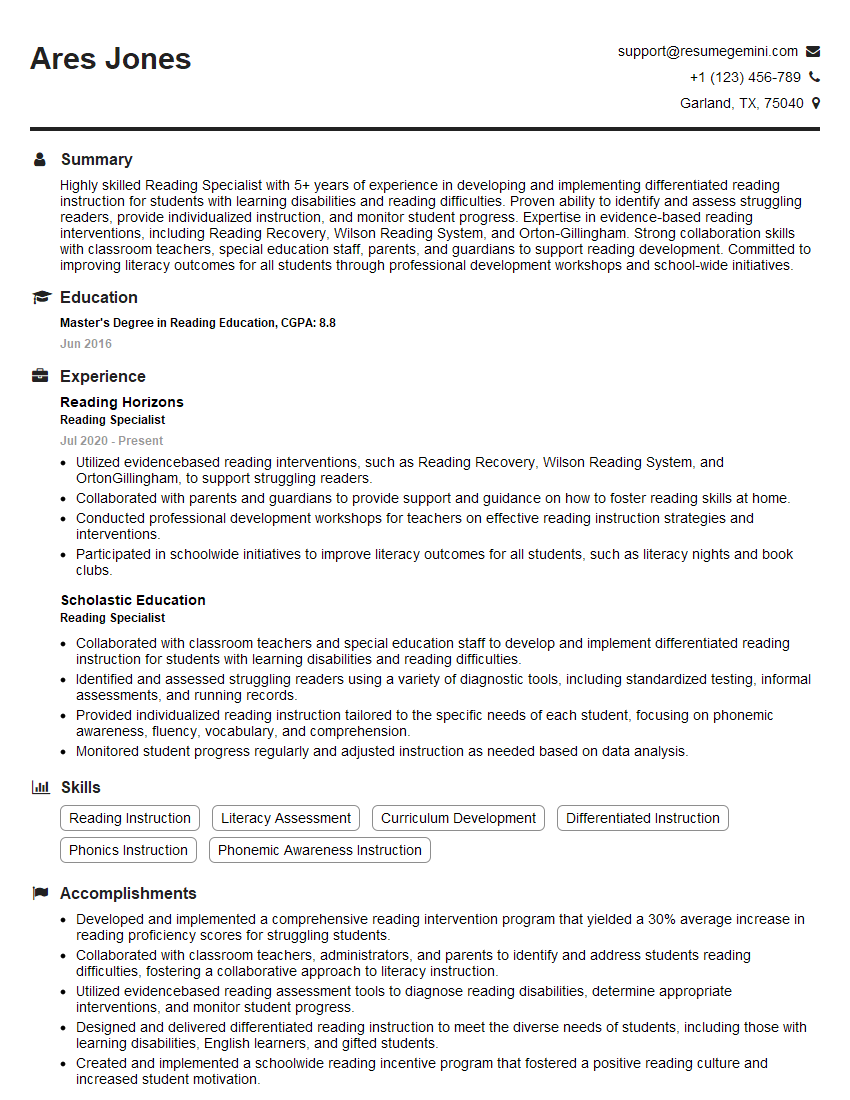
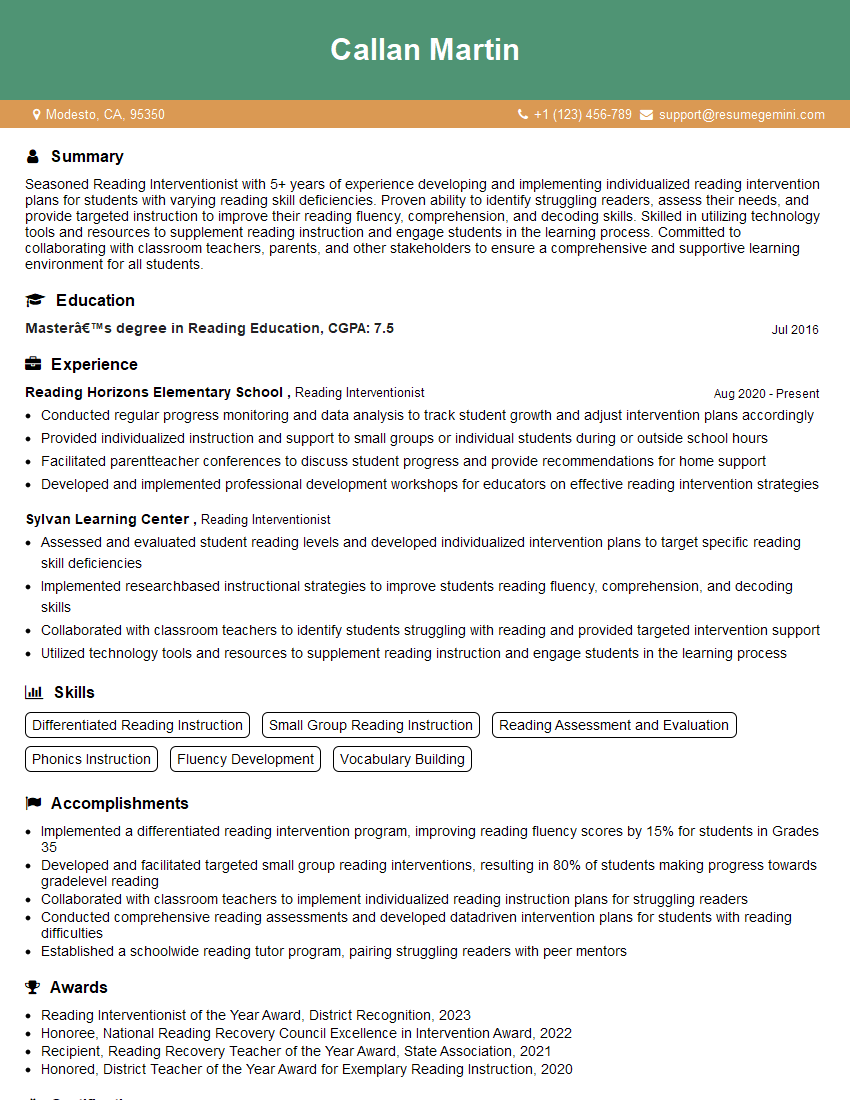
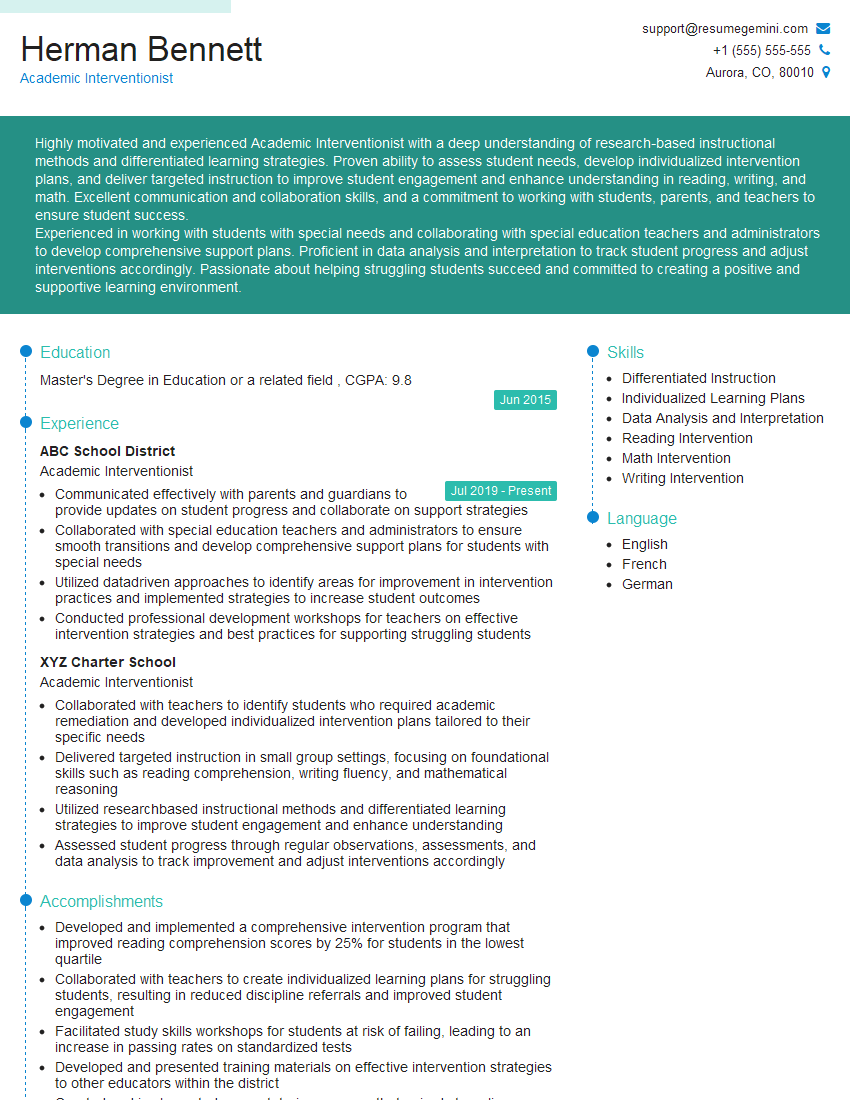
Mastering early literacy intervention significantly enhances your career prospects in education and related fields, opening doors to leadership roles and specialized positions. An ATS-friendly resume is crucial for maximizing your job search success. To create a compelling and effective resume that highlights your skills and experience, we highly recommend using ResumeGemini. ResumeGemini provides a user-friendly platform and offers examples of resumes tailored to Experience with Early Literacy Intervention, helping you present your qualifications effectively. Invest in building a strong resume; it’s your first impression on potential employers.
Explore more articles
Users Rating of Our Blogs
Share Your Experience
We value your feedback! Please rate our content and share your thoughts (optional).
What Readers Say About Our Blog
I Redesigned Spongebob Squarepants and his main characters of my artwork.
https://www.deviantart.com/reimaginesponge/art/Redesigned-Spongebob-characters-1223583608
IT gave me an insight and words to use and be able to think of examples
Hi, I’m Jay, we have a few potential clients that are interested in your services, thought you might be a good fit. I’d love to talk about the details, when do you have time to talk?
Best,
Jay
Founder | CEO