Feeling uncertain about what to expect in your upcoming interview? We’ve got you covered! This blog highlights the most important Nutrient Management and Fertigation interview questions and provides actionable advice to help you stand out as the ideal candidate. Let’s pave the way for your success.
Questions Asked in Nutrient Management and Fertigation Interview
Q 1. Explain the principles of fertigation and its advantages over traditional fertilization methods.
Fertigation is the application of fertilizers through an irrigation system. It’s a precise and efficient method of nutrient delivery, offering several advantages over traditional broadcast or band application methods.
- Increased Nutrient Use Efficiency: Fertigation delivers nutrients directly to the plant’s root zone, minimizing losses due to runoff, leaching, or volatilization. This translates to significant cost savings and reduced environmental impact.
- Improved Nutrient Uptake: Plants readily absorb nutrients dissolved in irrigation water, leading to better nutrient uptake and utilization compared to the slower release from solid fertilizers.
- Optimized Nutrient Management: Fertigation allows for precise control of nutrient application, adapting to the crop’s changing needs throughout its growth cycle. This results in optimized growth and yield.
- Reduced Labor Costs: Automated fertigation systems significantly reduce the time and labor required for fertilizer application compared to manual methods.
- Better Water Management: Combining irrigation and fertilization saves time and water by minimizing the number of trips across the field.
For example, imagine growing tomatoes. Traditional methods might involve scattering granular fertilizer around the plants, with much of it wasted. Fertigation, however, delivers only the necessary nutrients directly to the roots, leading to healthier, more productive plants.
Q 2. Describe different fertigation techniques (e.g., drip, flood, subirrigation).
Several fertigation techniques exist, each suited to different cropping systems and soil types:
- Drip Fertigation: This method delivers nutrient solution directly to the plant roots through a network of small emitters or drippers. It’s highly efficient for water and fertilizer use, ideal for high-value crops and water-scarce regions. Think of it like giving each plant its own personalized drink.
- Flood Fertigation: Involves flooding a field with the nutrient solution. It’s suitable for crops that can tolerate temporary flooding and is often used in rice cultivation or large-scale field crops. Think of a gentle bath for the roots.
- Subirrigation: The nutrient solution is applied beneath the soil surface. This minimizes water evaporation and is particularly effective in sandy or well-drained soils. Think of supplying nutrients from a hidden source beneath the ground.
- Sprinkler Fertigation: The nutrient solution is applied through sprinklers, offering a wider coverage area. This method is less precise than drip irrigation but is suitable for larger fields.
Q 3. How do you determine the appropriate nutrient solution concentration for a specific crop?
Determining the appropriate nutrient solution concentration involves considering several factors:
- Crop requirements: Different crops have different nutrient needs at various growth stages. This information is available in research publications and crop guides.
- Soil analysis: A soil test reveals the existing nutrient levels in the soil, allowing for adjustments in the fertigation program to prevent deficiencies or excesses.
- Irrigation water quality: The nutrient content of the irrigation water needs to be considered to avoid over-fertilization. Water analysis is crucial.
- Climate conditions: Temperature, rainfall, and humidity influence nutrient uptake and leaching. Climate factors must be accounted for.
- Growth stage of the crop: Nutrient requirements vary depending on whether the crop is in vegetative growth or reproductive phase. A higher concentration is typically applied during reproductive stages.
For example, let’s say soil testing reveals a deficiency in potassium for a tomato crop. We would adjust the fertigation solution to increase the potassium concentration while maintaining appropriate levels of other essential nutrients according to the recommended nutrient guidelines for tomatoes. This might involve a calculation such as: Potassium needed = (Recommended K level - Soil Test K level) * soil volume. This amount would then be converted to the appropriate amount of potassium fertilizer based on its concentration.
Q 4. Explain how to calculate fertilizer requirements based on soil testing results and crop needs.
Calculating fertilizer requirements involves a multi-step process:
- Soil Testing: Obtain a soil sample and send it to a reputable laboratory for analysis. This reveals the existing levels of macro and micronutrients.
- Crop Nutrient Requirements: Consult research publications or extension services to determine the nutrient requirements of the specific crop at different growth stages. These are often expressed in kg/ha or lb/acre.
- Nutrient Balance Calculation: Compare the soil test results with the crop’s requirements. The difference represents the amount of nutrients that need to be supplied through fertilization. For example:
Needed Nitrogen (kg/ha) = (Crop N requirement - Soil test N available) - Fertilizer Selection: Choose appropriate fertilizers based on their nutrient composition (N-P-K ratios). Use fertilizer grade and application rate to account for nutrient contribution.
- Fertilizer Application Rate: Calculate the amount of each fertilizer required to meet the nutrient needs, considering the fertilizer’s concentration. Calculations will differ depending on whether you’re using liquid or solid fertilizers.
For instance, if soil testing indicates a need for 100 kg/ha of nitrogen, and you’re using a urea fertilizer (46% N), you’d need 100 kg N / 0.46 = 217 kg of urea per hectare. You must adjust this calculation with the specific irrigation schedule.
Q 5. What are the common challenges associated with fertigation and how can they be mitigated?
Common challenges in fertigation include:
- Clogging of emitters: This can be mitigated by using filtered water and appropriate fertilizer solutions, regular cleaning, and proper system design.
- Nutrient imbalances: Regular soil and plant tissue analysis can help identify and correct nutrient imbalances. Precision fertigation techniques address this.
- Salinity buildup: Using water with low salt content and employing leaching practices can help manage salinity. Regular soil monitoring is critical.
- Equipment malfunctions: Regular maintenance and inspection of the fertigation system are essential to prevent breakdowns and ensure reliable operation. Redundant systems are recommended.
- Inconsistent nutrient distribution: Careful system design, appropriate emitter spacing, and uniform irrigation pressure contribute to even nutrient distribution.
For example, if emitters are clogged, it leads to uneven nutrient distribution, potentially resulting in stunted plant growth in some areas. Regular flushing of the system with clean water is a proactive measure.
Q 6. Describe your experience with different types of fertigation equipment.
My experience includes working with various fertigation equipment, including:
- Venturi injectors: These are simple and reliable devices for injecting fertilizer solutions into the irrigation water. I’ve used them extensively in smaller-scale operations.
- Proportioners: These electronically controlled devices accurately deliver the correct amount of fertilizer solution, improving consistency. They are essential in larger commercial setups.
- Pressure-compensating drippers: These ensure uniform water and nutrient delivery across uneven terrains. These have been invaluable in my work with hillside vineyards.
- Subsurface irrigation systems: I have worked with both tile drain and porous pipe systems for subirrigation, ideal for managing water and fertilizer in high-value crops.
- Monitoring and control systems: I am also experienced in using sensors and data loggers to monitor and control fertigation systems, providing real-time feedback and adjustments to optimize efficiency.
Each system has its advantages and disadvantages depending on the scale and specific requirements of the operation. Selecting the right equipment is paramount.
Q 7. How do you monitor the effectiveness of your fertigation program?
Monitoring the effectiveness of a fertigation program is crucial. Methods include:
- Regular soil testing: This helps evaluate the nutrient levels in the soil and assess the effectiveness of the fertigation program. This gives a snapshot of soil conditions.
- Plant tissue analysis: Sampling plant tissues allows for direct assessment of nutrient uptake and identification of deficiencies or toxicities. This is a more direct assessment of plant nutrient status.
- Yield monitoring: Comparing yields between fertigated and non-fertigated areas or different fertigation treatments allows for an assessment of the program’s impact on crop production. This shows the economic impact.
- Visual observation: Regular observation of plant growth, color, and overall health can provide early indications of nutrient deficiencies or imbalances. This provides a quick assessment.
- Data logging and analysis: Modern fertigation systems often incorporate data loggers to monitor factors such as water and fertilizer application rates, pressures, and other parameters. This provides a long-term record of system performance.
By combining these approaches, we can fine-tune the fertigation program to optimize nutrient use efficiency and maximize crop yields while minimizing environmental impact. It’s an ongoing process of assessment and adjustment.
Q 8. How do you manage nutrient deficiencies and excesses in a fertigation system?
Managing nutrient deficiencies and excesses in fertigation requires a proactive and data-driven approach. It’s like baking a cake – you need the right ingredients in the right proportions. Too much or too little of any one nutrient can ruin the whole recipe (crop yield).
Detection: We begin by regularly monitoring plant health (visual symptoms like chlorosis, necrosis), and conducting tissue analysis. Regularly testing the fertigation solution itself ensures the nutrient levels are correct before reaching the plants.
Correction: Deficiencies are addressed by adjusting the fertilizer mix, increasing the concentration of the deficient nutrient. For example, if a tissue analysis reveals low potassium, we increase the potassium concentration in the fertigation solution. Excesses are corrected by reducing the concentration of the offending nutrient in the fertilizer solution and potentially flushing the system with plain water to leach out excess salts.
Prevention: Regular monitoring is key. We use sensors to monitor the EC (electrical conductivity) and pH of the nutrient solution to ensure they’re within optimal ranges. Proper calibration of fertigation equipment is also crucial. Using a balanced fertilizer blend tailored to the specific crop’s needs is always the best first step.
Q 9. What are the key factors to consider when designing a fertigation system for a specific crop and environment?
Designing a fertigation system requires considering multiple factors specific to the crop and environment. It’s like tailoring a suit – one size doesn’t fit all.
- Crop Requirements: Different crops have different nutrient needs at various growth stages. For instance, tomatoes require high potassium during fruiting, while lettuce needs more nitrogen during vegetative growth. A detailed understanding of the crop’s nutrient demands is paramount.
- Soil Type and Properties: Sandy soils require more frequent fertigation due to their rapid drainage and leaching potential, compared to clay soils which retain more water and nutrients. Soil testing helps determine existing nutrient levels and pH.
- Climate and Water Availability: In arid climates, fertigation is crucial for providing both water and nutrients. High temperatures and evapotranspiration rates mean more frequent fertigation might be needed.
- Water Quality: The quality of irrigation water is of utmost importance, as high levels of salts or specific ions can interfere with nutrient uptake or even be toxic to plants. (more on this in the next question)
- System Design: Choosing appropriate piping, injection systems (e.g., venturi injectors, pressure-compensating injectors), and monitoring equipment (e.g., EC and pH meters, flow meters) are essential elements for efficient and reliable fertigation.
Q 10. Explain the importance of water quality in fertigation.
Water quality is paramount in fertigation. It’s like the foundation of a building – a weak foundation means a weak structure. Impurities in the water can directly impact nutrient uptake and plant health.
- Salinity: High salt concentrations can hinder nutrient absorption by creating an osmotic imbalance. It’s like having too much salt in your pasta water, it will prevent the pasta from absorbing the other flavors. This affects plant health and often causes leaf burn.
- pH: The pH of the water affects the availability of nutrients. For instance, iron is less available at high pH levels. Nutrient deficiencies occur even if nutrients are present in the solution.
- Specific Ions: High levels of certain ions like sodium or chloride can be toxic to plants. They can affect the plants’ ability to absorb other nutrients effectively.
- Bicarbonates: High levels of bicarbonates can increase the pH of the nutrient solution, making several nutrients less available to the plants.
Regular water analysis is necessary to identify potential problems and adjust the fertigation strategy accordingly. Water softening or filtration systems may be needed to improve water quality.
Q 11. How do you prevent clogging in a fertigation system?
Clogging is a common problem in fertigation systems, often caused by suspended particles and fertilizer salts precipitating out of solution. It’s like a blocked artery – it prevents the flow of nutrients. Preventing clogging requires a multi-pronged approach:
- Water Filtration: Using appropriate filters (e.g., screen filters, sand filters) before the injection point removes sediment and larger particles.
- Fertilizer Selection: Choosing fertilizers that are easily soluble and less prone to precipitation is important.
- Proper Mixing and Handling: Ensure fertilizers are thoroughly dissolved before injection. Avoid mixing incompatible fertilizers, which can lead to precipitation.
- Regular Flushing: Periodically flushing the system with clean water helps remove accumulated salts and debris. This can be done regularly or even more frequently depending on the situation.
- System Design: Proper system design, including the use of larger diameter pipes and strategically placed valves, allows for easier cleaning and reduces the risk of clogging.
A well-maintained system with regular cleaning and preventative measures is key to avoiding costly downtime from blockages.
Q 12. Describe your experience with automated fertigation systems and their management.
I have extensive experience with automated fertigation systems, having designed and managed numerous installations across diverse agricultural settings. Automated systems offer significant advantages in terms of precision, efficiency, and labor savings. Think of them as a sophisticated recipe-following machine for your plants.
These systems typically include computer-controlled pumps, injectors, and sensors that monitor and adjust nutrient delivery in real-time based on pre-programmed schedules or feedback from sensors measuring factors like soil moisture, EC, and pH. This requires a thorough understanding of control systems and programming.
Management includes regular calibration and maintenance of sensors and pumps, software updates, and data analysis to optimize nutrient application and ensure the system is operating efficiently and reliably. Troubleshooting and responding to system alarms quickly and effectively is a critical aspect of the job.
For example, I managed a project where we implemented an automated fertigation system for a large-scale hydroponic tomato operation. The system significantly improved yield and consistency by precisely controlling nutrient delivery, leading to an impressive ROI.
Q 13. What are the environmental considerations related to fertigation?
Fertigation, while highly efficient, has important environmental considerations. It’s like a powerful tool – used responsibly, it’s beneficial; misused, it’s harmful.
- Nutrient Runoff: Excess fertilizers can leach into groundwater and surface water, causing eutrophication (excessive algae growth) and harming aquatic ecosystems.
- Water Use Efficiency: Fertigation improves water use efficiency by delivering water and nutrients precisely where and when they’re needed. This reduces overall water consumption.
- Energy Consumption: Automated systems generally use more energy than manual methods. This should be taken into consideration during the planning phase.
- Greenhouse Gas Emissions: The production and transportation of fertilizers contribute to greenhouse gas emissions. Choosing sustainable fertilizer options and optimizing fertilizer use helps reduce this environmental impact.
Sustainable fertigation practices, such as precise nutrient management and the use of water-efficient irrigation techniques, are essential to minimize environmental impacts.
Q 14. How do you address the issue of nutrient runoff from fertigation systems?
Addressing nutrient runoff from fertigation systems requires a holistic approach. This is like cleaning up a spill – the faster you act, the less damage occurs.
- Optimized Fertilization: Applying only the necessary amount of fertilizer, tailored to the crop’s needs at each growth stage, is the most effective way to minimize nutrient runoff. This requires regular monitoring and adjustments based on tissue testing and sensor data.
- Soil Management: Improving soil health and structure improves water retention, reduces leaching, and promotes efficient nutrient uptake. This includes practices such as cover cropping and using organic matter to improve soil quality.
- Buffer Strips: Planting vegetation around the edges of the field acts as a barrier, trapping excess nutrients and preventing them from entering water bodies.
- Controlled Drainage: Managed drainage systems allow for the collection and treatment of excess irrigation water, preventing nutrient runoff. This treated water may even be reused in other parts of the operation.
- Precision Irrigation Techniques: Utilizing techniques such as drip irrigation or subsurface drip irrigation delivers water and nutrients directly to the plant root zone, minimizing losses.
By implementing these practices, we can significantly reduce nutrient runoff, protecting water quality and the environment.
Q 15. What are the economic benefits of using fertigation?
Fertigation, the application of fertilizers through irrigation water, offers significant economic advantages. It’s not just about saving labor; it’s about optimizing nutrient use efficiency, leading to higher yields and lower input costs.
- Reduced Labor Costs: Fertigation automates fertilizer application, eliminating the need for manual labor associated with conventional methods. This translates directly to cost savings and increased efficiency.
- Improved Fertilizer Use Efficiency: Nutrients are delivered directly to the plant roots, minimizing losses due to runoff, leaching, or volatilization. This precision ensures that plants receive the exact amount of nutrients they need, when they need them, resulting in less fertilizer waste and a better return on investment.
- Increased Crop Yields: The precise and consistent nutrient supply provided by fertigation promotes optimal plant growth and development, leading to higher yields and improved crop quality. This directly impacts profitability.
- Water Savings: Fertigation often integrates with efficient irrigation systems, leading to more responsible water use and reduced water bills, another significant cost reduction.
For example, in a tomato farm, we saw a 15% increase in yield and a 10% reduction in fertilizer costs after transitioning to a fertigation system. The precise nutrient management significantly minimized fertilizer waste while maximizing the plants’ potential.
Career Expert Tips:
- Ace those interviews! Prepare effectively by reviewing the Top 50 Most Common Interview Questions on ResumeGemini.
- Navigate your job search with confidence! Explore a wide range of Career Tips on ResumeGemini. Learn about common challenges and recommendations to overcome them.
- Craft the perfect resume! Master the Art of Resume Writing with ResumeGemini’s guide. Showcase your unique qualifications and achievements effectively.
- Don’t miss out on holiday savings! Build your dream resume with ResumeGemini’s ATS optimized templates.
Q 16. Explain the role of soil testing in nutrient management.
Soil testing is the cornerstone of effective nutrient management. It provides a snapshot of the soil’s nutrient content, pH, and other important properties, allowing us to tailor fertilization strategies for optimal plant growth. Think of it as a soil health checkup.
- Identifying Nutrient Deficiencies: Soil tests reveal whether essential nutrients like nitrogen (N), phosphorus (P), potassium (K), and micronutrients are deficient, allowing for targeted fertilizer application rather than blanket treatments.
- Determining Soil pH: Soil pH influences nutrient availability. A soil test helps determine if adjustments are needed to optimize nutrient uptake. For example, phosphorus availability is greatly reduced in highly alkaline soils.
- Assessing Soil Organic Matter: Soil organic matter impacts nutrient retention and water-holding capacity. Soil tests provide information for improving soil health through organic matter amendments.
- Optimizing Fertilizer Application: By knowing the existing nutrient levels, we can avoid over-fertilization, reducing costs and environmental impact. The test results help determine the right type, amount, and timing of fertilizer application.
A recent project involved a farmer struggling with low yields. Soil tests revealed a significant phosphorus deficiency and slightly acidic soil. By amending the soil with lime to adjust pH and applying phosphorus fertilizer based on the test results, we increased yields by 20% in the following season.
Q 17. How do you interpret plant tissue analysis data?
Plant tissue analysis provides a direct measure of nutrient concentrations within the plant itself. It complements soil tests, offering a snapshot of the plant’s nutritional status at a particular point in time. Interpreting the data requires careful consideration of various factors.
- Nutrient Levels: The analysis provides the concentration of each nutrient in the plant tissue (e.g., mg/kg or ppm). These values are compared to established optimal ranges for the specific crop and growth stage. Values outside the optimal range may indicate deficiencies or toxicities.
- Nutrient Ratios: The ratios between different nutrients are equally important. Imbalances can indicate problems even if individual nutrient levels appear adequate. For example, a high nitrogen to potassium ratio might lead to excessive vegetative growth at the expense of fruit production.
- Growth Stage: The interpretation must consider the plant’s developmental stage. Nutrient requirements change as the plant grows. A nutrient concentration considered optimal during vegetative growth might be deficient during flowering or fruiting.
- Sampling Technique: Accurate sampling is crucial for reliable results. Samples must be representative of the entire field or area.
For instance, if a plant tissue analysis shows low potassium levels in a late-stage corn crop, we would adjust the fertigation schedule to increase potassium application immediately. This is different from relying solely on soil tests, which might not reflect the plant’s current need.
Q 18. Discuss your experience with different types of fertilizers.
My experience encompasses a wide range of fertilizers, each with its own properties and applications. The choice depends on several factors including crop needs, soil conditions, environmental concerns, and cost-effectiveness.
- Inorganic Fertilizers: These are manufactured from mineral sources and are readily available to plants. They include NPK (Nitrogen, Phosphorus, Potassium) blends, ammonium nitrate, urea, and monoammonium phosphate. These are commonly used in fertigation due to their solubility and ease of application.
- Organic Fertilizers: Derived from organic matter (e.g., compost, manure), these release nutrients more slowly and improve soil health. Examples include composted manure and biosolids. While excellent for soil health, their slower nutrient release might require careful timing and integration with inorganic fertilizers in a fertigation system.
- Slow-Release Fertilizers: These fertilizers provide a sustained nutrient supply over time, reducing the frequency of application in fertigation systems. Examples include coated urea or polymers that encapsulate nutrients.
- Foliar Fertilizers: Applied directly to the leaves, these are used to address immediate nutrient deficiencies or to supplement fertigation. These are particularly useful in situations where root uptake is compromised.
In a recent project involving hydroponic lettuce production, we used a custom blend of inorganic liquid fertilizers optimized for rapid growth. However, for a soil-based tomato crop, we utilized a combination of slow-release fertilizers and supplemental liquid feeds through fertigation, aiming for optimal nutrient release throughout the growing season.
Q 19. What are the potential risks associated with over-fertilization?
Over-fertilization carries significant risks, impacting both environmental sustainability and the economic viability of the farming operation.
- Nutrient Runoff and Water Pollution: Excess nutrients can leach into groundwater or run off into surface waters, leading to eutrophication (algal blooms) and harming aquatic life. This contributes to environmental degradation and can have serious legal ramifications.
- Salt Accumulation in Soil: High salt concentrations due to excessive fertilizer use can negatively affect soil structure and plant health, hindering nutrient uptake and reducing yields.
- Plant Damage: Over-application of certain nutrients can be directly toxic to plants, causing leaf burn, stunted growth, and reduced yields. For instance, excessive ammonium can cause damage to the roots.
- Economic Losses: The cost of wasted fertilizer combined with reduced yields due to salt buildup or toxicity can negate any perceived benefits of over-fertilizing.
A case study I worked on demonstrated the negative impact of excessive nitrogen fertilization. While initially promoting rapid growth, it ultimately led to lodging (plants falling over) in wheat and significantly reduced yield due to increased susceptibility to disease.
Q 20. How do you adjust fertigation schedules based on weather conditions?
Weather conditions significantly influence nutrient uptake and fertilizer requirements. Adjusting fertigation schedules based on weather is crucial for optimizing nutrient use efficiency and preventing nutrient losses.
- Temperature: High temperatures can increase nutrient uptake rates, requiring more frequent fertigation or higher nutrient concentrations. Conversely, low temperatures slow down uptake, necessitating reduced application rates.
- Rainfall: Heavy rainfall can leach nutrients from the soil, making it necessary to increase application rates to compensate for losses. Conversely, prolonged dry periods can reduce nutrient uptake, requiring careful monitoring and adjustment.
- Evapotranspiration: High evapotranspiration rates increase the frequency of irrigation and, consequently, fertigation. Monitoring evapotranspiration levels is vital to regulate fertigation appropriately.
- Sunlight: Intense sunlight can increase nutrient demand and transpiration. Adjustments might be needed to ensure adequate supply during periods of high solar radiation.
For instance, during periods of high temperatures and strong winds, we would increase the fertigation frequency but reduce the nutrient concentration per application to avoid potential leaf burn due to concentrated fertilizer droplets on the plant foliage.
Q 21. Explain the concept of nutrient cycling and its relevance to fertigation.
Nutrient cycling describes the continuous movement of nutrients through the soil-plant-atmosphere system. Understanding this cycle is fundamental to effective fertigation. It’s like managing a circular economy for nutrients.
- Mineralization: Organic matter decomposes, releasing nutrients into the soil solution, which plants can then uptake. This natural process contributes to the overall nutrient pool available for plants.
- Immobilization: Microorganisms in the soil can temporarily bind nutrients, making them unavailable to plants. Managing this process is crucial to ensure enough nutrients are available for uptake.
- Nutrient Uptake: Plants absorb nutrients from the soil solution through their roots. Fertigation efficiently delivers nutrients directly to the root zone, enhancing uptake and reducing losses.
- Leaching and Runoff: Excess nutrients can be lost through leaching (movement downwards) or runoff (movement across the surface). Effective fertigation minimizes these losses by providing nutrients only when and where needed.
By carefully considering these aspects of nutrient cycling and integrating them into our fertigation strategies, we aim to create a system where nutrient losses are minimized, maximizing nutrient use efficiency while sustaining soil health and environmental quality.
Q 22. What is the role of fertigation in achieving sustainable agriculture?
Fertigation, the application of fertilizers through an irrigation system, plays a crucial role in sustainable agriculture by significantly improving nutrient use efficiency and minimizing environmental impact. Instead of broadcasting fertilizers, which can lead to nutrient runoff and leaching, fertigation delivers nutrients directly to the plant’s root zone. This targeted approach reduces fertilizer waste, lowers production costs, and protects water resources.
For example, in a conventional system, a significant portion of applied nitrogen might be lost through volatilization or leaching. Fertigation minimizes this loss by delivering the precise amount of nitrogen needed at the optimal time, directly to the roots. This precision also helps reduce the risk of soil and water contamination by nitrates, a major environmental concern.
Furthermore, fertigation allows for a more balanced nutrient supply, improving crop quality and yield. It enables growers to respond quickly to changing plant needs, adapting fertilizer application based on real-time data from soil sensors or plant analysis. This dynamic approach promotes healthier crops and contributes to a more sustainable agricultural system.
Q 23. How do you manage fertigation in different types of growing systems (e.g., soil, soilless)?
Managing fertigation varies depending on the growing system. In soil-based systems, the approach is typically simpler. We use a combination of soil testing, plant tissue analysis, and crop nutrient requirements to develop a fertigation schedule. The irrigation system (e.g., drip, sprinkler) is then used to deliver the nutrient solution, which needs to be adjusted for soil type and water holding capacity to avoid nutrient deficiencies or toxicity.
In soilless systems like hydroponics or aeroponics, the control is much more precise. Nutrient solutions are prepared carefully, based on precise formulations tailored to the specific crop and growth stage. Continuous monitoring of pH, electrical conductivity (EC), and nutrient levels is critical to maintain optimal conditions. Any deviations from ideal parameters necessitate immediate corrective actions, adjusting the nutrient solution composition. For example, if the EC becomes too high, we dilute the solution; if the pH drifts from the optimal range, we adjust it using acids or bases.
The frequency and volume of fertigation also differ. In soil, less frequent applications might suffice, while soilless systems often require more frequent, smaller applications to prevent nutrient depletion. Regular monitoring and adjustments are key to both systems’ success.
Q 24. Discuss your experience with troubleshooting fertigation system problems.
Troubleshooting fertigation systems involves a systematic approach. I begin by visually inspecting the entire system, checking for clogged emitters, leaks in pipes, or malfunctioning pumps. If I find a physical blockage, I clear it and resume operation. Sometimes the problem isn’t as obvious.
I once encountered a situation where plants were showing nutrient deficiency symptoms despite a seemingly functional system. Through careful analysis of the nutrient solution, we discovered that the injector wasn’t properly calibrated, resulting in an insufficient nutrient delivery. Recalibration resolved the issue. Another time, uneven plant growth pointed to inconsistent emitter output; careful examination revealed some blocked drip emitters.
My approach emphasizes careful data logging and analysis. Measuring parameters such as nutrient concentration, pH, and water flow rate helps pinpoint the problem’s root cause. I also utilize specialized sensors and software to monitor the system remotely and identify anomalies in real-time. This proactive approach minimizes downtime and ensures timely corrective actions, resulting in optimal crop growth and yield.
Q 25. Describe your knowledge of different types of irrigation systems.
Several irrigation systems are used in fertigation, each with its advantages and disadvantages. Drip irrigation is highly efficient, delivering water and nutrients directly to the plant root zone. Sprinkler irrigation is suitable for larger areas but can be less efficient due to evaporation and water runoff. Subsurface drip irrigation is particularly effective in arid or semi-arid regions as it reduces evaporation losses. Center pivot irrigation is commonly used in large-scale operations, particularly in field crops.
The choice of irrigation system depends on factors such as crop type, soil conditions, topography, water availability, and budget. For example, drip irrigation is ideal for high-value crops needing precise nutrient management, whereas center pivot systems might be more suitable for large fields of drought-tolerant crops.
Beyond these conventional systems, we also see increasing use of micro-sprinklers and soilless systems like hydroponics and aeroponics, which offer highly controlled environments for fertigation. The selection always involves balancing efficiency, cost-effectiveness, and the specific needs of the cultivation.
Q 26. How do you maintain accurate records of fertigation activities?
Maintaining accurate fertigation records is vital for optimizing nutrient management and ensuring traceability. I use a combination of methods for this purpose. We employ specialized fertigation management software that records all aspects of the system, including nutrient solution composition, application rates, irrigation schedules, and environmental data (temperature, humidity, rainfall). The software generates detailed reports that are easily accessible and can be analyzed to optimize future fertigation practices.
In addition to software, we maintain physical logs detailing daily activities, including any adjustments or interventions made to the system. This ensures we have a complete and auditable record of all fertigation operations. This detailed record-keeping is crucial for troubleshooting problems, optimizing fertilizer usage, and complying with regulatory requirements.
This combined approach – software for automated data collection and physical logs for manual entries and observations – guarantees both comprehensive and reliable data for long-term analysis and decision-making.
Q 27. How do you incorporate precision agriculture techniques into nutrient management?
Precision agriculture techniques significantly enhance nutrient management. By integrating technologies like GPS, remote sensing, and variable rate technology (VRT), we can tailor nutrient application to the specific needs of each area within a field. Soil sensors provide real-time information on soil moisture and nutrient levels, allowing for precise fertilizer application based on actual needs rather than general estimations.
For instance, VRT enables variable fertilizer application rates based on site-specific soil properties and crop requirements mapped using GPS and sensors. Areas with nutrient deficiencies receive higher fertilizer dosages, while areas with adequate nutrients receive less, thereby optimizing fertilizer usage and minimizing environmental impact. Remote sensing techniques such as satellite imagery or aerial photography can help assess crop health and identify areas needing immediate attention.
This data-driven approach moves beyond traditional blanket fertilizer application, leading to optimized nutrient use efficiency, reduced fertilizer costs, and minimized environmental pollution. It also leads to improved crop yield and quality. For example, VRT can increase the yield of certain crops by 10-15% while reducing fertilizer use by a similar amount.
Q 28. What are the latest advancements in fertigation technology?
Recent advancements in fertigation technology are revolutionizing nutrient management. Smart sensors provide continuous monitoring of various parameters, enabling real-time adjustments to the fertigation system. Data analytics and machine learning algorithms analyze large datasets to optimize fertigation strategies, predicting nutrient requirements and identifying potential problems before they occur. Automated control systems automate the entire process, from nutrient solution preparation to application, minimizing human intervention and improving accuracy.
Furthermore, research is ongoing in developing new fertilizer formulations tailored to specific crop needs and environmental conditions. Controlled-release fertilizers reduce the need for frequent applications, enhancing efficiency and minimizing environmental risks. Finally, integration of fertigation with other precision agriculture technologies, such as drones and robotics, is expanding the possibilities for site-specific management and optimized nutrient delivery.
These advancements are leading to more sustainable, efficient, and precise nutrient management, ultimately contributing to increased crop yields, improved crop quality, and reduced environmental impact.
Key Topics to Learn for Nutrient Management and Fertigation Interview
- Soil Testing and Analysis: Understanding soil nutrient levels, interpreting test results, and determining fertilizer needs based on plant requirements and soil characteristics.
- Fertilizer Types and Application Methods: Knowledge of various fertilizer types (organic, inorganic, slow-release), their pros and cons, and appropriate application techniques (e.g., broadcasting, banding, fertigation).
- Nutrient Uptake and Plant Physiology: Understanding how plants absorb nutrients, the role of essential nutrients in plant growth and development, and diagnosing nutrient deficiencies.
- Fertigation Systems and Management: Familiarization with different fertigation systems (e.g., drip, sprinkler), their design, operation, and maintenance, including water quality considerations and nutrient solution preparation.
- Nutrient Management Strategies: Developing sustainable nutrient management plans that minimize environmental impact (e.g., reducing fertilizer runoff, preventing nutrient leaching) while maximizing crop yields and profitability.
- Irrigation Scheduling and Water Management: Understanding the relationship between irrigation and nutrient uptake, optimizing irrigation schedules to enhance nutrient efficiency and prevent water stress.
- Environmental Regulations and Best Practices: Familiarity with relevant environmental regulations regarding fertilizer use and nutrient management, and adherence to best practices for sustainable agriculture.
- Precision Agriculture Techniques: Understanding the application of GPS, sensors, and data analysis for site-specific nutrient management and optimized fertilizer application.
- Economic Analysis of Nutrient Management: Evaluating the cost-effectiveness of different nutrient management strategies and maximizing return on investment.
- Troubleshooting Nutrient Deficiencies and Excesses: Diagnosing and addressing issues related to nutrient imbalances, including visual symptoms, and corrective actions.
Next Steps
Mastering Nutrient Management and Fertigation opens doors to exciting career opportunities in agriculture, horticulture, and environmental science. A strong understanding of these principles demonstrates your commitment to sustainable and efficient agricultural practices, making you a highly desirable candidate. To significantly enhance your job prospects, create an ATS-friendly resume that highlights your skills and experience effectively. ResumeGemini is a trusted resource that can help you build a professional and impactful resume. They provide examples of resumes tailored to Nutrient Management and Fertigation roles, giving you a head start in crafting a winning application.
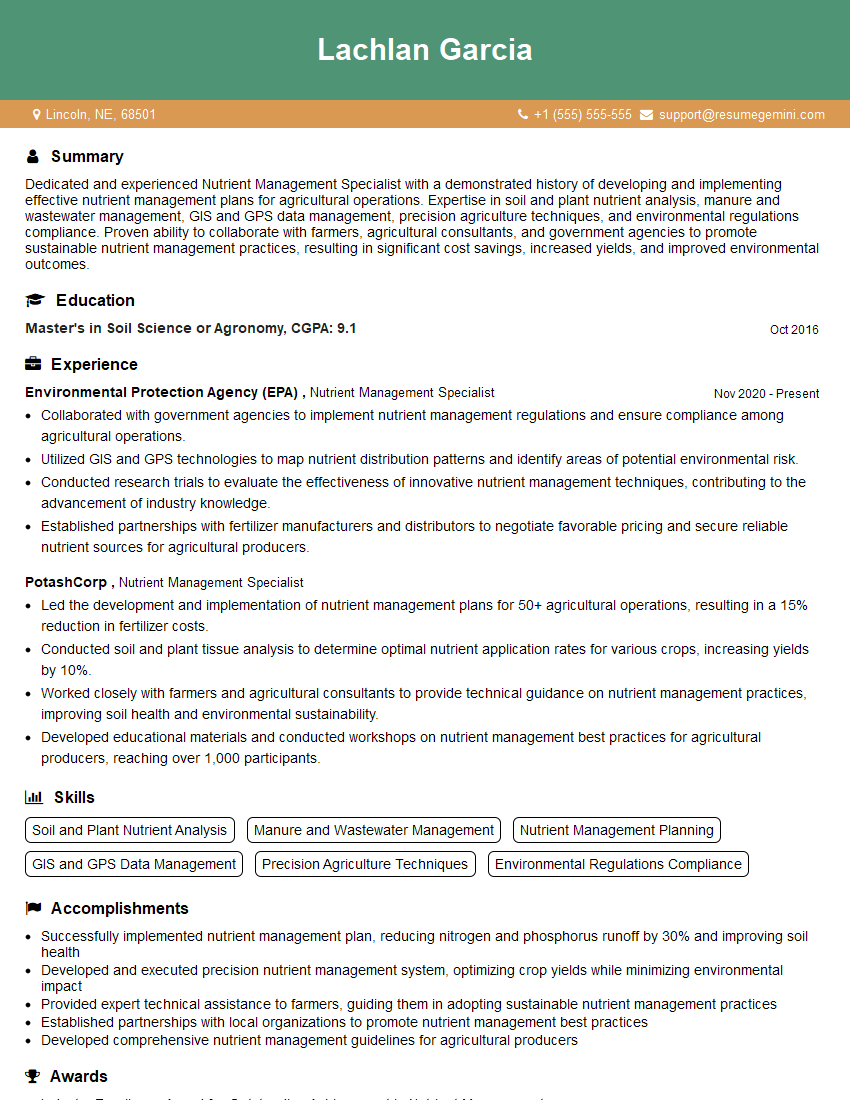
Explore more articles
Users Rating of Our Blogs
Share Your Experience
We value your feedback! Please rate our content and share your thoughts (optional).
What Readers Say About Our Blog
I Redesigned Spongebob Squarepants and his main characters of my artwork.
https://www.deviantart.com/reimaginesponge/art/Redesigned-Spongebob-characters-1223583608
IT gave me an insight and words to use and be able to think of examples
Hi, I’m Jay, we have a few potential clients that are interested in your services, thought you might be a good fit. I’d love to talk about the details, when do you have time to talk?
Best,
Jay
Founder | CEO