Every successful interview starts with knowing what to expect. In this blog, we’ll take you through the top Water Treatment System Design interview questions, breaking them down with expert tips to help you deliver impactful answers. Step into your next interview fully prepared and ready to succeed.
Questions Asked in Water Treatment System Design Interview
Q 1. Explain the different types of water treatment processes.
Water treatment is a multi-step process aiming to remove impurities and make water safe for consumption or industrial use. The specific processes used depend on the source water’s quality and the desired end-use. Common types include:
- Preliminary Treatment: This involves screening out large debris, grit removal, and flow equalization to prepare the water for further processing.
- Coagulation and Flocculation: Chemicals are added to neutralize charges on suspended particles, causing them to clump together for easier removal.
- Sedimentation: Gravity is used to settle out the larger flocs formed during coagulation/flocculation.
- Filtration: Water passes through various filter media (sand, gravel, membrane filters) to remove remaining suspended solids and microorganisms.
- Disinfection: Chemicals like chlorine, ozone, or UV light are used to kill harmful bacteria and viruses.
- Water Softening: Processes like ion exchange are employed to reduce the hardness of water by removing calcium and magnesium ions.
- Advanced Treatment: Techniques like activated carbon adsorption, reverse osmosis, or advanced oxidation processes are used to remove specific contaminants like dissolved organic matter, heavy metals, or emerging contaminants.
Imagine a river – preliminary treatment is like removing large sticks and rocks before cleaning the water. Each subsequent stage refines the water until it’s sparkling clean.
Q 2. Describe the process of coagulation and flocculation.
Coagulation and flocculation are crucial steps in removing suspended particles from water. Think of it like making a snow ball.
Coagulation involves adding a coagulant (like alum or ferric chloride) to destabilize the negatively charged particles in the water. This neutralizes the repulsive forces between them, allowing them to come closer together. It’s like slightly melting the snow to make it clumpier.
Flocculation follows coagulation. Gentle mixing helps the destabilized particles collide and aggregate into larger, heavier flocs. This is the process of rolling the slightly melted snow into a bigger snowball. These flocs are then easily removed by sedimentation or filtration.
The effectiveness of these processes depends on factors like coagulant dosage, mixing intensity, and water temperature. Proper control is essential for optimal particle removal.
Q 3. What are the advantages and disadvantages of using different filtration methods (e.g., sand filtration, membrane filtration)?
Different filtration methods offer various advantages and disadvantages:
- Sand Filtration:
- Advantages: Relatively simple, low cost, effective for removing suspended solids.
- Disadvantages: Requires periodic backwashing, less effective for removing dissolved contaminants or very small particles.
- Membrane Filtration (Microfiltration, Ultrafiltration, Nanofiltration, Reverse Osmosis):
- Advantages: High removal efficiency for a wide range of contaminants, including bacteria, viruses, and dissolved salts (depending on the membrane type).
- Disadvantages: Higher capital and operating costs, potential for membrane fouling, requires pre-treatment to protect membranes.
Imagine sand filtration as a sieve – it catches larger particles. Membrane filtration is more like a super-fine mesh, capable of catching even the smallest contaminants, but it’s also more complex and expensive.
Q 4. How do you select the appropriate disinfection method for a specific water source?
Choosing a disinfection method depends on several factors, including water quality, the presence of specific pathogens, cost, and environmental impact.
- Chlorination: Widely used, effective against most bacteria and viruses, but can form disinfection byproducts (DBPs) which are potentially harmful.
- Ozonation: Powerful disinfectant, doesn’t produce persistent DBPs, but is more expensive and requires on-site generation.
- UV Disinfection: Effective against bacteria and viruses, no DBP formation, but less effective against some resistant microorganisms and requires careful lamp maintenance.
For a water source with high turbidity (cloudiness), pre-treatment might be necessary before UV disinfection to ensure effective pathogen inactivation. If DBP formation is a major concern, ozonation might be a better choice. The decision requires a comprehensive risk assessment.
Q 5. What are the key considerations for designing a water softening system?
Designing a water softening system involves several key considerations:
- Water Hardness: The level of calcium and magnesium ions in the water determines the system’s capacity and required treatment level.
- Flow Rate: The volume of water to be softened influences the size and type of system needed.
- Softening Method: Common methods include ion exchange (using resin beds) or lime softening (chemical precipitation). Ion exchange is typically preferred for smaller applications.
- Regeneration: For ion exchange systems, a brine solution is used to regenerate the resin, removing accumulated calcium and magnesium. The frequency of regeneration depends on the water hardness and flow rate.
- Brine Disposal: Proper disposal of the concentrated brine is crucial to avoid environmental impact. Recycling options should be considered.
For a household, a small ion-exchange system might suffice. Larger applications, like industrial settings or apartment complexes, may require larger systems and potentially different softening methods.
Q 6. Explain the principles of reverse osmosis (RO) and its applications in water treatment.
Reverse osmosis (RO) is a membrane separation process that uses pressure to force water through a semi-permeable membrane. This membrane selectively removes dissolved salts, minerals, and other impurities, producing purified water.
Principles: A high pressure is applied to the feed water, forcing water molecules through the membrane while rejecting larger molecules and ions. The purified water is called permeate, while the concentrated reject stream is called brine.
Applications: RO is extensively used in:
- Potable water production: Producing high-quality drinking water from brackish or seawater.
- Industrial applications: Producing ultra-pure water for pharmaceuticals, electronics, and other industries.
- Wastewater treatment: Removing dissolved contaminants from wastewater.
Think of it as a very fine filter, capable of removing even dissolved salts. However, it requires significant energy and generates a concentrated brine stream, which needs proper management.
Q 7. Describe the process of activated carbon adsorption and its role in water purification.
Activated carbon adsorption is a water purification process that uses porous carbon materials to remove impurities by adsorption. Imagine a sponge soaking up unwanted substances.
Principles: Activated carbon has a large surface area with numerous pores, which attract and bind various organic and inorganic contaminants through physical and chemical interactions. These contaminants are then trapped within the carbon matrix.
Role in water purification: Activated carbon effectively removes:
- Dissolved organic matter (DOM): Improving water taste, odor, and color.
- Chlorine and its byproducts: Reducing disinfection byproduct formation.
- Pesticides and herbicides: Removing organic pollutants from contaminated water.
- Some heavy metals: Though effectiveness varies depending on the metal and carbon type.
The choice of activated carbon type (granular or powdered) and the design of the adsorption system depend on the specific contaminants and the desired level of removal.
Q 8. How do you determine the optimal design flow rate for a water treatment plant?
Determining the optimal design flow rate for a water treatment plant is crucial for efficient operation and cost-effectiveness. It’s not a single calculation but a process involving several factors. First, we consider the projected population served, their anticipated water demand (considering peak hours and future growth), and the desired level of service. We then analyze the available water source’s capacity and any limitations it might impose. This often involves studying historical water usage data and forecasting future needs using demographic projections and economic growth predictions.
For example, a plant serving a rapidly growing city will require a higher design flow rate compared to one serving a stable, smaller community. We also account for safety margins – designing for a higher flow rate than the immediate projected demand to handle unexpected surges or future expansion. This involves using appropriate safety factors, which depend on the specific water source and plant design. This entire process culminates in a design flow rate that ensures sufficient treatment capacity while avoiding over-engineering and unnecessary capital expenditure.
The design flow rate is further refined by considering the specific treatment processes employed. Different unit processes (e.g., coagulation, sedimentation, filtration) have different hydraulic requirements. We must ensure that the flow rate doesn’t overload any of these units, resulting in inefficient treatment or equipment failure. In essence, it’s a careful balancing act between meeting the community’s needs, optimizing cost, and maintaining treatment efficacy.
Q 9. What are the common water quality parameters and their significance?
Water quality parameters are crucial indicators of water’s suitability for various purposes. Their significance lies in safeguarding public health and ensuring the effectiveness of downstream applications. Some common parameters and their significance include:
- Turbidity: Measures the cloudiness of water, indicating the presence of suspended solids. High turbidity affects treatment efficiency and aesthetic quality.
- pH: Represents the acidity or alkalinity of water, impacting the effectiveness of many treatment processes and influencing aquatic life.
- Temperature: Affects the rate of biological and chemical processes. Warmer water can promote bacterial growth.
- Dissolved Oxygen (DO): Crucial for aquatic life and influences the rate of certain chemical reactions.
- Total Dissolved Solids (TDS): Represents the total amount of inorganic and organic substances dissolved in water. High TDS levels can impact taste and may pose health concerns.
- Bacteria and Viruses: These pathogens must be eliminated to ensure safe drinking water. Presence is measured through colony counts and other microbiological tests.
- Heavy Metals (e.g., Lead, Mercury, Arsenic): These contaminants can be toxic at low concentrations, necessitating strict limits.
- Organic Chemicals (e.g., pesticides, herbicides): Many organic chemicals pose health risks and require careful monitoring and treatment.
Monitoring these parameters allows us to assess the water quality at each stage of the treatment process, ensuring that the final product meets regulatory standards and is safe for its intended use. For example, monitoring turbidity helps us optimize the coagulation-flocculation process, ensuring effective removal of suspended solids.
Q 10. Explain the concept of hydraulic retention time (HRT) and its importance.
Hydraulic Retention Time (HRT) is the average time water remains in a treatment unit. It’s a critical design parameter because it directly affects treatment efficiency. A longer HRT allows more time for reactions and settling, improving the removal of contaminants. Think of it like cooking – you need sufficient time for the food to cook properly.
For example, in a sedimentation basin, a longer HRT allows suspended particles to settle out more completely. In a disinfection process, a longer HRT ensures adequate contact time between the disinfectant and the pathogens, resulting in better inactivation. However, excessively long HRTs can be inefficient, requiring larger basins and increasing capital costs. The optimal HRT is a balance between treatment effectiveness and cost efficiency, and it varies depending on the type of treatment process and the target contaminant.
Calculating HRT involves dividing the volume of the treatment unit (e.g., clarifier, reactor) by the flow rate through the unit. HRT = Volume / Flow Rate. For instance, a sedimentation basin with a volume of 1000 cubic meters and a flow rate of 10 cubic meters per minute would have an HRT of 100 minutes (1000 m³/10 m³/min = 100 min).
Q 11. How do you design for efficient backwashing of filters?
Efficient backwashing is essential for maintaining the effectiveness of filters in water treatment. Backwashing involves reversing the flow of water through the filter bed to remove accumulated solids and restore its permeability. Effective design focuses on several key aspects:
- Backwash Flow Rate: This needs to be sufficient to lift and remove the accumulated solids, but not so high as to cause excessive head loss or damage the filter media. It’s often expressed as a percentage of the filter’s operating flow rate, typically 15-25%.
- Backwash Duration: The length of the backwashing process is determined by the accumulated solids and the desired cleanliness of the filter bed. Too short a time may not remove all the solids, while too long a time wastes water and energy.
- Air Scouring: Introducing compressed air before or during backwashing can enhance the removal of trapped solids by breaking up clumps and providing additional agitation.
- Backwash Water Quality: The quality of the backwash water should be considered to avoid potential re-contamination of the filter media. Treated effluent is often used.
- Filter Media Selection: Choosing appropriate filter media with good backwashability characteristics is important. This includes considering factors like size, shape, and density of the media.
Proper design involves using appropriate valves, piping, and control systems to ensure that the backwashing process occurs effectively and safely. This also necessitates accurate instrumentation to monitor the pressure drop across the filter, helping determine when backwashing is needed.
Q 12. What are the different types of pumps used in water treatment and their applications?
Various pump types are used in water treatment plants, each suited to specific applications:
- Centrifugal Pumps: These are the most common, used for pumping large volumes of water at moderate pressures. They are efficient and relatively low maintenance, ideal for pumping treated water to distribution systems.
- Submersible Pumps: Ideal for pumping water from deep wells or reservoirs, they are directly immersed in the water source, simplifying installation and reducing suction lift issues.
- Diaphragm Pumps: Used for pumping smaller volumes of water containing high concentrations of solids or slurries, they avoid clogging and are suitable for chemical dosing applications.
- Positive Displacement Pumps: These pumps deliver a constant volume of water per revolution, making them suitable for applications requiring precise flow control, such as chemical dosing or backwashing.
- Progressive Cavity Pumps: Suitable for pumping viscous fluids and slurries, these are often found in sludge handling or thickening applications within a water treatment plant.
The selection of the appropriate pump type involves careful consideration of the flow rate, head pressure, fluid characteristics, efficiency requirements, and maintenance considerations. For instance, a high-pressure pump may be required for booster stations in a water distribution system, while a low-pressure pump may suffice for transferring treated water to storage tanks.
Q 13. Describe the role of instrumentation and control systems in water treatment plant operation.
Instrumentation and control systems are the nervous system of a water treatment plant, ensuring efficient and safe operation. They monitor critical parameters, automate processes, and provide alerts in case of malfunctions. This includes:
- Sensors and Transmitters: These measure parameters like flow rate, pressure, pH, turbidity, and chlorine levels. Data is transmitted to the control system.
- Programmable Logic Controllers (PLCs): These are the brains of the operation, controlling valves, pumps, and other equipment based on pre-programmed logic and sensor data.
- Supervisory Control and Data Acquisition (SCADA) Systems: These provide a centralized interface for monitoring and controlling the entire plant. Operators can view real-time data, adjust parameters, and respond to alarms remotely.
- Data Historians: These systems store historical data, enabling trend analysis, optimization efforts, and compliance reporting.
For instance, a PLC could automatically adjust the chemical dosing rate based on real-time turbidity readings, ensuring efficient coagulation. SCADA systems enable remote monitoring of the plant’s performance, facilitating timely interventions and preventing potential failures.
Q 14. How do you ensure the safety and compliance of a water treatment system?
Ensuring safety and compliance in a water treatment system is paramount. This requires a multi-faceted approach:
- Regular Inspections and Maintenance: Systematic inspections of equipment and infrastructure identify potential hazards and prevent failures. Routine maintenance ensures the continued functionality of the system.
- Operator Training: Well-trained operators are crucial for safe and efficient operation. Training should cover safety procedures, emergency response, and troubleshooting techniques.
- Safety Systems: Implementing safety systems such as emergency shutdowns, leak detection, and high-level alarms prevents accidents and protects personnel and the environment.
- Compliance with Regulations: Adherence to all relevant water quality regulations is essential. This involves regular sampling, testing, and reporting to regulatory agencies.
- Risk Assessment and Management: A thorough risk assessment identifies potential hazards and develops mitigation strategies. This may involve implementing redundant systems, backup power supplies, or other safety measures.
- Documentation: Maintaining detailed records of operations, maintenance, and testing helps track performance and demonstrate compliance.
For instance, regular testing of chlorine levels ensures that the water is adequately disinfected, while regular inspections of storage tanks prevent potential leaks and environmental contamination. A comprehensive approach to safety and compliance is essential to protect public health and the environment.
Q 15. Explain the different types of water treatment membranes and their applications.
Water treatment membranes are essential components in many modern water purification systems. They function by separating contaminants from water using a semi-permeable barrier. Different membrane types have varying pore sizes and separation mechanisms, leading to diverse applications.
- Microfiltration (MF): Removes larger particles like suspended solids, algae, and bacteria. Think of it like a very fine sieve. Applications include pretreatment for reverse osmosis and removal of turbidity from surface water.
- Ultrafiltration (UF): Removes smaller particles, including colloids, viruses, and some dissolved organic matter. It’s like a finer sieve than MF. Applications range from potable water treatment to wastewater reclamation.
- Nanofiltration (NF): Removes dissolved salts, multivalent ions, and organic molecules. It’s even more precise than UF. Applications include softening hard water and removing pesticides from groundwater.
- Reverse Osmosis (RO): Removes virtually all dissolved salts, organics, and other dissolved solids, producing high-quality purified water. This is the most stringent filtration process. Applications include desalination, ultrapure water production for industries, and advanced potable water treatment.
The choice of membrane depends critically on the water quality, desired level of purification, and economic considerations. For instance, a municipality treating surface water might use MF/UF as pretreatment before RO to extend the lifespan and improve the efficiency of the RO system. In contrast, a pharmaceutical company might rely solely on RO to achieve ultrapure water for drug production.
Career Expert Tips:
- Ace those interviews! Prepare effectively by reviewing the Top 50 Most Common Interview Questions on ResumeGemini.
- Navigate your job search with confidence! Explore a wide range of Career Tips on ResumeGemini. Learn about common challenges and recommendations to overcome them.
- Craft the perfect resume! Master the Art of Resume Writing with ResumeGemini’s guide. Showcase your unique qualifications and achievements effectively.
- Don’t miss out on holiday savings! Build your dream resume with ResumeGemini’s ATS optimized templates.
Q 16. What are the common challenges faced during the design and operation of water treatment systems?
Designing and operating water treatment systems presents several challenges. These challenges can be broadly categorized into technical, economic, and regulatory aspects.
- Water Quality Variability: Source water quality fluctuates seasonally and geographically, requiring adaptable treatment processes. For instance, high rainfall can increase turbidity, necessitating adjustments to coagulation and filtration.
- Membrane Fouling: Membranes can become clogged by organic matter, inorganic precipitates, and biological growth, reducing efficiency and lifespan. Regular cleaning and chemical pretreatment are essential to mitigate this.
- Energy Consumption: Processes like RO require significant energy, impacting operational costs. Optimizing system design and employing energy-efficient technologies are vital.
- Chemical Usage: The use of coagulants, disinfectants, and other chemicals can be environmentally impactful and require careful management. Minimizing chemical use and selecting environmentally friendly alternatives are important.
- Regulatory Compliance: Meeting stringent water quality standards requires rigorous monitoring and process optimization. Non-compliance can lead to penalties and public health risks.
- Infrastructure Limitations: Aging infrastructure, limited space, and lack of skilled personnel can pose significant obstacles.
Effective management requires a multidisciplinary approach involving engineers, chemists, biologists, and regulatory experts to overcome these challenges. For example, a detailed water quality analysis is crucial to select appropriate treatment technologies and optimize the design parameters.
Q 17. How do you address issues related to water hardness and scaling in a water treatment system?
Water hardness, primarily caused by calcium and magnesium ions, leads to scaling – the formation of insoluble mineral deposits on pipes and equipment. This reduces efficiency and increases maintenance costs. Several methods address these issues:
- Lime Softening: Adding lime (calcium hydroxide) precipitates out calcium and magnesium ions as insoluble carbonates. It’s cost-effective for large-scale applications but generates sludge requiring disposal.
- Ion Exchange: Uses resin beads to exchange hardness ions (Ca2+, Mg2+) with sodium or hydrogen ions. This is effective for smaller applications and produces softer water, but the resin needs periodic regeneration.
- Reverse Osmosis (RO): Effectively removes hardness ions along with other dissolved solids. While energy-intensive, it produces very high-quality water.
- Electrodialysis Reversal (EDR): Uses electric fields to remove ions, offering energy efficiency compared to RO for certain applications. This process is however more complex and costly than lime softening or ion exchange.
The best approach depends on the scale of the operation, water quality, and economic factors. For example, a large municipal water treatment plant might use lime softening followed by filtration, while a residential water softener might utilize ion exchange.
Q 18. Describe the process of designing a water distribution system.
Designing a water distribution system involves a systematic process to ensure reliable and safe water delivery to consumers. It begins with understanding the demand and extends to construction and operation.
- Demand Analysis: Estimating current and future water demand based on population growth, industrial needs, and fire protection requirements.
- Hydraulic Modeling: Simulating water flow through the network to determine pipe sizes, pump capacities, and tank storage needs. Software like EPANET is frequently used.
- Network Design: Planning the layout of pipes, reservoirs, pump stations, and valves to optimize water pressure and flow. Considerations include minimizing pipe lengths, ensuring loop configurations for redundancy, and accommodating future expansion.
- Material Selection: Choosing appropriate pipe materials (e.g., ductile iron, PVC, HDPE) based on factors like cost, durability, corrosion resistance, and water quality.
- Construction and Testing: Overseeing the construction phase and conducting thorough leak detection and pressure testing to guarantee system integrity.
- Operation and Maintenance: Establishing a plan for regular maintenance, including leak repair, pipe cleaning, and pump maintenance to sustain efficient and safe operation.
Imagine designing a system for a new suburban development. The demand analysis will predict future growth, the hydraulic model will simulate water pressure throughout the network, and the network design will include strategically placed reservoirs and pump stations to ensure consistent water delivery even during peak hours.
Q 19. How do you select appropriate materials for construction of a water treatment plant?
Material selection for water treatment plants is crucial for ensuring structural integrity, corrosion resistance, and water quality. The choice depends on factors like cost, durability, chemical compatibility, and regulatory requirements.
- Concrete: Widely used for structures due to its strength and cost-effectiveness. Specific mixes are chosen to resist corrosion from chemicals used in water treatment.
- Stainless Steel: Ideal for components exposed to corrosive environments, such as piping, tanks, and valves. The grade of stainless steel is selected based on the aggressiveness of the chemicals.
- Ductile Iron: Offers good strength and corrosion resistance, commonly used for pipelines and fittings. Protective coatings may be applied for added durability.
- Plastics (PVC, HDPE): Lightweight, corrosion-resistant, and cost-effective for piping in less demanding applications. UV resistance is a key consideration for outdoor installations.
- Gaskets and Seals: Materials like EPDM rubber or PTFE are chosen for their chemical resistance and ability to create leak-proof seals.
In choosing materials, it is crucial to consult industry standards and regulatory guidelines to ensure compliance. For example, materials in contact with drinking water must meet stringent safety standards to avoid leaching of harmful substances.
Q 20. What are the regulatory requirements for water treatment in your region?
(This answer will vary depending on the specific region. The following is a hypothetical example for illustrative purposes.)
In my region, water treatment regulations are primarily governed by the [Insert Name of Relevant Regulatory Agency]. Key requirements include:
- Water Quality Standards: Strict limits are set for various contaminants, including bacteria, viruses, heavy metals, pesticides, and disinfection byproducts. Regular monitoring and reporting are mandatory.
- Treatment Process Design: Regulations specify minimum treatment requirements based on source water quality and intended use. Detailed design plans and operational procedures must be approved before plant construction.
- Operational Monitoring: Continuous monitoring of water quality parameters is required, along with regular inspections and audits by the regulatory agency.
- Safety and Emergency Preparedness: Plants must have safety protocols in place to address potential emergencies and maintain operator training programs.
- Wastewater Management: Regulations cover the proper disposal or treatment of sludge and other byproducts generated during water treatment.
Non-compliance can lead to penalties, operational shutdowns, and reputational damage. Staying informed about evolving regulations and proactively addressing potential compliance challenges is vital for any water treatment facility.
Q 21. Explain the importance of water treatment in preventing waterborne diseases.
Effective water treatment is paramount in preventing waterborne diseases. Untreated or inadequately treated water can harbor a wide range of pathogens, including bacteria (e.g., E. coli, Salmonella), viruses (e.g., norovirus, rotavirus), and parasites (e.g., Giardia, Cryptosporidium) leading to significant health problems.
Water treatment processes such as filtration, disinfection (chlorination, UV irradiation, ozonation), and coagulation effectively remove or inactivate these pathogens. Disinfection is particularly critical as it eliminates the risk of waterborne disease outbreaks. For instance, chlorination kills most harmful bacteria and viruses, while UV irradiation provides an alternative disinfection method without the addition of chemicals.
Imagine a community relying on a contaminated water source. Without proper treatment, outbreaks of cholera, typhoid fever, or other diarrheal diseases would be highly probable, leading to significant public health burdens. Effective water treatment acts as a critical safeguard, ensuring public health and safety.
Q 22. Describe your experience with different types of water treatment chemicals.
My experience with water treatment chemicals spans a wide range, encompassing both conventional and advanced treatment methods. I’m proficient in selecting and applying coagulants like alum and ferric chloride for turbidity removal, disinfectants such as chlorine, chloramine, and UV for pathogen inactivation, and pH adjusters like lime and soda ash for optimal treatment process efficiency. I also have extensive experience with the use of flocculants, like polyacrylamide, to enhance sedimentation and filtration. Furthermore, I understand the importance of managing chemical feed rates precisely to optimize treatment effectiveness while minimizing environmental impact. For example, in one project, we used a real-time monitoring system combined with an adaptive control algorithm to optimize chlorine dosing based on fluctuating water quality parameters, leading to a significant reduction in chlorine residuals and improved water quality.
Beyond the commonly used chemicals, I am also familiar with advanced oxidation processes (AOPs) utilizing ozone and hydrogen peroxide for the removal of recalcitrant pollutants. The selection of the appropriate chemical always involves careful consideration of water quality characteristics, treatment objectives, and potential environmental consequences. Safety protocols and regulatory compliance are paramount in my approach.
Q 23. How do you perform a hydraulic analysis of a water treatment system?
Hydraulic analysis is crucial for designing efficient and reliable water treatment systems. It involves calculating flow rates, pressures, and head losses throughout the system. I use various techniques, including the Hazen-Williams equation and Darcy-Weisbach equation to determine head loss in pipes and fittings. Software like EPANET is frequently employed to model complex pipe networks and simulate various operational scenarios. The goal is to ensure that pumps have sufficient capacity, pipes are appropriately sized to prevent excessive head loss, and the system can meet the required flow demands under different conditions. For example, during a recent project, a hydraulic model was essential for optimizing the layout of a new water treatment plant, ensuring efficient distribution of treated water to different areas of the service area, and identifying potential bottlenecks in the distribution system. This modeling prevented costly mistakes and ensured a smooth operational startup.
The analysis goes beyond simple pipe sizing; it also involves evaluating the hydraulic performance of various treatment units such as clarifiers, filters, and backwash systems, ensuring that the design accommodates for peak flows and variations in water quality. A well-executed hydraulic analysis ensures optimal system performance and minimizes operational costs.
Q 24. What is your experience with using computer-aided design (CAD) software for water treatment system design?
I have extensive experience using CAD software, primarily AutoCAD and Civil 3D, for water treatment system design. I leverage these tools to create detailed plant layouts, piping and instrumentation diagrams (P&IDs), isometrics, and other essential design drawings. The software allows for accurate representation of equipment placement, pipe routing, and the overall plant configuration, facilitating effective communication with contractors and other stakeholders. For instance, in a recent project, the use of 3D modeling in Civil 3D allowed us to visualize the entire plant layout, including elevation changes and potential conflicts between different components before construction began, significantly reducing the likelihood of design errors and construction delays.
Furthermore, CAD software integration with other design tools enhances efficiency by enabling seamless data transfer and coordination amongst different disciplines involved in the project. This ensures a cohesive and well-coordinated design, leading to a more cost-effective and successful project.
Q 25. Explain your experience with water treatment system troubleshooting and maintenance.
Troubleshooting and maintenance are critical aspects of water treatment system operation. My experience includes diagnosing and resolving a range of issues, from minor equipment malfunctions to complex process upsets. I employ systematic approaches, beginning with careful data analysis – reviewing operational logs, sensor readings, and water quality reports – to identify the root cause of the problem. This often involves understanding the interdependencies between various treatment processes. For example, a sudden increase in turbidity in the treated water might be traced back to a malfunction in the coagulation-flocculation process or filter clogging requiring backwashing. Appropriate corrective actions might range from simple equipment repairs to process optimization strategies.
Preventative maintenance is equally important and involves developing and implementing scheduled maintenance programs, including inspections, cleaning, and component replacements to ensure equipment reliability and operational efficiency, thus minimizing downtime. My experience also encompasses working with SCADA systems to monitor plant operations remotely, detecting early warning signs of potential problems, and triggering automated alerts for timely intervention.
Q 26. Describe your experience with the design and implementation of SCADA systems in water treatment plants.
I’ve been involved in the design and implementation of SCADA (Supervisory Control and Data Acquisition) systems in several water treatment plants. My experience includes specifying hardware components, developing control logic, and configuring the HMI (Human-Machine Interface). A SCADA system allows for remote monitoring and control of the entire treatment process, optimizing efficiency, ensuring safe operations, and providing real-time data visualization. For example, a SCADA system allows operators to remotely monitor chemical feed rates, adjust valve positions, and control pump operations. It also facilitates data logging for performance evaluation and compliance reporting.
My work extends to integrating SCADA systems with other plant systems such as PLC (Programmable Logic Controllers) and laboratory information management systems (LIMS) to enhance data management and improve decision-making processes. I understand the importance of designing user-friendly interfaces and providing training to plant operators to ensure effective utilization of the system. Cybersecurity considerations are also integrated into the design and implementation to protect the system from unauthorized access and cyber threats.
Q 27. How do you incorporate sustainability considerations into the design of a water treatment system?
Sustainability is a core principle in my design approach. I incorporate various strategies to minimize the environmental footprint of water treatment systems. This includes optimizing energy consumption through the selection of energy-efficient pumps, motors, and other equipment. For example, variable-frequency drives (VFDs) can significantly reduce energy consumption by adjusting pump speeds according to flow demands. I also focus on minimizing chemical usage and maximizing resource recovery through techniques such as sludge dewatering and reuse. Selecting environmentally benign chemicals is a key component of this strategy. The use of advanced oxidation processes (AOPs) in place of energy intensive conventional methods is another example.
Furthermore, the design incorporates strategies for reducing water and energy losses through leak detection and repair programs. Lifecycle assessments of materials and equipment are also conducted to evaluate their environmental impact over their entire lifespan. The goal is to design water treatment systems that are not only efficient and reliable but also environmentally responsible, minimizing operational costs while protecting the environment.
Q 28. What are your strategies for managing projects within budget and on schedule?
Managing projects within budget and on schedule requires a structured and proactive approach. I utilize project management methodologies like Agile or Waterfall, adapting the approach to suit the specific project needs. Detailed project planning and budgeting are crucial; this includes establishing clear project scope, timelines, and resource allocation. Regular progress monitoring and risk assessment are essential for early identification and mitigation of potential issues that might impact the schedule or budget. For example, I utilize Earned Value Management (EVM) to track progress and identify variances from the planned budget and schedule. Effective communication and collaboration with clients, contractors, and other stakeholders are paramount to ensure smooth project execution.
Contingency planning is critical to account for unforeseen circumstances, and I ensure that buffer time is incorporated into the project schedule. Regular project reviews and reporting mechanisms allow for timely adjustments to the plan, keeping the project on track and ensuring transparency. Proactive problem-solving and a focus on efficiency throughout the project lifecycle are key elements of my approach.
Key Topics to Learn for Water Treatment System Design Interview
- Water Quality Parameters: Understanding key indicators like turbidity, pH, dissolved oxygen, and various contaminants. Practical application: Interpreting water quality reports and selecting appropriate treatment processes.
- Treatment Process Selection: Choosing appropriate technologies (coagulation/flocculation, sedimentation, filtration, disinfection, etc.) based on source water quality and desired effluent standards. Practical application: Designing a treatment train for a specific water source and its challenges.
- Unit Process Design: Detailed design of individual treatment units, including sizing, hydraulics, and operational parameters. Practical application: Calculating the required size of a clarifier or filter based on flow rate and design criteria.
- Disinfection Technologies: Evaluating the effectiveness and safety of various disinfection methods (chlorination, UV, ozonation). Practical application: Choosing the most appropriate disinfection strategy for a given situation, considering factors like cost, by-product formation, and regulatory requirements.
- Process Control and Automation: Understanding SCADA systems and automated control strategies for optimizing treatment plant performance. Practical application: Troubleshooting operational issues using process data and control strategies.
- Water Distribution System Integration: Understanding the connection between the treatment plant and the distribution network, including pressure management and water storage. Practical application: Designing a distribution system that ensures consistent water quality and pressure throughout the service area.
- Sustainability and Environmental Impact: Considering energy efficiency, sludge management, and minimizing environmental impact. Practical application: Evaluating the environmental footprint of different treatment technologies and making informed design decisions.
- Regulatory Compliance: Understanding relevant regulations and permits for water treatment plant design and operation. Practical application: Ensuring the designed system meets all applicable regulatory requirements.
- Cost Estimation and Project Management: Developing realistic cost estimates and managing projects effectively. Practical application: Creating a detailed project budget and schedule for a water treatment plant design project.
Next Steps
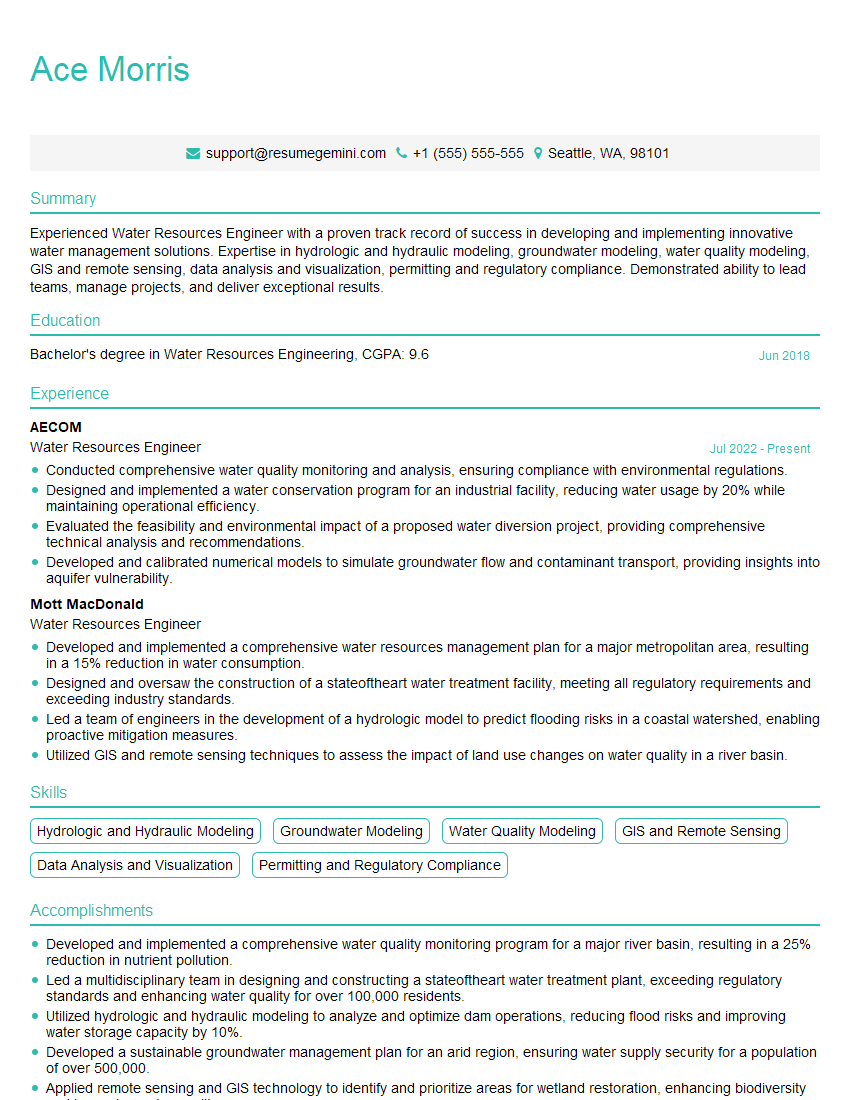
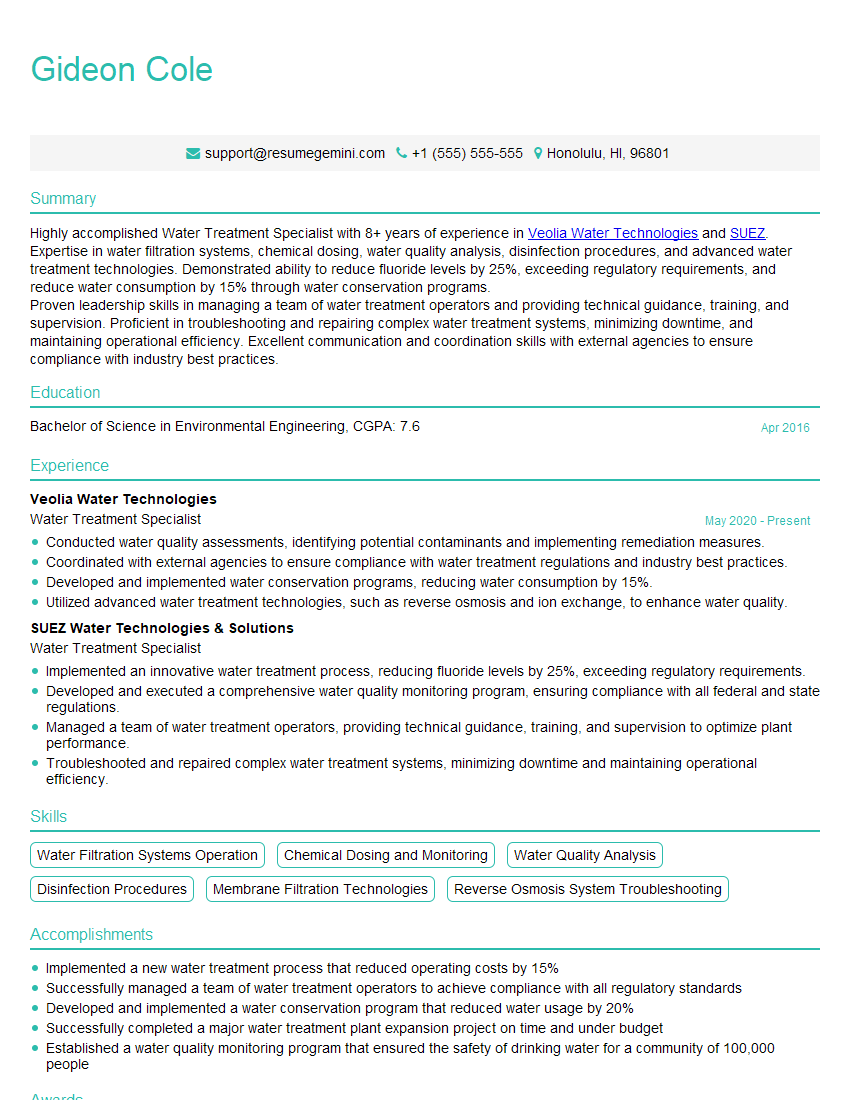
Mastering Water Treatment System Design opens doors to exciting career opportunities in a vital industry. A strong understanding of these principles is crucial for securing a rewarding position and contributing to sustainable water management. To maximize your job prospects, focus on creating an ATS-friendly resume that highlights your skills and experience effectively. ResumeGemini is a trusted resource to help you build a professional and impactful resume. We provide examples of resumes tailored to Water Treatment System Design to help you get started.
Explore more articles
Users Rating of Our Blogs
Share Your Experience
We value your feedback! Please rate our content and share your thoughts (optional).
What Readers Say About Our Blog
I Redesigned Spongebob Squarepants and his main characters of my artwork.
https://www.deviantart.com/reimaginesponge/art/Redesigned-Spongebob-characters-1223583608
IT gave me an insight and words to use and be able to think of examples
Hi, I’m Jay, we have a few potential clients that are interested in your services, thought you might be a good fit. I’d love to talk about the details, when do you have time to talk?
Best,
Jay
Founder | CEO