Are you ready to stand out in your next interview? Understanding and preparing for Art and Craft Projects interview questions is a game-changer. In this blog, we’ve compiled key questions and expert advice to help you showcase your skills with confidence and precision. Let’s get started on your journey to acing the interview.
Questions Asked in Art and Craft Projects Interview
Q 1. Describe your experience with various art mediums.
My experience with art mediums is quite extensive, spanning both traditional and digital techniques. Traditionally, I’m highly proficient in painting (oil, acrylic, watercolor), drawing (pencil, charcoal, pastel), sculpting (clay, polymer clay), printmaking (linocut, etching), and mixed media. I find the tactile nature of traditional media incredibly inspiring, allowing for a unique connection between the artist and the artwork. For instance, the subtle nuances of blending oils, the spontaneous fluidity of watercolors, and the textural possibilities of sculpting all offer vastly different creative avenues.
In the digital realm, I’m adept at using Adobe Photoshop, Illustrator, and Procreate, allowing me to explore vector graphics, digital painting, and photo manipulation. The digital space offers incredible flexibility and the ability to easily experiment with color palettes and compositions. This digital proficiency complements my traditional skills, enabling me to translate traditional ideas into digital formats and vice-versa. For example, I might create a traditional oil painting and then digitally enhance its colors or create a limited-edition print.
Q 2. Explain your process for creating a specific art piece.
Let’s take the example of a recent mixed-media piece I created featuring a stylized cityscape. My process typically follows these stages:
- Conceptualization: I started by sketching various cityscape ideas, focusing on capturing the mood and energy I wanted to convey. This involved considering composition, perspective, and the overall aesthetic.
- Material Selection: Based on the sketch, I selected the materials best suited to achieve the desired effect. This included textured papers for the buildings, acrylic paints for the sky, and metallic inks for highlighting details.
- Base Creation: I began by building a layered base using collage techniques and different paper textures, creating the foundation for my cityscape. This allowed for depth and variation in the final piece.
- Painting and Detailing: I then used acrylic paints to add depth and color to the cityscape, working in layers to build up intensity and texture. I used metallic inks to enhance details such as windows and streetlights.
- Finishing Touches: Finally, I added finishing touches such as varnish to protect the artwork and further enhance its visual appeal. This step is crucial for ensuring the longevity and preservation of the piece.
This structured approach ensures that each element of the artwork contributes to the overall vision. While this is a specific example, the core stages – conceptualization, material selection, creation, detailing and finishing – remain consistent across most of my projects.
Q 3. How do you handle creative blocks?
Creative blocks are a common challenge for artists, but I’ve developed several strategies to overcome them.
- Step Away: Sometimes, the best solution is to simply step away from the project for a while. A change of scenery, a walk in nature, or engaging in a completely different activity can often refresh my perspective.
- Experimentation: I deliberately experiment with different mediums or techniques. Trying something new can spark unexpected ideas and break the cycle of frustration.
- Seek Inspiration: I actively seek inspiration from various sources, such as visiting art galleries, museums, exploring nature, or even browsing online portfolios. Looking at other artists’ work can help jumpstart my creativity.
- Break it Down: If the project feels overwhelming, I break it down into smaller, manageable tasks. This makes the process less daunting and allows me to focus on one aspect at a time.
Ultimately, overcoming creative blocks requires patience and a willingness to experiment. It’s a part of the creative process, and the solution often lies in a shift in mindset or approach.
Q 4. What software are you proficient in for art and design?
My proficiency in art and design software is extensive. I’m highly skilled in the Adobe Creative Suite, including Photoshop for image editing and manipulation, Illustrator for vector graphics and logo design, and InDesign for layout and publication design. I’m also proficient in Procreate for digital painting on iPad, and I’m familiar with other software like Blender (3D modeling) and Cinema 4D for specific project needs.
I find that the fluidity between these programs allows for a seamless workflow. For instance, I might sketch an initial concept in Procreate, refine it in Illustrator, and then prepare it for print in InDesign. My software skills are a crucial aspect of my workflow, allowing me to execute my creative vision effectively and efficiently.
Q 5. Describe your experience with project management in an art context.
My experience with project management in an art context involves a multifaceted approach. It’s not simply about creating art; it’s about managing deadlines, budgets, client communication, and the logistical aspects of production.
- Planning and Budgeting: Before embarking on any project, I create a detailed plan, including timelines, material costs, and potential challenges. This ensures efficient resource allocation and prevents unexpected delays or budget overruns.
- Client Communication: I maintain open and consistent communication with clients throughout the project, providing regular updates and addressing concerns promptly. This collaborative approach ensures the final product aligns perfectly with their vision.
- Workflow Management: I manage my workflow using project management tools, enabling me to track progress, delegate tasks (where necessary), and ensure timely completion.
- Quality Control: Rigorous quality control is crucial. I meticulously review each stage of the creative process to ensure the artwork meets the highest standards of quality.
Project management skills in art are essential for delivering high-quality work on time and within budget, creating a positive experience for both the artist and the client.
Q 6. How do you adapt your creative style to different client needs?
Adapting my creative style to different client needs requires a high degree of flexibility and understanding. I prioritize active listening and a collaborative approach.
- Understanding the Brief: I begin by thoroughly understanding the client’s needs, their target audience, and the specific purpose of the artwork. This includes reviewing their branding guidelines, style guides, and any other relevant information.
- Mood Boards and Sketches: I often create mood boards and sketches to visualize different design directions and explore various creative options. These serve as a basis for discussions with the client, enabling them to actively participate in shaping the final outcome.
- Iterative Process: I embrace an iterative process, refining the design based on client feedback. This involves presenting multiple drafts and incorporating their suggestions to ensure the final product aligns perfectly with their expectations.
- Style Adaptation: I’m proficient in diverse artistic styles, from minimalist to realistic, allowing me to adapt my approach to suit the project’s requirements. For example, a project for a children’s book might require a whimsical style, whereas corporate branding might necessitate a more sophisticated approach.
This adaptive approach ensures that the client receives a personalized artwork that meets their specific requirements while maintaining the highest standards of artistic quality.
Q 7. What is your understanding of color theory?
My understanding of color theory is fundamental to my artistic practice. It encompasses the principles of color mixing, color harmony, and the psychological impact of color.
- Color Wheels and Mixing: I’m well-versed in the use of color wheels to understand color relationships, including primary, secondary, and tertiary colors. I understand how to mix colors to create specific hues and tints, and I apply this knowledge to achieve desired effects in my artwork.
- Color Harmony: I apply color harmony principles, such as analogous, complementary, triadic, and split-complementary harmonies, to create visually appealing and balanced compositions. Understanding these harmonies is key to creating aesthetically pleasing artwork.
- Color Psychology: I understand the psychological impact of colors and how they evoke different emotions and associations. For instance, warm colors like reds and oranges tend to be energetic and exciting, while cool colors like blues and greens are often perceived as calming and peaceful. I use this knowledge to strategically select colors to enhance the mood and message of my artwork.
- Color Context: The impact of color is heavily influenced by its context. The same color can appear differently depending on the colors surrounding it. This concept of simultaneous contrast is crucial to consider when creating balanced and harmonious artwork.
A solid grasp of color theory allows me to create visually compelling and emotionally resonant art that effectively communicates the intended message. It’s not just about aesthetics; it’s about using color strategically to tell a story.
Q 8. Explain your knowledge of different art movements.
Understanding art movements is crucial for any artist or crafter. Each movement represents a distinct period with unique characteristics in style, philosophy, and techniques. Think of them as chapters in the ongoing story of art. For example, Impressionism, flourishing in late 19th-century France, emphasized capturing fleeting moments and the effects of light using short, visible brushstrokes. Artists like Monet and Renoir are prime examples. In contrast, Cubism, pioneered by Picasso and Braque, fragmented objects and depicted them from multiple viewpoints simultaneously, revolutionizing our understanding of form and perspective. Other notable movements include Surrealism (exploring the unconscious mind), Abstract Expressionism (emphasizing spontaneous gestures and emotional expression), and Pop Art (incorporating elements of popular culture). Studying these movements provides a rich historical context and informs creative approaches. Knowing the history allows for informed artistic choices, enabling the creation of pieces that resonate with a particular aesthetic or challenge conventional norms. For instance, understanding the minimalist principles of the 1960s can inspire a contemporary craftsperson to create clean, functional designs.
Q 9. How do you ensure the quality of your finished products?
Ensuring quality in finished products is paramount. It’s a multifaceted process encompassing material selection, meticulous craftsmanship, and quality control checks. I begin by sourcing high-quality materials; the right materials are essential to achieving the desired aesthetic and durability. For woodworking, this might mean selecting sustainably sourced hardwoods; for jewelry making, it might be ethically sourced precious metals and gemstones. Next is the execution itself. Precision and attention to detail are key. I always strive for accuracy in measurements, clean lines, and strong joins. I often employ multiple techniques to ensure stability and longevity. For example, in a woodworking project I might use both glue and dowels for increased structural integrity. Finally, rigorous quality checks are implemented at each stage. This includes careful inspection for flaws, inconsistencies, or imperfections. Sometimes, I even have a colleague review the piece with fresh eyes. A finished product should not only be beautiful but also robust and long-lasting. This commitment to quality is reflected in the piece’s value and my reputation.
Q 10. Describe your experience with different crafting techniques.
My experience spans a broad range of crafting techniques. In woodworking, I’m proficient in various joinery methods, including mortise and tenon, dovetail, and miter joints. I’m also skilled in wood turning, carving, and finishing techniques, including staining, lacquering, and polishing. In jewelry making, I’ve mastered techniques such as soldering, wire wrapping, stone setting (both bezel and prong settings), and creating custom molds for casting. I also have experience in textile arts, including weaving, knitting, and embroidery. Each technique requires a different skill set and understanding of materials. For example, the precision required for intricate jewelry work differs significantly from the more free-flowing nature of textile arts. This diversity allows me to create a wide variety of pieces and adapt to different project requirements.
Q 11. How do you price your art or craft pieces?
Pricing artwork and crafts involves a careful consideration of several factors. The most crucial is the cost of materials. This includes the raw materials, any tools or equipment used, and shipping expenses. Then there’s the labor cost, which reflects the time invested in the design, creation, and finishing of the piece. Highly detailed or complex pieces naturally command higher prices. The artist’s skill and experience play a major role as well. A seasoned artist with a strong reputation will often charge more than a beginner. Finally, market value and comparable pricing for similar works are important. I research the prices of similar pieces to understand the current market. The final price should reflect a fair return for the time, skill, and materials involved, while remaining competitive in the market. It’s a balancing act between value and affordability.
Q 12. How do you market your artwork or crafts?
Marketing my artwork and crafts involves a multi-pronged approach leveraging both online and offline strategies. My website serves as a central hub showcasing my work and providing contact information. I utilize social media platforms like Instagram and Etsy to share my creative process, showcase finished pieces, and engage with potential clients. High-quality photography is vital for online presentation, making sure the pictures accurately capture the details and textures of the work. I actively participate in craft fairs and art shows to reach a wider audience and connect directly with buyers. These events offer an opportunity to demonstrate my skills, engage in personal interactions, and receive immediate feedback. Networking with other artists and gallery owners also plays a crucial role in expanding my reach and securing exhibition opportunities. Building a strong online presence and actively engaging with potential clients is key to successful marketing.
Q 13. Describe your approach to collaborating with others on art projects.
Collaboration is an integral part of my creative process. I believe that diverse perspectives enrich the creative outcome. My approach to collaboration starts with clear communication. Before embarking on a project, I discuss the client’s vision, expectations, and budget. Then I outline my process and share my expertise, offering suggestions and creative inputs while carefully considering the client’s preferences. I value open communication and actively solicit feedback throughout the project. When collaborating with other artists, I prioritize mutual respect and a shared understanding of roles and responsibilities. We establish clear deadlines and communication channels to ensure seamless progress. Working together, we combine our strengths and skills to produce a piece that transcends the capabilities of any single individual. A successful collaboration depends on a respectful dialogue and a shared commitment to achieving a common artistic vision.
Q 14. What are your strengths and weaknesses as an artist/crafter?
One of my greatest strengths is my versatility. I’m comfortable working with a wide variety of materials and techniques, allowing me to tackle diverse projects. My attention to detail and commitment to high-quality craftsmanship are also strengths. I’m known for my meticulous approach and willingness to go the extra mile to perfect my work. However, I also recognize my weaknesses. Sometimes, I can be overly perfectionistic, which can lead to delays. I’m working on improving my time management skills to balance my attention to detail with project deadlines. Additionally, while I’m comfortable with digital marketing, I can further improve my self-promotion skills to reach a wider audience. By acknowledging and addressing my weaknesses, I’m striving for continuous improvement in my creative practice.
Q 15. How do you stay updated on the latest trends in art and craft?
Staying current in the dynamic world of art and craft requires a multifaceted approach. It’s not just about following fleeting trends, but understanding the underlying shifts in aesthetics, materials, and technology.
Online Resources: I actively follow blogs, online magazines (like Juxtapoz or ARTnews for broader art trends, and niche craft blogs for specific techniques), and social media platforms like Instagram and Pinterest. These platforms showcase emerging artists, innovative techniques, and evolving styles.
Industry Publications: I subscribe to relevant print publications and newsletters focusing on art and craft. These often feature in-depth articles, interviews with leading artists, and reviews of new materials and tools.
Workshops and Conferences: Attending workshops and conferences is crucial for direct interaction with experts and fellow artists. This allows me to learn new techniques firsthand, network with peers, and gain insights into future directions.
Museums and Galleries: Visiting museums and galleries provides invaluable exposure to established and emerging artists, allowing me to study different styles, techniques, and approaches. I pay close attention to how artists use materials and space, and how their work interacts with the viewer.
Experimentation: Perhaps the most important aspect is my own experimentation. I regularly try new materials, techniques, and software to stay ahead of the curve and develop my unique style. This allows me to develop a keen understanding of the limitations and possibilities within different mediums.
Career Expert Tips:
- Ace those interviews! Prepare effectively by reviewing the Top 50 Most Common Interview Questions on ResumeGemini.
- Navigate your job search with confidence! Explore a wide range of Career Tips on ResumeGemini. Learn about common challenges and recommendations to overcome them.
- Craft the perfect resume! Master the Art of Resume Writing with ResumeGemini’s guide. Showcase your unique qualifications and achievements effectively.
- Don’t miss out on holiday savings! Build your dream resume with ResumeGemini’s ATS optimized templates.
Q 16. Describe a time you overcame a challenge in your art/craft work.
During a large-scale commission for a museum installation, I encountered a significant challenge. I was tasked with creating a series of intricate, interconnected sculptures using a new, experimental resin. Initially, the resin reacted unexpectedly, resulting in cracking and discoloration in several pieces. I was under a tight deadline and felt considerable pressure.
My solution involved a systematic approach. First, I meticulously documented the problem, noting the specific environmental conditions (temperature, humidity) and resin batch numbers. Then, I conducted a series of smaller test pieces, adjusting the resin mixture and curing process. This involved experimenting with different additives and varying curing times and temperatures. Through careful observation and analysis, I pinpointed the cause of the cracking – a slight impurity in one particular resin batch. I replaced the faulty batch and implemented a refined curing process, successfully completing the project on time and to the client’s satisfaction. This experience highlighted the importance of meticulous documentation, problem-solving skills, and adapting to unexpected challenges.
Q 17. How do you handle constructive criticism?
Constructive criticism is invaluable for growth, and I welcome it as an opportunity to improve. I approach it with a thoughtful, open mind. I focus on understanding the critic’s perspective rather than reacting defensively.
Active Listening: I listen carefully to the feedback, asking clarifying questions to ensure I fully understand the points raised.
Separating Emotion from Feedback: I strive to separate my emotional reaction from the objective feedback. This helps to assess the validity of the criticism and avoid taking it personally.
Identifying Areas for Improvement: I analyze the criticism to identify specific areas where my work can be improved. This might involve technical skills, artistic choices, or conceptual clarity.
Implementing Changes: I use the feedback to inform future work, incorporating suggestions where they enhance the overall quality and impact of my pieces.
Reflecting on the Process: After receiving feedback, I reflect on the entire creative process to understand what aspects worked well and what could be improved in the future.
Q 18. What are your goals for your future art career?
My future goals involve a multifaceted approach to my art career. I aim to continue developing my artistic skills, exploring new mediums and techniques, while also building my professional network and reaching a wider audience.
Artistic Exploration: I plan to expand my expertise into digital art, combining traditional techniques with digital tools to create innovative and multi-layered pieces. I am particularly interested in exploring augmented reality applications in sculpture.
Exhibitions and Commissions: I aim to participate in more exhibitions and secure high-profile commissions, both nationally and internationally, showcasing my work to a diverse audience.
Teaching and Mentoring: I am passionate about sharing my knowledge and experience with aspiring artists. I plan to teach workshops and mentor emerging talents in the art and craft community.
Collaboration: I want to collaborate with other artists and designers across various fields, fostering creative cross-pollination and producing truly innovative artworks.
Q 19. Describe your experience with specific art software (e.g., Adobe Photoshop, Illustrator)
I have extensive experience with Adobe Photoshop and Illustrator. These are essential tools in my creative process, enabling me to enhance my traditional artworks and create entirely digital pieces.
Photoshop: I primarily use Photoshop for photo manipulation, digital painting, and image editing. For example, I might use it to refine photographs of my sculptures, create detailed textures, or add digital effects to enhance the visual impact of my work. I’m proficient in using layers, masks, and various blending modes to achieve nuanced effects.
For instance, I might use the 'Dodge' and 'Burn' tools to enhance contrast and detail in a photograph.Illustrator: Illustrator is my go-to software for vector-based artwork, creating clean and scalable graphics. I use it to design logos, create patterns, and develop illustrations for my projects. The ability to create scalable vector graphics is crucial for print design and digital projects requiring high resolution.
For example, I might use Illustrator to create a complex repeating pattern for a textile design.
Q 20. How familiar are you with different printing techniques?
My familiarity with printing techniques spans various methods, from traditional approaches to advanced digital processes. This breadth of knowledge enables me to choose the most appropriate method for any given project, considering factors like budget, desired quality, and production volume.
Traditional Techniques: I have practical experience with screen printing, letterpress, lithography, and woodblock printing. These methods offer unique aesthetic qualities and are ideal for smaller-scale projects or where a handcrafted feel is desired.
Digital Printing: I am proficient with inkjet, laser, and large-format digital printing. These techniques are suitable for larger quantities, consistent quality, and complex designs. Understanding color profiles (CMYK, RGB) and file preparation is crucial for achieving accurate color reproduction.
3D Printing: I have explored 3D printing techniques, particularly for prototyping and creating complex sculptural forms. I am familiar with various materials and processes, including SLA, FDM, and SLS printing.
Understanding the advantages and limitations of each technique ensures I choose the optimal method to achieve the desired aesthetic and practical outcomes.
Q 21. What are your strategies for time management on large art projects?
Managing time effectively on large art projects requires a structured approach combining detailed planning with flexible adaptation. Large projects can easily become overwhelming without a systematic approach.
Detailed Project Breakdown: I begin by breaking down the project into smaller, manageable tasks. This creates a clear roadmap and makes the overall project less daunting.
Timeline Creation: I develop a realistic timeline, assigning deadlines to each task. This allows for a clear understanding of progress and helps prevent falling behind schedule.
Prioritization: I prioritize tasks based on their importance and dependencies. Critical tasks are tackled first, ensuring the project stays on track.
Regular Check-ins: Regular progress checks are crucial. This allows for course correction if needed, and helps identify potential bottlenecks early on.
Flexibility: While planning is essential, I maintain flexibility to adapt to unforeseen challenges or changes in requirements. Rigidity can lead to delays and frustration.
Time Blocking: I allocate specific time blocks for each task, minimizing distractions and maximizing productivity. This technique is crucial for deep focus on detailed work.
Q 22. Explain your process for selecting appropriate materials for a project.
Selecting the right materials is crucial for a successful art or craft project. My process involves a multi-step approach, starting with a deep understanding of the project’s goals and desired aesthetic.
- Project Analysis: I first analyze the project’s requirements. What is the intended use? Will it be functional or purely decorative? What kind of environment will it be exposed to (indoors, outdoors, etc.)? This informs my material choices significantly.
- Material Research: Next, I research different materials that could fulfill those requirements. This may involve exploring various types of wood, fabrics, paints, resins, clays, or metals, considering their properties like durability, texture, colour, and workability.
- Testing and Experimentation: Before committing to large quantities, I always test smaller samples. This helps determine how the chosen materials behave during different stages of the project. For instance, I’ll test the stain or paint on scrap wood before applying it to the final piece to avoid unpleasant surprises.
- Budget and Availability: Finally, I factor in budgetary constraints and material availability. Sometimes, a perfect material might not be feasible due to cost or accessibility. In such situations, I explore suitable alternatives while maintaining the project’s overall quality and vision. For example, if the budget is tight, I might opt for a readily available, less expensive wood type and enhance its appearance through creative finishing techniques.
For example, if I’m creating a weather-resistant outdoor sculpture, I would prioritize durable materials like stainless steel or weatherproof wood, treated with appropriate sealant. For a delicate jewellery piece, I might choose sterling silver or fine resin.
Q 23. How do you address potential safety concerns in your art practice?
Safety is paramount in my art practice. I adhere strictly to safety guidelines, employing various measures to mitigate risks associated with different materials and tools.
- Proper Ventilation: When working with paints, solvents, or resins, I ensure adequate ventilation to prevent inhalation of harmful fumes. This might involve working outdoors or using a respirator and ensuring proper airflow.
- Protective Gear: I always use appropriate personal protective equipment (PPE), including safety glasses, gloves, and dust masks, depending on the materials and tools used. This is non-negotiable, regardless of the complexity of the project.
- Tool Maintenance: I regularly maintain my tools to ensure they are sharp and functional, reducing the risk of accidents. Dull tools require more force, increasing the chances of injury.
- Safe Storage: Hazardous materials are stored safely and securely, away from reach of children and pets, following all manufacturer guidelines. I clearly label containers and adhere to proper disposal methods.
- Emergency Preparedness: I have a well-stocked first-aid kit and know how to respond to common workshop injuries. I also understand the appropriate emergency procedures for handling spills or fires.
For example, when working with a wood lathe, safety glasses are essential to prevent flying wood chips from causing eye injuries. When using epoxy resin, gloves and a respirator are crucial to prevent skin and respiratory irritation.
Q 24. What is your understanding of intellectual property rights related to art?
Intellectual property rights in art are critical. They protect the artist’s ownership and control over their creative work, ensuring they receive credit and compensation for their efforts.
- Copyright: This automatically protects original artistic works, including paintings, sculptures, photographs, and digital artwork. It gives the creator the exclusive rights to reproduce, distribute, display, and create derivative works.
- Trademark: This protects distinctive brand names, logos, or other identifying marks associated with an artist or their work. It prevents others from using similar marks that could cause confusion in the marketplace.
- Moral Rights: These rights, which exist in many jurisdictions, ensure the artist’s attribution and prevent distortion or mutilation of their work. This means an artist has the right to be identified as the creator and to object to any changes that could harm their reputation.
- Licensing and Contracts: When selling or licensing artwork, clear contracts are essential to define the rights granted to the buyer or licensee. This prevents future disputes and clarifies terms of use.
Understanding intellectual property rights is essential for protecting your work. Registering your copyright can provide additional legal protection and strengthen your claim in case of infringement. Always consult with a legal professional if you have any doubts or concerns.
Q 25. Describe a project where you had to meet a strict deadline.
I once had to create a large-scale mural for a city festival with a very tight deadline—only three weeks! This required meticulous planning and efficient execution.
- Detailed Planning: I developed a detailed project plan, breaking down the work into smaller, manageable tasks with assigned timelines. This included sourcing materials, sketching the design, preparing the wall, and painting the mural itself.
- Time Management: I adhered strictly to the schedule, focusing on one task at a time. I prioritized the most critical elements, ensuring that essential stages weren’t delayed.
- Resource Allocation: I coordinated with assistants and volunteers to distribute the workload effectively. This collaborative effort saved significant time and enabled us to complete certain aspects of the project concurrently.
- Flexibility: Despite meticulous planning, unforeseen issues arose, such as unexpected weather delays. Adaptability and quick problem-solving were crucial in adjusting the schedule to accommodate such interruptions.
Successfully completing the mural on time and to the client’s satisfaction instilled in me the importance of strategic planning, effective time management, and collaboration when working under pressure.
Q 26. How do you maintain a balance between artistic expression and client requirements?
Balancing artistic expression with client requirements is a delicate act that requires clear communication and compromise. It’s about finding a creative solution that satisfies both the artist’s vision and the client’s needs.
- Initial Consultation: A thorough initial consultation is vital. I discuss the client’s vision, preferences, and budget, ensuring I understand their expectations. I also share my own artistic style and capabilities, managing expectations early on.
- Mood Boards and Sketches: I create mood boards and sketches to visualize different design options, allowing the client to provide feedback and influence the creative process while retaining artistic integrity.
- Iterative Feedback: I encourage ongoing communication and feedback throughout the project, presenting work in progress to ensure the client is happy with the direction. This involves incorporating constructive feedback, making adjustments, and finding common ground.
- Setting Boundaries: Sometimes, client requests might compromise the artistic integrity of the project. I respectfully communicate my professional judgment, suggesting alternative solutions that maintain quality while aligning with client preferences.
For example, if a client wants a specific colour scheme that doesn’t aesthetically work well with my artistic vision, I’d propose alternative colour palettes that are still true to their overall request while enhancing the visual appeal.
Q 27. Explain your experience with different types of finishes and coatings for craft projects.
Finishes and coatings play a vital role in protecting and enhancing craft projects. My experience encompasses a wide range of options, each with unique properties and applications.
- Paints: Acrylics, watercolors, oils, and enamels offer diverse textures, colours, and finishes. Acrylics are versatile and fast-drying, while oils offer rich depth and luminosity. Enamels provide a durable, glossy finish, suitable for outdoor projects.
- Varnishes and Sealants: These protect the surface from moisture, UV damage, and wear. There are various types like polyurethane (for durability), shellac (for a warm tone), and water-based sealants (for low-VOC applications).
- Stains: These penetrate the wood’s surface, enhancing its natural grain and colour. Different types like oil-based and water-based stains provide varying levels of depth and protection.
- Waxes: Beeswax and other natural waxes add a subtle shine and protect the surface, providing a slightly antique feel.
- Lacquers: These create a hard, protective layer, offering a high-gloss finish and excellent durability. They are often used on furniture and delicate items.
The choice of finish depends on the project’s material, intended use, and desired aesthetic. For example, a hand-carved wooden bowl might be finished with food-safe oil and wax, while a metal sculpture might require a durable, weather-resistant lacquer.
Q 28. How do you handle customer feedback on your art or craft work?
Customer feedback is invaluable, offering insights into my work and areas for improvement. I approach feedback constructively, regardless of whether it is positive or negative.
- Active Listening: I actively listen to customer feedback, focusing on understanding their perspective, even if it is critical. This involves asking clarifying questions and avoiding interrupting.
- Constructive Dialogue: If the feedback is negative, I engage in a respectful and professional dialogue, addressing concerns directly and acknowledging their points. I avoid getting defensive and focus on finding solutions.
- Documentation and Analysis: I document all feedback, analyzing recurring themes or patterns. This helps to identify areas needing improvement in my processes, techniques, or customer service.
- Actionable Improvements: I incorporate constructive feedback into my future projects, refining my techniques or modifying my approach based on customer insights. Positive feedback reinforces my strengths, while negative feedback informs areas where I can improve.
- Follow-up: I always follow up with the customer, either to address their concerns or to express my gratitude for positive feedback. This shows that I value their input and helps to build a stronger relationship.
For example, if a customer complains about the durability of a painted item, I might research new paints or techniques to improve the finish’s resilience. If a customer praises the uniqueness of a design, I might explore similar concepts in future projects.
Key Topics to Learn for Art and Craft Projects Interview
- Design Principles & Aesthetics: Understanding fundamental design principles like balance, contrast, unity, and emphasis, and their application in various craft projects. Consider how these principles inform your creative choices.
- Material Knowledge & Properties: Deep familiarity with different art and craft materials (e.g., clay, wood, fabric, paper, paints) – including their properties, limitations, and appropriate techniques for working with them. Be prepared to discuss your experience with a range of materials.
- Project Planning & Execution: Demonstrate your ability to plan and execute projects effectively, including budgeting time and resources, problem-solving during the creative process, and managing project timelines.
- Technical Skills & Processes: Mastery of relevant techniques and processes within your chosen craft area(s). This could include specific skills in sculpting, weaving, painting, printmaking, digital design, or other relevant techniques.
- Creative Problem-Solving: Articulate your approach to overcoming challenges during a project. Examples might include adapting to material limitations, resolving design flaws, or finding innovative solutions to technical hurdles.
- Portfolio Presentation & Communication: Be able to effectively present your portfolio and communicate your creative process and design rationale to potential employers. This includes discussing your artistic vision and explaining the choices you made.
- Collaboration & Teamwork: Discuss experiences working collaboratively on art and craft projects. Highlight your communication skills and ability to contribute effectively within a team environment.
Next Steps
Mastering Art and Craft Projects is crucial for career advancement, opening doors to exciting opportunities in various creative fields. A strong, ATS-friendly resume is your key to unlocking these opportunities. To maximize your job prospects, invest time in crafting a professional resume that highlights your skills and achievements. ResumeGemini is a trusted resource to help you build a compelling resume that stands out from the crowd. We provide examples of resumes tailored specifically to Art and Craft Projects to guide you through the process. Take advantage of this valuable tool to create a resume that showcases your unique talent and experience.
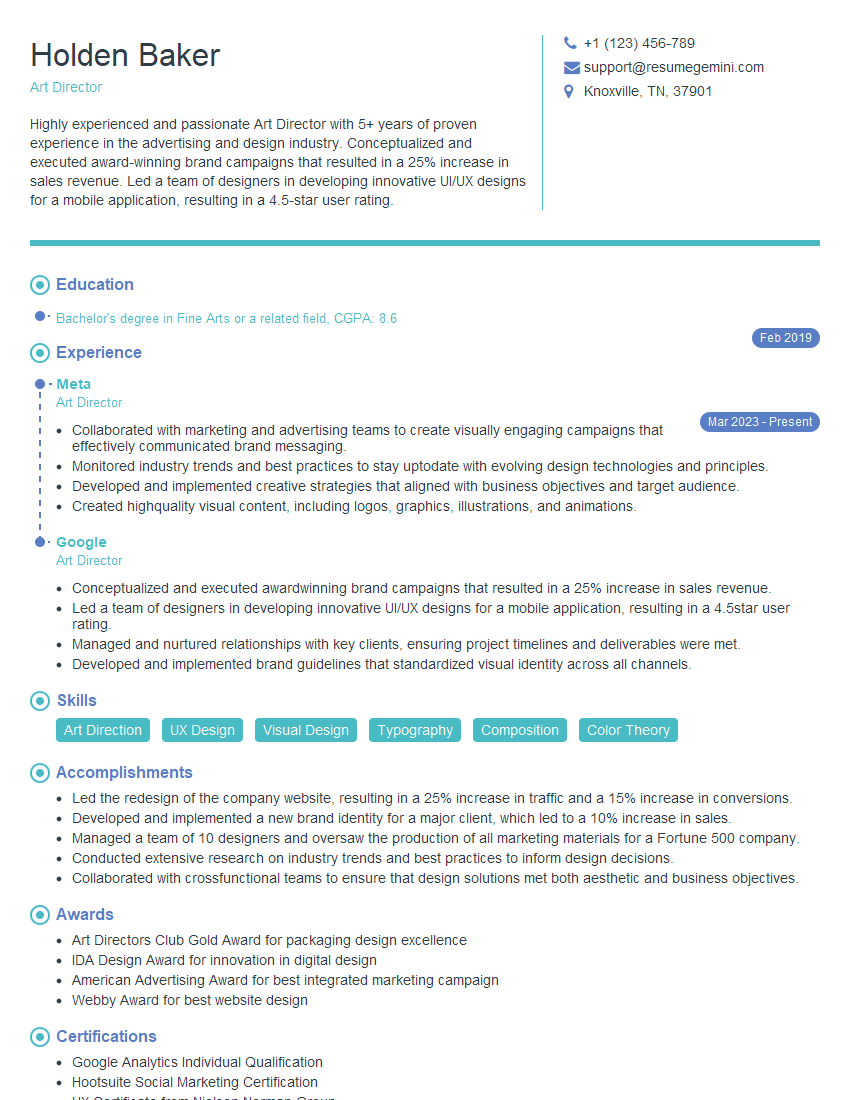
Art Director Resume Sample
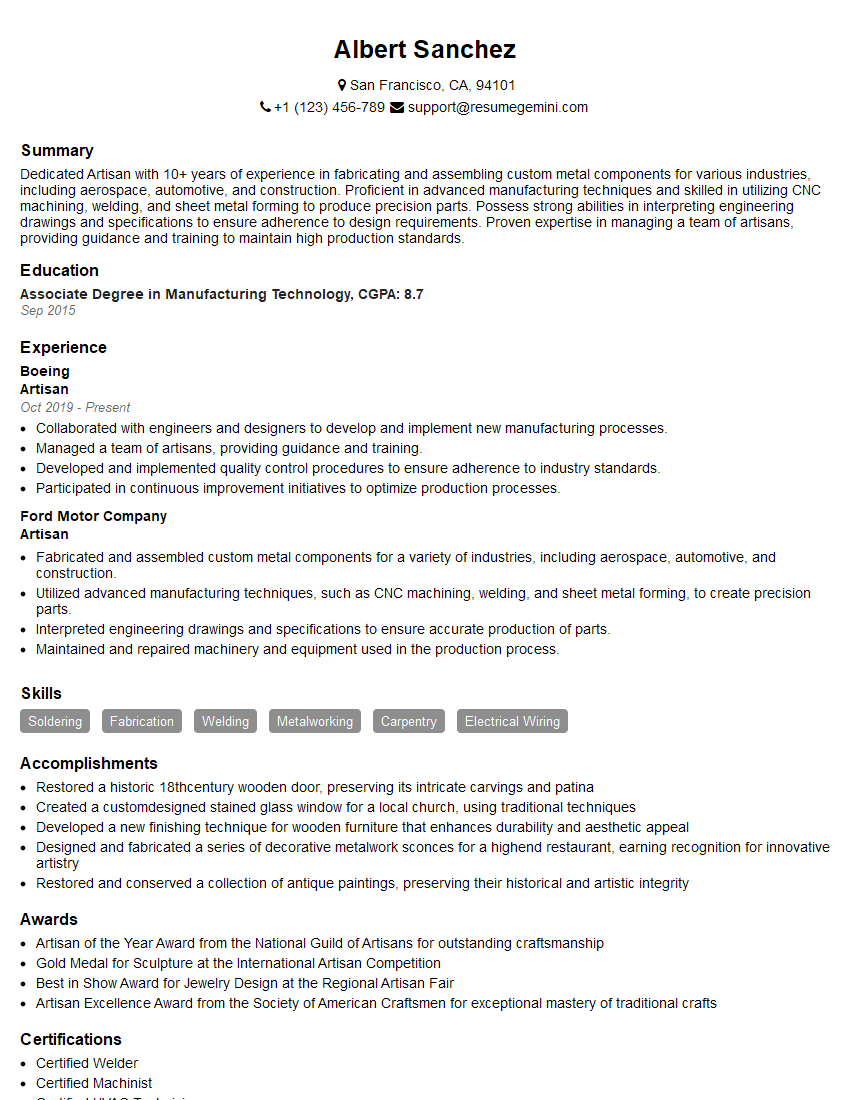
Artisan Resume Sample
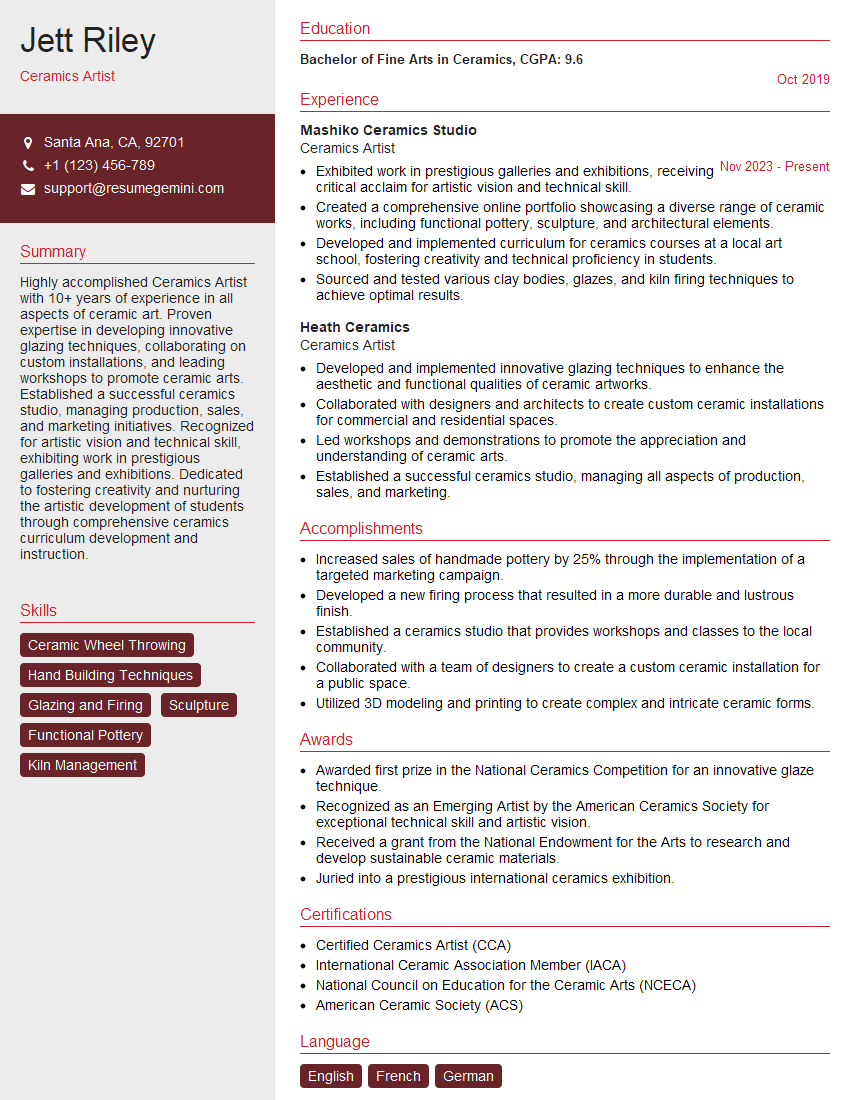
Ceramics Artist Resume Sample
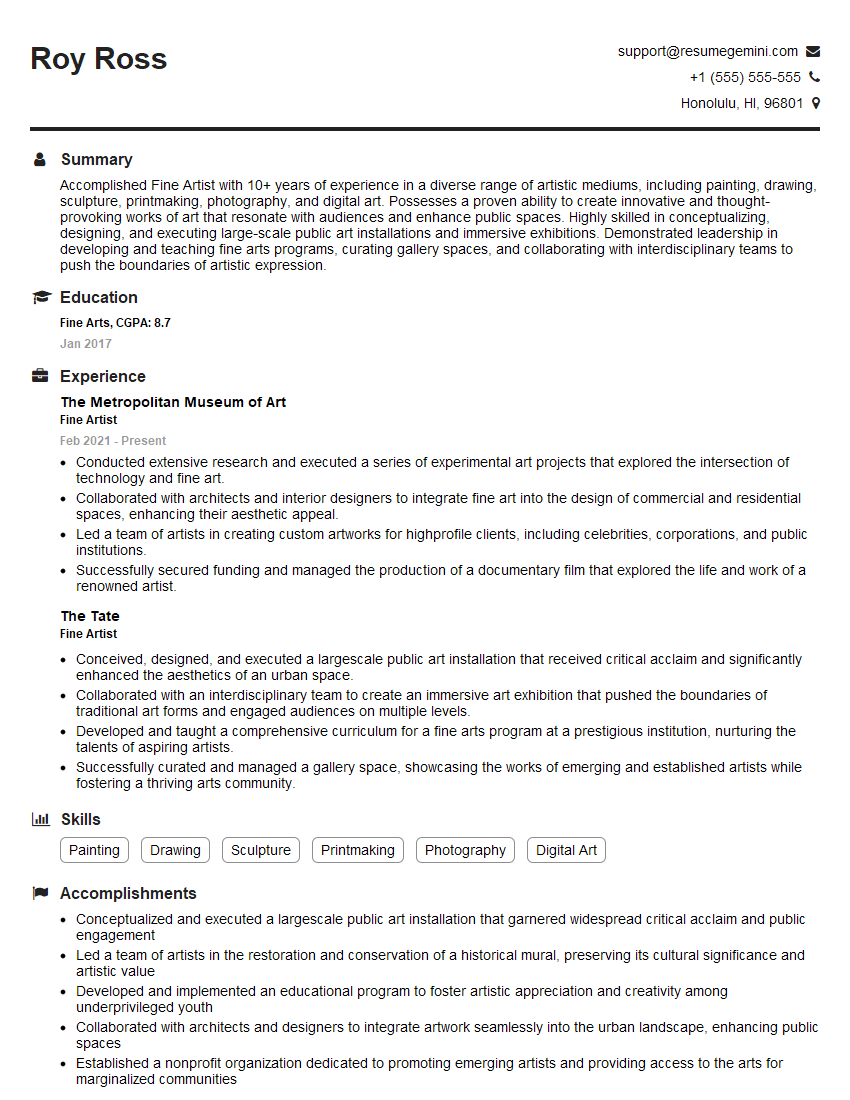
Fine Artist Resume Sample
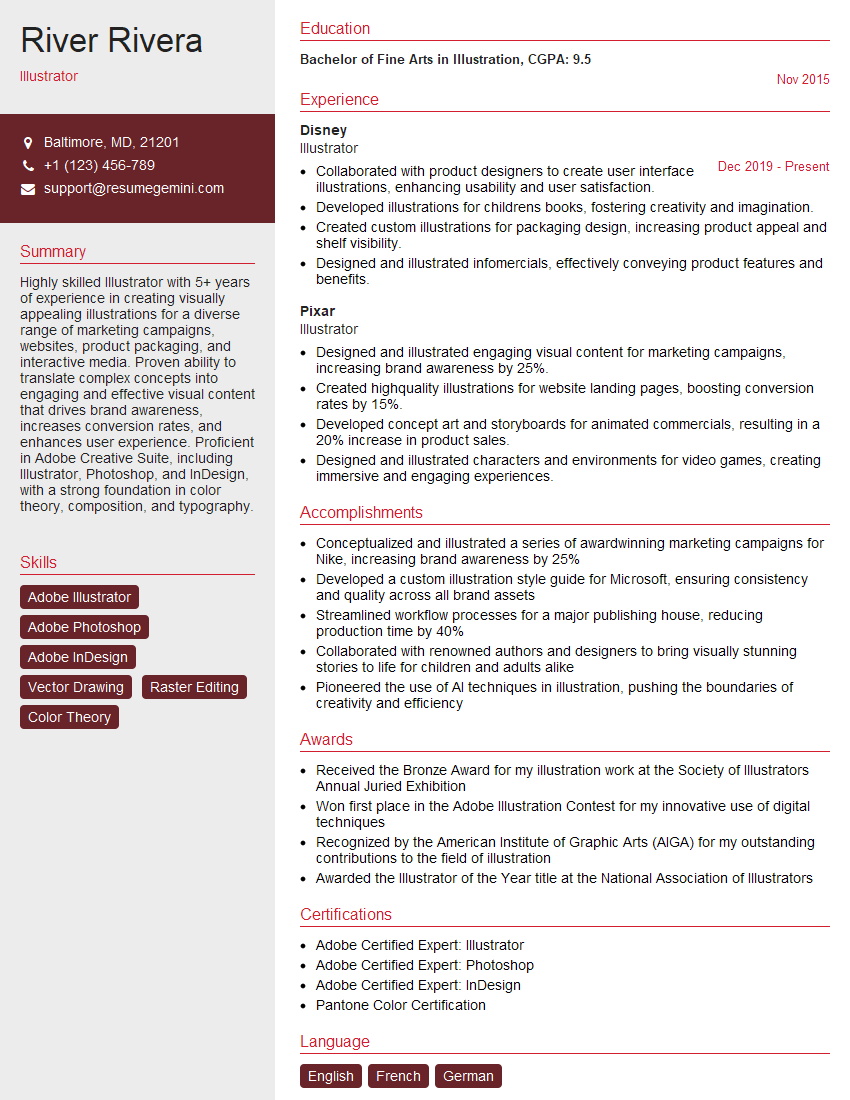
Illustrator Resume Sample
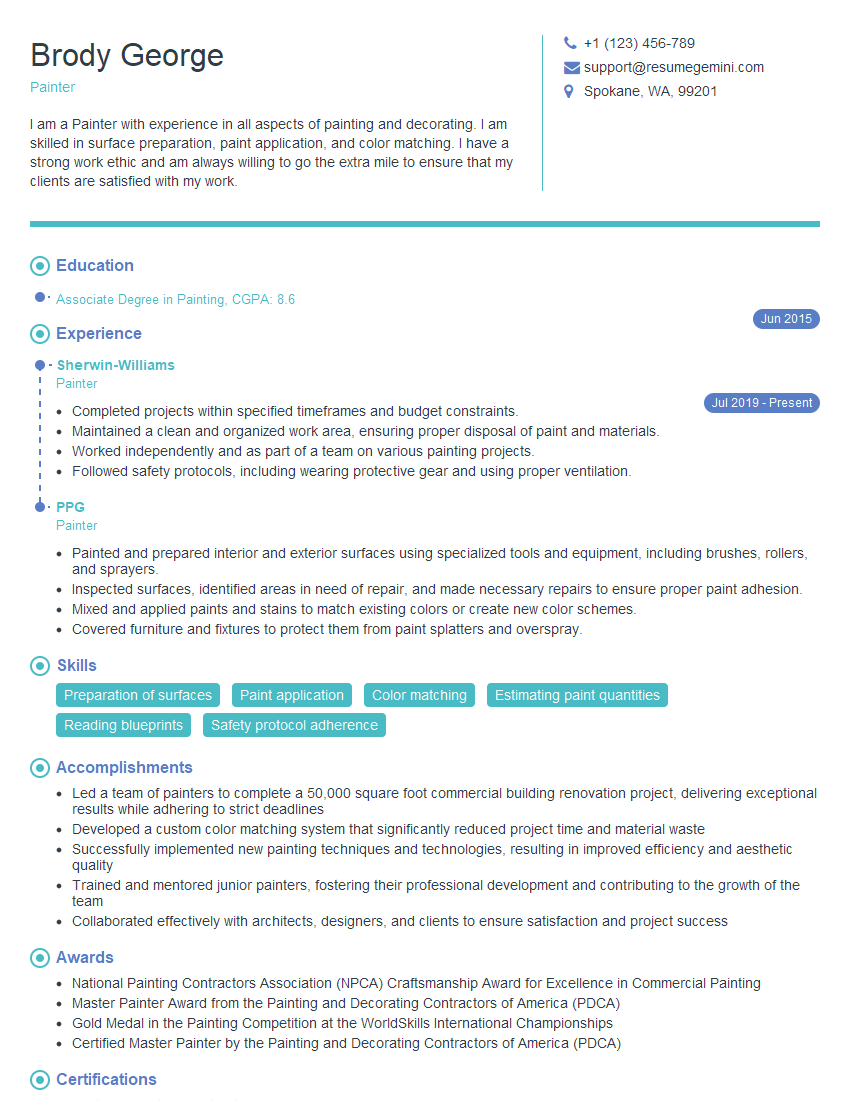
Painter Resume Sample
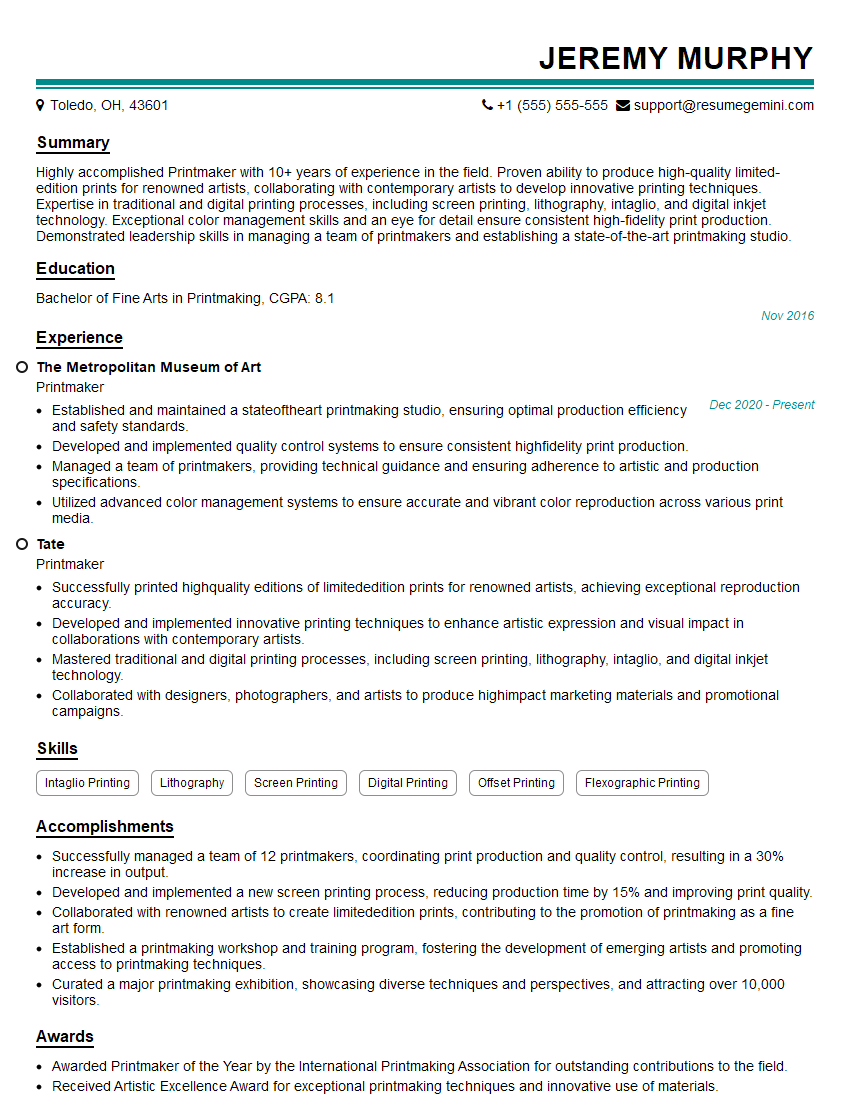
Printmaker Resume Sample
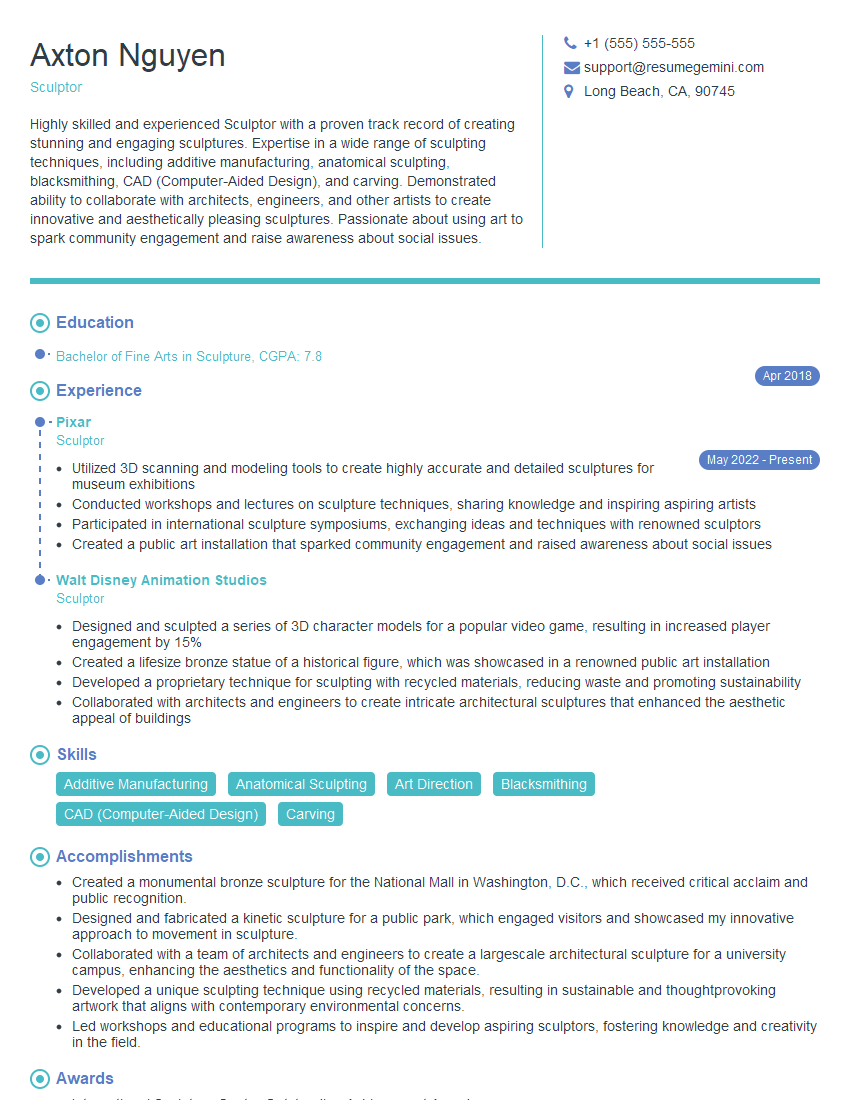
Sculptor Resume Sample
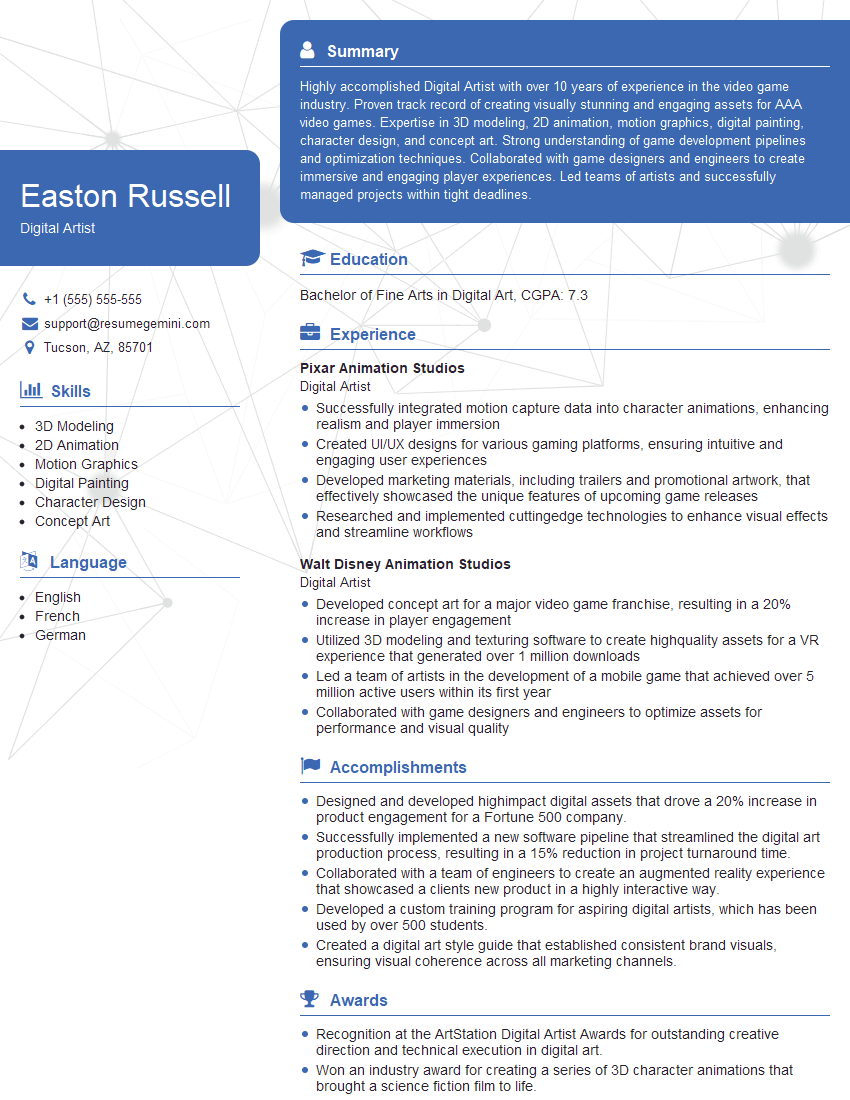
Digital Artist Resume Sample
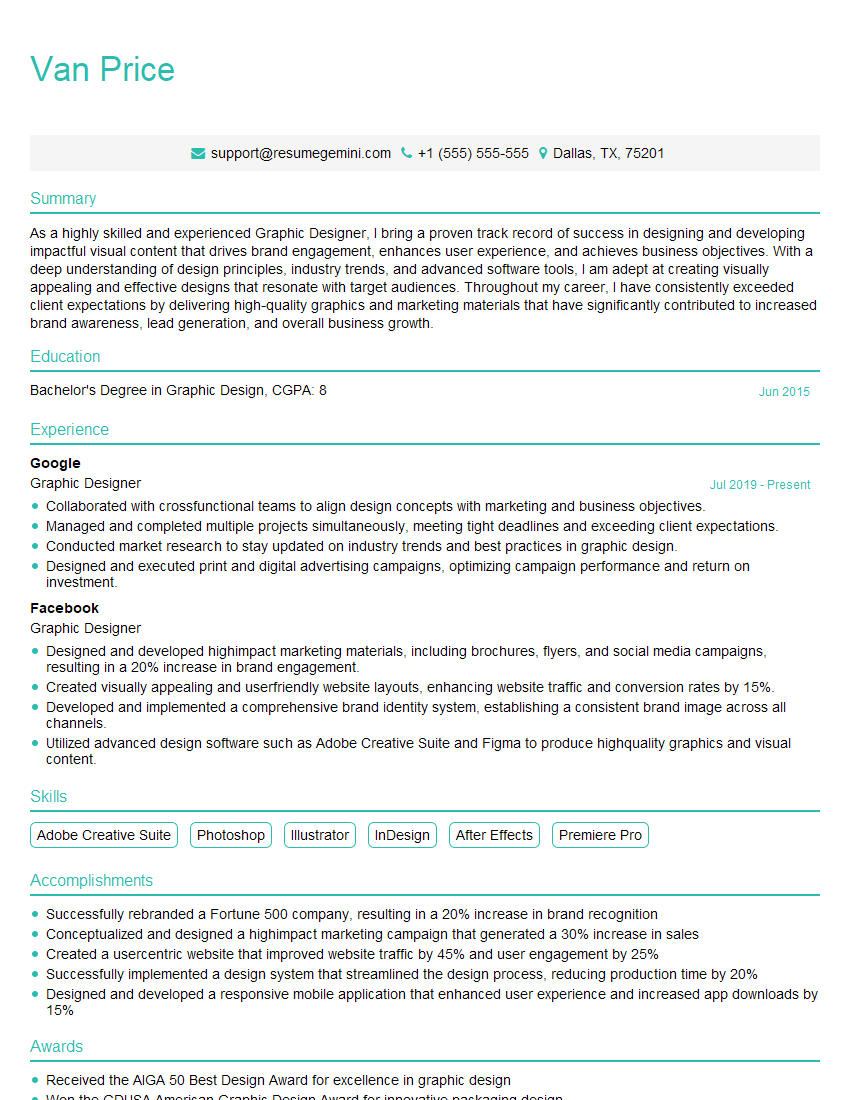
Graphic Designer Resume Sample
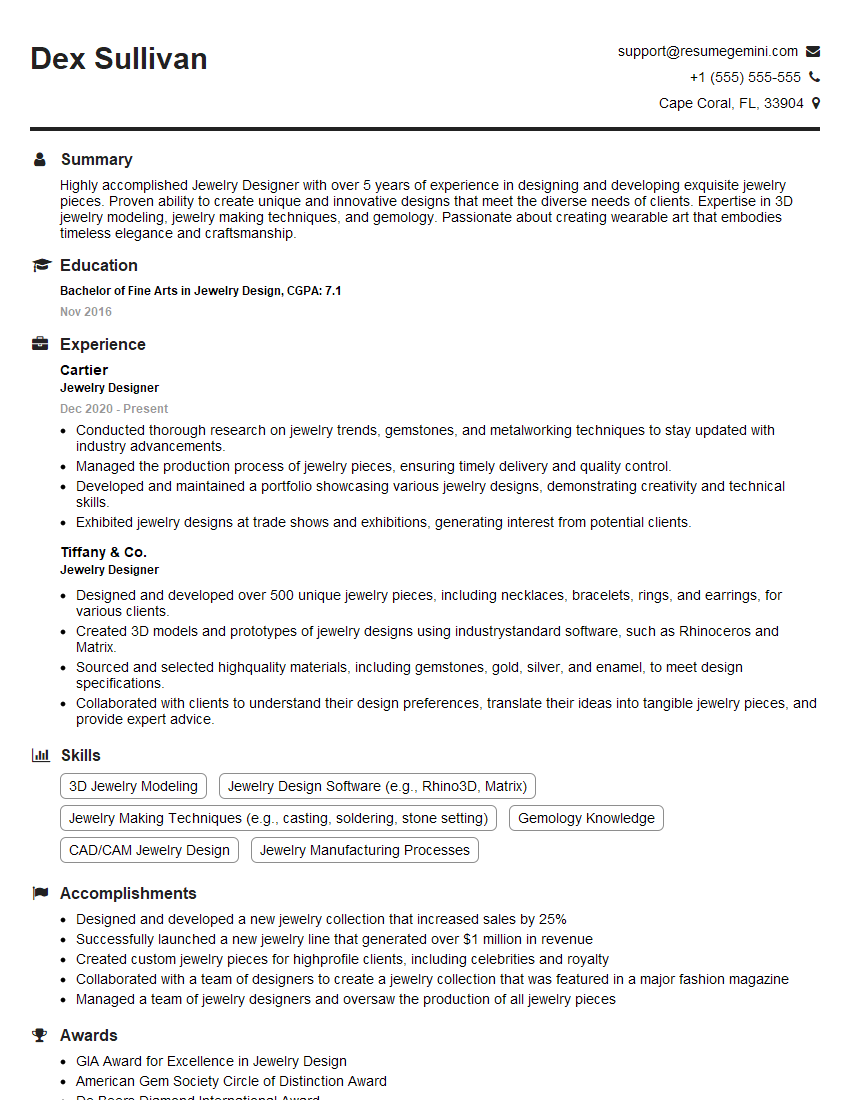
Jewelry Designer Resume Sample
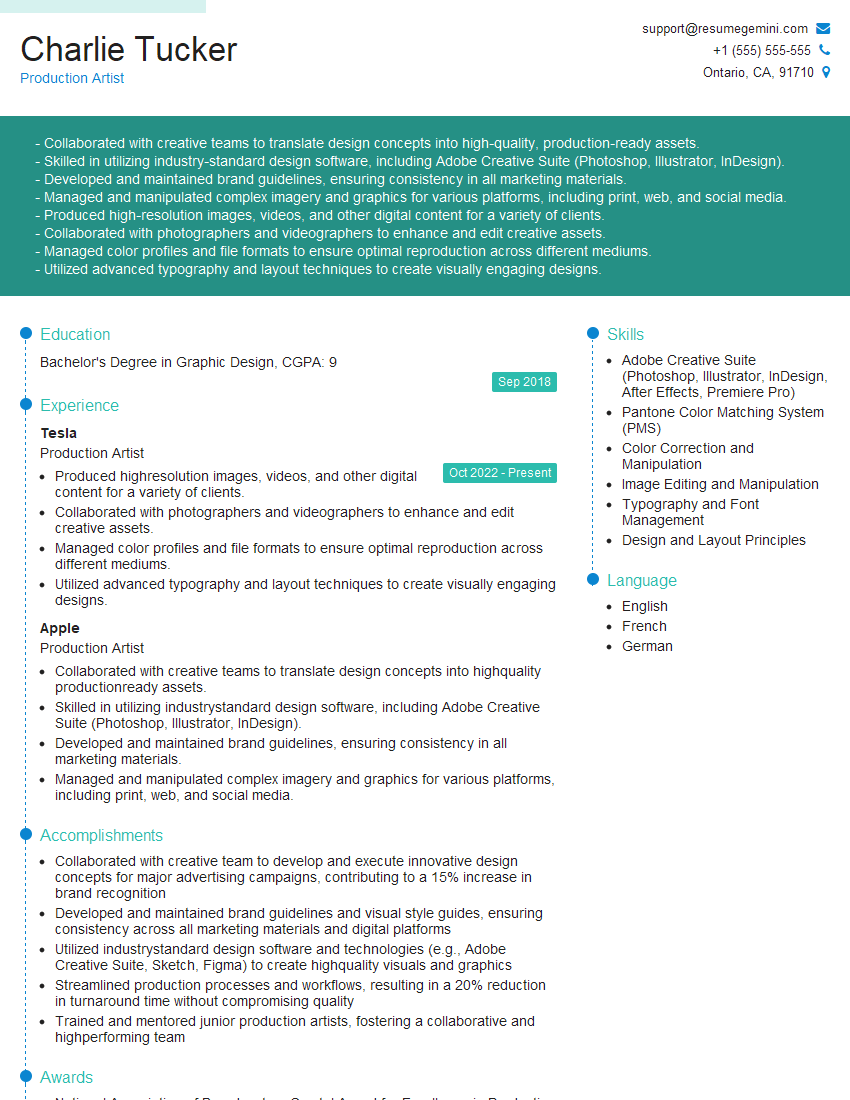
Production Artist Resume Sample
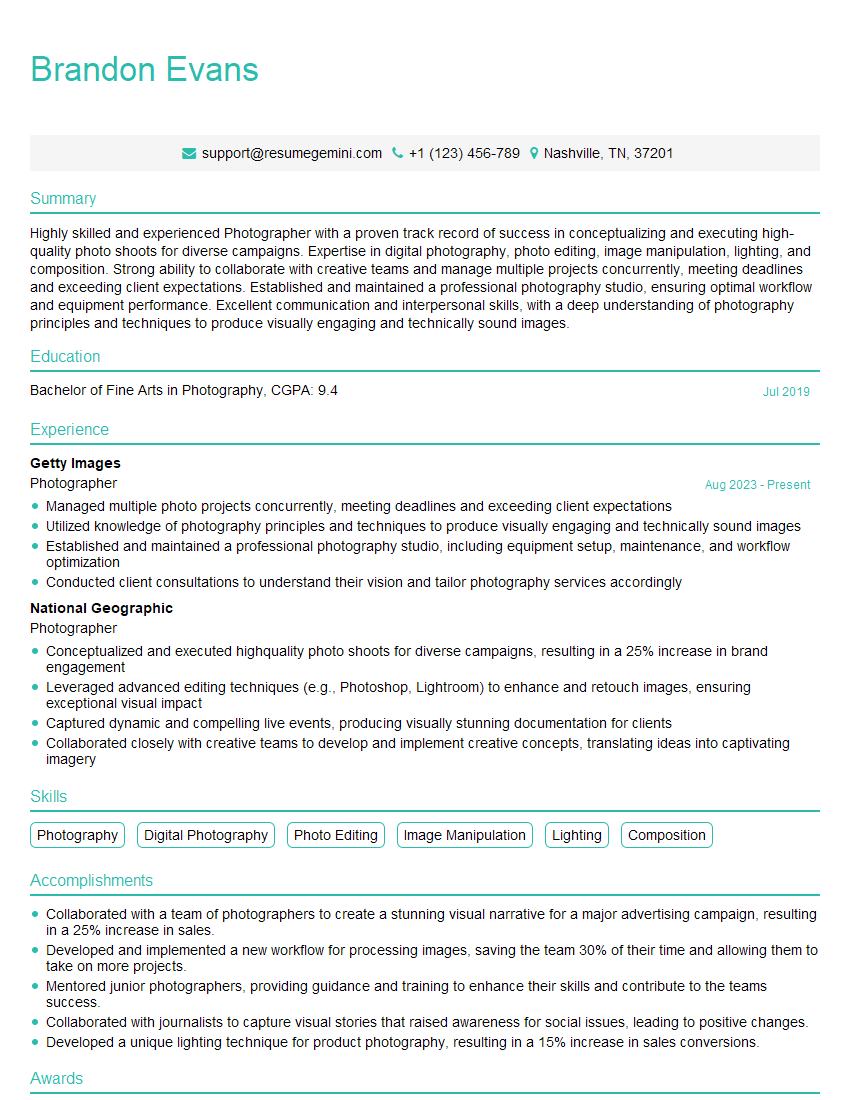
Photographer Resume Sample
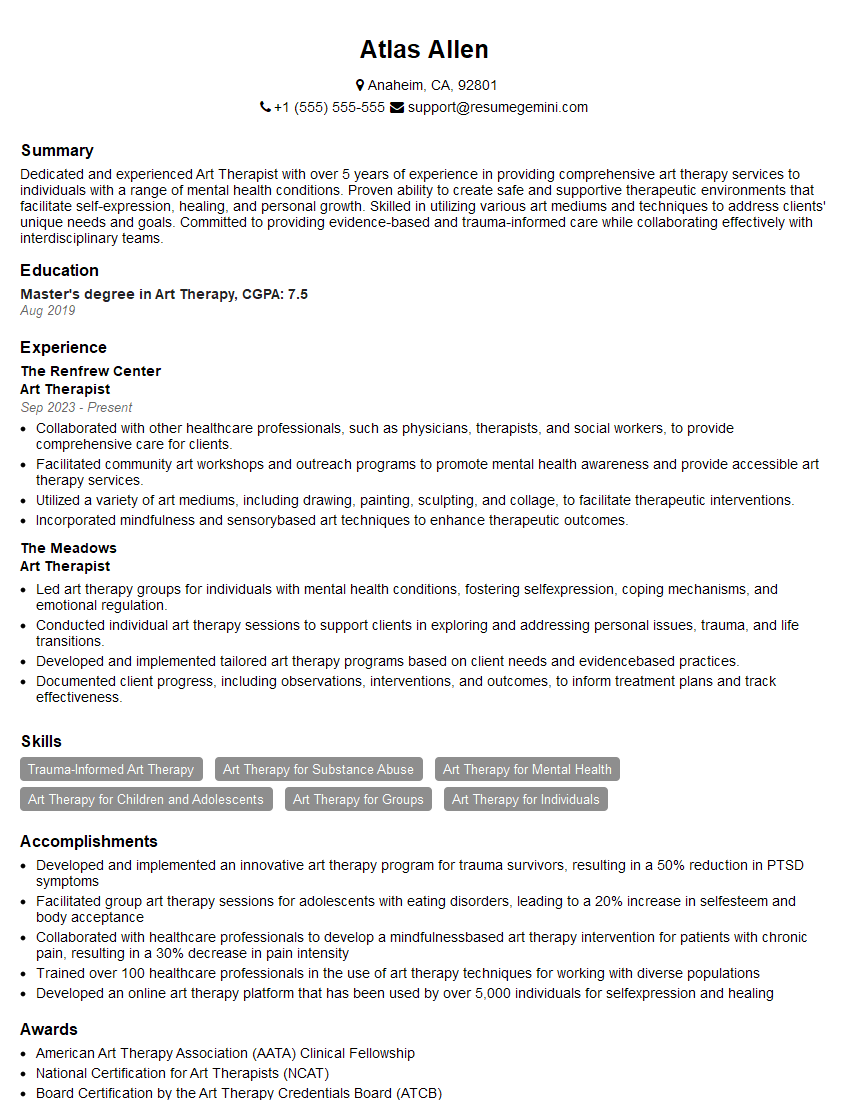
Art Therapist Resume Sample
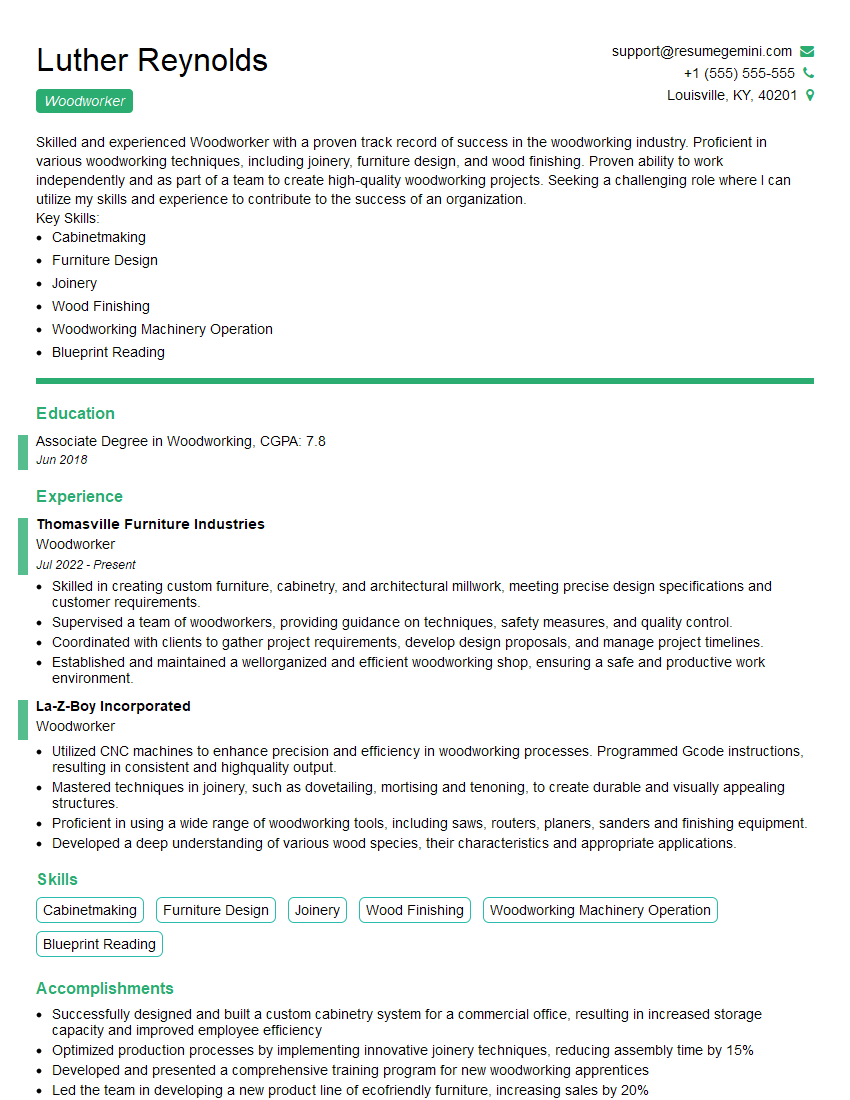
Woodworker Resume Sample
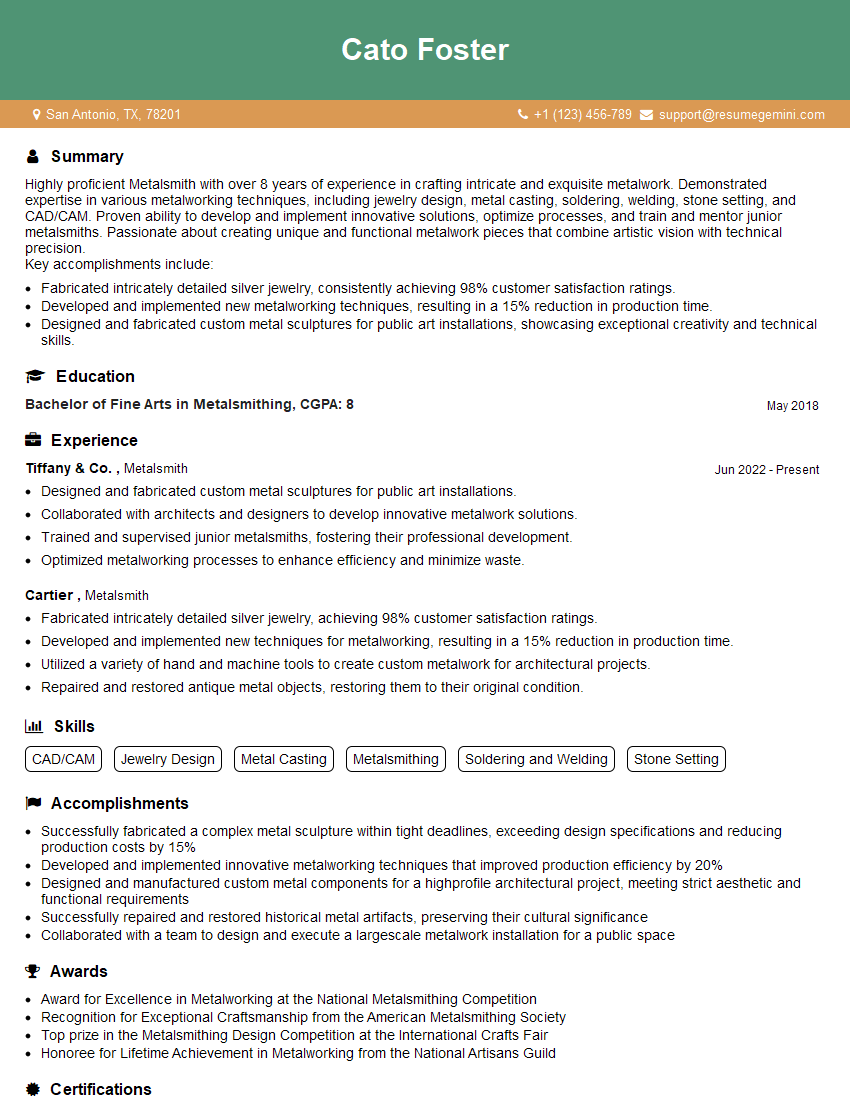
Metalsmith Resume Sample
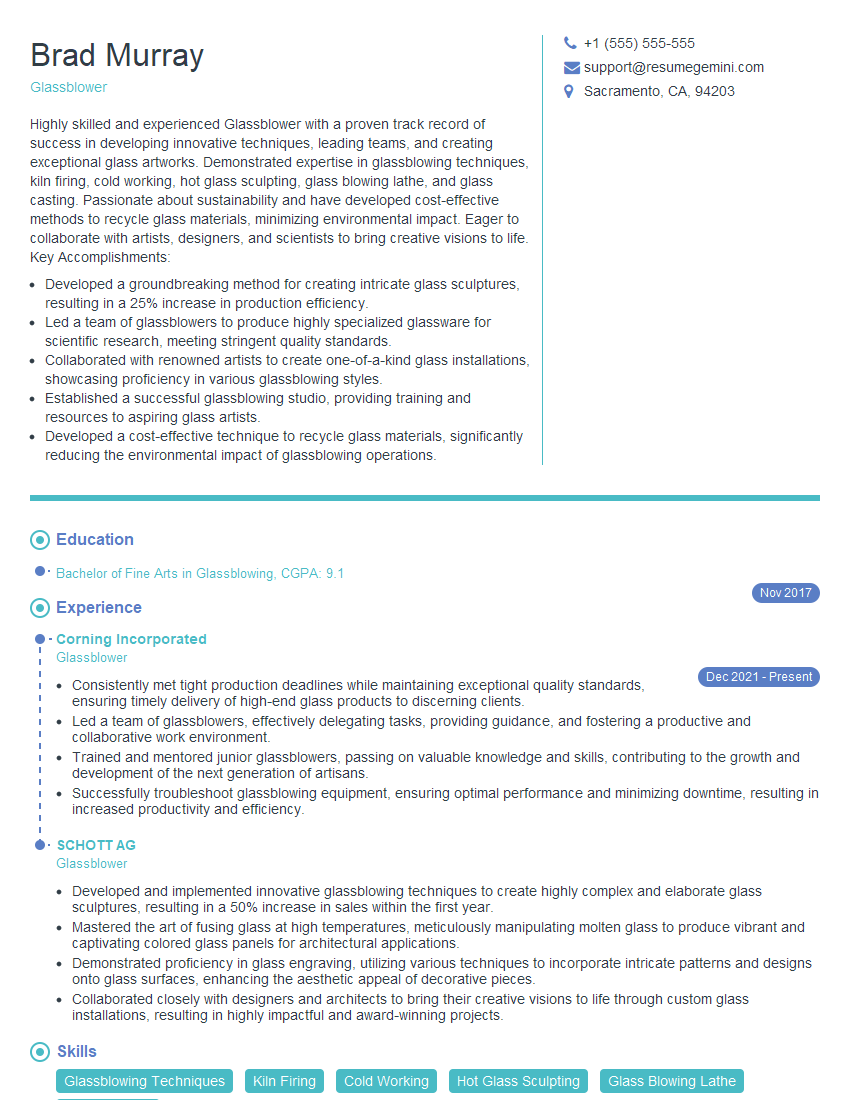
Glassblower Resume Sample
Explore more articles
Users Rating of Our Blogs
Share Your Experience
We value your feedback! Please rate our content and share your thoughts (optional).
What Readers Say About Our Blog
I Redesigned Spongebob Squarepants and his main characters of my artwork.
https://www.deviantart.com/reimaginesponge/art/Redesigned-Spongebob-characters-1223583608
IT gave me an insight and words to use and be able to think of examples
Hi, I’m Jay, we have a few potential clients that are interested in your services, thought you might be a good fit. I’d love to talk about the details, when do you have time to talk?
Best,
Jay
Founder | CEO