Unlock your full potential by mastering the most common Remote Sensing Techniques interview questions. This blog offers a deep dive into the critical topics, ensuring you’re not only prepared to answer but to excel. With these insights, you’ll approach your interview with clarity and confidence.
Questions Asked in Remote Sensing Techniques Interview
Q 1. Explain the difference between passive and active remote sensing.
The core difference between passive and active remote sensing lies in how they acquire data. Passive sensors, like cameras, detect naturally occurring radiation – primarily sunlight reflected from the Earth’s surface. Think of it like taking a photograph; you rely on existing light. Active sensors, on the other hand, emit their own radiation and then measure the energy reflected back. Radar is a prime example; it sends out microwave pulses and analyzes the return signal. This allows for data acquisition regardless of sunlight, making them valuable for nighttime or cloudy conditions.
In simpler terms: Passive sensing is like observing a scene with your eyes, while active sensing is like shining a flashlight and observing the reflection.
- Passive: Relies on reflected or emitted energy from the sun or Earth. Examples include cameras, thermal infrared sensors, and multispectral scanners.
- Active: Emits its own radiation and measures the return signal. Examples include radar (LiDAR), sonar, and laser altimeters.
Q 2. Describe the electromagnetic spectrum and its relevance to remote sensing.
The electromagnetic (EM) spectrum encompasses all forms of electromagnetic radiation, ranging from very short wavelengths like gamma rays to very long wavelengths like radio waves. Remote sensing utilizes a portion of this spectrum, primarily focusing on visible, near-infrared (NIR), shortwave infrared (SWIR), thermal infrared (TIR), and microwave regions. Each region interacts differently with Earth’s surface features, providing unique information.
Relevance to Remote Sensing: Different wavelengths interact differently with objects on the Earth’s surface. For instance:
- Visible light: Provides information on color and surface features.
- Near-infrared (NIR): Sensitive to vegetation health (chlorophyll content).
- Thermal infrared (TIR): Detects temperature variations, useful for monitoring heat sources or geological activity.
- Microwave: Can penetrate clouds and vegetation, valuable for all-weather applications like radar imagery.
By analyzing the reflected or emitted energy in these different spectral bands, remote sensing systems can identify various materials, land cover types, and other crucial information.
Q 3. What are the various spatial resolutions available in remote sensing imagery?
Spatial resolution refers to the smallest discernible detail in a remotely sensed image. It’s essentially the size of a pixel on the ground. Higher spatial resolution means smaller pixels and finer details, while lower spatial resolution means larger pixels and less detail. Imagine zooming in on a map; the higher the resolution, the more detail you see.
Various Spatial Resolutions: Spatial resolutions vary greatly depending on the sensor and its altitude. They are typically expressed in meters (m) or feet (ft).
- Very High Resolution (VHR): Less than 1 meter (e.g., 0.5m, 0.25m). Allows for identification of individual trees or cars.
- High Resolution (HR): 1-5 meters. Suitable for identifying buildings and other large objects.
- Medium Resolution (MR): 10-100 meters. Useful for mapping land cover types and urban areas.
- Low Resolution (LR): Greater than 100 meters. Provides a broad overview, often used for global monitoring of climate patterns or vegetation.
Q 4. Explain the concept of atmospheric correction in remote sensing.
Atmospheric correction is a crucial preprocessing step in remote sensing that accounts for the effects of the atmosphere on the recorded signals. The atmosphere scatters and absorbs electromagnetic radiation, distorting the information about the Earth’s surface. Imagine looking at an object through a foggy window; the fog obscures the true appearance of the object.
The Process: Atmospheric correction algorithms aim to remove or minimize these atmospheric effects to obtain a more accurate representation of the surface reflectance. This is done using various methods, including:
- Empirical Line Methods: These methods use relationships between dark and bright features in the image to estimate and correct for atmospheric effects.
- Radiative Transfer Models: These sophisticated models simulate the interaction of radiation with the atmosphere and are computationally intensive but more accurate.
Real-world implications: Without atmospheric correction, land cover classification accuracy would be severely reduced, leading to misinterpretations of the land cover map, potential biases in ecosystem modeling, and inaccuracies in precision agriculture techniques.
Q 5. What are the different types of satellite sensors and their applications?
Satellite sensors are the heart of remote sensing, providing various data depending on their design and spectral capabilities. Some common types include:
- Multispectral Sensors: These sensors record data in several distinct spectral bands (e.g., red, green, blue, near-infrared), providing information on vegetation health, land cover, and mineral composition. Examples include Landsat and Sentinel-2.
- Hyperspectral Sensors: These sensors collect data across hundreds of narrow, contiguous spectral bands, capturing very detailed spectral information, which is valuable for identifying materials and minerals with high accuracy. Examples include AVIRIS and Hyperion.
- Thermal Infrared Sensors: These sensors detect thermal radiation emitted by objects, providing temperature measurements useful for monitoring volcanic activity, heat islands, and wildfire detection. Examples include Landsat Thermal Infrared Sensor (TIRS) and MODIS.
- Radar Sensors: These sensors emit microwave radiation and measure the backscattered signal, providing information regardless of weather conditions and useful for mapping terrain, monitoring ice sheets, and observing ocean currents. Examples include Sentinel-1 and RADARSAT.
- LiDAR Sensors: These use lasers to measure distances, creating highly accurate 3D models of the Earth’s surface. These are especially important for detailed elevation mapping and forestry applications.
Applications: These sensors find wide use in various fields such as agriculture, urban planning, environmental monitoring, disaster management, and geological studies.
Q 6. How do you perform geometric correction of satellite imagery?
Geometric correction is the process of aligning remotely sensed imagery to a known map projection or coordinate system. Satellite images are often distorted due to various factors like the Earth’s curvature, sensor orientation, and atmospheric effects. Geometric correction rectifies these distortions to make the image spatially accurate.
The process typically involves these steps:
- Identifying Ground Control Points (GCPs): GCPs are points with known coordinates in both the image and a reference map. These points are used to establish a transformation between the image and the reference system.
- Selecting a Transformation Model: Appropriate transformation models (e.g., polynomial transformations, projective transformations) are chosen based on the level of distortion.
- Performing the Transformation: Using the GCPs and the chosen transformation model, the image is resampled to fit the desired coordinate system. Resampling techniques include nearest neighbor, bilinear interpolation, and cubic convolution.
- Evaluating Accuracy: The accuracy of the geometric correction is assessed by comparing the transformed image coordinates to the reference data. Root Mean Square Error (RMSE) is a common metric used to quantify the accuracy.
Software: Software packages like ENVI, ERDAS IMAGINE, and ArcGIS provide tools for performing geometric correction. The accuracy of the correction depends heavily on the number and quality of GCPs and the choice of transformation model.
Q 7. Describe the process of image classification in remote sensing.
Image classification is the process of assigning each pixel in a remotely sensed image to a specific thematic category, like land cover type (e.g., forest, water, urban). This transforms raw pixel values into meaningful information.
The Process generally follows these steps:
- Preprocessing: This involves atmospheric correction, geometric correction, and potentially other enhancements to improve image quality.
- Feature Selection: Relevant spectral bands or derived indices (e.g., NDVI for vegetation) are selected for classification.
- Classification Algorithm Selection: Several algorithms exist, including:
- Supervised Classification: Requires training data – samples of known land cover types – to train a classifier. Common methods include maximum likelihood classification and support vector machines.
- Unsupervised Classification: Does not require training data; the algorithm automatically groups pixels based on their spectral similarity. K-means clustering is a popular unsupervised method.
- Classification Execution: The chosen algorithm is applied to the image.
- Post-classification Processing: This may include filtering, smoothing, or accuracy assessment using a validation dataset.
Real-world Applications: Image classification is used in a wide range of applications, including land cover mapping, deforestation monitoring, urban expansion analysis, and precision agriculture.
Q 8. Explain the difference between supervised and unsupervised classification.
Supervised and unsupervised classification are two fundamental approaches in remote sensing image analysis, both aiming to categorize pixels based on their spectral characteristics. The key difference lies in the use of training data.
Supervised classification requires you to ‘train’ the algorithm by providing samples of known land cover types. Imagine you’re teaching a child to identify different fruits: you show them examples of apples, oranges, and bananas, labeling each one. The algorithm then learns the spectral characteristics of each fruit (apple’s red tones, banana’s yellow tones, etc.) and uses this knowledge to classify other pixels in the image. This approach requires prior knowledge and ground truth data, but generally leads to more accurate results.
Unsupervised classification, on the other hand, doesn’t use pre-labeled data. It’s like letting the child explore a fruit basket and group similar fruits together based on their appearance. The algorithm automatically groups pixels with similar spectral properties into clusters, without prior knowledge of the land cover types. This is useful when you don’t have sufficient ground truth data, but interpreting the resulting clusters can be more challenging and may require additional analysis.
In summary: Supervised classification is ‘teacher-led’ and more precise, while unsupervised classification is ‘self-exploratory’ and often requires additional interpretation.
Q 9. What are the common image classification algorithms used?
Many algorithms are used for image classification, each with its strengths and weaknesses. Some of the most common include:
- Maximum Likelihood Classification: A statistically-based method that assigns pixels to the class with the highest probability based on their spectral values and class statistics. It assumes normal distribution of data for each class.
- Minimum Distance to Means Classification: A simpler method that assigns pixels to the class with the nearest mean spectral value. Computationally efficient, but less accurate than Maximum Likelihood.
- Support Vector Machines (SVM): A powerful machine learning algorithm that finds the optimal hyperplane to separate different classes. Effective for high-dimensional data and non-linear relationships.
- Random Forest: An ensemble method that combines multiple decision trees to improve classification accuracy and robustness. Handles noise and outliers well.
- Artificial Neural Networks (ANN): Complex algorithms inspired by the human brain, capable of learning intricate patterns. Deep learning architectures like Convolutional Neural Networks (CNNs) have shown remarkable success in image classification.
The choice of algorithm depends heavily on the data characteristics, available computational resources, desired accuracy, and the expertise of the analyst. Often, a combination of methods and preprocessing steps may be required to achieve optimal results.
Q 10. What is NDVI and how is it calculated and interpreted?
The Normalized Difference Vegetation Index (NDVI) is a widely used indicator of vegetation health and biomass. It utilizes the contrasting reflectance properties of plants in the red and near-infrared (NIR) parts of the electromagnetic spectrum.
NDVI is calculated using the following formula:
NDVI = (NIR - Red) / (NIR + Red)Where:
- NIR is the reflectance in the near-infrared band.
- Red is the reflectance in the red band.
NDVI values typically range from -1 to +1.
- Values close to +1 indicate healthy, dense vegetation.
- Values around 0 suggest bare soil or water.
- Negative values usually indicate clouds or snow.
NDVI is invaluable for monitoring drought conditions, assessing crop yields, and mapping deforestation. For example, a decrease in NDVI over time in a particular area could signify a decline in vegetation health due to drought or disease.
Q 11. Explain the concept of spectral signature in remote sensing.
A spectral signature in remote sensing represents the unique pattern of reflectance or emission of electromagnetic radiation across different wavelengths for a specific material or land cover type. Imagine it as a ‘fingerprint’ of that material.
Different materials interact with light differently. For instance, healthy vegetation strongly absorbs red light for photosynthesis but reflects a lot of near-infrared light. This creates a distinct spectral signature that can be used to differentiate it from other features like soil or water. A spectral signature is typically represented as a graph showing reflectance (or emission) values against different wavelengths.
Understanding spectral signatures is crucial for selecting appropriate spectral bands for remote sensing applications and for accurate classification of land cover using techniques like supervised classification. By analyzing the spectral signatures of various features, we can develop algorithms to identify and map them effectively.
Q 12. What are the advantages and disadvantages of using LiDAR data?
LiDAR (Light Detection and Ranging) is a powerful remote sensing technology that uses laser pulses to measure distances to the Earth’s surface. This provides highly accurate 3D representations of the terrain.
Advantages:
- High Accuracy: Provides precise elevation data, even in dense vegetation.
- Penetration of Canopy: Can penetrate vegetation canopies to measure ground elevation beneath.
- 3D Point Cloud Data: Generates detailed 3D point clouds, enabling creation of highly accurate digital elevation models (DEMs) and other 3D products.
- Versatile Applications: Widely applicable in various fields, including forestry, geology, urban planning, and archaeology.
Disadvantages:
- Cost: LiDAR data acquisition is relatively expensive compared to other remote sensing techniques.
- Weather Sensitivity: Data acquisition is often affected by adverse weather conditions (clouds, rain).
- Data Processing: Processing LiDAR data can be complex and computationally intensive.
- Safety Considerations: Laser safety precautions must be followed during data acquisition.
Q 13. How is LiDAR data processed and used for 3D modeling?
LiDAR data processing involves several steps to transform the raw point cloud data into usable information. This typically begins with:
- Data Preprocessing: This includes removing noise, outliers, and correcting for systematic errors.
- Classification: Points are classified into different categories like ground, vegetation, buildings, etc. This can be done manually or automatically using various algorithms.
- Ground Point Extraction: Identifying and separating the ground points from the rest of the data is crucial for creating accurate DEMs.
- DEM Generation: A digital elevation model (DEM) is created by interpolating the ground points. Different interpolation methods can be used, depending on the desired accuracy and resolution.
- Feature Extraction: Additional features like slope, aspect, and hillshade can be derived from the DEM.
For 3D modeling, the classified point cloud data is used directly or converted into other formats like meshes or TINs (Triangulated Irregular Networks). Software like ArcGIS, QGIS, or specialized LiDAR processing software can be used to visualize and analyze the data, creating detailed 3D models of the terrain and associated features.
For example, a point cloud can be used to create a 3D model of a city, showing buildings, roads, and trees with high precision. This information is crucial for urban planning and infrastructure management.
Q 14. Describe your experience with different GIS software (e.g., ArcGIS, QGIS).
I have extensive experience with both ArcGIS and QGIS, utilizing them for diverse remote sensing applications. ArcGIS, being a commercial software, offers a more comprehensive suite of tools and advanced functionalities, particularly helpful for complex spatial analysis tasks and integration with other enterprise GIS systems. I’ve used ArcGIS extensively for geoprocessing, image classification, and 3D visualization, leveraging its powerful spatial analysis tools and extensions. For example, I utilized its image analysis tools for classifying satellite imagery for land cover mapping and change detection projects.
QGIS, as a free and open-source alternative, provides a powerful and flexible platform for a wide range of GIS tasks. Its accessibility and the large community support make it an excellent choice for many projects. I find QGIS particularly useful for exploring data, conducting initial processing steps, and for tasks where ArcGIS might be overkill or unaffordable. For example, I often use QGIS for quick data visualization and manipulation before bringing the data into ArcGIS for advanced analysis.
My experience with both platforms allows me to choose the most appropriate software based on the project’s specific needs, budget, and complexity.
Q 15. How do you handle large datasets in remote sensing analysis?
Handling large remote sensing datasets effectively requires a multi-pronged approach combining efficient data management, processing techniques, and computational resources. Think of it like organizing a massive library – you wouldn’t just throw all the books into a single pile!
Data Subsetting and Compression: Instead of loading the entire dataset at once, I focus on analyzing specific areas of interest (subsetting) and employ lossless compression techniques (like GeoTIFF with LZW compression) to reduce storage needs and improve processing speed. This is akin to only checking out the books relevant to your research topic from the library.
Parallel Processing: Modern remote sensing analysis often utilizes parallel processing frameworks such as Python’s
multiprocessingordasklibraries. These tools break down large tasks into smaller, manageable chunks that can be processed simultaneously across multiple CPU cores, significantly reducing processing time. This is like assigning different librarians to process different sections of the library at the same time.Cloud Computing: Leveraging cloud computing platforms like Google Earth Engine or AWS allows access to powerful processing capabilities and scalable storage. They handle the heavy lifting, allowing me to focus on the analysis itself, not the infrastructure. It’s like having a vast, always-available digital library with all the necessary tools readily at hand.
Data Storage Optimization: Using efficient file formats and databases (e.g., cloud-optimized GeoTIFFs or cloud-based databases) makes it easier to manage and access data quickly. Consider it the library using a sophisticated cataloging system for efficient retrieval of information.
Career Expert Tips:
- Ace those interviews! Prepare effectively by reviewing the Top 50 Most Common Interview Questions on ResumeGemini.
- Navigate your job search with confidence! Explore a wide range of Career Tips on ResumeGemini. Learn about common challenges and recommendations to overcome them.
- Craft the perfect resume! Master the Art of Resume Writing with ResumeGemini’s guide. Showcase your unique qualifications and achievements effectively.
- Don’t miss out on holiday savings! Build your dream resume with ResumeGemini’s ATS optimized templates.
Q 16. Explain your experience with different remote sensing data formats (e.g., GeoTIFF, HDF).
My experience encompasses a wide range of remote sensing data formats, each with its own strengths and weaknesses. I’m proficient in working with:
GeoTIFF: This is a widely used format that stores georeferenced raster data. Its flexibility and support for various compression algorithms make it suitable for many applications. I often use GeoTIFFs for storing imagery from Landsat, Sentinel, or aerial surveys.
HDF (Hierarchical Data Format): HDF is particularly useful for managing multi-dimensional and complex datasets, often encountered in hyperspectral imagery or LiDAR data. Its ability to store metadata efficiently is crucial for maintaining data integrity and traceability. For example, I’ve used HDF files extensively when working with AVIRIS hyperspectral data for vegetation mapping projects.
ENVI format (.dat): This proprietary format is common in the environmental science domain. I am familiar with the specifications for handling ENVI files, including the header files which contain metadata.
Other formats: I also have experience with formats such as NetCDF, which is very popular for storing climate data, and various proprietary formats from specific sensor manufacturers.
The ability to seamlessly transition between these formats is critical for effective analysis, ensuring data interoperability and maximizing the use of diverse data sources.
Q 17. Describe your experience in using cloud computing platforms for remote sensing (e.g., Google Earth Engine, AWS).
Cloud computing has revolutionized remote sensing analysis. I have extensive experience using both Google Earth Engine (GEE) and Amazon Web Services (AWS) for processing large datasets. Think of it as having a supercomputer at your fingertips.
Google Earth Engine: GEE is particularly powerful for global-scale analyses, offering a vast catalog of readily accessible satellite imagery and tools for performing complex geospatial processing. I’ve used GEE extensively for time-series analysis of deforestation, using Landsat data to track changes over several decades. The scalability and ease of use are invaluable.
AWS: AWS provides a more customizable and flexible environment. I utilize AWS services such as S3 (for data storage), EC2 (for computation), and Lambda (for serverless functions) to build customized workflows for specific projects. For example, I’ve used AWS to process massive LiDAR datasets for creating high-resolution digital elevation models (DEMs).
The choice between GEE and AWS depends on the specific project needs; GEE shines for its ease of use and readily available data, while AWS offers greater customization and control, particularly for complex tasks.
Q 18. How do you assess the accuracy of remote sensing data?
Assessing the accuracy of remote sensing data is crucial for ensuring reliable results. The accuracy assessment involves comparing the remote sensing derived information against a reference dataset of known high accuracy. It’s like checking your map against a known landmark to verify its position.
Ground Truth Data: The most common method involves comparing the remote sensing data to ground truth data collected in the field (e.g., GPS measurements, field surveys). This could involve things like physically measuring the height of trees to compare against LiDAR-derived canopy heights.
Accuracy Metrics: Several metrics are used to quantify accuracy, including overall accuracy, producer’s accuracy (related to the correct classification of each class), user’s accuracy (related to the accuracy of classifying the pixels), kappa coefficient, and root mean square error (RMSE). These metrics provide a quantitative assessment of how well the remote sensing data reflects reality.
Error Propagation: It’s important to understand how errors might propagate through the analysis pipeline. Understanding the sources of uncertainty is key to interpret the accuracy correctly.
Q 19. What are some common sources of error in remote sensing data?
Remote sensing data is susceptible to various errors, which can significantly affect the results. It’s important to be aware of these potential pitfalls.
Atmospheric Effects: Scattering and absorption of electromagnetic radiation by atmospheric components (clouds, aerosols, water vapor) can distort the signal and reduce the accuracy of measurements.
Sensor Errors: Sensor calibration errors, noise, and geometric distortions (e.g., due to sensor platform movement) can lead to inaccuracies. This is akin to a camera having a slightly off-kilter lens.
Terrain Effects: Variations in topography (e.g., shadows, slopes) can affect the reflectance of electromagnetic radiation, leading to errors in measurements.
Data Processing Errors: Errors can be introduced during data preprocessing, such as atmospheric correction, geometric correction, and image classification. For example, incorrect choice of atmospheric correction model could lead to biases in vegetation indices.
Q 20. Explain your experience in applying remote sensing techniques to a specific environmental problem.
I applied remote sensing techniques to study the impact of deforestation on water quality in the Amazon rainforest. This involved a multi-step approach:
Data Acquisition: I acquired Landsat time-series data covering the study area, spanning several decades. I also used MODIS data for broader-scale monitoring.
Preprocessing: This included atmospheric correction, geometric correction, and cloud masking, critical for removing noise and ensuring data consistency.
Deforestation Mapping: I used change detection techniques to map deforestation patterns over time, tracking changes in forest cover using various vegetation indices.
Water Quality Assessment: I correlated the deforestation patterns with water quality parameters derived from Sentinel-2 imagery, focusing on turbidity and chlorophyll-a concentrations.
Analysis and Interpretation: I analyzed the spatial and temporal relationships between deforestation and water quality using statistical methods and created maps and graphs visualizing the findings.
The results demonstrated a strong correlation between deforestation and decreased water quality, highlighting the importance of forest conservation for maintaining healthy aquatic ecosystems.
Q 21. How would you approach a project requiring the integration of multiple remote sensing datasets?
Integrating multiple remote sensing datasets requires careful planning and execution, ensuring data compatibility and consistency. It’s like piecing together a puzzle, ensuring all the pieces fit correctly.
Data Preprocessing: This is the most crucial step. All datasets need to be preprocessed to a common coordinate system, resolution, and projection. This ensures that the data aligns properly and can be combined seamlessly.
Data Fusion Techniques: Depending on the datasets, different fusion techniques can be applied. For example, I might use image fusion algorithms to combine high-resolution panchromatic imagery with multispectral data to create a highly detailed image. Other techniques might include data stacking for time-series analysis.
Data Analysis: Once the data is integrated, various analysis techniques can be applied depending on the research question. This might involve statistical analysis, machine learning, or object-based image analysis.
Uncertainty Assessment: It is critical to assess the uncertainties associated with each dataset and how they propagate through the integration process. This ensures that the final results are interpreted correctly, considering potential errors.
Q 22. Describe your experience with data visualization and presentation techniques for remote sensing data.
Effective data visualization is crucial for conveying insights from remote sensing data. My experience encompasses a wide range of techniques, from basic image processing and enhancement to advanced 3D modeling and interactive web applications. I’m proficient in using software such as ArcGIS Pro, QGIS, ENVI, and Python libraries like Matplotlib and Seaborn.
For example, when analyzing deforestation patterns in the Amazon, I utilized false-color composite imagery to highlight vegetation changes over time. This allowed for a clear visual representation of deforestation hotspots, enabling stakeholders to quickly grasp the extent of the problem. In another project involving urban heat island analysis, I created 3D surface models of land surface temperature, combining this with elevation data to visualize the spatial distribution of heat effectively. This visualization helped city planners identify areas needing immediate attention for mitigating heat-related risks. I also frequently leverage interactive dashboards to present findings to a non-technical audience, allowing for deeper exploration of the data.
Beyond static visuals, I often employ animations and video to demonstrate temporal changes, like sea level rise or glacier retreat. These dynamic presentations make complex data more accessible and engaging.
Q 23. What are your preferred methods for validating remote sensing results?
Validating remote sensing results is paramount to ensure accuracy and reliability. My preferred methods involve a multi-faceted approach, combining different validation techniques based on the specific application and data availability.
- Ground Truthing: This involves collecting in-situ data, like field measurements of vegetation height or soil moisture, at specific locations corresponding to the remote sensing data. Direct comparison allows for assessment of accuracy.
- Comparison with Existing Data: I often compare my results with existing datasets of known accuracy, such as topographic maps, census data, or previous remote sensing products. This helps identify potential biases and inconsistencies.
- Accuracy Assessment Metrics: I use quantitative metrics like root mean square error (RMSE), overall accuracy, and producer’s/user’s accuracy to statistically evaluate the performance of my analysis. These provide objective measures of the agreement between remote sensing estimates and reference data.
- Inter-sensor Comparison: In situations with multiple remote sensing datasets, cross-validation by comparing results from different sensors (e.g., Landsat and Sentinel) enhances the confidence in the findings.
For instance, in a project mapping agricultural land cover, I conducted extensive field surveys to collect ground truth data on crop types and compared them to classifications derived from satellite imagery. The accuracy assessment metrics indicated a high level of concordance, validating the reliability of my remote sensing-based land cover map.
Q 24. Explain your understanding of different projection systems and coordinate reference systems.
Projection systems and coordinate reference systems (CRS) are fundamental in remote sensing, defining how the 3D earth’s surface is represented on a 2D map. A projection system transforms the spherical or ellipsoidal shape of the Earth into a flat surface, inevitably introducing distortions. Different projections minimize specific types of distortion (area, shape, distance, direction) depending on the application. A coordinate reference system, on the other hand, defines a specific coordinate system for a given area, associating geographic coordinates (latitude and longitude) or projected coordinates (e.g., UTM) to locations on the Earth.
Common projections include:
- Mercator: Preserves shape and direction but distorts area, especially at high latitudes. Often used for navigation.
- Lambert Conformal Conic: Preserves shape and area in a limited region, commonly used for mid-latitude mapping.
- UTM (Universal Transverse Mercator): A cylindrical projection that divides the Earth into zones, minimizing distortions within each zone. Widely used for large-scale mapping.
Understanding CRS is crucial because data from different sources often employ different projections. Without proper transformation, spatial analysis will be inaccurate. For example, attempting to overlay data in WGS84 (geographic) and UTM Zone 10 (projected) coordinates directly will yield incorrect results. I routinely use projection and coordinate transformation tools within GIS software to ensure all data aligns before analysis.
Q 25. How do you stay updated on the latest advancements in remote sensing technology?
The field of remote sensing is constantly evolving. To stay abreast of the latest advancements, I actively engage in several strategies:
- Reading scientific literature: I regularly review journals such as Remote Sensing of Environment, IEEE Transactions on Geoscience and Remote Sensing, and ISPRS Journal of Photogrammetry and Remote Sensing.
- Attending conferences and workshops: Participation in conferences like the International Geoscience and Remote Sensing Symposium (IGARSS) provides valuable insights into cutting-edge research and new technologies.
- Networking with colleagues: Engaging in discussions with other remote sensing professionals, attending seminars, and collaborating on projects broaden my knowledge and exposure.
- Online resources: I utilize online platforms like NASA Earthdata, ESA Earth Observation, and various open-source communities to access datasets and learn about new developments.
- Continuing education: Pursuing online courses or short professional development programs helps me refresh and update my skillset.
By combining these methods, I ensure that my knowledge base remains current and my work incorporates the most effective and innovative techniques.
Q 26. What are the ethical considerations related to the use of remote sensing data?
Ethical considerations in remote sensing are crucial, particularly concerning privacy, security, and responsible data usage. The high spatial resolution of modern sensors raises concerns about individual identification and surveillance. Therefore, strict adherence to data privacy regulations and ethical guidelines is paramount. Informed consent and data anonymization techniques are critical when dealing with data that could compromise individual privacy.
Another concern is the potential misuse of remote sensing data for malicious purposes, such as targeting specific populations or monitoring activities without consent. This necessitates careful consideration of the potential consequences of data release and robust data security protocols. Furthermore, bias in data collection, processing, or interpretation can lead to unfair or discriminatory outcomes. Therefore, careful attention must be paid to minimizing biases and ensuring fairness in the application of remote sensing technologies.
Finally, responsible data sharing and access are vital. Making data freely available for research and public benefit while safeguarding sensitive information requires thoughtful strategies and clear data policies.
Q 27. Describe a challenging remote sensing project you worked on and how you overcame the challenges.
One challenging project involved mapping flood inundation extent in a disaster-stricken region with limited access and fragmented data sources. The challenge stemmed from the lack of high-resolution satellite imagery immediately after the flood event, combined with cloud cover obscuring parts of the affected area. Furthermore, ground-truth data was scarce due to the difficult accessibility of the region.
To overcome these challenges, I employed a multi-sensor approach, combining lower-resolution imagery from pre- and post-flood periods with available radar data (which penetrates clouds). I utilized image fusion techniques to improve the spatial resolution of the lower-resolution data. Furthermore, I leveraged open-source data, such as elevation models, to help in delineating floodplains and improving accuracy. A crucial step was developing a robust cloud-masking algorithm specifically tailored to deal with the prevalent cloud cover.
Through careful data processing, integration of various data sources, and rigorous validation using limited ground-truth information, we produced a comprehensive map of flood extent that was reasonably accurate despite the data limitations. The project underscored the importance of adaptability and creativity in tackling challenging remote sensing tasks.
Q 28. Explain your understanding of the limitations of remote sensing data
Remote sensing data, while powerful, has inherent limitations that need careful consideration. These limitations can significantly impact the accuracy and reliability of any analysis.
- Spatial Resolution: The size of the smallest discernible feature on the ground affects the detail that can be extracted. High-resolution data is often expensive and not always available.
- Spectral Resolution: The number and width of spectral bands influence the ability to discriminate between different features. Limited spectral information may not allow for accurate classification of similar materials.
- Temporal Resolution: The frequency of data acquisition dictates how often changes can be monitored. Infrequent acquisition might miss crucial events.
- Atmospheric Effects: The atmosphere can scatter and absorb electromagnetic radiation, reducing the quality of the data and introducing uncertainties in measurements.
- Geometric Distortions: Errors in sensor geometry and Earth’s curvature can lead to distortions in the spatial position of features. Georeferencing and geometric corrections are essential steps.
- Data Availability: Access to suitable remote sensing data can be limited by cost, cloud cover, or data availability policies.
Understanding these limitations is crucial for designing appropriate remote sensing projects, interpreting results cautiously, and minimizing errors in the final analysis. For instance, using low-resolution imagery to study individual tree health will inherently yield limited accuracy.
Key Topics to Learn for Your Remote Sensing Techniques Interview
Acing your Remote Sensing Techniques interview requires a solid understanding of both theoretical foundations and practical applications. This section outlines key areas to focus your preparation.
- Electromagnetic Spectrum & Sensors: Understand the principles of electromagnetic radiation interaction with the Earth’s surface and the different types of sensors (e.g., passive, active, optical, microwave). Be prepared to discuss sensor characteristics like spatial, spectral, and temporal resolution.
- Image Processing & Analysis: Master fundamental image processing techniques like geometric correction, atmospheric correction, and various image enhancement methods. Discuss your experience with image classification algorithms (supervised, unsupervised) and change detection techniques.
- Remote Sensing Applications: Showcase your understanding of how remote sensing is applied in diverse fields. Examples include precision agriculture, urban planning, environmental monitoring (deforestation, pollution), disaster management, and geological mapping. Prepare specific examples from your experience or studies.
- Data Formats & Software: Familiarity with common remote sensing data formats (e.g., GeoTIFF, HDF) and software packages (e.g., ENVI, ArcGIS, QGIS) is crucial. Highlight your proficiency in handling and analyzing large datasets.
- GIS Integration: Demonstrate your understanding of integrating remote sensing data with Geographic Information Systems (GIS) for spatial analysis and visualization. This includes georeferencing, spatial analysis techniques, and map production.
- Error Analysis & Uncertainty: Be prepared to discuss sources of error in remote sensing data and methods for error analysis and uncertainty quantification. This demonstrates a critical and rigorous approach to data interpretation.
Next Steps: Launch Your Remote Sensing Career
Mastering Remote Sensing Techniques opens doors to exciting and impactful careers. To maximize your job prospects, invest time in creating a compelling and ATS-friendly resume that showcases your skills and experience effectively. ResumeGemini is a trusted resource that can help you build a professional resume tailored to the specific requirements of remote sensing roles. We provide examples of resumes specifically designed for remote sensing techniques positions to help you craft a winning application. Take the next step towards your dream career today!
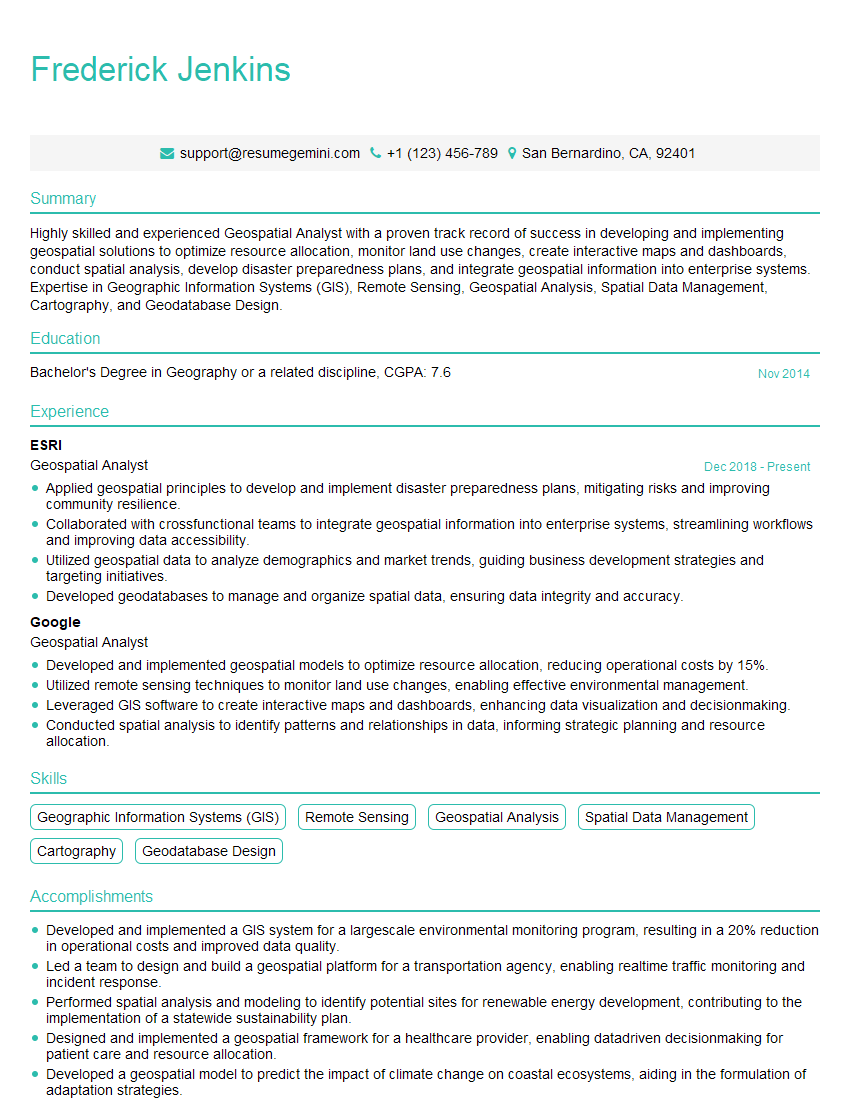
Geospatial Analyst Resume Sample
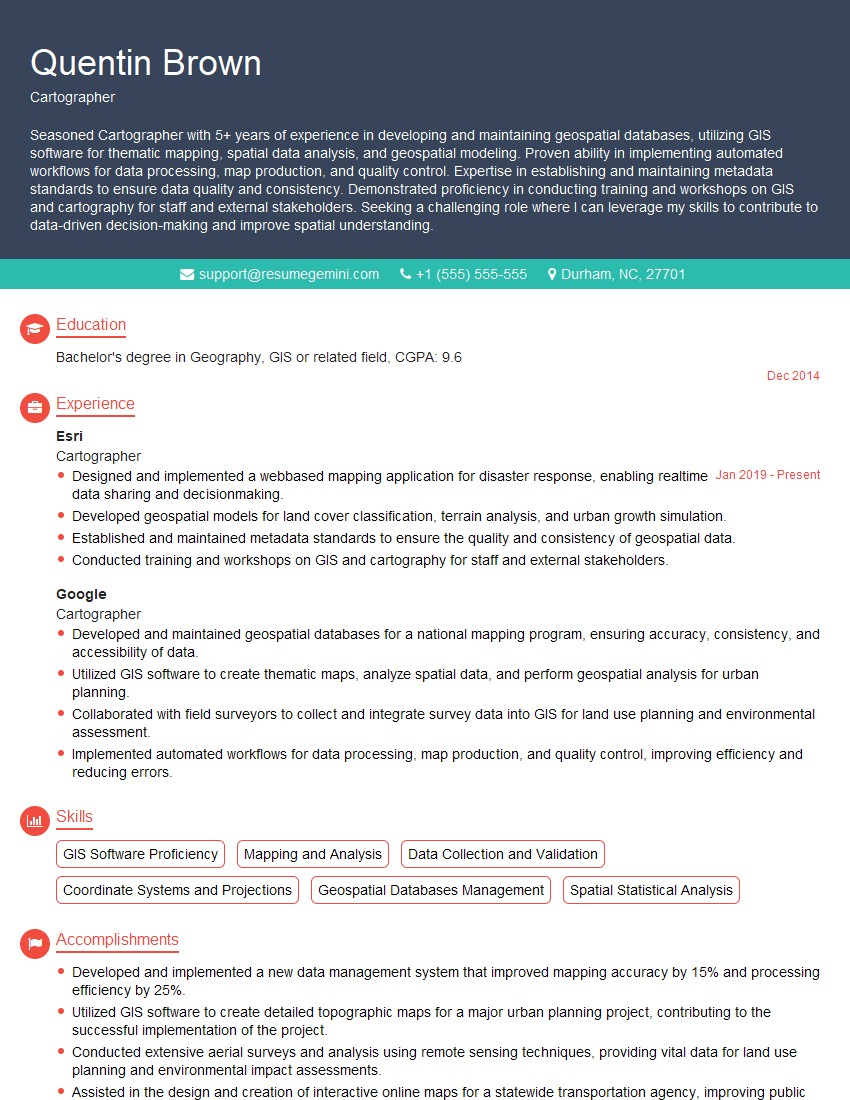
Cartographer Resume Sample
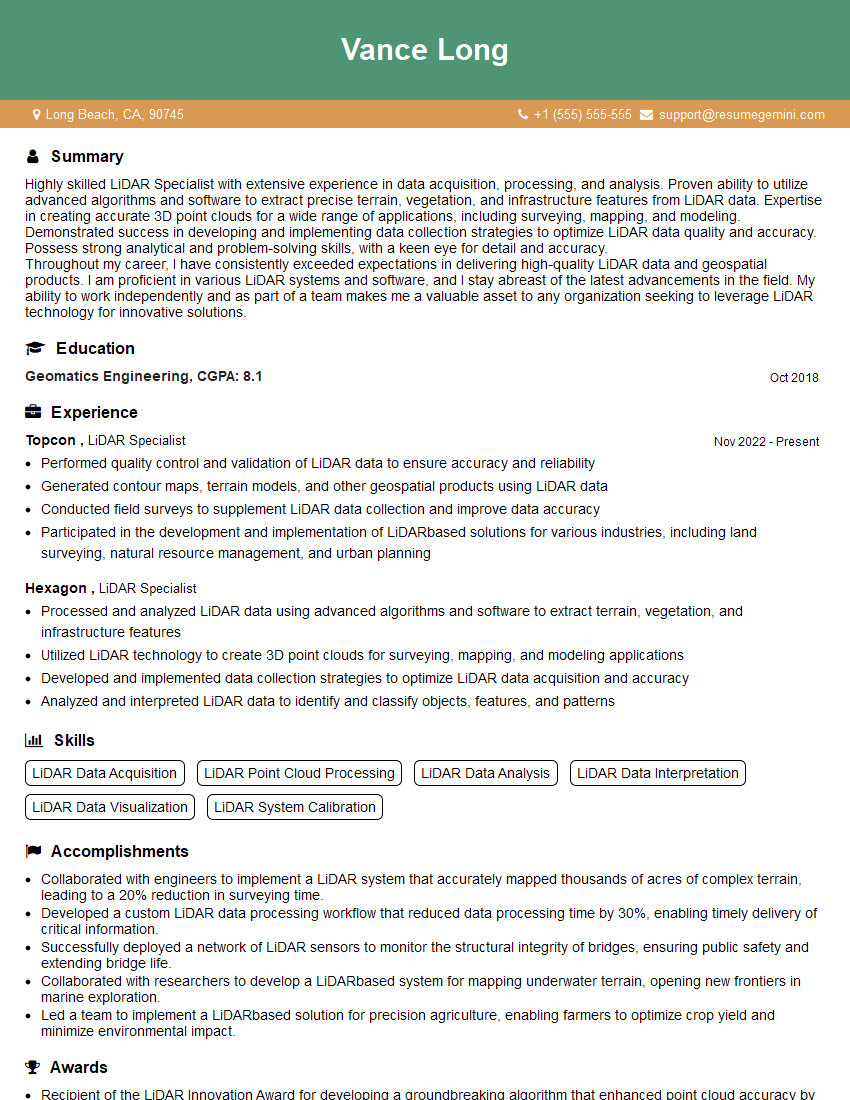
LiDAR Specialist Resume Sample
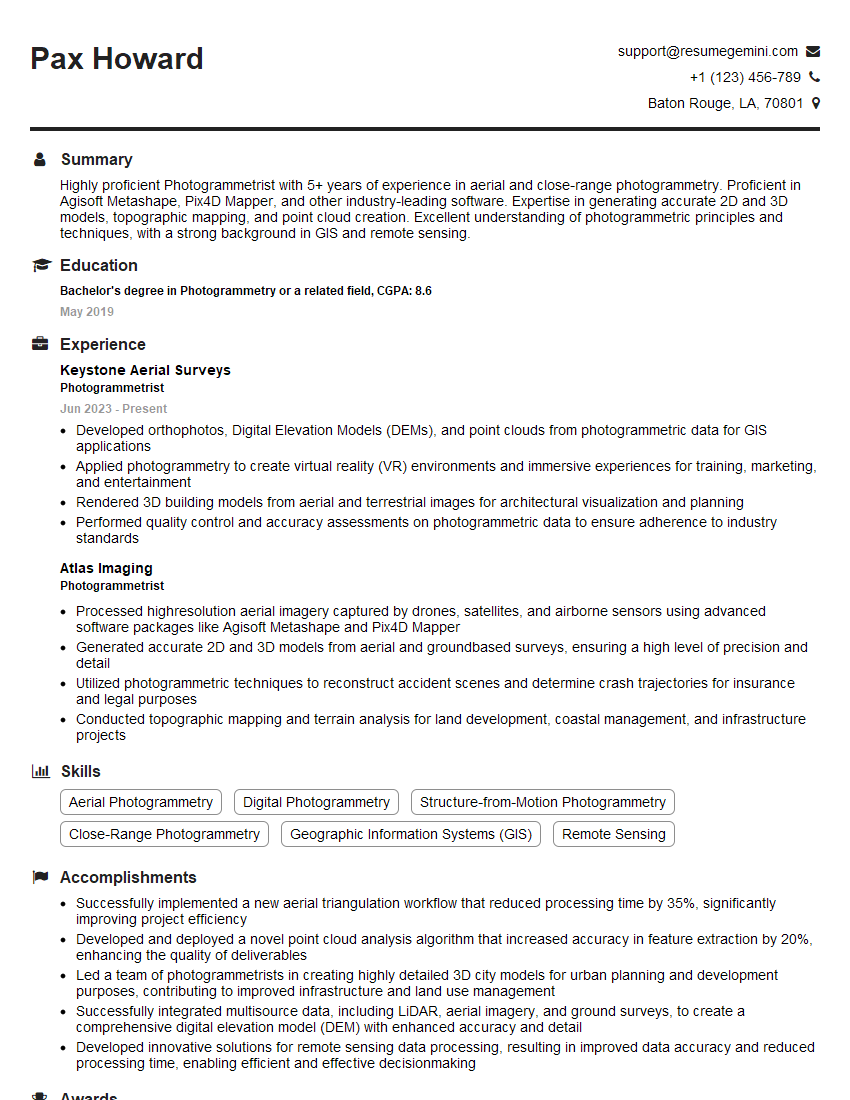
Photogrammetrist Resume Sample
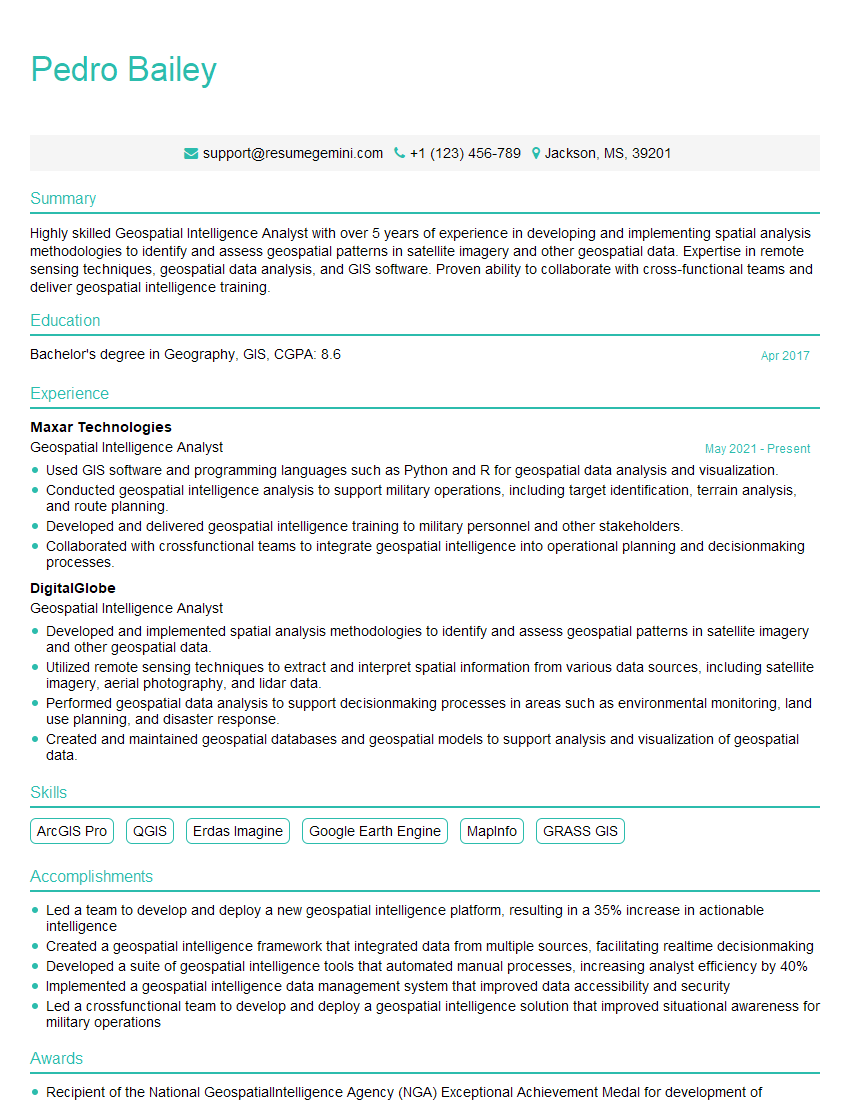
Geospatial Intelligence Analyst Resume Sample
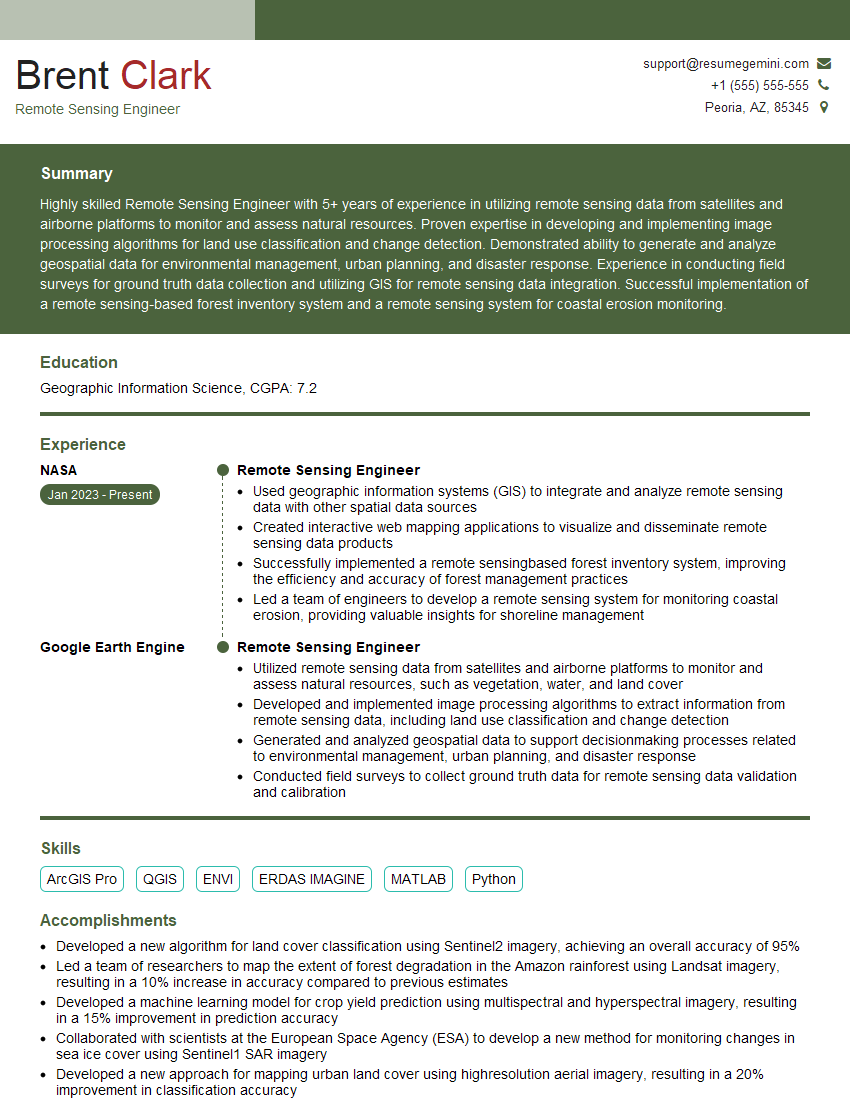
Remote Sensing Engineer Resume Sample
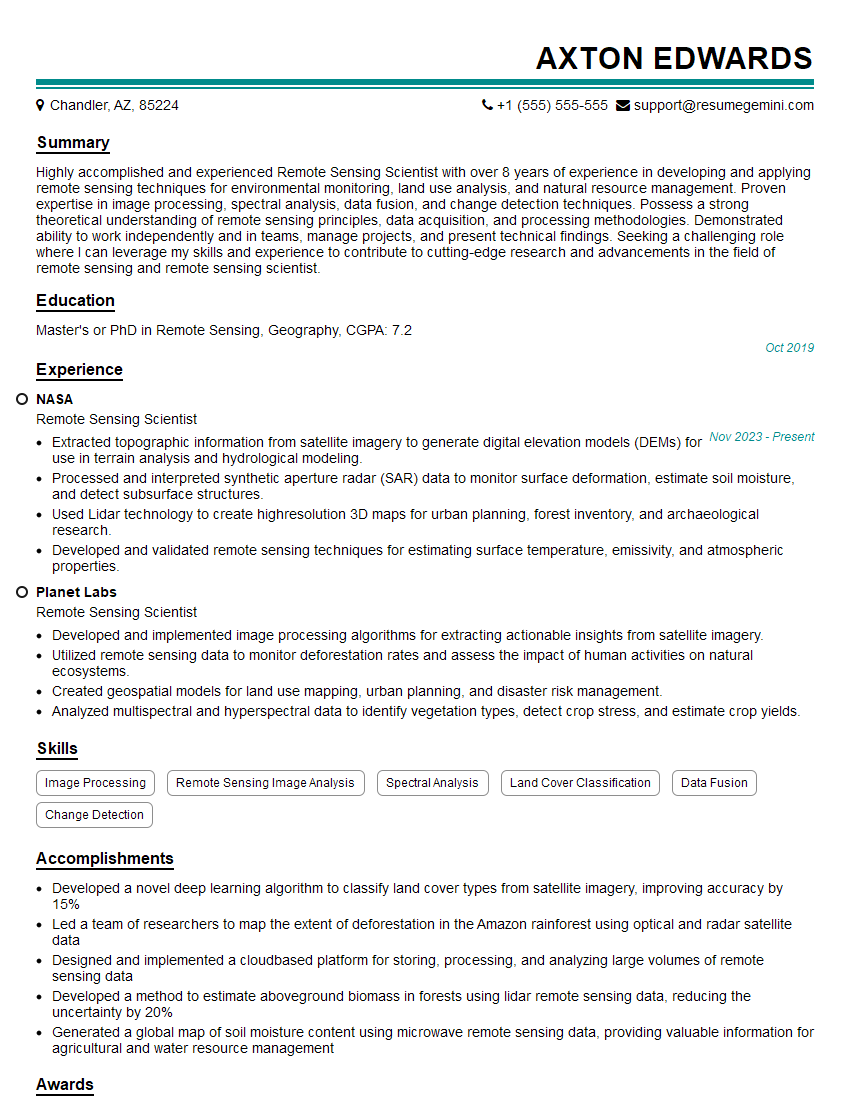
Remote Sensing Scientist Resume Sample
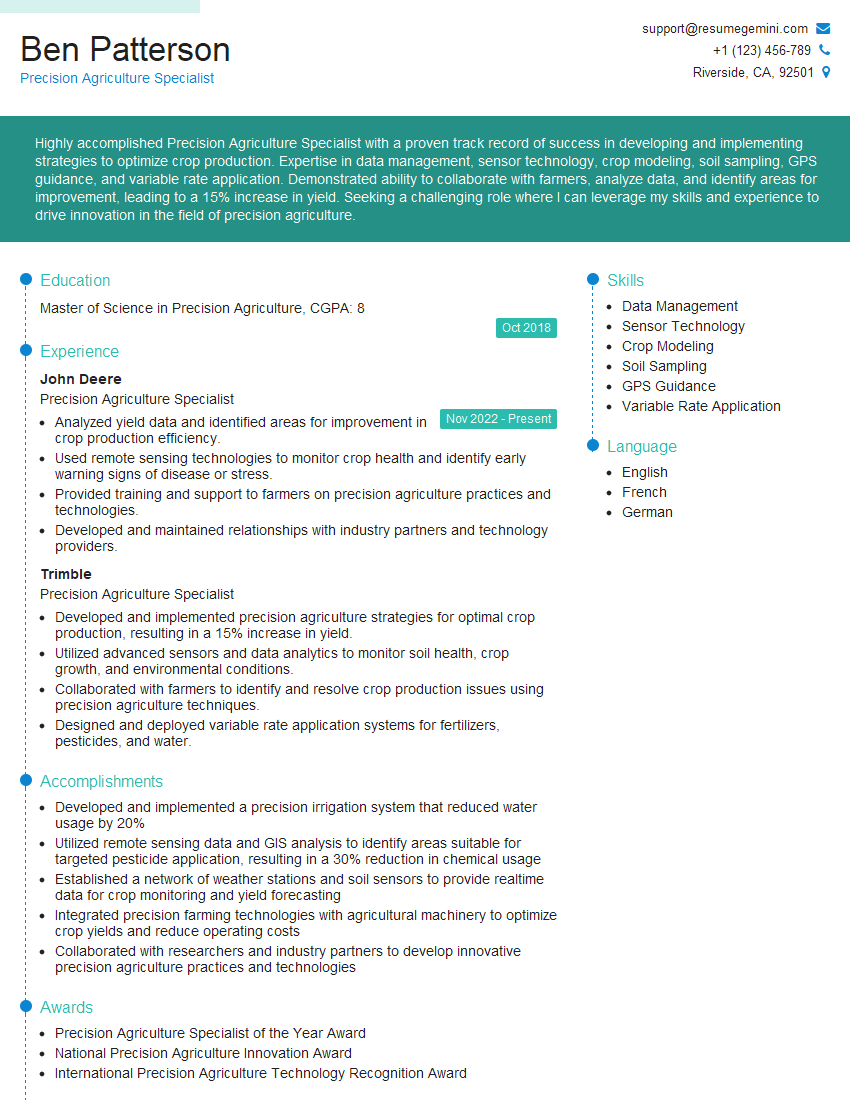
Precision Agriculture Specialist Resume Sample
Explore more articles
Users Rating of Our Blogs
Share Your Experience
We value your feedback! Please rate our content and share your thoughts (optional).
What Readers Say About Our Blog
I Redesigned Spongebob Squarepants and his main characters of my artwork.
https://www.deviantart.com/reimaginesponge/art/Redesigned-Spongebob-characters-1223583608
IT gave me an insight and words to use and be able to think of examples
Hi, I’m Jay, we have a few potential clients that are interested in your services, thought you might be a good fit. I’d love to talk about the details, when do you have time to talk?
Best,
Jay
Founder | CEO