Interviews are more than just a Q&A session—they’re a chance to prove your worth. This blog dives into essential Math and Reading Support interview questions and expert tips to help you align your answers with what hiring managers are looking for. Start preparing to shine!
Questions Asked in Math and Reading Support Interview
Q 1. Explain your approach to differentiating instruction for students with diverse learning needs in math.
Differentiating instruction in math means tailoring my teaching to meet the unique needs of each student. It’s not a ‘one-size-fits-all’ approach. I start by understanding each student’s strengths, weaknesses, and learning style. This involves formative assessments like quick checks for understanding, observation during activities, and reviewing student work. Based on this data, I adjust my teaching in several ways:
- Providing varied instructional materials: Some students learn best visually, others auditorily, and some kinesthetically. I use manipulatives, graphic organizers, videos, and interactive software to cater to different learning preferences. For example, a student struggling with fractions might benefit from using fraction circles to visualize the concepts before moving to abstract calculations.
- Offering tiered assignments: I create assignments at different levels of difficulty, allowing students to work at their own pace and challenge themselves appropriately. A basic assignment might focus on mastering fundamental operations, while a more advanced assignment might involve problem-solving and critical thinking.
- Employing flexible grouping strategies: I utilize small group instruction, peer tutoring, and independent work to ensure that each student receives the support they need. For instance, students who are struggling might work together in a small group with me, while advanced learners could tackle extension activities independently or collaborate on challenging projects.
- Using technology strategically: Educational apps and software can provide personalized practice and immediate feedback. I use tools that adapt to the student’s performance, providing more support when needed and increasing the challenge as their skills improve.
Regular monitoring and adjustments are key. I frequently check in with students to gauge their progress and make further modifications to my instruction as needed. This iterative process ensures that all students are challenged and supported in their learning journey.
Q 2. Describe your experience using various assessment tools to identify reading difficulties.
Identifying reading difficulties requires a multi-faceted approach using various assessment tools. I don’t rely on a single test but integrate several methods for a comprehensive understanding.
- Informal Reading Inventories (IRIs): These assessments provide a snapshot of a student’s reading abilities across different levels of text difficulty. They reveal strengths and weaknesses in areas like accuracy, fluency, and comprehension. I use IRIs to pinpoint specific areas needing intervention.
- Standardized Tests: While standardized tests offer a broader comparison to other students, their results provide valuable information on overall reading proficiency. I look closely at sub-scores to understand areas where the student might be struggling.
- Curriculum-Based Measurements (CBMs): CBMs are quick, frequent assessments that track a student’s progress over time. They provide valuable data for monitoring the effectiveness of interventions and making necessary adjustments.
- Observations during reading: Direct observation of the student’s reading behaviors provides crucial qualitative data that complements quantitative results from other assessments. I observe their oral reading fluency, word attack strategies, and comprehension strategies.
- Teacher-made assessments: To specifically target a skill or concept addressed in class, I frequently create my own formative assessments, offering tailored feedback for the student to learn and grow.
The combination of these tools helps to build a comprehensive profile of a student’s reading abilities, which is crucial for developing an effective intervention plan. For example, a student scoring low on fluency but high on comprehension might benefit from focused instruction on phonics and automaticity.
Q 3. How do you adapt math instruction for students with dyscalculia?
Dyscalculia is a learning disability that affects mathematical abilities. Adapting instruction for students with dyscalculia requires a highly individualized approach, focusing on building foundational skills and providing substantial support.
- Concrete materials: Students with dyscalculia often benefit from using concrete manipulatives like blocks, counters, or base-ten blocks to represent numbers and operations. This helps them visualize abstract concepts.
- Multi-sensory approaches: Incorporating multiple senses into learning enhances comprehension. Activities that involve movement, touch, and sound can help engage students and improve retention. For example, using colored blocks to represent different values and moving them to solve a problem.
- Explicit instruction and modeling: Clear, step-by-step explanations and modeling of problem-solving strategies are crucial. I break down complex problems into smaller, manageable steps.
- Technology-assisted learning: Educational software and apps designed to support students with dyscalculia can provide individualized practice and feedback. These tools often incorporate visual aids and interactive exercises.
- Focus on conceptual understanding: Prioritizing understanding of mathematical concepts over rote memorization is essential. I encourage students to explain their thinking and reasoning processes.
- Positive reinforcement and encouragement: Building confidence is vital. I praise effort and progress, focusing on celebrating small successes rather than dwelling on mistakes.
For example, when teaching multiplication, I would start with concrete manipulatives, gradually transitioning to pictorial representations, and then finally to abstract symbols. This gradual progression allows the student to build a solid understanding before moving to more complex concepts.
Q 4. What strategies do you employ to improve students’ reading fluency and comprehension?
Improving reading fluency and comprehension requires a multifaceted strategy that addresses both the decoding and the comprehension aspects of reading.
- Repeated reading: This involves students repeatedly reading the same text aloud, focusing on accuracy, rate, and expression. Each repetition improves fluency, building automaticity in word recognition.
- Guided reading: I provide support and scaffolding to students as they read, modeling effective reading strategies, and providing immediate feedback.
- Shared reading: We read aloud together, allowing students to follow along and participate in discussions. This fosters a positive reading experience and exposes them to rich vocabulary and text structures.
- Interactive read-alouds: I engage students actively during read-alouds, asking questions, making predictions, and discussing the text’s meaning.
- Vocabulary instruction: Building a strong vocabulary is crucial for comprehension. I explicitly teach new words, using various strategies like context clues, definitions, and visual aids.
- Comprehension strategies instruction: I teach students specific comprehension strategies such as summarizing, questioning, visualizing, and making inferences. These strategies help them actively engage with the text.
- Differentiated reading materials: I choose texts that are appropriate to each student’s reading level, ensuring that they are challenged but not overwhelmed.
For instance, if a student struggles with fluency, I might use repeated reading with a decodable text, focusing on building phonetic skills. Then, I’d transition to more complex texts, applying comprehension strategies to improve understanding.
Q 5. How would you address a student’s anxiety about math?
Math anxiety is a significant barrier to learning. Addressing it requires creating a supportive and encouraging classroom environment.
- Positive reinforcement and encouragement: I emphasize effort and progress over grades. I celebrate small successes and provide specific, positive feedback.
- Growth mindset approach: I encourage students to view their mathematical abilities as malleable rather than fixed. I emphasize that mistakes are opportunities for learning and improvement.
- Breaking down tasks into smaller steps: Large assignments can be daunting. I break down complex problems into smaller, manageable steps, building confidence as they progress.
- Providing choices and autonomy: Offering students choices in their assignments empowers them and reduces feelings of pressure.
- Incorporating games and fun activities: Making math enjoyable can reduce anxiety. I incorporate math games and puzzles to make learning more engaging.
- Collaboration and peer support: Pair or group work allows students to learn from each other and share their understanding, reducing feelings of isolation and inadequacy.
- Mindfulness and relaxation techniques: If anxiety is severe, I might suggest mindfulness exercises or other relaxation techniques to help students manage their stress.
For a student experiencing severe math anxiety, I might start by building a positive relationship, focusing on their strengths, and slowly introducing math concepts in a non-threatening way. Celebrating small achievements builds confidence and reduces anxiety.
Q 6. Explain your understanding of phonological awareness and its role in reading development.
Phonological awareness is the ability to hear and manipulate the sounds of language. It’s a crucial foundational skill for reading development. It’s essentially understanding that spoken words are made up of smaller units of sound, like syllables, onsets (the beginning sounds of syllables), and rimes (the vowel and ending sounds of syllables).
- Its role in reading development: Strong phonological awareness helps children decode written words. If a child can identify and manipulate the sounds in spoken words, they are better equipped to connect those sounds to letters and letter combinations (graphemes). This ability is essential for successful reading.
- Examples of phonological awareness skills: These include rhyming, identifying and isolating beginning and ending sounds, blending sounds to form words, segmenting words into sounds, and manipulating sounds within words (e.g., substituting one sound for another).
- How it impacts reading: Children with weak phonological awareness often struggle with reading. They may have difficulty sounding out words, reading fluently, and comprehending text. Early interventions focused on developing phonological awareness skills are critical for preventing reading difficulties.
Think of it like building with LEGOs. Phonological awareness is like understanding the individual bricks (sounds) before you can build a whole structure (word). Without understanding the individual sounds, it’s hard to put them together to form a word and then sentences and finally stories.
Q 7. Describe a time you had to modify a lesson plan to meet the needs of a struggling student.
I was teaching a lesson on long division to a fifth-grade class. While most students grasped the concept, one student, let’s call him Alex, was completely lost. He seemed overwhelmed by the process and consistently made mistakes. I realized my initial lesson plan, which focused on the standard algorithm, wasn’t meeting his needs.
My initial lesson plan involved direct instruction followed by independent practice. But for Alex, this approach was ineffective. I noticed his difficulty stemmed from a weak understanding of place value and multiplication facts. So I modified the lesson plan in the following ways:
- Focused on foundational skills: I spent extra time reviewing place value concepts using manipulatives like base-ten blocks. We worked on multiplication facts using flashcards and games, targeting the specific facts he struggled with.
- Used visual models: I introduced the concept of long division using visual models like area models and arrays. This allowed Alex to visualize the process and connect it to his understanding of multiplication and division.
- Provided more scaffolding: I provided him with a step-by-step checklist to guide him through the long division process. This structured approach helped break down the complex problem into more manageable parts. Each step included examples and explanations.
- Used smaller numbers: I started with smaller division problems, gradually increasing the complexity as his confidence grew.
- Emphasized problem-solving strategies: We discussed various strategies for solving division problems, and he was able to use the strategy he found easiest and most understandable.
By adapting the lesson plan and providing individualized support, Alex was able to grasp the concept of long division. This experience reinforced the importance of adapting my teaching to meet the unique needs of each student, ensuring that no one gets left behind.
Q 8. How do you incorporate technology to enhance math and reading instruction?
Technology significantly enhances math and reading instruction by providing personalized learning experiences and engaging, interactive content. I utilize a variety of tools, adapting them to the specific needs of each student.
- Interactive Math Platforms: Platforms like Khan Academy and IXL offer adaptive practice, providing targeted exercises based on a student’s strengths and weaknesses. For example, a student struggling with fractions might receive more practice with basic fraction operations before moving onto more complex concepts. The immediate feedback these platforms provide is crucial for reinforcing learning and identifying areas needing further attention.
- Reading Software and Apps: Programs like Reading Plus and Raz-Kids offer leveled reading passages, comprehension assessments, and engaging activities to foster reading fluency and comprehension. These tools allow for differentiated instruction, catering to students reading at various levels. A struggling reader might benefit from using a lower-level text with built-in support, while a more advanced reader can access challenging texts and track their progress.
- Educational Games and Simulations: Gamified learning apps make learning fun and motivating. For math, games focusing on number sense, geometry, or problem-solving can make abstract concepts more concrete. In reading, interactive storytelling apps can boost engagement and comprehension.
- Learning Management Systems (LMS): Platforms like Google Classroom or Canvas facilitate communication, assignment distribution, and progress tracking. They allow for seamless collaboration with students and parents, ensuring everyone is on the same page regarding assignments and student performance.
The key is not simply using technology for technology’s sake but strategically integrating it to address individual learning styles and needs, fostering a dynamic and engaging learning environment.
Q 9. What are some common reading intervention strategies you use?
Effective reading intervention requires a multi-faceted approach. I employ a range of strategies tailored to the student’s specific needs, often combining several methods for optimal results.
- Phonemic Awareness Activities: These activities focus on the sounds of language, helping students manipulate and blend sounds to decode words. For example, activities like rhyming games or segmenting words into individual sounds are crucial for building foundational reading skills.
- Phonics Instruction: Explicitly teaching letter-sound relationships is vital. I use systematic phonics instruction, ensuring students understand the connection between letters and their sounds to decode words accurately. Using flashcards or interactive online phonics games reinforces learning.
- Fluency Practice: Repeated reading of passages at the student’s instructional level improves reading rate, accuracy, and expression. I use timed readings and provide feedback to support their progress.
- Vocabulary Building: Expanding vocabulary through direct instruction, context clues, and dictionary use is critical. I use word walls, vocabulary games, and incorporate new words into daily lessons.
- Comprehension Strategies: Teaching students strategies like predicting, questioning, visualizing, and summarizing enhances their ability to understand and remember what they read. We practice these strategies through modeling, guided practice, and independent application.
- Differentiated Instruction: Recognizing that students learn at different paces and in different ways, I adapt my instruction to meet individual needs. This might involve providing extra support, modifying assignments, or using different learning materials.
I regularly assess student progress and adjust my strategies accordingly, ensuring that the interventions remain effective and targeted.
Q 10. How do you collaborate with parents and other professionals to support a student’s learning?
Collaboration is key to a student’s success. I believe in open communication and active partnership with parents and other professionals to create a supportive learning environment.
- Parent Communication: Regular communication with parents is crucial. I use various methods such as email, phone calls, parent-teacher conferences, and progress reports to keep parents informed about their child’s progress, challenges, and strategies we are employing. I actively solicit parent input and perspectives to understand the student’s learning environment at home.
- Collaboration with Other Professionals: I regularly communicate with special education teachers, school counselors, and administrators to share information and coordinate support services. For students with IEPs or 504 plans, collaborative team meetings are essential for developing and monitoring the effectiveness of the student’s learning plan.
- Data Sharing: Using data to inform decision-making ensures that our interventions are effective. I share data on student progress with parents and other professionals to make informed decisions regarding instructional strategies and support services.
By working together, we can create a cohesive approach to support the student’s academic and social-emotional growth.
Q 11. Describe your experience with IEPs or 504 plans.
I have extensive experience working with students who have IEPs (Individualized Education Programs) and 504 plans. I understand the legal and educational requirements associated with these plans and am adept at implementing them effectively.
IEPs are legally mandated plans for students with disabilities who require specialized instruction and support. My role includes collaborating with the IEP team to develop goals, implement strategies, and monitor progress. I am familiar with various assessment methods used to determine eligibility for IEPs and the process of writing and reviewing IEP goals. I have experience adapting curriculum and instruction to meet the individual needs of students with diverse learning styles and abilities.
504 plans are plans for students who have a documented disability that impacts their learning, but who do not require specialized instruction under the Individuals with Disabilities Education Act (IDEA). I am familiar with the 504 plan process and collaborate with the 504 team to develop and implement accommodations and modifications to support the student’s learning. This might involve providing extra time on assignments, preferential seating, or assistive technology.
In both cases, my focus is on ensuring that the student receives the necessary support to access the curriculum and reach their full potential.
Q 12. How do you monitor student progress and adjust your instruction accordingly?
Monitoring student progress and adapting instruction are crucial for effective teaching. I employ a variety of methods to track student learning and adjust my teaching strategies as needed.
- Formative Assessments: These ongoing assessments, such as quizzes, classwork, and observation, provide real-time feedback on student understanding. I use this information to adjust my instruction mid-lesson or plan for future lessons.
- Summative Assessments: These assessments, such as tests and projects, measure student learning at the end of a unit or term. These assessments inform my understanding of student mastery and inform future planning.
- Data Analysis: I regularly analyze student data from assessments and classroom activities to identify trends, patterns, and areas where students are struggling or excelling. This analysis guides my instructional decisions and allows me to personalize learning for each student.
- Student Self-Assessment: I encourage students to reflect on their own learning and identify areas where they need further support. This metacognitive process helps students take ownership of their learning and improves their self-awareness.
- Differentiated Instruction: Based on my ongoing assessment of student progress, I differentiate my instruction to meet the diverse needs of learners. This might involve providing additional support to struggling students, challenging advanced learners, or adjusting pacing and instruction based on student needs.
By consistently monitoring progress and adapting my instruction, I can ensure that all students have the opportunity to succeed.
Q 13. Explain your knowledge of various reading levels and assessments (e.g., Lexile, DRA).
Understanding reading levels and assessments is essential for effective reading instruction. I am proficient in using various reading level measures to assess student reading abilities and plan appropriate instruction.
- Lexile Framework: This system measures reading ability based on text complexity and provides a numerical score representing a student’s reading level. I use Lexile scores to select appropriate reading materials, ensuring students are challenged but not overwhelmed. For example, a student with a Lexile score of 850 might be appropriately challenged with books falling within the 800-900 Lexile range.
- Developmental Reading Assessment (DRA): This assessment measures reading level by assessing a student’s reading accuracy, fluency, and comprehension. DRA provides a reading level indicator and helps determine the appropriate instructional level for a student. For example, a student performing at a DRA level 24 might benefit from texts at that level or slightly below to build fluency and comprehension.
- Other Assessments: Beyond Lexile and DRA, I utilize a variety of other assessment tools, such as running records, informal reading inventories (IRIs), and standardized tests, to gain a comprehensive understanding of a student’s reading strengths and weaknesses. The specific assessment used depends on the student’s age, grade level, and individual needs.
Accurate assessment drives effective instruction. By utilizing these tools and understanding their implications, I can tailor my instruction to meet each student’s unique reading needs and help them progress effectively.
Q 14. How do you teach students effective study skills for math and reading?
Teaching effective study skills is as important as teaching the content itself. I focus on teaching students strategies that promote both their math and reading comprehension.
- Organization: Students need to learn how to organize their materials, such as notebooks, binders, and digital files. We practice using organizational systems to keep track of assignments and materials.
- Time Management: Effective time management is essential. We practice creating schedules, setting priorities, and breaking down large tasks into smaller, more manageable steps. We also explore different time management techniques to find what works best for each individual.
- Note-Taking Strategies: Effective note-taking is crucial for both math and reading. We practice various note-taking methods, such as Cornell notes, mind maps, and outlining, to find strategies that best suit each student’s learning style.
- Active Reading Strategies: For reading, we practice strategies like annotating texts, asking questions, summarizing, and identifying main ideas. These strategies help students engage actively with the text and improve comprehension.
- Problem-Solving Strategies: In math, we focus on problem-solving strategies such as identifying the problem, developing a plan, implementing the plan, and checking the solution. We practice breaking down complex problems into smaller, simpler steps.
- Test-Taking Strategies: Students learn strategies to improve their performance on tests, including previewing the test, managing time effectively, and reviewing answers before submitting.
By teaching these study skills, I empower students to become independent learners who are capable of mastering both math and reading content.
Q 15. What are some common misconceptions students have about fractions/decimals/algebra?
Many misconceptions arise in math and reading, often stemming from a lack of foundational understanding. In fractions, students frequently struggle with the concept of equivalent fractions, often believing that 1/2 and 2/4 are unrelated. They may also misinterpret mixed numbers (like 2 1/2) as simple addition (2 + 1/2 = 2.5).
With decimals, a common mistake is the belief that longer decimal numbers are always larger (e.g., thinking 0.09 is larger than 0.9). The place value system is often poorly understood. Difficulties extend to operations with decimals, particularly multiplication and division, often leading to incorrect placement of the decimal point.
Algebra introduces its own set of hurdles. Students frequently struggle with the concept of variables, seeing them merely as letters rather than representing unknown quantities. Solving equations can be problematic, with difficulties arising in handling negative numbers, applying the order of operations correctly (PEMDAS/BODMAS), and understanding the equal sign as a balance rather than a command to perform an action.
- Example: A student might think 0.5 + 0.3 = 0.8, but 0.5 + 0.03 = 0.53, misunderstanding the decimal place values. In algebra, they might try to solve 2x + 3 = 7 by subtracting 3 from 2x, ignoring the order of operations.
Career Expert Tips:
- Ace those interviews! Prepare effectively by reviewing the Top 50 Most Common Interview Questions on ResumeGemini.
- Navigate your job search with confidence! Explore a wide range of Career Tips on ResumeGemini. Learn about common challenges and recommendations to overcome them.
- Craft the perfect resume! Master the Art of Resume Writing with ResumeGemini’s guide. Showcase your unique qualifications and achievements effectively.
- Don’t miss out on holiday savings! Build your dream resume with ResumeGemini’s ATS optimized templates.
Q 16. How do you differentiate instruction for gifted students in math and reading?
Differentiating instruction for gifted students requires providing more challenging and enriching experiences. In math, this can involve introducing advanced concepts ahead of schedule, exploring topics in greater depth, or engaging them in open-ended problem-solving activities that promote critical thinking and creativity. For instance, instead of solely focusing on arithmetic, gifted math students can explore geometry theorems or number theory.
In reading, gifted students benefit from complex texts that encourage critical analysis and interpretation. Discussions can explore themes, symbolism, and authorial intent. Independent research projects and debates on literary works allow them to delve deeper into their interests. I would use project-based learning where they develop their own research questions, exploring a topic of their choice, while developing their critical thinking and writing skills.
For both subjects, I incorporate acceleration, enrichment and complexity to their learning by engaging them in independent and collaborative learning using advanced materials and tools.
Q 17. Describe your experience working with students who have ADHD or other learning differences.
I have extensive experience working with students who have ADHD and other learning differences. My approach centers on creating a structured, supportive, and adaptable learning environment. For students with ADHD, this means incorporating frequent breaks, minimizing distractions, and using multi-sensory teaching methods. Short, focused tasks are more effective than prolonged sessions. Positive reinforcement and clear expectations are crucial.
I utilize assistive technologies when appropriate, such as text-to-speech software or graphic organizers to aid comprehension and organization. Collaboration with parents and specialists is essential to develop an individualized education program (IEP) that caters to the student’s specific needs. For example, one student with ADHD responded well to using a fidget toy while working on math problems, allowing him to focus his attention effectively. Another student benefited from breaking down complex reading tasks into smaller, more manageable chunks. Regular check-ins and flexible assessment methods are crucial to tracking progress and modifying strategies as needed.
Q 18. What are some effective methods for teaching vocabulary development?
Vocabulary development is crucial for both reading comprehension and written expression. Effective methods include direct instruction, contextual learning, and active engagement. Direct instruction involves explicitly teaching new words, defining them, and providing examples and non-examples. This can be accomplished through vocabulary flashcards, word maps, and interactive games.
Contextual learning is crucial for understanding vocabulary in its application. Encourage students to encounter new words within the context of reading and encourage dictionary and thesaurus use. Active engagement involves opportunities for students to use the new words in speaking, writing, and various activities. For example, using the new words in sentences, creating stories or engaging in debates strengthens their understanding and memory.
Example: Instead of just defining ‘ubiquitous,’ I’d show images depicting ubiquitous items (like cell phones) and have students generate their own sentences using the word.
Q 19. How do you build positive relationships with students to foster a supportive learning environment?
Building positive relationships is foundational to effective teaching. I believe in getting to know each student individually—their interests, strengths, and challenges. This involves creating a safe and inclusive classroom where students feel respected, valued, and comfortable taking risks. I actively listen to their concerns, celebrate their achievements, and provide individualized support.
I strive to build rapport through open communication, showing genuine interest in their lives, and acknowledging their efforts. This may include informal conversations, sharing relevant personal anecdotes, and creating opportunities for collaboration and peer support. I believe in positive reinforcement and offer constructive feedback, focusing on effort and progress rather than just grades. For example, a simple ‘I appreciate your hard work on this project’ can go a long way.
Q 20. Explain your understanding of formative and summative assessments.
Formative and summative assessments serve different, yet equally important purposes in evaluating student learning. Formative assessments are ongoing, informal assessments used to monitor student learning during the instructional process. They provide feedback to both the teacher and student, allowing for adjustments in instruction and learning strategies. Examples include quizzes, exit tickets, class discussions, and observations.
Summative assessments, on the other hand, occur at the end of an instructional unit or course. They evaluate the student’s overall understanding of the material and usually contribute significantly to the final grade. Examples are tests, essays, and projects. The key difference lies in their purpose: formative assessments inform instruction, while summative assessments evaluate learning outcomes.
Q 21. Describe your experience using data-driven instruction to improve student outcomes.
Data-driven instruction is integral to my teaching practice. I regularly collect and analyze data from various sources – formative assessments, summative assessments, classroom observations, and student work samples – to gain insights into student understanding and identify areas needing improvement. This data informs my instructional decisions, enabling me to tailor my teaching strategies to meet the specific needs of my students.
For example, if assessment data reveals that a significant portion of the class struggles with a particular concept, I will adjust my instruction by providing additional support through targeted interventions, reteaching the concept using different methods, or offering differentiated assignments. I also use data to track student progress over time, monitoring the effectiveness of my interventions and making further adjustments as needed. This iterative process of data collection, analysis, and instructional adjustment ensures that my teaching is responsive to the needs of my students and contributes to improved learning outcomes.
Q 22. How do you address behavioral challenges in the classroom that affect learning?
Addressing behavioral challenges that impede learning requires a multi-faceted approach focusing on understanding the root cause and implementing proactive and reactive strategies. It’s crucial to move beyond simple punishment and instead foster a positive and supportive classroom environment.
Understanding the Behavior: I begin by observing the student’s behavior carefully, noting the frequency, intensity, and context of the challenges. This helps identify triggers and patterns. For instance, a student might act out more frequently when faced with complex tasks or during transitions. I then use tools like behavior charts or anecdotal notes to track progress and identify trends.
Positive Reinforcement: I implement a system of positive reinforcement, rewarding positive behaviors with praise, privileges, or small rewards. This focuses on strengthening desirable behaviors rather than solely punishing undesirable ones. For example, a student who consistently completes their work on time might receive extra reading time or a small prize.
Clear Expectations and Routines: Establishing clear expectations and consistent routines creates predictability and reduces anxiety, which can minimize disruptive behaviors. Visual schedules, clear rules, and consistent consequences help students understand what is expected of them.
Collaboration with Parents/Guardians: Open communication with parents/guardians is critical. Sharing observations and strategies, and working collaboratively to support the student at home and school, greatly improves outcomes. Regular updates and joint problem-solving sessions are essential.
Differentiation and Support: Addressing underlying learning difficulties can significantly reduce behavioral problems. If a student is struggling academically, providing additional support or differentiated instruction can reduce frustration and improve their behavior. This might involve breaking down tasks, providing extra time, or using different instructional methods.
Seeking Professional Support: In some cases, it’s necessary to seek support from school counselors, psychologists, or other specialists. They can provide additional assessment, interventions, and strategies to address complex behavioral challenges.
Q 23. How familiar are you with various reading comprehension strategies (e.g., inferencing, summarizing)?
I am highly familiar with various reading comprehension strategies. These strategies are essential for students to move beyond simple decoding to actually understanding and interpreting text. My instruction incorporates a variety of these techniques, tailored to the specific needs of each student.
Inferencing: This involves teaching students to use textual clues and prior knowledge to draw conclusions and make predictions. We practice identifying key details, analyzing character motivations, and anticipating plot developments. For example, if a character is described as shivering and wearing thin clothes, students can infer that they might be cold and poor.
Summarizing: Students learn to identify the main idea, supporting details, and key events of a text. We practice using graphic organizers, such as mind maps or flowcharts, to visually represent the main points and condense information. This develops their ability to extract the essential information from larger texts.
Questioning: Encouraging students to ask questions about the text, both before, during, and after reading, helps them to actively engage with the material. We practice asking questions about character motivations, plot developments, and the author’s purpose.
Monitoring Comprehension: Students are taught to be aware of their own understanding as they read. Strategies like pausing to re-read difficult sections, making predictions, and visualizing the story are key to monitoring comprehension effectively.
Visualizing: Encouraging students to create mental images of the text helps them to connect with the story and better understand the details. We might use activities like drawing, acting out scenes, or creating collages to help visualize the story.
Q 24. What are your strategies for teaching problem-solving skills in math?
Teaching problem-solving skills in math requires moving beyond rote memorization and focusing on conceptual understanding and strategic thinking. I employ a multi-step approach that emphasizes critical thinking and perseverance.
Understanding the Problem: The first step is always to ensure students fully understand the problem. This involves carefully reading the problem, identifying key information, and drawing diagrams or visual representations where appropriate. For example, word problems can benefit from sketching diagrams or tables to visually represent the given data.
Developing a Plan: Once the problem is understood, students learn to develop a plan to solve it. This might involve choosing an appropriate strategy, like using a formula, drawing a model, or working backward. I guide students to consider several possible approaches before selecting the most efficient one.
Implementing the Plan: Students carefully execute their plan, showing their work step-by-step. This helps them to identify any errors and understand their reasoning. Encouraging students to explain their thought process is very helpful.
Checking and Evaluating: After arriving at a solution, students are taught to check their work for accuracy and reasonableness. This might involve using estimation, checking their calculations, or revisiting their chosen strategy. This iterative process enhances their ability to self-assess and refine their approaches.
Metacognition: I emphasize metacognition – thinking about thinking. This involves encouraging students to reflect on their problem-solving process, identify areas where they struggled, and develop strategies to overcome challenges. Journaling or discussions about problem-solving approaches can facilitate this reflection.
Q 25. How do you ensure all students have access to appropriate learning materials and resources?
Ensuring equitable access to learning materials and resources is paramount. My approach involves proactive planning and a commitment to differentiated instruction.
Diverse Materials: I utilize a range of materials catering to diverse learning styles and needs. This includes textbooks, online resources, manipulatives, videos, and interactive learning platforms. I also ensure that materials are available in multiple formats, such as audiobooks or large print.
Technology Integration: I integrate technology to enhance access and provide personalized learning experiences. Online platforms offer individualized learning paths, adaptive assessments, and access to a vast library of resources. This caters to students who learn at different paces.
Collaboration with Specialists: I collaborate closely with special education teachers, librarians, and technology coordinators to ensure that students have access to the specific support and resources they need. This includes assistive technology, specialized software, and individualized learning plans.
Classroom Organization: I organize the classroom to maximize accessibility for all students. This includes providing clear labeling, accessible seating, and dedicated spaces for individual and group work. I also ensure that my teaching methods are inclusive and support all learning styles.
Advocacy: I actively advocate for my students to ensure they receive the resources they need. This includes communicating with parents, administrators, and other school staff to address any barriers to access.
Q 26. Describe your experience with co-teaching or collaborative teaching models.
I have extensive experience with co-teaching models, particularly the collaborative and parallel teaching approaches. Co-teaching allows for differentiated instruction and more targeted support for students.
Collaborative Teaching: In this model, both teachers share responsibility for planning, instruction, and assessment. We work together to design lessons, deliver instruction, and provide support to students. This allows for more flexible grouping and differentiated instruction based on students’ needs. For example, one teacher might work with a small group on a specific skill, while the other teacher works with the rest of the class on a related activity.
Parallel Teaching: In this approach, the class is split into two groups, and each teacher delivers the same lesson to a smaller group of students. This allows for more individualized attention and supports students who need extra help. It is particularly effective for larger classes or when addressing diverse learning needs.
Teamwork and Communication: Successful co-teaching requires strong teamwork and communication. We regularly meet to plan lessons, discuss student progress, and address challenges. Open and honest communication between co-teachers is vital for creating a supportive and effective learning environment.
Q 27. What professional development activities have you undertaken to enhance your skills in math and reading support?
I am committed to ongoing professional development to enhance my skills in math and reading support. I actively seek opportunities to expand my knowledge and refine my teaching practices.
Workshops and Conferences: I regularly attend workshops and conferences focused on effective teaching strategies in math and reading, including specific techniques for addressing diverse learning needs and integrating technology in instruction.
Graduate Courses: I have pursued graduate coursework in educational psychology and curriculum development, deepening my understanding of learning theories and best practices for teaching mathematics and reading.
Mentorship Programs: I participate in mentorship programs where I collaborate with experienced educators and share best practices. This provides valuable insights and feedback on my teaching. I also mentor newer teachers, reinforcing my skills and knowledge through sharing with others.
Independent Study: I engage in independent study to stay up-to-date on current research and best practices in math and reading education. I regularly read educational journals and research articles to inform my instruction.
Key Topics to Learn for Math and Reading Support Interview
- Differentiated Instruction: Understanding and applying various teaching methods to cater to diverse learning styles and needs in both math and reading.
- Assessment and Evaluation: Proficiency in administering and interpreting assessments to identify student strengths and weaknesses in math and reading comprehension. This includes understanding various assessment types and their applications.
- Curriculum Development and Implementation: Knowledge of creating or adapting lesson plans aligned with educational standards and best practices for math and reading instruction, including incorporating technology and engaging activities.
- Reading Intervention Strategies: Familiarity with techniques to address specific reading difficulties, such as phonics, fluency, comprehension, and vocabulary development. Practical experience applying these strategies is crucial.
- Math Intervention Strategies: Understanding and applying strategies to address common math challenges, including number sense, operations, problem-solving, and algebraic reasoning. Examples of successful interventions should be readily available.
- Classroom Management and Behavior Support: Strategies for creating a positive and productive learning environment, managing student behavior, and collaborating with parents and other professionals.
- Individualized Education Programs (IEPs) and 504 Plans: Understanding the processes involved in creating and implementing IEPs and 504 plans for students with learning disabilities or special needs in both math and reading.
- Technology Integration: Proficiency in using educational technology to enhance math and reading instruction. This includes familiarity with various software, apps, and online resources.
- Collaboration and Communication: Effective communication with students, parents, teachers, and administrators to support student learning and progress.
- Data Analysis and Reflection: Using student data to inform instruction and make data-driven decisions to improve teaching practices.
Next Steps
Mastering Math and Reading Support opens doors to rewarding careers impacting young minds. Your expertise in these areas is highly valuable to schools and educational institutions. To maximize your job prospects, it’s crucial to create a compelling and ATS-friendly resume. This will ensure your application gets noticed by hiring managers. We highly recommend using ResumeGemini to build a professional and impactful resume. ResumeGemini provides examples of resumes tailored to Math and Reading Support roles, helping you showcase your skills effectively.
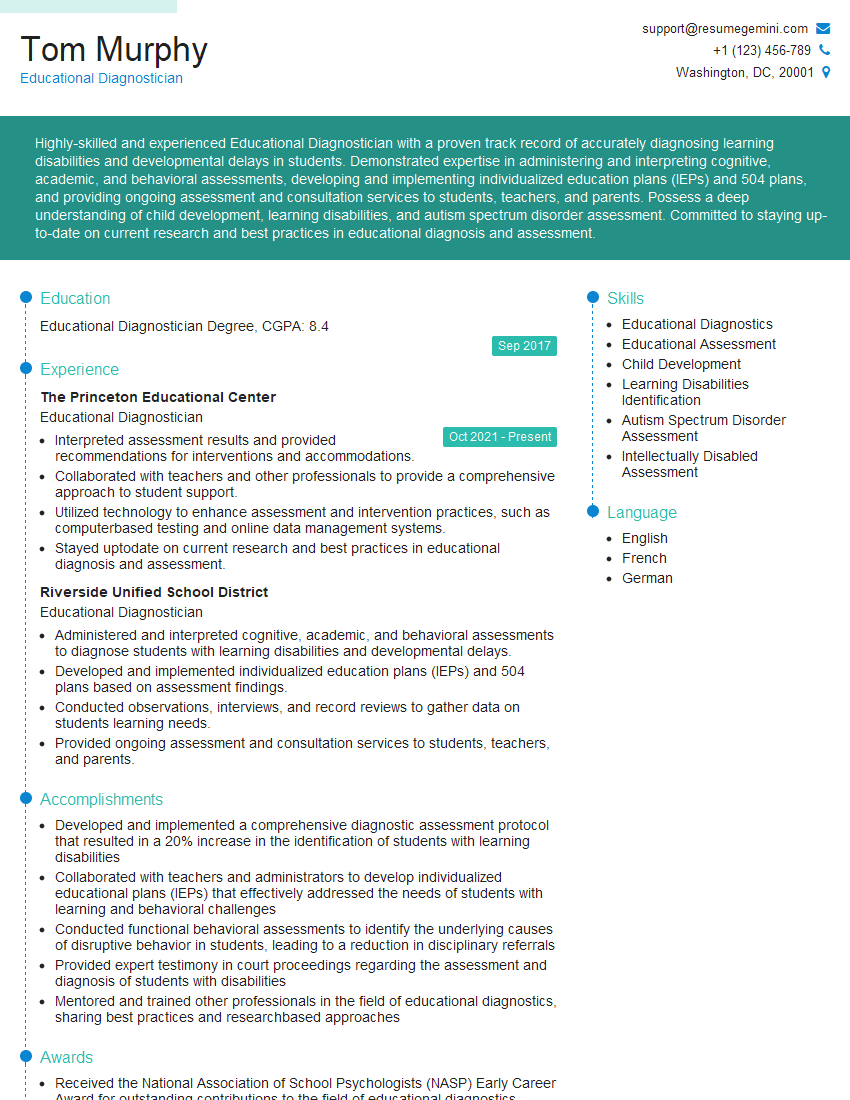
Educational Diagnostician Resume Sample
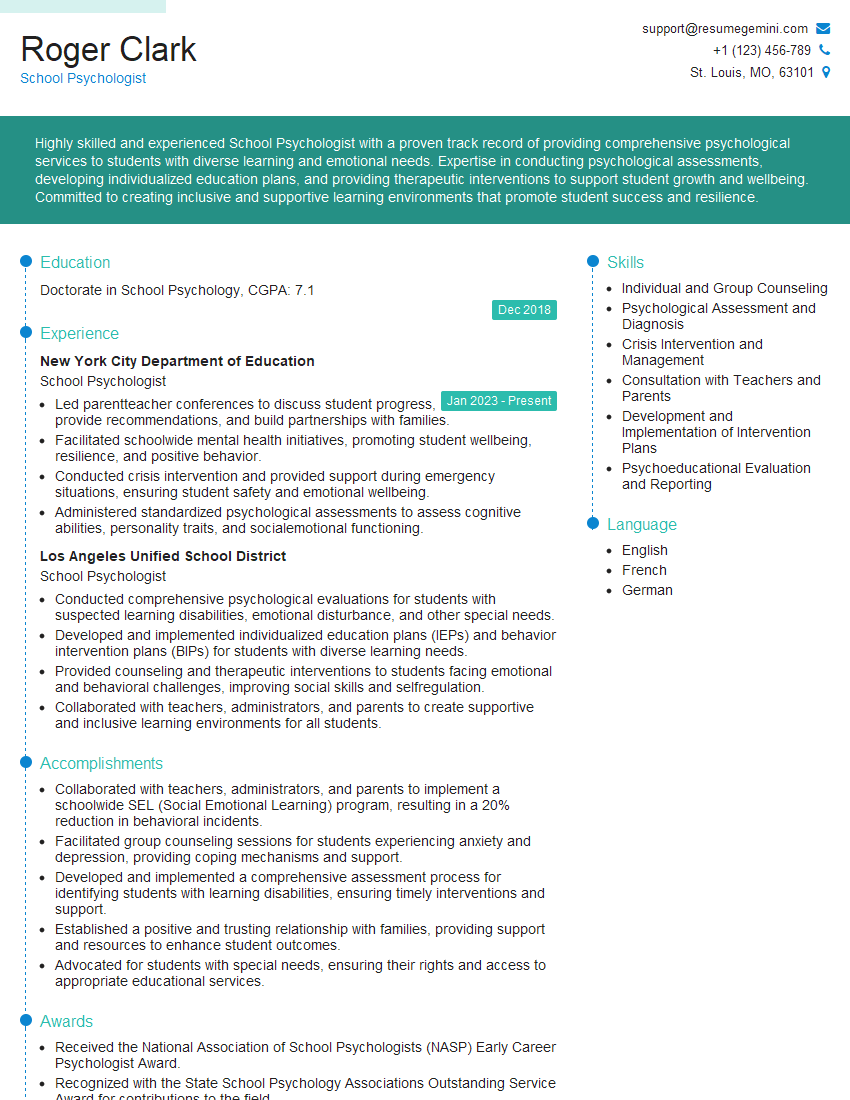
School Psychologist Resume Sample
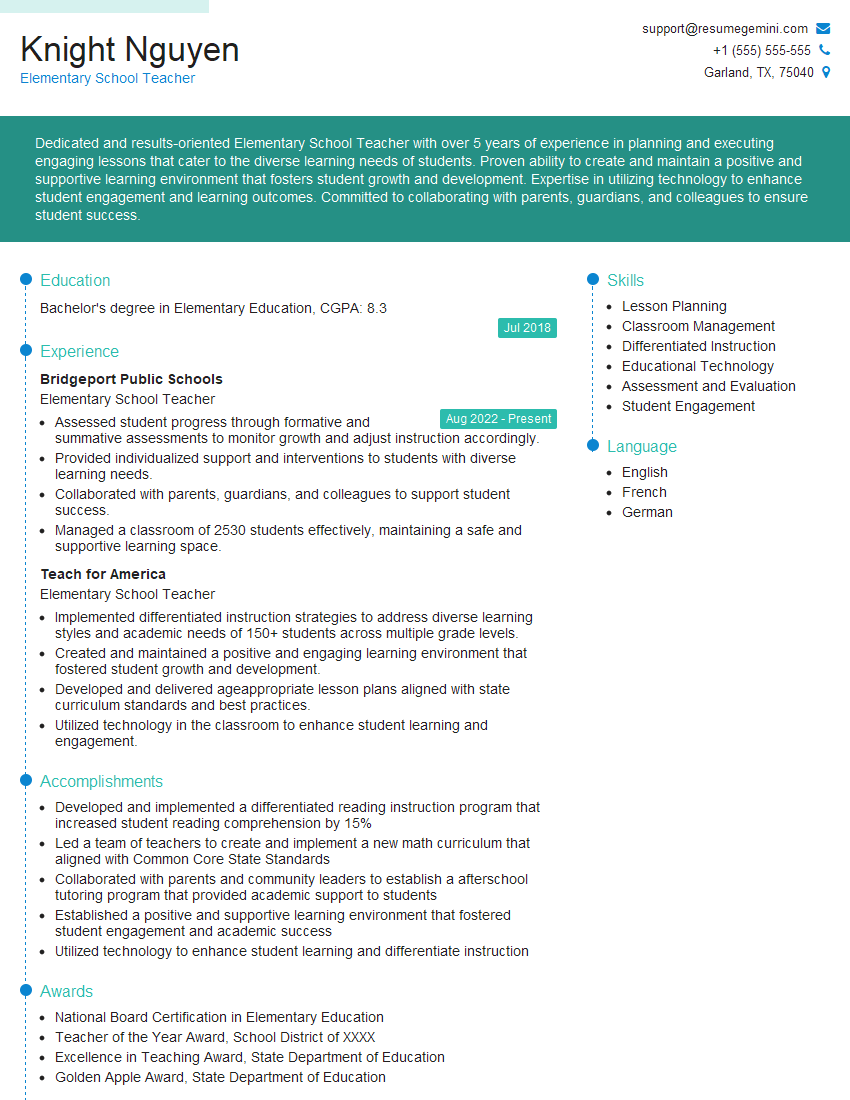
Elementary School Teacher Resume Sample
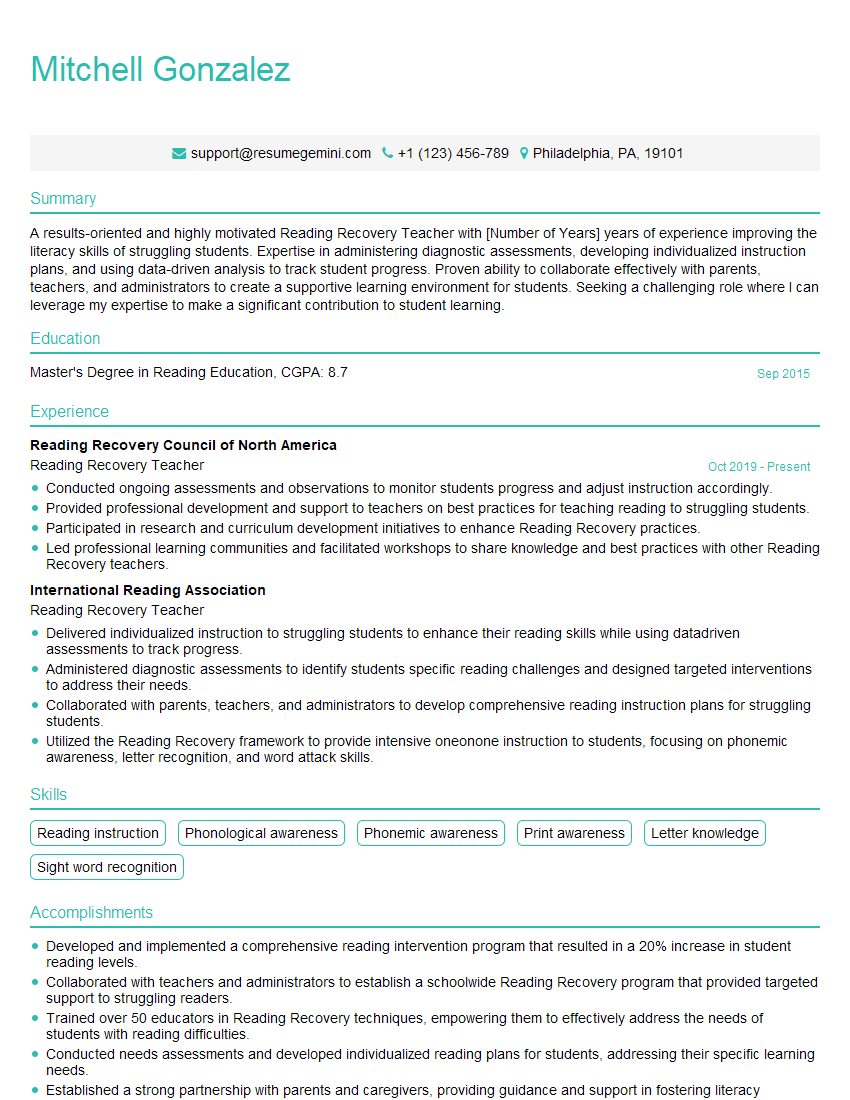
Reading Recovery Teacher Resume Sample
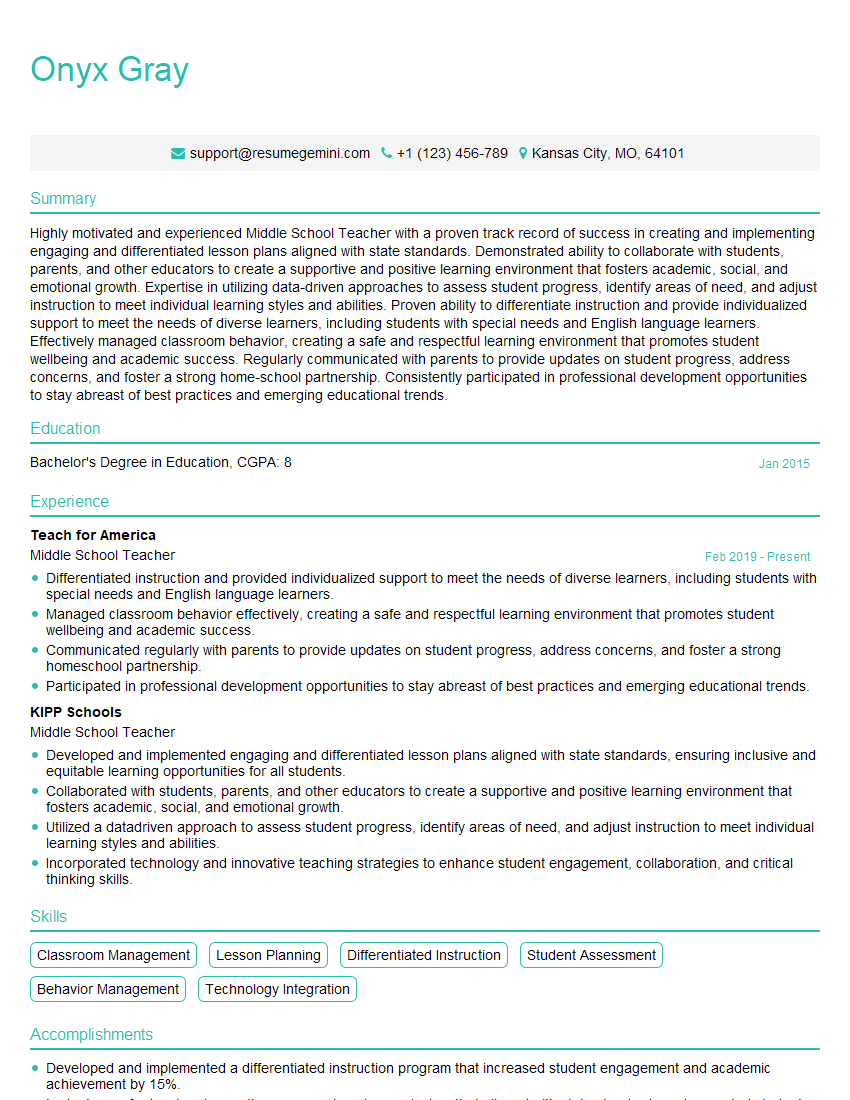
Middle School Teacher Resume Sample
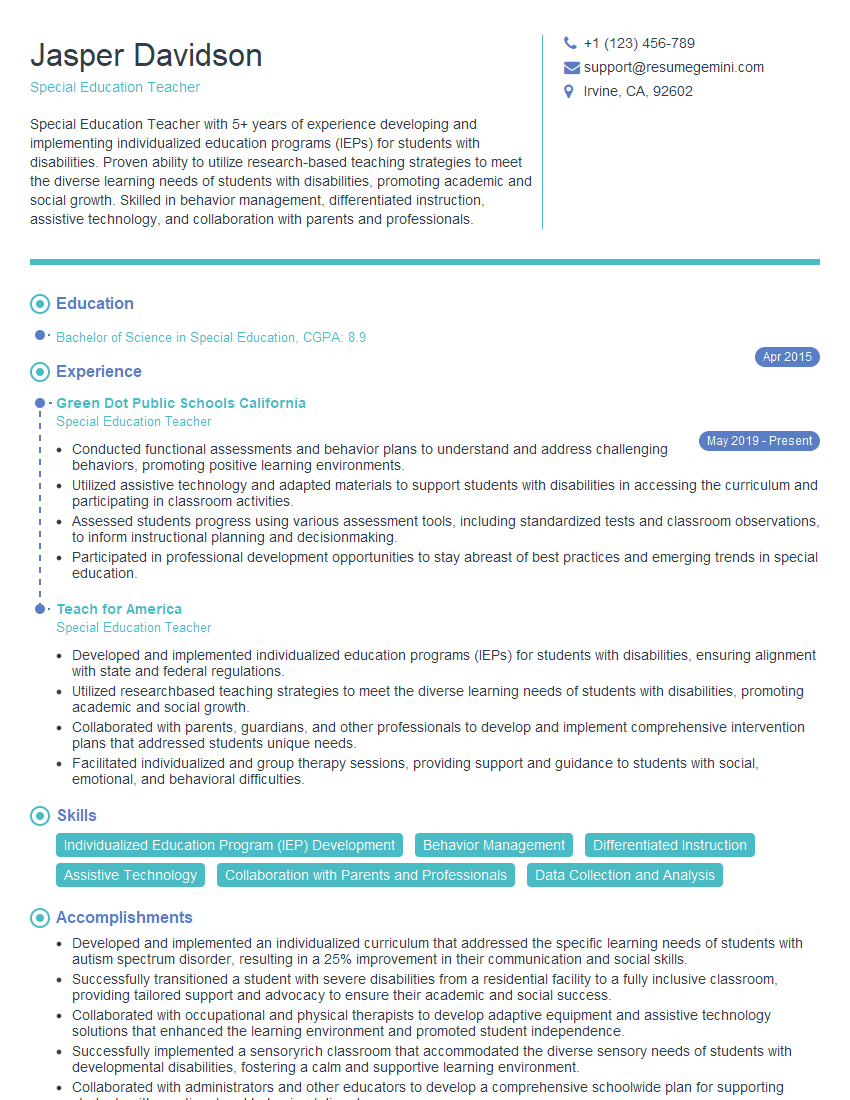
Special Education Teacher Resume Sample
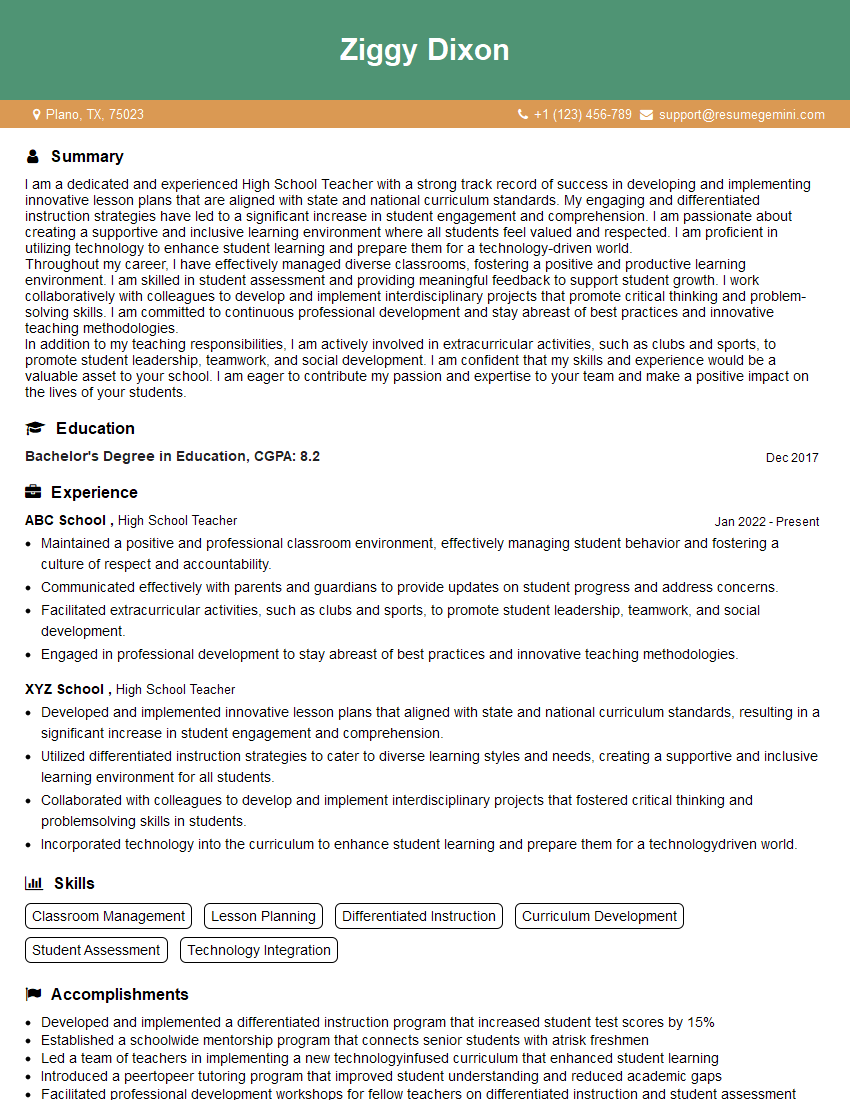
High School Teacher Resume Sample
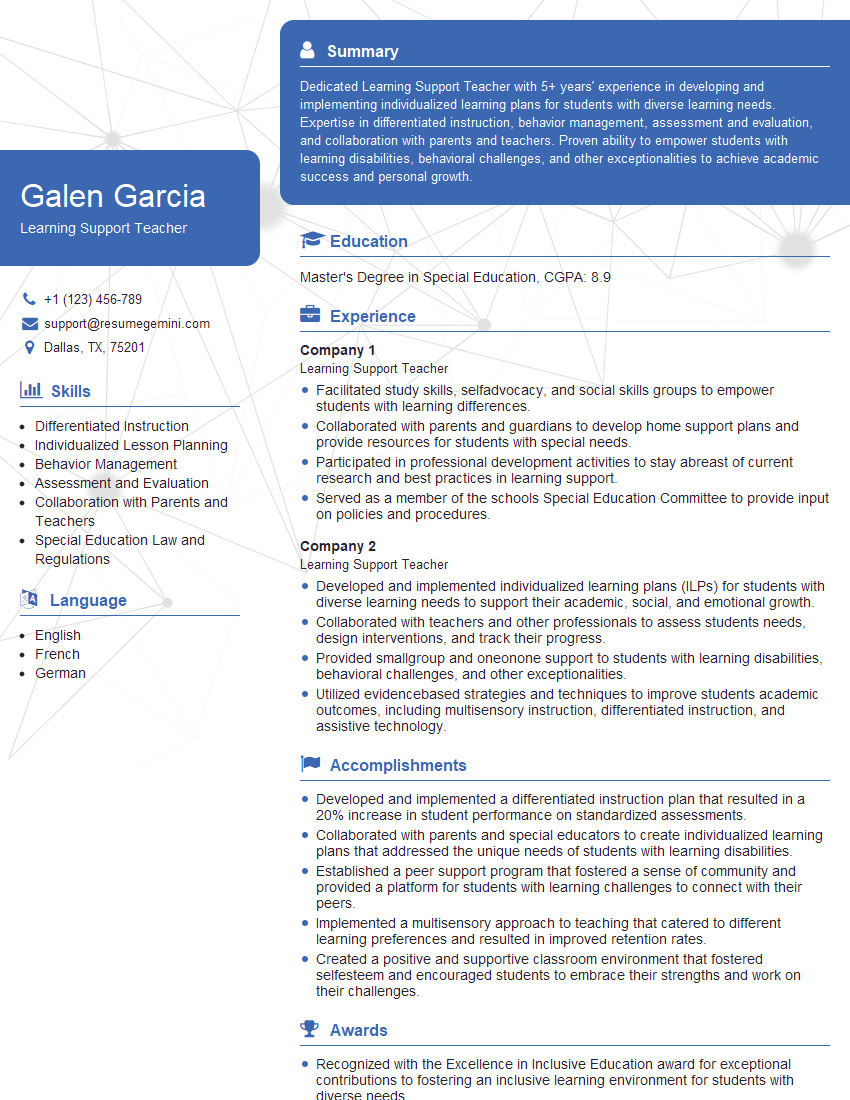
Learning Support Teacher Resume Sample
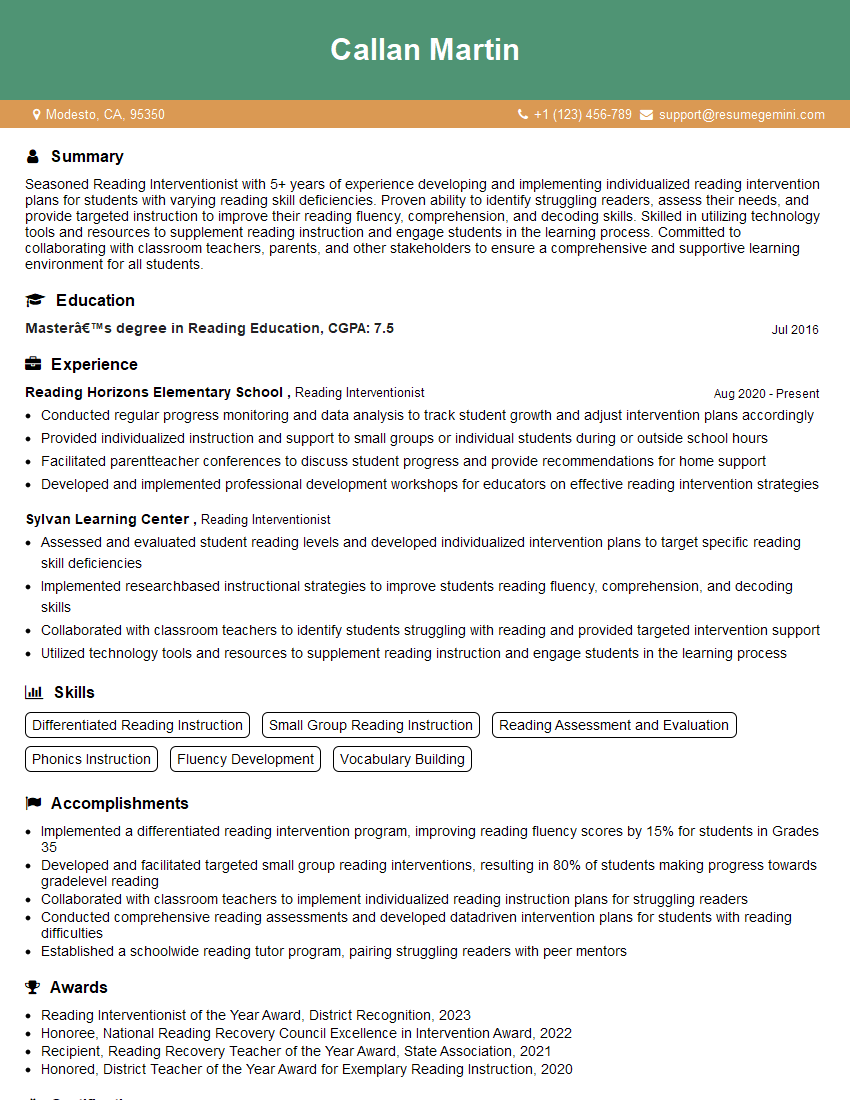
Reading Interventionist Resume Sample
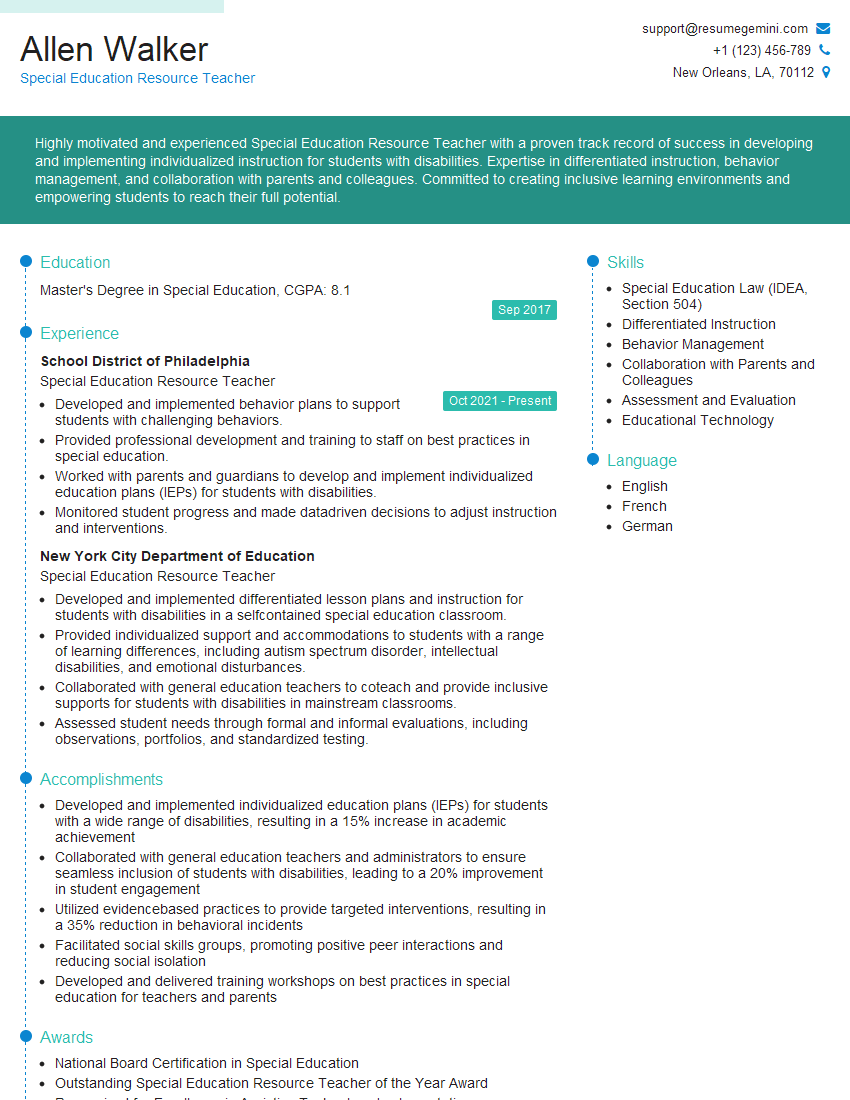
Special Education Resource Teacher Resume Sample
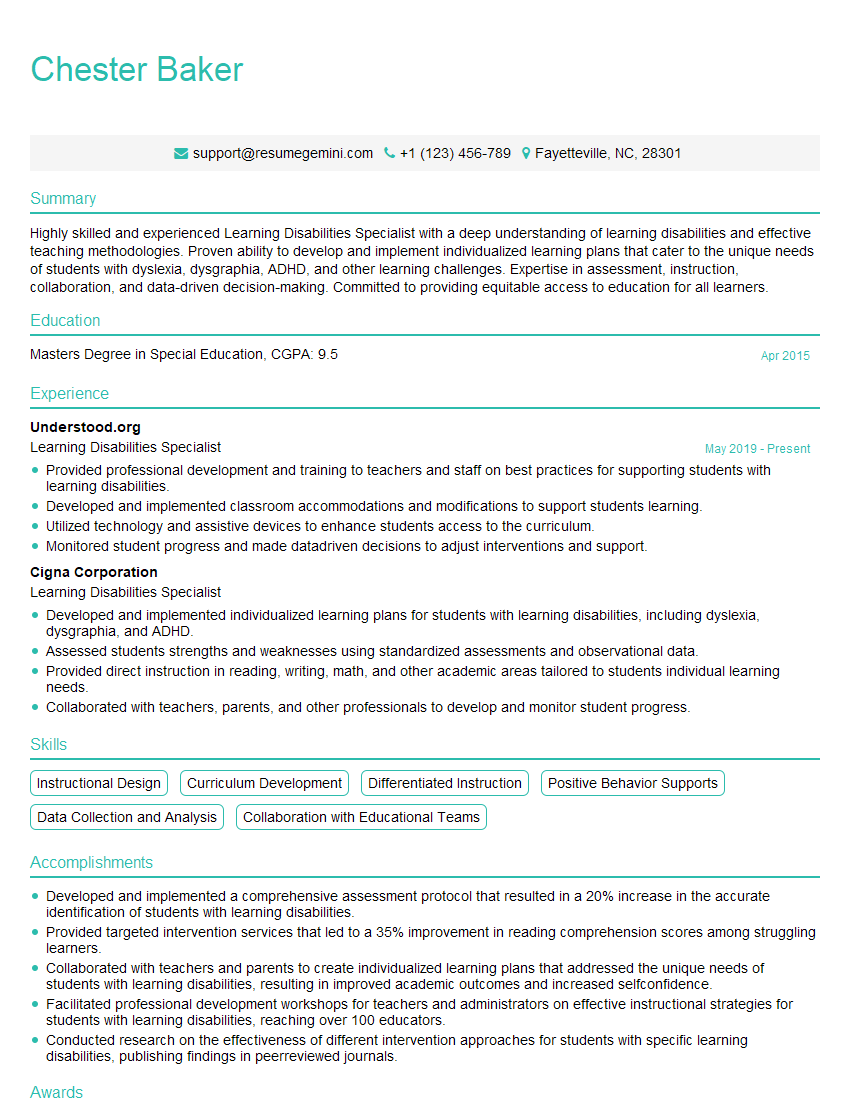
Learning Disabilities Specialist Resume Sample
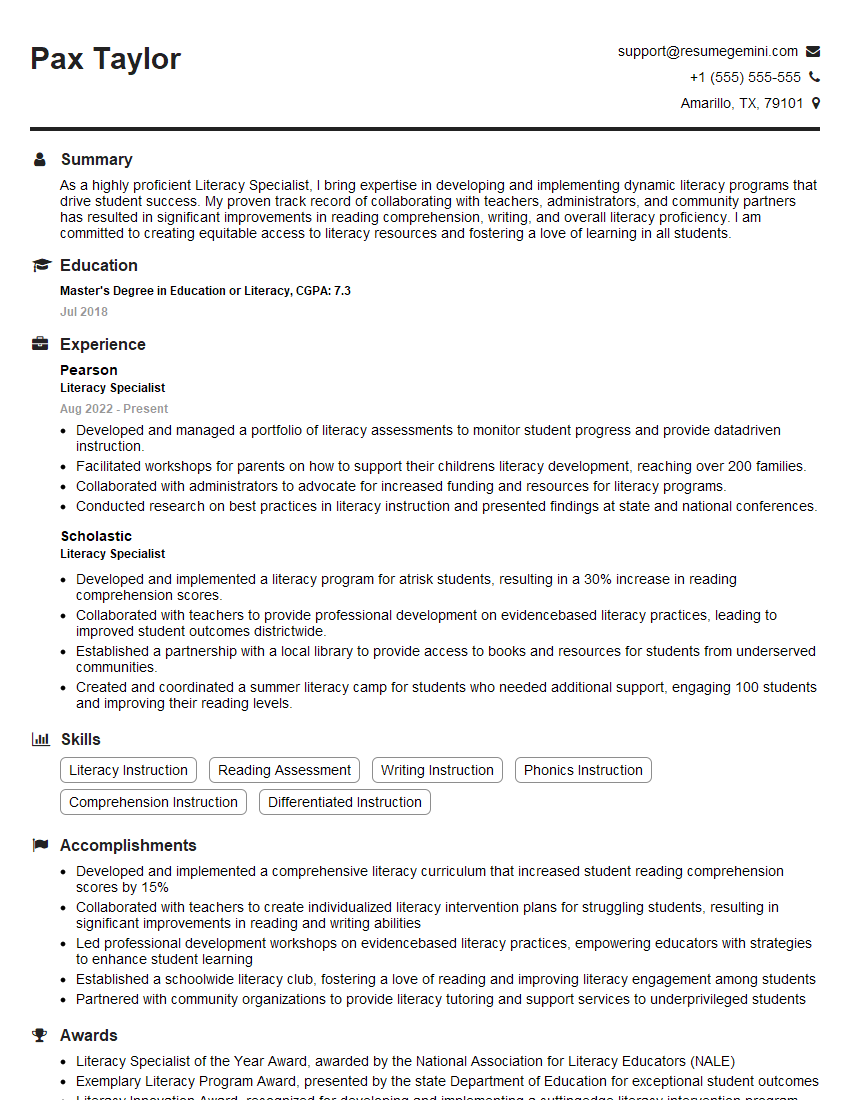
Literacy Specialist Resume Sample
- Educational Diagnostician
- School Psychologist
- Elementary School Teacher
- Reading Recovery Teacher
- Middle School Teacher
- Special Education Teacher
- High School Teacher
- Learning Support Teacher
- Reading Interventionist
- Special Education Resource Teacher
- Learning Disabilities Specialist
- Literacy Specialist
Explore more articles
Users Rating of Our Blogs
Share Your Experience
We value your feedback! Please rate our content and share your thoughts (optional).
What Readers Say About Our Blog
I Redesigned Spongebob Squarepants and his main characters of my artwork.
https://www.deviantart.com/reimaginesponge/art/Redesigned-Spongebob-characters-1223583608
IT gave me an insight and words to use and be able to think of examples
Hi, I’m Jay, we have a few potential clients that are interested in your services, thought you might be a good fit. I’d love to talk about the details, when do you have time to talk?
Best,
Jay
Founder | CEO