Unlock your full potential by mastering the most common Self-Directed interview questions. This blog offers a deep dive into the critical topics, ensuring you’re not only prepared to answer but to excel. With these insights, you’ll approach your interview with clarity and confidence.
Questions Asked in Self-Directed Interview
Q 1. Describe your experience working independently on a project.
Working independently on a project requires a strong sense of self-discipline and proactive problem-solving. My experience in this area stems from several significant projects. For instance, I once led the development of a new data analysis pipeline for a client. This involved not only coding the pipeline itself but also independently designing the database schema, selecting the appropriate algorithms, and documenting the entire process. This project demanded meticulous planning, consistent progress tracking, and the ability to troubleshoot technical issues without immediate external support. I successfully delivered the project on time and within budget, exceeding client expectations.
Another example involved creating a machine learning model to predict customer churn. This required me to not only learn and apply various machine learning techniques but also to independently manage data collection, cleaning, and feature engineering. This highlights my ability to manage the full lifecycle of a project, from conception to deployment, in a self-directed manner.
Q 2. How do you prioritize tasks when working autonomously?
Prioritizing tasks when working autonomously requires a structured approach. I typically employ a combination of methods, starting with clearly defining project goals and breaking them down into smaller, manageable tasks. I then use a prioritization matrix, often based on urgency and importance (Eisenhower Matrix), to rank these tasks. Urgent and important tasks get immediate attention, while important but not urgent tasks are scheduled for later. Less important tasks are delegated or eliminated if possible. For example, in the data analysis project mentioned earlier, I prioritized data cleaning and schema design before moving on to coding the pipeline itself, as a robust foundation was crucial for project success.
Furthermore, I regularly review and adjust my priorities based on progress, unforeseen challenges, and shifting deadlines. This iterative process allows me to remain flexible and adapt to changing circumstances while maintaining a focus on the overarching project objectives.
Q 3. Explain your approach to setting and achieving personal goals.
Setting and achieving personal goals is a continuous process that requires self-awareness, planning, and consistent effort. I begin by clearly defining my goals, making them Specific, Measurable, Achievable, Relevant, and Time-bound (SMART). For example, instead of setting a vague goal like “improve my coding skills,” I might set a SMART goal like “complete the advanced Python course on Coursera and build three personal projects utilizing the newly learned skills within the next three months.”
Next, I break down larger goals into smaller, actionable steps, creating a roadmap to success. Regular progress tracking, using tools like project management software or even a simple spreadsheet, keeps me accountable. I also build in regular review points to assess my progress, identify potential roadblocks, and adjust my approach as needed. This structured approach ensures that I stay on track and achieve my goals efficiently. Finally, celebrating milestones along the way helps maintain motivation and reinforces positive behaviors.
Q 4. How do you stay motivated and focused when working without direct supervision?
Maintaining motivation and focus when working without direct supervision relies heavily on self-discipline and proactive strategies. I find that setting clear daily and weekly goals, as outlined in my goal-setting approach, is crucial. These smaller, achievable targets provide a sense of accomplishment and momentum, combating potential feelings of isolation or stagnation. I also leverage techniques like the Pomodoro Technique, working in focused bursts with short breaks in between, to enhance concentration and prevent burnout.
Regular communication with colleagues or mentors, even if it’s just a quick check-in, can also be beneficial. Seeking feedback on my progress and discussing challenges can provide valuable external perspective and motivation. Lastly, I prioritize my well-being, ensuring I get enough sleep, exercise regularly, and take breaks to avoid exhaustion and maintain a positive mindset.
Q 5. Describe a time you overcame a challenge while working independently.
During the development of the machine learning model for customer churn prediction, I faced a significant challenge when the initial model performed poorly. The accuracy was far below the target, despite extensive feature engineering and algorithm optimization. Initially, I felt frustrated and doubted my approach. However, instead of giving up, I systematically investigated the problem.
I meticulously reviewed the data for inconsistencies and biases, discovering several instances of missing data and erroneous entries that had been overlooked. I corrected these issues, re-trained the model, and saw a dramatic improvement in accuracy. This experience reinforced the importance of thorough data validation and the need for persistence when facing setbacks. It also highlighted the necessity of a systematic debugging approach – breaking down the problem into smaller, manageable parts and systematically eliminating potential causes. This methodical approach, coupled with a refusal to be discouraged, allowed me to overcome the challenge and deliver a successful model.
Q 6. How do you manage your time effectively when working on multiple projects simultaneously?
Managing time effectively when working on multiple projects simultaneously requires a well-defined system. I use project management tools to track tasks, deadlines, and progress across all projects. I prioritize tasks using the methods described earlier, focusing on the most critical and urgent items first. Time blocking is a valuable technique; I allocate specific time slots for each project, ensuring dedicated focus without context switching. For example, I might dedicate mornings to one project and afternoons to another.
Regularly reviewing my schedule and adjusting priorities as needed is also crucial. Unexpected delays or emerging priorities are inevitable, and flexibility is key. Finally, I strive to avoid multitasking, focusing intensely on one task before moving to the next. This minimizes errors and maximizes efficiency. By combining effective planning, prioritization, and time management techniques, I can successfully juggle multiple projects without sacrificing quality or exceeding deadlines.
Q 7. How do you seek out resources and information when working independently?
Seeking out resources and information independently requires a proactive and strategic approach. My primary tools include online resources like research papers, reputable websites, and online documentation. I also leverage professional networks, participating in online forums and communities to connect with other experts and seek advice. When facing a particularly challenging technical issue, I might search for relevant Stack Overflow questions or consult documentation for specific libraries or frameworks.
Furthermore, I actively maintain a personal library of useful resources, bookmarking relevant articles and websites. I prioritize information from credible sources, verifying information from multiple sources to ensure accuracy. This approach ensures I am well-equipped to tackle challenges and continuously learn and expand my knowledge base, essential for successful independent work.
Q 8. How do you handle setbacks or unexpected problems when working alone?
Handling setbacks when working independently requires a proactive and structured approach. It’s not about avoiding problems, but about effectively navigating them. My process involves:
- Problem Definition: First, I clearly define the setback. What exactly went wrong? What are the tangible consequences?
- Root Cause Analysis: I avoid immediate blame and instead analyze the underlying reasons. Was it a lack of information, a technical issue, a flawed assumption, or something else? I often use a simple 5 Whys technique to drill down to the root cause.
- Solution Brainstorming: Once the root cause is identified, I brainstorm several potential solutions. This isn’t about finding the perfect solution immediately; it’s about generating options.
- Solution Evaluation & Implementation: I evaluate each solution based on feasibility, cost, and potential impact, selecting the most promising one. I then implement the solution, meticulously documenting each step.
- Monitoring and Adjustment: After implementing the solution, I closely monitor its effectiveness. If it’s not working, I’m prepared to iterate, adjust the solution, or try a different approach.
For example, if I encountered a bug in my code during a self-directed project, I wouldn’t panic. I’d systematically debug the code, using logging and breakpoints to pinpoint the problem’s source, test different solutions, and document the fix for future reference.
Q 9. Describe your process for identifying and resolving conflicts without direct managerial input.
Resolving conflicts independently requires strong communication and problem-solving skills. My process centers around:
- Open Communication: I initiate a conversation with the involved parties, ensuring a safe and neutral environment for discussion. I actively listen to each person’s perspective, aiming for empathy and understanding.
- Objective Fact-Finding: I focus on gathering objective facts, avoiding emotional judgments. This often involves reviewing documentation, timelines, and communication logs.
- Collaborative Problem-Solving: Once everyone’s perspectives are understood, we collaboratively brainstorm solutions. The focus is on finding a mutually acceptable outcome, not necessarily winning an argument.
- Agreed-Upon Action Plan: We jointly agree on an action plan, with clear responsibilities and deadlines. This plan isn’t just a verbal agreement; it’s documented for clarity and accountability.
- Follow-Up and Review: After implementing the action plan, I follow up with the involved parties to ensure the solution is effective and address any lingering issues.
For instance, if a disagreement arose regarding project priorities with a colleague, I would initiate a discussion to clarify each person’s perspective, propose solutions, and document the agreement to ensure we stay aligned.
Q 10. How do you ensure accountability when working without direct supervision?
Maintaining accountability in a self-directed role requires a strong sense of self-discipline and proactive measures. My approach includes:
- Clear Goals and Metrics: I begin with well-defined, measurable goals. These aren’t vague aspirations but specific targets with clear success criteria. For example, instead of ‘improve website performance,’ my goal might be ‘reduce website load time by 20% within one month.’
- Regular Progress Tracking: I establish a system for regularly tracking my progress toward these goals. This might involve using project management tools, daily logs, or simply a spreadsheet. Regular updates ensure I stay on track.
- Self-Reporting and Transparency: I proactively communicate my progress and any challenges I encounter to relevant stakeholders. This isn’t just about reporting successes; it’s about transparency and early identification of potential roadblocks.
- Consistent Self-Evaluation: I regularly assess my performance against the established goals and identify areas for improvement. This is not about self-criticism; it’s about continuous learning and optimization.
This combination of planning, tracking, and communication enables me to take ownership and demonstrate my accountability, even without direct supervision.
Q 11. How do you proactively communicate progress and challenges on self-directed tasks?
Proactive communication is paramount in a self-directed environment. My strategy involves:
- Regular Updates: I provide regular updates (daily, weekly, or as determined by project needs) on my progress. This keeps stakeholders informed and allows for early intervention if needed.
- Multiple Communication Channels: I leverage different channels depending on the context. For instance, email for formal updates, instant messaging for quick questions, and project management software for detailed progress tracking.
- Transparent Challenges: I don’t shy away from communicating challenges or roadblocks. Early identification of problems helps prevent them from escalating.
- Solutions-Oriented Approach: When sharing challenges, I also propose potential solutions. This shows initiative and demonstrates a commitment to finding resolutions.
- Visual Reporting: I often use visual aids like charts, graphs, or project timelines to present progress clearly and concisely.
For example, a weekly email might summarize my accomplishments, highlight any challenges encountered, and outline my plan for the following week. This approach keeps communication efficient and ensures everyone remains informed.
Q 12. Describe your experience with self-assessment and identifying areas for improvement.
Self-assessment is a continuous process for me. I regularly evaluate my performance using a structured approach:
- Reflection on Projects: After completing a project, I thoroughly review its success, identifying what went well and what could be improved. This often involves comparing my initial plans with the actual outcomes.
- Feedback Seeking: I actively seek feedback from colleagues, mentors, or clients, utilizing this feedback to gain external perspectives on my performance.
- Skill Assessment: I periodically assess my skill set against the requirements of my current role and future aspirations. This allows me to identify skills that need improvement.
- Learning Plan: Based on the self-assessment, I develop a learning plan to address identified areas for improvement. This might involve taking online courses, reading relevant materials, or seeking mentorship.
- Objective Metrics: I use objective metrics, such as project completion rates, task efficiency, and quality of deliverables to assess my performance.
For instance, after finishing a coding project, I might analyze my code for efficiency and readability, seek feedback on the design, and identify areas for improvement in my coding practices or project management.
Q 13. How do you measure your own success and productivity?
Measuring success and productivity in a self-directed role requires a multi-faceted approach. I use a combination of:
- Qualitative Measures: These assess the quality of my work. For example, client satisfaction, positive feedback from colleagues, and successful project completion according to agreed-upon criteria.
- Quantitative Measures: These provide objective data on productivity. Examples include lines of code written, tasks completed, bugs resolved, or project deadlines met.
- Impact Assessment: I evaluate the overall impact of my work on the organization’s goals. Did my contributions help achieve strategic objectives?
- Time Management Analysis: I track my time spent on different tasks to identify areas of inefficiency and optimize my workflow.
- Self-Set Benchmarks: I regularly compare my performance against my own previously set benchmarks, which encourages continuous improvement.
This combination of qualitative and quantitative measures gives me a holistic understanding of my effectiveness and provides direction for future improvements.
Q 14. How do you adapt to changing priorities or unexpected changes in a self-directed environment?
Adapting to changing priorities in a self-directed environment requires flexibility and effective prioritization skills. My strategy involves:
- Open Communication: Maintaining open communication with stakeholders is key. This allows me to quickly understand shifting priorities and their impact on my work.
- Prioritization Matrix: I use a prioritization matrix (like Eisenhower Matrix) to re-evaluate tasks based on urgency and importance. This helps me focus on the most critical activities first.
- Agile Methodology: I often employ agile principles, embracing iterative development and adapting to change quickly.
- Flexibility and Resourcefulness: I remain flexible and resourceful, readily adjusting my plans to accommodate new priorities. This often involves re-allocating time and resources.
- Effective Delegation (When Possible): If appropriate, I may delegate tasks to others to free up time for high-priority items.
For instance, if a high-priority request comes in, I would re-assess my current project plan, using a prioritization matrix to determine how to best accommodate the new request while minimizing disruption to ongoing work. This might involve temporarily putting less urgent tasks on hold, re-allocating time, or communicating the change in plans to stakeholders.
Q 15. How do you stay updated on industry trends and best practices in your field?
Staying current in the ever-evolving landscape of self-directed work requires a multi-pronged approach. It’s not enough to simply rely on one source of information; a diverse strategy is key.
Industry Publications and Blogs: I regularly read publications like Harvard Business Review, Fast Company, and industry-specific blogs focusing on remote work, productivity, and personal development. These offer insights into new methodologies and technological advancements.
Conferences and Webinars: Attending online and in-person conferences provides opportunities to network with other professionals and learn about cutting-edge trends from experts. I actively seek out events focused on self-management, remote team collaboration, and independent project management.
Online Courses and Certifications: I continuously upgrade my skillset through platforms like Coursera, Udemy, and LinkedIn Learning. Focusing on relevant areas like project management, time management, and specific software applications helps maintain a competitive edge.
Networking: Engaging with peers through online communities and professional groups on platforms like LinkedIn and Slack provides access to discussions and shared experiences, allowing for the exchange of best practices and solutions to common challenges.
By combining these methods, I ensure I’m not only aware of the latest trends but actively incorporate them into my work practices.
Career Expert Tips:
- Ace those interviews! Prepare effectively by reviewing the Top 50 Most Common Interview Questions on ResumeGemini.
- Navigate your job search with confidence! Explore a wide range of Career Tips on ResumeGemini. Learn about common challenges and recommendations to overcome them.
- Craft the perfect resume! Master the Art of Resume Writing with ResumeGemini’s guide. Showcase your unique qualifications and achievements effectively.
- Don’t miss out on holiday savings! Build your dream resume with ResumeGemini’s ATS optimized templates.
Q 16. Describe a time you had to learn a new skill independently for a project.
During a recent project involving the creation of an automated reporting system, I needed to learn Python scripting. I had some programming experience, but Python was new. My approach was systematic:
Structured Learning: I started with online courses on platforms like Codecademy and Udemy, focusing on the basics of Python syntax, data structures, and file handling.
Hands-on Practice: I didn’t just passively watch videos. I actively coded along with the tutorials and created small programs to solidify my understanding. I built mini-projects related to my reporting needs, starting small and gradually increasing complexity.
Documentation and Experimentation: I extensively used Python’s official documentation and experimented with different libraries to find the most efficient solutions for my specific requirements.
Seeking Help When Needed: When I encountered roadblocks, I used online forums like Stack Overflow to search for solutions and ask for help from the Python community. I found this tremendously beneficial for understanding different perspectives and problem-solving techniques.
This self-directed learning process not only allowed me to complete the project successfully but also expanded my skillset, adding a valuable asset to my professional toolkit.
Q 17. How do you organize and manage your workload in a self-directed role?
Managing my workload in a self-directed role relies heavily on effective organization and time management techniques. I leverage a combination of tools and strategies:
Project Management Software: I use tools like Asana or Trello to break down large tasks into smaller, manageable components. This helps visualize progress, prioritize tasks, and track deadlines effectively.
Time Blocking: I allocate specific time blocks for different tasks, ensuring dedicated focus periods. This minimizes interruptions and enhances productivity. I also build in buffer time for unexpected delays.
Prioritization Matrix: I utilize an Eisenhower Matrix (urgent/important) to prioritize tasks, ensuring that critical items are addressed first, and less important tasks are delegated or scheduled accordingly.
Regular Reviews: I schedule weekly reviews to assess progress, identify potential roadblocks, and adjust my schedule as needed. This proactive approach allows me to stay on track and address issues early on.
This structured approach ensures efficient task management, leading to improved productivity and project completion.
Q 18. How do you handle conflicting priorities when working independently?
Conflicting priorities are inevitable in any role, but especially so in self-directed work. My approach centers on clear communication, prioritization, and proactive problem-solving:
Clear Communication (if applicable): If the conflicting priorities stem from multiple stakeholders, I initiate clear communication to understand the relative importance of each task and potential trade-offs. This might involve negotiating deadlines or clarifying expectations.
Prioritization Based on Impact: I carefully analyze the potential impact of each task, prioritizing those with the highest strategic value or the most significant consequences for delay. This helps make informed decisions about which tasks to focus on first.
Time Management Techniques: Techniques like time blocking and the prioritization matrix become even more crucial here. By allocating time specifically to address high-priority tasks, I can systematically work through conflicts.
Seeking Guidance (if applicable): In cases where I’m unsure how to resolve the conflict, I seek guidance from mentors or colleagues to gain a broader perspective and make informed decisions.
The key is to be proactive, communicate effectively (when necessary), and use objective criteria for prioritization to ensure that the most important tasks are addressed efficiently.
Q 19. What strategies do you use to ensure the quality of your work when working autonomously?
Maintaining quality in self-directed work necessitates a structured approach to quality control. I employ several strategies:
Self-Review and Peer Review (if applicable): I incorporate thorough self-reviews as an integral part of my workflow. This involves meticulously checking for errors, inconsistencies, and areas for improvement. If feasible, I also seek peer reviews for feedback from a fresh perspective.
Defined Checklists and Standards: Before starting a project, I develop detailed checklists outlining all the necessary steps and quality control measures. This ensures that nothing is overlooked during the process. I also adhere to pre-defined style guides and best practices, ensuring consistency and professionalism.
Testing and Iteration: I incorporate rigorous testing into my workflow, conducting thorough checks at different stages of a project. This allows for early identification of errors and promotes iterative improvement.
Documentation: Thorough documentation of the project, including the rationale behind decisions, methodologies used, and any challenges encountered, ensures transparency and facilitates future review and potential improvements.
By consistently applying these methods, I strive for excellence in my work, regardless of the level of autonomy.
Q 20. How do you deal with feelings of isolation or loneliness when working independently?
Isolation is a common challenge in self-directed roles. Combatting this requires proactive effort to maintain social connection and a sense of community:
Scheduled Social Interaction: I schedule regular virtual or in-person meetings with friends, family, and colleagues. These interactions provide much-needed social connection and help prevent feelings of isolation.
Online Communities: Participating in online professional communities and forums related to my field allows for engagement with like-minded individuals, facilitating collaboration and a sense of belonging.
Structured Breaks: I incorporate regular breaks into my workday, using this time for activities that promote well-being and help prevent burnout. This might include short walks, exercise, or engaging in hobbies.
Co-working Spaces (when feasible): Occasionally working from a co-working space provides the benefit of social interaction and a change of environment, combating feelings of isolation.
The key is to intentionally create opportunities for social interaction and incorporate activities that foster a sense of community and belonging.
Q 21. How do you utilize technology to enhance your productivity in a self-directed role?
Technology is an indispensable tool for enhancing productivity in self-directed roles. I utilize a variety of tools to optimize my workflow:
Project Management Software (Asana, Trello): These tools help organize tasks, track progress, and collaborate effectively, even when working remotely.
Communication Platforms (Slack, Microsoft Teams): These tools facilitate seamless communication with colleagues, clients, and stakeholders, minimizing delays and misunderstandings.
Cloud Storage (Google Drive, Dropbox): Cloud storage enables easy access to files from any device, ensuring work continuity and efficient collaboration.
Note-Taking and Collaboration Tools (Notion, Evernote): These tools allow for organized note-taking, knowledge management, and effective collaboration on projects.
Automation Tools (Zapier, IFTTT): Automating repetitive tasks frees up time for more strategic work, enhancing overall efficiency.
By strategically employing these technologies, I streamline my workflows, enhance collaboration, and significantly boost my overall productivity.
Q 22. Describe your experience collaborating with others in a self-directed team environment.
In self-directed environments, collaboration is key, but it looks different than in traditional hierarchical structures. My experience revolves around proactive communication and shared responsibility. For instance, in a recent project developing a new marketing automation system, our self-directed team utilized Agile methodologies. We held daily stand-ups (virtual, in our case), not for a manager to check in, but for us to collaboratively identify roadblocks, share progress updates, and coordinate tasks organically. We used a shared project management board (Trello) to track progress, assign tasks, and ensure transparency. This fostered a sense of shared ownership and accountability, eliminating the need for micromanagement. We also established clear communication channels – Slack for quick questions, email for formal updates, and weekly video calls for more in-depth discussions and strategic planning. This structured approach ensured efficient communication and successful collaboration despite the independent nature of our work.
Q 23. How do you contribute to a positive team environment even when working remotely or independently?
Maintaining a positive team environment remotely requires conscious effort. I prioritize proactive communication, ensuring everyone feels included and informed. This means actively participating in team discussions, offering constructive feedback, and celebrating successes, even small ones. For example, I frequently use tools like Slack to share relevant articles, resources, or even just funny GIFs to lighten the mood and foster a sense of camaraderie. Independent work doesn’t mean isolation; I actively seek opportunities for virtual collaboration, like brainstorming sessions or peer reviews, to ensure we’re all connected and working towards the same goals. I also believe in being dependable and meeting my deadlines consistently, as this builds trust and encourages others to do the same, contributing to a positive and efficient working environment.
Q 24. Describe your experience seeking feedback and improving your performance in a self-directed setting.
Seeking feedback and improving performance is a continuous process for me, especially in self-directed roles. I actively solicit feedback through various channels: regular check-ins with team members, peer reviews, and even anonymous surveys to gauge the impact of my work. For instance, after completing a significant coding project, I proactively sought feedback from both my team and end-users. This involved presenting my work, facilitating a Q&A session, and gathering feedback through questionnaires. This feedback allowed me to identify areas needing improvement (e.g., code clarity, user interface design) and adapt my approach accordingly. I maintain a growth mindset, viewing feedback as an opportunity for learning and improvement, not as criticism. I document the feedback received, track my progress in addressing it, and regularly reflect on my performance to ensure continuous development.
Q 25. How do you maintain work-life balance when working independently?
Maintaining work-life balance when working independently is crucial, and I employ several strategies. First, I set clear boundaries. This includes defining specific working hours and sticking to them as much as possible. I also create a dedicated workspace separate from my living area to mentally distinguish work from leisure time. I incorporate regular breaks throughout my workday, using techniques like the Pomodoro Technique (working in focused bursts followed by short breaks). Furthermore, I prioritize self-care activities, such as regular exercise, spending time with loved ones, and engaging in hobbies, to prevent burnout. Scheduling these activities into my calendar helps treat them as important appointments, ensuring I prioritize my well-being.
Q 26. What are your strengths and weaknesses when it comes to self-directed work?
My strengths in self-directed work include strong self-discipline, proactive problem-solving, and excellent organizational skills. I’m adept at setting goals, prioritizing tasks, and managing my time effectively. I’m also a highly motivated and results-oriented individual. However, a potential weakness could be the tendency to overwork, as I’m highly driven. I’m actively working on mitigating this by consciously practicing time management techniques and enforcing my work-life boundaries.
Q 27. What are your salary expectations for a self-directed role?
My salary expectations for a self-directed role depend on several factors, including the responsibilities, required skills, the company’s compensation structure, and the overall market rate for similar roles. I’ve researched industry benchmarks and am confident in presenting a competitive and realistic salary expectation after a thorough discussion of the role’s specific requirements and my contributions.
Q 28. Why are you interested in a self-directed role?
I’m drawn to self-directed roles because they allow me to leverage my strengths in autonomy, responsibility, and proactive problem-solving. I thrive in environments where I can take ownership of my work, contribute my ideas freely, and directly see the impact of my contributions. The opportunity to work independently while collaborating effectively with a team aligns perfectly with my work style and preferences. It’s a setting where I can maximize my productivity and creativity while contributing meaningfully to a shared goal. The chance to shape my own work processes and continually learn and grow within a challenging, yet rewarding, context is highly motivating to me.
Key Topics to Learn for Self-Directed Interview
- Understanding Self-Direction: Define self-direction in a professional context. Explore its core principles and how it applies to various work environments.
- Goal Setting & Prioritization: Discuss effective strategies for setting realistic goals, prioritizing tasks, and managing time effectively in a self-directed role. Consider frameworks like SMART goals.
- Proactive Problem-Solving: Explain your approach to identifying and resolving problems independently. Highlight your ability to anticipate potential challenges and develop proactive solutions.
- Communication & Collaboration: Demonstrate your understanding of the importance of clear communication, even in a self-directed role. Explain how you’d collaborate effectively with colleagues and stakeholders, despite working independently.
- Self-Assessment & Continuous Improvement: Discuss your methods for regularly evaluating your performance, identifying areas for improvement, and proactively seeking out opportunities for professional development.
- Adaptability & Flexibility: Illustrate your ability to adjust to changing priorities and unexpected challenges in a self-directed environment. Provide examples of how you’ve adapted to new situations and learned from setbacks.
- Time Management & Organization: Explain your strategies for managing your time effectively, prioritizing tasks, and staying organized in a self-directed role. Discuss tools and techniques you use to enhance productivity.
Next Steps
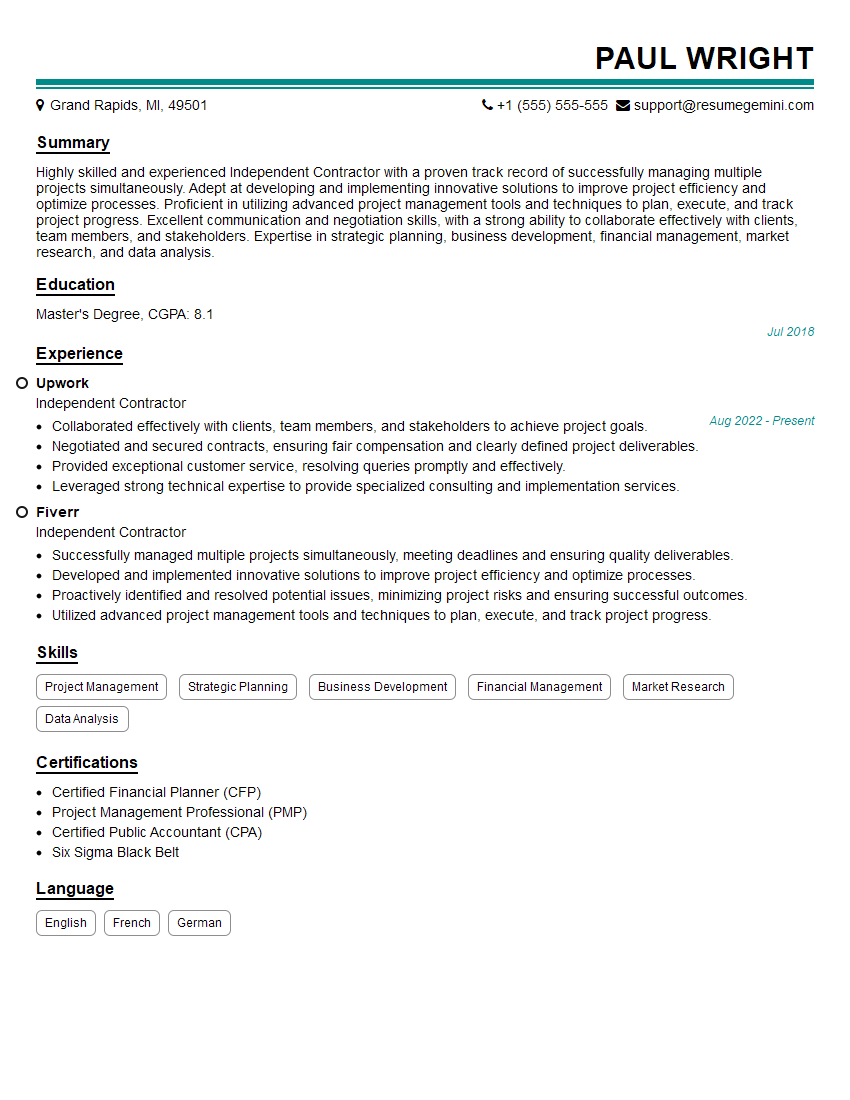
Mastering self-direction is crucial for career advancement, unlocking opportunities for increased autonomy, responsibility, and impact. A strong, ATS-friendly resume is your key to opening doors to these exciting roles. To make sure your resume highlights your self-directed skills effectively and grabs the attention of recruiters, consider using ResumeGemini. ResumeGemini offers a powerful platform to build a professional resume tailored to showcase your unique abilities. Examples of resumes tailored to highlight Self-Directed skills are provided to help guide you. Start building your path to success today!
Explore more articles
Users Rating of Our Blogs
Share Your Experience
We value your feedback! Please rate our content and share your thoughts (optional).
What Readers Say About Our Blog
I Redesigned Spongebob Squarepants and his main characters of my artwork.
https://www.deviantart.com/reimaginesponge/art/Redesigned-Spongebob-characters-1223583608
IT gave me an insight and words to use and be able to think of examples
Hi, I’m Jay, we have a few potential clients that are interested in your services, thought you might be a good fit. I’d love to talk about the details, when do you have time to talk?
Best,
Jay
Founder | CEO