Cracking a skill-specific interview, like one for Assessment Rubric Creation, requires understanding the nuances of the role. In this blog, we present the questions you’re most likely to encounter, along with insights into how to answer them effectively. Let’s ensure you’re ready to make a strong impression.
Questions Asked in Assessment Rubric Creation Interview
Q 1. Explain the difference between formative and summative assessment rubrics.
Formative and summative assessment rubrics serve distinct purposes in the evaluation process. Think of formative assessment as a ‘check-in’ during a journey, while summative assessment is the final destination evaluation.
Formative rubrics are used throughout the learning process to provide ongoing feedback and guide improvement. They focus on identifying strengths and weaknesses during the learning process, allowing for adjustments and growth. They are less concerned with assigning a final grade and more focused on improvement. For example, a formative rubric might be used to evaluate a student’s rough draft of an essay, providing feedback on organization, clarity, and argumentation before the final submission.
Summative rubrics, on the other hand, are used at the end of a learning unit or course to evaluate overall achievement. They provide a summary of a student’s learning and typically contribute to a final grade. A summative rubric would assess the final, polished version of the essay, judging its overall quality according to pre-established criteria.
In essence, formative rubrics are for learning during the process, while summative rubrics assess learning at the end of the process.
Q 2. Describe the key components of a well-designed assessment rubric.
A well-designed assessment rubric comprises several key components, working together to create a clear and consistent evaluation tool. Imagine it as a detailed map guiding both the assessor and the assessed.
- Learning Objectives: The rubric must clearly align with specific learning objectives. What are students expected to know or be able to do? This forms the foundation of the assessment.
- Criteria: These are the specific aspects of the work being assessed. For example, in an essay, criteria might include ‘thesis statement,’ ‘supporting evidence,’ ‘organization,’ and ‘grammar.’
- Performance Levels: Each criterion needs to define different levels of achievement (e.g., Excellent, Good, Fair, Poor). These levels should be described with clear and specific language to avoid ambiguity. For example, under ‘supporting evidence,’ ‘Excellent’ might mean ‘Uses compelling, relevant evidence effectively integrated into the argument,’ whereas ‘Poor’ might be ‘Lacks sufficient or relevant evidence to support claims.’
- Scoring: A method for assigning numerical or letter grades to each performance level is necessary for quantifying the assessment. This could be a points system or a letter grade system (e.g., A, B, C).
- Clear and Concise Language: The rubric should be easy to understand, using plain language and avoiding jargon. This ensures both the student and the assessor are on the same page.
Q 3. What are the different levels of Bloom’s Taxonomy, and how do you incorporate them into rubric design?
Bloom’s Taxonomy provides a framework for classifying cognitive skills, moving from simpler to more complex thinking. Incorporating it into rubric design ensures a comprehensive assessment of student learning.
- Remembering: Recalling facts and basic concepts (e.g., defining terms).
- Understanding: Explaining concepts and ideas (e.g., summarizing a text).
- Applying: Using knowledge in new situations (e.g., solving a problem using a formula).
- Analyzing: Breaking down information into components (e.g., identifying the main arguments in an essay).
- Evaluating: Judging the value of information (e.g., critiquing a piece of artwork).
- Creating: Producing new work (e.g., writing a poem or designing a product).
When designing a rubric, consider which levels of Bloom’s Taxonomy are most relevant to the learning objectives. For example, a rubric for a research paper might assess understanding, analyzing, and evaluating, while a rubric for a creative writing assignment might focus on creating and applying.
Q 4. How do you ensure the clarity and objectivity of an assessment rubric?
Clarity and objectivity are paramount in rubric design. To ensure these qualities, follow these steps:
- Use precise language: Avoid vague terms like ‘good’ or ‘adequate.’ Instead, use specific descriptors that clearly define expected performance levels. For example, instead of ‘good organization,’ specify ‘logically sequenced paragraphs with clear topic sentences and transitions.’
- Provide examples: Illustrate each performance level with concrete examples of student work. This helps clarify expectations and reduces ambiguity. A snippet of student work demonstrating each level can clarify the expectations.
- Pilot test the rubric: Before using the rubric, have a small group of assessors use it to evaluate the same work. This will reveal any inconsistencies or areas needing clarification. This process ensures alignment and fairness in the assessment.
- Maintain consistency across criteria: The weighting or scoring for each criterion should reflect its relative importance in relation to the learning objectives.
Q 5. What are some common pitfalls to avoid when creating assessment rubrics?
Several common pitfalls can undermine the effectiveness of assessment rubrics. Here are some to avoid:
- Vague or ambiguous language: Using unclear terms leads to inconsistent scoring.
- Too many criteria: An overly complex rubric can be difficult to use and interpret.
- Unequal weighting of criteria: Not assigning appropriate weight to each criterion can misrepresent the overall quality of the work.
- Lack of examples: Without examples, the rubric is less helpful for both assessors and students.
- Failure to align with learning objectives: The rubric should directly assess the skills and knowledge outlined in the learning objectives.
- Ignoring different learning styles: The rubric shouldn’t inadvertently disadvantage students with different learning approaches.
Q 6. How do you ensure that your assessment rubrics align with learning objectives?
Alignment between assessment rubrics and learning objectives is crucial. The rubric should directly and accurately reflect what students are expected to learn. Think of it as a direct mapping:
Step 1: Clearly define learning objectives: State what students should know, understand, and be able to do after completing the learning activity. Use action verbs (e.g., analyze, evaluate, create).
Step 2: Develop criteria based on objectives: Break down each objective into measurable criteria that can be assessed. Each criterion should directly address a specific aspect of the objective.
Step 3: Define performance levels for each criterion: Describe the different levels of achievement for each criterion, ensuring they accurately reflect the levels of proficiency specified in the learning objectives.
Step 4: Review and revise: Ensure that the completed rubric accurately reflects the learning objectives. Have colleagues review the rubric to identify any inconsistencies or areas for improvement. This cyclical process helps to ensure a robust assessment tool.
Q 7. How do you address bias and fairness in the design of assessment rubrics?
Addressing bias and fairness is essential for creating equitable assessment rubrics. Here’s how:
- Use inclusive language: Avoid language that might disadvantage certain groups of students. For example, instead of using culturally specific examples, use more neutral terms.
- Consider diverse learning styles: Ensure the assessment methods and the rubric itself cater to various learning preferences.
- Avoid subjective criteria: Focus on measurable criteria that can be objectively assessed. For instance, instead of ‘creativity,’ consider more specific aspects like ‘originality of ideas’ or ‘effective use of imagery.’
- Review for bias: Have multiple individuals review the rubric to identify any potential biases before implementing it. Different perspectives can highlight areas that need adjustment.
- Provide clear instructions: Ensure students fully understand the assessment task and the rubric’s criteria. Clear instructions minimize the potential for misunderstandings and ensure equity.
Q 8. What are the different types of assessment rubrics (e.g., holistic, analytic)?
Assessment rubrics are tools used to evaluate student work based on pre-defined criteria. They come in two main types: holistic and analytic. A holistic rubric provides a single, overall score based on a general impression of the work. Think of it like judging a baking competition – you taste the cake and give it a single score reflecting overall quality. An analytic rubric, on the other hand, breaks down the assessment into specific criteria, each with its own scoring scale. Imagine evaluating that same cake based on separate criteria: taste, texture, presentation. Each element gets a score, leading to a more detailed and informative evaluation.
- Holistic Rubrics: Best for quick assessments where overall quality matters most. Example: evaluating a student’s presentation based on overall effectiveness.
- Analytic Rubrics: Best for detailed feedback and identifying specific areas for improvement. Example: grading an essay based on separate criteria like argumentation, organization, grammar, and style.
Q 9. Describe your experience using different rubric scoring scales (e.g., numerical, descriptive).
My experience encompasses both numerical and descriptive scoring scales within rubrics. Numerical scales (e.g., 1-4, 0-100) are straightforward, providing quantifiable scores that are easy to average and compare. However, they can lack the nuanced feedback provided by descriptive scales. Descriptive scales use labels like ‘Excellent,’ ‘Good,’ ‘Fair,’ and ‘Poor’ to describe performance levels. These offer richer feedback but can be subjective if not clearly defined within the rubric. In practice, I often combine both. For instance, a rubric might use a 4-point numerical scale (4 = Excellent, 3 = Good, etc.), ensuring quantifiable data while also offering detailed descriptions of what constitutes each level.
For example, in assessing student projects, I’ve used a 4-point numerical scale for each criterion (e.g., Design, Functionality, Presentation), with each numerical score accompanied by a detailed description clarifying what constitutes ‘Excellent’ design versus ‘Good’ design, thus bridging the gap between numerical objectivity and descriptive richness.
Q 10. Explain how to use rubrics effectively for student feedback and self-assessment.
Rubrics are powerful tools for both student feedback and self-assessment. For feedback, a well-constructed rubric clarifies expectations and provides specific guidance on areas of strength and weakness. Instead of just a grade, students receive a detailed analysis of their work against defined criteria, helping them understand why they received a particular score and what improvements to make. This targeted feedback is far more effective than general comments.
For self-assessment, students use the rubric before and during the assignment process. This allows them to understand the expectations and track their progress against each criterion. They can compare their self-assessment with the instructor’s feedback afterward, identifying areas where their self-perception aligns with the instructor’s evaluation and areas where there’s a discrepancy. This reflective process improves learning and self-regulation skills.
Imagine a student writing an essay. Providing the student with the rubric before they begin writing helps them understand the criteria for a successful essay. Then, using the rubric during the writing process allows them to monitor their work against these criteria and make revisions based on their self-assessment. Finally, the instructor’s evaluation, also based on the same rubric, helps the student compare their self-assessment with an external perspective.
Q 11. How do you validate the reliability and validity of an assessment rubric?
Validating a rubric’s reliability and validity is crucial to ensure fair and accurate assessment. Reliability refers to the consistency of the rubric; different raters should arrive at similar scores when evaluating the same work. To enhance reliability, I use inter-rater reliability checks, where multiple raters independently score a sample of student work. The level of agreement between raters is calculated using statistics like Cohen’s Kappa. Discrepancies are analyzed to refine the rubric’s criteria and descriptions.
Validity means the rubric accurately measures what it intends to measure. I ensure validity through several strategies: 1) content validity, ensuring the criteria cover all important aspects of the assessed work; 2) criterion validity, correlating rubric scores with other relevant measures of performance; and 3) construct validity, demonstrating the rubric measures the underlying construct it’s designed to assess (e.g., critical thinking, problem-solving). For example, if the rubric is designed to assess problem-solving skills, I’d look at whether the scores correlate with students’ performance on other problem-solving tasks.
Q 12. How do you involve stakeholders in the development and review of assessment rubrics?
Stakeholder involvement is vital for creating effective and accepted rubrics. I typically involve students, instructors, and sometimes even parents or community members in the rubric development and review process. Students’ perspectives ensure the criteria are relevant and understandable, while instructors contribute expertise on content and assessment. Parents or community members can add valuable insights from outside perspectives.
I use a participatory approach, employing methods like focus groups or surveys to gather feedback at different stages of development. This collaborative process promotes ownership and buy-in from all stakeholders, resulting in a rubric that is more effective and fair for everyone involved. For instance, a focus group with students could help determine the clarity and feasibility of the criteria defined in a rubric for a particular project, ensuring that the criteria are realistic, accessible, and appropriate for the target audience.
Q 13. What software or tools have you used for creating and managing assessment rubrics?
Throughout my career, I’ve used a variety of software and tools for rubric creation and management. I have extensive experience with spreadsheet software like Microsoft Excel and Google Sheets, which are useful for creating simple rubrics and tracking scores. For more complex rubrics or large-scale assessment, I often utilize Learning Management Systems (LMS) such as Canvas, Blackboard, and Moodle, which offer built-in rubric functionalities. These platforms allow for easy distribution, grading, and feedback delivery. Some specialized rubric creation tools also exist, providing templates and features to streamline the process. My choice of tool depends on the complexity of the rubric, the size of the assessment, and the available resources.
Q 14. Describe your experience in adapting assessment rubrics for diverse learners.
Adapting rubrics for diverse learners is crucial for equitable assessment. I tailor rubrics to accommodate various learning styles, needs, and abilities. This involves considering factors like language proficiency, cognitive abilities, and physical limitations. For example, for students with language barriers, I provide rubrics in multiple languages or use visual aids to supplement written criteria. For students with learning disabilities, I might modify the format to make it more accessible, perhaps using simpler language or breaking down complex criteria into smaller, more manageable components. Providing multiple ways to demonstrate understanding can also aid diverse learners. For instance, a rubric for a history assignment might allow students to choose between writing an essay, creating a presentation, or producing a video project.
Differentiation within the rubric itself may also be considered. The same criteria are used for all students, but different levels of proficiency within each criterion are acknowledged and assessed. A rubric might include options for students to demonstrate different levels of understanding, recognizing that not all learners will reach the same level of mastery.
Q 15. How do you ensure rubrics are accessible for students with disabilities?
Creating accessible rubrics for students with disabilities requires careful consideration of various accessibility guidelines. We need to ensure the rubric is perceivable, operable, understandable, and robust.
- Perceivable: This means using clear and concise language, avoiding jargon, and providing alternative text for images or diagrams. For visually impaired students, this might involve using accessible formats like HTML or converting the rubric into a screen reader compatible format like DAISY (Digital Accessible Information System).
- Operable: The rubric should be easy to navigate and use. This might involve using keyboard navigation, avoiding complex layouts, and ensuring sufficient color contrast for those with visual impairments. Consider providing different formats – a print version, a digital version, and an audio version.
- Understandable: The language used should be clear and simple. Complex sentence structures and technical terms should be avoided. Consider breaking down complex criteria into smaller, more manageable components. Provide definitions for any specialized terms.
- Robust: The rubric should work consistently across different assistive technologies and browsers. This often requires testing with various assistive technologies to ensure compatibility.
For example, I once worked with a student who had dyslexia. We adapted the rubric by using a simpler font, increasing the line spacing, and providing a checklist version alongside the traditional rubric. This helped her understand the expectations and self-assess her work more effectively.
Career Expert Tips:
- Ace those interviews! Prepare effectively by reviewing the Top 50 Most Common Interview Questions on ResumeGemini.
- Navigate your job search with confidence! Explore a wide range of Career Tips on ResumeGemini. Learn about common challenges and recommendations to overcome them.
- Craft the perfect resume! Master the Art of Resume Writing with ResumeGemini’s guide. Showcase your unique qualifications and achievements effectively.
- Don’t miss out on holiday savings! Build your dream resume with ResumeGemini’s ATS optimized templates.
Q 16. How would you handle discrepancies between the assessment rubric and actual performance?
Discrepancies between the rubric and actual performance are opportunities for reflection and improvement. They highlight areas where the rubric might need refinement or where the student’s understanding needs clarification.
My approach involves a multi-step process:
- Analyze the Discrepancy: Carefully examine the specific areas where the performance deviates from the rubric’s expectations. Is the discrepancy minor or significant? Is it due to a misunderstanding of the criteria, insufficient skills, or other factors?
- Gather Information: Discuss the assessment with the student. Understand their reasoning and the challenges they faced. Consider gathering additional evidence of their learning, such as drafts or class work.
- Re-evaluate the Rubric: If the discrepancy is consistent across multiple students, it might indicate a flaw in the rubric’s clarity or relevance. Revise the rubric to make the criteria more precise and measurable.
- Provide Feedback: Offer constructive feedback to the student, focusing on specific areas for improvement. Connect the feedback to the specific criteria in the rubric and suggest strategies for future improvement.
- Document the Findings: Maintain records of discrepancies and the actions taken to address them. This data can inform future rubric revisions and assessment strategies.
For instance, if students consistently score lower on a particular criterion, it could signal a need to provide more focused instruction or to adjust the criteria’s weighting.
Q 17. How do you maintain the ongoing review and update of assessment rubrics?
Ongoing review and updating are crucial to ensure the rubric remains relevant, accurate, and effective. This is an iterative process, not a one-time event.
- Regular Review Schedule: Establish a regular schedule for reviewing rubrics, perhaps annually or after each course iteration. This allows for timely adjustments based on feedback and evolving curriculum needs.
- Data Analysis: Analyze student performance data to identify patterns and trends. Are students consistently struggling with specific criteria? This data can highlight areas for rubric improvement.
- Faculty Feedback: Involve instructors and teaching assistants in the review process. Their insights into student learning and the effectiveness of the assessment can be invaluable.
- Student Feedback: Gather student feedback on the clarity and fairness of the rubric. Their perspectives can reveal areas of confusion or unmet expectations.
- Alignment with Curriculum Changes: Review rubrics whenever the curriculum is updated to ensure the assessment continues to align with learning objectives.
Using a version control system to track revisions can aid collaboration and transparency.
Q 18. How do you ensure alignment between the assessment rubric and the overall curriculum?
Alignment between the assessment rubric and the overall curriculum is paramount. The rubric must accurately reflect the learning objectives, assessment criteria, and overall goals of the course.
To ensure alignment:
- Start with Learning Objectives: Develop the rubric by first clearly defining the learning objectives for the course. Each criterion on the rubric should directly assess a specific learning objective.
- Use Bloom’s Taxonomy: Employ Bloom’s Taxonomy to ensure that assessment questions and criteria cover various cognitive levels (knowledge, comprehension, application, analysis, synthesis, evaluation).
- Curriculum Mapping: Map the assessment rubric to specific units or modules within the curriculum. This ensures the assessment accurately measures student learning throughout the course.
- Consistent Terminology: Use consistent language and terminology across the curriculum and the rubric to avoid confusion.
Imagine a curriculum focusing on critical thinking. The rubric should then include criteria directly assessing the students’ ability to analyze information, evaluate arguments, and construct well-reasoned conclusions.
Q 19. What is the importance of criterion referencing when developing assessment rubrics?
Criterion referencing is essential for developing assessment rubrics because it focuses on assessing student performance against clearly defined criteria, rather than comparing them to other students (norm-referencing). This ensures fair and objective evaluation.
Its importance lies in:
- Clear Standards: Criterion-referenced rubrics set explicit standards for performance, allowing students to understand exactly what is expected of them.
- Objective Evaluation: Assessment becomes objective because it is based on pre-defined criteria, reducing the influence of subjective biases.
- Targeted Feedback: The specific criteria allow for targeted feedback that focuses on areas of strength and weakness, helping students identify specific areas for improvement.
- Improved Learning: By clearly outlining what constitutes mastery, criterion-referenced assessment promotes better learning outcomes by allowing students to track their progress against clear goals.
For example, instead of saying a student is “above average” in writing, a criterion-referenced rubric might specify that the student demonstrates effective use of evidence in their arguments (specific criterion), uses clear transitions between paragraphs (specific criterion), and maintains a consistent and formal tone (specific criterion).
Q 20. How do you determine the appropriate number of criteria for an assessment rubric?
The appropriate number of criteria depends on the complexity of the assessment and the learning objectives being measured. Too few criteria might not adequately capture the breadth of skills being assessed, while too many can make the rubric unwieldy and difficult to use.
Consider these factors:
- Learning Objectives: The number of distinct learning objectives often determines the number of criteria. Each criterion should directly assess a specific learning objective.
- Complexity of Task: A complex task may require more criteria to assess its various facets. For a simple task, fewer criteria may suffice.
- Assessment Purpose: If the assessment is formative (for feedback and improvement), a more concise rubric might be appropriate. A summative assessment (for grading) may need more detailed criteria.
- Feasibility: Consider the practicality of using and grading the rubric. A rubric with too many criteria can be time-consuming to use.
A good rule of thumb is to start with a smaller number of criteria and gradually add more as needed. Keep it concise and user-friendly.
Q 21. How do you balance the need for detailed criteria with the need for a concise rubric?
Balancing detailed criteria with conciseness is crucial for creating an effective rubric. The goal is to provide clear expectations without overwhelming users with unnecessary details.
Strategies include:
- Use Clear and Concise Language: Avoid jargon and technical terms. Use action verbs to describe observable behaviors.
- Prioritize Key Criteria: Focus on the most essential aspects of the task or assignment. Avoid including overly granular criteria.
- Use Anchoring Examples: Include examples of work that represent different levels of performance for each criterion. This helps to clarify expectations.
- Hierarchical Structure: For complex assessments, use a hierarchical structure. Begin with broad criteria and then break them down into more specific sub-criteria.
- Visual Organization: Use tables, headings, and formatting to improve readability and make the rubric easier to navigate.
Think of it like building a house: you need a detailed blueprint, but the final document doesn’t need to include every single nail and screw. The rubric should be detailed enough for effective assessment but concise enough for easy understanding and use.
Q 22. Describe your experience with creating rubrics for different assessment types (e.g., essays, presentations, projects).
Creating effective rubrics requires understanding the nuances of different assessment types. My experience spans a wide range, including essays, presentations, and complex projects. For essays, I focus on clarity of argument, evidence usage, and writing mechanics. The rubric might include criteria like thesis statement strength, supporting evidence quality, logical flow, and grammatical accuracy. Each criterion would have descriptive levels of performance (e.g., Exemplary, Proficient, Developing, Beginning). For presentations, I consider content knowledge, delivery skills, visual aids, and audience engagement. A rubric might assess the accuracy of information, clarity of explanation, use of visual aids, and speaker’s confidence and connection with the audience. Project rubrics are often more complex, involving multiple components and potentially collaboration. These might evaluate individual contributions, the overall project outcome, adherence to deadlines, and the quality of the final product. I always strive to make the criteria clear, measurable, achievable, relevant, and time-bound (SMART). For instance, instead of ‘good presentation skills,’ a rubric might specify ‘maintains eye contact with the audience for at least 80% of the presentation’ or ‘effectively uses visual aids to support key points.’ The key is to move beyond vague descriptors and offer specific, observable indicators of successful performance.
Q 23. How would you design a rubric to evaluate critical thinking skills?
A rubric for evaluating critical thinking skills needs to move beyond simple memorization and assess higher-order thinking processes. I would structure it around key elements of critical thinking: analysis, interpretation, inference, evaluation, explanation, and self-regulation. Each criterion would be broken down into specific performance levels. For example, under ‘Analysis,’ the rubric might include levels like: ‘Exemplary: Identifies and distinguishes between underlying assumptions, biases, and perspectives with insightful observations,’ ‘Proficient: Identifies most underlying assumptions, biases and perspectives,’ ‘Developing: Identifies some underlying assumptions, biases, and perspectives,’ ‘Beginning: Shows limited ability to identify underlying assumptions, biases and perspectives.’ This granular approach allows for fair and accurate assessment, ensuring the rubric clearly distinguishes between different levels of critical thinking proficiency. A key is to use examples in each level to make the criteria even clearer.
Q 24. How would you design a rubric to evaluate problem-solving skills?
Evaluating problem-solving skills requires a rubric that captures the entire problem-solving process. I would focus on criteria like problem definition, strategy selection, implementation, and evaluation. For example, under ‘Problem Definition,’ levels might include: ‘Exemplary: Clearly and concisely articulates the problem, identifies all relevant constraints and variables,’ ‘Proficient: Articulates the problem with minor omissions in identifying constraints and variables,’ ‘Developing: Articulates the problem but misses some crucial constraints or variables,’ ‘Beginning: Fails to clearly define the problem.’ Similarly, ‘Strategy Selection’ might assess the appropriateness and effectiveness of the chosen approach, while ‘Implementation’ focuses on the steps taken to solve the problem. ‘Evaluation’ would assess the student’s reflection on the solution’s effectiveness and identification of potential improvements. The rubric could also incorporate specific examples to illustrate each level, for clarity. This ensures the assessment isn’t just about the final answer, but the entire process.
Q 25. How would you design a rubric to evaluate creative thinking skills?
Assessing creative thinking necessitates a rubric that values originality, imagination, and innovative problem-solving. I would incorporate criteria like originality of ideas, fluency (number of ideas generated), flexibility (variety of ideas), elaboration (detail and development of ideas), and synthesis (combining seemingly unrelated ideas). For example, ‘Originality’ could have levels such as: ‘Exemplary: Demonstrates exceptional originality and innovation; ideas are unique and insightful,’ ‘Proficient: Demonstrates originality and innovation; ideas are mostly unique,’ ‘Developing: Demonstrates some originality, but ideas lack uniqueness in some areas,’ ‘Beginning: Lacks originality; ideas are conventional and uninspired.’ Using strong verbs and descriptive language is crucial for effective assessment. Each level should also provide clear and concrete examples of student work demonstrating that level of proficiency.
Q 26. How would you determine the weighting of different criteria in an assessment rubric?
Weighting criteria in a rubric depends heavily on the learning objectives and the relative importance of each skill being assessed. A common approach is to assign weights based on the learning outcomes. If a particular skill is a central focus of the learning objective, it should receive a higher weight. For example, if critical thinking is the primary focus of a course, then the critical thinking section of the rubric might receive 50% of the total weight, while other components (like communication skills) could receive 25% each. Another approach is to involve stakeholders (students, teachers, administrators) in a collaborative process to determine the weighting, ensuring fairness and transparency. This approach considers multiple perspectives and can help achieve consensus on the relative importance of each criterion. The weights should be clearly communicated in the rubric itself, promoting transparency and fairness in the assessment.
Q 27. Describe a time you had to revise an assessment rubric based on feedback or results.
In one instance, I developed a rubric for a student project involving the design and creation of a mobile app. The initial rubric focused heavily on the technical aspects of the app, neglecting the design and user experience. After reviewing student submissions and receiving feedback from students, it became apparent that the rubric needed revision. The students felt the technical aspects were overly emphasized, while the design and user experience were inadequately assessed. Based on this feedback, I revised the rubric to give equal weighting to the technical aspects, user experience design, and overall usability. I also added more specific criteria related to user interface and user experience principles. The revised rubric included more descriptive levels within each criterion, making it more user-friendly and precise in its assessment of the project. The result was a more balanced and fairer assessment that accurately reflected the learning objectives of the project.
Key Topics to Learn for Assessment Rubric Creation Interview
- Defining Assessment Goals and Objectives: Understanding how to align rubric criteria with specific learning outcomes and assessment purposes.
- Developing Clear and Measurable Criteria: Creating criteria that are specific, observable, measurable, achievable, relevant, and time-bound (SMART) to ensure fair and consistent evaluation.
- Designing a Scoring System: Exploring various scoring methods (e.g., holistic, analytic, numerical scales) and selecting the most appropriate approach for the specific assessment.
- Practical Application: Creating Rubrics for Different Assessment Types: Developing rubrics for various assessment formats such as essays, presentations, projects, and performances.
- Ensuring Fairness and Equity: Addressing potential biases and ensuring the rubric is inclusive and accessible to all learners.
- Utilizing Technology for Rubric Creation and Management: Exploring tools and platforms for efficient rubric development, implementation, and data analysis.
- Iteration and Refinement: Understanding the iterative process of rubric development and the importance of reviewing and revising rubrics based on feedback and experience.
- Communicating Rubric Expectations: Clearly communicating the rubric’s purpose, criteria, and scoring system to both assessors and students.
Next Steps
Mastering Assessment Rubric Creation is a valuable skill that opens doors to diverse roles in education, training, and human resources. It demonstrates your ability to design effective evaluation tools and contribute significantly to improved learning outcomes and performance management. To maximize your job prospects, crafting an ATS-friendly resume is crucial. This ensures your qualifications are effectively highlighted to recruiters and hiring managers. ResumeGemini is a trusted resource that can help you build a powerful and professional resume tailored to your skills and experience in Assessment Rubric Creation. We provide examples of resumes specifically designed for this field to help you showcase your expertise effectively.
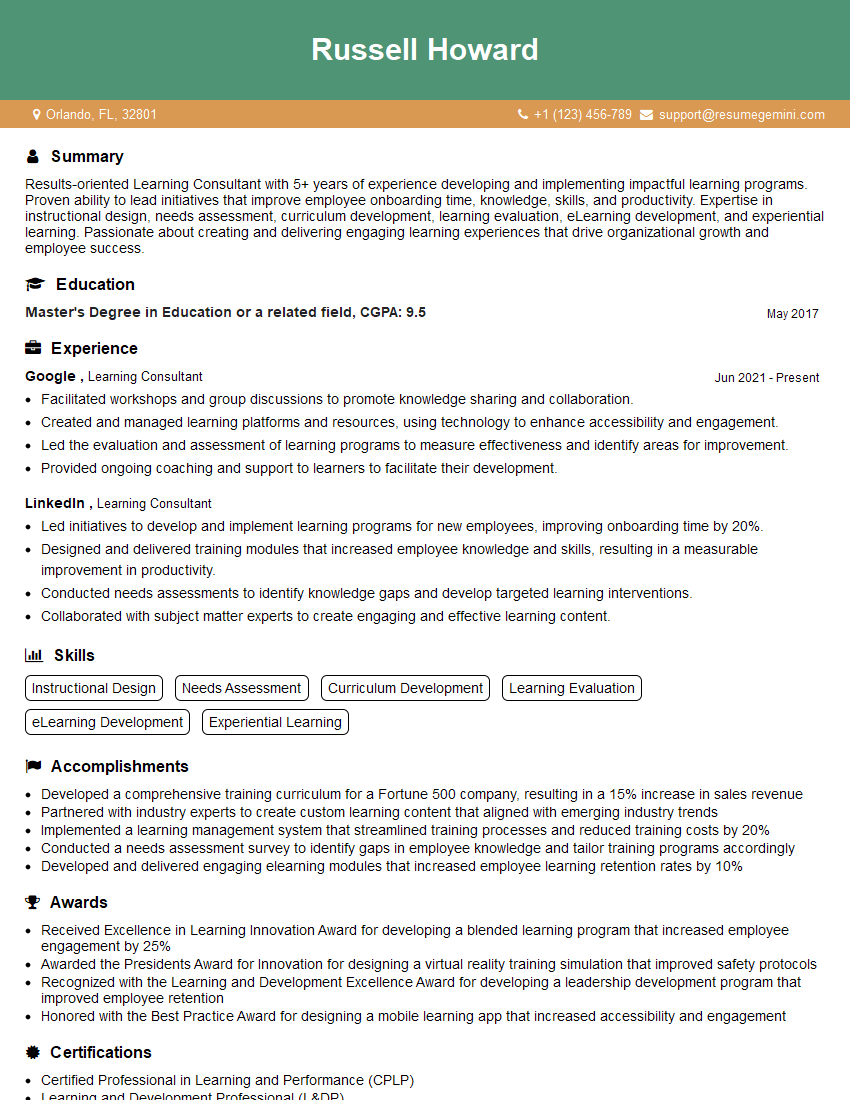
Learning Consultant Resume Sample
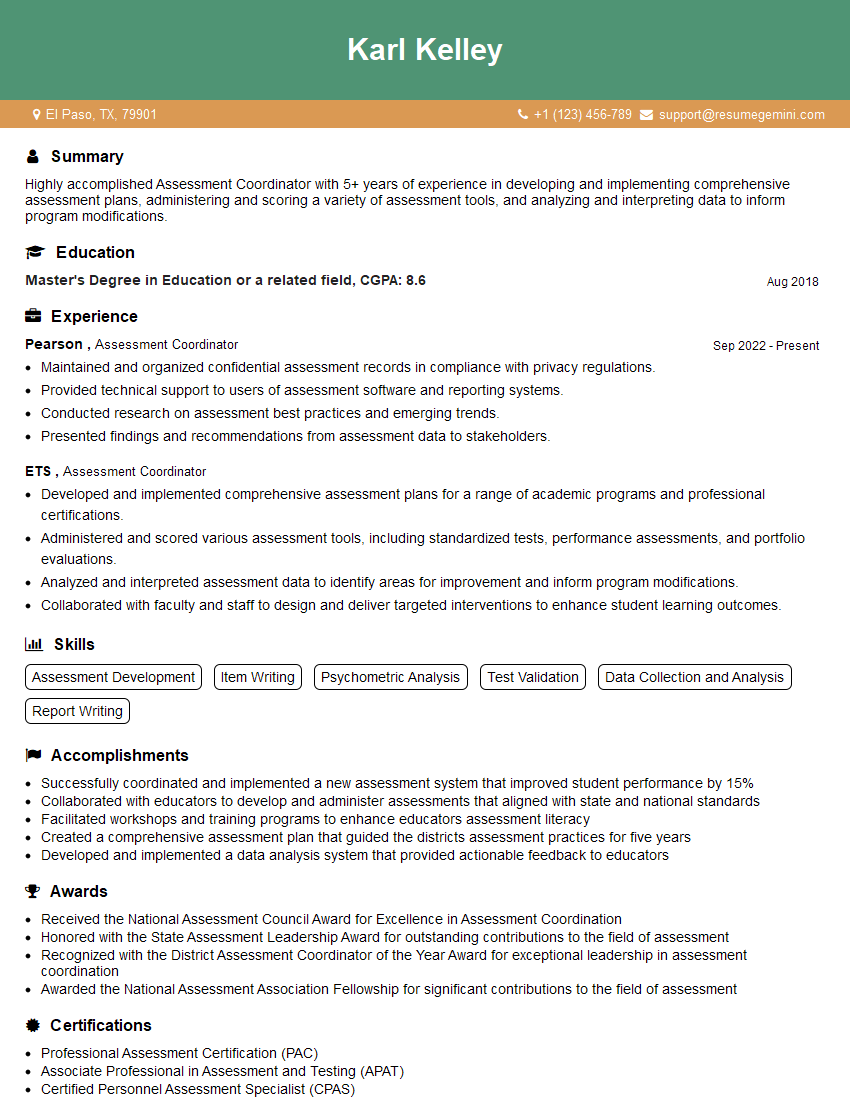
Assessment Coordinator Resume Sample
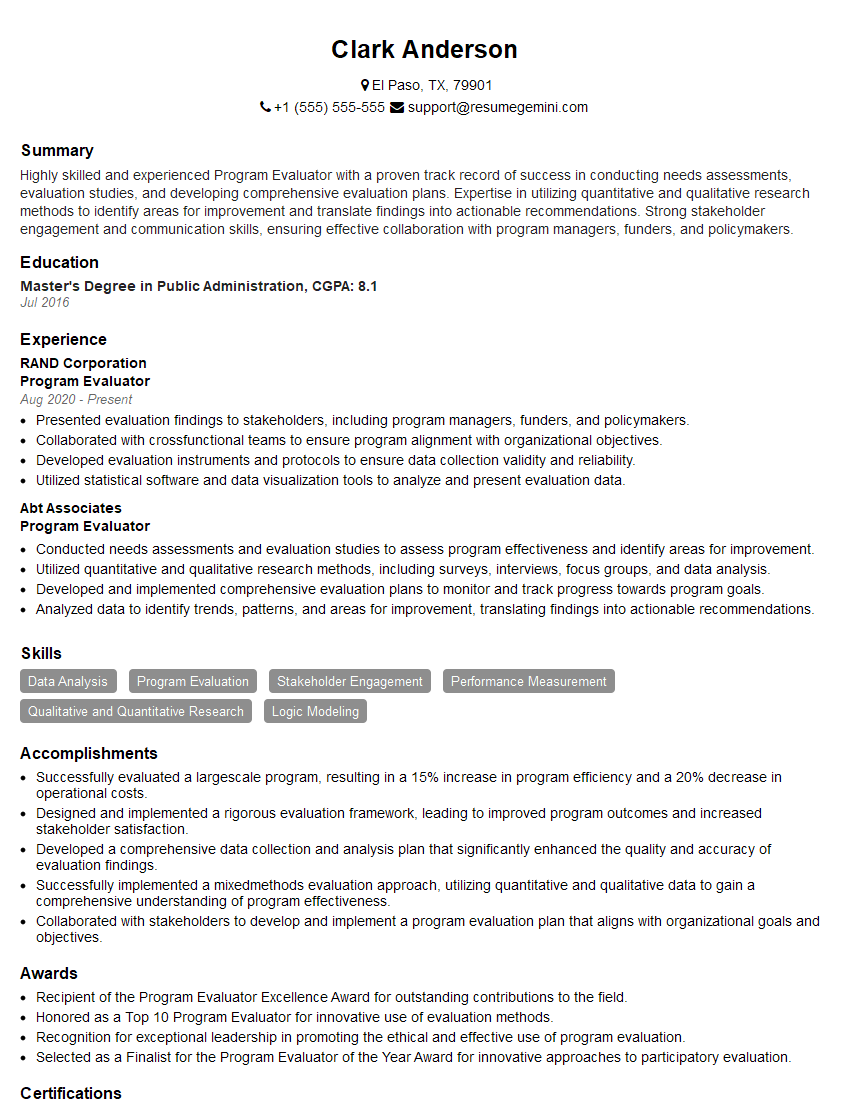
Program Evaluator Resume Sample

E-Learning Developer Resume Sample
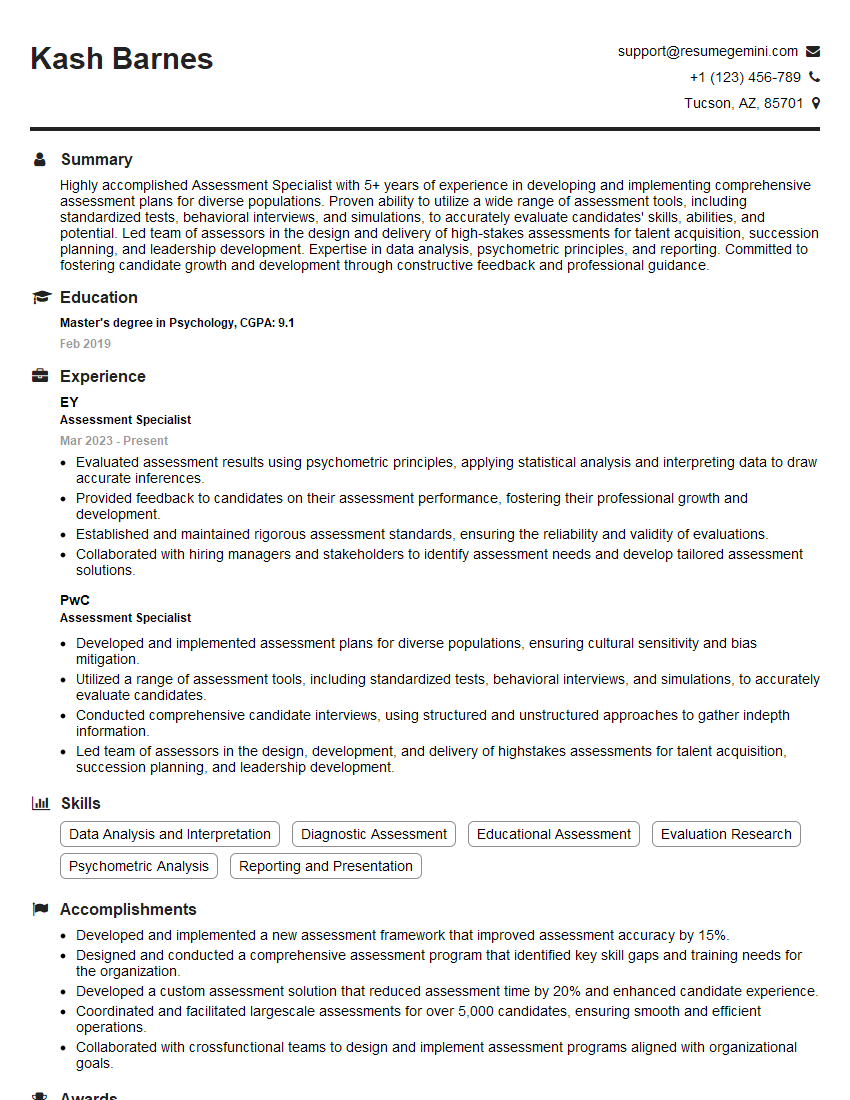
Assessment Specialist Resume Sample
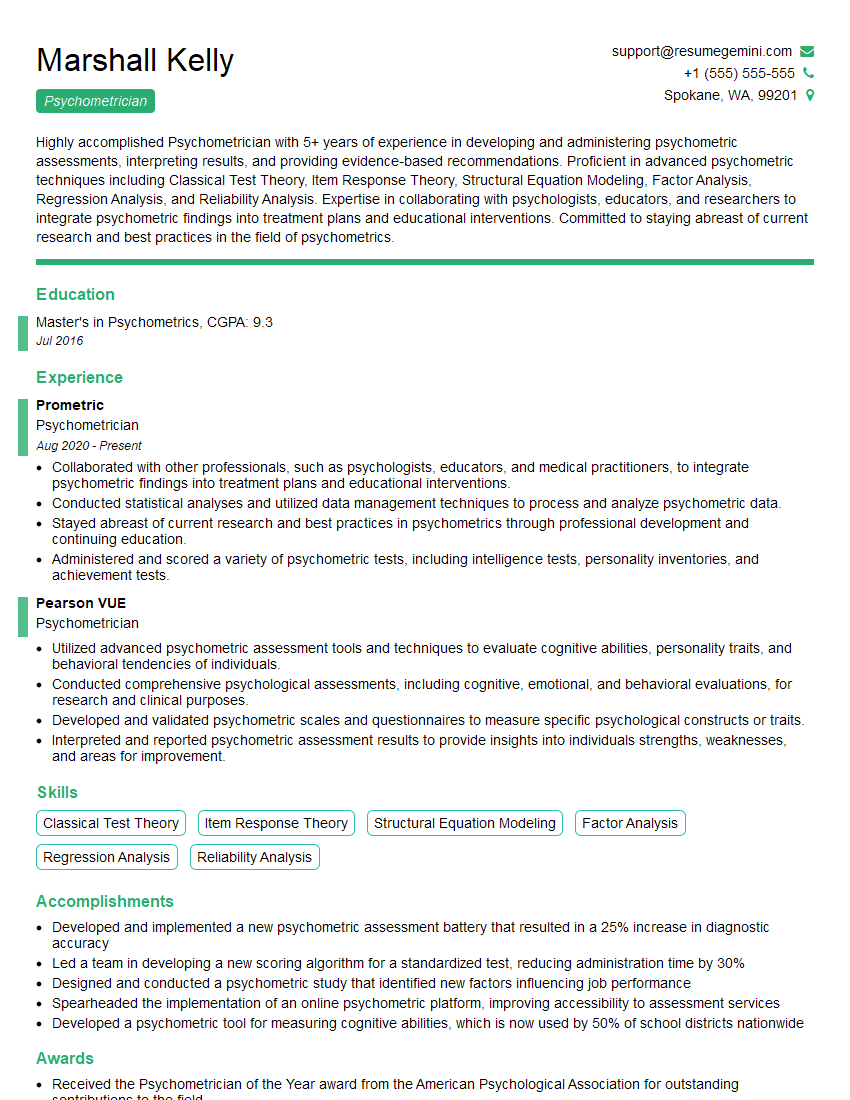
Psychometrician Resume Sample
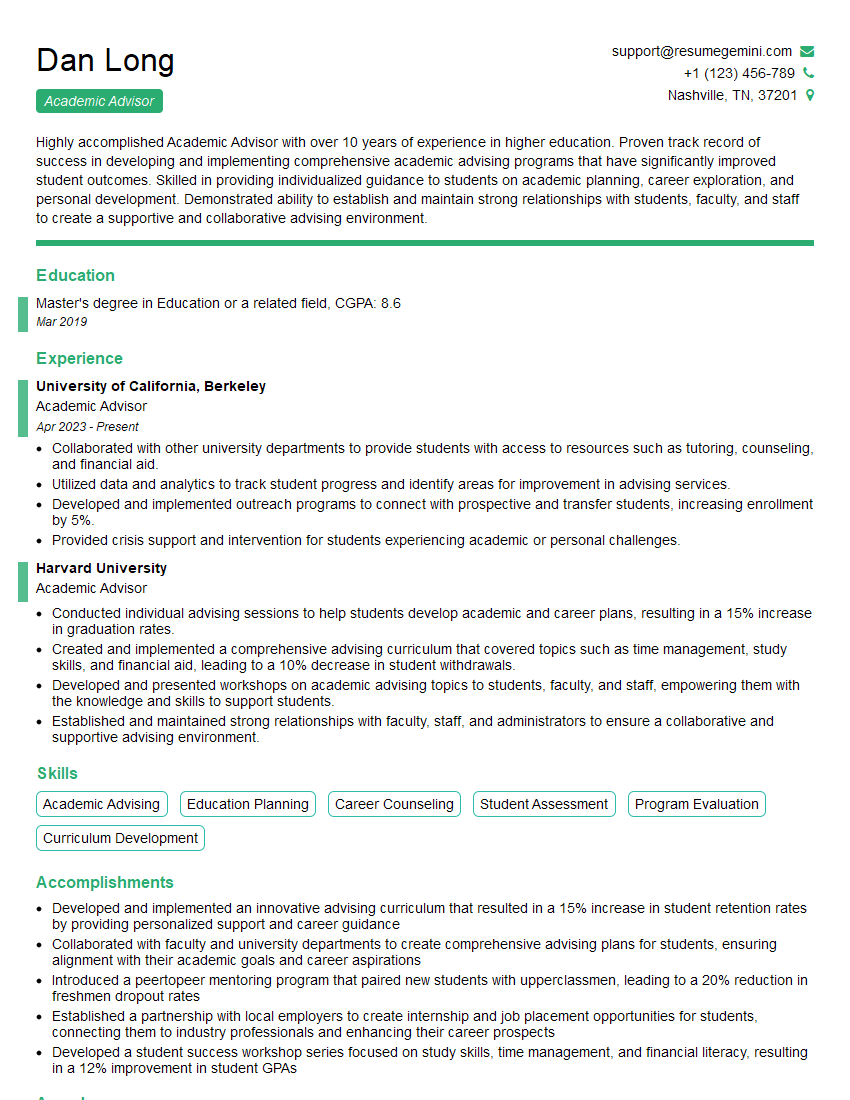
Academic Advisor Resume Sample
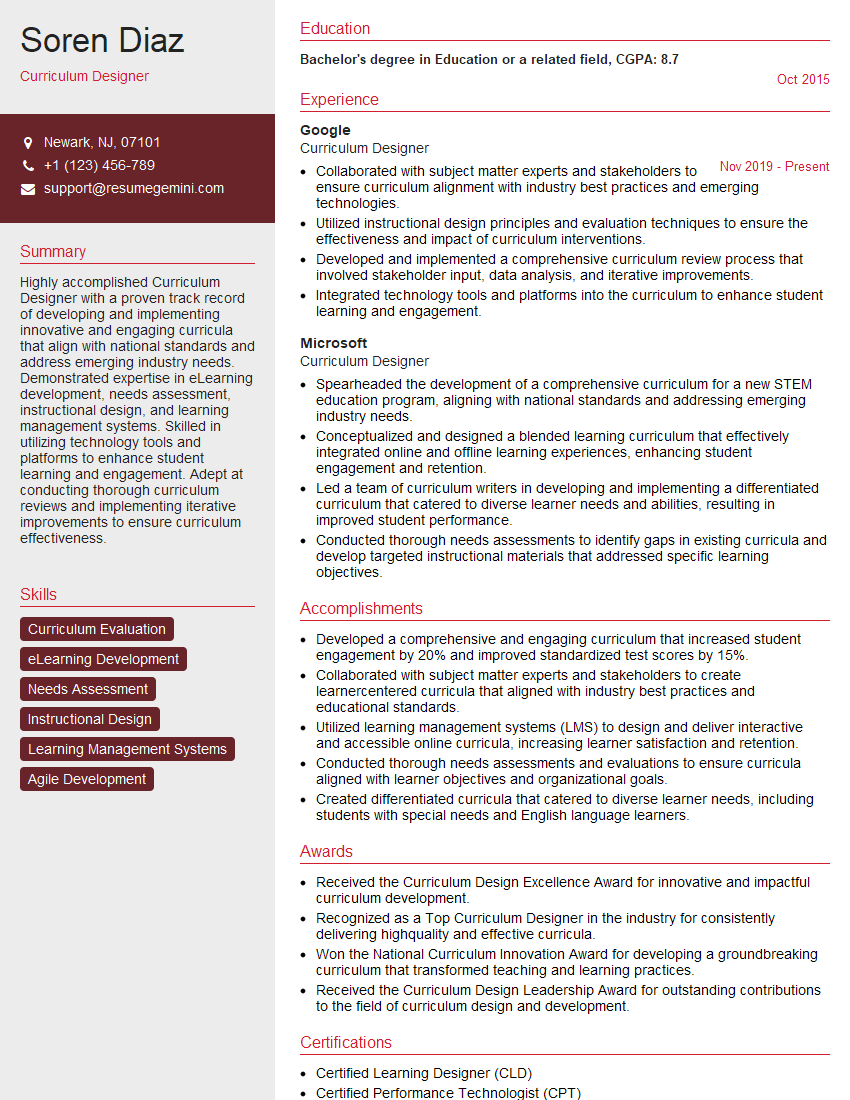
Curriculum Designer Resume Sample
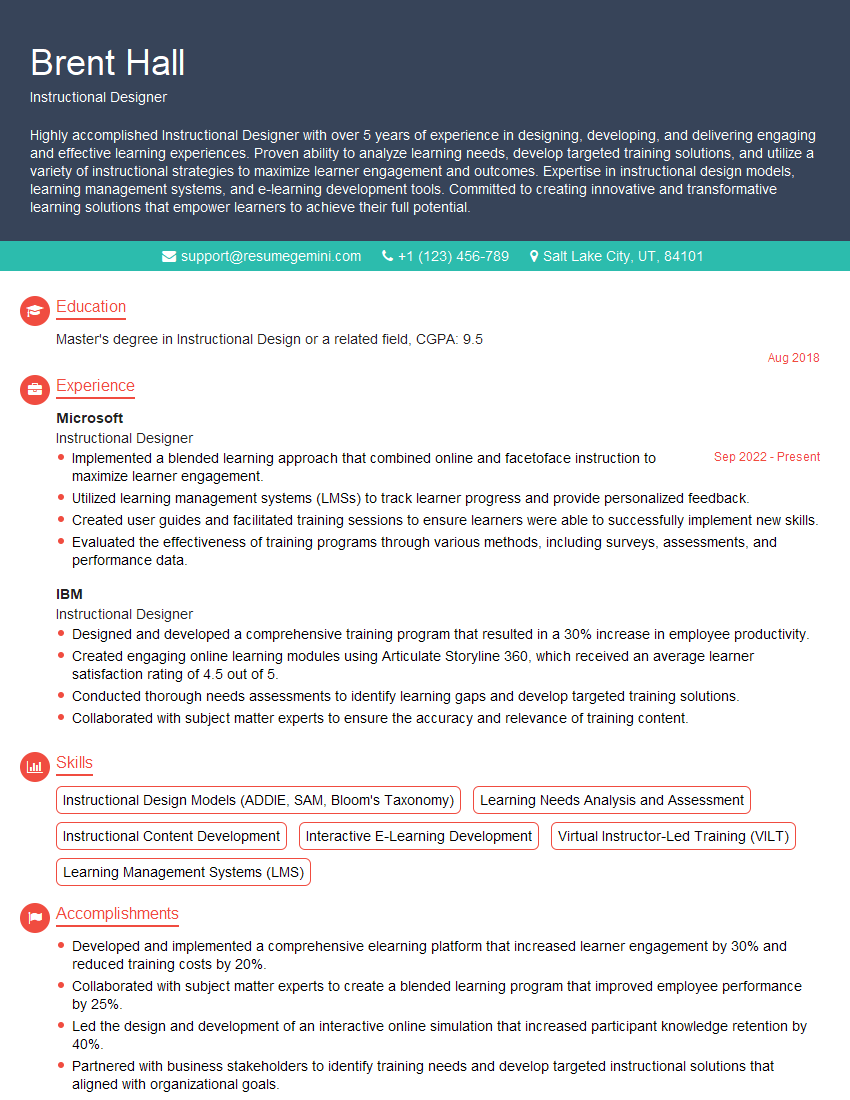
Instructional Designer Resume Sample

Educational Technologist Resume Sample
Explore more articles
Users Rating of Our Blogs
Share Your Experience
We value your feedback! Please rate our content and share your thoughts (optional).
What Readers Say About Our Blog
I Redesigned Spongebob Squarepants and his main characters of my artwork.
https://www.deviantart.com/reimaginesponge/art/Redesigned-Spongebob-characters-1223583608
IT gave me an insight and words to use and be able to think of examples
Hi, I’m Jay, we have a few potential clients that are interested in your services, thought you might be a good fit. I’d love to talk about the details, when do you have time to talk?
Best,
Jay
Founder | CEO