Interviews are more than just a Q&A session—they’re a chance to prove your worth. This blog dives into essential Metal Inert Gas (MIG) Cutting interview questions and expert tips to help you align your answers with what hiring managers are looking for. Start preparing to shine!
Questions Asked in Metal Inert Gas (MIG) Cutting Interview
Q 1. Explain the principles of Metal Inert Gas (MIG) cutting.
MIG cutting, unlike MIG welding, uses the intense heat generated by a short-circuiting arc between the wire electrode and the workpiece to melt and sever the metal. It’s not about fusing metal together; it’s about precisely cutting it. The process involves feeding a consumable electrode wire through a nozzle, creating an arc that melts the metal. Simultaneously, a shielding gas, typically Argon or a mixture of Argon and CO2, protects the molten metal from oxidation, ensuring a clean cut. The molten metal is then blown away by the gas flow. Think of it like a controlled miniature blowtorch, but with significantly greater precision.
The key principle is the localized melting and removal of the metal. The process’s effectiveness relies heavily on the consistent flow of shielding gas to prevent defects and maintain a clean cut. It’s a faster process than oxy-fuel cutting for many materials, and it produces a narrower kerf (the width of the cut).
Q 2. Describe the different types of MIG welding wire and their applications.
MIG welding wires are categorized by their composition and intended applications. The most common types for cutting are solid wires and flux-cored wires, though solid wires are more prevalent in MIG cutting.
- Solid Wires: These are made from a single metal alloy, typically steel (mild steel, stainless steel, etc.). The choice depends on the base metal being cut. For instance, you’d use stainless steel wire for cutting stainless steel. Solid wires offer cleaner cuts with less spatter but are generally limited to thinner materials compared to flux-cored.
- Flux-cored Wires: These wires have a flux core that helps protect the weld from atmospheric contamination and adds alloying elements. Flux-cored wires often handle thicker materials better and can be used in situations with less shielding gas control, but they may produce more spatter and a slightly less clean cut.
The choice of wire diameter also impacts the cutting performance. Thicker wires are suitable for thicker materials and higher amperages, while thinner wires are better for finer cuts and thinner materials. Incorrect wire selection can result in poor cut quality, excessive spatter, or even wire breakage.
Q 3. What are the safety precautions involved in MIG cutting?
MIG cutting involves significant safety risks if not handled correctly. The high temperatures, intense arc, and potential for spatter necessitate strict adherence to safety protocols.
- Eye Protection: Always wear a welding helmet with a suitable shade lens to protect your eyes from the intense ultraviolet and infrared radiation emitted by the arc.
- Protective Clothing: Wear flame-resistant clothing, including gloves, a long-sleeved shirt, and pants, to protect your skin from sparks and spatter.
- Ventilation: Ensure adequate ventilation to remove the fumes produced during the cutting process. Some materials produce toxic fumes, requiring specialized respiratory protection.
- Fire Safety: Keep a fire extinguisher nearby and be aware of any flammable materials in the vicinity. The intense heat can easily ignite combustible materials.
- Grounding: Ensure both the workpiece and the MIG cutter are properly grounded to prevent electrical shocks.
- Proper Training: Always receive proper training before operating a MIG cutter. Never attempt MIG cutting without adequate instruction.
For example, I once witnessed a colleague receive a minor burn from spatter despite wearing gloves – this highlighted the importance of double-checking protective equipment regularly.
Q 4. How do you select the appropriate gas shielding for MIG cutting?
The selection of shielding gas significantly affects the quality of the MIG cut. The gas protects the molten metal from oxidation, ensuring a cleaner cut and preventing defects. The most common shielding gases are Argon, Carbon Dioxide (CO2), and mixtures of both.
- Argon (Ar): Offers excellent arc stability and produces a clean, smooth cut with minimal spatter. It’s ideal for most applications, especially with aluminum and stainless steel.
- Carbon Dioxide (CO2): More cost-effective than Argon, but it produces more spatter and a slightly rougher cut. It’s often used with mild steel and is better suited for thicker materials.
- Argon/CO2 Mixtures: Provide a balance between the benefits of Argon (clean cut) and CO2 (cost-effectiveness). The specific mixture is chosen depending on the metal being cut and the desired cut quality.
The gas flow rate is also critical. Insufficient flow rate can result in oxidation, porosity, and poor cut quality. Too high a flow rate can lead to excessive gas consumption and possibly blow away the molten metal prematurely.
Q 5. Explain the relationship between amperage, voltage, and wire feed speed in MIG cutting.
The relationship between amperage, voltage, and wire feed speed is fundamental to successful MIG cutting. These parameters must be carefully balanced to achieve the desired cutting results. The parameters affect the arc’s intensity and the amount of heat transferred to the base metal.
- Amperage: Controls the heat input. Higher amperage means more heat, leading to faster cutting but potentially also increased spatter and a wider kerf. Too low an amperage will result in slow, inefficient cutting or insufficient material melt.
- Voltage: Influences the arc length. Higher voltage results in a longer arc, which can be beneficial for cutting thicker materials. However, a long arc can lead to unstable cutting and increased spatter.
- Wire Feed Speed: Determines the rate at which the wire is fed into the arc. This speed is directly related to the amperage; a higher feed speed usually means higher amperage to sustain the arc.
Imagine a water hose: amperage is like the water pressure, voltage is like the nozzle size, and wire feed speed is like how quickly you open the valve. You need the right combination for an effective spray, just as you need the correct parameters for an efficient MIG cut.
Q 6. How do you adjust the parameters for different thicknesses of metal?
Adjusting parameters for different metal thicknesses is crucial for successful cutting. Thicker materials require higher heat input, which is achieved by increasing the amperage, voltage, and wire feed speed. Thinner materials require a lower heat input to prevent burn-through.
For instance, cutting a 1/8-inch steel plate requires considerably lower parameters than cutting a 1/2-inch plate. Increasing the amperage too much on thin material may cause a hole to form prematurely before the cut is completed. Always start with lower settings and gradually increase them as needed, carefully monitoring the cut quality.
Experienced operators develop a feel for these adjustments based on the metal’s type and thickness. Using a suitable chart or pre-set parameters from your equipment manufacturer is highly recommended when starting out.
Q 7. How do you troubleshoot common MIG cutting problems such as porosity, spatter, and lack of fusion?
Troubleshooting common MIG cutting problems requires a systematic approach.
- Porosity: This refers to small holes or voids in the cut. It’s often caused by insufficient shielding gas coverage, contamination of the wire or base metal, or too low an amperage. Solutions include increasing gas flow rate, cleaning the workpiece and wire, and increasing amperage.
- Spatter: Excessive spatter indicates issues like incorrect wire type or diameter, improper gas selection, wrong voltage or amperage settings, or a dirty contact tip. Solutions involve checking wire type and diameter, verifying gas mixture and flow rate, adjusting voltage and amperage, and ensuring a clean contact tip.
- Lack of Fusion: If the cut isn’t completely severed and leaves a thin section of unmelted material, the amperage may be too low, the travel speed might be too fast, or the contact tip-to-work distance could be incorrect. Increase amperage, decrease travel speed, and adjust contact tip distance.
Remember, proper diagnosis often requires systematically checking each aspect of the process – from gas flow to wire feed speed to contact tip condition. Always keep detailed records of your settings to aid in troubleshooting and future projects.
Q 8. What are the different types of MIG cutting joints?
MIG cutting, while primarily an oxy-fuel process, can be used to prepare materials for welding. The joint types you’ll encounter are essentially the same as those prepared for welding, as the cut itself creates the joint geometry. These include:
- Butt Joint: The simplest joint, where two pieces are butted together end-to-end. Requires precise cutting for a good weld.
- Lap Joint: One piece overlaps another, offering strength but potentially less efficient material usage.
- T-Joint: A joint shaped like a ‘T’, where one piece intersects another at a right angle. Often found in structural applications.
- Corner Joint: Two pieces are joined at a 90-degree angle, frequently used in box-like structures.
- Edge Joint: Two edges are joined together, commonly seen in sheet metal work.
The preparation of these joints for MIG welding often requires beveling or other shaping to ensure proper penetration and weld strength, and MIG cutting can help achieve the right geometry before the weld.
Q 9. Explain the importance of pre- and post-weld cleaning in MIG cutting.
Pre- and post-weld cleaning in MIG cutting (and welding) are crucial for ensuring a strong and reliable joint. Think of it like preparing a foundation for a building – a dirty or contaminated base will lead to problems.
Pre-cleaning removes contaminants like oil, grease, paint, rust, or mill scale from the metal surfaces. These contaminants can interfere with the arc, creating porosity or weakening the weld. Methods include wire brushing, grinding, or chemical cleaning, depending on the material and level of contamination. A clean surface ensures proper metal fusion and penetration.
Post-cleaning removes any slag (the solidified molten flux material) or spatter (small molten metal droplets) left after the cutting process. Slag inclusions weaken the weld, making it susceptible to cracking or failure. Post-cleaning typically involves wire brushing or grinding, followed by a thorough visual inspection.
Imagine trying to weld two rusty pieces of metal together – the rust would prevent the pieces from properly fusing. Similarly, leaving slag on the weld would create weak points.
Q 10. How do you inspect a MIG weld for defects?
Inspecting a MIG weld for defects requires a keen eye and possibly specialized tools. The goal is to identify any imperfections that could compromise the weld’s integrity.
Visual Inspection: The first step is a thorough visual examination for surface defects like cracks, undercuts (grooves along the weld’s edge), porosity (small holes), inclusions (foreign material in the weld), and lack of fusion (incomplete bonding of the weld to the base metal).
Non-Destructive Testing (NDT): For critical applications, NDT methods are employed. These include:
- Dye Penetrant Inspection: Detects surface cracks by applying a dye that penetrates the crack and is then revealed.
- Magnetic Particle Inspection: Used for ferrous metals, it detects surface and near-surface cracks by magnetizing the material and applying magnetic particles that are attracted to the crack.
- Radiographic Testing (X-ray): Detects internal defects by passing X-rays through the weld. The resulting image reveals internal flaws.
- Ultrasonic Testing: Uses sound waves to detect internal flaws.
The choice of NDT method depends on the weld’s complexity, the type of defect expected, and the required level of inspection.
Q 11. What are the limitations of MIG cutting?
While MIG cutting offers many advantages, it does have limitations:
- Limited Cut Thickness: MIG cutting is generally limited to thinner materials compared to other cutting methods like oxy-fuel cutting. The thicker the material, the more challenging and less efficient the process becomes.
- Surface Finish: The cut surface produced by MIG cutting might not be as smooth or precise as that from laser or plasma cutting. It typically requires further finishing in many applications.
- Material Suitability: Not all materials are easily cut with MIG. The process works best with ferrous metals but may be less effective or even unsuitable for some non-ferrous materials.
- Heat Affected Zone (HAZ): The heat generated during the cutting process can affect the properties of the material surrounding the cut. This area, known as the HAZ, can experience changes in its microstructure and mechanical properties. This needs to be considered in design.
- Safety Concerns: Like any welding process, MIG cutting involves potential hazards including electric shock, arc eye, and fumes. Proper safety precautions are essential.
Q 12. Describe the process of setting up a MIG welder for cutting.
Setting up a MIG welder for cutting involves several key steps. While MIG is primarily a welding process, a modified technique can be used for cutting. Note that this ‘cutting’ is not as precise or efficient as dedicated cutting processes like oxy-fuel or plasma cutting.
1. Select the Correct Wire and Gas: A thinner diameter wire (e.g., 0.030-inch) is generally preferred. Shielding gas choice is crucial and will depend on the metal type being cut. For steel, a mixture of Argon and CO2 or Argon and Oxygen may be used. The exact mix will depend on the thickness of the material and the desired cut quality.
2. Adjust Wire Feed Speed and Voltage: A high wire feed speed and voltage setting are needed to generate the heat required for cutting. This needs to be tailored to the material thickness. Experimentation will be necessary to achieve best result, with higher voltages and speeds often leading to wider cuts but faster speeds.
3. Set the Polarity: Direct Current Electrode Positive (DCEP) polarity is typically used for MIG cutting, though this varies depending on the specific setup and the material being cut.
4. Practice Technique: Maintaining a consistent distance and speed is key to producing a clean, straight cut. It’s a technique-intensive process requiring practice and experience.
5. Safety First: Always wear appropriate personal protective equipment (PPE) including welding gloves, eye protection, and a helmet.
Q 13. What is the difference between MIG welding and MIG cutting?
MIG welding and MIG cutting are related but distinct processes using the same basic equipment:
MIG Welding: The primary purpose is to join two pieces of metal by melting them together using a continuous wire electrode fed through a contact tip. A shielding gas protects the weld puddle from atmospheric contamination. It emphasizes fusion and forming a strong joint. The current is carefully selected to melt the filler wire and create a weld pool, fusing with the parent materials.
MIG Cutting (or gouging): Uses high current settings and sometimes specialized techniques to melt and remove metal, essentially creating a cut. It leverages the heat of the arc to melt and remove material, rather than focusing on creating a continuous fusion.
In essence, MIG welding creates a joint while MIG cutting removes material. While the equipment is the same, the parameters and techniques differ significantly. MIG cutting is much less common than MIG welding, with plasma cutters or oxy-fuel cutting preferred.
Q 14. Explain the importance of using the correct polarity in MIG cutting.
Correct polarity is essential in MIG cutting (and welding) to control the arc and ensure proper metal transfer. The polarity determines which electrode (wire) is positive and which is negative.
Direct Current Electrode Positive (DCEP): This polarity concentrates more heat at the workpiece (the metal being cut), promoting efficient metal melting and removal. It’s often preferred for cutting due to the focused heat.
Direct Current Electrode Negative (DCEN): This polarity is less commonly used for cutting, it delivers more heat to the electrode causing faster wire melting and less focused cutting ability. This polarity is generally preferred for welding because it creates a better weld pool for fusion.
Using the incorrect polarity can result in poor cut quality, excessive spatter, inefficient material removal, or even damage to the equipment. The choice of polarity is typically dictated by the specific type of metal being cut and the desired results, usually a DCEP set up for cutting.
Q 15. How do you maintain a MIG welder to ensure optimal performance?
Maintaining a MIG welder for optimal performance is crucial for consistent welds and the longevity of the equipment. It’s like regularly servicing your car – preventative maintenance is key. This involves several key steps:
Regular Cleaning: After each use, clean the contact tip, nozzle, and wire feed system of spatter and debris. Spatter buildup restricts gas flow and can lead to inconsistent welds. Think of it like clearing a clogged drain – it prevents future problems.
Contact Tip Inspection: Regularly inspect the contact tip for wear and tear. A worn tip can cause inconsistent arc length and poor weld quality. Replace it when necessary; this is like replacing worn brake pads in a car – essential for safety and performance.
Gas Flow Check: Verify that the gas flow is correctly calibrated according to the manufacturer’s recommendations. Insufficient gas shielding can lead to porosity in welds. Imagine this as ensuring your car engine has enough air-fuel mixture for optimal combustion.
Wire Feed System Check: Check the wire feed rollers for wear and ensure smooth wire feeding. Kinks or jams can interrupt the welding process and damage the wire feed system. This is analogous to ensuring your car’s transmission is functioning properly.
Drive Rollers: Make sure the drive rollers are properly adjusted to grip the wire without causing damage. Improper adjustment can lead to birdnesting or inconsistent wire feed. Just like your car tires need proper alignment.
Grounding: A solid ground connection is paramount. Poor grounding causes erratic arc behavior and poor weld quality. This is the equivalent of a reliable car battery connection – vital for proper operation.
By following these steps, you significantly improve the reliability, performance, and lifespan of your MIG welder, preventing costly repairs and downtime.
Career Expert Tips:
- Ace those interviews! Prepare effectively by reviewing the Top 50 Most Common Interview Questions on ResumeGemini.
- Navigate your job search with confidence! Explore a wide range of Career Tips on ResumeGemini. Learn about common challenges and recommendations to overcome them.
- Craft the perfect resume! Master the Art of Resume Writing with ResumeGemini’s guide. Showcase your unique qualifications and achievements effectively.
- Don’t miss out on holiday savings! Build your dream resume with ResumeGemini’s ATS optimized templates.
Q 16. What are the different types of nozzles used in MIG cutting and when would you use each type?
MIG cutting uses different nozzles depending on the application and the type of gas used. The choice impacts gas flow, shielding, and the overall quality of the cut.
Standard Nozzles: These are the most common type, suitable for general-purpose applications. They provide a good balance of gas coverage and arc stability.
Extended Nozzles: Used when cutting deeper sections or when additional reach is needed, these minimize heat distortion and provide improved shielding.
Tapered Nozzles: These help to focus the gas flow for more precise cutting and reduce gas consumption in certain applications. The tapered design enhances shielding on thinner materials.
Dual-Flow Nozzles: These nozzles feature separate gas channels for shielding the arc and pushing the molten metal. This design is often used for increased cutting speed and superior edge quality on thicker materials.
The selection of the nozzle depends entirely on the specific job. For instance, a tapered nozzle might be preferred for intricate work on thin sheet metal, whereas an extended nozzle would be more suitable for cutting thicker materials.
Q 17. How do you prevent arc blow in MIG cutting?
Arc blow, a deflection of the welding arc caused by magnetic fields, is a common issue in MIG cutting that can result in uneven welds and poor quality. Several strategies can mitigate this:
Proper Grounding: A good, clean ground connection is paramount. This reduces the magnetic field strength and minimizes arc blow. Think of it as grounding a lightning rod – it provides a path for the current to flow safely.
Electrode Positioning: Adjusting the position of the electrode can significantly influence arc blow. Experiments with different electrode angles and distances to the workpiece often reveal an optimal position.
Workpiece Arrangement: When possible, rearrange the workpiece to reduce magnetic fields. For example, avoid placing ferromagnetic materials nearby.
Alternating Current (AC): Using AC power often reduces the effect of arc blow compared to DC.
Shielding Gas: Some shielding gases are less susceptible to magnetic fields. Experimentation may be needed to find the optimum gas for the job and to minimize arc blow.
Often, a combination of these techniques is necessary for effective arc blow control. A systematic approach, starting with grounding and electrode positioning, is usually the most effective solution.
Q 18. Describe your experience with different types of metal used in MIG cutting.
My experience encompasses a wide range of metals commonly used in MIG cutting:
Mild Steel: This is the most common material. MIG welding offers excellent penetration and ease of use with mild steel, making it ideal for a variety of applications.
Stainless Steel: Requires specific filler wires and shielding gases to prevent oxidation and achieve high-quality welds. The process demands attention to cleanliness to avoid contamination.
Aluminum: Due to its high thermal conductivity, aluminum requires specialized techniques, including the use of specific filler wires and higher amperage. Cleanliness is extremely important for proper wetting.
Copper and Copper Alloys: These are challenging to weld due to their high thermal conductivity and tendency to oxidize rapidly. Special filler materials and techniques are essential.
Each metal necessitates a tailored approach. For example, while mild steel is relatively straightforward, aluminum requires expertise in parameter adjustments and gas selection to produce a sound weld. I’m comfortable adjusting techniques to handle different metal properties and achieve consistent results.
Q 19. What are the advantages and disadvantages of MIG cutting compared to other cutting methods (e.g., oxy-fuel cutting)?
MIG cutting offers several advantages over other cutting methods like oxy-fuel cutting:
Higher Speed: MIG cutting generally cuts faster than oxy-fuel cutting, leading to increased productivity.
Less Heat Distortion: It produces less heat than oxy-fuel, reducing the risk of warping or distortion in the workpiece.
Cleaner Cut: MIG cutting often provides a cleaner cut with less slag or dross compared to oxy-fuel cutting.
Versatility: It’s suitable for a broader range of metals compared to oxy-fuel cutting.
However, MIG cutting also has some drawbacks:
Equipment Cost: MIG welders and associated equipment are more expensive than oxy-fuel cutting setups.
Material Thickness Limitations: MIG cutting may not be as effective for extremely thick materials as oxy-fuel cutting.
Operator Skill: Requires skilled operators to obtain consistent results.
The best method depends on the specific needs of the job. For example, I would choose MIG cutting for speed and precision on thinner materials but might opt for oxy-fuel cutting for exceptionally thick materials.
Q 20. How do you ensure consistent weld bead appearance and quality?
Consistent weld bead appearance and quality are achieved through meticulous attention to several key factors:
Proper Parameter Settings: Voltage, amperage, and wire feed speed must be precisely adjusted based on the material thickness, type of metal, and desired weld penetration. This is the foundation of quality control.
Consistent Travel Speed: Maintaining a consistent speed while welding is essential for uniform heat distribution and bead formation.
Correct Gas Coverage: Adequate gas shielding is crucial to prevent oxidation and porosity in the weld. The nozzle-to-workpiece distance must be maintained for optimal shielding.
Cleanliness: A clean welding area, including the workpiece and equipment, prevents contamination and improves weld quality. Cleaning is akin to preparing a canvas before painting – it sets the stage for success.
Joint Preparation: Proper joint preparation ensures proper fusion and penetration, resulting in strong and visually appealing welds. Preparing the joint is like laying a foundation for a house – it’s crucial for stability.
Regular Maintenance: Consistent maintenance of the equipment, as discussed previously, is vital in maintaining consistent weld quality.
It’s a holistic process. I constantly monitor these aspects throughout the welding process to ensure consistent results. Think of it as a recipe – each ingredient must be measured carefully to achieve the desired outcome.
Q 21. Describe your experience with different MIG cutting techniques (e.g., pulse MIG, spray transfer).
My experience with different MIG cutting techniques includes:
Spray Transfer: This high-current process is excellent for faster welding speeds and deep penetration on thicker materials. It requires careful control to avoid excessive spatter.
Pulse MIG: Combines the benefits of short-circuiting and spray transfer modes. It offers precise control over bead size and shape, making it suitable for high-quality applications, especially in thin materials where control is essential.
Short-Circuiting Transfer: This low-current method is ideal for thin materials and produces a smoother bead appearance with minimal spatter.
Globular Transfer: This method is not commonly used for cutting, but I am familiar with its characteristics, understanding that it’s less controlled and usually produces larger spatter.
The choice of technique depends heavily on the metal being welded, its thickness, and the desired weld quality. For example, I would employ spray transfer for thicker steel sections requiring deep penetration and pulse MIG for thin stainless steel to control heat input and minimize distortion. I select the most appropriate technique to ensure optimal results for each specific task.
Q 22. How do you interpret welding symbols?
Welding symbols are a standardized way of communicating complex weld requirements on engineering drawings. They’re essentially a shorthand that saves space and prevents misunderstandings. Understanding them is crucial for accurate fabrication. Each symbol conveys information about the type of weld, its size, length, location, and any special preparation required.
A typical symbol includes a reference line, an arrow indicating the location of the weld, and various other components. For instance, a small triangle on the reference line might indicate a fillet weld, while a specific symbol might specify the size and leg length of the weld. The placement of the symbols relative to the reference line indicates which side of the joint needs welding.
- Arrow side: Indicates the side of the joint where the weld is to be applied.
- Other side: If symbols are on the other side of the reference line, it indicates welds are needed on both sides of the joint.
- Reference Line: Shows where the weld is located on the drawing.
- Basic weld symbols: These symbols depict the basic types of welds (e.g., fillet, groove, etc.).
Imagine trying to describe a complex weld configuration using only words – it would be incredibly time-consuming and prone to errors. Welding symbols provide a clear, unambiguous visual representation, ensuring everyone involved is on the same page.
Q 23. Explain the importance of proper personal protective equipment (PPE) in MIG cutting.
Proper PPE (Personal Protective Equipment) is non-negotiable in MIG cutting. The process involves intense heat, bright light, and potentially dangerous spatter and fumes, all posing serious risks to the eyes, skin, and respiratory system. Neglecting PPE can lead to severe injuries or long-term health problems.
Essential PPE includes:
- Welding Helmet with appropriate shade lens: Protects eyes from intense UV and IR radiation.
- Welding Gloves: Thick, heat-resistant gloves protect hands from burns and sparks.
- Welding Jacket or Apron: Protects skin and clothing from burns and spatter.
- Safety Glasses (under helmet): Provide an extra layer of eye protection.
- Respiratory Protection: A respirator helps prevent inhalation of harmful fumes and dust, especially when working with specific materials like galvanized steel.
- Hearing Protection: MIG cutting can produce considerable noise levels; earplugs or muffs are important.
- Footwear: Closed-toe shoes with slip-resistant soles prevent accidents.
I always prioritize safety. A personal anecdote: once, a colleague forgot to wear his gloves and suffered a nasty burn. It was a stark reminder that even a moment’s carelessness can have severe consequences.
Q 24. Describe your experience with automated MIG cutting systems.
I have extensive experience with automated MIG cutting systems, including robotic systems and CNC-controlled machines. My experience spans various applications, from high-volume production runs to precise, intricate cutting tasks.
I am proficient in programming and operating these systems, understanding the importance of factors such as travel speed, wire feed speed, and gas flow rate to achieve optimal cut quality and efficiency. Working with automated systems requires a different skillset than manual MIG cutting—it involves proficiency in programming software, understanding sensor feedback, and troubleshooting complex automation issues.
For instance, in a previous role, I was involved in setting up and programming a robotic MIG cutting cell for the automated fabrication of car chassis components. This involved creating detailed programs to control the robot’s movements, ensuring precise cuts and weld quality. Troubleshooting was also critical. We encountered several issues with sensor calibration and arc stability, which required a thorough understanding of the system’s mechanics and electrical components. I successfully resolved these problems, significantly reducing downtime and improving overall efficiency.
Q 25. How do you handle different types of metal surfaces before MIG cutting?
Surface preparation is critical before MIG cutting; a clean surface ensures a good weld and prevents defects. The method depends on the metal’s type and condition.
- Cleaning: Removing dirt, grease, oil, paint, or rust is paramount. This typically involves using wire brushes, solvents, or abrasive blasting techniques.
- Grinding/Machining: For welds requiring a precise fit, grinding or machining may be necessary to remove imperfections or create a specific surface profile.
- Preheating: For some materials like thicker sections or high-carbon steels, preheating is essential to reduce the risk of cracking or warping. The preheat temperature depends on the material and its thickness.
For example, when cutting stainless steel, thorough cleaning is essential to avoid weld contamination and ensure proper penetration. Conversely, cutting rusty mild steel requires effective rust removal to prevent porosity in the weld.
Q 26. What is your experience with troubleshooting and repairing faulty MIG cutting equipment?
Troubleshooting and repairing faulty MIG cutting equipment is a crucial part of my skillset. My experience covers a wide range of issues, from minor adjustments to major repairs.
I start by systematically identifying the problem. This might involve checking gas flow, wire feed, power supply, and ground connections. I can often diagnose the issue through visual inspection or using testing equipment like multimeters. I use a structured, logical approach.
- Visual Inspection: Inspect the system for loose connections, damaged cables, or other physical defects.
- Testing: Use appropriate testing equipment to check the voltage, current, and gas flow.
- Component Replacement: If necessary, I can replace faulty components such as the wire feeder, gas regulator, or torch.
- Calibration: Adjust parameters, such as wire feed speed and gas flow, to ensure optimal cutting performance.
For example, I once resolved an intermittent arc problem by tracing a faulty wire connection within the power supply unit. In another instance, I successfully replaced a malfunctioning wire feeder motor, restoring the equipment to full functionality. I prioritize systematic diagnosis and have access to technical manuals and manufacturer support to assist with complex repairs.
Q 27. Describe your experience with various types of cutting applications and materials.
My experience encompasses a wide variety of cutting applications and materials. I’ve worked with various metals including mild steel, stainless steel, aluminum, and various alloys. The applications have ranged from simple cutting operations to complex, multi-pass welds for structural fabrication.
Examples include:
- Structural Steel Fabrication: I’ve been involved in cutting and welding structural steel beams, columns, and other components for buildings and bridges.
- Automotive Fabrication: MIG cutting and welding have been used extensively in creating automotive parts and assemblies.
- Pipe Welding: I’ve successfully applied MIG techniques in various pipe welding applications, emphasizing quality and code compliance.
- Sheet Metal Fabrication: This involves precise cutting and welding of thin sheet metal components for various industries.
Adaptability is crucial in this field. Each material and application requires a different approach, from adjusting the power settings and wire feed speed to selecting appropriate gas shielding and joint preparation techniques.
Key Topics to Learn for Metal Inert Gas (MIG) Cutting Interview
- Understanding the MIG Process: Deepen your knowledge of the shielding gas types (e.g., Argon, CO2, Argon/CO2 mixtures), their impact on weld quality, and the selection process based on materials and applications.
- Wire Feed Speed and Voltage Control: Master the relationship between wire feed speed, voltage, and amperage, and how adjustments affect penetration, bead width, and spatter.
- Material Selection and Preparation: Understand the importance of selecting the right filler metal for different base materials and the impact of proper surface preparation (cleaning, grinding) on weld quality.
- Arc Characteristics and Control: Learn to recognize and troubleshoot different arc characteristics (e.g., short-circuiting, globular, spray transfer) and understand the adjustments necessary to achieve optimal weld quality.
- Safety Procedures and Precautions: Familiarize yourself with all relevant safety protocols, including PPE requirements, gas handling procedures, and emergency response measures.
- Common Weld Defects and Troubleshooting: Learn to identify common weld defects (porosity, cracks, undercut) and understand the underlying causes and corrective actions.
- Practical Applications and Use Cases: Consider various applications of MIG welding, such as fabrication, repair, and maintenance, and how these contexts might influence technique and material choices.
- Advanced Techniques: Explore specialized MIG welding techniques like pulse MIG welding and its advantages in specific applications.
Next Steps
Mastering Metal Inert Gas (MIG) Cutting opens doors to exciting career opportunities in various industries, offering excellent prospects for advancement and specialization. To maximize your chances of landing your dream job, creating a strong, ATS-friendly resume is crucial. ResumeGemini is a trusted resource to help you build a professional resume that highlights your skills and experience effectively. ResumeGemini provides examples of resumes tailored to Metal Inert Gas (MIG) Cutting professionals, ensuring your application stands out. Take the next step in your career journey by crafting a compelling resume that showcases your MIG welding expertise.

Welding Engineer Resume Sample

Welding Technician Resume Sample

Welding Instructor Resume Sample

Welding Foreman Resume Sample

Pipe Welder Resume Sample
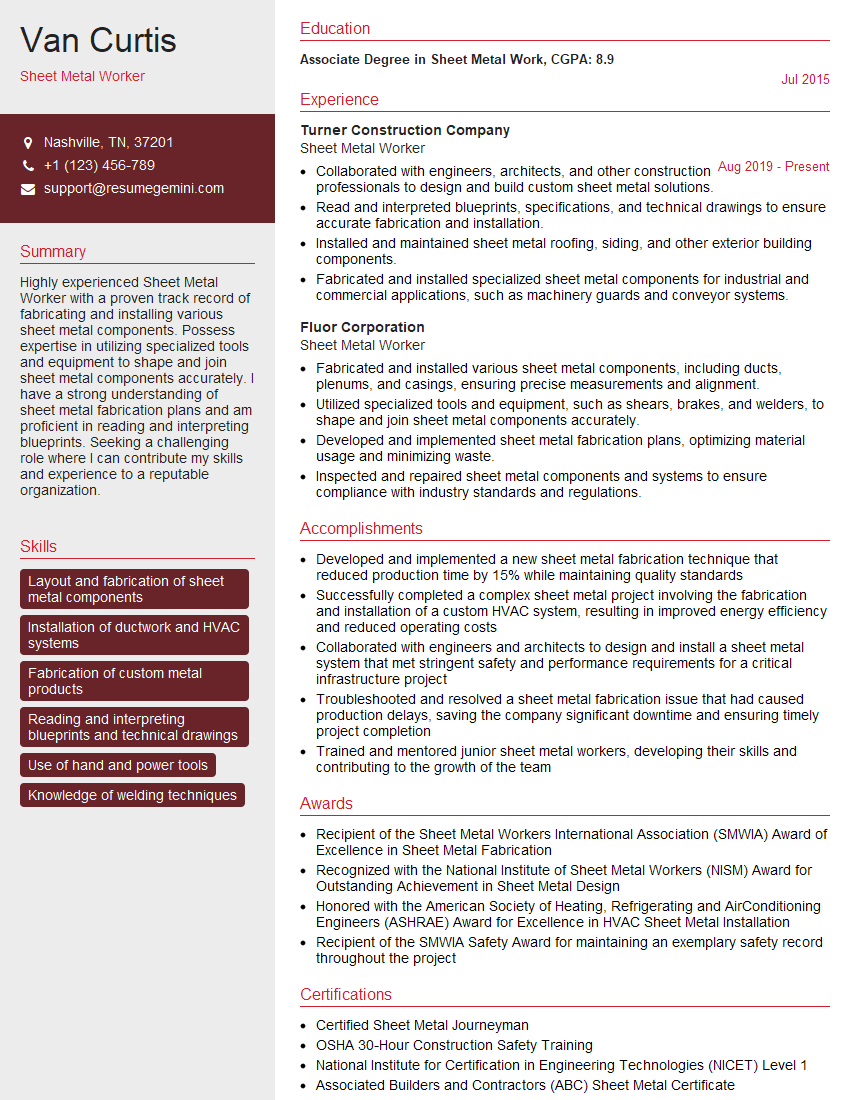
Sheet Metal Worker Resume Sample
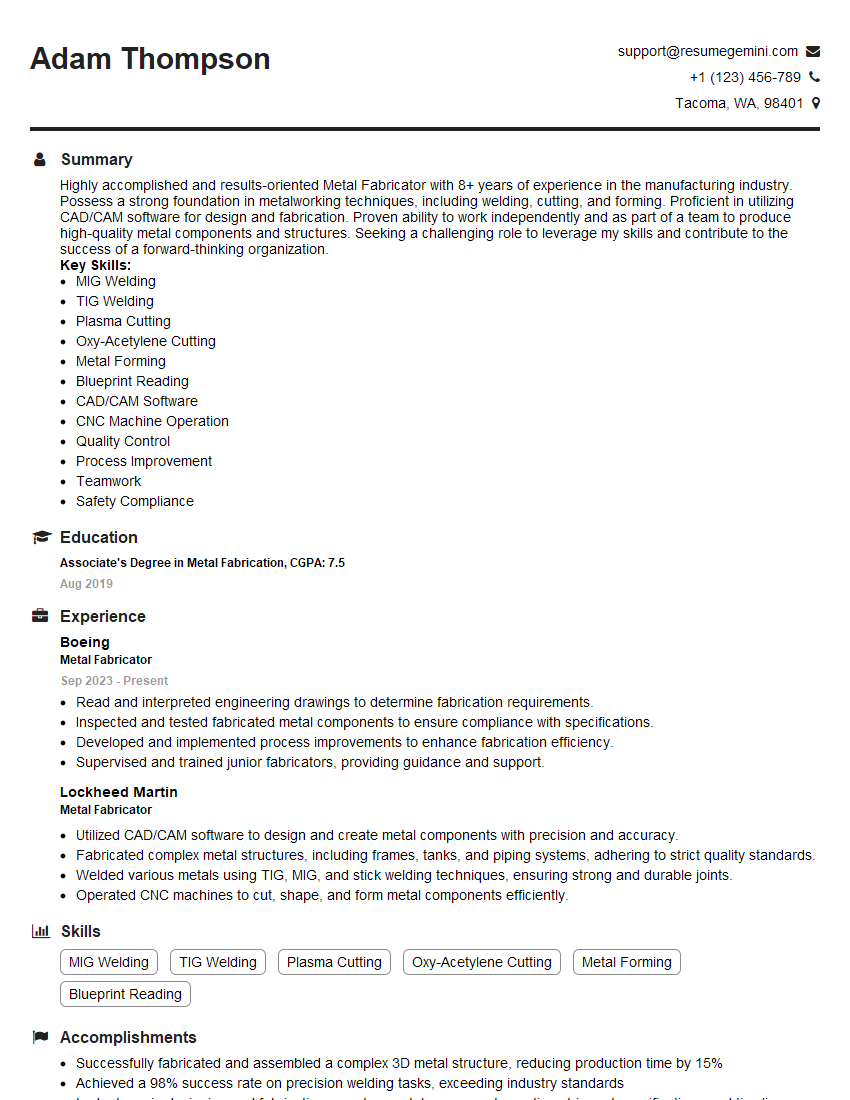
Metal Fabricator Resume Sample
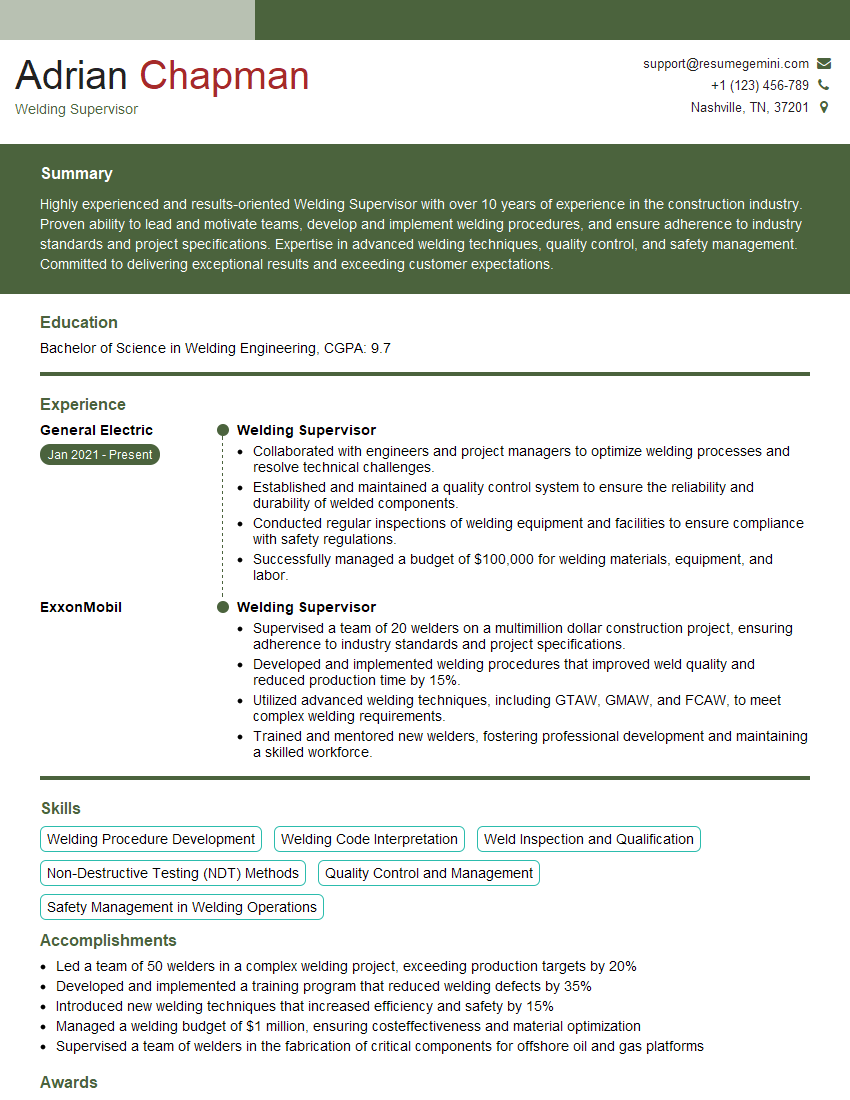
Welding Supervisor Resume Sample

Fabrication Welder Resume Sample
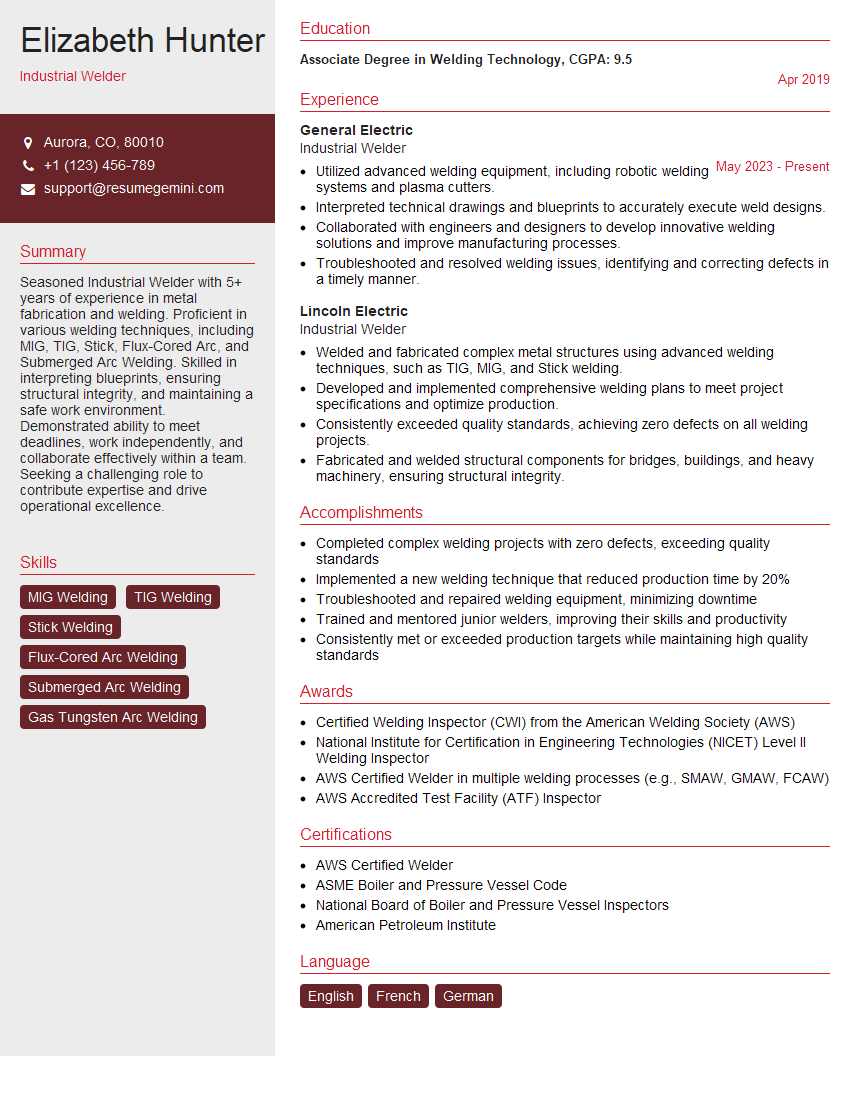
Industrial Welder Resume Sample
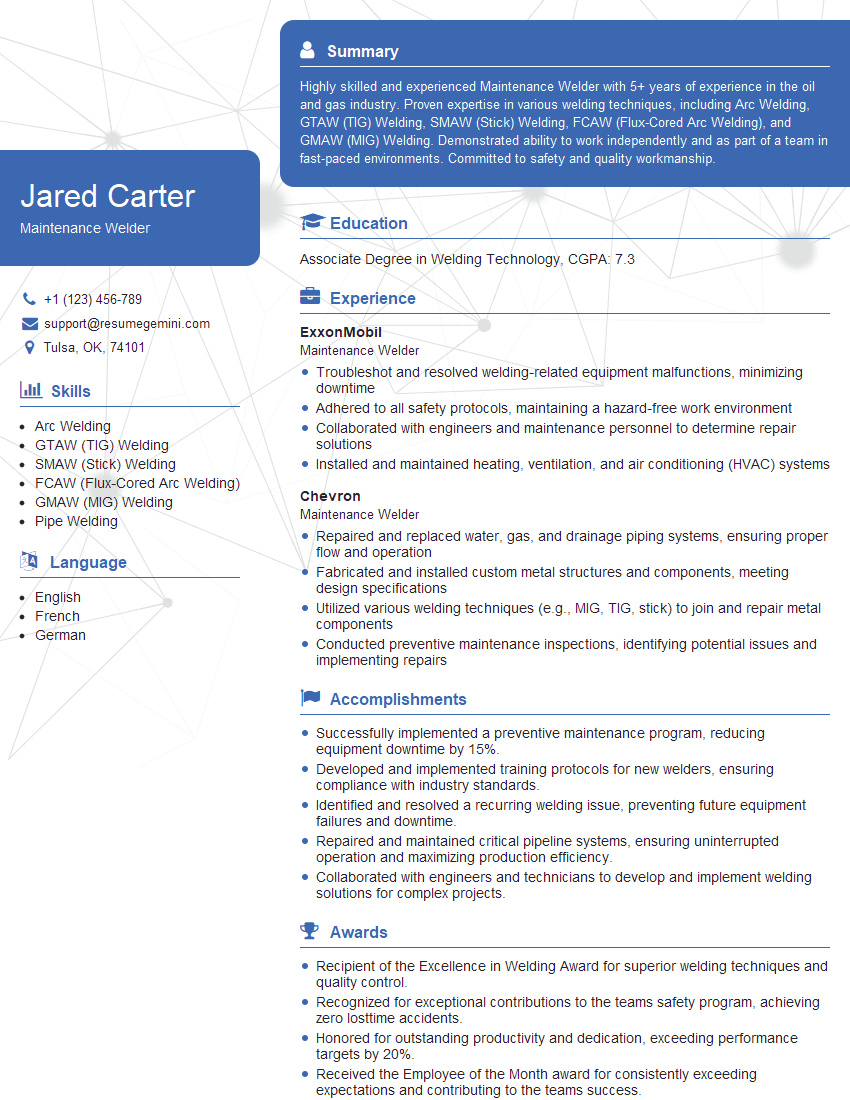
Maintenance Welder Resume Sample
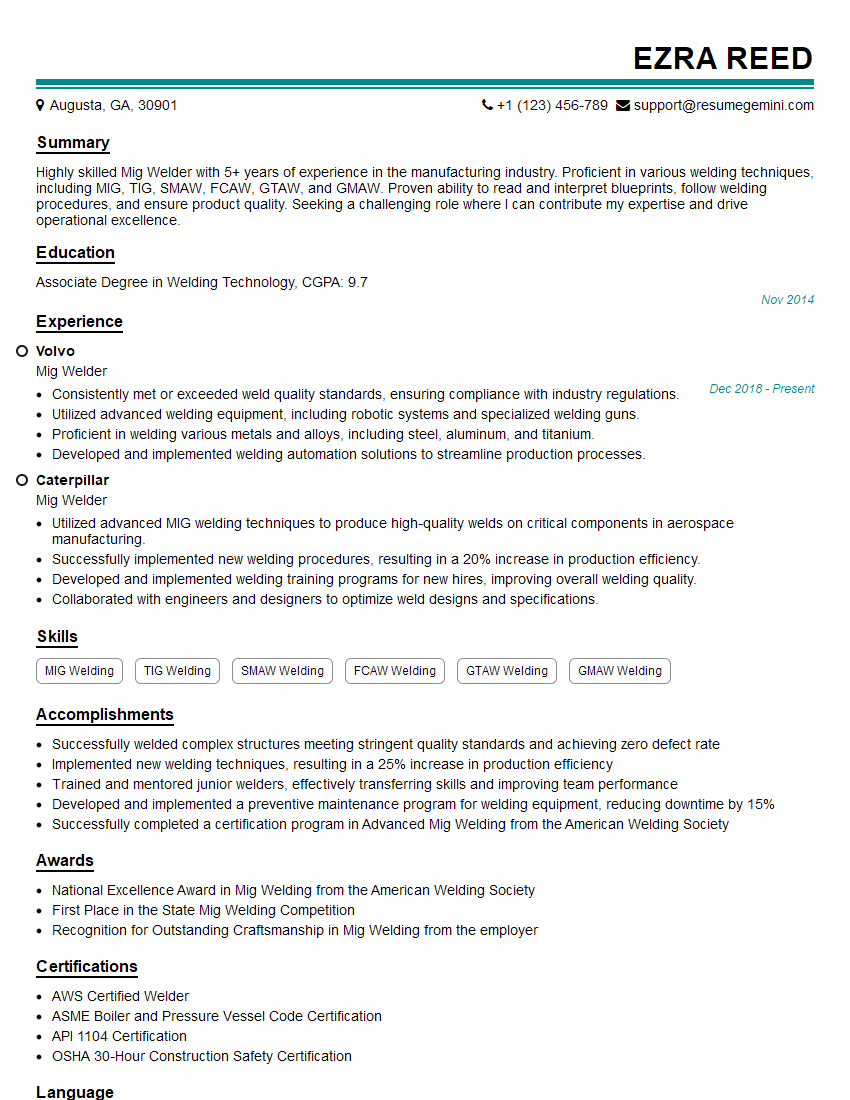
Mig Welder Resume Sample
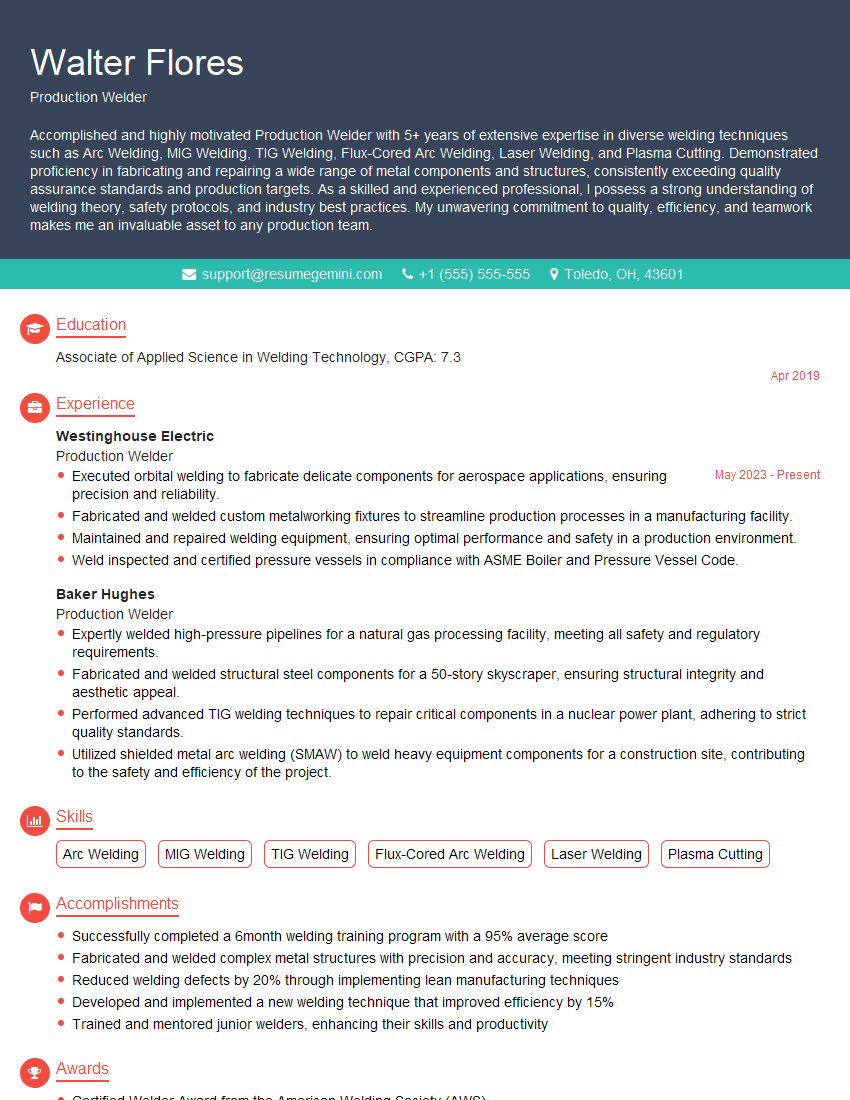
Production Welder Resume Sample

Structural Welder Resume Sample
Explore more articles
Users Rating of Our Blogs
Share Your Experience
We value your feedback! Please rate our content and share your thoughts (optional).
What Readers Say About Our Blog
Really detailed insights and content, thank you for writing this detailed article.
IT gave me an insight and words to use and be able to think of examples