Interviews are opportunities to demonstrate your expertise, and this guide is here to help you shine. Explore the essential Vegetation Mapping interview questions that employers frequently ask, paired with strategies for crafting responses that set you apart from the competition.
Questions Asked in Vegetation Mapping Interview
Q 1. Describe your experience with different vegetation mapping techniques.
My experience in vegetation mapping encompasses a wide range of techniques, from traditional field surveys to advanced remote sensing methods. I’ve extensively used field sampling techniques, including quadrat sampling and line transects, to collect detailed data on species composition, density, and cover. This ground truthing is crucial for validating data from other sources. I am also proficient in using remote sensing data, primarily from aerial photography and satellite imagery. This involves analyzing multispectral and hyperspectral data to identify and classify different vegetation types. For instance, I’ve worked with Landsat and Sentinel imagery to map forest cover across large areas. Additionally, I’ve utilized LiDAR (Light Detection and Ranging) data to create detailed 3D models of vegetation structure, essential for assessing forest biomass and canopy height. Finally, I’ve explored the use of unmanned aerial vehicles (UAVs) or drones equipped with high-resolution cameras and multispectral sensors for obtaining very detailed, localized vegetation maps. Each technique offers unique advantages depending on the scale and objectives of the project.
- Field Surveys: Detailed, accurate for small areas, labor-intensive.
- Aerial Photography: Good spatial resolution, cost-effective for large areas, weather dependent.
- Satellite Imagery: Large area coverage, readily available, lower spatial resolution than aerial photography.
- LiDAR: Detailed 3D information, excellent for biomass estimation, can be expensive.
- UAVs: High-resolution imagery, flexible deployment, suitable for specific areas.
Q 2. What are the advantages and disadvantages of using aerial photography for vegetation mapping?
Aerial photography offers several advantages for vegetation mapping. Its high spatial resolution provides detailed information about vegetation types and their distribution, particularly useful for identifying smaller patches of vegetation or individual tree species. The imagery provides a synoptic view, allowing for the mapping of large areas efficiently. Furthermore, historical aerial photos can reveal changes in vegetation patterns over time, enabling the study of forest dynamics or the impact of land-use changes. However, drawbacks include the cost of acquisition and processing, which can be substantial, especially for large-scale projects. Aerial photography is also susceptible to weather conditions; cloud cover can hinder data acquisition and necessitate rescheduling flights. The quality of the imagery can be affected by atmospheric conditions and the time of year, influencing color balance and interpretation.
Q 3. Explain your proficiency with GIS software for vegetation mapping (e.g., ArcGIS, QGIS).
I’m highly proficient in using GIS software, including ArcGIS and QGIS, for vegetation mapping. My expertise ranges from data preprocessing and georeferencing to image classification, spatial analysis, and map production. In ArcGIS, I regularly employ tools like the Spatial Analyst extension for tasks like NDVI calculation and image classification. I’m also comfortable using geoprocessing tools for data manipulation and analysis. In QGIS, I utilize its open-source capabilities for similar tasks, taking advantage of its plugin ecosystem for specialized functionalities. I can efficiently integrate various data sources, such as satellite imagery, LiDAR data, and field survey data, into a GIS environment to create comprehensive and accurate vegetation maps. For instance, I’ve used ArcGIS’s supervised classification tools to map different forest types based on spectral signatures extracted from satellite images and ground truth data. Example: In ArcGIS, I use the 'Maximum Likelihood' classifier to classify satellite imagery based on training data collected in the field.
Q 4. How do you handle inconsistencies or errors in vegetation data?
Handling inconsistencies and errors in vegetation data requires a systematic approach. First, I thoroughly examine the data for potential sources of error, such as inaccuracies in GPS coordinates, misidentification of species during field surveys, or inconsistencies in image classification. I use visual inspection and statistical analysis (e.g., exploring histograms and frequency distributions of data values) to identify outliers or anomalous values. Then, I employ various techniques to address these issues. This may involve data editing and correction in the GIS software, using quality control checks built into image processing workflows or applying spatial filtering techniques to smooth noisy data. If errors are spatially clustered, they might be addressed through local corrections, while widespread errors necessitate a re-evaluation of the data acquisition or processing methods. For example, if field data consistently differs from remote sensing data in a specific area, I would revisit that area for a more thorough ground check. Finally, I document all corrections and adjustments made to maintain transparency and traceability. This ensures any uncertainties in the data are acknowledged and accounted for.
Q 5. What are the common challenges encountered during field data collection for vegetation mapping?
Field data collection for vegetation mapping presents several challenges. Accessibility to remote or difficult terrain can significantly limit data collection efforts. Weather conditions, such as heavy rainfall or extreme temperatures, can disrupt fieldwork and impact the quality of data collected. The identification of plant species can be challenging, particularly for species with similar morphological characteristics or in areas with high species diversity. Accurate GPS measurements may be difficult to obtain in dense vegetation or under a dense canopy. There’s also the potential for observer bias or errors during species identification and data recording, which can introduce inaccuracies into the dataset. Finally, logistical challenges, such as transportation to remote sites and the availability of trained personnel, can impact project timelines and cost.
Q 6. How do you ensure the accuracy and precision of your vegetation maps?
Ensuring accuracy and precision in vegetation maps is paramount. This involves a multi-step process. Firstly, meticulous planning is crucial, including the selection of appropriate mapping techniques, based on the project objectives and available resources. A well-designed sampling strategy is critical to ensure representative data collection. I use ground truthing (field verification) to validate data from remote sensing sources, ensuring the accuracy of the classified vegetation types. I apply quality control checks at each stage of the data processing workflow, from data cleaning and georeferencing to image classification and map production. I use statistical methods to assess the accuracy of the vegetation maps through metrics like overall accuracy and kappa coefficient. Furthermore, comparing the results with existing data sets or maps from other sources serves as an additional accuracy assessment. Finally, rigorous documentation of all methodologies and potential sources of error is crucial for transparency and helps others understand the map’s limitations and uncertainties.
Q 7. Explain your understanding of different vegetation indices (e.g., NDVI, EVI).
Vegetation indices are mathematical combinations of spectral bands from multispectral or hyperspectral imagery that help quantify vegetation properties. The Normalized Difference Vegetation Index (NDVI), calculated as (NIR - Red) / (NIR + Red), where NIR is near-infrared reflectance and Red is red reflectance, is widely used as a proxy for vegetation greenness and biomass. Higher NDVI values typically indicate healthier and more vigorous vegetation. The Enhanced Vegetation Index (EVI), EVI = G × [(NIR – Red) / (NIR + C1 × Red – C2 × Blue + L)], is an improved version of NDVI, designed to minimize saturation in dense vegetation and to account for atmospheric effects. It incorporates a blue band and soil adjustment parameters (C1, C2, L) to improve sensitivity in high biomass areas. Both indices are useful for monitoring vegetation health, detecting stress, and assessing changes in vegetation cover over time. For example, NDVI time series can reveal the seasonal growth patterns of vegetation or detect the impact of drought. Choosing the appropriate index depends on the type of vegetation, the specific application, and the characteristics of the available imagery.
Q 8. Describe your experience with image classification techniques for vegetation mapping.
Image classification for vegetation mapping involves using remotely sensed data like satellite imagery or aerial photographs to categorize different vegetation types. Think of it like a sophisticated sorting process where we teach a computer to recognize the unique spectral signatures of different plants. My experience encompasses a wide range of techniques, including:
- Supervised Classification: This is where I train a classifier using labeled samples of known vegetation types. For instance, I’d manually identify areas of coniferous forest, deciduous forest, and grassland in a satellite image, then use these labeled data points to train an algorithm (like Support Vector Machines or Random Forest) to classify the rest of the image. This method requires accurate ground truthing.
- Unsupervised Classification: This involves clustering pixels based on their spectral similarity without prior labeling. Algorithms like K-means clustering group pixels with similar spectral characteristics, allowing us to identify potential vegetation types which we then interpret based on spectral profiles and other contextual data.
- Object-Based Image Analysis (OBIA): OBIA takes a more holistic approach, classifying segments or objects within the image rather than individual pixels. This allows for incorporating spatial information and contextual knowledge, improving classification accuracy, especially in heterogeneous landscapes. For example, identifying individual tree crowns in a forest, then classifying them based on shape, size, and spectral characteristics.
- Deep Learning: Convolutional Neural Networks (CNNs) are increasingly used for vegetation mapping, capable of learning complex patterns and achieving high accuracy. These models require substantial computational resources and large datasets for optimal performance. I’ve utilized transfer learning to leverage pre-trained models on large image datasets, adapting them to specific vegetation mapping tasks.
I’ve applied these techniques to various projects, including mapping forest types in mountainous terrain and assessing the extent of invasive species using high-resolution drone imagery. The selection of the most suitable technique depends greatly on factors such as data availability, computational resources, required accuracy, and the complexity of the landscape.
Q 9. How do you integrate different data sources (e.g., LiDAR, satellite imagery) for vegetation mapping?
Integrating multiple data sources is crucial for accurate and comprehensive vegetation mapping, offering a synergistic effect where each data type complements the limitations of others. For example, combining LiDAR and satellite imagery allows us to capture both the vertical structure (3D) and spectral properties (2D) of vegetation.
- LiDAR (Light Detection and Ranging): Provides highly accurate elevation data, enabling the derivation of canopy height, density, and other structural metrics. This is vital for distinguishing between different forest types, for example, differentiating between a dense, tall forest and a sparse, low forest that might look similar in satellite imagery alone.
- Satellite Imagery: Offers wide-area coverage and multispectral or hyperspectral data, capturing detailed information on vegetation spectral signatures. This is useful for classifying vegetation types based on their unique spectral reflectance.
- Aerial Photography: High-resolution images, especially those captured using drones, can provide very fine-scale details that are helpful in mapping smaller, fragmented vegetation patches or identifying individual plant species.
The integration process often involves georeferencing all data sources to a common coordinate system and then using data fusion techniques. For example, I might use LiDAR-derived canopy height as an additional input feature in a satellite image classification algorithm, improving overall classification accuracy. Alternatively, I can create a composite dataset by combining different layers (e.g., satellite image bands, LiDAR-derived height, slope) and employing techniques such as principal component analysis to reduce data dimensionality before conducting classification.
Q 10. How do you assess the spatial and temporal resolution of remotely sensed data for vegetation mapping?
Spatial and temporal resolution are critical considerations when selecting remotely sensed data for vegetation mapping. Spatial resolution refers to the size of the smallest discernible unit on the ground (pixel size), while temporal resolution refers to the frequency of data acquisition (how often images are collected).
- Spatial Resolution: High spatial resolution (e.g., less than 1 meter) is necessary for detailed mapping at the individual plant or small patch level, providing information about species composition and fine-scale structure. Lower resolution data (e.g., 30 meters) provides a broader overview and is suitable for regional-scale mapping, but may not capture details of smaller vegetation types. The choice depends on the mapping scale and objective. For example, mapping individual trees in an orchard requires very high spatial resolution, whereas mapping broad forest types across a region might necessitate a lower spatial resolution.
- Temporal Resolution: High temporal resolution (e.g., daily or weekly) is important for monitoring dynamic vegetation processes, such as seasonal changes or the rapid spread of a wildfire. Low temporal resolution (e.g., monthly or annually) is adequate for mapping vegetation types that show slower changes over time. The required temporal resolution depends on the temporal dynamics of the vegetation being mapped and the specific research question.
Careful consideration of both spatial and temporal resolutions is essential for obtaining accurate and relevant information for the intended application. A mismatch can lead to inaccurate results. For example, using low-resolution imagery to map small vegetation patches can lead to underestimation of their extent.
Q 11. What are the key considerations for selecting appropriate vegetation mapping scales?
Selecting appropriate vegetation mapping scales is crucial, as it dictates the level of detail and the extent of the area to be mapped. The scale choice is influenced by the study’s objectives, available resources, and the level of detail required. Common scales include:
- Large Scale (1:10,000 to 1:50,000): Provides very fine-scale details for individual plant species identification or small-scale habitat mapping. This requires high-resolution imagery, is more time-consuming, and may be only feasible for limited areas.
- Medium Scale (1:50,000 to 1:250,000): Suitable for mapping vegetation communities or forest types over larger areas, balancing detail and spatial extent. This scale is often used in ecological surveys and resource management planning.
- Small Scale (1:250,000 to 1:1,000,000): Used for broad-scale vegetation mapping, focusing on major vegetation zones or biomes, often requiring coarse-resolution satellite imagery. This is suitable for regional or national-level assessments.
Key considerations include the available data resolution, the spatial heterogeneity of the vegetation, the budget and time constraints, and the specific questions the vegetation map needs to answer. For instance, mapping invasive species would require a larger scale compared to mapping broad forest types across a large region.
Q 12. Explain your knowledge of different vegetation classification systems (e.g., US National Vegetation Classification).
Various vegetation classification systems exist, each with its own hierarchy and classification criteria. The US National Vegetation Classification (NVC) is a widely used hierarchical system in the United States, organizing vegetation based on ecological and structural characteristics. It’s a nested system, progressing from general classes to increasingly specific subclasses.
Other notable systems include:
- The International Vegetation Classification (IVC): Aims for global consistency in classifying vegetation types.
- UNESCO World Map of Biomes: A global-scale classification based primarily on climate and dominant vegetation types.
- Local or regional classification systems: Many countries or regions develop their own tailored systems based on specific ecological features and vegetation patterns.
Understanding these different systems is crucial, as the choice of classification system influences the interpretation and comparability of vegetation maps. My experience involves adapting and applying these systems to specific project needs, often requiring customization based on the unique characteristics of the region and the available data. For example, in a particular project focusing on wetland habitats, I may need to incorporate specific wetland classes from a regional classification scheme which is more detailed than the overarching NVC.
Q 13. How do you interpret and analyze vegetation maps to support environmental management decisions?
Vegetation maps are valuable tools for environmental management decisions. Their interpretation involves analyzing spatial patterns, assessing vegetation change over time, and linking vegetation characteristics to environmental factors.
- Habitat Assessment and Conservation Planning: Vegetation maps identify areas of high biodiversity or unique habitats, informing conservation priorities and the design of protected areas.
- Forest Management: Maps can delineate different forest types, enabling sustainable harvesting practices, predicting forest fire risk, and monitoring forest health over time.
- Land Use Planning and Development: Maps identify areas suitable for different land uses, minimizing conflicts and ensuring sustainable development practices.
- Climate Change Impacts Assessment: By monitoring changes in vegetation extent and type over time, we can assess the impact of climate change on ecosystems and implement adaptation strategies.
- Invasive Species Management: Maps can track the spread of invasive species, allowing for targeted control efforts and minimizing their impact.
The analysis process involves using GIS software and statistical methods to extract information from the maps, overlaying them with other datasets (e.g., soil maps, climate data), and creating visualizations to communicate the results effectively to stakeholders. For example, by overlaying a vegetation map with a soil map, I can identify vegetation types associated with particular soil types and assess their susceptibility to erosion or other environmental stressors.
Q 14. Describe your experience with creating and managing geodatabases for vegetation data.
Geodatabases are crucial for storing, managing, and analyzing vegetation data effectively. My experience includes designing, populating, and maintaining geodatabases using ArcGIS and other GIS software. A well-structured geodatabase ensures data integrity, facilitates data sharing, and enhances analysis capabilities.
- Data Modeling: I develop robust data models to represent vegetation attributes such as species composition, canopy cover, biomass, and structural characteristics. This typically involves creating feature classes (points, lines, polygons) to represent different vegetation elements.
- Data Import and Conversion: I import data from various sources (satellite imagery, LiDAR, field surveys) into the geodatabase, ensuring data consistency and accuracy. This may involve format conversions and data transformations.
- Data Quality Control: Implementing procedures to ensure data accuracy and consistency within the geodatabase is critical. This involves using various tools to detect and correct errors and inconsistencies.
- Metadata Management: I create comprehensive metadata to document the data’s origin, processing steps, accuracy, and limitations. This ensures data transparency and facilitates its reuse by others.
- Data Sharing and Collaboration: Geodatabases facilitate data sharing and collaboration among various stakeholders through platforms like ArcGIS Online or other collaborative data management systems.
For example, in a large-scale vegetation mapping project, I would create a geodatabase containing multiple feature classes (e.g., vegetation polygons, points representing sample plots, lines representing rivers) and related tables to store attribute data. This structure enables efficient data management and analysis, facilitating the creation of detailed reports, interactive maps, and models to support environmental decision-making.
Q 15. What are the ethical considerations related to vegetation mapping and data management?
Ethical considerations in vegetation mapping are crucial for ensuring responsible data collection and use. These considerations span data ownership and access, the potential for bias in data interpretation, and the environmental impact of fieldwork.
- Data Ownership and Access: We must always respect indigenous knowledge and land rights. For example, before mapping vegetation on a tribal reserve, obtaining informed consent and collaborating with the community is paramount. Free, open-source data sharing is encouraged whenever possible, but respecting privacy concerns and potential misuse of data are vital. Data might contain sensitive information about locations of rare species which could lead to poaching or habitat destruction if not carefully managed.
- Bias in Data Interpretation: Our interpretations shouldn’t be skewed by personal biases or funding agendas. Transparency in methodology, data processing, and analysis is vital to ensuring objectivity and building public trust. For instance, selecting a sampling method that systematically misses certain vegetation types due to logistical convenience leads to biased results and ultimately misleading maps.
- Environmental Impact of Fieldwork: Minimizing the environmental footprint of field data collection is vital. This includes using sustainable transportation, following responsible waste management practices, and avoiding disturbance of sensitive habitats. For example, choosing remote sensing techniques over extensive ground truthing whenever possible reduces the physical impact on the environment.
Career Expert Tips:
- Ace those interviews! Prepare effectively by reviewing the Top 50 Most Common Interview Questions on ResumeGemini.
- Navigate your job search with confidence! Explore a wide range of Career Tips on ResumeGemini. Learn about common challenges and recommendations to overcome them.
- Craft the perfect resume! Master the Art of Resume Writing with ResumeGemini’s guide. Showcase your unique qualifications and achievements effectively.
- Don’t miss out on holiday savings! Build your dream resume with ResumeGemini’s ATS optimized templates.
Q 16. Explain your experience using statistical analysis to interpret vegetation data.
Statistical analysis is fundamental to interpreting vegetation data. I extensively use techniques like regression analysis to model relationships between vegetation characteristics (e.g., species richness, biomass) and environmental variables (e.g., elevation, soil moisture). Spatial statistics, such as geostatistics, are essential for understanding spatial patterns in vegetation and making accurate predictions across the study area.
For example, in a recent project analyzing forest cover change, I used time-series analysis of satellite imagery combined with linear regression to predict deforestation rates based on factors like proximity to roads and human settlements. This analysis enabled us to identify areas at high risk of deforestation and inform conservation efforts.
I’m also proficient in multivariate analyses, such as Principal Component Analysis (PCA), to reduce the dimensionality of large datasets and identify key variables driving vegetation patterns. This is particularly helpful when dealing with spectral data from remote sensing where many spectral bands can be highly correlated.
Q 17. How do you validate the accuracy of your vegetation maps?
Validating the accuracy of vegetation maps is crucial for ensuring their reliability. I employ a multi-step approach combining field surveys, independent data sources, and error analysis techniques.
- Ground Truthing: This involves collecting field data at randomly selected locations across the study area to compare with map classifications. We use GPS to record the location of plots and conduct detailed vegetation surveys to assess species composition, cover, and other relevant characteristics. Accuracy assessment is then performed by comparing the field observations to the mapped vegetation types.
- Independent Data Sources: I use independent datasets, such as aerial photography or previously collected vegetation maps, to compare and validate my findings. This helps assess consistency and identify potential discrepancies. For example, comparing a newly created map with an older, verified map could highlight any significant changes in vegetation cover over time.
- Error Matrix and Accuracy Metrics: Quantitative error assessment is done through creating a confusion matrix, calculating overall accuracy, producer’s accuracy (correctly classifying a specific class), user’s accuracy (correctly identifying mapped area), and kappa coefficient, which accounts for chance agreement.
Q 18. How do you communicate complex vegetation mapping information to non-technical audiences?
Communicating complex vegetation mapping information to non-technical audiences requires clear and concise visualization and storytelling. I leverage a variety of techniques to make the information accessible and engaging.
- Visualizations: Instead of relying on technical jargon and dense tables, I use maps, charts, and infographics to illustrate key findings. For example, a simple choropleth map showing the distribution of different vegetation types is more easily understood than a complex table of vegetation indices.
- Storytelling: I structure my presentations around a narrative, focusing on the main message and its implications. Using real-world examples, analogies, and case studies makes the information relatable and memorable. For instance, instead of just presenting deforestation rates, I explain the consequences for local communities and the environment in a compelling way.
- Interactive Tools: Web-based mapping applications and interactive dashboards allow non-technical users to explore the data themselves. These tools offer a user-friendly interface and provide an engaging way to understand the information.
Q 19. Describe your experience with different data formats used in vegetation mapping (e.g., shapefiles, rasters).
My experience encompasses a wide range of data formats used in vegetation mapping. I’m proficient in handling both raster and vector data.
- Raster Data: I frequently work with satellite imagery (e.g., Landsat, Sentinel) and aerial photography, which are stored as raster datasets. These data are essential for large-scale vegetation mapping. Software such as ArcGIS and QGIS allow for efficient processing and analysis of raster data, including image classification, change detection, and vegetation index calculations. Data formats commonly used include GeoTIFF and ERDAS IMAGINE.
- Vector Data: Vector data, including shapefiles, are used to represent spatial features like polygons of different vegetation types, points representing sample locations, and lines representing rivers or roads. Shapefiles are readily used for storing and sharing spatial data among various GIS software. Other vector formats like GeoJSON are increasingly utilized for web mapping applications.
Understanding the strengths and limitations of each format is key. For instance, raster data is great for continuous data like elevation or spectral reflectance, while vector data is better for discrete features like individual trees or land parcels. I often combine both formats to create comprehensive vegetation maps.
Q 20. What are your experiences with GPS and other field data collection tools?
GPS and other field data collection tools are indispensable for accurate and efficient vegetation mapping. My experience includes extensive use of:
- GPS Receivers: I use handheld GPS receivers to record precise locations of vegetation plots, transects, and other points of interest. Differential GPS (DGPS) or Real-Time Kinematic (RTK) GPS provides higher accuracy for more precise location data crucial for detailed vegetation mapping.
- Data Loggers: These devices are often integrated with environmental sensors to collect additional data such as soil moisture, temperature, and light levels. This environmental data can be used in conjunction with vegetation data to better understand vegetation patterns and their response to environmental variables.
- Mobile Apps: Several mobile apps facilitate data collection in the field, improving efficiency and accuracy. They often allow for data entry, image capture, and GPS location tagging, streamlining the field workflow.
- Digital Cameras and Drones: These technologies allow for high-resolution imagery acquisition that provides important data for generating vegetation maps. Drone technology allows targeted and efficient data acquisition, especially in challenging terrains.
Data collected using these technologies is carefully managed and processed to ensure data integrity and compatibility with GIS software.
Q 21. Explain your knowledge of various vegetation types and their characteristics.
My knowledge of vegetation types and their characteristics is broad, encompassing various biomes and ecosystems. I am familiar with classifying vegetation using various systems like the widely used UNESCO system and the more regionally-specific classifications.
For example, I understand the differences between forest types (e.g., temperate deciduous forest, boreal forest, tropical rainforest), grassland types (e.g., savanna, prairie, steppe), shrublands (e.g., chaparral, heath), and wetlands (e.g., swamps, marshes, bogs). Within each type, I can distinguish sub-types based on species composition, structure, and other characteristics.
My understanding extends to the ecological processes that shape vegetation patterns, such as fire regimes, climate, soil conditions, and human land use. This holistic perspective is crucial for accurate vegetation mapping and informed decision-making in conservation and resource management.
For instance, I can recognize the distinctive features of mangrove forests, including their salt tolerance and unique root systems, and understand their crucial role in coastal protection and biodiversity. Similarly, my knowledge extends to identifying different types of alpine vegetation, understanding their adaptations to high-altitude environments and their vulnerability to climate change.
Q 22. How do you address issues related to cloud cover in satellite imagery for vegetation mapping?
Cloud cover is a major challenge in satellite-based vegetation mapping because it obscures the Earth’s surface, preventing the acquisition of useful data. Addressing this involves a multi-pronged approach.
- Temporal Data Acquisition: We often utilize time-series imagery from multiple satellite acquisitions. If one image is heavily clouded, we can use cloud-free observations from other dates to fill in the gaps. This approach relies on the assumption that vegetation changes relatively slowly between image acquisitions, which isn’t always true, especially after events like wildfires or storms.
- Cloud Masking Techniques: Sophisticated algorithms, often integrated into GIS software, identify and mask cloud-covered areas. These algorithms analyze spectral signatures and identify pixels inconsistent with typical land surface reflectance, labeling them as cloud or cloud shadow. Common algorithms use thresholding on near-infrared bands. The effectiveness depends heavily on the quality and type of satellite imagery.
- Data Fusion: Combining data from multiple sources, such as Landsat, Sentinel, and even aerial photography, can help overcome cloud cover limitations. If one source has cloud cover in a specific area, another might provide clear data, allowing for a more complete picture.
- Cloud Removal Algorithms: Advanced techniques like ‘inpainting’ or ‘cloud filling’ methods use surrounding pixel data to estimate the reflectance in cloud-covered regions. However, this often adds some degree of uncertainty.
For instance, in a project mapping deforestation in the Amazon, we encountered persistent cloud cover. We overcame this by using a combination of Sentinel-2 images acquired over several months, cloud masking to eliminate heavily clouded images, and finally, employing a spatial interpolation technique to fill remaining small cloud gaps, ensuring the overall accuracy of the deforestation map.
Q 23. Describe your experience with vegetation change detection analysis.
Vegetation change detection is crucial for monitoring environmental changes like deforestation, desertification, and the effects of climate change. My experience encompasses several techniques:
- Image Differencing: A straightforward approach involves subtracting the spectral values of two images acquired at different times. Significant differences highlight areas of change, but it’s susceptible to noise and atmospheric effects. We often use band ratios to minimize these effects.
- Post-classification Comparison: This involves classifying both images separately and then comparing the resulting classification maps to identify areas of change in vegetation type or cover. This method provides more interpretable results but requires more processing time and careful classification accuracy.
- Change Vector Analysis (CVA): CVA analyzes the magnitude and direction of spectral changes over time using multi-temporal data. It’s useful for detecting gradual changes and is less affected by variations in atmospheric conditions. For instance, in a study monitoring grassland degradation, we used CVA to detect subtle changes in vegetation indices that other methods missed.
In a project assessing the impact of a wildfire, I utilized a combination of image differencing and post-classification comparison, integrating field data to validate the results. This provided valuable information for post-fire rehabilitation strategies, identifying areas that required immediate attention.
Q 24. What is your experience with using different projection systems in vegetation mapping?
Projection systems are fundamental in vegetation mapping because they define how the 3D Earth is represented on a 2D map. Incorrect projections can lead to significant distortions in distances, areas, and shapes, impacting the accuracy of vegetation maps.
- Geographic Coordinate Systems (GCS): These systems, like WGS84, use latitude and longitude to define locations on the Earth’s surface. They’re essential for referencing locations globally but aren’t suitable for direct area measurements.
- Projected Coordinate Systems (PCS): PCS transform the spherical Earth onto a flat surface using various mathematical projections. Each projection has strengths and weaknesses depending on the application and geographical extent. Common projections used in vegetation mapping include UTM (Universal Transverse Mercator) and Albers Equal-Area Conic.
Choosing the correct projection is critical. For example, mapping a large region like a state would require a projection like Albers Equal-Area Conic to minimize area distortions, while a smaller, more localized study might utilize UTM, which minimizes distortions in distance and shape. I’ve utilized various projection systems depending on the project requirements, and always ensure data transformation and reprojection are done with the utmost care to avoid introducing errors. My workflow often includes using a GIS software to reproject datasets and ensure seamless integration.
Q 25. How do you incorporate field observations into your vegetation maps?
Ground truthing, or field observations, are indispensable for validating and refining vegetation maps. They provide the ‘ground truth’ against which remotely sensed data is compared.
- Field Data Collection: This involves systematically collecting data on vegetation type, cover, height, and other relevant characteristics at specific locations. GPS coordinates are crucial for accurately linking the field observations to the satellite imagery.
- Accuracy Assessment: Field data is used to assess the accuracy of the vegetation map. This involves comparing the mapped vegetation types with the actual vegetation types observed in the field, calculating metrics like overall accuracy, producer’s accuracy, and user’s accuracy. This helps to identify areas where the map might be inaccurate and potentially necessitates refinements of the mapping methodology.
- Map Refinement: Discrepancies between field observations and the map can lead to corrections of the classification scheme or adjustments to the image processing parameters. For example, if the map misclassifies a particular vegetation type consistently, we might refine the spectral signatures used for classification.
During a recent mangrove mapping project, we conducted extensive field surveys to collect data on mangrove species and density. This allowed us to improve our classification accuracy and address inconsistencies found between our initial map and ground observations. The final map was significantly more accurate and reliable thanks to this crucial ground truthing step.
Q 26. Describe your experience with different types of vegetation monitoring programs.
My experience spans various vegetation monitoring programs, each with its unique objectives and methodologies:
- Forest Inventory and Analysis (FIA): These programs, often conducted at national or regional levels, aim to assess forest resources. They combine field measurements with remote sensing data for comprehensive forest characterization. I’ve worked with FIA data in several projects, utilizing their extensive datasets and methodologies for forest cover change analysis.
- National Land Cover Datasets (NLCD): These regularly updated datasets provide consistent land cover information across large regions. I’ve used NLCD data to assess long-term vegetation changes and their drivers in many studies. The datasets are widely available, which helps tremendously in larger-scale analyses.
- Species-Specific Monitoring Programs: These focused programs target specific vegetation types, such as endangered species or invasive plant species. They often involve specialized field surveys and high-resolution imagery to accurately monitor population dynamics and spatial distributions. For example, I participated in a project mapping invasive weeds using drone imagery and advanced image processing techniques.
Each program presented unique challenges and required adaptation of methodologies. For example, while NLCD data provides a broad overview, species-specific monitoring requires more detailed, high-resolution data and specialized analysis techniques to accurately map the target species.
Q 27. What are some common errors in vegetation mapping and how can they be avoided?
Several common errors can affect the accuracy of vegetation maps. Understanding these and implementing preventive measures is crucial:
- Incorrect Classification: This can stem from spectral confusion between vegetation types, inadequate training data, or poor classification algorithms. This can be mitigated by using robust classification algorithms, incorporating high-quality reference data, and carefully selecting appropriate spectral indices.
- Spatial Misregistration: If images from different sources or dates are not accurately aligned, this can lead to errors in change detection or vegetation boundaries. Rigorous georeferencing and image registration procedures are essential to address this.
- Atmospheric Effects: Atmospheric conditions like haze and clouds can affect spectral signatures, leading to inaccurate classification. Atmospheric correction techniques can mitigate these effects, but complete removal is challenging. This is often corrected through atmospheric modeling and correction tools.
- Scale Issues: The resolution of satellite imagery and the scale of the mapping project must be compatible. High-resolution data is needed for detailed mapping of small areas, while lower-resolution data might suffice for large-scale mapping but with reduced detail. Careful scale selection is critical and must reflect the needs and scope of the project.
For example, in a project mapping agricultural lands, we carefully addressed spatial misregistration using multiple control points and a robust co-registration algorithm. This ensured accurate identification of field boundaries and crop types, avoiding errors that could arise from misaligned imagery.
Q 28. How do you stay up-to-date with the latest advancements in vegetation mapping technologies?
Staying current in vegetation mapping requires continuous learning and engagement with the latest advancements. My approach is multi-faceted:
- Peer-Reviewed Literature: I regularly read journals such as Remote Sensing of Environment, International Journal of Applied Earth Observation and Geoinformation, and IEEE Transactions on Geoscience and Remote Sensing. Staying informed about new algorithms, sensors, and methodologies is crucial.
- Conferences and Workshops: Attending conferences and workshops allow me to network with other experts and learn about cutting-edge research. Engaging with presentations and poster sessions keeps me abreast of the newest techniques and applications.
- Online Courses and Webinars: Platforms like Coursera and edX offer valuable online courses on remote sensing and GIS, supplementing my knowledge and enhancing my technical skillset.
- Professional Networks: Participating in professional organizations, such as the American Society for Photogrammetry and Remote Sensing (ASPRS), provides access to resources, publications, and networking opportunities that keep me connected to the field.
By actively engaging in these activities, I am able to incorporate the latest technologies and approaches into my work, enhancing the accuracy, efficiency, and effectiveness of my vegetation mapping projects.
Key Topics to Learn for Vegetation Mapping Interview
- Remote Sensing Techniques: Understanding the principles behind aerial photography, satellite imagery (e.g., Landsat, Sentinel), and LiDAR for vegetation analysis. Practical application: Interpreting spectral signatures to identify different vegetation types.
- GIS and Spatial Analysis: Proficiency in using GIS software (e.g., ArcGIS, QGIS) for data processing, spatial analysis (e.g., classification, change detection), and map creation. Practical application: Creating thematic maps illustrating vegetation distribution and density.
- Vegetation Classification Systems: Familiarity with various vegetation classification systems (e.g., Whittaker’s classification, USDA Forest Service classifications). Practical application: Applying appropriate classification systems to your mapping project based on scale and objectives.
- Field Data Collection Methods: Experience with ground truthing techniques, including vegetation sampling protocols, GPS data collection, and species identification. Practical application: Using field data to validate remote sensing data and improve map accuracy.
- Data Accuracy and Error Analysis: Understanding sources of error in vegetation mapping and methods for assessing map accuracy (e.g., error matrices, producer’s and user’s accuracy). Practical application: Identifying and mitigating sources of error to improve the quality of your maps.
- Environmental Applications: Knowledge of how vegetation mapping contributes to various environmental applications such as forest management, biodiversity conservation, climate change modeling, and habitat restoration. Practical application: Explaining the use of your mapping skills to address real-world environmental challenges.
Next Steps
Mastering vegetation mapping opens doors to exciting and impactful careers in environmental science, conservation, and resource management. To maximize your job prospects, it’s crucial to present your skills effectively. Creating an ATS-friendly resume is essential for getting your application noticed by potential employers. We strongly encourage you to leverage ResumeGemini, a trusted resource for building professional resumes that stand out. ResumeGemini provides examples of resumes specifically tailored to Vegetation Mapping to help you craft a compelling application. Invest time in crafting a strong resume – it’s your first impression and a key step toward landing your dream job.
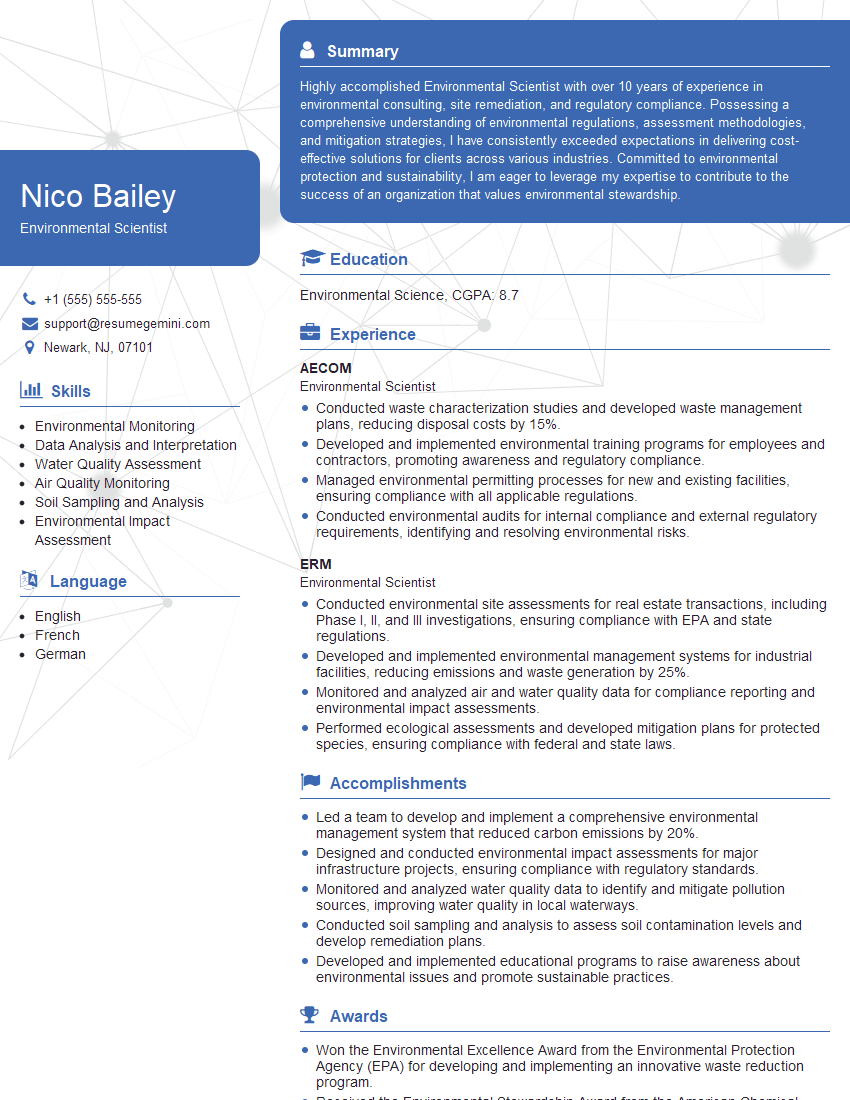
Environmental Scientist Resume Sample

Sustainability Consultant Resume Sample
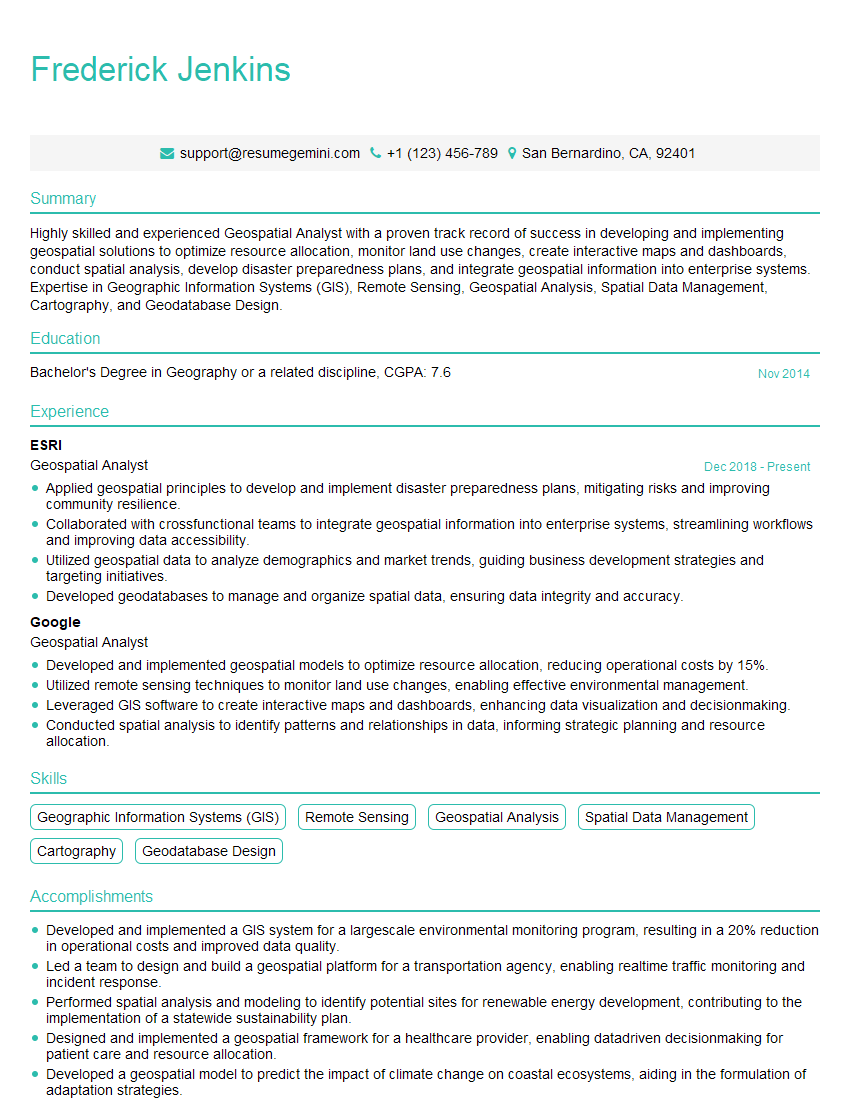
Geospatial Analyst Resume Sample
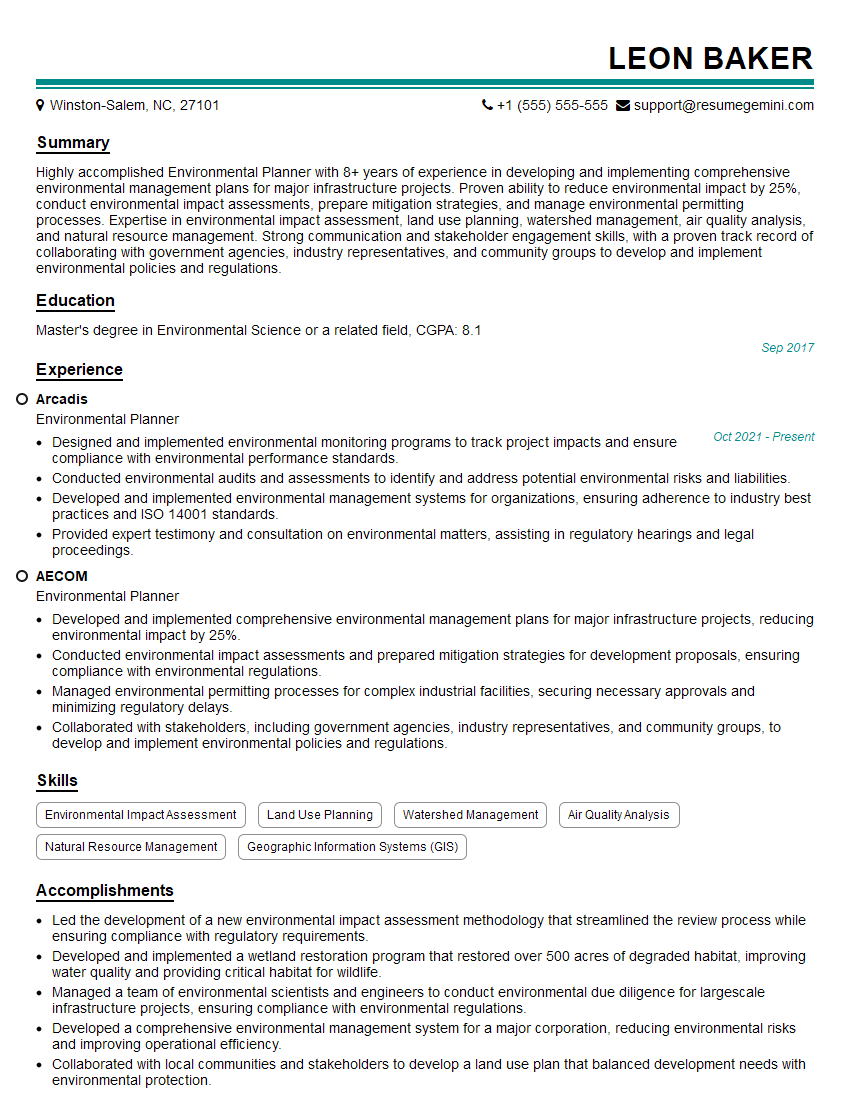
Environmental Planner Resume Sample
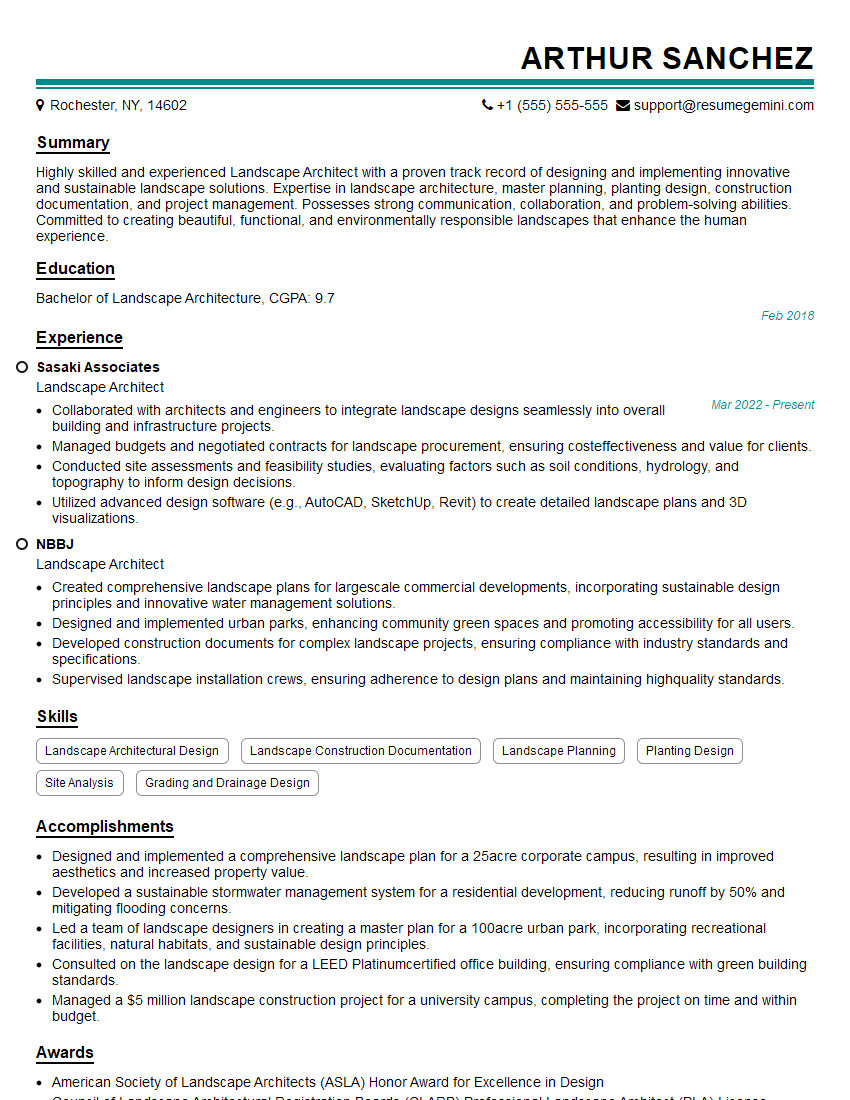
Landscape Architect Resume Sample

Remote Sensing Specialist Resume Sample
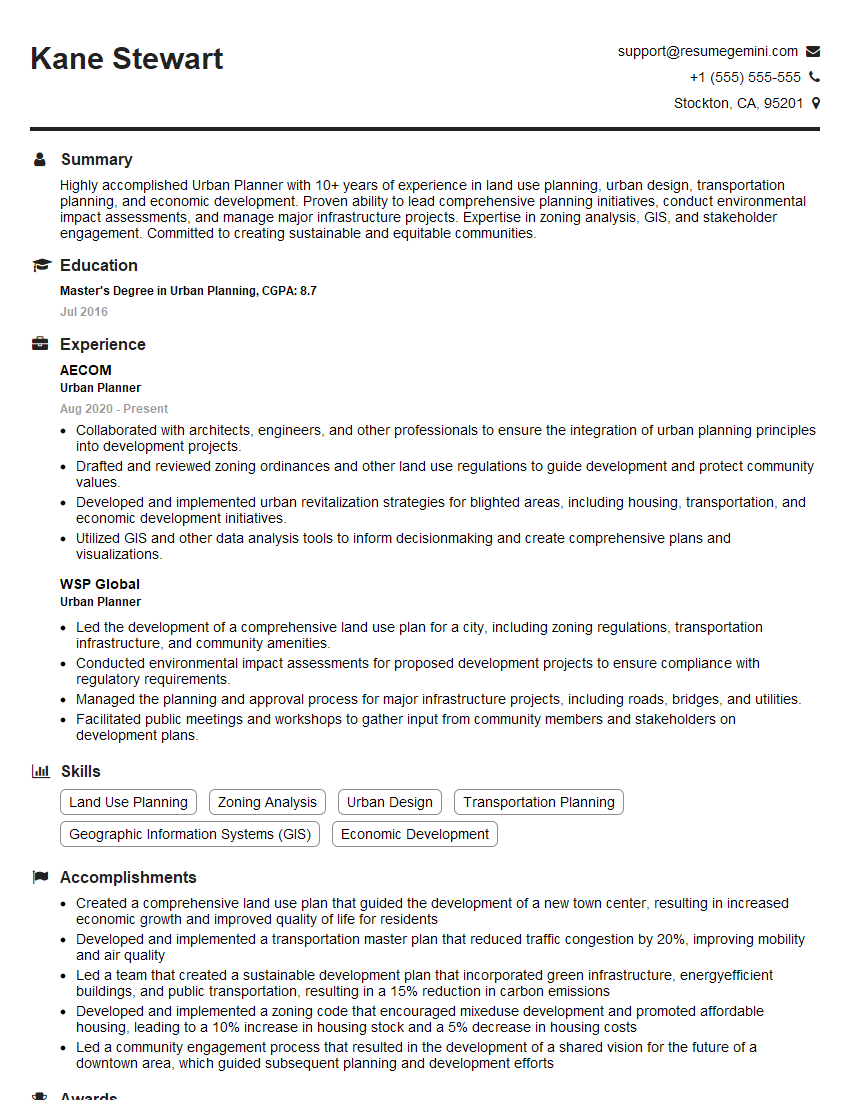
Urban Planner Resume Sample
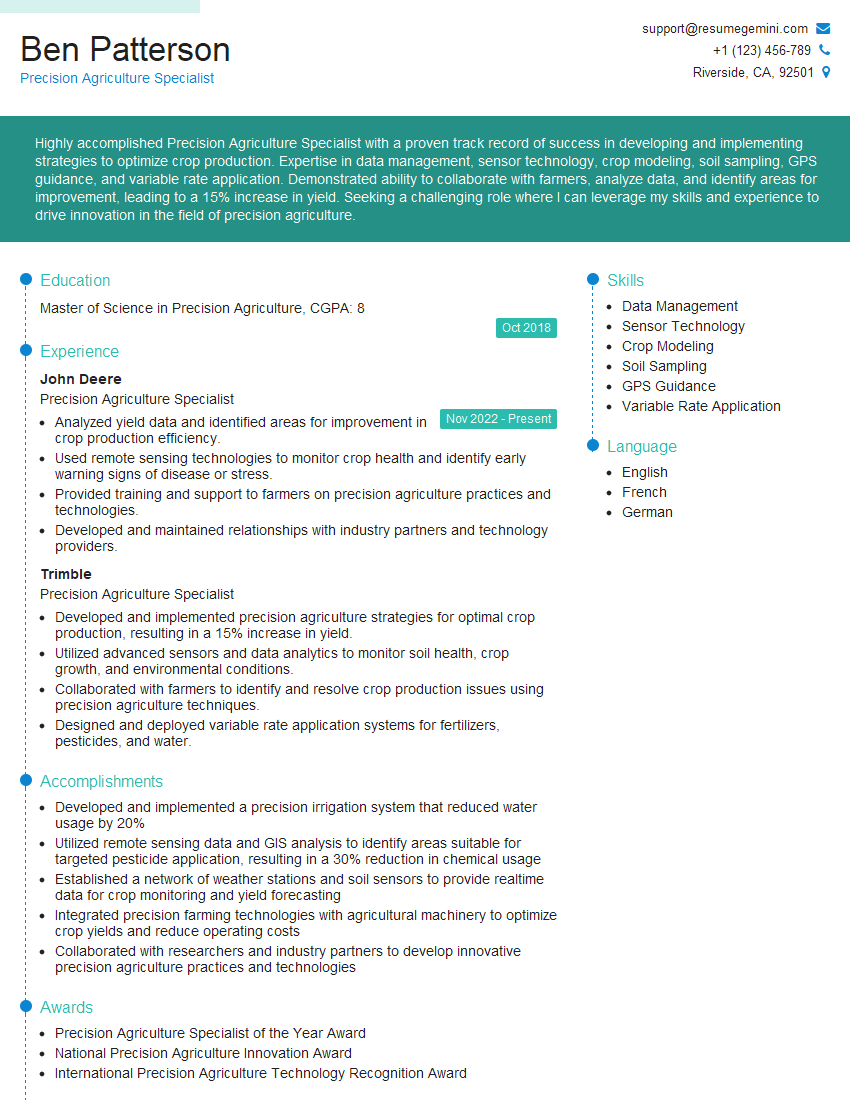
Precision Agriculture Specialist Resume Sample
Explore more articles
Users Rating of Our Blogs
Share Your Experience
We value your feedback! Please rate our content and share your thoughts (optional).
What Readers Say About Our Blog
Really detailed insights and content, thank you for writing this detailed article.
IT gave me an insight and words to use and be able to think of examples