The thought of an interview can be nerve-wracking, but the right preparation can make all the difference. Explore this comprehensive guide to Boiler Emergency Response interview questions and gain the confidence you need to showcase your abilities and secure the role.
Questions Asked in Boiler Emergency Response Interview
Q 1. Describe your experience handling boiler emergencies.
My experience in handling boiler emergencies spans over 15 years, encompassing various boiler types and sizes across industrial and commercial settings. I’ve responded to incidents ranging from minor malfunctions like low water levels and pressure drops to more critical situations involving burner failures and safety valve activations. I’ve consistently prioritized the safety of personnel and the prevention of property damage, following established emergency protocols meticulously. For instance, I once handled a situation where a sudden pressure drop in a large industrial boiler threatened production. By swiftly isolating the affected section and implementing emergency procedures, I prevented further damage and minimized downtime. My approach always emphasizes rapid assessment, safe isolation of the problem, and efficient repair or replacement.
In another instance, a faulty safety valve led to a steam leak. My quick response ensured the immediate shutdown and prevented escalation, highlighting the significance of proactive maintenance and prompt emergency response.
Q 2. What are the common causes of boiler explosions?
Boiler explosions are thankfully rare but devastating events, often stemming from a combination of factors rather than a single cause. The most common culprits include:
- Low Water Levels: Overheating due to insufficient water causes metal stress and potential rupture. Imagine a pot boiling dry—the same principle applies, only on a much larger and more dangerous scale.
- Excessive Pressure: A failure of the pressure relief system (safety valves) to function correctly can cause pressure to build beyond the boiler’s design limits, leading to catastrophic failure.
- Corrosion and Metal Fatigue: Over time, boilers can suffer from internal corrosion and metal fatigue, weakening their structural integrity. Regular inspections and maintenance are crucial in mitigating this risk.
- Fuel System Malfunctions: Improper fuel-air mixing or a sudden surge in fuel can lead to rapid pressure increases and explosions. Regular checks and maintenance of burner systems are key.
- Operator Error: Negligence or improper operation of the boiler, such as ignoring warning signs or failing to follow safety procedures, can significantly increase the risk of an explosion.
It’s crucial to remember that explosions often result from a confluence of these factors; rarely is it a single, isolated problem.
Q 3. Explain the procedure for shutting down a boiler in an emergency.
Shutting down a boiler in an emergency requires a calm and methodical approach. Safety is paramount. The exact procedure depends on the boiler’s type and the nature of the emergency, but general steps include:
- Isolate the Fuel Supply: Immediately cut off the fuel supply to the boiler to prevent further heating.
- Stop the Feedwater Supply: Stop the flow of water into the boiler to prevent further pressure build-up.
- Open Bleed Valves: Slowly open the bleed valves to release pressure safely. Never open them rapidly, as this could lead to water hammer.
- Activate Emergency Shutdown System (if applicable): If the boiler has an automated emergency shutdown system, activate it according to the manufacturer’s instructions.
- Ensure Proper Ventilation: Ensure adequate ventilation to prevent the accumulation of harmful gases.
- Evacuate Personnel: Ensure the area is evacuated once the emergency shutdown is complete, to minimize potential exposure to hot surfaces or hazardous conditions.
- Contact Maintenance Personnel: Inform maintenance personnel and relevant authorities about the incident.
Remember, prioritizing safety throughout this process is essential.
Q 4. How do you identify and address low water levels in a boiler?
Low water levels are a serious threat to boiler safety. They can lead to overheating, metal damage, and potential explosions. Detection and addressing low water levels involves:
- Regular Water Level Checks: Consistent visual checks using water gauges, complemented by automated level indicators, are essential. Treat low water levels as a serious emergency.
- Low Water Level Alarms: Install and regularly test low water level alarms to provide automatic warnings before dangerous levels are reached.
- Inspecting Feedwater System: Troubleshoot the feedwater system if low water levels persist. Check pumps, valves, and sensors for malfunctions. A blocked feedwater line can quickly lead to this issue.
- Emergency Water Supply: Having an emergency water supply available can quickly replenish low water levels in a crisis. For instance, a dedicated water tank and pump, or access to another water source, can be prepared as a backup measure.
The key is proactive monitoring and immediate action. Never operate a boiler with critically low water levels.
Q 5. What safety protocols do you follow during boiler maintenance?
Boiler maintenance is crucial for safety and efficiency. Key safety protocols include:
- Lockout/Tagout Procedures: Before any maintenance, completely isolate the boiler from power and fuel sources using proper lockout/tagout procedures. This prevents accidental energization and avoids injury to personnel.
- Personal Protective Equipment (PPE): Always wear appropriate PPE, including heat-resistant gloves, safety glasses, and hearing protection.
- Confined Space Entry Procedures: If maintenance involves entering confined spaces within the boiler, follow strict confined space entry procedures including atmospheric testing and having a standby person present.
- Hot Work Permits: Any hot work (welding, cutting) near the boiler requires a hot work permit and strict fire prevention measures.
- Regular Inspections: Regularly inspect all components (pressure vessels, valves, piping, etc.) for wear, tear, and corrosion.
- Documentation: Maintain comprehensive records of inspections, maintenance activities, and repairs.
Following these protocols minimizes risks and ensures the safe and efficient operation of the boiler.
Q 6. How do you diagnose and repair a boiler pressure drop?
A boiler pressure drop can indicate a serious problem. Diagnosis involves systematically checking potential causes:
- Inspect Pressure Gauges and Safety Valves: Verify the accuracy of pressure gauges and check safety valves for proper operation and leaks. A faulty gauge will give a misleading reading.
- Examine Pipes and Fittings for Leaks: Carefully check all pipes, fittings, and connections for any leaks. Leaks can cause significant pressure loss and should be addressed immediately.
- Check for Steam Leaks: Inspect steam lines and valves for leaks. Steam leaks can lead to pressure loss and reduced efficiency.
- Verify Feedwater Pump Function: Ensure the feedwater pump is functioning correctly to maintain water levels and pressure. Low water levels can also lead to pressure drops.
- Assess Boiler Water Chemistry: Improper boiler water chemistry can lead to scale buildup and reduced efficiency, ultimately affecting pressure. Testing helps in identifying chemical imbalances.
Repair depends on the identified cause. Leaks require repair or replacement of the affected components. Feedwater pump issues need maintenance or repair, and chemical imbalances must be corrected using appropriate treatments.
Q 7. What are the different types of boiler safety valves and their functions?
Various safety valves are crucial for preventing excessive pressure buildup in boilers. Some common types include:
- Spring-Loaded Safety Valves: These are the most common type, using a spring to hold a valve disc closed until a preset pressure is exceeded. Once that pressure is reached, the valve opens automatically and releases steam to prevent overpressure.
- Weight-Loaded Safety Valves: These valves use weights to maintain pressure, often found in older boiler systems. They are less precise and are being replaced by spring-loaded valves in newer systems.
- Pilot-Operated Safety Valves: These valves use a pilot valve to control the opening and closing of the main valve, offering finer pressure control and quicker response times.
- Dual-Pressure Safety Valves: These are designed with two pressure settings to protect the boiler during both normal operation and during emergencies. They offer additional layers of protection.
Each valve type has a specific pressure setting determined by the boiler’s design and operational requirements. Regular inspection and testing are vital to ensure they function correctly and safely relieve excess pressure when needed.
Q 8. Explain the importance of regular boiler inspections and testing.
Regular boiler inspections and testing are paramount for ensuring safe and efficient operation, preventing costly breakdowns, and extending the boiler’s lifespan. Think of it like a regular health checkup for your boiler – catching small issues early prevents them from becoming major problems.
- Safety: Inspections identify potential hazards like leaks, corrosion, or faulty safety devices, preventing accidents and ensuring compliance with safety regulations.
- Efficiency: Regular checks optimize boiler performance, minimizing energy waste and reducing operational costs. A well-maintained boiler burns fuel more efficiently.
- Predictive Maintenance: Identifying wear and tear allows for proactive repairs, preventing unexpected downtime and costly emergency repairs. It’s like changing your car’s oil before it causes engine damage.
- Extended Lifespan: Proper maintenance significantly extends the operational life of the boiler, delaying the need for expensive replacements.
For instance, during an inspection, a small crack in a pressure vessel might be detected and repaired before it escalates into a catastrophic failure.
Q 9. What are the signs of boiler tube leaks?
Detecting boiler tube leaks requires a keen eye and understanding of potential indicators. Leaks can be subtle initially, but early detection is crucial.
- Water Drips or Streams: Obvious signs include visible water leaking from the boiler’s exterior. The location will help pinpoint the affected tube.
- Steam Leaks: Under pressure, leaks may manifest as steam, often accompanied by a hissing sound. This is a clear indication of a problem.
- Water Hammer: A characteristic knocking sound in the boiler piping suggests water is trapped and being rapidly heated and expanded, often indicating a leak causing unsteady water flow.
- Reduced Water Level: A consistently decreasing water level in the boiler, despite consistent feedwater, suggests a leak somewhere in the system. This is a major warning sign.
- Increased Fuel Consumption: If the boiler is consuming more fuel than usual to maintain the same pressure and temperature, it might indicate a heat loss due to a leak.
- Corrosion Products in the Blowdown: Regularly checking the boiler blowdown for excessive corrosion products or discoloration can signal internal corrosion and potential leaks.
For example, I once encountered a situation where a subtle hissing sound led us to discover a pinhole leak in a boiler tube. Quick action prevented a significant water loss and avoided potential damage.
Q 10. How do you respond to a boiler fire?
Responding to a boiler fire is a critical situation requiring immediate and decisive action. Safety is paramount.
- Activate Emergency Procedures: Immediately shut down the boiler using the emergency shutoff switch and alert emergency services (fire department).
- Evacuate the Area: Clear the immediate area of all personnel, ensuring everyone is safe and accounted for.
- Contain the Fire (If Safe): If it’s safe to do so, attempt to contain the fire using available fire extinguishers (appropriate type for fuel involved) or fire suppression systems. Do not attempt this if it puts you at risk.
- Prevent Spread: Focus on preventing the fire’s spread to other areas or equipment. Shut down adjacent systems if necessary.
- Cooperate with Emergency Responders: Provide emergency responders with information about the boiler, fuel type, and any potential hazards.
- Post-Incident Investigation: Once the situation is under control, conduct a thorough investigation to determine the cause of the fire and implement preventative measures.
For instance, in one case, a quick shutdown and the use of a CO2 extinguisher helped contain a small fire caused by a fuel leak. A post-incident analysis revealed the need for improved leak detection systems.
Q 11. Describe your experience with boiler water treatment.
Boiler water treatment is essential for preventing scaling, corrosion, and other issues that can significantly impact boiler efficiency and lifespan. My experience encompasses various treatment methods tailored to different boiler types and water conditions.
- Water Analysis: I’m proficient in interpreting water analysis reports to understand the water’s chemical composition and identify potential issues like hardness, dissolved oxygen, and alkalinity.
- Treatment Selection: I select appropriate treatment chemicals and methods based on the analysis results. This includes choosing the right blend of chemicals to address hardness, corrosion, and oxygen scavenging.
- Chemical Dosing: I ensure the precise and controlled dosing of chemicals, using automated systems where available. Over or under-dosing can be detrimental.
- Monitoring and Adjustment: Continuous monitoring of water parameters (pH, conductivity, etc.) is crucial to make adjustments to the treatment program as needed. Regular blowdown is also part of the process.
- Blowdown Management: Proper blowdown is essential for removing accumulated solids and maintaining water quality. The frequency and volume of blowdown are carefully calculated.
For example, in one plant, I successfully implemented a phosphate-based treatment program to mitigate scaling, resulting in improved boiler efficiency and reduced maintenance costs.
Q 12. What is your experience with boiler automation and control systems?
My experience with boiler automation and control systems is extensive, ranging from basic PLC-based systems to advanced distributed control systems (DCS).
- PLC and DCS Programming: I’m proficient in programming and troubleshooting PLC and DCS systems commonly used for boiler control. This includes configuring alarms, setting control loops, and data logging.
- Sensor Integration: I have experience integrating various sensors, including pressure transducers, thermocouples, and flow meters, into boiler control systems to monitor and regulate critical parameters.
- SCADA Systems: I’m familiar with SCADA (Supervisory Control and Data Acquisition) systems for remote monitoring and control of boiler operations, enabling efficient management and early problem detection.
- Network Communication: I understand the communication protocols used in boiler automation systems, allowing me to troubleshoot network issues and ensure seamless data transfer.
- Safety Interlocks: I’m experienced in designing and implementing safety interlocks to ensure the boiler operates safely and within defined limits.
For instance, I helped implement a DCS system in a power plant that improved boiler efficiency by 5% through optimized control strategies.
Q 13. Explain the process of boiler commissioning and startup.
Boiler commissioning and startup are critical phases requiring meticulous attention to detail to ensure safe and efficient operation.
- Pre-Commissioning Checks: Before startup, a thorough inspection of all components, piping, and instrumentation is performed to ensure everything is correctly installed and functioning.
- System Purging: The system is purged of air and other non-condensables to prevent damage during startup and ensure efficient operation.
- Water Filling and Treatment: The boiler is carefully filled with treated water, and the treatment program is initiated to prepare the water for operation.
- Leak Testing: A pressure test is conducted to verify the integrity of the entire system and identify any potential leaks.
- Initial Startup: The boiler is started gradually, carefully monitoring all parameters, including pressure, temperature, and water levels.
- Performance Testing: Once the boiler reaches stable operating conditions, performance tests are conducted to verify efficiency, capacity, and compliance with specifications.
- Documentation: Comprehensive documentation of the entire commissioning and startup process is maintained for future reference and troubleshooting.
For example, during a recent commissioning project, a minor leak was detected during the pressure test, allowing us to address it before startup, preventing potential delays and safety risks.
Q 14. How do you interpret boiler pressure gauges and temperature indicators?
Correct interpretation of boiler pressure gauges and temperature indicators is fundamental to safe and efficient boiler operation. These instruments provide real-time data reflecting the boiler’s status.
- Pressure Gauges: Pressure gauges indicate the steam pressure within the boiler. Understanding the operating pressure range and safety limits is crucial. Any significant deviations from the normal operating range require immediate attention.
- Temperature Indicators: Temperature indicators show the temperature of the water or steam at various points in the boiler. These readings are essential for monitoring heat transfer efficiency and ensuring safe operating temperatures. Excessive temperatures can indicate potential problems.
- Understanding Ranges: Knowing the normal operating range for pressure and temperature is vital. Any significant deviation from this range requires investigation and potential corrective action.
- Alarm Systems: Many boilers incorporate alarm systems that trigger when pressure or temperature exceed safe limits. Prompt response to these alarms is critical for preventing damage or accidents.
- Trends: Monitoring the trends in pressure and temperature over time can help identify developing issues before they become major problems.
For example, a gradual increase in steam pressure, despite a constant fuel input, could indicate a problem with the pressure relief valve or a buildup of scale, requiring timely intervention.
Q 15. Describe your experience with different types of boilers (e.g., fire-tube, water-tube).
My experience encompasses a wide range of boiler types, primarily focusing on fire-tube and water-tube boilers. Fire-tube boilers, simpler in design, have hot gases passing through tubes surrounded by water. Think of them like a giant tea kettle – the heat from the fire heats the tubes, which then heat the surrounding water. I’ve worked extensively with horizontal return tubular (HRT) and vertical fire-tube boilers, common in smaller industrial settings and some commercial buildings. These require meticulous attention to water levels and fuel efficiency.
Water-tube boilers, on the other hand, are more complex and efficient, circulating water inside tubes that are heated externally by hot gases. This allows for higher pressures and steam production rates. I’ve worked with various water-tube designs, including Babcock & Wilcox and La Mont types, typically found in larger power plants and industrial facilities. Understanding the unique characteristics of each design is crucial for effective maintenance and emergency response, as issues like tube leaks or burner malfunctions will present differently.
For example, in a fire-tube boiler, a tube leak might be readily detectable through visual inspection or a pressure drop, whereas in a water-tube boiler, a subtle reduction in steam production might be the first indication of a problem needing detailed investigation.
Career Expert Tips:
- Ace those interviews! Prepare effectively by reviewing the Top 50 Most Common Interview Questions on ResumeGemini.
- Navigate your job search with confidence! Explore a wide range of Career Tips on ResumeGemini. Learn about common challenges and recommendations to overcome them.
- Craft the perfect resume! Master the Art of Resume Writing with ResumeGemini’s guide. Showcase your unique qualifications and achievements effectively.
- Don’t miss out on holiday savings! Build your dream resume with ResumeGemini’s ATS optimized templates.
Q 16. What are the common causes of boiler scale buildup?
Boiler scale buildup is primarily caused by the precipitation of dissolved minerals present in boiler feedwater. These minerals, commonly calcium and magnesium carbonates and sulfates, are dissolved in hard water. As the water is heated and evaporated in the boiler, the minerals become less soluble and deposit on the heat transfer surfaces – forming scale.
Think of it like this: imagine boiling a kettle with hard water. Over time, you’ll see a crusty white layer forming on the inside – that’s scale. The same principle applies, but on a larger scale in boilers. The higher the boiler pressure and temperature, the faster and more severe the scale formation will be. Other contributors include high water alkalinity, and inadequate water treatment.
High concentrations of dissolved silica can also contribute to scale formation, sometimes forming a hard, glassy layer. Understanding the specific minerals present in the feedwater is crucial for implementing effective water treatment strategies.
Q 17. How do you prevent boiler corrosion?
Preventing boiler corrosion is paramount to maintaining safety and efficiency. The primary mechanisms for corrosion are oxygen and carbon dioxide in the boiler water. Dissolved oxygen attacks the metal surfaces, leading to pitting and general corrosion. Carbon dioxide, forming carbonic acid, causes general corrosion and can even lead to stress corrosion cracking under certain conditions.
To mitigate these risks, we employ several strategies: Firstly, proper water treatment is essential. This includes deoxygenation using chemical scavengers like hydrazine or catalyzed sodium sulfite. Secondly, maintaining proper alkalinity levels within the boiler water helps to neutralize acidic conditions. Thirdly, regular inspections and chemical analysis of the boiler water help to identify any corrosion-related issues early on. Finally, ensuring the boiler is operated within its designed parameters prevents stress that can exacerbate corrosion. A well-maintained boiler with regular chemical treatment and proper operation practices will drastically reduce corrosion.
Q 18. What are the legal requirements for boiler operation and maintenance in your area?
Legal requirements for boiler operation and maintenance vary significantly depending on location. In my area, the regulations are overseen by the [Insert relevant authority, e.g., state/provincial regulatory body]. They mandate regular inspections and certifications performed by licensed professionals, including hydrostatic testing at specified intervals depending on boiler size and pressure. These regulations cover everything from boiler design and installation to safe operation, maintenance, and emergency procedures. Detailed records of inspections, repairs, and water treatment are required to be maintained for auditing purposes. Failure to comply with these regulations can result in significant fines and operational shutdowns.
For example, a specific boiler might require an annual internal inspection, a five-year hydrostatic test, and regular certification by a licensed boiler inspector. The specific requirements are dictated by the boiler’s pressure rating and its intended application.
Q 19. Explain the role of a boiler safety relief valve.
The boiler safety relief valve (BSRV) is a crucial safety device designed to protect the boiler from overpressure. It’s a pressure-activated valve that automatically opens when the boiler pressure exceeds a predetermined set point. This prevents potentially catastrophic explosions due to excessive pressure build-up. Think of it as a pressure relief valve for a pressure cooker. If the pressure inside gets too high, the valve releases steam to prevent an explosion.
The BSRV is regularly tested to ensure it operates correctly. It’s typically lifted manually or using a pneumatic/hydraulic device to verify its functionality and proper opening pressure. A malfunctioning BSRV poses a significant safety hazard and needs immediate attention.
Q 20. How do you perform a boiler efficiency test?
Boiler efficiency testing involves determining the boiler’s ability to convert fuel energy into useful heat. Several methods exist. One common approach involves measuring fuel consumption and heat output over a specified period. Fuel consumption is determined by metering the fuel flow rate, and heat output is typically measured by analyzing the temperature and flow rate of the boiler water or steam. The efficiency is calculated as the ratio of heat output to fuel input.
More sophisticated methods use specialized instruments to measure combustion efficiency, flue gas composition, and other parameters which allows for a more precise determination of efficiency. These tests help identify areas for improvement, such as optimizing air-fuel ratio or addressing heat loss issues. For example, a drop in efficiency might indicate the need for cleaning soot from heat transfer surfaces, improving insulation, or repairing air leaks in the combustion system. Regular efficiency testing is crucial for optimizing operational costs and minimizing environmental impact.
Q 21. What are the different methods for controlling boiler water chemistry?
Controlling boiler water chemistry is critical for preventing scale formation, corrosion, and other detrimental effects. This is achieved through various methods:
- Chemical Treatment: This involves adding chemicals to the feedwater to control pH, alkalinity, and dissolved oxygen levels. Common chemicals include phosphates, tannins, and oxygen scavengers.
- Blowdown: Periodically removing a small portion of boiler water (blowdown) helps to remove dissolved solids and maintain the desired water chemistry. This prevents the concentration of impurities and reduces the likelihood of scale formation.
- Water Softening: This pre-treatment method reduces the hardness of the feedwater by removing calcium and magnesium ions before they enter the boiler. Common methods include ion exchange or lime softening.
- Reverse Osmosis (RO): RO systems remove dissolved solids, including salts and other impurities, resulting in a much cleaner feedwater and significantly reducing the need for chemical treatment.
Continuous monitoring of boiler water chemistry through regular testing is essential to ensure the effectiveness of these methods and maintain optimal operating conditions. The specific approach used depends on factors such as water quality, boiler type, and operating pressure.
Q 22. How do you manage boiler blowdown?
Boiler blowdown is the process of periodically removing a small amount of water from a boiler to control the concentration of dissolved solids, such as impurities and salts. These impurities can build up over time, leading to scaling, corrosion, and reduced boiler efficiency. Think of it like regularly cleaning out a teapot to prevent mineral buildup.
Managing blowdown involves a careful balance. Too little blowdown leads to the problems mentioned above. Too much blowdown wastes energy and water. The frequency and amount of blowdown depend on factors like boiler water quality, operating pressure, and the type of boiler. We typically use a continuous blowdown system for smaller boilers or intermittent blowdown for larger ones, adjusting the frequency based on water analysis results. For example, in a high-pressure boiler system, continuous blowdown is usually preferred for consistent control. Regular testing of boiler water helps determine the optimal blowdown rate, minimizing waste while preventing harmful buildup.
Monitoring blowdown is crucial for safety and efficiency. Automated systems are common in modern plants, providing continuous monitoring and automated control. However, regular visual checks and manual adjustments might still be necessary.
Q 23. Explain your understanding of boiler combustion efficiency.
Boiler combustion efficiency refers to how effectively the boiler converts the energy in fuel into usable heat. A highly efficient boiler extracts the maximum possible heat from the fuel, minimizing waste. Imagine a car engine – a more efficient engine gets more miles per gallon, likewise, a more efficient boiler gets more steam per unit of fuel.
Several factors influence combustion efficiency. These include proper air-fuel mixture (too much or too little air reduces efficiency), complete combustion (ensuring all fuel is burned), and the condition of the boiler’s heat transfer surfaces (scaling or fouling reduces heat transfer). Excess air can lead to heat loss up the stack, while incomplete combustion produces pollutants and wastes fuel. Modern boilers often employ advanced control systems, including oxygen sensors and combustion analyzers, to optimize air-fuel ratios and maximize efficiency. Regular maintenance, including cleaning of heat exchangers and inspection of burners, is key to maintaining optimal efficiency.
We frequently use combustion efficiency testing methods to assess boiler performance, identifying areas for improvement and adjusting controls to achieve optimal energy conversion and fuel economy. Data logging systems allow for continuous monitoring and historical analysis, providing insights into long-term trends and performance.
Q 24. What are the common causes of boiler feedwater pump failure?
Boiler feedwater pump failure is a serious issue, potentially leading to boiler shutdown and process disruption. Several common causes contribute to this:
- Cavitation: This occurs when the pump sucks in air or vapor along with the water, creating bubbles that implode and damage pump internals. This is often caused by insufficient suction pressure or a clogged suction strainer.
- Mechanical failure: This can encompass issues such as worn bearings, shaft misalignment, seal leaks, or impeller damage, leading to reduced performance or complete failure. Regular maintenance and lubrication are crucial to prevent these issues.
- Overloading: Pumping too much water or against excessive pressure leads to overheating and potential failure. This could be due to a blockage downstream, or an unexpectedly increased demand.
- Electrical problems: Motor winding failure, insufficient power supply, or problems with the control circuitry can all lead to pump failure.
Preventive maintenance, including regular inspections, lubrication, and performance monitoring, is crucial to minimizing the risk of feedwater pump failure. Implementing a robust maintenance schedule greatly reduces downtime and ensures operational continuity.
Q 25. Describe your experience with boiler controls and instrumentation.
My experience with boiler controls and instrumentation is extensive. I am proficient in understanding and troubleshooting various control systems, from simple on-off controllers to sophisticated PLC-based systems. I have worked with a variety of instrumentation, including pressure gauges, temperature sensors, level indicators, flow meters, and safety interlocks.
In my experience, effective boiler control systems must maintain safe and efficient operation. This involves precise regulation of water level, fuel supply, air flow, and steam pressure, all linked to safety systems that prevent dangerous conditions. I’m familiar with various control strategies, including PID (Proportional-Integral-Derivative) control for accurate regulation of parameters. I’ve also worked extensively with digital control systems using Programmable Logic Controllers (PLCs), capable of handling complex logic, data logging, and remote monitoring. For example, in one project, we migrated from an outdated analog control system to a modern PLC-based system, resulting in significantly improved efficiency and reduced downtime.
Understanding how all these components interact is crucial. A clear understanding of the instrumentation’s function and the control algorithms’ behavior is key to efficient troubleshooting and effective maintenance. I’ve also participated in several projects involving integrating boiler control systems with broader plant-wide monitoring and control systems.
Q 26. How do you handle a boiler trip?
A boiler trip, meaning an unexpected shutdown, is a serious event requiring immediate attention. The first priority is always safety. We follow a strict protocol:
- Isolate the boiler: Immediately cut off fuel supply, stop the feedwater pump, and close isolation valves to prevent further incidents.
- Assess the situation: Determine the cause of the trip by checking alarms, logs, and instrumentation. Common causes include low water level, high pressure, flame failure, or safety interlock activation.
- Investigate and repair: Address the root cause of the trip. This might involve repairing a faulty component, cleaning a sensor, or addressing a control system issue.
- Restart the boiler: Once the cause is identified and fixed, and all safety checks are completed, the boiler can be carefully restarted, following the established procedure.
- Document everything: Thoroughly document the incident, including the cause, actions taken, and lessons learned. This information is valuable for preventing future trips.
During the process, communication is critical. We inform relevant personnel and follow the plant’s emergency response plan, ensuring everyone’s safety and minimizing downtime.
Q 27. What are your troubleshooting techniques for a boiler that is not producing enough steam?
Troubleshooting a boiler that’s not producing enough steam involves a systematic approach. We start by looking at the most likely culprits:
- Fuel supply: Is there sufficient fuel available? Check fuel pressure, flow rate, and the condition of the burners. Is the fuel properly atomized or mixed with air?
- Combustion efficiency: Is the air-fuel mixture correct? Is combustion complete? Check for excessive smoke or incomplete combustion. This often requires using a combustion analyzer.
- Heat transfer: Check for scaling or fouling on the boiler tubes or heat exchangers. This can significantly reduce heat transfer efficiency.
- Feedwater: Is there sufficient feedwater flow and correct temperature? Check the feedwater pump, level controls, and any possible restrictions in the feedwater line.
- Steam demand: Is the steam demand higher than the boiler’s capacity? This is sometimes easily overlooked. If steam traps are malfunctioning, there can be a false impression of insufficient steam production.
- Boiler controls: Check the boiler’s control system. Are the setpoints correct? Are there any malfunctions in the controllers or sensors?
I often use a process of elimination, starting with the most probable causes and systematically checking each component until the problem is identified. Data logging helps track parameters over time to identify any gradual performance degradation before it leads to a major issue. Detailed records of inspection and maintenance are essential for effective troubleshooting.
Q 28. Describe your experience working with different types of boiler fuels.
I’ve worked with various boiler fuels, including natural gas, fuel oil (both light and heavy), and biomass fuels. Each has its own characteristics and requires different handling and safety precautions.
Natural gas is relatively clean and easy to handle, requiring minimal storage. Fuel oil, on the other hand, needs specialized storage tanks and handling procedures due to its flammability. The viscosity of heavy fuel oil requires preheating to ensure proper atomization and combustion. Biomass fuels, such as wood chips or pellets, present unique challenges regarding storage, feeding, and ash disposal. They often require specialized combustion systems optimized for their specific characteristics.
The choice of fuel depends on various factors, including cost, availability, environmental regulations, and the boiler’s design. My expertise includes ensuring that all safety procedures for fuel handling and storage are strictly followed, regardless of the fuel type. Safety is paramount when working with any type of boiler fuel.
Key Topics to Learn for Boiler Emergency Response Interview
- Boiler System Fundamentals: Understanding boiler types, operation principles, safety mechanisms, and common components (pressure gauges, safety valves, etc.).
- Emergency Procedures: Practical knowledge of established protocols for various emergency scenarios (low water level, high-pressure incidents, fuel leaks, etc.), including shutdown procedures and safety precautions.
- Troubleshooting and Diagnostics: Ability to identify and diagnose common boiler malfunctions, utilizing diagnostic tools and interpreting error codes. Understanding the root cause analysis process is crucial.
- Safety Regulations and Compliance: Familiarity with relevant industry safety standards, regulations, and best practices related to boiler operation and maintenance. Understanding permit requirements and reporting procedures.
- Risk Assessment and Mitigation: Capacity to evaluate potential hazards associated with boiler operation, implement preventive measures, and develop contingency plans for emergency situations.
- Communication and Teamwork: Effective communication skills in relaying information during emergencies, collaborating with colleagues, and working under pressure to maintain safety.
- Maintenance and Inspection: Understanding routine maintenance tasks, scheduled inspections, and record-keeping procedures for ensuring boiler efficiency and safety.
- Emergency Equipment Operation: Practical knowledge of operating and maintaining safety equipment such as fire extinguishers, emergency shut-off valves, and personal protective equipment (PPE).
Next Steps
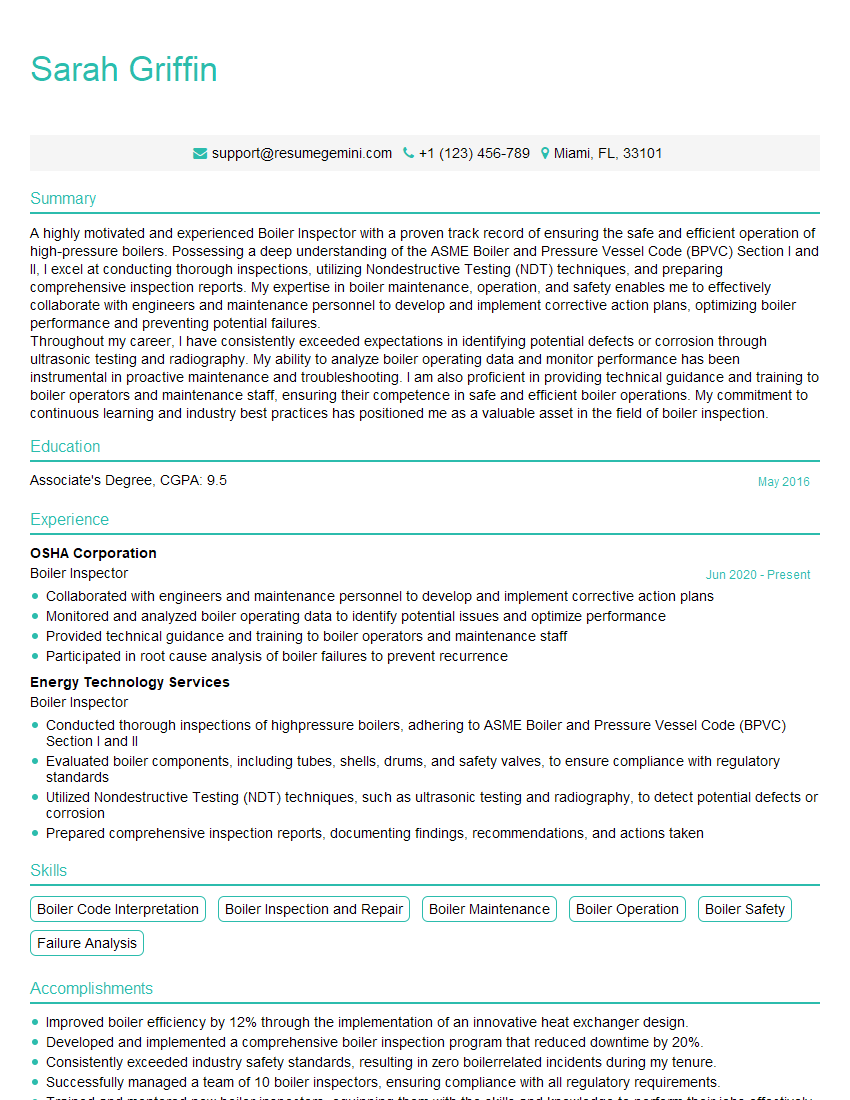
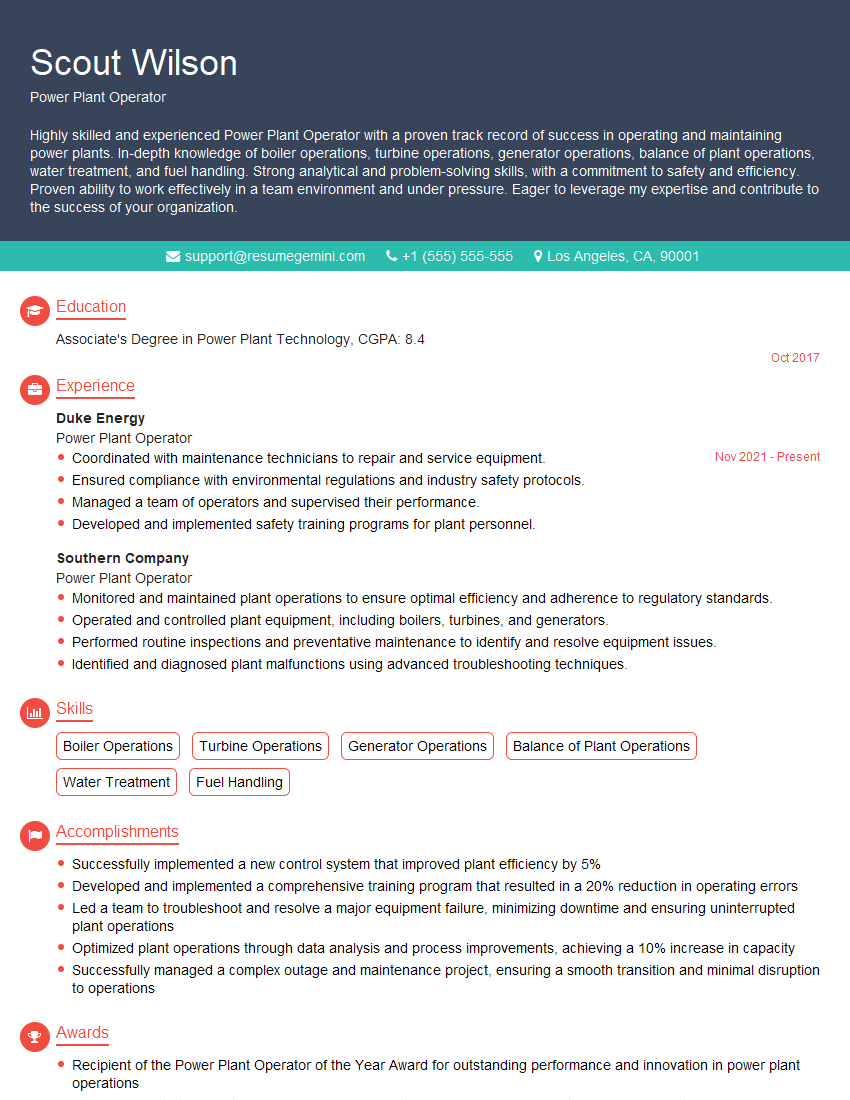
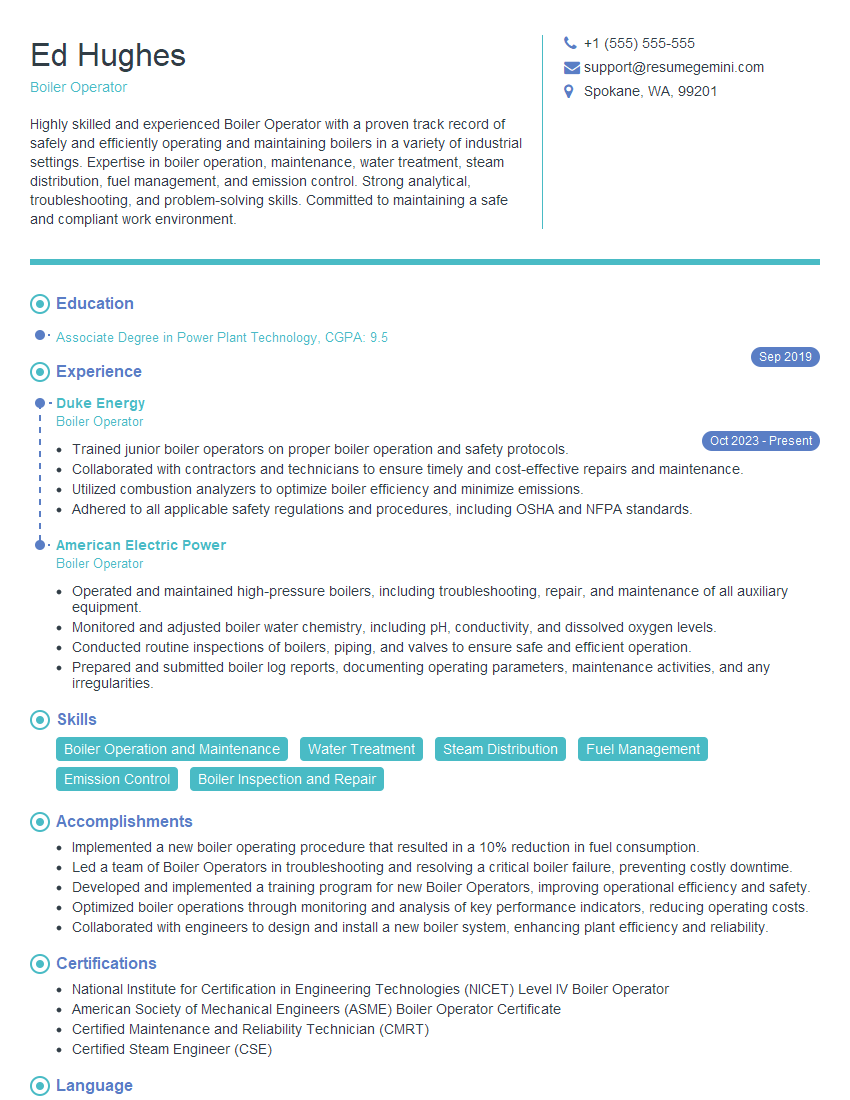
Mastering Boiler Emergency Response is crucial for career advancement in the energy and industrial sectors. It showcases a critical skillset highly valued by employers, demonstrating your commitment to safety and technical proficiency. To significantly boost your job prospects, creating an ATS-friendly resume is essential. This ensures your application gets noticed by hiring managers. We highly recommend using ResumeGemini to build a professional and impactful resume that highlights your expertise in Boiler Emergency Response. ResumeGemini offers valuable tools and resources, and we provide examples of resumes tailored to Boiler Emergency Response to guide you.
Explore more articles
Users Rating of Our Blogs
Share Your Experience
We value your feedback! Please rate our content and share your thoughts (optional).
What Readers Say About Our Blog
Really detailed insights and content, thank you for writing this detailed article.
IT gave me an insight and words to use and be able to think of examples