Are you ready to stand out in your next interview? Understanding and preparing for Data Visualization and Infographic Design interview questions is a game-changer. In this blog, we’ve compiled key questions and expert advice to help you showcase your skills with confidence and precision. Let’s get started on your journey to acing the interview.
Questions Asked in Data Visualization and Infographic Design Interview
Q 1. Explain the difference between a bar chart and a histogram.
While both bar charts and histograms display data using bars, they serve different purposes and handle data differently. A bar chart compares the frequencies or values of different categorical variables. Think of it like comparing the number of apples, oranges, and bananas sold in a day. Each category gets its own bar, and the bar’s height represents the value. In contrast, a histogram displays the distribution of a single continuous numerical variable. Instead of distinct categories, it groups the data into bins or intervals (ranges of values). The height of each bar represents the number of data points that fall within that particular bin. For example, a histogram might show the distribution of student test scores, with bins representing score ranges (e.g., 80-89, 90-99).
In short: Bar charts compare categories; histograms show the distribution of a continuous variable.
- Bar Chart Example: Comparing sales figures for different product lines.
- Histogram Example: Showing the distribution of customer ages.
Q 2. When would you use a heatmap instead of a scatter plot?
Both heatmaps and scatter plots visualize relationships between variables, but they do so in different ways and are suited to different datasets. A scatter plot shows the relationship between two continuous variables by plotting individual data points on a graph. It’s great for identifying trends, clusters, and outliers. A heatmap, on the other hand, represents the magnitude of a phenomenon (often a third variable) across a two-dimensional plane. This plane is usually a matrix where rows and columns represent categories or ranges of variables. The color intensity represents the value at each intersection.
You’d choose a heatmap over a scatter plot when:
- You have a large dataset and visualizing individual points would be cluttered and unhelpful.
- You want to show the magnitude of a phenomenon across categories or ranges.
- The focus is on visualizing patterns and trends across multiple categories rather than individual data points.
Example: A scatter plot is ideal for showing the relationship between house size and price. A heatmap is more suitable for displaying website traffic across different regions and days of the week, where color intensity represents the number of visits.
Q 3. Describe your process for choosing the right chart type for a given dataset.
Choosing the right chart type is crucial for effective data visualization. My process involves several steps:
- Understanding the data: What type of data is it (categorical, numerical, continuous, etc.)? How many variables are involved? What is the distribution of the data?
- Defining the goal: What story do you want to tell with the data? Are you comparing values, showing trends, highlighting distributions, or identifying correlations?
- Considering the audience: Who is the intended audience? What is their level of understanding? Will they be familiar with the chosen chart type?
- Exploring chart options: Based on the data type, goal, and audience, I explore different chart types. I consider their strengths and weaknesses in conveying the intended message. For example, bar charts are great for comparisons, line charts for trends, and pie charts for proportions (although I try to use pie charts sparingly as they can be difficult to interpret).
- Iterative refinement: I create a few different visualization options and evaluate them against the goals. I seek feedback from colleagues and potential viewers. This iterative process helps in selecting the most effective and efficient visualization.
This systematic approach ensures the chosen chart effectively communicates the insights from the data.
Q 4. How do you handle outliers in your visualizations?
Outliers—data points significantly different from the rest—can skew interpretations. My approach to handling them involves several steps:
- Identification: I use statistical methods like box plots or z-scores to identify potential outliers. Visual inspection of scatter plots and histograms can also help.
- Investigation: Before removing or altering outliers, I investigate their cause. Are they genuine data points, or are they due to errors in data collection or entry? Often, seemingly extreme values can tell a meaningful story.
- Transparency: If outliers are genuine but might mislead, I highlight them in the visualization (e.g., using different colors or symbols). I explain their presence and potential impact in the accompanying narrative.
- Transformation: In some cases, transforming the data (e.g., using logarithmic scales) might reduce the impact of outliers without removing them.
- Robust methods: I might use statistical methods that are less sensitive to outliers, such as median instead of mean for central tendency.
The key is not to simply dismiss outliers, but to understand their implications and present them transparently.
Q 5. What are some common pitfalls to avoid when creating data visualizations?
Several common pitfalls can undermine the effectiveness of data visualizations:
- Chartjunk: Unnecessary elements like excessive gridlines, colors, or 3D effects that distract from the data.
- Misleading scales and axes: Truncated or non-zero starting points on axes can distort the representation of changes or differences.
- Poor labeling and annotation: Inadequate labels and titles make it difficult for viewers to understand the data.
- Overly complex charts: Trying to cram too much information into a single chart makes it difficult to interpret.
- Lack of context: Failing to provide sufficient background information can lead to misinterpretations.
- Ignoring the audience: Creating visualizations that are too technical or simplistic for the target audience.
Avoiding these pitfalls ensures clear, accurate, and effective communication of data insights.
Q 6. Explain the importance of data labeling and annotation in visualizations.
Data labeling and annotation are critical for understanding and interpreting visualizations. They provide context, clarity, and precision. Good labeling ensures viewers know what they are looking at, what the units are, and what the key takeaways are.
- Clear titles and subtitles: Concisely summarize the visualization’s content and purpose.
- Axis labels: Clearly indicate the variables being represented and their units (e.g., ‘Sales ($)’ or ‘Temperature (°C)’).
- Data point labels: Highlight specific data points of interest (especially outliers or significant values).
- Legends: Explain the meaning of different colors, patterns, or symbols used in the visualization.
- Annotations: Add brief textual explanations to highlight trends, patterns, or significant aspects of the data.
Without proper labeling and annotation, visualizations are just pictures—they lack the essential information needed for meaningful interpretation.
Q 7. How do you ensure accessibility in your data visualizations?
Accessibility in data visualizations is crucial for inclusivity. My approach focuses on several key aspects:
- Colorblind-friendly palettes: Using color palettes designed to be easily distinguishable by individuals with various forms of color blindness. Tools and online resources are available to help choose such palettes.
- Sufficient color contrast: Ensuring enough contrast between text, data points, and background colors to improve readability.
- Alternative text descriptions: Providing detailed textual descriptions for images, allowing screen readers to convey information to visually impaired users.
- Interactive elements: Incorporating interactive features (like tooltips or zooming) to enhance usability and accessibility for users with motor impairments.
- Data tables: Providing a data table alongside the visualization allows users to explore the data numerically.
- Keyboard navigation: Ensuring that all interactive elements can be accessed using the keyboard, enabling users with limited mouse mobility to interact with the visualization.
By incorporating these practices, data visualizations can be made accessible to a much broader audience, ensuring inclusivity and effective communication for everyone.
Q 8. Describe your experience with different data visualization tools (e.g., Tableau, Power BI, D3.js).
My experience with data visualization tools spans a wide range, encompassing both business intelligence platforms and more specialized JavaScript libraries. I’m proficient in Tableau and Power BI, leveraging their drag-and-drop interfaces and extensive visualization libraries to create interactive dashboards and reports for various business needs. For instance, I recently used Tableau to create a dynamic sales dashboard that allowed executives to drill down into specific product lines and geographical regions, identifying key performance indicators and areas for improvement. With Power BI, I’ve built comprehensive data models and reports, integrating data from multiple sources to provide a holistic view of customer behavior. Beyond these tools, I have a strong command of D3.js, a powerful JavaScript library that allows for highly customized and interactive visualizations. This allows me to create bespoke visualizations tailored to very specific requirements, where off-the-shelf solutions might fall short. For example, I utilized D3.js to build a network graph visualizing complex relationships between research papers, revealing influential research clusters and knowledge gaps.
Q 9. How do you communicate complex data insights to a non-technical audience?
Communicating complex data insights to a non-technical audience requires a shift in perspective from technical accuracy to clear, concise storytelling. The key is to translate technical jargon into everyday language and focus on the narrative, not the data itself. I achieve this by:
- Simplifying the Message: Instead of overwhelming the audience with numbers, I focus on the key takeaways and implications. For instance, instead of saying “the average customer churn rate increased by 1.5%,” I might say, “We lost 1.5% more customers than last year, impacting our revenue.”
- Visual Metaphors and Analogies: Using relatable comparisons can make abstract concepts easier to grasp. If explaining complex statistical relationships, I might use a simple analogy, like comparing data distribution to a landscape.
- Visual Hierarchy and Design: The visual presentation is crucial. I use clear charts, concise labels, and a clean layout, ensuring that the message is immediately apparent. I avoid clutter and excessive detail, emphasizing the key findings.
- Interactive Elements: Where possible, I incorporate interactive elements to encourage exploration and engagement, allowing the audience to explore data at their own pace.
Ultimately, the goal is to make the data relatable and impactful, empowering the audience to understand and act on the insights presented.
Q 10. Explain the concept of data storytelling.
Data storytelling is the art of transforming raw data into a compelling narrative that resonates with the audience. It’s about crafting a story that uses data as evidence to support a specific point or argument. It moves beyond simply presenting data points; instead, it engages the audience emotionally and intellectually, driving understanding and action.
A successful data story typically includes:
- A clear narrative arc: Similar to a traditional story, it begins with an introduction (the problem), builds tension (the data analysis), and concludes with a resolution (the key insights and recommendations).
- Compelling visuals: Charts, graphs, and other visuals are not just decoration; they are integral to the narrative, helping to visualize the story’s key points.
- Audience engagement: The story is tailored to the target audience, considering their prior knowledge and interests. The language, tone, and visuals are adjusted accordingly.
- A clear call to action: The story’s conclusion suggests the next steps, emphasizing how the insights can be used to inform decisions and drive actions.
For example, instead of just showing a line chart of sales figures over time, a data story might weave a narrative around those sales figures, highlighting external factors affecting sales (like economic downturns or new competitor products) and explaining how these factors influenced the overall sales trend.
Q 11. How do you incorporate interactivity into your visualizations?
Interactivity is key to making data visualizations engaging and insightful. It allows the audience to explore the data at their own pace, uncovering patterns and insights that might be missed in a static visualization. I incorporate interactivity using several methods:
- Tool-Specific Features: Tableau and Power BI offer built-in features for creating interactive dashboards, including filtering, drill-downs, and tooltips. These tools allow me to create interactive elements like drop-down menus to filter data, clickable elements that expand on specific details, and zooming capabilities for closer examination.
- Custom JavaScript Libraries: For highly customized interactions, I leverage libraries like D3.js. This provides unparalleled flexibility to design unique interactions tailored precisely to the data and the audience’s needs. For example, I could design a visualization where hovering over a data point reveals a detailed tooltip, or clicking on it filters the view to show related information.
- Animations and Transitions: Using subtle animations to highlight changes in data or guide the viewer’s eye can significantly improve understanding and engagement. For example, using smooth transitions between different chart views to compare multiple aspects of the data.
In essence, interactivity is about empowering the audience to control the narrative, allowing them to explore the data on their own terms and uncover their own insights.
Q 12. What are some best practices for designing effective infographics?
Designing effective infographics involves a blend of art and science, focusing on clarity, conciseness, and visual appeal. Key best practices include:
- Clear Objective: Define the core message before starting the design. What key insight or information needs to be communicated?
- Visual Hierarchy: Guide the viewer’s eye using size, color, and placement to emphasize the most important information. The most important elements should be most prominent.
- Limited Color Palette: Use a consistent and limited color palette to maintain visual harmony and avoid overwhelming the viewer. A maximum of 3-4 colors is usually sufficient.
- Simple Typography: Choose clear, easy-to-read fonts. Avoid excessive use of different font styles or sizes.
- Relevant Visuals: Select visuals (charts, icons, images) that accurately represent the data and are visually appealing.
- White Space: Use ample white space to avoid a cluttered look. This improves readability and visual appeal.
- Data Accuracy: Always ensure the data is correctly represented and sourced.
- Accessibility: Consider color blindness and other accessibility considerations when choosing colors and creating visual elements.
Effective infographics are both visually engaging and informative, enabling the audience to understand complex information quickly and easily.
Q 13. How do you balance aesthetics with data accuracy in your visualizations?
Balancing aesthetics with data accuracy is a crucial aspect of effective data visualization. While visually appealing visualizations are important for engagement, they should never compromise the integrity of the data. This balance is achieved through:
- Choosing Appropriate Chart Types: Selecting the right chart type is paramount. A misleading chart type, even if aesthetically pleasing, can misrepresent the data. For example, using a pie chart with too many slices can be confusing and difficult to read.
- Accurate Data Representation: Ensuring the data is correctly presented is non-negotiable. This includes proper scaling, labeling, and avoidance of chart manipulations that distort the data.
- Contextual Information: Providing sufficient context is crucial for accurate interpretation. Clear labels, titles, and legends are essential.
- Minimalist Design: A minimalist approach often works best. Avoid unnecessary clutter and visual elements that might distract from the data.
- Iterative Design: Refining the design through iteration ensures both aesthetic appeal and accuracy. Feedback from colleagues or stakeholders can help identify areas for improvement.
The goal is to create visualizations that are both beautiful and truthful, ensuring that the audience can trust the information presented.
Q 14. Describe your experience with A/B testing different visualization designs.
A/B testing is an invaluable tool for improving the effectiveness of visualizations. It allows for a data-driven approach to design, enabling me to compare different versions of a visualization and determine which performs better in terms of user understanding and engagement. My approach typically involves:
- Defining Key Metrics: First, I identify the key metrics I want to measure, such as time spent viewing the visualization, task completion rate, and user comprehension (often measured through surveys or post-visualization quizzes).
- Creating Variations: I then create multiple versions (A and B) of the visualization, varying aspects such as chart type, color scheme, layout, and interactivity.
- Randomized Testing: The variations are shown to different groups of users randomly. This ensures that any differences observed are attributable to the design variations, not other factors.
- Statistical Analysis: Once sufficient data is collected, statistical methods are used to determine if there is a statistically significant difference in performance between the variations.
- Iterative Refinement: Based on the results, I iterate on the design, creating new versions and repeating the testing process until an optimal design is achieved.
A/B testing allows for continuous improvement, helping me to create visualizations that are not only aesthetically pleasing but also highly effective in communicating data insights.
Q 15. How do you measure the effectiveness of your data visualizations?
Measuring the effectiveness of a data visualization isn’t just about aesthetics; it’s about its impact. I use a multi-faceted approach, combining quantitative and qualitative methods. Quantitatively, I might track metrics like user engagement (time spent viewing, clicks on interactive elements), task completion rates (if the visualization supports a specific task, like identifying a trend), and the accuracy of user inferences based on the visualization. For instance, if I create a visualization to show sales trends, I might survey users afterward to see how well they understood the key takeaways. Qualitative feedback is equally crucial. This could involve conducting user interviews or A/B testing different visualization designs to see which is more effective at conveying information and eliciting the desired response. Ultimately, the ‘effectiveness’ is judged by how well the visualization achieves its intended purpose – whether it’s informing, persuading, or enabling decision-making.
Career Expert Tips:
- Ace those interviews! Prepare effectively by reviewing the Top 50 Most Common Interview Questions on ResumeGemini.
- Navigate your job search with confidence! Explore a wide range of Career Tips on ResumeGemini. Learn about common challenges and recommendations to overcome them.
- Craft the perfect resume! Master the Art of Resume Writing with ResumeGemini’s guide. Showcase your unique qualifications and achievements effectively.
- Don’t miss out on holiday savings! Build your dream resume with ResumeGemini’s ATS optimized templates.
Q 16. What is your experience with creating data visualizations for dashboards?
I have extensive experience creating data visualizations for dashboards, focusing on clarity, conciseness, and actionable insights. My approach always starts with understanding the dashboard’s purpose and the user’s needs. For example, a sales dashboard needs to highlight key performance indicators (KPIs) at a glance, while a marketing dashboard might focus on campaign performance and customer engagement. I leverage various chart types depending on the data and the desired outcome. For instance, I might use line charts for trends, bar charts for comparisons, and maps for geographical data. Interactive elements are key—allowing users to drill down into the data, filter by specific criteria, and customize the view. I often use tools like Tableau, Power BI, or D3.js to build these dashboards, ensuring responsiveness across different devices. A recent project involved designing a real-time customer support dashboard which displayed ticket resolution times, agent availability and current queue lengths. The interactive elements allowed managers to monitor performance and allocate resources efficiently.
Q 17. Explain your process for cleaning and preparing data for visualization.
Data cleaning and preparation is a crucial, often time-consuming step before any visualization. My process generally involves these steps: 1. Data Collection: Gathering data from various sources (databases, spreadsheets, APIs). 2. Data Cleaning: This includes handling missing values (imputation or removal), identifying and correcting outliers (using statistical methods or domain knowledge), and addressing inconsistencies (standardizing formats, units, etc.). For example, I might use Python libraries like Pandas to automate this process. 3. Data Transformation: This involves reshaping the data to be suitable for visualization. This could include aggregating data, creating new variables, or normalizing values. 4. Data Validation: Checking for data accuracy and consistency after cleaning and transformation. I often use data profiling tools to automate this step. Finally, I thoroughly document all steps to ensure reproducibility and transparency. This methodical approach ensures the accuracy and reliability of my visualizations, building trust in the insights they provide.
Q 18. How do you handle missing data in your visualizations?
Missing data is a common challenge. How I handle it depends on the context and the amount of missing data. For small amounts of missing data, I might use imputation techniques, such as replacing missing values with the mean, median, or mode of the available data. More sophisticated methods, like K-Nearest Neighbors imputation or multiple imputation, can be used for more complex scenarios. However, simply replacing values might introduce bias. Therefore, I always clearly indicate the presence of missing data in the visualization, possibly using visual cues like greyed-out areas or annotations. In some cases, it’s best to exclude the incomplete data points rather than risk introducing bias. For example, if a significant portion of data for a specific category is missing, I might exclude that category from the visualization, explaining this decision in the accompanying text.
Q 19. What is your preferred method for creating interactive maps?
My preferred method for creating interactive maps is using JavaScript libraries like Leaflet or Mapbox GL JS. These libraries offer a powerful and flexible way to create custom map visualizations, allowing for features like zooming, panning, interactive markers, and pop-ups. They also integrate well with other data visualization tools and allow for seamless data integration from various sources. For example, I could use Leaflet to create a choropleth map showing the distribution of a certain disease across different states, where clicking on a state reveals detailed statistics. The choice of library depends on the specific project requirements and the level of customization needed. While other platforms offer map visualizations, the flexibility and control afforded by these libraries are ideal for complex and engaging interactive maps.
Q 20. What are some techniques for highlighting key insights in a visualization?
Highlighting key insights is crucial for effective visualization. I use a variety of techniques:
- Color: Using a distinct color scheme to draw attention to important data points or trends.
- Size and Shape: Varying the size or shape of elements to emphasize significance.
- Animation and Transitions: Using animations to highlight changes or relationships in the data over time.
- Labels and Annotations: Adding clear and concise labels to identify key data points or trends.
- Callouts and Highlighting: Visually emphasize areas of particular importance.
Q 21. How do you incorporate visual hierarchy in your designs?
Visual hierarchy is essential for guiding the viewer’s eye through the visualization. I use several principles:
- Size: Larger elements are perceived as more important.
- Color: Using a contrasting color palette to emphasize key elements.
- Proximity: Grouping related elements together to show relationships.
- Position: Placing important elements in prominent locations (e.g., top left).
- Typography: Using different font weights and sizes to differentiate headings, labels, and body text.
Q 22. Explain the importance of color palettes in data visualization.
Color palettes are fundamental in data visualization because they significantly impact how effectively audiences understand and interpret the presented information. A well-chosen palette enhances readability, guides the viewer’s eye, and conveys meaning through visual cues. Poor color choices, however, can lead to misinterpretations, confusion, and even inaccurate conclusions.
For example, using a colorblind-unfriendly palette (like red and green) can exclude a significant portion of your audience. Conversely, a palette that leverages color saturation strategically can highlight important data points and create visual hierarchy. A cool palette might be appropriate for data showing decline, while a warm palette can represent growth.
Consider this: Imagine a map displaying population density. Using shades of blue, ranging from light to dark, to represent low to high population makes intuitive sense. This is because blue is often associated with water and depth, reinforcing the idea of increasing density. Conversely, a random or clashing color scheme would only serve to confuse the viewer. Therefore, careful consideration of color theory, accessibility, and the specific data being visualized is crucial.
Q 23. What are some ethical considerations in data visualization?
Ethical considerations in data visualization are paramount. The goal is to represent data accurately and avoid misleading the audience. This requires careful attention to several areas.
- Avoiding cherry-picking: Presenting only data that supports a specific narrative while omitting contradictory information is unethical. It’s crucial to show the full picture, including outliers and potentially negative results.
- Proper labeling and scaling: Axes must be clearly labeled, scales should be consistent, and data points should be accurately represented. Manipulating scales or labels to exaggerate or downplay trends is deceptive.
- Contextualization: Data visualization should always be presented within its proper context. Omitting vital background information can lead to misinterpretations. For instance, showing only a year-over-year sales increase without considering market factors or economic conditions is misleading.
- Accessibility: Visualizations must be accessible to all users, including those with visual impairments. This necessitates using color palettes appropriate for color blindness, providing alternative text descriptions for images, and ensuring sufficient contrast.
Ultimately, ethical data visualization is about transparency, accuracy, and avoiding manipulation. It is a responsibility to ensure that the information presented is fair, unbiased, and easily understood by the intended audience.
Q 24. Describe your experience working with large datasets.
I’ve extensively worked with large datasets, often exceeding millions of rows. My approach involves leveraging tools and techniques to handle them efficiently. These techniques encompass:
- Data Sampling: When dealing with datasets too large to process directly, I utilize sampling techniques to create representative subsets. This allows for quicker visualization and analysis while minimizing loss of crucial information.
- Data Aggregation: Summarizing data through aggregation (like calculating averages or sums) reduces the size and complexity, making visualization more manageable.
- Database Interaction: Instead of loading the entire dataset into memory, I often connect directly to the database using tools like SQL or database connectors within visualization software. This allows for on-the-fly queries and processing, improving performance.
- Data Wrangling and Cleaning: Before visualization, a significant amount of time is spent cleaning and pre-processing data. This includes handling missing values, outlier detection, and data transformation, preparing it for effective visualization.
- Choosing the Right Tools: Tools like Tableau, Power BI, or Python libraries (pandas, matplotlib, seaborn) are selected based on the dataset size, required visualizations, and the project’s overall needs.
For example, in a recent project involving customer transaction data spanning several years, I used a combination of SQL queries for data aggregation and Tableau to create interactive dashboards showing sales trends, customer segmentation, and key performance indicators. The database interaction allowed for efficient querying of the massive dataset without overloading system resources.
Q 25. How do you handle feedback on your visualizations?
Feedback is essential for creating effective visualizations. I approach feedback iteratively and constructively.
- Active Listening: I carefully listen to the feedback, paying attention to both the critical and positive aspects.
- Clarification: I ask clarifying questions if the feedback is unclear, ensuring I understand the concerns or suggestions completely.
- Prioritization: I prioritize feedback based on its potential impact on clarity, accuracy, and the overall effectiveness of the visualization.
- Iteration and Revision: I revise the visualization based on the feedback, often creating multiple versions to explore different solutions.
- Documentation: I keep a record of all feedback and the resulting revisions, allowing for tracking changes and improvement over time.
A recent project involved creating a dashboard for sales performance. Initial feedback highlighted the difficulty in understanding the key metrics. By incorporating suggestions to simplify the color scheme and restructure the layout, I significantly improved the clarity and ease of interpretation, leading to a much more effective visualization.
Q 26. What are your favorite data visualization resources?
My favorite data visualization resources encompass a mix of software, online communities, and books.
- Software: Tableau and Power BI are excellent for interactive dashboards and exploratory data analysis. Python libraries like matplotlib, seaborn, and Plotly provide highly customizable visualizations.
- Online Communities: Websites and forums focused on data visualization offer valuable insights, tutorials, and inspiration. These platforms are invaluable for staying updated on the latest techniques and tools.
- Books: Books like “The Visual Display of Quantitative Information” by Edward Tufte and “Storytelling with Data” by Cole Nussbaumer Knaflic offer fundamental principles and best practices.
These resources have been instrumental in enhancing my skills and knowledge, allowing me to constantly improve my data visualization techniques.
Q 27. Describe a time you had to adapt your visualization strategy due to unexpected data.
During a project analyzing website traffic, I anticipated a relatively smooth increase in visits over time. However, the data revealed a sharp, unexpected dip in traffic during a specific week. My initial visualization strategy, which emphasized linear trends, was insufficient to capture this anomaly.
To adapt, I:
- Investigated the cause: I collaborated with the web development team to identify the reason for the traffic drop. It turned out to be a temporary server outage.
- Adjusted the visualization: Instead of focusing solely on the overall trend, I added annotations highlighting the outage and its impact. This provided context and prevented misinterpretations.
- Refined the data presentation: I introduced a zoom functionality to allow users to closely examine the period surrounding the outage. This enhanced the detail and allowed for a more thorough understanding.
This experience reinforced the importance of flexibility and thorough data investigation. Unexpected data points can offer valuable insights, but only if they are properly addressed and integrated into the visualization strategy.
Key Topics to Learn for Data Visualization and Infographic Design Interview
- Data Storytelling: Understanding how to translate complex data into compelling narratives that resonate with your audience. Consider how different visualization types best suit various stories and data types.
- Choosing the Right Visualization: Mastering the selection of appropriate chart types (bar charts, line graphs, scatter plots, maps, etc.) based on the data and the message you want to convey. Practice analyzing datasets to determine the optimal visualization strategy.
- Data Cleaning and Preparation: Knowing how to handle missing data, outliers, and inconsistencies before visualization. This includes data transformation techniques for improved clarity and insight.
- Color Theory and Typography: Understanding the impact of color choices and typography on readability and visual appeal. Explore best practices for creating visually harmonious and accessible infographics.
- Design Principles: Applying design principles like proximity, alignment, repetition, and contrast to create clean, organized, and effective visualizations. Practice creating visually appealing layouts.
- Interactive Visualization Tools: Familiarity with popular software (Tableau, Power BI, D3.js, etc.) and their capabilities. Be prepared to discuss your experience and proficiency with specific tools.
- Accessibility Considerations: Designing visualizations that are accessible to everyone, including individuals with visual impairments. This includes using alt text, appropriate color contrast, and clear labeling.
- Data Ethics and Bias: Understanding potential biases in data and how they can be reflected in visualizations. Practice responsible data representation and interpretation.
- A/B Testing and Iteration: Knowing how to test different design choices and iterate based on user feedback to optimize the effectiveness of your visualizations.
Next Steps
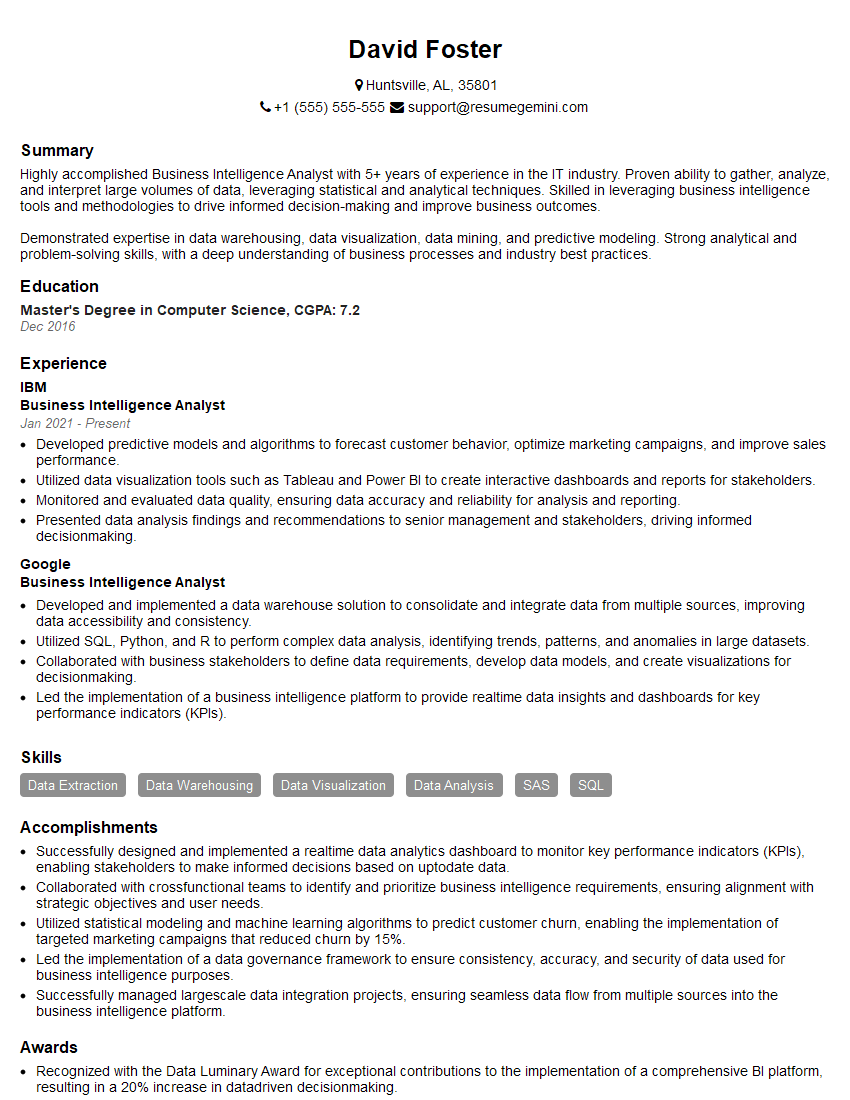
Mastering Data Visualization and Infographic Design is crucial for career advancement in today’s data-driven world. It allows you to communicate complex information clearly and persuasively, a skill highly valued across many industries. To significantly enhance your job prospects, crafting a compelling and ATS-friendly resume is paramount. ResumeGemini is a trusted resource to help you build a professional and impactful resume that showcases your skills and experience effectively. We provide examples of resumes tailored to Data Visualization and Infographic Design to help you get started. Take the next step and build a resume that truly reflects your capabilities.
Explore more articles
Users Rating of Our Blogs
Share Your Experience
We value your feedback! Please rate our content and share your thoughts (optional).
What Readers Say About Our Blog
I Redesigned Spongebob Squarepants and his main characters of my artwork.
https://www.deviantart.com/reimaginesponge/art/Redesigned-Spongebob-characters-1223583608
IT gave me an insight and words to use and be able to think of examples
Hi, I’m Jay, we have a few potential clients that are interested in your services, thought you might be a good fit. I’d love to talk about the details, when do you have time to talk?
Best,
Jay
Founder | CEO