Are you ready to stand out in your next interview? Understanding and preparing for Knowledge of State and Local Surveying Laws and Regulations interview questions is a game-changer. In this blog, we’ve compiled key questions and expert advice to help you showcase your skills with confidence and precision. Let’s get started on your journey to acing the interview.
Questions Asked in Knowledge of State and Local Surveying Laws and Regulations Interview
Q 1. Explain the difference between a metes and bounds description and a lot and block description.
Metes and bounds and lot and block descriptions are two fundamentally different ways to legally describe a piece of land. Think of them as two distinct languages used to pinpoint property boundaries.
A metes and bounds description uses distances (metes) and directions (bounds) to define a property’s perimeter. It’s like drawing a detailed picture of the boundary using measurements and compass directions. For example, it might start with “Beginning at the iron pin located at the Northwest corner of the intersection of Elm Street and Maple Avenue,” then proceed to describe each boundary line by distance and bearing, ending where it started to form a closed polygon. This method is often used for irregularly shaped parcels of land, especially those surveyed before organized subdivision systems were in place.
In contrast, a lot and block description is simpler and utilizes a recorded plat map. This method references a specific lot number within a recorded subdivision. Think of it like having an address for your property: the plat map is like the street directory, and the lot and block number is your precise address on that map. It’s more efficient than metes and bounds for describing parcels in a regularly platted subdivision. A typical description would read something like “Lot 12, Block 3, Sunny Acres Subdivision, as recorded in Plat Book 12, Page 34, County Recorder’s Office.”
Q 2. Describe the process of conducting a boundary survey.
Conducting a boundary survey is a meticulous process that requires careful planning and execution. It’s not just about sticking a flag in the ground; it’s about establishing the legal boundaries of a property with precision and accuracy. Here’s a typical process:
- Review of Existing Records: The first step involves thoroughly examining all relevant documents, including deeds, plats, prior surveys, and any other evidence related to the property’s boundaries.
- Field Reconnaissance: A physical site visit to examine the property and locate any existing evidence of boundaries, such as monuments, fences, or other markers. This step is crucial in understanding the on-the-ground reality.
- Monumentation Search: This involves a systematic search for physical markers (monuments) that define the property’s boundaries. These can include iron pins, concrete monuments, or even natural features mentioned in the deed description.
- Boundary Research and Analysis: This phase involves carefully analyzing all collected data to determine the most probable location of the property lines. This often includes resolving conflicts and ambiguities between different sources of information.
- Survey Measurement: Employing precise surveying equipment and techniques (e.g., GPS, total stations), the surveyor will make accurate measurements to define the property’s boundaries. This involves taking measurements between established monuments and creating a new survey map.
- Plat Preparation and Review: The final step is to prepare a survey plat that shows the precise location and dimensions of the property lines. This plat must adhere to all legal requirements and is typically reviewed by the local jurisdiction before it can be recorded.
Q 3. What are the key elements of a legal description in your state?
The key elements of a legal description vary slightly from state to state and even within localities. However, a typical legal description usually includes:
- Property Address: While not strictly part of the legal description itself, providing the street address is helpful for identification.
- Tax Parcel Number: This unique identifier assigned by the local tax assessor’s office is often included.
- Reference to a Recorded Plat or Document: If the property is part of a recorded subdivision, the lot and block number and reference to the plat will be key.
- Metes and Bounds Description: If the property is not in a platted subdivision, a precise metes and bounds description detailing distances and bearings will be required.
- Reference to Adjacent Properties: Mentioning the names or ownership details of neighboring properties provides context and helps in boundary identification.
- Monumentation Information: Describing the types of monuments used to mark the boundary helps future surveyors accurately locate the boundary line.
- County and State: Specifies the location of the property.
The exact formatting and requirements will be determined by state and local regulations, and it is imperative to adhere to these regulations for the legal description to be considered valid.
Q 4. How do you handle discrepancies between deed descriptions and on-the-ground features?
Discrepancies between deed descriptions and on-the-ground features are unfortunately common. This situation requires a careful and methodical approach. The key is to prioritize evidence and use professional judgment. Here is a suggested process:
- Analyze the Discrepancy: Identify and thoroughly document the exact nature and extent of the discrepancy.
- Investigate the Source of the Discrepancy: Research historical records, including older surveys, to understand how the discrepancy may have arisen. Was there a mistake in the original survey? Has there been encroachment over time?
- Gather Evidence: Collect all relevant information, including photographic evidence, and measurements. The goal is to establish which evidence is most reliable.
- Apply Legal Principles: State laws and case precedents often guide the resolution of boundary disputes. Understanding these principles is essential.
- Consult with Stakeholders: If possible, discuss the discrepancy with the property owner and any adjoining landowners to consider potential compromises.
- Prepare a Report: Clearly document your findings and recommendations, detailing the evidence and the reasoning behind your conclusions.
In some cases, a court determination may be necessary to resolve the discrepancy. It’s crucial to document the process meticulously and present clear, well-supported evidence.
Q 5. What are the requirements for filing a survey plat in your state/locality?
The requirements for filing a survey plat vary by state and locality. However, generally, the plat must meet specific criteria to be accepted and recorded by the relevant authority (e.g., county recorder’s office). These usually include:
- Accuracy and Precision: The survey must meet specific accuracy standards based on the type of survey.
- Compliance with Local Regulations: The plat must conform to all local ordinances related to surveying, including standards for map scales, symbols, and formatting.
- Seal and Signature: The survey plat must be sealed and signed by a licensed professional surveyor in accordance with state regulations.
- Certification: A statement of certification must verify the accuracy of the survey and the surveyor’s professional responsibility.
- Legal Description: The plat must include a clear and accurate legal description of the property.
- Adjoining Properties: Boundaries of adjoining properties must be shown on the plat.
- Correct Location: Accurate location and coordinates must be clearly marked.
- Proper Plat Format: Adherence to specific format regulations set by the governing authority is essential.
Failure to meet these requirements can result in rejection of the plat by the recording office. It’s always advisable to check with the local recorder’s office for the exact requirements before submitting a plat.
Q 6. Explain the importance of using proper surveying equipment and techniques.
Using proper surveying equipment and techniques is paramount for ensuring the accuracy and reliability of surveys. This is not just a matter of preference; it’s a critical aspect of professional responsibility. The consequences of inaccurate surveys can be severe, leading to boundary disputes, property damage, and legal issues.
Modern surveying relies heavily on advanced technology. Instruments like total stations, Global Navigation Satellite Systems (GNSS) receivers, and electronic distance measuring (EDM) devices provide incredibly precise measurements that are far beyond the capability of older methods. These technologies allow for accurate measurements of distances, angles, and elevations, enabling surveyors to create detailed and reliable maps. Furthermore, proper survey techniques, including the use of appropriate methods for controlling errors (like using multiple observations and careful calibration), are essential for achieving high-quality results. Using substandard equipment or improper techniques undermines the integrity of the survey and can have costly repercussions.
Q 7. How do you ensure the accuracy and precision of your surveys?
Ensuring accuracy and precision in surveys is a continuous process that requires attention to detail at every stage. Here’s a multi-faceted approach:
- Calibration and Maintenance: Regularly calibrating surveying instruments is crucial. This ensures that the equipment is functioning accurately and within specified tolerances. Proper maintenance of equipment is equally important.
- Quality Control Procedures: Implementing strict quality control procedures at each stage of the survey process is essential. This involves cross-checking measurements, independent verification, and careful error analysis.
- Use of Redundant Measurements: Taking multiple measurements for the same point and using statistical methods to analyze the results allows for error detection and improves the reliability of the survey.
- Employing Appropriate Techniques: Selecting the most suitable survey techniques for the specific project and environmental conditions will enhance accuracy.
- Data Processing and Adjustment: Utilizing sophisticated data processing software to analyze the collected data and make necessary adjustments helps to minimize errors and improves the final result.
- Professional Expertise: The expertise of a licensed and experienced surveyor is critical. Their knowledge and experience contribute significantly to the reliability and precision of the survey.
By employing these strategies, surveyors can minimize errors and create accurate and reliable surveys that meet the highest professional standards and ensure the validity of boundary lines. Remember that accuracy is not just about the tools, but the precision of the methods and the experience of the individual using them.
Q 8. What are the legal implications of survey errors?
Survey errors can have significant legal ramifications, potentially leading to boundary disputes, property line disagreements, and costly litigation. The severity of the consequences depends on the magnitude of the error and its impact on property ownership. For example, a small error might be easily resolved through negotiation, while a significant error affecting property lines or encroachments could result in expensive court battles and potentially even the need for corrective surveys and legal adjustments to property deeds.
In some cases, surveyors may be held liable for negligence if their errors are deemed to be the result of a failure to adhere to professional standards. This liability can extend to financial compensation for damages incurred by parties affected by the inaccurate survey.
State and local laws often specify the standards of accuracy required for surveys and the procedures for resolving discrepancies. It’s critical for surveyors to meticulously document their work, including methodology, data, and calculations, to defend against potential claims of negligence or inaccuracy. A well-documented survey acts as a strong legal record.
Q 9. Describe your experience with various surveying technologies (e.g., GPS, total stations).
Throughout my career, I’ve extensively utilized various surveying technologies. My experience includes the application of:
- GPS (Global Positioning System): I’m proficient in using both Real-Time Kinematic (RTK) and Post-Processed Kinematic (PPK) GPS techniques for high-accuracy positioning. This includes handling data processing, quality control, and understanding the effects of atmospheric conditions on GPS measurements. For example, I once used RTK GPS to quickly and accurately establish control points for a large-scale construction project, saving significant time and resources compared to traditional methods.
- Total Stations: I’m experienced with using total stations for precise distance and angle measurements, traversing, and stakeout. This includes utilizing total stations for setting out building corners, creating topographic maps, and performing boundary surveys. I’ve used them to survey rugged and inaccessible terrain with pinpoint accuracy, highlighting the advantages of electronic data recording and calculations.
My proficiency extends beyond the mere operation of these instruments; I possess a strong understanding of the underlying principles, error propagation, and data analysis techniques associated with their use. This enables me to deliver accurate, reliable, and defensible survey results.
Q 10. How do you manage potential conflicts with neighboring properties during a survey?
Managing potential conflicts with neighboring properties during a survey is crucial for maintaining professional relationships and avoiding disputes. My approach involves several key steps:
- Clear Communication: I always begin by clearly communicating the survey’s purpose and scope to neighboring property owners. This includes explaining the potential impacts on their property and answering any questions or concerns they may have.
- Professional Demeanor: Maintaining a respectful and professional demeanor throughout the process is vital. Active listening and addressing their concerns with empathy and understanding are essential.
- Review of Existing Records: I carefully examine existing property records, including deeds, previous surveys, and any recorded easements to identify potential points of conflict before fieldwork begins.
- On-Site Collaboration (when possible): Whenever feasible, I invite neighboring property owners to be present during the survey, particularly when working near boundary lines. This fosters transparency and allows for immediate clarification of any issues.
- Documentation: I meticulously document all interactions, observations, and potential discrepancies encountered during the survey. This detailed record serves as valuable evidence in case of future disputes.
If disputes do arise, mediation or arbitration can be effective solutions to avoid costly litigation. I always advocate for a collaborative approach to resolve these matters fairly.
Q 11. What are the specific state/local regulations regarding survey monuments?
State and local regulations regarding survey monuments vary considerably. It’s crucial to consult the specific laws and regulations of the relevant jurisdiction. However, some common themes include:
- Type of Monument: Regulations may specify acceptable types of monuments (e.g., iron pins, concrete monuments, or other durable markers) and their size and placement.
- Placement: The precise placement of monuments, often at property corners or along boundary lines, is governed by law. Precise procedures for setting monuments are usually detailed.
- Accessibility: Regulations frequently address the need for monuments to be accessible and readily identifiable, so they are not easily destroyed or lost.
- Marking and Identification: Laws commonly require monuments to be clearly marked and identified, often with unique identifiers, to facilitate their future location.
- Recordation: Many jurisdictions mandate the recording of monument locations and descriptions with official agencies.
Failure to comply with these regulations can invalidate a survey and create legal problems. Understanding local regulations is paramount for creating legally sound and defensible survey results.
Note: This is general information. Always refer to specific state and local ordinances for complete details.
Q 12. Explain your understanding of riparian rights and their impact on surveying.
Riparian rights refer to the legal rights of landowners who own property adjacent to a body of water, such as a river or stream. These rights typically include access to and use of the water, but the specifics vary considerably by state and local law. The extent of these rights significantly impacts surveying because they can define property boundaries along watercourses.
In surveying, understanding riparian rights is crucial for accurately establishing property lines. For example, the ordinary high-water mark (OHWM) is often a key element in defining the boundary of a riparian property. Accurately locating this line requires specialized knowledge and techniques. Improperly surveying a riparian boundary, failing to accurately identify the OHWM, could lead to significant boundary disputes and legal challenges.
Navigating riparian rights requires a thorough understanding of the relevant legal precedents and case law in the specific area. A surveyor must be adept at identifying evidence of the OHWM, such as vegetation lines, erosion patterns, and historical records. This often involves interpreting ambiguous legal language and considering factors like accretion and avulsion.
Q 13. How do you handle easements and rights-of-way in your surveys?
Easements and rights-of-way are significant considerations in surveying, as they represent legal rights that affect property ownership and use. Easements grant a specific right to use a portion of another’s property for a defined purpose, while rights-of-way typically refer to the right to pass over a piece of land.
My approach to handling these in my surveys is as follows:
- Identification: I meticulously review property deeds, title records, and other relevant documents to identify the existence and legal descriptions of any easements or rights-of-way affecting the property.
- Location and Mapping: I accurately locate and map these features on the survey. This often involves using field measurements and interpreting legal descriptions of their location, which can be ambiguous.
- Clear Representation: The survey clearly depicts the location, extent, and purpose of all easements and rights-of-way. This is crucial for avoiding future conflicts and ensuring that all stakeholders are aware of the existing rights.
- Legal Advice: When faced with complex or ambiguous easements or rights-of-way, I consult with legal professionals to ensure accuracy and avoid any potential legal pitfalls.
Ignoring easements or rights-of-way in a survey can lead to serious legal consequences, as it could affect the marketability and legal defensibility of the property. Therefore, accurately identifying and depicting these features is essential.
Q 14. Describe your experience with surveying in challenging terrain or environmental conditions.
I have substantial experience surveying in challenging terrain and environmental conditions. This includes working in:
- Dense Vegetation: Using techniques like brush cutting and employing specialized equipment to overcome obstacles and maintain accuracy in difficult-to-access locations.
- Steep Slopes and Rugged Terrain: Utilizing appropriate safety measures and employing specialized equipment like robotic total stations to increase efficiency and reduce the risk of accidents on uneven ground.
- Adverse Weather Conditions: Planning surveys around potential weather disruptions and using weatherproof equipment to ensure data quality and prevent delays.
- Wetlands and Water Bodies: Employing appropriate techniques like using GPS with real-time kinematic data collection or utilizing specialized survey boats to handle waterlogged areas and maintain accuracy.
I adapt my methodology to each specific situation, prioritizing safety while maintaining the required level of accuracy and precision for the survey. Understanding the challenges and adjusting my approach is crucial for providing reliable and useful data in demanding settings. For instance, in one project involving a steep, forested slope, we used a drone equipped with LiDAR to create a detailed 3D model that avoided the safety risks associated with traditional methods.
Q 15. What are the ethical considerations for surveyors?
Ethical considerations for surveyors are paramount, forming the bedrock of public trust and the accuracy of land records. These considerations go beyond simply following the law; they involve upholding the highest standards of integrity and professionalism. Key ethical principles include:
- Accuracy and Objectivity: Surveyors must ensure their work is meticulously accurate and unbiased, free from influence or pressure to skew results. This involves using appropriate equipment, following established procedures, and thoroughly documenting all findings.
- Client Confidentiality: Information obtained during surveys, including property boundaries and details, must be kept confidential unless legally required to be disclosed. This is crucial for maintaining trust and protecting client interests.
- Professional Competence: Surveyors should only undertake work within their area of expertise, ensuring they possess the necessary skills and knowledge to complete the project successfully. This means ongoing professional development to stay abreast of technological advancements and legal changes.
- Conflict of Interest: Surveyors must avoid any situation that could lead to a conflict of interest, such as having a financial stake in a project’s outcome or representing competing clients in the same area.
- Truthfulness and Transparency: Surveyors have a duty to be truthful in their reports and transparent in their methods. This involves clearly communicating uncertainties or limitations in the survey data.
For example, imagine a surveyor under pressure from a developer to expedite a project. An ethical surveyor would resist this pressure, ensuring accurate measurements are taken, even if it means a slight delay. Ignoring this ethical obligation could lead to significant legal and financial consequences down the line for all involved.
Career Expert Tips:
- Ace those interviews! Prepare effectively by reviewing the Top 50 Most Common Interview Questions on ResumeGemini.
- Navigate your job search with confidence! Explore a wide range of Career Tips on ResumeGemini. Learn about common challenges and recommendations to overcome them.
- Craft the perfect resume! Master the Art of Resume Writing with ResumeGemini’s guide. Showcase your unique qualifications and achievements effectively.
- Don’t miss out on holiday savings! Build your dream resume with ResumeGemini’s ATS optimized templates.
Q 16. How do you ensure compliance with relevant health and safety regulations?
Ensuring compliance with health and safety regulations is not just a legal requirement; it’s a moral imperative to protect the well-being of myself and my crew. My process involves a multi-faceted approach:
- Risk Assessment: Before starting any project, I conduct a thorough risk assessment, identifying potential hazards on the site, such as uneven terrain, proximity to power lines, or the presence of wildlife. This assessment informs the development of a site-specific safety plan.
- Safe Work Practices: I enforce strict adherence to safe work practices, including the proper use of personal protective equipment (PPE), such as hard hats, safety glasses, and high-visibility clothing. We follow established protocols for operating survey equipment and handling potentially hazardous materials.
- Training and Communication: All team members receive regular training on safety procedures and are encouraged to report any unsafe conditions immediately. Open communication is key to fostering a safety-conscious environment.
- Emergency Preparedness: We have a clear emergency response plan in place, including procedures for dealing with accidents, injuries, or severe weather. This plan includes designated emergency contacts and communication protocols.
- Compliance with Regulations: I stay updated on all relevant Occupational Safety and Health Administration (OSHA) and state-specific regulations, ensuring all our activities comply with these legal mandates.
For instance, when surveying near a busy road, I’d implement traffic control measures, ensuring the safety of both my team and the public. This might involve flaggers, safety cones, and clearly marked work zones.
Q 17. What is your process for quality control and assurance in surveying?
Quality control and assurance (QA/QC) is integral to the surveying process, ensuring accuracy and reliability of results. My process integrates QA/QC throughout every stage:
- Instrument Calibration: All surveying equipment undergoes regular calibration to maintain accuracy. We use certified calibration labs and keep detailed records of calibration dates and results.
- Field Procedures: We meticulously follow established surveying procedures, ensuring proper measurement techniques and data recording methods. Multiple measurements are taken for critical points to minimize errors.
- Data Validation: All collected data undergoes thorough validation to identify and correct any errors or inconsistencies. This involves cross-checking measurements, analyzing data distributions, and employing statistical quality control methods.
- Software Checks: We utilize robust surveying software with built-in quality control features. These programs can detect anomalies and potential errors in the data.
- Peer Review: Before finalizing any survey, a peer review is conducted by another experienced surveyor to provide an independent check on the accuracy and completeness of the work.
- Documentation: Comprehensive documentation of all procedures, measurements, and calculations is maintained, providing an auditable trail for future reference.
For example, if a significant discrepancy is found between measurements taken from different angles, we would re-measure the point, investigate the cause of the discrepancy, and correct the error before finalizing the survey.
Q 18. Explain your understanding of the different types of surveying licenses and certifications.
The types of surveying licenses and certifications vary by state, but generally involve a tiered system reflecting experience and expertise. Common categories include:
- Intern/Surveyor-in-Training (SIT): This is an entry-level designation for individuals pursuing licensure, requiring supervised experience under a licensed surveyor.
- Licensed Surveyor: This is the primary professional license, obtained after meeting education, experience, and examination requirements. The specific requirements vary by state.
- Professional Land Surveyor (PLS): This often indicates a higher level of experience and expertise, sometimes requiring additional certifications or specializations.
- Specializations: Some surveyors obtain certifications in specific areas, such as Geographic Information Systems (GIS), photogrammetry, or hydrographic surveying.
Understanding these distinctions is vital. A licensed surveyor can perform certain tasks, while specialized certifications may be required for more complex or specialized projects. It’s critical to check the specific requirements and licensing boards of the relevant state for a given project.
Q 19. Describe a time you had to deal with a complex surveying problem. How did you solve it?
I once encountered a complex boundary dispute involving a historical land grant. The original survey documents were vague, conflicting with modern GPS data, and there was no clear evidence of historical ground markers. My approach involved a methodical investigation:
- Thorough Review of Documents: I started by meticulously examining all available historical documents, including land deeds, court records, and early maps, noting discrepancies and ambiguities.
- On-Site Investigation: A thorough on-site investigation was performed, carefully searching for any remaining physical evidence of the original boundaries, including faint traces of old fences or property lines.
- Advanced Surveying Techniques: Advanced surveying techniques such as GPS, total station surveys, and photogrammetry were employed to accurately establish existing features and compare them to the historical documentation.
- Historical Research: To clarify ambiguities in the documentation, I conducted historical research, interviewing local residents and researching archival materials about the history of land ownership in that area.
- Legal Consultation: Given the complexity and potential legal ramifications, legal counsel was engaged to interpret conflicting evidence and advise on the best course of action.
The process involved considerable detective work, combining traditional surveying methods with advanced technology and historical analysis. Ultimately, by carefully weighing all the evidence, we were able to produce a credible boundary determination that satisfied all parties involved. This case highlighted the importance of combining technical skill with historical knowledge and legal awareness.
Q 20. How do you stay current with changes in surveying laws and regulations?
Staying current with changes in surveying laws and regulations is a crucial aspect of maintaining my professional competence. I achieve this through multiple channels:
- Professional Organizations: Active membership in professional organizations such as the National Society of Professional Surveyors (NSPS) provides access to updates on legal changes, best practices, and educational resources.
- State Licensing Boards: I regularly check the websites of relevant state licensing boards for updates to regulations, announcements, and continuing education requirements.
- Continuing Education: I actively participate in continuing education courses and workshops to stay updated on changes in surveying technology, methodologies, and regulations.
- Professional Journals and Publications: I regularly read professional journals and publications to stay abreast of emerging trends and legislative changes impacting the surveying profession.
- Legal Updates: I monitor relevant legal updates and court decisions impacting property boundaries and surveying practices.
Staying informed is not merely a matter of compliance; it is about providing clients with the best possible service, incorporating the most up-to-date practices and technological advancements into my work.
Q 21. What is your experience with using surveying software and data management systems?
My experience with surveying software and data management systems is extensive. I am proficient in several industry-standard software packages, including:
- AutoCAD Civil 3D: Used for creating and managing digital terrain models, designing infrastructure, and producing construction drawings.
- Trimble Business Center: A robust post-processing software for GPS data, enabling accurate coordinate transformation and error correction.
- ArcGIS: For managing and analyzing geospatial data, creating maps, and integrating survey data with other geographic information.
Beyond the software itself, I understand the importance of effective data management. My workflow incorporates:
- Data Backup and Security: All survey data is regularly backed up to secure cloud storage to prevent data loss.
- Data Organization: I maintain a rigorous system for organizing and naming survey files, ensuring easy retrieval and accessibility.
- Metadata Management: All survey data includes comprehensive metadata, documenting project details, measurement methods, and quality control procedures.
This combination of technical proficiency and organized data management ensures efficient workflows and the production of high-quality, reliable survey results. For example, the use of cloud-based data storage allows for seamless collaboration with colleagues and clients regardless of location.
Q 22. How do you communicate survey results effectively to clients and stakeholders?
Communicating survey results effectively involves a multifaceted approach tailored to the client’s understanding and the complexity of the project. It’s not simply about handing over a technical report; it’s about translating complex data into actionable information.
Clear and Concise Reports: The core of effective communication is a well-structured report. This means using plain language, avoiding technical jargon unless absolutely necessary (and defining it when used), and employing visuals like maps, diagrams, and photos to illustrate key findings. Think of it like explaining a complex medical diagnosis to a patient – you need to be both accurate and understandable.
Visual Aids: Maps are essential. High-quality, clearly labeled maps that highlight boundary lines, easements, and other relevant features are crucial. I often use color-coding and legends to make complex information easy to digest.
Verbal Explanation: A follow-up meeting to discuss the report is vital. This allows for a question-and-answer session, addressing any client concerns or ambiguities. Think of this as a collaborative process, not a one-way information transfer.
Client-Specific Tailoring: The level of detail and technicality needs to be adjusted based on the client’s background. A real estate developer will need a different level of detail than a homeowner.
Digital Delivery: Utilizing digital platforms for report delivery and storage ensures easy access and efficient updates. I often use cloud-based storage for easy sharing and collaboration.
For example, I once worked with a homeowner who was confused about a boundary line. Instead of simply providing the coordinates, I created a simple map highlighting the line, showing the property’s relationship to neighboring properties, and explained the implications in plain language. This clarity prevented future misunderstandings.
Q 23. How do you handle disputes or challenges related to your survey work?
Disputes are an inherent part of surveying. Handling them professionally and effectively requires a methodical approach.
Thorough Documentation: Meticulous record-keeping throughout the survey process is paramount. This includes detailed field notes, calculations, sketches, and photos. This documentation serves as irrefutable evidence in case of a dispute.
Open Communication: Addressing concerns directly and openly with all parties involved is crucial. This fosters collaboration and prevents misunderstandings from escalating.
Professional Mediation: If open communication fails, mediation by a neutral third party can often resolve the issue efficiently and cost-effectively. Mediation can preserve relationships while facilitating a fair resolution.
Legal Counsel: If mediation fails, legal counsel should be sought. A lawyer specializing in surveying and boundary disputes can protect your interests and guide you through the legal process.
Expert Witness Testimony: In legal proceedings, my expertise as a surveyor might be required as an expert witness to provide credible evidence and clarity on technical matters.
For instance, a boundary dispute once involved conflicting property descriptions. By carefully examining historical records, conducting a thorough resurvey, and presenting clear evidence, we were able to resolve the dispute fairly, preventing costly litigation.
Q 24. What is your understanding of the legal requirements for boundary line adjustments?
Boundary line adjustments are legal procedures that alter the location of property boundaries. They require strict adherence to state and local regulations, typically involving a formal process that includes:
Legal Description: Accurate legal descriptions of the affected parcels are fundamental. This description must comply with state requirements and be unambiguous.
Surveys: Detailed surveys of the affected properties are necessary to determine the existing boundaries and propose the adjustment.
Neighboring Property Owner Consent: Obtaining written consent from all adjacent property owners is typically mandated. This protects their property rights and avoids future disputes.
Application and Review: A formal application, often accompanied by survey documentation, must be submitted to the relevant local authorities (county recorder, planning commission, etc.). The application is reviewed for compliance with all regulations.
Public Notice: Public notice of the proposed adjustment is usually required, allowing for objections from concerned parties.
Court Approval (In Some Cases): Some jurisdictions may require court approval for boundary line adjustments, particularly those involving complex situations or significant changes.
These regulations are designed to protect property rights and prevent future boundary disputes. Failing to meet the legal requirements can invalidate the adjustment, leading to costly legal challenges.
Q 25. Explain your experience with ALTA/ACSM Land Title Surveys.
ALTA/ACSM Land Title Surveys are comprehensive surveys that meet the standards of the American Land Title Association (ALTA) and the American Congress on Surveying and Mapping (ACSM). These surveys provide a high level of detail and accuracy, crucial for ensuring clear title to a property.
Comprehensive Data: ALTA/ACSM surveys go beyond standard boundary surveys, including information on improvements, easements, encroachments, and other relevant features impacting the property’s title.
Accuracy and Precision: They adhere to stringent accuracy standards, employing advanced surveying techniques and equipment to ensure reliable results.
Title Insurance: These surveys are frequently required by title insurance companies to assess the risk associated with a property’s title.
Legal Clarity: They provide a detailed legal description of the property and its boundaries, minimizing ambiguity and reducing the likelihood of future disputes.
My experience includes numerous ALTA/ACSM surveys for commercial and residential properties, ranging from small lots to large-scale developments. I’m proficient in utilizing advanced surveying technologies, data analysis, and report generation to meet the stringent requirements of these surveys.
Q 26. What are the implications of surveying near environmentally sensitive areas?
Surveying near environmentally sensitive areas demands extra caution and adherence to stringent regulations to minimize environmental impact.
Environmental Permits: Permits are often necessary from various environmental agencies (e.g., EPA, state environmental protection agencies, local conservation commissions) before commencing any surveying activities in such areas.
Protected Species and Habitats: Surveys must avoid disturbing protected species or habitats. This might involve adjusting survey methods, timing of fieldwork, and employing specialized equipment to minimize disturbance.
Erosion and Sediment Control: Measures are needed to prevent soil erosion and sediment runoff during the survey. This includes using appropriate techniques and equipment, and adhering to best practices for minimizing ground disturbance.
Waste Disposal: Proper disposal of survey-related waste (e.g., markers, debris) is critical to prevent pollution. This often involves following specific guidelines from regulatory agencies.
Wetlands and Water Bodies: Special precautions are taken when surveying near wetlands or water bodies. This may involve using non-intrusive methods or obtaining additional permits.
Failure to comply with environmental regulations can result in significant fines, delays in project completion, and potential legal action. A strong understanding of environmental law and best practices is vital for responsible surveying in sensitive areas.
Q 27. Describe your knowledge of relevant state/local statutes and case law related to surveying.
My understanding of state and local surveying statutes and case law is extensive. This knowledge is essential for accurate and legally compliant surveying practice. I regularly review relevant legislation and case precedents to stay updated on changes in the law and best practices.
This includes familiarity with statutes governing:
Professional licensing and registration requirements
Boundary line determination and dispute resolution
Land surveying standards and best practices
Permitting requirements for various surveying activities
Environmental regulations affecting surveying operations
I also stay informed about significant case law impacting surveying practices in my state, including decisions related to boundary disputes, evidence admissibility in court, and the legal responsibilities of licensed surveyors. This knowledge ensures I provide legally sound and defensible survey work, protecting my clients and my own professional liability.
Key Topics to Learn for Knowledge of State and Local Surveying Laws and Regulations Interview
- Land Surveying Laws and Regulations: Understand the foundational legal framework governing surveying practices within your specific state and local jurisdictions. This includes licensing requirements, professional responsibilities, and ethical considerations.
- Boundary Disputes and Resolutions: Learn how to interpret legal descriptions, analyze evidence, and apply surveying principles to resolve boundary conflicts. Practice applying legal precedents to real-world scenarios.
- Property Surveys and Legal Descriptions: Master the creation and interpretation of various types of property surveys, including metes and bounds, lot and block, and government surveys. Understand the legal implications of different survey methods and descriptions.
- Right-of-Way Surveys and Easements: Develop expertise in surveying rights-of-way and easements, including their legal definitions, acquisition processes, and impact on property boundaries. Understand how to accurately depict these features on survey plats.
- Subdivision Regulations and Procedures: Familiarize yourself with local subdivision regulations and procedures, including platting requirements, zoning ordinances, and environmental considerations. Practice applying these regulations to hypothetical subdivision projects.
- Professional Liability and Risk Management: Understand the potential liabilities faced by surveyors and strategies for risk mitigation. This includes proper documentation, adherence to professional standards, and insurance considerations.
- Data Management and Technology: Explore the role of Geographic Information Systems (GIS) and other technologies in surveying and their implications for legal compliance and data accuracy.
- Recent Case Law and Legal Updates: Stay current on relevant court decisions and legislative changes impacting surveying practices in your area.
Next Steps
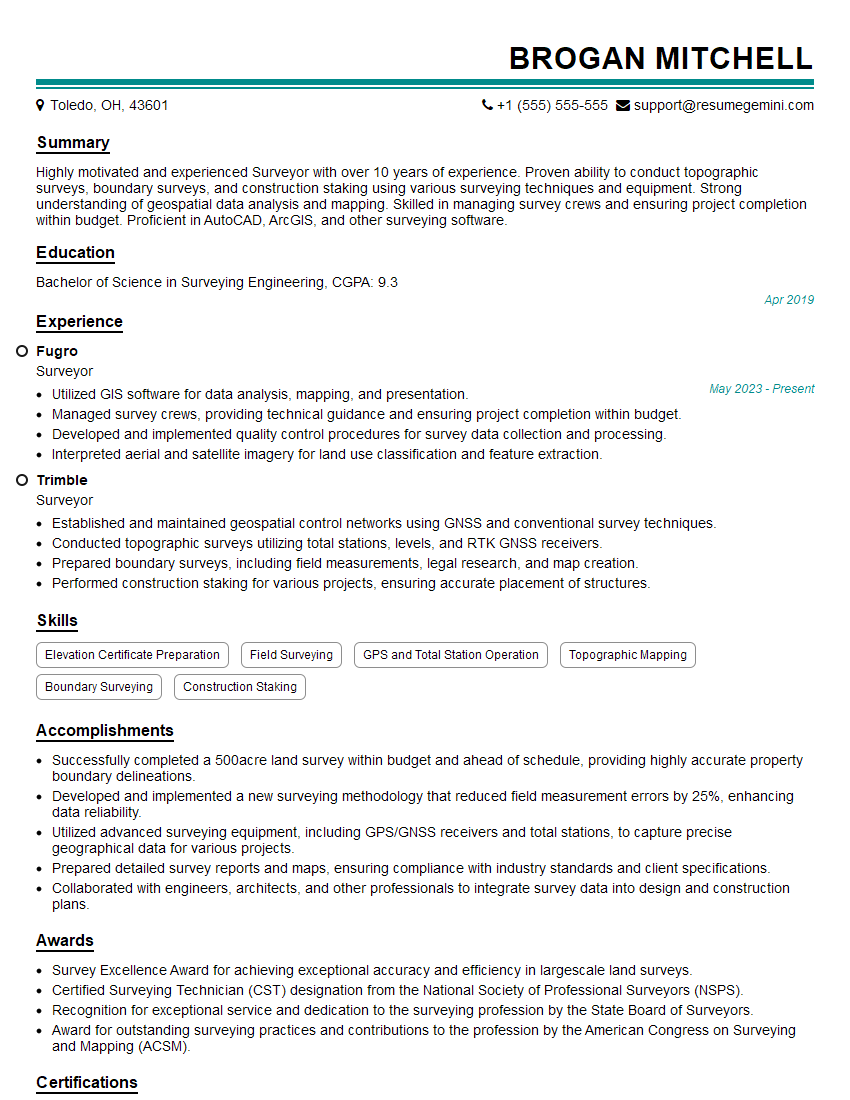
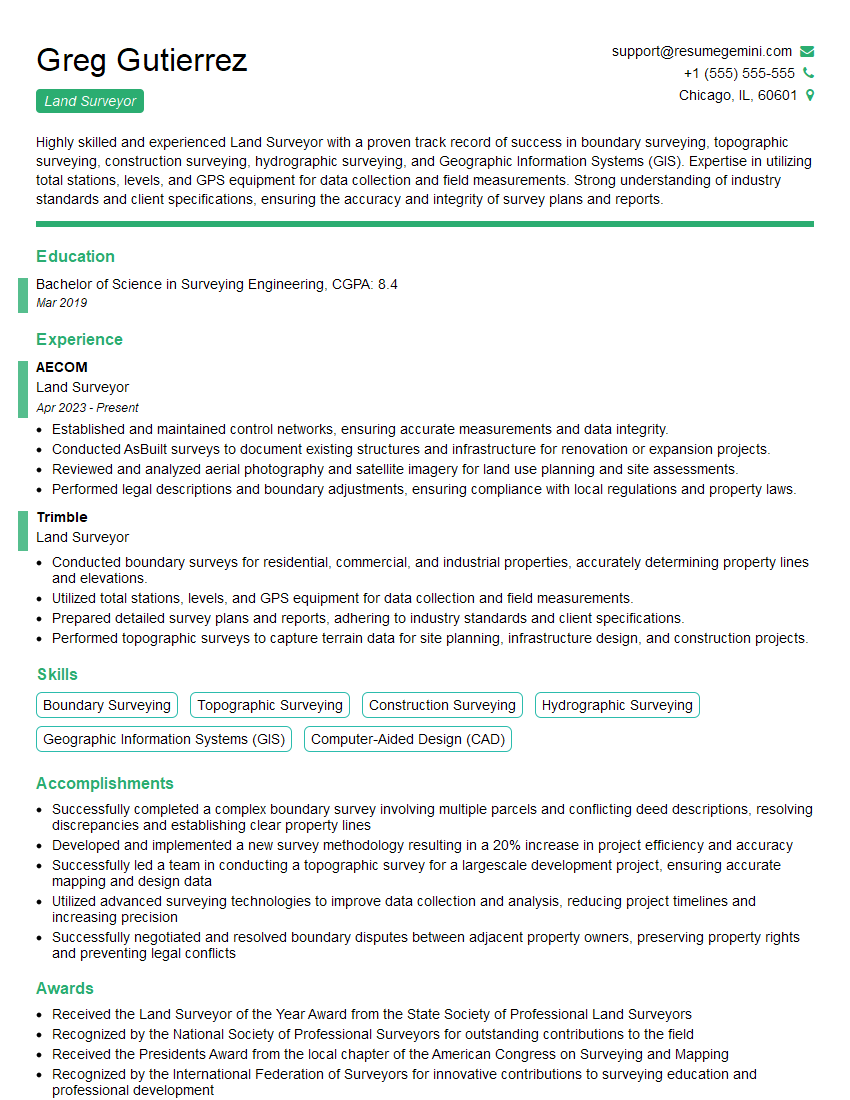
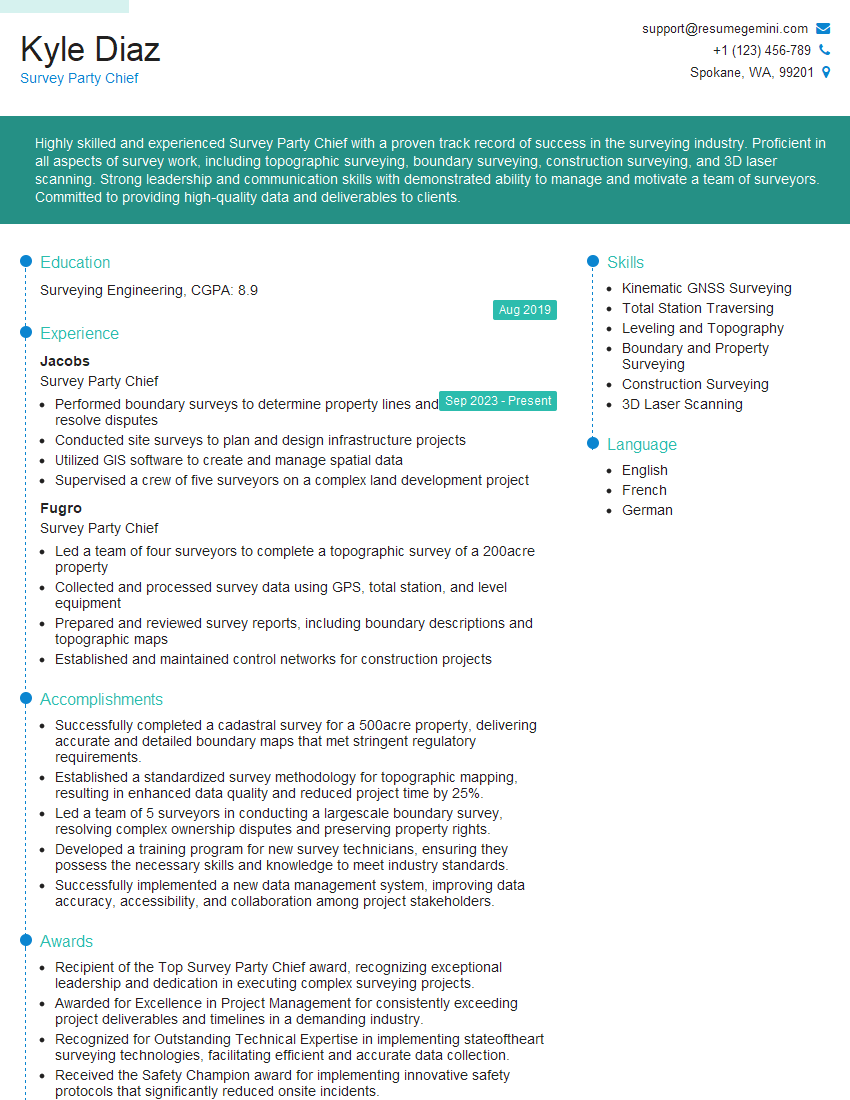
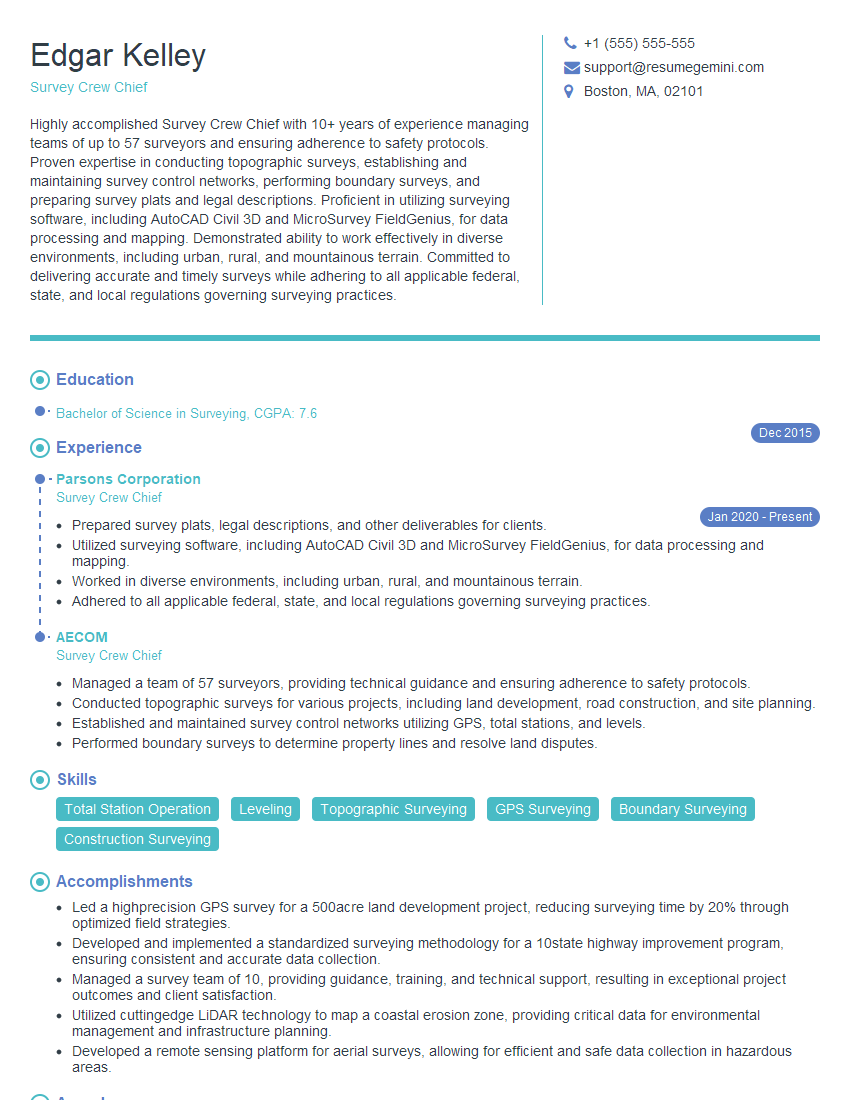
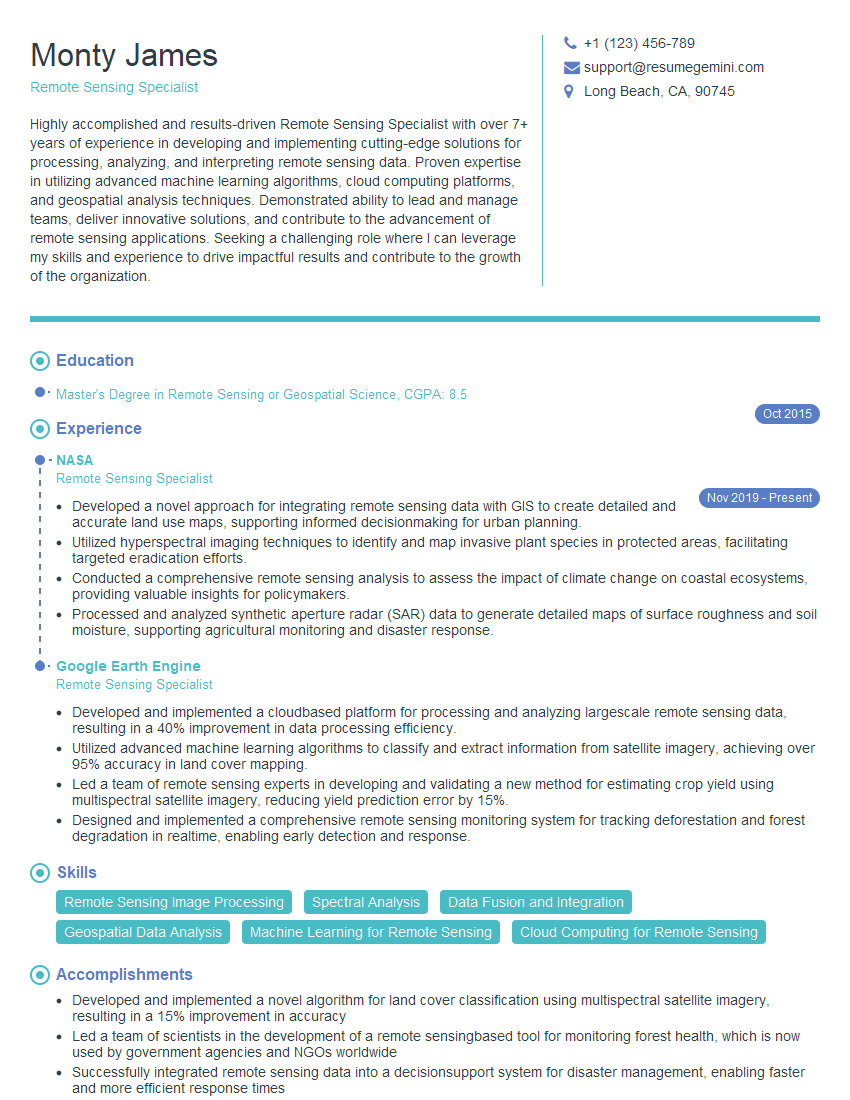
Mastering Knowledge of State and Local Surveying Laws and Regulations is crucial for advancing your career in surveying. A strong understanding of these legal aspects demonstrates professionalism, reduces liability risks, and opens doors to more challenging and rewarding opportunities. To significantly enhance your job prospects, creating an ATS-friendly resume is essential. ResumeGemini is a trusted resource that can help you build a professional resume that showcases your skills and experience effectively. We provide examples of resumes tailored to highlight expertise in Knowledge of State and Local Surveying Laws and Regulations to help you get started.




Explore more articles
Users Rating of Our Blogs
Share Your Experience
We value your feedback! Please rate our content and share your thoughts (optional).
What Readers Say About Our Blog
I Redesigned Spongebob Squarepants and his main characters of my artwork.
https://www.deviantart.com/reimaginesponge/art/Redesigned-Spongebob-characters-1223583608
IT gave me an insight and words to use and be able to think of examples
Hi, I’m Jay, we have a few potential clients that are interested in your services, thought you might be a good fit. I’d love to talk about the details, when do you have time to talk?
Best,
Jay
Founder | CEO