Interviews are more than just a Q&A session—they’re a chance to prove your worth. This blog dives into essential Welding Design and Engineering interview questions and expert tips to help you align your answers with what hiring managers are looking for. Start preparing to shine!
Questions Asked in Welding Design and Engineering Interview
Q 1. Explain the difference between GMAW and GTAW welding processes.
GMAW (Gas Metal Arc Welding) and GTAW (Gas Tungsten Arc Welding) are both arc welding processes, but they differ significantly in their methods and applications. Think of it like this: GMAW is like using a spray gun, while GTAW is like using a tiny, precise paintbrush.
GMAW (MIG welding): Uses a consumable electrode (wire) fed continuously into the weld pool. A shielding gas (usually Argon or CO2, or a mix) protects the weld from atmospheric contamination. It’s faster, generally less skilled to perform proficiently, and better suited for high-volume production due to its speed and ease of automation. Imagine building a car chassis – GMAW’s speed and efficiency are ideal.
GTAW (TIG welding): Employs a non-consumable tungsten electrode to create the arc. A separate filler metal is added manually to the weld pool, requiring greater skill and precision. Shielding gas (usually Argon or a mix) is always used. It’s excellent for precise welds on thinner materials or where high-quality, aesthetically pleasing welds are crucial. Think of creating intricate metal art sculptures – GTAW provides the fine control necessary.
- Key Differences Summarized:
- Electrode: GMAW – Consumable wire; GTAW – Non-consumable tungsten
- Filler Metal Addition: GMAW – Automatic; GTAW – Manual
- Speed: GMAW – Faster; GTAW – Slower
- Skill Level: GMAW – Relatively easier; GTAW – Requires higher skill
- Applications: GMAW – Production welding, structural steel; GTAW – Precision welding, thin materials, stainless steel
Q 2. Describe the various types of weld defects and their causes.
Weld defects are imperfections that compromise the strength, integrity, and overall quality of a weld. They can be broadly categorized into several types, each with its own causes:
- Porosity: Small gas holes within the weld metal. Caused by insufficient shielding gas, moisture in the base material or filler metal, or improper welding parameters.
- Inclusion: Foreign materials, such as slag (molten flux) or oxides, trapped within the weld. Caused by poor cleaning of the base material, inadequate shielding, or incorrect welding technique.
- Undercut: A groove melted into the base material at the edge of the weld. Usually caused by excessive current, travel speed that’s too fast, or improper electrode angle.
- Overlap: Weld metal extending beyond the edges of the joint. Caused by excessive current, incorrect travel speed, or poor joint preparation.
- Lack of Fusion: Incomplete bonding between the weld and the base metal. Caused by insufficient heat input, improper cleaning, or surface contamination.
- Cracks: Fractures within the weld or heat-affected zone. Caused by rapid cooling, hydrogen embrittlement, improper preheating/post-heating, or inappropriate base material selection.
- Lack of Penetration: Insufficient weld metal depth. Typically caused by insufficient current or travel speed that is too fast.
Understanding the causes is crucial for preventing defects. For instance, if you encounter excessive porosity, you might need to adjust shielding gas flow, preheat the material, or ensure the filler metal is dry.
Q 3. What are the common non-destructive testing (NDT) methods used for weld inspection?
Non-destructive testing (NDT) is essential for ensuring weld quality without damaging the weld itself. Common methods include:
- Visual Inspection (VT): The simplest method, involving a visual examination of the weld for surface defects.
- Liquid Penetrant Testing (PT): A dye is applied to the surface to reveal surface-breaking defects.
- Magnetic Particle Testing (MT): Used for ferromagnetic materials; magnetic particles are applied to detect surface and near-surface defects.
- Ultrasonic Testing (UT): High-frequency sound waves are used to detect internal flaws. Think of it like sonar for welds.
- Radiographic Testing (RT): X-rays or gamma rays penetrate the weld, revealing internal defects on a film.
The choice of NDT method depends on the weld type, material, and the level of inspection required. For critical applications, a combination of methods might be used to ensure complete inspection coverage.
Q 4. How do you determine the appropriate welding parameters (voltage, amperage, travel speed) for a specific application?
Determining appropriate welding parameters is crucial for producing high-quality welds. It’s a balance between achieving sufficient penetration, avoiding defects, and maintaining weld integrity.
The process involves considering several factors:
- Base Material: Thickness, type (steel, aluminum, etc.), and properties influence required heat input.
- Welding Process: GMAW, GTAW, SMAW, etc., each has its own parameter ranges.
- Joint Design: The geometry of the joint affects heat dissipation and penetration.
- Desired Weld Bead Profile: The shape of the weld bead can indicate whether the parameters are correctly set.
Determining Parameters: Often, manufacturers provide guidelines or WPS (Welding Procedure Specifications). These documents specify the parameters for a specific material and application. If not available, experimentation and experience are crucial. Begin with a conservative setting and observe the weld bead formation. Adjust voltage (heat input), amperage (current), and travel speed (time the heat is applied) iteratively until the desired weld characteristics are achieved. Always refer to relevant codes and standards, such as AWS D1.1.
Example: For thicker steel sections in GMAW, you might need higher voltage and amperage to achieve sufficient penetration, while maintaining a reasonable travel speed to prevent excessive heat input and potential defects like undercutting or burning.
Q 5. Explain the importance of proper joint design in welding.
Proper joint design is paramount in welding because it directly impacts the weld’s strength, integrity, and resistance to various loading conditions. A poorly designed joint can lead to stress concentrations, increased susceptibility to cracking, and ultimately, structural failure.
Consider these aspects of a good weld joint design:
- Minimize Stress Concentrations: Avoid sharp corners or abrupt changes in cross-section. Smooth transitions are preferred.
- Ensure Adequate Penetration and Fusion: Proper joint geometry should allow complete penetration and fusion to guarantee a strong, continuous weld.
- Accessibility: The joint should be easily accessible for welding and inspection.
- Material Compatibility: Joint design should accommodate the material’s properties and welding process.
- Minimize Distortion: A good design can help mitigate warpage and distortion during the welding process.
For example, a butt joint with proper bevel preparation ensures better weld penetration compared to a simple butt joint without any preparation, increasing weld strength and reliability significantly. A well-designed joint can be the difference between a strong, durable structure and one that fails prematurely.
Q 6. What are the different types of weld joints and their applications?
Various weld joints exist, each suited for different applications based on factors like material thickness, strength requirements, and ease of fabrication.
- Butt Joint: Two members are joined end-to-end. Used extensively in structural applications where high strength is required, like pipeline welding.
- Lap Joint: Two overlapping members are welded together. Simpler to weld than butt joints, often used for less demanding applications.
- Tee Joint: One member is welded to the edge of another, forming a ‘T’ shape. Commonly used in pipe and structural work.
- Corner Joint: Two members are joined at a right angle. Used in box structures and other applications requiring angular connections.
- Edge Joint: Two edges are welded together, with minimal overlap. Commonly used when joining thin materials.
The selection of a weld joint depends heavily on the application. For instance, a butt joint would be preferred for joining two thick plates in a high-stress structural component, while a lap joint might suffice for a less demanding application.
Q 7. Describe your experience with welding codes and standards (e.g., AWS D1.1).
Throughout my career, I have extensively used various welding codes and standards, most notably AWS D1.1, ‘Structural Welding Code—Steel’. This code provides detailed guidelines for welding procedures, qualifications of welders and welding operators, and the inspection of welds in steel structures. My experience includes:
- Developing WPS (Welding Procedure Specifications): I have created numerous WPS documents detailing the welding parameters, pre- and post-weld heat treatments, and quality control measures required for specific projects. This involves rigorous testing and documentation to ensure compliance with AWS D1.1.
- PQP (Procedure Qualification Record) Generation: I have overseen the qualification of welding procedures, which involves performing test welds according to AWS D1.1 and subjecting them to rigorous NDT to ensure they meet the required standards.
- Weld Inspection and Acceptance Criteria: I am proficient in interpreting the requirements of AWS D1.1 to ensure that completed welds meet the specified criteria for acceptance and that all necessary documentation is properly completed.
- Code Compliance Audits: I’ve participated in audits to verify the compliance of welding operations with the relevant codes and standards.
My familiarity extends to other relevant codes, such as those pertaining to specific materials (e.g., stainless steel, aluminum) and applications. Understanding and applying these codes ensures the safety and reliability of welded structures. I find that maintaining a deep understanding of these standards is essential in ensuring structural integrity and compliance.
Q 8. How do you ensure weld quality and consistency in a production environment?
Ensuring consistent weld quality in a production environment is paramount. It involves a multi-pronged approach encompassing meticulous process control, rigorous quality checks, and skilled workforce management.
- Standardized Procedures: We implement detailed, documented welding procedures (WPS) specifying parameters like current, voltage, travel speed, and pre/post-weld heat treatments for each material and joint design. This ensures repeatability.
- Operator Qualification and Training: Welders undergo rigorous testing and certification to demonstrate proficiency in specific welding processes and materials. Regular retraining and competency checks maintain skill levels. Think of it like a pilot needing recurrent training to maintain their license.
- Regular Monitoring and Quality Control: In-process inspections, including visual checks and non-destructive testing (NDT) methods like radiography (RT) or ultrasonic testing (UT), are crucial. Statistical Process Control (SPC) helps identify trends and potential problems before they escalate.
- Equipment Calibration and Maintenance: Welding equipment (power sources, torches, etc.) needs regular calibration to guarantee consistent performance. Preventive maintenance minimizes downtime and ensures reliability.
- Material Traceability and Control: The source and properties of the base materials and filler metals must be meticulously tracked to avoid inconsistencies. This ensures the material meets the required specifications.
For instance, in a project involving stainless steel pipe welding, we’d use a WPS specifying the Gas Metal Arc Welding (GMAW) process with specific shielding gas composition and parameters, coupled with regular radiographic inspections to detect internal defects.
Q 9. Explain the concept of heat-affected zone (HAZ) and its significance.
The Heat-Affected Zone (HAZ) is the area of base material surrounding a weld that’s been subjected to the heat of the welding process, but not melted. This heat alters the microstructure and properties of the base metal, often leading to changes in hardness, toughness, and ductility. Understanding the HAZ is critical because these changes can negatively impact the weld’s overall strength and integrity.
The HAZ’s size and characteristics depend on several factors: the welding process, the heat input (amount of heat applied during welding), the base material’s properties, and the weld thickness. A larger HAZ might exhibit increased hardness (making it more brittle) or reduced toughness (more susceptible to cracking). This is especially relevant with high-strength steels.
In practice, we account for the HAZ by considering its impact on design and specifying pre- or post-weld heat treatments to mitigate potential issues. For example, stress-relieving heat treatments can reduce residual stresses in the HAZ, preventing cracking or distortion. Selecting appropriate base materials with good HAZ characteristics is equally important.
Q 10. Describe your experience with different types of filler metals and their applications.
My experience encompasses a broad range of filler metals, each chosen based on the specific application and base material. Filler metals are essentially the added material that forms the weld. Selecting the wrong one can compromise the weld’s quality and longevity.
- Mild Steel Electrodes (E7018): These are commonly used for structural steel welding and offer good strength and weldability. The E7018 designation indicates a specific tensile strength and other properties.
- Stainless Steel Filler Metals (308L, 316L): I’ve extensively used these for welding various grades of stainless steel, prioritizing corrosion resistance. The ‘L’ designation indicates a low carbon content, which reduces the risk of sensitization and intergranular corrosion.
- Aluminum Filler Metals (4043, 5356): These are vital for aluminum welding applications, where considerations include excellent corrosion resistance and strength, along with the correct alloy match to the base metal.
- Nickel-based Alloys: I’ve worked with these specialized filler metals for applications demanding high temperature resistance and corrosion resistance, such as in aerospace or chemical processing industries.
Choosing the correct filler metal is as critical as choosing the right welding process. Incorrect filler metal selection can lead to poor weld quality, reduced strength, and susceptibility to corrosion or cracking. I always cross-reference the filler metal’s specifications with the base material’s properties to ensure compatibility.
Q 11. How do you select the appropriate welding process for a specific material?
Selecting the right welding process depends on a multitude of factors, including the base material, joint design, required weld quality, production speed, and cost considerations. It’s not a one-size-fits-all scenario.
- Material: Different materials require specific processes. For example, thin sheet metal might be best suited to Gas Tungsten Arc Welding (GTAW) for its precision and control, while thicker steel might use Shielded Metal Arc Welding (SMAW) or GMAW for speed and efficiency.
- Joint Design: The geometry of the joint influences the process selection. A butt joint might be easily welded with GMAW, while a more complex joint might benefit from GTAW’s precision.
- Weld Quality Requirements: Applications demanding high weld quality, such as aerospace or nuclear, often necessitate GTAW or electron beam welding (EBW) for exceptional penetration and minimal defects. Less critical applications might use GMAW or SMAW.
- Production Rate: GMAW and SMAW are usually faster than GTAW, making them preferable for high-volume production.
- Cost: Each process has varying equipment, material, and labor costs. The choice often involves balancing quality requirements with cost-effectiveness.
For instance, in welding a high-pressure pipeline made of high-strength steel, I might opt for GTAW to ensure deep penetration and minimal porosity, whereas joining thin stainless steel sheets in a cosmetic application would likely utilize GTAW due to its control and clean welds.
Q 12. What are the safety precautions you take while performing welding operations?
Safety is paramount in welding. My safety practices are unwavering and follow established industry standards.
- Personal Protective Equipment (PPE): This includes a welding helmet with appropriate shade lenses, flame-resistant clothing, gloves, and safety footwear. Eye protection is critically important to prevent eye damage from intense light and flying sparks.
- Fire Prevention: The work area must be clear of flammable materials. Fire extinguishers should be readily available and readily accessible.
- Ventilation: Adequate ventilation is essential to remove welding fumes, which can contain harmful substances. Local exhaust ventilation systems are often employed.
- Shielding: Welding screens or curtains protect others from the intense light and sparks.
- Proper Handling of Gases: When using compressed gases, I ensure proper cylinder storage, handling, and connection procedures to prevent leaks and explosions. Cylinders should always be upright and secured.
- Electrical Safety: Ensuring proper grounding and isolation of electrical equipment is critical to prevent electric shock.
I also conduct regular safety checks and ensure my colleagues adhere to safety procedures. Before commencing any welding task, a thorough risk assessment is undertaken to identify and mitigate potential hazards.
Q 13. Explain your understanding of weld penetration and fusion.
Weld penetration and fusion are fundamental aspects of weld quality. They determine the strength and integrity of the weld.
Weld Penetration refers to the depth of the weld into the base materials. Adequate penetration is essential to ensure sufficient strength and prevent defects like lack of fusion. Insufficient penetration leads to a weakened weld, susceptible to cracking or failure.
Fusion refers to the complete melting and bonding of the base material and filler metal. Proper fusion is vital because incomplete fusion creates discontinuities that weaken the weld. Think of it like gluing two pieces of wood together – incomplete adhesion would cause weakness.
Both penetration and fusion are assessed through visual inspection and NDT methods. Radiography (RT) is particularly effective in detecting lack of fusion and incomplete penetration. The desired penetration and fusion levels are specified in the WPS.
Q 14. How do you interpret welding symbols?
Welding symbols are a standardized graphical representation of welding requirements. They provide concise instructions to welders, ensuring consistency and accuracy. The symbols convey information about the type of weld, weld size, weld location, and other relevant parameters.
Understanding welding symbols involves recognizing different components: the reference line, arrow side, other side, the symbol itself indicating the weld type (e.g., fillet weld, groove weld), dimensions specifying weld size (leg length for fillet welds, size for groove welds), and various other markings, such as surface finish or heat treatment symbols.
For instance, a symbol depicting a filled triangle on the arrow side of a reference line usually indicates a fillet weld on the arrow side, with the size of the triangle representing the leg length of the weld. This size is usually given in millimeters.
Interpreting welding symbols accurately is crucial for welders to execute the required weld, and a lack of understanding can result in major problems in a project.
Q 15. Describe your experience with welding procedure specifications (WPS).
Welding Procedure Specifications (WPS) are essentially blueprints for welding. They detail every aspect of a specific welding process to ensure consistent, high-quality welds. My experience encompasses developing, qualifying, and implementing WPSs for a wide range of materials and applications, including stainless steel, aluminum, and carbon steel. I’m proficient in using various WPS qualification standards such as AWS D1.1 and ASME Section IX. For example, in a recent project involving the fabrication of pressure vessels, I developed a WPS for Gas Metal Arc Welding (GMAW) of 304 stainless steel, meticulously specifying parameters like shielding gas composition, wire feed speed, voltage, and travel speed to achieve the required mechanical properties and radiographic soundness. This involved conducting numerous test welds and performing detailed metallurgical evaluations to ensure compliance with the applicable codes and standards. I also have extensive experience in updating and revising existing WPSs to reflect changes in materials, equipment, or welding procedures.
Career Expert Tips:
- Ace those interviews! Prepare effectively by reviewing the Top 50 Most Common Interview Questions on ResumeGemini.
- Navigate your job search with confidence! Explore a wide range of Career Tips on ResumeGemini. Learn about common challenges and recommendations to overcome them.
- Craft the perfect resume! Master the Art of Resume Writing with ResumeGemini’s guide. Showcase your unique qualifications and achievements effectively.
- Don’t miss out on holiday savings! Build your dream resume with ResumeGemini’s ATS optimized templates.
Q 16. Explain the importance of pre- and post-weld heat treatments.
Pre- and post-weld heat treatments are crucial for mitigating residual stresses and improving the overall properties of the weldment. Preheating, conducted before welding, reduces the cooling rate, preventing the formation of hard, brittle microstructures, particularly in thicker sections or high-strength steels. Think of it like slowly cooling a hot pan to avoid cracking. Post-weld heat treatment (PWHT), applied after welding, relieves residual stresses that can lead to cracking or distortion over time. It also improves the weld’s toughness and ductility. For instance, in a project involving the welding of high-strength steel plates for a bridge structure, preheating to 300°C was essential to avoid cold cracking. Similarly, PWHT at 650°C for several hours was necessary to relieve residual stresses and enhance the long-term structural integrity of the weldments. Improper heat treatment can lead to premature failure, so precise control over temperature and time is vital.
Q 17. What are the different types of welding consumables?
Welding consumables are the materials consumed during the welding process. They are crucial for achieving the desired weld properties. There’s a broad range, including:
- Electrodes: These come in various types, such as coated (shielded metal arc welding – SMAW), solid (Gas Tungsten Arc Welding -GTAW), and flux-cored (FCAW), each tailored to specific applications and materials. The coating or core composition controls the weld’s properties.
- Filler Metals: These are wires or rods that provide the material to fill the weld joint. They are chosen to match or complement the base metal’s properties. They are often categorized by their chemical composition and strength.
- Shielding Gases: These gases (like argon, helium, CO2, or mixtures) protect the weld from atmospheric contamination, ensuring a clean, sound weld. The choice depends on the welding process and the base metal.
- Fluxes: These are used in processes like submerged arc welding (SAW) and FCAW to protect the weld from atmospheric contamination and enhance fluidity.
Selecting the right consumable is as critical as choosing the right welding process. The wrong choice can lead to porosity, cracking, poor mechanical properties, and overall weld failure.
Q 18. Describe your experience with robotic welding systems.
I have substantial experience with robotic welding systems, from programming and setup to troubleshooting and maintenance. My experience includes working with different robotic brands like ABB and FANUC. I’m proficient in using offline programming software to create and simulate weld paths, reducing downtime and maximizing efficiency. Robotic welding offers significant advantages in terms of consistency, speed, and precision, especially for repetitive tasks. In one project, we automated the welding of automotive chassis components using a six-axis robotic arm. This resulted in a substantial increase in production rate and a significant improvement in weld quality uniformity compared to manual welding. This also minimized human error and improved workplace safety. My responsibilities also include ensuring the robots are correctly calibrated and maintained to guarantee optimal performance and prevent weld defects.
Q 19. How do you troubleshoot common welding problems?
Troubleshooting welding problems involves a systematic approach. I typically begin by visually inspecting the weld for common defects like porosity, undercut, lack of fusion, or cracks. Then, I analyze the welding parameters (voltage, current, travel speed, etc.) and the consumable used. For example, excessive porosity might indicate insufficient shielding gas coverage or moisture in the consumables. Undercut might be due to excessive current or improper electrode angle. The process also involves considering the base metal preparation and cleanliness. If visual inspection and parameter analysis aren’t enough, I might employ more advanced techniques like radiographic testing (RT) or ultrasonic testing (UT) to detect internal defects. Addressing the root cause is critical to prevent recurrence. I document all findings and corrective actions to maintain a record of problem-solving steps and improve future welding processes.
Q 20. Explain your experience with different types of welding fixtures.
Welding fixtures are critical for holding and positioning components during the welding process, ensuring consistent weld quality and minimizing distortion. My experience includes working with various types of fixtures, including:
- Clamps and Jigs: Used for simple assemblies, providing secure clamping for smaller parts.
- Magnetic Fixtures: Offer quick setup and flexibility for holding ferromagnetic materials.
- Locating Fixtures: Used for precise positioning of parts for repetitive welding tasks. These typically involve precise pins and bushings for alignment.
- Custom Fixtures: Designed and fabricated for complex geometries and specific welding applications.
Selecting the right fixture significantly impacts productivity and weld quality. A poorly designed fixture can lead to inaccurate weld placement, distortion, or even weld failures. I often collaborate with design engineers to develop and optimize fixtures for specific projects, ensuring efficient and accurate welding.
Q 21. What is your understanding of weld shrinkage and distortion?
Weld shrinkage and distortion are inherent consequences of the welding process. As the weld metal cools, it contracts, causing the welded parts to shrink and potentially distort. The magnitude of shrinkage and distortion depends on several factors, including the weld size, base metal properties, welding process, and the geometry of the component. Shrinkage can lead to dimensional inaccuracies, while distortion can lead to misalignment or buckling of the welded assembly. Strategies to mitigate these issues include using proper welding techniques, employing preheating or PWHT, using appropriate fixturing to restrain the workpiece during welding, and designing components to minimize stress concentrations. For example, in the fabrication of large pressure vessels, strategic weld sequencing and the use of specialized jigs and clamps are crucial to minimize distortion and maintain dimensional accuracy. Understanding and managing weld shrinkage and distortion is essential for ensuring the quality and structural integrity of welded components.
Q 22. How do you calculate the weld size and strength?
Calculating weld size and strength involves a multifaceted approach, combining theoretical calculations with practical considerations. The fundamental principle is ensuring the weld joint’s strength matches or exceeds the base material’s strength. This is achieved by considering several factors.
- Load Calculations: First, we determine the forces acting on the welded joint. This might involve static load calculations (like a weight resting on a structure) or dynamic load calculations (like vibrations or impacts). For example, calculating the shear stress on a fillet weld in a crane boom would involve considering the weight lifted, the boom’s geometry, and the weld’s size and location.
- Weld Geometry: The weld’s size (throat thickness for fillet welds, leg length for fillet welds, area for butt welds) directly influences its strength. Different weld types have different strength characteristics. For instance, a full penetration butt weld is significantly stronger than a partial penetration weld.
- Material Properties: The yield strength and ultimate tensile strength of the base metal and the filler metal are crucial. These values are usually found in material datasheets. The filler metal’s strength must be compatible with, or preferably exceed, the base metal strength.
- Weld Joint Efficiency: This factor accounts for potential imperfections in the weld (like porosity or lack of fusion) that might reduce the joint’s actual strength compared to its theoretical strength. Weld joint efficiency values are established in welding codes and standards (like AWS D1.1 for structural welding).
- Safety Factors: Finally, a safety factor is applied to account for uncertainties and variations. This factor increases the required weld size beyond the minimum calculated size, providing a margin of safety against unexpected loads or weld imperfections.
Example: Let’s say we need to calculate the size of a fillet weld joining two steel plates subjected to a tensile load of 10,000 N. Using appropriate formulas, considering the steel’s yield strength, weld joint efficiency, and a safety factor, we can determine the required leg length of the fillet weld to ensure the joint can withstand the load without failure.
Q 23. Describe your experience with Finite Element Analysis (FEA) in welding design.
Finite Element Analysis (FEA) is an invaluable tool in welding design, allowing for detailed stress and strain analysis of weld joints and surrounding structures. My experience involves using FEA software (like ANSYS or ABAQUS) to model complex weld geometries and simulate various loading conditions.
I’ve used FEA to:
- Optimize Weld Geometry: By varying weld size and placement in the FEA model, I can identify the optimal design that minimizes stress concentrations and maximizes weld strength.
- Predict Weld Distortion: FEA can accurately predict the distortion (warping and shrinkage) that occurs during welding, helping to design fixtures and minimize post-weld straightening needs. This is particularly crucial in complex structures where even minor distortion can cause significant problems.
- Assess Residual Stresses: Welding introduces residual stresses in the structure due to the heating and cooling process. FEA allows us to map these residual stresses, helping to identify potential crack initiation sites and to understand the overall structural integrity.
- Evaluate Weld Joint Performance under various Load Cases: I’ve conducted simulations for various load scenarios (static, dynamic, cyclic loading) to predict weld performance and ensure safety under all anticipated conditions.
For instance, in one project involving a pressure vessel, FEA helped us identify a potential stress concentration point around a specific weld. By modifying the weld design based on the FEA results, we avoided a potential failure point.
Q 24. How do you manage welding projects within budget and timeline constraints?
Managing welding projects within budget and timeline constraints requires a proactive and organized approach. My strategy typically involves:
- Detailed Planning: This includes a comprehensive work breakdown structure (WBS) defining all tasks and their dependencies. We carefully estimate the time and cost of each task, factoring in potential delays and unexpected issues.
- Resource Allocation: We determine the necessary resources – welders, equipment, materials – and assign them efficiently to minimize downtime and maximize productivity.
- Regular Monitoring: Throughout the project, we closely monitor progress against the schedule and budget. We use project management software to track tasks, deadlines, and costs. Any deviations are identified early on, allowing for corrective action.
- Risk Management: We anticipate potential risks – material delays, equipment malfunctions, welder availability – and develop mitigation plans. Contingency funds are allocated to address unforeseen circumstances.
- Communication: Open and clear communication with the project team, clients, and suppliers is crucial for managing expectations and resolving issues promptly. Regular progress reports help keep everyone informed.
In a recent project involving a large-scale pipeline, meticulous planning and effective resource allocation allowed us to complete the project on time and under budget despite unexpected material delivery delays. Proactive communication with suppliers allowed us to secure alternative materials with minimal impact on the schedule.
Q 25. Explain your experience with different types of welding inspection techniques.
My experience encompasses a wide range of welding inspection techniques, both destructive and non-destructive. These include:
- Visual Inspection (VT): This is the most basic method, involving a careful visual examination of the weld for surface defects like cracks, porosity, and undercut.
- Liquid Penetrant Testing (LPT): This technique uses a dye penetrant to reveal surface-breaking discontinuities in the weld.
- Magnetic Particle Testing (MPT): This method utilizes magnetic fields and iron particles to detect surface and near-surface flaws in ferromagnetic materials.
- Ultrasonic Testing (UT): UT employs high-frequency sound waves to detect internal flaws like cracks, inclusions, and lack of fusion. It’s particularly useful for thick welds or complex geometries.
- Radiographic Testing (RT): RT uses X-rays or gamma rays to create images of the weld’s internal structure, revealing internal defects. It’s a highly sensitive technique but requires specialized equipment and trained personnel.
- Destructive Testing (DT): This involves testing weld samples to failure to determine their mechanical properties, such as tensile strength, yield strength, and ductility.
The choice of inspection method depends on factors such as the weld type, material, criticality of the application, and applicable codes and standards. Often, a combination of methods is used to ensure thorough inspection.
Q 26. What is your understanding of the impact of different welding processes on material properties?
Different welding processes significantly impact material properties. The heat input, cooling rate, and the interaction between the base and filler metals all play critical roles.
- Heat-Affected Zone (HAZ): The HAZ is the area of the base material that is affected by the heat of the welding process. The HAZ properties can be altered by the welding process used. For instance, high heat input processes can lead to grain growth in the HAZ, reducing the material’s strength and toughness. Lower heat input processes may result in a finer grain structure, improving strength and toughness.
- Mechanical Properties: Welding can alter the base material’s tensile strength, yield strength, hardness, and ductility. Some processes might increase hardness in the HAZ, leading to brittleness.
- Microstructure: The welding process impacts the microstructure of both the weld metal and the HAZ. For instance, arc welding processes might produce a variety of microstructures depending on the welding parameters, leading to a range of properties in the weld metal.
- Residual Stresses: As mentioned earlier, the heating and cooling cycles during welding create residual stresses in the structure. These stresses can influence the material’s fatigue life and susceptibility to cracking.
For example, using a high heat input Gas Metal Arc Welding (GMAW) process on high-strength steel might lead to a weakened HAZ, whereas a lower heat input process like Gas Tungsten Arc Welding (GTAW) would minimize HAZ alteration and maintain desirable material properties. Selecting the appropriate welding process and carefully controlling the welding parameters is crucial for obtaining the desired material properties after welding.
Q 27. How do you handle conflicts or disagreements with other team members on a welding project?
Conflict resolution is a vital skill in any collaborative project. My approach involves:
- Active Listening: I strive to understand all perspectives before offering solutions. This involves actively listening to everyone’s concerns and ideas.
- Respectful Communication: I maintain a respectful and professional tone, even when disagreements arise. The goal is to find a solution that meets everyone’s needs as much as possible.
- Focus on Objectives: I always keep the project’s goals in mind and work towards a resolution that serves those objectives.
- Collaborative Problem-Solving: I encourage a collaborative approach to find a solution that addresses everyone’s concerns. This might involve brainstorming alternative approaches or seeking input from other experts.
- Mediation if Necessary: If the conflict can’t be resolved internally, I’m willing to seek mediation from a neutral party to facilitate communication and resolution.
In one instance, a disagreement arose about the best welding process for a particular component. By actively listening to the differing opinions, emphasizing the project’s goals, and collaboratively evaluating different options based on relevant data, we reached a consensus on the most appropriate technique. The key was mutual respect, open communication, and a commitment to finding the best solution for the project.
Q 28. Describe a time when you had to solve a challenging welding problem. What was the solution?
During the construction of a large offshore platform, we encountered significant cracking in a critical weld joint. Initial inspections indicated incomplete fusion, which could have had catastrophic consequences.
The Challenge: The weld was in a difficult-to-access location, requiring specialized techniques for repair. The platform’s schedule was already tight, and any delay would incur substantial costs. The repair needed to be both structurally sound and compliant with stringent offshore standards.
The Solution: We decided on a multi-pronged approach:
- Root Cause Analysis: We meticulously investigated the root cause of the incomplete fusion, pinpointing a flaw in the welding procedure and operator training.
- Repair Strategy: We employed a combination of grinding, re-welding using a proven technique (GTAW), and stringent quality control measures at each stage.
- Advanced Inspection Techniques: We used advanced ultrasonic testing and radiographic testing to verify the repair’s integrity, ensuring complete fusion and the absence of any defects.
- Operator Retraining: We conducted comprehensive retraining for the welding team, focusing on improved technique and quality control procedures.
Through careful planning, collaboration with specialized welding contractors, and rigorous quality checks, we successfully repaired the weld joint without significant schedule disruption. The root cause analysis prevented recurrence of similar issues in other parts of the structure. This experience underscored the importance of rigorous quality control, proactive problem-solving, and a commitment to learning from setbacks.
Key Topics to Learn for Welding Design and Engineering Interview
- Welding Processes: Understand the principles and applications of various welding methods (e.g., GMAW, SMAW, GTAW, FCAW) including their strengths, weaknesses, and suitability for different materials and applications. Consider the impact of process parameters on weld quality.
- Weld Joint Design: Master the design of different weld joints (e.g., butt, lap, tee, corner) considering factors like strength, stress concentration, and fatigue resistance. Be prepared to discuss the selection criteria for different joint types based on application requirements.
- Material Selection: Develop a strong understanding of the properties of different weldable materials (e.g., steel, aluminum, stainless steel) and how these properties influence weld design and process selection. Be ready to discuss material compatibility and potential issues like weld decay or cracking.
- Weld Inspection and Quality Control: Familiarize yourself with various non-destructive testing (NDT) methods used to evaluate weld quality (e.g., visual inspection, radiographic testing, ultrasonic testing). Understand relevant codes and standards (e.g., AWS D1.1) and their implications for weld design and acceptance criteria.
- Structural Analysis and Finite Element Analysis (FEA): Demonstrate understanding of how to analyze the stresses and strains in welded structures. Knowledge of FEA techniques for analyzing weldments is a valuable asset.
- Welding Metallurgy and Heat Affected Zone (HAZ): Grasp the metallurgical changes that occur during welding and their impact on the mechanical properties of the weld and the HAZ. Understand how to mitigate potential issues related to HAZ properties.
- Safety and Regulations: Showcase your knowledge of relevant safety regulations and practices associated with welding and fabrication. This includes personal protective equipment (PPE), safe handling of welding materials, and compliance with industry standards.
- Cost Estimation and Project Management: Demonstrate understanding of the cost factors involved in welding projects and ability to manage project timelines and resources efficiently.
Next Steps
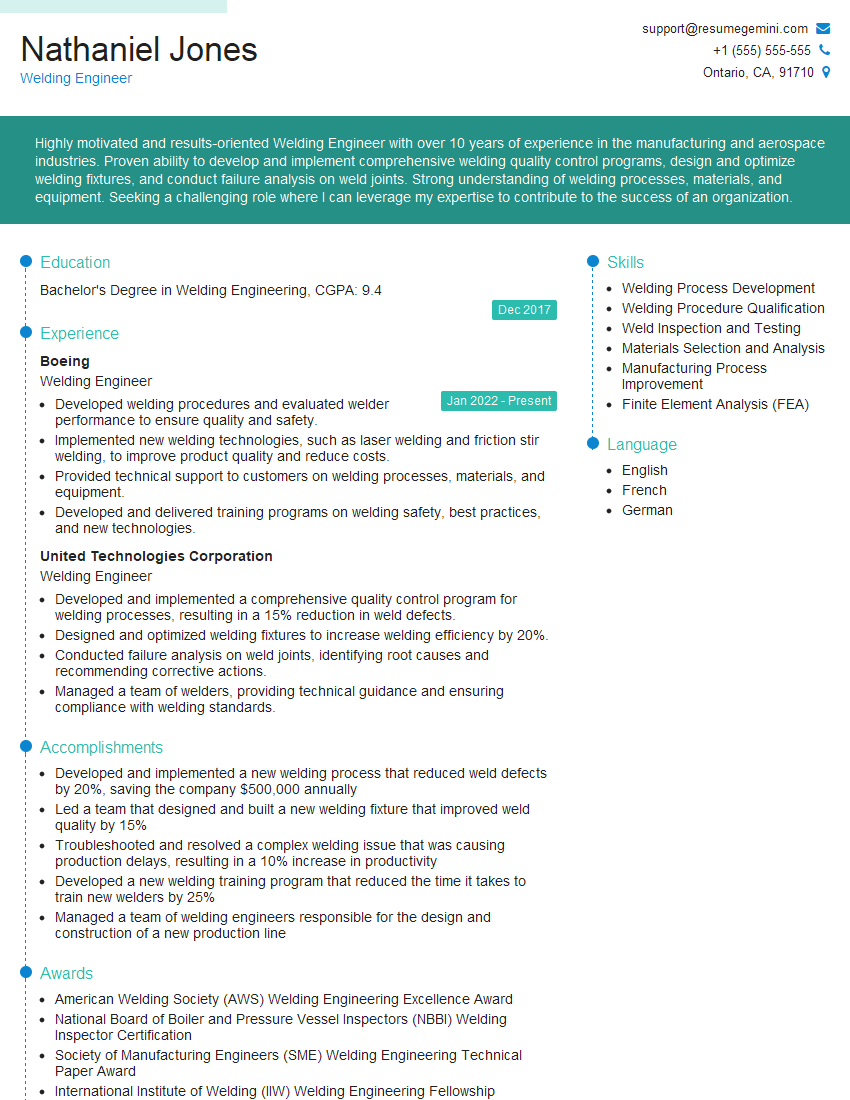
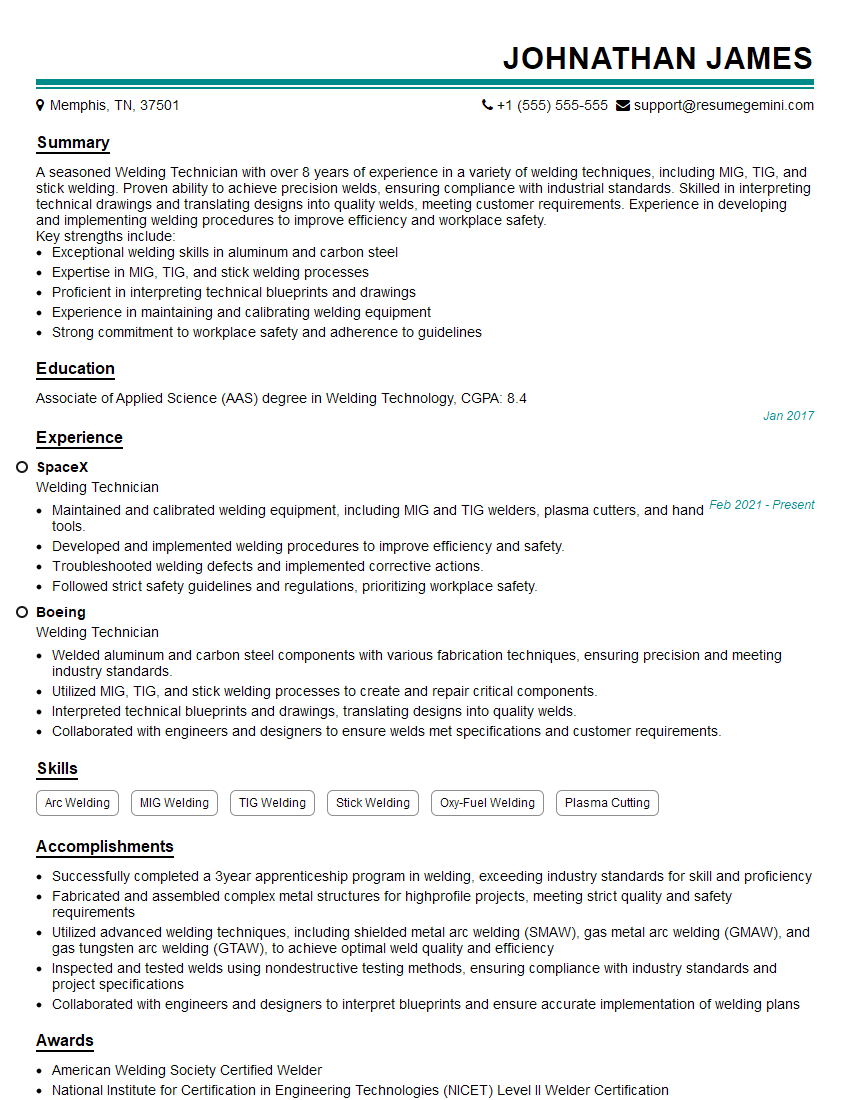
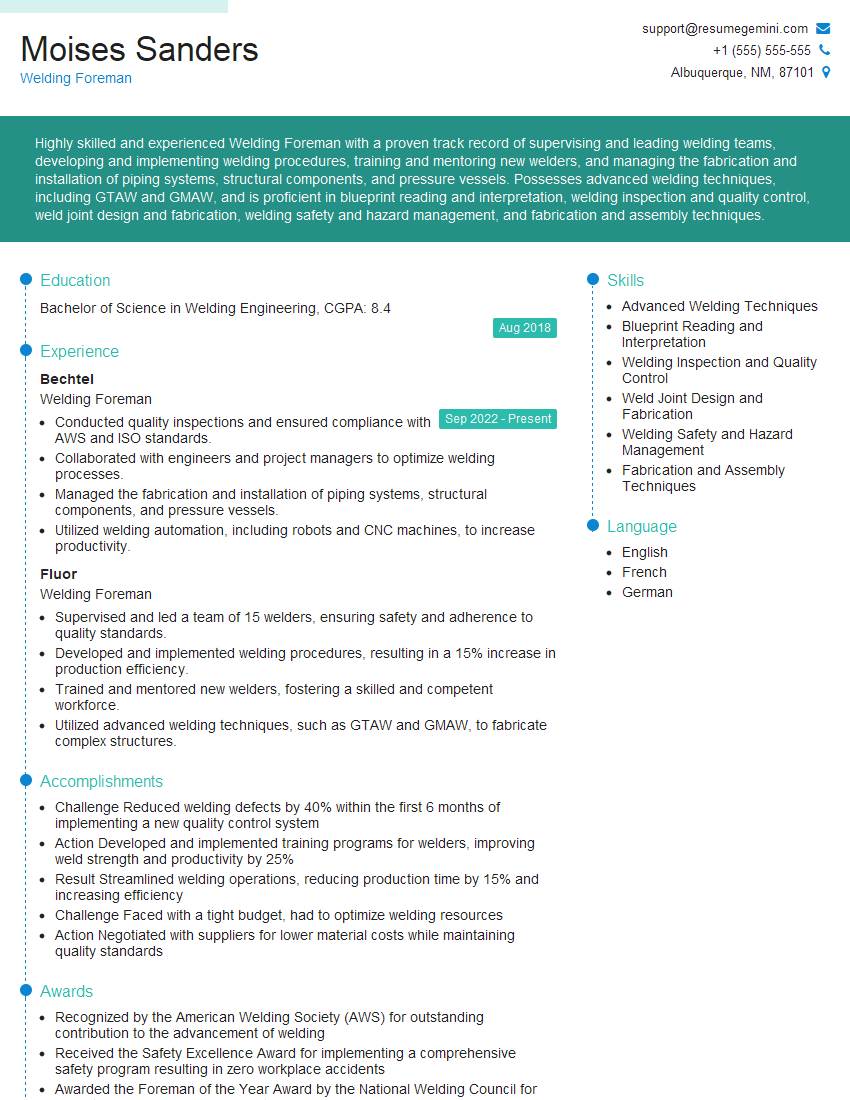
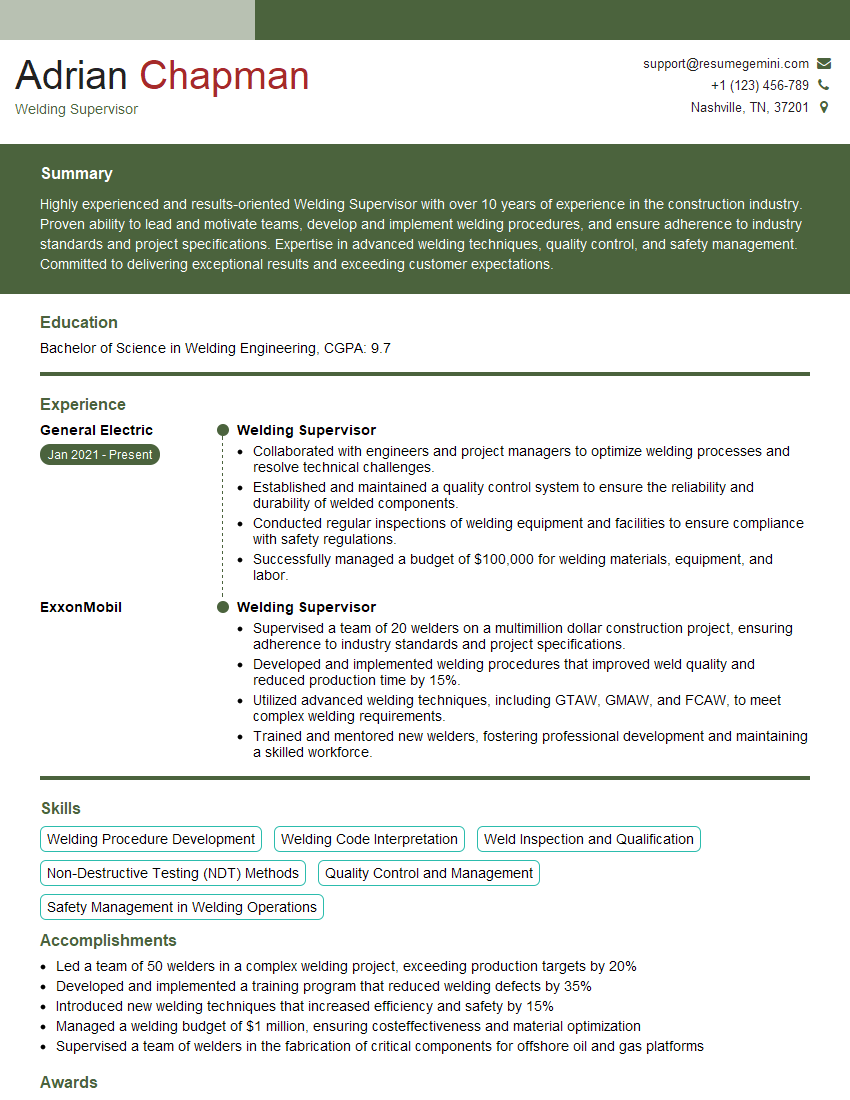
Mastering Welding Design and Engineering opens doors to exciting and rewarding career opportunities with significant growth potential. A strong understanding of these principles is crucial for success in this field. To enhance your job prospects, create an ATS-friendly resume that effectively highlights your skills and experience. ResumeGemini is a trusted resource to help you build a professional and impactful resume. Examples of resumes tailored to Welding Design and Engineering are available to guide you in this process.
Explore more articles
Users Rating of Our Blogs
Share Your Experience
We value your feedback! Please rate our content and share your thoughts (optional).
What Readers Say About Our Blog
I Redesigned Spongebob Squarepants and his main characters of my artwork.
https://www.deviantart.com/reimaginesponge/art/Redesigned-Spongebob-characters-1223583608
IT gave me an insight and words to use and be able to think of examples
Hi, I’m Jay, we have a few potential clients that are interested in your services, thought you might be a good fit. I’d love to talk about the details, when do you have time to talk?
Best,
Jay
Founder | CEO