Unlock your full potential by mastering the most common Oil and Gas Surveying interview questions. This blog offers a deep dive into the critical topics, ensuring you’re not only prepared to answer but to excel. With these insights, you’ll approach your interview with clarity and confidence.
Questions Asked in Oil and Gas Surveying Interview
Q 1. Explain the different types of surveys used in the oil and gas industry.
Oil and gas surveying employs various survey types, each crucial for different project phases. These can be broadly categorized into:
- Geophysical Surveys: These utilize advanced technologies like seismic reflection, refraction, and gravity methods to map subsurface geological structures, identifying potential hydrocarbon reservoirs. Imagine it as taking an X-ray of the earth to find hidden pockets of oil and gas. These surveys are critical in the exploration phase.
- Topographic Surveys: These establish the surface elevations and contours of the land, providing a 3D representation of the terrain. This is vital for planning infrastructure like pipelines, well pads, and access roads. Think of it as creating a detailed map of the land’s surface.
- Engineering Surveys: These surveys are precise measurements guiding the construction and operation of oil and gas facilities. They are used for setting out well locations, pipelines, and other structures, ensuring everything aligns perfectly. This is like the blueprints being brought to life on site.
- Cadastral Surveys: These define land boundaries and ownership, crucial for legal compliance and avoiding disputes over property rights in oil and gas concessions. They are the legal framework of the land usage.
- Pipeline Surveys: These specialized surveys are integral to the planning, construction, and maintenance of pipelines, ensuring accurate alignment, depth, and integrity checks throughout their entire length. It is like carefully measuring the path of a long and important artery.
- Route Surveys: Similar to pipeline surveys but broader, used to establish the best route for access roads, pipelines, or transmission lines, considering terrain, environmental factors, and regulatory constraints.
The selection of survey type depends on the project phase, location, and specific objectives.
Q 2. Describe your experience with GPS surveying in an oil and gas environment.
My experience with GPS surveying in oil and gas extends to several projects, encompassing both onshore and offshore environments. I’ve utilized both Real-Time Kinematic (RTK) and Post-Processed Kinematic (PPK) GPS techniques. In onshore settings, RTK GPS proved invaluable for rapidly and accurately establishing control points for topographic surveys, monitoring pipeline construction, and setting out well locations. The immediate positional accuracy was crucial for efficient project execution. In offshore applications, PPK GPS, combined with other positioning systems (like IMU), was essential for surveying subsea pipelines and platforms due to the challenges of maintaining consistent satellite signal reception.
For example, on a recent onshore project, RTK GPS allowed us to survey hundreds of kilometers of pipeline route within a tight timeframe, significantly reducing the time and cost compared to traditional methods. In an offshore project involving a subsea pipeline, we employed PPK GPS to create highly accurate 3D models of the pipeline’s location, which was critical for subsequent maintenance and repair activities.
Q 3. How do you ensure accurate data acquisition in challenging terrain?
Ensuring accurate data acquisition in challenging terrain requires a multi-faceted approach. The key lies in selecting the appropriate survey techniques and equipment, combined with meticulous field procedures and data quality control.
- Equipment Selection: In dense vegetation or mountainous regions, we might use drone-based LiDAR or total stations with long-range capabilities. For areas with limited satellite visibility, we’d incorporate inertial measurement units (IMUs) to enhance the accuracy of GPS.
- Field Procedures: Thorough reconnaissance of the area beforehand helps in planning efficient survey routes and identifying potential obstacles. Multiple observations and redundancy are essential to mitigate errors. Robust quality control checks are conducted in the field to immediately detect and correct any mistakes.
- Data Processing: Sophisticated software and advanced processing techniques account for environmental factors such as atmospheric refraction and multipath errors, improving the overall accuracy of the final data product. We also use rigorous least squares adjustment techniques to minimize the propagation of errors.
- Ground Control Points (GCPs): In areas lacking readily available high-accuracy geodetic control points, we often establish GCPs using high-precision methods like total station traversing or precise GPS techniques. These GCPs provide crucial ground truth data for the entire survey.
For instance, in a recent survey involving a steep, forested area, we utilized a combination of drone LiDAR for rapid data collection and ground-based total stations for precise measurements in challenging areas where the drone couldn’t reach effectively. This combined approach ensured a comprehensive and accurate survey dataset.
Q 4. What software are you proficient in for processing and analyzing survey data?
My proficiency extends to several industry-standard software packages. I’m highly experienced with:
- ArcGIS: For geospatial data management, analysis, and cartography. I regularly use this to create and manage geodatabases, perform spatial analysis, and generate high-quality maps and reports.
- AutoCAD: For detailed design and drafting of engineering drawings and plans related to pipeline routes, well pads, and other oil and gas infrastructure.
- Trimble Business Center (TBC): A comprehensive post-processing software for GNSS data, allowing me to handle large datasets efficiently and accurately. I use TBC to process raw GPS observations, creating precise coordinates from RTK and PPK data.
- MicroStation: Used for creating and editing design drawings, particularly for 3D modeling of oil and gas facilities.
- Petrel: This is an essential tool for integrating geological and geophysical data with survey data, helping to create comprehensive subsurface models for reservoir characterization.
My expertise in these software packages ensures efficient processing and analysis of survey data, translating raw measurements into actionable insights for informed decision-making.
Q 5. Explain your understanding of coordinate systems and datums used in oil and gas surveying.
Understanding coordinate systems and datums is fundamental in oil and gas surveying. The accuracy of all our work relies heavily on this. A coordinate system defines how locations are represented numerically on a map, while a datum defines the reference surface from which these locations are measured.
Common coordinate systems include UTM (Universal Transverse Mercator) and State Plane Coordinate Systems (SPCS), while datums include NAD83 (North American Datum of 1983) and WGS84 (World Geodetic System of 1984). The selection of the appropriate coordinate system and datum depends on the geographic location and project specifications. It’s crucial to maintain consistency throughout the project to avoid errors and ensure that all data is compatible. Inconsistencies in coordinate systems and datums can lead to significant errors in position and alignment, impacting the safety and effectiveness of operations. For example, using the wrong datum could result in misaligned wellbores or pipelines.
My experience involves seamlessly transitioning between different coordinate systems and datums using transformation parameters and software functionalities, maintaining data integrity and ensuring accuracy across various datasets.
Q 6. Describe your experience with legal descriptions and boundary surveys.
My experience with legal descriptions and boundary surveys in the oil and gas industry is extensive. Accurate boundary surveys are crucial for determining the limits of leasehold properties and for avoiding legal disputes. Legal descriptions are textual descriptions of land parcels, often using metes and bounds or government survey systems. I’ve been involved in projects that involved interpreting legal descriptions, conducting field surveys to verify boundary locations, and preparing boundary survey plats for legal filings.
One memorable project involved resolving a boundary dispute between two oil and gas companies. By meticulously examining historical documents, conducting a thorough field survey using GPS and total stations, and employing GIS techniques for analysis, we were able to accurately define the property boundaries and resolve the dispute amicably. This highlighted the critical importance of precise boundary surveys in preventing costly legal battles and operational disruptions.
Q 7. How do you handle discrepancies in survey data?
Discrepancies in survey data are inevitable, and handling them efficiently and effectively is critical. My approach is systematic:
- Identify and Document: The first step is thoroughly identifying and documenting all discrepancies. This includes noting the magnitude of the discrepancies, the location, and any possible contributing factors.
- Investigate the Causes: Once discrepancies are identified, a detailed investigation is undertaken to understand the underlying causes. This may involve reviewing field procedures, examining the data acquisition methods, and evaluating potential sources of error, such as equipment malfunction, atmospheric conditions, or human error.
- Data Reconciliation: Depending on the nature and magnitude of the discrepancies, different reconciliation strategies may be employed. This could involve re-measuring the problematic area, applying adjustment techniques, or incorporating additional data to resolve inconsistencies.
- Quality Control and Assurance: Implementing rigorous quality control and assurance measures throughout the survey process is crucial for minimizing discrepancies. This includes careful planning, standardized procedures, and regular checks on equipment calibration and functionality.
- Documentation and Reporting: All discrepancies, investigations, and resolutions are meticulously documented and included in the final survey report. Transparency and clear documentation are essential for ensuring the reliability and integrity of the survey data.
For instance, if there is a significant discrepancy between GPS data and total station data, a thorough investigation might be required to determine if the GPS data suffered from multipath effects or if there was an issue with the total station setup. This investigation would be documented, and the data would be reconciled using a sound methodology, such as a weighted least squares adjustment, to arrive at the most reliable values.
Q 8. What safety procedures do you follow in an oil and gas survey environment?
Safety is paramount in oil and gas surveying. We adhere to a strict hierarchy of safety protocols, beginning with a thorough risk assessment for every project. This involves identifying potential hazards like hazardous materials, confined spaces, heavy machinery, and challenging terrain.
- Personal Protective Equipment (PPE): Mandatory use of PPE, including safety helmets, high-visibility clothing, safety footwear, and appropriate eye and hearing protection, is strictly enforced. We also utilize specialized PPE like gas detectors when working near potential leaks.
- Emergency Response Plans: Each survey crew has a detailed emergency response plan, including procedures for evacuation, communication protocols, and first aid. Regular safety drills ensure everyone is familiar with these plans. For example, if a gas leak is detected during a pipeline survey, the team immediately evacuates the area, contacts emergency services, and follows the established protocols.
- Permit-to-Work Systems: Before commencing any work, especially in hazardous areas, a permit-to-work system is followed. This formal system ensures that all necessary safety checks are completed, and appropriate authorization is obtained.
- Site-Specific Safety Rules: We always adapt to the specific site conditions. This could involve working only during daylight hours, using traffic management systems, implementing communication systems with ground crew, etc.
- Regular Safety Meetings & Training: We conduct regular toolbox talks to address specific safety concerns, reinforce best practices, and discuss near misses. Continuous professional development is crucial, with regular training on updated safety procedures and the use of new equipment.
Safety isn’t just a set of rules; it’s a culture we cultivate. Everyone on the team is responsible for their own safety and the safety of their colleagues. We foster a proactive environment where reporting hazards and suggesting improvements are encouraged.
Q 9. Explain your experience with different types of surveying equipment (e.g., Total Stations, GPS receivers).
My experience spans a wide range of surveying equipment. I am proficient in using both traditional and modern technologies.
- Total Stations: I’ve extensively used total stations for precise measurements in various terrains, including challenging environments with dense vegetation or limited visibility. I’m familiar with different models and their capabilities, including data collection and processing software. For instance, I’ve utilized total stations to create detailed topographic maps for pipeline route selection, accurately measuring elevations and distances for optimal alignment.
- GPS Receivers: I have extensive experience with both real-time kinematic (RTK) and post-processed kinematic (PPK) GPS techniques. RTK GPS allows for centimeter-level accuracy in real-time, ideal for high-precision surveys like pipeline as-builts and wellhead locations. PPK provides similar accuracy but processes the data later, which is advantageous in areas with limited RTK signal availability. I’ve used various GPS receivers from different manufacturers, and I’m adept at troubleshooting and calibrating the equipment to maintain data integrity.
- Other Equipment: My skillset extends beyond total stations and GPS receivers to include experience with laser scanners, UAVs (Unmanned Aerial Vehicles) or drones for aerial surveys, and various data processing software. These technologies provide comprehensive data for complex projects and increase efficiency. For example, I have used laser scanning to create 3D models of offshore platforms for detailed inspection and maintenance planning.
I’m comfortable adapting to new technologies and integrating them into survey workflows. My approach is always to select the equipment best suited for the specific project requirements, considering factors like accuracy, budget, and site conditions.
Q 10. How do you ensure the quality control of your survey data?
Quality control is integral to ensuring the accuracy and reliability of our survey data. We implement a multi-layered approach throughout the entire survey process.
- Instrument Calibration: Regular calibration of all surveying instruments, including total stations and GPS receivers, is crucial. We maintain detailed calibration logs and adhere to manufacturer’s recommendations to guarantee accuracy.
- Data Validation: Immediately after data collection, we perform rigorous data validation checks. This includes identifying and resolving outliers, comparing measurements with existing data, and employing statistical methods to assess data quality. I have utilized various software packages for this purpose, ensuring the data is consistent and reliable.
- Redundant Measurements: We often conduct redundant measurements to verify accuracy and identify potential errors. For example, we might measure a particular distance multiple times using different methods or instruments, and then statistically analyze the results.
- Independent Checks: Where feasible, we incorporate independent checks to cross-validate the data. This can involve comparing our survey results with other available data sources.
- Documentation: Meticulous documentation of the entire survey process, including instrument settings, procedures followed, and any challenges encountered, is maintained. This serves as an audit trail and ensures transparency and accountability.
Our commitment to quality control extends beyond simply meeting minimum standards; we strive for excellence. The accuracy of our survey data directly impacts the safety and efficiency of oil and gas operations. Any errors could have serious consequences, from incorrect pipeline placement to compromised wellhead integrity. Our processes are designed to minimize these risks.
Q 11. Describe your experience with pipeline surveying.
Pipeline surveying is a significant part of my experience, involving various stages from the initial route planning to the final as-built surveys.
- Route Planning & Feasibility Studies: I have participated in the selection of optimal pipeline routes, considering factors like terrain, environmental impact, and proximity to existing infrastructure. This often involves analyzing topographic data, conducting field reconnaissance, and using GIS software to model potential routes.
- Stakeout Surveys: Using precise surveying techniques, I have accurately staked out pipeline routes, setting markers to guide construction crews. This involves calculating offsets, coordinates, and elevations to ensure accurate placement of the pipeline.
- As-Built Surveys: After pipeline construction, I conduct as-built surveys to verify the actual location and alignment of the pipeline. These surveys are critical for future maintenance and repairs. This phase frequently utilizes RTK GPS for high-precision data acquisition and ensures accuracy critical for safety and regulatory compliance.
- Crossing Surveys: I have substantial experience surveying pipeline crossings of roads, rivers, and other obstacles. These surveys are particularly crucial to ensure the safe and environmentally sound design and construction of the crossings.
- Hydrographic Surveys (for subsea pipelines): In some projects, I have contributed to hydrographic surveys, which are required to map underwater terrain prior to subsea pipeline installation. These surveys provide critical data to enable the safe and effective planning of the subsea pipeline route.
Pipeline surveying requires a high degree of precision and attention to detail. A slight error in measurement can lead to costly corrections or even safety hazards. My focus is on accuracy, efficiency, and compliance with industry standards and safety regulations.
Q 12. How do you manage survey projects within budget and schedule constraints?
Managing survey projects within budget and schedule requires meticulous planning, efficient resource allocation, and proactive problem-solving.
- Detailed Project Planning: Before starting any project, I create a comprehensive project plan that outlines the scope of work, deliverables, timelines, and budget. This plan includes detailed task breakdowns and resource requirements.
- Resource Allocation: I carefully allocate resources, including personnel, equipment, and software, to optimize efficiency and minimize costs. This includes considering the availability and expertise of personnel and the suitability of equipment for the specific tasks.
- Regular Monitoring & Reporting: Throughout the project, I monitor progress against the plan and provide regular reports to stakeholders. This allows for early identification of potential issues and timely corrective actions. Utilizing project management software to track progress and expenses is a critical aspect of staying on schedule and within budget.
- Risk Management: Identifying potential risks and developing mitigation strategies is crucial. This might include considering the impact of weather conditions, equipment failures, or unforeseen site challenges on project timelines and budget.
- Communication: Maintaining clear and consistent communication with clients, contractors, and team members is essential. This ensures everyone is informed of the project’s status and any changes to the plan. This ensures transparency and cooperation, minimizing potential conflicts.
Successful project management in oil and gas surveying is about balancing accuracy, efficiency, and cost-effectiveness. It’s a delicate dance, but with proper planning and execution, we can deliver quality results within the agreed-upon parameters.
Q 13. What is your experience with offshore surveying techniques?
Offshore surveying presents unique challenges compared to onshore work, requiring specialized techniques, equipment, and safety protocols.
- Positioning Systems: Precise positioning is paramount in offshore environments. We utilize advanced GPS techniques (like RTK and PPK), combined with other positioning systems such as inertial navigation systems (INS) and acoustic positioning systems, to account for the dynamic nature of the marine environment.
- Motion Compensation: Offshore surveying platforms are subject to motion from waves and currents, which can affect measurement accuracy. We employ motion compensation systems to correct for these movements and ensure high-precision data acquisition.
- Hydrographic Surveys: I’m experienced in conducting hydrographic surveys to map the seabed, which is crucial for the safe placement of subsea infrastructure such as pipelines and platforms. This involves using multibeam echosounders and other sonar technologies to create detailed bathymetric maps.
- Subsea Surveys: For inspections and maintenance of subsea equipment, Remotely Operated Vehicles (ROVs) and Autonomous Underwater Vehicles (AUVs) are often employed, allowing for detailed visual inspections and data collection. I am well-versed in utilizing and interpreting the data collected via these subsea vehicles.
- Safety Considerations: Offshore safety regulations are stringent, and I’m proficient in adhering to relevant international and industry standards (e.g., IADC guidelines). Safety protocols include emergency response plans, personal survival techniques, and use of specialized safety equipment.
Offshore surveying demands a higher level of expertise and experience. The environment is dynamic and challenging, but with the right tools, skills, and safety procedures, it is possible to execute surveys to a high standard.
Q 14. Explain your understanding of legal and regulatory requirements for oil and gas surveys.
Oil and gas surveys are subject to a complex web of legal and regulatory requirements, varying depending on location and type of project.
- National and International Regulations: We must adhere to national and international regulations concerning environmental protection, safety, and data handling. This includes compliance with local and regional environmental agencies guidelines. For example, this might include obtaining necessary permits before starting any survey and complying with regulations concerning the protection of marine ecosystems during offshore surveys.
- Industry Standards: We follow industry best practices and standards, such as those established by organizations like the American Association of Petroleum Geologists (AAPG) and the Society of Petroleum Engineers (SPE).
- Data Confidentiality: Strict adherence to data confidentiality and security protocols is critical to protect sensitive information. This involves utilizing secure data storage methods and restricting access to authorized personnel only.
- Health and Safety Regulations: All our activities must comply with the relevant health and safety regulations, including those covering risk assessment, hazard identification, and emergency response planning. This ensures a safe working environment and compliance with various OSHA requirements.
- Permitting and Licensing: Obtaining all necessary permits and licenses is a crucial aspect of complying with regulations. This frequently involves interactions with governmental and regulatory agencies.
Understanding and complying with these regulations is not merely a legal obligation; it’s a moral imperative. Our actions impact the environment and the safety of the workers involved. We take this responsibility very seriously, and our procedures are designed to ensure full compliance.
Q 15. Describe your experience with volumetric calculations based on survey data.
Volumetric calculations are crucial in the oil and gas industry for reservoir characterization and reserve estimation. They involve determining the volume of hydrocarbons (oil and gas) within a subsurface reservoir using survey data. This data, often derived from seismic surveys, well logs, and geological interpretations, provides the necessary information to build a 3D model of the reservoir.
My experience encompasses various techniques, including:
- Trapezoidal Rule and other numerical integration methods: These are applied to cross-sectional area data from well logs to estimate reservoir volume. For example, if we have measurements of reservoir thickness at various points along a wellbore, we can approximate the volume by integrating the area over the well’s length. This method is often simplified for initial estimations.
- Using 3D geological modeling software: Software like Petrel or Kingdom allows for the creation of sophisticated 3D models based on seismic and well data. These models can be used to perform volumetric calculations with greater accuracy than simpler methods, accounting for complex reservoir geometry and heterogeneities. I’m proficient in using these software packages to build models, define reservoir boundaries, and calculate hydrocarbon volumes using different reservoir properties.
- Monte Carlo simulations: These are used to quantify uncertainty in volumetric calculations. By incorporating uncertainty in input parameters (such as porosity, permeability, and hydrocarbon saturation), we can generate a range of possible reservoir volumes, providing a more realistic assessment of reserves.
For instance, in a recent project, we used Petrel to model a complex faulted reservoir. By incorporating seismic interpretation, well log data, and geological constraints, we were able to generate a realistic 3D model and calculate a highly accurate estimate of the reservoir’s oil-in-place, significantly reducing the uncertainty compared to simpler estimations.
Career Expert Tips:
- Ace those interviews! Prepare effectively by reviewing the Top 50 Most Common Interview Questions on ResumeGemini.
- Navigate your job search with confidence! Explore a wide range of Career Tips on ResumeGemini. Learn about common challenges and recommendations to overcome them.
- Craft the perfect resume! Master the Art of Resume Writing with ResumeGemini’s guide. Showcase your unique qualifications and achievements effectively.
- Don’t miss out on holiday savings! Build your dream resume with ResumeGemini’s ATS optimized templates.
Q 16. How do you communicate complex survey information to non-technical personnel?
Communicating complex survey information to non-technical personnel requires clear, concise, and visually engaging methods. Jargon must be avoided, and analogies are key. I typically use a multi-pronged approach:
- Visual aids: Maps, diagrams, cross-sections, and 3D models are invaluable. A picture is worth a thousand words, especially when dealing with subsurface structures. I often prepare presentations with simplified visuals, emphasizing key findings.
- Analogies and metaphors: Relating technical concepts to everyday experiences makes them easier to grasp. For instance, explaining subsurface layers as layers of a cake, or using a topographic map to represent the terrain of a reservoir.
- Plain language summaries: I prepare reports that clearly state the key findings in non-technical terms, emphasizing the practical implications of the survey results for decision-making.
- Interactive demonstrations: Using interactive software demonstrations can help non-technical audiences visualize and understand complex data, allowing them to ask questions and actively participate in the explanation.
For example, when explaining the results of a seismic survey to a group of investors, I might use an analogy comparing the seismic waves to sonar used in boats to visualize the structures below the water surface, simplifying the concept of subsurface imaging without delving into complex wave physics.
Q 17. What is your experience with using GIS software in an oil and gas context?
GIS (Geographic Information System) software is integral to oil and gas surveying, allowing for the spatial visualization and analysis of various data sets. My experience with GIS in this context includes:
- Data integration and management: Integrating well locations, seismic data, pipeline routes, and other spatial data into a single GIS platform. This enables effective spatial analysis and planning.
- Spatial analysis: Performing proximity analysis to identify potential hazards near pipelines or well sites, overlaying different datasets to identify suitable locations for drilling or infrastructure development.
- Mapping and visualization: Creating maps and visualizations of different spatial data layers, such as geological features, surface topography, and infrastructure, to support decision-making and reporting.
- Specific software: I have extensive experience using ArcGIS and QGIS. I am proficient in data processing, spatial analysis tools, and map creation.
In one project, I used ArcGIS to integrate well data, seismic interpretation, and land ownership information to identify optimal locations for new well pads, minimizing environmental impact and maximizing economic efficiency. The GIS analysis allowed us to avoid areas with environmental sensitivities and optimize drilling locations based on proximity to existing infrastructure.
Q 18. Describe a time you had to troubleshoot a technical issue during a survey.
During a land survey for a pipeline project, we encountered significant issues with GPS data accuracy in a heavily forested area. The dense canopy was interfering with satellite signals, leading to inaccurate positional data.
The initial troubleshooting involved checking GPS equipment settings, verifying satellite signal strength, and recalibrating the equipment. However, these steps didn’t resolve the problem completely.
We then implemented a more robust solution:
- Utilizing Real-Time Kinematic (RTK) GPS: This technique uses a base station with a known position to correct for errors in the rover GPS unit. This significantly improved accuracy.
- Ground control points (GCPs): We established a network of GCPs using total stations (high-precision surveying equipment), providing accurate ground references for correcting the GPS data. These GCPs were surveyed using conventional methods unaffected by the tree canopy.
- Post-processing: We used specialized software to combine the RTK and GCP data, further refining the position accuracy of our survey points.
Through this systematic approach, we successfully overcame the challenge, producing accurate positional data for pipeline routing, avoiding potential alignment issues and ensuring the project’s safety and efficiency. The problem highlighted the importance of having contingency plans for potential survey challenges and the value of various surveying techniques in addressing unexpected situations.
Q 19. How do you handle unexpected challenges or obstacles during a survey project?
Unexpected challenges are commonplace in oil and gas surveying. My approach to handling them involves:
- Risk assessment and mitigation: Proactive identification of potential issues (weather, access restrictions, equipment failure) before fieldwork reduces the impact of unexpected events.
- Adaptability and flexibility: Being able to adjust plans based on circumstances is vital. This includes switching to alternative surveying methods if necessary.
- Effective communication: Keeping the project team, client, and any relevant stakeholders informed of challenges and proposed solutions is crucial to maintain trust and ensure project success.
- Problem-solving skills: A systematic approach to problem-solving, involving identifying the root cause, exploring various solutions, and implementing the most appropriate one.
- Documentation: Thoroughly documenting all challenges, solutions, and decisions related to managing unexpected events for future reference and improvement.
For example, during a seismic survey, we encountered unexpectedly difficult terrain. The original plan relied on using a specific type of vehicle. However, due to the rough conditions, this vehicle was unsuitable. We quickly adapted by using smaller, more maneuverable ATVs (All-Terrain Vehicles), modifying the survey plan to work efficiently within the constraints of the terrain. This required real-time communication with the team and adjustments to the survey schedule, which was successfully managed by proactive planning and effective communication.
Q 20. Explain your familiarity with different types of survey errors and their correction methods.
Survey errors can significantly impact the accuracy of oil and gas projects. Understanding and correcting these errors is paramount. Common errors include:
- Systematic errors: These are consistent and repeatable errors that arise from instrument malfunction, incorrect calibration, or procedural flaws (e.g., instrument misalignment). They are typically corrected through calibration, instrument checks, and rigorous adherence to standardized procedures. For example, if a total station is not properly leveled, all measurements will be systematically off by a certain angle.
- Random errors: These are unpredictable and vary randomly. They are caused by factors like human error in reading instruments, environmental conditions, or limitations in measurement precision. Statistical methods, such as least squares adjustment, are used to minimize the impact of random errors. Repeated measurements and averaging are also commonly used to reduce random error.
- Gross errors: These are significant errors caused by mistakes such as incorrect data entry, misidentification of points, or equipment malfunction. These errors are typically identified through data validation and quality control checks. If found, these values must be removed from the dataset, and the survey may need to be repeated in the affected area.
Correction methods depend on the type of error and the available data. Techniques like least squares adjustment are powerful tools to correct for systematic and random errors in a dataset. Robust statistical analysis can help identify and eliminate gross errors. Understanding error propagation is also crucial in assessing the overall uncertainty of survey results.
Q 21. What is your experience with 3D laser scanning and point cloud processing?
3D laser scanning and point cloud processing are transformative technologies in oil and gas surveying. My experience includes:
- Data acquisition: Operating terrestrial laser scanners (TLS) to capture high-density point clouds of various assets, including pipelines, tanks, and facilities. This provides accurate 3D models for as-built documentation and condition assessments.
- Point cloud processing: Utilizing software such as Recap Pro, CloudCompare, or other dedicated point cloud processing platforms to clean, register, and process large point cloud datasets. This often involves noise removal, alignment of multiple scans, and generation of 3D models.
- Model generation: Creating 3D models from point clouds for various purposes, including volume calculations, clash detection, and structural analysis. This includes creating meshes, surfaces, and extracting measurements from the models.
- Integration with other data: Integrating point cloud data with other survey data (GPS, GIS data) to create comprehensive and accurate representations of assets and environments.
For example, in a recent project, we used 3D laser scanning to create a detailed as-built model of an offshore platform. This model enabled detailed inspection for corrosion and damage detection, allowing for targeted maintenance and avoiding potentially costly downtime and safety risks. The point cloud data provided a highly accurate and complete record of the platform’s condition, which was invaluable for both operational maintenance and future planning.
Q 22. How do you ensure the accuracy and precision of your survey measurements?
Ensuring accuracy and precision in oil and gas surveying is paramount for safe and efficient operations. It’s a multi-faceted process involving meticulous planning, rigorous fieldwork, and robust data processing. We achieve this through several key strategies:
Calibration and Maintenance: All survey equipment – from Total Stations and GPS receivers to laser scanners – undergoes regular calibration checks against known standards. This ensures the instruments are functioning within their specified tolerances. We maintain detailed logs of calibration dates and results. For instance, we might use a known baseline to verify the accuracy of our Total Station’s distance measurements.
Redundancy and Cross-Checking: We employ multiple measurement techniques whenever possible. For example, we might use both GPS and Total Station measurements for critical points, comparing the results to identify and resolve discrepancies. This redundancy helps to flag potential errors.
Quality Control (QC) and Quality Assurance (QA): A robust QC/QA system is implemented at every stage. This involves independent checks on data processing, coordinate transformations, and final deliverables. For example, a second surveyor might independently check calculations and plotted positions.
Environmental Considerations: Atmospheric conditions (temperature, pressure, humidity) can affect measurements. We correct for these factors using appropriate meteorological data and software. Similarly, we account for ground conditions and potential sources of error, such as multipath interference in GPS measurements.
Data Processing Software: We utilize sophisticated software packages designed specifically for geospatial data processing. These packages incorporate advanced algorithms for error detection, adjustment, and analysis. They allow us to identify and correct outliers or systematic errors in our data.
By diligently following these procedures, we ensure our survey data is both accurate and precise, which is crucial for tasks like well placement, pipeline routing, and facility construction.
Q 23. Describe your experience with using drones for surveying in oil and gas operations.
Drones have revolutionized oil and gas surveying, offering increased efficiency and safety in challenging terrains. My experience includes utilizing drone-based LiDAR and photogrammetry for various tasks:
Pipeline Inspection: Drones equipped with high-resolution cameras allow for detailed visual inspection of pipelines, identifying potential issues such as corrosion or damage that might be missed during ground-based surveys. This is particularly useful in remote or hazardous areas.
Right-of-Way Monitoring: We use drones to monitor vegetation encroachment along pipeline rights-of-way. This helps to ensure safe clearances and prevent potential pipeline interference.
3D Modeling and Terrain Mapping: Drone-based LiDAR provides highly accurate 3D models of the terrain, crucial for planning construction projects, optimizing well placement, and assessing environmental impacts. The point cloud data is processed to create detailed elevation models and orthophotos.
Facility Inspection: Drones are used to inspect platforms, storage tanks, and other facilities, providing detailed visual data for structural assessments and maintenance planning. This reduces the risk to personnel involved in traditional inspections.
I’m proficient in processing drone data using specialized software, ensuring the accuracy and reliability of the resulting models and maps. Safety protocols are strictly adhered to, including airspace regulations and flight planning. For instance, we always obtain necessary permits and conduct pre-flight checks to ensure safe and legal drone operations.
Q 24. Explain your understanding of the importance of maintaining survey data integrity.
Maintaining survey data integrity is fundamental to the success of any oil and gas project. Compromised data can lead to costly errors, safety hazards, and project delays. My approach emphasizes several key aspects:
Data Version Control: We utilize version control systems to track changes to our data throughout the project lifecycle. This allows us to easily revert to previous versions if needed, and ensures traceability and accountability.
Metadata Management: Comprehensive metadata is included with all survey data, detailing the acquisition methods, instruments used, processing steps, and any known limitations. This provides context and transparency.
Data Backup and Security: Regular backups of all survey data are stored in secure, offsite locations to protect against data loss or corruption. We follow strict access control procedures to limit unauthorized access.
Data Validation: Rigorous validation procedures are implemented to check for consistency, accuracy, and completeness. This includes comparing data from different sources and performing plausibility checks.
Data Standards: We adhere to industry standards and best practices for data formats and exchange, such as those defined by organizations like the American Association of Petroleum Geologists (AAPG).
The consequences of neglecting data integrity can be severe. Inaccurate data can lead to incorrect well placement, resulting in dry holes or environmental damage. Similarly, errors in pipeline surveys could lead to leaks or structural failures. Maintaining data integrity is not merely a good practice; it’s a critical safety and operational necessity.
Q 25. How do you collaborate with other disciplines within an oil and gas project team?
Collaboration is essential in oil and gas projects. As a surveyor, I regularly interact with various disciplines:
Geologists and Geophysicists: I work closely with geologists and geophysicists to integrate survey data with subsurface information. This involves aligning survey coordinates with well locations and geological features. For example, accurate survey data is crucial for interpreting seismic data and planning well trajectories.
Engineers: Engineers rely on accurate survey data for designing and constructing pipelines, platforms, and other facilities. I collaborate with them to ensure that the survey data meets their design requirements and specifications.
Environmental Specialists: Survey data is crucial for environmental impact assessments. I work with environmental specialists to collect and analyze survey data relevant to potential environmental impacts.
Project Managers: I communicate regularly with project managers to provide updates on survey progress, identify potential challenges, and ensure the survey activities align with the overall project schedule and budget.
Effective communication and teamwork are vital for a successful outcome. I use various tools, including project management software and regular meetings, to facilitate collaboration and ensure everyone has access to the necessary survey data.
Q 26. What are the limitations of different survey technologies?
Different survey technologies have their own limitations, and selecting the appropriate technology depends heavily on the project requirements, budget, and environmental conditions.
GPS: While highly efficient for large-scale surveys, GPS can be affected by atmospheric conditions, multipath interference (signals bouncing off obstacles), and signal blockage in heavily forested or urban areas. Accuracy can also be limited in challenging environments.
Total Stations: These instruments provide high precision for shorter distances but are more time-consuming to operate and require line of sight between points. They are less suitable for large-scale surveys over rough terrain.
LiDAR: LiDAR is excellent for generating high-density point clouds and 3D models, but it can be expensive and requires specialized equipment and expertise. Its effectiveness can also be limited by atmospheric conditions such as fog or heavy rain.
Understanding these limitations is crucial for making informed decisions about which technology or combination of technologies to use for a specific project. For example, a project involving a dense forest might benefit from a combination of drone-based LiDAR and ground-based Total Station surveys to overcome the limitations of each individual technology.
Q 27. Describe your experience in preparing survey reports and deliverables.
Preparing comprehensive and accurate survey reports and deliverables is a crucial aspect of my work. The process usually involves:
Data Processing and Analysis: The raw survey data is processed using specialized software to perform calculations, coordinate transformations, and error adjustments. This involves rigorous quality control checks to ensure data accuracy.
Map and Drawing Production: I generate various maps and drawings, including site plans, contour maps, cross-sections, and 3D models, using GIS software and CAD software. These visuals clearly communicate the survey results.
Report Writing: A detailed report is prepared that documents the survey methodology, data acquisition techniques, results, and any limitations or uncertainties associated with the data. The report should be easily understandable by both technical and non-technical audiences.
Data Delivery: The final deliverables are provided in appropriate formats, such as digital files (shapefiles, CAD drawings, point clouds), and hardcopies of maps and reports, tailored to client requirements.
I’ve developed a robust system to ensure consistency and accuracy in report preparation. I use templates for consistent formatting, and follow a detailed checklist to ensure all necessary information is included. For instance, I’ve created a template for pipeline survey reports that includes specific sections for data accuracy, environmental considerations, and recommendations.
Q 28. How do you stay updated with the latest technologies and advancements in oil and gas surveying?
Staying updated in the rapidly evolving field of oil and gas surveying requires a proactive approach.
Professional Organizations: I am an active member of professional organizations such as the American Congress on Surveying and Mapping (ACSM) and the Society of Petroleum Engineers (SPE), attending conferences and workshops to learn about the latest technologies and techniques. These organizations provide valuable networking opportunities as well.
Industry Publications and Journals: I regularly read industry publications and journals to stay abreast of advancements in surveying technology, data processing methods, and best practices.
Training Courses and Webinars: I participate in specialized training courses and webinars offered by equipment manufacturers and software developers to enhance my skills and knowledge. This ensures I’m proficient in utilizing the latest software and equipment.
Networking: I attend industry events and conferences to connect with other professionals and learn from their experiences and insights. This helps to stay current with industry trends and best practices.
Continuous learning is crucial to remain competitive and provide high-quality survey services in this dynamic field.
Key Topics to Learn for Oil and Gas Surveying Interview
- Land Surveying Fundamentals: Understanding coordinate systems (UTM, State Plane), boundary surveys, and legal descriptions is crucial. Consider reviewing your knowledge of surveying equipment and techniques.
- GPS and GNSS Technology: Demonstrate familiarity with GPS/GNSS principles, differential correction methods (RTK, PPK), and potential error sources. Be prepared to discuss practical applications in challenging environments.
- Hydrographic Surveying: If relevant to your experience, review techniques for depth measurement, seabed mapping, and data processing. Understanding the unique challenges of offshore surveying is important.
- Data Acquisition and Processing: Showcase your expertise in using surveying software and processing raw data into usable maps and reports. Proficiency with common software packages is beneficial.
- Oil and Gas Specific Applications: Be ready to discuss the role of surveying in pipeline routing, wellsite location, and platform construction. Highlight your understanding of safety regulations and environmental considerations within the industry.
- Legal and Regulatory Compliance: Demonstrate awareness of relevant health, safety, and environmental regulations concerning surveying in the oil and gas sector. Understanding industry standards is key.
- Problem-Solving and Decision-Making: Prepare examples showcasing your ability to troubleshoot equipment malfunctions, interpret complex data, and make informed decisions under pressure.
Next Steps
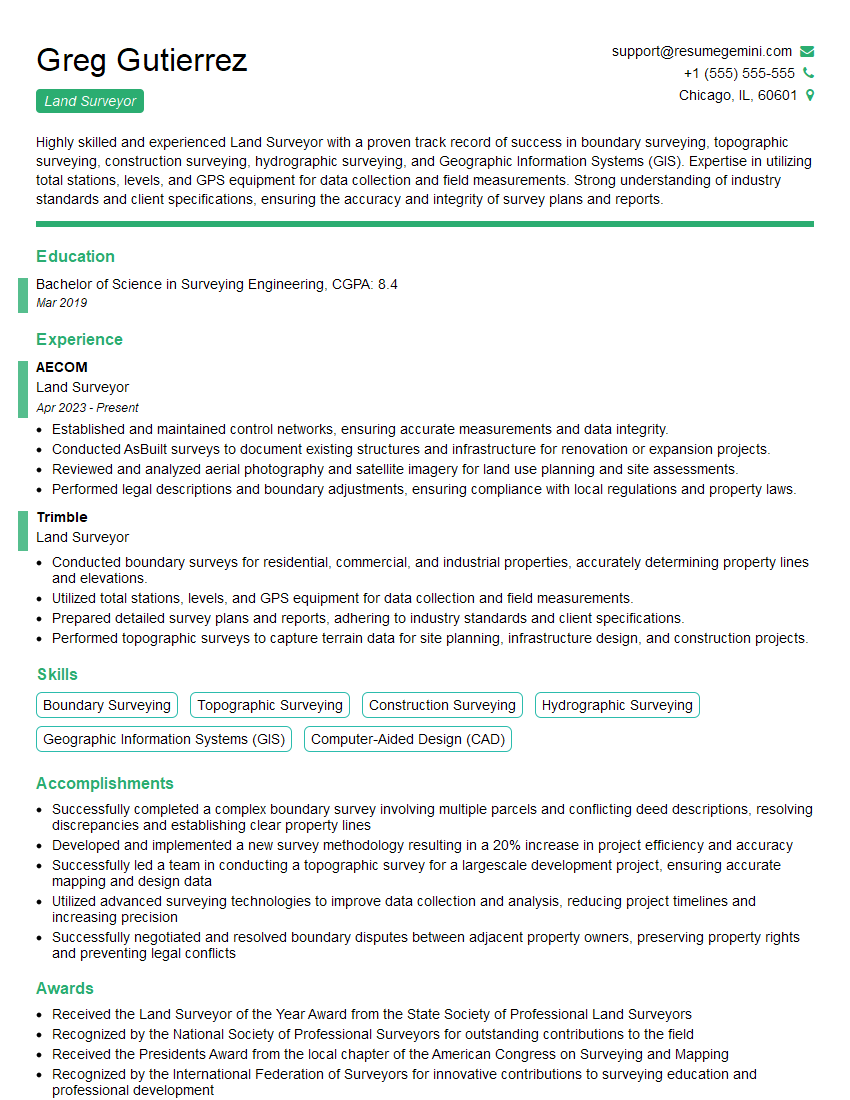
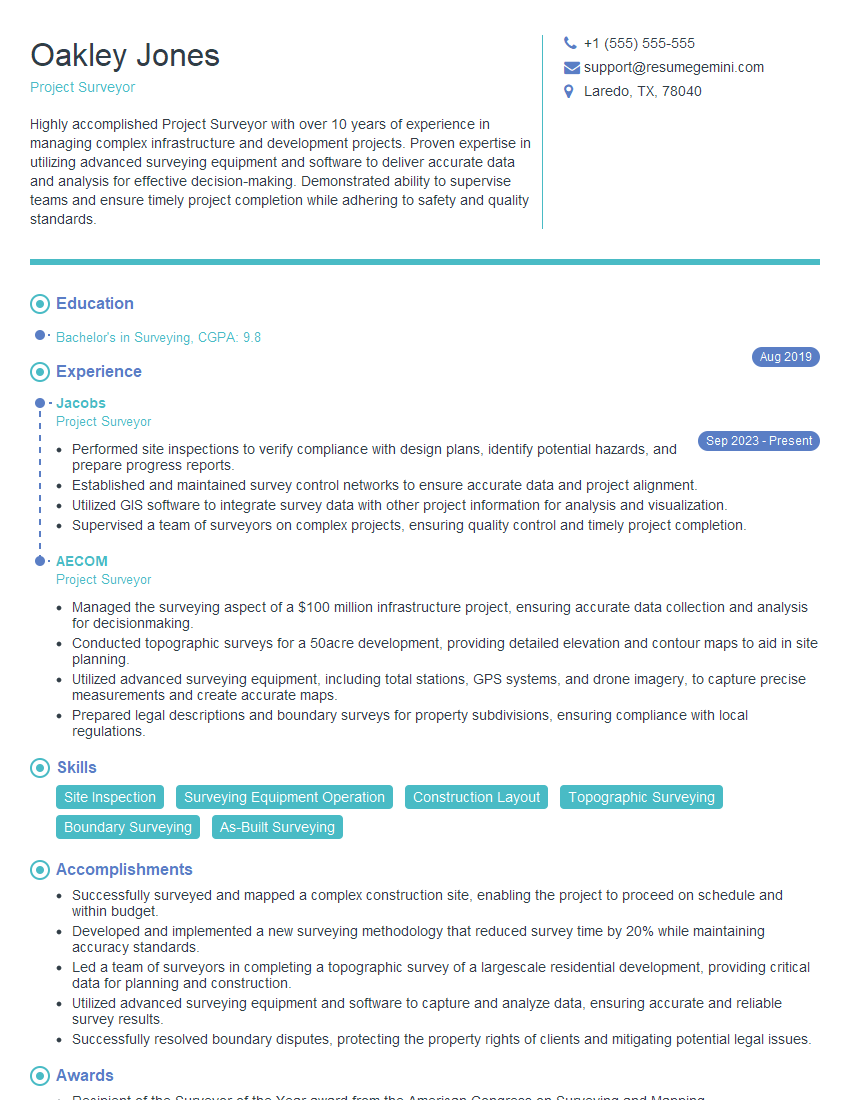
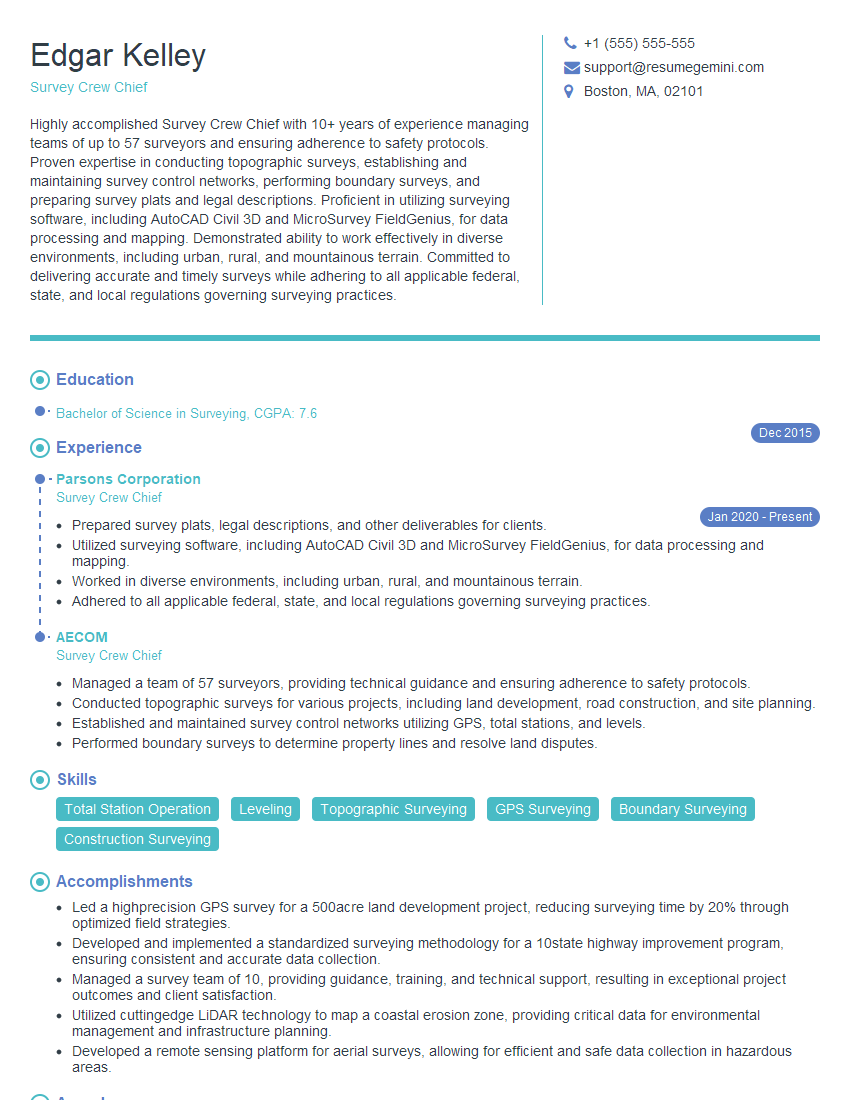
Mastering Oil and Gas Surveying opens doors to a rewarding career with excellent growth potential. The industry constantly evolves, requiring professionals with advanced technical skills and a strong understanding of safety and environmental considerations. To significantly increase your chances of securing your dream role, it’s crucial to create a compelling and ATS-friendly resume that showcases your qualifications effectively. We strongly recommend using ResumeGemini to build a professional and impactful resume that highlights your expertise in Oil and Gas Surveying. ResumeGemini offers examples of resumes tailored to this specific field to help you craft the perfect application.
Explore more articles
Users Rating of Our Blogs
Share Your Experience
We value your feedback! Please rate our content and share your thoughts (optional).
What Readers Say About Our Blog
I Redesigned Spongebob Squarepants and his main characters of my artwork.
https://www.deviantart.com/reimaginesponge/art/Redesigned-Spongebob-characters-1223583608
IT gave me an insight and words to use and be able to think of examples
Hi, I’m Jay, we have a few potential clients that are interested in your services, thought you might be a good fit. I’d love to talk about the details, when do you have time to talk?
Best,
Jay
Founder | CEO