The right preparation can turn an interview into an opportunity to showcase your expertise. This guide to Programming and Scripting (Python, R) interview questions is your ultimate resource, providing key insights and tips to help you ace your responses and stand out as a top candidate.
Questions Asked in Programming and Scripting (Python, R) Interview
Q 1. Explain the difference between lists and tuples in Python.
Lists and tuples are both used to store sequences of items in Python, but they differ fundamentally in their mutability—that is, their ability to be changed after creation. Think of a list as a whiteboard where you can erase and rewrite items, while a tuple is like a printed document—its contents are fixed.
- Lists: Mutable, ordered sequences. They are defined using square brackets
[]. You can add, remove, or change elements after creation. - Tuples: Immutable, ordered sequences. Defined using parentheses
(). Once created, their contents cannot be altered.
Here’s an example:
my_list = [1, 2, 'apple', 3.14]my_tuple = (1, 2, 'apple', 3.14)Trying to modify my_tuple after creation will result in an error. Lists are useful when you anticipate needing to change the sequence’s contents, whereas tuples are better for representing fixed data, like coordinates or database records, ensuring data integrity.
Q 2. What are the common data structures used in R?
R boasts a rich collection of data structures, crucial for data manipulation and analysis. The most common include:
- Vectors: The fundamental data structure in R. A vector holds elements of the same data type (numeric, character, logical, etc.). Think of it as a single column in a spreadsheet.
- Matrices: Two-dimensional arrays with rows and columns, containing elements of the same data type. Similar to a table in a database.
- Arrays: Multi-dimensional generalizations of matrices, capable of holding more than two dimensions.
- Lists: Can hold elements of different data types (unlike vectors). Imagine it as a container that can mix and match various data structures.
- Data Frames: The workhorse for tabular data. Similar to a spreadsheet or SQL table, they consist of rows and columns but can contain different data types in different columns. Most statistical analyses start with a data frame.
Choosing the right data structure depends entirely on the nature of your data and the operations you intend to perform. For instance, if you’re working with tabular data, a data frame is the way to go; if you need a simple sequence, a vector will suffice.
Q 3. Describe different ways to handle missing data in R.
Missing data is an unavoidable reality in real-world datasets. R offers several approaches to handle this:
- Listwise Deletion: The simplest method. Entire rows containing any missing values are removed. This is easy to implement but can lead to significant data loss, especially if missingness isn’t random.
- Pairwise Deletion: Used in statistical analyses. Only cases with missing values for the specific variables involved in the calculation are excluded. Less data loss than listwise, but it can lead to biased estimates if missingness is non-random.
- Imputation: Replacing missing values with estimated ones. Common methods include:
- Mean/Median/Mode Imputation: Replacing missing values with the mean, median, or mode of the respective variable. Simple but can distort the distribution if missingness is related to the variable’s value.
- Regression Imputation: Predicting missing values using regression models based on other variables. A more sophisticated technique.
- Multiple Imputation: Creating multiple plausible imputed datasets and then combining the results. Addresses uncertainty associated with single imputation.
The best strategy depends on the nature of the missing data, the size of the dataset, and the analytical goals. Understanding the mechanism of missingness (missing completely at random (MCAR), missing at random (MAR), or missing not at random (MNAR)) is crucial for selecting the appropriate handling method.
Q 4. What is list comprehension in Python and how is it used?
List comprehension offers a concise way to create lists in Python. It’s a powerful tool for generating lists based on existing iterables (like lists, tuples, or ranges). Think of it as a streamlined ‘for’ loop packed into a single line.
The basic syntax is:
new_list = [expression for item in iterable if condition]Where:
expressionis what will be added to the new list for each item.itemis a variable representing each element in the iterable.iterableis the sequence you’re iterating over (e.g., a list, tuple, range).if condition(optional) is a filter; only items satisfying the condition are included.
Example:
squares = [x**2 for x in range(10)] # Creates a list of squares from 0 to 9even_squares = [x**2 for x in range(10) if x % 2 == 0] # Squares of even numbersList comprehension is significantly faster and more readable than traditional for loops for list creation, enhancing code efficiency and maintainability.
Q 5. Explain the concept of lambda functions in Python.
Lambda functions, also known as anonymous functions, are small, single-expression functions defined without a name. They are particularly useful for short, simple operations that don’t require a full function definition. Think of them as quick, disposable tools for specific tasks.
Syntax:
lambda arguments: expressionExample:
add = lambda x, y: x + y # A lambda function that adds two numbersprint(add(5, 3)) # Output: 8Lambda functions are commonly used with higher-order functions like map, filter, and reduce, allowing for concise and functional programming styles. They help make code more compact and readable when dealing with simple operations within larger functions.
Q 6. How do you perform data manipulation in Pandas?
Pandas is a Python library providing high-performance, easy-to-use data structures and data analysis tools. Data manipulation in Pandas revolves around the DataFrame object. Key operations include:
- Data Selection: Accessing specific columns or rows using indexing (
[]),.loc(label-based indexing), or.iloc(integer-based indexing). - Filtering: Creating subsets of data based on conditions using boolean indexing.
- Sorting: Ordering data by one or more columns using the
.sort_values()method. - Data Transformation: Modifying data using functions like
.apply(),.map(), and.replace(). - Data Aggregation: Summarizing data using functions like
.groupby(),.sum(),.mean(), etc. - Data Cleaning: Handling missing values, removing duplicates, and data type conversion.
- Data Joining/Merging: Combining data from multiple DataFrames using methods like
.merge()and.concat().
Example (Filtering):
import pandas as pddata = {'Name': ['Alice', 'Bob', 'Charlie'], 'Age': [25, 30, 22]}df = pd.DataFrame(data)filtered_df = df[df['Age'] > 25] # Filters for rows where Age is greater than 25Pandas offers a powerful and flexible toolkit for efficient and expressive data manipulation in Python, making it a cornerstone for data science tasks.
Q 7. What are the different types of loops in Python?
Python provides several loop constructs for iterating over sequences or executing code repeatedly.
forloop: Iterates over items in a sequence (list, tuple, string, etc.) or other iterable objects.whileloop: Executes a block of code repeatedly as long as a given condition is true.
Example (for loop):
for i in range(5): print(i) # Prints numbers 0 to 4Example (while loop):
count = 0while count < 5: print(count) count += 1 # Prints numbers 0 to 4The choice between for and while depends on the specific task. for loops are preferred when you know the number of iterations beforehand, while while loops are suitable for scenarios where the loop termination depends on a condition that might change during execution.
Q 8. Explain the difference between `apply`, `lapply`, `sapply` in R.
apply, lapply, and sapply are R functions used for applying a function over elements of a list or array. They differ primarily in the structure of their input and output. Think of them as different tools for the same job – applying a function – but optimized for different situations.
lapply: Applies a function to each element of a list and returns a list of the same length. Each element in the output list is the result of applying the function to the corresponding element in the input list. It's great for preserving the structure of your data.sapply: Similar tolapply, but it tries to simplify the output. If the result of applying the function is a vector of the same length for each input element,sapplywill return a matrix or vector, making the output more compact. It's often preferred for its conciseness, but sometimes it can mask potential errors if results aren't consistently structured.apply: Works on arrays (including matrices and data frames). You specify the margin (1 for rows, 2 for columns) to indicate whether the function should be applied to each row or column. The output's structure depends on the function and the input's dimensions. It's powerful for operations on rows or columns of data.
Example:
Let's say you have a list of vectors:
my_list <- list(c(1,2,3), c(4,5,6), c(7,8,9))lapply(my_list, sum) would return list(6, 15, 24).
sapply(my_list, sum) would return c(6, 15, 24).
To calculate the sum of each column in a matrix my_matrix, you'd use apply(my_matrix, 2, sum).
Q 9. How do you handle errors and exceptions in Python?
Python uses try, except, finally blocks to handle errors and exceptions. Imagine a try-except block as a safety net. You try to execute some code, and if something goes wrong (an exception is raised), the except block catches it, preventing your program from crashing.
Basic Structure:
try:  # Code that might raise an exception
    # ... your code here ...
except ExceptionType as e:  # Handle specific exception type
    # ... error handling code ...
    print(f"An error occurred: {e}")
finally:  # Code that always executes (optional)
    # ... cleanup code (e.g., closing files) ...
Example:
try:
    result = 10 / 0
except ZeroDivisionError as e:
    print(f"Division by zero error: {e}")
This code prevents a program crash by catching the ZeroDivisionError. The finally block is useful for tasks that must be done regardless of whether an exception occurred, such as closing a file or releasing a resource.
Handling Multiple Exceptions:
try:
    # ... code ...
except FileNotFoundError:
    print("File not found")
except TypeError:
    print("Type error occurred")
except Exception as e:
    print(f"An unexpected error occurred: {e}")
This allows for handling different error types with specific actions, making error messages more informative and the program more robust.
Q 10. Explain the concept of object-oriented programming in Python.
Object-Oriented Programming (OOP) is a programming paradigm that organizes code around objects, which contain data (attributes) and functions (methods) that operate on that data. Think of it as modeling real-world entities in your code. This improves code organization, reusability, and maintainability.
Key Concepts in Python OOP:
- Classes: Blueprints for creating objects. They define the attributes and methods.
- Objects: Instances of a class. Each object has its own set of attribute values.
- Methods: Functions that belong to a class and operate on the object's data.
- Inheritance: Allows creating new classes (child classes) based on existing classes (parent classes), inheriting their attributes and methods. This promotes code reuse and reduces redundancy.
- Polymorphism: The ability of objects of different classes to respond to the same method call in their own specific way.
- Encapsulation: Bundling data and methods that operate on that data within a class, hiding internal details from the outside world and improving security and maintainability.
Example:
class Dog:
    def __init__(self, name, breed):  # Constructor
        self.name = name
        self.breed = breed
    def bark(self):
        print("Woof!")
my_dog = Dog("Buddy", "Golden Retriever")
my_dog.bark()  # Output: Woof!
Here, Dog is a class, my_dog is an object, __init__ is a constructor, and bark is a method.
Q 11. What are the key differences between Python 2 and Python 3?
Python 3 is the current and actively maintained version of Python. Python 2 is legacy and no longer receives security updates. The key differences are substantial and affect code compatibility.
- Print Function: In Python 2,
printis a statement (print "Hello"), while in Python 3, it's a function (print("Hello")). - Integer Division: Python 2's integer division truncates (
5 / 2 == 2), while Python 3's integer division returns a float (5 / 2 == 2.5). Use//for floor division in Python 3. - Unicode: Python 3 uses Unicode by default for strings, improving internationalization support, while Python 2 requires explicit encoding handling.
- `xrange` vs `range`: In Python 2,
xrangegenerated sequences lazily (memory efficient), whilerangecreated a list in memory. Python 3'srangebehaves like Python 2'sxrange. - Exception Handling: Slight differences in exception handling syntax and behavior.
Migrating from Python 2 to Python 3 often involves code changes due to these differences. Tools exist to help automate parts of this process, but careful manual review is crucial.
Q 12. How do you create and manipulate data frames in R?
Data frames are the workhorse of data manipulation in R. They are essentially tables with rows (observations) and columns (variables). R provides several ways to create and manipulate them.
Creating Data Frames:
The most common way is using the data.frame() function:
my_data <- data.frame(name = c("Alice", "Bob", "Charlie"),
                      age = c(25, 30, 28),
                      city = c("New York", "London", "Paris"))
This creates a data frame with columns named name, age, and city.
Manipulating Data Frames:
- Accessing Columns: Use
$or[]: - Adding Columns: Simply assign a new column:
- Subsetting Rows: Use logical indexing or row numbers:
- Filtering and Sorting: Use functions like
subset(),order(), etc. - Modifying Data: Directly assign new values to cells:
- Packages for Data Manipulation: Packages like
dplyroffer powerful and efficient data manipulation functions (e.g.,filter(),select(),mutate(),arrange()).
my_data$age  # Accesses the 'age' column
my_data["age"] # Accesses the 'age' columnmy_data$country <- c("USA", "UK", "France")my_data[1, ] # First row
my_data[my_data$age > 28, ] # Rows where age is greater than 28subset(my_data, age > 28)
my_data[order(my_data$age), ]my_data$age[1] <- 26Q 13. Explain the concept of vectorization in R.
Vectorization in R is a powerful technique that allows you to perform operations on entire vectors (or matrices) at once, rather than looping through each element individually. This significantly improves performance, especially with large datasets. It's built into R's core design and leverages R's underlying capabilities to process data efficiently.
Example:
Let's say you want to add 1 to each element of a vector:
Non-vectorized approach (looping):
my_vector <- 1:10
for (i in 1:length(my_vector)) {
  my_vector[i] <- my_vector[i] + 1
}
Vectorized approach:
my_vector <- 1:10
my_vector <- my_vector + 1
The vectorized approach is far more efficient and concise. R's operators and many built-in functions are vectorized, automatically applying the operation to each element. This applies to many operations, including arithmetic, logical comparisons, and function application. Vectorized code is usually easier to read and understand, because it directly represents the operation on the whole dataset, not the element-wise steps. Utilizing vectorization significantly improves code efficiency, especially while dealing with large datasets.
Q 14. How do you perform data cleaning in Python?
Data cleaning in Python involves handling missing values, inconsistent data formats, and outliers to prepare data for analysis. It's a crucial step in any data science project. Common Python libraries like Pandas provide powerful tools for this.
Handling Missing Values:
- Detection: Pandas'
isnull()andnotnull()functions identify missing values (often represented asNaN). - Removal:
dropna()removes rows or columns with missing values. Be cautious; removing too much data can be detrimental. - Imputation: Replacing missing values with estimated values (e.g., mean, median, or using more sophisticated methods from libraries like scikit-learn).
Example (Pandas):
import pandas as pd
df = pd.DataFrame({'A': [1, 2, None, 4], 'B': [5, None, 7, 8]})
df.isnull().sum()  # Count missing values
df.dropna()  # Drop rows with missing values
df['A'].fillna(df['A'].mean())  # Impute missing values in column 'A' with the mean
Handling Inconsistent Data Formats:
- Data Type Conversion: Use Pandas'
astype()function to convert columns to appropriate data types (e.g., string to numeric). - String Cleaning: Utilize string methods (e.g.,
strip(),lower(),replace()) to standardize strings.
Outlier Detection and Treatment:
- Visualization: Box plots, scatter plots help identify outliers.
- Statistical Methods: Z-score or IQR (interquartile range) methods can identify outliers.
- Treatment: Outliers can be removed, capped (replaced with a limit), or transformed (e.g., using logarithmic transformation).
Data cleaning is iterative; you'll often need to repeat these steps to ensure data quality. Remember to document your cleaning steps for reproducibility and transparency.
Q 15. What are some common packages used for data visualization in Python?
Python boasts a rich ecosystem of libraries for data visualization. Three of the most popular and versatile are Matplotlib, Seaborn, and Plotly.
- Matplotlib: This is a foundational library, offering a wide range of plotting capabilities. It's highly customizable, allowing you to create almost any type of plot imaginable, from simple line graphs to complex 3D visualizations. Think of it as the building block – powerful but sometimes requiring more code for sophisticated results.
import matplotlib.pyplot as plt; plt.plot([1,2,3,4],[5,6,7,8]); plt.show()shows a basic line plot. - Seaborn: Built on top of Matplotlib, Seaborn simplifies the process of creating statistically informative and visually appealing plots. It excels at visualizing relationships between multiple variables and handling datasets with many observations. It provides a higher-level interface, making it easier to generate elegant plots with less code. Seaborn's strength lies in its statistical context, making it perfect for exploring data distributions and correlations. For example,
import seaborn as sns; sns.scatterplot(x='variable1', y='variable2', data=my_dataframe)creates an intuitive scatter plot. - Plotly: This library specializes in interactive plots. Its strength lies in creating dynamic visualizations that allow users to zoom, pan, and explore data in detail. It's particularly useful for dashboards and web applications where interactive elements are crucial. Plotly can create a variety of interactive charts, including bar charts, scatter plots, and even 3D surface plots, allowing users to interact with the data directly.
The choice of library often depends on the complexity of the visualization and the level of interactivity required. For quick exploratory plots, Seaborn's ease of use is a significant advantage. For highly customized or interactive plots, Matplotlib and Plotly are excellent options.
Career Expert Tips:
- Ace those interviews! Prepare effectively by reviewing the Top 50 Most Common Interview Questions on ResumeGemini.
- Navigate your job search with confidence! Explore a wide range of Career Tips on ResumeGemini. Learn about common challenges and recommendations to overcome them.
- Craft the perfect resume! Master the Art of Resume Writing with ResumeGemini's guide. Showcase your unique qualifications and achievements effectively.
- Don't miss out on holiday savings! Build your dream resume with ResumeGemini's ATS optimized templates.
Q 16. Explain the use of regular expressions in Python or R.
Regular expressions (regex or regexp) are powerful tools for pattern matching within text. They are incredibly useful for tasks like data cleaning, text processing, and web scraping. Both Python and R provide robust support for regex through their respective libraries (re in Python and built-in functions in R).
Imagine you have a large dataset of email addresses and need to extract only the domain names (e.g., 'gmail.com', 'yahoo.com'). A regex pattern like @(.*?)$ would capture everything after the '@' symbol until the end of the string ($). The .*? part means 'match any character (.) zero or more times (*) but as few times as possible (?), ensuring you only capture the domain and not additional characters if present.
Example in Python:
import re
text = 'My email is john.doe@example.com'
match = re.search(r'@(.*?)$', text)
if match:
    domain = match.group(1)
    print(f'Domain: {domain}') # Output: Domain: example.com
Example in R:
text <- 'My email is john.doe@example.com'
domain <- sub('.*@(.*?)$', '\1', text)
print(paste('Domain:', domain)) # Output: Domain: example.com
The specific regex syntax can vary slightly between languages but the core concepts remain the same. Learning regex is a valuable skill for any programmer or data scientist working with text data.
Q 17. How would you handle a large dataset that doesn't fit into memory?
Dealing with datasets larger than available RAM requires employing techniques to process data in chunks. This is crucial for avoiding memory errors and ensuring efficient processing.
- Chunking: Read the data in smaller, manageable pieces. Libraries like
pandasin Python allow you to read data in chunks using thechunksizeparameter. This reads a specified number of rows at a time. Processing happens chunk by chunk, freeing up memory after each iteration.import pandas as pd; data_chunks = pd.read_csv('large_file.csv', chunksize=10000) - Data Sampling: If the goal is model building or exploratory analysis, creating a representative random sample of the dataset can significantly reduce processing demands. This is suitable when the dataset is large and homogeneous enough that a sample accurately reflects the overall data distribution.
- Database Interaction: For very large datasets, using a database management system (DBMS) such as PostgreSQL or MySQL is recommended. DBMS are designed for efficient storage and retrieval of large datasets. You can query and process data directly from the database, avoiding the need to load the entire dataset into memory.
- Data Sparsity Techniques: If your data is sparse (containing many zeros or missing values), techniques like sparse matrices (available in libraries like
scipy.sparsein Python) can dramatically reduce memory usage.
The best strategy often depends on the specific problem and the nature of the dataset. A combination of these approaches might be necessary for extremely large and complex datasets. For example, one might first sample the data, then process it in chunks using a database connection for efficient retrieval.
Q 18. Describe your experience with version control systems (e.g., Git).
Git is my primary version control system. I've extensively used it for managing code, collaborating on projects, and tracking changes over time. My experience covers various aspects, from basic branching and merging to more advanced techniques like rebasing and resolving merge conflicts.
In my previous role, Git was essential for our team's workflow. We used feature branches to develop new features independently, ensuring that the main development branch remained stable. Regular commits with descriptive messages ensured that the evolution of the code was well-documented. Pull requests facilitated code reviews and provided a mechanism for collaboration and feedback. We utilized platforms like GitHub and GitLab for remote repository hosting and collaboration.
Beyond the basics, I'm comfortable with branching strategies like Gitflow, which provides a structured approach to managing releases and hotfixes. I'm proficient at resolving merge conflicts and am adept at using Git commands for tasks such as cherry-picking commits, reverting changes, and creating interactive rebase histories.
I believe that a strong understanding of Git is fundamental for any software developer or data scientist, enabling efficient collaboration, reliable version control, and ultimately improved project outcomes. It's not just a tool; it's a crucial part of my professional workflow.
Q 19. What are some common statistical tests and when would you use them?
Choosing the right statistical test depends heavily on the type of data you have and the question you're trying to answer. Here are a few common examples:
- t-test: Compares the means of two groups. A paired t-test is used when the measurements are paired (e.g., before and after treatment), while an independent samples t-test compares means of two independent groups. For example, you might use a t-test to compare the average income of men and women.
- ANOVA (Analysis of Variance): Extends the t-test to compare means of three or more groups. For instance, you might use ANOVA to see if average test scores differ among students taught using three different methods.
- Chi-squared test: Assesses the association between two categorical variables. It determines whether the observed frequencies differ significantly from expected frequencies. For example, you could use this to investigate whether there's a relationship between smoking and lung cancer.
- Correlation test (Pearson's r): Measures the linear relationship between two continuous variables. It indicates the strength and direction of the relationship. For example, you might use it to examine the correlation between hours studied and exam scores.
- Regression analysis: Models the relationship between a dependent variable and one or more independent variables. Linear regression models a linear relationship, while other types (logistic, polynomial, etc.) model other relationships. This is commonly used for prediction.
Before performing any test, it's crucial to check assumptions such as normality of data distribution and independence of observations. Violating these assumptions can lead to inaccurate results.
Q 20. How do you build a predictive model using Python or R?
Building a predictive model involves several key steps. I'll outline the process using Python and scikit-learn, a widely used machine learning library:
- Data Collection and Preprocessing: Gather the data, handle missing values (imputation or removal), and transform variables as needed (e.g., scaling, encoding categorical features). This often involves using pandas for data manipulation.
- Feature Engineering: Create new features from existing ones to improve model performance. This might involve creating interaction terms, polynomial features, or using domain knowledge to engineer relevant predictors.
- Model Selection: Choose an appropriate model based on the type of prediction task (classification or regression) and the characteristics of the data. Scikit-learn provides a wide range of algorithms (linear regression, logistic regression, support vector machines, random forests, etc.).
- Model Training: Split the data into training and testing sets. Train the chosen model on the training data using the
fit()method.from sklearn.model_selection import train_test_split; X_train, X_test, y_train, y_test = train_test_split(X, y, test_size=0.2) - Model Evaluation: Evaluate the model's performance on the testing set using appropriate metrics. For classification, accuracy, precision, recall, and F1-score are common; for regression, RMSE (Root Mean Squared Error) and R-squared are often used.
from sklearn.metrics import accuracy_score; accuracy = accuracy_score(y_test, y_pred) - Model Tuning (Hyperparameter Optimization): Fine-tune the model's parameters to optimize its performance. Techniques like grid search or randomized search can be used to find the best parameter combination.
from sklearn.model_selection import GridSearchCV - Deployment: Deploy the trained model to make predictions on new, unseen data.
The entire process is iterative. You may need to revisit earlier steps (e.g., feature engineering, model selection) based on the model's performance. Choosing the right evaluation metrics and understanding the model's limitations are crucial for responsible and effective model building.
Q 21. Explain the difference between supervised and unsupervised learning.
Supervised and unsupervised learning are two fundamental categories of machine learning. The key difference lies in the presence or absence of labeled data:
- Supervised Learning: Involves training a model on a dataset where each data point is labeled with the correct output. The model learns to map inputs to outputs. Examples include:
- Classification: Predicting a categorical outcome (e.g., spam/not spam, disease/no disease). Algorithms: Logistic regression, support vector machines, random forests.
- Regression: Predicting a continuous outcome (e.g., house price, stock price). Algorithms: Linear regression, decision trees, support vector regression.
- Unsupervised Learning: Involves training a model on a dataset without labels. The model learns to identify patterns, structures, or relationships in the data. Examples include:
- Clustering: Grouping similar data points together (e.g., customer segmentation, image recognition). Algorithms: K-means, hierarchical clustering.
- Dimensionality Reduction: Reducing the number of variables while preserving important information (e.g., feature extraction). Algorithms: Principal Component Analysis (PCA), t-SNE.
Think of it this way: supervised learning is like having a teacher who provides the correct answers, while unsupervised learning is like exploring the data without a teacher, trying to find hidden patterns on your own.
Q 22. How do you evaluate the performance of a machine learning model?
Evaluating a machine learning model's performance involves assessing its ability to generalize to unseen data. We don't just look at how well it performs on the training data; that's often misleading. Instead, we use various metrics and techniques, tailored to the specific problem (classification, regression, clustering, etc.).
For classification problems: Accuracy, precision, recall, F1-score, AUC-ROC curve are common metrics. Accuracy is simply the percentage of correctly classified instances. Precision measures the proportion of correctly predicted positive instances out of all predicted positive instances. Recall (sensitivity) measures the proportion of correctly predicted positive instances out of all actual positive instances. The F1-score balances precision and recall. The AUC-ROC curve visualizes the trade-off between true positive rate and false positive rate at various classification thresholds.
For regression problems: Mean Squared Error (MSE), Root Mean Squared Error (RMSE), Mean Absolute Error (MAE), R-squared are frequently used. MSE measures the average squared difference between predicted and actual values. RMSE is the square root of MSE and is easier to interpret in the original units. MAE is the average absolute difference. R-squared indicates the proportion of variance in the dependent variable explained by the model.
Cross-validation: To avoid overfitting (where the model performs well on training data but poorly on new data), we use techniques like k-fold cross-validation. This involves splitting the data into k folds, training the model on k-1 folds, and testing on the remaining fold. This process is repeated k times, with each fold serving as the test set once. The average performance across all k folds provides a more robust estimate of the model's generalization ability.
Confusion Matrix: This table visualizes the performance of a classification model by showing the counts of true positives, true negatives, false positives, and false negatives. It's invaluable for understanding the model's strengths and weaknesses.
In practice, I select the appropriate metrics based on the business problem. For example, in a fraud detection system, recall (avoiding missing fraudulent transactions) might be prioritized over precision (minimizing false positives), even if it means slightly more false alarms.
Q 23. What are your preferred methods for debugging Python or R code?
Debugging is a crucial part of my workflow, and my approach varies slightly between Python and R, although the core principles remain the same. I leverage a combination of tools and techniques.
Print statements (both Python and R): Strategic placement of
print()statements (Python) orprint()(R) to inspect variable values at different points in the code is my first line of defense. This helps me track the flow of data and identify where errors occur.Debuggers (both Python and R): Integrated Development Environments (IDEs) like VS Code, RStudio, or PyCharm offer powerful debuggers. These allow me to step through the code line by line, inspect variables, set breakpoints, and step into functions – significantly speeding up the debugging process. I find this invaluable for complex logic.
Logging (Python): For larger projects, Python's
loggingmodule provides a structured way to record events during program execution. This is especially useful for tracking errors and debugging in production environments.Error messages: I carefully read error messages. They often provide valuable clues about the source and nature of the problem. I pay close attention to the line number and type of error.
Unit tests (both Python and R): Writing unit tests helps identify bugs early in the development process. Frameworks like
unittest(Python) ortestthat(R) make writing and running tests straightforward.Code review: Having another programmer review my code helps catch errors I might have overlooked. A fresh pair of eyes often spots subtle bugs or inefficiencies.
For example, if I encounter a TypeError in Python, I'll use the debugger to examine the data types of variables involved in the operation that caused the error, often leading to a quick fix.
Q 24. Explain the concept of recursion in Python.
Recursion in Python is a programming technique where a function calls itself within its own definition. Think of it like a set of Russian nesting dolls – each doll contains a smaller version of itself. This allows us to solve problems that can be broken down into smaller, self-similar subproblems.
A recursive function needs two key components:
Base case: This is the condition that stops the recursion. Without a base case, the function would call itself indefinitely, leading to a
RecursionError(stack overflow).Recursive step: This is where the function calls itself with a modified input, moving closer to the base case.
Here's an example of a recursive function to calculate the factorial of a number:
def factorial(n):
    if n == 0:  # Base case
        return 1
    else:
        return n * factorial(n - 1)  # Recursive step

print(factorial(5))  # Output: 120
In this example, factorial(5) calls factorial(4), which calls factorial(3), and so on, until the base case (n == 0) is reached. The results are then multiplied back up the call stack to produce the final answer. Recursion can be elegant for certain problems, but it's important to be mindful of potential stack overflow errors if the recursion depth is too large.
Q 25. How do you optimize the performance of your Python or R code?
Optimizing Python or R code involves improving its speed and efficiency. The specific techniques depend on the code's bottlenecks, which can be identified using profiling tools. Here are some general strategies:
Profiling: Tools like
cProfile(Python) or theprofvispackage (R) help identify the most time-consuming parts of your code. This allows you to focus your optimization efforts where they'll have the greatest impact.Algorithmic optimization: Choosing the right algorithm can significantly impact performance. For example, using a more efficient sorting algorithm can drastically reduce the runtime for large datasets. Consider the time complexity (Big O notation) of your algorithms.
Data structures: Selecting appropriate data structures can also improve performance. For example, using a dictionary (Python) or a hash table (R) for fast lookups, instead of a list, can lead to significant speedups.
Vectorization (R): R's vectorized operations are highly optimized. Avoid using loops whenever possible, as vectorized operations are often much faster.
List comprehensions and generators (Python): List comprehensions and generators in Python offer more concise and often faster ways to create lists or iterate through data compared to traditional loops.
Numpy (Python): For numerical computations, NumPy arrays are far more efficient than standard Python lists. NumPy leverages optimized underlying C code for faster array operations.
Memoization (Python/R): If your function computes the same values repeatedly, memoization can significantly improve performance by storing and reusing previously computed results.
Code refactoring: Cleaning up messy or inefficient code can improve readability and often performance. This might involve removing redundant calculations, simplifying logic, or using more efficient data structures.
For example, if profiling reveals that a loop is a major bottleneck, I might try to vectorize the operation in R or use NumPy in Python to achieve significant speed improvements.
Q 26. Describe your experience with database systems (e.g., SQL, NoSQL).
I have experience with both SQL and NoSQL database systems. My experience includes designing database schemas, writing queries, optimizing database performance, and troubleshooting database-related issues. My SQL experience primarily involves relational databases like PostgreSQL and MySQL, used for structured data with well-defined relationships. I am proficient in writing complex SQL queries, using joins, subqueries, and window functions to extract insights from data. I have experience optimizing database queries using indexes and query planning tools. In the NoSQL domain, I have worked with MongoDB for document-based data storage, leveraging its flexibility for unstructured or semi-structured data. I understand the tradeoffs between SQL and NoSQL databases and choose the appropriate technology based on the project's requirements.
For example, in a project where I needed to store user profiles with flexible attributes, MongoDB's schema-less nature made it a suitable choice. In contrast, for a project involving financial transactions where data integrity and relationships are paramount, I opted for a relational database like PostgreSQL.
Q 27. What are some best practices for writing clean and maintainable code?
Writing clean and maintainable code is paramount. It's about making your code easy to understand, modify, and debug. Here are some best practices I follow:
Meaningful variable and function names: Use descriptive names that clearly indicate the purpose of variables and functions. Avoid abbreviations or cryptic names.
Consistent indentation and formatting: Maintain consistent indentation and formatting throughout the codebase. I typically use tools like linters (
flake8for Python,lintrfor R) to enforce consistent style.Comments and documentation: Add comments to explain complex logic or non-obvious code sections. For larger projects, I write comprehensive documentation using tools like Sphinx (Python) or roxygen2 (R).
Modular design: Break down large programs into smaller, independent modules or functions. This improves code organization and makes it easier to reuse code.
Version control (Git): Always use version control (Git) to track changes and collaborate effectively with other developers. This is crucial for managing code evolution and resolving conflicts.
Code reviews: Regular code reviews help catch errors and improve code quality. They also provide opportunities to learn from other developers.
Keep functions concise: Functions should ideally perform a single, well-defined task. Long, complex functions are harder to understand and maintain.
Error handling: Implement robust error handling to gracefully handle unexpected situations and prevent program crashes.
For instance, instead of using a variable name like x, I'd use a name like user_age to make the code's intent immediately clear.
Q 28. What are your strengths and weaknesses as a programmer?
My strengths as a programmer include my problem-solving abilities, my proficiency in both Python and R, my experience with various database systems, and my commitment to writing clean and maintainable code. I am a quick learner, adapt easily to new technologies, and enjoy collaborating with others to achieve project goals. I am also detail-oriented and strive for accuracy in my work.
One area where I can improve is my experience with large-scale distributed systems. While I have worked on projects involving substantial datasets, my experience with distributed computing frameworks like Spark or Hadoop is limited, but I'm eager to learn and expand my skills in this area. I actively seek opportunities to develop my expertise in this domain.
Key Topics to Learn for Programming and Scripting (Python, R) Interview
- Data Structures and Algorithms: Understand fundamental data structures like lists, dictionaries (Python), and data frames (R), and common algorithms such as sorting and searching. Practice implementing these in both languages.
- Object-Oriented Programming (OOP) in Python: Master classes, objects, inheritance, and polymorphism. Be prepared to discuss their practical applications in building robust and scalable code.
- Data Manipulation and Wrangling (Python & R): Develop proficiency in cleaning, transforming, and preparing data for analysis using libraries like Pandas (Python) and dplyr (R). Understand data types and how to handle missing values.
- Data Visualization (Python & R): Learn to create effective visualizations using Matplotlib and Seaborn (Python) and ggplot2 (R). Practice communicating insights through clear and concise charts and graphs.
- Statistical Concepts and Hypothesis Testing (R): Demonstrate understanding of statistical methods, hypothesis testing, and regression analysis. Be ready to discuss the application of these concepts to solve real-world problems.
- Version Control (Git): Showcase your familiarity with Git for collaborative coding and managing code changes. This is crucial in any software development role.
- Problem-Solving and Debugging: Practice breaking down complex problems into smaller, manageable steps. Be prepared to discuss your debugging strategies and approaches to troubleshooting code.
- Libraries and Packages (Python & R): Familiarize yourself with popular libraries specific to your target role. For example, NumPy (Python) for numerical computing, or specialized packages for machine learning or data science in both languages.
Next Steps
Mastering Programming and Scripting in Python and R opens doors to exciting and high-demand careers in data science, machine learning, and software development. To maximize your job prospects, it's crucial to present your skills effectively. Creating an ATS-friendly resume is key to getting your application noticed. We highly recommend using ResumeGemini to build a professional and impactful resume. ResumeGemini provides examples of resumes tailored to Programming and Scripting (Python, R) roles, helping you showcase your skills and experience in the best possible light. Take the next step towards your dream career today!

Data Analyst Resume Sample
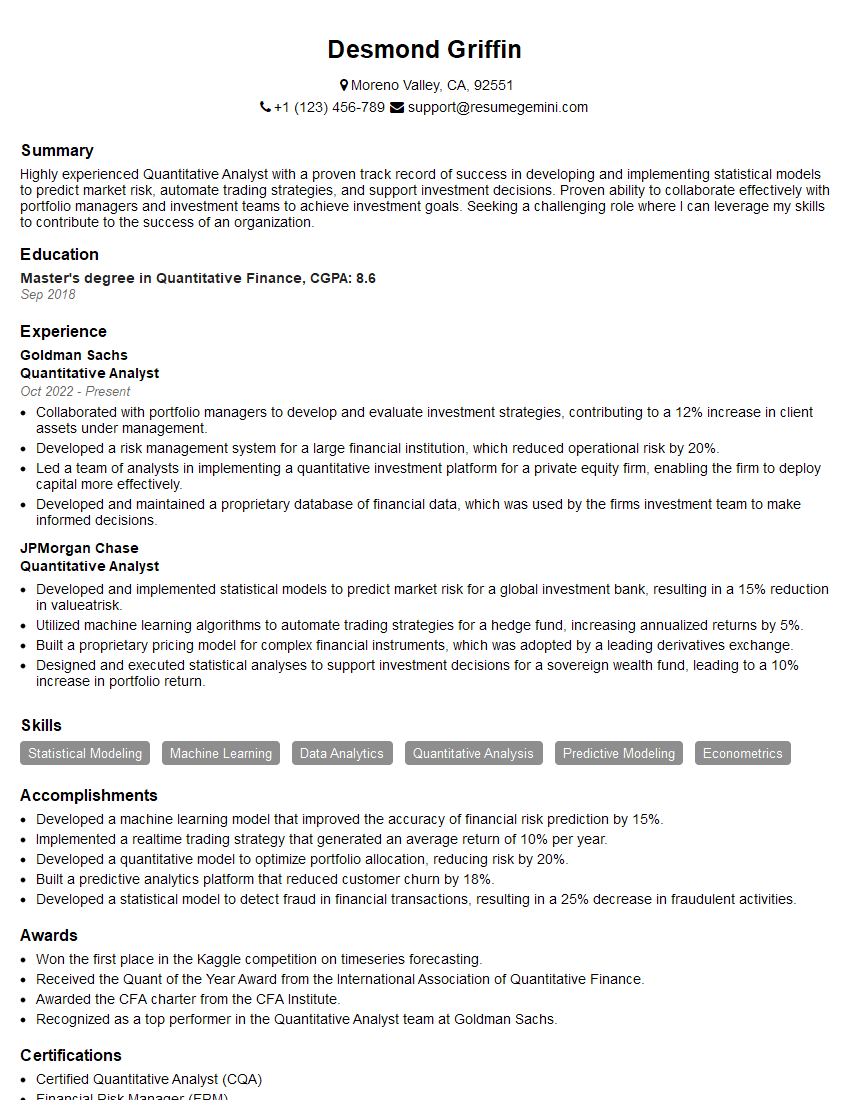
Quantitative Analyst Resume Sample
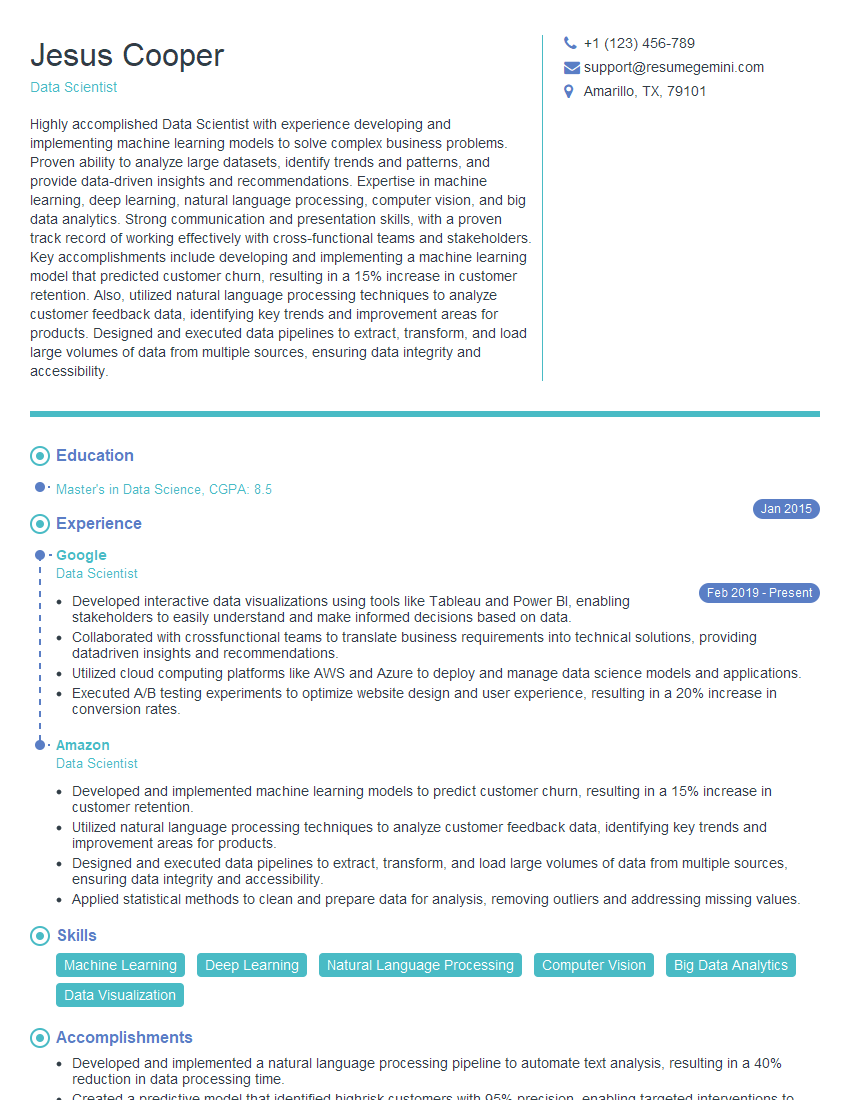
Data Scientist Resume Sample
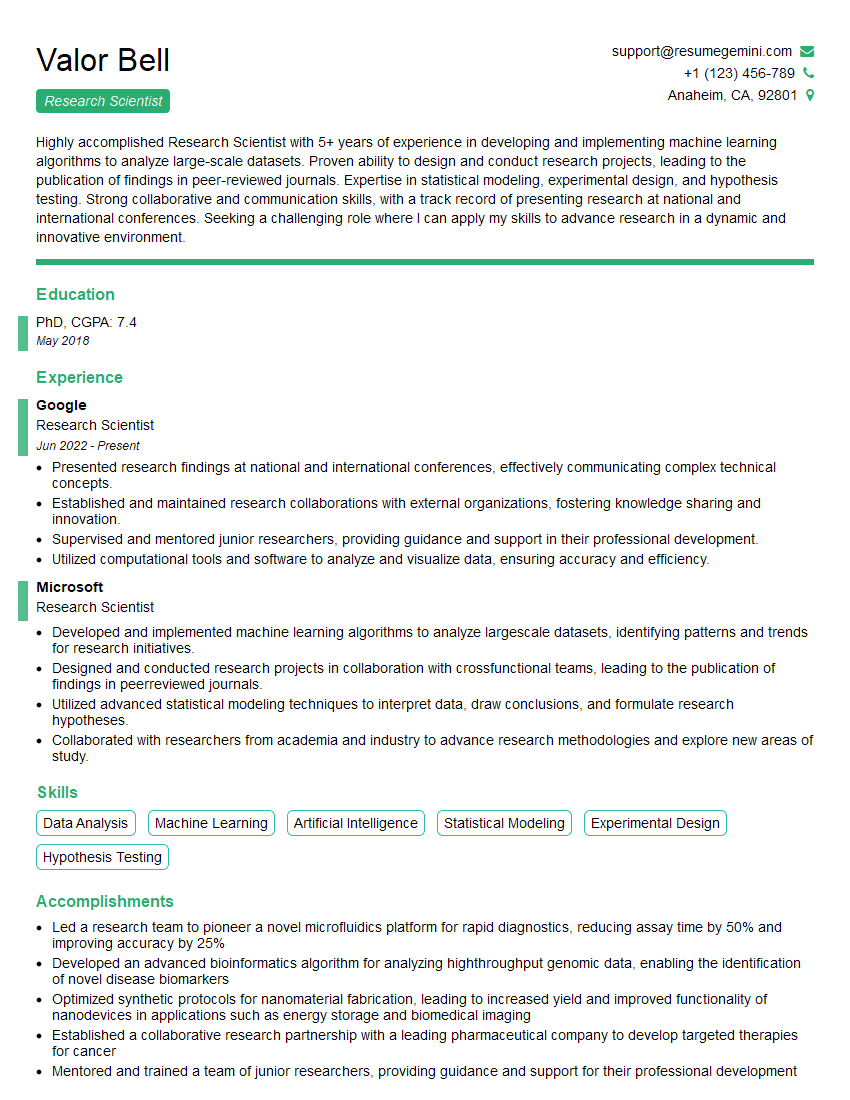
Research Scientist Resume Sample
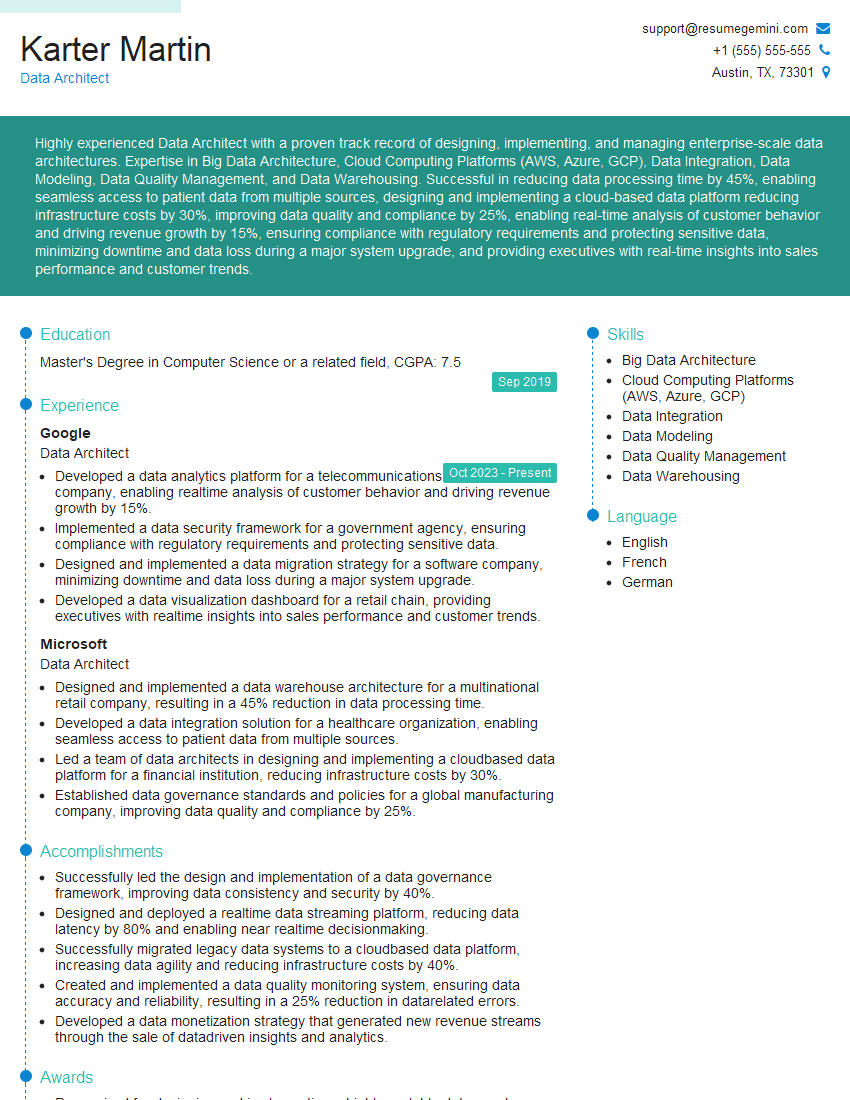
Data Architect Resume Sample
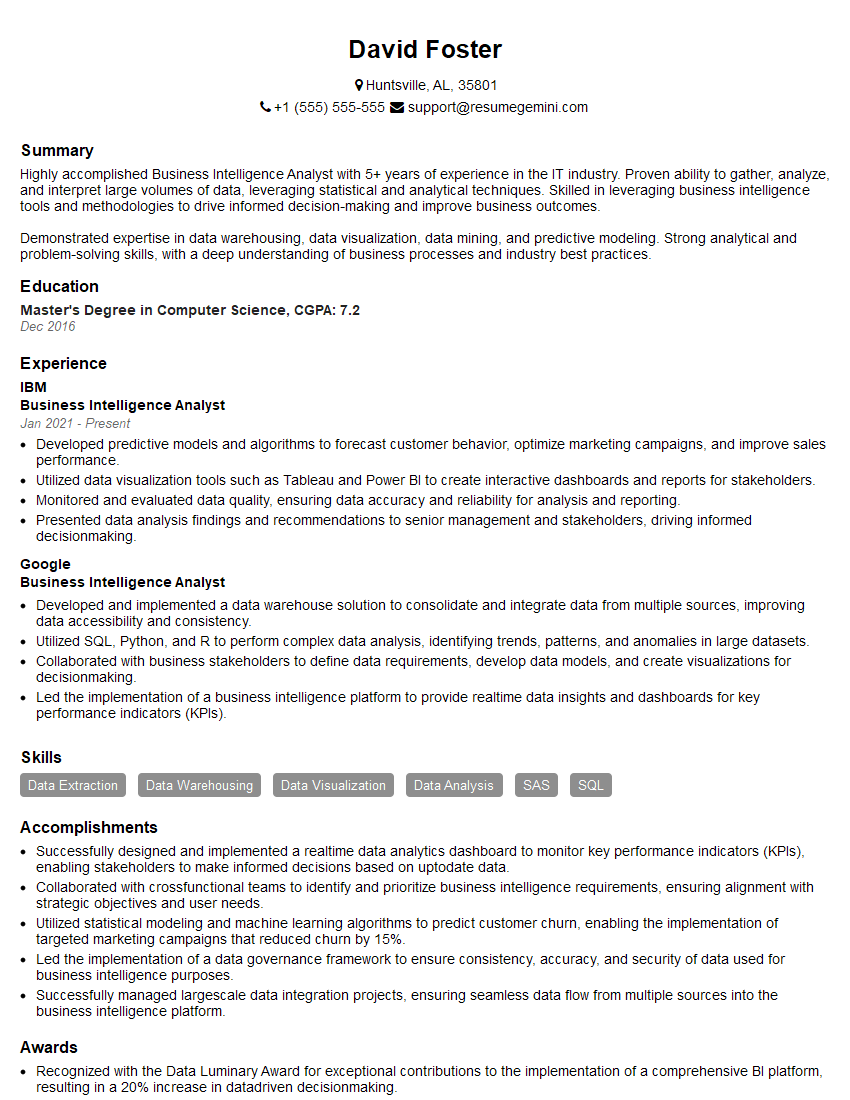
Business Intelligence Analyst Resume Sample
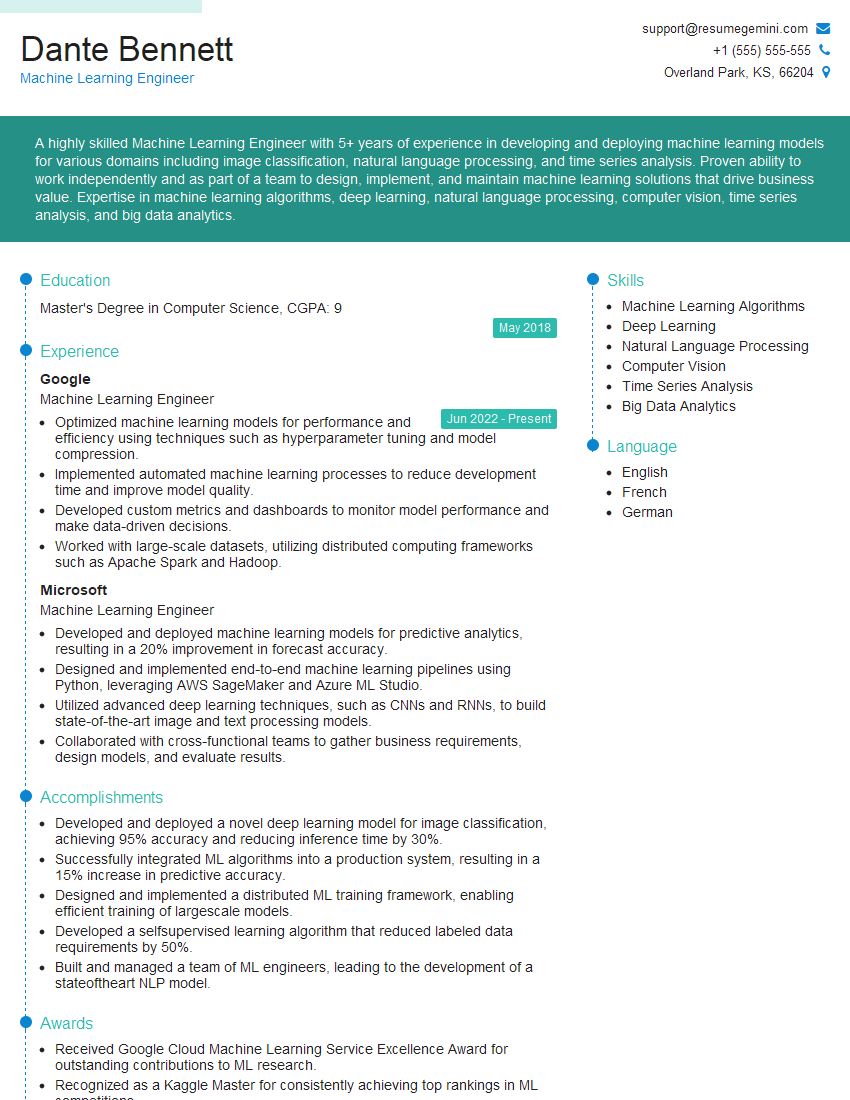
Machine Learning Engineer Resume Sample
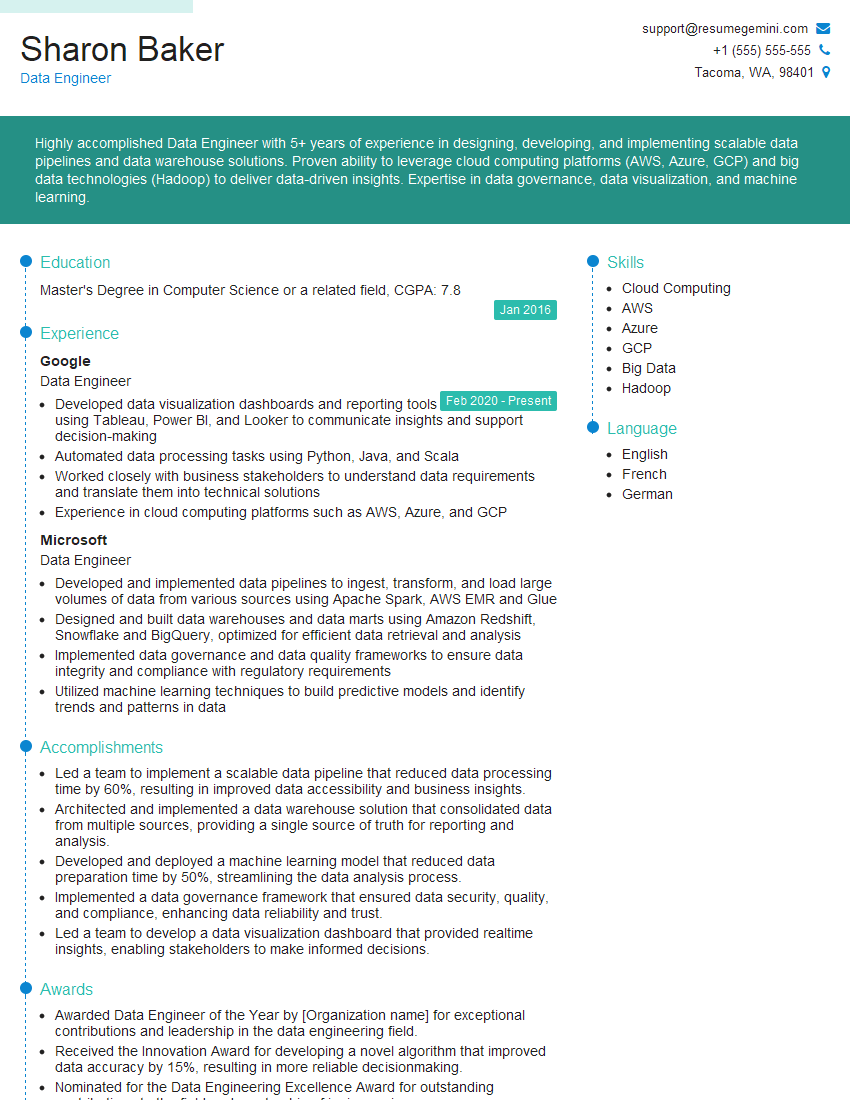
Data Engineer Resume Sample
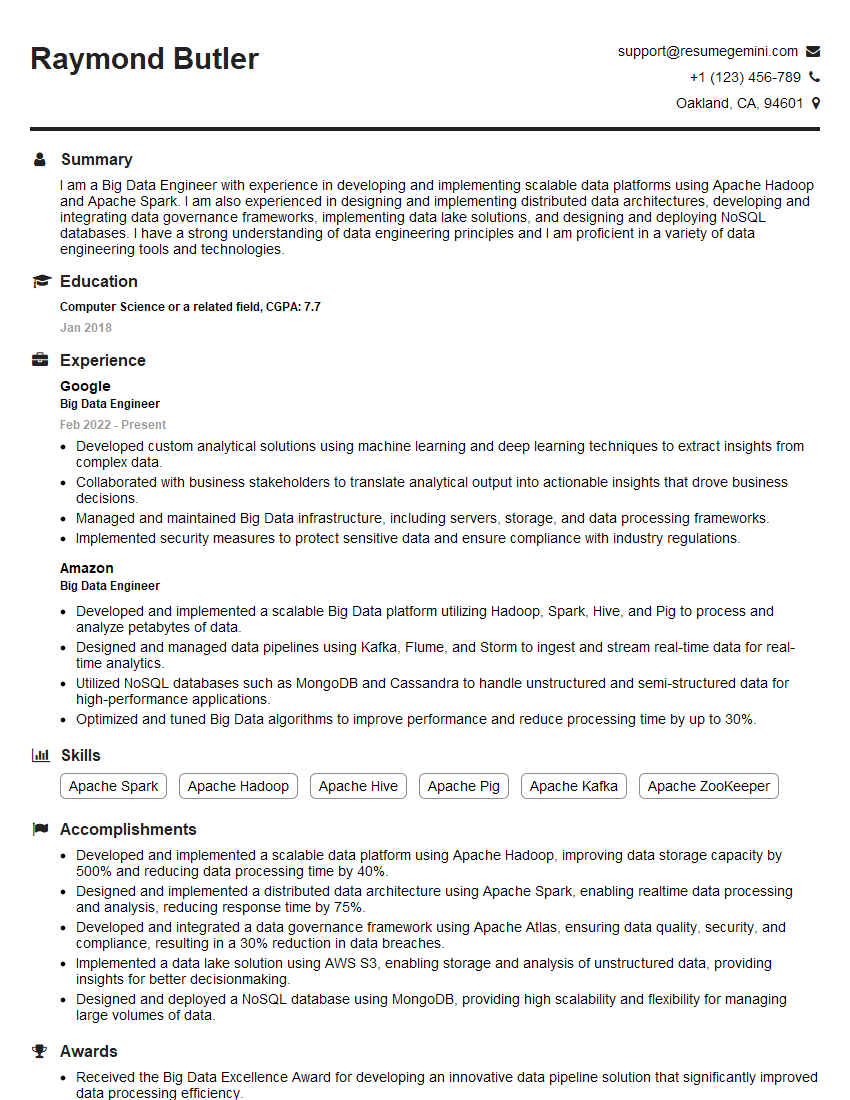
Big Data Engineer Resume Sample
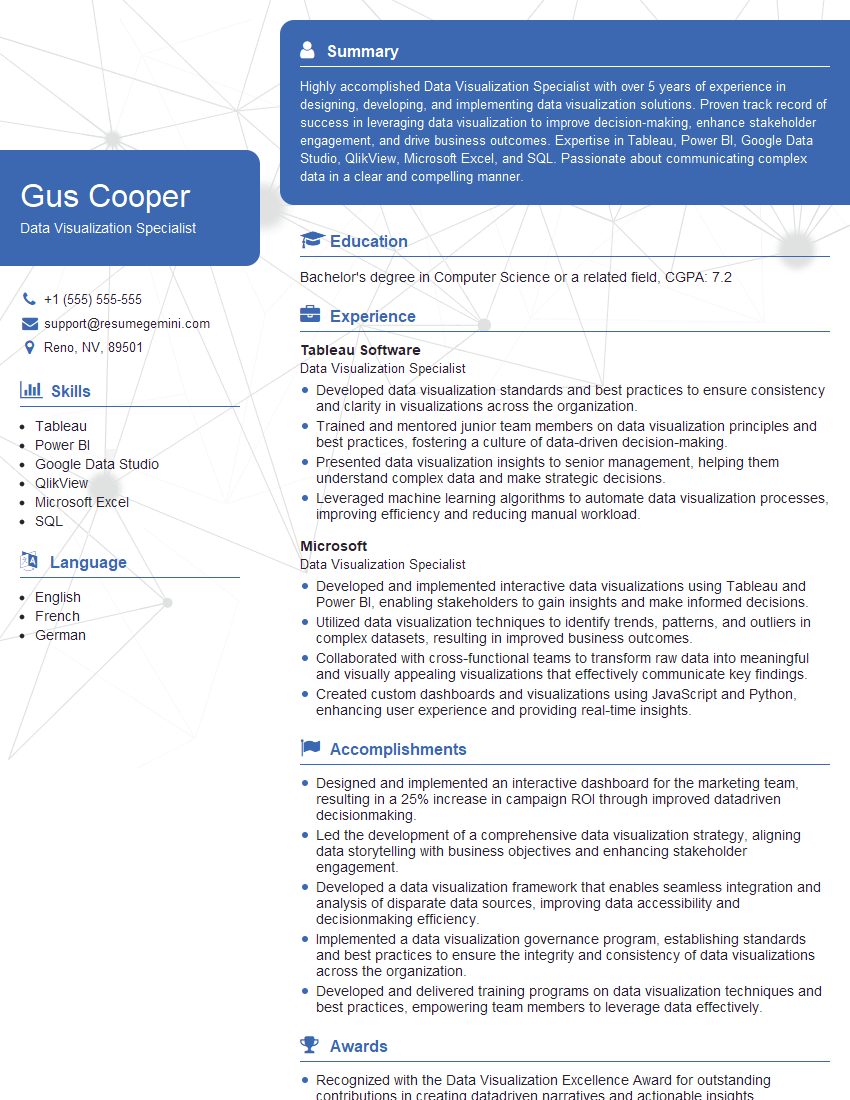
Data Visualization Specialist Resume Sample
Explore more articles
Users Rating of Our Blogs
Share Your Experience
We value your feedback! Please rate our content and share your thoughts (optional).
What Readers Say About Our Blog
Really detailed insights and content, thank you for writing this detailed article.
IT gave me an insight and words to use and be able to think of examples