The thought of an interview can be nerve-wracking, but the right preparation can make all the difference. Explore this comprehensive guide to Injection Mold Making interview questions and gain the confidence you need to showcase your abilities and secure the role.
Questions Asked in Injection Mold Making Interview
Q 1. Explain the different types of injection molding machines.
Injection molding machines are categorized primarily by their clamping force (tonnage) and the type of plastic they process. Larger machines handle larger molds and parts, while smaller ones are suitable for smaller, more intricate projects. Here’s a breakdown:
- Hydraulic Machines: These are the most common type, using hydraulic cylinders to generate the clamping force. They are known for their robustness and ability to handle high clamping forces, but can be slower and less energy-efficient than other types. Think of them as the workhorses of the industry.
- Electric Machines: These use electric motors for clamping and injection, offering advantages in energy efficiency, precision, and clean operation. They are generally more expensive upfront but can save money in the long run through reduced energy costs. They’re favored where precise control and lower environmental impact are crucial.
- Hybrid Machines: These combine hydraulic and electric systems, often using electric motors for clamping and hydraulics for injection. This combines the best of both worlds, offering high clamping force with precise control and improved energy efficiency. They represent a balance between cost and performance.
- All-Electric Machines: These machines utilize electric motors for all functions, including clamping, injection, and screw rotation. They offer the highest level of precision and energy efficiency but usually come with a higher initial investment. These are ideal for very precise and high-quality parts.
The choice of machine depends on factors like part size, material, production volume, and budget. For instance, a high-volume automotive part might require a large hydraulic machine, whereas a smaller, intricate medical device might be better suited for an all-electric machine.
Q 2. Describe the injection molding process in detail.
The injection molding process is a cyclical procedure, repeatedly creating plastic parts. Think of it as a highly automated, controlled version of squeezing toothpaste from a tube. Here’s a step-by-step breakdown:
- Clamping: The mold halves are clamped together tightly to ensure a leak-proof seal during the injection process. The clamping force is critical for preventing flash (plastic escaping between the mold halves).
- Injection: Molten plastic is injected into the mold cavity under high pressure. The pressure ensures the plastic completely fills the cavity, resulting in a part without short shots (incomplete filling).
- Dwelling: The molten plastic is held under pressure for a period to ensure complete filling and to compensate for shrinkage during cooling.
- Cooling: The mold is cooled to solidify the plastic part. The cooling time is crucial for achieving the desired physical properties of the part.
- Ejection: Once the plastic has solidified, ejector pins push the part out of the mold. The design of the ejector system is crucial to prevent damage to the parts.
- Mold Opening: The mold halves are separated, and the finished part is removed.
This entire cycle repeats continuously, producing parts at high speed, often measured in cycles per minute (CPM). Precise control of each stage is vital for consistent part quality.
Q 3. What are the common types of injection molds?
Injection molds come in various configurations depending on the part’s geometry and production requirements. Some common types include:
- Single-cavity molds: Produce one part per cycle. Simple, cost-effective for low-volume production.
- Multi-cavity molds: Produce multiple parts simultaneously, increasing productivity. Common for high-volume production of identical parts.
- Family molds: Produce multiple different parts within a single mold. Efficient for producing related parts but requires careful design.
- Hot runner molds: The plastic is kept molten within the mold, reducing material waste and improving cycle times. More complex but ideal for high-volume, high-quality applications.
- Cold runner molds: The plastic solidifies in runners (channels), requiring removal and re-grinding of the excess plastic. Simpler than hot runner molds but generate more waste.
The choice depends on part complexity, production volume, and cost considerations. A simple part with low production volume may use a single-cavity cold runner mold, while a complex part with high production volume may require a multi-cavity hot runner mold.
Q 4. How do you select the right material for an injection molding project?
Material selection is critical; it dictates the final part’s properties and cost. Factors to consider include:
- Part Requirements: Strength, stiffness, flexibility, temperature resistance, chemical resistance, etc. A high-impact application needs a robust material, while a flexible application requires a more pliable one.
- Production Process: Material viscosity, melting point, and degradation behavior influence the injection molding process. Some materials are more difficult to process than others.
- Cost: Material costs vary greatly; balancing performance and affordability is key. Choosing an expensive material when a cheaper one suffices is unnecessary.
- Environmental Concerns: Biodegradability and recyclability are becoming increasingly important factors in material selection.
For example, a strong, rigid part might use polycarbonate (PC), while a flexible application could use polyethylene (PE). A high-temperature application may require polyetheretherketone (PEEK).
Q 5. Explain the concept of gate location and its impact on part quality.
Gate location is crucial; it’s where the molten plastic enters the mold cavity. A poorly chosen gate location can lead to defects. Consider these factors:
- Fill Balance: The gate should ensure balanced filling of the cavity, minimizing weld lines (where two flows of plastic meet). Uneven filling can cause stress concentrations and weaknesses.
- Orientation: The gate should be positioned to minimize flow disturbances and allow for easy part ejection. A gate located where it impedes ejection can cause damage.
- Part Aesthetics: The gate location affects the final part’s appearance; it’s ideal to place it in an inconspicuous area.
- Stress Concentration: The gate location needs to minimize stress concentration, which can lead to part failure.
For instance, a thick section of a part might require a larger gate to ensure complete filling, whereas a thin section may need a smaller gate to prevent burning. A gate located at the end of a long, thin flow path might lead to short shots.
Q 6. How do you troubleshoot common injection molding defects like short shots, flash, or sink marks?
Troubleshooting injection molding defects requires a systematic approach. Here’s a breakdown for common defects:
- Short Shots: Incomplete filling of the mold cavity. Possible causes: insufficient injection pressure, insufficient injection time, cold plastic, or a restricted flow path. Solutions: increase injection pressure and time, check the material temperature, and examine the gate and runner system for restrictions.
- Flash: Excess plastic escaping between the mold halves. Possible causes: excessive clamping force, mold wear, or inadequate mold closure. Solutions: reduce clamping force, repair or replace worn mold components, check mold alignment.
- Sink Marks: Indentations on the part surface due to shrinkage during cooling. Possible causes: insufficient melt temperature, insufficient plastic material, or thin wall sections. Solutions: increase the melt temperature, increase material volume, or redesign the part with thicker walls.
Identifying the root cause often involves analyzing the process parameters (pressure, temperature, time) and inspecting the mold itself. Careful observation, combined with process knowledge, is crucial for effective troubleshooting.
Q 7. Describe your experience with mold design software (e.g., SolidWorks, AutoCAD).
I have extensive experience utilizing both SolidWorks and AutoCAD for mold design. My expertise encompasses:
- 3D Modeling: Creating detailed 3D models of molds and parts, ensuring accurate representation of geometries and features.
- Draft Analysis: Analyzing mold designs to ensure proper draft angles for easy part removal.
- Mold Flow Analysis: Using simulation software to predict the plastic flow behavior within the mold, optimizing the gate location and runner design.
- GD&T Application: Applying geometric dimensioning and tolerancing (GD&T) to ensure dimensional accuracy and part functionality.
- Collaboration and Communication: Effectively communicating design concepts and specifications through detailed drawings and 3D models.
I’ve used these skills to design molds for various applications, from simple consumer goods to intricate medical devices. I’m proficient in creating detailed manufacturing drawings, including critical dimensions, tolerances, and material specifications. A recent project involved designing a complex multi-cavity mold for a high-volume automotive part, requiring meticulous attention to detail and optimization for efficient production.
Q 8. Explain your understanding of different runner systems (e.g., hot runner, cold runner).
Runner systems in injection molding dictate how molten plastic flows from the injection nozzle to the mold cavities. There are two primary types: cold runner and hot runner systems.
- Cold Runner Systems: These are simpler and less expensive. Molten plastic flows through a network of channels (the runner) that solidify after each injection cycle. This solidified plastic, called sprue and runners, needs to be removed from the molded parts, adding a post-processing step. Think of it like a single-use ice cube tray – you have to break the ice (plastic) away from its channels (runners) to get the individual cubes (parts).
- Hot Runner Systems: These systems use heated nozzles or manifolds to keep the plastic molten within the runners, eliminating the need for sprue and runner removal. This leads to higher efficiency, less waste, and improved part quality. It’s like using a hot chocolate dispenser: the chocolate remains liquid, and you just dispense individual cups.
The choice between cold and hot runner systems depends on factors like production volume, part complexity, material cost, and the desired level of automation. High-volume production of complex parts typically favors hot runner systems due to the reduced waste and increased efficiency, whereas low-volume production might opt for the lower initial investment of a cold runner system.
Q 9. How do you determine the appropriate clamping force for an injection molding machine?
Determining the appropriate clamping force is crucial to prevent mold flashing (plastic leaking from the mold) and ensure proper part filling. It’s not a single formula but depends on several factors:
- Mold Size and Design: Larger molds naturally require more clamping force to withstand the injection pressure. Complex molds with many cavities or thin walls need higher force to prevent deformation.
- Part Geometry and Material: Parts with large surface areas or undercuts demand increased clamping force. High-viscosity materials need more force to ensure complete mold filling.
- Injection Pressure: Higher injection pressure translates to a higher required clamping force to prevent the mold from opening prematurely.
- Material Properties: The melt flow index (MFI) of the plastic determines its fluidity; higher MFI materials may require less clamping force.
The clamping force is usually calculated using the projected area of the mold and a safety factor. Experienced molders often utilize empirical data from previous runs and adjust the force based on trial and error. However, starting with manufacturer guidelines is essential, and monitoring for flashing or short shots during production is critical to optimize the force.
For example, if a mold has a projected area of 500 square inches and the recommended clamping force is 10 tons per 100 square inches, a minimum of 50 tons of clamping force should be considered. A safety factor is then added based on experience and material properties to avoid mold damage or part defects.
Q 10. What are the key parameters you monitor during the injection molding process?
Monitoring key parameters during the injection molding process is essential for maintaining consistent quality and detecting potential problems. These parameters are typically divided into machine parameters, process parameters, and part quality parameters.
- Machine Parameters: Clamping force, injection speed, injection pressure, mold temperature, and back pressure.
- Process Parameters: Melt temperature, screw speed, holding pressure, and cooling time.
- Part Quality Parameters: Dimensional accuracy (measured with calipers or CMM), weight consistency, surface finish, and presence of defects (flashing, sink marks, weld lines).
Continuous monitoring can be done via the machine’s control system, which records data and can generate process capability studies. These reports alert us to deviations from the target settings. Additionally, regular visual inspections of parts and the mold itself are performed to catch any issues not readily apparent in the machine data.
For example, a sudden increase in injection pressure might indicate a problem with the mold, such as a blockage in the runner system. Similarly, inconsistent part weight suggests issues with the injection parameters or material supply. Regular checks prevent costly production errors and ensure part quality.
Q 11. Describe your experience with process optimization techniques.
Process optimization is a continuous effort to improve efficiency and reduce waste while maintaining or improving part quality. My experience involves a multi-pronged approach:
- Design of Experiments (DOE): DOE methodologies help identify the most influential parameters affecting part quality. By systematically changing parameters and analyzing the results, we can pinpoint the optimal settings for consistent production.
- Statistical Process Control (SPC): Monitoring key process parameters using control charts helps identify trends and deviations before they become critical. This allows for early intervention and prevents costly scrap.
- Melt Flow Index (MFI) Optimization: Fine-tuning the MFI (material’s fluidity) allows for the identification of parameters that maximize material flow and minimize injection pressure, leading to less wear on the mold and faster cycle times.
- Mold Flow Analysis (MFA): Software simulations help predict potential flow problems and optimize the gating system and cooling channels prior to mold construction, saving time and resources.
For example, in one project we used DOE to optimize the injection parameters for a complex part resulting in a 15% reduction in cycle time and a 10% improvement in dimensional accuracy. The key was understanding the interplay between injection pressure, melt temperature, and cooling time. MFA was then used to further refine the gate placement for improved filling.
Q 12. How do you ensure the quality of injection molded parts?
Ensuring the quality of injection-molded parts involves a multifaceted approach that begins long before the injection process itself:
- Mold Design and Manufacturing: A well-designed mold with precise tolerances is critical. Using high-quality materials and employing accurate manufacturing processes are crucial to prevent defects.
- Material Selection: Choosing the appropriate resin for the part’s intended application and environmental conditions ensures both performance and longevity. This includes consideration of the material’s MFI and its impact on moldability.
- Process Control: Careful monitoring of injection parameters (as previously discussed) is crucial. Implementing SPC allows early detection of process drift and keeps parts within specifications.
- In-Process Inspection: Regularly sampling parts for dimensional inspection, visual defects, and material testing ensures parts meet requirements before being packaged for use. This might involve using tools like CMMs, calipers, and visual inspection aids.
- Post-Process Inspection: For critical parts, more extensive inspections may be conducted, including destructive testing to assess strength and durability.
Think of it as a chain – if one link is weak, the entire process is compromised. Quality control needs to be built in at each stage, and not just as a final check.
Q 13. Explain your experience with statistical process control (SPC).
Statistical Process Control (SPC) is integral to maintaining consistent part quality in injection molding. It involves using statistical methods to monitor and control the process, aiming to reduce variability and prevent defects. My experience includes using various SPC tools such as:
- Control Charts: These charts visually track key process parameters over time, highlighting trends and deviations from established control limits. Common types include X-bar and R charts for tracking mean and range, and p-charts for tracking defect rates.
- Process Capability Analysis: This determines whether the process is capable of producing parts within the specified tolerances. It involves calculating Cp and Cpk indices to assess process capability.
- Histograms: These charts show the distribution of a process parameter, helping visualize the spread of data and identify potential outliers.
By implementing SPC, we can quickly identify sources of variation, leading to targeted adjustments that minimize waste and ensure consistent quality. For example, if a control chart shows a trend toward increasing part weight, we can investigate the cause (such as a gradual change in material viscosity or injection pressure) and implement corrective actions before producing a large batch of non-conforming parts.
Q 14. How do you handle mold maintenance and repair?
Mold maintenance and repair are crucial for maximizing mold lifespan and minimizing downtime. My approach combines preventative maintenance with timely repairs:
- Preventative Maintenance: This involves regular cleaning of the mold, lubrication of moving parts, and visual inspection for wear and tear. A detailed preventative maintenance schedule is developed based on usage frequency and mold complexity.
- Corrective Maintenance: This involves repairing damage such as scratches, pitting, or cracks in the mold components. This can involve polishing, welding, or replacing damaged parts. It’s crucial to use appropriately skilled personnel and quality materials for repairs to ensure longevity and to avoid compromising mold integrity.
- Record Keeping: Meticulous record keeping of all maintenance activities is paramount. This includes documenting maintenance procedures, repair history, and replacement parts. This information is essential for planning future maintenance and predicting potential issues.
For instance, we maintain a database of all our molds, including their maintenance schedules and repair history. This allows us to anticipate potential problems and schedule maintenance proactively. Proper maintenance and timely repairs drastically increase the longevity and productivity of the molds, minimizing costly downtime and scrap.
Q 15. Describe your experience with different types of resins and their properties.
My experience spans a wide range of resins, each with unique properties impacting the final product. Think of resins like different types of clay – each has a different texture, strength, and suitability for specific sculptures. For example, polypropylene (PP) is known for its flexibility and chemical resistance, making it ideal for containers and automotive parts. I’ve extensively used it in projects requiring durability and resistance to cracking. In contrast, ABS (Acrylonitrile Butadiene Styrene) offers a good balance of strength, rigidity, and impact resistance, frequently used in electronics housings and toys. I once worked on a project where the client needed a very strong, heat-resistant part; polycarbonate (PC) was the perfect choice due to its high impact strength and heat deflection temperature. Finally, polyethylene terephthalate (PET), commonly used in beverage bottles, showcases excellent clarity and barrier properties. Understanding these material characteristics – their melt flow index, shrinkage rate, and thermal properties – is crucial for selecting the right resin and optimizing the molding process for a successful outcome.
- PP (Polypropylene): Flexible, chemical resistant, good for containers.
- ABS (Acrylonitrile Butadiene Styrene): Strong, rigid, impact resistant, good for housings.
- PC (Polycarbonate): High impact strength, heat resistant, good for high-performance parts.
- PET (Polyethylene Terephthalate): Clear, good barrier properties, ideal for bottles.
Career Expert Tips:
- Ace those interviews! Prepare effectively by reviewing the Top 50 Most Common Interview Questions on ResumeGemini.
- Navigate your job search with confidence! Explore a wide range of Career Tips on ResumeGemini. Learn about common challenges and recommendations to overcome them.
- Craft the perfect resume! Master the Art of Resume Writing with ResumeGemini’s guide. Showcase your unique qualifications and achievements effectively.
- Don’t miss out on holiday savings! Build your dream resume with ResumeGemini’s ATS optimized templates.
Q 16. Explain your understanding of mold flow analysis.
Mold flow analysis (MFA) is a crucial simulation technique that predicts the behavior of molten plastic as it fills a mold cavity. Imagine it as a virtual test run, allowing us to identify potential problems before they occur in the actual production. Software like Moldex3D or Autodesk Moldflow uses parameters such as resin properties, gate locations, and mold temperature to simulate the flow, pressure, and temperature distribution within the mold. This allows us to optimize gate locations for complete filling, minimize weld lines (weak points where the plastic flows meet), and predict potential problems like air traps or short shots. For instance, in a recent project involving a complex geometry, MFA helped us identify a suboptimal gate location that was leading to incomplete filling and sink marks (indentations) on the finished part. By adjusting the gate location based on the MFA results, we achieved complete filling and improved part quality.
Analyzing MFA results allows for iterative improvements in the mold design, ultimately saving time and resources by avoiding costly revisions in the physical mold itself.
Q 17. How do you ensure the dimensional accuracy of injection molded parts?
Ensuring dimensional accuracy is paramount. It’s like baking a cake – you want it to be exactly the right size and shape! We achieve this through a multi-pronged approach. First, the mold itself needs to be precisely machined according to the CAD model, often utilizing Computer Numerical Control (CNC) machining for high precision. Second, we control process parameters like melt temperature, injection pressure, and mold temperature to minimize shrinkage and warpage. Shrinkage is the reduction in size as the plastic cools, while warpage is the bending or distortion of the part. Precise control over these parameters is critical. We also use techniques like using cooling lines within the mold to control the cooling rate more precisely. Finally, regular dimensional inspections are performed on sampled parts using calibrated measuring equipment like CMM (Coordinate Measuring Machines) to ensure the parts meet the specified tolerances. Any deviations trigger process adjustments.
Q 18. What are your strategies for reducing cycle time in injection molding?
Reducing cycle time, the time it takes to produce one part, directly impacts production efficiency and profitability. It’s like optimizing a cooking process to make more dishes faster! Several strategies contribute to reduced cycle time: Optimizing mold design for faster filling and cooling, using thinner wall sections where possible (within strength limitations), employing efficient mold cooling systems (e.g., conformal cooling channels), and selecting resins with faster cooling rates. In one project, we reduced cycle time by 15% simply by redesigning the cooling system to more efficiently manage heat transfer. Automation, like robotic part removal, also plays a crucial role, as it eliminates manual handling time.
Q 19. Describe your experience working with different types of molding machines (e.g., hydraulic, electric).
I have extensive experience with both hydraulic and electric injection molding machines. Hydraulic machines, the older workhorses, utilize hydraulic fluid for power, offering high clamping forces but can be less energy-efficient. Electric machines are more precise and energy efficient, providing better control over injection parameters. The choice often depends on the part’s size, complexity, and production volume. For high-volume production of simpler parts, a hydraulic machine’s high clamping force might be more cost-effective. However, for complex parts requiring precise control, an electric machine offers superior performance and repeatability. I have overseen projects using both types of machines, understanding their strengths and limitations. The expertise lies in selecting and optimizing the machine based on the specific project needs.
Q 20. How do you manage and solve problems related to part ejection?
Part ejection problems are a common challenge. It’s like trying to remove a stubborn cookie from a baking sheet. Solutions typically involve adjustments to the ejector pins and system. Problems range from parts sticking to the mold due to insufficient ejection force or surface friction to damaged parts due to excessive force. I approach these problems systematically, first identifying the root cause. This often involves analyzing part geometry and material properties, assessing the ejection system’s design, and evaluating processing parameters. Solutions may include: adjusting ejection pressure, adding additional ejector pins, using mold release agents, changing the mold material, or modifying the part design to incorporate easier ejection features. For example, incorporating draft angles (a slight taper on the part’s walls) allows for easier removal. Troubleshooting involves careful observation, systematic testing, and a good understanding of material behavior under different conditions.
Q 21. Explain your experience with automation in injection molding.
Automation is increasingly crucial for efficient and consistent injection molding. It’s like having a well-trained team working around the clock! My experience includes integrating various automated systems such as robotic part handling, automated material handling systems, and automated quality inspection systems. For example, robotic systems can efficiently remove parts from the mold, reducing labor costs and improving cycle times. Automated vision systems can inspect parts for defects, ensuring quality control. Integrating these automated components involves careful planning and coordination, requiring a deep understanding of both the molding process and the capabilities of the automation equipment. This requires meticulous programming and integration to ensure seamless operation and accurate functionality.
Q 22. Describe your understanding of safety protocols in injection molding operations.
Safety in injection molding is paramount. It’s not just about following rules; it’s about a proactive mindset that prevents accidents before they happen. Our protocols encompass several key areas:
- Lockout/Tagout (LOTO): Before any maintenance or repair on the molding machine, we rigorously follow LOTO procedures to ensure the machine is completely de-energized and cannot be accidentally started. This prevents serious injuries from moving parts.
- Personal Protective Equipment (PPE): Appropriate PPE, including safety glasses, hearing protection, heat-resistant gloves, and steel-toed boots, is mandatory at all times within the molding area. We regularly inspect and replace worn-out PPE.
- Emergency Procedures: We conduct regular training on emergency procedures, including how to respond to machine malfunctions, fires, and chemical spills. Emergency exits and eyewash stations are clearly marked and readily accessible.
- Machine Guarding: All moving parts of the injection molding machine are properly guarded to prevent accidental contact. Guards are regularly inspected to ensure they are functioning correctly and are not bypassed.
- Material Safety Data Sheets (MSDS): We maintain up-to-date MSDS for all plastics and chemicals used in the molding process. This information is readily available to all employees, ensuring they understand the potential hazards and proper handling procedures.
- Regular Inspections and Maintenance: Preventative maintenance schedules are strictly followed to ensure machinery is operating safely and efficiently. Regular inspections identify and address potential hazards before they lead to accidents.
For example, during a recent mold change, a colleague noticed a loose guard. By immediately following LOTO procedures and reporting the issue, we prevented a potential injury. Safety isn’t just a checklist; it’s a continuous process of improvement and vigilance.
Q 23. How do you manage and control the injection molding process parameters?
Managing injection molding process parameters requires a blend of experience, precise measurement, and data analysis. We control these parameters using the machine’s control system and through careful monitoring of the process itself.
- Injection Pressure and Speed: These are crucial for filling the mold cavity completely and preventing defects like short shots or weld lines. We adjust these parameters based on the material being used and the complexity of the part design.
- Melt Temperature: The temperature of the molten plastic directly impacts its flow characteristics. Too low, and the plastic won’t flow properly. Too high, and it can degrade the material. We monitor melt temperature closely and adjust it based on the material’s properties and the ambient temperature.
- Mold Temperature: Mold temperature affects the cooling rate of the part, impacting its final dimensions and physical properties. We control mold temperature using heating and cooling systems and adjust it based on the material and desired part characteristics.
- Clamp Force: Sufficient clamp force is essential to prevent the mold from opening prematurely during injection, which could lead to flash or other defects. We ensure the clamp force is properly set based on the mold size and material being used.
- Cycle Time: The cycle time is the total time it takes to complete one molding cycle. We optimize cycle time for efficiency without compromising part quality. This optimization involves adjusting other parameters and often requires fine-tuning.
We use statistical process control (SPC) charts to track these parameters over time and identify any trends or deviations from the target values. For instance, if we see a consistent increase in cycle time, we investigate the cause, which might involve adjustments to cooling time or a minor tooling issue.
Q 24. Explain the concept of part design for manufacturability (DFM).
Design for Manufacturability (DFM) is a critical aspect of successful injection molding. It involves designing parts that are not only functional but also easy and cost-effective to manufacture. This involves considering the mold’s design and the injection molding process itself.
- Draft Angles: Parts need draft angles (tapered sides) to easily release from the mold. Insufficient draft can lead to part breakage or damage during ejection. Typical draft angles range from 0.5 to 3 degrees, depending on part geometry and material.
- Wall Thickness: Consistent wall thickness throughout the part is vital for uniform cooling and prevents warping or stress concentration. Variations in wall thickness can cause defects.
- Ribs and Bosses: Ribs and bosses, used for structural reinforcement, need careful design to avoid excessive stress during molding. Their design should incorporate adequate draft angles and avoid sharp corners that trap molten plastic.
- Undercuts: Undercuts (features that prevent simple part ejection) require complex mold designs (e.g., sliding cores or collapsible cores) that increase cost and complexity. We attempt to minimize or eliminate undercuts whenever possible.
- Gate Locations: Careful placement of the gate (the point where the molten plastic enters the mold) is crucial for complete filling and minimizing weld lines. The gate needs to be easily accessible and designed for clean break-off.
For example, a part with excessively thin walls might be prone to warping. A DFM review would recommend increasing wall thickness or adding structural features to improve dimensional stability. A well-designed part from the outset minimizes production challenges and reduces costs.
Q 25. How do you interpret and analyze injection molding process data?
Interpreting and analyzing injection molding process data is essential for optimizing the process and ensuring consistent part quality. This data comes from various sources, including the machine’s control system, quality control inspections, and material testing.
- Machine Data: The injection molding machine provides data on process parameters like injection pressure, melt temperature, mold temperature, and cycle time. We use this data to identify trends and anomalies.
- Visual Inspection: Visual inspection of the molded parts helps to identify defects like short shots, flash, sink marks, and weld lines. These defects provide clues about potential process issues.
- Dimensional Measurements: We use precision measurement equipment to check the dimensions of the molded parts to ensure they are within specified tolerances. Deviations from the target dimensions indicate potential problems.
- Statistical Process Control (SPC): SPC charts help to monitor process parameters over time and identify patterns or deviations from the target values. This helps us to proactively address potential issues before they become significant problems.
- Material Testing: Material testing provides insights into the material’s properties, such as tensile strength, impact resistance, and elongation. This helps to ensure the material meets the required specifications.
For instance, if we see a pattern of increasing short shots on our SPC charts, we would investigate the injection pressure, melt temperature, or mold temperature. By analyzing the data comprehensively, we can pinpoint the root cause of the problem and implement corrective actions.
Q 26. Describe your experience with root cause analysis in injection molding.
Root cause analysis is crucial in resolving recurring injection molding problems. We often use a structured approach like the ‘5 Whys’ technique or a Fishbone diagram to systematically identify the root cause.
- 5 Whys: This simple but effective technique involves asking ‘why’ five times to drill down to the root cause. For example, if we have a problem with sink marks: Why are there sink marks? Because the part isn’t cooling evenly. Why isn’t it cooling evenly? Because the mold temperature is too high. Why is the mold temperature too high? Because the cooling system is malfunctioning. Why is the cooling system malfunctioning? Because the coolant pump is failing.
- Fishbone Diagram (Ishikawa Diagram): This visual tool helps to brainstorm potential causes categorized by factors like materials, machines, methods, manpower, measurements, and environment. This approach helps to consider a broader range of potential causes.
- Data Analysis: Data analysis from the injection molding machine, quality control inspections, and material testing helps to pinpoint the root cause. Statistical methods can help to identify correlations and identify significant factors.
For example, I once investigated a recurring problem of warping in a particular part. Using the 5 Whys and data analysis, we discovered that a minor change in the material supplier’s process had altered the material’s properties, leading to the warping. By working with the supplier to revert to the previous process, we eliminated the problem.
Q 27. How do you ensure compliance with industry standards and regulations in injection molding?
Compliance with industry standards and regulations is fundamental to our operation. We adhere to a range of standards, depending on the specific materials and applications.
- ISO 9001: This standard ensures our quality management system is robust and consistently produces high-quality products. We follow its guidelines for process control, documentation, and continuous improvement.
- Industry-Specific Standards: Depending on the industry our products serve (e.g., automotive, medical, food packaging), we adhere to relevant industry-specific standards that dictate material requirements, safety regulations, and quality control protocols. Examples include FDA regulations for food-contact materials.
- Safety Regulations: We comply with all applicable occupational safety and health regulations (OSHA or equivalent) to ensure a safe working environment. This includes regular safety training and inspections.
- Environmental Regulations: We adhere to all environmental regulations regarding waste disposal and the use of hazardous materials. We implement responsible recycling and waste management practices.
- Material Certifications: We ensure that all the materials used in our production process comply with the necessary certifications and meet the relevant industry standards.
Regular audits and internal reviews help maintain compliance. For instance, we recently underwent an ISO 9001 audit, demonstrating our adherence to quality standards and earning recertification. Compliance is not just about avoiding penalties; it’s about demonstrating our commitment to quality, safety, and environmental responsibility.
Key Topics to Learn for Your Injection Mold Making Interview
- Mold Design & Engineering: Understand the principles of mold design, including gate locations, runner systems, and cooling channels. Consider the impact of different materials and part geometries.
- Injection Molding Process: Become proficient in explaining the various stages of the injection molding process, from material feeding to ejection. Be prepared to discuss process parameters like injection pressure, melt temperature, and cycle time.
- Materials Science: Demonstrate knowledge of different thermoplastic and thermoset polymers used in injection molding, and their properties (e.g., strength, flexibility, heat resistance). Understand how material selection impacts the molding process.
- Machine Operation & Maintenance: Familiarize yourself with the operation and maintenance of injection molding machines. Be ready to discuss troubleshooting common issues and preventative maintenance procedures.
- Quality Control & Inspection: Understand quality control methodologies used in injection molding, including visual inspection, dimensional measurements, and material testing. Be prepared to discuss defect analysis and root cause identification.
- Automation & Robotics: Discuss your experience with automated systems used in injection molding, including robotic arms for part handling and automated material handling systems.
- Process Optimization & Improvement: Showcase your understanding of techniques for optimizing the injection molding process to improve efficiency, reduce costs, and enhance product quality. Lean Manufacturing principles are relevant here.
- Safety Procedures: Demonstrate awareness of safety protocols and regulations relevant to operating injection molding equipment and working in a manufacturing environment.
Next Steps: Ace Your Interview and Launch Your Career
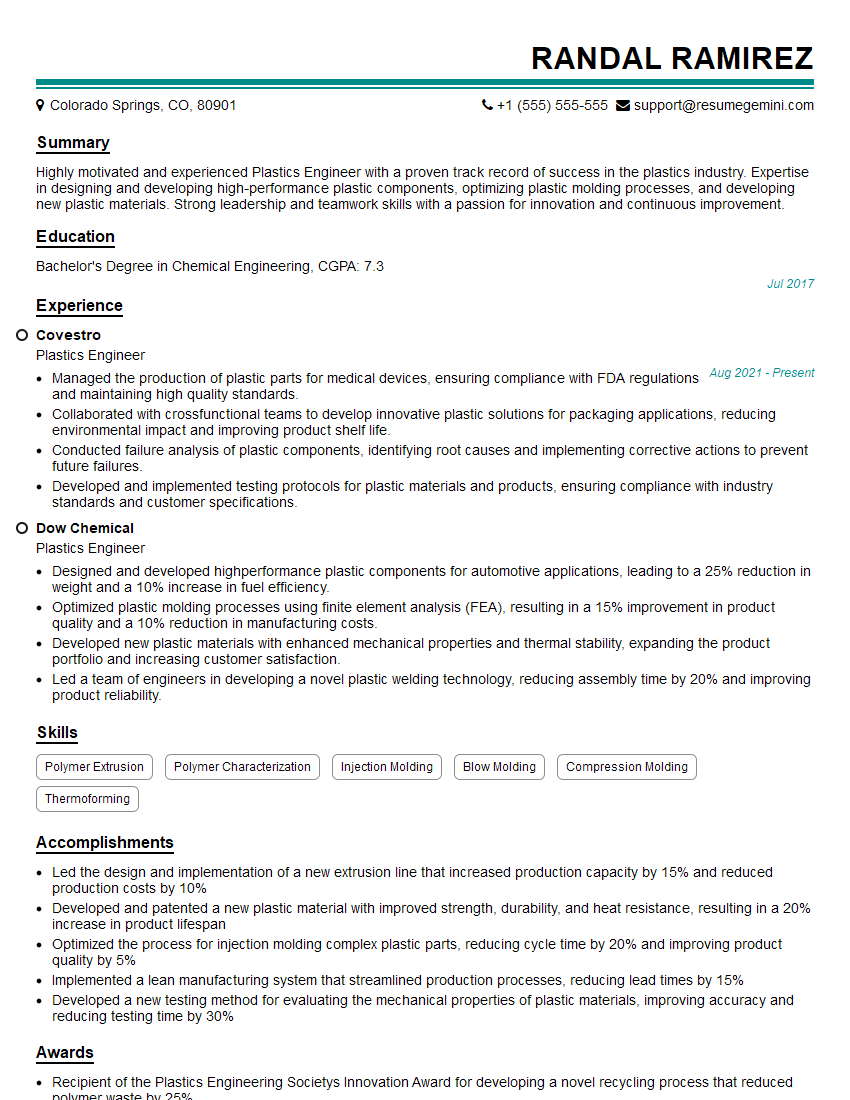
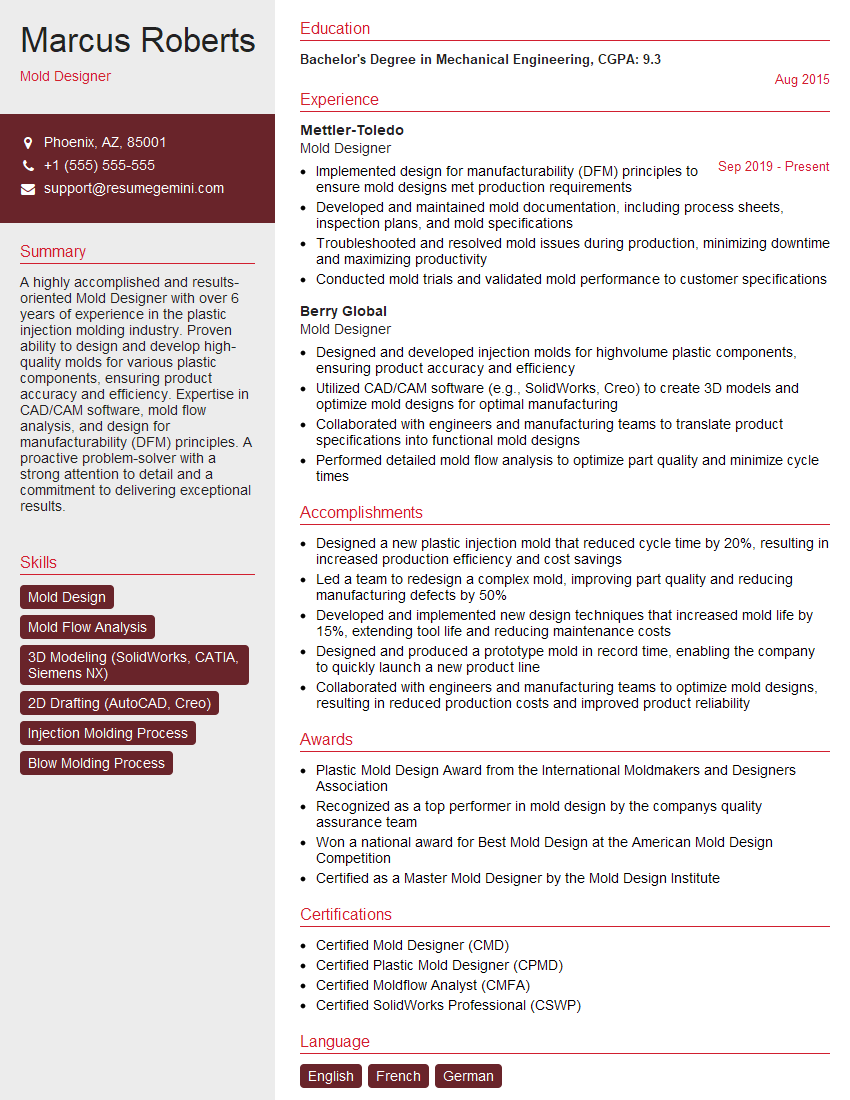
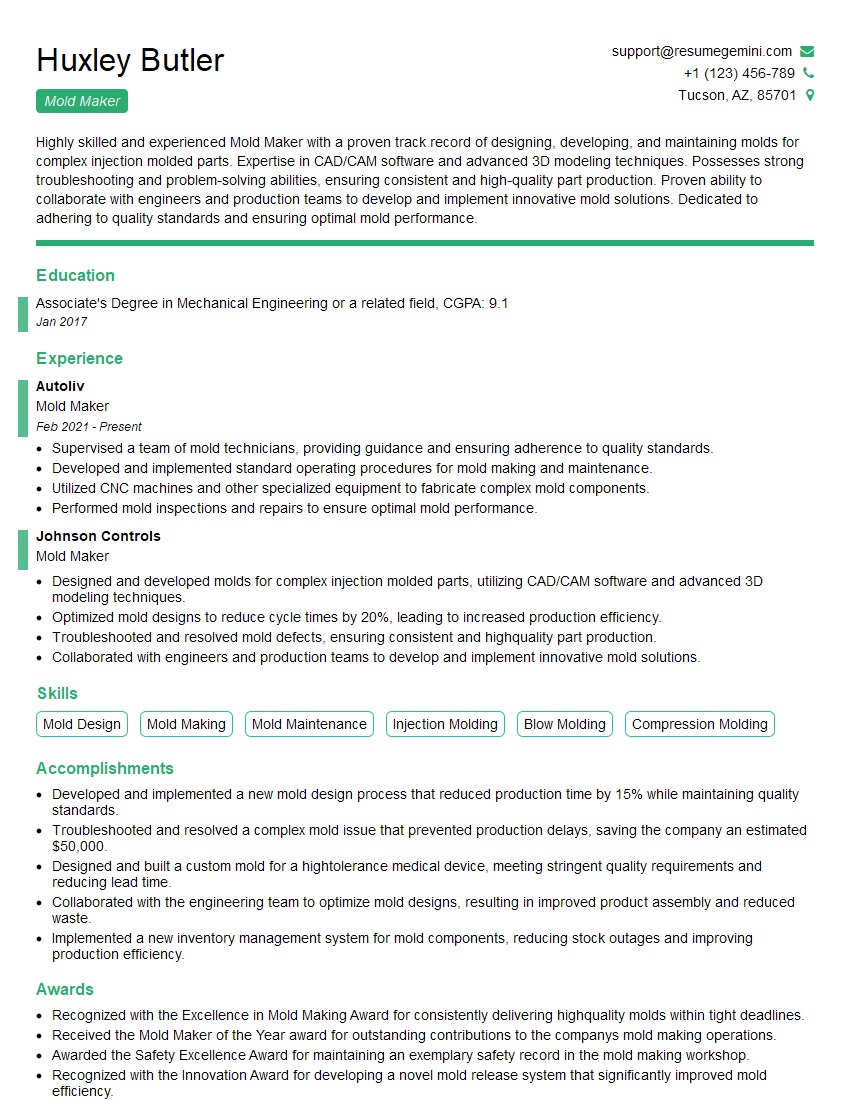
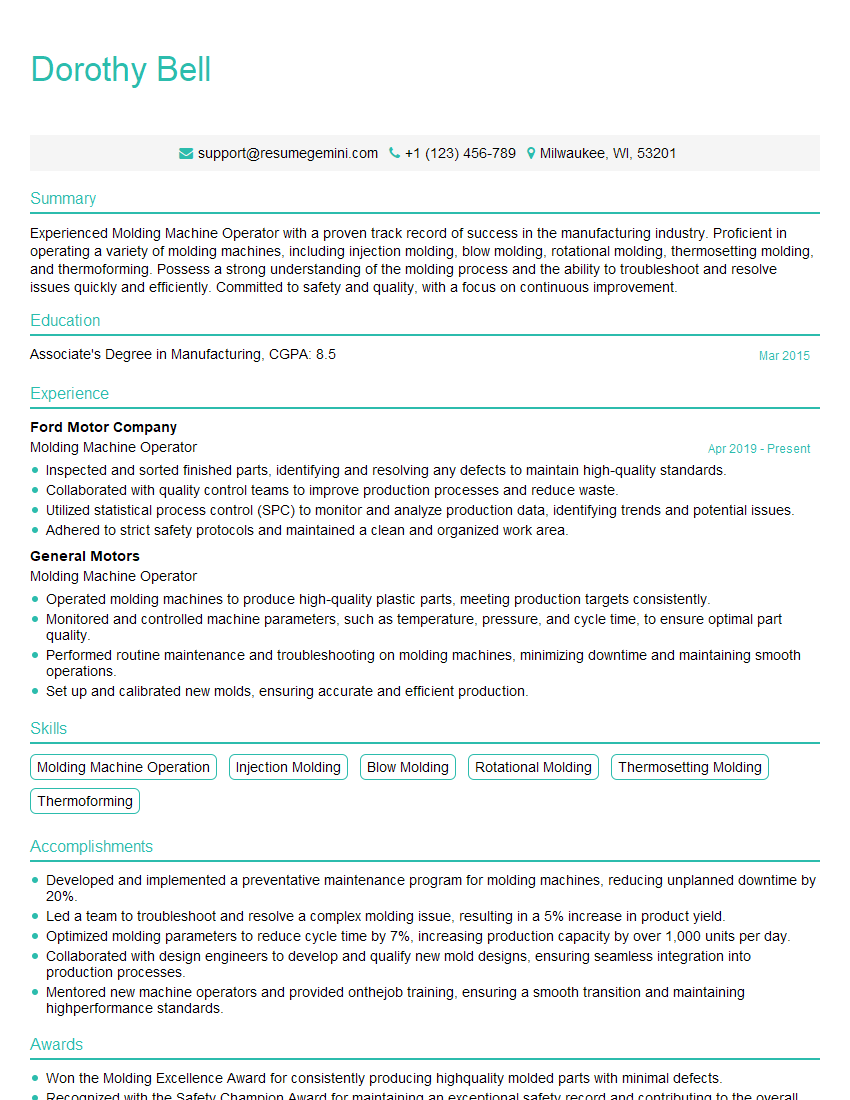
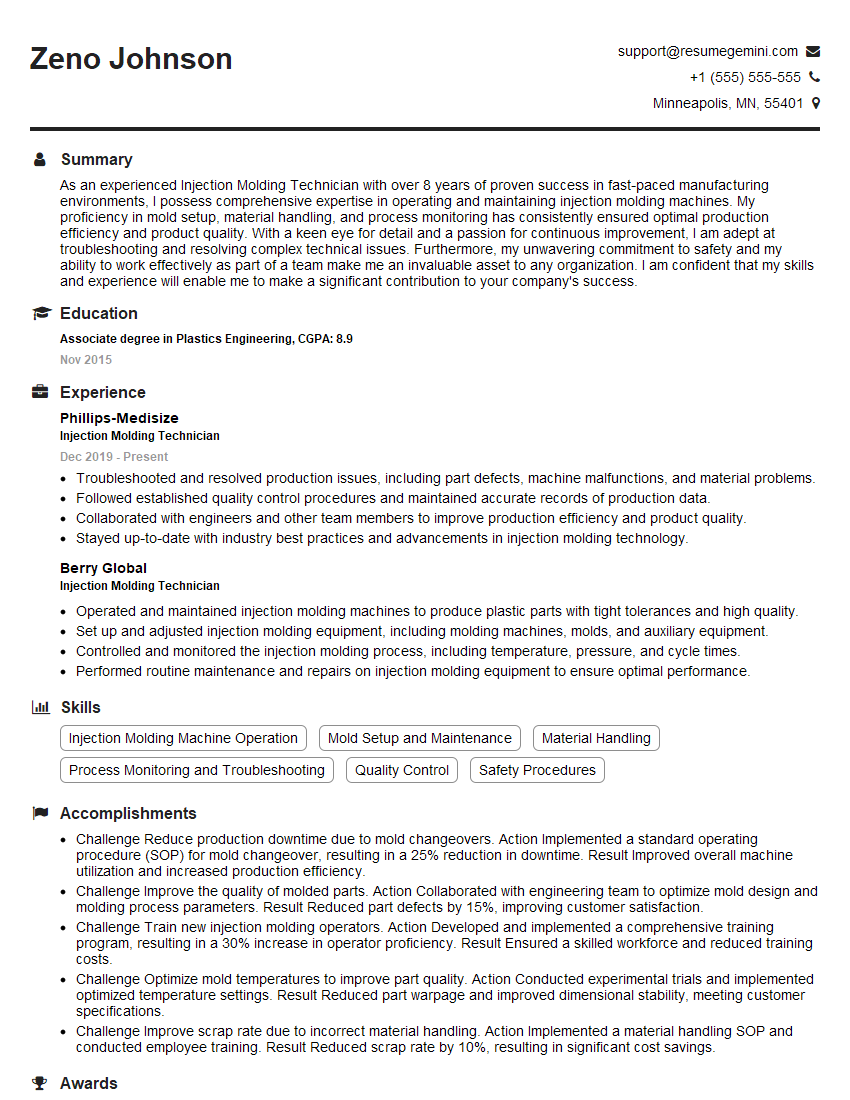
Mastering injection molding opens doors to rewarding careers with significant growth potential. To maximize your job prospects, creating a strong, ATS-friendly resume is crucial. ResumeGemini is a trusted resource that can help you build a professional and impactful resume, ensuring your qualifications shine through to potential employers. We provide examples of resumes specifically tailored to the Injection Mold Making industry to help you craft the perfect application. Take the next step towards your dream job today!

Explore more articles
Users Rating of Our Blogs
Share Your Experience
We value your feedback! Please rate our content and share your thoughts (optional).
What Readers Say About Our Blog
Really detailed insights and content, thank you for writing this detailed article.
IT gave me an insight and words to use and be able to think of examples