Interviews are opportunities to demonstrate your expertise, and this guide is here to help you shine. Explore the essential Knowledge of Statistical Analysis Software interview questions that employers frequently ask, paired with strategies for crafting responses that set you apart from the competition.
Questions Asked in Knowledge of Statistical Analysis Software Interview
Q 1. Explain the difference between descriptive and inferential statistics.
Descriptive statistics summarize and describe the main features of a dataset. Think of it as creating a snapshot of your data. It involves calculating measures like the mean, median, mode, standard deviation, and creating visual representations such as histograms and box plots. These metrics help us understand the central tendency, variability, and distribution of our data. For example, if we’re analyzing the heights of students in a class, descriptive statistics would tell us the average height, the range of heights, and how spread out the heights are.
Inferential statistics, on the other hand, goes a step further. It uses sample data to make inferences or predictions about a larger population. We use techniques like hypothesis testing and confidence intervals to draw conclusions that extend beyond the observed data. For instance, if we collected height data from a sample of students, inferential statistics would allow us to estimate the average height of *all* students in the school, along with a margin of error. This involves making assumptions and dealing with uncertainty.
Q 2. What are the assumptions of linear regression?
Linear regression, a powerful tool for modeling the relationship between a dependent variable and one or more independent variables, relies on several key assumptions:
- Linearity: The relationship between the dependent and independent variables should be linear. A scatter plot can visually assess this. If the relationship is clearly non-linear, transformations might be needed (e.g., logarithmic).
- Independence of errors: The residuals (the differences between the observed and predicted values) should be independent of each other. Autocorrelation, where errors are correlated, violates this assumption and can be checked using the Durbin-Watson test.
- Homoscedasticity: The variance of the residuals should be constant across all levels of the independent variable(s). Heteroscedasticity (unequal variance) can lead to inefficient and unreliable estimates. Residual plots can help detect this.
- Normality of errors: The residuals should be approximately normally distributed. While slight deviations are often acceptable, significant departures can affect the validity of hypothesis tests. Histograms and Q-Q plots can assess normality.
- No multicollinearity (for multiple linear regression): In models with multiple independent variables, there should be low correlation between the predictors. High multicollinearity can inflate standard errors and make it difficult to interpret the individual effects of predictors.
Violating these assumptions can lead to biased or inefficient estimates, impacting the reliability of the model’s predictions. Diagnostic plots and tests are crucial for checking these assumptions.
Q 3. How do you handle missing data in a dataset?
Missing data is a common problem in statistical analysis. The best approach depends on the nature and extent of the missingness. There are several strategies:
- Deletion: Listwise deletion (removing entire rows with missing values) is simple but can lead to significant loss of information, especially with many variables or a small sample size. Pairwise deletion (using available data for each analysis) can lead to inconsistencies.
- Imputation: This involves filling in missing values with estimated values. Common methods include:
- Mean/median/mode imputation: Simple but can bias results if missingness is not random.
- Regression imputation: Predicts missing values based on other variables using regression models.
- Multiple imputation: Creates multiple plausible imputed datasets and combines the results, accounting for uncertainty in the imputed values. This is generally preferred as it provides more accurate inferences.
The choice of method depends on the pattern of missing data (Missing Completely at Random (MCAR), Missing at Random (MAR), or Missing Not at Random (MNAR)) and the research question. It’s crucial to carefully consider the potential bias introduced by each method and document the approach used.
Q 4. Describe different methods for outlier detection.
Outliers are data points that significantly deviate from the rest of the data. Identifying them is important because they can unduly influence the results of statistical analyses. Several methods exist:
- Visual inspection: Box plots, scatter plots, and histograms can visually highlight outliers. This is a quick and useful first step.
- Z-score method: Data points with a Z-score (number of standard deviations from the mean) exceeding a certain threshold (e.g., ±3) are considered outliers. This is sensitive to the distribution of the data.
- IQR method (Interquartile Range): Outliers are defined as points below Q1 – 1.5*IQR or above Q3 + 1.5*IQR, where Q1 and Q3 are the first and third quartiles, and IQR is the interquartile range (Q3 – Q1). This method is less sensitive to extreme values than the Z-score method.
- DBSCAN (Density-Based Spatial Clustering of Applications with Noise): A clustering algorithm that can identify outliers as points not belonging to any cluster.
After identifying outliers, it’s crucial to investigate their cause. Are they errors in data entry? Do they represent a genuinely different phenomenon? Decisions about handling outliers (e.g., removal, transformation, or using robust methods) should be made cautiously and justified.
Q 5. Explain the concept of p-values and their significance.
A p-value is the probability of obtaining results as extreme as, or more extreme than, the observed results, assuming the null hypothesis is true. The null hypothesis typically represents no effect or no difference. For example, in a drug trial, the null hypothesis might be that the drug has no effect on the condition being treated.
A small p-value (typically less than a pre-determined significance level, often 0.05) provides evidence against the null hypothesis. It suggests that the observed results are unlikely to have occurred by chance alone, leading us to reject the null hypothesis in favor of an alternative hypothesis. However, a p-value does *not* tell us the probability that the null hypothesis is true. It only reflects the probability of the data given the null hypothesis. Misinterpreting p-values is a common mistake in statistical analysis.
Furthermore, the significance level should be chosen *a priori*, before conducting the analysis, to avoid bias. The p-value should be interpreted in the context of the study design, sample size, and practical significance of the results.
Q 6. What is the difference between Type I and Type II errors?
Type I and Type II errors are two types of errors that can occur in hypothesis testing:
- Type I error (false positive): Rejecting the null hypothesis when it is actually true. In the drug trial example, this would be concluding that the drug is effective when it actually isn’t.
- Type II error (false negative): Failing to reject the null hypothesis when it is actually false. In the drug trial example, this would be concluding that the drug is ineffective when it actually is effective.
The probability of making a Type I error is denoted by α (alpha) and is often set at 0.05. The probability of making a Type II error is denoted by β (beta). The power of a test (1 – β) is the probability of correctly rejecting a false null hypothesis. There’s a trade-off between these two types of errors: reducing the risk of one increases the risk of the other. The choice of α and the sample size influence the balance between these errors.
Q 7. How do you choose the appropriate statistical test for a given research question?
Choosing the appropriate statistical test depends on several factors:
- Research question: Are you comparing means, proportions, or associations? Are you testing for differences or relationships?
- Type of data: Is your data continuous, categorical, or ordinal? The type of data dictates the appropriate statistical techniques.
- Number of groups or variables: Are you comparing two groups, multiple groups, or examining the relationship between several variables?
- Assumptions of the test: Does your data meet the assumptions of the chosen test (e.g., normality, independence)?
For instance:
- To compare the means of two independent groups, you might use an independent samples t-test.
- To compare the means of more than two independent groups, you might use ANOVA.
- To assess the association between two categorical variables, you might use a chi-square test.
- To analyze the relationship between a continuous dependent variable and one or more continuous independent variables, you might use linear regression.
Flowcharts and decision trees can help guide the selection process, but a solid understanding of statistical principles is essential for making informed choices.
Q 8. What is the central limit theorem and why is it important?
The Central Limit Theorem (CLT) is a fundamental concept in statistics. It states that the distribution of the sample means of a large number of independent, identically distributed random variables, regardless of their original distribution, will approximate a normal distribution. The approximation improves as the sample size increases.
Why is it important? The CLT’s significance lies in its wide applicability. It allows us to make inferences about a population based on the sample data, even if we don’t know the population’s true distribution. For instance, if we’re studying the average height of adult women, we can collect a sample, calculate the sample mean, and the CLT assures us that this sample mean will be normally distributed, allowing us to construct confidence intervals and conduct hypothesis tests. In essence, it simplifies statistical analysis immensely by enabling the use of normal distribution theory for a broad range of problems.
Example: Imagine you are analyzing the average daily sales of a coffee shop. Even if the daily sales themselves aren’t normally distributed (perhaps some days are exceptionally busy), the average of many days’ sales will be approximately normal, thanks to the CLT. This allows us to reliably estimate the true average daily sales of the coffee shop with confidence intervals.
Q 9. Explain the concept of confidence intervals.
A confidence interval is a range of values that is likely to contain a population parameter with a certain degree of confidence. It’s expressed as a percentage (e.g., 95% confidence interval). This percentage reflects the probability that the true population parameter falls within the calculated range.
How it works: We use sample data to estimate the population parameter (like the mean or proportion) and calculate a margin of error based on the sample’s variability and the desired confidence level. This margin of error is added and subtracted from the sample estimate to create the confidence interval’s upper and lower bounds. A higher confidence level results in a wider interval, reflecting greater certainty but less precision, while a lower confidence level results in a narrower interval with more precision but lower certainty.
Example: A 95% confidence interval for the average age of customers at a bookstore might be (30, 40). This means that we are 95% confident that the true average age of all the bookstore’s customers falls between 30 and 40 years old.
Q 10. What are the advantages and disadvantages of using R vs. Python for statistical analysis?
Both R and Python are powerful tools for statistical analysis, each with its strengths and weaknesses:
- R: R is specifically designed for statistical computing and data analysis. It boasts a vast collection of packages tailored for various statistical methods, creating a rich ecosystem for advanced statistical modeling. It excels in exploratory data analysis and producing high-quality publication-ready graphs.
- Python: Python is a general-purpose programming language with powerful libraries like Pandas, NumPy, and Scikit-learn for data science. Its broader applicability extends beyond statistics, making it valuable for tasks involving data manipulation, web scraping, machine learning, and deployment. Python offers better integration with other tools and potentially easier readability for programmers unfamiliar with R’s syntax.
Advantages of R: Comprehensive statistical capabilities, powerful visualization, dedicated community support for statistical methods.
Disadvantages of R: Steeper learning curve for beginners, sometimes less intuitive syntax, potentially less efficient for very large datasets compared to optimized Python libraries.
Advantages of Python: Versatile, broader applications beyond statistics, good for large-scale data processing, cleaner syntax for many.
Disadvantages of Python: May require more work to set up for specific statistical analyses, statistical libraries might not be as extensive or specialized as R’s.
In summary: R is often preferred for its statistical focus and readily available advanced methods, while Python’s versatility and scalability make it a strong choice for larger projects with diverse needs and integration requirements.
Q 11. Describe your experience with data visualization techniques.
My experience encompasses a wide range of data visualization techniques, including:
- Histograms and density plots: For visualizing the distribution of continuous variables.
- Box plots: To compare the distribution of a variable across different groups, identifying outliers and central tendencies.
- Scatter plots: For exploring relationships between two continuous variables.
- Bar charts and pie charts: For displaying categorical data and proportions.
- Heatmaps: To visualize correlation matrices or other tabular data.
- Interactive visualizations using libraries like Plotly and Shiny (in R) or Bokeh and Plotly (in Python): These are essential for exploring large datasets and presenting findings in engaging ways.
I am proficient in creating visualizations that are not only aesthetically pleasing but also effectively communicate insights from the data. I carefully select the appropriate chart type based on the data type and the message I intend to convey. I also pay attention to details such as labeling axes, choosing appropriate scales, and adding clear legends to improve clarity and interpretability.
Example: When analyzing customer purchase data, I might use a heatmap to visualize the correlation between different product categories or a line chart to track sales trends over time. For presenting findings to a non-technical audience, I might prefer simple bar charts and clear explanations.
Q 12. How do you interpret a correlation coefficient?
The correlation coefficient (often denoted as ‘r’) measures the strength and direction of a linear relationship between two variables. It ranges from -1 to +1.
- +1: Indicates a perfect positive correlation – as one variable increases, the other increases proportionally.
- 0: Indicates no linear correlation – there is no linear relationship between the variables.
- -1: Indicates a perfect negative correlation – as one variable increases, the other decreases proportionally.
The absolute value of ‘r’ represents the strength of the correlation: values closer to 1 represent stronger correlations, while values closer to 0 represent weaker correlations. It’s crucial to remember that correlation does not imply causation; a strong correlation doesn’t necessarily mean one variable *causes* changes in the other. There might be a third, unmeasured variable influencing both.
Example: A correlation coefficient of 0.8 between ice cream sales and temperature indicates a strong positive correlation – as the temperature increases, ice cream sales tend to increase. However, this doesn’t mean that increased ice cream sales *cause* higher temperatures.
Q 13. What is ANOVA and when would you use it?
Analysis of Variance (ANOVA) is a statistical test used to compare the means of three or more groups. It determines if there is a statistically significant difference between the group means.
When to use it: ANOVA is particularly useful when you want to compare the means of multiple groups simultaneously. For example, if you want to compare the average test scores of students who used three different learning methods. Instead of performing multiple t-tests (which increases the chance of Type I error, incorrectly rejecting the null hypothesis), ANOVA provides a single test to assess the overall significance of differences among the group means.
How it works: ANOVA partitions the total variability in the data into variability *within* the groups and variability *between* the groups. It then compares the ratio of these variances (the F-statistic). A large F-statistic indicates that the variability between groups is significantly larger than the variability within groups, suggesting that there are significant differences between the group means. Post-hoc tests (like Tukey’s HSD) are often used to determine which specific group means differ if the ANOVA shows an overall significant effect.
Example: A researcher might use ANOVA to compare the effectiveness of three different fertilizers on plant growth. The groups are the three fertilizers, and the mean plant height is the dependent variable. ANOVA would determine if there’s a significant difference in plant height among the three fertilizer groups.
Q 14. Explain the difference between a t-test and a z-test.
Both t-tests and z-tests are used to compare means, but they differ in how they estimate the population standard deviation:
- Z-test: Assumes that the population standard deviation is known. This is rarely the case in practice. It uses the z-distribution to determine the probability of observing the sample mean given the population standard deviation.
- T-test: Assumes that the population standard deviation is unknown. It estimates the population standard deviation using the sample standard deviation. This makes it more widely applicable than the z-test, as it handles situations where only sample data is available. It uses the t-distribution, which is broader than the z-distribution, accounting for the uncertainty in estimating the standard deviation.
In summary: Use a z-test when the population standard deviation is known (very rare), and use a t-test when it’s unknown (which is far more common). As the sample size increases, the t-distribution approaches the z-distribution, and the difference between the two tests becomes negligible.
Example: If you know the standard deviation of the heights of all students in a university (z-test – unlikely!), you could use a z-test to compare the average height of students in two specific classes. If you only have the heights of the students in those two classes (t-test – likely!), then you’d use a t-test.
Q 15. How do you perform hypothesis testing?
Hypothesis testing is a crucial statistical method used to make inferences about a population based on a sample of data. It involves formulating a null hypothesis (H0), which represents the status quo or a claim we want to disprove, and an alternative hypothesis (H1 or Ha), which represents what we believe to be true if the null hypothesis is false. We then collect data, calculate a test statistic, and determine the probability of observing the data (or more extreme data) if the null hypothesis were true. This probability is called the p-value.
If the p-value is below a pre-determined significance level (alpha, often 0.05), we reject the null hypothesis in favor of the alternative hypothesis. Otherwise, we fail to reject the null hypothesis. It’s important to note that failing to reject the null hypothesis doesn’t prove it’s true; it simply means we don’t have enough evidence to reject it.
Example: Let’s say a pharmaceutical company wants to test if a new drug lowers blood pressure. The null hypothesis would be that the drug has no effect on blood pressure (H0: mean blood pressure difference = 0). The alternative hypothesis would be that the drug lowers blood pressure (H1: mean blood pressure difference < 0). They would conduct a clinical trial, collect blood pressure data, and perform a t-test to compare the mean blood pressure before and after taking the drug. If the p-value is less than 0.05, they would conclude that the drug significantly lowers blood pressure.
Career Expert Tips:
- Ace those interviews! Prepare effectively by reviewing the Top 50 Most Common Interview Questions on ResumeGemini.
- Navigate your job search with confidence! Explore a wide range of Career Tips on ResumeGemini. Learn about common challenges and recommendations to overcome them.
- Craft the perfect resume! Master the Art of Resume Writing with ResumeGemini’s guide. Showcase your unique qualifications and achievements effectively.
- Don’t miss out on holiday savings! Build your dream resume with ResumeGemini’s ATS optimized templates.
Q 16. What are some common challenges in data cleaning and preprocessing?
Data cleaning and preprocessing are critical steps in any data analysis project. Challenges frequently arise due to various data issues. Some common ones include:
- Missing values: Data points may be missing due to various reasons. Strategies for handling missing data include imputation (replacing missing values with estimated values) or removal of rows/columns with excessive missing data. The best approach depends on the nature and extent of missing data.
- Inconsistent data: Data might be entered inconsistently (e.g., different spellings, units, formats). Standardization and data transformation techniques are crucial here. For instance, converting dates to a consistent format or using consistent units for measurements.
- Outliers: Extreme values that deviate significantly from the rest of the data can skew results. Outliers need careful investigation. Are they errors? Do they represent a different population? Methods like box plots and z-scores help identify them, and appropriate handling might involve removal, transformation (e.g., log transformation), or winsorizing.
- Data type errors: Variables might be assigned incorrect data types (e.g., a numerical variable treated as categorical). Correcting these errors is essential for accurate analysis.
- Duplicate data: Identifying and removing duplicate entries prevents bias in the analysis.
Ignoring these issues can lead to inaccurate and misleading results. A robust preprocessing pipeline is vital for any successful data analysis project.
Q 17. Describe your experience with different statistical software packages (e.g., R, SAS, SPSS, Python).
I have extensive experience with several statistical software packages, each with its strengths and weaknesses.
- R: I’m highly proficient in R, utilizing it for various tasks, from data manipulation and visualization (using packages like
dplyrandggplot2) to complex statistical modeling (glm,lme4for generalized linear models and mixed-effects models). R’s flexibility and extensive package ecosystem make it ideal for custom solutions and research. - Python: Python, especially with libraries like
pandas,scikit-learn, andstatsmodels, is my go-to for larger-scale data analysis projects. Its ease of use and integration with other tools make it efficient.scikit-learnprovides comprehensive machine learning capabilities. - SAS: My experience with SAS includes using PROC SQL for data manipulation, PROC REG for regression, and PROC GLM for generalized linear models. SAS is particularly powerful for handling large datasets and generating high-quality reports, often favored in regulated industries.
- SPSS: I’ve used SPSS for simpler statistical analyses, particularly when working with pre-existing SPSS datasets. Its user-friendly interface is beneficial for users with less programming experience.
My selection of software depends on the project’s specific requirements, the dataset’s size and complexity, and the desired output.
Q 18. How do you handle categorical variables in regression analysis?
Categorical variables in regression analysis require special handling because regression models typically expect numerical input. Several methods address this:
- Dummy coding (one-hot encoding): For a categorical variable with ‘k’ levels, we create ‘k-1’ dummy variables. Each dummy variable represents the presence or absence of a specific level. For example, if we have a variable ‘color’ with levels ‘red’, ‘green’, and ‘blue’, we’d create two dummy variables: ‘red’ (1 if red, 0 otherwise) and ‘green’ (1 if green, 0 otherwise). ‘Blue’ would be the reference category.
- Effect coding: Similar to dummy coding, but the coding scheme assigns -1, 0, and 1 to represent different levels, allowing for the interpretation of effects relative to the overall mean.
- Ordinal coding: If the categorical variable has an inherent order (e.g., ‘low’, ‘medium’, ‘high’), we can assign numerical scores reflecting this order. However, this assumes a linear relationship between the categories, which might not always be true.
The choice of method depends on the nature of the categorical variable and the research question. Incorrect handling can lead to biased estimates and incorrect interpretations.
Q 19. What is regularization and why is it used?
Regularization is a technique used to prevent overfitting in statistical models, particularly in regression analysis. It involves adding a penalty term to the model’s loss function that discourages large coefficients. This penalty shrinks the coefficients towards zero, reducing the model’s complexity and improving its generalization to unseen data.
There are two common types of regularization:
- L1 regularization (LASSO): Adds a penalty proportional to the absolute value of the coefficients. This can lead to some coefficients being exactly zero, effectively performing feature selection.
- L2 regularization (Ridge): Adds a penalty proportional to the square of the coefficients. This shrinks coefficients towards zero but doesn’t typically set them to exactly zero.
The choice between L1 and L2 regularization depends on the specific problem and the desired properties of the model. Regularization parameters (lambda or alpha) control the strength of the penalty; a higher value implies stronger regularization.
Q 20. Explain the concept of overfitting and how to prevent it.
Overfitting occurs when a model learns the training data too well, including its noise and random fluctuations. This leads to excellent performance on the training data but poor performance on new, unseen data. Imagine trying to fit a very complex curve through a scatter plot with a few points; it might perfectly fit those points, but it’ll likely be wildly inaccurate for new points.
Several techniques can prevent overfitting:
- Regularization (as described above): Shrinking coefficients reduces the model’s complexity.
- Cross-validation: Evaluating the model’s performance on multiple subsets of the data gives a more robust estimate of its generalization ability.
- Feature selection: Removing irrelevant or redundant features reduces the model’s complexity.
- Pruning (for decision trees): Removing branches from a decision tree to reduce its complexity.
- Early stopping (for iterative models): Stopping the training process before the model has fully converged to prevent overfitting the training data.
- Ensemble methods: Combining multiple models (e.g., bagging, boosting) often improves generalization.
Careful consideration of these techniques is critical for building robust and reliable statistical models.
Q 21. What are different methods for model selection?
Model selection is the process of choosing the best model from a set of candidate models. Several methods exist:
- Information criteria (AIC, BIC): These criteria balance model fit and complexity. Lower values indicate a better model. AIC penalizes complexity less heavily than BIC.
- Cross-validation: As mentioned before, this involves splitting the data into multiple folds, training the model on some folds, and evaluating it on the remaining folds. The average performance across folds provides an estimate of the model’s generalization ability. Common techniques include k-fold cross-validation and leave-one-out cross-validation.
- Adjusted R-squared (for regression): This is a modified version of R-squared that adjusts for the number of predictors in the model, penalizing models with too many predictors.
- Holdout method: A simple approach where the data is split into training and testing sets. The model is trained on the training set and evaluated on the testing set.
- Stepwise regression: A procedure that iteratively adds or removes predictors based on statistical significance.
The best method depends on the context and the available data. Often, multiple methods are used in conjunction to ensure a comprehensive evaluation.
Q 22. How do you assess the performance of a statistical model?
Assessing a statistical model’s performance hinges on understanding its purpose. A model predicting customer churn needs different evaluation metrics than one estimating the effect of a drug. Generally, we look at several key aspects:
- Goodness of Fit: How well does the model represent the data it was trained on? For regression models, this could be R-squared or adjusted R-squared. For classification, it could involve accuracy, precision, recall, or the F1-score. A high R-squared suggests a good fit, but be wary of overfitting!
- Predictive Power (Generalization): This is arguably more crucial. Does the model accurately predict new, unseen data? We assess this using techniques like cross-validation (k-fold, leave-one-out) or hold-out sets. A model might fit training data perfectly but fail to generalize to new data.
- Model Complexity: Simpler models are generally preferred unless a more complex model significantly improves performance. We use metrics like AIC (Akaike Information Criterion) or BIC (Bayesian Information Criterion) to balance model fit and complexity. A lower AIC or BIC is better.
- Residual Analysis (for Regression): We examine the residuals (the differences between observed and predicted values) to check for patterns or heteroscedasticity (unequal variance). Patterns suggest the model isn’t capturing all relevant information.
- Business Context: Finally, we evaluate the model’s practical usefulness. Does it provide actionable insights that align with business goals? A highly accurate model might be useless if its predictions are too costly or difficult to implement.
For instance, in a fraud detection model, achieving 99% accuracy might sound impressive, but if it incorrectly flags legitimate transactions (high false positive rate), it’s impractical. We’d need to balance sensitivity (correctly identifying fraudulent transactions) and specificity (correctly identifying legitimate transactions) based on the cost of each error type.
Q 23. Describe your experience with time series analysis.
I have extensive experience with time series analysis, employing various techniques depending on the data and the research question. I’m proficient in using both classical and modern methods. My experience includes:
- Decomposition: Breaking down time series data into its components (trend, seasonality, cyclical, and irregular) to understand the underlying patterns using methods like classical decomposition or X-11.
- ARIMA modeling: Building autoregressive integrated moving average (ARIMA) models to forecast future values based on past observations. This includes model identification (ACF/PACF plots), estimation, and diagnostic checking. I’ve used this extensively for forecasting sales, stock prices, and weather patterns.
- SARIMA and SARIMAX modeling: Extending ARIMA to account for seasonality (SARIMA) and exogenous variables (SARIMAX), allowing for more sophisticated modeling of complex time series.
- Exponential Smoothing: Applying different methods like simple, Holt’s linear, and Holt-Winters exponential smoothing for forecasting, especially when dealing with data with trends and seasonality.
- State Space Models: Implementing state space models like Kalman filters, especially useful when dealing with noisy data and unobserved components.
- Machine Learning Techniques: Using machine learning algorithms like Recurrent Neural Networks (RNNs), especially LSTMs, and Prophet for time series forecasting, particularly when dealing with large, complex datasets.
In a recent project, I used SARIMAX to model the daily electricity consumption of a city, incorporating weather data (temperature, humidity) as exogenous variables. This significantly improved the forecasting accuracy compared to a simple ARIMA model.
Q 24. Explain different clustering algorithms and their applications.
Clustering algorithms group similar data points together. The choice of algorithm depends heavily on the data and the desired characteristics of the clusters. Here are some key algorithms:
- K-means: A partitioning method that aims to find k clusters by minimizing the within-cluster variance. It’s relatively simple and fast but requires specifying the number of clusters beforehand and can be sensitive to initial centroid positions. I’ve used it for customer segmentation, image compression, and anomaly detection.
- Hierarchical Clustering: Builds a hierarchy of clusters, either agglomerative (bottom-up) or divisive (top-down). It doesn’t require specifying the number of clusters beforehand but can be computationally expensive for large datasets. It’s useful for visualizing cluster relationships.
- DBSCAN (Density-Based Spatial Clustering of Applications with Noise): Groups data points based on density. It’s good at identifying clusters of arbitrary shapes and handling noise but requires tuning parameters like epsilon (radius) and minimum points. I used it to identify geographic hotspots based on customer location data.
- Gaussian Mixture Models (GMM): Assumes data points are generated from a mixture of Gaussian distributions. It’s more flexible than k-means and can model clusters with different shapes and densities. It’s useful in situations where clusters aren’t well-separated.
The application of clustering is diverse. For example, in market research, we can segment customers based on their purchasing behavior to personalize marketing campaigns. In genetics, we can cluster genes with similar expression patterns. Choosing the right algorithm involves considering factors such as the data’s characteristics, the number of clusters, computational constraints, and the desired interpretation of the results.
Q 25. How do you deal with multicollinearity in regression?
Multicollinearity occurs when predictor variables in a regression model are highly correlated. This can lead to unstable and unreliable coefficient estimates, making it difficult to interpret the individual effects of the predictors. Here’s how to address it:
- Correlation Analysis: Start by calculating the correlation matrix of predictor variables. High correlations (above 0.7 or 0.8, depending on the context) suggest multicollinearity.
- Variance Inflation Factor (VIF): Calculate the VIF for each predictor. A VIF above 5 or 10 (again, context-dependent) indicates high multicollinearity.
- Feature Selection Techniques:
- Principal Component Analysis (PCA): Reduces the dimensionality of the data by creating uncorrelated principal components, which can then be used as predictors. This is useful when many variables are correlated.
- Stepwise Regression: Selects a subset of predictors that best explain the response variable, reducing the effect of multicollinearity.
- Regularization (Ridge or Lasso): Adds penalty terms to the regression equation, shrinking the coefficients of highly correlated predictors. This helps improve model stability and generalization.
- Domain Knowledge: Sometimes, multicollinearity reflects a genuine relationship between variables. Using domain knowledge, you might decide to remove one of the correlated predictors based on its practical significance or theoretical understanding.
For example, if we’re modeling house prices, square footage and number of bedrooms are likely correlated. PCA or removing one of these variables could be appropriate depending on the desired simplicity and interpretability of the model.
Q 26. What are some ethical considerations in statistical analysis?
Ethical considerations in statistical analysis are paramount. Misusing statistics can lead to biased conclusions and unfair or harmful consequences. Key ethical concerns include:
- Data Integrity and Transparency: Ensure data is collected and handled responsibly, following ethical guidelines. Be transparent about data sources, limitations, and any potential biases. Document the entire process meticulously for reproducibility.
- Bias and Fairness: Be aware of potential biases in data and models. Address biases in data collection, variable selection, and model building. Ensure fairness and equity in the application of statistical models, avoiding discriminatory outcomes.
- Confidentiality and Privacy: Protect the privacy and confidentiality of individuals whose data is used in the analysis. Anonymize data whenever possible and comply with relevant regulations.
- Data Visualization and Interpretation: Avoid misleading or manipulative data visualizations. Present findings accurately and avoid overinterpreting results. Communicate uncertainty and limitations appropriately.
- Appropriate Methodology: Choose the appropriate statistical methods for the research question and data characteristics. Avoid using inappropriate or flawed methods to support a predetermined conclusion.
- Conflicts of Interest: Disclose any potential conflicts of interest that might influence the analysis or interpretation of results.
For example, using biased data to make claims about a population group can lead to discriminatory practices. Failing to disclose limitations of a model can lead to poor decision-making with significant negative consequences. Ethical statisticians must prioritize integrity, transparency, and social responsibility.
Q 27. Describe your experience with Bayesian statistics.
My experience with Bayesian statistics encompasses both theoretical understanding and practical application. I’m familiar with:
- Bayesian Inference: Understanding the core concepts of prior distributions, likelihood functions, and posterior distributions. I can apply Bayes’ theorem to update beliefs in light of new data.
- Markov Chain Monte Carlo (MCMC) Methods: Employing MCMC techniques, like Gibbs sampling and Metropolis-Hastings, to sample from posterior distributions, particularly when dealing with complex models where analytical solutions are not available.
- Hierarchical Bayesian Modeling: Building hierarchical models to account for variability at different levels, enabling more efficient borrowing of information across groups or populations.
- Software: Proficiently using software packages like Stan and PyMC3 for Bayesian analysis, including model specification, sampling, and posterior analysis.
In a project involving medical diagnosis, I used a Bayesian network to model the relationships between symptoms and diseases. The Bayesian approach allowed us to incorporate prior medical knowledge and update our probabilities of disease diagnosis based on new patient symptoms. This approach provided a more nuanced and informative diagnostic assessment compared to a frequentist approach.
Q 28. What are your preferred methods for communicating statistical findings?
Effective communication of statistical findings is crucial. My preferred methods include:
- Clear and Concise Writing: Presenting findings in a way that is easy to understand for both technical and non-technical audiences. I avoid jargon whenever possible and explain technical terms clearly.
- Data Visualization: Using appropriate charts and graphs (histograms, scatter plots, box plots, etc.) to visually communicate key findings. I carefully choose visualizations that effectively represent the data and avoid misleading representations.
- Interactive Dashboards: For complex analyses, interactive dashboards allow for exploration of the data and results, offering a dynamic and engaging way to communicate insights.
- Presentations: Delivering clear and engaging presentations, tailored to the audience’s level of statistical knowledge. I use storytelling techniques to connect the analysis to broader contexts and make the findings more relatable.
- Reports: Preparing comprehensive reports that document the entire analysis process, including methodology, results, and interpretations. This ensures transparency and reproducibility of the findings.
I always emphasize the importance of communicating uncertainty and limitations alongside the main findings. Oversimplifying results or ignoring uncertainties can lead to inaccurate conclusions and inappropriate decision-making. My goal is to provide clear, accurate, and actionable insights that inform decision-making.
Key Topics to Learn for Knowledge of Statistical Analysis Software Interview
- Data Cleaning and Preprocessing: Understanding techniques like handling missing values, outlier detection, and data transformation is crucial. Practical application includes preparing real-world datasets for analysis.
- Descriptive Statistics: Mastering measures of central tendency, dispersion, and distribution is fundamental. Apply this knowledge to summarize and interpret data effectively.
- Inferential Statistics: Gain a strong grasp of hypothesis testing, confidence intervals, and regression analysis. Practice solving problems related to making inferences from sample data.
- Regression Modeling: Familiarize yourself with linear, multiple, and logistic regression. Understand the assumptions, interpretations, and limitations of each model.
- Software Proficiency: Demonstrate practical expertise in at least one statistical software package (e.g., R, Python with relevant libraries like Scikit-learn, SAS, SPSS). Be ready to discuss your experience with data manipulation, analysis, and visualization.
- Data Visualization: Creating clear and informative visualizations is key. Practice creating various charts and graphs to effectively communicate data insights.
- Experimental Design: Understand the principles of experimental design, including randomization and control groups, to ensure the validity of your analyses.
- Interpreting Results: Focus on clearly and concisely communicating statistical findings, both verbally and in written reports. Understand the limitations of statistical analysis and avoid over-interpretation.
Next Steps
Mastering statistical analysis software is paramount for career advancement in data science, analytics, and research. It opens doors to a wide range of exciting opportunities and allows you to contribute meaningfully to data-driven decision-making. To maximize your chances of landing your dream role, crafting an ATS-friendly resume is essential. This ensures your qualifications are effectively communicated to hiring managers. We strongly encourage you to utilize ResumeGemini, a trusted resource, to build a professional and impactful resume. ResumeGemini provides examples of resumes tailored to showcasing expertise in Knowledge of Statistical Analysis Software, helping you present your skills and experience in the best possible light.

Business Analyst Resume Sample
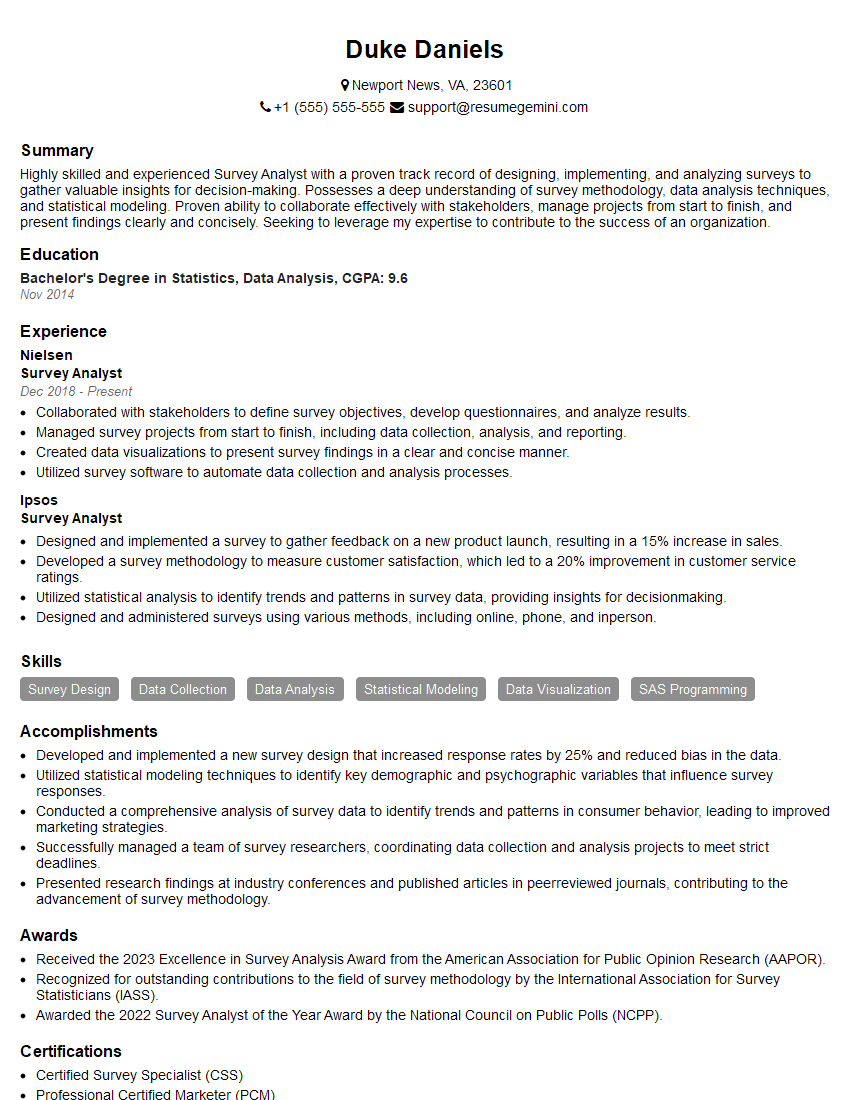
Survey Analyst Resume Sample

Market Research Analyst Resume Sample

Financial Analyst Resume Sample

Data Analyst Resume Sample

Quantitative Analyst Resume Sample
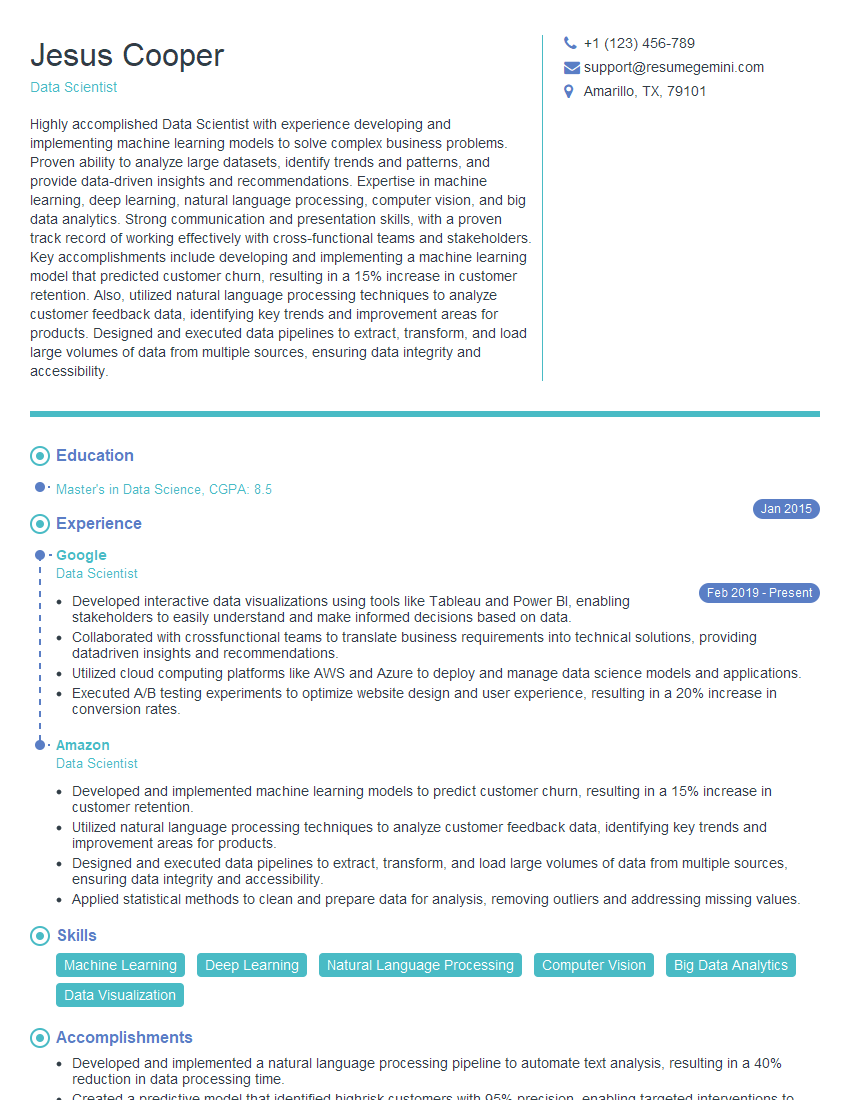
Data Scientist Resume Sample

Research Scientist Resume Sample

Actuary Resume Sample

Operations Research Analyst Resume Sample

Statistician Resume Sample

Biostatistician Resume Sample
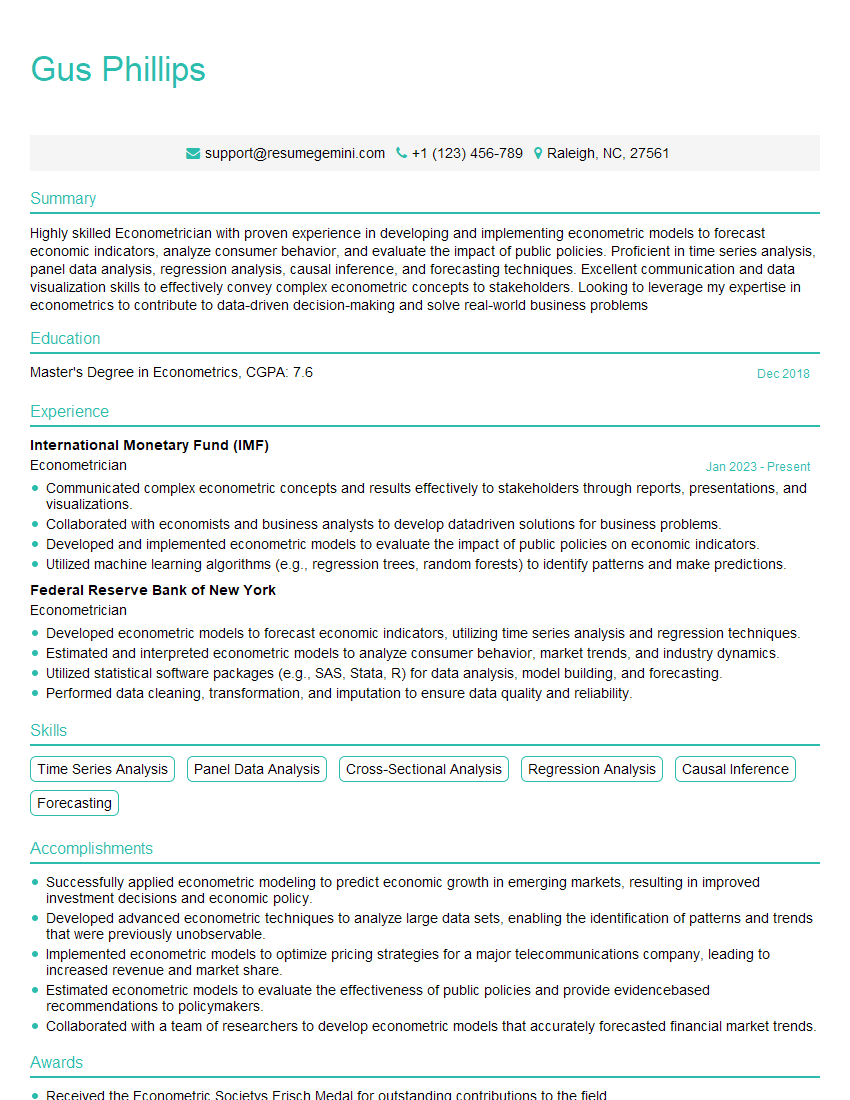
Econometrician Resume Sample

Machine Learning Engineer Resume Sample
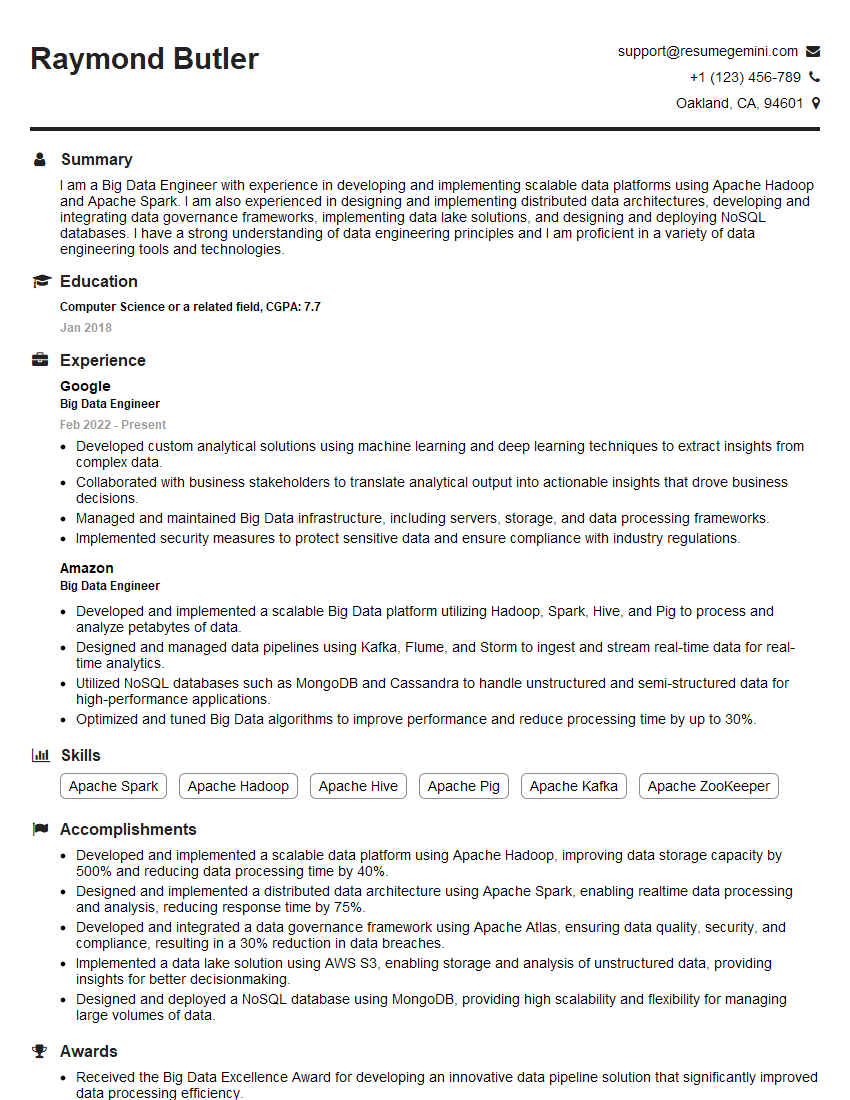
Big Data Engineer Resume Sample
Explore more articles
Users Rating of Our Blogs
Share Your Experience
We value your feedback! Please rate our content and share your thoughts (optional).
What Readers Say About Our Blog
Really detailed insights and content, thank you for writing this detailed article.
IT gave me an insight and words to use and be able to think of examples