The thought of an interview can be nerve-wracking, but the right preparation can make all the difference. Explore this comprehensive guide to Experience in cotton industry research and analysis interview questions and gain the confidence you need to showcase your abilities and secure the role.
Questions Asked in Experience in cotton industry research and analysis Interview
Q 1. Describe the different types of cotton and their respective properties.
Cotton is classified into various types based on fiber length, strength, fineness, and other properties. The most common types include Upland cotton (Gossypium hirsutum), Extra-Long Staple (ELS) cotton, Pima cotton, and Egyptian cotton.
- Upland cotton: This is the most widely grown type, known for its relatively short fiber length and good yield. It’s versatile and used in a wide range of textile products, from clothing to industrial applications. Think of your everyday t-shirt – it’s likely made from Upland cotton.
- Extra-Long Staple (ELS) cotton: This variety boasts longer, finer, and stronger fibers compared to Upland cotton. ELS cotton produces luxurious fabrics with a silky feel, often used in high-end apparel and bedding. Imagine the smooth texture of a premium Egyptian cotton sheet – that’s the result of long staple fibers.
- Pima cotton: A type of ELS cotton, Pima is known for its exceptional softness, strength, and durability. It’s often used in high-quality clothing and is considered a premium cotton variety.
- Egyptian cotton: Another ELS cotton variety, renowned for its extra-long, fine, and strong fibers. Its luxurious feel and durability make it highly sought after in the textile industry. Many consider it the gold standard in cotton.
The differences in fiber properties directly impact the final textile product’s quality, feel, and durability. For instance, longer fibers result in stronger and smoother fabrics, while finer fibers contribute to a softer hand.
Q 2. Explain the process of cotton ginning.
Cotton ginning is the process of separating the cotton fibers from the seeds. Before ginning, the harvested cotton bolls (seed pods) contain seeds entangled with the fibers. The process involves several steps:
- Cleaning: Removing dirt, leaves, and other foreign materials from the harvested cotton.
- Ginning: The core process using either saw gins (for short-staple cotton) or roller gins (for long-staple cotton). Saw gins use rotating saws to pull the fibers from the seeds, while roller gins use rollers to gently separate them. This is a critical step, significantly impacting fiber quality.
- Cleaning (post-ginning): Further cleaning to remove any remaining seeds, trash, and other impurities.
- Pressing: Compressing the cleaned cotton fibers into bales for easier transport and storage.
The invention of the cotton gin by Eli Whitney revolutionized cotton production, making it much more efficient and economical. The gin’s impact on the cotton industry and the American economy was enormous, although it also contributed to the expansion of slavery.
Q 3. What are the key factors affecting cotton yield?
Cotton yield, the amount of cotton produced per unit area, is influenced by a multitude of factors. These factors can be broadly classified into:
- Climatic Factors: Temperature, rainfall, sunlight, and humidity are crucial. Insufficient or excessive rainfall can severely impact yield. Optimal temperatures and sufficient sunlight are essential for proper growth and fiber development.
- Soil Factors: Soil type, fertility, drainage, and pH significantly influence root development and nutrient uptake. Well-drained, fertile soils with appropriate pH levels are ideal for cotton growth.
- Management Practices: Planting density, irrigation, fertilization, pest and disease management, and harvesting techniques all play a crucial role. Proper fertilization ensures sufficient nutrients, while effective pest management minimizes yield losses.
- Genetic Factors: The choice of cotton variety is crucial. High-yielding, disease-resistant varieties are preferred to maximize production and minimize losses.
- Pests and Diseases: Infestations by pests like bollworms and diseases like verticillium wilt can drastically reduce yield. Effective pest and disease management is critical.
For example, a prolonged drought can significantly reduce cotton yield, even with the best management practices. Conversely, using high-yielding varieties and optimized irrigation can compensate for some unfavorable climatic conditions. A holistic approach considering all these factors is crucial for maximizing cotton yield.
Q 4. How do you assess the quality of cotton fiber?
Cotton fiber quality is assessed using several parameters, primarily focusing on fiber length, strength, fineness, uniformity, and maturity. These properties are crucial in determining the quality and suitability of the cotton for various textile applications.
- Fiber Length: Measured in inches or millimeters, it significantly influences the strength and fineness of the yarn. Longer fibers generally produce stronger and finer yarns.
- Fiber Strength: The force required to break a single fiber. Stronger fibers lead to more durable fabrics.
- Fiber Fineness: The diameter of the fiber, often expressed as micronaire. Finer fibers result in softer and more luxurious fabrics.
- Fiber Uniformity: How consistent the fiber length is within a sample. Uniformity is crucial for efficient spinning and yarn quality.
- Fiber Maturity: The degree of cell wall thickening in the fiber. Mature fibers are stronger and more resistant to damage.
These parameters are usually measured using sophisticated instruments like high volume instruments (HVI) which provide objective measurements. The HVI system provides a comprehensive report, and these data are essential for determining the price and market value of the cotton. For example, a cotton sample with longer, stronger, and more uniform fibers would command a higher price than one with shorter, weaker, and less uniform fibers.
Q 5. What are the common pests and diseases affecting cotton crops?
Cotton crops are susceptible to a range of pests and diseases that can significantly impact yield and quality. Some common ones include:
- Pests: Bollworms (Helicoverpa zea and Helicoverpa armigera) are major pests that attack the bolls, reducing fiber yield and quality. Aphids, whiteflies, and spider mites also cause significant damage by sucking plant sap and hindering growth. Weevils can damage seeds and developing bolls.
- Diseases: Verticillium wilt, Fusarium wilt, and bacterial blight are common fungal and bacterial diseases that cause wilting, leaf spotting, and reduced yield. Root rot can also severely affect plant health and productivity.
These pests and diseases can significantly reduce cotton yields and affect the quality of the fiber, sometimes leading to total crop failure if not properly managed. For example, a severe bollworm infestation can reduce the yield by 50% or more.
Q 6. Describe various methods for cotton pest management.
Cotton pest management involves a variety of methods, emphasizing an integrated pest management (IPM) approach that combines different strategies to minimize pest damage while reducing reliance on chemical pesticides.
- Cultural Practices: Crop rotation, proper planting density, and timely harvesting can help minimize pest infestations. Good sanitation practices, removing crop residues, also help reduce disease incidence.
- Biological Control: Using natural predators and parasites of cotton pests, such as beneficial insects, can help suppress pest populations. Introducing natural enemies like ladybirds (for aphids) or parasitic wasps (for bollworms) can be highly effective.
- Chemical Control: Insecticides are used as a last resort when other methods are insufficient to control pests. Integrated Pest Management (IPM) strategies strive to minimize pesticide use to protect beneficial insects and the environment.
- Genetic Resistance: Developing and planting cotton varieties with inherent resistance to specific pests and diseases is a key strategy. Bt cotton, for example, incorporates a gene from Bacillus thuringiensis that produces a protein toxic to bollworms.
IPM involves monitoring pest populations and implementing control measures only when necessary. This approach reduces the environmental impact of pesticides and promotes sustainable cotton production.
Q 7. Explain the role of biotechnology in improving cotton production.
Biotechnology plays a significant role in improving cotton production by enhancing yield, quality, and pest resistance. The most prominent example is the development of Bt cotton.
- Bt Cotton: Genetically modified cotton expressing genes from Bacillus thuringiensis produces a protein toxic to bollworms, significantly reducing the need for insecticide applications. This has dramatically improved yields and reduced the environmental impact of pesticide use.
- Herbicide Tolerance: Biotechnology has also been used to develop cotton varieties tolerant to specific herbicides. This allows for more effective weed control, minimizing competition for resources and improving yields.
- Disease Resistance: Research is ongoing to develop cotton varieties resistant to various diseases, such as Verticillium wilt and Fusarium wilt. This will reduce yield losses and the need for chemical treatments.
- Improved Fiber Quality: Biotechnology offers potential for improving fiber properties like length, strength, and fineness. This leads to higher-quality yarns and fabrics.
However, the use of GM cotton is not without controversy, with concerns about potential environmental impacts and the need for careful risk assessment. Despite these concerns, biotechnology offers significant potential for enhancing cotton production sustainability and efficiency.
Q 8. What are the current market trends in the cotton industry?
The cotton market is dynamic, influenced by several factors. Currently, we’re seeing increased demand for sustainable and ethically sourced cotton, driven by growing consumer awareness. This is pushing the industry towards organic and recycled cotton options. Prices fluctuate significantly based on global supply and demand, influenced by weather patterns affecting major producing regions like India, the US, and Brazil. Technological advancements are also shaping the market, with precision agriculture and automation playing larger roles in optimizing yields and reducing costs. Finally, the fashion industry’s trends significantly impact cotton demand; for instance, the rise of fast fashion initially increased demand but now faces a pushback toward slower, more sustainable practices.
- Increased demand for sustainable cotton: Consumers are increasingly choosing environmentally friendly options.
- Price volatility: Weather events and global economic factors create price fluctuations.
- Technological advancements: Precision agriculture and automation are improving efficiency.
- Fashion trends: Shifts in fashion styles directly impact cotton demand.
Q 9. Discuss the sustainability challenges facing the cotton industry.
The cotton industry faces significant sustainability challenges. Water consumption is a major concern, as cotton is a thirsty crop. Conventional cotton farming relies heavily on pesticides and insecticides, harming biodiversity and potentially impacting human health. Land degradation and soil erosion are also significant problems, especially with monoculture farming practices. Furthermore, the carbon footprint associated with cotton production, processing, and transportation is substantial. Finally, ensuring fair labor practices and avoiding exploitative working conditions throughout the supply chain remains a critical ethical challenge.
- High water consumption: Cotton cultivation requires significant water resources.
- Pesticide and insecticide use: Harmful chemicals impact the environment and human health.
- Land degradation: Unsustainable farming practices lead to soil erosion and depletion.
- Carbon footprint: Production, processing, and transport contribute to greenhouse gas emissions.
- Ethical concerns: Ensuring fair labor practices is paramount.
Q 10. How can cotton production be made more environmentally friendly?
Making cotton production more environmentally friendly requires a multi-pronged approach. Water-efficient irrigation techniques, such as drip irrigation, can significantly reduce water consumption. Promoting organic farming methods reduces or eliminates the need for harmful pesticides and fertilizers. Crop rotation and cover cropping can improve soil health and reduce erosion. Investing in renewable energy sources for powering cotton processing facilities minimizes the carbon footprint. Developing and implementing better waste management strategies during processing is also crucial. Finally, supporting farmer training and education initiatives is key to widespread adoption of sustainable practices. For example, the transition to rain-fed agriculture in certain regions could be a game-changer, though it might require developing drought-resistant cotton varieties.
- Water-efficient irrigation: Techniques like drip irrigation minimize water waste.
- Organic farming: Reduces or eliminates pesticide and fertilizer use.
- Improved soil management: Crop rotation and cover cropping enhance soil health.
- Renewable energy: Utilizing solar or wind power reduces carbon emissions.
- Waste management: Implementing efficient waste reduction and recycling processes.
- Farmer education and training: Equipping farmers with the knowledge and skills to adopt sustainable practices.
Q 11. Explain the different types of cotton fabrics and their uses.
Cotton fabrics vary widely in their properties and uses depending on the type of cotton, yarn construction, and finishing processes. Here are some examples:
- Combed cotton: A smoother, stronger, and more luxurious fabric, often used in high-quality apparel.
- Carded cotton: A more affordable option, suitable for everyday clothing and home textiles. It’s slightly coarser than combed cotton.
- Organic cotton: Grown without synthetic pesticides or fertilizers, appealing to environmentally conscious consumers.
- Supima cotton: A long-staple, extra-fine cotton known for its softness and strength, used in premium apparel.
- Pima cotton: Similar to Supima, offering superior quality and softness.
- Egyptian cotton: Another long-staple cotton, highly prized for its luxurious feel and strength.
The uses depend on the specific characteristics; for instance, durable canvas uses robust, tightly woven cotton, while delicate lace utilizes finer threads. Towels often use absorbent varieties, while denim employs tough, hard-wearing cotton.
Q 12. Describe the process of cotton spinning and weaving.
Cotton spinning and weaving are crucial steps in textile manufacturing. Spinning transforms raw cotton fibers into yarn. This involves several stages: cleaning (removing impurities), carding (aligning fibers), combing (for finer yarns), drawing (thinning and aligning), roving (forming a continuous strand), and spinning (twisting the fibers to create yarn). Weaving then interlaces the yarns to create fabric. This process uses a loom, which interweaves warp yarns (running lengthwise) and weft yarns (running crosswise) to create a cloth structure. Different weaving patterns create different fabric textures and properties (e.g., plain weave, twill weave, satin weave).
Think of spinning like creating a strong rope from individual strands, and weaving like intricately interlacing those ropes to create a strong and durable fabric.
Q 13. What are the key quality parameters for cotton yarn?
Key quality parameters for cotton yarn include:
- Count (fineness): Expressed in terms of the number of hanks (840 yards) per pound, a higher count indicates finer yarn.
- Strength: Measured in terms of tensile strength (the force required to break the yarn), crucial for durability.
- Evenness: Refers to the uniformity of the yarn’s thickness, impacting the fabric’s appearance and quality.
- Hairiness: The amount of protruding fibers on the yarn surface, influencing the fabric’s texture and feel.
- Twist: The number of turns per inch, affecting the yarn’s strength and elasticity.
- Imperfections: The presence of neps (small entangled fiber clusters), slubs (thick places), or other flaws.
These parameters are closely monitored throughout the spinning process to ensure consistent quality.
Q 14. What are the different methods for testing cotton fiber strength?
Several methods exist for testing cotton fiber strength. The most common is the single-fiber strength tester, which measures the force required to break individual fibers. This provides a measure of fiber tenacity. Another method involves testing the tensile strength of yarn, which indirectly reflects the strength of the constituent fibers. Bundle strength testing assesses the strength of a small group of fibers, offering a more representative measure than single-fiber testing, especially when dealing with variability in fiber properties within a bale. Advanced techniques like high-speed tensile testing provide more dynamic data, while microscopic analysis can assess fiber maturity and other structural aspects that correlate with strength.
The choice of method depends on the specific application and required level of detail. For instance, single-fiber testing is useful for research purposes, while yarn strength testing is more relevant for quality control in textile manufacturing.
Q 15. How do you analyze cotton market data to predict future trends?
Analyzing cotton market data to predict future trends involves a multi-faceted approach combining quantitative and qualitative analysis. We start by gathering data from various sources including market reports from organizations like the USDA (United States Department of Agriculture), international trade data, weather reports impacting growing regions, and economic indicators affecting consumer demand.
Quantitative analysis involves using statistical tools and models like time series analysis (e.g., ARIMA models) to identify trends, seasonality, and cyclical patterns in historical price data. We also utilize regression analysis to understand the relationship between cotton prices and other factors, such as global supply, demand, and exchange rates. For example, a regression model could help us determine the impact of a drought in a major cotton-producing region on global prices.
Qualitative analysis involves considering non-numerical factors. This includes assessing geopolitical events (e.g., trade wars), changes in government policies (e.g., subsidies), advancements in technology affecting production, and shifts in consumer preferences towards different types of textiles. Combining these quantitative and qualitative insights allows for a more comprehensive and nuanced prediction of future trends. Think of it as using both a detailed map (quantitative data) and a weather forecast (qualitative factors) to plan a successful journey.
Career Expert Tips:
- Ace those interviews! Prepare effectively by reviewing the Top 50 Most Common Interview Questions on ResumeGemini.
- Navigate your job search with confidence! Explore a wide range of Career Tips on ResumeGemini. Learn about common challenges and recommendations to overcome them.
- Craft the perfect resume! Master the Art of Resume Writing with ResumeGemini’s guide. Showcase your unique qualifications and achievements effectively.
- Don’t miss out on holiday savings! Build your dream resume with ResumeGemini’s ATS optimized templates.
Q 16. What are the factors influencing cotton prices?
Cotton prices are influenced by a complex interplay of factors that can be broadly categorized into supply-side and demand-side elements.
- Supply-side factors include weather conditions during the growing season (droughts, floods, extreme temperatures can significantly impact yields), pest infestations, the availability of irrigation, technological advancements in farming practices (improving yields), and global cotton production levels. A bumper harvest, for example, will generally lead to lower prices.
- Demand-side factors include global textile production and consumption, economic growth in major textile-consuming countries (a strong economy usually leads to higher demand), fashion trends (certain styles might drive demand for specific types of cotton), and the prices of substitute fibers (like polyester). Increased demand for sustainable cotton, for example, can affect prices.
- Other factors like government policies (subsidies, tariffs, trade agreements), currency fluctuations, and speculative trading in cotton futures markets can significantly influence prices. A sudden devaluation of a major cotton-exporting country’s currency could make its cotton more attractive internationally, driving prices up.
Q 17. Explain the concept of cotton futures trading.
Cotton futures trading is a standardized contract to buy or sell a specific quantity of cotton at a predetermined price and date in the future. It’s a form of derivative trading that takes place on organized exchanges, providing a mechanism for hedging risk and price speculation.
For example, a textile manufacturer might buy cotton futures contracts to lock in a price for cotton needed six months from now, protecting them from potential price increases. This is called hedging, reducing the risk associated with volatile cotton prices. Conversely, speculators might trade futures contracts to profit from anticipated price movements, betting on whether the price will rise or fall. Futures trading adds liquidity to the cotton market, allowing for efficient price discovery and risk management, but it can also amplify price volatility if speculative activity is intense.
Q 18. How do you manage cotton supply chain risks?
Managing cotton supply chain risks involves a proactive and multi-layered approach. Risks can range from disruptions in raw material supply to logistics bottlenecks and quality control issues.
- Diversification of sourcing: Relying on multiple suppliers in different geographic locations helps mitigate risks associated with weather events or political instability in a single region.
- Robust contract management: Clearly defined contracts with suppliers specify quality standards, delivery timelines, and payment terms, minimizing disputes and ensuring timely delivery.
- Inventory management: Maintaining appropriate inventory levels helps mitigate risks associated with supply shortages or unexpected price fluctuations.
- Risk assessment and mitigation planning: Regularly assessing potential risks (e.g., using scenario planning) and developing mitigation strategies helps prepare for unforeseen circumstances. For example, having backup transportation options could mitigate the impact of port closures.
- Technology adoption: Using blockchain technology for greater transparency and traceability can enhance supply chain efficiency and reduce risks associated with fraud or ethical violations.
Q 19. What are the ethical considerations in the cotton industry?
Ethical considerations in the cotton industry are becoming increasingly important. The industry faces scrutiny regarding issues such as:
- Sustainable production: Minimizing the environmental impact of cotton farming, including water usage, pesticide application, and soil degradation. This is often addressed through initiatives promoting organic cotton and sustainable farming practices.
- Fair labor practices: Ensuring fair wages, safe working conditions, and the elimination of child labor throughout the supply chain. Certifications like Fairtrade and BCI (Better Cotton Initiative) aim to address these issues.
- GMOs and biodiversity: Concerns exist regarding the use of genetically modified cotton and its potential impact on biodiversity. There is increasing demand for non-GMO cotton.
- Transparency and traceability: Enhancing transparency in the supply chain to ensure ethical sourcing and accountability. Blockchain technology is being explored to improve traceability.
Ignoring these ethical considerations can lead to reputational damage, consumer boycotts, and increased regulatory scrutiny.
Q 20. Describe the role of international trade in the cotton industry.
International trade plays a crucial role in the cotton industry as cotton is a globally traded commodity. Major cotton-producing countries export significant quantities to textile manufacturing hubs around the world. International trade influences prices, drives specialization, and enables access to diverse cotton types.
For example, India and the USA are major exporters, while countries like China, Bangladesh, and Vietnam are large importers and manufacturers. Trade agreements and tariffs significantly impact the competitiveness of different cotton-producing and consuming nations. Trade disputes or sanctions can disrupt global cotton trade flows, affecting prices and availability in various markets. International trade organizations like the WTO play a role in setting rules and resolving trade disputes within the cotton sector.
Q 21. What are the latest advancements in cotton breeding?
Advancements in cotton breeding are focused on improving yield, fiber quality, and resilience to pests and diseases. Key areas of progress include:
- Gene editing technologies: CRISPR-Cas9 and other gene-editing tools are enabling precise modifications to cotton’s genome, accelerating the development of improved varieties with enhanced traits.
- Marker-assisted selection (MAS): MAS uses molecular markers to identify desirable genes in cotton, speeding up the selection process and improving breeding efficiency.
- Development of drought-tolerant and pest-resistant varieties: Breeding programs are focused on developing cotton varieties that can withstand harsh environmental conditions and minimize reliance on pesticides.
- Improving fiber quality: Efforts are underway to improve fiber length, strength, and uniformity, resulting in higher-quality textiles.
These advancements are crucial for increasing the sustainability and productivity of cotton farming, contributing to a more resilient and efficient cotton industry.
Q 22. Discuss the impact of climate change on cotton production.
Climate change significantly impacts cotton production through altered temperature and precipitation patterns, increased frequency and intensity of extreme weather events, and shifts in pest and disease dynamics. Higher temperatures, for example, can lead to reduced flowering and boll set, resulting in lower yields. More frequent and intense droughts stress the plants, reducing fiber quality and quantity. Conversely, excessive rainfall can lead to fungal diseases like Fusarium wilt and root rot, causing significant crop losses. Increased pest pressure due to warmer temperatures further compounds the issue. For instance, the boll weevil, a major cotton pest, thrives in warmer conditions, requiring more intensive pest management strategies, often involving increased pesticide use with environmental consequences.
Specifically, regions heavily reliant on rain-fed agriculture are especially vulnerable. We’ve seen instances in several parts of the world where prolonged droughts have completely wiped out entire cotton harvests. This necessitates the development of climate-resilient cotton varieties through breeding programs focused on drought tolerance and heat stress resistance. Improved water management practices, such as drip irrigation, can also mitigate some of the negative impacts.
Q 23. How do you use statistical methods in cotton research?
Statistical methods are crucial in cotton research for analyzing experimental data, predicting yields, and understanding the relationships between various factors affecting cotton quality and production. We routinely use techniques like ANOVA (Analysis of Variance) to compare the performance of different cotton varieties under various growing conditions. Regression analysis helps us model the relationship between factors like rainfall, temperature, and fertilizer application on yield and fiber properties. For instance, we might use multiple linear regression to predict cotton yield based on several input variables.
Furthermore, Principal Component Analysis (PCA) is frequently used to reduce the dimensionality of datasets containing numerous fiber quality parameters, allowing us to identify the most important factors contributing to overall fiber quality. We also leverage time-series analysis to study trends in cotton production over time and forecast future yields. This allows us to identify potential risks and plan accordingly. For example, we might use ARIMA models to predict yield fluctuations based on historical data. Statistical software packages like R and SAS are essential for these analyses.
Q 24. Explain different cotton fiber testing instruments and their applications.
Several instruments are used to test cotton fiber properties, each providing specific insights into quality. The High Volume Instrument (HVI) is a cornerstone of cotton testing, providing a comprehensive profile of fiber properties such as length, strength, uniformity, micronaire, and color. This data is essential for grading and pricing cotton. The AFIS (Advanced Fiber Information System) offers a more detailed analysis of fiber length distribution, providing insights that the HVI may miss.
The Uster® Tester is used to assess the cleanliness and maturity of cotton fibers, identifying imperfections such as neps, short fibers, and trash. Instruments measuring fiber strength, such as the Stelometer, provide critical information about the yarn-spinning potential of the fiber. Color measurement devices, such as spectrophotometers, quantify color variations, which are important factors in textile processing and product consistency. Each instrument’s application depends on the specific quality aspects under scrutiny; for example, HVI is widely used for commercial grading, while Uster® is more crucial for quality control during processing.
Q 25. Describe your experience with cotton quality control procedures.
My experience with cotton quality control procedures encompasses all stages, from field sampling and ginning to textile manufacturing. In the field, regular checks ensure proper plant spacing, pest and disease management, and timely irrigation. At the gin, we closely monitor fiber quality parameters like trash content, micronaire, and fiber length. This involves regular sampling and testing using HVI and other instruments. During processing, quality control focuses on maintaining consistent fiber properties to ensure the final product meets the required specifications.
We utilize control charts to monitor key quality parameters over time, identifying any deviations from established norms. This allows for prompt corrective action, minimizing waste and maximizing efficiency. For example, if the micronaire value consistently falls outside the acceptable range, we investigate potential causes, such as environmental factors or machinery issues. A crucial aspect is maintaining detailed records of all testing results, which aids in troubleshooting and continuous improvement.
Q 26. How do you troubleshoot problems in cotton processing?
Troubleshooting in cotton processing involves a systematic approach. First, we identify the specific problem, whether it’s reduced yield, poor fiber quality, or machinery malfunction. We then systematically analyze potential causes. For example, if we observe an increase in neps (small entangled fiber clusters), we might examine factors like ginning practices, harvesting techniques, or even environmental conditions during the growing season. We might investigate factors such as weather patterns, pest infestations, or mechanical issues affecting fiber quality.
Data analysis plays a key role here. By examining historical data and comparing it to the current situation, we can identify trends and potential correlations. We might utilize statistical process control techniques to pinpoint the source of the problem and implement corrective measures. Collaboration is vital—engaging with other experts, including agronomists, engineers, and textile technologists, helps us find comprehensive solutions. A thorough understanding of the entire process chain, from planting to final product, is crucial for effective troubleshooting.
Q 27. What software or tools do you use for cotton data analysis?
For cotton data analysis, we primarily use statistical software packages like R and SAS. R provides a wide range of statistical and graphical tools for data manipulation, analysis, and visualization. We use it extensively for tasks such as regression analysis, ANOVA, and PCA. SAS offers a comprehensive suite of tools for statistical modeling, data management, and reporting, particularly helpful in managing large datasets and complex analyses.
In addition, we utilize spreadsheet software (like Microsoft Excel) for data entry, basic calculations, and initial data exploration. Specialized software associated with HVI and AFIS instruments also provides data analysis capabilities. We also use database management systems (DBMS) such as SQL for storing and retrieving large amounts of cotton data. The choice of software often depends on the complexity of the analysis and the type of data available.
Q 28. Describe a time you had to solve a complex problem in cotton research.
During a research project investigating the impact of a new irrigation technique on cotton yield and fiber quality, we encountered unexpected results. Initial data suggested a negative impact on fiber strength, contradicting our hypotheses. To resolve this, we meticulously reviewed our data collection and analysis methods, identifying a potential bias in our sampling procedures.
We implemented stricter sampling protocols, ensuring a more representative sample across the experimental plots. We re-analyzed the data, factoring in environmental variables like rainfall and temperature that weren’t initially considered in depth. This revealed that the negative impact on fiber strength was primarily linked to an unusually hot and dry period during a critical growth stage, rather than the irrigation technique itself. The revised analysis showed no significant negative impact on fiber strength when controlling for these environmental factors. This experience emphasized the importance of rigorous methodology, thorough data analysis, and considering the interplay of various factors in agricultural research.
Key Topics to Learn for Experience in Cotton Industry Research & Analysis Interview
- Cotton Production & Global Markets: Understanding global cotton production trends, major producing countries, and market dynamics (supply, demand, pricing).
- Fiber Properties & Quality Analysis: Knowledge of fiber characteristics (length, strength, micronaire, etc.), testing methods, and quality assessment techniques used in the industry.
- Cotton Breeding & Genetics: Familiarity with advancements in cotton breeding, genetic modification, and the development of improved varieties with enhanced yield, quality, and disease resistance.
- Pest & Disease Management: Understanding common cotton pests and diseases, integrated pest management strategies, and the impact of various control methods on yield and fiber quality.
- Sustainable Cotton Production: Knowledge of sustainable farming practices, water management, reduced pesticide use, and the environmental impact of cotton cultivation.
- Data Analysis & Interpretation: Proficiency in analyzing agricultural data, statistical methods, and interpreting research findings related to cotton production and quality.
- Research Methodology & Experimental Design: Understanding research methodologies, experimental design principles, and data interpretation techniques relevant to agricultural research.
- Cotton Processing & Textile Industry: Basic understanding of the cotton processing chain, from ginning to spinning, and its implications for fiber quality and textile manufacturing.
- Economic Analysis of Cotton Production: Analyzing cost of production, profitability, and the economic factors influencing cotton farming decisions.
- Problem-Solving & Critical Thinking: Applying analytical skills to address challenges and propose solutions within the cotton industry context.
Next Steps
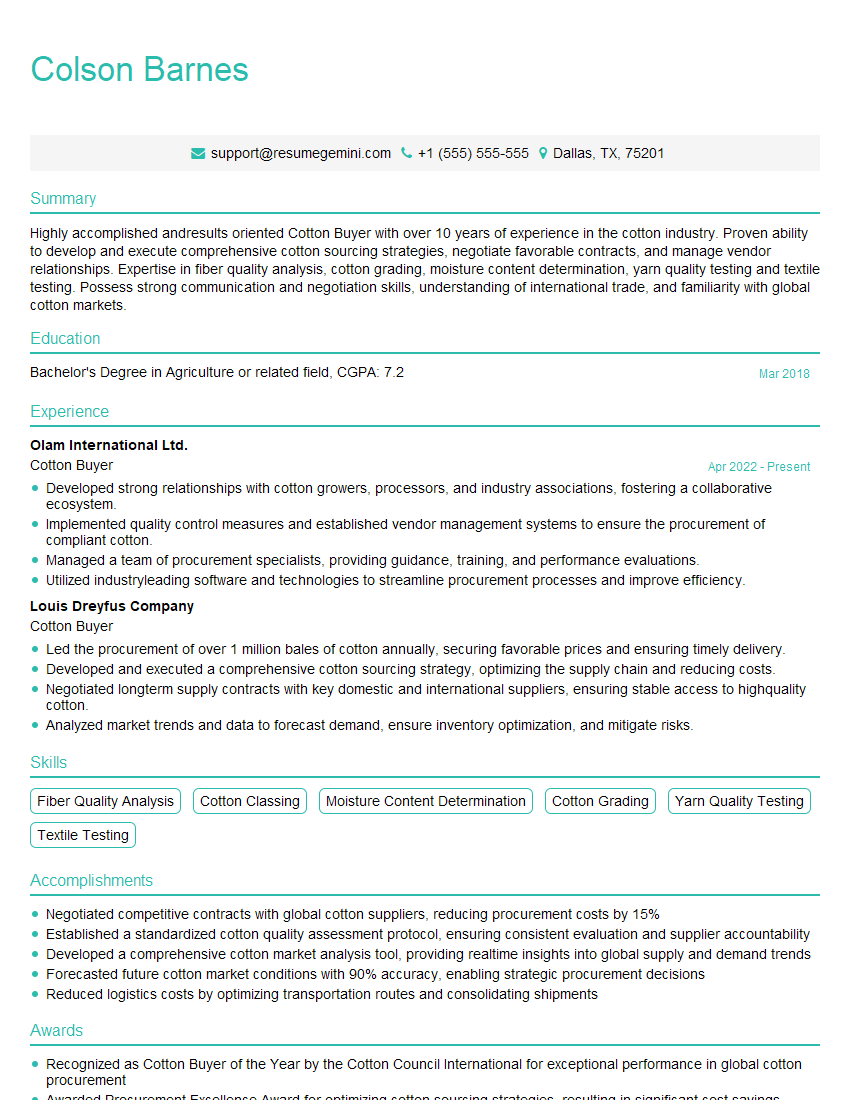
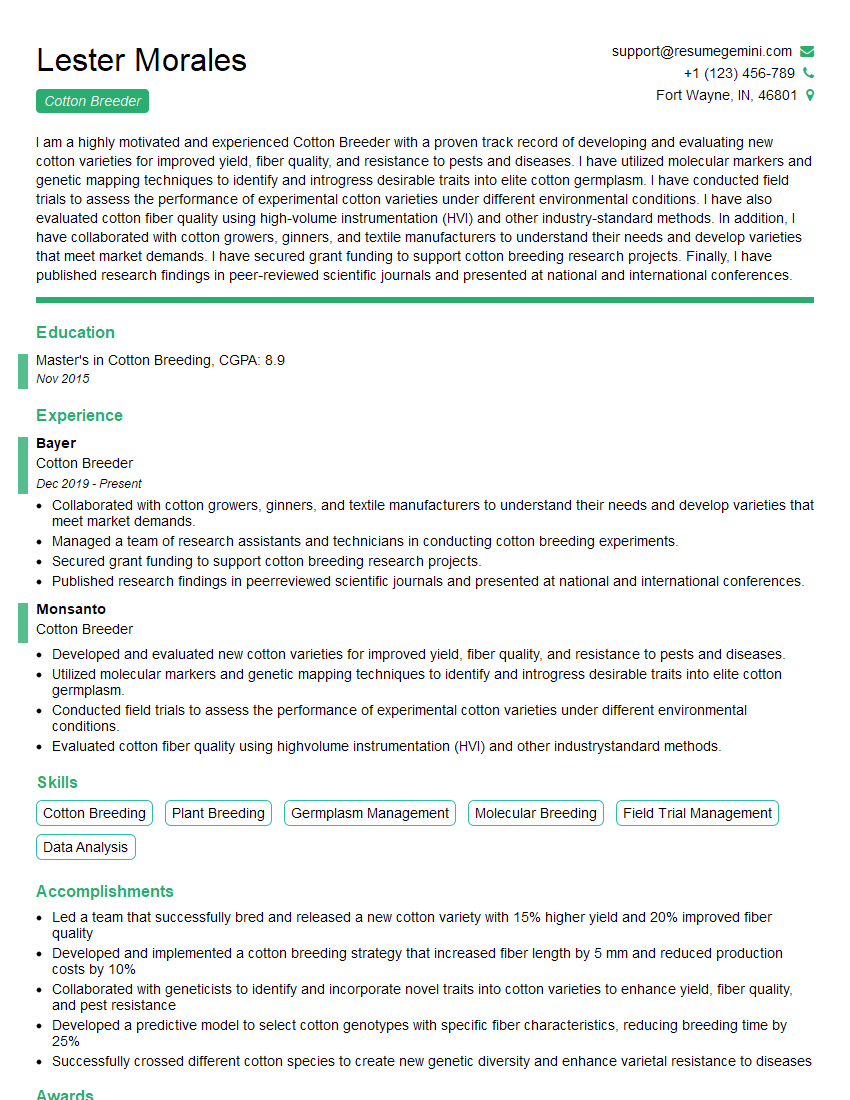
Mastering the intricacies of cotton industry research and analysis significantly enhances your career prospects in agricultural science, textile technology, or related fields. A strong understanding of these topics demonstrates valuable expertise and problem-solving skills highly sought after by employers. To maximize your chances of landing your dream role, creating an ATS-friendly resume is crucial. ResumeGemini is a trusted resource that can help you build a professional and impactful resume. ResumeGemini provides examples of resumes tailored to experience in cotton industry research and analysis, guiding you to showcase your skills and achievements effectively. Invest time in crafting a compelling resume – it’s your first impression!
Explore more articles
Users Rating of Our Blogs
Share Your Experience
We value your feedback! Please rate our content and share your thoughts (optional).
What Readers Say About Our Blog
Really detailed insights and content, thank you for writing this detailed article.
IT gave me an insight and words to use and be able to think of examples