Preparation is the key to success in any interview. In this post, we’ll explore crucial Surveying Oil and Gas interview questions and equip you with strategies to craft impactful answers. Whether you’re a beginner or a pro, these tips will elevate your preparation.
Questions Asked in Surveying Oil and Gas Interview
Q 1. Explain the different types of surveys used in the oil and gas industry.
Oil and gas surveying employs a variety of survey types, each tailored to specific project needs. These surveys are crucial for efficient exploration, extraction, and infrastructure development.
- Topographic Surveys: These surveys create detailed maps of the Earth’s surface, showing elevation contours, natural and man-made features. They’re fundamental for site planning and pipeline routing. For example, identifying suitable locations for well pads or pipeline routes that minimize environmental impact.
- Planimetric Surveys: Focusing on the horizontal position of features, these surveys define property boundaries, facility locations, and road networks. Think of it as a 2D representation of a site, important for legal compliance and facility layout.
- Cadastral Surveys: These surveys precisely define land ownership boundaries, crucial for lease agreements and regulatory compliance in the oil and gas sector. Disputes over land ownership can significantly delay or halt projects, making these surveys vital.
- Route Surveys: Used extensively for pipeline and road construction, these surveys determine the optimal path, considering terrain, environmental factors, and regulatory restrictions. Proper route surveying ensures efficient and safe infrastructure development.
- Geodetic Surveys: These surveys establish highly accurate control points across large areas, providing a framework for other surveys. They’re essential for maintaining consistency and accuracy across extensive oil and gas operations.
- As-Built Surveys: Conducted after construction, these surveys document the final location and dimensions of installed facilities, comparing them to the design plans. This is essential for record-keeping and future maintenance.
- 3D Laser Scanning: This technology rapidly captures vast amounts of point cloud data, providing highly detailed 3D models of sites. This is particularly useful for complex infrastructure like refineries and offshore platforms, aiding in inspection and maintenance.
Q 2. Describe your experience with GPS/GNSS surveying techniques.
My experience with GPS/GNSS surveying is extensive. I’ve utilized various GNSS techniques, including static, rapid static, and kinematic surveying, across diverse projects. I’m proficient in using both single- and multiple-receiver systems. For instance, I’ve used RTK (Real-Time Kinematic) GPS extensively for highly accurate positioning of wellheads and pipeline markers, achieving centimeter-level accuracy in real-time. I also have experience processing post-processed kinematic data for higher accuracy where RTK might be limited due to signal obstructions. I understand the importance of properly accounting for atmospheric effects (ionosphere and troposphere) to ensure accuracy. Moreover, my work has encompassed post-processing techniques to improve the precision of the measurements, ensuring the quality of the survey meets the project’s requirements.
Q 3. How do you ensure accuracy and precision in your survey measurements?
Accuracy and precision are paramount in oil and gas surveying. We employ several strategies to ensure both:
- Calibration and Maintenance: Regular calibration of equipment (GPS receivers, total stations, levels) is critical. We also adhere to strict maintenance schedules to prevent errors caused by malfunctioning instruments.
- Redundancy: Multiple measurements are taken using different methods whenever possible, allowing for cross-checking and error detection. This is particularly important in challenging environments.
- Control Networks: Establishing robust control networks with permanently marked points provides a reliable reference for all other measurements. The higher the order of the control network, the greater the accuracy.
- Data Processing and QC: Sophisticated software is used to process raw survey data, applying corrections for atmospheric effects and other error sources. Rigorous quality control checks are performed throughout the process to identify and correct any anomalies.
- Proper Field Procedures: Following established field procedures, such as using appropriate techniques for traversing and leveling, and ensuring proper instrument setup minimizes human error.
For example, in a recent pipeline survey, we used a combination of RTK GPS and total station measurements to establish the pipeline’s alignment. We then performed a rigorous quality control check on the data to identify and remove any outliers before creating the final alignment plan.
Q 4. What software packages are you proficient in for survey data processing and analysis?
I am proficient in several leading survey data processing and analysis software packages, including:
- AutoCAD Civil 3D: For creating detailed drawings, design plans, and managing spatial data.
- ArcGIS: For geographic information system (GIS) data management, analysis, and visualization.
- Trimble Business Center: For processing GNSS data, performing adjustments, and generating highly accurate coordinates.
- MicroStation: For CAD drafting and design work, frequently used in conjunction with other software for a comprehensive workflow.
My proficiency in these packages allows for efficient processing of large datasets, generating precise maps, and supporting informed decision-making across all phases of a project.
Q 5. Explain your understanding of coordinate systems and datums used in oil and gas surveying.
Understanding coordinate systems and datums is crucial in oil and gas surveying. Inconsistent data will lead to inaccurate results and potential issues with land ownership and infrastructure alignment.
Common coordinate systems include UTM (Universal Transverse Mercator) and State Plane Coordinate Systems. Datums, such as NAD83 (North American Datum of 1983) and WGS84 (World Geodetic System 1984), define the reference ellipsoid used for positioning. It is essential to maintain consistency throughout a project, using the appropriate datum and coordinate system specified by the client and regulatory bodies. Transformations between different coordinate systems and datums may be necessary, and understanding these transformations is a critical aspect of the work. Failure to accurately transform data can lead to significant errors in positioning and potentially impact project cost and safety. For example, using the wrong datum when mapping well locations could result in drilling errors.
Q 6. How do you handle survey challenges in difficult terrain or environmental conditions?
Difficult terrain and environmental conditions pose significant challenges to surveying. My experience includes working in areas with dense vegetation, rugged mountains, and extreme weather conditions. We address these challenges through:
- Adaptive Techniques: Choosing appropriate surveying methods based on the specific challenges. For instance, using robotic total stations in dense vegetation to minimize the need for clearing lines of sight.
- Specialized Equipment: Utilizing equipment designed for difficult terrain, such as ruggedized GPS receivers and all-terrain vehicles.
- Safety Procedures: Implementing stringent safety protocols to protect personnel and equipment in hazardous environments.
- Innovative Solutions: Employing advanced techniques like UAV (Unmanned Aerial Vehicle) or drone surveys for inaccessible areas or to rapidly capture large areas in detail. Drone surveys allow for safe and efficient mapping in hazardous areas or difficult-to-reach locations.
For example, while surveying a pipeline route through a dense forest, we used a combination of RTK GPS with precise base station placement and drone imagery to obtain highly accurate data while minimizing the environmental impact.
Q 7. Describe your experience with legal aspects of land surveying, particularly in the oil and gas sector.
Legal aspects are critical in oil and gas land surveying. My experience includes:
- Understanding Property Boundaries: Accurately defining and documenting property lines is essential to avoid disputes and ensure compliance with lease agreements. This requires thorough understanding of land ownership records and legal descriptions.
- Evidence and Documentation: Maintaining meticulous records and detailed documentation is critical for resolving any potential legal disputes. Properly documented surveys are admissible evidence in court.
- Compliance with Regulations: Adhering to all relevant local, state, and federal regulations regarding land surveying and environmental protection is mandatory. This includes obtaining necessary permits and approvals before undertaking any survey work.
- Expert Witness Testimony: I have provided expert witness testimony in legal proceedings related to boundary disputes and survey accuracy.
A recent example involved a boundary dispute between two oil and gas companies. My accurate and meticulously documented survey provided conclusive evidence, resolving the dispute and preventing costly litigation.
Q 8. Explain the importance of quality control and quality assurance in surveying.
Quality Control (QC) and Quality Assurance (QA) are paramount in surveying, especially in the high-stakes environment of oil and gas. They ensure the accuracy, reliability, and integrity of survey data, which is fundamental for safe and efficient project execution. Think of it like building a skyscraper – you wouldn’t start construction without meticulously checking the foundation’s blueprints and strength. Similarly, flawed survey data can lead to costly errors, safety hazards, and project delays.
QA is a proactive process that focuses on preventing errors. This involves establishing clear procedures, using calibrated equipment, implementing robust data collection methods, and conducting regular staff training. For example, we might implement a pre-survey checklist to verify that all equipment is functioning correctly and that the survey crew is properly briefed on the project objectives and safety protocols.
QC is a reactive process focused on identifying and correcting errors. This includes data validation checks (comparing data against expected values), independent review of survey calculations, and the use of redundancy in measurements. A practical example is using two separate GPS receivers to measure a point simultaneously; any significant discrepancies indicate a potential problem requiring investigation. A robust QC program will document the methods used, the findings, and the steps taken to correct any errors discovered.
In oil and gas, where significant financial and environmental consequences can result from inaccurate surveys, a rigorous QA/QC program is not just good practice – it’s a necessity.
Q 9. How do you manage and organize large survey datasets?
Managing large survey datasets in oil and gas projects requires a structured approach. We’re often dealing with terabytes of data from various sources – GPS, LiDAR, total stations, etc. A disorganized approach would lead to chaos and missed deadlines.
My approach involves several key steps:
- Data Organization: I establish a clear file naming convention, using project codes, date, and data type to ensure easy identification and retrieval. Data is stored in a geographically organized structure, often using a coordinate system aligned with the project area.
- Database Management: We use robust database systems (like Oracle, PostgreSQL, or specialized GIS databases) to store, manage, and query the data. This allows for efficient data retrieval, manipulation, and analysis.
- Data Processing Software: Specialized software packages are used for data processing, adjustment, and analysis. This includes software for GPS processing (e.g., Leica GeoOffice), point cloud processing (e.g., TerraSolid), and GIS software (e.g., ArcGIS).
- Cloud Storage and Collaboration: Cloud-based solutions facilitate data sharing and collaboration among project teams. This enables efficient access to data regardless of location, enhancing teamwork and reducing storage limitations.
- Data Validation and Quality Control: Built into the entire process, quality control procedures ensure data accuracy and completeness. This might involve automated checks within the software, visual inspection of data, and statistical analysis.
Through these strategies, we can effectively manage and utilize the large volumes of survey data, ensuring project efficiency and the quality of the final deliverables.
Q 10. Describe your experience with different types of survey equipment and instrumentation.
My experience encompasses a wide range of survey equipment, each with its strengths and applications in oil and gas projects. This is crucial because the type of equipment chosen significantly influences the accuracy, efficiency, and cost-effectiveness of the survey.
- Total Stations: I’m proficient in using total stations for precise measurements of distances, angles, and elevations. These are invaluable for detailed site surveys and construction staking.
- GPS/GNSS Receivers: I have extensive experience with both static and kinematic GPS/GNSS surveying techniques, using various receiver types and constellations (GPS, GLONASS, Galileo). This is crucial for establishing geodetic control and creating accurate base maps.
- Leveling Instruments: I’m skilled in using various leveling instruments to determine elevations with high accuracy. This is important for pipeline alignment and grading work.
- Scanning and Laser Technology: I’m adept at operating terrestrial laser scanners (TLS) for capturing high-density point cloud data, enabling rapid and accurate as-built documentation. This is essential for progress monitoring and collision avoidance in complex infrastructure projects.
- RTK (Real-Time Kinematic) GPS Systems: I’m very familiar with RTK systems, utilizing them for real-time positioning, enhancing efficiency during tasks like pipeline surveying and construction staking.
My understanding extends beyond the operation of the equipment to include proper calibration, maintenance, and the limitations of each technology. This ensures we select the optimal instrumentation for each task, maximizing accuracy and minimizing potential errors.
Q 11. How familiar are you with the use of LiDAR or other remote sensing technologies in surveying?
LiDAR (Light Detection and Ranging) and other remote sensing technologies are game-changers in oil and gas surveying. They offer significantly enhanced efficiency and data acquisition capabilities compared to traditional methods. I’ve worked extensively with both airborne and terrestrial LiDAR.
Airborne LiDAR provides extensive coverage in a relatively short time, generating high-density point clouds useful for creating digital elevation models (DEMs), identifying right-of-way constraints, and assessing environmental impact. For example, we’ve used airborne LiDAR to rapidly map large areas for pipeline route selection, identifying potential obstacles like steep slopes and wetlands.
Terrestrial LiDAR is ideal for detailed site surveys, generating highly accurate 3D models of existing infrastructure. This helps in planning construction activities, ensuring accurate positioning of equipment, and generating as-built documentation for regulatory compliance. I’ve used terrestrial LiDAR to document existing pipelines and facilities before any modification or construction work.
Beyond LiDAR, I’m familiar with other remote sensing technologies, including aerial photography and multispectral imagery, which are often integrated with LiDAR data for comprehensive project analysis.
Q 12. What is your experience with pipeline surveying and right-of-way acquisition?
Pipeline surveying and right-of-way (ROW) acquisition are critical aspects of my experience in the oil and gas sector. This involves meticulous planning and execution to ensure efficient and legally compliant project development.
Pipeline Surveying: This encompasses accurate alignment and elevation surveys, often using RTK GPS for real-time positioning. We ensure the pipeline route adheres to specified standards and avoids environmental hazards. This often requires detailed site surveys and the creation of digital terrain models (DTMs) to plan optimal pipeline routing and minimize environmental impact.
Right-of-Way Acquisition: This is a complex process involving land surveying, legal research, and stakeholder engagement. It involves identifying and securing the necessary land rights required for pipeline construction and operation. We use survey data to define the ROW boundaries accurately, ensuring we meet all legal and regulatory requirements while minimizing land acquisition costs. This often includes preparing legal descriptions and working with landowners to negotiate easements or purchases.
My experience includes working with various stakeholders, including landowners, regulatory agencies, and environmental consultants, to secure the necessary approvals and permits. The accuracy of our survey data is crucial in this process, ensuring the project proceeds smoothly and avoids costly delays or legal disputes.
Q 13. Describe your understanding of surveying standards and regulations.
A strong understanding of surveying standards and regulations is fundamental to ensuring accurate, reliable, and legally compliant survey work, particularly in oil and gas. These standards vary by jurisdiction but generally aim to ensure the quality, accuracy, and safety of survey projects.
My knowledge encompasses a range of standards, including:
- American Society of Civil Engineers (ASCE) Standards: These provide guidelines for various aspects of surveying, including geodetic control, GPS techniques, and data processing.
- American Congress on Surveying and Mapping (ACSM) Standards: These address ethical considerations, professional practice, and data quality.
- National Spatial Reference System (NSRS): I understand the importance of using the appropriate coordinate systems and datums to ensure consistency and compatibility across projects.
- Local Regulations and Permits: I am familiar with the regulations and permitting processes within various jurisdictions, ensuring compliance with all legal requirements.
- Environmental Regulations: I understand and apply the relevant environmental regulations to ensure the survey work does not negatively impact the environment.
Adherence to these standards and regulations is not just about avoiding penalties; it’s about ensuring the integrity and safety of oil and gas infrastructure, safeguarding the environment, and protecting public safety.
Q 14. How do you integrate survey data with other GIS data in an oil and gas project?
Integrating survey data with other GIS data is crucial for efficient project management and decision-making in oil and gas projects. This integration enhances our understanding of the project context, facilitating better planning and execution.
We achieve this integration through several methods:
- Common Coordinate System: Ensuring all data is projected to a common coordinate system (e.g., UTM, State Plane) is fundamental. This allows for accurate spatial referencing and overlaying of various datasets.
- GIS Software: ArcGIS or QGIS are commonly used platforms to manage, analyze, and visualize the integrated data. These programs allow us to overlay survey data (e.g., pipeline routes, well locations) with other GIS layers such as geological data, environmental sensitivity maps, or property boundaries.
- Data Conversion and Formatting: We convert survey data (often in formats like DXF or LandXML) into formats compatible with the chosen GIS software. This might involve data transformations to ensure accurate spatial referencing.
- Georeferencing: Accurately georeferencing all datasets ensures the spatial alignment between various data layers. This allows for accurate spatial analysis and decision-making.
- Spatial Analysis: GIS capabilities facilitate spatial analysis, such as buffer analysis (identifying areas within a specified distance of pipelines), proximity analysis (determining the distance between wells and sensitive areas), and overlay analysis (identifying areas of overlap between different data layers).
This integrated approach offers a comprehensive understanding of the project area, helping to identify potential conflicts, optimize project design, and minimize environmental impact. For example, overlaying pipeline routes with environmental sensitivity maps helps in identifying areas requiring special mitigation measures.
Q 15. Explain your experience in using CAD software for drafting and preparing survey plans.
My experience with CAD software in surveying spans over eight years, encompassing various platforms like AutoCAD, Civil 3D, and MicroStation. I’m proficient in creating detailed survey plans, including topographic maps, right-of-way plans, and pipeline route surveys. This involves not only drafting but also data management and manipulation. For instance, I’ve used AutoCAD to process point cloud data from laser scanning, generating accurate contour lines and surface models for a complex offshore platform project. In another project, I utilized Civil 3D’s powerful features to design and model a pipeline corridor, integrating survey data with earthwork calculations and design specifications. My workflow usually involves importing data from total stations or GPS receivers, cleaning and adjusting the data for errors, and then creating detailed drawings with accurate labeling and annotations, ensuring compliance with industry standards.
Beyond basic drafting, I’m skilled in creating dynamic drawings, using attributes and blocks to facilitate efficient plan updating and revision management. For example, I created a template in AutoCAD that automatically generates labels for pipeline segments based on the attribute data associated with each segment, significantly reducing drafting time and improving accuracy. My proficiency in CAD software is crucial for delivering high-quality, accurate, and visually appealing survey plans that meet project requirements and client expectations.
Career Expert Tips:
- Ace those interviews! Prepare effectively by reviewing the Top 50 Most Common Interview Questions on ResumeGemini.
- Navigate your job search with confidence! Explore a wide range of Career Tips on ResumeGemini. Learn about common challenges and recommendations to overcome them.
- Craft the perfect resume! Master the Art of Resume Writing with ResumeGemini’s guide. Showcase your unique qualifications and achievements effectively.
- Don’t miss out on holiday savings! Build your dream resume with ResumeGemini’s ATS optimized templates.
Q 16. How do you communicate survey data and findings effectively to non-technical stakeholders?
Communicating complex survey data to non-technical stakeholders requires a clear, concise, and visual approach. I avoid jargon and instead use plain language, relying heavily on visuals like maps, charts, and cross-sections. For example, instead of discussing coordinate geometry, I might explain the location of a proposed wellhead using a simple map showing its proximity to existing infrastructure. I frequently use analogies to make abstract concepts easier to grasp; explaining the concept of elevation using a simple hill and valley illustration.
I also create presentations tailored to the audience’s knowledge level. For a high-level executive summary, I focus on key findings and recommendations, supported by summary charts and visually engaging maps. For more technical presentations to engineers, I provide greater detail, incorporating relevant technical specifications and data. Finally, interactive elements such as 3D models and virtual tours can further enhance comprehension and engagement. I ensure all my communications are well-organized, clear, and accessible, ensuring the information is understood and actioned upon effectively.
Q 17. Describe a challenging surveying project you faced and how you overcame it.
One challenging project involved surveying a rugged, mountainous terrain for a pipeline route in a remote area with limited access. The dense vegetation and steep slopes made traditional surveying methods difficult and time-consuming. Conventional GPS was significantly affected by the terrain’s impact on satellite reception. To overcome this, we adopted a multi-faceted approach. We utilized a combination of drone-based LiDAR for high-resolution topographical data acquisition in areas inaccessible by ground methods, followed by ground-based total station surveys in accessible areas, to create a comprehensive and highly accurate digital terrain model (DTM).
We employed rigorous quality control procedures to ensure data consistency and accuracy between the drone-based and ground-based data sets. This involved careful ground control point (GCP) establishment and rigorous data processing techniques to ensure accurate georeferencing and seamless integration. We also employed advanced post-processing techniques to account for atmospheric refraction and multipath effects, improving overall accuracy. Successful completion of this project required adaptability, problem-solving skills, and efficient integration of different surveying technologies.
Q 18. What is your experience with using total stations and robotic total stations?
I have extensive experience with both total stations and robotic total stations. Total stations are indispensable for precise distance, angle, and elevation measurements. I’m proficient in using them for tasks like setting out points, traversing, and detail surveying. I understand the importance of proper instrument setup, leveling, and calibration to ensure accuracy. For example, I have used total stations to accurately set out the foundation points for several oil and gas facilities, ensuring precise alignment and dimensional control.
Robotic total stations, with their automated targeting capabilities, significantly enhance efficiency and productivity, especially in challenging environments. I’m adept at using these systems for tasks requiring rapid data acquisition, such as large-scale topographic surveys and pipeline alignment monitoring. Robotic total stations significantly reduce the need for multiple survey crew members, which can be vital in remote areas or during hazardous operations. My experience encompasses various robotic total station models and their associated software. I’m comfortable performing tasks such as instrument orientation, remote prism tracking, and data downloading, all crucial for timely project completion.
Q 19. Explain your understanding of error propagation and its impact on survey accuracy.
Error propagation is the accumulation of errors in measurements throughout a survey process. These errors, whether systematic (consistent biases) or random (unpredictable variations), propagate through calculations, affecting the accuracy of final survey results. Understanding error propagation is crucial for assessing the overall reliability of a survey. For instance, a small error in measuring a baseline distance can significantly magnify in calculations involving larger distances or complex geometric relationships.
I use various techniques to minimize error propagation. These include careful instrument calibration and maintenance, employing redundant measurements, and using appropriate statistical methods for data analysis and adjustment. Software packages help in error propagation analysis, allowing me to quantify and assess uncertainties. Rigorous quality control protocols are crucial for minimizing the impact of errors. Understanding error propagation allows for informed decision-making regarding survey accuracy requirements and the selection of appropriate instrumentation and methods. Accurate assessments of error propagation ensure the reliability of the final deliverables, crucial for safety and economic considerations in the oil and gas industry.
Q 20. How do you deal with conflicting survey data or discrepancies in measurements?
Dealing with conflicting survey data requires a systematic approach involving careful investigation and analysis. First, I review all available data, checking for potential sources of error, such as instrument malfunction, human error, or environmental influences. I check the instrument calibration records and the observational procedures to identify potential mistakes. Then, I analyze the discrepancies statistically, identifying outliers and patterns. This may involve using least squares adjustment techniques to resolve inconsistencies within the dataset.
If the discrepancies cannot be readily explained, I might conduct further field verification, re-measuring key points or using alternative surveying methods. This may involve re-checking the initial data, reviewing field notes, re-observing key points, and using multiple independent measurements to determine the most probable and accurate coordinates. For significant discrepancies, collaboration with other surveyors or experts to gain alternative perspectives is often necessary. A thorough investigation is needed to ensure the final survey data is accurate, reliable, and suitable for its intended purpose, minimizing potential safety and cost implications in the oil and gas industry.
Q 21. Describe your experience with the use of drones or UAVs in surveying.
I have considerable experience using drones (UAVs) for surveying, particularly in areas difficult to access via traditional methods. Drones equipped with high-resolution cameras and LiDAR sensors provide efficient and cost-effective data acquisition for large-scale topographic surveys, pipeline inspections, and site mapping. For example, I used a drone to create a detailed 3D model of a large oil refinery complex, obtaining high-resolution imagery and point cloud data that was crucial for safety and maintenance planning.
My drone operations strictly adhere to safety regulations and best practices. I’m proficient in pre-flight planning using software for flight path optimization, ensuring efficient coverage and minimizing data gaps. Post-processing of drone data involves rigorous quality control to ensure accuracy and consistency. This includes georeferencing, point cloud processing, and orthomosaic creation. This integrated approach allows for efficient data acquisition and creates accurate and detailed deliverables, such as orthophotos, digital surface models (DSMs), and digital elevation models (DEMs), all contributing to improved efficiency and reduced costs compared to traditional methods.
Q 22. What is your understanding of the environmental considerations in oil and gas surveying?
Environmental considerations in oil and gas surveying are paramount. We’re not just mapping the land; we’re assessing the potential impact of our operations on the environment. This involves meticulous planning to minimize disruption to ecosystems, prevent pollution, and comply with stringent regulations.
- Pre-survey planning: This includes identifying sensitive ecological areas (wetlands, endangered species habitats) and planning routes that avoid them. We often use GIS (Geographic Information Systems) and environmental impact assessments to inform our survey design.
- Waste management: Proper disposal of survey waste, including GPS markers, survey paint, and packaging, is crucial. We follow strict protocols to ensure all waste is handled responsibly and doesn’t contaminate soil or water sources.
- Erosion and Sediment Control: In areas prone to erosion, we implement measures like silt fences or straw bales to prevent soil erosion during construction. This is especially vital near waterways.
- Air quality monitoring: In some cases, especially with seismic surveys using vibroseis trucks, we monitor air quality to ensure compliance with emissions standards.
- Post-survey restoration: After the survey is completed, we work to restore the land to its pre-survey condition as much as possible. This may involve replanting vegetation or other remediation measures.
For example, during a recent pipeline survey in a forested area, we adjusted our survey lines to avoid a nesting site of protected birds, ensuring minimal impact on the local ecosystem.
Q 23. How familiar are you with the use of level surveying in oil and gas projects?
Level surveying is fundamental to oil and gas projects, particularly in establishing accurate elevations for pipeline construction, platform installations, and reservoir mapping. It’s a core skill for any surveyor in this industry.
We use various level surveying techniques, including:
- Precise leveling: Used to establish benchmarks and control points with high accuracy, essential for precise engineering designs and construction.
- Trigonometric leveling: Employed where direct leveling is difficult or impractical, such as across wide bodies of water.
- Digital leveling: Modern techniques using automated levels and data collectors increase speed and accuracy, minimizing human error.
One project I worked on involved establishing precise elevations for the foundation of an offshore drilling platform. Any error in elevation could lead to instability and compromise the integrity of the entire structure. Precise leveling using high-precision instruments and rigorous data checking was essential to ensure the project’s success.
Q 24. Explain your experience with subsurface utility engineering (SUE) surveys.
Subsurface Utility Engineering (SUE) surveys are critical for preventing damage to underground utilities during oil and gas infrastructure projects. It’s about knowing what’s buried before you dig.
My experience includes conducting SUE surveys using various methods such as:
- Ground Penetrating Radar (GPR): This non-destructive technique provides high-resolution images of subsurface utilities, identifying their depth, location and type.
- Electromagnetic locating: This method detects metallic utilities by inducing an electromagnetic field.
- Utility potholing: After identifying potential conflicts with GPR or electromagnetic locating, potholing (carefully excavating small test holes) confirms the utility’s exact location and depth.
On a recent pipeline project, a SUE survey identified an unmarked water main only inches from our proposed trench route. This prevented a major accident and potential environmental damage. This highlights the vital role of SUE in minimizing risk and ensuring project safety.
Q 25. How do you ensure the safety of your survey crew and equipment on site?
Safety is paramount in oil and gas surveying. We utilize a comprehensive approach:
- Risk assessments: Thorough risk assessments are conducted before each project, identifying potential hazards and implementing appropriate control measures.
- Safety training: My team receives regular training in hazard identification, emergency response, and safe operation of survey equipment.
- Personal Protective Equipment (PPE): All team members are provided with and required to use appropriate PPE, including high-visibility clothing, safety helmets, and safety footwear.
- Site-specific safety plans: Detailed site-specific safety plans are developed that account for unique site hazards such as heavy machinery, hazardous materials, and difficult terrain.
- Communication protocols: Clear communication protocols are established to ensure effective coordination and immediate response to any incident. This includes radio communication and daily safety briefings.
For example, working near an active drilling rig requires additional safety precautions such as designated work areas and strict adherence to site-specific rules and regulations.
Q 26. Describe your experience in managing budgets and timelines for surveying projects.
Budget and timeline management are crucial for successful surveying projects. My approach is centered around meticulous planning and efficient resource allocation.
- Detailed cost estimation: I develop detailed cost estimations including labor costs, equipment rentals, materials, and contingency funds. This is crucial for obtaining project approval and securing funding.
- Project scheduling: I create realistic project schedules, considering potential delays and incorporating buffer time for unexpected events.
- Resource allocation: I optimize resource allocation, balancing the need for sufficient personnel and equipment with budgetary constraints.
- Regular monitoring: I regularly monitor progress against the budget and timeline, proactively identifying and addressing potential issues.
- Reporting: I provide regular reports to stakeholders, ensuring transparency and effective communication.
In one project, we were faced with unexpected delays due to inclement weather. By efficiently re-allocating resources and adjusting the schedule, we managed to minimize the cost and time overruns, keeping the project on track and within budget.
Q 27. What is your experience with working in offshore environments?
I have significant experience working in offshore environments, encompassing various aspects of oil and gas surveying, including:
- Hydrographic surveys: Mapping the seabed topography and water depth using sonar and other technologies.
- Positioning and navigation: Precisely positioning survey vessels and equipment using GPS and other positioning systems, which are critical for accuracy in an offshore setting.
- Safety procedures: Working on offshore platforms requires strict adherence to safety regulations, including specialized training in marine safety and emergency procedures.
- Use of specialized equipment: I’m proficient in using specialized equipment such as motion sensors and specialized GPS systems designed for marine operations.
One project involved conducting a hydrographic survey for an offshore pipeline route. We had to navigate challenging weather conditions and ensure accurate positioning and data collection while adhering to rigorous safety protocols. Successful completion of this project required specialized knowledge and proficiency in offshore surveying techniques.
Q 28. What are your career goals in the field of oil and gas surveying?
My career goals involve becoming a recognized expert in oil and gas surveying, leveraging my experience and expertise to contribute to safer, more efficient, and environmentally responsible projects. I aim to:
- Advance my technical skills: I am committed to staying abreast of the latest technologies and techniques in surveying, including drone technology and 3D modeling.
- Take on leadership roles: I am keen to lead and mentor survey teams, sharing my knowledge and experience to develop future generations of oil and gas surveyors.
- Contribute to innovation: I aspire to contribute to innovative solutions that improve the efficiency, accuracy, and safety of oil and gas surveying practices.
- Promote sustainability: I want to actively promote environmentally sustainable surveying practices, minimizing the environmental footprint of our operations.
Ultimately, I want to make a significant contribution to the industry, helping to ensure the responsible and sustainable development of oil and gas resources.
Key Topics to Learn for Surveying Oil and Gas Interview
- Land Surveying Principles: Understanding fundamental surveying techniques, including traversing, leveling, and GPS applications within the context of oil and gas operations. Consider the challenges of working in remote or challenging terrain.
- Right-of-Way Surveying: Practical application of surveying techniques to establish and document easements and access routes for pipelines, drilling rigs, and other infrastructure. Focus on legal and regulatory compliance aspects.
- Construction Surveying: Experience with setting out and monitoring the progress of oil and gas facilities, pipelines, and well pads. This includes understanding tolerances and quality control measures.
- Volume Calculations: Mastering techniques for accurate volume calculations of excavated materials, stockpiles, and reservoirs. Familiarize yourself with relevant software and methodologies.
- GIS and Spatial Data Management: Understanding the use of Geographic Information Systems (GIS) for data collection, analysis, and visualization in oil and gas projects. Experience with relevant software packages is valuable.
- Data Acquisition and Processing: Familiarize yourself with various data acquisition methods, including total stations, GPS, and laser scanning. Understand data processing workflows and quality control procedures.
- Health and Safety Regulations: Demonstrate a strong understanding of health and safety regulations specific to the oil and gas industry and how these relate to surveying practices. This is crucial for any role.
- Legal and Regulatory Compliance: Understanding the legal and regulatory frameworks governing surveying in the oil and gas sector is vital. Be prepared to discuss relevant legislation and best practices.
- Problem-Solving and Decision-Making: Be ready to discuss how you approach challenges in the field, such as dealing with unexpected obstacles, inaccurate data, or equipment malfunctions. Showcase your analytical and critical thinking skills.
Next Steps
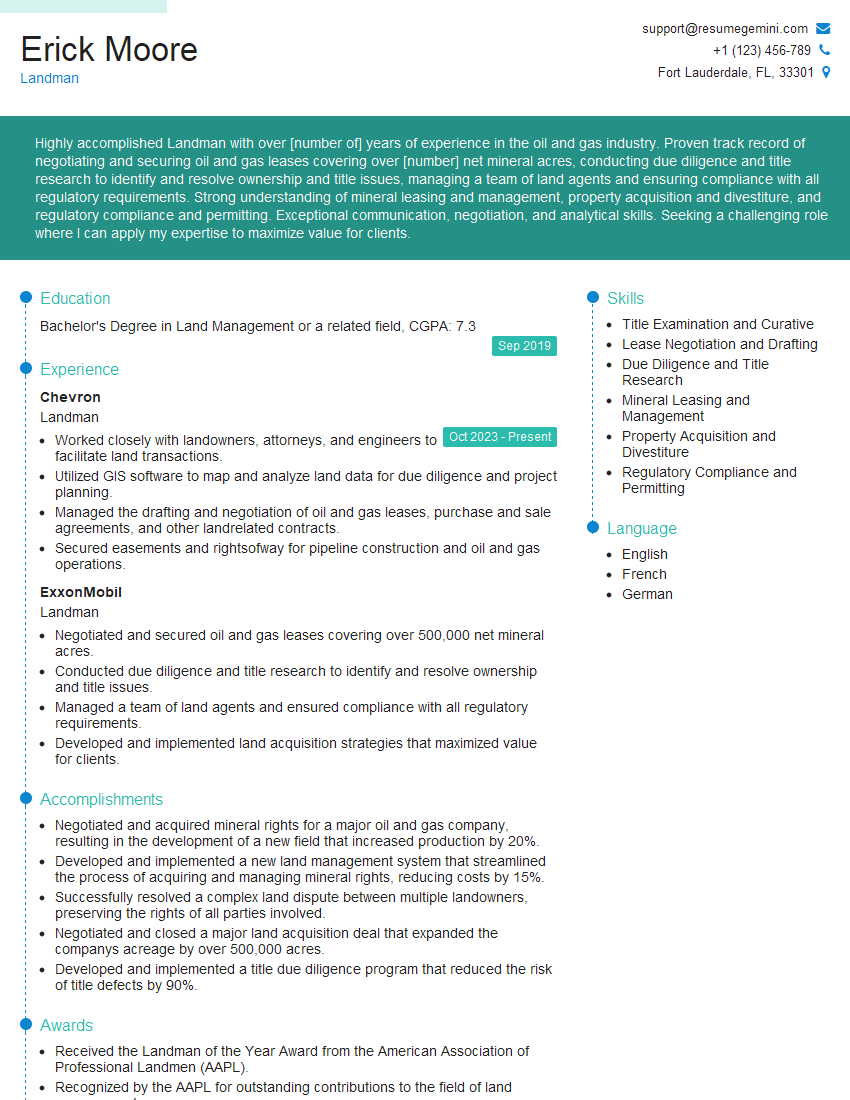
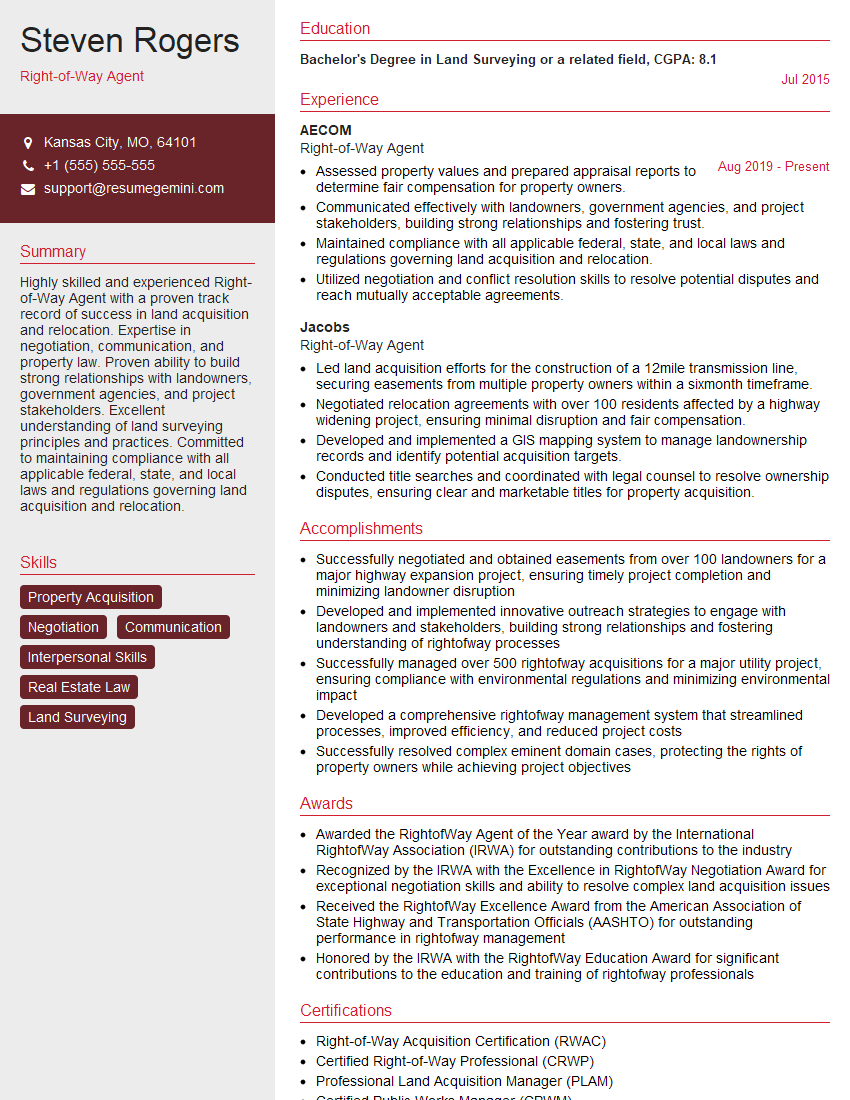
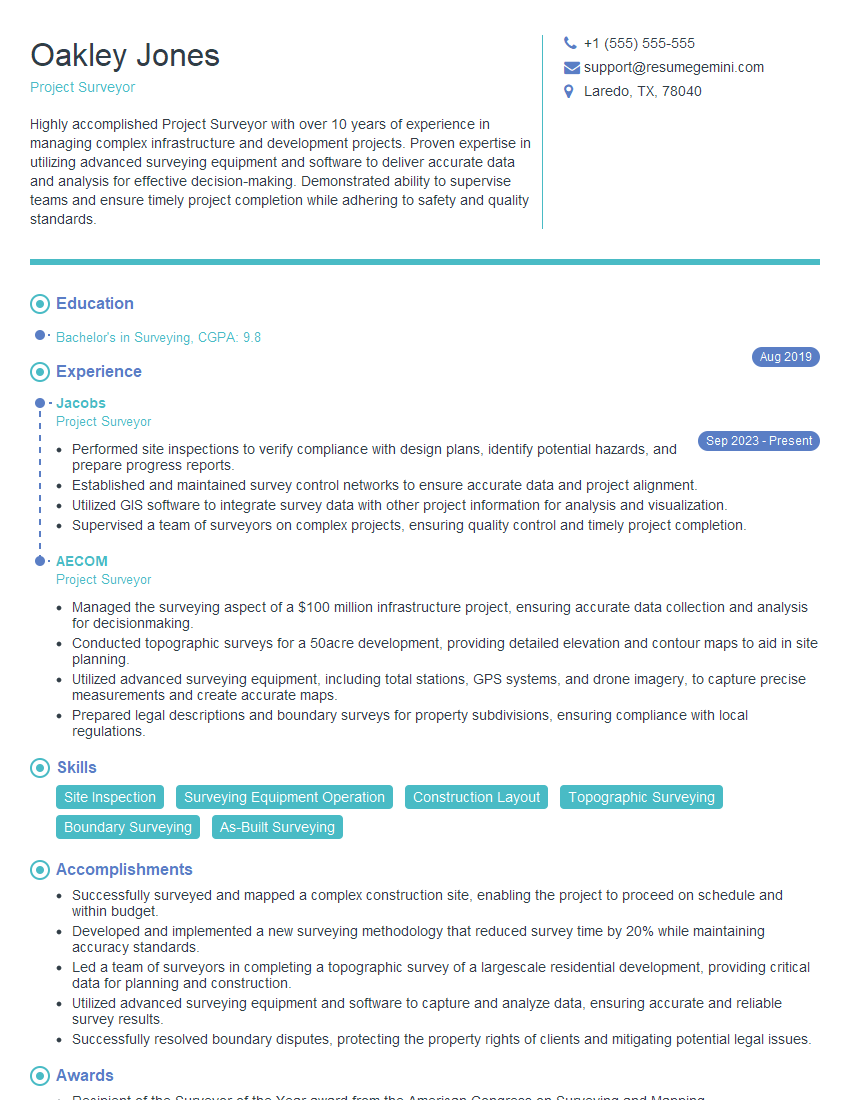
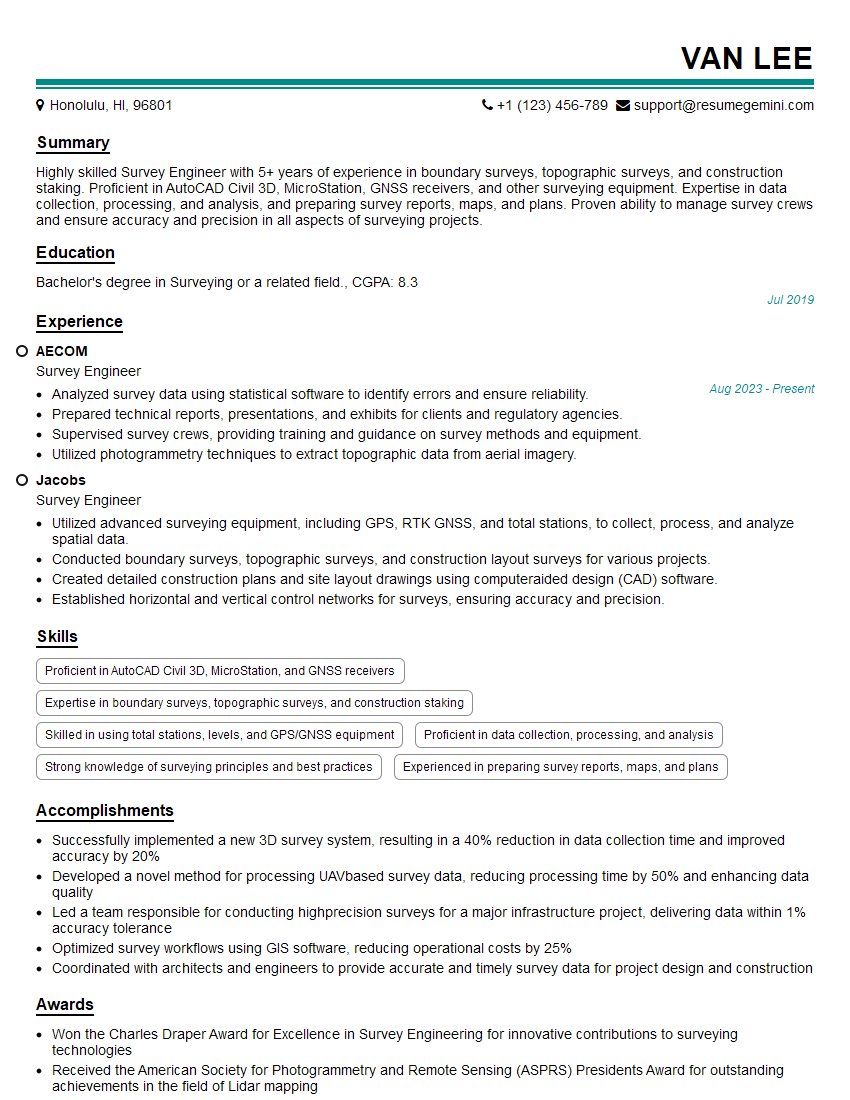
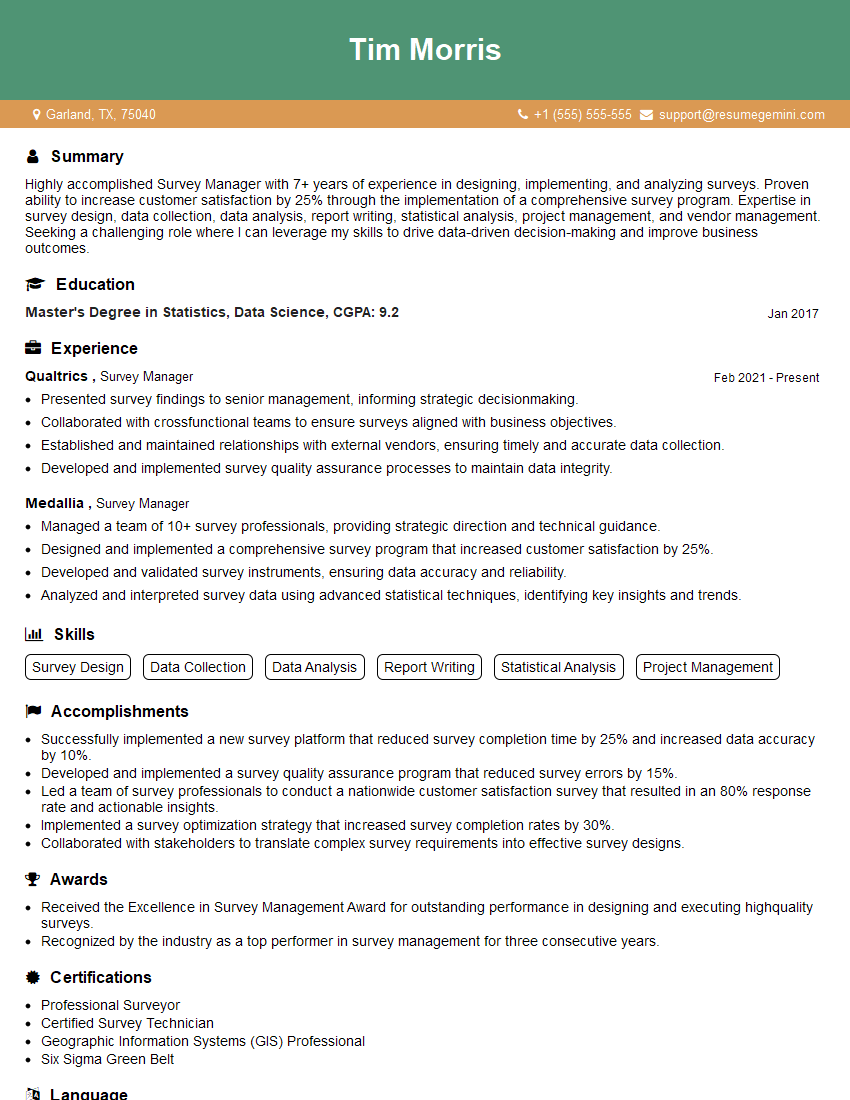
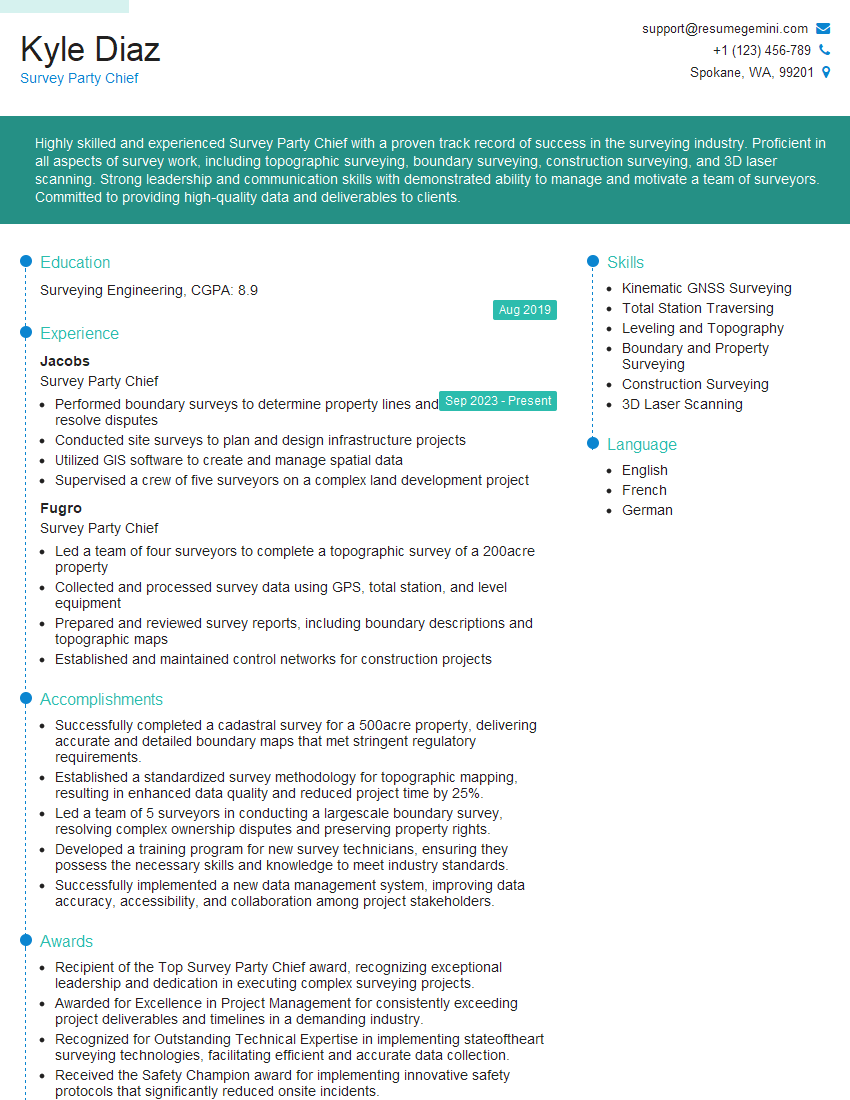
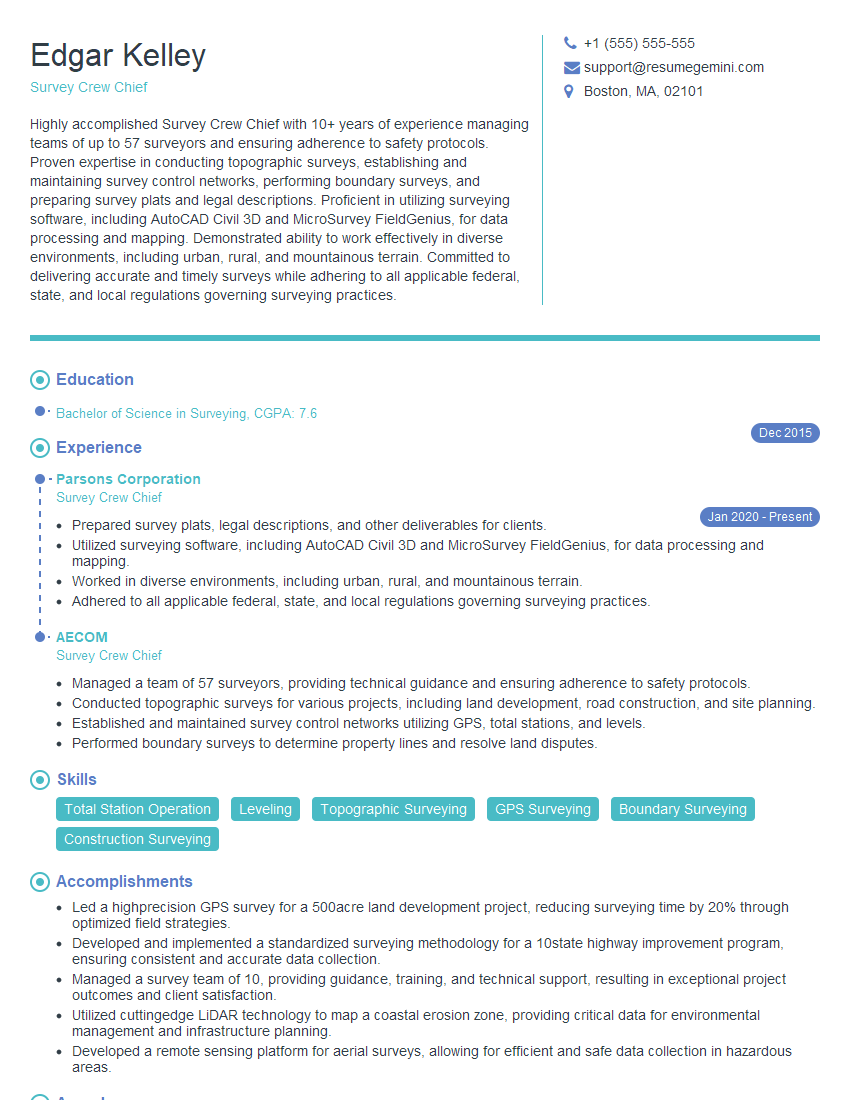
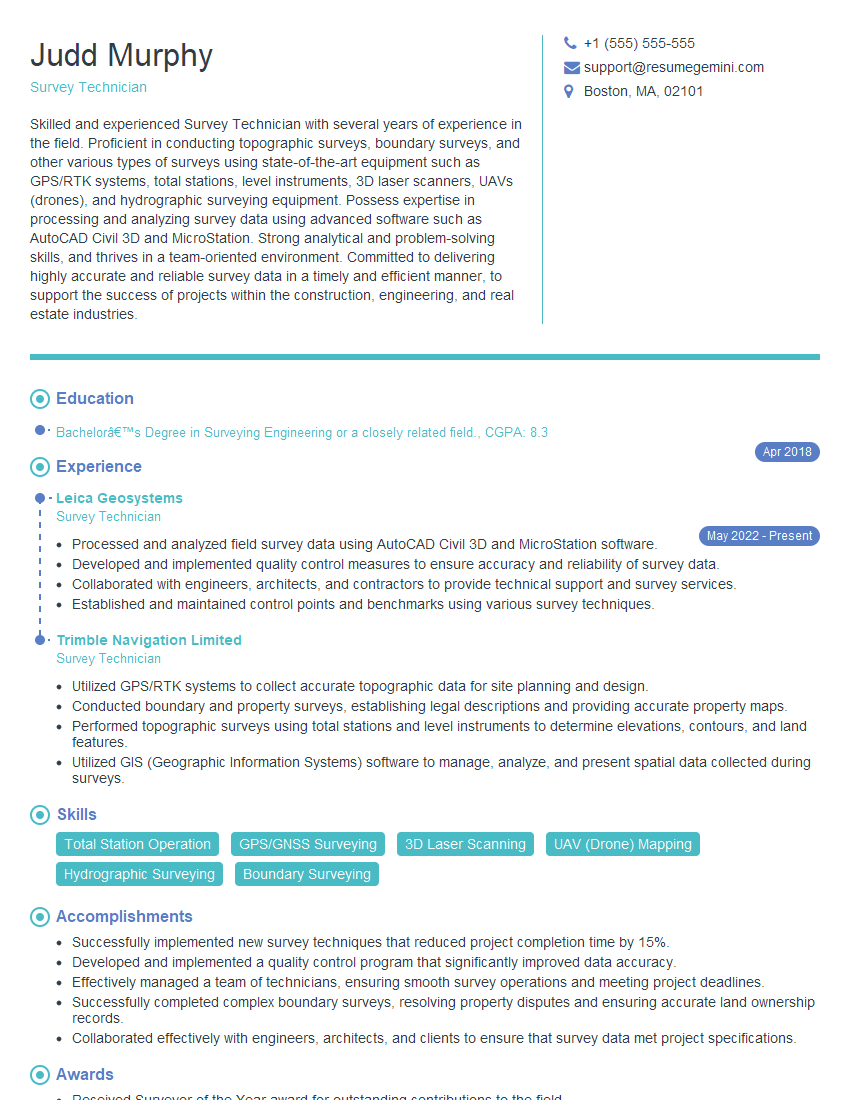
Mastering the intricacies of Surveying in Oil and Gas opens doors to exciting career advancements, offering opportunities for specialization and leadership roles. An impactful resume is key to showcasing your skills and experience to potential employers. Crafting an ATS-friendly resume significantly improves your chances of getting your application noticed. ResumeGemini is a trusted resource for building professional, ATS-optimized resumes. We provide examples of resumes tailored specifically to Surveying Oil and Gas to help you stand out from the competition. Invest time in creating a strong resume—it’s your first impression!
Explore more articles
Users Rating of Our Blogs
Share Your Experience
We value your feedback! Please rate our content and share your thoughts (optional).
What Readers Say About Our Blog
Really detailed insights and content, thank you for writing this detailed article.
IT gave me an insight and words to use and be able to think of examples