Every successful interview starts with knowing what to expect. In this blog, we’ll take you through the top Soldering Welding interview questions, breaking them down with expert tips to help you deliver impactful answers. Step into your next interview fully prepared and ready to succeed.
Questions Asked in Soldering Welding Interview
Q 1. What are the different types of soldering techniques?
Soldering techniques vary depending on the materials being joined and the desired outcome. Here are some common methods:
- Through-hole soldering: This is a classic technique where component leads are inserted into holes in a PCB and soldered on the other side. Think of assembling a circuit board for a simple electronic device.
- Surface mount soldering (SMT): This involves soldering components directly onto the surface of a printed circuit board (PCB). It’s essential for modern electronics with miniature components.
- Wave soldering: Used for mass production of PCBs, a wave of molten solder flows over the board, simultaneously soldering multiple components.
- Reflow soldering: This technique uses heat to melt solder paste pre-applied to the PCB and its components, often done in an oven. Think of soldering the intricate circuitry of a smartphone.
- Hand soldering: The most basic method, using a soldering iron to manually apply solder to joints. This is versatile but requires precision and skill.
The choice of technique often depends on factors such as production volume, component size, and desired joint quality.
Q 2. Explain the difference between soldering and brazing.
Both soldering and brazing are joining processes that use a filler metal, but they differ significantly in the melting point of the filler metal and the resulting joint strength.
- Soldering: Uses a filler metal with a melting point below 450°C (842°F). The base metals are not melted during the process. Think of soldering the wires to a circuit board. The resulting joint is relatively weaker.
- Brazing: Uses a filler metal with a melting point above 450°C (842°F), but below the melting point of the base metals. The base metals remain solid, but the filler metal flows between them by capillary action. This creates a much stronger bond compared to soldering. A classic example is brazing copper pipes in plumbing.
In essence, soldering is a lower-temperature process creating a weaker joint, while brazing is a higher-temperature process producing a stronger joint. The choice depends entirely on the strength requirements and the nature of the materials being joined.
Q 3. Describe the various types of welding processes.
Welding encompasses a vast range of processes, each with unique characteristics and applications. Some common types include:
- Shielded Metal Arc Welding (SMAW): Also known as stick welding, this is a relatively simple and versatile process using a consumable electrode to create the weld. It’s a good choice for outdoor work, like building construction.
- Gas Metal Arc Welding (GMAW): Or MIG welding, this uses a continuously fed wire electrode and a shielding gas to protect the weld. It’s highly productive and widely used in automotive manufacturing.
- Gas Tungsten Arc Welding (GTAW): Also known as TIG welding, this utilizes a non-consumable tungsten electrode and an inert shielding gas, producing high-quality welds. It is favored for precision work such as welding thin-gauge metals.
- Arc Welding (SAW): This automated process uses a submerged arc to create the weld. It’s particularly efficient for high-volume applications, such as pipeline welding.
- Resistance Welding: This involves using electrical resistance to generate heat and fuse the metals together. It’s commonly used for spot welding in automotive body construction.
Selecting the right welding process depends on the materials being welded, joint design, weld quality requirements, and production environment.
Q 4. What are the safety precautions you would take while soldering and welding?
Safety is paramount in both soldering and welding. Essential precautions include:
- Eye protection: Always wear appropriate safety glasses or a welding helmet with the correct shade lens. Welding arcs emit intense ultraviolet and infrared radiation that can cause severe eye damage.
- Respiratory protection: Welding fumes and solder smoke can be hazardous. Use a respirator or work in a well-ventilated area.
- Protective clothing: Wear flame-resistant clothing, including gloves and long sleeves, to protect against burns and sparks.
- Proper ventilation: Ensure adequate ventilation to remove fumes and gases produced during both soldering and welding.
- Fire safety: Keep a fire extinguisher nearby and be aware of potential fire hazards, particularly when working with flammable materials.
- Proper grounding: Ensure proper grounding of equipment to prevent electrical shocks.
It’s crucial to follow all relevant safety guidelines and receive proper training before attempting either soldering or welding.
Q 5. How do you select the appropriate solder for a specific application?
Selecting the right solder depends on several factors:
- Base metals: The solder must be compatible with the metals being joined. Different solders have different wetting properties and melting points for various metals.
- Operating temperature: The solder’s melting point and operating temperature should be appropriate for the intended application. High-temperature solders are necessary for applications that experience elevated temperatures.
- Strength requirements: The strength of the solder joint is a critical factor, influencing the selection of solder alloy.
- Corrosion resistance: In certain environments, solder with corrosion-resistant properties is crucial.
For example, lead-free solder is common in electronics due to environmental regulations, but may require slightly different techniques compared to lead-containing solder. Always consult a solder selection chart or datasheet for specific applications.
Q 6. What are the common defects found in soldering and welding?
Common defects in soldering and welding can significantly compromise the quality and integrity of the joint. These defects can include:
- Cold solder joints: These are weak joints resulting from insufficient heat input, leading to poor wetting and a lack of fusion. They appear dull and grainy.
- Excess solder: Too much solder can create a weak, brittle joint and interfere with functionality.
- Porosity: Pores or voids within the solder joint can weaken it and allow for corrosion.
- Cracks: Cracks in the solder or weld can lead to failure under stress.
- Incomplete penetration (Welding): This occurs when the weld metal does not properly fuse with the base metals, resulting in a weak joint.
- Undercut (Welding): An erosion at the edge of the weld, reducing joint strength.
These defects can be identified through visual inspection, often magnified, and sometimes with specialized equipment like X-ray inspection. Addressing these defects involves proper technique, careful selection of materials, and attention to the process parameters.
Q 7. How do you inspect a weld for quality?
Inspecting a weld for quality requires a multi-faceted approach. Methods include:
- Visual inspection: Check for surface cracks, porosity, undercut, incomplete penetration, and other visual defects. Often a magnifying glass is needed.
- Dimensional inspection: Verify that the weld dimensions conform to the specifications, including weld width, height, and penetration.
- Mechanical testing: Techniques such as tensile testing and bend testing assess the strength and ductility of the weld.
- Non-destructive testing (NDT): Methods such as radiographic testing (RT), ultrasonic testing (UT), and dye penetrant inspection (DPI) can reveal internal flaws not visible to the naked eye.
The choice of inspection method depends on factors such as the weld type, material, and required quality level. A comprehensive inspection strategy will incorporate multiple techniques to ensure the weld meets the required standards.
Q 8. Explain the concept of weld penetration.
Weld penetration refers to the depth to which the weld extends into the base material. Think of it like pushing a knife into butter – the depth the knife goes in is the penetration. In welding, achieving sufficient penetration is crucial for the strength and integrity of the weld. Insufficient penetration can lead to weak joints prone to failure, while excessive penetration can weaken the base material itself.
Several factors influence weld penetration, including the welding process (e.g., MIG, TIG, SMAW), the amperage and voltage settings, the travel speed, the type of filler metal, and the base material’s properties. For example, a higher amperage setting generally results in deeper penetration. Imagine turning up the heat on a stove – the butter melts faster and deeper. Similarly, a slower travel speed allows more heat to be transferred to the base material resulting in greater penetration. Proper penetration is visually inspected after welding; typically an appropriate amount of penetration is 70-80% of the total thickness of the joined plates.
Q 9. What is the significance of pre- and post-weld heat treatment?
Pre- and post-weld heat treatments are vital in many welding applications, especially when dealing with high-strength materials or complex geometries. These treatments aim to manage residual stresses and improve the overall mechanical properties of the weld and surrounding base material.
Pre-weld heat treatment typically involves heating the base material to a specific temperature before welding. This can help relieve existing stresses, improve weldability (especially crucial for high carbon steels prone to cracking), and refine the grain structure for better overall weld quality. Think of it as preparing the ground before planting a seed – it ensures better growth.
Post-weld heat treatment (PWHT) is applied after welding to alleviate residual stresses introduced during the welding process. Welding introduces significant heat, causing the material to expand and then contract as it cools, leading to stress. PWHT involves controlled heating and cooling cycles to reduce these stresses and enhance toughness and ductility, reducing the risk of cracking or other failures. Imagine the heat treatment as a gentle massage, removing the tension after strenuous activity.
The specific temperatures and durations for both pre- and post-weld heat treatments depend on the base material, weld type, and required properties. Incorrect heat treatment can be just as detrimental as no heat treatment.
Q 10. What are the different types of filler metals used in welding?
Filler metals are crucial in welding; they provide the material that fills the joint between the base metals. The choice of filler metal depends largely on the base material and the desired properties of the weld. The wrong filler metal can lead to poor joint strength or even cracking.
- Steel filler metals: These are widely used for welding various types of steel, and their compositions are tailored to match the base material’s properties. Low-carbon steel filler metal is commonly used for mild steels, while higher-strength steel filler metals are employed for high-strength steels.
- Aluminum filler metals: Aluminum alloys require specific filler metals to achieve good weld quality. The composition of the filler metal must be compatible with the base aluminum alloy.
- Stainless steel filler metals: Similar to aluminum, specific filler metals are needed for stainless steels, considering factors like chromium content for corrosion resistance.
- Other filler metals: Filler metals are also available for other metals like copper, nickel, titanium, and various alloys. Each metal has its own unique set of filler metal requirements.
Filler metals often come in the form of rods, wires, or electrodes, each suitable for different welding processes.
Q 11. Describe the process of setting up a welding machine.
Setting up a welding machine involves several critical steps to ensure safety and proper operation. The specifics will vary depending on the type of welding machine (MIG, TIG, Stick, etc.), but the general steps remain consistent:
- Safety First: Inspect the area for any hazards. Ensure proper ventilation, fire extinguishers are nearby, and safety glasses and other appropriate PPE are in place.
- Grounding: Properly ground the welding machine to prevent electrical shocks.
- Power Connection: Connect the machine to a suitable power source, ensuring the voltage and amperage ratings match the machine’s specifications.
- Gas Supply (if applicable): For gas-shielded welding processes like MIG and TIG, connect the gas cylinder and check for leaks using soapy water.
- Electrode/Wire Feeder (if applicable): For processes like MIG, properly set up and feed the wire through the machine’s guiding system.
- Parameter Adjustment: Set the correct voltage, amperage, and other parameters based on the material being welded and the welding process selected. Improper settings can lead to poor welds or even damage to the equipment.
- Test Weld: Before starting the actual welding, perform a test weld on a scrap piece of material to ensure the settings are optimal and the process is functioning as intended.
Q 12. How do you troubleshoot common welding problems?
Troubleshooting welding problems requires a systematic approach. Begin by identifying the problem’s nature (e.g., poor penetration, excessive spatter, porosity). Then follow these general steps:
- Visual Inspection: Carefully examine the weld for any defects like porosity (small holes), cracks, incomplete fusion, or excessive spatter.
- Check the Settings: Verify that the voltage, amperage, and other parameters are correctly set according to the material and process.
- Gas Flow (if applicable): For gas-shielded welding, check the gas flow rate to ensure it’s adequate and there are no leaks. Insufficient gas flow can result in poor weld quality.
- Electrode/Wire Condition: If using stick welding, inspect the electrode for defects. For MIG welding, ensure the wire is properly fed and free from kinks or damage.
- Joint Preparation: Poor joint fit-up (gap between materials) can lead to weld defects. Ensure the parts are properly aligned and cleaned.
- Base Material: Verify that the base material is suitable for the chosen welding process and filler metal. Certain materials are more difficult to weld than others.
If the problem persists after these steps, consult a welding expert or refer to the welding machine’s manual.
Q 13. What is the difference between MIG and TIG welding?
MIG (Metal Inert Gas) and TIG (Tungsten Inert Gas) are two popular gas-shielded welding processes, but they differ significantly:
- MIG welding uses a consumable electrode (wire) that feeds continuously into the weld pool. It’s generally faster and easier to learn than TIG, making it suitable for high-volume applications. MIG welds typically have a higher deposition rate which produces strong welds quickly.
- TIG welding uses a non-consumable tungsten electrode to generate the weld. The filler metal is added separately. TIG welding produces cleaner, more precise welds and is commonly used for applications where high-quality welds are needed. It’s more suitable for thin materials and precise work but requires significantly more skill.
In short, MIG prioritizes speed and ease of use, while TIG prioritizes precision and weld quality. The choice between them depends on the specific application and desired outcome.
Q 14. What are the advantages and disadvantages of different welding processes?
The advantages and disadvantages of different welding processes are summarized below. Remember that the best process depends heavily on the application:
| Welding Process | Advantages | Disadvantages |
|---|---|---|
| MIG | Fast, easy to learn, high deposition rate, versatile | Can produce spatter, less precise than TIG, susceptible to oxidation |
| TIG | High-quality welds, precise control, clean welds, versatile | Slower than MIG, requires more skill, more expensive equipment |
| SMAW (Stick) | Portable, relatively inexpensive equipment, can weld in various positions | Produces spatter, slower deposition rate, affected by weather |
| SAW (Submerged Arc) | High deposition rate, deep penetration, good for large projects | Not suitable for thin materials, requires specialized equipment |
This table provides a starting point. Factors like material thickness, joint design, and required weld quality all influence the best choice of welding process.
Q 15. Explain the importance of joint design in welding.
Joint design in welding is paramount because it directly impacts the strength, durability, and overall quality of the weld. Think of it like building a house – a poorly designed foundation will lead to structural problems. Similarly, a poorly designed weld joint will be prone to failure under stress.
A good joint design considers several factors: the thickness of the materials being joined, the type of weld to be used, the anticipated stresses on the joint, and the accessibility for welding. For example, a butt joint, where two pieces are joined end-to-end, requires careful preparation to ensure proper penetration and fusion. A lap joint, where one piece overlaps another, is simpler to execute but may have lower strength in certain applications.
- Butt Joint: Ideal for high strength requirements but demands precise preparation.
- Lap Joint: Easier to weld but might offer less strength compared to a butt joint.
- T-Joint: Versatile, used extensively but needs proper reinforcement.
Designing for proper fit-up is crucial. Gaps or misalignments weaken the weld. The choice of joint design often involves a trade-off between ease of welding and the desired mechanical properties of the final product. Proper design considerations minimize defects and ensure a robust, reliable weld.
Career Expert Tips:
- Ace those interviews! Prepare effectively by reviewing the Top 50 Most Common Interview Questions on ResumeGemini.
- Navigate your job search with confidence! Explore a wide range of Career Tips on ResumeGemini. Learn about common challenges and recommendations to overcome them.
- Craft the perfect resume! Master the Art of Resume Writing with ResumeGemini’s guide. Showcase your unique qualifications and achievements effectively.
- Don’t miss out on holiday savings! Build your dream resume with ResumeGemini’s ATS optimized templates.
Q 16. How do you calculate the required welding parameters?
Calculating welding parameters isn’t a simple formula; it’s a process requiring experience and understanding of the materials and process. Factors like material type (steel, aluminum, etc.), thickness, welding process (SMAW, GMAW, GTAW), and desired weld properties influence parameter selection.
Generally, parameters like current (amperage), voltage, and travel speed are adjusted based on the material and process. For example, welding thicker materials typically requires higher current and voltage to achieve sufficient penetration. Travel speed is crucial; too fast and you’ll get insufficient fusion; too slow and you’ll risk burning through the material.
There aren’t universal formulas; instead, welders often rely on:
- Manufacturer’s recommendations: Electrode or filler wire data sheets provide guidance based on the specific material and process.
- Welding procedure specifications (WPS): These documents outline the specific parameters for a given application, ensuring consistent weld quality.
- Experience and judgment: Experienced welders adjust parameters based on visual observations and the sound of the weld. They might adjust current to achieve the proper weld bead shape and size.
Often, a welder starts with recommended values and makes minor adjustments based on the actual welding conditions. Testing weld samples is crucial to confirm that the parameters produce sound welds meeting required standards.
Q 17. What are the different types of welding electrodes?
Welding electrodes are classified based on their coating type and the metal they deposit. The coating plays a crucial role in shielding the weld puddle from atmospheric contamination, stabilizing the arc, and providing alloying elements.
- Shielded Metal Arc Welding (SMAW) Electrodes: These are the most common type, characterized by a flux coating that generates shielding gas as it melts. They are classified by their AWS (American Welding Society) designation, e.g., E6010, E7018. The designation provides details about the electrode’s properties, such as tensile strength, position, and current type (AC or DC).
- Gas Metal Arc Welding (GMAW) Electrodes/Filler Wires: GMAW uses a continuously fed solid wire as the electrode, often with a shielding gas (like Argon or CO2). These wires are selected based on their composition to match the base metal.
- Gas Tungsten Arc Welding (GTAW) Electrodes: GTAW uses a non-consumable tungsten electrode to create the arc. The filler metal is added separately. The choice of tungsten depends on the base metal and application.
Each type of electrode is designed for specific applications, materials, and welding positions.
Q 18. What are the considerations for selecting the right welding electrode?
Selecting the right electrode is crucial for achieving a high-quality weld. The selection process is guided by various factors:
- Base Metal: The electrode must be compatible with the base metal being welded. For instance, an electrode for mild steel won’t work effectively on aluminum.
- Weld Joint Design: Certain electrodes are better suited for specific joint types (butt joint, fillet weld, etc.).
- Welding Position: Electrodes are designed for different welding positions (flat, vertical, overhead). Some electrodes are designed for all positions while others are restricted.
- Welding Current: AC or DC, and the amperage range.
- Mechanical Properties: The desired tensile strength and other mechanical properties of the weld dictate the choice of electrode.
- Operating Environment: The weld’s operating environment (temperature, humidity, corrosive atmosphere) may require specific electrode properties.
The AWS electrode classification system is instrumental in making informed decisions. Consulting the manufacturer’s data sheets and adhering to welding procedure specifications (WPS) is essential for a successful weld.
Q 19. How do you interpret welding symbols?
Welding symbols are a standardized graphical language used on engineering drawings to convey complete welding instructions. They provide concise information about the type of weld, location, dimensions, and other relevant details. Understanding these symbols is critical for accurate fabrication.
A typical welding symbol includes:
- Reference Line: A horizontal line extending from the weld symbol.
- Arrow Side: Indicates the side of the joint where the weld is to be applied.
- Other Side: Opposite of the arrow side. Often, a similar symbol on the other side means identical welding for both sides.
- Weld Symbol: Represents the type of weld (e.g., fillet weld, groove weld).
- Dimensions: Indicate leg length, weld size, throat, etc.
- Process Specification: Identifies the welding process to be used (e.g., SMAW, GMAW).
Understanding the standard symbols and their meanings is essential to accurately interpret and execute welding procedures. Reference standards like the AWS standard are crucial for proper interpretation.
Q 20. Explain the concept of weldability.
Weldability refers to the ease with which a material can be joined by welding, producing a sound weld with desired properties. It’s not just about whether you *can* weld a material, but how *easily* you can do so and achieve the required quality. A material with high weldability forms sound welds with minimal defects, less pre-weld preparation, and easier parameter control.
Several factors influence weldability:
- Material Composition: The chemical composition of a material affects how it responds to welding heat. Some materials are more prone to cracking or porosity than others.
- Melting Point: Wide differences in melting points of constituent materials can lead to problems.
- Thermal Conductivity: The speed at which a material conducts heat affects the size and shape of the weld puddle.
- Susceptibility to Cracking: Some materials are susceptible to hot cracking or cold cracking during or after welding.
Weldability testing involves various techniques to determine the suitability of a material for welding, assessing its propensity to crack, form porosity, or otherwise exhibit unacceptable weld defects.
Q 21. What are the factors affecting the quality of a weld?
Many factors influence weld quality, making it a multifaceted challenge. A sound weld is characterized by complete fusion, proper penetration, and the absence of significant defects.
Factors affecting weld quality:
- Joint Design and Preparation: Proper joint design and surface preparation are foundational. Improper fit-up leads to incomplete fusion and porosity.
- Welding Parameters: Incorrect current, voltage, and travel speed can result in inadequate fusion, excessive penetration, or even burning through the material.
- Electrode/Filler Metal Selection: Using inappropriate electrode types, sizes, or filler materials leads to defects and poor mechanical properties.
- Shielding: Inadequate shielding gas coverage in GMAW or GTAW or insufficient flux coverage in SMAW leads to oxidation and porosity.
- Base Metal Condition: Contamination, impurities, or imperfections in the base metal can cause weld defects.
- Operator Skill: The welder’s proficiency, technique, and adherence to procedure strongly influence the weld’s integrity. Consistent arc length and smooth travel speed are critical.
- Post-Weld Heat Treatment: In some cases, heat treatment may be needed to reduce residual stresses and improve weld properties.
Regular inspection and testing are necessary throughout the welding process and are essential to ensure that the final weld meets the required quality standards.
Q 22. How do you address porosity in a weld?
Porosity in welds, those pesky little holes, is a common defect stemming from trapped gases during the welding process. Addressing it requires understanding its root cause. Common culprits include poor joint preparation (leaving gaps or contamination), improper welding parameters (incorrect current, voltage, or travel speed), or contaminated base materials.
Tackling porosity involves a multi-pronged approach:
- Proper Joint Preparation: Ensure clean, tight-fitting joints free of rust, paint, or oil. This often involves grinding or machining the surfaces.
- Optimizing Welding Parameters: Adjust the welding current, voltage, and travel speed based on the base material and welding process. Too high a current can create porosity as can too slow a travel speed. Experimentation guided by welding procedure specifications (WPS) is key.
- Preheating the Base Material: For certain materials, preheating can help reduce porosity by allowing trapped gases to escape before the weld solidifies.
- Shielding Gas Purity: Maintaining a pure shielding gas supply (e.g., Argon or a mixture of Argon and CO2 for MIG welding) is crucial. Impurities can contribute to gas entrapment.
- Post-Weld Heat Treatment: In some instances, a controlled heat treatment after welding can help alleviate porosity by allowing trapped gases to diffuse out of the weld metal.
For example, I once encountered significant porosity in a stainless steel weld. After careful analysis, we discovered the root cause to be inadequate joint preparation. By improving the joint fit-up and cleaning the surfaces thoroughly, the porosity was dramatically reduced.
Q 23. How do you handle spatter during welding?
Spatter, those annoying metal droplets that fly off during welding, is a common nuisance. It can impact weld quality, create safety hazards, and increase cleanup time. Several factors contribute to spatter, including improper welding technique, excessive current, wrong type of electrode, and contaminated materials.
Strategies to minimize spatter include:
- Proper Welding Technique: Maintaining a consistent arc length and smooth, controlled movements is paramount. Avoid rapid starts and stops.
- Adjusting Welding Parameters: Reducing the welding current slightly, while ensuring proper penetration, can significantly reduce spatter.
- Using Spatter-Reducing Techniques: Techniques like using a pulsed current in GMAW (Gas Metal Arc Welding) or specialized spatter-reducing electrodes in SMAW (Shielded Metal Arc Welding) can help.
- Proper Shielding Gas Selection and Flow Rate: In GMAW, maintaining the correct shielding gas flow rate prevents atmospheric contamination, leading to less spatter.
- Cleaning the Workpiece: Ensure the surface to be welded is clean and free from grease or contaminants.
In one instance, we were experiencing excessive spatter during a high-volume production run of MIG welding. We tested different wire feed speeds and current levels, discovering that a slight adjustment in the wire feed rate helped significantly decrease spatter while still maintaining a high-quality weld.
Q 24. What is the role of flux in soldering?
Flux in soldering plays a vital role as a cleaning agent and a protective barrier. Think of it as a helpful assistant that ensures a clean and successful solder joint.
Its primary functions are:
- Removing Oxide Layers: Metals readily form oxide layers that prevent proper wetting and adhesion of solder. Flux dissolves these oxides, allowing the molten solder to flow smoothly and create a strong bond.
- Preventing Oxidation: During the soldering process, newly exposed metal surfaces are susceptible to oxidation. Flux creates a protective atmosphere, preventing the formation of new oxides.
- Improving Wetting: Flux enhances the flow and spreading of the solder, promoting good wetting (the ability of the solder to adhere to and spread evenly across the surfaces).
For instance, imagine trying to glue two pieces of wood together with glue that’s already dried out—it won’t stick properly! The flux acts similarly, cleaning the surface for better adhesion of the solder.
Q 25. How do you prevent solder bridges?
Solder bridges, those unwanted connections between adjacent solder pads, are a common soldering defect. They can cause short circuits and malfunctioning electronics. Preventing them involves careful attention to technique and process.
Key preventive measures include:
- Proper Solder Application: Use the appropriate amount of solder; too much can easily lead to bridges. Apply solder precisely to the desired location, avoiding excess flow.
- Using a Suitable Soldering Iron Tip: Select a tip size appropriate for the pads and spacing. A tip that is too large increases the risk of bridging.
- Using Solder Mask or Stencils: These tools help to contain the solder precisely and prevent excess flow.
- Proper Temperature Control: The soldering iron should be at the optimum temperature, preventing overheating and uncontrolled solder flow.
- Cleanliness: A clean workstation and appropriately cleaned components are vital to prevent flux contamination which can encourage bridging.
I once encountered repeated solder bridges during surface-mount device (SMD) soldering. By switching to a smaller soldering iron tip and utilizing a solder stencil, we drastically reduced the occurrence of bridges and improved the yield.
Q 26. What are the different types of fluxes used in soldering?
Fluxes for soldering are categorized by their chemical composition and cleaning requirements. The choice of flux depends on the application and the materials being soldered.
Common types include:
- Rosin Flux: This is a relatively mild flux, commonly used in electronics soldering. It leaves a residue that usually doesn’t require cleaning.
- Rosin-Activated Flux (RA): A slightly more active flux than rosin, still relatively mild and often used in electronics. Often requires cleaning for sensitive applications.
- Water-Soluble Flux: This type of flux is easily cleaned with water, making it suitable for applications where cleaning is essential. It is more aggressive than rosin fluxes.
- No-Clean Flux: Designed to leave minimal residue after soldering. Still, it’s often preferred to clean for sensitive applications.
- Acid Core Solder: This type of solder contains a core of acid flux for more aggressive cleaning, typically used on larger joints and plumbing.
Choosing the right flux is critical for ensuring a clean, reliable, and long-lasting solder joint. The wrong choice can cause corrosion or negatively impact the performance of electronic circuits.
Q 27. Describe a time you had to troubleshoot a complex soldering or welding problem.
I once faced a challenging situation involving a complex assembly with numerous fine-pitch surface-mount components. Repeated attempts at soldering resulted in many cold solder joints, and we were consistently failing our quality tests.
My troubleshooting steps were:
- Visual Inspection: A thorough examination under magnification revealed inconsistent solder paste application and potential issues with component placement.
- Reflow Profile Analysis: We carefully examined the reflow oven profile, discovering inconsistencies in temperature and dwell times that were not optimal for our components.
- Solder Paste Evaluation: We suspected the solder paste might be past its shelf life. Testing confirmed it was indeed degraded, explaining the poor solder joint formation.
- Process Optimization: After addressing the solder paste issue, we adjusted the reflow profile to ensure optimal heating and cooling for our components, resulting in superior solder joints. We improved stencil application technique for a more consistent solder paste deposition.
Through careful analysis and systematic troubleshooting, we identified and resolved the root causes, improving our process and significantly improving the assembly yield. This highlighted the importance of considering all aspects of the soldering process—materials, equipment, and technique—for reliable results.
Q 28. How do you stay current with advancements in soldering and welding technology?
Staying current in the dynamic fields of soldering and welding requires continuous learning and engagement.
My approach involves:
- Industry Publications and Journals: I regularly read trade magazines and technical journals specializing in welding and soldering technologies.
- Professional Organizations: Active membership in organizations like the American Welding Society (AWS) and similar organizations provides access to educational resources, conferences, and networking opportunities.
- Online Resources and Webinars: Numerous online courses, webinars, and tutorials offer insights into the latest advancements.
- Manufacturer Training Programs: Attending training courses provided by equipment manufacturers ensures I’m up-to-date on the capabilities of the latest machines and materials.
- Networking with Peers: Regularly interacting with colleagues and experts at conferences and through online forums facilitates the exchange of knowledge and best practices.
Continuously updating my skills and knowledge ensures that I stay ahead of the curve and can leverage the latest technologies to deliver superior results.
Key Topics to Learn for Soldering Welding Interview
- Fundamentals of Soldering vs. Welding: Understand the key differences in techniques, applications, and materials used in each process. This includes understanding the melting points of different metals and alloys.
- Joint Design and Preparation: Learn about different types of solder joints (e.g., lap, butt, T-joints) and their suitability for various applications. Master surface preparation techniques for optimal bonding.
- Soldering Techniques: Explore various soldering methods (e.g., hand soldering, wave soldering, reflow soldering) and their advantages and disadvantages. Practice safe soldering techniques and understand the importance of heat control.
- Welding Techniques (relevant to the job description): Depending on the specific job, familiarize yourself with relevant welding techniques such as MIG, TIG, or spot welding. Understand the principles of arc length, current control, and shielding gas selection.
- Soldering/Welding Materials and Fluxes: Become familiar with different types of solder alloys, fluxes, and their properties. Understand how to select the appropriate materials for a given application.
- Quality Control and Inspection: Learn about different methods for inspecting solder joints for defects (e.g., visual inspection, X-ray inspection). Understand the importance of adhering to industry standards and specifications.
- Troubleshooting Common Problems: Develop the ability to identify and solve common problems encountered during soldering and welding, such as cold solder joints, porosity, and cracking.
- Safety Procedures and Regulations: Understand and adhere to all relevant safety procedures and regulations related to soldering and welding, including personal protective equipment (PPE) requirements.
- Industry Standards and Codes: Familiarize yourself with relevant industry standards and codes of practice for soldering and welding.
Next Steps
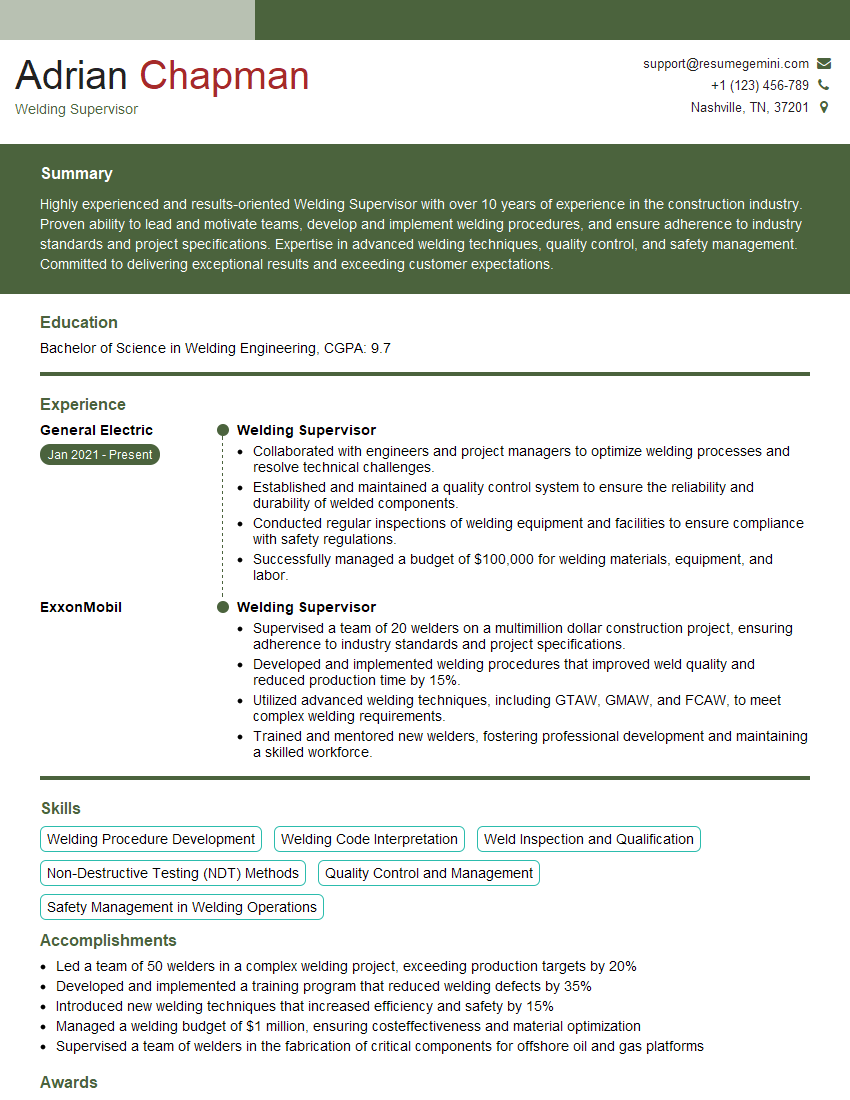
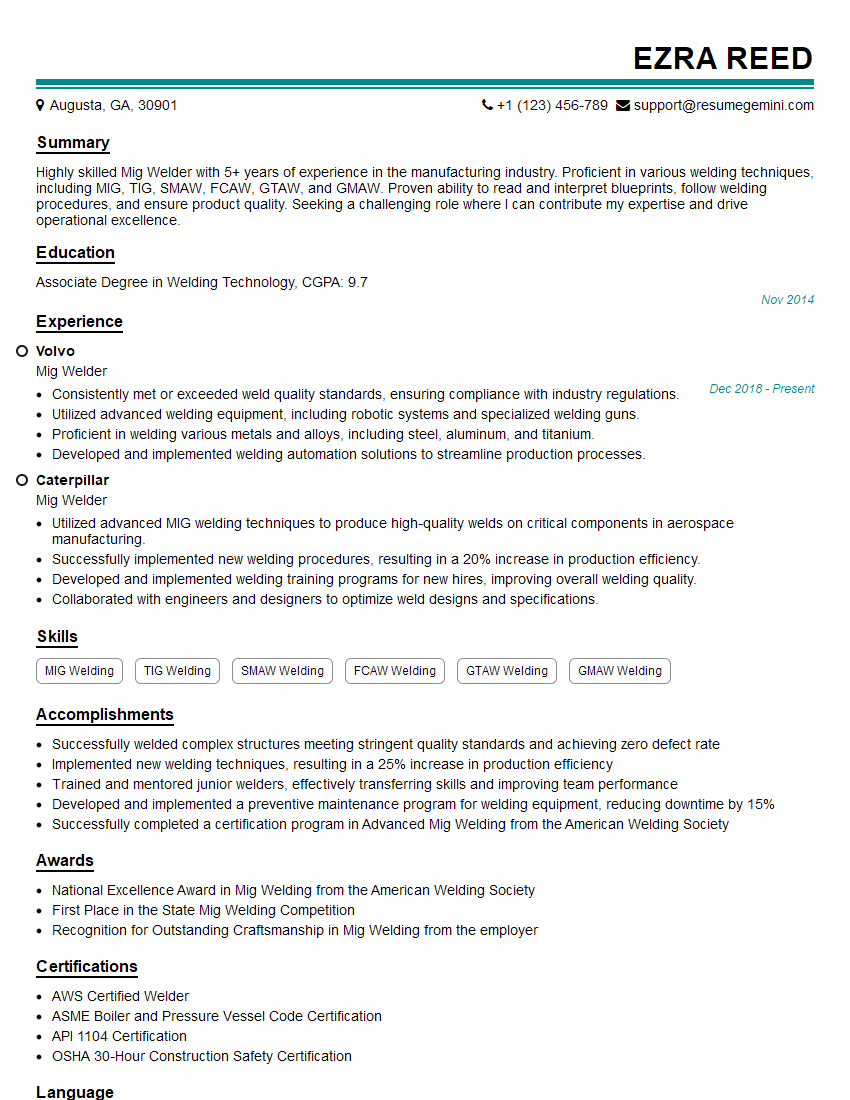
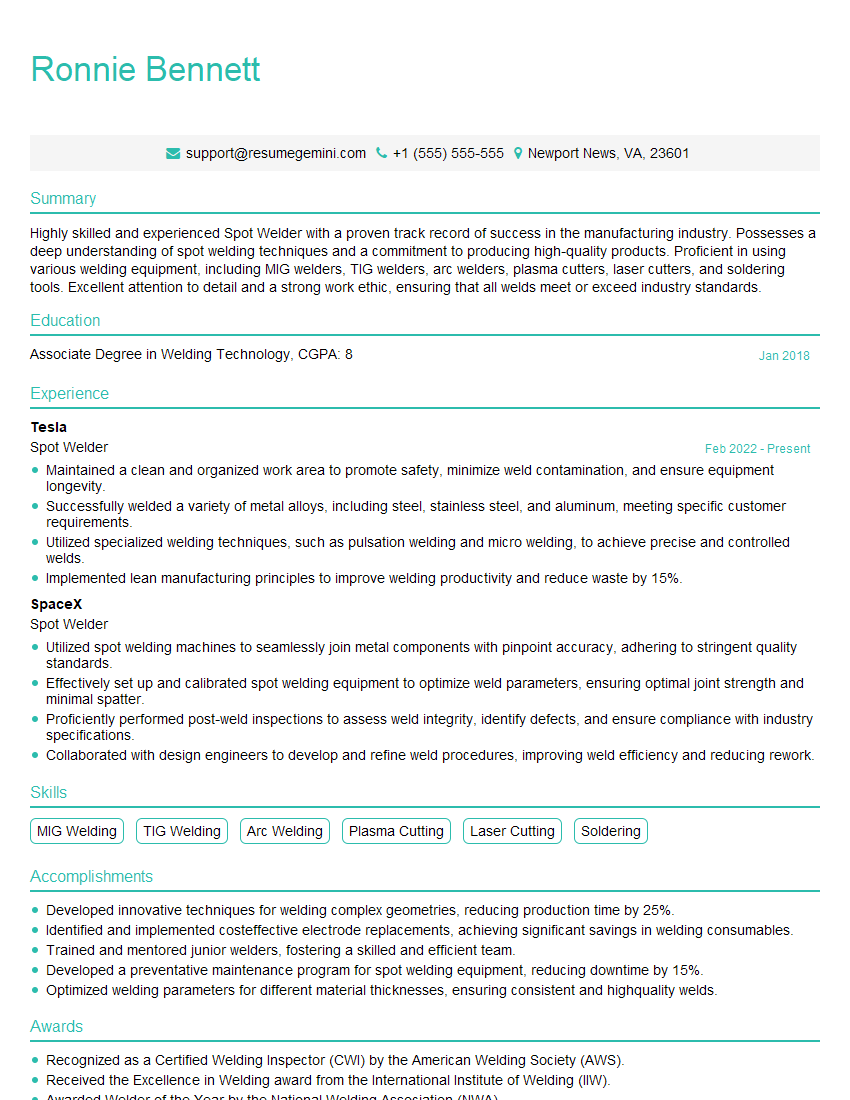
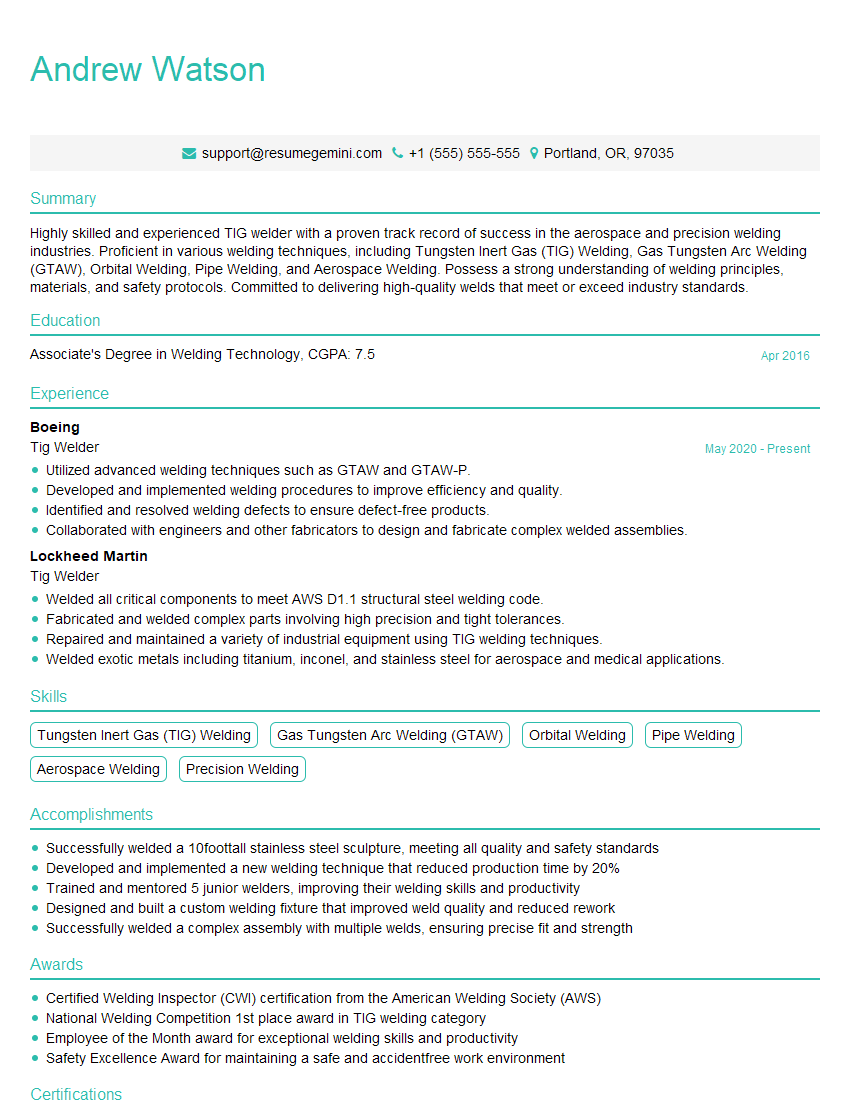
Mastering soldering and welding opens doors to a wide range of exciting career opportunities in diverse industries. To maximize your job prospects, invest time in crafting a compelling and ATS-friendly resume that highlights your skills and experience. ResumeGemini is a trusted resource that can help you build a professional resume that stands out. They provide examples of resumes tailored to the Soldering Welding field, ensuring your qualifications are presented effectively to potential employers. Take the next step towards your dream career – build your best resume today!



Explore more articles
Users Rating of Our Blogs
Share Your Experience
We value your feedback! Please rate our content and share your thoughts (optional).
What Readers Say About Our Blog
Really detailed insights and content, thank you for writing this detailed article.
IT gave me an insight and words to use and be able to think of examples