Preparation is the key to success in any interview. In this post, we’ll explore crucial Music Therapy and Healing interview questions and equip you with strategies to craft impactful answers. Whether you’re a beginner or a pro, these tips will elevate your preparation.
Questions Asked in Music Therapy and Healing Interview
Q 1. Describe your experience using different music therapy techniques (e.g., improvisational, receptive, lyric analysis).
My experience encompasses a wide range of music therapy techniques, each chosen based on the individual needs and preferences of the client. Improvisational music therapy, for instance, allows clients to express themselves non-verbally through spontaneous musical creation. I’ve used this extensively with children struggling with communication, guiding them to explore emotions through sounds and rhythms. Receptive music therapy, on the other hand, focuses on listening to pre-composed music to evoke emotional responses and promote relaxation. I’ve found this particularly effective in managing anxiety and promoting relaxation in adults. Finally, lyric analysis uses the meaning and symbolism of song lyrics to facilitate self-discovery and emotional processing. This technique is often valuable in therapeutic work addressing trauma or personal narratives.
- Improvisational: I’ve used this with a young boy with autism to help him communicate his frustrations and needs through drumming and improvised melodies.
- Receptive: I’ve used carefully selected music to calm agitated elderly patients experiencing dementia.
- Lyric Analysis: I’ve helped adolescents process grief and loss by exploring metaphors and symbolism in relevant songs.
Q 2. Explain your understanding of the evidence-based practices in music therapy.
Evidence-based practice in music therapy centers on the integration of scientific research and clinical expertise to ensure the effectiveness of our interventions. This means relying on studies demonstrating the efficacy of specific techniques for specific conditions. For example, there’s robust evidence supporting the use of music therapy for pain management, anxiety reduction, and improving motor skills in stroke rehabilitation. We continually evaluate treatment effectiveness and adapt our approach based on both the available research and the client’s unique responses. I stay current with the latest research through professional journals, conferences, and continuing education courses, ensuring I integrate evidence-based approaches into my practice.
A key aspect is outcome measurement. We track progress using standardized assessment tools and subjective reporting to gauge the impact of therapy and adjust the plan as needed.
Q 3. How do you assess a client’s musical abilities and preferences to tailor your interventions?
Assessing a client’s musical abilities and preferences is crucial for tailoring effective interventions. The process begins with an initial interview to understand their musical background, including their past experiences, instrument proficiency (if any), preferred genres, and any emotional associations with music. I also conduct informal musical assessments to gauge their rhythmic awareness, melodic sensitivity, and vocal range. This might involve simple tasks like singing a familiar song, playing a simple rhythm, or reacting to different musical pieces. The goal isn’t to judge their skill level but to understand their comfort zone and potential avenues for engagement.
For example, if a client expresses a strong dislike for classical music, I would avoid using it in therapy, opting for genres they enjoy and find engaging. This ensures a positive and therapeutic experience.
Q 4. Describe a situation where you had to adapt your music therapy approach to meet a client’s specific needs.
I once worked with a client who had severe auditory processing difficulties, making traditional music therapy approaches challenging. Initially, I tried using instrumental music, but she found it overwhelming. To adapt, I shifted to incorporating movement and tactile elements. We used vibroacoustic therapy (vibrations delivered through a chair), along with simple rhythmic activities using percussion instruments that produced strong tactile feedback. This provided a sensory experience she could easily engage with and found therapeutic, reducing her anxiety and improving her mood. This illustrates the importance of flexibility and creativity in finding alternative pathways to engage clients with diverse needs.
Q 5. How do you ensure client confidentiality and ethical practices in your work?
Client confidentiality and ethical practices are paramount in my work. I adhere strictly to the professional code of ethics established by the American Music Therapy Association (AMTA). This includes obtaining informed consent before starting any intervention, maintaining strict confidentiality of all client information (unless legally mandated to disclose), and respecting client autonomy and boundaries at all times. I use HIPAA-compliant electronic health records to securely store client data, and my physical workspace is also designed to maintain privacy.
In instances where a client’s well-being is at risk (e.g., self-harm or harm to others), I follow mandatory reporting guidelines as mandated by law.
Q 6. What are your preferred methods for documenting client progress and treatment plans?
I utilize a combination of methods for documenting client progress and treatment plans. This includes detailed session notes that capture the goals, interventions used, client responses, and observable changes. I also use standardized assessment tools to quantify progress in specific areas, such as anxiety levels, mood, or motor skills. These data points help me track efficacy and make informed decisions regarding treatment modifications. Finally, I create a comprehensive written treatment plan at the beginning of therapy which is then regularly reviewed and updated based on the client’s progress and evolving needs. The entire documentation process is meticulously maintained in accordance with HIPAA regulations.
Q 7. Explain your experience working with different populations (e.g., children, adults, elderly).
My experience spans diverse populations, including children, adults, and the elderly. Working with children often involves play-based activities, incorporating music games and creative movement. With adults, I frequently utilize talk therapy alongside music, exploring personal narratives and emotional expression through song. The elderly population may benefit from receptive music therapy for relaxation, reminiscence, and cognitive stimulation. I adjust my approach to suit the specific developmental stage, cognitive abilities, and physical limitations of each population. For example, I use simpler instruments and songs with children, while I consider physical limitations when working with the elderly.
Adaptability is key. I may use larger movements with children, while carefully considering the limitations of mobility for older clients. The common thread is always tailoring my approach to meet individual needs and preferences, using the power of music to facilitate healing and growth.
Q 8. How do you integrate music therapy with other therapeutic modalities?
Integrating music therapy with other modalities is crucial for holistic client care. It’s not about replacing other therapies, but rather enhancing them. For example, a client undergoing physical therapy for a stroke might benefit from music therapy to improve motor skills and reduce anxiety. The music therapist would collaborate with the physical therapist, perhaps incorporating rhythmic exercises to improve coordination and range of motion during physical therapy sessions. Similarly, in a setting with a psychologist, music therapy can help a client express emotions that might be difficult to articulate verbally, providing valuable insight for the psychologist.
- Example: In a trauma recovery setting, music therapy could complement psychotherapy by helping clients process traumatic memories through songwriting or improvisation. The therapist uses the music to navigate the client’s emotions in a safe space before returning to verbal processing in therapy.
- Example: In palliative care, music therapy can work alongside medication to manage pain and improve mood, using relaxing music or guided imagery through music to reduce stress and anxiety. The collaboration ensures a holistic management of pain and emotional wellbeing.
Q 9. Describe your approach to collaborating with other healthcare professionals.
Collaboration is the cornerstone of effective healthcare. My approach involves open communication, shared goals, and mutual respect for each professional’s expertise. Before starting therapy, I hold case conferences with other healthcare professionals – doctors, nurses, occupational therapists, speech therapists, and psychologists – to understand the client’s medical history, treatment goals, and any potential contraindications. I actively share progress reports and assessments, ensuring everyone is informed and on the same page. This collaborative approach fosters a comprehensive and coordinated plan of care, ensuring the best possible outcome for the client.
- Example: In the case of a child with autism, I would collaborate with the child’s teacher, special education staff, and parents to develop music therapy goals that integrate well into their existing educational and home routines.
Q 10. How do you handle challenging client behaviors or situations?
Challenging behaviors require a thoughtful and adaptable approach. It’s about understanding the underlying cause. I always prioritize the safety and well-being of both the client and myself. Strategies include modifying the music therapy approach. For instance, if a client becomes agitated, I might shift from a stimulating activity to something calming, like slow, quiet melodies. If a client is exhibiting disruptive behaviors, I modify the setting or the session to reduce triggers. In some cases, I might need to collaborate with other professionals to address the underlying issues, such as consulting with a psychiatrist if there’s a possible underlying mental health concern. Documentation is critical, allowing me to track patterns and refine my approach over time. I always debrief after particularly challenging sessions to process my experience and determine what adjustments are needed for future sessions.
- Example: If a client with dementia becomes frustrated during a music session, I may switch to familiar songs from their youth, which are often calming and evoking positive memories.
Q 11. Explain your knowledge of different music therapy models and their applications.
Music therapy encompasses various models, each with its own strengths and applications. I’m proficient in several, including:
- Neurological Music Therapy (NMT): This model uses music to address cognitive, sensory, and motor deficits often seen in neurological conditions like stroke or traumatic brain injury. Techniques include rhythmic auditory stimulation (RAS) for improving gait and melodic intonation therapy (MIT) for aphasia rehabilitation.
- Psychodynamic Music Therapy: This approach utilizes music as a means of exploring unconscious processes and resolving emotional conflicts. Improvisation and songwriting are often employed to facilitate self-expression and emotional catharsis.
- Behavioral Music Therapy: This model uses music as a tool to reinforce positive behaviors and modify maladaptive ones. It involves shaping behaviors using music rewards.
- Community Music Therapy: This model focuses on social interaction and group dynamics to facilitate skill-building and emotional connection. It often involves group music-making activities.
The choice of model depends on the client’s needs and goals. For example, NMT is suitable for clients with neurological disorders, while psychodynamic music therapy is more appropriate for clients dealing with emotional trauma.
Q 12. How do you evaluate the effectiveness of your music therapy interventions?
Evaluating the effectiveness of music therapy interventions is essential. I use a variety of methods, both qualitative and quantitative. Quantitative measures might include standardized assessments of mood, anxiety, or cognitive function before and after therapy. These assessments offer a structured framework for objective evaluation. Qualitative data involves observations of client behavior during sessions, feedback from clients and their families, and analysis of music created or performed during therapy. These provide important contextual information and a nuanced understanding of client progress. I also regularly review session notes to identify patterns, track changes, and refine my interventions. Progress reports are shared with the healthcare team to ensure everyone is aware of the outcomes. Finally, a combination of data collection methods allow a holistic understanding of effectiveness.
- Example: For a client with anxiety, I might track their heart rate variability before, during, and after a session employing relaxation techniques through music.
Q 13. What are your strengths and weaknesses as a music therapist?
My strengths lie in my ability to build strong therapeutic relationships, adapt my approach to meet diverse client needs, and creatively integrate music into the therapeutic process. I’m also proficient in various music therapy models and skilled in evaluating outcomes. However, I recognize that my experience with certain populations, such as individuals with severe mental illness, may be less extensive than I’d like. This is an area I’m actively seeking to develop through further training and continuing education. Another area of ongoing growth is perfecting my skills in using technology to enhance the effectiveness of my interventions.
Q 14. Describe your experience in creating and leading group music therapy sessions.
I have extensive experience in facilitating group music therapy sessions. My approach prioritizes creating a safe and inclusive environment where participants feel comfortable expressing themselves through music. Sessions are structured to meet the specific needs and goals of the group, ranging from songwriting workshops to rhythm-based activities aimed at enhancing social skills. I utilize various techniques to promote active participation and group cohesion, including circle-of-sounds techniques where group members contribute to a sonic landscape. I tailor the musical activities to the group’s abilities and interests, balancing structure with spontaneity to encourage self-expression and emotional growth. Post-session debriefs are crucial for processing the group’s experience and identifying any needed adjustments for future sessions. I adapt my leadership style to the group’s dynamic, ensuring a collaborative and supportive environment.
- Example: In a group for children with anxiety, we might engage in collaborative songwriting about their anxieties, providing a safe space to express feelings.
Q 15. How do you maintain your professional development as a music therapist?
Maintaining professional development as a music therapist is crucial for providing the best possible care. It’s an ongoing process that involves a multifaceted approach.
- Continuing Education: I regularly attend workshops, conferences, and seminars offered by organizations like the American Music Therapy Association (AMTA). These events provide updates on research, best practices, and new techniques in various areas of music therapy, such as neurologic music therapy or music therapy for trauma.
- Professional Organizations: Active membership in the AMTA provides access to journals, webinars, and networking opportunities with colleagues. This allows for the exchange of ideas and learning from others’ experiences.
- Supervised Practice: Even with years of experience, I believe in seeking supervision. Regular consultation with experienced music therapists helps refine my skills, address challenging cases, and ensure ethical practice.
- Independent Study: I dedicate time to reading current research articles and books on music therapy and related fields such as psychology, neuroscience, and special education. This helps me stay informed about the latest advancements and evidence-based practices.
- Mentorship: I actively seek out mentors within the field, learning from their wisdom and experience. This reciprocal relationship enhances professional growth and provides valuable guidance.
For example, recently I completed a specialized training in using music therapy with individuals experiencing PTSD. This allowed me to integrate evidence-based techniques into my practice, improving my ability to serve a wider range of clients.
Career Expert Tips:
- Ace those interviews! Prepare effectively by reviewing the Top 50 Most Common Interview Questions on ResumeGemini.
- Navigate your job search with confidence! Explore a wide range of Career Tips on ResumeGemini. Learn about common challenges and recommendations to overcome them.
- Craft the perfect resume! Master the Art of Resume Writing with ResumeGemini’s guide. Showcase your unique qualifications and achievements effectively.
- Don’t miss out on holiday savings! Build your dream resume with ResumeGemini’s ATS optimized templates.
Q 16. Describe your knowledge of relevant legal and ethical guidelines in music therapy.
Legal and ethical guidelines are the bedrock of responsible music therapy practice. My understanding encompasses several key areas:
- Confidentiality: Maintaining client confidentiality is paramount. This includes protecting client information, adhering to HIPAA regulations (in the US), and only sharing information with relevant parties with informed consent.
- Informed Consent: Before initiating treatment, I ensure clients (or their guardians) fully understand the process, goals, limitations, and potential risks of music therapy. This involves providing clear, accessible information in a language they understand.
- Boundaries: Maintaining professional boundaries is critical. This includes avoiding dual relationships (e.g., being a therapist and a friend to a client), appropriate physical contact, and managing the therapeutic relationship effectively.
- Scope of Practice: I strictly adhere to my scope of practice, only providing services within my qualifications and expertise. Referring clients to other professionals when needed is essential for ethical practice.
- Ethical Dilemmas: I am prepared to navigate ethical dilemmas by consulting with supervisors, colleagues, and professional ethics guidelines. Documentation of these processes is vital for accountability.
For instance, if a client discloses information about child abuse, I am obligated to follow mandatory reporting procedures in my state, while still respecting the client’s privacy as much as legally permissible. This involves careful consideration of the legal and ethical considerations involved in such a complex situation.
Q 17. How do you address cultural considerations in your therapeutic approach?
Cultural competence is integral to effective music therapy. It’s about recognizing and respecting the diverse cultural backgrounds, beliefs, and values of clients.
- Cultural Assessment: I begin by understanding the client’s cultural background, including their musical experiences, preferences, and traditions. This involves asking open-ended questions and actively listening to their perspectives.
- Adaptation of Techniques: I adapt my therapeutic techniques and approaches to be culturally sensitive and relevant. This might involve choosing music that reflects the client’s cultural heritage or adjusting the therapeutic process to align with their cultural norms.
- Collaboration: I collaborate with family members, community leaders, or cultural experts when needed to ensure culturally appropriate and effective interventions. This collaborative approach respects the client’s unique cultural context.
- Self-Reflection: I regularly engage in self-reflection to identify my own biases and assumptions about different cultures, working to mitigate their impact on my therapeutic practice.
- Language Access: If a language barrier exists, I ensure access to qualified interpreters to facilitate clear communication and ensure that the therapeutic process is accessible and understandable.
For example, when working with a client from a specific culture with differing views on emotional expression, I would adapt my interventions to be mindful of their cultural norms, focusing on non-verbal expression through music if verbal expression is not culturally encouraged.
Q 18. Explain your experience with music therapy assessment tools and methods.
Music therapy assessment is a crucial step in developing an effective treatment plan. It involves a range of tools and methods designed to evaluate the client’s musical abilities, emotional state, and therapeutic needs.
- Clinical Interviews: These provide insights into the client’s history, background, goals, and preferences.
- Musical Assessments: These assess the client’s musical skills and preferences using standardized tests and informal observations. These include evaluating their ability to play instruments, sing, improvise, and respond to musical stimuli.
- Observation: This involves observing the client’s behavior, interactions, and responses during music-making activities. This is often combined with standardized assessments.
- Informal Measures: These are less structured observations of the client’s musical responses. This might include their engagement levels, emotional expression, and nonverbal communication during a music therapy session.
- Standardized Assessments: Examples include the Profile of Music Perception Skills (PMPS) and the Music Therapy Assessment for Children with Autism.
For example, I might use the PMPS to assess a client’s auditory perception skills, which are relevant for understanding their capacity to engage with music therapy interventions. I then tailor subsequent sessions based on their strengths and weaknesses revealed during this assessment.
Q 19. How do you develop and implement individualized music therapy treatment plans?
Individualized treatment plans are central to successful music therapy. They are tailored to meet the unique needs, goals, and preferences of each client.
- Assessment Data: The treatment plan is informed by the assessment data. This includes the client’s strengths, weaknesses, goals, and preferences in musical expression.
- Client Collaboration: Active client involvement is crucial. I work collaboratively with the client to set realistic, achievable goals that align with their needs and aspirations.
- Specific Interventions: The plan outlines specific music therapy interventions, such as songwriting, improvisation, lyric analysis, receptive music listening, or playing instruments. The choice of these techniques aligns with the client’s needs and therapeutic goals.
- Progress Monitoring: The plan includes methods for monitoring the client’s progress. This typically includes regular assessment of client outcomes, adjustments to interventions based on ongoing observations, and documentation of the sessions.
- Plan Review: Regular review of the plan ensures its effectiveness and relevance. The plan is adjusted as needed, based on client progress and evolving needs.
For example, a treatment plan for a client with anxiety might involve guided imagery with calming music, improvisation to express emotions, and songwriting to process anxieties. The plan would then be tracked and revised according to the client’s progress towards their chosen goals.
Q 20. Describe your experience working with clients with specific diagnoses (e.g., autism, depression, anxiety).
My experience includes working with clients diagnosed with various conditions. Each requires a tailored approach based on the specific needs and challenges associated with the diagnosis.
- Autism Spectrum Disorder (ASD): Music therapy can be extremely beneficial for individuals with ASD. Interventions might focus on improving communication skills, regulating emotions, and enhancing social interaction through musical activities like rhythmic games, singing, and instrument playing. I use a highly structured and predictable approach in this setting, often incorporating visual supports.
- Depression: Music therapy can help individuals manage symptoms of depression. This can involve songwriting to process emotions, listening to music to regulate mood, or engaging in improvisational music-making to foster self-expression and creativity.
- Anxiety: Similar to depression, music therapy can be effective for anxiety. Interventions might include relaxation techniques integrated with music, guided imagery with calming music, and creating music to express anxiety symptoms in a safe space.
For instance, with a client diagnosed with depression, I’ve found that collaborative songwriting is very powerful. The process of creating lyrics allows them to explore their feelings, process difficult experiences, and build a sense of accomplishment. With clients with anxiety, I use a different approach, often focusing on mindful music listening to aid in relaxation.
Q 21. What are your salary expectations?
My salary expectations are commensurate with my experience, education, and the specific demands of the position. I am open to discussing a competitive salary range based on industry standards and the particular requirements of the role. I’m more interested in a good fit with an organization whose values align with mine, allowing me to provide the highest quality care.
Q 22. What are your long-term career goals in music therapy?
My long-term career goals in music therapy center around establishing myself as a leading expert in trauma-informed care, specifically utilizing music to address the emotional and psychological needs of underserved populations. This involves a multi-pronged approach. Firstly, I aim to build a thriving private practice incorporating evidence-based music therapy techniques to help individuals heal from trauma and improve their mental well-being. Secondly, I envision contributing to the field through research, publishing my findings in peer-reviewed journals, and presenting at international conferences. Finally, I plan to train and mentor future music therapists, ensuring the continuation and advancement of this impactful field. This combination of clinical practice, research, and education will allow me to maximize my positive influence and reach the widest possible number of people in need.
Q 23. Why are you interested in this specific music therapy position?
This specific music therapy position deeply resonates with my career aspirations because of its focus on [Mention specific focus area of the position, e.g., working with children with autism, providing palliative care, etc.]. My experience in [Mention relevant experience] directly aligns with the requirements and challenges of this role. I am particularly drawn to [Mention specific aspect of the job description, e.g., the innovative approach to treatment, the collaborative team environment, the organization’s commitment to research, etc.]. I believe my skills and dedication perfectly complement your team’s mission and would allow me to significantly contribute to the success of your programs.
Q 24. What is your preferred music therapy setting (e.g., hospital, school, private practice)?
While I find the diverse applications of music therapy fascinating, my preferred setting is currently a combination of private practice and collaboration within a hospital setting. Private practice allows for a deeper, more personalized therapeutic relationship with clients, tailored specifically to their individual needs and preferences. However, I also value the collaborative opportunities and access to diverse caseloads presented by working within a hospital environment. The interdisciplinary approach within a hospital setting, including collaboration with physicians, nurses, and other therapists, enriches the treatment process and provides a holistic approach to patient care. This dual approach allows for a balance of individualized attention and the benefits of a wider support system.
Q 25. Describe a time you had to deal with a difficult situation with a colleague.
In a previous position, I worked with a colleague who had a significantly different approach to music therapy than my own. They preferred a highly structured, directive approach, while I favored a more client-centered, improvisational style. This difference in philosophy initially led to disagreements regarding session planning and implementation. Instead of allowing conflict to escalate, I initiated a conversation where I actively listened to their perspective and explained my rationale. We then collaboratively designed a compromise, integrating aspects of both our approaches to best serve the client’s needs. This experience taught me the importance of open communication, mutual respect, and the strength of finding common ground, even when working with differing methodologies. We ultimately developed a stronger working relationship built on mutual understanding and a shared commitment to patient care.
Q 26. How do you handle conflict in a professional setting?
My approach to conflict resolution emphasizes active listening, clear communication, and finding mutually beneficial solutions. I begin by creating a safe and respectful space for all involved parties to express their perspectives without interruption. I then work to identify the root cause of the conflict, focusing on the issues rather than personalities. After understanding each perspective, I collaboratively work toward finding a solution that addresses everyone’s concerns. This may involve brainstorming alternative solutions, compromising on certain aspects, or agreeing on a process for future conflict resolution. The key is to approach the situation with empathy, professionalism, and a commitment to maintaining healthy working relationships. Documenting agreements reached is also a valuable step in ensuring clear understanding and accountability.
Q 27. Describe a time you had to adapt to a change in a work environment.
During a previous role, our organization underwent a significant restructuring that resulted in a shift from a primarily individual therapy model to a group therapy model. Initially, I found this change challenging, as I had invested considerable time and energy developing my individual therapy skills. However, I viewed this as an opportunity for professional growth and decided to embrace the change proactively. I sought out additional training in group facilitation techniques and actively participated in team discussions regarding the best approaches for group music therapy. By actively adapting and learning new skills, I not only successfully transitioned to the new model but also found that group therapy offered unique opportunities for client interaction and peer support. This experience reinforced the importance of adaptability and a willingness to learn in a constantly evolving work environment.
Q 28. How do you manage your time effectively and prioritize tasks?
Effective time management is crucial in music therapy. I utilize a combination of strategies to prioritize tasks and maximize my productivity. I begin by creating a detailed weekly schedule incorporating all appointments, meetings, administrative tasks, and personal time. I prioritize tasks based on urgency and importance, using methods like the Eisenhower Matrix (urgent/important). I break down large tasks into smaller, manageable steps to avoid feeling overwhelmed. I also utilize time-blocking techniques, allocating specific time slots for particular activities. Finally, I regularly review my schedule and adjust it as needed to accommodate unexpected events. Regular self-reflection on my time management practices allows me to identify areas for improvement and refine my strategies for optimal efficiency and work-life balance.
Key Topics to Learn for Your Music Therapy and Healing Interview
- Neurological Music Therapy: Understand the impact of music on brain function, including its role in memory, cognitive skills, and motor function. Consider practical applications like using rhythmic cueing for movement disorders.
- Music Therapy Techniques and Approaches: Explore various therapeutic approaches such as receptive, active, and improvisational music therapy. Be prepared to discuss your preferred methods and rationale for their application.
- Assessment and Treatment Planning: Familiarize yourself with the process of assessing a client’s musical abilities and therapeutic needs. Understand how to develop individualized treatment plans based on these assessments and measurable goals.
- Ethical Considerations and Professional Boundaries: Review ethical guidelines specific to music therapy practice. Understand the importance of maintaining professional boundaries and client confidentiality.
- Evidence-Based Practice: Be prepared to discuss the research supporting the efficacy of music therapy in various populations and clinical settings. Knowing relevant studies demonstrates your commitment to professional standards.
- Interprofessional Collaboration: Discuss your experience (or potential) working collaboratively with other healthcare professionals such as physicians, nurses, and occupational therapists.
- Documentation and Record Keeping: Understand the importance of accurate and comprehensive documentation of treatment sessions, progress, and client interactions. This is crucial for effective communication and professional accountability.
Next Steps
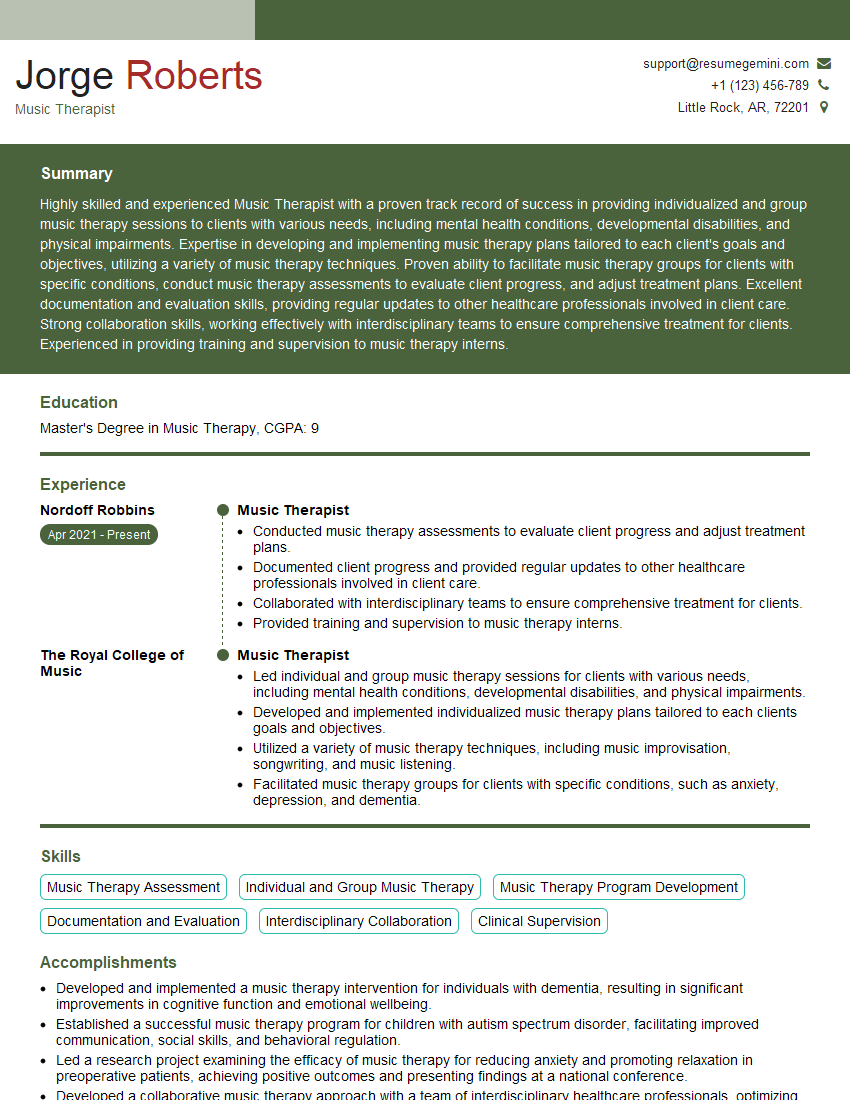
Mastering Music Therapy and Healing opens doors to a fulfilling and impactful career, allowing you to use your passion to positively affect the lives of others. To maximize your job prospects, crafting a strong, ATS-friendly resume is essential. ResumeGemini is a trusted resource designed to help you build a professional resume that showcases your skills and experience effectively. We provide examples of resumes tailored specifically to the Music Therapy and Healing field to help you get started. Take the next step towards your dream career today!
Explore more articles
Users Rating of Our Blogs
Share Your Experience
We value your feedback! Please rate our content and share your thoughts (optional).
What Readers Say About Our Blog
Really detailed insights and content, thank you for writing this detailed article.
IT gave me an insight and words to use and be able to think of examples