Cracking a skill-specific interview, like one for Qualitative Research Techniques, requires understanding the nuances of the role. In this blog, we present the questions you’re most likely to encounter, along with insights into how to answer them effectively. Let’s ensure you’re ready to make a strong impression.
Questions Asked in Qualitative Research Techniques Interview
Q 1. Explain the difference between grounded theory and phenomenology.
Grounded theory and phenomenology are both qualitative research approaches, but they differ significantly in their aims and methodologies. Grounded theory aims to develop a theory that is grounded in the data collected. Researchers begin with minimal preconceptions and allow the theory to emerge from the data through a process of constant comparison and refinement. Think of it like building a house from the ground up – you don’t start with blueprints, but rather let the structure emerge from the materials and the building process itself. Phenomenology, on the other hand, focuses on understanding the lived experiences of individuals. The goal is to describe the essence of a phenomenon as it is experienced by participants. It’s less about developing a theory and more about deeply understanding a shared experience, like trying to understand what it *feels like* to experience grief. A key difference is the level of pre-existing theory: grounded theory minimizes it, while phenomenology might start with some theoretical framing about the phenomenon of interest.
For example, a grounded theory study might explore the development of coping mechanisms in individuals facing chronic illness, letting the theory of coping emerge from the interviews. A phenomenological study might instead focus on the lived experience of chronic pain itself, aiming to understand its essence without necessarily building a broad theory.
Q 2. Describe the strengths and weaknesses of thematic analysis.
Thematic analysis is a widely used qualitative approach that identifies patterns (themes) within data. It’s known for its flexibility and accessibility.
Strengths:
- Flexibility: It can be adapted to various research questions and data types (interviews, observations, texts).
- Transparency: The process is relatively straightforward and easy to document, increasing the trustworthiness of the findings.
- Accessibility: It doesn’t require extensive training in specific qualitative methods.
Weaknesses:
- Subjectivity: The identification and interpretation of themes can be subjective, potentially leading to bias. Rigorous methods of ensuring trustworthiness are crucial.
- Lack of depth: Compared to approaches like grounded theory or phenomenology, thematic analysis might offer less depth in theoretical understanding.
- Potential for oversimplification: Focusing on themes can sometimes oversimplify the complexity of the data.
For instance, a study analyzing social media posts about climate change might use thematic analysis to identify recurring themes such as concern, denial, or activism. However, the researcher needs to be mindful of potential biases in theme selection and interpretation.
Q 3. How do you ensure rigor and trustworthiness in qualitative research?
Rigor and trustworthiness in qualitative research are paramount. They ensure the quality and credibility of the findings. We achieve this through several strategies:
- Prolonged engagement: Spending sufficient time in the field to gain a deep understanding of the context and build rapport with participants.
- Persistent observation: Paying close attention to detail and refining data collection methods as the research progresses.
- Triangulation: Using multiple data sources (interviews, observations, documents) to corroborate findings.
- Member checking: Sharing findings with participants to ensure accuracy and validity.
- Peer debriefing: Discussing the research process and findings with colleagues to gain alternative perspectives and identify potential biases.
- Audit trail: Maintaining detailed records of all research decisions and processes, making the study transparent and replicable.
- Reflexivity: Acknowledging and reflecting on the researcher’s own biases and influence on the research process.
Imagine a researcher studying workplace culture. Prolonged engagement might involve spending months observing and interviewing employees. Triangulation could involve using interviews, surveys, and document analysis to understand the culture from multiple perspectives. Member checking ensures that the interpretation of the findings aligns with the participants’ experiences.
Q 4. What are the ethical considerations in conducting qualitative interviews?
Ethical considerations are crucial in qualitative interviews. Researchers must prioritize the well-being and rights of participants. Key considerations include:
- Informed consent: Participants must be fully informed about the research purpose, procedures, risks, and benefits before agreeing to participate. This includes clarity on anonymity and confidentiality.
- Confidentiality and anonymity: Protecting participant identities and ensuring that data is handled securely and responsibly. This often involves using pseudonyms and secure data storage.
- Voluntary participation: Participants must be free to withdraw from the study at any time without penalty.
- Minimizing harm: Avoiding any potential physical or psychological harm to participants. This includes being sensitive to potentially triggering topics.
- Data security: Protecting the data collected from unauthorized access or disclosure.
- Beneficence: Ensuring that the research benefits participants and society, while minimizing any potential harm.
For example, if interviewing individuals about traumatic experiences, researchers need to provide clear information about support services and ensure that participants feel safe and comfortable during the interview. They should also be prepared to pause or end the interview if needed.
Q 5. Compare and contrast different sampling techniques used in qualitative research.
Qualitative research employs various sampling techniques to select participants. The choice depends on the research question and context. Some common methods are:
- Purposive sampling: Selecting participants based on specific characteristics relevant to the research question (e.g., interviewing only experienced teachers for a study on teaching practices). This is very common in qualitative work.
- Snowball sampling: Identifying initial participants and then asking them to refer other potential participants. This is useful when studying hidden populations (e.g., individuals experiencing homelessness).
- Convenience sampling: Selecting readily available participants. While convenient, this can limit the generalizability of findings.
- Theoretical sampling (grounded theory): Selecting participants based on emerging theoretical concepts during data collection. This is iterative – sampling is guided by the developing theory.
For example, in a study on leadership styles, purposive sampling might involve selecting leaders from various organizational contexts. Snowball sampling could be used to recruit participants within a specific social network. Convenience sampling might involve interviewing colleagues readily accessible to the researcher.
Q 6. Explain the process of data saturation in qualitative data collection.
Data saturation is a key concept in qualitative data collection. It refers to the point where no new information or themes are emerging from the data. It signifies that data collection can be stopped because further data will not add significantly to the understanding of the phenomenon being studied. Imagine filling a glass with water – once it’s full, adding more water doesn’t change its contents.
The process involves ongoing analysis of data during collection. As interviews are conducted, researchers start coding the data and identifying emerging themes. When the analysis reveals that no new codes or themes are emerging from additional interviews, data saturation is reached. It’s not a precise number of interviews but rather a point of diminishing returns. It depends on the complexity of the phenomenon and the depth of the interviews.
For example, in a study of patient experiences with a particular treatment, data saturation might be reached after 20 interviews when recurring themes have been clearly established, and new interviews do not yield any significant additional insights. This ensures sufficient data for robust analysis without collecting unnecessary data.
Q 7. How do you manage and analyze large qualitative datasets?
Managing and analyzing large qualitative datasets presents unique challenges. Strategies for effective management and analysis include:
- Data organization: Using software like NVivo or Atlas.ti to organize and manage large datasets efficiently. These programs allow for coding, memoing, and searching across the data.
- Coding frameworks: Developing well-defined coding frameworks to ensure consistency in data analysis. This might involve using pre-existing coding schemes or developing new codes based on emergent themes.
- Teamwork: Employing a team of researchers to share the workload and ensure inter-rater reliability in coding.
- Automated tools: Using text analysis software to identify key terms and patterns in the data, complementing manual coding efforts.
- Iterative analysis: Employing an iterative approach to analysis, revising codes and themes as more data is collected and analyzed.
For instance, in a study involving hundreds of interviews, employing software like NVivo allows the team to organize interview transcripts, code segments according to a pre-defined framework, create memos to document analysis decisions, and search for specific words or phrases across the entire dataset. Teamwork helps manage the volume of data and reduces potential biases.
Q 8. What software or tools are you familiar with for qualitative data analysis?
I’m proficient in several software packages for qualitative data analysis. NVivo is a powerful program I frequently use for managing, coding, and analyzing large datasets. Its features for creating complex coding schemes, building networks of relationships between codes, and generating reports are invaluable. I also have experience with Atlas.ti, another robust qualitative data analysis software that offers similar functionalities. For smaller datasets or when a more flexible approach is needed, I often utilize spreadsheet programs like Excel or Google Sheets for initial data organization and basic analysis, before potentially moving to a dedicated qualitative data analysis software.
Beyond software, I rely heavily on tools like mind-mapping software (e.g., MindManager, XMind) to visualize themes and relationships emerging from the data. This visual representation greatly assists in identifying patterns and building a cohesive narrative. I also find dedicated note-taking applications helpful for recording memos and reflections during the analysis process.
Q 9. Describe your experience with coding and categorizing qualitative data.
Coding and categorizing qualitative data is the heart of qualitative analysis. It involves systematically identifying and labeling segments of text (from interviews, observations, documents, etc.) based on recurring themes, concepts, or ideas. My approach is iterative and reflexive. I begin with open coding, allowing the data to guide the initial creation of codes. This often involves reading through the data multiple times, identifying key phrases or sentences that seem important and labeling them with descriptive codes. For example, in a study on employee satisfaction, initial codes might include ‘workload,’ ‘management support,’ ‘compensation,’ and ‘work-life balance’.
As more data is coded, I move to axial coding, refining and grouping similar codes into broader categories or themes. This process involves constantly reviewing and revising the code structure, ensuring that the categories are mutually exclusive and exhaustive. Finally, I engage in selective coding, which involves identifying the core category or theme that best summarizes the findings, weaving together the various categories and subcategories into a coherent narrative.
Consider a study about the challenges faced by small business owners. Open coding may lead to codes like ‘financial struggles’, ‘marketing difficulties’, ‘regulation compliance’, and ‘competition’. Axial coding might then group these under broader themes such as ‘financial sustainability’, ‘market challenges’, and ‘regulatory burdens’. Selective coding might then reveal a core theme of ‘navigating complex business ecosystems’.
Q 10. How do you identify and address bias in qualitative research?
Bias is an ever-present concern in qualitative research. To mitigate this, I employ several strategies throughout the research process. Firstly, I’m acutely aware of my own biases and preconceived notions, actively reflecting on how these might influence my interpretation of the data. This self-reflection is crucial.
Secondly, I utilize rigorous methods for data collection and analysis. Using multiple data sources (e.g., interviews, observations, documents) helps to triangulate findings and reduce reliance on a single perspective. I also strive for reflexivity in my writing, explicitly discussing my own positionality and how it might have shaped the research.
Thirdly, I employ techniques like peer debriefing, where I discuss my interpretations and analysis with colleagues to receive feedback and challenge my own assumptions. This external perspective is invaluable in identifying potential biases that I might have overlooked.
Finally, I ensure that my research questions are framed in a neutral way, avoiding leading questions or imposing my own assumptions on participants. Member checking, discussed in the next question, is also a vital step in addressing bias.
Q 11. Explain the concept of member checking in qualitative research.
Member checking is a crucial strategy for enhancing the credibility and trustworthiness of qualitative research. It involves sharing the researcher’s interpretations and findings with the participants who provided the data, allowing them to review and validate the accuracy and appropriateness of the analysis. This process isn’t simply about confirming the researcher’s conclusions; it’s a crucial opportunity to refine interpretations, identify misunderstandings, and gain a deeper understanding of participants’ perspectives.
For example, if I’m conducting a study on patient experiences with a new medical procedure, I might share a draft of my report with the participating patients, asking for their feedback on the accuracy of my descriptions and interpretations of their experiences. They might point out nuances or details I missed, or even challenge my conclusions. This feedback is essential for improving the validity and reliability of the research findings.
Member checking isn’t always feasible or appropriate in every study, especially in sensitive research areas or situations where anonymity is crucial. However, when possible, it significantly strengthens the rigour and credibility of the research.
Q 12. How do you handle conflicting or contradictory data in your analysis?
Conflicting or contradictory data is common in qualitative research and often presents valuable opportunities for deeper insights. Instead of dismissing contradictory information, I view it as an invitation to explore the complexities of the phenomenon under investigation.
My approach involves a careful examination of the context surrounding the conflicting data points. I consider the individual participants’ backgrounds, experiences, and perspectives to understand the reasons for the discrepancies. For instance, different perspectives might be attributable to variations in age, gender, socioeconomic status, or cultural background. The goal isn’t to resolve the conflict necessarily, but rather to understand the reasons behind it and incorporate this complexity into the overall interpretation. This often leads to a more nuanced and richer understanding of the research topic.
Sometimes, seemingly contradictory data can highlight hidden complexities or reveal underlying tensions within the research context. By carefully analyzing these contradictions, I can develop a more comprehensive and insightful account of the phenomenon under study.
Q 13. What strategies do you use to ensure the validity and reliability of your findings?
Ensuring validity and reliability in qualitative research is paramount. While the traditional quantitative measures of reliability and validity don’t perfectly translate, we use alternative strategies to ensure trustworthiness.
For validity (the accuracy of the findings), I emphasize triangulation – using multiple data sources (interviews, observations, documents) to corroborate findings. Prolonged engagement in the field allows me to develop a deep understanding of the context and build rapport with participants, enhancing the richness and depth of data. Peer debriefing, discussed earlier, is another vital tool for ensuring that my interpretations are grounded in the data and not simply my own biases.
For reliability (the consistency of findings), I maintain detailed audit trails documenting all aspects of the research process, from data collection to analysis and interpretation. This includes field notes, interview transcripts, coding schemes, and memos. This documentation allows for transparency and enables others to examine the process and potentially replicate the study, ensuring some degree of replicability. Member checking, as explained previously, also greatly contributes to the reliability of the findings.
Q 14. Describe your experience with different types of qualitative interviews (e.g., structured, semi-structured, unstructured).
I have extensive experience conducting various types of qualitative interviews. Structured interviews use pre-determined questions, offering consistency across participants but potentially limiting spontaneous insights. Semi-structured interviews provide a framework of pre-determined questions but allow for flexibility and exploration of unexpected themes, making them my most common choice. This balance allows a focus on key areas while accommodating the richness and complexity of individual experiences. Unstructured interviews, while providing deep insights through spontaneous conversation, need careful management and analysis to avoid losing focus.
For example, in a study on the impact of social media on body image, I might use a semi-structured interview guide with questions about general social media use, specific platform preferences, exposure to idealized body images, and feelings about their own body. The semi-structured approach allows me to explore their individual experiences and delve deeper into responses while maintaining a focus on my key research areas.
The choice of interview type always depends on the research question and the nature of the topic under investigation. Structured interviews are efficient for large-scale data collection, while unstructured interviews are ideal for exploring complex and sensitive topics in greater depth. Semi-structured interviews strike a balance between these approaches.
Q 15. How do you develop a strong interview guide?
Developing a strong interview guide is crucial for successful qualitative research. It’s not just a list of questions; it’s a roadmap for a meaningful conversation. Think of it as a carefully crafted script that allows for improvisation and exploration.
The process involves several key steps:
- Defining Research Objectives: Begin by clearly articulating your research goals. What do you want to learn? This shapes the overall direction and the types of questions you’ll ask.
- Identifying Key Themes: Break down your research objectives into specific themes or topics you want to explore. For example, if studying customer satisfaction with a product, themes might include ease of use, features, and value for money.
- Developing Question Types: Incorporate a mix of question types:
- Open-ended questions: Encourage detailed responses (e.g., “Tell me about your experience using this product.”)
- Follow-up probes: Designed to delve deeper into answers (e.g., “Can you elaborate on that?”)
- Specific questions: Address particular aspects of your themes (e.g., “How easy was it to navigate the app’s menu?”)
- Pilot Testing: Before conducting the main interviews, test your guide with a small group. This identifies any ambiguities, confusing questions, or areas that need refining.
- Structuring the Guide: Organize questions logically, moving from broad to specific, and grouping them thematically. Include introductory and closing statements to set the tone and ensure a smooth interview flow.
For instance, if researching employee morale, you might start with general questions about job satisfaction, then move to specific questions about workload, management style, and opportunities for growth, concluding with questions about suggestions for improvement. A well-structured guide ensures a focused and productive interview.
Career Expert Tips:
- Ace those interviews! Prepare effectively by reviewing the Top 50 Most Common Interview Questions on ResumeGemini.
- Navigate your job search with confidence! Explore a wide range of Career Tips on ResumeGemini. Learn about common challenges and recommendations to overcome them.
- Craft the perfect resume! Master the Art of Resume Writing with ResumeGemini’s guide. Showcase your unique qualifications and achievements effectively.
- Don’t miss out on holiday savings! Build your dream resume with ResumeGemini’s ATS optimized templates.
Q 16. Explain the process of conducting a focus group.
Conducting a focus group involves facilitating a guided discussion among a small group of participants (typically 6-10) who share certain characteristics relevant to the research topic. It’s like a moderated conversation where the researcher’s role is to steer the discussion towards key themes, while allowing for natural interaction among participants.
The process typically follows these steps:
- Planning and Recruitment: Define the target audience and recruit participants who represent this group. Consider diversity and ensure representativeness to maximize insights.
- Developing a Discussion Guide: This guide outlines the key topics and questions to be explored during the focus group. It should be flexible enough to adapt to the flow of the conversation.
- Setting the Stage: Create a comfortable and conducive environment. The physical setting should be relaxed and private.
- Moderating the Discussion: The moderator guides the conversation, ensuring that all participants have an opportunity to contribute. This involves actively listening, asking follow-up questions, and managing any disagreements or dominant voices.
- Recording and Transcribing: Record the discussion (audio or video) and transcribe the recordings meticulously. This provides a detailed record for analysis.
- Analyzing the Data: The transcribed data is analyzed to identify key themes, patterns, and insights related to the research objectives. Software such as NVivo can be very helpful for this.
For example, a marketing team might conduct a focus group to gather feedback on a new product. The moderator would guide the discussion, prompting participants to share their opinions on the product’s design, functionality, and marketing message. The ensuing conversation would reveal valuable insights not obtainable through individual interviews.
Q 17. How do you recruit participants for qualitative research?
Recruiting participants for qualitative research requires a strategic approach to ensure you obtain a sample that is relevant, representative, and willing to participate. It’s not just about finding people; it’s about finding the right people.
Strategies include:
- Defining the Target Population: Clearly identify the characteristics of the individuals you want to include in your study. This might be based on demographics, experience, or other relevant factors.
- Sampling Methods: Qualitative research often employs purposive sampling, where participants are selected based on their specific knowledge or experience related to the research question. Snowball sampling can also be effective where participants refer others.
- Recruitment Channels: This might involve advertisements, online platforms, social media, collaborations with relevant organizations, or direct contact through networks.
- Developing a Recruitment Script or Materials: This outlines the study’s purpose, procedures, time commitment, and any incentives offered. This should be clear, concise, and ethically sound.
- Obtaining Informed Consent: Participants should be fully informed about the research purpose, procedures, and their rights before they agree to participate. This must be documented through a signed consent form.
For instance, researching the experiences of nurses working in intensive care units, one might recruit participants through professional networks, hospital administrators, or online forums frequented by ICU nurses. Ethical considerations and ensuring the participants understand their rights and the study’s purpose are paramount.
Q 18. What are some common challenges in qualitative research, and how do you overcome them?
Qualitative research presents unique challenges. However, with careful planning and execution, many can be overcome.
Common Challenges and Solutions:
- Researcher Bias: Researchers’ preconceived notions can influence data interpretation. Solution: Employ reflexivity, actively reflecting on one’s biases and how they might influence data collection and analysis.
- Data Saturation: Reaching a point where no new themes or insights emerge from data collection. Solution: Collect data until saturation is reached; careful data analysis may reveal saturation earlier than anticipated.
- Maintaining Rigor: Ensuring trustworthiness and credibility of findings. Solution: Employ techniques like triangulation (using multiple data sources) and member checking (sharing findings with participants for validation).
- Time-Consuming Nature: Qualitative data analysis is intensive and can be time-consuming. Solution: Develop a clear analysis plan, utilize qualitative data analysis software, and manage time efficiently.
- Participant Recruitment and Retention: Difficulty recruiting or retaining participants. Solution: Develop a clear and appealing recruitment strategy, offer incentives (if appropriate), and maintain regular communication with participants.
For example, in a study on community attitudes towards a new development project, researcher bias could be mitigated by using multiple methods of data collection (interviews, focus groups, document review) and involving multiple researchers in the analysis to cross-check interpretations.
Q 19. How do you ensure confidentiality and anonymity in qualitative research?
Confidentiality and anonymity are critical ethical considerations in qualitative research. Protecting participants’ identities and the sensitive information they share is paramount.
Strategies to ensure confidentiality and anonymity include:
- Data Anonymization: Remove any identifying information from data before analysis (e.g., names, addresses, unique identifiers). Use codes or pseudonyms to protect identities.
- Secure Data Storage: Store data securely, using password-protected files and encrypting sensitive information. Limit access to data to only authorized researchers.
- Informed Consent Procedures: Clearly explain to participants how their data will be protected and used. Obtain informed consent, emphasizing anonymity and confidentiality.
- Data Protection Policies: Adhere to relevant data protection regulations and guidelines, such as HIPAA or GDPR.
- Confidentiality Agreements: If working with collaborators, establish confidentiality agreements to ensure data protection across the research team.
For example, in a study on sensitive personal experiences, participants might be assigned numerical codes instead of names in transcripts, and all identifying details in the written accounts would be removed before analysis. This ensures that even if a breach were to occur, participants remain unidentifiable.
Q 20. Explain the importance of reflexivity in qualitative research.
Reflexivity in qualitative research is the critical self-reflection on the researcher’s role, biases, and influence on the research process and findings. It’s about acknowledging that the researcher is not a neutral observer but an active participant in the research endeavor.
The importance of reflexivity lies in:
- Minimizing Researcher Bias: By reflecting on personal experiences, beliefs, and assumptions, researchers can identify potential biases that might affect data collection, interpretation, and reporting.
- Enhancing Transparency and Credibility: Acknowledging and addressing potential biases increases the transparency and trustworthiness of the research. It allows readers to critically assess the findings.
- Understanding Researcher-Participant Interactions: Reflexivity allows researchers to examine how their interactions with participants might influence the data collected and its interpretation.
- Improving Data Quality: By being aware of their own biases and influences, researchers can improve the quality of their data by consciously minimizing the impact of these factors.
For instance, a researcher studying gender roles in a particular community should reflect on their own understanding of gender and how this might influence their interactions with participants and interpretation of their responses. This reflection would inform their methods, interpretation, and ensure a less biased final report.
Q 21. How do you write a compelling qualitative research report?
Writing a compelling qualitative research report requires careful structuring, clear writing, and effective presentation of findings. It should tell a story, not just present data.
Key elements include:
- Compelling Introduction: Set the stage by outlining the research problem, its significance, and the research objectives.
- Detailed Methodology: Clearly describe your research design, sampling strategy, data collection methods (interviews, focus groups, observations, etc.), and data analysis techniques.
- Presentation of Findings: Organize your findings thematically, using quotes from participants to illustrate key themes and patterns. Avoid overwhelming the reader with excessive detail; focus on conveying essential insights.
- Interpretation and Discussion: Interpret the findings in light of existing literature and theoretical frameworks. Discuss the implications of the findings and their significance for the research question.
- Limitations and Future Research: Acknowledge any limitations of the study, such as small sample size or specific contexts. Suggest directions for future research.
- Clear and Concise Writing: Use clear, concise language, avoiding jargon unless it’s essential. Employ effective storytelling techniques to engage the reader.
The report should read like a narrative, weaving together the research context, the methods employed, the key findings, and their implications. It shouldn’t just summarize the data; it should provide meaningful interpretations and connect findings to existing theory and practice.
Q 22. Describe your experience with different qualitative data visualization techniques.
Qualitative data visualization isn’t about creating flashy charts like in quantitative research; it’s about representing the richness of qualitative data in a way that’s insightful and accessible. I’ve used a variety of techniques, adapting them to the specific research question and audience.
Word clouds: Useful for quickly identifying frequently occurring themes or keywords within interview transcripts or textual data. For example, in a study on customer satisfaction, a word cloud could highlight recurring words like ‘efficient,’ ‘friendly,’ or ‘frustrating,’ giving a visual summary of overall sentiment.
Concept maps/mind maps: These are excellent for showing the relationships between different themes and categories identified in the data. I might use this to visually represent how different aspects of a workplace culture (e.g., communication styles, leadership approaches, team dynamics) are interconnected.
Network diagrams: Useful when analyzing relationships between people, ideas, or events. For instance, in research on social networks, a network diagram can visually display connections between individuals within a community.
Visual thematic analysis: I often combine thematic analysis with visual representations. This might involve creating a table summarizing key themes and supporting quotes, or using color-coding in transcripts to highlight different themes. This helps readers see the data’s structure and understand how the themes interrelate.
The choice of visualization depends heavily on the research design and data type. I always prioritize clarity and avoid overcomplicating the visual representation, ensuring it complements, not overshadows, the analysis.
Q 23. How do you interpret and present qualitative findings to a non-academic audience?
Presenting qualitative findings to a non-academic audience requires a shift in focus from technical details to clear, concise storytelling. Instead of jargon-heavy academic language, I use simple language and relatable examples.
Focus on narratives and stories: Instead of just presenting statistical summaries, I use compelling narratives from participants to illustrate key findings. This makes the research more engaging and memorable.
Use visuals strategically: Charts and graphs might not always be appropriate, but strategically placed images, infographics, or short videos can make the data more accessible and impactful.
Highlight practical implications: Non-academic audiences are often interested in the ‘so what?’ I emphasize the practical implications of the findings and what they mean for decision-making.
Use plain language summaries: Create clear, concise summaries of the key findings using simple language, avoiding jargon. I would tailor the complexity to the audience; a presentation to a board of directors would differ significantly from a community meeting.
For example, when presenting findings on employee morale to a company’s leadership, I might focus on key themes like communication breakdowns or workload imbalances, illustrating them with direct quotes from employees and highlighting the potential impact on productivity and retention.
Q 24. Explain the difference between inductive and deductive approaches to qualitative research.
Inductive and deductive approaches represent different starting points in qualitative research. Think of it like detective work:
Deductive approach: You begin with a theory or hypothesis and then collect data to test or refine it. You’re essentially working from the general (theory) to the specific (data). For example, you might start with a theory about the impact of social media on body image and then interview participants to see if their experiences support or challenge that theory.
Inductive approach: You start with the data and let the themes and patterns emerge from the data itself. You’re moving from the specific (data) to the general (theory). For example, you might conduct interviews exploring people’s experiences with online dating, and then, through careful analysis, develop a theory about the challenges and rewards of this practice.
In practice, many qualitative studies blend both approaches. A researcher might begin with a general area of interest (deductive), but remain open to unexpected findings that may lead to new theories (inductive).
Q 25. What is your experience with narrative analysis?
Narrative analysis focuses on understanding how individuals construct meaning through their stories. It’s about more than just summarizing what people say; it’s about interpreting the structure, plot, and characters within their narratives to understand their experiences and perspectives.
My experience involves using narrative analysis in several projects. For example, in a study on the experiences of refugees, I analyzed the structure and content of their personal stories to understand their journeys, coping mechanisms, and integration into a new society. I considered elements like plot structure (chronological or fragmented), characters (themselves, family members, or significant others), and the overall tone and emotional arc of their narrative. This allowed me to gain a deeper understanding of their experiences than a simple content analysis could provide.
Narrative analysis involves careful attention to details like temporal sequencing, causal connections, and the role of language in shaping meaning. It’s a rich and nuanced approach that provides valuable insights into individual experiences and social processes.
Q 26. How do you ensure the transferability of your qualitative research findings?
Transferability in qualitative research refers to the extent to which the findings can be generalized or applied to other contexts. While complete generalization, like in quantitative research, isn’t the goal, we aim to make our findings relevant beyond the specific study context.
Detailed descriptions: I provide rich descriptions of the participants, setting, and methods used in my research. This allows others to assess the similarity between their context and the study’s context, increasing the likelihood of transferability.
Thick descriptions: This involves providing very detailed accounts of the events, behaviors, and meanings within the research context. The more detail, the better readers can judge the relevance to their own settings.
Member checking: Sharing findings with participants to check for accuracy and resonance. This not only strengthens credibility but also provides valuable insights into the applicability of findings.
Case studies: Presenting detailed case studies can allow readers to identify similar situations in their own contexts, making the findings relatable and applicable.
Essentially, the aim is to provide sufficient information for readers to judge the potential applicability of the findings to their own situation.
Q 27. Describe your experience with using NVivo or Atlas.ti.
I have extensive experience using both NVivo and Atlas.ti for qualitative data analysis. Both are powerful software packages offering tools for managing, coding, and analyzing qualitative data. The choice between them often depends on personal preference and specific research needs.
NVivo: I find NVivo particularly useful for managing large datasets and its sophisticated querying capabilities. Its features for visualizing relationships between codes and themes are excellent. I often use it for managing interview transcripts, focus group data, and other text-based data.
Atlas.ti: Atlas.ti offers a slightly different approach to data management and coding, often favored for its user-friendly interface and its strength in visual analysis. I’ve used it effectively in projects with visual data, like photographs or videos, alongside textual data.
Both software packages allow me to efficiently organize, code, and analyze data, enhancing the rigor and transparency of my qualitative research. I don’t rely solely on software; I still use manual coding and analysis techniques for certain aspects, especially when dealing with nuanced or complex data where the human interpretation is crucial.
Q 28. How do you determine the appropriate sample size for a qualitative study?
Determining sample size in qualitative research isn’t about achieving statistical significance, like in quantitative studies; it’s about reaching a point of data saturation.
Data saturation means that you’ve collected enough data that no new themes or insights are emerging from further data collection. It’s not a fixed number; it depends on factors like the complexity of the research question, the richness of the data, and the heterogeneity of the sample.
I usually start with a smaller sample and conduct pilot interviews or focus groups to refine my approach and identify key themes. Then, I continue collecting data until I reach data saturation. This might involve conducting more interviews, focus groups, or analyzing additional documents. Regularly reviewing the data throughout the collection process is crucial to monitor for saturation. I might use a memoing system to track emerging themes and note when no new insights are surfacing. It is an iterative process, and the decision to stop collecting data is a judgment call based on a careful evaluation of the emerging patterns.
Key Topics to Learn for Qualitative Research Techniques Interview
- Grounded Theory: Understand its principles, the iterative process of data collection and analysis, and its application in generating theory from data. Consider how you would explain its advantages and limitations compared to other approaches.
- Thematic Analysis: Master the process of identifying, analyzing, and reporting patterns (themes) within qualitative data. Be prepared to discuss different approaches to thematic analysis (e.g., inductive vs. deductive) and the challenges involved in ensuring rigor and trustworthiness.
- Qualitative Data Analysis Software: Familiarize yourself with popular software packages like NVivo or Atlas.ti. Focus on understanding their capabilities in managing and analyzing large datasets and enhancing the efficiency of qualitative research.
- Sampling Strategies: Demonstrate your understanding of purposeful sampling techniques, including various types and their appropriateness in different research contexts. Be ready to justify your choices in specific scenarios.
- Ethical Considerations: Showcase your awareness of ethical principles in qualitative research, such as informed consent, confidentiality, and anonymity. Be prepared to discuss potential ethical dilemmas and how to address them.
- Research Design: Show proficiency in designing robust qualitative studies, including selecting appropriate research questions, methods, and data collection tools (interviews, focus groups, observations, document analysis).
- Interpreting Qualitative Data: Discuss how to move beyond simple description to insightful interpretation, considering the context and meaning behind the data. Understand the importance of reflexivity in the research process.
- Presenting Qualitative Findings: Be prepared to discuss effective ways to communicate your findings, including the use of visuals, narratives, and quotes to support your interpretations.
- Reliability and Validity in Qualitative Research: Discuss strategies for ensuring the trustworthiness and rigor of your qualitative research, including triangulation, member checking, and audit trails.
Next Steps
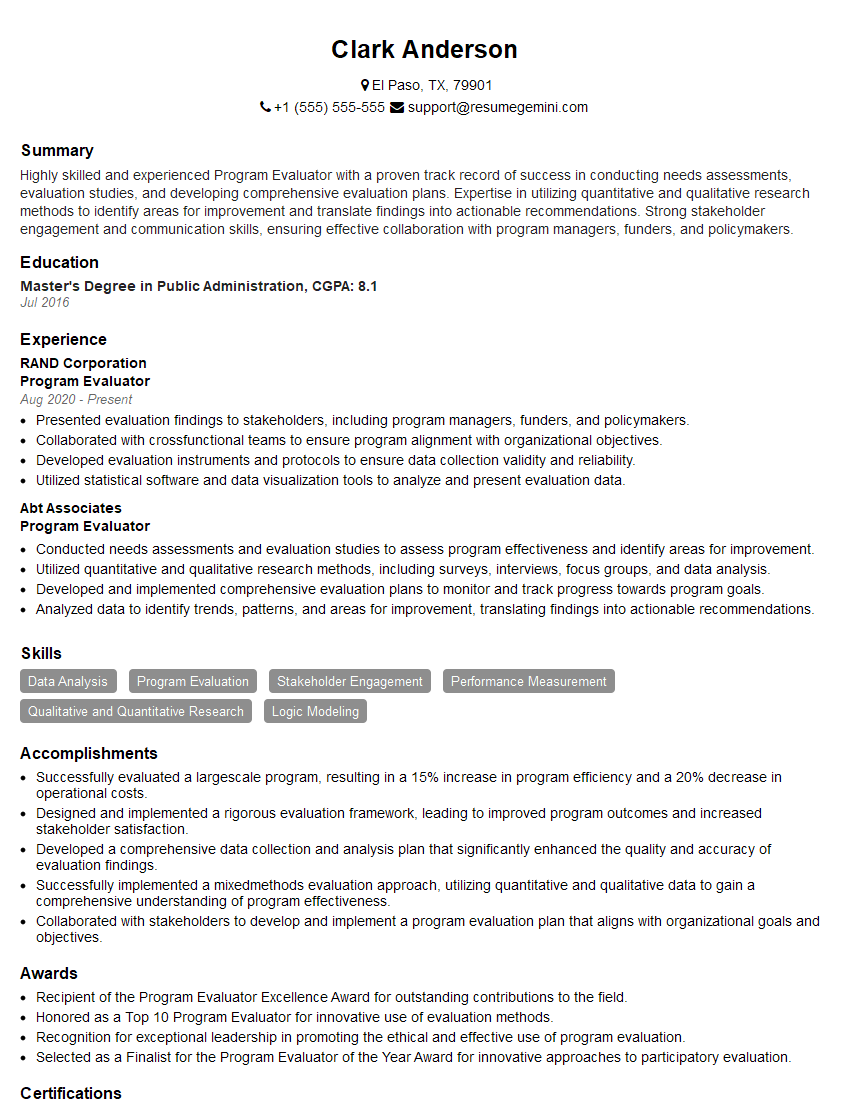
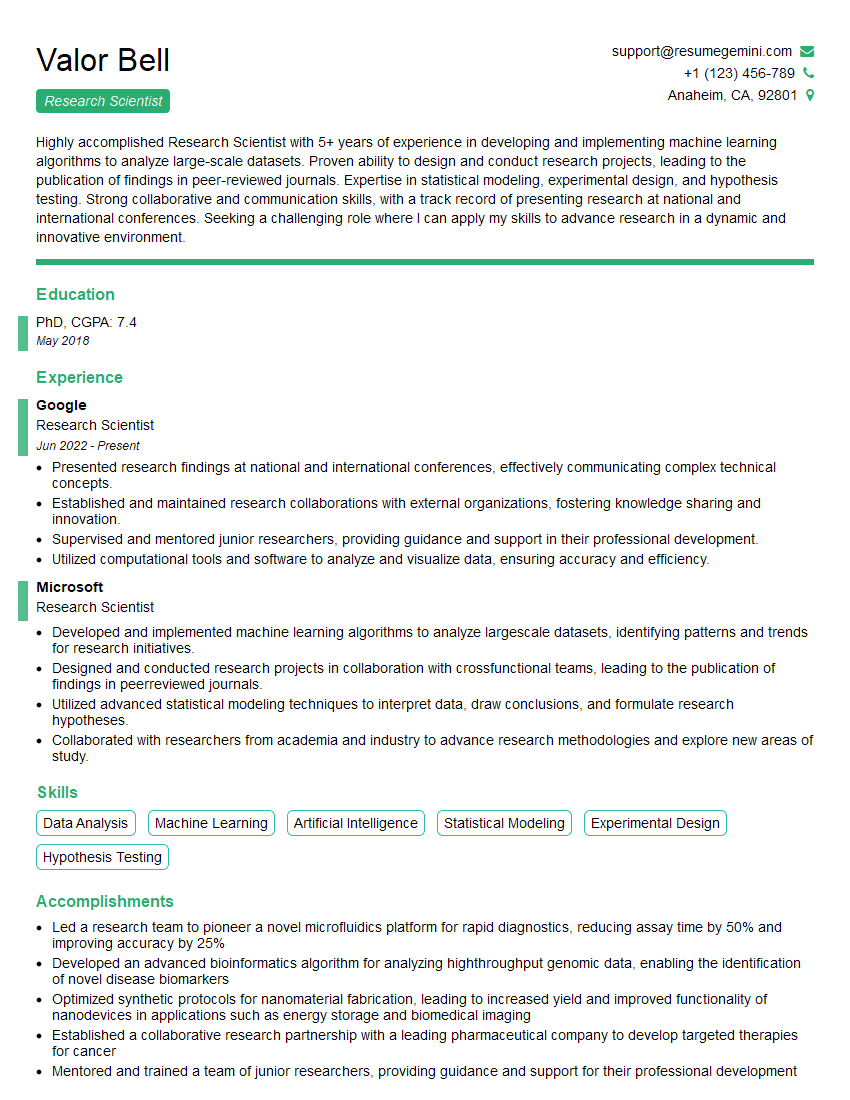
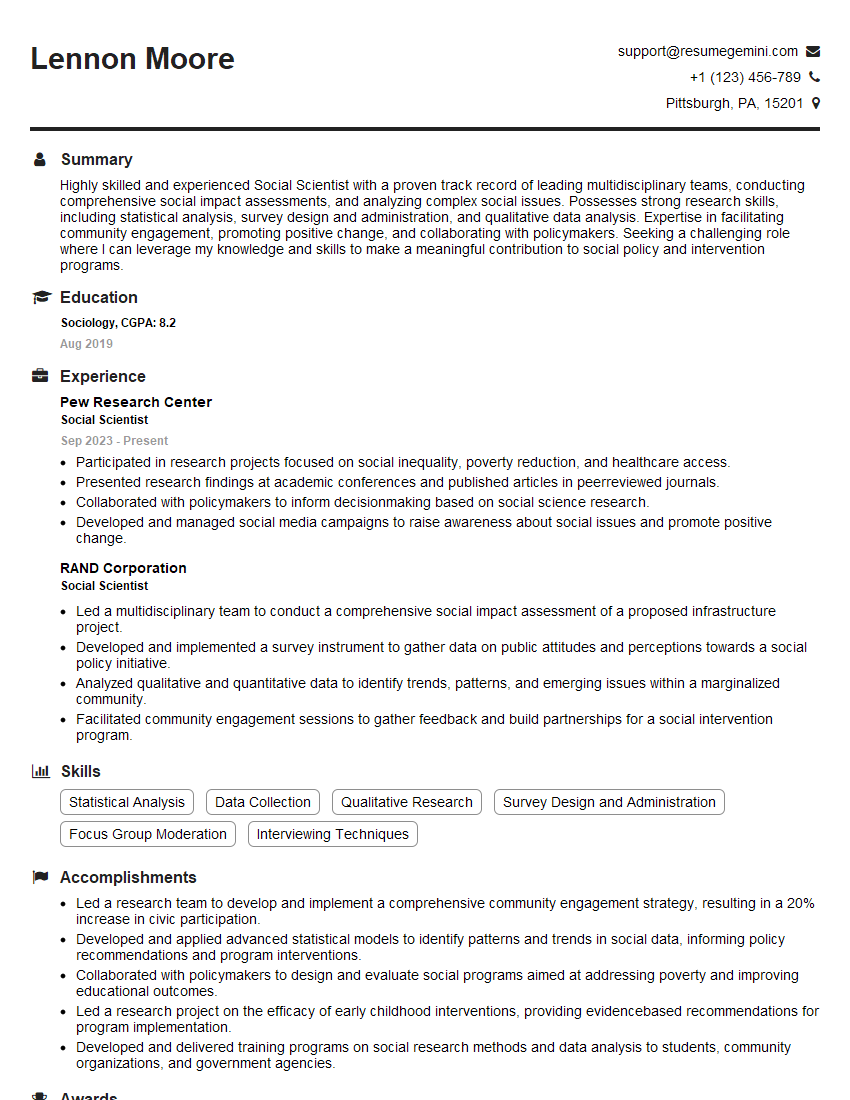
Mastering qualitative research techniques significantly enhances your career prospects in fields demanding in-depth understanding of human behavior and experiences. A strong foundation in these techniques opens doors to exciting opportunities and positions you as a valuable asset to any research team. To maximize your chances of landing your dream role, invest time in creating an ATS-friendly resume that effectively showcases your skills and experience. ResumeGemini is a trusted resource that can help you build a professional and impactful resume tailored to your specific career goals. Examples of resumes tailored to Qualitative Research Techniques are available to help guide you through the process.
Explore more articles
Users Rating of Our Blogs
Share Your Experience
We value your feedback! Please rate our content and share your thoughts (optional).
What Readers Say About Our Blog
Really detailed insights and content, thank you for writing this detailed article.
IT gave me an insight and words to use and be able to think of examples