Preparation is the key to success in any interview. In this post, we’ll explore crucial Irrigation system installation and maintenance interview questions and equip you with strategies to craft impactful answers. Whether you’re a beginner or a pro, these tips will elevate your preparation.
Questions Asked in Irrigation system installation and maintenance Interview
Q 1. Describe your experience with different irrigation system types (drip, sprinkler, etc.).
Over the past 15 years, I’ve worked extensively with various irrigation system types, each suited for different landscaping needs and water conservation goals. Drip irrigation, for instance, is my go-to for delicate flowerbeds and vegetable gardens. Its low-pressure, targeted delivery minimizes water waste and ensures efficient hydration directly to the plant roots. I’ve designed numerous systems using this method, achieving significant water savings for clients. Sprinkler systems, on the other hand, are ideal for larger, open areas like lawns. I’m proficient in designing both rotor and spray sprinkler systems, carefully selecting nozzle types and spacing to achieve even coverage and avoid runoff. I have experience with both conventional and smart sprinkler systems using Wi-Fi and weather sensors. Beyond these two, I have experience installing and maintaining subsurface drip irrigation (SDI), which is great for efficiency, and soaker hoses which are ideal for smaller spaces, such as around trees. Each system requires careful consideration of factors like soil type, plant requirements, and water pressure to optimize performance.
Q 2. Explain the process of designing an irrigation system for a residential property.
Designing a residential irrigation system is a multi-step process that begins with a thorough site assessment. This includes analyzing the property’s topography, soil type, sun exposure, and the types of plants being irrigated. Next, I create a detailed layout, carefully mapping out the location of sprinkler heads, valves, and piping. I use specialized software to model water flow and ensure even coverage, minimizing overlapping and dry spots. The design will incorporate a variety of sprinkler heads depending on what is being irrigated – rotor heads for open areas, spray heads for smaller beds, and possibly drip irrigation for gardens. Water source and pressure are key elements considered, and I’ll always incorporate a backflow preventer for safety and compliance. Once the design is finalized, I generate detailed specifications for the materials and components needed, ensuring a seamless installation process. Finally, I provide clients with a comprehensive plan including irrigation zones, water usage estimates, and ongoing maintenance recommendations.
Q 3. How do you troubleshoot common irrigation system malfunctions?
Troubleshooting irrigation system malfunctions requires a systematic approach. I start by visually inspecting the system, looking for obvious problems like broken sprinkler heads, leaking pipes, or clogged emitters. A simple check of the controller to ensure it’s properly programmed and functioning is the first step. Then I systematically test each zone individually, carefully observing the water flow and pressure. Low water pressure often points to a clogged filter or a problem with the water main. If a specific zone isn’t working, I’ll trace the line back from the sprinkler heads to identify the faulty valve or section of pipe. Using a pressure gauge is crucial to diagnose these issues. For more advanced problems, I use specialized tools like flow meters to pinpoint leaks or blockages more precisely. I document all findings and implement the necessary repairs, always prioritizing efficiency and water conservation.
Q 4. What are the different types of irrigation controllers and their functionalities?
Irrigation controllers are the brains of the system, regulating the timing and duration of watering. Basic controllers offer simple on/off scheduling, while more advanced models incorporate features like rain sensors, soil moisture sensors, and even Wi-Fi connectivity for remote control. For example, a basic timer controller will allow for setting specific times of the day or days of the week when zones are activated. A smart controller allows for more sophisticated settings based on weather forecasts and soil moisture level. I frequently use controllers with multiple zones to accommodate different plant needs and water requirements across the property. I always recommend selecting a controller with the features needed to best serve the client’s needs and property size. Some newer controllers even allow for integration with smart home systems for complete automation and efficiency. This creates a fully automated and flexible irrigation system.
Q 5. How do you calculate water pressure and flow rates for an irrigation system?
Calculating water pressure and flow rates is crucial for designing an efficient and effective irrigation system. I use specialized formulas and tools, including pressure gauges and flow meters, to make these calculations. Pressure is typically measured in PSI (pounds per square inch) and flow rate in GPM (gallons per minute). The required pressure depends on the type of sprinkler heads used and the distance the water needs to travel. Similarly, the flow rate will determine the amount of water delivered to each zone. I use established hydraulic calculations, taking into account pipe diameter, length, and fittings to determine pressure losses along the system. If flow rates are inadequate or pressure is insufficient, it could result in uneven watering or the inability to reach the necessary irrigation distance. Therefore, precise calculation is essential to creating an efficient and effective irrigation system.
Q 6. Explain your experience with backflow preventers and their importance.
Backflow preventers are critical safety devices that prevent contaminated water from flowing back into the municipal water supply. They are mandated by most jurisdictions and are a crucial part of any irrigation system installation. I’m experienced in installing and maintaining various types of backflow preventers, including double-check valves and reduced-pressure backflow preventers. These devices utilize various mechanisms to ensure unidirectional water flow, preventing the potential spread of contaminants like fertilizers, pesticides, or bacteria. Regular inspections and testing of backflow preventers are crucial to maintaining their effectiveness. I conduct these tests annually, using the appropriate testing methodologies, and always ensure compliance with all local regulations to prevent water contamination. Neglecting maintenance can lead to significant health and environmental consequences.
Q 7. Describe your knowledge of different sprinkler heads and their applications.
Sprinkler heads come in a wide variety of designs, each suited for specific applications. Rotor heads are ideal for larger areas, offering a long throw distance. Spray heads are better suited for smaller areas, providing a gentler spray pattern and preventing damage to delicate plants. I also use pop-up heads, that rise when activated, and retract when not in use to conserve space. Different nozzle sizes provide various spray patterns, water coverage, and throw distances. For example, I might choose a high-trajectory rotor head for watering across a long distance in a relatively open space, while using a low-trajectory spray head for a precise watering of small shrubs. The selection of sprinkler heads should always align with the specific area being irrigated and the characteristics of the plants. Choosing the right sprinkler heads is essential to ensure even coverage, minimize water waste, and maintain the overall health of the plants.
Q 8. How do you determine the appropriate spacing and type of emitters for a drip irrigation system?
Determining the right emitter spacing and type in drip irrigation is crucial for efficient water delivery and plant health. It depends on several factors: soil type, plant type and spacing, and water requirements.
Emitter Type: We choose emitters based on the plant’s water needs. For example, young seedlings might need low-flow drippers (e.g., 0.5 gallons per hour), while mature trees might need higher flow rates (e.g., 2 gallons per hour). Different emitters also provide different distribution patterns; some offer a localized wet spot, others a longer, narrower strip.
Emitter Spacing: This is determined by the emitter’s flow rate and the plant’s water needs. Imagine watering a garden with a watering can; you wouldn’t pour all the water in one spot, right? Similarly, we space emitters to ensure even soil moisture, preventing dry patches or overwatering. A common approach is to wet the entire root zone. For instance, if a plant’s root zone is 12 inches wide and our emitter delivers water effectively across a 6-inch radius, we would place emitters every 6 inches along the row. However, this is only a starting point, as factors such as soil type (sandy soil needs more frequent watering than clay) will influence the final spacing.
Practical Example: In a row of tomatoes planted 18 inches apart, I might use 1 gallon per hour emitters placed every 9 inches to ensure each plant is adequately watered, considering the tomato’s root spread and the soil’s water holding capacity.
Q 9. What are the common causes of low water pressure in an irrigation system?
Low water pressure in an irrigation system can stem from several issues. It’s like a clogged artery in the human body – it restricts flow.
- Clogged Filters or Emitters: Sediment, minerals, or debris can accumulate in filters and emitters, reducing flow. Think of sand clogging a water pipe.
- Leaking Pipes or Fittings: Leaks anywhere in the system divert water, reducing pressure at the end points. This is like a pinhole leak in a garden hose.
- Pump Problems: A malfunctioning pump, including a worn-out impeller, can significantly reduce pressure. Imagine your heart not pumping blood efficiently.
- Insufficient Water Supply: If the water source itself has low pressure, the irrigation system will also have low pressure.
- Incorrectly sized pipes: Using pipes too small for the required flow rate will create friction and reduce pressure.
Troubleshooting: I start by checking the filters, then inspect the entire pipeline for leaks. If those are fine, I’ll investigate the pump and the source water pressure.
Q 10. How do you perform routine maintenance on an irrigation system?
Routine maintenance is key to a long-lasting and efficient irrigation system. It’s like regular car maintenance; it prevents major problems down the line. My routine includes:
- Inspecting the entire system: This involves a visual check for leaks, broken pipes, or damaged emitters. It’s like a quick once-over before driving.
- Cleaning filters: Regularly cleaning filters removes debris, improving water flow and preventing clogs. Think of changing the air filter in your car.
- Flushing the system: To remove any mineral buildup or sediment in the pipes.
- Checking the pump and pressure regulators: Checking for proper function and adjustments.
- Checking valves and backflow preventers: Ensuring they operate correctly to avoid water waste and contamination.
- Winterization (in colder climates): This includes draining the system to prevent pipes from freezing and bursting. Think of protecting plants from frost.
The frequency of this maintenance varies with the system’s complexity and environmental factors, but at least twice a year is a good rule of thumb.
Q 11. Describe your experience with irrigation system pumps.
I have extensive experience with various irrigation system pumps, including centrifugal pumps, submersible pumps, and booster pumps. My experience covers selection, installation, troubleshooting, and maintenance.
Centrifugal Pumps: These are commonly used for larger systems and can handle high flow rates. I’ve worked with several models and am familiar with their performance curves and limitations. I can assess the right pump size for a specific system based on the water demand and available pressure.
Submersible Pumps: Ideal for drawing water from deep wells or reservoirs, these pumps are robust and reliable. I’ve overseen their installation, ensuring proper grounding and protection to prevent electrical hazards.
Booster Pumps: These are often integrated to boost pressure when the system’s demand exceeds the supply pressure. I’ve diagnosed and resolved issues related to pressure switches and flow sensors. One recent project involved installing a booster pump to increase pressure in the upper reaches of a vineyard, ensuring even water distribution throughout the rows.
Beyond the typical pump functionalities, I also have experience in selecting pumps based on energy efficiency, cost-effectiveness, and environmental considerations.
Q 12. Explain your understanding of water conservation techniques in irrigation.
Water conservation is paramount in irrigation, both economically and environmentally. It’s about using the right amount of water at the right time.
- Soil Moisture Sensors: These sensors measure soil moisture levels, triggering irrigation only when necessary. It’s like having a smart home system monitor water usage.
- Drip Irrigation: Delivers water directly to the plant roots, minimizing evaporation and runoff, unlike overhead sprinklers that spray water everywhere.
- Weather-Based Irrigation Controllers: These controllers adjust irrigation schedules based on weather data such as rainfall, temperature, and humidity. It’s like having a weather forecast integrated into the irrigation system.
- Properly Sized Emitters: Using the correct emitter flow rates ensures plants receive the water needed, not more or less.
- Regular System Maintenance: Preventing leaks and clogs is essential. Every drop counts.
- Water-Wise Plant Selection: Choosing plants suited to the local climate and soil conditions minimizes water stress.
By implementing these techniques, significant water savings can be achieved, reducing water bills and protecting valuable water resources.
Q 13. How do you identify and repair leaks in an irrigation system?
Finding and fixing leaks is crucial for efficient water use and system longevity. It’s like finding a leaky faucet and repairing it.
Leak Detection: I employ a combination of methods. A visual inspection is always the first step, checking for wet spots, muddy areas, or damp soil. I might also use a pressure gauge to identify pressure drops in different sections of the system. Listening for unusual hissing sounds can also help pinpoint leaks.
Leak Repair: Once a leak is located, the repair method depends on the type and location of the leak. Small leaks in pipes can often be repaired with specialized leak repair clamps or by replacing a short section of pipe. For larger leaks, or those requiring more significant work, complete pipe replacement might be necessary. In the case of leaky fittings, tightening or replacing the fittings are usually the solutions.
Example: During a recent inspection, I found a significant leak in a buried section of PVC pipe. Using a pipe locator, I pinpointed the leak’s position. After excavation, I replaced the damaged section, ensuring proper sealing to prevent future issues.
Q 14. What are your experiences with different types of irrigation piping materials?
My experience encompasses various piping materials for irrigation systems, each with its pros and cons. The choice often depends on factors such as cost, durability, and system pressure.
- Polyethylene (PE): Flexible and relatively inexpensive, PE is widely used for drip irrigation systems and subsurface applications. It’s flexible, which is useful for navigating challenging terrain. However, it’s susceptible to UV degradation over long periods of exposure.
- Polyvinyl Chloride (PVC): Rigid and durable, PVC is commonly used for mainline pipes where pressure is higher. It has a longer lifespan than PE but is less flexible, making installation in complex terrains slightly more challenging.
- Chlorinated Polyvinyl Chloride (CPVC): CPVC offers improved temperature resistance and greater flexibility compared to PVC, allowing for use in higher-temperature climates and more intricate layouts. However, it comes at a higher cost.
- Aluminum Pipe: A solid and strong pipe choice. However, aluminum’s susceptibility to corrosion makes its use less frequent than other choices.
For instance, in a recent project involving a large-scale vineyard, we used high-density PE for the laterals to distribute water to individual plants. This was due to its flexibility in maneuvering around the vines, its lower cost, and its adequacy for the operating pressure.
Q 15. Describe your experience with installing and maintaining valves in an irrigation system.
Installing and maintaining valves is fundamental to any irrigation system’s efficiency and longevity. I’ve worked extensively with various valve types, including ball valves, butterfly valves, and pressure-regulating valves, across diverse irrigation setups – from residential lawns to large-scale agricultural projects. Installation involves careful planning to ensure proper water flow and pressure, including correct sizing and orientation. This often requires considering factors such as pipe diameter, pressure head, and the specific needs of the zone being served. For example, a larger ball valve might be necessary for a high-flow zone compared to a smaller one for a drip irrigation system. Maintenance includes regular inspections for leaks, corrosion, and proper operation. I routinely lubricate valves, check for clogs, and replace worn parts as needed to prevent costly repairs or system failures. I also make sure to properly isolate valves before maintenance to prevent accidental water release.
One memorable instance involved troubleshooting a malfunctioning pressure-regulating valve in a vineyard. The high pressure was damaging young vines. By systematically checking pressure readings at different points, I isolated the faulty valve and replaced it, restoring the correct pressure and preventing further damage.
Career Expert Tips:
- Ace those interviews! Prepare effectively by reviewing the Top 50 Most Common Interview Questions on ResumeGemini.
- Navigate your job search with confidence! Explore a wide range of Career Tips on ResumeGemini. Learn about common challenges and recommendations to overcome them.
- Craft the perfect resume! Master the Art of Resume Writing with ResumeGemini’s guide. Showcase your unique qualifications and achievements effectively.
- Don’t miss out on holiday savings! Build your dream resume with ResumeGemini’s ATS optimized templates.
Q 16. How do you handle soil testing and its impact on irrigation system design?
Soil testing is crucial for designing an effective and water-efficient irrigation system. Different soil types have varying water-holding capacities and drainage rates. A thorough soil analysis provides essential data about soil texture (sand, silt, clay), organic matter content, and pH levels. This information directly impacts irrigation system design by informing decisions on:
- Water application rate: Sandy soils drain quickly, requiring more frequent, but lighter, watering. Clay soils retain water longer, necessitating less frequent, but deeper, watering.
- Irrigation method: Drip irrigation is ideal for sandy soils to minimize water loss, while sprinkler systems might be more suitable for clay soils.
- Irrigation scheduling: Soil moisture sensors can be integrated into the system, providing real-time feedback and adjusting watering schedules based on actual soil moisture levels.
For instance, I once designed a system for a client with a mix of sandy and clay soils on their property. By analyzing soil samples from different areas, we created zones tailored to each soil type, optimizing water usage and plant health. This involved using different emitters and employing a smart controller with soil moisture sensors to vary watering schedules accordingly.
Q 17. What are the safety precautions you take when working with irrigation systems?
Safety is paramount when working with irrigation systems. My safety procedures always begin with a thorough site assessment, identifying potential hazards like underground utilities, electrical lines, and uneven terrain. I always use appropriate personal protective equipment (PPE), including safety glasses, gloves, and steel-toe boots. When working with pressurized water lines, I carefully depressurize the system before making any repairs or adjustments. I also follow lockout/tagout procedures for electrical components to prevent accidental shock. I am very familiar with the local safety codes and regulations.
Furthermore, I always emphasize team communication and awareness, ensuring everyone on the team is aware of the procedures and potential risks. I make sure to train less experienced members on safe handling procedures and proper use of tools.
Q 18. Describe your experience with irrigation system automation and smart technology.
I have extensive experience integrating automation and smart technology into irrigation systems. This includes installing and programming smart controllers, integrating weather sensors, and utilizing soil moisture sensors to optimize irrigation scheduling. Smart controllers allow for precise control over watering schedules, adjusting based on real-time weather data and soil moisture levels. This leads to significant water savings and improved plant health by preventing both overwatering and underwatering. I’m proficient with various control system interfaces and protocols, allowing me to seamlessly integrate them with existing systems or design entirely new automated systems.
A recent project involved installing a smart irrigation system for a large municipal park. The integration of weather sensors and soil moisture probes allowed for automated adjustments to watering schedules, resulting in a 30% reduction in water consumption while maintaining optimal turf health.
Q 19. How do you manage and interpret irrigation system schematics?
Irrigation system schematics are crucial for understanding the system’s layout and functionality. I’m proficient in interpreting these schematics, which typically include pipe layouts, valve locations, emitter types, and controller configurations. Understanding these drawings allows me to efficiently troubleshoot problems, plan maintenance activities, and make informed decisions regarding system upgrades or modifications. I can use schematics to trace water flow, identify potential bottlenecks, and pinpoint the location of specific components.
The schematics serve as a roadmap during installation and maintenance, providing clear instructions and a visual representation of the system’s design. Any modifications are meticulously documented and updated on the schematic to ensure consistency and ease of understanding for future reference.
Q 20. Explain your experience with troubleshooting irrigation system controllers.
Troubleshooting irrigation controllers requires a systematic approach. I start by examining the controller’s display for error codes or unusual readings. This is often the quickest way to pinpoint the problem. If the problem isn’t immediately obvious, I then check the power supply, ensuring proper voltage and connections. Next, I inspect wiring connections for loose wires or shorts, using a multimeter to test for continuity. I then move on to check the sensor connections, ensuring that rain sensors, soil moisture sensors, and flow sensors are functioning correctly and providing accurate readings. If the issue persists, I may need to replace faulty components, such as relays, valves, or the controller itself.
For example, I recently resolved an issue where a controller wasn’t activating certain zones. By systematically checking the wiring, I discovered a corroded connection, which I repaired, restoring the functionality of the affected zones. My experience with different controller brands and models allows me to diagnose and solve a wide range of problems efficiently.
Q 21. How do you determine the appropriate water application rate for different plants?
Determining the appropriate water application rate depends on several factors, including plant type, soil type, climate, and evapotranspiration (ET) rates. ET represents the amount of water lost from the soil and plants through evaporation and transpiration. I use various methods to estimate ET, including weather data, reference ET values, and specialized software. I also consider the plant’s water requirements, which vary considerably depending on the species. For example, drought-tolerant plants need less water than water-loving plants. Soil type significantly impacts the water application rate, with sandy soils requiring more frequent but lighter watering than clay soils.
I often use soil moisture sensors to monitor soil moisture levels in real-time. This data, combined with ET estimates, allows for precise adjustments to the watering schedule, ensuring the plants receive the optimal amount of water without overwatering or underwatering. For instance, I might adjust the application rate for a newly planted lawn to avoid stressing the young roots compared to a mature lawn that is already established.
Q 22. Describe your experience with different types of irrigation scheduling methods.
Irrigation scheduling is crucial for efficient water use and optimal plant growth. I have extensive experience with various methods, each tailored to specific site conditions and plant needs.
- Traditional Scheduling: This relies on fixed intervals, often based on experience or general guidelines. While simple, it’s less precise and can lead to overwatering or underwatering. For example, I once managed a small vineyard using a weekly schedule, adjusting based on rainfall.
- Climate-Based Scheduling: This considers weather data like evapotranspiration (ET) – the combined effect of evaporation and plant transpiration. Tools like weather stations and ET calculators provide precise irrigation needs. I’ve used this extensively for large-scale agricultural projects, resulting in significant water savings.
- Soil Moisture Monitoring: This involves using sensors to measure soil water content directly. This provides real-time feedback, allowing for precise irrigation triggering. This is particularly beneficial in diverse soil types, preventing both drought stress and waterlogging. I’ve successfully integrated this method in several landscaping projects, minimizing water waste and ensuring healthy plant growth.
- Plant-Based Scheduling: This method focuses on observable plant stress indicators, such as wilting, leaf color changes, and growth rates. While less precise than sensor-based methods, it’s a valuable supplement and is particularly useful when combined with other techniques.
My experience encompasses adapting and combining these methods to develop custom schedules that optimize water use and crop yield while accounting for environmental factors and budget considerations.
Q 23. What software or tools do you use for irrigation system design and management?
For irrigation system design and management, I utilize a combination of software and tools. This ensures efficient design, accurate estimations, and effective system monitoring.
- AutoCAD: I use AutoCAD for detailed system layouts, including pipe sizing, valve placement, and emitter locations. This ensures a precise and efficient design.
- Irrigation Design Software: Programs like (mention specific software names if you are comfortable sharing them e.g., WaterCAD or similar) allow me to simulate water flow, pressure, and hydraulic characteristics of the system to optimize performance and avoid issues like low pressure or overwatering.
- GIS (Geographic Information Systems) software: For larger projects, GIS software helps to integrate site topography, soil information, and other geographic factors into the design.
- Field Data Collection Tools: This includes handheld GPS units, laser measuring tools, and soil moisture sensors. Accurate field data is critical for building accurate system models.
- Irrigation Control Software: For system management, software that connects to smart irrigation controllers allows for remote scheduling and monitoring, providing real-time performance data and the ability to make adjustments quickly.
The specific tools used will depend on the project’s scale and complexity, but my familiarity across several software and tools ensures efficient and effective design and management.
Q 24. Explain your experience with repairing and replacing irrigation components.
Repair and replacement of irrigation components is a frequent part of my work. I possess a broad understanding of different irrigation systems, allowing for efficient troubleshooting and repairs.
- Troubleshooting: I start with identifying the problem through visual inspection, pressure testing, and flow measurements. This methodical approach minimizes unnecessary component replacement. For instance, a low-pressure situation might indicate a clogged filter instead of a pump malfunction.
- Component Repair/Replacement: I’m proficient in repairing or replacing various components including pumps, valves, sprinklers, emitters, pipes, and filters. This includes selecting appropriate replacement parts based on system specifications and long-term durability.
- Pipe Repair: I have experience with various pipe repair techniques, from simple leak repairs using couplings and sealant to more complex repairs involving pipe fusion or replacement of damaged sections.
- Sprinkler/Emitter Adjustments: I can adjust sprinkler heads and emitters to ensure proper coverage and uniformity, optimizing water distribution and preventing overwatering or dry spots.
My experience ranges from minor repairs to extensive system overhauls. I emphasize preventative maintenance to reduce the frequency of repairs and extend the life of the system.
Q 25. How do you deal with challenging soil conditions during irrigation system installation?
Challenging soil conditions, such as rocky soil, clay soil, or highly variable soil textures, can significantly impact irrigation system installation. I employ several strategies to overcome these challenges.
- Site Assessment: Thorough pre-installation site assessment is crucial. Soil testing helps determine the soil’s water-holding capacity, drainage characteristics, and potential challenges.
- Specialized Equipment: For rocky soil, specialized excavation equipment like rock breakers or augers may be needed. For clay soil, trenching methods may need to be adjusted.
- Pipe Selection: Appropriate pipe material and size are crucial. For instance, flexible piping might be preferred for rocky terrain, while durable, high-pressure pipe may be needed for areas with high water flow.
- Irrigation System Design Adaptations: The irrigation system design itself may need adjustments. For example, using subsurface drip irrigation in areas with high clay content minimizes surface water runoff and improves water penetration.
- Soil Amendments: In some cases, soil amendments can be employed to improve soil structure and water infiltration.
Careful planning and adaptation are key to overcoming soil challenges and ensuring a successful and efficient irrigation installation.
Q 26. Describe your understanding of water laws and regulations related to irrigation.
Understanding and adhering to water laws and regulations is paramount in irrigation. This involves familiarity with local, regional, and potentially even national regulations regarding water rights, usage permits, and water conservation mandates.
- Water Rights: I understand the different types of water rights (e.g., riparian rights, appropriative rights) and how they affect water allocation and usage for irrigation.
- Usage Permits: I’m aware of the permit requirements for drawing water from certain sources and the procedures for obtaining and renewing such permits.
- Water Conservation Regulations: I’m familiar with local ordinances and state laws promoting water conservation, which often dictate irrigation practices, including allowable times for irrigation and restrictions on water use during periods of drought.
- Environmental Impact: I’m knowledgeable about environmental regulations concerning water quality and potential impacts of irrigation practices.
Adherence to these regulations is not only a legal requirement but also crucial for responsible water management and the long-term sustainability of the environment. My experience in working within these regulations ensures compliant and environmentally sound irrigation systems.
Q 27. How do you prioritize and manage multiple irrigation system maintenance tasks?
Managing multiple irrigation system maintenance tasks efficiently requires a systematic approach.
- Prioritization: I prioritize tasks based on urgency, impact, and cost. For example, repairing a leaking main line takes precedence over a minor sprinkler adjustment. I use a system of task categorization – critical, important, and routine – to guide this prioritization.
- Scheduling: I develop a maintenance schedule, incorporating both preventative maintenance and reactive repairs. This involves periodic inspections, system flushing, filter cleaning, and component checks. The schedule is tailored to the specific needs of each system and adjusted based on weather conditions and observed issues.
- Documentation: Meticulous record-keeping is essential. I maintain detailed records of all maintenance activities, including dates, tasks performed, parts replaced, and any observations. This facilitates proactive maintenance and improves troubleshooting efficiency.
- Resource Allocation: Efficient resource allocation involves managing time, personnel, and equipment effectively. I use tools such as project management software (mention a specific name if comfortable e.g. Asana) to schedule work and allocate resources effectively.
This systematic approach ensures that all maintenance tasks are addressed in a timely and efficient manner, optimizing system performance and lifespan.
Q 28. Explain your experience with customer communication and problem-solving in an irrigation context.
Effective communication and problem-solving are essential for successful irrigation projects.
- Client Consultation: I begin with thorough client consultation to understand their needs, budget, and expectations. This ensures that the irrigation system aligns with their requirements and addresses any potential concerns early on.
- Project Updates: I provide regular updates throughout the project, keeping clients informed about progress, potential challenges, and any changes.
- Problem Resolution: I approach problem-solving methodically, identifying the root cause of any issues before implementing solutions. This might involve working directly with the client to understand their observations or conducting thorough system diagnostics.
- Technical Explanation: I explain technical issues clearly and concisely to clients, using simple language and avoiding unnecessary jargon. I focus on providing clients with practical solutions that meet their needs.
- Follow-up: Post-installation, I provide guidance on proper system operation and maintenance, offering support to address any questions or concerns.
My approach prioritizes clear, transparent communication, building trust and ensuring client satisfaction. I value open dialogue and prompt problem-solving to maintain positive client relationships and project success.
Key Topics to Learn for Irrigation System Installation and Maintenance Interviews
- System Design & Planning: Understanding site surveys, water source analysis, and the selection of appropriate irrigation components (pipes, sprinklers, controllers, etc.) based on project needs and local regulations.
- Pipe Installation & Layout: Practical knowledge of trenching, pipe joining techniques, proper slope calculations for efficient water flow, and backflow prevention strategies.
- Sprinkler & Emitter Selection & Placement: Choosing the right sprinkler or emitter type for different plant types and soil conditions; understanding water pressure, throw distance, and uniformity of coverage.
- Irrigation Controller Programming & Maintenance: Familiarity with various controller types, programming schedules based on weather data and plant requirements, and troubleshooting common controller malfunctions.
- Water Management & Conservation: Implementing techniques like soil moisture sensors, rain sensors, and smart irrigation technologies to optimize water usage and minimize waste.
- Troubleshooting & Repair: Identifying and resolving common irrigation system problems such as leaks, clogged emitters, malfunctioning pumps, and pressure regulator issues. Understanding preventative maintenance procedures.
- Safety Procedures & Regulations: Adhering to safety protocols when working with heavy equipment, underground utilities, and potentially hazardous chemicals. Familiarity with relevant industry standards and codes.
- Budgeting & Project Management: Understanding cost estimations, material procurement, and scheduling for efficient project completion within budget constraints.
Next Steps
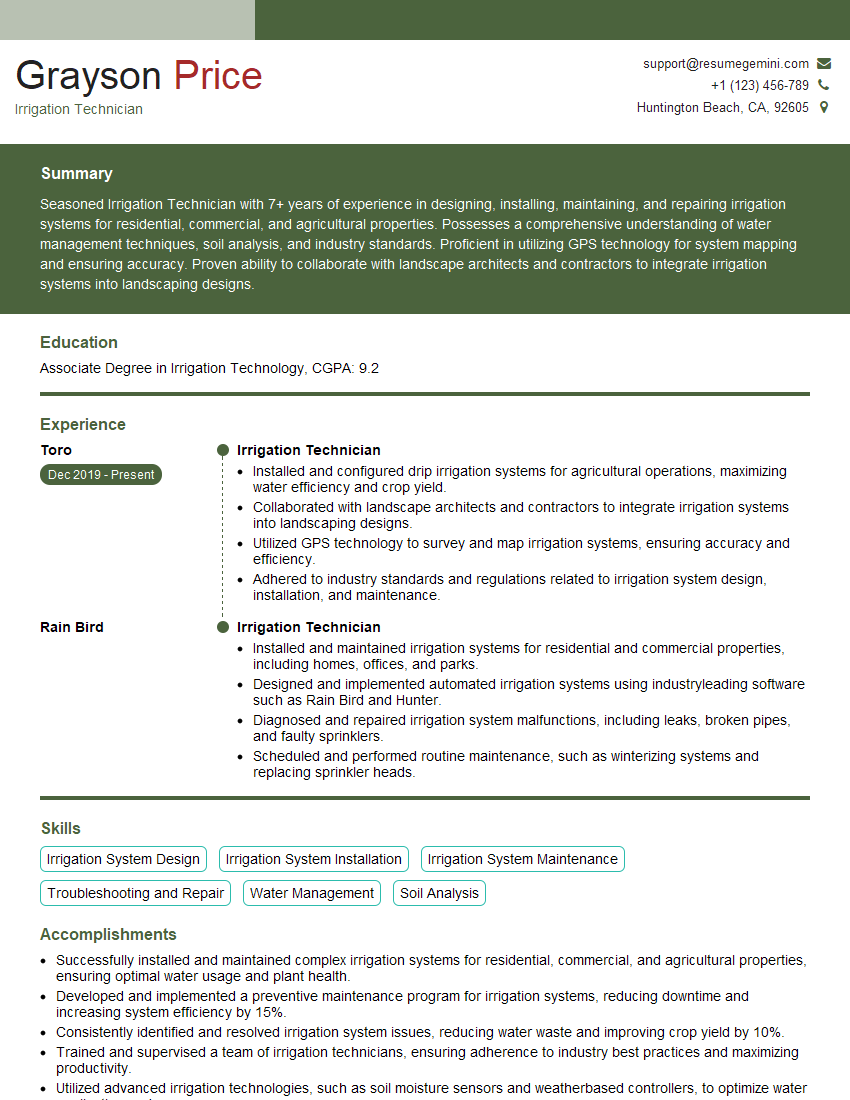
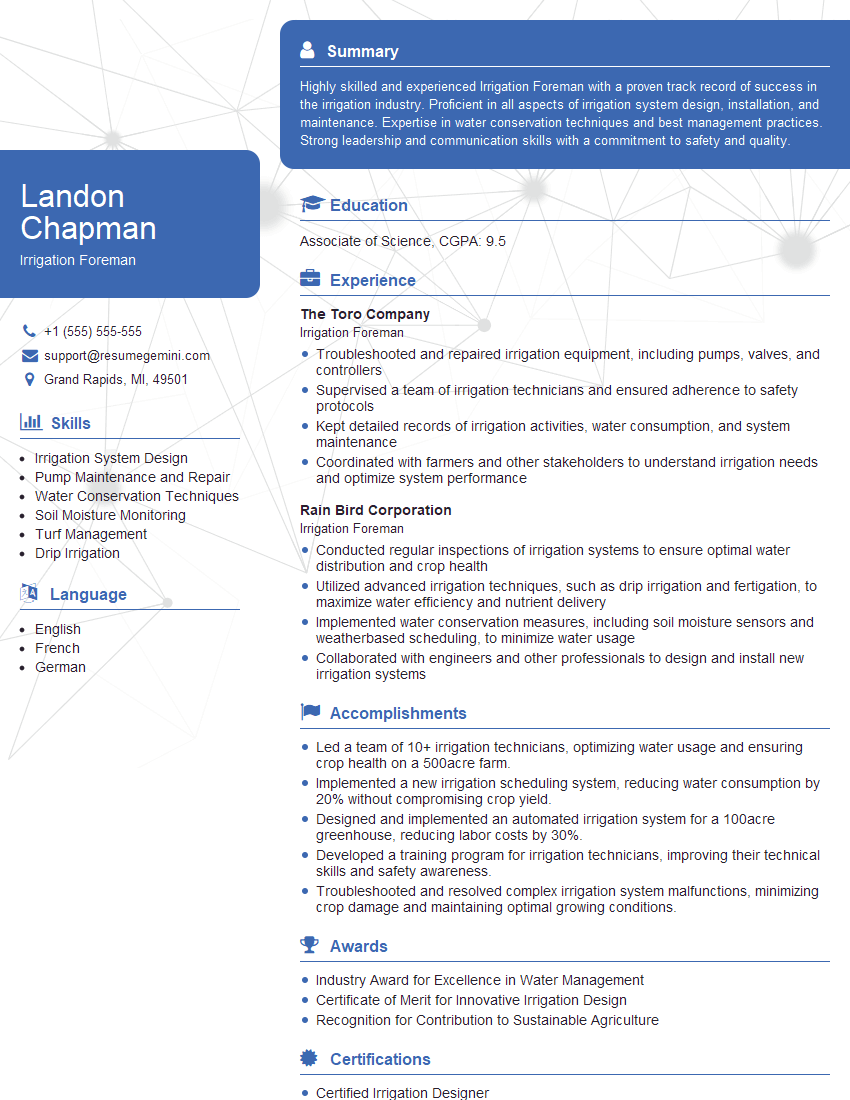
Mastering irrigation system installation and maintenance opens doors to a rewarding career with excellent growth potential. This field is vital for efficient agriculture, landscaping, and water conservation – skills highly sought after in a world increasingly focused on sustainability. To maximize your job prospects, it’s crucial to present yourself effectively. Creating an ATS-friendly resume is key to getting your application noticed by recruiters. ResumeGemini is a trusted resource to help you build a professional and impactful resume that highlights your skills and experience. We offer examples of resumes tailored to Irrigation System Installation and Maintenance professionals to guide you in creating a winning application.
Explore more articles
Users Rating of Our Blogs
Share Your Experience
We value your feedback! Please rate our content and share your thoughts (optional).
What Readers Say About Our Blog
Really detailed insights and content, thank you for writing this detailed article.
IT gave me an insight and words to use and be able to think of examples