Cracking a skill-specific interview, like one for Copper Pipe Fitting, requires understanding the nuances of the role. In this blog, we present the questions you’re most likely to encounter, along with insights into how to answer them effectively. Let’s ensure you’re ready to make a strong impression.
Questions Asked in Copper Pipe Fitting Interview
Q 1. What are the different types of copper pipe used in plumbing?
Copper pipes used in plumbing are categorized primarily by their wall thickness, which determines their pressure rating. The most common types are:
- Type K: This is the thickest and strongest type, suitable for high-pressure applications such as underground lines or main water supply lines. Think of it as the heavyweight champion of copper pipes.
- Type L: A medium-weight pipe, commonly used for residential plumbing applications. It’s a good balance between strength and cost-effectiveness, making it a popular choice.
- Type M: The thinnest of the three, typically used for low-pressure applications like drainage or in areas where space is limited. It’s the lightweight contender.
The choice of pipe type depends entirely on the specific plumbing requirements of the job. A professional plumber will always select the appropriate type based on pressure, temperature, and the overall design of the plumbing system.
Q 2. Explain the process of soldering copper pipes.
Soldering copper pipes is a crucial skill in plumbing. It’s a process that joins two copper pipes using solder, a metal alloy that melts at a relatively low temperature. Here’s a step-by-step process:
- Preparation: Clean the pipe ends thoroughly with a wire brush or emery cloth to remove any dirt, oxides, or coatings. This ensures a proper bond.
- Flux Application: Apply flux to the cleaned surfaces. Flux cleans the metal and prevents oxidation, allowing the solder to flow smoothly.
- Fitting Alignment: Carefully insert the pipe into the fitting, ensuring proper alignment. Proper alignment is key for a leak-free joint.
- Heating: Use a propane torch or similar equipment to heat the fitting evenly. The goal is to heat the fitting, not the solder directly. You want the fitting hot enough to melt the solder.
- Solder Application: Once the fitting is hot enough (you’ll see the flux begin to foam), apply the solder to the joint. The capillary action will draw the solder into the joint as it melts.
- Cooling: Allow the joint to cool completely before testing for leaks. Rushing this step can weaken the joint.
Think of it like gluing two pieces of wood together – the flux prepares the surfaces, the heat activates the glue (solder), and proper pressure ensures a strong bond. A poorly prepared or rushed job will invariably leak.
Q 3. Describe the proper methods for brazing copper fittings.
Brazing copper fittings is similar to soldering, but it utilizes a higher-temperature alloy and requires more specialized equipment. The process is generally the same as soldering, but with some key differences:
- Higher Temperature: Brazing uses a higher temperature than soldering, requiring a torch with a larger flame and often a higher gas pressure.
- Brazing Alloy: Brazing alloys have higher melting points than solders and generally provide stronger joints.
- Safety Precautions: Due to the higher temperatures involved, additional safety precautions are necessary, including appropriate eye and respiratory protection.
Brazing is often preferred for applications requiring greater strength and higher-temperature resistance than what is achievable with soldering. Think of it as a stronger, more robust version of soldering; better suited for high-pressure systems or where the joint will experience higher temperatures. However, the added strength comes at the cost of increased complexity and safety considerations.
Q 4. What are the safety precautions when working with copper pipes and soldering equipment?
Safety is paramount when working with copper pipes and soldering equipment. Here are crucial precautions:
- Ventilation: Always work in a well-ventilated area. Soldering fumes can be hazardous. Consider using a respirator.
- Eye Protection: Wear safety glasses or a face shield to protect your eyes from sparks and hot metal splatter.
- Heat Protection: Use heat-resistant gloves and clothing to avoid burns. Hot copper can cause serious injuries.
- Fire Safety: Keep a fire extinguisher nearby and be aware of flammable materials in the vicinity.
- Proper Equipment Use: Only use equipment that is in good working order and properly rated for the job. Make sure your torch is functioning correctly and there are no gas leaks.
- Proper Handling of Chemicals: Handle flux and other chemicals with care. Always follow the manufacturer’s instructions and safety guidelines.
Ignoring safety precautions can lead to serious injury or even death. Always prioritize your safety and the safety of others.
Q 5. How do you identify different sizes of copper pipes?
Copper pipes are sized by their nominal outside diameter (OD) in inches. However, the actual outside diameter might vary slightly depending on the pipe type (K, L, or M). You’ll find this information stamped on the pipe itself or in manufacturer specifications. Additionally, the pipe’s wall thickness will also affect the inside diameter.
For instance, a ½” copper pipe doesn’t mean it has an exact 0.5-inch outside diameter; instead, it’s a nominal size. Using a measuring tape or calipers provides the most accurate sizing. Experienced plumbers often learn to identify sizes visually, but relying solely on visual estimation is risky.
It’s crucial to use correctly sized pipes and fittings to ensure proper connections and prevent leaks. Using the wrong size can compromise the structural integrity of the system.
Q 6. Explain the importance of proper pipe support and bracing.
Proper pipe support and bracing are essential for preventing stress on the pipes and fittings, which can lead to leaks, premature failure, and damage. Pipes should be supported at regular intervals based on the pipe size, material, and pressure. Think of it like building a bridge; you need supports to prevent collapse.
Insufficient support can cause pipes to sag, leading to stress on the joints and potential failures. Bracing prevents excessive movement from vibrations or other external forces. The specific support requirements are often dictated by local building codes and plumbing standards.
Common support methods include straps, hangers, and clips, carefully chosen and installed based on the pipe type and load.
Q 7. How do you prevent leaks in copper pipe joints?
Preventing leaks in copper pipe joints involves meticulous attention to detail throughout the entire installation process. Here are key strategies:
- Proper Pipe Preparation:Thoroughly cleaning the pipe ends and fittings before soldering or brazing is crucial to ensure a good bond. Removing any oxide layer is key.
- Correct Fitting Selection: Choose the right size and type of fittings for the application and ensure a proper fit.
- Careful Soldering/Brazing Techniques: Follow proper soldering/brazing techniques and ensure complete and even heating of the fitting. Insufficient heating is a common cause of leaks.
- Proper Flux Application: Using the right amount of flux and ensuring it covers all surfaces to be joined is vital. Excess flux can cause problems, while too little won’t properly prepare the joint.
- Leak Testing: Always test the joints for leaks after completion. Pressure testing is the most effective method to identify even minor leaks.
A well-executed installation process is your best defense against leaks. Regular inspection and maintenance also play a significant role in ensuring the long-term integrity of the copper pipe system.
Q 8. What are the common causes of copper pipe corrosion?
Copper pipe corrosion, unfortunately, is a common problem that can significantly impact the longevity and safety of plumbing systems. It’s primarily caused by chemical reactions between the copper and its environment. Several factors contribute to this:
- Water Chemistry: The most significant cause. Water with high acidity (low pH), high levels of dissolved oxygen, or the presence of certain minerals like sulfates and chlorides can accelerate corrosion. Think of it like rust on a car – the environment plays a huge role.
- Electrolytic Action: Dissimilar metals in contact with copper and water create an electrochemical cell, leading to corrosion. For example, if you have copper pipes connected to galvanized steel fittings, you’ll likely see corrosion at the point of contact.
- Soil Conditions: If your copper pipes are buried underground, corrosive soils with high acidity or salinity can significantly impact their lifespan. This is especially true in areas with poor drainage.
- Stagnant Water: Water that sits for extended periods can create anaerobic conditions, leading to different types of corrosion than in flowing water. This is why regular flushing of infrequently used lines is advisable.
- Improper Installation: Poorly installed pipes, especially those with sharp bends or inadequate support, are more prone to stress corrosion cracking. These stress points become weak points for corrosion.
Understanding these causes allows for preventative measures, such as using corrosion inhibitors in the water, selecting appropriate pipe materials for specific environments, and employing proper installation techniques.
Q 9. How do you test for leaks in a copper pipe system?
Detecting leaks in a copper pipe system requires a systematic approach. The method you choose depends on the extent of the suspected leak and the accessibility of the pipes.
- Visual Inspection: The simplest method; check for obvious signs of leaks like dripping water, dampness, or staining.
- Air Pressure Test: For more thorough checks, pressurize the system with air and listen for escaping air. Soap solution applied to joints can highlight leaks through bubble formation. This is a common technique for new installations or when major repairs are needed.
- Water Pressure Test: Similar to an air pressure test, but using water. You’ll need to monitor the pressure gauge over time to detect any slow leaks. This requires more specialized equipment.
- Dye Test: A dye is introduced into the system; if a leak exists, the dye will be visible at the point of escape.
- Electronic Leak Detectors: These advanced devices use acoustic sensors to pinpoint leaks by detecting the high-frequency sounds of escaping water. This method is particularly effective for hidden leaks.
Remember safety first! Always turn off the water supply before performing any leak detection or repair work.
Q 10. What are the different types of copper pipe fittings?
Copper pipe fittings come in a variety of types, each designed for specific applications and joining methods:
- Compression Fittings: These use a compression ring to create a watertight seal. They’re easy to install and require no soldering, making them popular for DIY projects. However, they are not as durable as soldered fittings.
- Solder Fittings: Traditional and widely used, these fittings are joined using solder, creating a very strong and reliable connection. This needs specialized skills and tools but creates a leak-proof seal suitable for high-pressure applications.
- Flare Fittings: The pipe end is flared to create a larger diameter, which is then secured to the fitting using a nut and compression ring. Good for situations where space is limited or soldering isn’t suitable.
- Push-Fit Fittings: These fittings use O-rings for sealing and can be connected without the need for soldering or tools. Quick and convenient for smaller projects and repairs. Often less reliable in high pressure applications.
- Crimp Fittings: A special crimping tool is used to compress a ring around the fitting, creating a secure seal. Popular in some commercial settings.
The choice of fitting depends on factors like the pipe size, pressure requirements, accessibility, and the skill level of the installer. For example, soldered fittings are preferred for high-pressure applications where reliability is paramount.
Q 11. Explain the difference between hard and soft copper tubing.
The key difference between hard and soft copper tubing lies in its workability and intended applications. Think of it like the difference between a stiff wire and a flexible one.
- Hard Copper Tubing: This is a rigid type of tubing that maintains its shape well. It’s stronger and more resistant to kinking but less flexible, making it suitable for straight runs of pipework and applications where rigidity is crucial.
- Soft Copper Tubing: More flexible and easily bent, soft copper is used where curves and intricate pipe runs are needed. It’s easier to work with but can be more susceptible to damage if not handled carefully.
Hard copper is typically used for underground installations or high-pressure systems, whereas soft copper is better suited for above-ground applications requiring many bends or turns, such as within walls.
Q 12. How do you cut and ream copper pipes?
Cutting and reaming copper pipes are crucial steps in ensuring a clean, leak-free connection. Imprecise cuts can lead to leaks, while neglecting reaming can hinder proper fitting installation.
- Cutting: A tube cutter is best for clean, burr-free cuts. Avoid using hacksaws or other tools that can deform the pipe. Always ensure a perpendicular cut.
- Reaming: After cutting, use a reamer to remove any burrs or sharp edges from the inside of the pipe. This ensures smooth flow and allows for a proper fit with the fitting. A reamer is a simple, inexpensive tool, but vital for quality workmanship.
Imagine trying to insert a straw into another straw with a jagged edge – it won’t fit properly! Reaming ensures a smooth, consistent pipe bore for leak-free connections.
Q 13. What are the proper techniques for flaring copper pipes?
Proper flaring is essential for creating a reliable seal with flare fittings. An improperly flared pipe can lead to leaks or damage the fitting.
- Use the Right Tool: A flaring tool specifically designed for copper tubing is crucial. Different sizes of tools are needed for different pipe diameters. A poorly made or used tool will lead to inconsistent flaring.
- Secure the Pipe: Make sure the pipe is firmly held in the flaring tool to prevent it from slipping during the flaring process.
- Even Pressure: Apply even, consistent pressure to the flaring tool to create a uniform, smooth flare. Avoid applying excessive force which can damage the pipe or cause a split.
- Inspect the Flare: After flaring, carefully inspect the flare to ensure it’s the correct size, shape, and free from imperfections. Any imperfections can compromise the seal. A clean, symmetrical flare will make for a successful joint.
Accurate flaring is key to the success of this fitting style. It’s a detail-oriented task that should not be rushed.
Q 14. What are the considerations when working with different copper alloys?
Copper alloys, while all based on copper, differ in their properties, influencing their suitability for specific plumbing applications. The most common is copper plumbing tube made from ‘ASTM B88’ material.
- Deoxidized Copper: Contains small amounts of other elements to improve its workability. It’s often used for general plumbing purposes.
- Copper-Zinc Alloys (Brass): Offer higher strength and corrosion resistance than pure copper. However, zinc content is a concern in some water systems.
- Copper-Nickel Alloys (Cupro-Nickel): Known for excellent corrosion resistance, particularly in saltwater environments. Used in marine and industrial applications.
The selection of the appropriate copper alloy hinges on the application. For instance, in seawater environments, cupro-nickel is preferred due to its exceptional resistance to corrosion. For residential plumbing, deoxidized copper often suffices, offering a good balance of cost and performance. In industrial scenarios, specialized alloys might be necessary to withstand extreme temperatures or corrosive chemicals.
Q 15. Explain how to interpret plumbing blueprints related to copper piping.
Plumbing blueprints for copper piping use standardized symbols and notations to represent pipe sizes, fittings, and the overall system layout. Think of it like a map for your plumbing. You’ll find details like the diameter of the pipes (expressed in inches or millimeters), the type of fittings (elbows, tees, unions), and their locations. The blueprint will show the path of the pipes, indicating their routing through walls, ceilings, and floors. Different line weights or colors might be used to distinguish between hot and cold water lines or different pipe materials. It’s crucial to understand the legend or key provided on the blueprint to correctly interpret these symbols. For instance, a thicker line might represent a larger diameter pipe, while a dashed line might indicate a pipe running within a wall. Careful study and a good understanding of plumbing symbols are essential for accurate interpretation. A common scenario would be interpreting a symbol for a 1/2 inch copper pipe connected to a 90-degree elbow, which you would then translate into the physical installation.
For example, a common symbol might be a circle with a diameter indicating the pipe size (e.g., a 1” circle for a 1-inch diameter pipe), and lines branching off it could show where the pipes are connected and how they route.
Career Expert Tips:
- Ace those interviews! Prepare effectively by reviewing the Top 50 Most Common Interview Questions on ResumeGemini.
- Navigate your job search with confidence! Explore a wide range of Career Tips on ResumeGemini. Learn about common challenges and recommendations to overcome them.
- Craft the perfect resume! Master the Art of Resume Writing with ResumeGemini’s guide. Showcase your unique qualifications and achievements effectively.
- Don’t miss out on holiday savings! Build your dream resume with ResumeGemini’s ATS optimized templates.
Q 16. Describe your experience with different soldering techniques (e.g., capillary, sweating).
My experience encompasses both capillary and sweating soldering techniques for copper pipe. Capillary soldering uses a flux to clean the surfaces and create a capillary action that draws the solder into the joint. This method requires precise fitting and consistent heat application. Sweating, on the other hand, involves applying a flux, then heating the joint until the solder melts and flows, creating a smooth, watertight seal. I’m proficient in both techniques and choose the method based on the specific application and pipe size. For example, capillary action is often best for smaller pipes where precision is crucial, while sweating is well-suited for larger diameter pipes, where the larger volume requires more solder flow. I always follow safety procedures, ensuring proper ventilation and wearing appropriate safety gear such as gloves and eye protection to prevent burns or inhaling fumes. My practical experience has included numerous successful installations, with a meticulous focus on producing strong, reliable joints that meet all industry standards. I’ve worked on projects ranging from small residential repairs to larger commercial installations, refining my techniques over years of experience.
Q 17. How do you handle different pressure situations in copper pipe installations?
Handling different pressure situations in copper pipe installations requires selecting the appropriate pipe type and size. Copper pipe comes in various thicknesses, each designed for a specific pressure range. Type L is typically used for low-pressure applications, like residential plumbing, while Type M is suitable for medium-pressure applications, and Type K for high-pressure situations. The choice is heavily influenced by the water pressure of the area; water districts provide this information. For very high-pressure applications, additional reinforcement or specialized fittings may be necessary. I always consult the local building codes and the manufacturer’s specifications to ensure the chosen pipe is adequately rated for the anticipated pressure. Incorrect selection could lead to leaks or even pipe bursts, so it’s crucial to get this right. For example, in a high-rise building, the higher water pressure at the bottom floors mandates the use of thicker walled Type K copper.
Q 18. What are the codes and regulations related to copper pipe installations in your area?
Codes and regulations related to copper pipe installations vary by location, but generally, they address aspects like pipe sizing, pressure ratings, joint integrity, and safety practices. In my area, we adhere strictly to the International Plumbing Code (IPC) and any local amendments. These codes dictate requirements for materials, installation methods, testing procedures, and even the types of fittings permitted. Specific regulations relate to issues like pipe spacing in walls, the use of proper supports to prevent sagging or stress on the joints, and ensuring the installation meets all safety standards to prevent leaks or water damage. For instance, there might be specific requirements for venting and drainage systems, or restrictions on the types of solder that can be used. Staying updated with these codes is critical for compliance and ensuring the safety and longevity of the installation. I regularly review these codes to ensure my practices remain current and compliant.
Q 19. How do you deal with pipe obstructions or damaged sections?
Dealing with pipe obstructions or damaged sections requires careful diagnosis and appropriate repair techniques. If there’s an obstruction, I first try to identify the cause – perhaps a clog or a foreign object. Non-invasive methods like using a plumbing snake or compressed air are attempted first. For stubborn obstructions, more invasive procedures may be necessary. Damaged sections, such as punctures or corroded areas, are typically repaired through cutting out the damaged part and replacing it with a new section of copper pipe using appropriate fittings. Soldering or brazing will create strong, leak-proof joints to connect the new section. The specific method and type of fitting chosen will depend on the extent and location of the damage. Before any repair, I will ensure the water supply is turned off to that section of piping. For example, replacing a small, damaged section near a fitting would usually involve cutting the damaged section and using a coupling to join the new pipe to the existing sections.
Q 20. What is your experience with pressure testing copper pipe systems?
Pressure testing copper pipe systems is a critical step in ensuring the integrity of the installation. This involves pressurizing the system with air or water to a specified pressure and monitoring for leaks. I have extensive experience using both air and water pressure testing methods. Air pressure testing is usually faster and easier, but water pressure testing is generally preferred as it more closely simulates real-world operating conditions. The pressure used is determined by the system’s design pressure and local codes. A pressure gauge is used to maintain the desired pressure, and the system is monitored for any pressure drop, which indicates a leak. I use specialized equipment, such as a pressure pump and gauge, to perform these tests accurately and safely. I keep detailed records of the test pressure, duration, and any findings to ensure a verifiable and documented process. Passing the pressure test is critical for completing the installation and confirming the quality of workmanship.
Q 21. Explain your troubleshooting skills related to copper pipe leaks.
Troubleshooting copper pipe leaks involves systematic investigation. I start by visually inspecting the affected area for obvious signs of leakage, such as dampness, corrosion, or visible cracks. Next, I carefully examine the joints and fittings for any signs of weakness or improper soldering. I often use listening devices, like a stethoscope, to detect subtle leaks that might not be readily visible. Water pressure fluctuations can point to the location of the leak. Low pressure suggests a leak further along the pipe; higher pressure upstream of a leak suggests a blockage. Once the suspected leak area is identified, I may utilize a pressure test to pinpoint the exact location. The repair method depends on the nature and location of the leak. Small leaks might be repairable by tightening fittings, while larger leaks require more significant repairs, possibly involving replacing sections of pipe or fittings. My approach is always methodical, prioritizing safety, and aimed at providing a permanent and effective solution.
Q 22. Describe your experience with different types of pipe jointing techniques for copper.
Copper pipe jointing is crucial for leak-free systems. My experience encompasses several key methods. Soldering, or brazing, is a common technique using a filler metal with a lower melting point than the copper. This creates a strong, durable joint, ideal for potable water lines. It requires precise temperature control and cleanliness. I’m proficient in both capillary and sweat soldering. Compression fittings offer a faster, simpler alternative, utilizing compression rings to create a watertight seal. They are excellent for quick repairs or installations where soldering isn’t feasible. However, they may require more frequent inspections due to potential loosening. Finally, flared fittings are used for larger diameter pipes and create a strong seal by flaring the pipe end and clamping it within a fitting. This method is reliable but requires specialized tools for proper flaring.
- Capillary soldering: The filler metal is drawn into the joint by capillary action.
- Sweat soldering: The pipe and fitting are heated together, and the solder flows into the joint.
Choosing the right method depends on factors like pipe size, application, and access. For example, in tight spaces, compression fittings are preferred for ease of installation, while soldering offers superior longevity in less accessible areas.
Q 23. How do you maintain cleanliness during copper pipe installation?
Maintaining cleanliness is paramount in copper pipefitting to ensure strong, leak-free joints and prevent corrosion. Before soldering, I meticulously clean the pipe and fitting surfaces using sandpaper, a wire brush, and a solvent specifically designed for copper. This removes any oxide layer, dirt, or grease that could hinder proper solder flow. After cleaning, I avoid touching the surfaces to prevent contamination. I use flux to further clean the surfaces and promote solder adhesion. Throughout the process, I ensure the work area is clean and organized, minimizing the risk of debris entering the system. This meticulous approach guarantees the integrity of the joints and the longevity of the piping system. Think of it like baking – a clean workspace and ingredients are key to a perfect result!
Q 24. What are the environmental considerations when working with copper piping?
Environmental considerations are critical. Copper is a highly recyclable material, minimizing the environmental impact compared to other materials. However, proper disposal of waste materials (scrap copper, flux residue) is essential to avoid soil or water contamination. The manufacturing process of copper pipe itself involves energy consumption and emissions, though advancements in sustainable manufacturing practices are continuously improving this aspect. Furthermore, minimizing the amount of refrigerant used in the system reduces the environmental impact related to greenhouse gas emissions. Responsible handling throughout the entire life cycle of copper piping—from procurement to disposal—is key to sustainability.
Q 25. Describe your familiarity with various tools used in copper pipefitting.
My tool kit includes a variety of specialized tools for efficient and precise copper pipefitting. This includes: Pipe cutters for clean cuts, reamers to remove burrs and ensure a smooth inner surface, soldering torches with different flame sizes for precise heat application, solder with appropriate flux, various sizes of pipe wrenches, a flaring tool for flared fittings, sandpaper, wire brushes, and solvent for cleaning, and measuring tools like rulers and calipers for accurate cutting and fitting. I am also proficient in using specialized tools like tube benders and expansion tools, depending on project needs. The selection and proper use of these tools are crucial for safe and efficient work, delivering high-quality installations.
Q 26. What is your experience with different types of copper pipe insulation?
Copper pipe insulation comes in various forms, each with unique properties and applications. Foam insulation is common, offering good thermal performance at a relatively low cost. It’s easily applied and available in various thicknesses. Fiberglass insulation provides excellent thermal protection but requires careful handling due to its fibrous nature. Mineral wool insulation also offers superior thermal properties and is fire-resistant. The choice depends on factors like temperature requirements, budget, environmental conditions, and the potential for moisture penetration. For example, in a high-humidity environment, a closed-cell foam insulation would be preferable to fiberglass. In applications where fire safety is paramount, mineral wool would be the optimal choice.
Q 27. How do you handle unexpected situations or challenges during pipefitting projects?
Unexpected challenges are part of the job. My approach involves a systematic problem-solving strategy: First, I carefully assess the situation and identify the root cause. This may involve checking plans, inspecting existing infrastructure, or using diagnostic tools. Next, I develop a plan to address the problem, considering safety as the top priority. This might involve adjusting installation methods, using alternative materials or techniques, or consulting with senior colleagues or engineers. I always document any deviations from the original plan. For instance, encountering unexpected pipe configurations requires careful planning of workarounds, possibly involving additional fittings or adjustments to routing. Open communication with clients and relevant stakeholders throughout the process is also critical in managing expectations.
Q 28. Explain your understanding of the principles of fluid mechanics and its relevance to copper pipe systems.
Fluid mechanics principles are fundamental to understanding and designing efficient copper pipe systems. Concepts like flow rate, pressure drop, and friction loss directly influence pipe sizing and system design. Understanding these principles ensures proper pipe diameter selection to minimize pressure loss and maximize flow efficiency. Viscosity of the fluid also plays a critical role, affecting friction losses and energy requirements. The Reynolds number helps determine whether flow is laminar or turbulent, impacting the pressure drop calculation. Applying these principles ensures proper sizing of pumps, valves and avoiding issues such as cavitation or excessive pressure buildup. For example, improper sizing can lead to insufficient water pressure or increased energy consumption from the pump.
Key Topics to Learn for Your Copper Pipe Fitting Interview
- Understanding Copper Pipe Properties: Learn about different copper alloys (e.g., Type L, M, K), their strengths, weaknesses, and appropriate applications in various plumbing systems. Explore thermal expansion and contraction considerations.
- Pipe Fitting Techniques: Master various joining methods such as soldering (brazing), compression fitting, and flare fitting. Understand the tools and safety procedures associated with each method. Be prepared to discuss the advantages and disadvantages of each technique.
- Code Compliance and Regulations: Familiarize yourself with relevant building codes and industry standards related to copper pipe installation. Understand requirements for pressure testing and inspection.
- Troubleshooting and Problem Solving: Practice diagnosing common issues such as leaks, corrosion, and improper fitting. Be prepared to discuss systematic approaches to identifying and resolving these problems.
- Blueprint Reading and Interpretation: Develop your ability to interpret plumbing schematics and blueprints to understand pipe sizing, routing, and fitting requirements.
- Safety Procedures and Best Practices: Demonstrate a strong understanding of safety regulations and best practices for handling copper pipe, using tools, and working in various environments.
- Estimating and Material Calculations: Practice calculating the required amount of pipe and fittings for a given project, taking into account waste and allowances.
Next Steps
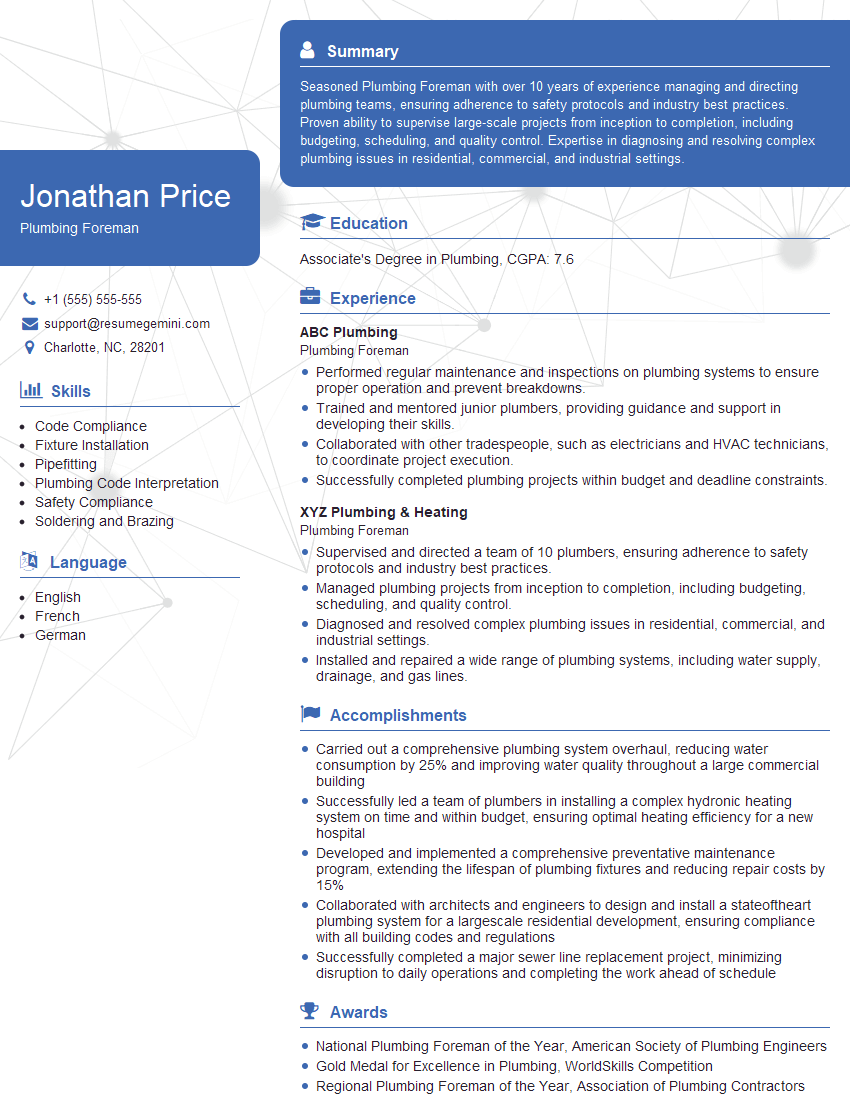
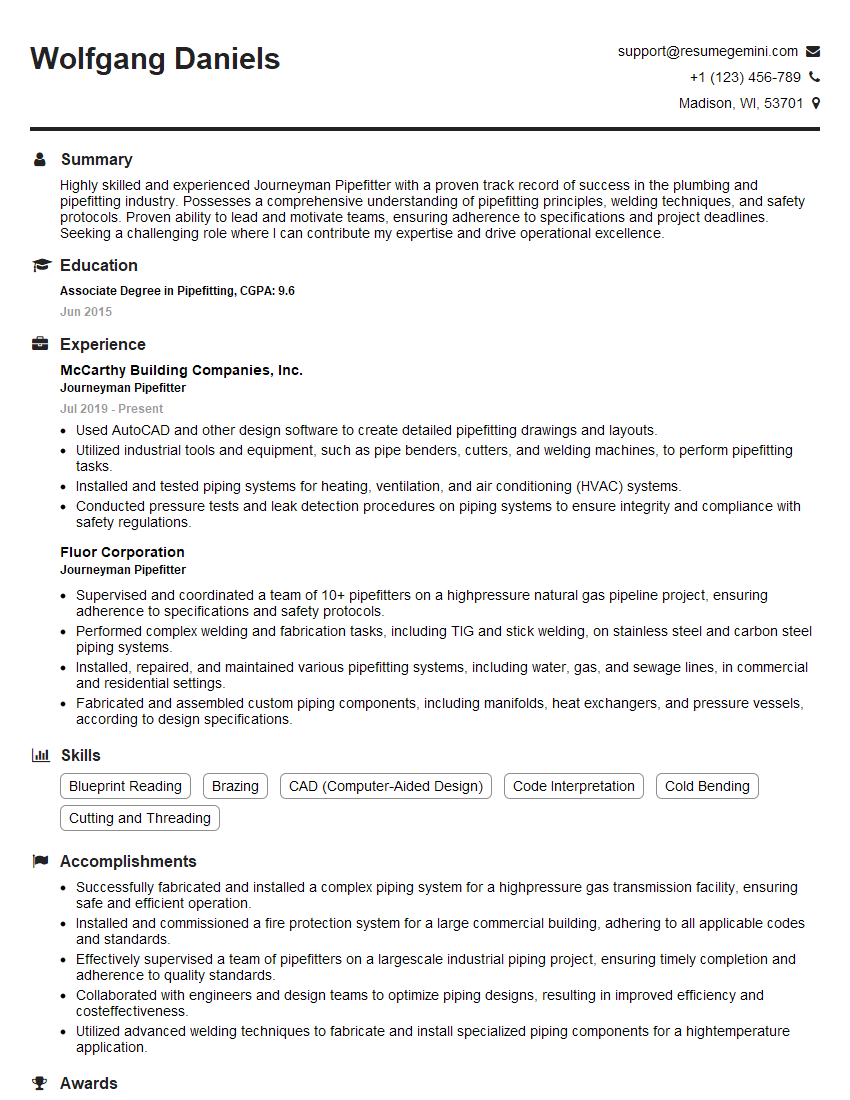
Mastering copper pipe fitting opens doors to a rewarding career with excellent growth potential in the construction and plumbing industries. To stand out from the competition, create a resume that gets noticed by Applicant Tracking Systems (ATS). An ATS-friendly resume maximizes your chances of getting your application seen by recruiters. Use ResumeGemini to build a professional and impactful resume that showcases your skills and experience effectively. ResumeGemini offers examples of resumes tailored to Copper Pipe Fitting to help you craft the perfect document. Take the next step towards your dream job today!
Explore more articles
Users Rating of Our Blogs
Share Your Experience
We value your feedback! Please rate our content and share your thoughts (optional).
What Readers Say About Our Blog
Really detailed insights and content, thank you for writing this detailed article.
IT gave me an insight and words to use and be able to think of examples