Interviews are more than just a Q&A session—they’re a chance to prove your worth. This blog dives into essential Refrigerant Piping Installation interview questions and expert tips to help you align your answers with what hiring managers are looking for. Start preparing to shine!
Questions Asked in Refrigerant Piping Installation Interview
Q 1. What are the different types of refrigerant piping materials and their applications?
Refrigerant piping materials must be compatible with the refrigerant and withstand the system’s operating pressures and temperatures. The most common are copper, steel, and sometimes aluminum. Each has its strengths and weaknesses.
- Copper: This is the most widely used material due to its excellent corrosion resistance, ease of brazing, and high thermal conductivity. It’s ideal for most refrigeration systems, especially those using traditional refrigerants. Think of it as the workhorse of refrigerant piping.
- Steel: Steel is stronger than copper and is used where high pressure or vibration is a concern, such as in large industrial chillers. However, it’s more prone to corrosion and requires specialized joining techniques.
- Aluminum: Aluminum is lighter than copper and is sometimes used in smaller systems, particularly in automotive air conditioning. However, its brazing requires specific techniques and specialized fluxes, and it’s less resistant to corrosion than copper.
The choice of material depends on the specific application, budget, and system requirements. For instance, a small residential air conditioner might use copper tubing, while a large industrial refrigeration system might use steel for its strength and durability.
Q 2. Explain the process of brazing copper refrigerant piping.
Brazing copper refrigerant piping requires precision and safety. It’s a permanent joining method that uses a filler metal with a lower melting point than the base metal (copper). Here’s a step-by-step process:
- Preparation: Clean the pipe ends thoroughly using a wire brush or abrasive cloth. Remove any oils, dirt, or oxides to ensure a proper braze joint.
- Fitting: Ensure the pipes are properly aligned and the fittings are snug. Use the right size fittings to avoid leaks.
- Flux Application: Apply brazing flux to the pipe ends and fitting surfaces. The flux helps remove oxides and aids in the flow of the brazing filler metal.
- Heating: Use a propane or oxygen/acetylene torch to heat the joint uniformly. The goal is to heat the pipe and fitting, not just the filler metal. The heat causes the flux to become active and clean the surfaces for a strong braze joint.
- Filler Metal Application: Once the joint reaches the proper temperature (indicated by the flux turning clear), apply the brazing filler metal. The capillary action will draw the filler metal into the joint, creating a strong, leak-free bond.
- Cooling: Allow the joint to cool naturally. Avoid quenching the joint with water as this could cause cracking.
- Inspection: After cooling, inspect the joint for any imperfections or voids. A properly brazed joint will have a smooth, uniform appearance.
Improper brazing can lead to leaks and system failure. Always follow manufacturer’s instructions and use appropriate safety equipment.
Q 3. Describe the importance of proper vacuuming in a refrigeration system.
Proper vacuuming is crucial for removing air, moisture, and other non-condensables from the refrigeration system. These contaminants can significantly reduce the system’s efficiency and lead to compressor damage, leaks, and reduced cooling capacity. Think of it as cleaning the system’s arteries before putting it into operation.
The vacuum process removes these contaminants, allowing the refrigerant to operate efficiently. Without proper vacuuming, moisture can freeze in the expansion valve or capillary tube, restricting refrigerant flow, and causing serious damage to the system. Air reduces the system’s ability to transfer heat effectively.
A deep vacuum, typically below 500 microns, is essential. This ensures complete removal of contaminants and prevents future problems. A micron gauge helps monitor the vacuum level during the process.
Q 4. How do you identify and address refrigerant leaks?
Identifying refrigerant leaks requires a systematic approach. Common methods include:
- Visual Inspection: Look for signs of oil or refrigerant on the system components. This is a simple but effective initial step.
- Leak Detectors: Electronic leak detectors utilize sensors to detect the presence of refrigerant in the air. These are crucial for finding small, hard-to-see leaks. Some use halogen-based sensors, others employ ultrasonic technology for pinpointing leaks.
- Pressure Testing: This method involves pressurizing the system with nitrogen or another inert gas and monitoring for pressure drops. It’s effective for finding larger leaks.
Addressing leaks involves repairing or replacing damaged components, brazing, or using leak sealant (when appropriate). Always follow manufacturer’s specifications and ensure proper leak detection and repair.
Q 5. What are the safety precautions when working with refrigerants?
Working with refrigerants requires strict adherence to safety procedures to avoid potential hazards. Key precautions include:
- Proper Ventilation: Always work in a well-ventilated area to prevent the build-up of refrigerant vapors. Refrigerant vapors can displace oxygen and cause asphyxiation.
- Personal Protective Equipment (PPE): Use appropriate PPE, including safety glasses, gloves, and respiratory protection, depending on the refrigerant used.
- Refrigerant Recovery and Recycling: Never vent refrigerants into the atmosphere. Always use approved recovery equipment to capture and recycle used refrigerant.
- Fire Safety: Some refrigerants are flammable. Be aware of the flammability characteristics of the specific refrigerant you are working with and take appropriate precautions.
- Training and Certification: Ensure you have proper training and certification before handling refrigerants.
Failure to observe these precautions can lead to serious health consequences and environmental damage. Always consult the Material Safety Data Sheet (MSDS) for the specific refrigerant being used.
Q 6. Explain the different types of refrigerant used in HVAC/R systems.
The HVAC/R industry uses a variety of refrigerants, each with its own properties and environmental impact. Some common types include:
- HFCs (Hydrofluorocarbons): These are widely used refrigerants, but their global warming potential is a concern. Examples include R-410A and R-134a.
- HFOs (Hydrofluoroolefins): These are newer refrigerants with lower global warming potential than HFCs. Examples include R-1234yf and R-1234ze.
- Natural Refrigerants: These are environmentally friendly refrigerants found in nature. Examples include ammonia (R-717), carbon dioxide (R-744), and propane (R-290).
The choice of refrigerant depends on factors such as the application, efficiency requirements, environmental regulations, and safety considerations. The industry is constantly evolving, with a focus on developing and adopting refrigerants with minimal environmental impact.
Q 7. What is the purpose of a pressure relief valve in a refrigeration system?
A pressure relief valve (PRV) is a critical safety device in a refrigeration system. Its purpose is to prevent dangerously high pressures from building up within the system, which could lead to catastrophic failure. Think of it as a pressure safety valve.
If the pressure within the system exceeds the PRV’s set pressure, the valve opens automatically, releasing refrigerant to prevent damage to components. This protects the equipment and ensures the safety of personnel.
PRVs are typically set at pressures that are above the normal operating pressure range of the system. They are essential components for ensuring system safety and reliability.
Q 8. How do you determine the proper size of refrigerant piping?
Determining the proper size of refrigerant piping is crucial for efficient and effective refrigeration system operation. It’s not just about picking the biggest pipe; oversized pipes can lead to poor heat transfer and increased refrigerant charge, while undersized pipes cause excessive pressure drops, reduced cooling capacity, and potential system damage. The correct size is calculated based on several factors including the refrigerant type, the system’s cooling capacity (in tons or kW), the length of the piping run, the pressure drop allowed, and the velocity of the refrigerant flow.
We use specialized software or calculation methods that consider these factors. For instance, we might use a pressure drop calculation to determine the minimum pipe diameter needed to keep pressure drop within acceptable limits. A higher pressure drop means more energy is consumed by the compressor to push the refrigerant through the system. Too low a refrigerant velocity leads to increased refrigerant residence time in the pipes, potentially causing temperature fluctuations. Conversely, excessively high velocity can induce noise and vibration. A common calculation method involves using pressure-drop charts specific to the refrigerant and pipe type to find an optimal pipe size that balances pressure drop and velocity.
For example, a large commercial refrigeration system might require 2-inch or even larger diameter piping for the liquid line, while a smaller residential system might only need 3/8-inch or ½-inch piping. The suction line will generally be larger than the liquid line to accommodate the increased refrigerant volume. The choice of pipe material (copper, steel, etc.) also impacts the selection due to variations in internal diameter and frictional losses.
Q 9. What are the common causes of refrigerant system malfunctions?
Refrigerant system malfunctions can stem from various sources. Think of it like a car – if one part fails, the whole system suffers. Common culprits include:
- Leaks: Leaks in the refrigerant piping, connections, or components are perhaps the most frequent issue. They lead to reduced cooling capacity, potentially exposing occupants to hazardous refrigerants, and increased operational costs due to higher compressor workload.
- Compressor failures: Compressors are the heart of the system, and their malfunction often stems from overheating (due to factors like refrigerant leaks or poor airflow), lack of lubrication, or internal mechanical issues.
- Contamination: Air, moisture, or oil contamination in the refrigerant can significantly impair system performance. This can lead to reduced efficiency, increased wear on components and even compressor damage.
- Dirty filters or clogged components: Accumulated dirt and debris can impede airflow and refrigerant flow, affecting system efficiency and ultimately cooling capacity. Regular maintenance is key.
- Improper charging: Insufficient or excessive refrigerant charge impacts cooling capacity and system pressure. Overcharging can stress components and lead to potential leaks. Undercharging results in poor cooling.
- Faulty expansion valves or metering devices: These devices control refrigerant flow to the evaporator. Malfunction leads to uneven cooling or poor system operation.
- Electrical issues: Wiring faults, blown fuses, and control system problems can prevent the system from operating properly.
Troubleshooting these problems usually involves a combination of visual inspections, pressure tests, refrigerant analysis, and use of specialized diagnostic tools.
Q 10. Describe your experience with different types of refrigeration system designs.
My experience encompasses a wide range of refrigeration system designs, from simple residential split systems to complex industrial chillers. I’ve worked extensively with:
- Direct expansion (DX) systems: These are common in residential and smaller commercial applications. Refrigerant flows directly to the evaporator coil, providing cooling. I’ve installed and maintained numerous DX systems, troubleshooting issues ranging from compressor failures to refrigerant leaks.
- Refrigeration systems employing chillers: These larger-scale systems use chillers to produce chilled water which is then circulated to air handling units or other cooling devices. This is common in large buildings and industrial processes. My involvement included piping design and installation ensuring proper flow rates and pressure control.
- Secondary refrigerant systems: Systems employing secondary refrigerants like brine or glycol are utilized in applications where direct refrigerant is unsuitable (due to toxicity or flammability). I’ve been involved in such complex projects, understanding the intricacies of secondary refrigerant circulation and heat transfer.
- Ammonia refrigeration systems: Ammonia is a naturally occurring, highly efficient, and environmentally friendly refrigerant often used in large-scale industrial applications. Its toxicity requires specialized handling and safety protocols. My experience includes working with ammonia systems following strict safety guidelines.
Each system design presents unique challenges and considerations. For example, ammonia systems require specialized training and safety procedures due to ammonia’s toxicity. Proper design and installation are crucial for safety and efficient operation.
Q 11. Explain your understanding of the refrigeration cycle.
The refrigeration cycle is a thermodynamic process that moves heat from a low-temperature area to a high-temperature area, thus achieving cooling. It involves four main components: the compressor, condenser, expansion valve (or capillary tube), and evaporator.
- Evaporation: In the evaporator, the low-pressure, low-temperature refrigerant absorbs heat from the space being cooled, changing from a liquid to a vapor.
- Compression: The compressor increases the pressure and temperature of the refrigerant vapor.
- Condensation: In the condenser, the high-pressure, high-temperature refrigerant vapor releases heat to the surrounding environment, changing back into a liquid.
- Expansion: The expansion valve (or capillary tube) reduces the pressure and temperature of the refrigerant liquid before it enters the evaporator, restarting the cycle.
Imagine a water pump moving water uphill. The compressor is like the pump, providing the energy to move the refrigerant. The condenser is like a cooling tower, releasing heat into the environment. The expansion valve is like a valve controlling water flow. The evaporator is like the area being cooled.
Understanding the refrigeration cycle is foundational to proper design, installation, and troubleshooting of refrigeration systems. For example, a malfunction in any component can disrupt the entire cycle, leading to reduced cooling capacity or system failure.
Q 12. What tools and equipment are essential for refrigerant piping installation?
Essential tools and equipment for refrigerant piping installation vary depending on the scale and complexity of the project, but generally include:
- Pipe cutters and benders: For precise cutting and bending of copper or steel refrigerant lines.
- Pipe flaring tools: For creating flared fittings for leak-free connections.
- Brazing equipment: Including torches, brazing rods, and flux for creating strong, reliable soldered joints.
- Vacuum pump: To evacuate the system of air and moisture before charging with refrigerant.
- Refrigerant charging equipment: Including scales, gauges, and hoses for precise refrigerant charging.
- Pressure gauges: For monitoring system pressure during operation and troubleshooting.
- Leak detection equipment: Including electronic leak detectors and soap solutions for finding leaks in the system.
- Pipe wrenches and fittings: For assembling and tightening connections.
- Insulation materials and tools: For proper insulation of refrigerant piping.
- Personal protective equipment (PPE): Including safety glasses, gloves, and respiratory protection, especially when working with hazardous refrigerants.
Safety is paramount. Proper use of PPE and adherence to safety regulations are critical for a successful and safe installation.
Q 13. How do you ensure proper insulation of refrigerant piping?
Proper insulation of refrigerant piping is crucial for several reasons: it minimizes energy loss, prevents condensation, and improves system efficiency. Heat loss from the refrigerant piping reduces the system’s overall cooling capacity and increases energy consumption. Condensation, particularly on the liquid line, can lead to corrosion and even leaks.
Insulation materials must have low thermal conductivity and be resistant to moisture and chemicals. Common materials include flexible fiberglass insulation, closed-cell foam insulation, and polyethylene foam insulation. The thickness of the insulation is determined by factors like the pipe diameter, refrigerant temperature, and ambient conditions. Thicker insulation provides better protection against heat loss and condensation.
Installation involves carefully wrapping the insulation around the piping, ensuring complete coverage and minimizing gaps. For added protection against moisture, vapor barriers may be used. It’s essential to secure the insulation using tape or straps to prevent movement or damage. In some cases, pre-insulated pipes are used, simplifying installation and improving the insulation’s integrity.
Proper insulation contributes to cost savings and system longevity. A well-insulated system not only performs optimally but also reduces the risk of maintenance issues and premature system failure.
Q 14. What is the importance of proper pipe fitting and joining techniques?
Proper pipe fitting and joining techniques are paramount to a leak-free and efficient refrigeration system. Leaks lead to refrigerant loss, decreased cooling capacity, and environmental concerns. Poorly joined pipes can also result in system malfunctions, requiring costly repairs.
The selection of appropriate fittings depends on the pipe material and system design. For copper piping, common methods include soldering (brazing) and flaring. Soldering creates a strong, leak-tight joint, while flaring creates a mechanically secure connection using compression fittings. For steel piping, welding or threaded connections are often used. Each method requires specific tools, techniques, and safety precautions. For example, soldering requires appropriate ventilation and protective equipment.
Regardless of the chosen method, proper preparation is crucial. The pipe ends must be clean, free of debris, and correctly sized for the fitting. For soldered joints, using the right amount of flux and brazing material is vital to achieve a strong, leak-free seal. For flared connections, the flare must be correctly sized and aligned to the fitting for proper seating. Threaded connections must be tight, but not over-tightened, to avoid damage to the pipes or fittings.
Precise and meticulous joining techniques minimize leaks and maintain system integrity. A well-executed joint contributes to a long-lasting, high-performance refrigeration system.
Q 15. Describe your experience working with different types of refrigeration equipment.
Throughout my career, I’ve worked extensively with a wide range of refrigeration equipment, from small residential units to large-scale industrial chillers. This includes experience with various compressor types (reciprocating, scroll, screw, centrifugal), different evaporator and condenser designs (air-cooled, water-cooled, evaporative), and various control systems (electronic, pneumatic). For example, I’ve installed and maintained ammonia refrigeration systems in food processing plants, requiring specialized safety protocols and knowledge due to ammonia’s toxicity. I’ve also worked with smaller systems using HFC refrigerants in commercial settings like supermarkets and convenience stores, focusing on efficiency and leak prevention. My experience extends to troubleshooting and repair across these diverse applications, ensuring optimal performance and longevity.
- Ammonia Refrigeration: High-capacity systems requiring specialized training and safety measures.
- HFC Refrigerants (e.g., R-410A, R-134a): Commonly used in commercial and residential applications, emphasizing energy efficiency.
- CO2 Refrigeration: Eco-friendly systems requiring precise pressure and temperature control.
Career Expert Tips:
- Ace those interviews! Prepare effectively by reviewing the Top 50 Most Common Interview Questions on ResumeGemini.
- Navigate your job search with confidence! Explore a wide range of Career Tips on ResumeGemini. Learn about common challenges and recommendations to overcome them.
- Craft the perfect resume! Master the Art of Resume Writing with ResumeGemini’s guide. Showcase your unique qualifications and achievements effectively.
- Don’t miss out on holiday savings! Build your dream resume with ResumeGemini’s ATS optimized templates.
Q 16. How do you interpret refrigeration system schematics and blueprints?
Reading refrigeration system schematics and blueprints is fundamental to my work. I approach them systematically, starting with the overall system overview to understand the components and their interconnections. I then meticulously examine details like pipe sizes, insulation specifications, valve locations, and pressure/temperature ratings. I pay close attention to the refrigerant flow path, identifying critical components like expansion valves, compressors, and heat exchangers. Think of it like reading a map – you need to understand the layout to navigate effectively. For instance, a schematic will clearly show the path the refrigerant takes, from the compressor through the condenser, expansion device, and evaporator, before returning to the compressor. This allows me to quickly identify potential bottlenecks or areas for improvement.
I use this information to plan installations, troubleshoot problems, and prepare for maintenance. Sometimes, blueprints might be incomplete or outdated, requiring me to adapt and make informed decisions based on my experience and knowledge of best practices.
Q 17. How do you troubleshoot a refrigeration system that is not cooling properly?
Troubleshooting a refrigeration system that’s not cooling properly involves a methodical approach. I start by observing the system – checking for any obvious issues like frost buildup, unusual noises, or leaking refrigerant. I then proceed to check pressures and temperatures at different points in the system, comparing them to manufacturer specifications. This often reveals problems with the compressor, condenser, evaporator, or expansion device. Think of it like diagnosing a car problem – you wouldn’t just assume the engine is broken; you’d check various systems one by one.
For example, low suction pressure might indicate a refrigerant leak, while high discharge pressure could suggest a compressor problem. I use specialized tools like pressure gauges, temperature sensors, and leak detectors to obtain accurate readings. Once the problem is identified, I address it using appropriate repair or replacement techniques, ensuring safety and compliance with regulations throughout the process.
- Step 1: Visual Inspection
- Step 2: Pressure and Temperature Readings
- Step 3: Component Testing
- Step 4: Leak Detection
- Step 5: Repair or Replacement
Q 18. How do you handle different types of refrigerant leaks?
Handling refrigerant leaks requires immediate action to prevent environmental damage and safety hazards. My approach prioritizes safety and environmental responsibility. I always use proper personal protective equipment (PPE), including safety glasses and gloves, and work in well-ventilated areas. The first step is to locate the leak using electronic leak detectors, soapy water, or dye tracing, depending on the type and severity of the leak.
Once located, I isolate the section of the system with the leak. Smaller leaks may be repaired using specialized brazing techniques, while larger leaks may necessitate section replacement. After repair, the system is thoroughly pressure-tested and evacuated before being recharged with refrigerant. For larger leaks or if the system cannot be easily repaired, we may need to recover the remaining refrigerant before system replacement or decommissioning.
- Small Leaks: Repair using brazing or sealant.
- Large Leaks: Section replacement or entire system replacement.
- Always: Prioritize safety and environmental responsibility.
Q 19. What is your experience with different refrigerant recovery and recycling methods?
I am experienced in various refrigerant recovery and recycling methods, adhering to EPA regulations. We use certified recovery equipment to safely extract refrigerant from systems undergoing maintenance, repair, or decommissioning. This recovered refrigerant is then processed to remove contaminants, ensuring it meets purity standards for reuse. This process involves multiple stages: recovery, reclaiming, and recycling. Recovery involves removing the refrigerant from the system and storing it temporarily in recovery cylinders. Reclaiming involves purifying the refrigerant to meet ARI 700 standards. Recycling involves cleaning the refrigerant to a lower standard and using it in applications that don’t require ARI 700 refrigerant. I ensure accurate record-keeping of refrigerant quantities and the proper disposal of any non-recoverable components.
This minimizes environmental impact and reduces the need for new refrigerant production. Using reclaimed refrigerant has a positive environmental impact by reducing reliance on newly produced refrigerants that can have high global warming potentials. It is important to understand the differences between recovery, reclaiming, and recycling.
Q 20. What are the EPA regulations regarding refrigerant handling and disposal?
I am well-versed in EPA regulations regarding refrigerant handling and disposal, specifically the Clean Air Act and its amendments. These regulations mandate the proper handling of refrigerants to minimize their release into the atmosphere, focusing on ozone depletion and global warming potentials. This includes adhering to regulations regarding the recovery and recycling of refrigerants during service, repair, and disposal of equipment. Proper record-keeping is essential. We must maintain detailed logs of refrigerant quantities handled, leak checks, and disposal procedures. I always follow proper safety procedures when working with refrigerants, considering both the safety of the technicians and the environment.
Failing to comply can result in significant fines and legal ramifications. I ensure that all procedures meet the requirements of the EPA SNAP program (Significant New Alternatives Policy).
Q 21. Explain your experience with pressure testing refrigerant piping systems.
Pressure testing refrigerant piping systems is a critical step to ensure leak-free operation and system integrity. Before initial operation and after repairs, a thorough pressure test is required. This involves pressurizing the system with nitrogen gas to a specified pressure, typically higher than the system’s operating pressure, and carefully monitoring for any pressure drops which would indicate a leak. The duration of the test depends on the system size and type of refrigerant. I meticulously inspect all joints, welds, and connections to verify the system’s integrity.
For instance, a system designed for R-410A might be pressure tested to 300 PSI with nitrogen, observed for a minimum of 15 minutes. We use specialized pressure gauges to accurately monitor the pressure throughout the test. This helps detect even minor leaks before the system is charged with refrigerant, thereby saving time, money, and preventing potential environmental damage. After the pressure test, all nitrogen is purged, and the system is thoroughly evacuated before refrigerant charging.
Q 22. How do you ensure the proper evacuation of a refrigeration system?
Proper evacuation of a refrigeration system is crucial for removing air, moisture, and non-condensables that can severely impact its efficiency and lifespan. Think of it like cleaning a house before moving in – you want to get rid of all the dust and debris before adding new furniture (refrigerant). We achieve this using a vacuum pump, ensuring a deep vacuum is reached.
The process typically involves:
- Securing the system: All access ports are closed except the one connected to the vacuum pump.
- Connecting the vacuum pump: A properly sized vacuum pump is connected to the system.
- Evacuation: The pump is activated, drawing out contaminants. We monitor the vacuum level using a micron gauge. A deep vacuum, usually below 500 microns, is required for most refrigerants. The evacuation time depends on the system’s size and the vacuum pump’s capacity; a larger system requires longer evacuation times.
- Holding the vacuum: Once the target vacuum level is reached, we hold the vacuum for a specific time (usually 30-60 minutes) to ensure all contaminants are removed. This is similar to letting the cleaning solution sit to loosen stubborn stains.
- Charging the system: Once the vacuum hold is complete, we charge the system with the specified refrigerant.
Failure to properly evacuate can lead to reduced cooling capacity, compressor damage, and refrigerant leaks. I’ve personally seen systems underperform due to inadequate evacuation, leading to costly repairs and downtime. Thorough evacuation is a fundamental part of my installation process.
Q 23. Describe your experience with nitrogen purging of refrigerant piping.
Nitrogen purging is a vital step in refrigerant piping installation to prevent contamination of the system. Think of it as pre-cleaning before painting a wall; you wouldn’t paint directly onto a dusty surface. Nitrogen, being an inert gas, displaces air and moisture from the piping system before refrigerant is introduced.
My experience with nitrogen purging includes using a nitrogen cylinder with a regulator to control the flow rate. We carefully pressurize the piping system to a specific pressure (usually around 15-20 psi), ensuring there are no leaks. This is checked by using a leak detector which typically employs soapy water or electronic sensors to visualize escaping gas. The nitrogen displaces the air and moisture, which is then vented from the system. This procedure is repeated several times to ensure complete purging. We always check the pressure gauge regularly to identify any potential leak. I meticulously document the process, noting the pressure and the duration of purging for each stage. Poor purging can lead to contamination, resulting in reduced system efficiency, compressor damage and even safety hazards. Properly executed purging significantly reduces the risk of such problems.
Q 24. What are the common problems encountered during refrigerant piping installation?
Common problems during refrigerant piping installation can include:
- Leaks: Improper flaring, soldering, or brazing techniques can lead to leaks. This is why precise and meticulous workmanship is crucial.
- Improper sizing: Incorrectly sized pipes can affect refrigerant flow, reducing efficiency and potentially damaging components.
- Incorrect slopes and elevation: Improper pipe slopes can cause liquid refrigerant to accumulate in undesired locations, affecting system performance. Liquid refrigerant should always flow appropriately to the evaporator and condenser.
- Air and moisture contamination: This is usually addressed through careful purging and evacuation, as previously discussed.
- Improper insulation: Poor insulation can lead to significant heat transfer, reducing efficiency and increasing energy consumption.
- Mechanical damage: Accidental damage to pipes during installation needs to be prevented and addressed if found.
Addressing these problems requires a combination of preventative measures – proper training, meticulous installation techniques, and high-quality materials – and diagnostic skills to identify and rectify issues quickly. In my experience, a proactive approach, combined with thorough inspections at each stage of the installation, is essential for avoiding these common pitfalls.
Q 25. How do you ensure the long-term reliability and efficiency of a refrigeration system?
Ensuring long-term reliability and efficiency involves several key steps:
- Proper installation: As already discussed, adhering to best practices during installation is foundational. This includes using the correct materials, pipe sizing, and installation techniques.
- Regular maintenance: This includes inspecting for leaks, checking refrigerant levels, and cleaning condenser coils. Think of it as regular car maintenance to keep it running smoothly.
- Proper insulation: Minimizing heat loss through proper insulation is vital for efficiency and prolonging equipment life.
- Quality components: Using high-quality components from reputable manufacturers contributes significantly to the system’s lifespan.
- Cleanliness: Preventing contaminants from entering the system is paramount, so paying attention to purging and evacuation is vital.
- Following manufacturer guidelines: Adhering to manufacturer’s recommendations for operation, maintenance, and troubleshooting is always crucial.
In my work, I’ve seen systems last for decades with proper care and maintenance. Neglect, however, often results in premature failure and costly repairs. A proactive approach to maintenance, coupled with a well-installed system, is the key to longevity and efficiency.
Q 26. What are the differences between residential, commercial, and industrial refrigeration systems?
Residential, commercial, and industrial refrigeration systems differ significantly in scale, complexity, and refrigerant used.
- Residential systems: These are typically smaller, simpler systems often using a single compressor and relatively small capacity. They frequently use refrigerants like R-134a or R-410A. Think of a typical home refrigerator or air conditioning unit.
- Commercial systems: These are larger and more complex, often utilizing multiple compressors and refrigeration circuits. They might incorporate sophisticated controls and monitoring systems. Examples include supermarket refrigeration, ice machines, and commercial kitchen equipment. Refrigerants are frequently R-404A or R-407C.
- Industrial systems: These are the largest and most complex, used in large-scale industrial processes such as food processing, chemical manufacturing, and cold storage facilities. They may utilize different refrigerants like ammonia (NH3) or CO2, depending on the application and environmental considerations. These are usually heavily regulated, requiring specialized expertise and safety protocols.
The differences lie not only in size but also in safety regulations, refrigerant choices, and maintenance requirements. My experience spans all three types of systems, enabling me to understand the unique challenges and requirements of each.
Q 27. Describe your experience working with different types of refrigeration controls and components.
My experience encompasses a wide range of refrigeration controls and components, from simple thermostatic expansion valves (TXVs) to sophisticated electronic expansion valves (EEVs) and variable-speed compressors.
I’m proficient with pressure-controlled systems, capacity-controlled systems, and systems employing advanced control strategies such as variable refrigerant flow (VRF). I’ve worked with different types of sensors, such as pressure transducers, temperature sensors, and flow meters, that are vital in modern refrigeration systems. I understand the intricacies of different compressor types, including reciprocating, scroll, and centrifugal compressors, each with its own characteristics and maintenance needs. I also have familiarity with safety devices like pressure relief valves and high-pressure cut-outs, which are critical for safe operation.
Troubleshooting malfunctioning components and understanding the interplay between different system components is essential in my field. Recently, I had to diagnose a problem in a large commercial refrigeration system that involved a malfunctioning EEV. Through systematic testing and analysis of sensor data, I was able to pinpoint the fault and implement the necessary repair, minimizing downtime and ensuring the system’s continued efficient operation. Knowledge of different controls and components is critical for effective and efficient problem solving.
Key Topics to Learn for Refrigerant Piping Installation Interview
- Refrigerant Types and Properties: Understanding the characteristics of different refrigerants (e.g., R-410A, R-32) and their impact on system design and installation.
- Piping Materials and Selection: Knowing the appropriate materials (copper, steel, etc.) for different applications and pressure ratings, including considerations for corrosion resistance and brazing techniques.
- Soldering and Brazing Techniques: Mastering proper joint preparation, flux application, and heating techniques for creating leak-free connections. Understanding the importance of safety precautions.
- Pressure Testing and Leak Detection: Familiarizing yourself with procedures for pressure testing refrigerant lines and employing various leak detection methods (e.g., soap bubbles, electronic leak detectors).
- Installation Codes and Standards: Thorough knowledge of relevant safety codes (e.g., ASHRAE, local building codes) and best practices for ensuring compliance and safe operation.
- Evacuation Procedures: Understanding the critical role of proper system evacuation in removing air and moisture to prevent performance issues and compressor damage.
- Troubleshooting Common Issues: Developing the ability to diagnose and resolve common problems like leaks, incorrect refrigerant charges, and pressure imbalances.
- Safety Procedures and Regulations: Demonstrating a strong understanding of safety regulations related to handling refrigerants, working with pressure vessels, and personal protective equipment (PPE).
- System Design Considerations: Understanding basic refrigeration cycle principles and how they relate to proper piping layout, sizing, and insulation.
- Practical Application: Be prepared to discuss real-world scenarios involving challenging installations, unusual system configurations, or troubleshooting complex problems.
Next Steps
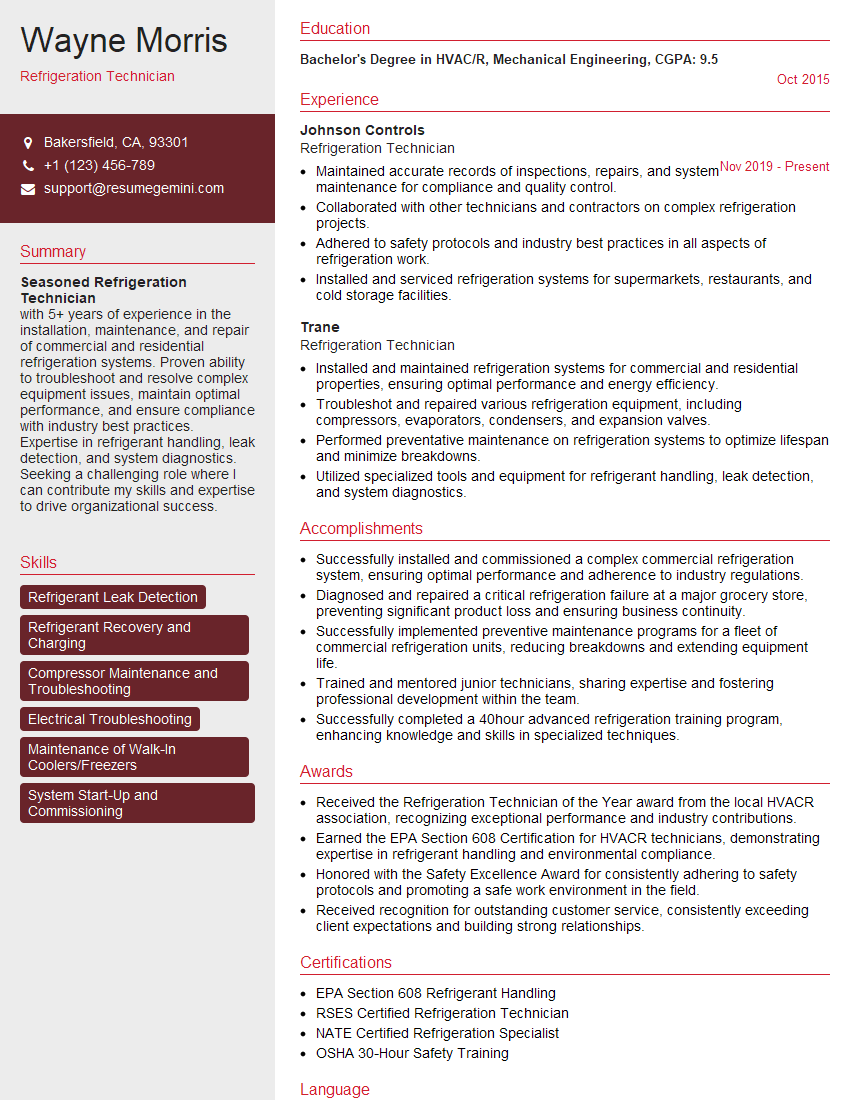
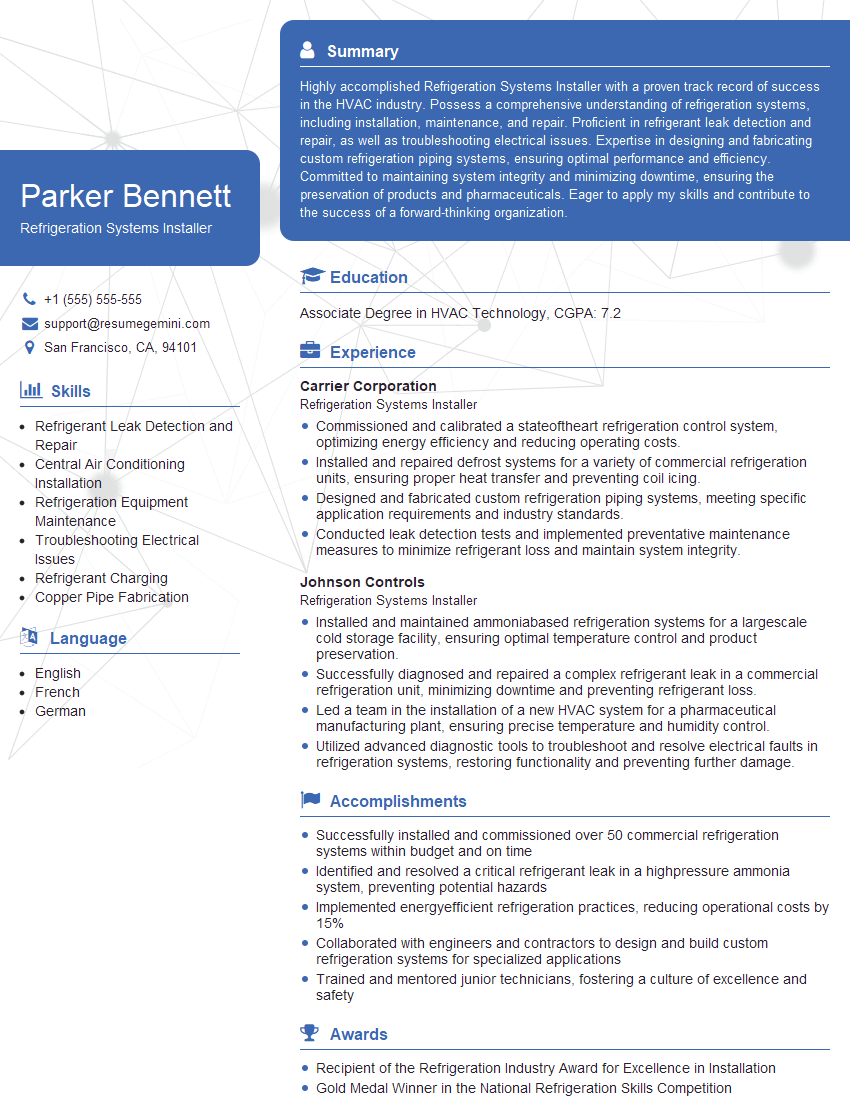
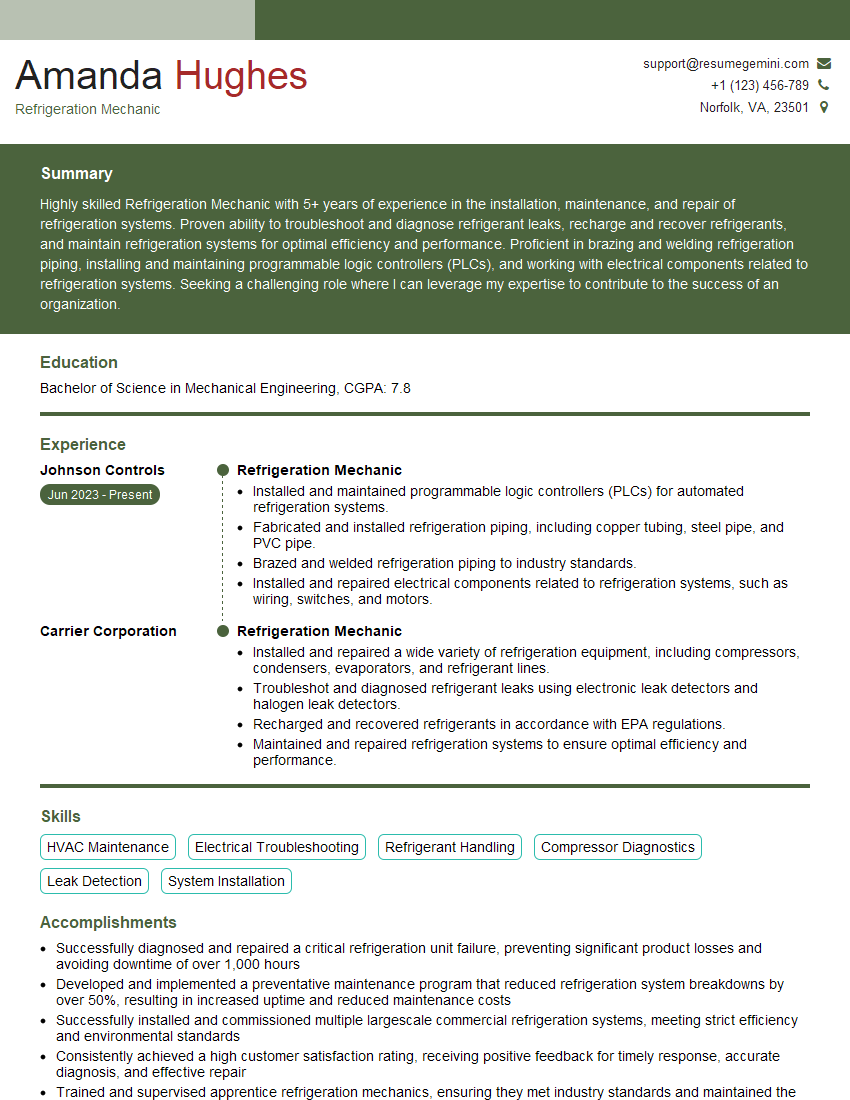
Mastering Refrigerant Piping Installation opens doors to rewarding careers with excellent growth potential in HVAC and refrigeration industries. To maximize your job prospects, crafting a strong, ATS-friendly resume is crucial. ResumeGemini is a trusted resource that can help you build a professional and impactful resume tailored to the specific requirements of your target roles. Examples of resumes tailored to Refrigerant Piping Installation are available to guide you.
Explore more articles
Users Rating of Our Blogs
Share Your Experience
We value your feedback! Please rate our content and share your thoughts (optional).
What Readers Say About Our Blog
Really detailed insights and content, thank you for writing this detailed article.
IT gave me an insight and words to use and be able to think of examples