The right preparation can turn an interview into an opportunity to showcase your expertise. This guide to Evaporator Coil Replacement interview questions is your ultimate resource, providing key insights and tips to help you ace your responses and stand out as a top candidate.
Questions Asked in Evaporator Coil Replacement Interview
Q 1. What are the common causes of evaporator coil failure?
Evaporator coil failure is a common problem in refrigeration and air conditioning systems. Several factors can contribute to this, often interlinked. Think of the evaporator coil as the ‘radiator’ of your AC system – it absorbs heat, and problems arise when this process is compromised.
- Corrosion: Moisture and air pollutants can cause corrosion, especially in coils made of materials like copper or aluminum. This weakens the coil’s structure and can lead to leaks.
- Refrigerant Leaks: These are critical. Leaks reduce the system’s cooling capacity, forcing the compressor to work harder and ultimately damaging the coil. Tiny pinholes from corrosion can be the culprit.
- Freezing: Insufficient airflow across the coil can cause ice buildup, restricting refrigerant flow and potentially damaging the coil. This is often due to a dirty air filter or restricted airflow pathways.
- Clogging/Dirt Buildup: Dust, debris, and other contaminants can restrict airflow and reduce the coil’s efficiency. This leads to decreased cooling and increased strain on the system, contributing to coil failure.
- Manufacturing Defects: While less common, flaws in the manufacturing process can create weak points in the coil, leading to premature failure.
- System Design Issues: An improperly sized or designed system can overload the evaporator coil, leading to early failure.
For instance, I once encountered a system where a blocked condensate drain resulted in excessive moisture around the evaporator coil, leading to rapid corrosion and failure. Understanding the root cause is crucial for effective repair and prevention.
Q 2. Describe the process of diagnosing a faulty evaporator coil.
Diagnosing a faulty evaporator coil involves a systematic approach. It’s like being a detective for your AC system!
- Visual Inspection: Start with a visual check for obvious signs of damage, such as bending, corrosion, leaks, or ice buildup. This is often the first clue.
- Airflow Check: Verify adequate airflow across the coil. A restricted airflow will often manifest as ice formation on the coil.
- Refrigerant Pressure Check: Using gauges, measure the low-side refrigerant pressure. Low pressure often indicates a leak.
- Temperature Measurement: Compare the temperature of the air entering and leaving the evaporator coil. A significant temperature difference indicates proper function; little to no difference implies a problem.
- Leak Detection: Use electronic leak detectors to pinpoint the location of any refrigerant leaks. This might require specialized equipment like an electronic refrigerant leak detector.
- Compressor Operation: Observe the compressor’s operation. A consistently running or cycling compressor can indicate a problem with the evaporator coil, especially if the cooling is poor.
For example, a customer once reported weak cooling. A visual inspection revealed significant corrosion and a leak in the evaporator coil, confirmed by the low refrigerant pressure readings.
Q 3. What tools and equipment are necessary for evaporator coil replacement?
Replacing an evaporator coil requires specialized tools and equipment. Safety is paramount, so using the right tools is not optional.
- Refrigerant Recovery/Recycling Machine: Essential for safely recovering the existing refrigerant before starting the repair. This prevents environmental damage and protects the technician.
- Vacuum Pump: Creates a vacuum in the system to remove moisture and air before recharging with refrigerant.
- Manifold Gauge Set: Measures refrigerant pressure and temperature. Accurate readings are crucial for proper diagnosis and charging.
- Screwdrivers (various sizes): For removing screws and fasteners.
- Wrench Set: For disconnecting and connecting refrigerant lines.
- Safety Glasses and Gloves: Protect against refrigerant leaks and sharp edges.
- Refrigerant: The correct type and amount must be used, according to the system’s specifications.
- Coil Cleaning Brush: Used to clean the coil prior to installation, improving efficiency.
Remember that improper tools can lead to system damage, leaks, and safety hazards. Always use manufacturer-recommended tools and equipment.
Q 4. How do you determine the correct size and type of replacement evaporator coil?
Selecting the correct replacement evaporator coil is critical. A mismatch can lead to poor performance and system failure. Think of it as choosing the right engine for a car – if it’s wrong, the whole system suffers.
- Manufacturer and Model Number: The original evaporator coil’s manufacturer and model number are the most reliable way to find a perfect match. This information is usually found on a label on the coil itself.
- Dimensions: The replacement coil must have the same dimensions as the original to fit correctly in the system.
- Fin Spacing and Coil Configuration: The fin spacing (distance between the fins) and overall coil configuration must match for optimal airflow and heat transfer.
- Refrigerant Compatibility: The replacement coil must be compatible with the refrigerant used in the system. Using the wrong refrigerant can damage the system.
- Capacity (BTU/hr): The coil should have the same cooling capacity (BTU/hr) as the original to ensure proper system performance.
Consulting a system schematic or contacting the manufacturer is vital if the original coil’s information is unavailable. This ensures correct compatibility.
Q 5. Explain the procedure for safely removing and installing an evaporator coil.
Removing and installing an evaporator coil is a meticulous procedure requiring precision. Safety and proper technique are key.
- Recover Refrigerant: Use a refrigerant recovery machine to safely extract the refrigerant from the system. This is crucial for environmental protection and safety.
- Disconnect Refrigerant Lines: Carefully disconnect the refrigerant lines from the evaporator coil, using the appropriate wrenches. This requires precise work to avoid damaging the lines or fittings.
- Remove Coil: Remove the evaporator coil from the system. This may involve removing screws, clips, or other fasteners depending on the system design.
- Clean the Area: Thoroughly clean the area where the coil was installed, removing any debris or contaminants that may interfere with the new coil’s installation.
- Install New Coil: Carefully position the new evaporator coil and secure it in place. Make sure the connections are secure and the coil is properly aligned.
- Connect Refrigerant Lines: Connect the refrigerant lines to the new evaporator coil, ensuring they are properly sealed and tightened to prevent leaks.
- Evacuate the System: Evacuate the system using a vacuum pump to remove moisture and air. This helps prevent damage to the system and ensures efficient operation.
- Recharge with Refrigerant: Recharge the system with the correct amount and type of refrigerant according to the manufacturer’s specifications, using a manifold gauge set to monitor pressures.
Throughout this process, accurate record-keeping is vital to maintain traceability. Pictures, diagrams, and notes are beneficial during the disassembly phase, ensuring reassembly goes smoothly.
Q 6. What safety precautions must be taken during evaporator coil replacement?
Safety is paramount when working with refrigeration systems. Refrigerant is harmful, and improper handling can result in serious injury or death.
- Personal Protective Equipment (PPE): Always wear safety glasses, gloves, and appropriate clothing to protect yourself from refrigerant leaks, sharp edges, and other potential hazards.
- Proper Ventilation: Work in a well-ventilated area to prevent the buildup of refrigerant vapors. Refrigerant can displace oxygen and lead to asphyxiation.
- Refrigerant Handling: Handle refrigerant carefully, following all safety precautions. Never intentionally release refrigerant into the atmosphere.
- Electrical Safety: Disconnect the power to the system before beginning any work to prevent electrical shocks.
- Fire Safety: Be aware of potential fire hazards associated with refrigerant leaks and electrical components. Have a fire extinguisher readily available.
- Follow Manufacturer Instructions: Always refer to the manufacturer’s instructions and safety guidelines for the specific equipment and refrigerant being used.
For example, a failure to properly recover refrigerant before working on the system can lead to significant environmental damage and personal harm through exposure.
Q 7. How do you ensure proper refrigerant flow after evaporator coil replacement?
Ensuring proper refrigerant flow after replacement is crucial for system efficiency and longevity. This involves several key steps, similar to ensuring smooth blood flow in a body.
- Leak Check: After installation, perform a thorough leak check using leak detection equipment to verify no leaks exist in the refrigerant lines or connections.
- System Evacuation: Proper evacuation is vital. A good vacuum removes moisture and air which can contaminate the refrigerant and cause problems like corrosion and freezing.
- Refrigerant Charge: Charge the system with the correct amount of refrigerant, precisely according to the manufacturer’s specifications. Use manifold gauges to accurately measure subcooling and superheat.
- System Pressure Test: After charging, conduct a pressure test to verify that the system is operating within the normal pressure ranges.
- Airflow Test: Ensure adequate airflow across the evaporator coil to prevent ice buildup.
- Verify System Operation: Observe the system’s operation and confirm that it is achieving the desired cooling capacity. If cooling is weak, investigate further.
For example, overlooking a tiny leak can lead to refrigerant loss over time, impacting cooling capacity and potentially harming the compressor. Accurate charging is essential to prevent overheating and damage.
Q 8. What are the signs of a leaking evaporator coil?
A leaking evaporator coil often manifests in several ways. The most obvious sign is water leakage around the evaporator coil itself, typically found in the freezer compartment of a refrigerator or within the air handler of an air conditioning system. You might notice puddles of water, increased humidity in the surrounding area, or water stains on walls or ceilings. Another key indicator is a decrease in cooling performance. If your refrigerator isn’t getting cold enough or your air conditioner isn’t effectively cooling the space, a refrigerant leak from a compromised evaporator coil is a strong suspect. Finally, you might hear unusual gurgling or hissing sounds from the unit, indicating refrigerant escaping under pressure. These signs, taken individually or together, strongly suggest a problem with the evaporator coil that needs professional attention.
Q 9. How do you test for refrigerant leaks in an evaporator coil?
Testing for refrigerant leaks involves a few key methods. The most common is using an electronic leak detector. This device is held near suspected leak points, and an audible signal and/or digital reading indicate the presence of refrigerant. For more precise localization, a dye injection might be used. A dye is added to the refrigerant system, and a UV light is employed to detect the dye’s glow, pinpointing the leak’s exact location. Finally, a pressure test can reveal pressure drops indicating leaks, though this often requires temporarily isolating sections of the system. Remember, working with refrigerant requires proper safety precautions and certification, so this should always be handled by a trained professional.
Q 10. What are the different types of evaporator coils?
Evaporator coils come in various types, primarily differentiated by their construction and fin designs. Common types include finned tube coils, which are the most common, featuring tubes with fins attached to maximize surface area for heat transfer. Microchannel coils use smaller channels within the coil, offering higher efficiency but potentially more challenging to repair due to their delicate construction. There are also plate-fin evaporator coils, characterized by flattened tubes and wider fins for increased surface area and are often found in commercial refrigeration systems. Finally, the choice of coil material can vary, with copper and aluminum being common choices, each with its own advantages regarding corrosion resistance and heat transfer capabilities.
Q 11. Explain the difference between finned and microchannel evaporator coils.
The key difference between finned and microchannel evaporator coils lies in their internal structure and efficiency. Finned coils consist of larger tubes with fins attached, providing a good balance of efficiency, cost, and repairability. Microchannel coils, on the other hand, have many smaller channels etched directly into the coil’s surface. This design increases the surface area for heat transfer dramatically, leading to better efficiency and reduced refrigerant charge. However, microchannel coils are more susceptible to damage from contaminants, and leaks are more difficult and costly to repair, often requiring coil replacement. Think of it like this: finned coils are like a wide, deep river, easy to clean and less prone to blockages; microchannel coils are a network of tiny streams, incredibly efficient but easily clogged and harder to fix if something goes wrong.
Q 12. How do you clean and maintain an evaporator coil to extend its lifespan?
Regular cleaning and maintenance are crucial for extending an evaporator coil’s lifespan. For finned coils, a coil cleaning brush can remove accumulated dust and debris. For a deeper clean, a low-pressure water spray can be used, but ensure the coil is completely dry afterward to prevent corrosion. Avoid using harsh chemicals, as they can damage the coil’s fins and coating. For microchannel coils, cleaning is even more critical because of the small channels. Professional cleaning is usually recommended, as improper cleaning can easily damage these delicate coils. Regular inspection for signs of leaks or damage is also essential. Addressing issues early can prevent more significant and costly repairs down the line.
Q 13. What is the role of the evaporator coil in the refrigeration cycle?
The evaporator coil is a critical component in the refrigeration cycle. It’s where the refrigerant absorbs heat from the space being cooled. As the low-pressure, low-temperature refrigerant flows through the evaporator coil, it absorbs heat from the surrounding air (in a refrigerator, this is the interior; in an air conditioner, this is the air inside your house). This heat absorption causes the refrigerant to evaporate, changing from a liquid to a gas. The now warm, gaseous refrigerant then moves on to the compressor, which increases its pressure and temperature, initiating the next stage of the cycle. Without a properly functioning evaporator coil, the refrigeration system cannot effectively cool the designated area.
Q 14. How do you identify the correct refrigerant for a specific system?
Identifying the correct refrigerant is crucial for system safety and performance. The refrigerant type is usually indicated on the unit’s nameplate, often located on the side or back of the appliance or system. Alternatively, the manufacturer’s documentation or a refrigerant cross-reference chart can assist in identifying the appropriate refrigerant based on the model number or system specifications. Using the wrong refrigerant can damage the system, reduce efficiency, and even pose safety hazards. If unsure, always consult a qualified HVAC technician who can properly identify and handle refrigerants. Improper refrigerant handling requires specialized equipment and training.
Q 15. What are the potential consequences of improper evaporator coil installation?
Improper evaporator coil installation can lead to a cascade of problems, significantly impacting the efficiency and longevity of your HVAC system. Think of it like building a house – if the foundation is faulty, the entire structure is at risk. Incorrectly sized coils, for example, can lead to inefficient cooling, causing your system to work overtime and potentially leading to premature failure. Poor brazing techniques can result in refrigerant leaks, resulting in higher energy bills and potential environmental damage due to refrigerant release. Furthermore, inadequate airflow due to improper installation can cause frosting on the coil, reducing cooling capacity and potentially damaging the compressor. Incorrect positioning can hinder airflow, and insufficient insulation around the coil can lead to heat transfer losses.
- Reduced Cooling Capacity: The system struggles to meet the cooling demand, leading to discomfort.
- Increased Energy Consumption: The system runs longer and harder to achieve the desired temperature.
- Refrigerant Leaks: This can damage the compressor and environment and requires costly repairs.
- Compressor Failure: Insufficient lubrication or excessive pressure from leaks can damage the compressor.
- Shortened System Lifespan: The cumulative effect of these issues significantly reduces the lifespan of the entire HVAC system.
Career Expert Tips:
- Ace those interviews! Prepare effectively by reviewing the Top 50 Most Common Interview Questions on ResumeGemini.
- Navigate your job search with confidence! Explore a wide range of Career Tips on ResumeGemini. Learn about common challenges and recommendations to overcome them.
- Craft the perfect resume! Master the Art of Resume Writing with ResumeGemini’s guide. Showcase your unique qualifications and achievements effectively.
- Don’t miss out on holiday savings! Build your dream resume with ResumeGemini’s ATS optimized templates.
Q 16. How do you handle unexpected challenges during evaporator coil replacement?
Unexpected challenges are part and parcel of this field. I’ve encountered everything from discovering hidden obstructions behind walls during installation to dealing with corroded or damaged existing components. My approach focuses on methodical troubleshooting and safe problem-solving. For instance, if I discover a leak during installation that wasn’t apparent from the initial inspection, I’ll carefully isolate the area, repair the leak using proper brazing techniques, and then conduct a thorough pressure test before proceeding. I document all such issues, discuss possible solutions with the homeowner, and obtain their approval before implementing any changes. Safety is paramount; if a situation arises beyond my expertise, I immediately consult with a senior technician or engineer before proceeding.
For example, I once encountered an unexpectedly corroded drain line during a coil replacement. Instead of simply patching it, I replaced the entire line to prevent future problems and ensure proper drainage. This added some time to the job, but it was crucial for the long-term health of the system and prevented potential water damage to the building.
Q 17. Describe your experience with different types of evaporator coil connections.
Over the years, I’ve worked extensively with various evaporator coil connections. These include flared fittings, brazed connections, and sweat fittings. Each type has its own set of considerations. Flared fittings are commonly used for ease of installation, but require careful flaring to ensure a proper seal. Brazed connections, involving the use of a torch and solder, provide a very strong and leak-proof seal but require precision and skill to avoid damaging the coil. Sweat fittings are similar to brazed connections but use a different type of solder and require less heat. Understanding the strengths and weaknesses of each connection type is crucial for selecting the most appropriate method for a particular installation. For example, in a high-vibration environment, a brazed connection might be more reliable than a flared fitting.
My experience extends to working with various refrigerant lines, including copper, and I’m proficient in using different tools and techniques to ensure safe and effective connections.
Q 18. How do you ensure proper air flow across the evaporator coil after replacement?
Ensuring proper airflow is critical for optimal cooling performance. After replacing an evaporator coil, I meticulously check several factors. Firstly, I verify that the coil is correctly positioned and free from obstructions. Then I inspect the blower motor and its fan for proper function and sufficient speed. Lastly, I check the air filter. A clogged filter can severely restrict airflow, reducing the coil’s effectiveness. A dirty air filter is like trying to breathe through a stuffy nose – it reduces efficiency. I always advise homeowners on the importance of regular filter changes to maintain optimal airflow.
I use a variety of tools to measure airflow, including anemometers, to ensure the airflow is within the manufacturer’s specifications. Any discrepancies are addressed immediately, involving adjustments to the air handler or addressing any ductwork issues that may be impacting airflow.
Q 19. What are the common problems encountered during evaporator coil replacement?
Common problems during evaporator coil replacement include: finding the coil improperly sized for the system, encountering corroded or damaged connections requiring extensive repair or replacement, discovering leaks in the refrigerant lines, dealing with obstructions in the ductwork restricting airflow, and finding the air handler to be too dirty and full of debris to install the new coil properly.
- Refrigerant Leaks: These are frequently discovered during the replacement process and require meticulous repair.
- Incorrect Coil Sizing: Using an improperly sized coil results in inadequate cooling capacity.
- Ductwork Obstructions: Restricted airflow can reduce cooling effectiveness.
- Damaged Connections: This can lead to leaks and refrigerant loss.
- Improper Installation: Mistakes in positioning, connecting, or securing the new coil can lead to a host of issues.
Q 20. How do you troubleshoot an evaporator coil that is not cooling properly?
Troubleshooting a non-cooling evaporator coil requires a systematic approach. I start with the simplest checks first, moving progressively towards more complex diagnoses. This includes checking the air filter for blockages, verifying the blower motor is functioning correctly, and examining the refrigerant lines for leaks using electronic leak detectors. If leaks are detected, I then will repair the leaks. Low refrigerant levels will require recharging the system. Next, I will check the thermostat settings. Incorrect settings can lead to poor performance. Finally, I inspect the coil itself for ice buildup or damage. Ice formation often points to a problem with airflow or refrigerant levels. If after these steps it is still not cooling properly, further diagnostics using specialized tools may be necessary.
It’s like solving a mystery; you need to eliminate the simplest causes first before moving onto more complex scenarios. A methodical approach is crucial for efficient and effective troubleshooting.
Q 21. Explain the importance of proper brazing techniques during evaporator coil installation.
Proper brazing techniques are paramount during evaporator coil installation. Brazing creates a strong, reliable, and leak-proof connection between the copper refrigerant lines and the coil. Improper brazing can lead to leaks, which can cause significant problems, including reduced cooling capacity, compressor damage, and environmental damage due to refrigerant release. I use only high-quality brazing materials and ensure proper safety precautions, including wearing protective gear. The process involves cleaning the surfaces to be joined, applying flux, and then heating them with a torch until the solder flows smoothly into the joint, creating a solid bond. I always inspect each joint meticulously to ensure a complete and even seal. This ensures a safe and efficient installation.
Think of it as welding two pieces of metal together; you need the right heat, the right material, and the right technique to create a lasting bond. Compromising on this can lead to major consequences down the line.
Q 22. How do you dispose of old evaporator coils responsibly?
Responsible disposal of old evaporator coils is crucial for environmental protection and worker safety. Refrigerant, often containing harmful substances like R-22 or R-410A, must be properly recovered and recycled by a certified technician. This involves using specialized equipment to vacuum out the refrigerant before the coil is removed. Once the refrigerant is removed, the coil itself, typically made of copper and aluminum, should be taken to a recycling center that specializes in HVAC components. Improper disposal—dumping the coil in a landfill, for instance—can lead to environmental contamination from refrigerant leaks and contribute to unnecessary waste. Always follow local and national regulations concerning hazardous waste disposal.
Think of it like this: you wouldn’t just throw away a used battery; you’d take it to a recycling center. Evaporator coils, containing potentially harmful substances, require similar care. Failure to do so is not only irresponsible but also potentially illegal.
Q 23. Describe your experience with different brands and models of evaporator coils.
Over my career, I’ve worked with a wide range of evaporator coil brands and models, from industry giants like Goodman and Trane to more specialized manufacturers. Each brand has its own design features and quality standards. For example, some brands prioritize durability using heavier gauge copper tubing, while others focus on efficiency through optimized fin spacing and design. The model number itself often indicates specifics such as coil size, fin density, and refrigerant compatibility. This knowledge is crucial for selecting the right replacement coil to ensure proper compatibility with the existing HVAC system. I’ve found that understanding the nuances of different brands and models allows me to offer clients the most suitable and cost-effective solution. For instance, a higher-efficiency model might justify a slightly higher upfront cost due to long-term energy savings.
Q 24. How do you determine if coil replacement is necessary or if cleaning will suffice?
Determining whether a coil needs replacement or simply cleaning involves a careful assessment. A visual inspection is the first step. Look for signs of significant corrosion, leaks (especially refrigerant leaks), or extensive bending or damage to the fins. If the fins are heavily clogged with dirt and debris, impacting airflow significantly, cleaning might suffice. However, if the coil is structurally compromised or shows signs of significant deterioration, replacement is generally recommended. Using a pressure gauge to check for refrigerant leaks is also essential. A slow leak might not be immediately visible but could significantly impact system efficiency. In some cases, a thermal camera can be helpful in detecting areas of reduced performance that might indicate a partially clogged or damaged coil.
Think of it like a car engine: if the engine is dirty, a cleaning might improve performance, but if there’s significant damage, a repair or replacement is necessary. Similarly, cleaning an evaporator coil can restore some performance, but a severely damaged coil requires replacement.
Q 25. What are the typical costs associated with evaporator coil replacement?
The cost of evaporator coil replacement varies significantly depending on several factors: the size and type of the coil, the brand and model, labor costs in your region, and the complexity of the installation. A small coil for a residential system might range from a few hundred to over a thousand dollars, while larger coils for commercial systems can cost several thousand dollars. The cost also includes the refrigerant charge, which needs to be added after installation. It’s important to get multiple quotes from reputable HVAC contractors to compare prices and services. Remember, cheaper isn’t always better; prioritize quality installation to ensure the longevity and efficiency of your system.
Think of it like buying a car; different makes and models have different price points, and the cost of labor will also differ based on the location and complexity of the repair.
Q 26. How do you verify the proper operation of the evaporator coil after installation?
After installing a new evaporator coil, verification of its proper operation involves several steps. First, I visually inspect for any leaks or damage. Then, I use a pressure gauge to check the refrigerant pressure and ensure it’s within the manufacturer’s specified range. I also monitor the airflow across the coil, using an air velocity meter to check for proper airflow volume and pressure drops. Finally, I check the system’s overall performance, including cooling capacity and energy consumption, comparing it to the system’s performance before the replacement. Any deviation from the expected values indicates a potential problem that needs further investigation.
This multifaceted approach ensures that the new coil is working optimally, preventing potential future issues and guaranteeing the customer receives the best performance for their investment.
Q 27. Explain your experience working with various HVAC systems and their respective evaporator coils.
My experience spans various HVAC systems, including residential split systems, packaged units, and large commercial chillers. Each system type employs different evaporator coil designs and sizes. Residential systems often utilize smaller coils optimized for domestic use, while commercial systems have larger coils with higher capacities. Different refrigerants and coil materials are also used depending on the system’s age and design. Working with different systems requires a thorough understanding of the system’s operating parameters and the coil’s specifications to ensure the correct component is selected and installed. In fact, installing the incorrect coil can cause significant issues, including damage to the compressor or inefficient cooling.
Imagine trying to use a small engine in a large truck; it simply wouldn’t work. The same principle applies to HVAC systems and evaporator coils; proper matching is essential.
Q 28. Describe a situation where you had to troubleshoot a complex evaporator coil problem.
I once encountered a situation where a commercial air conditioning system was experiencing inconsistent cooling. The evaporator coil appeared clean, and the refrigerant levels were correct. After careful testing, I discovered that the issue wasn’t with the coil itself but with the airflow. The air handler fan motor was slightly underperforming, resulting in reduced airflow across the coil. This reduced airflow, while not obvious at first glance, prevented the coil from properly absorbing heat, leading to inconsistent cooling. We replaced the fan motor, and the system immediately returned to normal operating conditions. This highlights the importance of a thorough diagnostic process to determine the root cause of the problem, which is not always immediately apparent.
This situation demonstrates how seemingly simple issues can have complex roots, and a systematic approach is critical for successful troubleshooting.
Key Topics to Learn for Evaporator Coil Replacement Interview
- Understanding Refrigerant Systems: Thoroughly grasp the principles of refrigerant flow, pressure, and temperature within an HVAC system. This includes understanding different refrigerant types and their properties.
- Coil Identification and Assessment: Learn to identify various evaporator coil types, assess their condition (e.g., detecting leaks, corrosion, or freezing), and understand the implications of different failure modes.
- Safety Procedures: Master the safe handling of refrigerants, proper use of personal protective equipment (PPE), and adherence to industry safety regulations during coil removal and installation.
- Coil Removal and Installation Techniques: Understand the step-by-step process of safely removing a faulty coil and installing a new one, including proper brazing and leak detection techniques.
- Troubleshooting and Diagnostics: Develop your ability to diagnose problems related to evaporator coil performance, such as low airflow, insufficient cooling, or refrigerant leaks, and explain your problem-solving approach.
- Testing and Verification: Learn the methods used to test the functionality of the newly installed coil, ensuring proper refrigerant flow and system performance. Understand how to document your work accurately.
- Relevant Codes and Standards: Familiarize yourself with relevant building codes, industry standards, and best practices related to evaporator coil replacement and HVAC system maintenance.
Next Steps
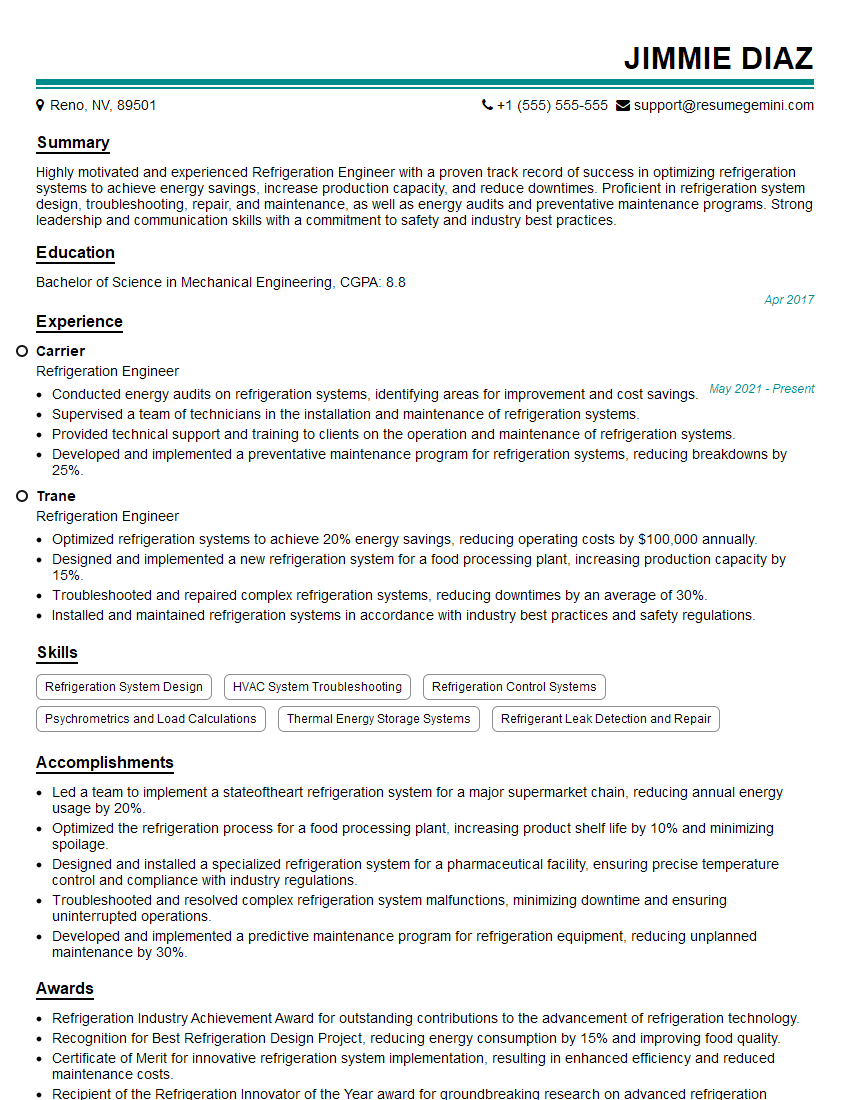
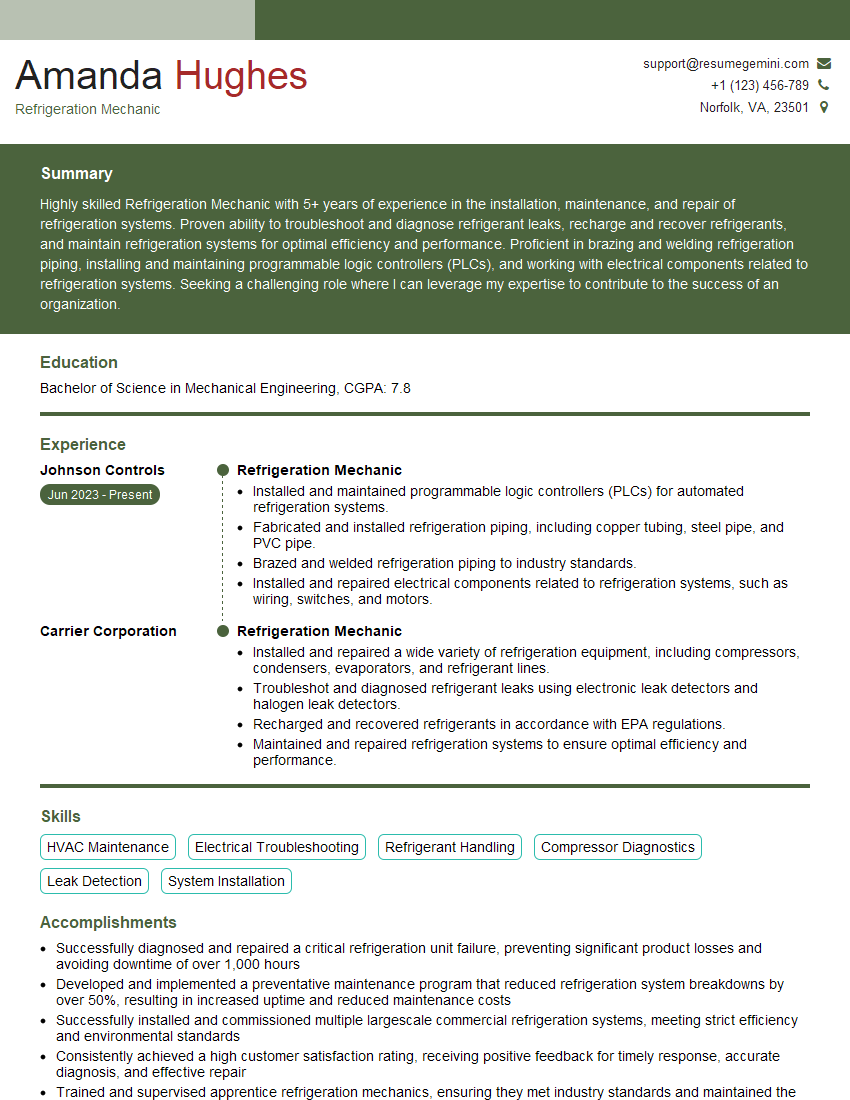
Mastering evaporator coil replacement is crucial for career advancement in the HVAC industry, opening doors to higher-paying roles and increased responsibility. A strong resume is your key to unlocking these opportunities. Creating an ATS-friendly resume significantly improves your chances of getting noticed by recruiters. ResumeGemini can help you build a compelling and effective resume tailored to highlight your skills and experience in evaporator coil replacement. Examples of resumes specifically crafted for this field are available within ResumeGemini to guide you.



Explore more articles
Users Rating of Our Blogs
Share Your Experience
We value your feedback! Please rate our content and share your thoughts (optional).
What Readers Say About Our Blog
Really detailed insights and content, thank you for writing this detailed article.
IT gave me an insight and words to use and be able to think of examples