Cracking a skill-specific interview, like one for Commercial Refrigeration, requires understanding the nuances of the role. In this blog, we present the questions you’re most likely to encounter, along with insights into how to answer them effectively. Let’s ensure you’re ready to make a strong impression.
Questions Asked in Commercial Refrigeration Interview
Q 1. Explain the difference between high-side and low-side pressure in a refrigeration system.
In a refrigeration system, the high-side and low-side pressures refer to the pressure levels at different points in the refrigeration cycle. Think of it like a water pump system: the high-pressure side is where the water is being forcefully pushed, and the low-pressure side is where it’s allowed to expand.
The high-side pressure is the pressure in the part of the system where the refrigerant is hot and compressed, primarily after the compressor and before the condenser. This pressure is significantly higher than atmospheric pressure. A high-side pressure reading provides crucial information about the system’s ability to transfer heat.
The low-side pressure is the pressure in the section where the refrigerant is cold and has a lower density, primarily after the evaporator and before the compressor. This pressure is lower than atmospheric pressure. The low-side pressure indicates the refrigerant’s ability to absorb heat from the refrigerated space.
The difference between these two pressures is critical for proper system operation. A significant pressure difference is necessary to facilitate efficient heat transfer and cooling. Improper pressure readings can indicate leaks, malfunctions in components like the compressor or expansion valve, or incorrect refrigerant charge.
Q 2. Describe the function of a compressor in a refrigeration cycle.
The compressor is the heart of the refrigeration system. Its primary function is to increase the pressure and temperature of the refrigerant vapor. Imagine it as a pump, but instead of pumping water, it pumps refrigerant. This process is crucial because it prepares the refrigerant to release its absorbed heat in the condenser.
The compressor takes in low-pressure, low-temperature refrigerant vapor from the evaporator. It then compresses this vapor, significantly increasing its pressure and temperature. This hot, high-pressure refrigerant then moves to the condenser, where it releases its heat to the surrounding environment (e.g., air or water). The compressor’s efficiency directly impacts the overall system’s cooling capacity and energy consumption.
Different types of compressors exist, including reciprocating, scroll, and screw compressors, each with its own advantages and disadvantages regarding efficiency, noise level, and application suitability. The selection of a compressor depends on the specific requirements of the refrigeration system.
Q 3. What are the common refrigerants used in commercial refrigeration, and what are their environmental impacts?
Several refrigerants are used in commercial refrigeration, each with different properties and environmental impacts. The selection of refrigerant is a crucial decision influenced by factors such as efficiency, safety, and environmental regulations.
- R-404A, R-507A: These were commonly used but are now being phased out due to their high global warming potential (GWP).
- R-134a: A slightly lower GWP than R-404A and R-507A but still contributes to climate change.
- R-448A, R-449A, R-452A: These are lower-GWP alternatives to R-404A, designed for better environmental performance.
- Ammonia (NH3): A natural refrigerant with zero ozone depletion potential (ODP) and a very low GWP. It is highly efficient but requires specialized handling due to its toxicity.
- CO2 (R-744): Another natural refrigerant with zero ODP and very low GWP. It is gaining popularity, particularly in supermarket applications, but needs specialized equipment and careful system design.
The environmental impact of refrigerants is primarily assessed based on their ODP (the potential to deplete the ozone layer) and GWP (the potential to contribute to global warming). Modern refrigerants prioritize reducing both ODP and GWP to minimize their negative effects on the environment. Regulations are constantly evolving to phase out high-GWP refrigerants and promote the adoption of more environmentally friendly options.
Q 4. How do you troubleshoot a refrigeration system that is not cooling properly?
Troubleshooting a refrigeration system that is not cooling properly requires a systematic approach. It starts with observation, then moves to measurements and component checks.
- Visual Inspection: Check for obvious problems such as frost buildup on the wrong components, leaks, or unusual noises.
- Temperature Readings: Measure temperatures at various points in the system (evaporator, condenser, suction line, discharge line) using thermometers or thermocouples. Compare the readings to manufacturer specifications. Significant deviations suggest a problem.
- Pressure Readings: Use gauges to measure the high-side and low-side pressures. These should be within the manufacturer’s specified ranges. Abnormal pressures might indicate issues with the compressor, condenser, evaporator, or expansion device.
- Component Checks: Based on temperature and pressure readings, systematically check each component (compressor, condenser, evaporator, expansion valve, capillary tube) for proper function. This might involve inspecting for leaks using electronic leak detectors and verifying electrical connections.
- Refrigerant Charge: Check the refrigerant charge using a scale to verify it’s within the recommended range. Too much or too little refrigerant can significantly impact cooling performance.
Remember to always consult the system’s technical documentation, and if you’re not qualified to perform complex repairs, call a qualified refrigeration technician. Improper repairs can be dangerous and lead to further damage.
Q 5. Explain the importance of proper refrigerant charging procedures.
Proper refrigerant charging is critical for optimal system performance, efficiency, and safety. Incorrect charging can lead to reduced cooling capacity, compressor damage, and even environmental hazards.
The process typically involves:
- Evacuation: Removing air and non-condensables from the system using a vacuum pump before adding refrigerant. This step prevents contamination and ensures proper system operation.
- Refrigerant Addition: Adding the correct type and amount of refrigerant as per the manufacturer’s recommendations, usually based on system capacity and operating conditions. Using scales and electronic charging equipment ensures precise addition.
- System Leak Check: Checking for leaks after charging using electronic leak detectors or soapy water.
- System Monitoring: Observing system performance, particularly pressure and temperature readings, to ensure it is functioning as expected. Any significant deviations suggest a problem.
Improper charging can cause problems such as low cooling capacity, compressor overheating, and increased energy consumption. Always follow the manufacturer’s instructions precisely, and ensure proper training and certifications are in place to safely handle refrigerants.
Q 6. Describe the different types of commercial refrigeration systems (e.g., walk-in coolers, display cases).
Commercial refrigeration systems come in various types, each tailored to specific applications:
- Walk-in Coolers and Freezers: Large, self-contained units used for bulk food storage. They can range from small rooms to large warehouse-sized spaces.
- Display Cases: Used in supermarkets and convenience stores to showcase and cool products. They are designed for optimal visibility and efficient cooling of specific items.
- Reach-in Refrigerators and Freezers: Smaller units typically used in restaurants, bars, and smaller food service establishments. They are ideal for storing ingredients and beverages.
- Ice Machines: Produce ice for various commercial uses. They can be small, countertop units or large, industrial systems.
- Remote Systems: These systems use a central refrigeration unit with multiple evaporators distributed across the refrigerated spaces. They offer flexibility in design and space utilization, often used in large commercial kitchens or supermarkets.
The choice of system depends on factors such as the application’s specific cooling needs, space constraints, energy efficiency requirements, and budgetary considerations. Each type utilizes different compressor technology, insulation, and design to ensure optimal performance in its intended application.
Q 7. What safety precautions must be taken when working with refrigerants?
Working with refrigerants requires strict adherence to safety procedures, as many refrigerants are hazardous if mishandled.
- Proper Training and Certification: Refrigeration technicians must have proper training and certifications to handle refrigerants safely and legally.
- Personal Protective Equipment (PPE): Use appropriate PPE, including safety glasses, gloves, and respiratory protection, as needed.
- Ventilation: Ensure adequate ventilation in work areas to avoid the buildup of refrigerant vapors, which can displace oxygen and cause asphyxiation.
- Leak Detection and Repair: Use electronic leak detectors to identify leaks promptly and perform proper repairs to prevent refrigerant release.
- Refrigerant Recovery and Recycling: Use proper equipment to recover and recycle refrigerants, minimizing environmental impact and complying with regulations.
- Emergency Procedures: Be aware of emergency procedures in case of refrigerant leaks or other accidents.
Ignoring these safety precautions can lead to serious health problems, environmental damage, and legal consequences. Always prioritize safety when working with refrigerants and consult relevant safety data sheets (SDS) for specific instructions.
Q 8. How do you identify and address refrigerant leaks?
Identifying refrigerant leaks is crucial for maintaining system efficiency and safety. Leaks can lead to performance degradation, increased energy consumption, and environmental damage due to ozone depletion or global warming potential, depending on the refrigerant type. We use a multi-pronged approach:
Visual Inspection: Checking for frost, oil stains, or bubbling around joints and connections. Often, a simple visual check can locate a significant leak.
Electronic Leak Detectors: These devices use sensors to detect even the smallest amounts of refrigerant escaping. They’re particularly useful for pinpointing leaks in hard-to-reach areas. There are different types, such as halide torch detectors (for halogenated refrigerants) and electronic leak detectors that respond to various refrigerants.
Pressure Testing: After isolating the system, we introduce a dry nitrogen gas to pressurize it. This helps to locate leaks by observing pressure drops or using a soap solution to detect escaping gas at the point of leakage.
Ultrasonic Leak Detection: This advanced method uses ultrasonic sensors to detect high-frequency sounds produced by escaping refrigerant, which are often inaudible to the human ear. This is particularly valuable for identifying leaks in noisy environments.
Addressing leaks involves repairing damaged components, replacing seals, or even replacing entire sections of piping, depending on the severity of the damage. Always use the correct repair techniques and safety precautions, wearing appropriate PPE (Personal Protective Equipment) and following proper refrigerant handling procedures.
Q 9. Explain the function of a condenser in a refrigeration system.
The condenser is the heat rejection component of a refrigeration system. Think of it as the system’s ‘radiator.’ Its job is to transfer heat from the high-pressure, high-temperature refrigerant to the surrounding environment. This allows the refrigerant to condense from a gas back into a liquid, preparing it for the next stage of the refrigeration cycle.
This process involves the refrigerant vapor entering the condenser, where it releases heat to the surrounding air or water (depending on the condenser type – air-cooled or water-cooled). This heat transfer causes the refrigerant to change phase from a high-temperature, high-pressure gas to a high-pressure, lower-temperature liquid. Efficient condenser operation is vital for maintaining the correct refrigeration cycle and preventing overheating of the compressor.
For example, in a walk-in cooler, the condenser might be a large array of finned coils located on the roof of the unit, dissipating heat to the outside air. In a larger commercial system, a water-cooled condenser might be used, where heat is transferred to a circulating water loop and then dissipated elsewhere, such as a cooling tower.
Q 10. What are the common causes of compressor failure?
Compressor failure is a major concern in commercial refrigeration. Several factors can contribute to this:
Lack of lubrication: Insufficient or contaminated compressor oil can lead to increased friction, overheating, and eventual failure. Regular oil checks and changes are crucial.
Refrigerant leaks: Running a compressor with low refrigerant charge can cause damage due to overheating and increased friction. This often leads to burnt out windings.
Electrical issues: Voltage surges, short circuits, or faulty wiring can damage the compressor motor or internal components. Proper electrical connections and surge protection are essential.
Overheating: This can be caused by various factors such as condenser fouling, insufficient airflow, or a malfunctioning condenser fan motor. Overheating reduces compressor life and can lead to catastrophic failure.
Contamination: Foreign particles entering the system can cause damage to internal components, such as valves or pistons. Proper system design, installation, and maintenance practices are essential to prevent this.
Mechanical wear and tear: Normal wear and tear of moving parts over time can also lead to compressor failure. This is usually something that happens over a long period of operation and is difficult to prevent entirely.
Regular compressor maintenance, including oil analysis and vibration monitoring, can help identify potential problems before they lead to major failure.
Q 11. How do you maintain and clean evaporators and condensers?
Maintaining and cleaning evaporators and condensers is essential for optimal system performance and efficiency. Dirty components hinder heat transfer, leading to reduced cooling capacity, increased energy consumption, and potential compressor damage.
Evaporator Cleaning: Evaporators should be cleaned regularly depending on the application, using appropriate cleaning solutions and tools. This usually involves removing dust, food debris, and ice buildup. Access to evaporators will depend on the design of the refrigerated space. Never use harsh chemicals that could damage the evaporator coils.
Condenser Cleaning: Condenser coils should be cleaned to remove dirt, debris, and other contaminants that can restrict airflow. Air-cooled condensers can be cleaned using brushes, compressed air, or specialized condenser cleaning solutions. Water-cooled condensers require specialized cleaning to ensure proper water flow.
The frequency of cleaning depends on the operating environment. In environments with high levels of dust or airborne contaminants, more frequent cleaning is required. A well-maintained system will have both components cleaned according to a schedule that suits the specific application and environment. Regular inspections help to spot any potential problems before they become major issues.
Q 12. Describe your experience with different types of refrigeration controls.
I have extensive experience with various refrigeration controls, from basic electromechanical systems to advanced electronic controllers with digital interfaces. These include:
Thermostatic Expansion Valves (TXV): These control the flow of refrigerant to the evaporator, maintaining optimal temperature and superheat. Understanding their operation and adjustment is crucial for efficient cooling.
Electronic Expansion Valves (EEV): EEVs offer more precise control over refrigerant flow compared to TXVs, enabling improved system efficiency and performance. They often are controlled by a microprocessor.
Microprocessor-Based Controllers: Modern systems often utilize microprocessor-based controllers that monitor various parameters such as temperature, pressure, and compressor run time. They offer sophisticated control algorithms for optimized system performance and diagnostics.
Programmable Logic Controllers (PLCs): In larger commercial installations, PLCs are often employed for comprehensive control and monitoring of multiple refrigeration systems. This allows for advanced automation and remote monitoring.
My experience extends to troubleshooting and repairing these different control systems. Understanding the interaction between various components and their role in overall system function is essential for effective problem solving and maintenance.
Q 13. How do you interpret refrigeration system diagrams and schematics?
Refrigeration system diagrams and schematics are essential for understanding the system’s layout, components, and connections. I am proficient in interpreting these diagrams, which typically use industry-standard symbols and conventions.
I can identify components such as compressors, condensers, evaporators, expansion valves, and other related equipment. I understand the flow of refrigerant through the system, identifying the different stages of the refrigeration cycle—evaporation, compression, condensation, and expansion. I can also trace the electrical connections and understand the control circuitry.
For example, a piping and instrumentation diagram (P&ID) provides a comprehensive overview of the system’s layout, including piping sizes, valve locations, and instrument connections. Schematic diagrams show the electrical connections and control logic. Being able to interpret these diagrams helps to quickly identify problem areas and plan for maintenance or repairs.
Q 14. What is the purpose of a receiver tank?
A receiver tank, also known as a liquid receiver, is a pressure vessel used in refrigeration systems to store liquid refrigerant. It acts as a buffer between the condenser and the metering device (like a TXV or EEV). Its primary purpose is to:
Provide a supply of liquid refrigerant: This ensures a consistent supply of liquid refrigerant to the evaporator, preventing short cycling and maintaining consistent cooling.
Handle refrigerant liquid slugs: It helps to separate liquid from vapor during system operation, preventing liquid refrigerant from entering the compressor, which could cause serious damage.
Allow for system charging: It makes it easier to charge or recover refrigerant from the system during maintenance or repair.
The size of the receiver tank is determined by the system’s capacity and refrigerant type. Proper sizing and maintenance are critical for the safe and efficient operation of the refrigeration system.
Q 15. How do you troubleshoot a system with excessively high head pressure?
Excessively high head pressure in a commercial refrigeration system indicates a problem with the high-side of the refrigeration cycle. Think of it like a clogged artery – the refrigerant is struggling to flow smoothly. This can lead to overheating and potential damage to the compressor.
Troubleshooting involves systematically eliminating potential causes. First, check the condenser for cleanliness. A dirty condenser restricts airflow, leading to higher pressures. Think of it like a clogged air filter in your car – it restricts the flow and causes the engine to work harder. Next, verify the condenser fan motor is operating correctly and at the proper speed. A faulty fan will further impede heat dissipation. Then, check for proper refrigerant charge; overcharging is a common culprit. Using a superheat and subcooling gauge set, compare the readings to the manufacturer’s specifications. A discrepancy indicates either overcharging or undercharging. Finally, inspect the expansion valve or metering device for proper operation. A restricted expansion valve can cause increased head pressure. If the problem persists after these checks, consider a potential compressor issue or a blockage in the liquid line, requiring professional diagnosis and repair.
Career Expert Tips:
- Ace those interviews! Prepare effectively by reviewing the Top 50 Most Common Interview Questions on ResumeGemini.
- Navigate your job search with confidence! Explore a wide range of Career Tips on ResumeGemini. Learn about common challenges and recommendations to overcome them.
- Craft the perfect resume! Master the Art of Resume Writing with ResumeGemini’s guide. Showcase your unique qualifications and achievements effectively.
- Don’t miss out on holiday savings! Build your dream resume with ResumeGemini’s ATS optimized templates.
Q 16. How do you troubleshoot a system with excessively low suction pressure?
Low suction pressure signifies a problem on the low-side of the refrigeration cycle, affecting the refrigerant’s evaporation process. Imagine a pump struggling to draw water because of a leak – the system isn’t getting enough refrigerant to evaporate. This can lead to poor cooling and potential compressor damage.
Troubleshooting steps start with checking the evaporator’s condition. Is it properly frosted or iced over (depending on the type of system)? If it’s not, there might be a refrigerant leak or a restriction in the suction line. Then, verify that the evaporator fan is working correctly. A malfunctioning fan compromises efficient heat transfer. After this, check the refrigerant charge; low charge will directly result in low suction pressure. Again, utilize superheat and subcooling readings to confirm correct charge. Inspect for leaks using electronic leak detectors. Don’t forget about potential issues like a faulty compressor or a blocked filter drier. These are more difficult to diagnose and usually require specialized tools and expertise.
Q 17. What are the common causes of defrosting problems?
Defrosting problems are a common issue in commercial refrigeration, especially in systems with automatic defrost cycles. These problems disrupt the cooling process and can lead to food spoilage and increased energy consumption. Imagine an ice dam forming in a gutter; it stops the water from flowing properly.
- Defrost timer malfunction: The timer might not be cycling on or off correctly, leading to insufficient or excessive defrosting.
- Defrost heater failure: A burnt-out heater prevents proper melting of frost.
- Defrost termination issues: The system may not shut down the defrost cycle correctly, leading to excessive melting and potential water damage.
- Drain issues: A clogged or frozen defrost drain line prevents water from draining properly. The accumulated water may re-freeze.
- Refrigerant leaks in the evaporator: A leak can cause uneven frost buildup, impacting defrost efficiency.
Troubleshooting involves systematically checking each component. Use a multimeter to test the defrost timer and heater. Check the drain line for obstructions. Inspect the evaporator for signs of leaks.
Q 18. Explain the importance of proper insulation in commercial refrigeration.
Proper insulation in commercial refrigeration systems is critical for maintaining optimal temperature and minimizing energy consumption. Think of it like a thermos – it keeps the contents hot or cold by preventing heat transfer. In commercial refrigeration, insulation prevents heat from entering the refrigerated space, reducing the workload on the refrigeration system.
Inadequate insulation leads to higher energy bills, decreased efficiency, and potential food spoilage. Insulation also reduces condensation, which can damage equipment and create unsanitary conditions. The thickness and type of insulation used depend on factors such as the temperature required, the ambient temperature, and the type of refrigeration system. Common insulation materials include polyurethane foam, polyisocyanurate, and fiberglass. Regular inspection of insulation is essential to identify any damage or deterioration that could compromise its effectiveness.
Q 19. What is your experience with ammonia refrigeration systems?
I have extensive experience with ammonia refrigeration systems, having worked on numerous large-scale installations and maintenance projects in the food processing and cold storage industries. I’m familiar with the safety protocols, system design, and troubleshooting techniques specific to ammonia. Ammonia, while toxic, is a highly efficient refrigerant, making it a popular choice for large-scale applications where energy efficiency is crucial.
My experience encompasses various aspects, from commissioning new ammonia systems to diagnosing and repairing existing ones, including compressor replacements, leak detection and repair, and system optimization. I’m proficient in utilizing specialized tools and equipment, such as ammonia leak detectors and refrigerant charging scales, and adhering to all relevant safety regulations when working with this refrigerant.
Q 20. How do you perform a proper system evacuation?
Proper system evacuation is crucial before charging a refrigeration system with new refrigerant. It removes air, moisture, and other non-condensables that can severely impact system performance and compressor lifespan. Imagine trying to inflate a tire with a mix of air and water – it wouldn’t work very well.
The process typically involves connecting a vacuum pump to the system’s access ports. The pump pulls out contaminants, creating a vacuum. The depth and duration of the vacuum depend on the system’s size and complexity. A deep vacuum is usually maintained for a few hours to ensure thorough removal of contaminants. A micron gauge monitors the vacuum level, indicating the success of the evacuation process. It’s vital to achieve a specified vacuum level before introducing the new refrigerant to prevent future problems.
Q 21. Explain the function of a pressure relief valve.
A pressure relief valve (PRV) is a crucial safety device in commercial refrigeration systems. It acts as a pressure safety net. If the system pressure exceeds a pre-set limit, the PRV opens automatically, releasing refrigerant and preventing catastrophic system failure. Think of it as a pressure-release valve in a pressure cooker – it prevents a dangerous buildup of pressure.
The PRV protects the system from overpressure caused by various factors, such as overcharging, compressor malfunction, or condenser failures. Regular inspection and testing of PRVs are critical to ensure their proper functioning. A malfunctioning PRV could lead to a dangerous pressure buildup, potentially causing serious damage or injury.
Q 22. What are the common types of expansion valves?
Expansion valves are crucial components in refrigeration systems, regulating the flow of refrigerant into the evaporator to maintain optimal temperature and pressure. There are several common types:
- Thermostatic Expansion Valves (TXV): These are the most common type in commercial refrigeration. They use a sensing bulb to measure the evaporator’s superheat (the temperature difference between the refrigerant and the evaporator’s surface) and adjust the refrigerant flow accordingly. Think of it like a thermostat for your home, but instead of controlling air temperature, it controls refrigerant flow to maintain the ideal evaporator temperature. This precise control ensures efficient operation and prevents icing.
- Capillary Tubes: These are simpler, less expensive alternatives, essentially a precisely sized tube that restricts refrigerant flow. They are less adjustable than TXVs and are often used in smaller, simpler systems. Their performance is fixed by the tube’s dimensions, making them less adaptable to changing conditions.
- Electronic Expansion Valves (EEV): These use electronic controls to precisely regulate refrigerant flow based on various inputs like evaporator temperature, superheat, and system pressure. EEVs offer superior control and energy efficiency compared to TXVs, but they are more complex and expensive. They are often found in larger, more sophisticated commercial refrigeration systems where precise control is critical.
- Float Valves: These are used mainly in low-pressure applications and are controlled by a float that senses the level of liquid refrigerant in the evaporator. They are less common in modern commercial systems.
The choice of expansion valve depends on factors like system size, complexity, cost considerations, and the desired level of control.
Q 23. How do you troubleshoot a system with icing on the evaporator?
Icing on the evaporator is a common problem indicating a malfunction in the refrigeration system. Troubleshooting involves a systematic approach:
- Check the Airflow: Insufficient airflow over the evaporator is a primary cause of icing. Examine the condenser coils for cleanliness; dust or dirt buildup reduces efficiency and can lead to evaporator icing. Ensure fans are functioning correctly. A simple analogy would be like a clogged air filter in your home’s air conditioner – it restricts airflow and can lead to freezing.
- Inspect the Expansion Valve: A malfunctioning expansion valve, particularly a TXV that’s not metering refrigerant properly, can lead to excess liquid refrigerant in the evaporator, causing icing. Verify its operation and check for any restrictions or clogs.
- Evaluate Refrigerant Charge: Overcharging the system with refrigerant will also cause icing. This often requires using gauges to check refrigerant pressure, and comparing to the manufacturer’s specifications. Overcharging is like putting too much ice in your drink – it cools things too quickly, resulting in freezing.
- Examine the Evaporator Temperature: If the evaporator temperature is too low, it may cause icing. This may indicate a problem with the temperature control system.
- Check for Leaks: A leak in the refrigeration system leading to a low refrigerant charge can also affect the system’s ability to properly cool, potentially leading to icing as a secondary effect.
- Review the Defrost Cycle (if applicable): If the system has an automatic defrost cycle, ensure the cycle is functioning correctly and that the evaporator is adequately defrosting.
The troubleshooting process often involves using temperature and pressure gauges to systematically isolate the problem.
Q 24. Describe your experience with different types of refrigeration compressors.
My experience encompasses a wide range of refrigeration compressors, each with its own advantages and disadvantages:
- Reciprocating Compressors: These are the most common type, using pistons to compress the refrigerant. They’re robust and relatively inexpensive, but they are less energy-efficient and can be noisy. I’ve worked extensively with reciprocating compressors in smaller commercial applications like walk-in coolers.
- Scroll Compressors: These use two spiral-shaped components to compress the refrigerant, offering higher efficiency and quieter operation than reciprocating compressors. They are often preferred for mid-sized commercial applications like supermarket display cases, as efficiency is a key consideration.
- Screw Compressors: These use rotating screws to compress refrigerant. They are known for their high capacity and efficiency, especially in large-scale commercial and industrial refrigeration systems, such as large cold storage warehouses.
- Centrifugal Compressors: These use centrifugal force to compress the refrigerant, typically used in very large industrial refrigeration systems. Their high capacity makes them suitable for very large applications, however, they require higher initial investment and expertise.
The selection of a compressor depends on factors like system capacity, required efficiency, budget, and noise requirements.
Q 25. What are some energy-efficient practices in commercial refrigeration?
Energy efficiency is paramount in commercial refrigeration due to high operating costs. Key practices include:
- Proper System Maintenance: Regular cleaning of condenser coils, ensuring proper airflow, and timely servicing drastically reduce energy consumption. Think of it as regularly changing your car’s oil – preventative maintenance keeps it running efficiently.
- Use of High-Efficiency Equipment: Selecting equipment with high energy efficiency ratings (like SEER for air conditioners and EER for refrigerators) significantly reduces energy usage over the equipment’s life.
- Efficient Refrigerants: Utilizing refrigerants with low global warming potential (GWP) and ozone depletion potential (ODP) minimizes environmental impact and can sometimes improve efficiency.
- Optimized Refrigerant Charge: Maintaining the correct refrigerant charge is crucial for efficiency. Overcharging or undercharging the system can lead to decreased efficiency and energy waste.
- Proper Door Seals and Insulation: Ensuring airtight doors and well-insulated walls and ceilings drastically reduces energy losses due to heat infiltration.
- Demand-Based Refrigeration Systems: These systems only operate when needed, reacting to actual temperature needs, hence optimizing cooling capacity and energy consumption.
- Night Setback/Cycling: Adjusting the temperatures in refrigeration systems during off-peak hours further reduces energy usage without compromising product quality.
Implementing these practices not only saves energy and money but also reduces environmental impact.
Q 26. Explain your understanding of EPA regulations regarding refrigerants.
EPA regulations concerning refrigerants are primarily focused on protecting the ozone layer and mitigating climate change. Key aspects include:
- The Clean Air Act: This act establishes strict regulations on the production, use, and disposal of ozone-depleting substances (ODS), including certain refrigerants such as CFCs and HCFCs. These are phased out, with many now banned.
- Significant New Alternatives Policy (SNAP): This EPA program evaluates and approves alternative refrigerants with lower ozone depletion and global warming potential. It provides a list of acceptable refrigerants for various applications, guiding industry choices toward more environmentally friendly options.
- Refrigerant Recovery and Recycling: The EPA mandates proper recovery and recycling of refrigerants during equipment servicing and disposal to prevent their release into the atmosphere. This is often done by certified technicians using specialized equipment.
- Leak Detection and Repair: Regular leak checks and prompt repair of leaks are mandated to minimize refrigerant emissions. The EPA outlines specific leak repair procedures and requirements.
- Training and Certification: Technicians handling refrigerants are required to undergo EPA-approved training and certification programs to ensure proper handling and compliance with regulations.
Staying updated on these regulations is critical for compliance and responsible environmental practices. Ignoring these regulations can result in hefty fines.
Q 27. Describe your experience working with different types of refrigeration controls (e.g., electronic, mechanical).
My experience encompasses both mechanical and electronic refrigeration controls:
- Mechanical Controls: These involve pressure switches, thermostats, and other mechanical devices to regulate the refrigeration cycle. They are simpler, less expensive, and easier to understand, but offer less precise control than electronic controls. I’ve encountered these in older commercial systems.
- Electronic Controls: These use microprocessors and sensors to monitor and control various aspects of the refrigeration system, providing more precise temperature control, enhanced monitoring capabilities (including remote diagnostics), and improved energy efficiency. They are the norm in modern commercial refrigeration systems, allowing for more efficient operation and quicker troubleshooting.
- Programmable Logic Controllers (PLCs): In large-scale systems, PLCs are often used to coordinate and control multiple components, providing advanced monitoring and control capabilities. They are particularly useful in integrating other building systems.
The transition from mechanical to electronic controls has brought increased efficiency, reliability, and ease of maintenance to commercial refrigeration systems.
Q 28. How do you handle emergency situations, such as a refrigerant leak?
Handling a refrigerant leak is a serious situation requiring immediate action:
- Ensure Safety: Evacuate the area to prevent exposure to potentially harmful refrigerant vapors. Certain refrigerants can displace oxygen and be harmful to human health.
- Isolate the System: If possible, immediately shut down the refrigeration system to prevent further refrigerant release.
- Identify the Leak: Use leak detection equipment to locate the source of the leak. This often involves using electronic leak detectors.
- Ventilate the Area: Ensure adequate ventilation to disperse refrigerant vapors.
- Repair the Leak: Once the leak is identified, initiate repairs promptly. This may involve replacing components or repairing welds.
- Recover Refrigerant: Recover any remaining refrigerant from the system using appropriate equipment. This is crucial for environmental compliance and safety.
- Contact the appropriate authorities: Depending on the refrigerant type and the size of the leak, you may need to report the incident to local authorities or environmental agencies.
- Document the Incident: Maintain detailed records of the incident, including the date, time, location, refrigerant type, quantity released, and repair procedures. This is critical for maintaining compliance with regulations.
Proper training and adherence to safety protocols are crucial in handling refrigerant leaks effectively and safely.
Key Topics to Learn for Commercial Refrigeration Interview
- Refrigeration Cycles: Understand the vapor-compression cycle, its components (compressor, condenser, evaporator, expansion valve), and how they interact to achieve cooling. Consider different refrigerant types and their environmental impact.
- Practical Application: Be prepared to discuss troubleshooting common refrigeration system malfunctions, such as leaks, compressor failures, and temperature inconsistencies. Explain how you would diagnose these issues and implement effective solutions.
- System Design and Installation: Familiarize yourself with the principles of commercial refrigeration system design, including capacity calculations, component selection, and proper installation techniques. Understanding different system types (e.g., walk-in coolers, display cases) is crucial.
- Safety Regulations and Practices: Demonstrate knowledge of relevant safety regulations and best practices related to handling refrigerants, electrical components, and high-pressure systems. This includes understanding leak detection and repair procedures.
- Energy Efficiency and Sustainability: Discuss strategies for optimizing energy efficiency in commercial refrigeration systems, such as implementing proper insulation, using energy-efficient components, and employing advanced control systems. Know about environmentally friendly refrigerants.
- Maintenance and Troubleshooting: Be ready to discuss preventative maintenance schedules, common problems encountered in commercial refrigeration systems, and effective troubleshooting methods. Highlight your experience with diagnostic tools and techniques.
- Control Systems: Understand the functionality of various control systems used in commercial refrigeration, including programmable logic controllers (PLCs) and their role in maintaining optimal operating conditions.
Next Steps
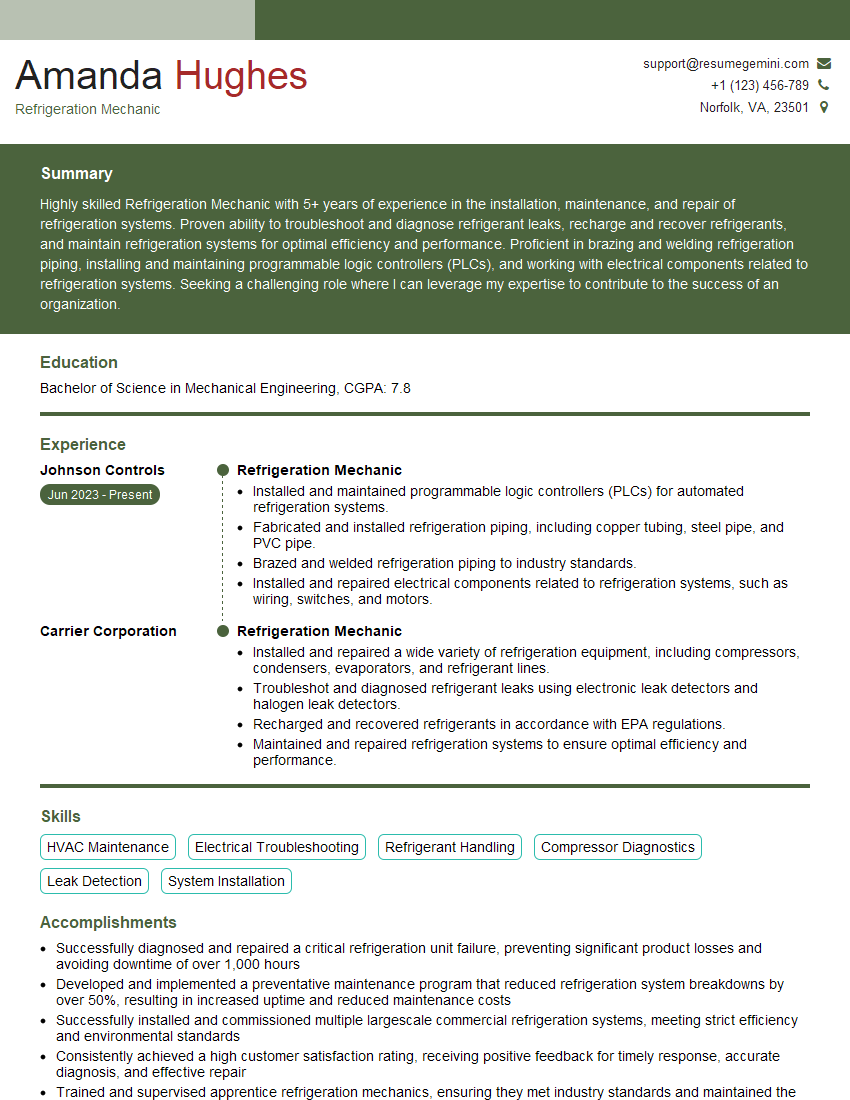
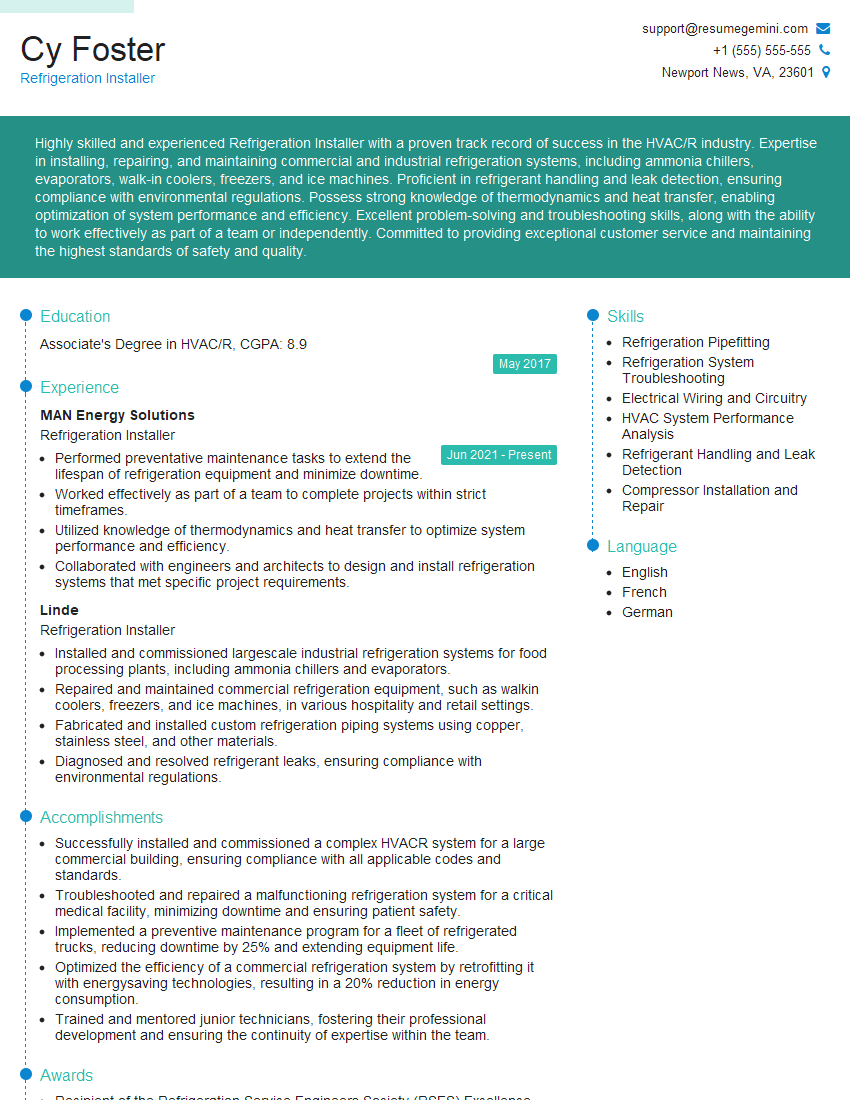
Mastering commercial refrigeration opens doors to rewarding and challenging careers in a vital industry. Your expertise in this field is highly sought after, making you a valuable asset to any organization. To maximize your job prospects, it’s crucial to present your skills and experience effectively. An ATS-friendly resume is key to getting your application noticed by recruiters. We strongly encourage you to leverage ResumeGemini, a trusted resource, to build a professional resume that highlights your qualifications. ResumeGemini provides examples of resumes tailored to the Commercial Refrigeration field, ensuring your application stands out from the competition.
Explore more articles
Users Rating of Our Blogs
Share Your Experience
We value your feedback! Please rate our content and share your thoughts (optional).
What Readers Say About Our Blog
Really detailed insights and content, thank you for writing this detailed article.
IT gave me an insight and words to use and be able to think of examples